Possession is the horror subgenre that asks the most of a reader, because it only works if somebody in the book actually believes.
A haunted house needs no theology. A vampire needs no theology. But a possession novel has to take seriously the idea that there’s something with intentions on the other side of the wall, and that a specific set of words and gestures might send it back. The moment a book treats all that as superstition, the horror evaporates, and you’re left reading a medical drama.
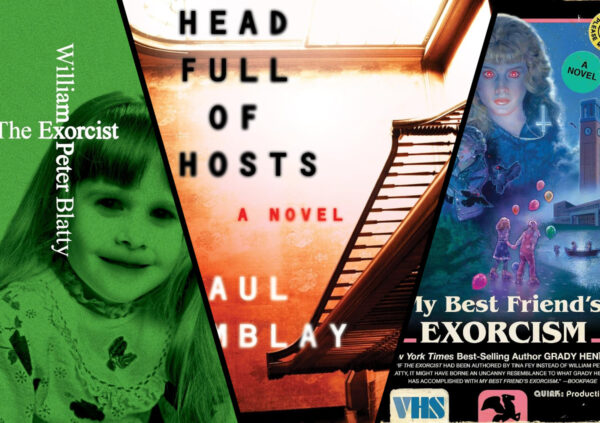
Which is why the best possession books are almost always about faith itself, and usually about somebody losing it. The priest who no longer believes, the mother who never did, the doctor who has run out of tests. The demon is rarely the interesting part.
A quick note on scope. These possession books cover demons and exorcism as well, because the book sets are effectively the same, and splitting them would mean writing up the same titles twice. If you’re after the kind of horror where the entity is a dead person rather than something that was never human, that’s ghost books.
Some of these I’ve read. I’ve said which.
Fiction by René Rehn


The Ancestors
The Devil Rides Out (1934)

This is the book where the English occult thriller begins, and the possession sequence in it is the ancestor of every protective-circle scene written since.
The Duke de Richleau discovers that a young friend has fallen in with a satanic order run by a man named Mocata, and extracts him from a ceremony. Mocata then comes after all of them.
The pentacle chapter is the reason it’s here. De Richleau draws a defensive circle, explains the rules in advance, and the party spends a night inside it while things outside attempt to make them break it. Nothing gets in. Everything that goes wrong follows from somebody stepping over a line they were explicitly told about, and Wheatley plays all of it completely straight.
The possession of Simon, and later of the child, gets treated as a technical problem with a procedure attached, which was new.
Wheatley sold fifty million books after starting out as a wine merchant, and he spent the war years planning deception operations for British intelligence.
He also believed a good deal of this material himself, which is the uncomfortable part, and his politics elsewhere are considerably worse.
The Case of Charles Dexter Ward (1941)

Lovecraft’s only proper novel, written in 1927 and not published until after his death, and it’s the best-constructed thing he ever did.
Charles Dexter Ward is a Providence antiquarian who discovers that an ancestor, Joseph Curwen, was a merchant, a farmer and something else entirely, and that the town killed him in 1771 and struck his name from the records.
Ward starts researching. Then he starts experimenting. Then his handwriting changes, his speech becomes archaic, his knowledge of the present decays, and his family doctor is left facing a man who is physically Charles and is not.
The possession mechanism is why it belongs here rather than on a mythos page. Curwen’s method is essential saltes, a chemical process for reconstituting a person from their remains, and the horror is that it works in both directions, and that anybody at all can be brought back if you have the ashes.
Willett’s descent into the vaults under the bungalow is the most frightening thing Lovecraft ever wrote.
More on the best Lovecraft stories.
The Seventies, When It Became an Industry
Rosemary’s Baby (1967)

Rosemary and Guy Woodhouse ignore a friend’s warning and move into a grand old Manhattan building, where the elderly couple next door turn out to be intrusive and relentlessly kind.
The possession here isn’t of a person by a demon. It’s of a woman by a household, and the supernatural machinery is almost secondary to that.
Each alarming development arrives pre-packaged with its sensible account, offered instantly, always by someone devoted to her. Pain like that is standard. No obstetrician in the city outranks Dr. Sapirstein, who has no patience for pregnancy books. The tannis root Minnie mixes is a simple herbal tonic. The friend who tries to warn her is dead soon after. The book she gets hold of is removed from her, gently.
Rosemary objects throughout and gets talked out of every objection, and Levin escalates that pattern with total precision until she’s being managed by every single person she knows.
Underneath it all sits a simple sale, Guy handing over his wife to buy himself a career, and he stays horribly plausible about it from the first page to the last.
Two hundred and forty pages, not a sentence squandered. The Polanski film tracks it nearly line for line.
The Exorcist (1971)

Chris MacNeil, an actress on location in Georgetown, watches her daughter Regan, twelve, begin to act wrong.
Then comes medicine, an enormous stretch of it, and that patience is what makes the possession land. Neurology leads, the pneumoencephalogram follows, psychiatry after that, EEGs, a proposed temporal lobe lesion, until no avenue remains untried and only then does anyone speak the word.
The possession itself is the most-imitated in all of fiction, and almost every element the culture now associates with the subject originates here rather than in actual Catholic practice: the voice, the head, the restraints, the bed, the objects, the languages.
The true subject, though, is Damien Karras: Jesuit, psychiatrist by training, faith gone, guilt-ridden over the mother he never got out of her tenement, who died with no one beside her while duty kept him away. Regan is the instrument.
In print, Blatty called the novel an argument for God’s existence, and meant every word. The screenplay was his as well, and it took the Academy Award.
Hell House (1971)

Matheson’s direct answer to The Haunting of Hill House, and the argument between the two books is entirely about method.
A millionaire with months to live wants proof that something survives death, so he pays four people to spend a week in the Belasco house in Maine and settle the question. A physicist with a machine. His wife. A spiritual medium. And Ben Fischer, who walked out of the 1940 attempt as its sole survivor, fifteen years old at the time.
Where Jackson withholds everything, Matheson explains all of it, and his explanation is possession. Emeric Belasco is a person, he’s still present in the building, and he’s operating the mediums directly. Nothing stays ambiguous, the history gets given in full, and what happened in that house between 1919 and 1929 is described in detail.
The Florence Tanner material is genuinely nasty, and the novel is far more explicit than anything else on this page.
The Legend of Hell House, filmed in 1973, has a screenplay by Matheson himself and is very good.
Also on haunted house books.
The Other (1971)

It’s the summer of 1935 in rural Connecticut, and thirteen-year-old twins Niles and Holland Perry are living on the family farm with a mother who hasn’t come downstairs since their father died in the apple cellar.
Their Russian grandmother Ada has taught Niles the great game, which lets him project his consciousness into other living things: a bird, a cat, a person. He’s very good at it, and the book presents it as a genuine skill rather than a delusion.
That’s the possession, and it works in a direction the genre almost never uses. Nobody gets invaded from outside. The occupation is voluntary, learned, and comes from inside a family.
Tryon’s withholding is total, and the book is nearly impossible to discuss because of it. What’s actually happening becomes clear at a point he chooses with precision, and everything before it reads differently afterwards.
He’d been an actor for fifteen years and quit in 1969 after Preminger humiliated him, and he wrote this novel because Rosemary’s Baby annoyed him into it. It became a bestseller that the critics also took seriously, which almost never happened to horror in 1971.
The Modern Wave
The Damnation Game (1985)

Barker’s first novel is a possession story where the possessing party is a creditor rather than a demon.
Marty Strauss walks out of prison and into a job guarding Joseph Whitehead, a recluse of enormous wealth who is visibly terrified of something. Back in 1945, in the bombed-out shell of Warsaw, Whitehead sat down to cards with a man named Mamoulian, and he won. Everything he owns today flows from that night, and the bill has never come due.
Mamoulian is patient, reasonable and entitled, and there’s no trickery anywhere in the arrangement, which turns out to be considerably worse than trickery. The terms were clear, and Whitehead agreed to them freely.
The possession becomes literal in Breer’s case. He’s a man Mamoulian raised from death and keeps as a servant, and he’s decomposing throughout the novel while continuing to function, and the sections following him are genuinely hard reading.
It came straight after the Books of Blood and is his most conventionally structured novel, which is exactly why opinion on it splits.
More on the Clive Barker page.
Come Closer (2003)

Amanda’s life is in decent shape. A good architecture job, a husband she likes, a new apartment. Then a tapping starts somewhere in the walls, and she’s the only one who can hear it.
She sends an insulting memo to her boss that she doesn’t remember writing. She burns her husband with a cigarette while he sleeps and can’t account for it. Then she starts drinking, then sleeping with a man from a bar, and every incident comes with an explanation close at hand, which Amanda supplies herself.
The possession is a demon named Naamah, and Gran gives you a checklist from a book on demonology that Amanda finds and quietly ticks off, and the novel refuses to confirm whether that’s diagnosis or delusion.
The premise undersells the disturbance, and the pleasure is why. Amanda begins to enjoy it. What comes through licenses desires she already carried, and her marriage’s ruin belongs at least partly to her own hands.
A hundred and seventy pages, very fast, and it has become one of the most quietly recommended horror novels of the century among people who read a lot of them.
A Head Full of Ghosts (2015)

Fourteen-year-old Marjorie Barrett might be possessed. She might be schizophrenic. What she definitely is, is the star of a reality series called The Possession.
Tremblay stacks the incentives so that the truth is the one thing nobody in the house can afford. The father has lost his job and found religion. The production company is paying the mortgage. A psychiatric diagnosis ends the contract. The priest is on the payroll.
And Marjorie herself is clever, funny, angry, entirely aware of what’s happening around her, and has worked out precisely what she can do with it. The scenes where she tells her little sister stories at bedtime are the most frightening thing in the book, and nothing supernatural is required for a single one of them.
Merry narrates at eight and again at twenty-three, and between the two timelines sit blog posts analyzing the show episode by episode, which is Tremblay doing genre criticism inside his own novel.
The final chapter recasts all of it. A Bram Stoker Award followed, along with a King blurb that reads as sincere.
Also on psychological horror books and ghost books.
My Best Friend’s Exorcism (2016)

Charleston, 1988. Abby and Gretchen met in fourth grade and have been inseparable ever since. Then comes the night at the lake house with the acid, and Gretchen, alone in the woods for a while, comes back wrong.
The possession is the mechanism for what Hendrix is actually writing about, which is how a friendship group destroys one of its own members. Whatever is inside Gretchen works by isolating Abby: it turns the other girls against her, manufactures evidence that discredits her, gets her expelled, and uses the school’s own social machinery to do every bit of it.
There’s a great deal in here about eating disorders and about the specific way a girls’ school in the eighties handled anything difficult, and the book runs bleaker than its comic first half prepares you for.
The exorcist, when he finally arrives, is a Christian bodybuilder with a van and a ministry called the Lemon Brothers Faith and Fitness Show, and Hendrix plays him entirely straight, which might be the single best decision in the book.
Every chapter is titled after an eighties song.
The Last Days of Jack Sparks (2016)
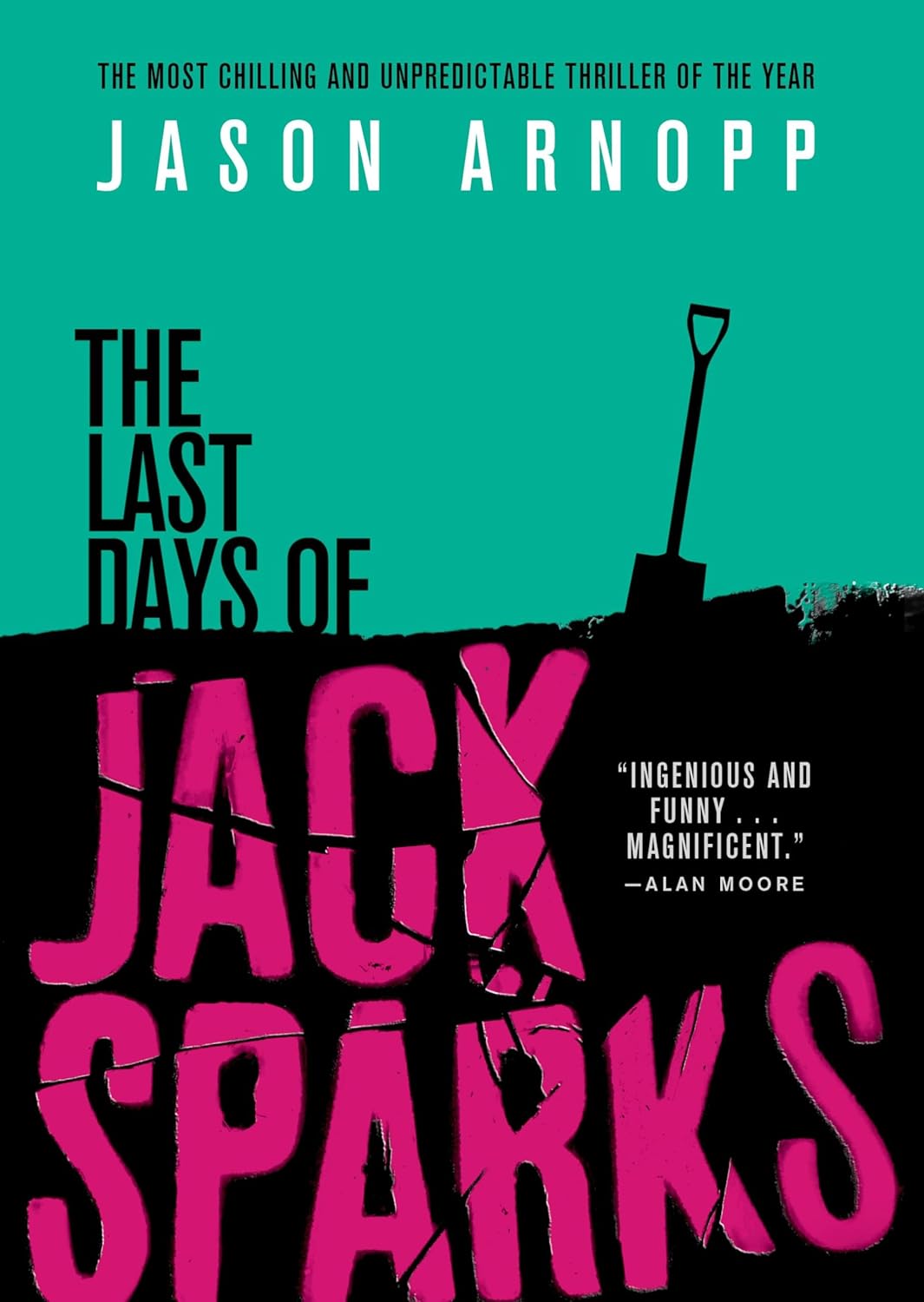
Jack Sparks writes bestselling pop-science, with a big following behind him, a cocaine habit he thinks nobody notices, and no self-awareness whatsoever. He’s writing a book debunking the supernatural, attends an exorcism in a small Italian village as research, and laughs out loud in the middle of it.
The possession that follows is retaliatory, which is both the joke and the engine. This isn’t a girl in a bed. It’s a man who insulted a rite in front of the people conducting it, and who then starts finding videos on his own YouTube channel that he didn’t upload and can’t delete.
The novel presents itself as his unfinished manuscript, published posthumously by his brother, with the brother’s editorial footnotes correcting him throughout. Those footnotes are the best thing in the book and your only mechanism for working out how much of Jack to believe.
It’s genuinely funny for two thirds of its length, and Jack is a superb comic creation, insufferable in a precisely observed way.
The last act plays more conventionally than the setup, which is the fair criticism.
The Fisherman (2016)

I’ve read this one, and it belongs here for what the Fisherman himself is doing rather than for any possession in the conventional sense.
Two widowers take up fishing in upstate New York, and a story told in a diner about a creek called Dutchman’s takes over the entire middle of the book: a nineteenth-century occultist, a drowned town, and a bargain about bringing the dead back.
Everything Langan leaves out is what makes it work. Rainer’s cult gets mentioned and never explained. About the creature, you learn essentially one fact, its scale, and nothing else. That withholding is what gives the book its mythic weight, and it’s an argument about restraint that the rest of this subgenre could stand to learn from.
Also on monster books.
Between Two Fires (2021)

France, in the plague year of 1348. A knight who deserted his order at Crécy is walking north through an emptied country, and traveling with him is an orphan girl who claims the angels speak to her.
The possession here operates at scale. Buehlman’s premise is that the war in heaven is still ongoing, that the wrong side is currently winning, and that the demons aren’t tempting anybody so much as running the country while heaven is distracted or absent. They’re embodied, specific and numerous, and they take people the way an occupying force takes a town.
The girl’s faith is treated as simply true, never as something touching, and that’s the harder choice and the one that makes the whole book work. Thomas, nursing a broken arm and a worse conscience, doesn’t believe a word of it and follows her anyway.
The plague research is exact: the mortality figures, the abandoned villages, the flagellants, the pogroms against Jewish communities blamed for the wells.
The last act is apocalyptic in the technical sense of the word, and it’s genuinely grim.
The Only Good Indians (2020)

A decade back, four young Blackfeet men fired into an elk herd sheltering on land reserved for the elders, and one of those elk was carrying a calf.
The possession is Elk Head Woman’s method, and it’s the most original thing on this page. She doesn’t enter people in the traditional sense. She takes shapes, wears faces, occupies positions in a household, and appears in photographs and reflections as something that doesn’t quite match. In one sustained sequence, a man shares a room with a woman who is not the woman he thinks she is, and Jones lets that run for chapters.
She also gets chapters of her own, and she isn’t wrong about anything, and what she wants is a calf that was never born.
The basketball game near the end is the set piece people can’t stop bringing up, and for good reason. It’s one of the best sequences in modern horror.
It won the Bram Stoker and the Shirley Jackson Award, and Jones draws the four men with so much affection that the whole thing lands.
Also on monster books.
Nothing But Blackened Teeth (2021)

Five friends rent an abandoned Heian-era mansion in Japan to celebrate a wedding. The story goes that a bride lies buried alive under its foundations, still waiting for a groom who never showed, and that every year since, the house has been given a girl to keep her company.
The possession is the ohaguro-bettari of Japanese folklore, a bride-shaped thing that is all smile and nothing else, and Khaw uses the folklore specifically rather than generically, which matters.
The honest note is that the friends are unpleasant by design, and Khaw spends a substantial share of a hundred and twenty pages on their mutual resentments before the house does much of anything. Readers who came for a haunted house report feeling trapped with people they couldn’t stand. Readers who recognized a portrait of a friendship that ended years before anyone said so rate it highly.
It hit the USA Today bestseller list and picked up award nominations across the board, Stoker to Derleth, which tells you the divide was never about quality.
The Nonfiction, for the Curious

Two books worth knowing about if the real cases interest you more than the fiction does.
An Exorcist Tells His Story by Gabriele Amorth is a memoir by the Vatican’s chief exorcist, written entirely from inside the belief system, and it makes for a genuinely strange reading experience.
The Devils of Loudun by Aldous Huxley is a historical account of the 1634 possession case in France that ended with a priest burned at the stake, and it’s the best-written thing on this page. Huxley’s interest is in mass hysteria and sexual repression, and he treats the participants seriously without conceding them anything.
Where to Start
Read The Exorcist, which is better than you expect and is doing something far more interesting than scaring you.
If you want the modern one, read Come Closer, which is short and is probably the best thing here.
If you want a possession novel that never once uses the word, read The Other.
And if you want demons in the flesh rather than in a teenager, read Between Two Fires.
The canon it belongs to is on my horror classics page. When the intruder is a place rather than a demon, my haunted house books list has it.