The zombie is the only monster in horror with no personality at all, and that turns out to be the reason the good books are good.
A vampire wants something. A ghost has a grievance. A haunted house has intentions, even if you never learn them. A zombie has nothing: no plan, no memory, no negotiating position, and no interest in you beyond the obvious. There is nothing to understand and nothing to appease.
Which means the good zombie books are never really about the zombies. The form has produced very few good monster stories and a surprising number of good books about logistics, institutions, class and what people do to each other when the machinery stops. The ones on this list are almost all really about something else, and that’s not a criticism.
The curation note. Zombie fiction accumulated an enormous amount of romance and YA over the last fifteen years, and none of it is here. The test matches the one I apply everywhere on this site: any book where romance shoulders what horror should be carrying comes off the zombie books list.
One of these I’ve read. I’ve said which.
Fiction by René Rehn


Before the Boom
I Am Legend (1954)

Not a zombie novel and the reason this page exists, which is a distinction worth making clearly.
Matheson wrote vampires. He gave them a bacillus, worked out why garlic and crosses and mirrors function, and put one man alone in a house in Los Angeles with the whole world outside calling his name.
Romero read it, took the siege, the shambling crowd, the boarded windows and the collapse of a civilization, dropped the vampire entirely, and made Night of the Living Dead. He has said so repeatedly and without ambiguity.
So the modern zombie is a vampire novel with the fangs removed, and every rule the genre now follows, the bite, the horde, the fortified building, the running out of supplies, the discovery that other survivors are worse, comes from a book about vampires published in 1954.
Neville’s routine is the genre’s template: windows boarded by day, the generator fed, and the house-to-house work done while they sleep, because nothing else useful exists.
The ending is the reason it is a great novel, and every adaptation so far has flinched from it.
The Magic Island (1929)

The book that brought the word zombie into English, and it is worth confronting what it actually is.
Seabrook was an American journalist who travelled to Haiti in the 1920s and wrote a sensational travelogue about vodou, and the chapter titled “Dead Men Working in the Cane Fields” is where the English-speaking world first encountered the zombi as a concept.
The Haitian zombi is not a corpse that eats people. It is a person whose soul has been taken by a bokor and who is worked as agricultural labor, and the terror in the belief is not of being attacked by one but of becoming one. Under a plantation economy and after generations of slavery, that is not a metaphor requiring explanation.
Seabrook’s account is unreliable, credulous in places and colonial throughout, and White Zombie in 1932 drew on it directly, with everything after drawing on that.
Read it as a document of appropriation rather than as ethnography, and know that everything on this page after it is built on a distortion.
The Boom
The Rising (2003)

Keene’s debut and the novel that restarted the zombie novel commercially, and the premise is a genuine departure.
His dead are not mindless. They are possessed by demonic entities called the Siqqusim who have been waiting outside creation, and they can drive, use firearms, speak, lie, set traps and coordinate. They also inhabit animals, which is the detail that makes the world genuinely hostile: birds, dogs, fish, insects.
Jim Thurmond is in a bunker in West Virginia when his son phones from New Jersey, and the whole novel is a father crossing a continent that has been comprehensively lost.
Keene wrote it and self-published it before Delirium picked it up, and it won the Bram Stoker Award for first novel in 2003 and made the modern zombie boom commercially visible.
The ending was widely hated. City of the Dead continues directly and Keene later wrote an alternate conclusion.
The prose is rough and the invention is not.
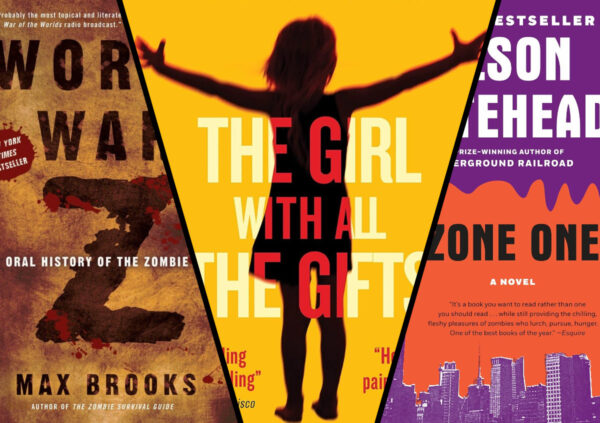
World War Z (2006)

I’ve read this one, and what makes it work is the structure.
No protagonist exists. Instead, an agent of the UN’s Postwar Commission travels for years collecting survivor interviews, after his official report came back stripped of its human material, and what you hold is everything the editors removed.
The device lets Brooks run a worldwide war at its true scale while every individual scene stays at eye level. The Chinese doctor who examined Patient Zero. The South African whose plan preserved millions by abandoning most of humanity on paper. A teenager in Japan. A submarine’s crew. An arms dealer. A propaganda filmmaker.
Nothing in the book beats the Battle of Yonkers, which contains not one scare. North of New York, on live television, the US Army brings armor, artillery, and air power against the horde and suffers a catastrophic defeat, all of it recounted in an after-action interview with a soldier whose anger has not cooled.
Title aside, the film and the book have nothing in common.
More on the Max Brooks page.
The Zombie Survival Guide (2003)

Written entirely straight as a survival manual, with no fiction in it anywhere, and it sold in enormous numbers on the strength of the joke being sustained for three hundred pages.
Brooks establishes the rules his novel then assumes: Solanum the virus, no hunger, no fatigue, no chatter, no winter die-off, and a single kill switch, the brain. A bite reaches the blood in twenty-three seconds.
The counsel is practical, tested against those rules, and holds up: crowbars over chainsaws, bicycles over cars, lighthouses over fortresses, and fire treated as a promise to burn yourself.
It closes with an outbreak chronology run back to 60,000 BC, played dead straight, and the joke reads as history until it reads as warning.
It is a companion to World War Z rather than a joke book, and reading it first makes the novel work better.
Cell (2006)

King’s answer to the question of what a modern outbreak would actually look like, and the transmission is the idea.
A pulse goes out through the mobile network at three in the afternoon, and everybody using a phone at that moment loses whatever a personality is and starts attacking. In 2006 that meant roughly half of everybody in a city street, instantly, with no warning and no incubation.
Clay Riddell is a graphic novelist in Boston who has just sold a book, and the opening thirty pages, from the moment the pulse hits Boylston Street, are as good as anything King has written.
Then the phoners start flocking. They develop a hive intelligence, telepathy, and eventually a leader, and the novel becomes something other than a survival story, and readers divide there.
The dedication is to Romero and Matheson, which is King acknowledging exactly what he is doing.
It is minor King and the first hundred pages are not.
Monster Island (2004)

Wellington wrote it as a serial, posting a chapter at a time on a blog in 2004, and readers followed it in real time, which was novel then and is why it exists.
Manhattan, a month after the outbreak. Dekalb is a former UN weapons inspector coming in from Somalia with a squad of teenage girl soldiers to raid a hospital for AIDS medication, because a warlord is holding his daughter and that is the price.
The invention is Gary. He was a medical student who worked out how to keep his brain oxygenated through the transition, so he comes back intelligent, and he is the only one who did, and he narrates half the book. He is lonely, articulate, and hungry, and he is very good company.
The New York material is excellent. Wellington knows the geography and uses it, and the sequence in the Bronx Zoo is the best set piece.
Two sequels follow. It is rough, fast and inventive, and the serial origin shows in the pacing.
Day by Day Armageddon (2007)

A journal kept by a naval aviator in Texas, beginning on the first of January with a resolution to write more, and continuing after the news out of China stops making sense.
Bourne self-published it as an anonymous blog written in real time, in journal form, with no framing and no claim to be fiction, and a substantial number of early readers were not certain. Permuted Press picked it up and it became one of the foundational self-published horror successes.
The appeal is entirely the competence. The narrator is military, methodical and unsentimental, and the entries are about fuel, ammunition, water, fortification, radio protocol and the specific logistics of clearing a house. There is very little emotion and almost no dialogue.
That is the limitation too. The characters barely exist and the prose is functional at best.
Read it for the procedural texture, which is the thing it does better than anything else on this page, and expect nothing literary.
The Literary Turn
Handling the Undead (2005)
2005 · translated by Ebba Segerberg · 2009
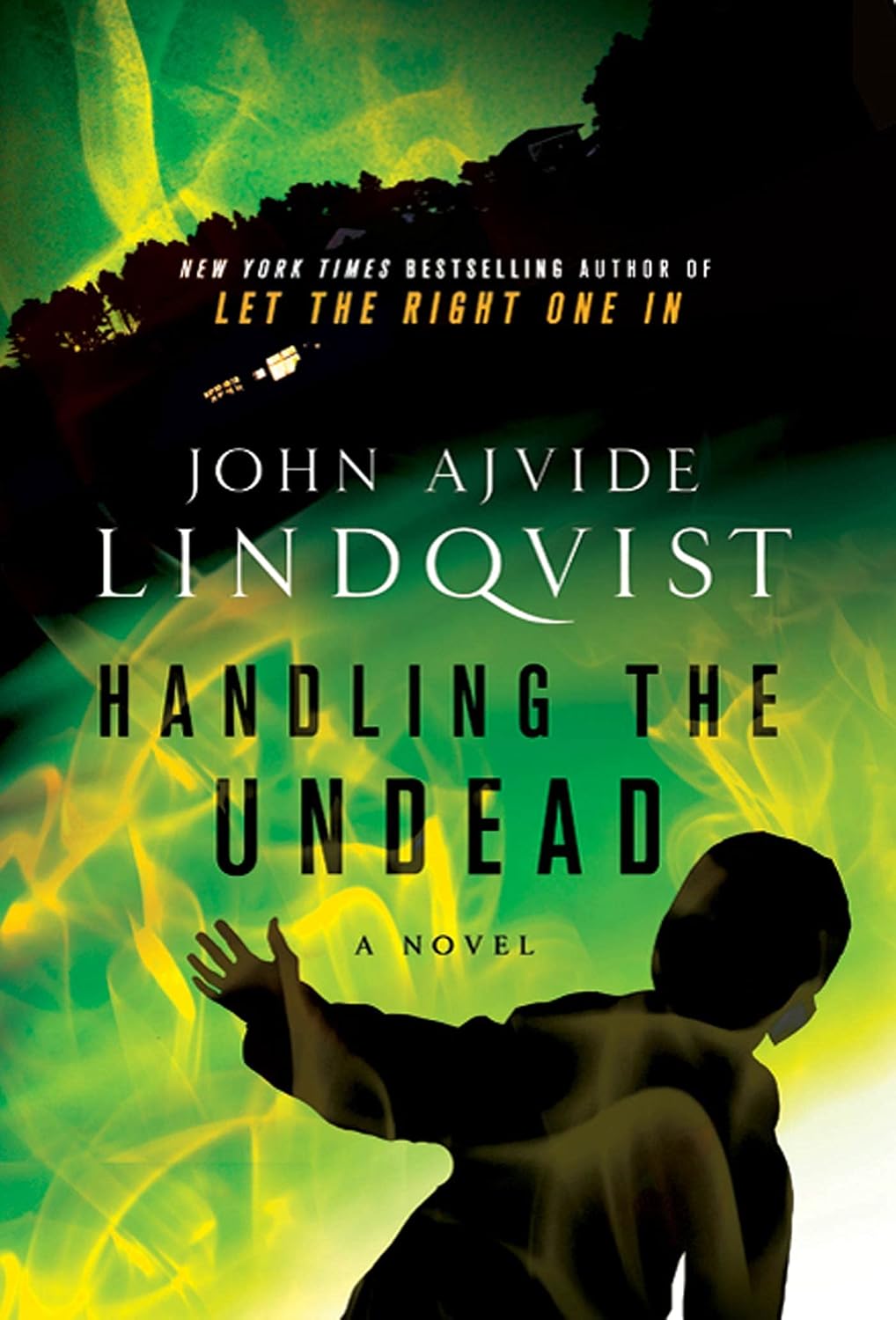
Across Stockholm on a sweltering August night, following an electrical anomaly nobody can account for, the dead return, and survival is not the question Lindqvist is asking.
They do not attack, they do not eat anybody, they are slow, largely uncommunicative, physically in the condition they died in, and they go home. The Swedish state’s response is a bureaucratic one: containment, ethics committees, medical assessment, and a housing estate repurposed to hold them.
The novel follows three families. A man whose wife died in a car crash that morning. A grandmother whose grandson was buried two months ago. And an elderly man whose wife has been gone long enough that what comes back is not in good condition.
Its true subject is grief, and precisely the grief of receiving what you begged for and learning it was never what you wanted.
It is the saddest book on this page and there is almost no horror in it, and the last section is devastating.
The Reapers Are the Angels (2010)

Temple is fifteen and has never known a world without them. She was born after, she has no memory of anything else, and she is not traumatized, because you cannot be traumatized by the only thing that has ever been true.
That premise beats every other on this page. Bell’s zombies are weather. Temple moves through the American South alone, competent, violent when necessary, and genuinely delighted by things: an aquarium, a mansion, the Gulf at night.
The prose is Southern gothic rather than post-apocalyptic. No quotation marks, long unpunctuated sentences, biblical cadence, and the comparison to McCarthy is obvious and earned.
She is also being pursued by a man whose brother she killed, and she does not dispute that he has the right.
Won the Alex Award. Published under Alden Bell, which is a pseudonym for Joshua Gaylord.
It is the best-written book on this page and the one to read if the genre normally bores you.
Feed (2010)

Twenty years after the Rising, and the world did not end. It adjusted.
That is the argument. The virus is a combination of two engineered cures, for cancer and the common cold, which worked and then recombined. Society continued with blood tests at every doorway, hazard zone classifications, and a culture organized around infection control.
Georgia and Shaun Mason are bloggers assigned to cover a presidential campaign, because after the Rising the mainstream media denied what was happening and bloggers were the ones who told people to aim for the head, so blogging became the credible press.
The politics is the actual subject and the horror is used as a lens for it. The novel is about fear as a governing technology, and it was written in 2010 and reads as considerably more prescient now.
The virology is worked out carefully. Grant is a pseudonym for Seanan McGuire and she does her homework.
The ending is genuinely shocking and the two sequels do not match it.
Zone One (2011)

Manhattan, after the worst of it, and the reconstruction has begun.
Mark Spitz is a civilian sweeper. The Marines cleared Zone One below Canal Street of the aggressive dead, and his three-person unit goes building by building dealing with the stragglers, which are the ones who stopped moving and stayed: a woman at a photocopier, a man in a break room, a receptionist at her station.
Whitehead’s stragglers are the invention and they are the most unsettling thing in zombie fiction. They are not dangerous. They are stuck in a loop of the most ordinary moment of their lives, and the sweepers dispose of them and file the paperwork.
The novel is about the reconstruction: the branding, the sponsorship deals, the government in Buffalo, the acronyms, the counseling, and the desperate insistence that things are returning to normal.
Whitehead won the Pulitzer twice afterwards. The prose is dense and the plot is minimal, and readers arriving from World War Z frequently bounce.
Raising Stony Mayhall (2011)

1968, a snowdrift in Iowa, a dead woman and a baby who is also dead and will not stop moving. A single mother takes him home and raises him.
That is the premise and Gregory follows it properly. Stony grows, which no other zombie does. He learns to read. He is hidden in the house for years because he cannot be seen, and he goes out at night, and he wants things.
The novel then discovers that there are others, that they have been organized underground since the outbreak of 1968 was contained, and that they have politics: a faction that wants to integrate, a faction that wants to bite everybody and end the distinction, and a religious faction.
It is a civil rights novel, deliberately, and the passing narrative is explicit.
Gregory writes it with genuine humor and the family material in the first hundred pages is the warmest thing on this page.
The most inventive book here after The Girl With All the Gifts.
The Girl With All the Gifts (2014)

A child is strapped into a wheelchair at gunpoint every morning, wheeled to a classroom, taught by a teacher she adores, and returned to a cell.
Melanie is ten, brilliant, affectionate and desperate to please Miss Justineau, and she is what the soldiers are afraid of.
The engine is real mycology, the best in the genre: cordyceps, the ant-hijacker that steers its host to a set height and humidity before fruiting, has jumped species in Carey’s premise, and second-generation children like Melanie carry it from birth with their minds intact. The fungal logic never once gets waived.
The inversion: one of them earns your whole heart, and the novel rides that to a finish so radical that barely anything in the subgenre would have dared it.
Carey adapted it for the screen himself in 2016, and the film holds up.
Severance (2018)

Candace Chen works in Bible production at a New York publishing house, coordinating printing in Shenzhen, when Shen Fever arrives from the same supply chain.
The fevered do not attack. They repeat. A shop assistant folds and refolds the same clothes. A family sets the table over and over. They continue their most habitual routine until they starve, and Ma’s argument is that most people were already doing this.
The novel alternates between the collapse, in which Candace keeps going into the office after everybody else has stopped because her contract has a bonus attached, and her parents’ immigration from Fuzhou, and her own life as a millennial in a city she cannot afford.
It is a satire about labor and nostalgia with a zombie plague in it, and the plague is the least interesting thing about it deliberately.
Written before 2020 and read very differently afterwards. Won the Kirkus Prize for fiction.
The Walking Dead, Compendium One (2004 onwards)

The comic rather than the show, and the difference matters more than people expect.
Kirkman’s stated premise was that zombie films always end after ninety minutes and he wanted to know what happened in year four. So the comic runs for a hundred and ninety-three issues across fifteen years and follows Rick Grimes from a hospital bed in Kentucky to the end of his life.
Compendium One collects the first forty-eight issues, which is the prison arc and the Governor, and it is around a thousand pages for the price of two novels.
It is black and white throughout, which was a deliberate choice by Kirkman and Tony Moore to keep it from looking like a gore comic and to make it feel like a film.
The comic and the show diverge substantially after the prison and several major characters have entirely different fates in each.
The zombies are barely present after the first year. Kirkman’s actual subject is what groups of people do to each other when nothing is enforcing anything, and the answer he gives is consistently bleak.
Where to Start
Read World War Z, and read it as an oral history rather than a novel. Stop waiting for a main character and it opens up.
Read The Girl With All the Gifts for the best conventional novel here, and Handling the Undead when you’re ready to be hurt.
If you’d rather have literary fiction with zombies in it, read Zone One or Severance.
And the buried treasure of the list is Raising Stony Mayhall.
The older end of the shelf is on my horror classics page. Max Brooks wrote the one that took the subgenre seriously.