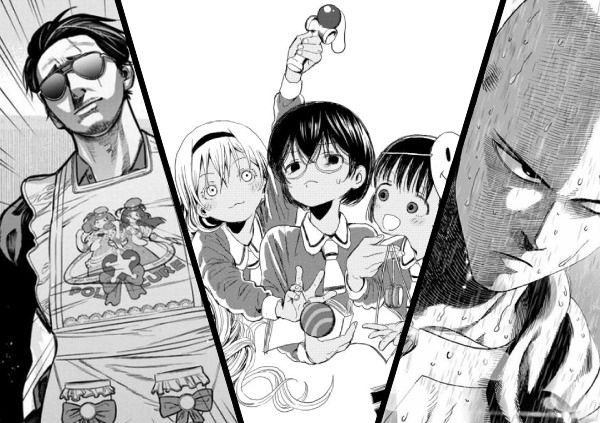
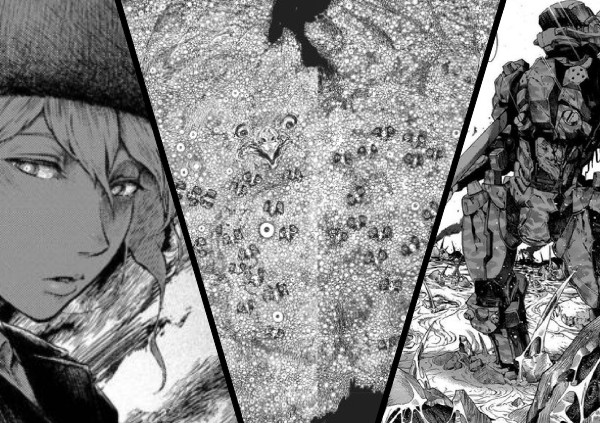
When you’re new to manga, getting started can be difficult. There are thousands of series out there, and even the most popular recommendations don’t always make great first reads. If you’re trying to find manga for beginners, it’s easy to get overwhelmed fast.
That’s why I put this guide together. The goal is simple: give you a set of beginner-friendly series that are easy to jump into, but still show off what manga does best across different genres and tones.
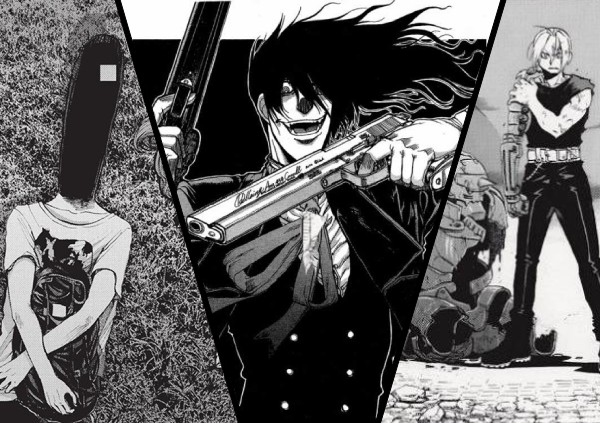
This list is split into three tiers. Tier 1 is the most accessible entry point, perfect if you’ve never read manga before. Tier 2 is your next step if you’re in the mood for something darker and more character-driven, with stories that are more mature without getting too dense. Then Tier 3 takes you into deeper psychological and philosophical territory.
Every title here is worth reading. If you want more accessible recommendations, check out my lists of the best sports manga, action manga, and fantasy manga.
Mild spoiler warning: I’ll keep things mostly spoiler-free, but a few basic plot details are sometimes necessary.
Fiction by René Rehn


With that said, here’s my list of manga for beginners (last updated: April 2026).
Tier 1 – Basic
Tier 1 is where to start if you’ve never read manga before. These series are easy to follow, instantly engaging, and a great introduction to what makes manga such a special medium.
Blue Lock
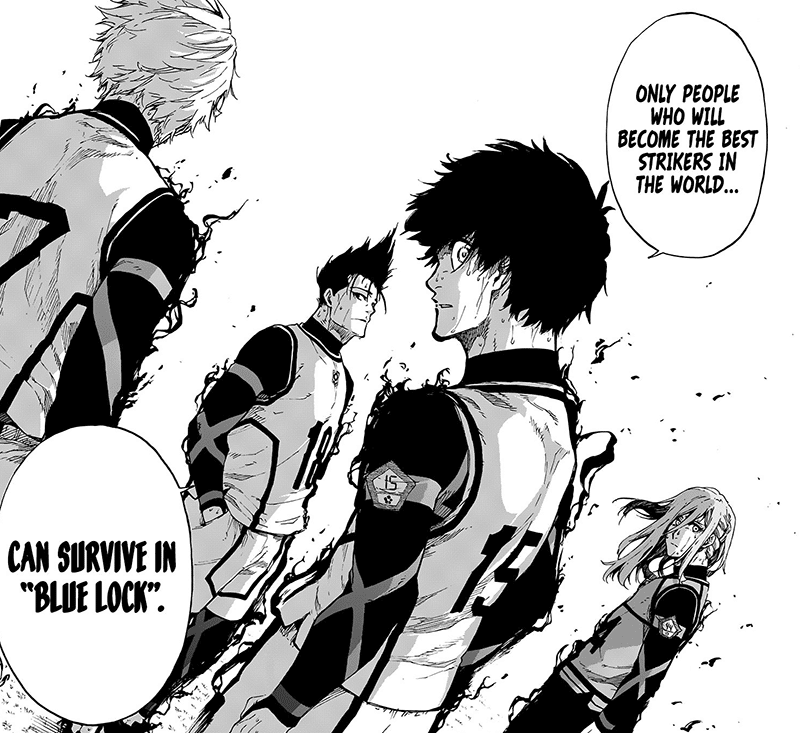
Blue Lock is a battle shonen hiding under the guise of a sports series, and it’s one of the best examples of how manga can turn a simple premise into pure momentum. Even if you’ve never cared about soccer, it’s an ideal manga for beginners because it’s easy to follow, instantly gripping, and powered by constant tension.
Japan wants a world-class striker, so the Japanese Football Association hires the unhinged Jinpachi Ego. His idea? Blue Lock, a training program built to forge one ego-driven forward at the expense of everyone else. Yoichi Isagi is one of 300 players in the program. He starts out fairly ordinary, but watching him grow is exciting because it feels earned. Every match forces him to adapt, sharpen his instincts, and develop a weapon that separates him from the crowd.
What really sells Blue Lock is the execution. Yusuke Nomura’s art makes every match feel like a clash of wills, with goals treated like knockouts and rivalries escalating into full psychological warfare. The cast is stacked with memorable personalities, and the series rarely slows down long enough for the hype to cool off.
It’s not realistic soccer, and it can get ridiculous, but that’s the appeal. If you want a first manga that’s fast, intense, and impossible to put down, this one delivers.
Genres: Sports, Action
Status: Ongoing (Shonen)
Demon Slayer
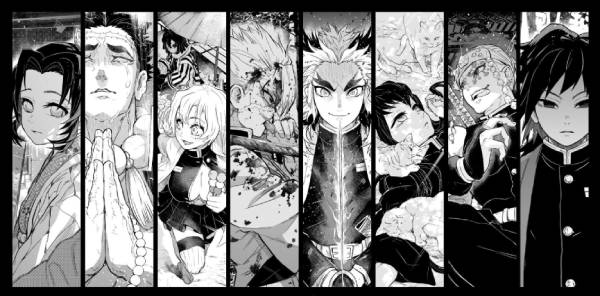
Demon Slayer is one of the most popular manga of the last decade for a reason. It doesn’t reinvent shonen, but it executes the genre’s core appeal with near-perfect clarity, which makes it a great manga for beginners who want action, emotion, and a story that never drags.
The premise is as classic as it gets. Tanjiro Kamado returns home to find his family slaughtered, with his sister Nezuko transformed into a demon. He joins the Demon Slayer Corps, mastering swordsmanship and hunting monsters in the hope of restoring her humanity. It’s a simple setup, but Koyoharu Gotouge gives it real momentum, and Tanjiro’s sincerity keeps the story grounded even when the stakes turn supernatural.
Where Demon Slayer shines is in its mix of clean pacing and emotional weight. Fights are easy to follow, escalation feels natural, and every major enemy comes with a tragic edge. The Breath Styles also give the series a strong identity, with techniques that feel vivid and elemental.
The main drawback is familiarity. You’ll see the usual villain hierarchy, training arcs, and power-ups, and none of it is particularly surprising. Still, that straightforward approach is exactly why it works so well. It’s a polished, satisfying ride that ends decisively instead of stretching itself thin.
Genres: Action, Fantasy, Dark Adventure
Status: Completed (Shonen)
Mob Psycho 100
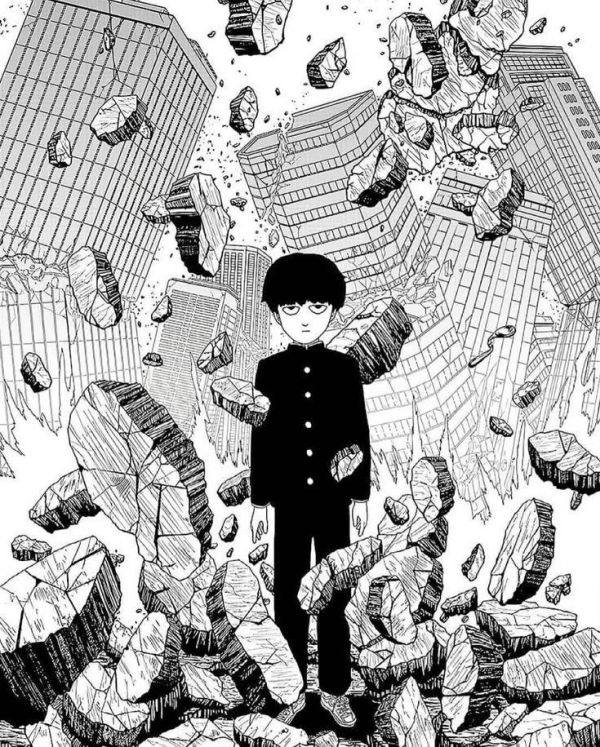
The first thing you’ll notice about Mob Psycho 100 is the art. ONE’s style is rough, loose, and almost deceptively simple, which might tempt new readers to bounce off immediately. Don’t let it scare you off. This is one of the funniest manga you can read, and it sneaks in a surprising amount of heart along the way, making it a great manga for beginners who want something entertaining and sincere.
Mob is a quiet middle schooler with absurd psychic power, but his real goal is painfully relatable: he wants to be normal. To keep himself under control, he works part-time as an exorcist under Arataka Reigen, a charismatic con artist who has zero supernatural ability and endless confidence. The comedy thrives on that contrast, mixing deadpan reactions with sudden bursts of chaos when Mob’s emotions start boiling over.
What makes Mob Psycho 100 stand out is how well it balances absurdity with character growth. The story keeps pushing Mob toward self-improvement that has nothing to do with power, which gives even the wildest scenes real weight. It’s also a strong introduction to how manga can blend action, comedy, and heartfelt storytelling without losing clarity.
The only downside is that the series shifts into bigger conflicts over time, so it won’t stay purely episodic. Still, it’s a weird, lovable ride that earns its payoff.
Genres: Comedy, Action, Supernatural
Status: Completed (Shonen)
One Punch Man
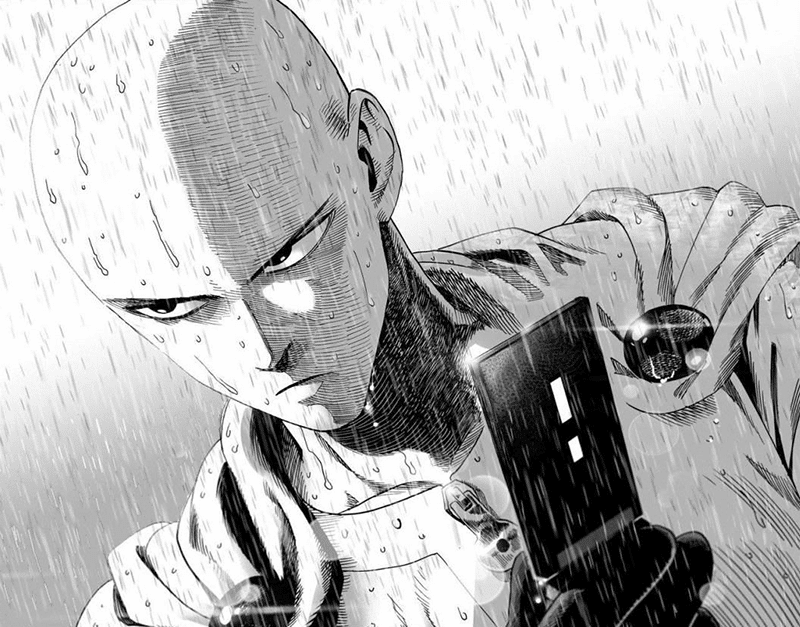
One Punch Man started as a simple webcomic by ONE, then got reimagined by Yusuke Murata into one of the most visually impressive manga still running. It’s also one of the easiest action manga for beginners, since the premise is instantly clear and the pacing rarely slows down.
Saitama is a hero who trained himself into absurd strength. The catch is that he’s now so powerful he defeats every enemy with a single punch, which leaves him utterly bored and almost completely unrecognized. That single joke could’ve worn thin, but the series gets smarter as it goes. It shifts attention to its supporting cast, letting other heroes and villains carry the tension while Saitama drifts through everything with deadpan indifference. The comedy lands because it treats ridiculous superhero drama with complete seriousness, then pulls the rug out at the last second.
Murata’s art is the real selling point. His fight choreography is hyperkinetic, monster designs are constantly inventive, and the action feels cinematic in a way most manga can’t match. Even when the story leans into chaos, it never loses its sense of timing, which matters a lot for newcomers.
The drawback is the slow release schedule, partly due to redraws and revisions. Still, few series balance spectacle and humor this well.
Genres: Action, Comedy, Superhero
Status: Ongoing (Seinen)
Komi Can’t Communicate
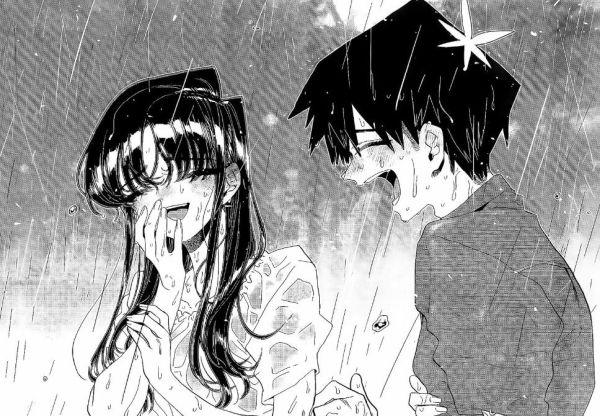
Komi Can’t Communicate is a heartfelt school comedy that works especially well as a manga for beginners. The premise is instantly relatable, the pacing is easy to follow, and the series delivers the kind of gentle emotional payoff that makes you want to keep reading.
Shoko Komi walks into her first day at Itan Private High School and immediately becomes the class idol. The joke is that her elegance is mostly a misunderstanding, because Komi isn’t mysterious or aloof. She’s cripplingly anxious and can barely speak to anyone. Hitohito Tadano, her painfully average seatmate, picks up on the truth right away and decides to help her reach a simple goal: make 100 friends.
What makes the manga land is how much warmth it has underneath the comedy. Komi’s slow progress feels earned, Tadano is likable without being flashy, and the story understands the quiet terror of social situations without turning it into melodrama. It’s funny, but it’s also genuinely sweet about small steps and small victories.
The only downside is that the cast grows huge, and some characters lean hard into one-note quirks, which can feel repetitive. Still, as a comfort read with a lot of charm, it’s an easy first pick.
Genres: Comedy, Romance, Slice-of-Life
Status: Completed (Shonen)
A Silent Voice
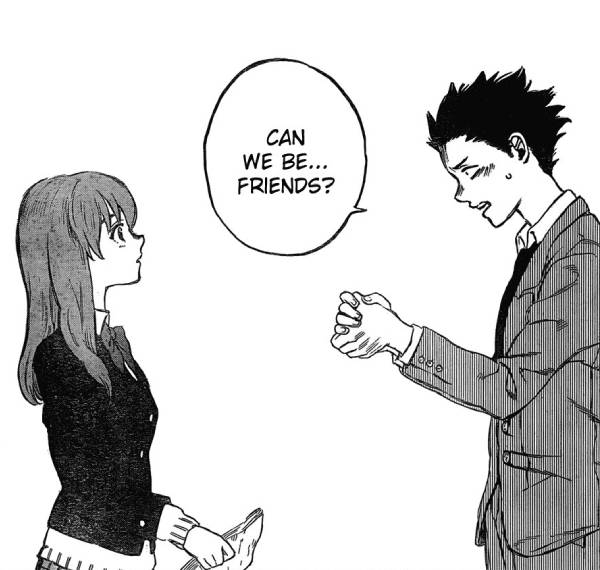
A Silent Voice is an ideal manga for beginners who want to see that shonen isn’t just fights and power-ups. It’s a grounded coming-of-age drama about bullying, guilt, and the slow process of trying to become a better person, told with a level of emotional honesty you don’t always expect from a mainstream series.
Shoya Ishida starts out as an elementary school kid who turns boredom into cruelty when Shoko Nishimiya, a deaf girl, transfers into his class. What begins as thoughtless teasing escalates into relentless bullying, and when Shoko eventually leaves, Shoya becomes the scapegoat. Years later, he’s a high schooler crushed by shame and self-loathing, and he tracks Shoko down with one goal in mind: to apologize and make things right.
What makes the story work is that it doesn’t offer easy redemption. Shoya isn’t instantly forgiven, Shoko isn’t treated like a saint, and the aftermath of childhood trauma lingers in every relationship. Yoshitoki Oima’s character writing is sharp across the board, especially in how she handles the supporting cast, each of whom carries their own version of the same past.
The art is clean and understated, and it’s excellent at small expressions and quiet moments, which gives the series its weight. The only drawback is that parts of the ending can feel abrupt. Still, it’s a powerful first manga if you want something human and genuinely affecting.
Genres: Drama, Romance, Slice-of-Life, Psychological
Status: Completed (Shonen)
Death Note
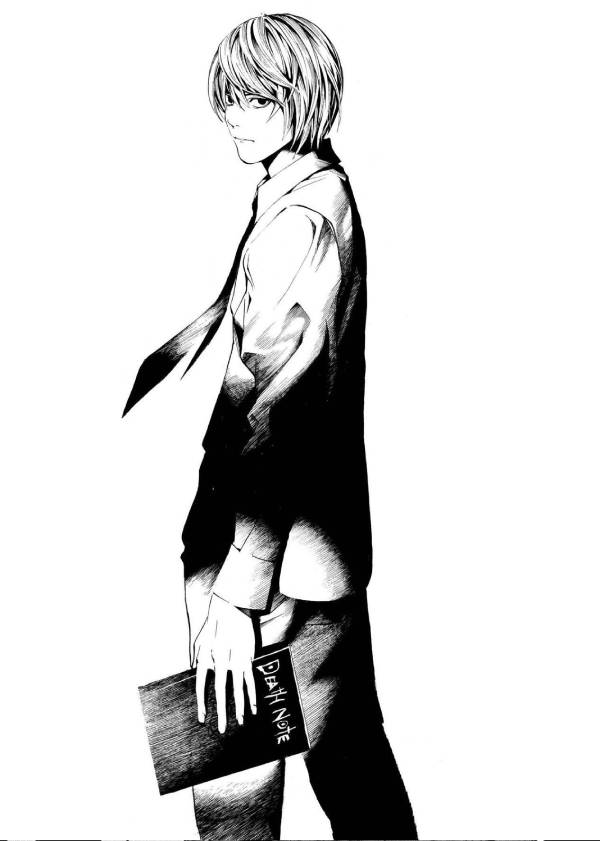
Death Note is one of the most popular manga of all time, and a big part of that comes down to how instantly readable it is. The premise hooks you within a chapter, the pacing is sharp, and it’s a great example of how manga can deliver blockbuster intensity without relying on fights. If you want a manga for beginners with a thriller edge, this one’s hard to beat.
Light Yagami is a brilliant high school student who finds a supernatural notebook that kills anyone whose name is written in it. He decides to use it to change the world, adopting the identity of Kira and wiping out criminals to create his version of justice. Standing in his way is L, an eccentric detective whose entire life seems built around catching the uncatchable. What follows is a long, escalating battle of wits, full of traps, gambits, and reversals that make even a conversation feel like a fight scene.
The appeal is how cleanly it plays its concept. Each chapter pushes the duel forward, and both leads are smart enough to keep things unpredictable. Takeshi Obata’s art also does a lot of heavy lifting, with crisp detail, heavy shadows, and dramatic paneling that keeps the tension high even when the story turns dialogue-heavy.
The biggest downside is the back half. After the central rivalry peaks, the story shifts in a way that many readers find weaker and less focused. Still, the ride is so compelling that it remains one of the best entry points into darker, smarter shonen storytelling.
Genres: Mystery, Psychological, Thriller, Supernatural
Status: Completed (Shonen)
Dragon Ball
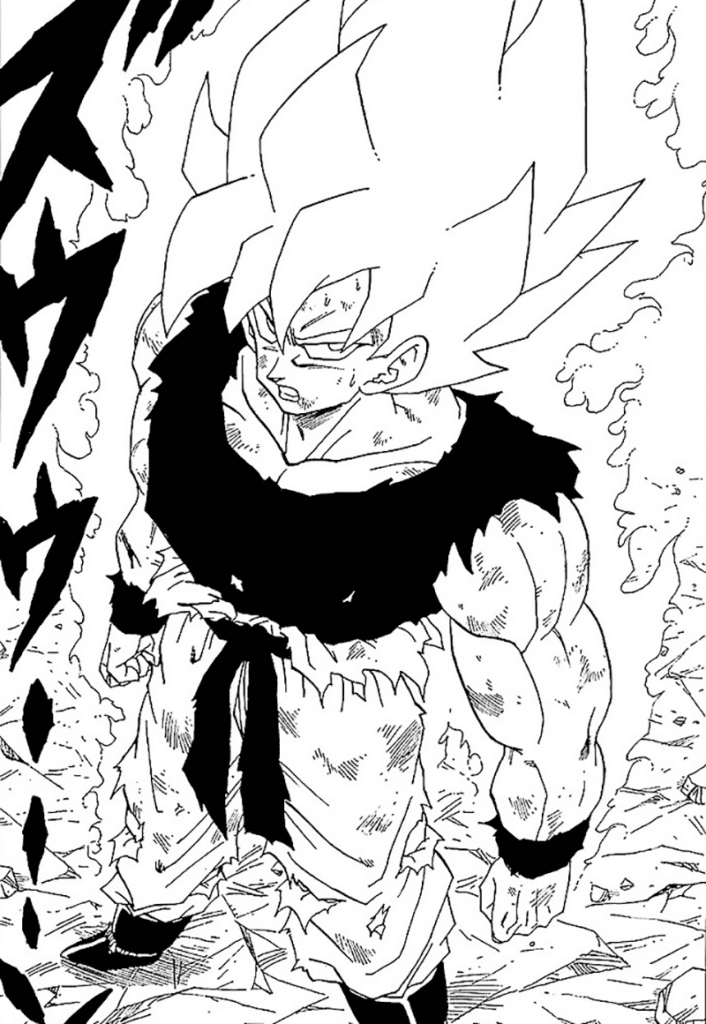
Dragon Ball is one of the most iconic manga ever written, and it’s hard to overstate how much modern shonen traces back to Akira Toriyama’s blueprint. Even decades later, it’s still a great manga for beginners because it’s clear, fast, funny, and packed with the kind of energy that makes manga so compelling.
The story starts as a light adventure about young Son Goku teaming up with Bulma to collect the seven Dragon Balls, which can summon a wish-granting dragon. Early on, Dragon Ball leans heavily into gag comedy and eccentric fantasy worldbuilding. That surprises a lot of readers who only know the later, more serious arcs. Over time, the series shifts into martial arts tournaments, training arcs, rivalries, and escalating battles, basically writing the rulebook for battle shonen as it goes.
What makes it such a good entry point is how readable it is. Toriyama’s paneling is clean, the action is always easy to follow, and the character designs are instantly memorable. Even when fights get bigger and louder, the pacing stays snappy and the tone never becomes oppressive.
The drawback is that the humor and storytelling beats feel dated, and the Dragon Balls eventually soften the stakes. Still, as a foundation for the genre, it’s pure history you can actually enjoy.
Genres: Action, Adventure, Martial Arts
Status: Completed (Shonen)
Fullmetal Alchemist
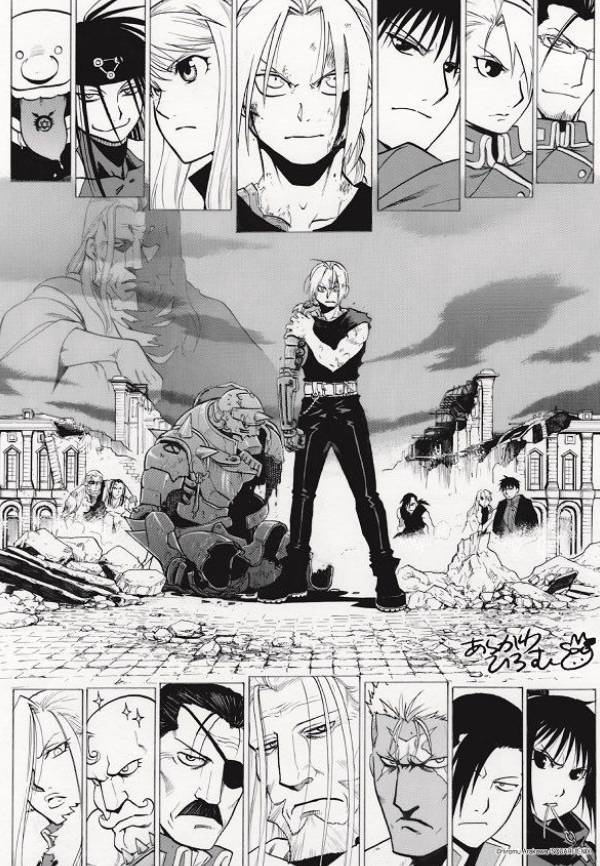
Fullmetal Alchemist is one of the most ambitious long-form stories in shonen manga, and it’s a strong starting point if you want a series that feels complete from beginning to end. It has a clear hook, a constantly moving plot, and enough emotional weight to stay with you, which makes it a perfect manga for beginners who want more than simple fights.
Edward and Alphonse Elric are brothers who commit the ultimate taboo of alchemy in an attempt to bring their mother back. The result is catastrophic. Edward loses limbs, Alphonse loses his entire body, and the two set out to find the Philosopher’s Stone, hoping to fix what they broke. That premise is instantly compelling, but the real strength is how quickly the story expands. What starts as an adventure builds into political intrigue, war crimes, and questions about guilt, sacrifice, and the value of human life.
Hiromu Arakawa’s worldbuilding is unusually grounded for the genre, with military bureaucracy, industrial cities, and a history that actually matters. The cast is stacked with memorable allies and villains, and the action always stays readable, even when the stakes escalate. Fullmetal Alchemist also handles darker material without losing its momentum, which is a hard balance to strike.
The downside is that the humor can be a little uneven, especially early on. Still, the payoff is huge. It’s the kind of story that makes you understand why manga can hit harder than most long-running series in any medium.
Genres: Action, Adventure, Fantasy, Mystery
Status: Completed (Shonen)
The Way of the Househusband
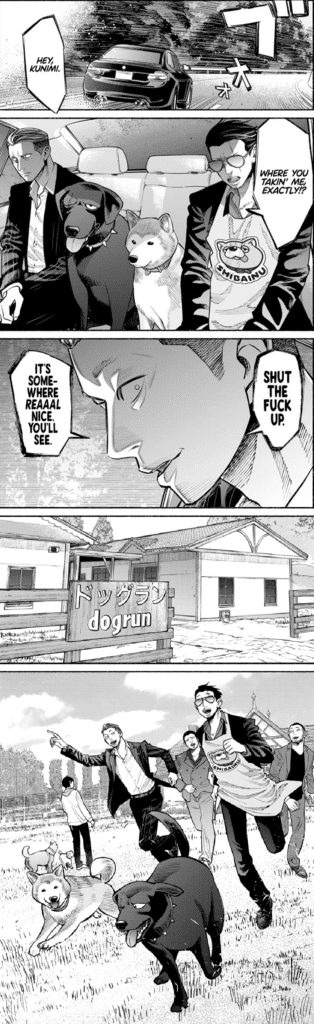
I’m usually not a comedy fan, but The Way of the Househusband won me over almost immediately. It’s light, fast, and built around a joke that never stops landing, which makes it a great manga for beginners who want something funny without committing to a huge, complicated story.
Tatsu is a former yakuza legend who’s retired from crime and taken on a new mission: being the perfect househusband. The twist is that he treats domestic life with the same intensity he once brought to the underworld. Grocery shopping becomes a high-risk operation, cooking feels like a ritual of discipline, and polite neighborhood small talk plays out like an interrogation. The series works because it never winks at the camera. Tatsu stays dead serious no matter how ridiculous the situation is, and that contrast does all the heavy lifting.
The episodic structure is another big advantage for newcomers. Most chapters are short, self-contained scenarios with a clean setup and payoff, so you can read a few at a time without losing the plot. The supporting cast keeps things fresh, too, especially other ex-yakuza who stumble into normal life and react as if they’re still on the streets.
The only drawback is that it’s not a plot-driven series. There’s no big overarching story, and character growth is minimal. Still, that’s part of the appeal. It’s cozy, deadpan, and reliably hilarious.
Genres: Comedy, Slice-of-Life
Status: Ongoing (Seinen)
Tier 2 – Intermediate
Tier 2 is where things get a little darker and more ambitious. These manga lean more serious and intense, with long-form storytelling, but they’re still approachable even if you’re fairly new. If you’re in the mood for something bolder, this is a great next step.
Shiver

Shiver isn’t a long-running series. It’s a curated collection of Junji Ito one-shots, and it’s easily the best entry point into his work. If you want a manga for beginners that shows how unsettling the medium can get without requiring a huge time commitment, this book delivers quick, unforgettable hits.
The appeal is how cleanly each story establishes its hook. Ito doesn’t waste pages. You get a simple situation, an unsettling image, and then a steady slide into paranoia, body horror, or a surreal apocalypse. Stories like Fashion Model and Glyceride showcase his talent for making everyday discomfort feel unbearable, while Hanging Balloons is pure nightmare logic done at full scale. It’s absurd, terrifying, and instantly memorable, which is basically Ito’s specialty.
What makes Shiver beginner-friendly is the format. You can read it in chunks, skip around, and still get the full experience. It also highlights Ito’s strengths better than most of his other collections, since you’re getting multiple flavors of horror in one volume.
If there’s a downside, it’s that the content can be genuinely gross, and a few stories will land harder than others. Still, if you’re curious about horror manga and want a single book that defines the genre, this is the one.
Genres: Horror, Supernatural, Psychological
Status: Completed (Seinen)
Chainsaw Man
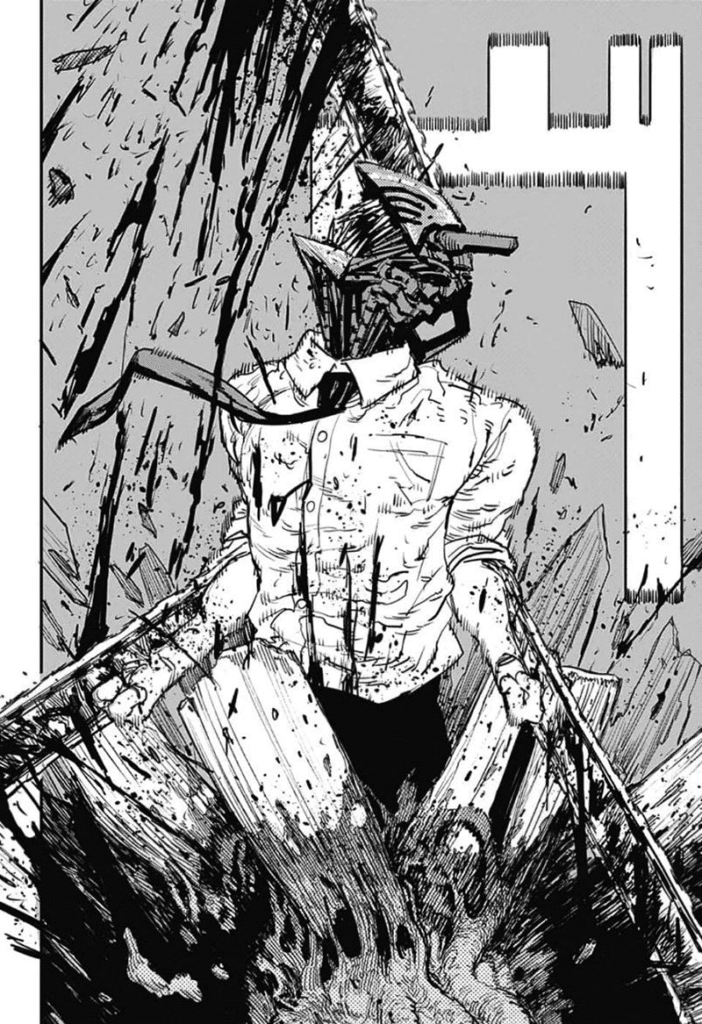
Chainsaw Man is one of the most insane mainstream manga ever published, and that’s exactly why it works as a gateway into the stranger side of the medium. It’s fast, brutal, and wildly creative, but it also keeps its premise simple enough that new readers can jump in without feeling lost. If you’re looking for a manga for beginners that doesn’t play it safe, this is the obvious pick.
Denji is a broke teenager crushed by debt, surviving by hunting devils with his chainsaw-headed pet, Pochita. After a betrayal leaves him for dead, he fuses with Pochita and becomes Chainsaw Man, a devil hunter with a literal chainsaw head and blades ripping out of his arms. He’s recruited by Public Safety, thrown into a world of grotesque monsters, and surrounded by a cast that’s equal parts hilarious and unsettling.
The hook is the chaos, but the execution is sharper than it looks at first glance. Beneath the carnage, the story is about loneliness, exploitation, and how low your standards can sink when you’ve never had stability in your life. Denji’s goals are embarrassingly basic, but they gradually reveal something sadder and more human.
Fujimoto’s art is scratchy and raw, but it fits the tone perfectly, and the action is both readable and vicious. The main downside is how hard it swings between comedy and despair, and the violence is intense. Still, few series capture manga’s ability to be funny, horrifying, and emotionally wrecking all at the same time.
Genres: Horror, Supernatural, Action, Comedy
Status: Completed (Shonen)
Attack on Titan
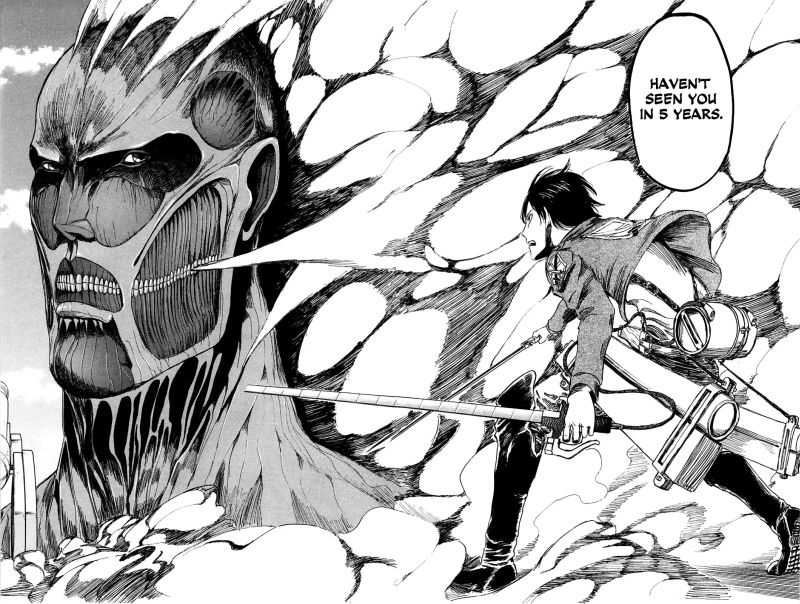
Attack on Titan stands apart as one of the darkest and most ambitious stories ever told in a shonen magazine. It’s brutal, suspenseful, and constantly evolving, and it’s a great manga for beginners who want something intense with real long-form payoffs.
Humanity lives behind massive walls, hiding from titans, giant humanoid monsters that devour people without mercy. When the outer wall collapses in a catastrophic attack, a young boy named Eren Yeager watches his world get destroyed in minutes. Alongside his childhood friends, Armin and Mikasa, he joins the Survey Corps, a military group that fights titans outside the walls and tries to uncover the truth of their existence. The early chapters feel like apocalyptic survival horror, with a relentless sense of danger and a setting that stays claustrophobic even when the world is vast.
What makes the series special is how it expands. The story gradually shifts from revenge and monster battles into a political thriller about freedom, propaganda, and cycles of violence. Each revelation recontextualizes what came before, which makes the mystery aspect as compelling as the action. The maneuvering gear sequences also give the fights a distinct identity: fast, chaotic, and surprisingly readable once you get used to the motion.
The trade-off is that the tonal shift can be hard, and the ending is famously divisive. As a high-stakes epic, though, it proves that manga can go far beyond comfort reading.
Genres: Dark Fantasy, Action, Mystery, Post-Apocalyptic
Status: Completed (Shonen)
Tokyo Ghoul
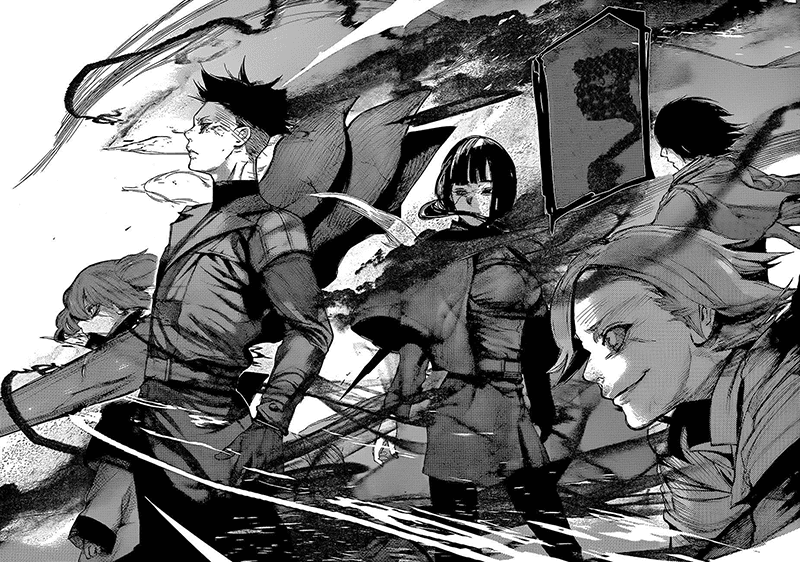
Tokyo Ghoul was one of the biggest mainstream manga hits of the last decade, and it’s an ideal stepping stone into darker stories once you’re ready for something more brutal. It reads fast, hooks you early, and mixes action and horror in a way that feels immediately gripping, especially if you haven’t explored seinen yet.
Ken Kaneki is an introverted college student whose life collapses after a date goes horribly wrong. A freak accident and emergency surgery leave him transformed into a half-ghoul, a human-looking predator that can only survive by eating human flesh. Suddenly trapped between two worlds, Kaneki is forced to navigate ghoul society while staying ahead of investigators dedicated to exterminating creatures like him.
The early chapters thrive on identity horror. Kaneki’s confusion, hunger, and fear feel raw, and the Antaiku Café acts as a surprisingly grounded sanctuary, introducing ghouls who aren’t cartoon villains, just people shaped by survival. As the story expands, factions collide, investigators become monsters in their own right, and the scale ramps up into intense, high-stakes battles.
Sui Ishida’s artwork is a huge part of the appeal. The heavy inks and sharp character designs give Tokyo Ghoul a stylish, grim atmosphere, and the Kagune weaponry makes fights feel distinct and feral. The drawback is that the later arcs, especially in Tokyo Ghoul:re, can get chaotic with a larger cast and denser conflict. Still, as an accessible introduction to horror-action manga with real tragedy behind the violence, it delivers.
Genres: Horror, Action, Mystery, Tragedy
Status: Completed (Seinen)
JoJo’s Bizarre Adventure: Part 3 – Stardust Crusaders

JoJo’s Bizarre Adventure is one of the most iconic manga franchises of all time, and a lot of that popularity comes from how memorable its big ideas are. While every part has something to offer, Part 3 – Stardust Crusaders is where JoJo truly finds its footing, and it’s a great manga for beginners who want something inventive, stylish, and completely unlike typical shonen.
The story follows Jotaro Kujo, a delinquent teenager who discovers he’s awakened a supernatural power called a Stand. When his mother falls mysteriously ill, Jotaro teams up with his grandfather Joseph and a small group of allies to travel from Japan to Egypt to confront Dio Brando, the series’ long-running villain. The setup is simple, but the appeal is the journey. Stardust Crusaders turns into a globe-spanning adventure packed with escalating confrontations, strange locations, and a constant sense of momentum.
Stands are what make this part special. They’re physical manifestations of a person’s life force, each with its own ability and limitations, which turns every battle into a creative puzzle instead of a simple slugfest. Not every early Stand encounter lands, since Hirohiko Araki was still refining the concept, but when it works, the fights are some of the most inventive in shonen manga.
The only trade-off is the episodic structure. Stardust Crusaders has a very enemy-of-the-week feeling for a long stretch, which can feel repetitive if you want tight plotting. As a showcase of manga’s flexibility and creativity, though, it’s hard to beat.
Genres: Action, Adventure, Supernatural
Status: Completed (Shonen)
Alice in Borderland
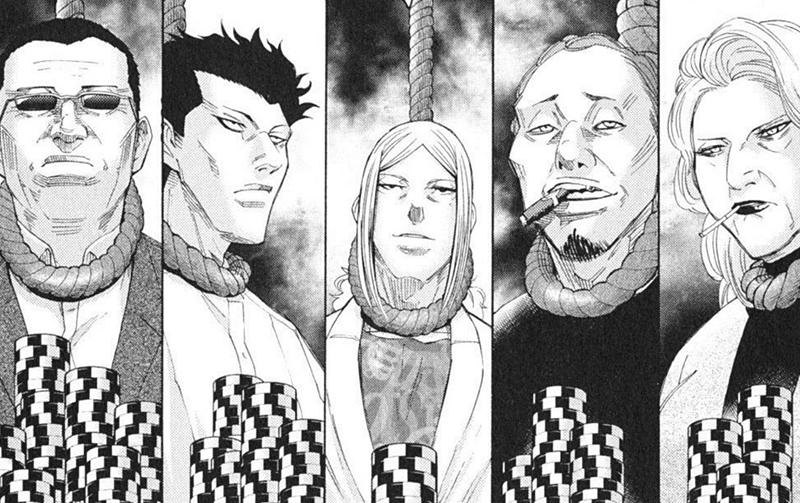
I’m a big fan of death game manga, and Alice in Borderland is not only one of the best but also one of the most accessible. It has a clean hook, constant tension, and a simple survival structure that makes it easy to binge, which is exactly why it works so well as a manga for beginners who want something darker.
Ryohei Arisu is a teenager drifting through life with his friends when a strange event drops them into a deserted version of Tokyo called the Borderland. The rules are brutal. To stay alive, they have to clear deadly games to earn visas that keep them from being executed. From there, the story becomes a relentless sequence of challenges where every mistake has consequences.
What makes the series stand out is the game design. Each challenge is ranked by suit and difficulty, with spades focusing on physical survival, diamonds on intellect, clubs on teamwork, and hearts on psychological cruelty. That system keeps the pacing sharp and prevents the story from feeling repetitive. Some games are straightforward in the worst way, while others turn into intricate mind traps that force characters to reveal who they really are.
Haro Aso’s art is a big selling point. The empty cityscapes feel eerie and oppressive, and the action stays clear even when things get violent. Arisu is a grounded lead who survives through observation and adaptability rather than plot armor, and the supporting cast adds real emotional weight.
The main drawback is that the later arcs can feel less tightly focused, and the ending is divisive. Still, as a survival thriller with consistent tension and smart escalation, it’s one of the easiest death game manga to recommend.
Genres: Survival, Psychological Thriller
Status: Completed (Shonen)
Mieruko-Chan
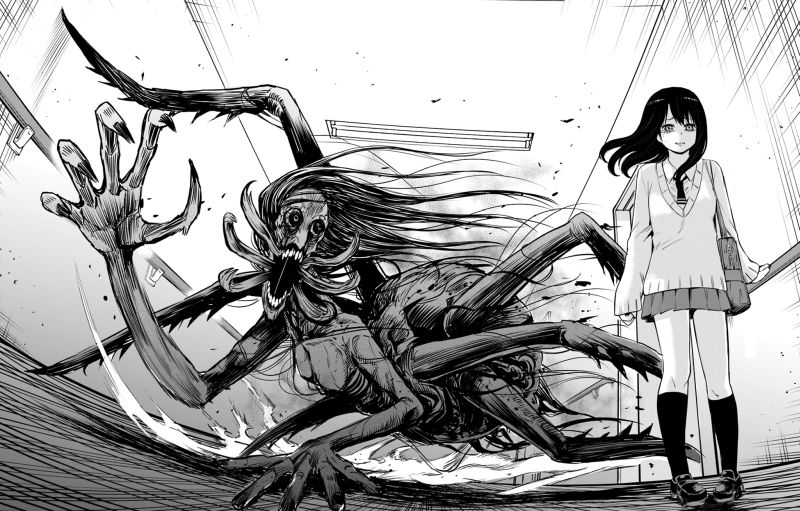
Horror is one of my favorite genres, but a lot of it can be a bit too much if you’re new to it. That’s why Mieruko-chan is such a great entry point. It’s creepy without being exhausting, funny without becoming a full parody, and built around a premise so simple you’ll understand it instantly, which makes it an ideal manga for beginners who want something spooky.
Miko Yotsuya is a normal high school student who can see ghosts. Not vague shadows or cute spirits, but grotesque nightmare creatures that linger in classrooms, on street corners, and behind people who have no idea they’re being watched. The twist is that Miko doesn’t fight them or run. She pretends she can’t see them, because reacting is what gets you targeted.
That idea gives the series its unique tension. The horror comes from endurance, not confrontation. Miko has to sit through her day while something horrifying leans inches from her face, and the suspense is watching her keep a straight expression when every instinct tells her to scream. It also creates a strange kind of comedy, since the story constantly flips between everyday school life and unimaginable monsters in the background.
The creature design is the real highlight. The ghosts are some of the best in modern horror manga, packed with detail and wrongness that sticks in your head. If there’s a downside, it’s that the series gradually expands its lore and recurring characters, so it becomes less purely episodic. The core appeal, however, never changes. It’s dread, restraint, and dark humor in one of the cleanest concepts in the genre.
Genres: Horror, Comedy, Supernatural, Mystery, Slice-of-Life
Status: Ongoing (Seinen)
Hellsing

Hellsing is one of the most popular action-horror manga out there, not because it’s subtle or scary, but because it’s pure stylized carnage. It’s fast-paced, brutal, and ridiculously fun, making it a great manga for beginners who want vampire chaos with zero downtime.
The story follows the Hellsing Organization, a secret British group dedicated to eliminating supernatural threats. Their ultimate weapon is Alucard, an immortal vampire who fights on their side with a smug grin and overwhelming power. He’s joined by Integra Hellsing, the cold, commanding leader of the organization, and Seras Victoria, a newly turned vampire who’s still clinging to her humanity. From the beginning, the series makes its priorities clear: violence, spectacle, and larger-than-life personalities.
Hellsing doesn’t bother with slow-burn horror. It throws you into escalating battles against grotesque enemies, and the action keeps getting more outrageous as it goes, including the infamous Nazi vampire faction known as Millennium. Everyone in this manga is a theatrical lunatic, from the fanatical priest Alexander Anderson to the grandstanding villains who treat war like performance art.
Kouta Hirano’s art starts rough, but it quickly sharpens into something distinctive, with heavy inks, intense paneling, and a gritty, cinematic look that fits the tone perfectly. The drawback is that it’s messy on purpose. If you want tight plotting or atmospheric dread, this isn’t that. But as an entry point into over-the-top seinen action and supernatural excess, Hellsing delivers exactly what it promises.
Genres: Horror, Action, Supernatural, Vampire
Status: Completed (Seinen)
Smuggler

Manabe Shohei is one of my favorite mangaka, and while he’s best known for his longer, grittier work like Yamikin Ushijima-kun, Smuggler is the ideal entry point into his world. It’s a single-volume blast of underworld violence, black humor, and bad decisions snowballing into catastrophe. It’s a great manga for beginners who want something short, sharp, and nasty.
The story centers on Yosuke Kinuta, a failed actor buried in debt, who’s forced to handle a job that sounds shady but manageable: helping a crew dispose of corpses. That illusion doesn’t last long. The deeper he gets pulled into the work, the more he finds himself caught in the middle of a violent power struggle, where every problem is solved with intimidation or violence. Yosuke works as the human anchor here, the only normal person in a cast of killers, sharks, and professional monsters.
What makes Smuggler so good is how it balances grounded grime with larger-than-life characters. It feels like a crime thriller that knows exactly when to turn dark and when to lean into absurdity without losing tension. The pacing is ruthless, too. Each chapter escalates, stacks new complications, and drives toward a finale that will stay on your mind.
Manabe’s art won’t be for everyone. Faces are realistic but slightly grotesque, and the whole manga has a sweaty ugliness that fits the subject perfectly. Still, that distinct style is part of the appeal. Smuggler is proof that seinen doesn’t need a hundred chapters to leave a mark.
Genres: Crime, Thriller
Status: Completed (Seinen)
Tier 3 – Advanced
Tier 3 is for readers ready to dive into the deep end. These manga are darker, more mature, and often more ambitious in their long-form storytelling. They can be heavier than the other tiers, but if you’re looking for something truly special, they’re also some of the most rewarding reads the medium has to offer.
My Dearest Self With Malice Aforethought
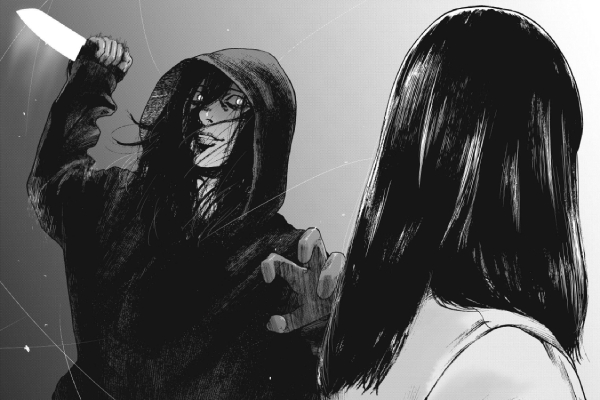
Manga is at its best when it leans into variety, and My Dearest Self With Malice Aforethought is a perfect example of how well the medium handles pure psychological thriller storytelling. It’s fast, twist-heavy, and built for binge-reading, which makes it a great manga for beginners who want suspense instead of fights or power fantasies.
Eiji Urashima is an ordinary college student who wakes up in a situation that makes no sense. A stranger claims to be his girlfriend. His phone is full of unfamiliar messages, and he can’t remember several missing days. As he tries to piece together what happened, the story spirals into a mess of false identities, buried secrets, and the unsettling realization that the person he thought he was might not be real at all.
The biggest strength here is momentum. The first half is relentless, with constant reveals that force you to reevaluate everything you’ve just read. It’s the kind of thriller that feels like it’s toying with the reader, daring you to predict the next reversal before it hits. The art style helps a lot, too. It’s clean and grounded, which keeps the story readable even when the plot gets extreme.
The downside is that the pacing shifts later on. The second half becomes more straightforward as it moves toward closure, and some of the early chaos fades. Still, the core mystery remains compelling, and the series sticks the landing better than most twist-driven manga. If you want a dark page-turner that proves manga can rival any modern thriller, this one does the job.
Genres: Psychological, Thriller, Mystery, Drama
Status: Completed (Seinen)
Hideout
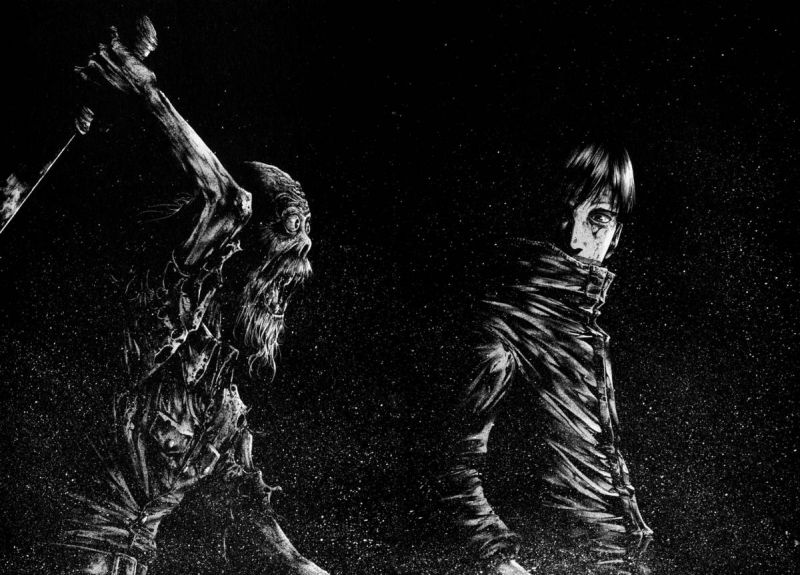
Hideout is one of the shortest titles on this list, and it’s also one of the most suffocating. In just nine chapters, Masasumi Kakizaki delivers a brutal survival horror story that doubles as a descent into grief, resentment, and madness. It’s an ideal manga for beginners who want something dark, fast, and self-contained without committing to a long series.
A failed writer named Seiichi travels to a remote island with his wife after the death of their son. The trip is framed as an attempt to repair their relationship, but Seiichi has a colder plan in mind. When things spiral out of control, the couple end up in a hidden cave, and the story turns into something far worse. The tension comes from the setting as much as the characters. Hideout traps you in tight spaces, cuts away to ugly fragments of the past, and keeps pushing its protagonist deeper into panic and paranoia.
The biggest reason it works is the pacing. There’s no filler, no detours, and no softening the blows. Every chapter keeps escalating the dread. Kakizaki’s art is full of heavy shadows and oppressive blacks that make the cave feel alive, and the claustrophobic composition forces your eyes to linger on every ugly detail.
The only warning is that Hideout is bleak to the core. There’s no comfort here, and the violence is intense. As a short horror experience, it shows how far manga can go in atmosphere and psychological pressure.
Genres: Horror, Psychological
Status: Completed (Seinen)
Monster
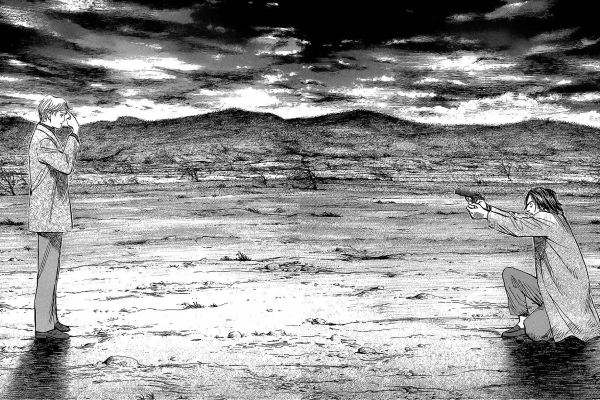
Widely considered the greatest mystery-thriller in manga history, Monster is the kind of long-form suspense story that proves how ambitious the medium can get. It’s also one of the best manga for beginners who want something grounded, tense, and smart.
Naoki Urasawa sets the story in post-Cold War Europe and builds everything around a single decision. Dr. Kenzo Tenma, a Japanese neurosurgeon in Germany, chooses to save a young boy’s life instead of prioritizing an influential political figure. Years later, that boy resurfaces as Johan Liebert, a chilling, charismatic figure who leaves death and devastation in his wake. Tenma’s attempt to stop him turns into a slow, methodical pursuit across cities, lives, and buried histories.
What makes Monster so readable is its clarity. Urasawa’s pacing is patient, but always clear, and his art leans realistic, with expressive faces and cinematic staging that keeps even quiet conversations loaded with dread. Monster’s hook isn’t gore or shock, but moral pressure. The series keeps asking what responsibility looks like when a good choice leads somewhere unforgivable.
The downside is commitment. Monster is long, dark, and emotionally heavy, so it’s not a casual read. But if you want a beginner-friendly thriller that rewards attention and builds tension the hard way, it doesn’t get much better.
Genres: Mystery, Thriller, Psychological, Drama
Status: Completed (Seinen)
Vinland Saga
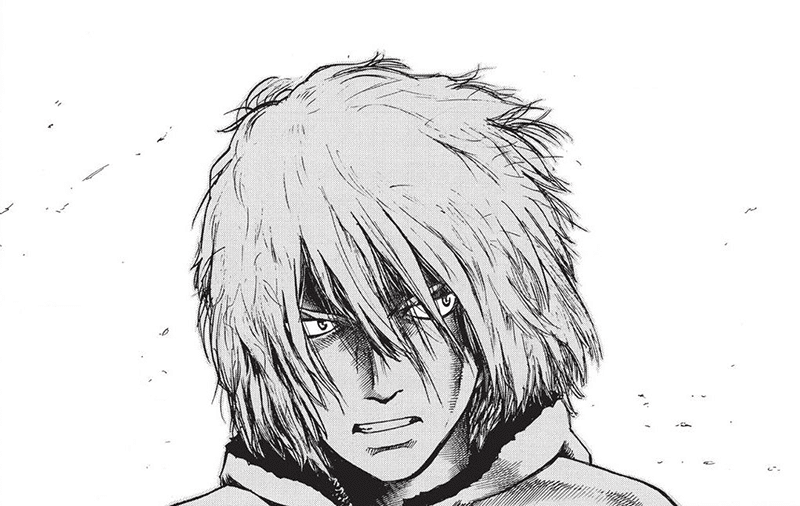
Vinland Saga is one of the most ambitious seinen manga of the modern era, dropping you into 11th-century Europe at the height of Viking violence and political upheaval. It’s a great manga for beginners who want something grounded, cinematic, and more character-driven than a straightforward power fantasy.
Thorfinn, the son of a legendary warrior, ends up tied to Askeladd, a mercenary leader who’s as charismatic as he’s ruthless. What starts as a revenge-driven war story quickly widens into a larger portrait of power, survival, and the damage violence leaves behind.
Makoto Yukimura’s art is a huge part of that appeal. The world feels physical, cold, and alive, from cramped ships and muddy battlefields to quiet villages that look like they’ve been taken right out of real history. The action is blunt and readable, but Vinland Saga isn’t content to focus solely on battles. Over time, it becomes more reflective, digging into guilt, trauma, and the cost of building your identity around vengeance.
This is also the series’ biggest drawback. Later arcs slow down and trade constant warfare for character work, which won’t work for every reader. Still, as a manga for beginners, it’s a strong introduction to long-form storytelling that’s brutal, thoughtful, and genuinely human.
Genres: Historical, Action, Drama
Status: Completed (Seinen)
Berserk
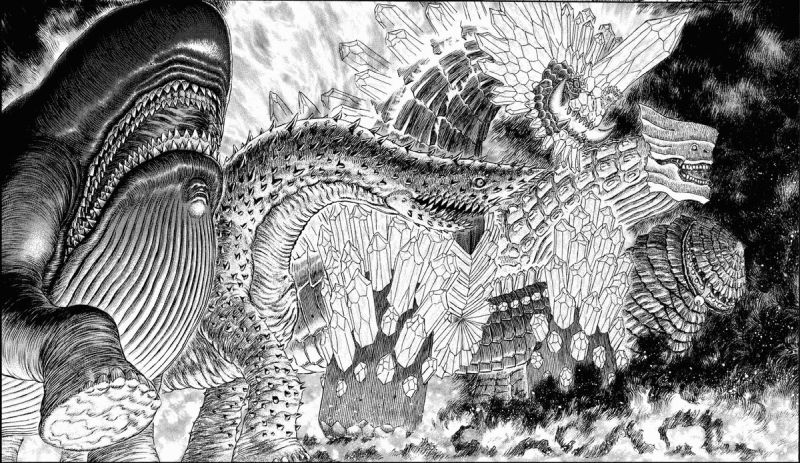
At first glance, Berserk looks like pure dark fantasy: a lone swordsman with an absurdly oversized blade, cutting through demons in a bleak medieval world. Once you start reading, it becomes clear why it’s such a landmark. Beneath the gore and spectacle is a long-form tragedy about survival, trauma, and the kind of ambition that ruins everything it touches.
Guts begins as a wandering killer marked by a brand, forced to fight demonic apostles and other nightmares that prey on humanity. The series hits its emotional core when it rewinds into the Golden Age, where Guts joins the Band of the Hawk and forms a volatile bond with Griffith, a commander whose charisma feels almost supernatural. That slow build is what makes the story work so well. The betrayals don’t land as twists. They land as consequences.
Miura’s artwork is still the gold standard for detailed craftsmanship in manga. Armor, ruined cities, and monstrous designs are drawn with obsessive care, and the action stays readable even when the page is packed with chaos.
This is not light reading, and it isn’t an easy manga for beginners. Berserk is full of extreme violence, sexual assault, and a relentlessly grim tone. It’s also being continued after Kentaro Miura’s death. Still, for readers ready to see how far manga can go, Berserk is essential reading.
Genres: Dark Fantasy, Horror, Action, Drama
Status: Ongoing (Seinen)
I Am a Hero
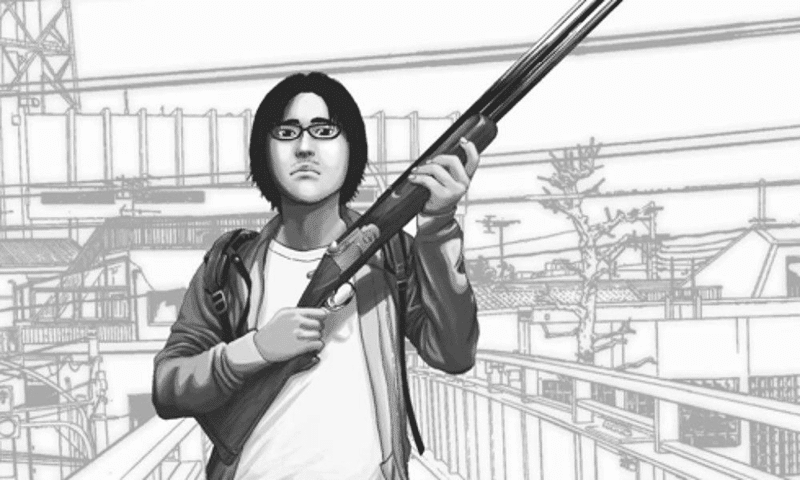
I Am a Hero doesn’t sell the zombie apocalypse as a power fantasy. It sells it as something you stumble through, half-panicked, half-disbelieving, while your own mind betrays you. That’s what makes it such a memorable manga for beginners who want something darker without needing dense lore or a long setup.
Hideo Suzuki is a 35-year-old manga assistant already struggling to function before the outbreak begins. He’s anxious, isolated, and prone to hallucinations, which makes every early encounter feel unstable in the best way. When the infected finally show up, they aren’t a mindless crowd. They’re warped, half-speaking figures locked into their final thoughts, and the series leans hard into grotesque body horror as the situation escalates.
Hanazawa’s biggest strength is grounding the chaos in awkward, believable reactions. Hideo freezes, overthinks, hesitates, and survives more through blind luck and desperation than any heroic instinct. The pacing stays tense, the environments feel alive, and the violence hits because it’s messy and sudden, not stylized.
The main drawback is that the story sprawls later on, and the ending can feel abrupt rather than fully resolved. Even so, the ride is distinct enough to overcome these problems. I Am a Hero is perfect for readers who like survival horror with a heavy psychological edge.
Genres: Horror, Thriller, Survival, Psychological, Zombies
Status: Completed (Seinen)
Uzumaki
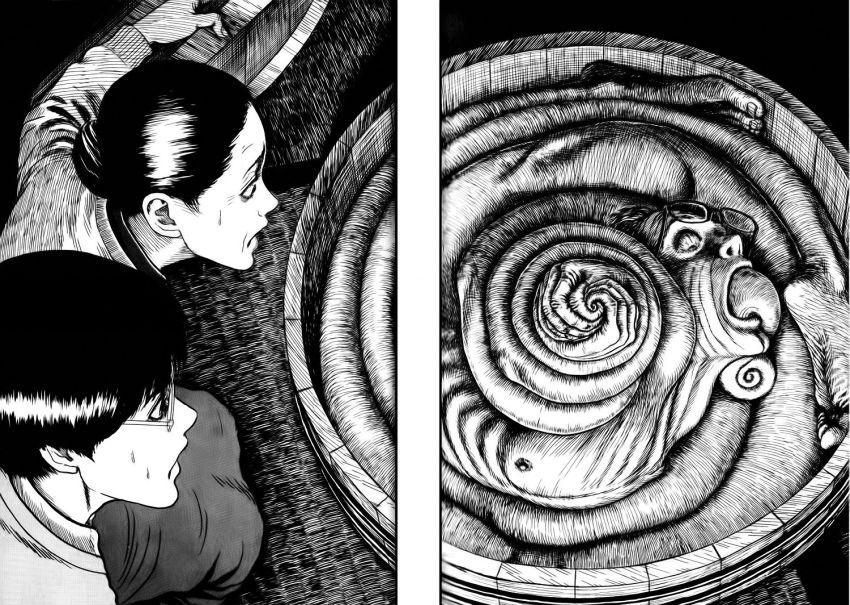
Junji Ito’s Uzumaki is the rare horror manga that feels both simple to grasp and impossible to forget. It traps you in a small coastal town where a single idea, the spiral, starts infecting everything: people’s obsessions, the landscape, and eventually reality itself.
Kirie Goshima and her boyfriend Shuuichi watch Kurouzu-cho tip into madness one incident at a time, and that structure is a big part of why it works so well for newcomers. Most chapters function like self-contained nightmares with clean setups and brutal payoffs, so it’s easy to keep reading even if you’re new to manga. What makes it stand out is that Ito’s horror doesn’t rely on a single villain or twist. The spiral is the enemy, which gives the story a strange, cosmic, inescapable mood.
What sells Uzumaki, though, is the art. Ito’s detailed linework makes every deformation feel wrong, and the body horror is imaginative in a way that’s more unsettling than it is gory. The downside is the content: some chapters are genuinely disturbing, and Kirie is more of a stand-in for the reader than an active character.
Still, Uzumaki is the perfect first horror manga for beginners who want to see how far the medium can push atmosphere and imagery.
Genres: Horror, Supernatural, Mystery, Cosmic Horror
Status: Completed (Seinen)
Goodnight Punpun

Inio Asano’s name is infamous for a reason. He’s one of manga’s best writers of emotional collapse, and Goodnight Punpun is his defining work, a series that’s as brilliant as it’s miserable. This isn’t a light recommendation, and it earns a spot here because it shows what the medium can do once it stops trying to be comforting. It’s a manga for beginners who want something heavy, serious, and unforgettable.
Punpun Onodera starts out as an awkward eleven-year-old with a first crush and a mostly ordinary life. Then Asano pulls the rug out from under him. Family dysfunction, isolation, and quiet shame begin stacking up, and the story follows Punpun through adolescence and adulthood as his world narrows into depression, obsession, and self-destruction. It’s a coming-of-age story, but stripped of the usual optimism.
The visual approach is one of its most striking choices. Asano draws the world in hyper-detailed realism, while Punpun appears as a simplified bird-like figure. It creates distance and intimacy at the same time, making his emotional numbness feel even sharper against the clarity of everything around him. The writing is equally unflinching. Abuse, sexual trauma, anxiety, and self-loathing aren’t background details here. They’re the point.
The drawback is obvious. Goodnight Punpun is relentlessly bleak, and later arcs can feel more dramatic and chaotic than the early volumes. And yet, few manga capture the slow corrosion of hope with this much honesty. Read it when you’re ready for a series that’s traumatizing and doesn’t offer an easy way out. If you want the deep end, this is it.
Genres: Psychological, Drama
Status: Completed (Seinen)