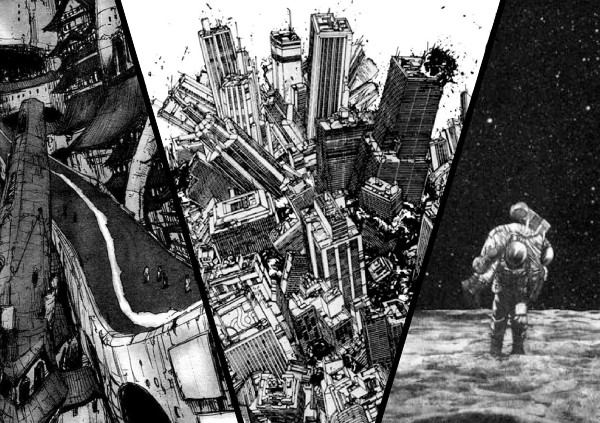
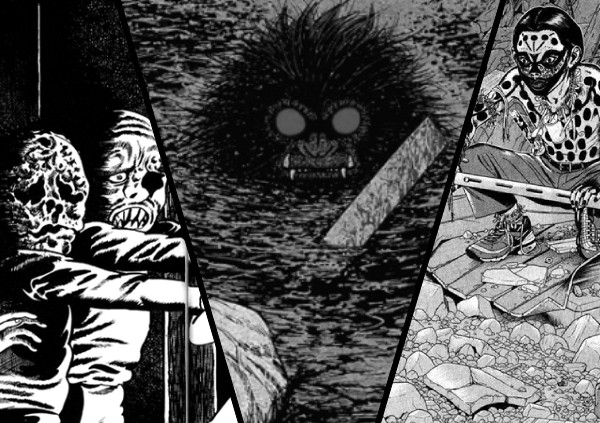
Post-apocalyptic stories have always been popular, so it’s no surprise that post-apocalyptic manga remain some of the most compelling series. There’s just something gripping about watching people survive in a destroyed world, scavenging meaning from the ruins, and clinging to the idea that a better future might still be possible.
This list covers a wide range of post-apocalyptic manga, from stories that unfold during the end of the world to distant futures where humanity is nearly extinct, often thanks to technology gone rogue. You’ll also find manga that explore what happens after civilization collapses and new societies form in unexpected ways. Every series here earns its spot by showing what comes after destruction, whether that’s despair, chaos, or the stubborn resilience that keeps people moving forward.
Post-apocalyptic manga took off during the 1980s with landmark titles like Akira and Nausicaä of the Valley of the Wind, and the genre hasn’t slowed down since. Modern creators keep reinventing the formula, proving that ruined worlds can still feel fresh, unpredictable, and emotionally intense.
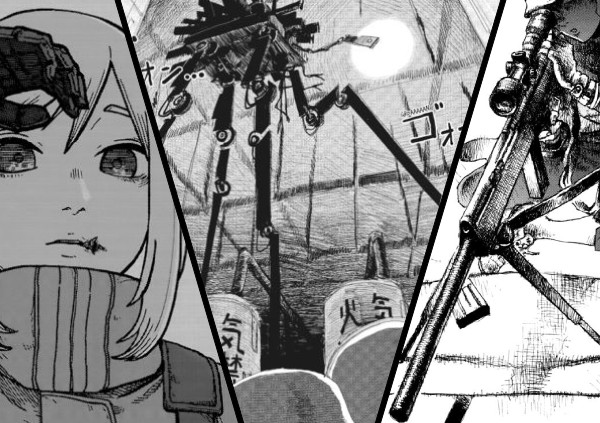
Some series, like Jigoku no Alice and Fist of the North Star, take place in desolate wastelands where humanity survives in small enclaves and violence becomes the norm. Others, like Blame! or Girls’ Last Tour, lean into the quiet horror of near-extinction, where civilization is essentially gone and all that’s left are massive, unfathomable ruins. And if you prefer survival stories about rebuilding society, manga like 7 Seeds and Dr. Stone focus on what it takes to restart from scratch.
All of these manga stand out for how they depict the end of the world or its aftermath in wildly different ways, and they’re my personal recommendations for anyone who wants great post-apocalyptic stories. If you’re looking for more bleak, high-stakes recommendations, check out my lists of the best death game manga, cyberpunk manga, and thriller manga.
Mild spoiler warning: I focus mostly on the post-apocalyptic setting, but certain plot details may be necessary to explain why a series was chosen.
Fiction by René Rehn


With that said, here are the best post-apocalyptic manga (last updated: April 2026).
22. Gachiakuta
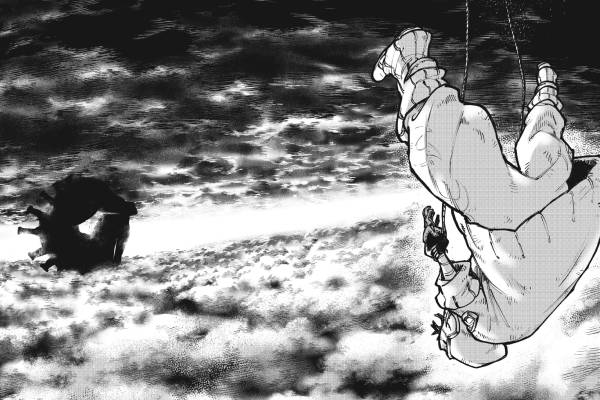
Gachiakuta is a modern shonen manga set in a post-apocalyptic world that’s surprisingly fresh, showing that the genre can still surprise you. It takes a classic revenge story and drops it into a trash-punk wasteland where the garbage is alive, the monsters are hideous, and survival is a daily struggle.
It follows Rudo, a hotheaded kid from the slums of a floating utopia, who gets framed for murder and thrown into the Abyss. Down there, society’s trash doesn’t just mean broken appliances and scraps. It means people. The Abyss is a sprawling ruin made of decades of discarded junk, twisted into endless trash fields where grotesque creatures roam. Rudo quickly learns the rules of this world through the Cleaners, a group of fighters who use Vital Instruments, objects given power through intent and obsession, to carve a path through the filth.
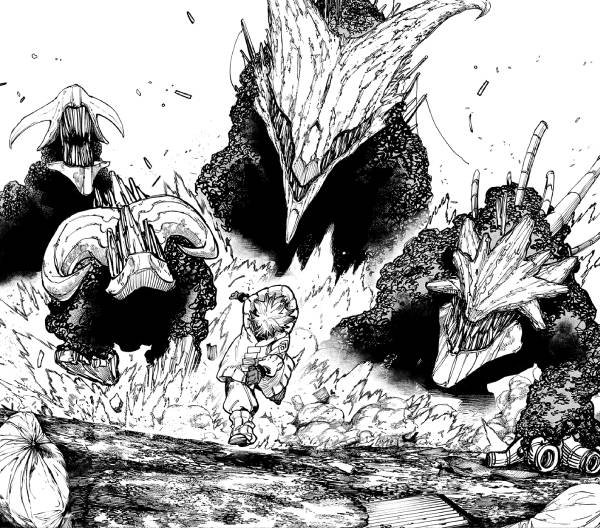
At first glance, the structure is familiar: hidden potential, mentors, squads, escalating battles. What sells Gachiakuta is style. Kei Urana’s art makes the setting feel tactile and grimy, with towering garbage mountains, stitched-together beasts, and frantic action that matches the series’ chaotic energy. Even when the plot hits traditional shonen manga beats, the worldbuilding makes you keep reading just to see what nightmare shows up next.
It’s not reinventing the genre, and some characters lean hard into archetypes, but there’s enough weight beneath the surface. The manga talks about class, disposability, and the ugliness of a society built on throwing things away, and it does so with enough edge to stand out.
Gachiakuta is worth reading if you want a post-apocalyptic manga with modern battle-shonen momentum, striking visuals, and a setting that feels genuinely new.
Genres: Action, Fantasy, Post-Apocalyptic
Status: Ongoing (Shonen)
21. Jigoku no Alice
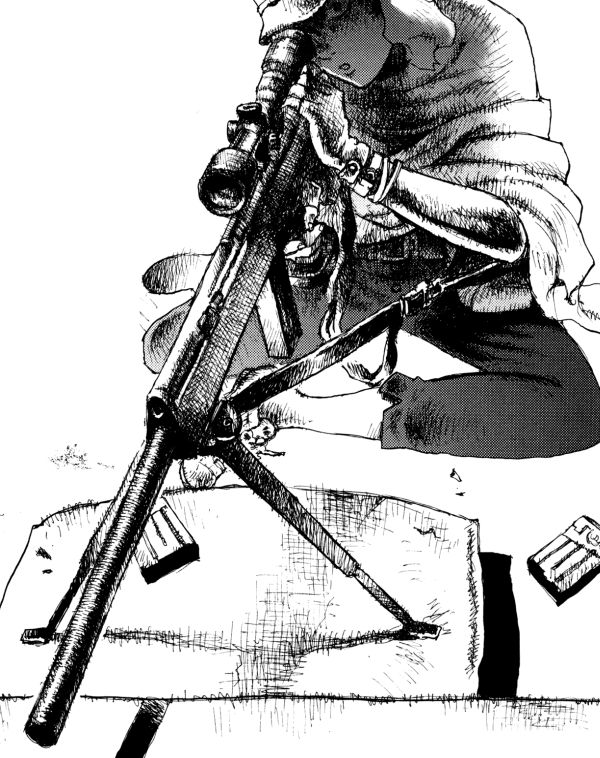
I’m a big fan of Jiro Matsumoto’s work, and Jigoku no Alice feels like his twisted take on post-apocalyptic manga. It’s bleak, ugly, and strangely intimate, the kind of story where the world is already dead and the people left behind seem little better.
The setting is a desolate wasteland where survivors cling to small enclaves built around waterholes and fragile order. In the middle of it all is Shuu, a young sniper living like a hermit in the ruins of a broken city, relying on distance and paranoia to stay alive. His only companion is Alice, a malfunctioning android girl he keeps close like a remnant of a lost world. When Shuu saves someone from a roaming band of killers, he’s invited to live in a settlement, and that’s where the real tension begins. The manga isn’t just about surviving the desert. It’s about whether someone like Shuu can live among people at all without collapsing under the weight of trauma and mistrust.
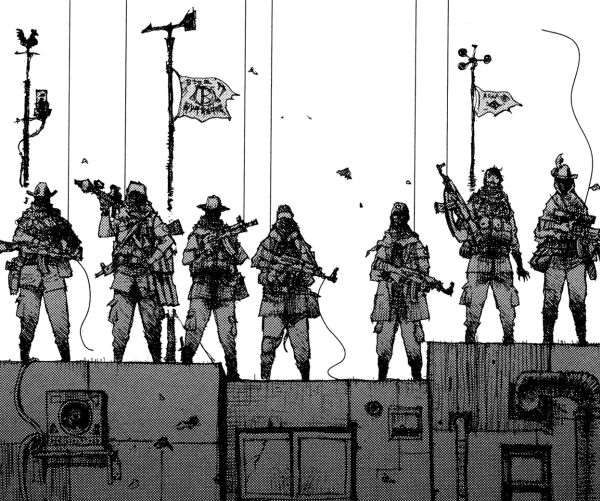
If you’ve read Matsumoto before, you already know his vibe. The violence here isn’t heroic, and it’s rarely satisfying. It’s messy, grotesque, and often exhausting, as if the story is trying to show what brutality does to the human brain over time. That’s also why it works. Jigoku no Alice keeps escalating into darker territory, not for cheap shock value, but to peel back why Shuu is the way he is, and why a community might feel like a threat to him.
It’s not a perfect manga. The pacing can feel abrupt, and some characters are mainly there to push the plot forward. But the atmosphere is oppressive in the best way, and the final stretch hits that signature Matsumoto insanity that makes the whole thing unsettling and unforgettable.
If you want a post-apocalyptic manga that’s uncomfortable, psychological, and willing to go to ugly places, Jigoku no Alice is absolutely worth reading.
Genres: Action, Horror, Psychological
Status: Completed (Seinen)
20. 7 Seeds
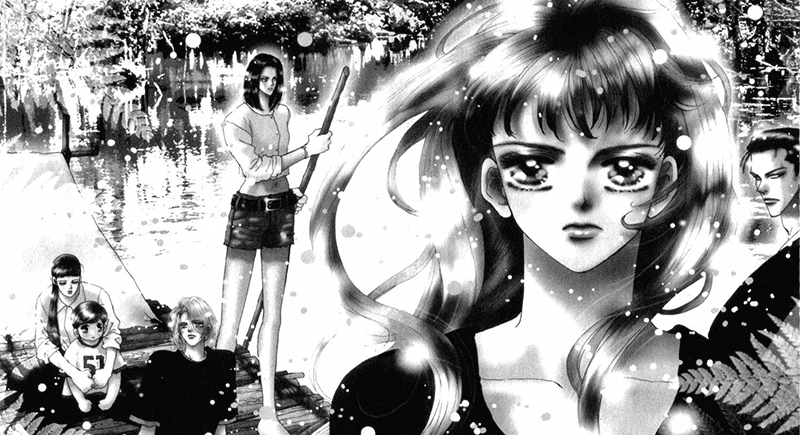
7 Seeds is the kind of post-apocalyptic story that doesn’t romanticize survival. The world ends, the rules disappear, and staying alive becomes the whole story.
When a massive meteor is about to wipe out civilization, a government program called 7SEEDS prepares for the aftermath by placing selected teenagers into cryogenic sleep. Once they wake up, the old world is gone, and nature has reclaimed everything. From there, the manga settles into a narrative that focuses on day-to-day survival. The survivors are thrown into an ecosystem that doesn’t care about them, where freshwater is rare, food is unpredictable, and even the smallest injury can spiral into disaster. Instead of following one main group, the manga tracks multiple teams scattered across Japan, each dealing with different terrain, threats, and internal breakdowns.
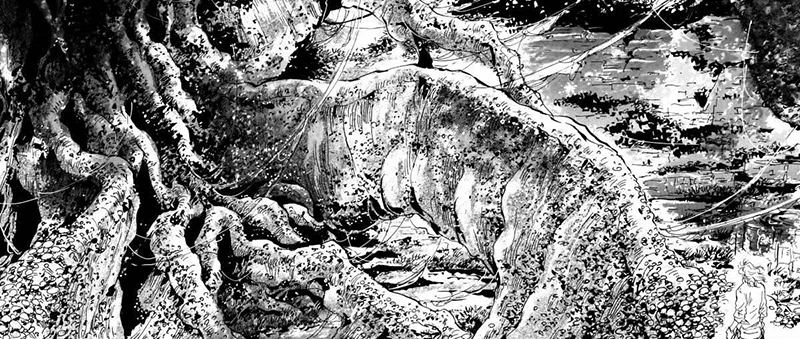
What makes 7 Seeds stand out is how seriously it treats the basics. Characters struggle to find shelter, ration supplies, navigate storms, treat wounds, and solve problems that other survival series often skip. It’s also surprisingly character-driven for such a large-scale setup. The cast is huge, sometimes overwhelming, but that’s the point. You see a wide range of personalities and values collide under pressure, and watching people change, harden, and fall apart is half the appeal.
The art has a distinct shojo-inspired style that can take a few chapters to adjust to, but it works surprisingly well once the story gets rolling. Facial expressions are distinct, emotional beats hit hard, and the manga has a knack for making desperate situations feel personal.
7 Seeds is one of the strongest survival stories in post-apocalyptic manga, focused on the unglamorous reality of staying alive.
Genres: Adventure, Drama, Survival, Sci-Fi
Status: Completed (Shojo)
19. Heavenly Delusion
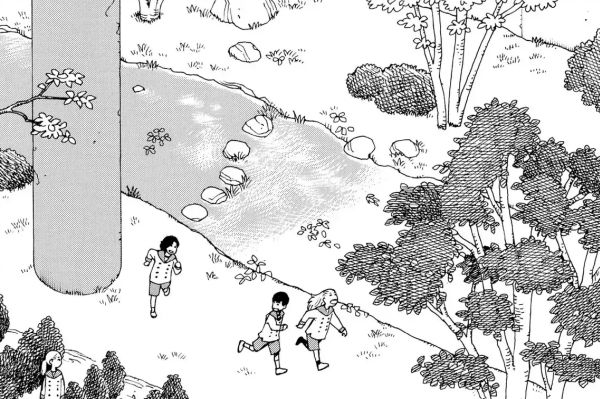
Heavenly Delusion is the kind of post-apocalyptic manga that feels quietly wrong from page one. Japan is in ruins, the future is uncertain, and even the safe zones come with an eerie sense that something is being hidden.
The series stands out for its dual narrative. One half follows Maru and Kiruko, two survivors making their way through a collapsed country in search of a place called Heaven. Their journey takes them across destroyed cityscapes, abandoned highways, half-flooded buildings, and small settlements held together by desperation and fragile trust. People scavenge, bargain, steal, and cling to routines as if they’re all they’ve left. The other half focuses on a group of children living inside a sealed, spotless facility where robots provide food, structure, and comfort. It’s the strangest contrast in the series: Japan is rotting, but the inside of the facility looks almost like a utopia.
What really sets Heavenly Delusion apart is its atmosphere and sense of mystery. The manga never rushes to explain what caused the catastrophe, and it doesn’t give you answers about Heaven right away either. Instead, it builds tension through unsettling details, strange behavior, and the constant feeling that both storylines are circling the same truth. The action is also sharper than you’d expect, especially once the biological horrors show up. The man-eaters, also known as Hiruko, are genuinely creepy, with creature designs that feel imaginative rather than generic.
It’s not flawless. The pacing can feel uneven, the story holds back information for too long, and there are occasional moments of uncomfortable nudity that don’t fit the bleak tone. Still, the characters are compelling, the world feels dangerous, and the mystery keeps tightening in a way that makes it hard to stop reading.
If you want a post-apocalyptic manga with a strong road-trip vibe, unsettling monsters, and a slow-burn mystery that actually pays off through atmosphere, Heavenly Delusion is a strong, modern pick.
Genres: Sci-Fi, Mystery, Adventure, Horror
Status: Ongoing (Seinen)
18. Dr. Stone
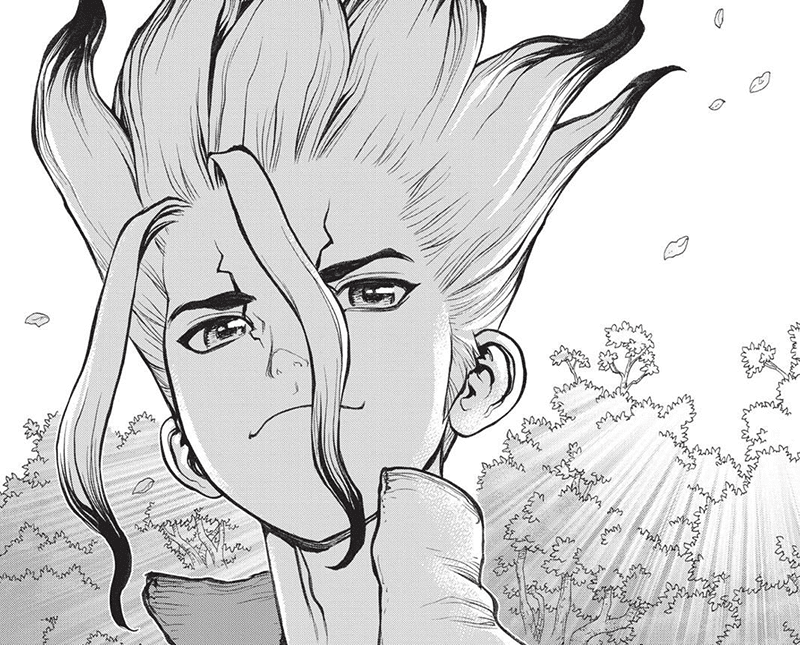
Dr. Stone is one of the most unique post-apocalyptic manga because it isn’t just about surviving the end of the world. It’s about rebuilding society with the power of science, one invention at a time.
When a mysterious light petrifies humanity, thousands of years pass in an instant. Once Senku finally wakes up, the world is gone, cities have crumbled, and the planet has reset into something closer to the Stone Age. The survival angle exists, but it isn’t the main hook. Senku can easily build shelter and secure food. Once he finds a small village of humans living in primitive conditions, the story shifts into its true focus: scientific progress.
That’s where Dr. Stone shines. Watching Senku rebuild technology from scratch is genuinely compelling. The manga breaks down inventions in a way that feels educational without becoming boring, moving from soap and glass to metalworking, electricity, and early machinery. It’s an optimistic story, not a bleak one, and it’s refreshing to read a narrative where humanity’s greatest weapon isn’t violence but curiosity. Boichi’s artwork helps the world feel real. The environments are detailed, the inventions feel tangible, and the character designs are bold enough to match the series’ high-energy tone.
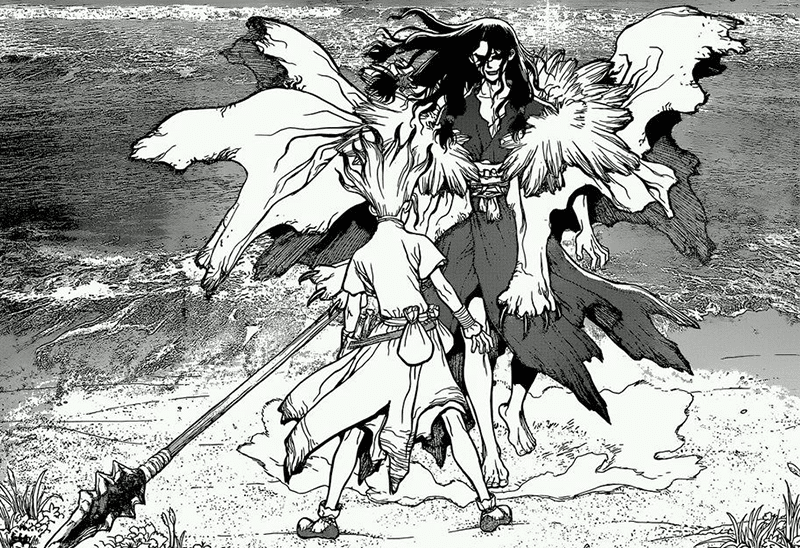
The drawbacks come later. At a certain point, the series pivots into more traditional shonen conflict, complete with faction warfare and a heavy body count, which can feel like tonal whiplash. The science also becomes more hand-wavy once inventions scale up, featuring computers, satellites, and global infrastructure. On top of that, Boichi’s loud comedy and exaggerated facial expressions become grating over time.
Still, even with these problems, Dr. Stone is an easy recommendation. It’s a post-apocalyptic manga with a hopeful tone, a clever premise, and a satisfying sense of progression that differs from a lot of other series.
Genres: Adventure, Sci-Fi, Survival
Status: Completed (Shonen)
17. No. 5
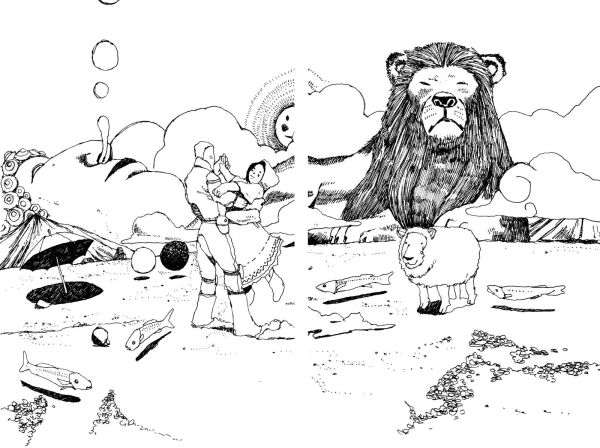
No. 5 by Taiyō Matsumoto is probably the weirdest entry on this list. It’s a cryptic fever dream set in a future where the world has become 70% desert, which puts it firmly among post-apocalyptic manga, even if it can barely be called a conventional story.
The setup follows No. 5, an elite marksman working for the Rainbow Council. One day, he suddenly goes rogue for reasons that aren’t immediately clear. Alongside the enigmatic Matryoshka, he makes his way through broken cities and scorched wastelands while being hunted by his former allies who feel more like surreal caricatures than traditional villains. Civilization still exists in fragments, but it’s warped and unstable, as if the apocalypse didn’t just destroy infrastructure but also shattered the logic holding society together. The world feels hostile in a different way than most survival stories. It isn’t about monsters or resource scarcity. It’s about hallucination logic, bizarre systems, and half-explained decay that makes everything feel uncanny.
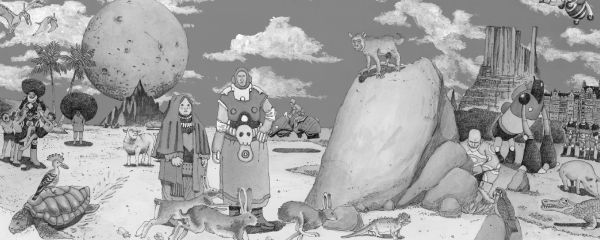
At first glance, No. 5 looks like a science-fiction thriller. In reality, it’s more like a psychedelic riddle. Matsumoto drops you into the middle of the action with almost no exposition. Scenes shift tone without warning, symbolism piles up, and the narrative keeps moving even when you’re not sure what’s even going on. That’ll frustrate a lot of readers, but if you enjoy surreal fiction, it’s exhilarating. The confusion is part of the atmosphere, making the manga feel like a journey through a fever-dream version of the end of the world.
The art is the real hook. Matsumoto’s loose, sketchy style gives the manga a gritty energy that feels both cartoonish and strangely human, more akin to a European graphic novel. Even when the plot feels opaque, the drawings create momentum, and the wasteland setting never stops being visually striking.
No. 5 isn’t trying to be accessible, and it’s not something you read if you expect clear answers or a traditional payoff. But if you want a post-apocalyptic manga that leans hard into surrealism, fragmented worldbuilding, and pure artistic weirdness, this is one of the most distinctive experiences you’ll find.
Genres: Sci-Fi, Action, Psychological, Surreal
Status: Completed (Seinen)
16. I Am a Hero
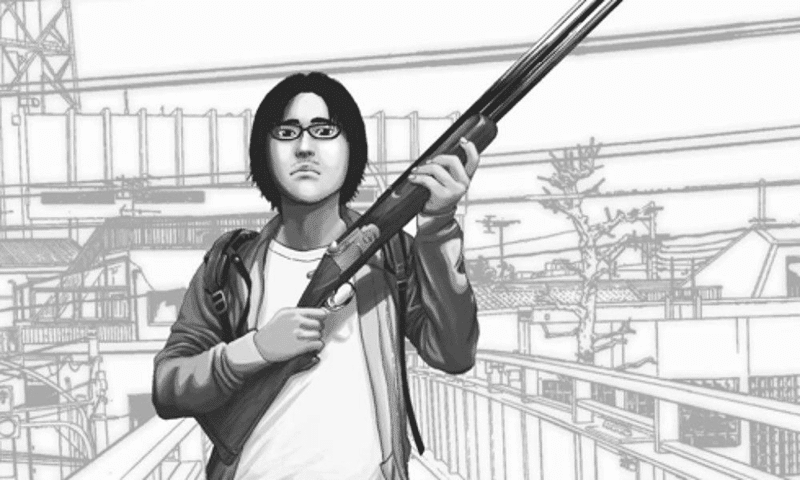
I Am a Hero may be the most iconic zombie manga of all time, and for a good reason. It takes the apocalypse seriously, then makes it worse by forcing you to experience it through a protagonist who can barely trust his own mind.
The story follows Hideo Suzuki, a 35-year-old manga assistant whose life is already falling apart before the outbreak even begins. He’s paranoid, isolated, and plagued by hallucinations. When a mysterious infection spreads, the city doesn’t just descend into chaos overnight. Streets empty out, panic spreads faster than information, and normal life evaporates in a way that feels disturbingly plausible. That grounded realism makes it one of the strongest post-apocalyptic manga around, even before the body horror kicks in.
When it finally does, it’s brutal. The infected aren’t mindless zombies in the usual way. They mutter fragments of their former lives, then mutate into warped abominations that keep evolving. Some become towering horrors that loom over ruined city blocks, while others fuse into grotesque masses that feel more like biological mutations than monsters. It’s unsettling because the designs never feel stylish. Instead, they feel eerily wrong.
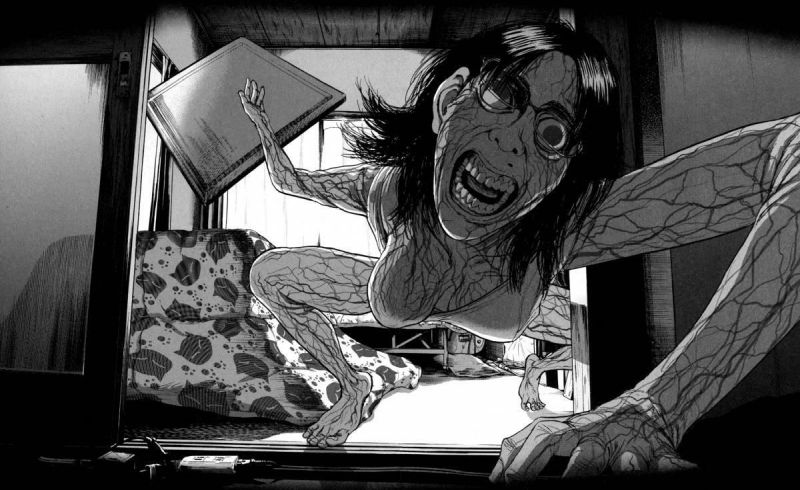
Kengo Hanazawa’s art style is another reason the story feels so grounded. His backgrounds are detailed enough to make the apocalypse feel tangible. When the story turns violent, it’s ugly and sudden, with close-ups that are visceral and hard to shake. The pacing is slow-burn, with long stretches of dread and paranoia that make every encounter feel tense instead of routine.
The biggest drawbacks are the mid-story detours and the ending, which is famously divisive. Even so, the ride is one of the most ambitious and unsettling reads. As a post-apocalyptic manga, it stands out for how grounded, disturbing, and psychologically raw it feels.
Genres: Horror, Thriller, Survival
Status: Completed (Seinen)
15. APOSIMZ
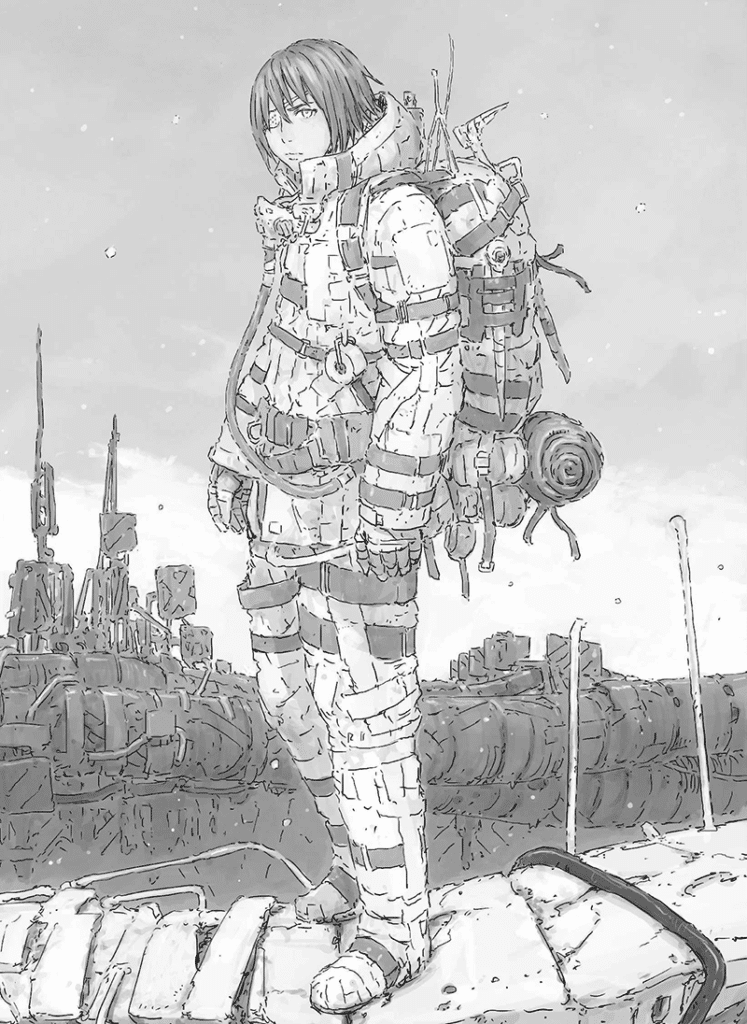
APOSIMZ is one of Tsutomu Nihei’s more modern works, and it presents a fascinating shift in mood. Instead of the dark, claustrophobic density he was known for, this series feels bleached and open, as if his usual nightmare architecture has been replaced with endless snowfields.
The manga is set on the artificial world of APOSIMZ, which is built around a hollow core. Humanity has been driven out of the inner regions and forced to survive on the frozen surface, where small settlements cling to life under constant threat from the Rebedoan Empire and the cold logic of automatons. This choice of setting makes it feel like a post-apocalypse in slow motion. Civilization still exists, but it’s brittle and scattered, surrounded by empty white space and cold machinery. When Etherow meets Titania, an emissary from the core fleeing the Empire, he gets pulled into a war he doesn’t understand. His town is destroyed, he’s mortally wounded, and then transformed into a Regular Frame, a powerful cyborg body that turns him into both a weapon and a target.
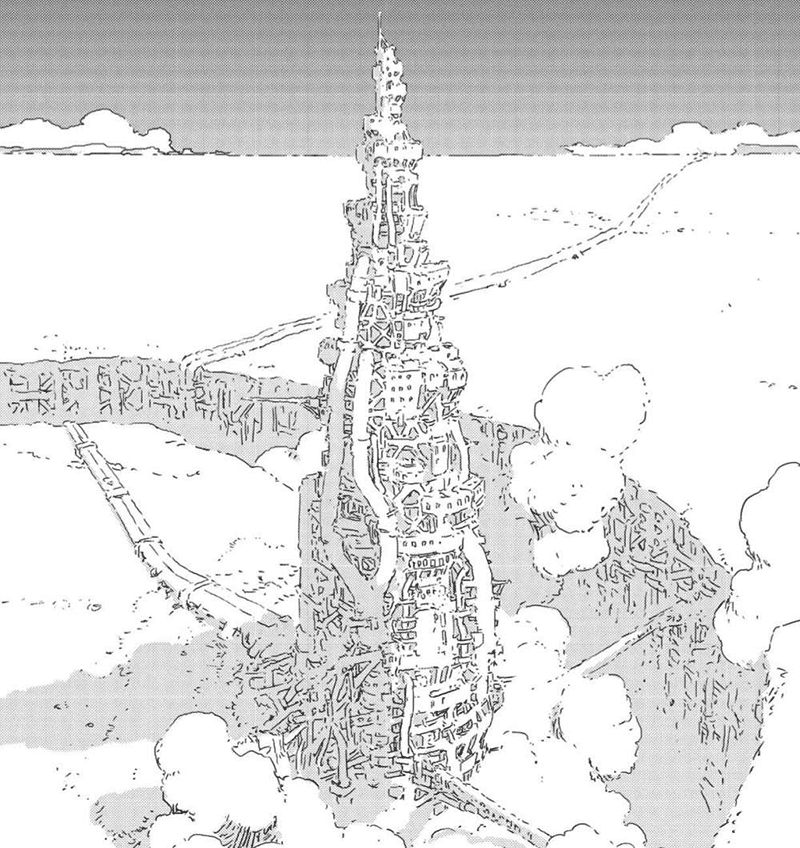
APOSIMZ is more straightforward than Blame!. It leans harder into an adventure narrative, with rebellions, chases, and escalating conflicts, rather than pure atmosphere and isolation. But Nihei’s imagination still carries the experience. The snow-covered wastelands are eerie in their emptiness, the automatons feel alien and predatory, and the scale of the world makes humanity seem small in a way only Nihei does. Even the settlements have a harsh quality to them, like everything is one bad winter away from total collapse.
The biggest drawback is that the characters and villains can feel thin, and the emotional beats don’t hit as hard. Still, the setting alone makes it worth reading. It’s a post-apocalyptic story filtered through cold steel, lost history, and the quiet dread of surviving in a world that was never meant to be lived on.
If you want a post-apocalyptic manga with bleak science-fiction landscapes, relentless automatons, and Nihei’s unmistakable sense of scale, APOSIMZ is a strong, modern pick.
Genres: Sci-Fi, Action, Adventure
Status: Completed (Shonen)
14. Nausicaä of the Valley of the Wind
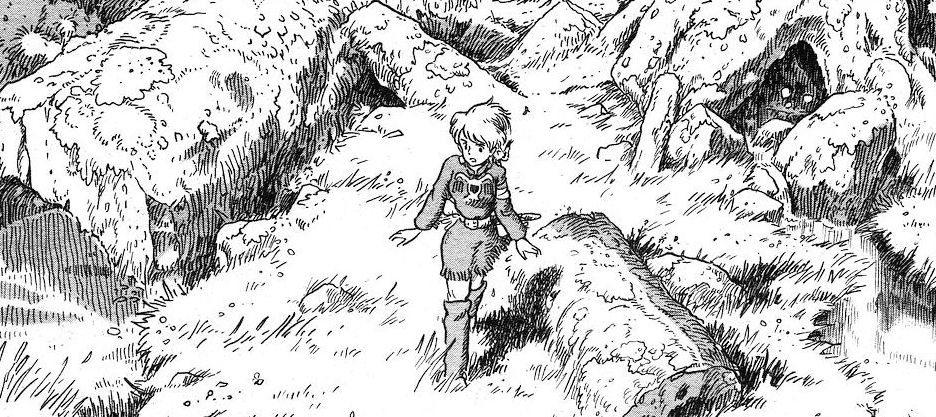
Hayao Miyazaki’s Nausicaä of the Valley of the Wind is a post-apocalyptic masterpiece about a world that poisoned itself, collapsed, but continued anyway. Even after the end of civilization, humanity has become none the wiser. It just finds new ways to repeat the same mistakes.
The story is set long after a catastrophic war reduced the modern world to ash, leaving survivors scattered across small nations fighting over scraps of livable land. The biggest threat isn’t just politics or warfare. It’s the Sea of Corruption, a giant fungal forest that teems with massive insects and spreads toxic spores. Almost no one can travel safely without protective gear, and entire regions are uninhabitable, as if the planet itself is rejecting human presence. That gives Nausicaä its lasting power as a post-apocalyptic manga. The apocalypse isn’t a single event in the past. It’s an ongoing biological reality that shapes how people live, breathe, farm, travel, and wage war.
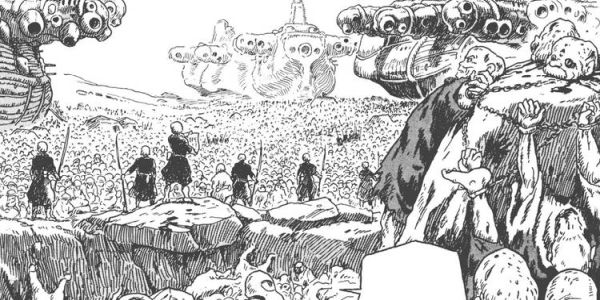
Nausicaä herself stands out because she treats the ruined world as something to understand rather than conquer. She’s compassionate, fearless, and capable, but she’s also surrounded by factions that would rather burn the world down than adapt to it. The story quickly escalates into invasions, rebellions, shifting alliances, and moral compromises, all unfolding in a landscape where one reckless decision can trigger catastrophe. What Miyazaki does better than almost anyone is treat ecology like a system with clear rules that behaves logically and reacts to threats. The giant insects aren’t monsters. They’re inhabitants of this new world. Meanwhile, remnants of old technology, ancient weapons, and half-understood machines are everywhere, ready to drag humanity back into the same self-destruction that caused the collapse in the first place.
It’s a dense manga, and the scope can feel overwhelming at times, but the payoff is enormous. Nausicaä of the Valley of the Wind is a post-apocalyptic manga that combines war, survival, and environmental horror into something mythic and devastating.
Genres: Adventure, Action, Drama, Sci-Fi
Status: Completed (Seinen)
13. Battle Angel Alita
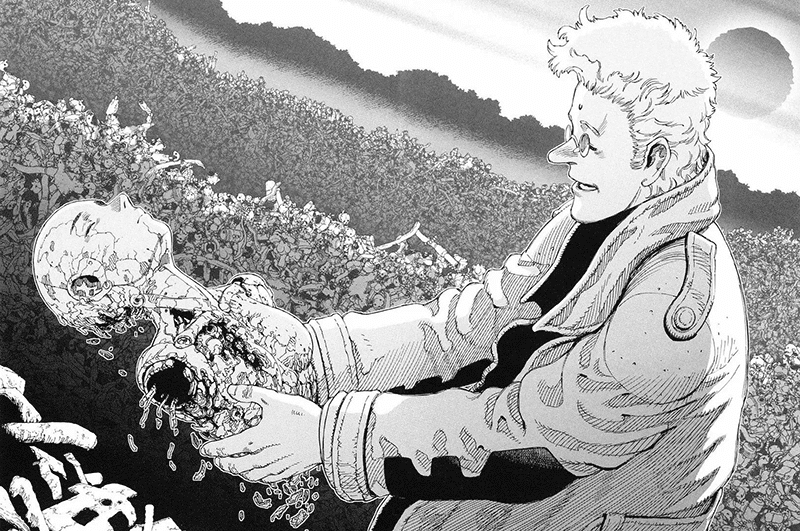
Battle Angel Alita is post-apocalyptic cyberpunk at its most iconic: a grimy future where humanity survives on scraps while the last remnants of civilization float safely above the wreckage. It’s full of violent, kinetic action, but what makes it work is how personal Alita’s journey feels in such a dehumanizing world.
The story begins in the Scrapyard, a sprawling junk city built from the refuse of Zalem, a mysterious high-tech utopia hanging in the sky. Dr. Ido, a cybernetics specialist, discovers the remains of a cyborg girl in the trash. After restoring her, he names her Alita. With no memory of her past, she starts off innocent, but the world doesn’t give her much time to stay that way. In this setting, violence is casual, bodies are upgradable, and survival depends on the number and quality of your enhancements. The Scrapyard is full of broken people, half-functioning cyborgs, mercenaries, and bounty hunters chasing money in a place that’s running on scraps.
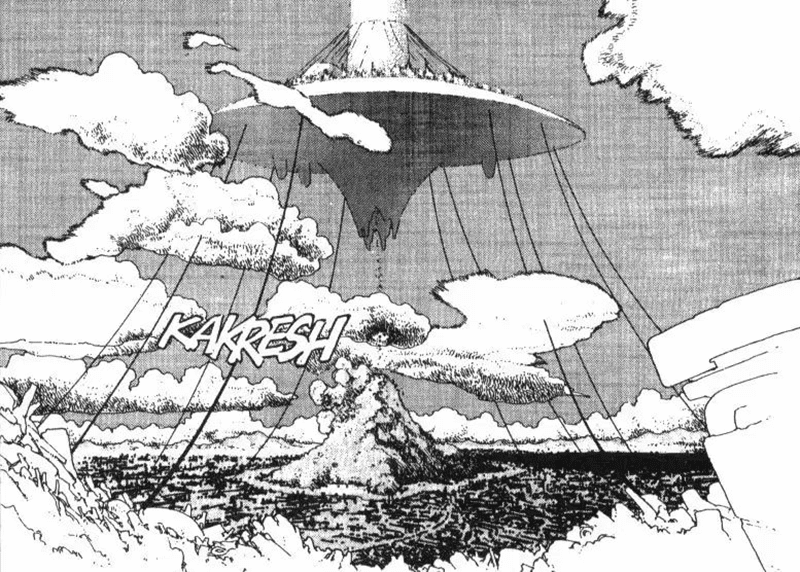
Kishiro’s worldbuilding is what makes the setting so interesting. The contrast between the ground-level decay and Zalem’s unreachable perfection gives the manga its constant tension. It’s one of the best examples of post-apocalyptic manga where the collapse shapes every decision people make. The action is fantastic, especially once the story leans into gladiatorial violence and the legendary Motorball arc. Kishiro’s choreography is clean, brutal, and easy to follow, and the cyborg designs are imaginative in the best way, balancing cool upgrades with genuinely grotesque body horror.
What elevates Battle Angel Alita beyond its fights is the emotional core. Under all the metal and blood, it’s a story about identity, free will, and self-determination. Alita isn’t just trying to survive. She’s trying to figure out who she is, what she believes in, and whether a world built on exploitation and cruelty deserves her compassion.
Battle Angel Alita stands out as a post-apocalyptic manga for its gritty atmosphere, unforgettable action, and a surprisingly human character arc.
Genres: Sci-Fi, Action, Cyberpunk
Status: Completed (Seinen)
12. Knights of Sidonia
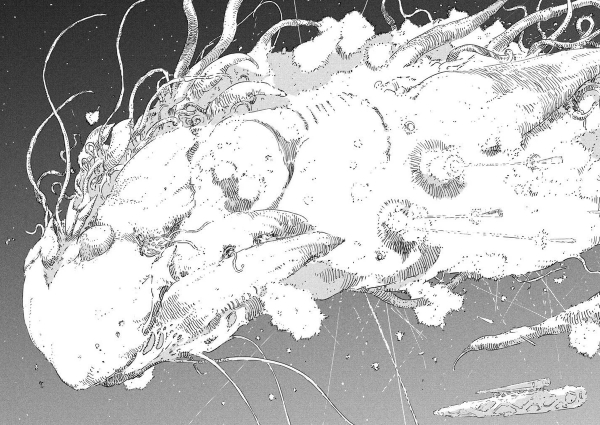
Knights of Sidonia is a post-apocalyptic manga that turns the end of the world into a full-on space opera. Earth is long gone, humanity is being hunted down, and survival means living inside a moving fortress.
Instead of ruined cities and wastelands, the apocalypse here is set in deep space. The last remnants of humanity drift through the void aboard massive seed ships, and Sidonia is one of the few still holding on. It’s a self-contained world with its own farms, factories, military, and social order, but everything feels temporary because extinction is always just one battle away. The threat is the Gauna, an alien presence that doesn’t feel like a rival species so much as a cosmic infection. They are grotesque, shifting creatures with biology that feels fundamentally wrong, and Nihei keeps them unsettling by refusing to over-explain what they are or why they hunt humanity. The result is a setting where normal life exists, but only as a fragile illusion built on top of constant emergency.
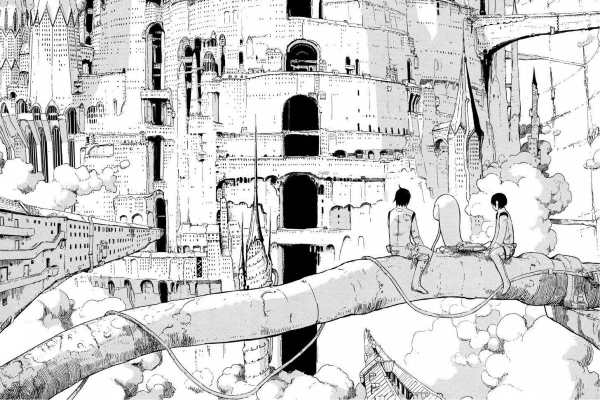
What makes Knights of Sidonia stand out is the balance between scale and atmosphere. The mech combat is huge, fast, and surprisingly readable, with weighty motion and a real sense of distance. At the same time, Nihei brings his signature love of brutalist architecture and cold machinery into every panel, making Sidonia feel like a labyrinth of steel and engineering. Compared to Blame! or Biomega, this is his most accessible work, and the tone reflects that. Between battles, you get humor, relationships, and day-to-day routines that feel almost shonen-coded at times. Some readers might not like that shift, but it makes the ship feel alive, and the deaths hit harder when the Gauna inevitably break through.
It’s also a great reminder that post-apocalyptic manga doesn’t have to be set on Earth to capture the same dread. Knights of Sidonia is still about a dwindling humanity, impossible odds, and the terrifying feeling that the universe doesn’t care if your species survives.
If you want a high-concept apocalypse story with massive space battles, unsettling alien horror, and Nihei’s worldbuilding, Knights of Sidonia is an easy recommendation.
Genres: Sci-Fi, Action, Mecha, Horror
Status: Completed (Seinen)
11. The Drifting Classroom
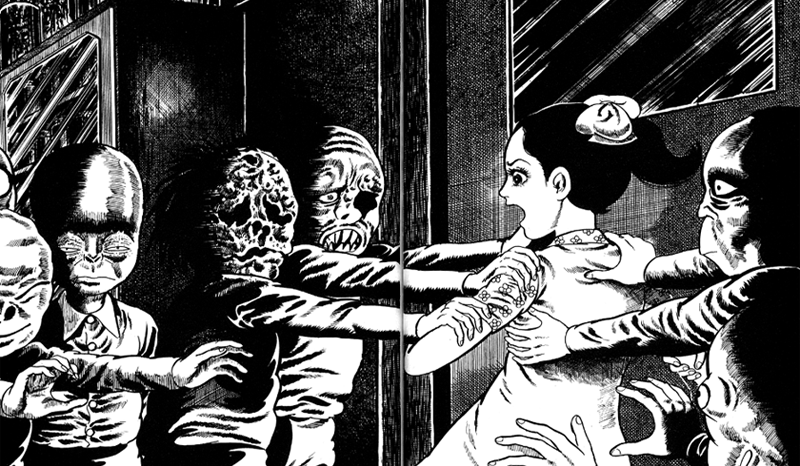
Kazuo Umezu’s The Drifting Classroom is one of the most vicious survival horror stories in manga history. It takes an ordinary elementary school and drops it into a post-apocalyptic wasteland where the real nightmare is realizing no one is coming to save you.
After a sudden tremor, the school is ripped out of the modern world and stranded in a barren future of sand, ruin, and environmental collapse. Food is limited, water is nearly nonexistent, and the atmosphere feels actively hostile. This isn’t a fun survival scenario. The kids have to deal with sickness, starvation, panic, and the constant threat of violence from both outsiders and each other. Even the adults fall apart quickly, which makes the situation worse instead of safer.
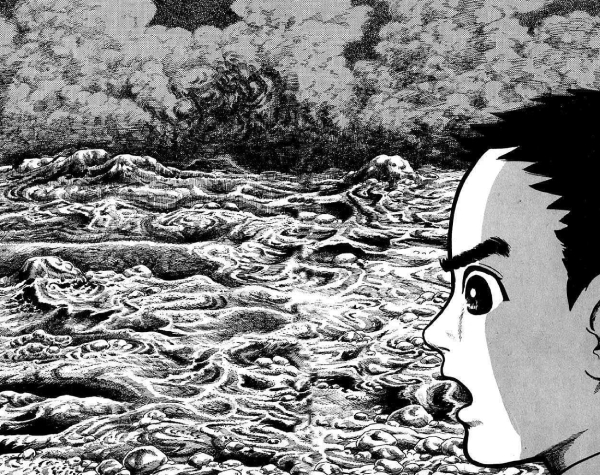
What makes The Drifting Classroom such a foundational post-apocalyptic manga is how cruelly human it feels. Umezu doesn’t treat survival as heroic. It’s ugly, desperate, and paranoid, and the story never lets you get comfortable. One crisis follows another, and the tension comes from watching children try to build order while the world keeps pushing them toward chaos. The setting also has some genuinely haunting imagery, with remnants of civilization buried under the sand, shattered buildings, and eerie abandoned spaces that look like they were swallowed by time. It’s the kind of apocalyptic landscape that feels familiar and alien at the same time.
The art is undeniably old-school, but it’s effective when it counts, especially when it leans into grotesque fear, wide-eyed panic, and nightmare escalation. Some later developments get wilder and more outlandish, but even then, the manga keeps the emotional weight high because the stakes never stop being life-or-death.
The Drifting Classroom is a classic post-apocalyptic manga that feels mean, relentless, and genuinely disturbing.
Genres: Horror, Sci-Fi, Survival, Psychological
Status: Completed (Shonen)
10. Fire Punch
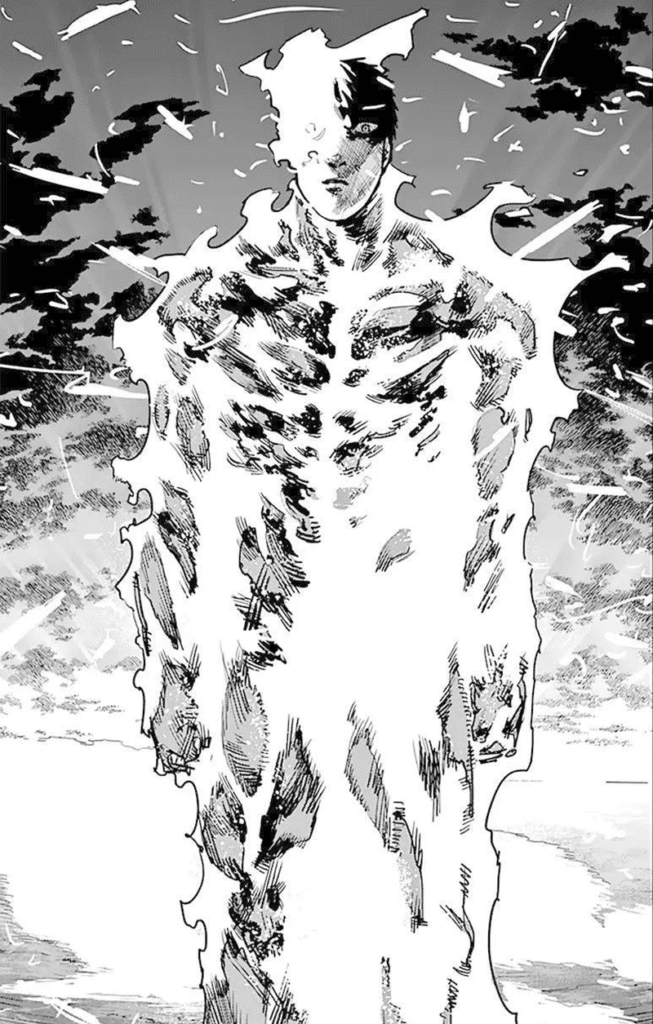
Fire Punch might be one of the bleakest post-apocalyptic manga ever written, and it doesn’t pretend otherwise. It’s a revenge story where suffering isn’t just a plot point. It’s the default state of the world.
Civilization has collapsed after a powerful Blessed known as the Ice Witch freezes the planet into endless winter. Humanity survives in scattered settlements, and the only order that remains is whatever cruelty the strong can enforce. Agni and his sister Luna live in one of these small villages, scraping by because they possess regenerative abilities that let them survive injuries that would kill normal people. When a man named Doma burns their home with flames that won’t go out, Fire Punch kicks off with one of the nastiest revenge hooks in modern manga. Agni endures years of agony without being able to die, then walks across the ice, forever burning and bent on revenge.
What makes Fire Punch stand out isn’t just the violence, although it’s genuinely extreme. Fujimoto uses cannibalism, exploitation, and casual brutality to show how quickly humans can turn into monsters. The world feels lawless and desperate, and even the rare civilized places have a rotten core. You don’t get comfort or heroic morality here. You get people adapting to horror until it feels normal.
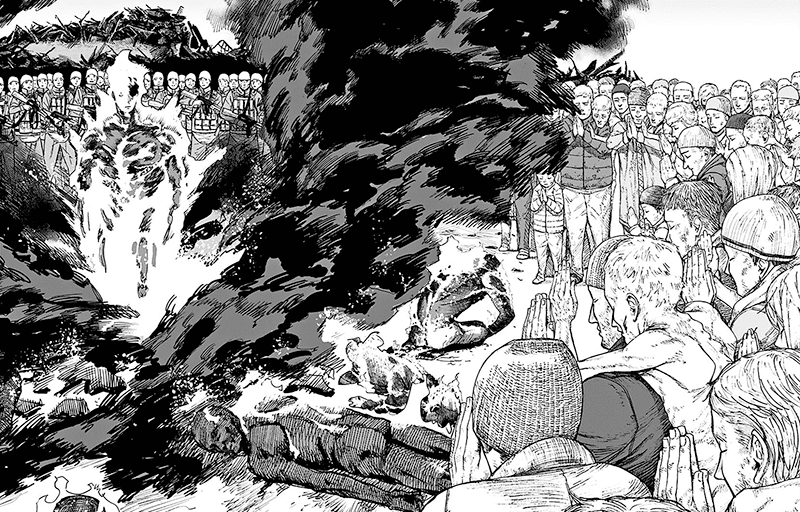
Halfway through, the manga becomes something even stranger. The introduction of Togata turns Fire Punch into a meta-story that mocks tropes, reshapes character arcs, and openly plays with the idea of suffering as entertainment. It’s bold, weird, and often brilliant, even when it feels like it’s intentionally derailing itself. Fujimoto’s sketchy, kinetic art style fits the tone perfectly, making the frozen wasteland feel empty and endless.
Fire Punch isn’t clean or polished, and it definitely isn’t for everyone. It’s nihilistic, unpredictable, and sometimes utterly absurd. Still, if you want a post-apocalyptic manga that goes all-in on human cruelty, survival-of-the-fittest logic, and existential collapse, it’s unforgettable.
Genres: Action, Horror, Psychological, Post-Apocalyptic
Status: Completed (Shonen)
9. Attack on Titan
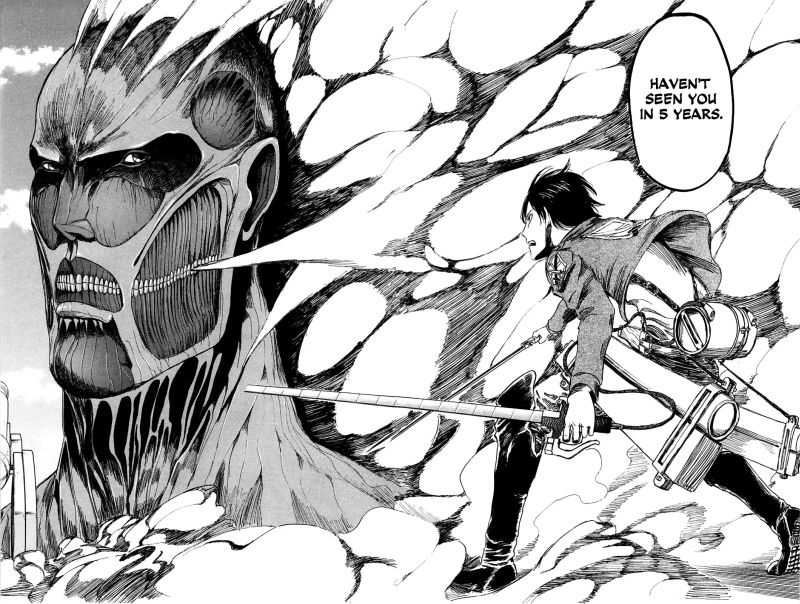
Attack on Titan might be one of the most popular post-apocalyptic manga of all time, and it earns that reputation on sheer intensity alone. It drops you into a world where civilization is already broken, and the only thing separating humanity from extinction is a wall that can be breached at any moment.
The setting is simple, brutal, and instantly effective. The remnants of humanity live inside a massive walled city, surrounded by Titans, grotesque humanoid monsters that devour people with blank smiles and unnatural calm. People grow up believing the walls’ protection to be absolute, but that illusion is shattered and survival becomes a militarized routine. The apocalypse isn’t just outside the walls. It’s inside them too, in the form of paranoia, propaganda, and a government that keeps tightening the grip on its people.
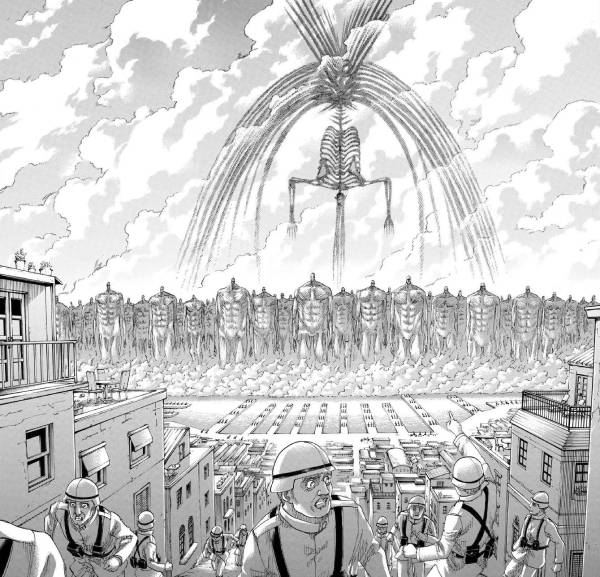
What makes the series stand out is how it evolves while still feeling relentlessly tense. The first half is pure survival horror fueled by revenge, with the Survey Corps pushing into Titan territory using maneuvering gear that creates some of the most distinctive action in shonen manga. The sense of scale is incredible, from towering walls to wide-open plains, and the Titans never stop being unsettling because they’re not cool monsters. They’re wrong on a fundamental level. As the mystery surrounding their origins deepens, the story expands into a grander political epic.
That shift is also the series’ biggest drawback. As the world opens up, the claustrophobic post-apocalyptic survival angle gets replaced by a sprawling war narrative filled with atrocities and ideological conflict. Some readers love that ambition. Others, me included, miss the earlier simplicity and dread. The ending is also famously divisive, and whether it lands will depend on how you feel about the series’ thematic swing.
Even with these uneven stretches, Attack on Titan remains one of the most compelling shonen series. It’s a post-apocalyptic manga with brutal stakes, unforgettable action, and a story that constantly escalates.
Genres: Action, Dark Fantasy, Horror, Mystery
Status: Completed (Shonen)
8. Usuzumi no Hate

Usuzumi no Hate is one of the most quietly devastating post-apocalyptic manga I’ve read in a long time. It isn’t loud or action-heavy. It’s the kind of story that wins you over with silence, ruins, and the slow realization that the world ended so completely that normal life is nothing but a memory.
The premise centers on a girl named Saya. She walks alone through the remains of a dead Earth, carrying out a mission that feels both practical and heartbreakingly pointless: search for survivors and cleanse the land of the calamity that wiped out humanity. The world around her is full of the details that make the apocalypse feel real, not cinematic. You get empty streets swallowed by nature, interiors left frozen in time, and places that used to be crowded now reduced to echoes. Even when the scenery is beautiful, it’s beautiful in a quiet, melancholic way.
What makes the series stand out is how much emotion it gets out of small encounters. This is a series that understands how loneliness changes the meaning of everything. Saya runs into maintenance robots that still function long after people disappeared, maintaining spaces that will never be used again. She finds traces of lives that ended quietly. And because she isn’t an overly dramatic protagonist, a lot of the sadness lands through contrast, in how calmly she observes things that should feel unbearable. The atmosphere is gentle, but the worldbuilding is cruel.
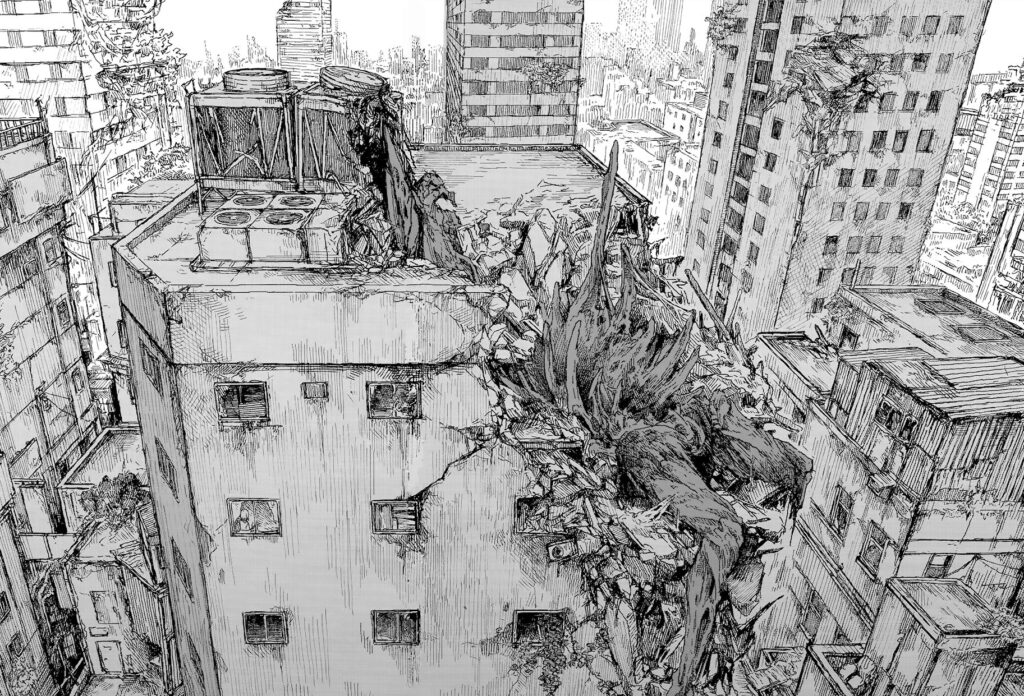
It also has this strange sense of wonder that keeps it from becoming pure misery. Saya keeps moving forward, the ruins keep expanding, and every chapter feels like stepping into another forgotten pocket of the world. If you’re the type of reader who loves the empty world of Girls’ Last Tour, this one has a similar vibe, just with a more grounded, melancholic tone.
Usuzumi no Hate is a post-apocalyptic manga that’s haunting, slow-burn, and weirdly beautiful.
Genres: Sci-Fi, Adventure, Drama
Status: Ongoing (Seinen)
7. Fist of the North Star
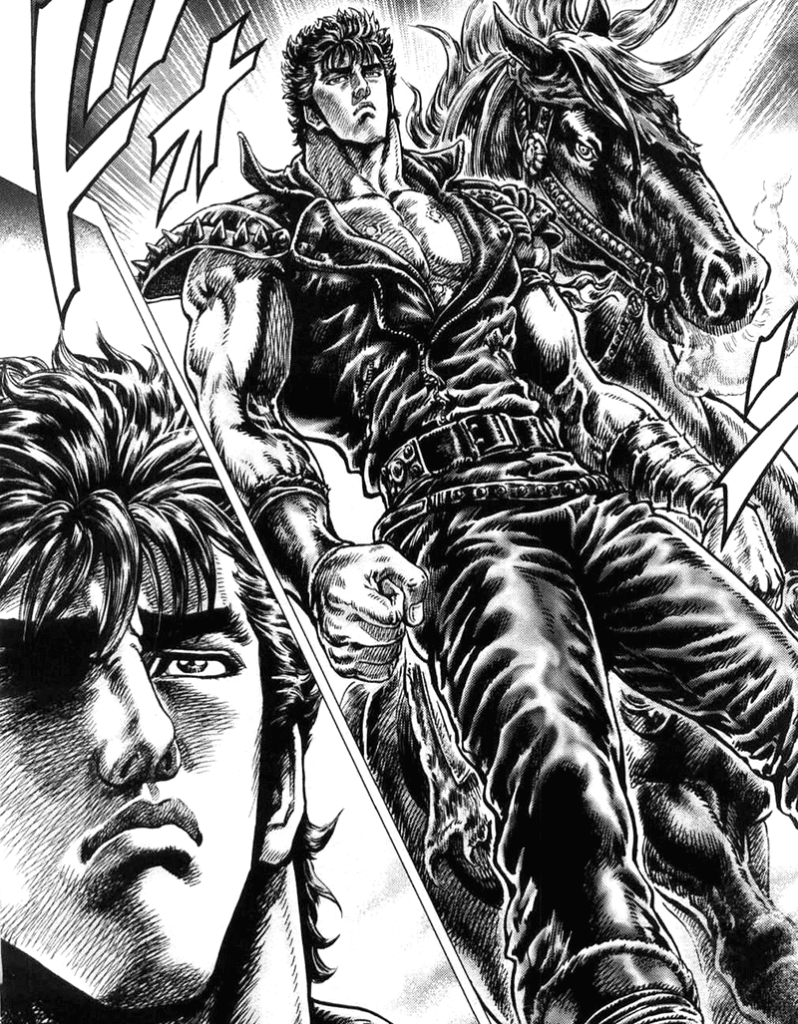
Fist of the North Star is pure 1980s apocalypse fantasy, a testosterone-fueled battle shonen where the world ends and the only law left is strength. If you want Mad Max energy filtered through martial arts mythology, this is the classic blueprint.
The setting is as iconic as it gets. After a nuclear war reduces civilization to rubble, the planet turns into a wasteland of ruined cities, endless deserts, and scavenger settlements clinging to life. Food is scarce, clean water is priceless, and the roads belong to violent gangs who treat ordinary people like prey. It’s the kind of post-apocalyptic manga world where hope doesn’t exist unless someone strong enough enforces it. And that’s where Kenshiro comes in. He isn’t just a survivor trying to make it to the next town. He’s the heir to Hokuto Shinken, a deadly martial art that lets him destroy enemies with pressure point strikes that literally make bodies explode.
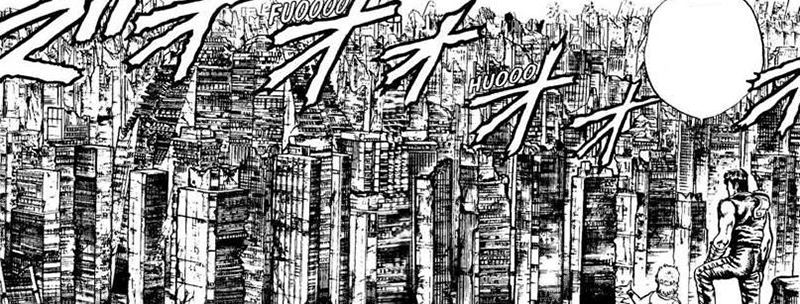
That contrast makes Fist of the North Star so enjoyable. The world is bleak and lawless, but the story plays like a myth. Kenshiro wanders from tragedy to tragedy, tearing through bandits, warlords, and tyrants who build their own kingdoms on top of the ruins. It’s episodic in the best way, with each arc introducing new villains, desperate towns, and over-the-top duels befitting the end of the world. The violence is absurdly graphic, but it’s also stylized in a way that makes it operatic rather than gratuitous.
If you want a post-apocalyptic manga set in a desert wasteland full of cruel warlords and a near-mythic hero who turns survival into spectacle, Fist of the North Star is the gold standard.
Genres: Action, Martial Arts, Adventure
Status: Completed (Shonen)
6. Biomega
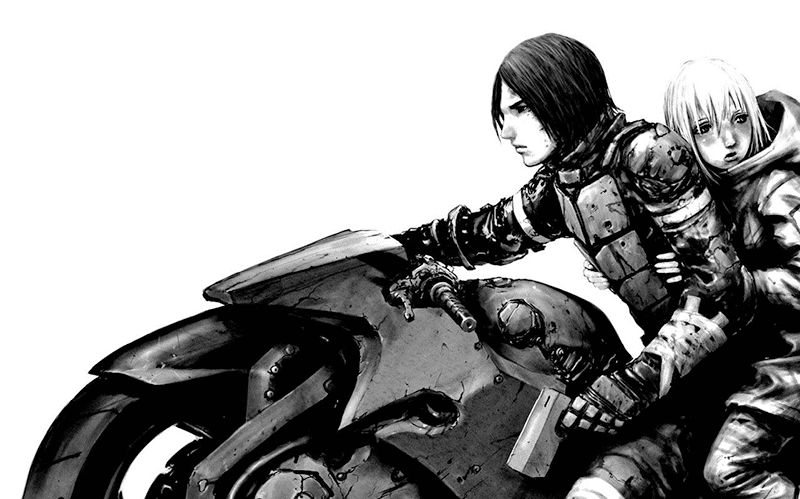
Most post-apocalyptic manga slow down and focus on survival, grief, or rebuilding, but Biomega does the exact opposite. It’s one of the fastest, most violent, and most unhinged cyberpunk action rides ever written.
The world is collapsing under the N5S virus, a pathogen that turns humans into grotesque biomechanical drones, half flesh and half machine. Society doesn’t slowly crumble here. It’s already gone in massive chunks, with whole regions reduced to ruined infrastructure, infested wastelands, and militarized zones. Zouichi Kanoe, a synthetic human working for TOA Heavy Industries, rides through the wreckage with his AI companion, tasked with retrieving a human immune to the virus. On paper, this sounds straightforward, but Biomega escalates almost immediately into corporate warfare, bioengineered monstrosities, and cult-like forces treating the apocalypse as a stepping stone toward something higher. It’s a post-apocalyptic manga where the end of the world isn’t just a tragedy. It’s a transformation, and it isn’t a good one.
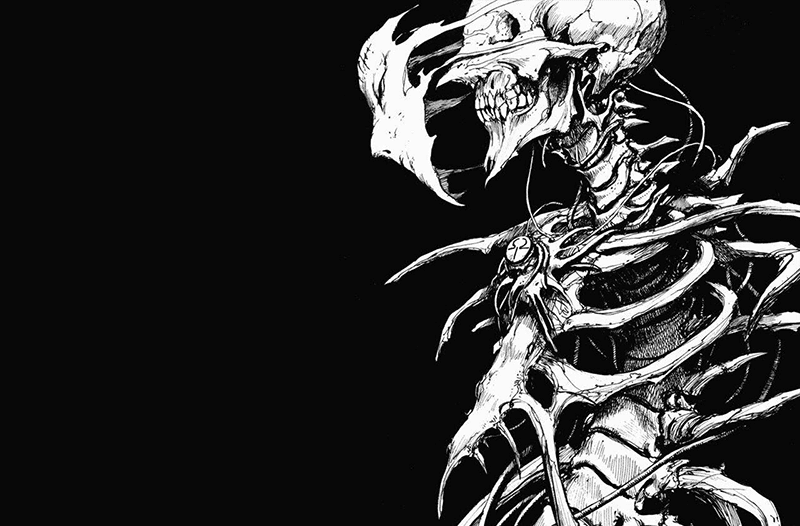
What makes Biomega stand out is how Nihei tells the story. He leans hard into silent sequences, massive industrial architecture, and action that feels cinematic even when it’s barely explained. The drones are some of his best creature designs, uncanny and disgusting in equal measure, and the world is packed with towering structures that make humans look microscopic. It has Nihei’s signature scale, but it comes with way more momentum than Blame!. The first half is basically a cyberpunk chase story that never stops, full of motorcycles, gunfire, and over-the-top fights.
Then the manga goes off the rails. The second half slips into something bigger, stranger, and more abstract, as the apocalypse stops being about infection and becomes about the world itself reshaping into something unrecognizable. The tone gets weirder, the imagery becomes more biological, and you can feel Nihei trying to compress an enormous vision into a limited number of volumes.
That speed and ambition come at a cost. Characters get little development, and the plot beats can blur together. Still, the atmosphere and spectacle are so strong that it barely matters.
Biomega is a post-apocalyptic manga that’s pure cyberpunk chaos, packed with body horror, insane scale, and relentless pacing.
Genres: Sci-Fi, Action, Horror, Cyberpunk
Status: Completed (Seinen)
5. Eden
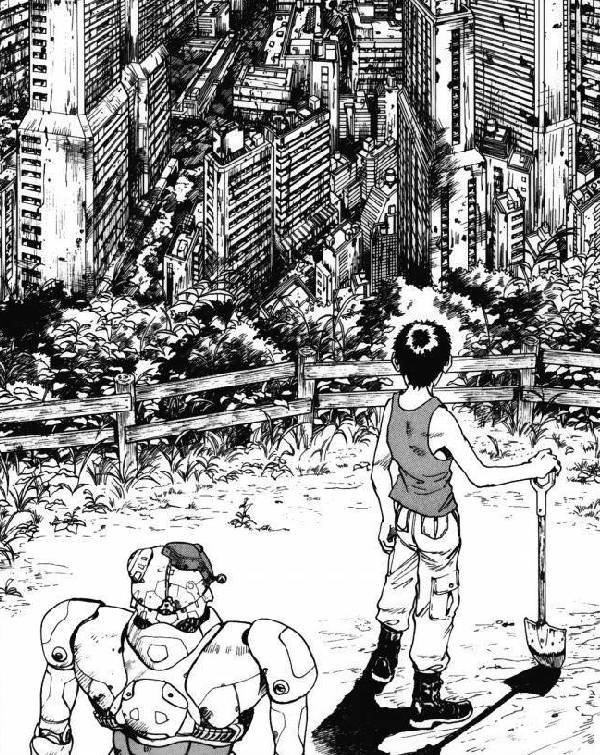
Eden: It’s an Endless World! might be the single most ambitious post-apocalyptic manga on this list in sheer narrative scope. It starts in the aftermath of collapse, but instead of staying small and survival-focused, it keeps widening until you’re watching the entire world rebuild itself into something colder, sharper, and arguably worse than what came before.
The apocalypse here isn’t a meteor or a monster invasion. It’s a global virus that devastates humanity and leaves governments unstable, borders meaningless, and power up for grabs. That vacuum doesn’t stay empty for long. A new organization rises under the banner of stability, and the ruined world reorganizes around control, money, and leverage. Eden nails the real horror of a post-apocalyptic setting: the disaster might end, but the consequences don’t. Society doesn’t return to normal. It mutates. Technology keeps advancing, but it’s unevenly distributed, militarized, and used to tighten the grip on people who’ve already lost everything. You get a world where survival pressure is still constant, just dressed up in politics, surveillance, and corporate influence.
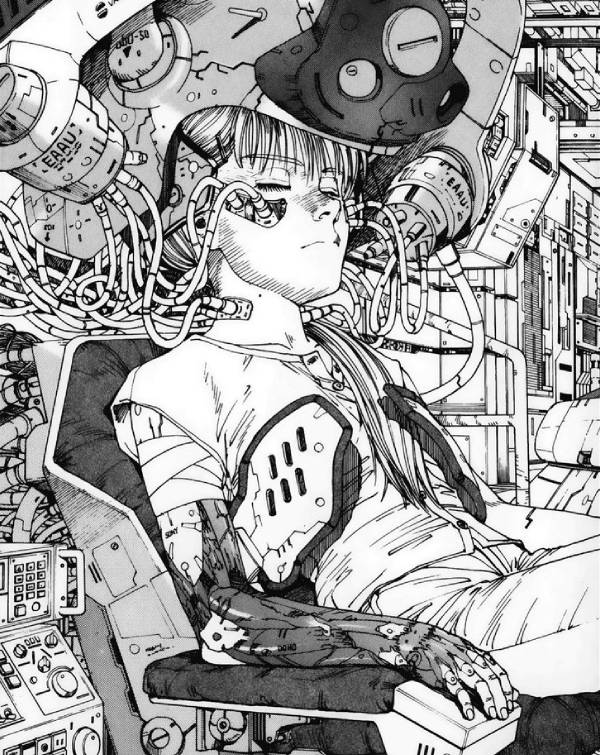
What makes Eden stand out is how grounded it feels. Hiroki Endo treats cyberpunk as infrastructure, not an aesthetic. The future isn’t neon-cool, it’s functional and brutal, filled with hackers, mercenaries, black markets, weaponized information, and institutions that know exactly how to turn fear into obedience. The series shifts across continents and social classes, following soldiers, criminals, idealists, and ordinary people trying to rebuild life. That perspective-hopping could’ve been messy, but Eden makes it work. Each viewpoint shows another facet of the same world, revealing how power travels through violence, faith, profit, and desperation. The tension isn’t about who’s the strongest. It’s about unstable alliances, moral compromise, and the sense that every solution creates a new form of suffering.
The art reinforces realism. Faces look tired, injuries look painful, and violence is ugly instead of stylish. Eden also refuses to sanitize the post-collapse underworld, which makes it feel adult in a way most science-fiction manga rarely attempts.
The caveat is that it’s heavy. It deals with uncomfortable material, it rarely offers relief, and its scale can get dense. Still, as a post-apocalyptic manga, it’s one of the most rewarding reads in the genre: global, politically sharp, and relentlessly human.
Genres: Sci-Fi, Cyberpunk, Thriller, Drama, Psychological
Status: Completed (Seinen)
4. Dragon Head
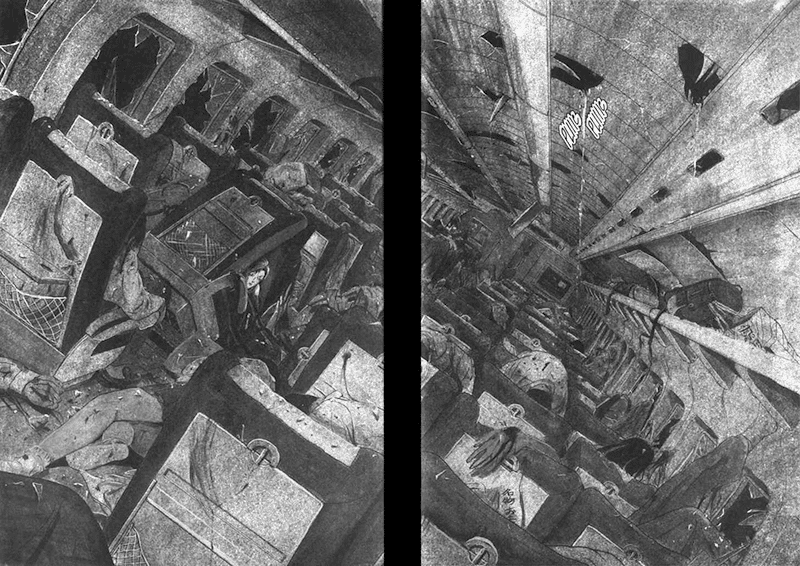
If there’s one post-apocalyptic manga that focuses almost entirely on survival during the immediate aftermath of catastrophe, it’s Dragon Head. It doesn’t turn the end of the world into a spectacle. It turns it into claustrophobia, panic, and the slow collapse of the human mind.
A train derailment traps three high school students inside a pitch-black tunnel, buried under tons of rubble. With no light, no food, and barely any air, Teru, Ako, and Nobuo find themselves in a place where fear becomes the real predator. The early chapters are brutal in how grounded they feel. Time stretches, panic becomes physical, and every decision is ruled by exhaustion and dread. It’s survival horror at its most primal, not because of monsters, but because their minds turn against them.
When they finally escape, the manga doesn’t soften. It widens into a ruined world that looks scorched beyond recognition: ash-filled skies, collapsed cities, empty roads, and the eerie absence of life. Dragon Head is a post-apocalyptic manga without zombies, mutants, or alien threats. The real enemy here is silence, uncertainty, and the realization that society didn’t fall in some dramatic way. It simply ceased to exist. The series never gives you a clean explanation for what happened, and that’s part of why it works. In a real collapse, no one would have the full story. You’d just see the wreckage and keep moving.
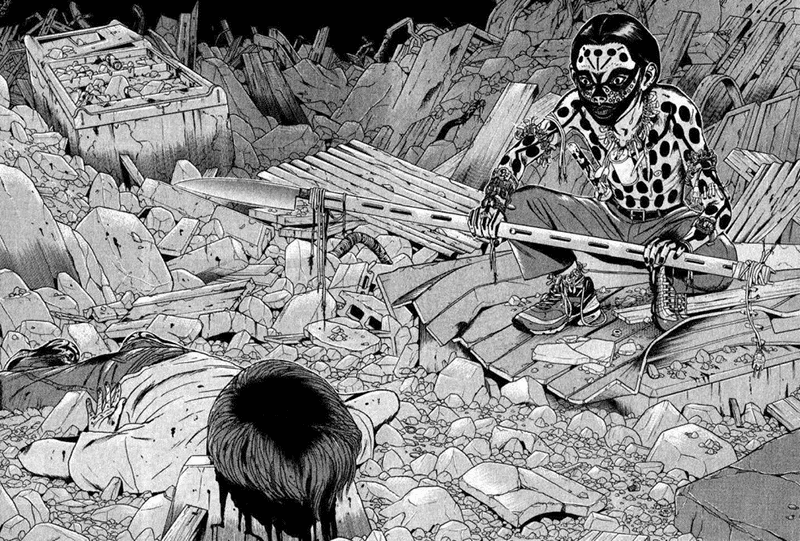
What makes Dragon Head so disturbing is how human it remains. This isn’t about competence, power, or rebuilding. It’s about fear, paranoia, and psychological fracture. We see how relationships are rewritten, how identity warps, and how people just give up. It’s showing us what happens when people are pushed past their limits.
Mochizuki’s art is a perfect match for this type of story. Landscapes feel dusty and suffocating, while people look dirty, rough, and terrified. The pacing might slow later on, but it fits the emotional numbness of the story. The world is gone, and there’s no easy way to bring it back.
If you want a post-apocalyptic manga that feels brutally grounded and psychologically cruel, Dragon Head is one of the most unsettling survival stories ever drawn.
Genres: Horror, Survival, Psychological
Status: Completed (Seinen)
3. Girls’ Last Tour
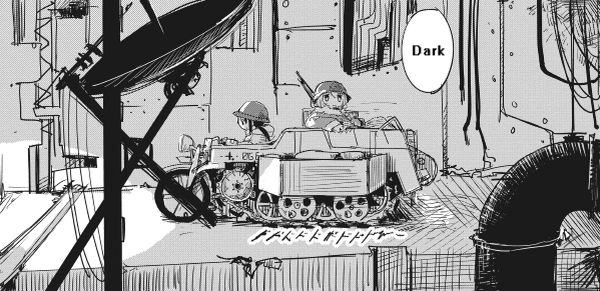
Girls’ Last Tour looks, at first glance, like a strangely lighthearted story about two girls wandering through ruins, but it’s secretly one of the most quietly devastating post-apocalyptic manga out there. Its atmosphere is warm and melancholic at the same time, a vibe that’s best described as tender nihilism.
Chito and Yuuri travel through a world that’s almost entirely empty, scavenging for fuel, food, and shelter inside a gigantic, seemingly endless cityscape. Civilization is long gone, and what remains isn’t a dramatic wasteland full of factions and wars, but layers of silent concrete, abandoned factories, and dead infrastructure rising into the sky. The apocalypse here feels final in a way that’s hard to shake. The girls keep moving forward because staying still means freezing or starving, and that simple survival routine becomes the manga’s heartbeat. Even their small comforts, a warm drink, a full belly, a moment of laughter, feel precious because the world offers nothing else.
What makes the series so special is how it treats technology like archaeology. Chito and Yuuri stumble upon ordinary objects like a camera, books, or machines, and the manga frames them like relics from a forgotten era. It’s not about how it works. It’s about why humans built it in the first place. Each discovery turns into a quiet reflection on memory, culture, and meaning, without ever forcing a single answer. That’s where the story’s emotional weight really lives. It’s not about misery. It just shows what’s left behind, then lets you sit with the silence.
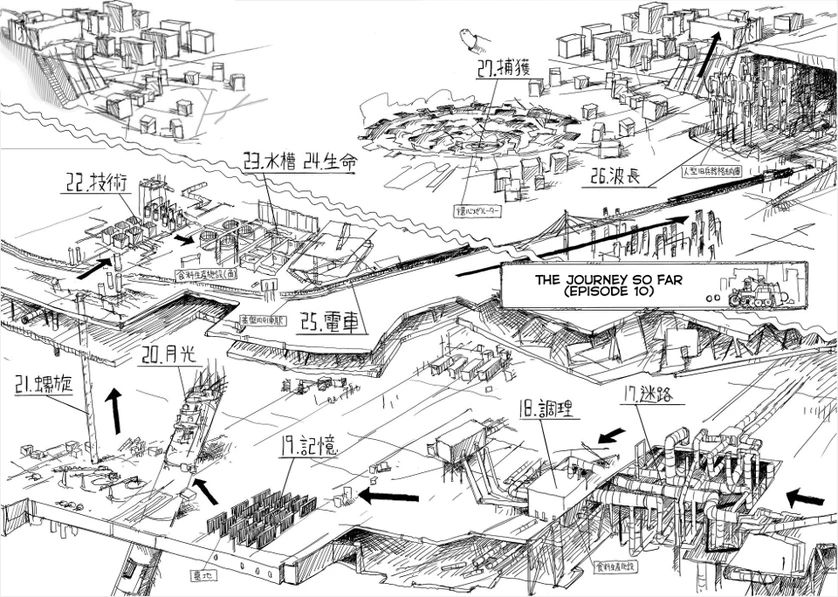
The art style is brilliant in its contrast. The girls are drawn in a cute, simple style, while the backgrounds are massive, geometric, and empty, like a softer take on Blame!’s megastructures. Often, they’re swallowed by their surroundings, and this emptiness says more than words ever could. It’s a post-apocalyptic manga that understands that emptiness can feel terrifying and peaceful at the same time.
The only downside is that it’s not a flashy manga, and the plot is slow by design. The world’s bleakness and emptiness can also hit hard. Then there’s the ending, which might feel too heavy for some readers, but it lands perfectly if you’ve given in to the manga’s gentle rhythm.
Girls’ Last Tour is a post-apocalyptic manga that’s quiet, human, and strangely comforting.
Genres: Sci-Fi, Post-Apocalyptic, Slice-of-Life, Drama
Status: Completed (Seinen)
2. Blame!
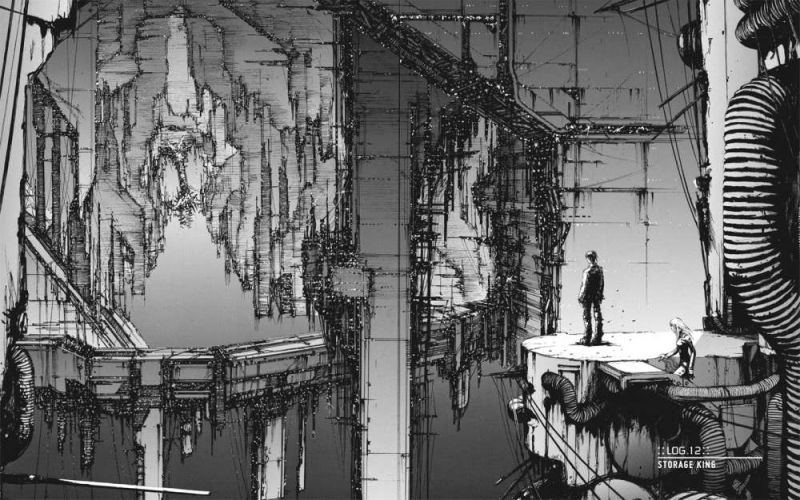
If there’s one manga that pushes both cyberpunk and post-apocalyptic manga to their extremes, it’s Blame! by Tsutomu Nihei. Set inside a colossal superstructure known only as The City, it’s a story where humanity has already lost and the world just keeps expanding without them.
The apocalypse here isn’t a wasteland of sand and ruins. It’s near-infinite architecture. Long ago, something went wrong, and humans lost control of The City, causing it to grow endlessly while its automated defense system, the Safeguard, began exterminating anyone without the Net Terminal Gene. What’s left of humanity survives in tiny enclaves scattered across impossible distances, hiding, and scraping together food, power, and shelter wherever they can. Travel is nearly meaningless given The City’s unfathomable dimensions.
Killy, the series’ stoic protagonist, moves through this nightmare with one goal: find a human with the Net Terminal Gene, someone who can access the Netsphere and possibly restore control. That’s the plot on paper, but Blame! doesn’t behave like a traditional narrative. The City feels dead and alive at the same time, full of empty spaces that swallow everything, then suddenly erupting into violence. You don’t just get danger. You also get the sense that the environment itself is hostile to human existence.
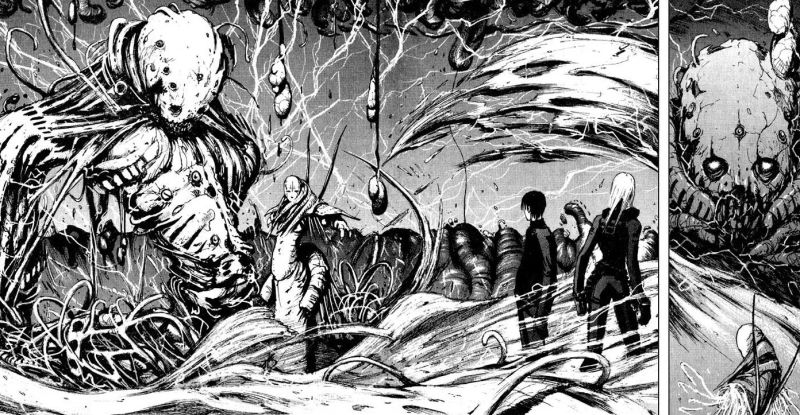
What makes Blame! unforgettable is how Nihei tells the story. Dialogue is sparse, exposition is almost nonexistent, and entire chapters play out in silence. Instead of explaining the world, Nihei lets the scale do the talking. Killy is constantly drawn as a tiny silhouette inside structures so vast they feel built by something that stopped caring about people millennia ago. And when the action hits, it hits hard. Killy’s iconic Gravitational Beam Emitter doesn’t just kill enemies, it erases them, tearing through walls, floors, and entire sections of the megastructure with brutal finality.
The trade-off is that Blame! can feel cryptic, even disorienting. It’s episodic, it withholds answers, and it expects you to piece things together through visuals and implications. But that opacity is part of why it works so well as a post-apocalyptic manga. The world is too far gone to make sense anymore, and the sheer loneliness of the journey is the point.
If you want bleak atmosphere, mind-bending worldbuilding, and science-fiction horror that feels genuinely enormous, Blame! is essential.
Genres: Sci-Fi, Cyberpunk, Horror
Status: Completed (Seinen)
1. Akira
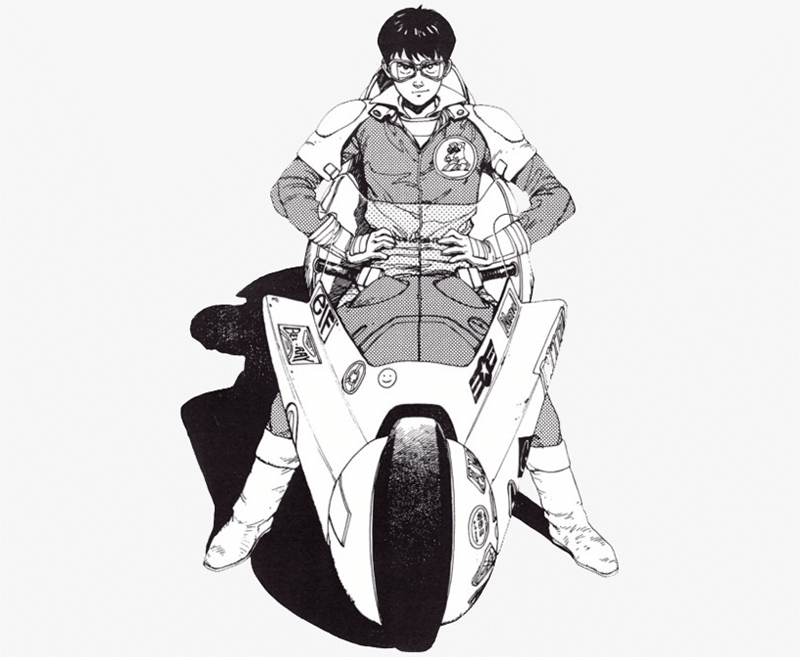
Neo-Tokyo is rebuilt after the end of the world, but it feels like a city living on borrowed time. Akira is one of the most iconic post-apocalyptic manga: neon, violent, paranoid, and always one moment away from total collapse.
The post-apocalyptic reality here isn’t a quiet wasteland. Tokyo was annihilated in a mysterious catastrophe that kicked off World War Three, but what rises in its place is a neon fever dream rotten to the core. The streets are packed, the government is militarized, and daily life runs on constant tension. Biker gangs tear through cracked highways, protest movements clash with armed police, and dangerous black-market drugs circulate among kids who’ve already given up. Even when the skyline looks futuristic, trauma is ever-present. This world doesn’t feel restored. It feels patched together, unstable, and waiting for the next disaster. And that disaster does come. Akira doesn’t stay a dystopia forever. In the second half, it turns into full post-apocalyptic collapse, as Neo-Tokyo is reduced to ruins and the story shifts into survival and chaos.
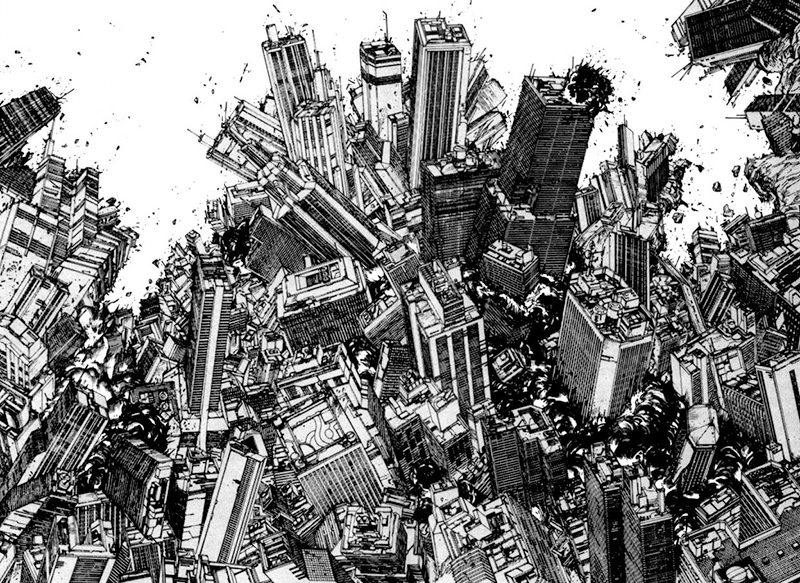
What Akira does best is escalate that instability without ever losing the grime. The story starts grounded with Kaneda and Tetsuo, two reckless teenagers shaped by the city’s chaos. Then it spirals into conspiracies, secret experiments, and psychic powers so strong they become an existential threat. Otomo’s pacing is pure momentum, and the way he depicts Neo-Tokyo makes it feel alive, not a generic cyberpunk backdrop. You can almost smell the exhaust, sweat, and cracked concrete. The visual detail is still ridiculous decades later, from the bikes and street fashion to militarized hardware and ruined infrastructure lurking behind the city’s neon glow. Otomo renders everything with obsessive precision. When things finally tip into full-scale destruction, Otomo delivers some of the most jaw-dropping apocalypse imagery ever drawn, the kind that makes you stop and just stare at the panels.
It’s not a perfect story. The cast leans archetypal, and the plot gets dense once the scope explodes. With so many factions and characters, it’s hard to keep track of every detail. But even when it gets messy, the atmosphere never breaks. Akira is one of those rare manga where sheer vision outweighs clean structure.
Akira is a masterpiece that starts with cyberpunk street violence and builds into an end-of-the-world psychic spectacle.
Genres: Sci-Fi, Cyberpunk, Action, Dystopian
Status: Completed (Seinen)