I’m not a sports fan, and I don’t usually go out of my way to look for sports manga. Still, every once in a while, I run into a series so sharp and compulsively readable that I get pulled in anyway, even if I couldn’t care less about the sport itself.
The best sports manga aren’t really about games. They turn competition into obsession. Rivalries, training, ego, self-image, and the quiet fear of losing what you’ve built take center stage. The matches matter, but they’re usually there to show character dynamics, momentum shifts, and breaking points.
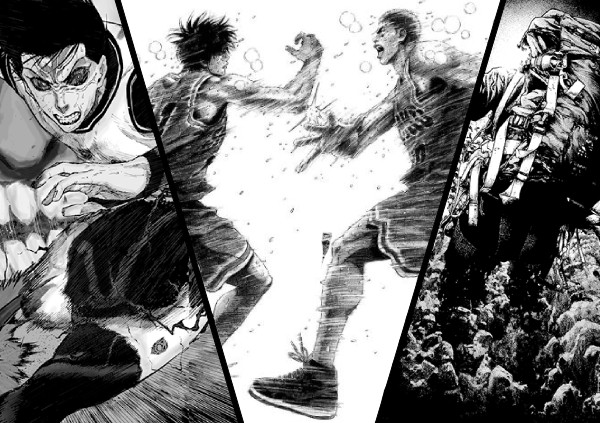
This list is short for a reason. I only want to focus on series I genuinely enjoyed, from iconic classics to raw outliers and a few more somber picks that still deliver the same intensity.
Mild spoiler warning: I’ll focus on how each manga handles pressure, progression, and character drama, but I may mention early plot details when necessary for context.
With that said, here are the best sports manga I’ve read (last updated: January 2026).
8. Densha De D
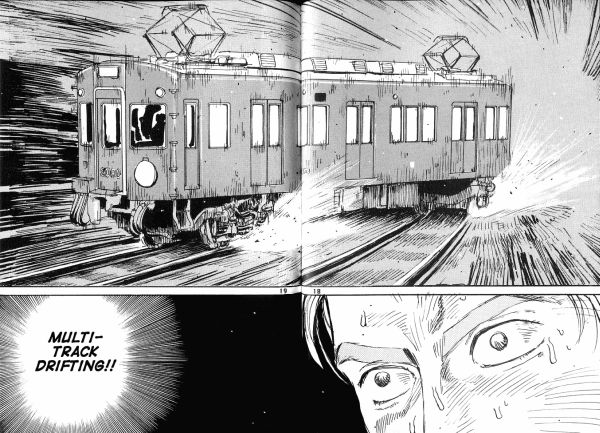
Densha De D might be the weirdest sports manga pick on this list, but it earns its spot for being one of the funniest parodies I’ve ever read. It takes the basic appeal of Initial D: high-speed duels, exaggerated techniques, and the constant tension that a single mistake can cost you the race. Then it pushes it straight into absurdity. A single change makes it genius: the racers aren’t driving cars. They’re driving trains.
That’s the entire joke, and it works. Densha De D treats rail lines like mountain passes, turns drifting into a battle-winning skill, and commits so hard that it becomes genuinely exciting in its own ridiculous way. Even if you’ve never touched a racing manga, you’ve probably seen its legacy through the infamous “multi-track drifting” meme, which still feels surreal in context.
The only downside is that it’s ultimately a gag concept. It’s short and it isn’t aiming at anything beyond the core joke. Still, as a quick hit of pure nonsense, it’s hard to beat.
Genres: Comedy, Sports, Parody
Status: Completed (Doujinshi)
7. One Outs
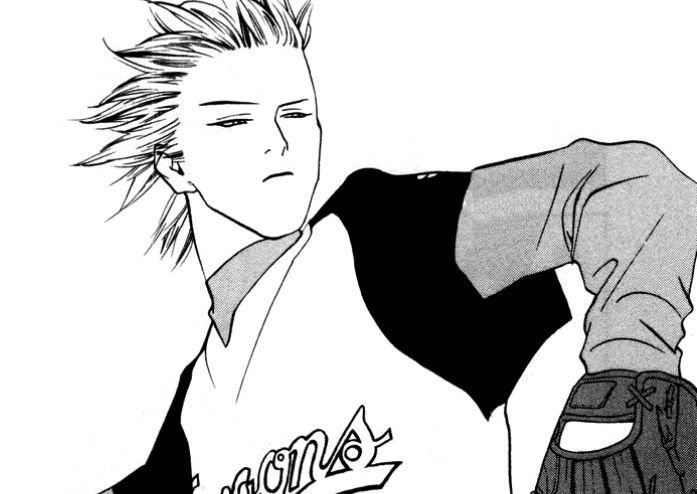
One Outs is an outlier on this list, written by Shinobu Kaitani, the creator of Liar Game. It’s technically a sports manga, but it plays more like a high-stakes gambling thriller that just happens to take place on the baseball field. The hook is as simple as it can be: Tokuchi Toua isn’t a powerhouse pitcher. He’s cold, calculated, brilliant at reading people, and treats every inning like a con.
The story’s pressure comes from the contract he signs. Tokuchi gets paid for every out, but loses a brutal amount for every run he gives up, turning each game into a financial wager. That structure gives the series its momentum. You’re not just watching him beat opponents, you’re watching him navigate sabotage, corruption, and teammates who don’t trust him, while he’s still trying to stay ten steps ahead. Games rarely feel like routine because the threat isn’t only the batter in front of him. It’s the entire system trying to undermine him.
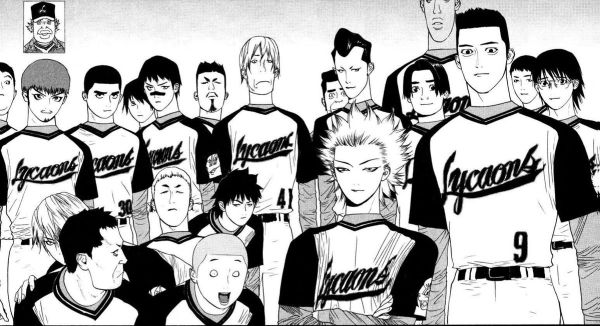
What really sells it is how shameless it is about mind games. Every arc is built around some new angle, weakness, or dirty trick that Tokuchi can exploit, and the fun is in seeing how he constantly bends the rules of the game. The downside is that some of the scenarios feel a little too constructed, and the supporting cast can come off as thin for a series that leans so heavily on Tokuchi’s charisma.
Still, as a baseball manga built on tension and psychological warfare, it delivers.
Genres: Sports, Psychological, Thriller
Status: Completed (Seinen)
6. Real
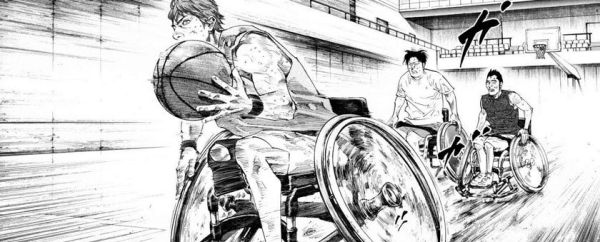
Real is what happens when a sports story stops chasing the winning play and instead focuses on something harder: recovery. Takehiko Inoue takes wheelchair basketball and turns it into a test for identity, pride, and the ability to keep moving forward when your body, reputation, and future have taken a serious hit. It’s easily one of the most ambitious and mature sports manga I’ve ever read, and it doesn’t need constant matches to feel intense.
Instead of leaning on hype speeches or flashy techniques, Real focuses on the grind behind the scenes. Training means repetition, pain management, rehabilitation, and building confidence one day at a time. When the story drops into a game, the tension hits differently. Every possession feels earned, not because of the score, but because playing becomes proof that these characters still have something to fight for.
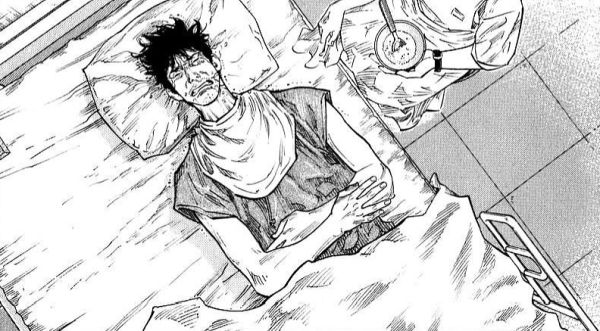
What makes it stand out is how human it is. The leads are flawed and painfully human, and the early chapters can be rough because they start at such a low point. That slow-burning setup pays off, but readers expecting Slam Dunk-style momentum and constant action might not stick with it. It also doesn’t help that the series’ publication has been irregular at best.
That said, Real is perfect for readers who want sports manga with real weight, honesty, and the kind of pressure that doesn’t disappear after the game ends.
Genres: Sports, Drama
Status: Ongoing (Seinen)
5. Holyland
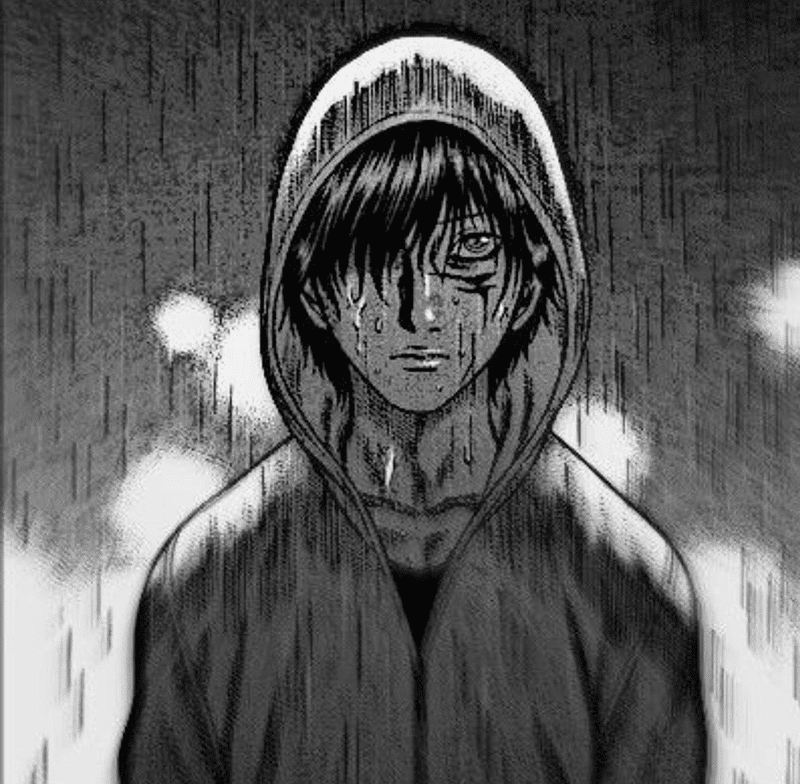
Holyland is a martial arts pick more than a sports manga, but it earns its place because it treats street fighting like a real discipline. Every technique has a purpose. Every exchange has consequences. The tension comes from the same place great competition stories always do: preparation, pressure, and whether you can execute a technique when it actually matters.
The story centers on Yuu Kamishiro, a bullied teenager with nowhere to fit. Instead of trying to find new friends, he focuses on boxing and trains a single punch to perfection. Then he tests it in fights without refs, rounds, or mercy. That structure keeps the series moving. Every confrontation feels like a test, and the cost of losing isn’t embarrassment. It’s injury, fear, and the humiliation of being reminded you don’t belong.
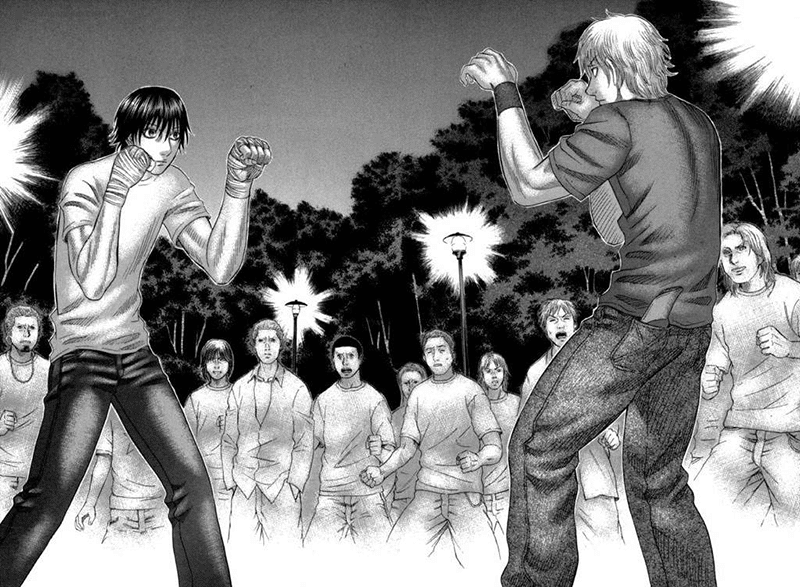
What makes Holyland stand out is how grounded the combat is. Everyone here is human. There are no power-ups and no mythical techniques. Distance, timing, and positioning matter. Even a single mistake can flip an entire fight. Kouji Mori also takes the time to break down the technique behind each move, which gives the violence a convincing sense of cause and effect, even if those explanations occasionally slow down the pacing.
The character work is as important as the fights. The streets are populated with other isolated people chasing their own version of purpose, and the rivalries hit hard because they’re tied to identity, not trophies. The series’ main downside is repetition. Holyland often moves in cycles of confrontation and aftermath, so the structure can feel familiar over time.
What it nails, though, is that locked-in mentality of fights where survival and self-worth blur together.
Genres: Action, Drama, Martial Arts, Coming-of-Age
Status: Completed (Seinen)
4. Captain Tsubasa
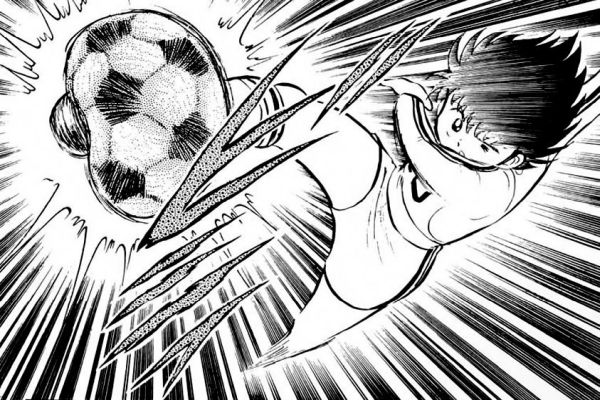
Captain Tsubasa was one of the first anime I ever watched as a kid, so nostalgia definitely plays a role. Still, revisiting it now, it holds up for the same reason it hooked me back then. It understands that the best sports manga are built on momentum, rivalry, and pressure, not necessarily realism.
The setup is straightforward: Tsubasa Ozora is a boy with an obsessive love for soccer and enough natural talent that he quickly becomes his team’s star player. What makes it work is how quickly every match turns personal. Opponents aren’t just obstacles. They’re prideful strikers, legendary keepers, and future rivals who want to crush him as much as they want to win. That constant friction gives the manga real tension, even when you can feel the story pushing toward more extreme moments.
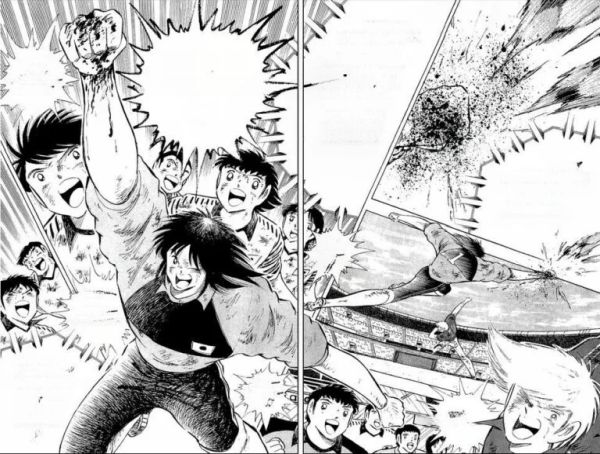
Captain Tsubasa also shamelessly leans into power fantasy. Techniques get ridiculous, shots rip apart the net, and the drama is consistently dialed up. Characters play through injuries, illness, and impossible situations as if it were a matter of willpower, and the reversals come hard and fast. The downside is obvious: this is not grounded, tactical soccer. It’s exaggerated, melodramatic, and deliberately larger than life.
The best way to read it is as soccer filtered through pure shonen intensity. It’s hard not to get swept up in it.
Genres: Sports, Drama
Status: Completed (Shonen)
3. Blue Lock
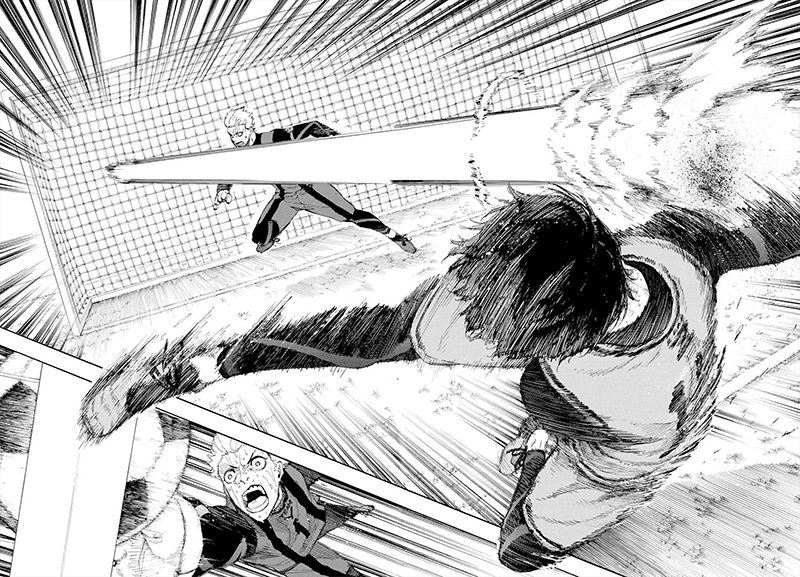
Despite not being a sports fan, Blue Lock is one of those rare series I’ll keep up with weekly, no matter what. It’s a sports manga built like a battle shonen, with constant escalation, sharp rivalries, and the kind of tension that feels closer to a deathmatch than a team sport.
The premise is ruthless but instantly gripping. Japanese soccer lacks a world-class striker. For this reason, the eccentric coach Jinpachi Ego recruits hundreds of talented young strikers and throws them into a locked-down training program until only one comes out on top. Everyone else is cut off from the dream for good. That single rule changes everything and turns soccer from a sport into a brutal survival game. Every play becomes personal, every mistake has consequences, and teamwork becomes nothing more than a temporary alliance that’s abandoned the moment it stops being beneficial.
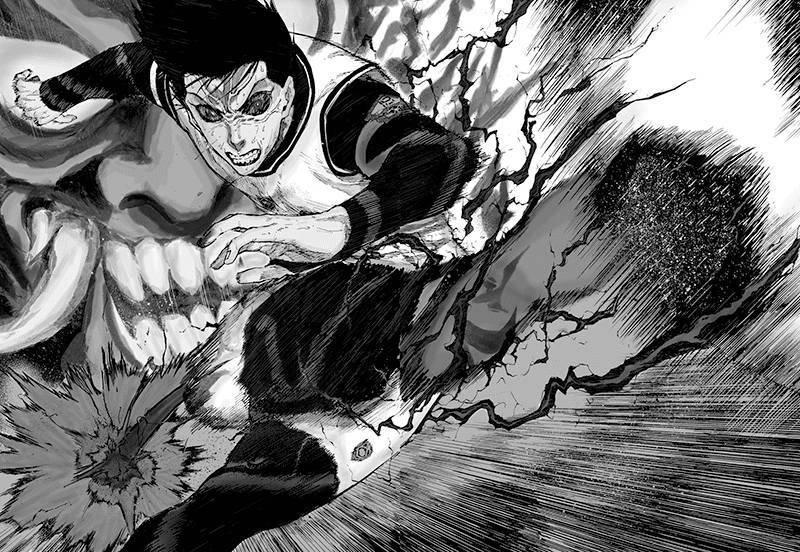
What makes Blue Lock so addictive is how it visualizes pressure and improvement. Characters don’t just get better. They evolve through breakdowns, awakenings, and self-reflection. Players develop signature weapons and learn to read the field, turning games into tactical and psychological showdowns. The art sells the intensity, too. It’s loud, stylized, and pure hype, depicting characters with glowing eyes during moments of realization, egos as monstrous auras, and match-defining shots as metaphorical beasts.
The cast is another strength. Blue Lock throws a group of intriguing and sometimes exaggerated characters into a confined space, lets their egos collide, and shows us the fallout. Rivalries are ubiquitous, and the series keeps introducing new threats and players to force the main cast to adapt or be left behind. If there’s one problem with Blue Lock, it’s exaggeration. The feats are ridiculous and the drama runs hot, but realism was never the point.
Blue Lock is soccer not as a team sport, but as rivalry, ambition, and pure hype. Once you’re a few chapters in, it’s hard to put down.
Genres: Sports, Action, Drama
Status: Ongoing (Shonen)
2. The Climber
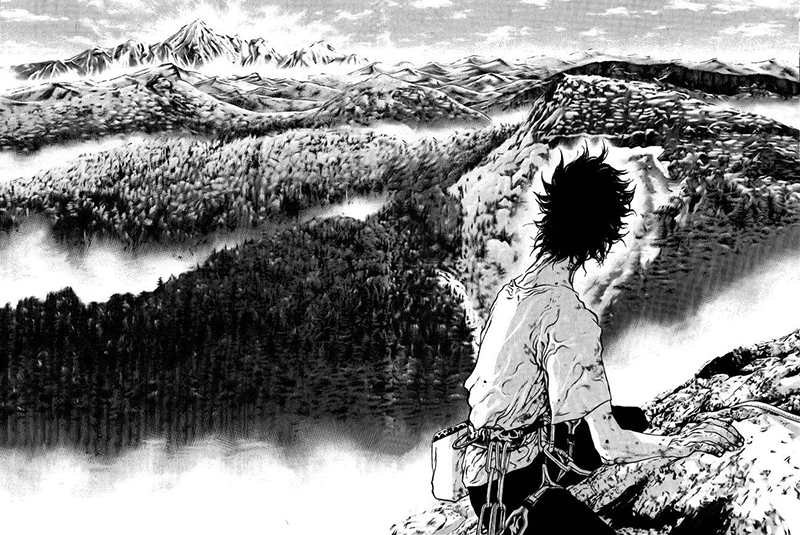
Shinichi Sakamoto’s masterpiece, The Climber, takes mountaineering and turns it into something harsher than competition. It’s a sports manga about obsession, isolation, and the thin line between discipline and self-destruction, all told through some of the most striking artwork in manga.
Buntarou Mori starts out as a detached teenager with no clear direction until a random challenge forces him to climb. Something clicks immediately. From there, the series treats growth the way real sports do, not as a training montage, but as repetition, risk assessment, and the slow improvement of the mind. Mori isn’t chasing trophies or rewards. He’s chasing feeling, control, and the kind of purity where nothing exists except you and the mountain in front of you.
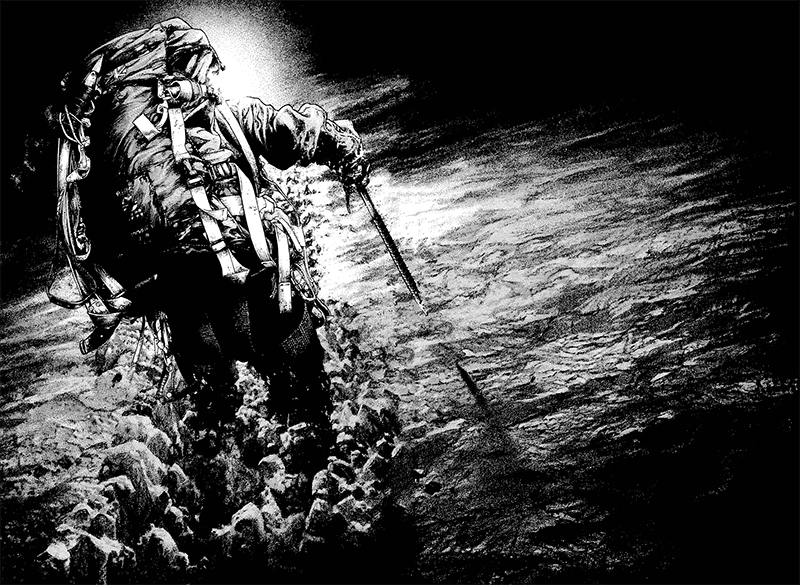
That’s where the pressure comes from. The Climber doesn’t need scores, competitions, or rivals, because the stakes are physical and absolute. Weather, fatigue, and solitude become the real opponents. Even small decisions carry weight, and the tension comes from how easily confidence can become a trap. When the manga leans into silence, it only makes the danger louder.
Sakamoto’s art elevates the manga from great to exceptional. Mountains feel vast and indifferent, and the climbs have a brutal clarity that makes you understand why someone devotes their life to them. Literary quotes and metaphors are frequently woven into the narrative, giving the entire work an almost poetic feel.
The downside is that The Climber is less of a traditional sports manga and more a character study focused on Mori’s journey, so it won’t satisfy readers who want rivalry-driven competition.
Still, the tension never lets up, and mountaineering has never been more beautiful on the page.
Genres: Sports, Drama, Psychological
Status: Completed (Seinen)
1. Slam Dunk
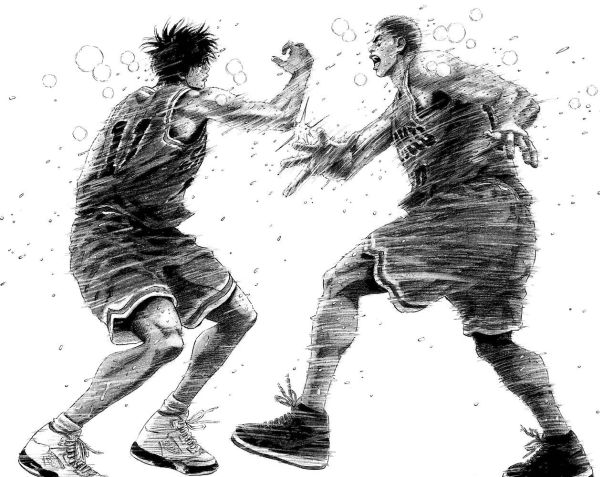
I have no attachment to basketball at all. I’ve never even watched a full game, and I still ended up binge-reading Slam Dunk because it was impossible to put down. It’s the rare kind of sports manga that doesn’t rely on you caring about the sport. The real hook is momentum, tension, and character dynamics.
It starts out deceptively simple. You get a loud, delinquent protagonist, a simple setup, and a lot of comedy. It works, but it doesn’t feel like a masterpiece yet. The shift happens when the core team locks into place. From that point on, Slam Dunk turns basketball into pure pressure, with games that constantly grow more gripping through exhaustion, fouls, reversals, and rival teams that feel as alive as the main cast.
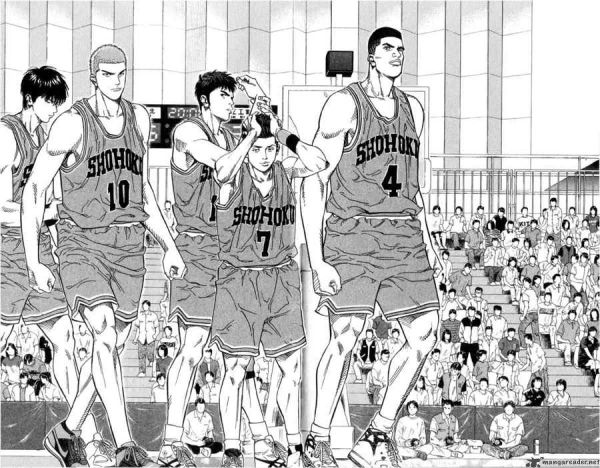
What makes the games so tense is how physically grounded they are. Players get tired. Mistakes snowball. A few bad minutes can destroy a lead, and the series treats rebounds, positioning, and defense as seriously as scoring. Slam Dunk also nails rival dynamics without turning them into gimmicks. Pride, insecurity, and hunger for recognition sit underneath almost every clash, which gives the tension real emotional weight.
The biggest downside is that the early chapters are lighter and more comedic than what the series becomes later, and some character beats are very much of its era. Once the story clicks, it easily earns its reputation as one of the best sports manga of all time.
Genres: Sports, Comedy, Drama
Status: Completed (Shonen)