Suspenseful stories are beloved for a reason, so it’s no surprise that thriller manga are among the most popular genres out there. There’s just something irresistible about watching tense stories unfold, following characters trapped inside them, and hitting twists that completely reshape what you thought was going on.
This list covers a broad range of thriller manga, from crime thrillers built around brutal murder cases and investigations to psychological thrillers about twisted people, broken minds, and even mind-game thrillers centered on dangerous gambles. Every manga here earns its spot through suspense, unpredictable turns, and the kind of tension that keeps you glued to the next chapter.
One reason thriller manga remain such a favorite is their variety. Some tell long-form stories driven by mystery, investigation, and slow-burn dread. Others focus on more personal stakes, where one terrible secret or one wrong decision can ruin a life. Then there are series built around cat-and-mouse games, dangerous manipulation, and bets that turn deadly.
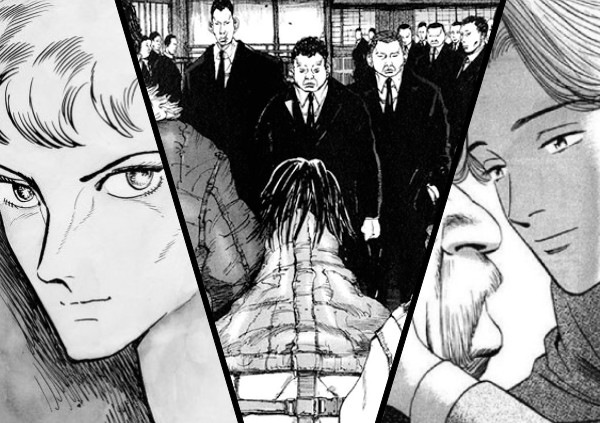
Some manga on this list, like Ouroboros and Yokokuhan (Prophecy), lean heavily into crime and investigation. Others, like Kaiji and Usogui, focus on high-stakes gambling and the tricks people use to survive. Series like MPD Psycho and Ichi the Killer take a darker route, using visceral imagery to explore brutal crime and the ugliest corners of society. You’ll also find genre blends here, like Eden: It’s an Endless World! and Godchild, which use their settings to tell tense stories.
No matter the style, all of these manga stand out for one reason: they’re genuinely suspenseful. Whether they follow investigators, ordinary people pulled into nightmares, or opportunists trying to get ahead, they’re built to keep you on edge.
Mild spoiler warning: I’ll explain what makes each series so gripping, so I may mention a few plot details to explain why each manga belongs here.
With that said, here are my picks for the 26 best thriller manga (last updated: March 2026).
26. Manhole
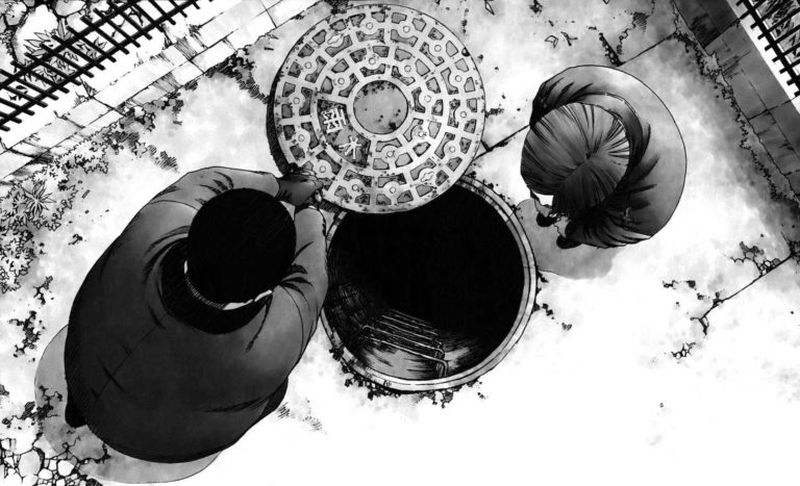
Manhole is a biological crime thriller manga that hooks you fast with one of those openings you don’t forget: a naked man staggers through a shopping district, covered in blood, before collapsing. From there, the series snaps into full procedural mode as two detectives, veteran Mizoguchi and rookie Nao Inoue, are pulled into a case that quickly becomes uglier than a normal murder investigation. The deeper they dig, the clearer it becomes that they aren’t chasing a serial killer. They’re chasing the source of an infection that could spread far beyond one crime scene.
What makes Manhole work is how it builds tension through realistic escalation. Each new clue drags the investigation into more unsettling territory: medical experiments, contamination fears, infected victims, and the creeping sense that the situation is slipping out of anyone’s control. The mystery stays grounded, but the horror comes from the biology itself. It’s not supernatural, not paranormal, and not reliant on monsters. It’s a scenario that feels disturbingly plausible, especially after the pandemic. When the threat is microscopic, invisible, and already moving through the world, even routine detective work feels like a race against the clock.
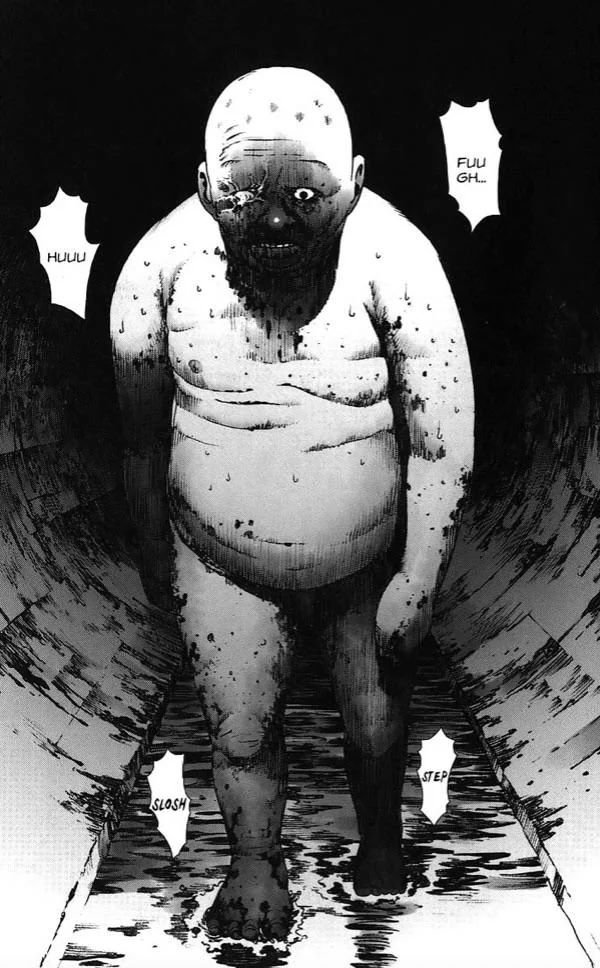
The characters also deserve praise. Mizoguchi and Inoue are easy to root for, and the story gives them enough personality that you actually care about how the case wears them down. Their dynamic keeps the manga relatable even when the plot becomes methodical, and the investigation structure stays clear even as the stakes expand. That said, Manhole isn’t the most complex series. It’s short, direct, and sometimes a little predictable, especially if you’ve read a lot of crime manga. The suspense comes from dread and inevitability more than nonstop twists.
Manhole is a thriller manga that feels like a police procedural infected with bio-horror. It’s tense in a grounded way, unsettling without relying on cheap tricks, and ideal for a short binge.
Genres: Thriller, Mystery, Horror
Status: Completed (Seinen)
25. Bloody Monday
Bloody Monday is a shonen mystery thriller manga built around one of the most reliable high-stakes setups you can ask for: a deadly virus, an international conspiracy, and an ordinary teenager who turns out to be the key to stopping disaster. The premise wastes no time raising the stakes. A lethal pathogen capable of killing within hours falls into dangerous hands, and a seemingly unrelated murder in Japan becomes the opening move in a much larger plan. From there, the story quickly shifts into a race against time, with secrets stacking up, government agencies mobilizing, and the sense that something massive is about to break loose.
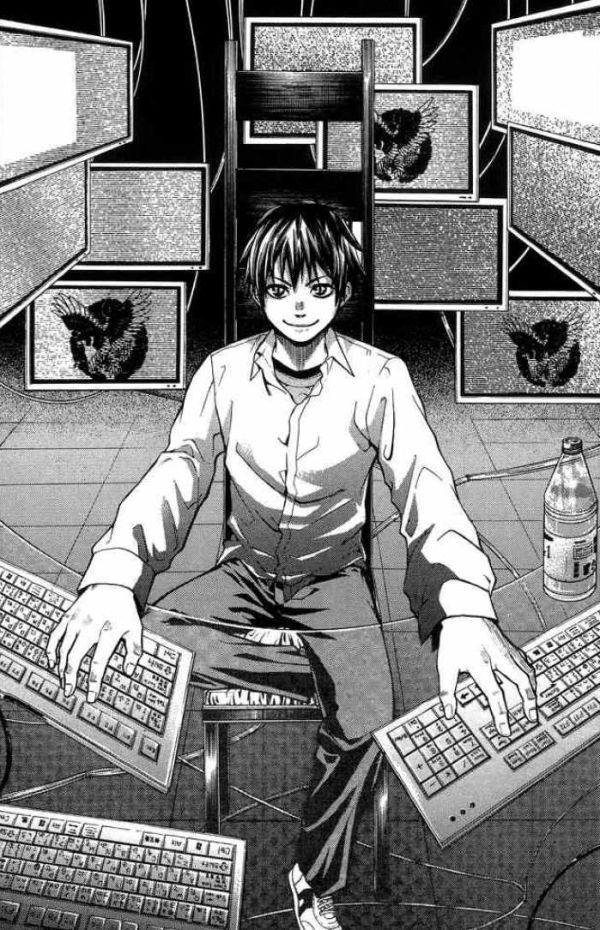
The main tension comes from its combination of terror-plot urgency and mind-game escalation. Fujimaru Takagi, known online as Falcon, is a brilliant hacker who once exposed corruption from his computer. Now he’s pushed into the center of a real-world crisis, decoding clues and untangling conspiracies that are far bigger than he should be able to handle. Bloody Monday is genuinely gripping because it loves twists, cliffhangers, reversals, and schemes that keep reshaping the plot. Just when you think the story is narrowing down to one threat, it introduces another layer.
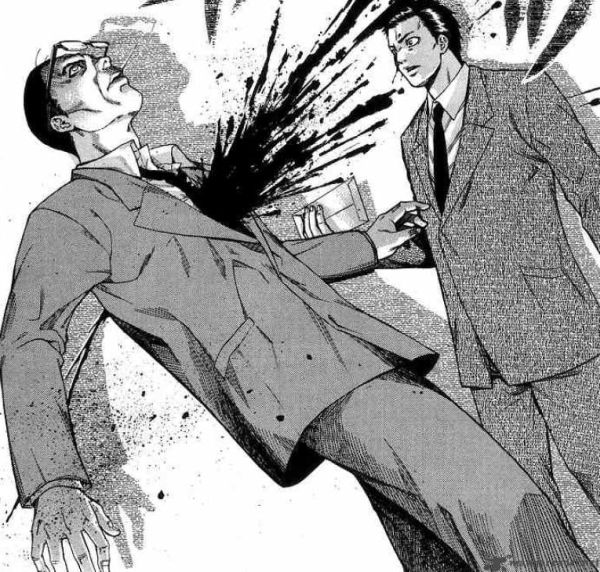
At the same time, Bloody Monday leans hard into shonen thriller tropes. Falcon is treated like the world’s most valuable asset despite being a high school kid, and the series often asks you to accept that teenagers can outsmart professionals. Some plot turns rely on convenient decisions, and part of the cast feels built to serve the plot more than they feel like real people. The art is functional and clean, but the main draw is pacing and suspense, not visual spectacle.
Bloody Monday is a conspiracy thriller manga where smart young protagonists are thrown into impossible situations and have to find a way to make it out alive.
Genres: Thriller, Mystery, Crime
Status: Completed (Shonen)
24. Hideout

Hideout starts in a dark place and somehow manages to get even darker. On the surface, it looks like a straightforward survival horror story about two people trapped in a nightmare environment. But beneath that setup lies one of the most effective short-form thriller manga out there, built around a simple question that becomes terrifying fast: how far has this man fallen, and what’s he capable of now? Written and illustrated by Masasumi Kakizaki, Hideout is short, brutal, and relentlessly tense, with the kind of psychological weight that makes it feel heavier than its length suggests.
The premise introduces us to Seiichi Kirishima, a failed novelist whose life has collapsed after the death of his child. He brings his wife to a remote island under the pretense of a fresh start, but his true motive is to kill her. When things go wrong, the story shifts into a chase, and Hideout becomes a panic-filled rush into a forgotten underground cave system. From there, the pressure becomes suffocating. Tight tunnels, limited visibility, and the constant fear of being cornered turn the environment into a deadly trap.
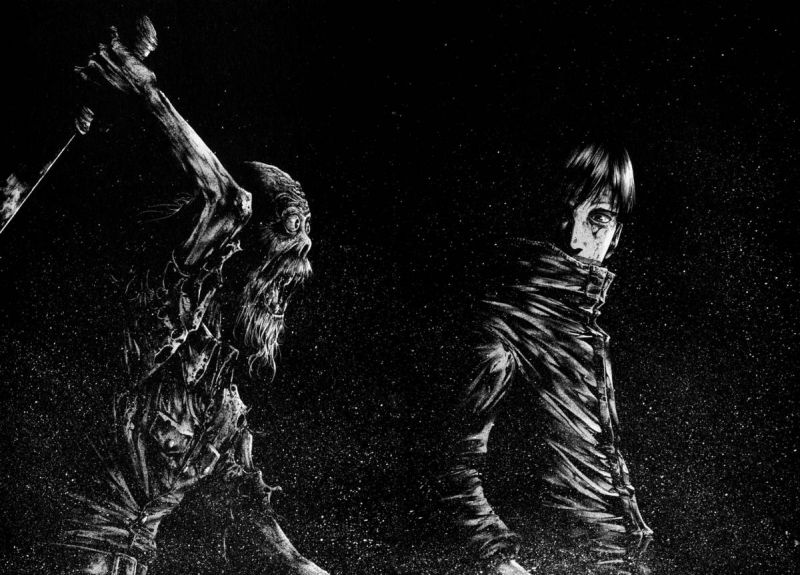
The tension really kicks in when the manga slowly reveals what’s happening inside Seiichi’s mind. Through flashbacks and fractured moments of clarity, you start to see that he’s not just a grieving husband pushed too far. He’s a man who’s been rotting from the inside for a long time, spiraling into resentment, delusion, and violence. Kakizaki’s art makes the cave scenes feel claustrophobic and physical, with heavy shadows and harsh lighting that keep every page oppressive. The violence is sudden and ugly, and the pacing is sharp enough that the manga never drags.
Hideout is a thriller manga that feels like survival horror on the outside and psychological collapse on the inside. It’s bleak, tense, and designed to leave you uncomfortable after the last page.
Genres: Thriller, Horror, Psychological
Status: Completed (Seinen)
23. Yokokuhan (Prophecy)
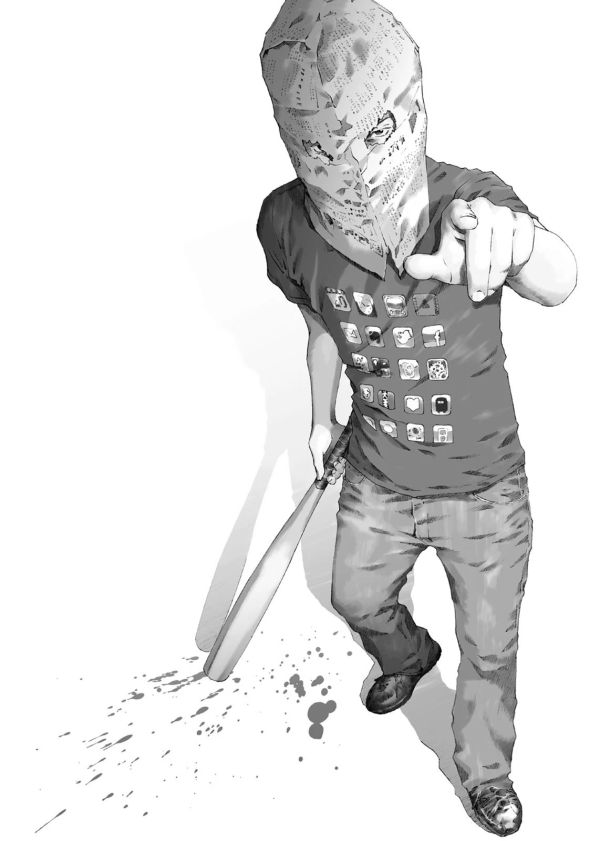
Yokokuhan (Prophecy) is a modern crime thriller manga that feels uncomfortably plausible, because its weapon of choice isn’t a gun or a knife. It’s the internet itself. At its core, this is a vigilante story about a masked man turning public outrage into a tool of punishment, but it’s also about how quickly moral certainty spreads when anonymity and viral attention do the heavy lifting. Instead of focusing on underworld power plays, Prophecy aims its tension at something more ordinary and unsettling: the everyday cruelty that people get away with because the system moves too slowly or doesn’t care.
The story centers on Shinbunshi, or Paperboy, a masked figure who broadcasts threats and actions online while exposing crimes and abuses that often slip through the cracks. His targets aren’t cartoonish villains. They’re petty tyrants, exploitative institutions, and people who benefit from apathy and power imbalances. The more attention he gets, the more dangerous his actions become, pulling the Tokyo Metropolitan Police Department’s Cybercrime Division into a high-profile pursuit. Leading the chase is Erika Yoshino, a driven investigator forced to confront a criminal who operates through public perception as much as physical evidence. That dual viewpoint is what keeps the tension high. You’re watching a vigilante escalate while the police scramble to predict his next move.

Prophecy’s suspense doesn’t come from elaborate plotting or twists. It comes from escalation and consequences. Each of Shinbunshi’s acts of justice sparks a public reaction. That reaction empowers him, and that feedback loop drives the story forward. The manga is also smart about moral tension. Shinbunshi’s actions hit a nerve because his targets often deserve accountability, but the methods become invasive and cruel in ways that start to mirror the system he claims to oppose.
Prophecy is a thriller manga that trades gang wars for internet-era vigilantism and the social consequences that follow. It’s sharp, grounded, and bingeable.
Genres: Thriller, Crime, Psychological
Status: Completed (Seinen)
22. MW

MW is the oldest manga on this list, but it still feels confrontational decades later. Created by Osamu Tezuka in the early wave of adult-oriented manga, it’s a bleak, pulpy crime thriller manga that helped push the medium into darker territory long before gritty suspense stories became mainstream. This is not a procedural mystery or a clean cat-and-mouse chase. It’s a nihilistic character story built around corruption, obsession, and a relationship so toxic it becomes the story’s true core.
We meet two men bound by guilt and secrecy. One is Garai, a Catholic priest trying to bury a past he can’t confess. The other is Michio Yuki, a brilliant, charming criminal who moves through the world like he’s untouchable. Their dynamic makes MW compelling. Garai clings to morality, faith, and denial, but he’s trapped in a cycle of enabling and complicity. Yuki, by contrast, is intelligent, seductive, and disturbingly empty, committing cruel acts with a casualness that makes him feel less like a person and more like a force of nature. Their relationship is uncomfortable, and the manga doesn’t shy away from themes of coercion, abuse, and sexual violence.
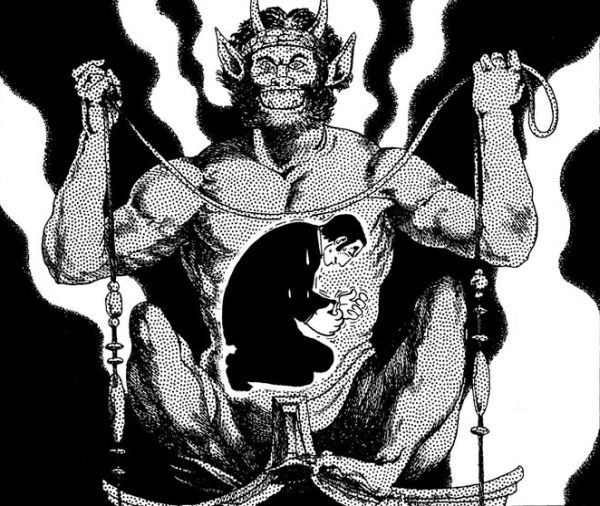
MW stands out because it treats crime as something inevitable rather than solvable. Systems appear corrupt, authority figures feel useless, and the story never lets you settle into the idea that justice will be served. Instead, suspense builds through escalation. Yuki’s schemes keep growing more extreme, and even when you can feel disaster approaching, the real tension becomes how far he will go and whether Garai will ever stop being dragged along behind him.
MW is a foundational adult thriller manga that feels twisted, provocative, and far ahead of its time.
Genres: Thriller, Crime, Psychological
Status: Completed (Seinen)
21. Ouroboros
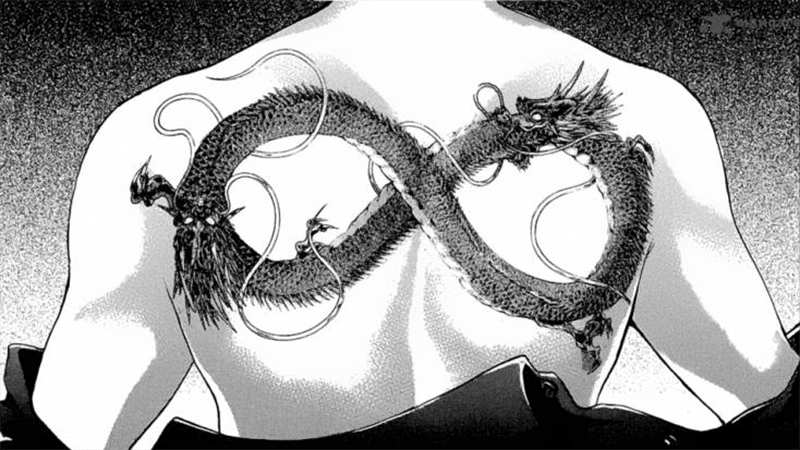
Ouroboros is a crime thriller manga that instantly stands out because it runs on a dual narrative. One protagonist is a police investigator, while the other operates within the underworld. This split perspective is key to the manga, showing how power works on different levels of society. By letting both sides of the law drive the story, Ouroboros keeps its tension high while constantly shifting how much control either character actually has.
As children, Ryuzaki Ikuo and Danno Tatsuya grew up in an orphanage. One day, they witness the murder of the woman taking care of them. Their lives are thrown into chaos, but a new goal quickly solidifies. One joins the police, climbing the ranks to gain authority and information. The other joins the yakuza, building connections that allow him to see what the law can’t touch. That premise is simple, but it creates a partnership that’s useful, uneasy, and morally unstable from the start.
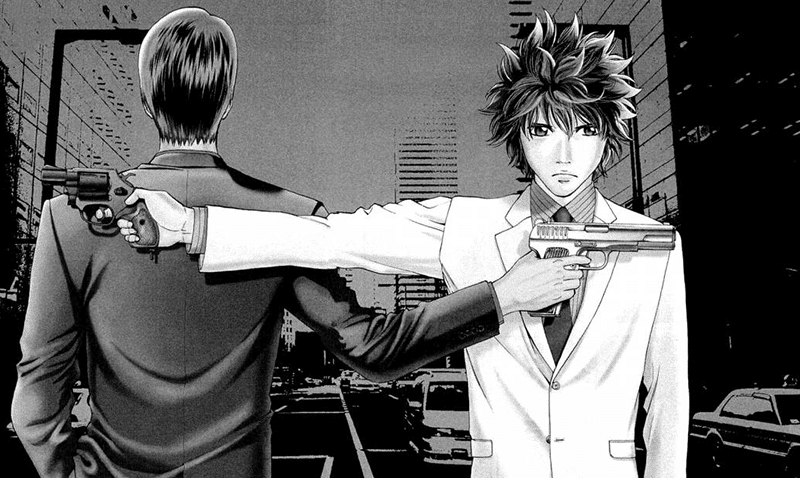
Ouroboros builds momentum through its blend of episodic casework and long-term conspiracy. Early on, you follow Ryuzaki tackling investigations, often with help from Danno’s underworld network. These cases aren’t filler. They establish tone, show how both men think under pressure, and build the larger mystery hanging over the story. The real thrill comes from watching both characters navigate information.
Ryuzaki has procedure and a badge, but he’s limited by politics, while Danno has leverage and access, but every move carries personal risk.
Ouroboros is a bingeable thriller manga that mixes police work and underworld access, with a larger conspiracy hanging over everything.
Genres: Thriller, Crime, Mystery, Drama
Status: Completed (Seinen)
20. Billy Bat
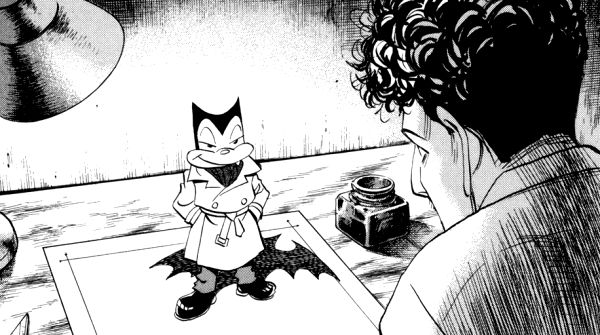
Naoki Urasawa has bigger titles under his name, like Monster and 20th Century Boys, but Billy Bat is the one that feels like his most ambitious conspiracy thriller manga. It starts with a premise that’s immediately unsettling. Kevin Yamagata is a Japanese-American cartoonist who creates a detective comic called Billy Bat. He then discovers that the character already existed in Japan long before he drew it. What begins as a fear of accidental plagiarism quickly turns into a spiral of mystery, murder, and hidden history, as Kevin returns to Japan and realizes that Billy Bat’s origins are tangled up with something far darker than coincidence.
The manga’s core is the gradual expansion of its central question: who created Billy Bat first, and why does this character keep appearing around history-changing events? It blends investigative suspense with long-form conspiracy storytelling. Kevin chases leads like a detective, but the deeper he goes, the more the story shifts into something bigger and stranger, connecting historical events, political movements, and shadowy organizations that treat the bat as a symbol, a tool, or even an omen. It’s one of those series where every answer creates two more questions, and the tension comes from realizing the truth is not only hidden but guarded.
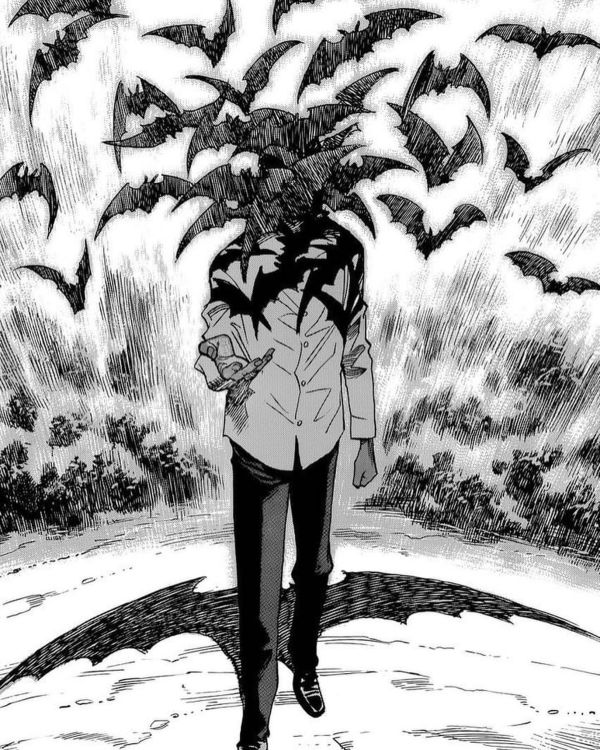
If you like thrillers that constantly escalate, Billy Bat is a great choice. Urasawa is at his best with cliffhangers and forcing you to turn the page to see what happens next. That said, it’s dense, packed with characters, and sometimes messy in a way that rewards patience.
If you want an ambitious thriller manga that blends murder mystery, historical paranoia, and Urasawa-style momentum, Billy Bat is a wild ride.
Genres: Thriller, Mystery, Crime
Status: Completed (Seinen)
19. Burn the House Down
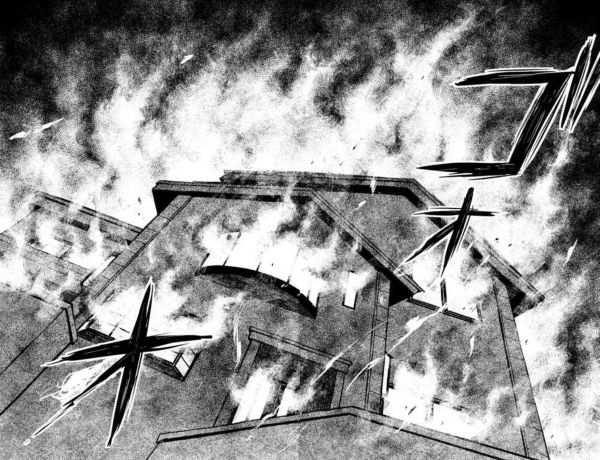
Burn the House Down is a domestic revenge thriller manga that proves you don’t need serial killers or criminal masterminds to create tension. Sometimes the scariest battleground is a wealthy family home, and the most dangerous weapon is a secret that never fully went away. A house fire ruined a family’s life, destroyed a mother’s reputation, and left two daughters carrying the fallout for over a decade. Now one of them is back, quietly infiltrating the same household under a false identity, determined to uncover the truth and set things right.
Thirteen years after the fire tore the Mitarai family apart, Anzu Murata works at a house-cleaning company while supporting her hospitalized mother. She still doesn’t accept the official story, and she still believes someone else was responsible. When she’s assigned to clean the home of Makiko Mitarai, her father’s new wife, Anzu sees the perfect opening. Using an alias, she inserts herself into the household and begins searching for evidence, carefully collecting information while trying not to expose her real motive. It’s a classic infiltration premise: every polite conversation becomes a test, every small mistake risks blowing the entire plan, and the question isn’t just what happened back then. It’s whether Anzu can keep up the charade long enough to prove it.
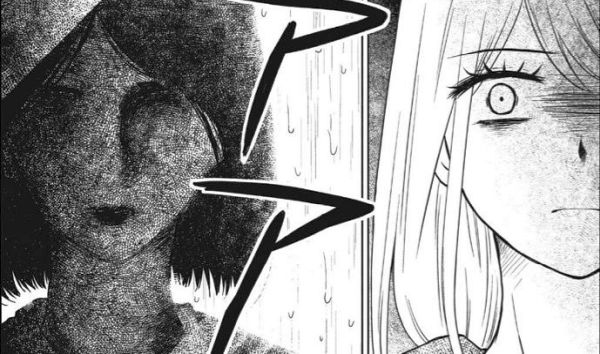
The real reason it works is Makiko. She isn’t a distant villain hiding in the shadows. She’s right there in the open, smiling, posturing, and controlling the atmosphere like the house belongs to her. The manga gets a lot of mileage out of her perfect-housewife mask and the toxic reality underneath it. Makiko is obsessive, manipulative, and unpredictable in ways that make domestic drama feel like psychological warfare. As Anzu digs deeper into family history, Burn the House Down shifts from finding evidence to something more personal and emotionally messy. Identity games, ugly family secrets, and reversals force you to constantly rethink who’s lying and why. It starts slow and methodical, almost like a private investigation carried out by one stubborn person, then tightens into a mind-game where both women try to outplay each other.
Not every twist lands perfectly, and a few characters feel frustratingly passive, but the core tension rarely disappears because the relationships stay charged. Burn the House Down is a thriller manga that trades crime scenes for secrets, manipulation, and revenge hidden behind polite conversation.
Genres: Thriller, Mystery, Drama
Status: Completed (Josei)
18. Pluto

Pluto looks like science-fiction on the surface, but it runs like a murder mystery thriller manga. Naoki Urasawa takes one of Osamu Tezuka’s most iconic Astro Boy storylines and reshapes it into something heavier, colder, and far more grounded. The hook is incredibly simple but grows more complex over time: someone’s killing the most advanced beings in the world, and a pattern shows the culprit isn’t just dangerous. It’s personal.
Instead of focusing on Atom, Pluto follows Gesicht, an elite robot detective working for Europol. After the destruction of one of the world’s strongest robots, Gesicht is assigned to investigate, only to uncover a growing chain of deaths that point toward a single terrifying presence. As more legendary figures fall, the case widens into something global, tied to robotics law, politics, and the aftermath of a war that never truly ended. The deeper Gesicht digs, the more the name “Pluto” starts circulating among those involved.
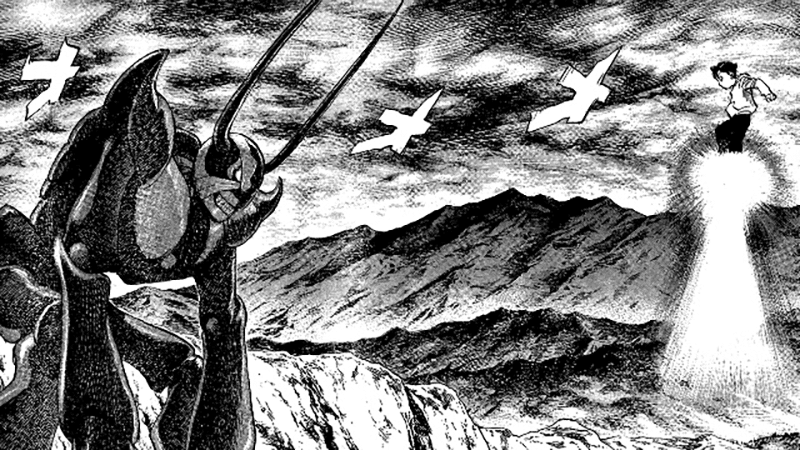
Urasawa’s art is especially effective for this story. The mystery unfolds slowly and methodically through quiet reveals, interviews, and an escalating sense of dread. Pluto isn’t built around action or spectacle. It’s built around inevitability. Every clue changes the shape of the case, and every new connection makes the danger feel larger. The tension hits especially hard because nobody feels safe, not even the characters who seem untouchable. Gesicht carries much of the suspense because he’s caught between his role as a logical investigator and emotions he can’t explain. He dreams. He feels guilt. And he fears what the truth might say about him. That inner instability gives the procedural structure real psychological weight, and it turns the investigation into something that feels intimate rather than mechanical.
Pluto is a strong thriller manga that’s tense, emotionally heavy, and quietly devastating.
Genres: Thriller, Sci-Fi, Mystery
Status: Completed (Seinen)
17. Eden: It’s an Endless World!
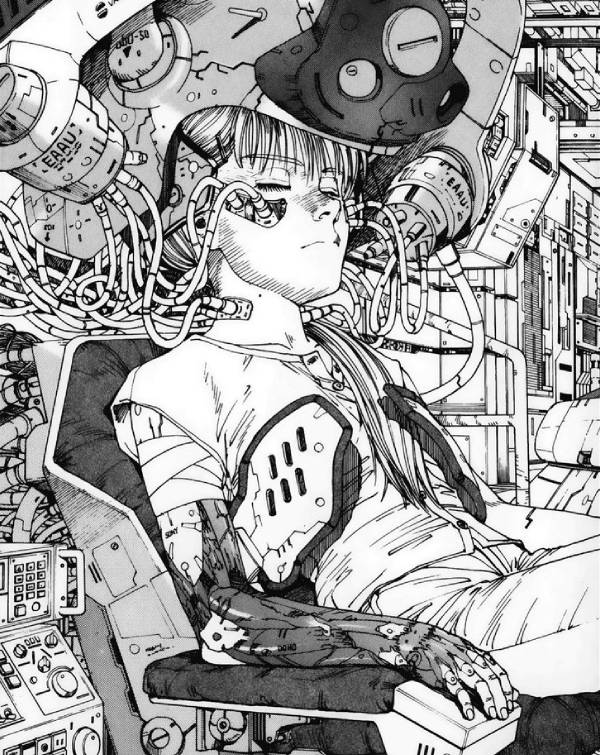
Eden: It’s an Endless World! is a cyberpunk epic that earns its spot here because it gradually reveals itself as a political underworld thriller manga. Hiroki Endo starts with catastrophe, then expands the scope until you’re watching drug empires, covert organizations, mercenaries, and global power structures grind people into dust. It never stops being science-fiction, but the tension comes from crime, corruption, and the machinery of control.
The setup introduces us to a fractured world after a global virus devastates humanity. A powerful organization rises to stabilize the aftermath while tightening its grip. Two children immune to the virus become pieces on a board they don’t understand yet, and much of the early story focuses on survival. Then Eden shifts gears. Time jumps, perspectives widen, and what begins as post-pandemic fallout grows into a modern crime and rebellion narrative that spans continents. Endo keeps the suspense alive by constantly placing characters in unstable systems where every choice has consequences. You aren’t just watching people survive. You’re watching them make decisions that pull them deeper into violence, ambition, and political games that don’t forgive weakness.
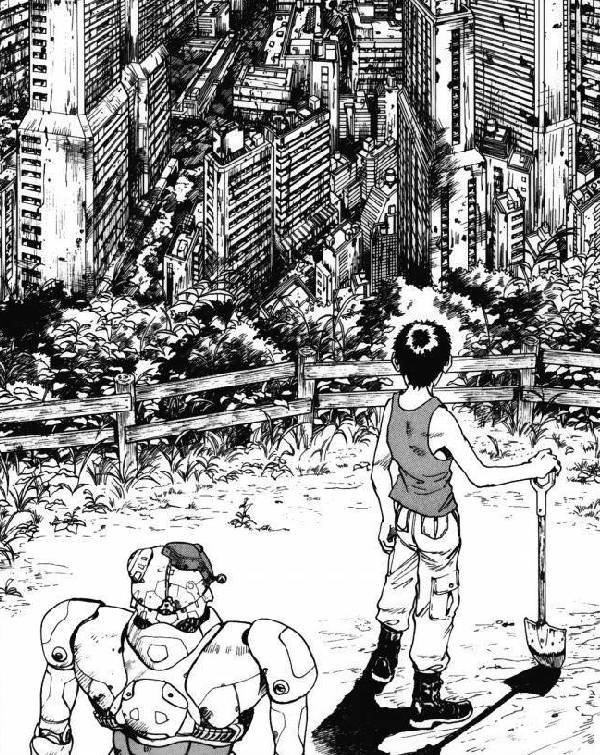
Eden escalates through sheer scope. The series moves through cartels, rebels, scientists, prostitutes, soldiers, and idealists, showing how each layer feeds the next. Even when Eden detours into philosophy or spirituality, the background pressure never leaves, because the world always feels close to falling into chaos. It’s also realistic in its depiction of how power operates. Governments are compromised, institutions rot, and influence moves through money, leverage, and fear. The violence is ugly rather than stylish, and Endo does not romanticize survival tactics. This gives the manga a harsh, adult tone that can feel exhausting in the best way, like the story is deliberately refusing comfort. The cast is flawed and often morally compromised, but consistently compelling, and the grounded artwork sells physical pain and emotional fatigue with brutal clarity.
Eden: It’s an Endless World! is a thriller manga that starts with disaster and grows into a sprawling story of crime, war, and manipulation inside a cyberpunk world.
Genres: Thriller, Sci-Fi, Cyberpunk
Status: Completed (Seinen)
16. My Home Hero
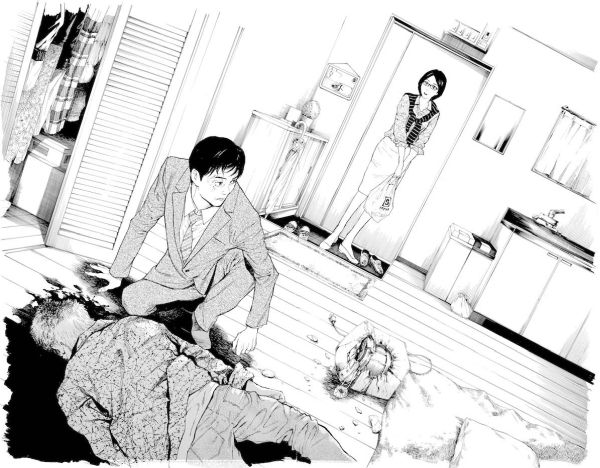
My Home Hero is a thriller manga built on a single, irreversible choice. When an ordinary salaryman discovers his daughter is the victim of abuse, he does something desperate he cannot undo. It’s a brutal act, but there’s a bigger problem: his daughter’s boyfriend is tied to organized crime. This one fact turns the story into an exercise in sustained pressure.
The suspense works because Tetsuo isn’t built for this world. He’s not a fighter or a hardened criminal. He’s just a father with a sharp mind, a strong conscience, and zero experience with violence. The gap between his abilities and the situation creates constant tension. His victories never feel clean. When he stays ahead, it’s through panic-fueled planning, improvisation, and painful compromise rather than mastery. The criminals he faces also feel plausible. They’re patient, methodical, and terrifying precisely because they don’t need to be loud. The early cat-and-mouse stretches are the series at its tightest, with interrogation scenes, evidence risks, and near-misses that feel almost unbearable because the stakes are so personal.
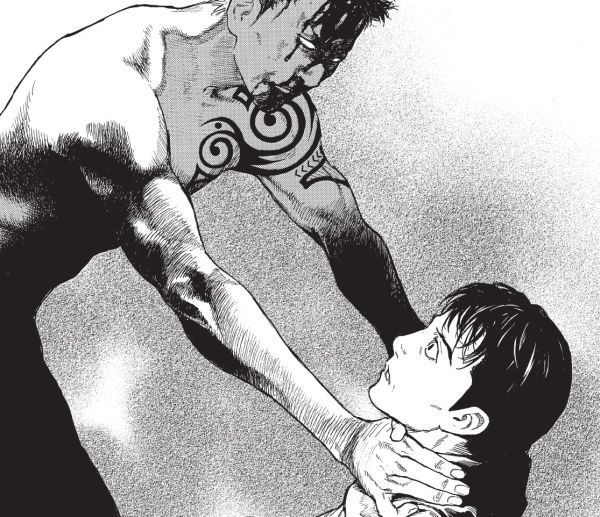
What really elevates the manga is how it treats morality. The story doesn’t let Tetsuo frame himself as a hero. Every step deeper into crime chips away at the fantasy of returning to normal, and consequences stick. The family dynamic matters, too. Kasen, Tetsuo’s wife, is not a bystander. She becomes an active partner, which turns the series into something rarer: a thriller about two ordinary adults coordinating lies, strategies, and cover stories while pretending daily life is unchanged. This tension between normal life and disaster underneath it is where My Home Hero hits hardest.
The series broadens as it goes on, and some later arcs are more sprawling than the earlier stretches. The focus shifts outward into wider crime territory, which can feel less intimate even when the paranoia remains. Still, it stays gripping because the core fear never disappears: exposure doesn’t just mean getting caught. It means losing your family.
As a thriller manga, My Home Hero turns parental love into moral compromise, with suspense built from plans, conversations, and the constant fear of discovery.
Genres: Thriller, Crime, Psychological
Status: Completed (Seinen)
15. Smuggler

Smuggler is a one-volume crime thriller manga that wastes no time proving how much tension you can pack into a short runtime. The hook introduces us to a broke, failed actor who takes a shady job disposing of corpses for the underworld. Almost immediately, he’s thrown into a mob war he’s not equipped to survive. It’s fast, vicious, and weirdly stylish, the kind of escalating chaos that keeps you turning pages because you don’t know how it can get any worse.
Yosuke Kinuta is the perfect anchor because he’s an ordinary guy in a cast of killers. He’s not brave, not trained, and not in control. He’s just desperate. That makes every scene tense, because even a small mistake could get him erased. Smuggler’s plot runs on pure momentum. Each chapter introduces complications that increase the risk. The story also knows when to swing from bad to hopeless, especially when two Chinese assassins enter the mix. They’re characters who steal scenes simply by existing, and their presence isn’t just dangerous, it’s lethal.
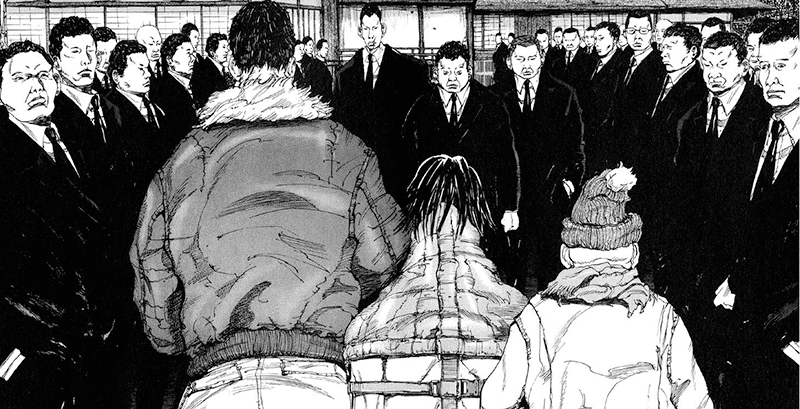
Manabe Shōhei’s art style amplifies the grime. Faces look realistic, but slightly grotesque, which fits the story’s grimy tone perfectly. The backgrounds look dirty, and the violence lands with blunt realism rather than flashy choreography. Smuggler also slips in black humor at exactly the right moments, not to soften the story, but to make the brutality feel even more absurd and unpredictable. The result is a thriller that feels like it’s daring you to keep up.
Because it’s short, Smuggler doesn’t aim for complex conspiracy layering. It aims for propulsion, tension, and a finale that feels inevitable. That focus is the point. You can finish it in one sitting, but it sticks because the pace is so tight and the escalation is so clean.
Smuggler is a sharp and violent thriller manga that delivers gritty underworld suspense in one of the most efficient packages possible.
Genres: Thriller, Crime, Action
Status: Completed (Seinen)
14. Utsubora The Story of a Novelist

Utsubora is a quiet, melancholic thriller manga about artistic decay and identity erosion. It’s slow, lingering, and lets unease seep in through implication, absence, and the feeling that the truth is somewhere in between what you’re seeing. The hook follows a burned-out novelist who is contacted by a young woman shortly before she takes her life. Then her identical twin appears while his life collapses into scandal.
Shun Mizorogi was once a celebrated author, but now his creativity has dried up. When Aki Fujino commits suicide, the story introduces Sakura Miki, Aki’s twin, and immediately destabilizes reality. A plagiarism scandal erupts around Mizorogi’s latest work, and the manga starts folding fiction into life until you cannot cleanly separate what was written, what was stolen, and what was lived. Utsubora lives on that ambiguity. Rather than giving you clean clues and easy answers, it reveals information in fragments, forcing you to assemble motive, timeline, and identity from charged conversations and carefully framed scenes. The tension comes from watching Mizorogi try to maintain control while everything around him suggests he never had it.
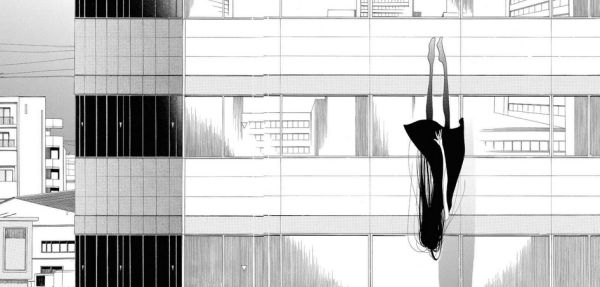
Asumiko Nakamura’s art shines with delicate linework, expressive faces, and paneling that creates a hypnotic stillness, making even the smallest shifts feel like major events. The manga also treats obsession and self-deception as the real threat. Mizorogi’s unraveling isn’t a dramatic break. It’s a slow rot, fueled by fear of mediocrity and the temptation to live through art rather than confront life. Sakura’s presence adds another layer of unease because the story constantly asks who she is, what she wants, and how much of her identity is her own. It’s more psychological drama than plot-heavy suspense, but it earns its thriller status through the way it tightens around its characters, making their inner collapse feel like a form of pursuit.
Utsubora doesn’t rely on cliffhangers and loud twists. It’s a thriller manga that feels like an elegant fever dream about authorship, plagiarism, and the terror of losing yourself.
Genres: Thriller, Psychological, Mystery
Status: Completed (Josei)
13. Gambling Apocalypse Kaiji
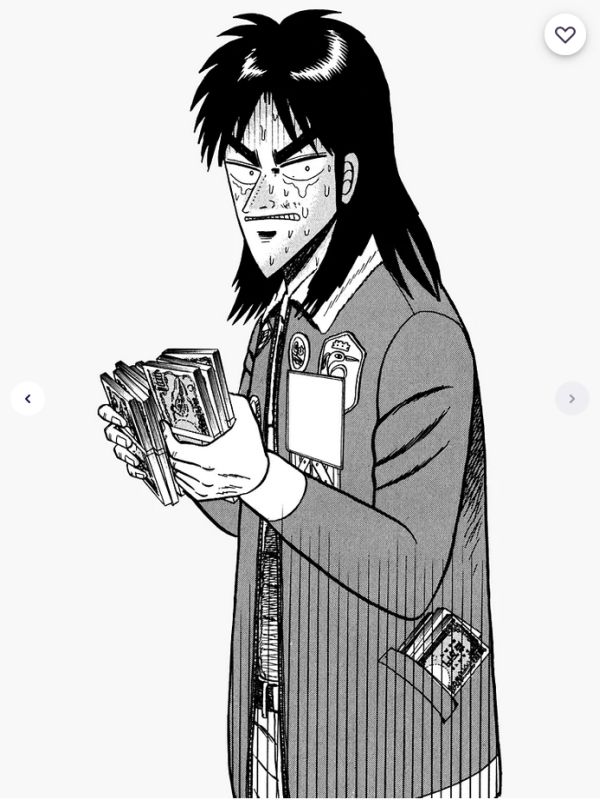
Kaiji is a gambling thriller manga that starts from an ugly truth: desperation makes people predictable, and predators build systems around that fact. Itou Kaiji is a guy with no direction. He’s broke and has no discipline. One day, a debt collector shows up and informs him he’s being forced to take on a huge loan. The interest rate alone is crushing, promising years of repayment. Then he’s offered a way out, but it entails participating in high-stakes gambling matches.
What makes it so tense is that the stakes feel like social execution, even when nobody is holding a gun. If you win, you get your life back. If you lose, your debt grows even bigger, and more serious punishments await you. The games themselves are brilliant because they are simple enough to understand, then weaponized through human behavior.
Fukumoto doesn’t merely focus on big moves. Instead, he dissects split-second decisions, thought processes, and second-guessing, making the games less about mechanics and more about psychological warfare. Kaiji isn’t just about who wins, but about how fear deforms decision-making, especially when players rationalize obvious betrayals.
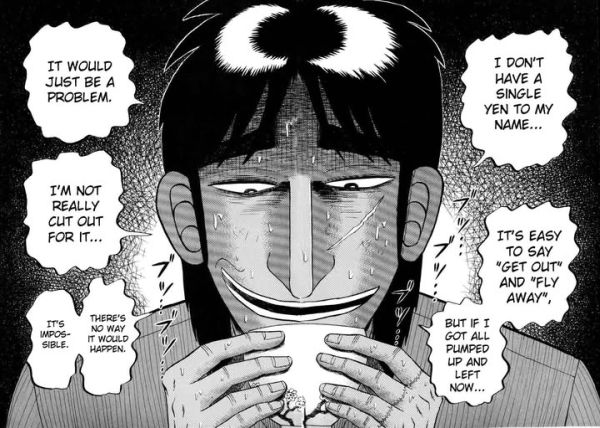
Kaiji’s character work makes the series so interesting. Instead of a cold genius, he’s a kind-hearted man who believes in others. That tension gives the manga its emotional core. With survival on the line, who can he really trust? Every time he thinks he’s found an ally, there’s an underlying paranoia, because he can never be truly sure. The art might take some time to get used to. Exaggerated faces, sweat, and close-ups make decisions feel real, brutal, and inevitable.
Tone-wise, this is bleak and intensely focused. It can be dialogue-heavy, and it loves stretching moments of decision to bring out maximum tension. If you prefer quick, flashy pacing, it can feel slow. If you like suspense that builds from pressure, it’s one of the best gambling thriller manga out there. And because the broader Kaiji saga is long, it has room to keep reinventing how it tortures its cast with new setups and increasingly cruel rules.
Genres: Thriller, Psychological, Gambling, Drama
Status: Ongoing (Seinen)
12. A Suffocatingly Lonely Death
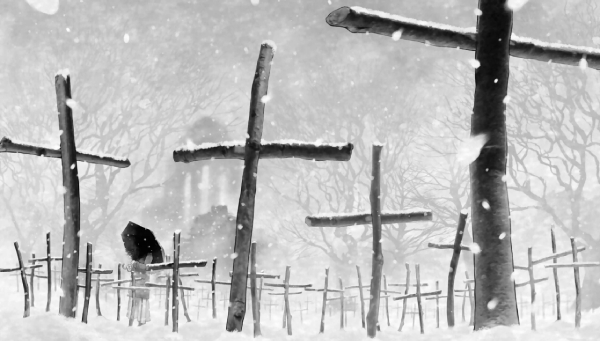
A Suffocatingly Lonely Death is a slow-burn investigation thriller manga that builds dread through procedure, not spectacle. It opens on a grotesque case involving murdered children in a mansion, then commits to the uncomfortable reality of chasing answers through trauma and contradiction. It’s the kind of story where every major answer creates new questions, and the most disturbing beats come from implication more than gore.
Detective Jin Saeki is pulled into the case, but the details grow increasingly unsettling. Witnesses are damaged and unreliable. The mansion’s owner, Juuzou Haikawa, becomes the prime suspect, but the story refuses to give an easy resolution. Saeki’s investigation soon puts him into contact with people who used to live with Juuzou, a group of children he’d chosen to take care of. Among them is the enigmatic Kanon Hazumin. Together, they try to uncover what actually happened, finding new clues, information, and connections, including one connection tied to Saeki’s own brother. The pacing is methodical, and that’s the point. You keep reading because the case never settles, and because the series steadily proves that there’s no simple explanation.
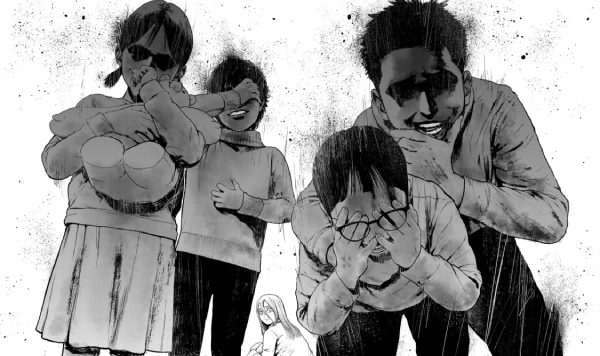
The suspense spikes whenever the story zooms in on behavior as evidence. Saeki becomes increasingly involved, and that intimacy matters because it makes the series personal. Created by the duo behind My Dearest Self With Malice Aforethought, A Suffocatingly Lonely Death has a similar taste for unease and misdirection, but here it’s channeled through a grounded police investigation rather than constant twists.
Tone-wise, it’s bleak and restrained. It’s less dependent on chapter-ending cliffhangers and more on creeping dread, where the horror is human. The trade-off is that it can feel slower and less flashy than other crime series, but because it’s ongoing, part of the appeal is that the larger mystery is still widening.
A Suffocatingly Lonely Death is a thriller manga that feels like a real investigation full of psychological darkness and a case that grows heavier and more complex with every chapter.
Genres: Thriller, Crime, Mystery
Status: Ongoing (Seinen)
11. Gannibal
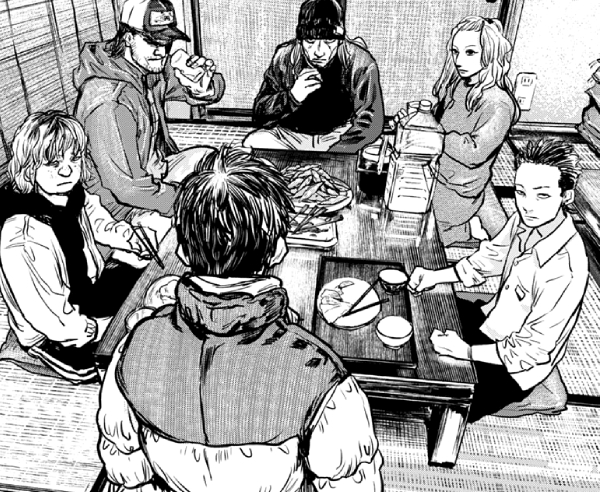
Gannibal is a rural noir thriller manga that turns a quiet mountain village into a nightmare. A police officer transfers to the countryside for what should be a calm post. He quickly realizes that the community is ruled by a powerful family, the locals share an unspoken fear, and the rumor everyone avoids talking about might be real. It’s part crime story, part paranoia spiral, with horror elements that make every interaction feel like a threat.
Daigo Agawa arrives with his wife and daughter, hoping for stability. Instead, he finds a village that smiles too easily and answers too carefully. His predecessor vanished. The Goto family carries a presence that feels less like influence and more like ownership. And when a mutilated corpse is found, Daigo starts suspecting cannibalism. Gannibal thrives on its isolated setting. Daigo is alone out there, surrounded by people who may be protecting a dark secret. Even friendly gestures feel like surveillance. Every conversation is a probe, and every attempt to do the right thing risks turning the village against him.
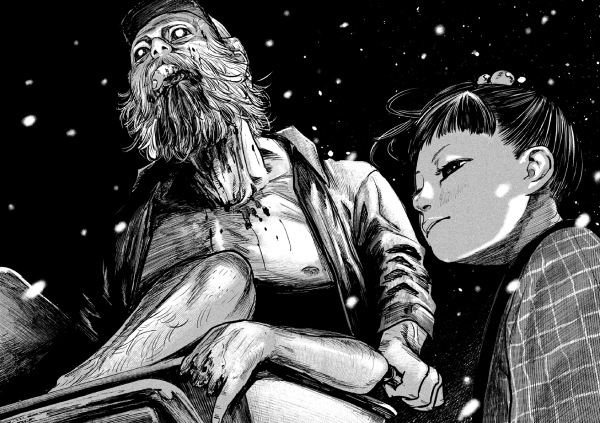
The pacing is steady and tightening. It doesn’t rely on nonstop action. The suspense comes from the loaded exchanges and the feeling that Daigo can’t trust anyone. Gannibal also does something important for a story like this: it makes the antagonists feel human, which makes the threat scarier. The Goto family is brutal, but not cartoonish. The village’s darkness feels inherited, tied to ritual and the social reality of living somewhere remote. When violence hits, it’s shocking and ugly, not stylized, and the contrast with the beautiful rural setting makes it hit harder.
Tone-wise, this is one of the most horror-leaning entries on this list, but it stays grounded. There are no supernatural forces. The danger is human cruelty, group silence, and what people will do to keep their world intact. Daigo himself is a strong lead because he’s flawed. He’s protective, stubborn, and sometimes reckless, which makes the story feel less like a clean mystery and more like a survival situation that keeps escalating.
Gannibal is a thriller manga built on paranoia, isolation, and the fear that an entire community might be complicit.
Genres: Thriller, Crime, Mystery, Horror
Status: Completed (Seinen)
10. Death Note
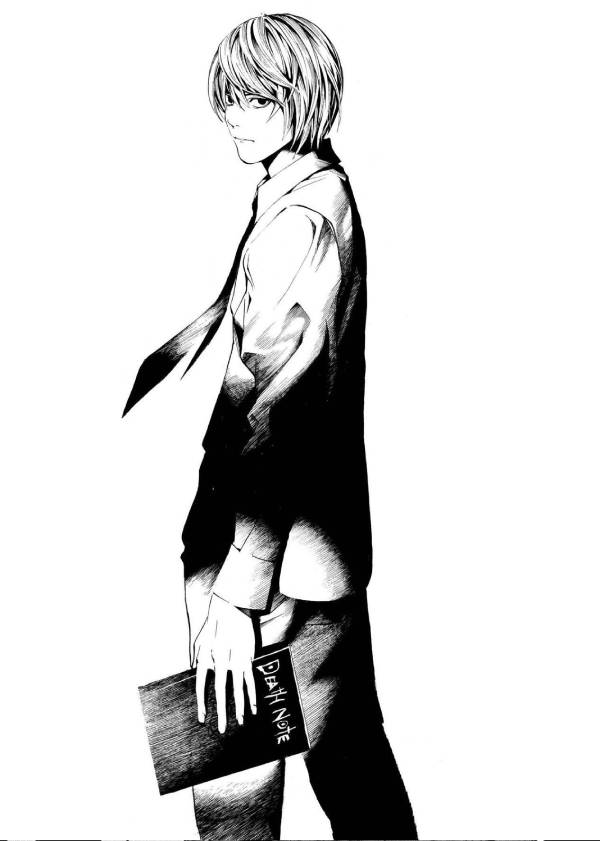
Death Note is a shonen thriller manga that replaces fights with logic traps and turns its central premise into a constant escalation of risk. A genius student finds a notebook that kills anyone whose name is written inside it and decides to reshape the world. The hook is immediate, but the appeal is the cat-and-mouse chase that follows, as a legendary detective closes in and the story becomes a battle of prediction, misdirection, and ego.
Light Yagami is a fantastic lead. He’s a prodigy who believes he’s right, which makes the suspense sharper. The story isn’t asking if he can actually follow through on his plan, but what it takes to keep it going. When he adopts the identity of Kira and L appears, the manga’s momentum is built on counter-moves. Plans are set, traps are sprung, and each side responds with new strategies that force the other to adapt. Even when chapters are dialogue-heavy, they stay tense because every conversation is a hidden test. Someone’s always probing for a mistake, and slipping up means exposure.
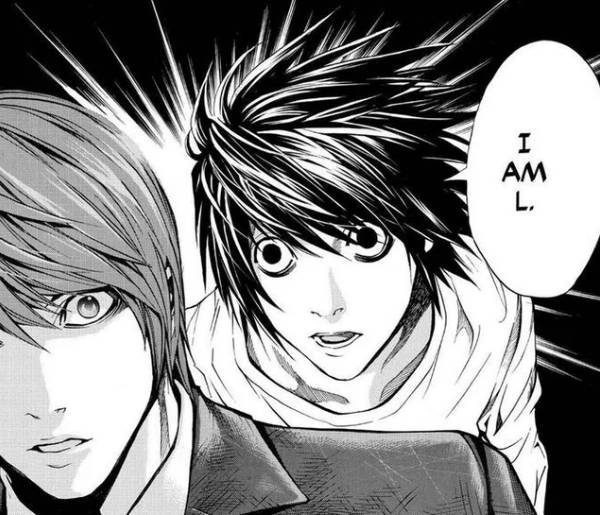
The early stretch is where Death Note is at its best. The detective pursuit is tight, the reversals are clever, and the series keeps raising the stakes without needing physical action. Takeshi Obata’s art helps immediately. The composition is crisp, and the heavy shadows give the story a cold, cinematic intensity that sells paranoia. It’s also very clear about tone. This is stylish, heightened, and occasionally theatrical, closer to an intellectual duel than grounded police work.
The main criticism is well known: later arcs do not match the tension of the earlier confrontation with L. New players enter, the structure shifts, and while the manga stays readable and still delivers strong moments, it feels less sharp than at its peak. Still, even with that dip, it remains one of the best examples of a shonen thriller manga that prioritizes strategy over action.
Genres: Thriller, Mystery, Psychological, Supernatural
Status: Completed (Shonen)
9. Liar Game
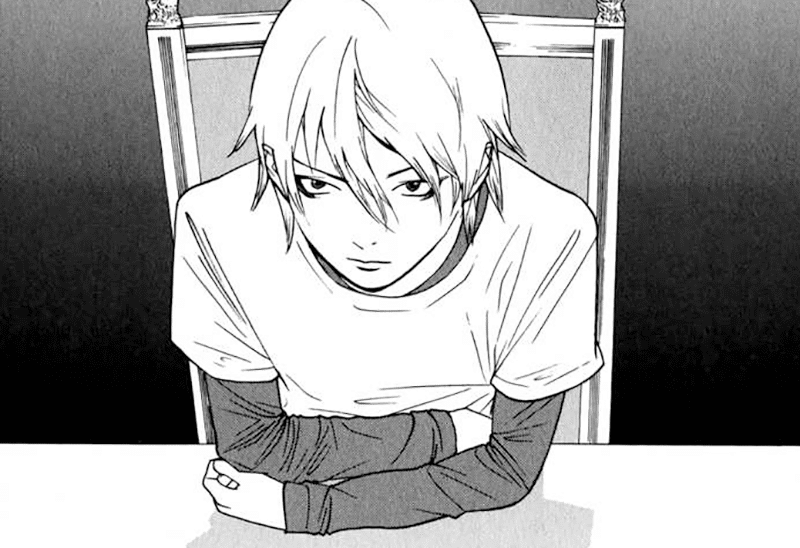
Liar Game is a high-stakes mind-game thriller manga built on one simple fact: the rules are designed to reward deception, and kindness is a liability. An honest young woman is dragged into a competition where players gamble with massive sums of money, and the only way out is to manipulate, betray, and outthink people who have no problem ruining lives for profit. It’s not an action thriller. It’s pure psychological warfare.
Kanzaki Nao is introduced as painfully naive, the kind of person who trusts even when she shouldn’t. That makes her perfect, because the first arc immediately shows how quickly sincerity gets punished. After she’s conned, she turns to Shinichi Akiyama, a brilliant swindler recently released from prison, and their partnership becomes the series’ core dynamic. The tension comes from the game structure and escalation. Every round starts with rules that seem simple, then reveal layers of exploitation, loopholes, and social pressure that turn groups into paranoid factions. Alliances form, splinter, and reform as soon as money and fear enter the room, and the suspense comes from watching strategies collide in real time.
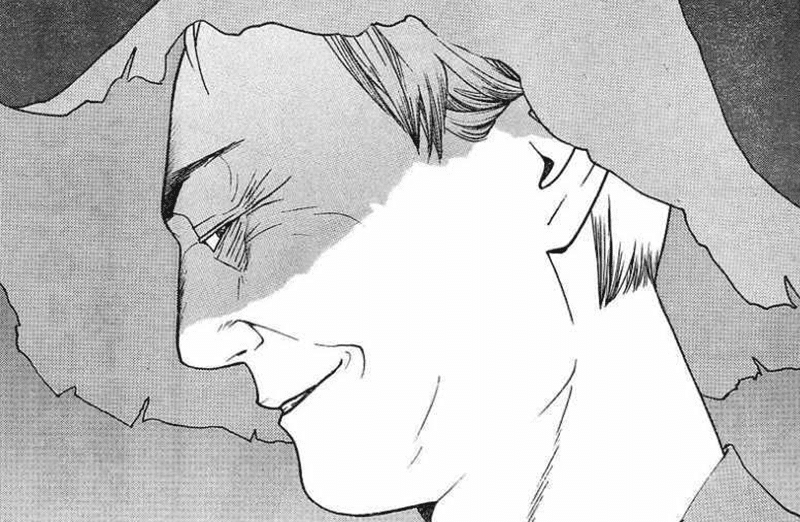
Liar Game is at its best when it introduces strong rivals, especially opponents who can push Akiyama into true uncertainty. The battles of wits often feel like watching a magic trick built from psychology, because the manga makes the logic readable while still keeping enough hidden information to land big reveals. It’s also surprisingly thematic beneath the thrills. The series constantly asks whether cooperation can survive in a system engineered to punish it, and what winning truly means. The trade-off is density. Some rule explanations can run long, and if you don’t like technical breakdowns, you might feel the story is slowing down when it’s actually building tension through detail. The ending is also a common criticism, because it can feel more abrupt than the ride deserves.
Still, it’s one of the smartest mind-game series out there. Once you get into the rhythm, it’s hard to put down because every arc ends with a new hook, a new twist, or a new betrayal.
Liar Game is a thriller manga that’s pure strategy, shifting alliances, and psychological pressure without needing violence to raise the stakes.
Genres: Thriller, Psychological, Mind Games, Drama
Status: Completed (Seinen)
8. 20th Century Boys

20th Century Boys is a conspiracy thriller manga that turns nostalgia into a weapon. A group of childhood friends invent a Book of Prophecy as kids, full of imaginary villains and end-of-the-world scenarios. Years later, those symbols reappear, tied to a rising cult led by a masked figure known only as Friend. The hook lands immediately: your childhood games are now predicting terrorism, and someone is using your memories to reshape the world.
Kenji Endo, now a washed-up adult with a normal job and normal worries, is pulled back into the past when a friend dies and the cult’s influence starts creeping into his life. From there, Urasawa builds suspense through widening circles. At first, the mystery centers on Friend’s identity, but it quickly becomes a different question: how deep does this go? The story moves across multiple time periods, bouncing between the friends’ childhood and a future where Friend’s movement has changed society. That structure keeps the suspense sharp. You’re constantly comparing what happened then to what is happening now, looking for the missing link that explains how ordinary kids became tied to a global nightmare.
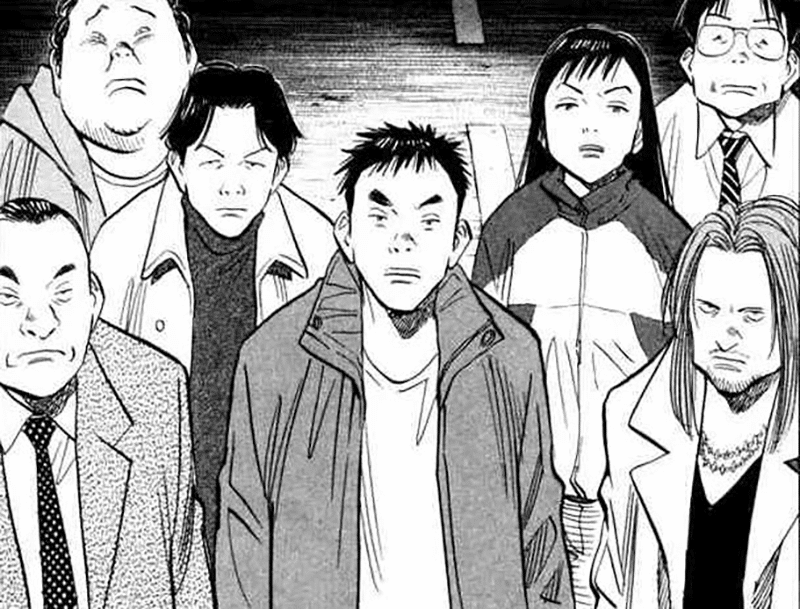
Urasawa’s pacing is relentlessly readable. He’s a master of cliffhangers that feel earned, and he uses grounded character work to make huge stakes feel personal. The best part of 20th Century Boys is the steady reversals, the shifting alliances, and the way suspicion keeps moving as the cast grows. You never feel like you’re watching a single hero solve a puzzle. You feel like the whole group is constantly in danger inside a story that keeps rewriting itself. The tone balances paranoia with warmth, which is rare. Even when the plot gets massive, it keeps returning to friendships, regrets, and the fear of being defined by something you never thought mattered.
The main downside is ambition. Over time, the conspiracy grows so wide that it can start to feel like everyone in the world is connected, and some later turns lean more operatic than the early grounded dread. The ending is also divisive for a reason. Some readers may want a cleaner resolution than what the story gives them. Still, the tension, the character focus, and the sheer momentum are hard to deny.
20th Century Boys is a thriller manga packed with cult paranoia, long-form mystery payoffs, and an energy that will make you want to keep reading.
Genres: Thriller, Mystery, Drama
Status: Completed (Seinen)
7. MPD Psycho
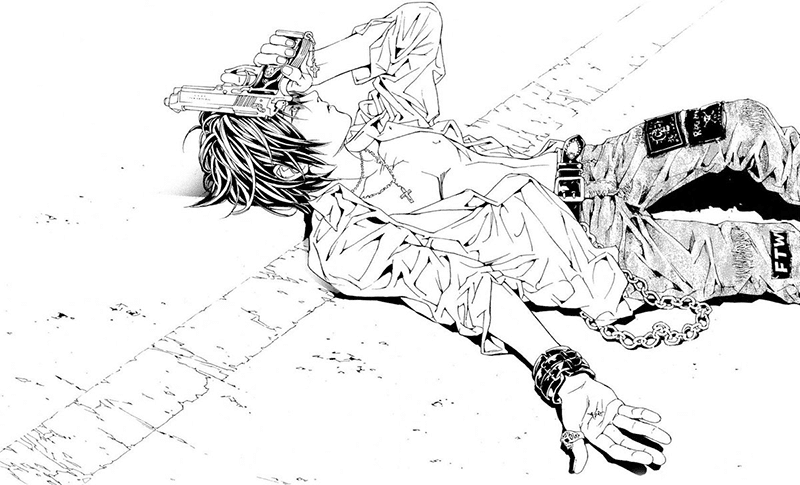
MPD Psycho is one of the most graphic, unsettling thriller manga out there, and it uses that extremity to fuel a sprawling conspiracy. The early chapters read like a brutal detective story, but then it slowly reveals itself as something bigger and more disorienting: a labyrinth of cult influence, manipulation, and identity fracture where the plot itself feels unstable.
Kazuhiko Amamiya, a man with dissociative identities, works on cases that are grotesque even by noir standards. Early arcs read like episodic investigations, full of disturbing human behavior and ritualistic murder scenes. But the further he digs, the more the cases connect, and the story’s true core takes shape: an overarching conspiracy that keeps widening and warping the meaning of everything you’ve seen so far. The manga builds tension by stacking questions. Who’s really responsible for these crimes? Why do patterns repeat? What is being engineered behind the scenes? The answers arrive, but they rarely arrive cleanly, which creates a constant feeling of paranoia.
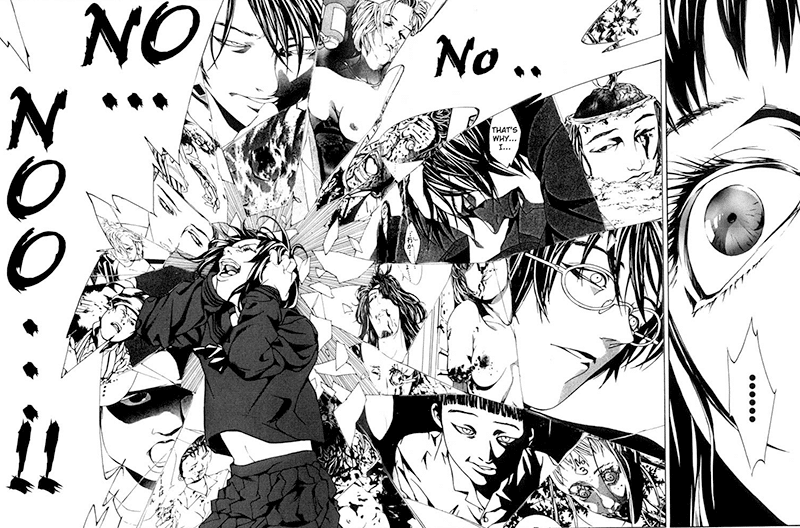
The artwork is a huge part of the experience. It’s hyper-detailed and unnervingly realistic, which makes the violence feel physical and the psychological collapse feel tangible. The gore is extreme, and there are moments of sexual violence and cruelty that are hard to sit through. The point is never shock for shock’s sake, though. MPD Psycho ties brutality to the fragility of self. Amamiya’s shifting identities become both thematic core and narrative device. They show just how much conditioning and trauma can fracture a person. As the conspiracy expands and the perspectives shift, it can be difficult to keep track of how each thread connects, and that density is either the appeal or the deal breaker.
MPD Psycho is a thriller manga with a conspiracy that turns every answer into another trap. It’s one of the boldest entries on this list, not only for its extreme content but also for how ambitious it is.
Genres: Thriller, Crime, Psychological, Horror
Status: Completed (Seinen)
6. My Dearest Self With Malice Aforethought
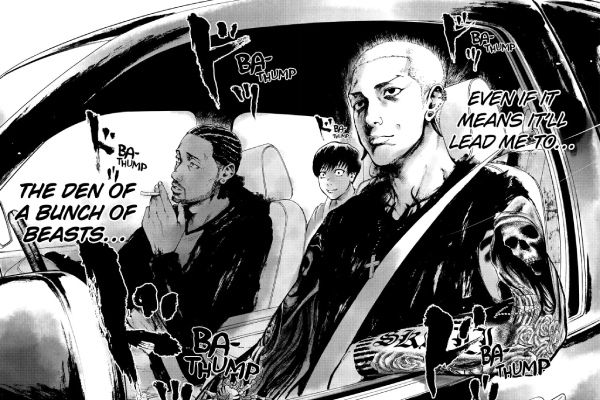
My Dearest Self With Malice Aforethought is the twist-heaviest thriller manga on this list, and it earns that reputation fast. It starts with a clean hook: a college student wakes up missing time, a stranger insisting she’s his girlfriend, and the creeping realization that his ordinary life may be nothing but a lie. From there, it becomes a page-turner built on reveals, hidden motives, and revelations that keep rewriting what you think you know.
Eiji Urashima’s missing days aren’t just a quirky mystery. They’re a crack in his identity. As he investigates, he uncovers contradictions in his relationships, clues that suggest he’s capable of things he can’t remember doing, and threads that pull him toward a larger truth. The core tension comes from author-versus-reader manipulation. The manga constantly sets up a conclusion, then flips the board. Betrayals, identity games, and withheld information arrive at a ruthless tempo.
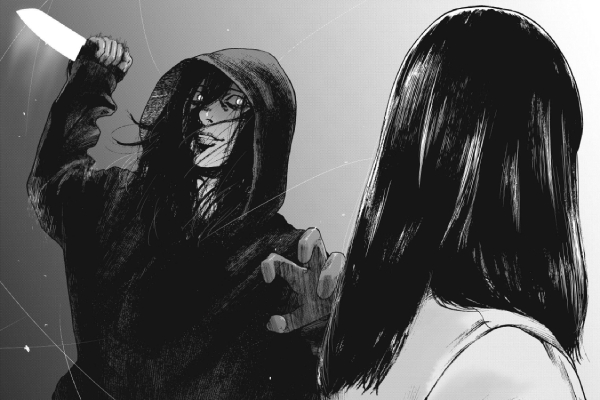
The best stretch is the early half, where the pacing never slows down and every new reveal escalates the stakes. It’s also a very specific kind of ride. It leans pulpy and sensational, but it stays readable and grounded because of Eiji: he’s terrified of who he might be. As the story moves into later arcs, the chaos settles into a more straightforward narrative. That shift makes the themes land and the ending satisfying, but it can also feel slightly less manic than the earlier barrage of twists. Still, the central mystery keeps enough momentum that the tension rarely collapses.
If you love thrillers that feel like they’re closing on the character’s own mind, this one hits hard. If you prefer slow-burn procedural logic, the constant reframing might be too much. Either way, My Dearest Self With Malice Aforethought is a thriller manga that builds constant suspense around identity, memory, and the fear that your worst version has already acted.
Genres: Thriller, Psychological, Mystery
Status: Completed (Seinen)
5. Sanctuary
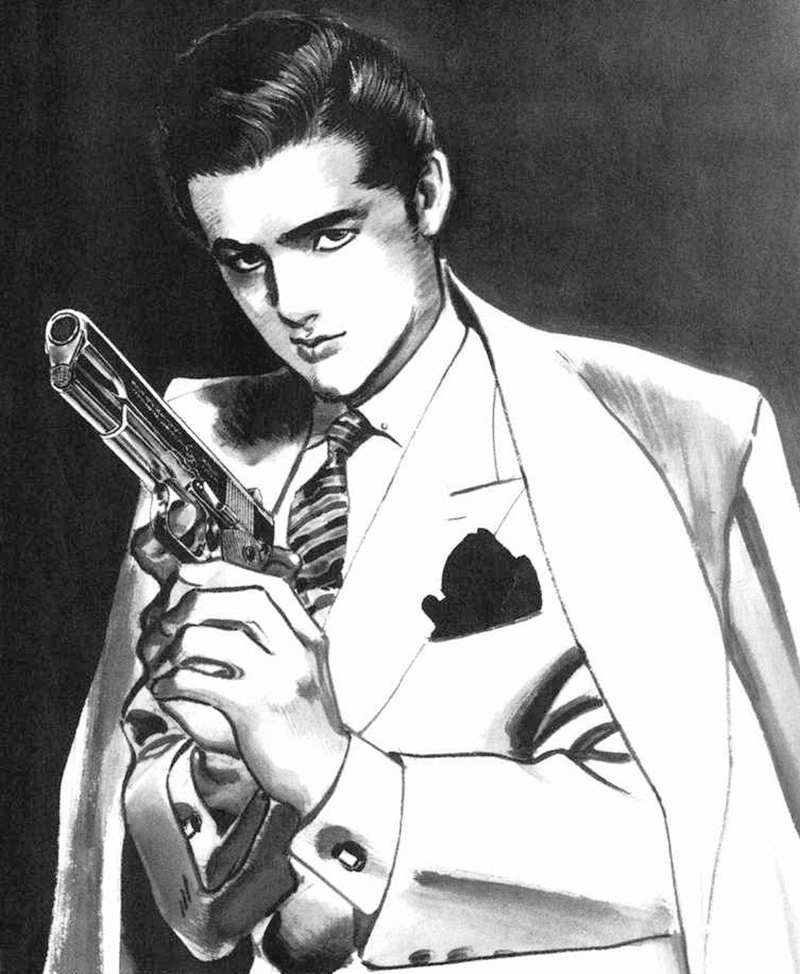
If you want the greatest crime and political thriller manga ever created, Sanctuary is the one that earns the crown. Written by Buronson and illustrated by Ryoichi Ikegami, it’s a ruthless story about power, control, and ambition, told through two men who decide Japan needs to be rebuilt by force. It’s part yakuza epic, part political thriller, and it commits to its premise so hard that it feels different and more ambitious than most rise-to-the-top stories.
The hook introduces us to Chiaki Asami and Akira Houjou, two childhood friends who share the same dream: to create a sanctuary. Instead of choosing one route, they split the world in half. Houjou sets out to unite the underworld by crushing factions and turning the yakuza into a weapon with national reach. Asami takes the opposite path, climbing through politics, manipulating elections, parties, and rival power blocs as he moves toward the position of Prime Minister. One fights in Diet chambers and backroom negotiations. The other fights in smoky clubs, alleyway meetings, and violent power grabs. The brilliance is that the manga never treats one side as the main story. It keeps both storylines moving, and the tension comes from watching them advance in parallel, sometimes cooperating, sometimes threatening to ruin everything.
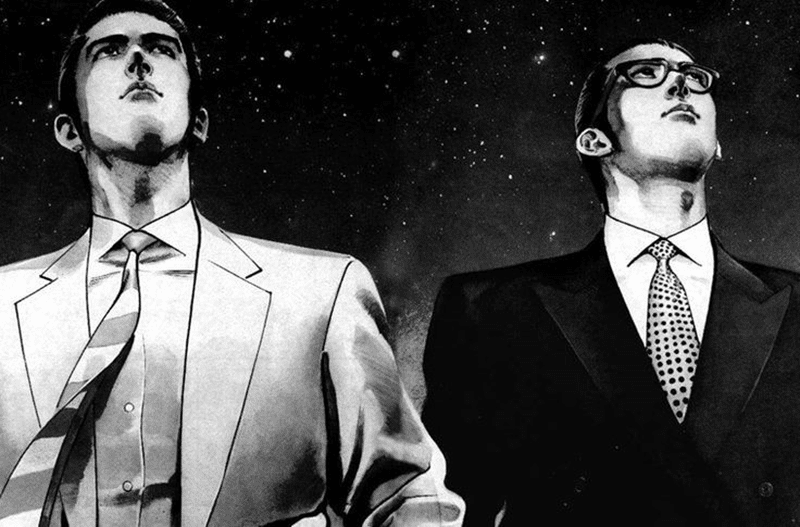
Sanctuary is a thriller because it runs on escalation, not mystery. Every arc is a new test of influence. Asami’s storyline is pure leverage: who can be bought, who can be exposed, who can be ruined, and how quickly a political handshake can become a threat. Houjou’s side is a war of intimidation and shifting alliances, where respect is just another currency, and every deal has the potential to turn into violence. This dual narrative keeps the pacing sharp. A political win might trigger an underground reaction. A yakuza move creates consequences that bleed into the legitimate world. You keep reading because it’s always moving toward a bigger collision, and because every victory creates a new enemy who feels smarter, richer, and more dangerous than the last.
The cast is stacked with rivals who actually feel worthy of the protagonists, and Isaoka is the standout. He’s not just brutal and intimidating. He’s competent, understands systems, and knows exactly where people break. Sanctuary stays gripping because it refuses to hand easy wins to Asami and Houjou. The threats evolve, and the further they climb, the more obvious it becomes that the top isn’t a finish line.
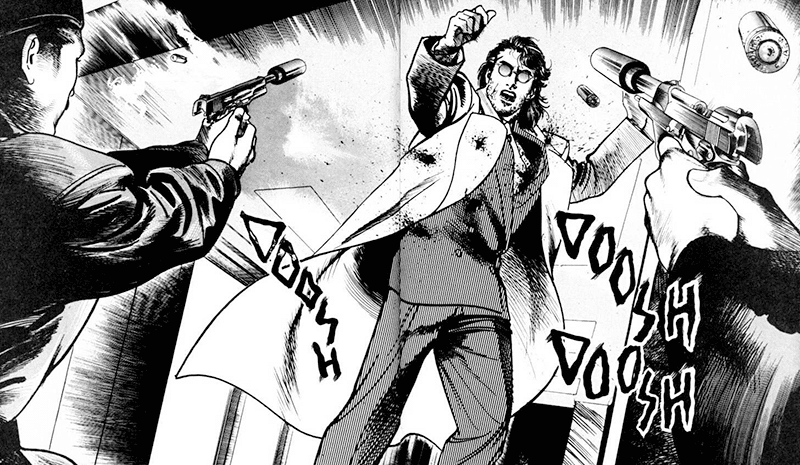
Ikegami’s art is perfect for this story. Everything looks sharp, clean, cinematic, and expansive. The men feel made of confidence and menace, the city glows with nightlife and corruption, and even quiet conversations carry the weight of a standoff. It’s pure 1990s seinen style, and it makes the power plays feel physical. That said, Sanctuary isn’t flawless. The depiction of women is seriously dated, often reducing them to accessories in a male power fantasy. The earlier stretches feel grounded and ruthless in their realism. Later, though, it becomes more operatic. The moves get bigger, the turns get wilder, and it shifts from plausible to cinematically intense. But that excess is part of its appeal. Sanctuary knows exactly what it is.
As a thriller manga, Sanctuary is a towering epic that combines election warfare, yakuza politics, and nonstop momentum.
Genres: Thriller, Crime, Political
Status: Completed (Seinen)
4. Ichi the Killer
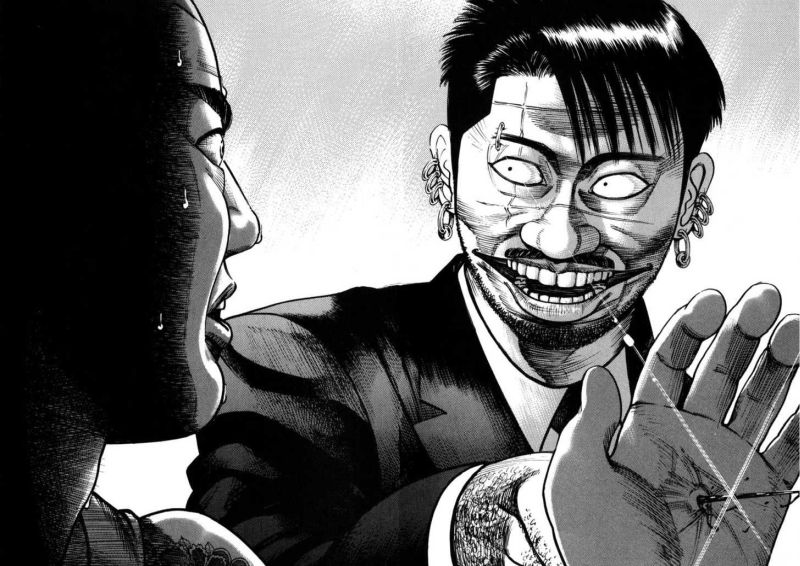
Ichi the Killer is probably the most disturbing and transgressive thriller manga on this entire list. This is a yakuza story that drags you into the ugliest corner of the underworld, where torture, sexual violence, and murder aren’t shocking twists, but routine tools of control. Hideo Yamamoto softens nothing, and that harshness is exactly why the tension feels so sharp. This isn’t a stylish gangster fantasy. It’s a descent into damaged people using cruelty as identity.
The premise centers on two men who feel destined to collide. Ichi is a traumatized assassin with a fragile mind, and Kakihara is a sadistic yakuza enforcer who treats pain like religion. When his boss disappears, Kakihara’s search turns into a violent spiral of interrogations, retaliation, and escalating brutality. It becomes an inverted cat-and-mouse game where Kakihara isn’t chasing justice. He’s chasing stimulation, dominance, and the exact kind of monster he hopes exists out there. The closer he gets to Ichi, the more the plot reveals manipulation and hidden motives under the chaos.
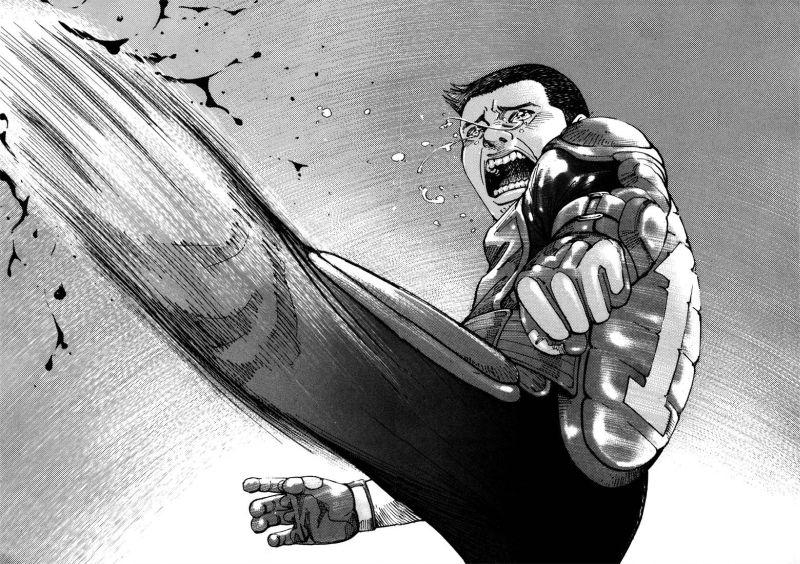
What makes Ichi the Killer a real thriller, and not just shock content, is the way it builds paranoia through power imbalance. Nobody feels safe. Alliances break apart. Loyalty is nothing but a leash. The yakuza politics aren’t presented as neat factions. Instead, the hierarchy is defined by fear, leverage, and the casual way characters treat cruelty as negotiation. Every time Kakihara squeezes someone for answers, the suspense spikes because the information will come out eventually, but you never know what the cost will be. At the same time, the manga keeps reframing Ichi. He initially looks like a simple killing machine, but the story slowly makes it clear he’s far more unstable, tragic, and possibly more controlled than he first appears. That uncertainty is where the manga turns sharp, because it turns violence into a symptom rather than spectacle.
Yamamoto’s art is a huge reason the manga lands. His linework is clean, but his expressions are warped and exaggerated in a way that makes every moment of panic feel physical. When violence happens, it’s explicit and ugly, not quick or glamorous, and it lingers long enough to make you uncomfortable. The downside is obvious: some moments are so extreme they’ll feel unbearable rather than compelling, and parts of the narrative lean hard into chaos over tight realism. But even that messiness fits the tone.
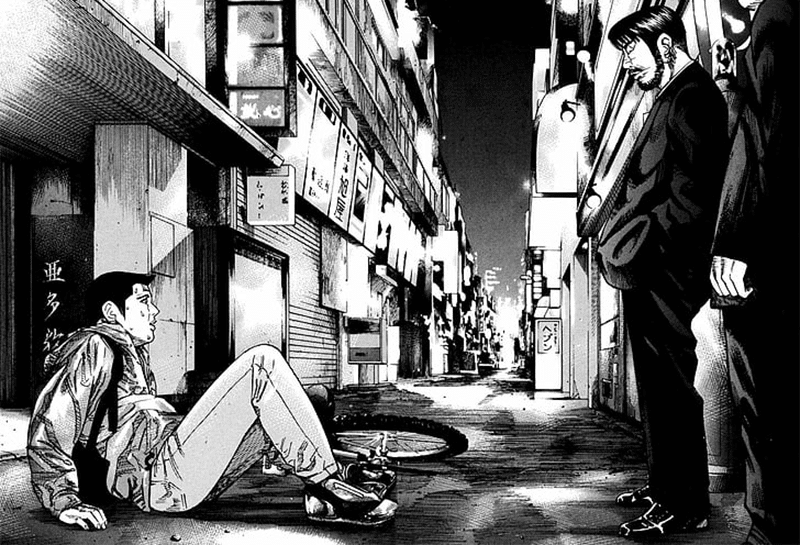
Ichi the Killer is a thriller manga where suspense comes from cruelty, manipulation, and constant escalation. Be warned, though: it’s nihilistic in tone and full of extreme violence.
Genres: Thriller, Crime, Psychological
Status: Completed (Seinen)
3. Usogui
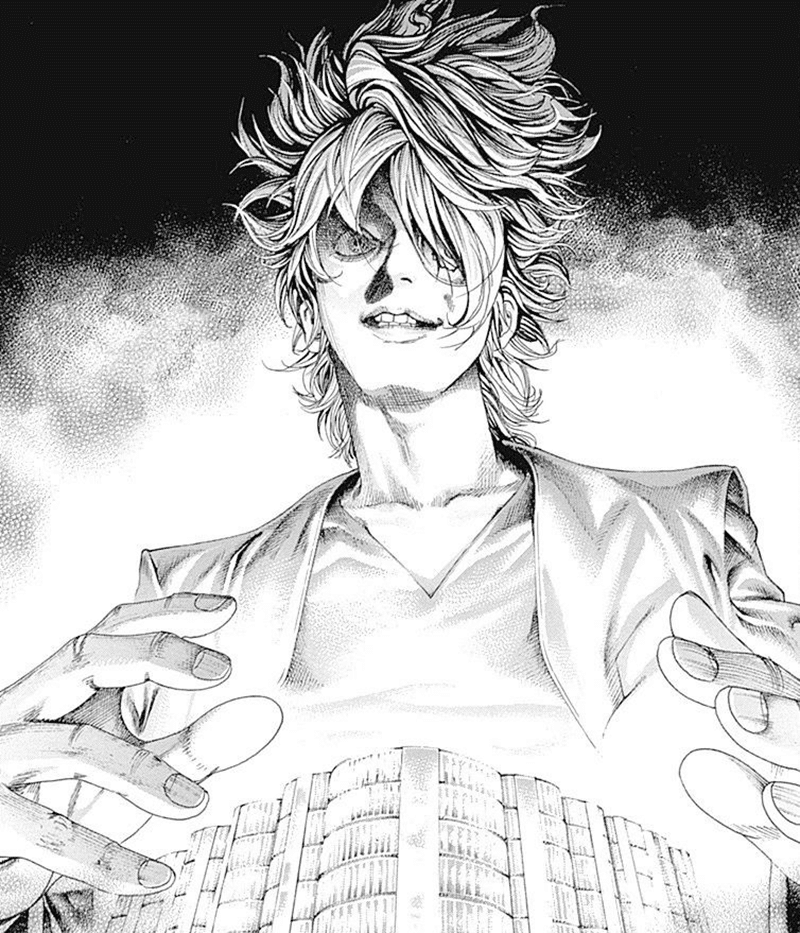
Usogui is the most brilliant mind-game thriller manga I’ve ever read, and it isn’t even close. Toshio Sako takes the appeal of gambling manga, high stakes, clever rules, and massive reversals, and pushes it into something harsher and more exciting. Every match feels like one misread could get you erased. The story centers on Baku Madarame, nicknamed Usogui, who throws himself into underground gambles overseen by Kakerou, an organization that enforces the rules with absolute authority. You don’t quit the games. You win or you pay, often with your life.
What makes Usogui so great is that it escalates through strategy and psychological warfare. The games are never about luck. They’re about reading people, controlling the flow of information, and setting traps. Sako thrives on double bluffs, hidden conditions, and mid-match reversals that force you to reevaluate what you think is happening. And the series has a rare skill: it makes complicated games readable without draining the tension. You see the mental math, the risk assessment, the tiny tells that separate confident moves from fatal ones. The suspense comes from the quiet terror of realizing someone has manipulated the entire room and you’re one step too late to notice.
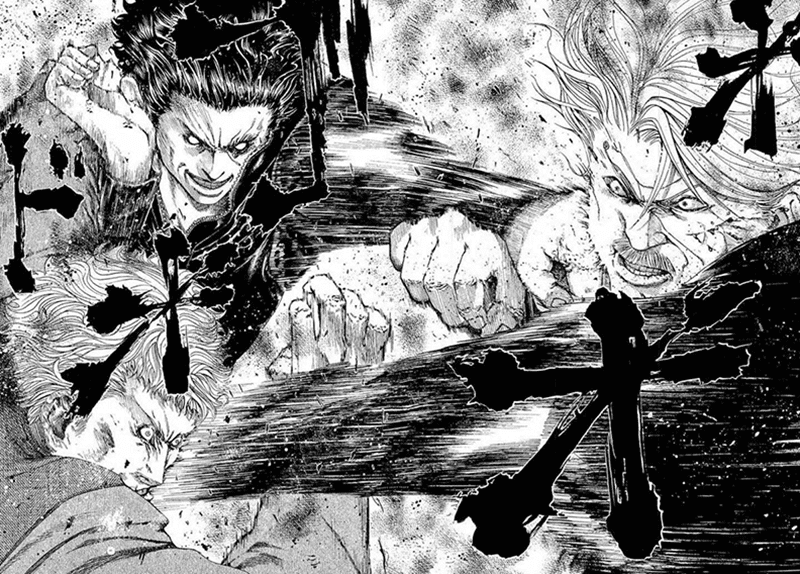
Baku is the perfect thriller protagonist because he doesn’t act like a hero. He’s calm when most people would crack. He wins through timing, nerve, and a willingness to bet everything, even when the odds look suicidal. But Usogui isn’t just about Baku winning over amateurs. The opposition is stacked with monsters, and the best matches feel like wars between predators who all believe they’re the smartest person in the room. Rival gamblers aren’t just obstacles, they’re threats with their own philosophies and blind spots, capable of weaponizing fear just as well as Baku does. Even the referees raise the tension, because Kakerou’s presence turns each gamble into something ceremonial and final. The atmosphere tells you this isn’t entertainment. It’s selection.
Usogui also deserves a lot of credit for how dramatically it improves. Early on, the series can feel rougher, with a more chaotic survival vibe before it locks into what it does best: clean, rule-based battles where psychology decides everything. Once it finds that lane, it becomes more ambitious with every major arc. The art evolves massively. Paneling gets sharper, faces become more expressive, and action gains weight and clarity. By the time you hit the biggest showdowns, it’s absurdly confident, and every turn of the page could flip everything. And because the consequences are real, the tension never feels fake.
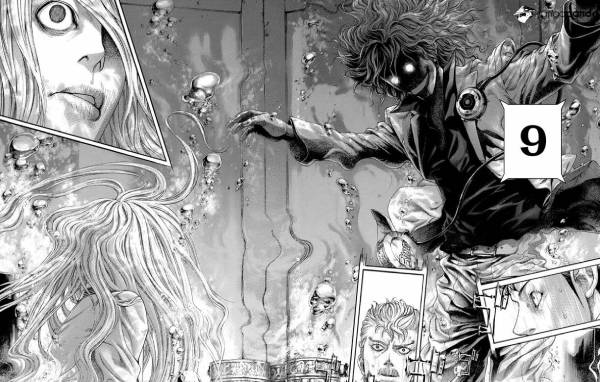
Tone-wise, it’s intense, stylish, and often brutal, but it doesn’t rely on gore. Violence exists as a threat hanging over every decision, which makes even quiet scenes feel loaded. The only real warning is that it’s long and it expects attention. If you want quick games and instant gratification, the setup and rule details may feel dense. But if you like thrillers that reward focus, this one hits a level most series never reach.
If you want the pinnacle of gambling mind games, with terrifying opponents and strategies that keep evolving past what you thought the genre could do, read Usogui. It’s a thriller manga that turns smart into suspense.
Genres: Thriller, Gambling, Mind Games, Psychological
Status: Completed (Seinen)
2. Godchild
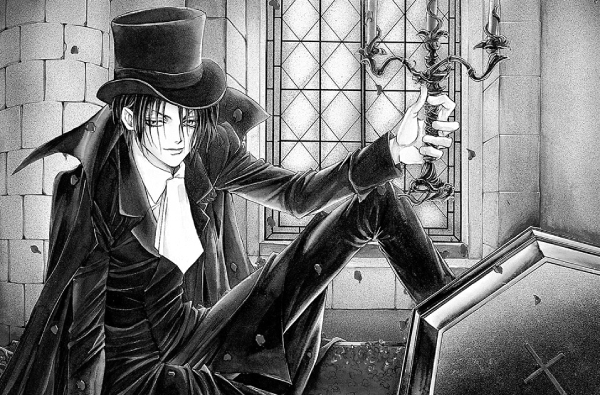
Godchild is a Victorian gothic crime thriller manga that hides its darkness behind gorgeous, ornate shoujo art. It follows Cain Hargreaves, a young aristocrat with a poisoned upbringing, as he investigates murders, disappearances, and the polite cruelty under the surface of Victorian-era London. Every case feels like a refined dinner party with a murder waiting to happen, and the tension comes from how quickly Cain learns that evil isn’t loud. It’s inherited, institutional, and often smiling.
Early on, the manga leans into episodic cases, each built around a sharp hook: deadly poisons, elaborate traps, and twisted family dynamics. It gives off a Sherlock-style vibe, but with far more malice and far less comfort. Even when the cases look theatrical, the conclusions often land in an uncomfortable place where motives are personal and justice never feels clean.
What makes Godchild a top-tier thriller, though, is what lies underneath those cases. The episodic structure creates steady momentum, but it also tightens over time. Each investigation reveals another layer of rot in Cain’s world, and the deeper he digs, the more the story makes you ask how far it goes. Secrets begin stacking. Characters who seem harmless turn out to be dangerous. The series carries a constant sense that Cain is being watched, which gives the plot a paranoid edge even during quieter stretches. And because Cain’s own history is tangled up in the worst of it, every clue makes him question his own identity.

Tone-wise, Godchild is bleak, elegant, and cruel in a very specific way. It isn’t trying to shock you with gore every chapter, and it isn’t an action story. It’s a slow-burn thriller where suspense comes from atmosphere, suspicion, and the fear of what people will do when their reputation, obsession, or family name is threatened. When violence hits, it’s sudden and mean, especially for a shoujo series, which makes the contrast land harder. It also reads denser than most entries on this list. At times, it feels closer to reading a Victorian novel with illustrations than a typical manga, but that density is part of its appeal. You get layered motives, social pressure, and the sense that every character is hiding something.
Godchild also works because it offers more than just its episodic cases. The overarching narrative gradually reveals a larger web of cruelty and sinister forces, and that long-term mystery gives the series weight. There are subtle BL undertones, too, but they’re tragic and character-driven rather than fanservice and they fit the gothic tone well.
Godchild is a thriller manga that feels like a gothic Sherlock Holmes crossed with tainted ancestry and secret-society paranoia. It’s perfect if you love elegant cruelty, episodic mysteries with overarching tension, and protagonists who keep moving forward even when the truth might destroy them.
Genres: Thriller, Mystery, Gothic, Historical
Status: Completed (Shoujo)
1. Monster
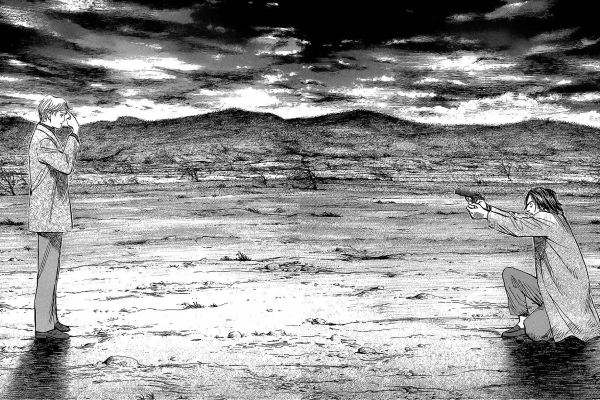
Monster is a rare thriller manga that feels inevitable. It starts with one moral decision and builds tension so patiently that, by the time the full horror is revealed, it’s already too late to stop. Naoki Urasawa turns a simple premise into a sprawling psychological chase across post-Cold War Europe, where danger spreads through whispers, coincidences, and human weakness, rather than spectacle.
Dr. Kenzo Tenma is a brilliant Japanese neurosurgeon working in Germany when he saves a young boy instead of an influential politician. It costs him his career. The real consequences, however, arrive years later when that boy, Johan Liebert, returns as a remorseless killer. Tenma becomes obsessed with stopping the monster he unleashed, and that single goal turns his life into a long pursuit across cities, borders, and broken communities. The story never rushes the chase. Instead, it keeps tightening the net around Tenma, forcing him to move secretly while he tries to do what no one else will.
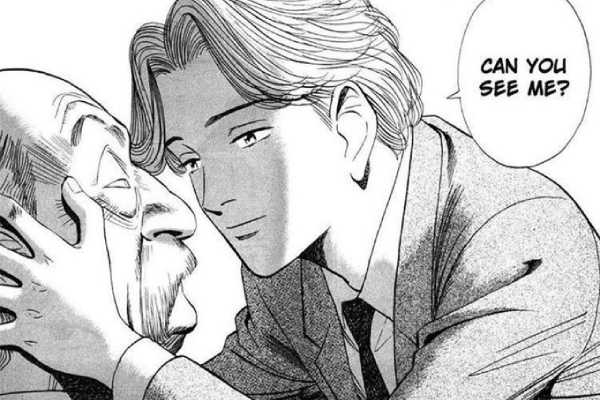
What makes Monster so gripping is how its suspense escalates through cause and effect. Tenma doesn’t discover Johan through convenient clues or dramatic reveals. He finds him the way you’d uncover a real conspiracy: through scattered testimonies, vanished witnesses, false leads, and the lingering aftermath of violence. Each arc adds more information about Johan, and the more Tenma learns, the more he realizes he’s not chasing an ordinary criminal. Johan doesn’t just kill people. He manipulates them, convinces them to destroy themselves or others, and then vanishes before anyone can prove he was even there. That’s why the series feels so paranoid. Everyone could be a pawn, an accomplice, or a future victim.
Johan is also one of the most unsettling antagonists in manga because he’s rarely loud. His evil is calm, rational, and almost clinical. He understands people well enough to break them with a few words, and the manga repeatedly shows how fragile morality becomes under pressure. Tenma is the perfect counterweight to that. He isn’t a detective or an action hero. He’s a regular man placed in an impossible situation, where stopping the monster might require him to violate everything he believes about life, guilt, and justice. Monster uses that dilemma to make the suspense emotional as much as plot-driven.

The tone is grounded and bleak. This is a slow-burn story with a noir atmosphere, realistic violence, and tension that comes from anticipation rather than shock. Urasawa’s restrained artwork makes it even sharper, because the horror lands in ordinary settings: hospitals, apartments, train stations, quiet streets. Monster isn’t perfect, and it occasionally leans on coincidence, but the overall structure remains relentless. It’s one of the few long mystery chases that still feels controlled the whole way through.
Monster is a thriller manga built on dread, moral pressure, and a villain who feels less like a person and more like an idea.
Genres: Thriller, Mystery, Psychological, Drama
Status: Completed (Seinen)