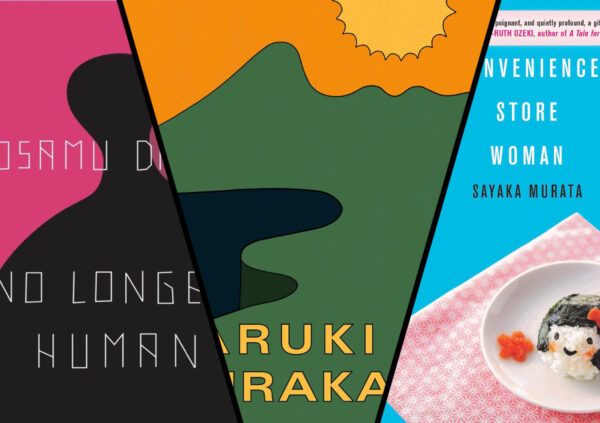
Japanese healing fiction is a publisher’s label for a very specific kind of book: short, gentle novels set in cafés, bookshops, libraries, and small restaurants, where people carrying grief or regret find a way to put some of it down. Walk into a bookshop now and you’ll find a whole table of them, usually with a cat on the cover.
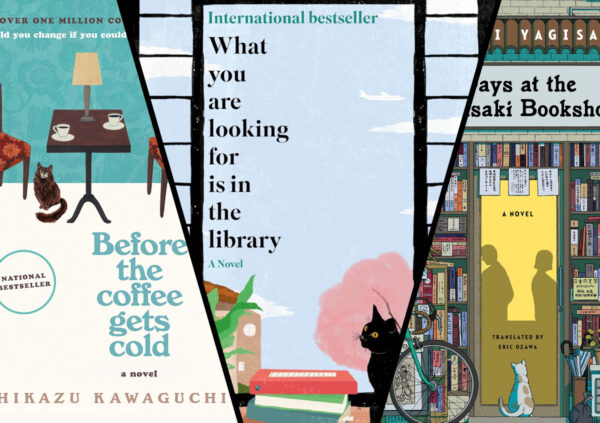
The name is newer than the books. The term healing fiction was popularized in English by a New York Times piece in late 2024, and it borrows from iyashikei, meaning healing type, a label that grew up in Japanese manga and anime for low-stakes, slice-of-life stories where, as one critic put it, the focus is less on character and plot than on building a world you want to sit inside. That description fits the novels exactly.
This list picks the eleven Japanese healing fiction books worth your time, from the literary novels the genre grew out of to the recent bestsellers, and it’s honest about the difference between them. A note on where the judgments come from: none of these are books I’ve read myself, so each entry reports how critics and readers received it.
What the Label Covers, and What It Doesn’t
Two things the label hides are worth knowing before you start buying.
The first is that healing fiction is not only Japanese. The wave that publishers are selling is Japanese and Korean, and the Korean side is just as large: Welcome to the Hyunam-Dong Bookshop, laundromats where strangers share a diary, shops that sell what you have lost. If you exhaust the list below, the Korean shelf is the obvious next stop, and it works on identical principles.
The second is that the current formula is recent, even though the mood isn’t. Commentators often trace a healing boom in Japan to the late 1990s and the years after 1995, when the Kobe earthquake, the Tokyo subway sarin attack and a long economic slump left readers hungry for consolation. What took off in English is tighter than that: an episodic structure, a fixed magical or semi-magical location, and a series of visitors, each helped along by one small encounter. The English breakthrough was Before the Coffee Gets Cold in 2020, and almost everything published since has been sold in its shadow.
The genre has fair critics. One recurring complaint is that English-language publishers have made a small, soothing corner of Japanese writing look like the whole of it, and the cats have become a running joke: The Guardian’s John Self pointed out that one bestseller here has a cat on the cover and no cat anywhere in the book. So this list separates the books that do something lasting from the ones that simply do the formula well. Both kinds have their place, but they aren’t the same thing.
Kitchen
Banana Yoshimoto · 1988 · translated by Megan Backus · English 1993

The ancestor of Japanese healing fiction, even though it predates the label and is more literary than most of what followed. Mikage Sakurai’s grandmother has died, and with her the last of her family. She finds that the only place she can sleep is the kitchen floor, curled against the hum of the refrigerator. Rescue arrives in the form of Yuichi, who knew the grandmother from the flower shop where he works, and of a spare room in the apartment he keeps with his mother Eriko, a transgender woman running a bar and the book’s warmest presence.
What survives thirty years later is how concrete the grief stays. There is no aria about loss, only practicalities: a place to sleep, something to eat, the problem of an afternoon. Very little happens, and what the novella measures is the effort continuing takes when nothing is happening, which is the engine every later healing novel borrows.
It was Yoshimoto’s debut, it won a newcomer’s prize in Japan, and the craze around her got its own name, Bananamania. The Banana Yoshimoto guide covers the rest of her work, and the Kitchen page covers how a waitress in her twenties wrote it. It’s short, strange in places, and less sugary than its reputation.
The Guest Cat
Takashi Hiraide · 2001 · translated by Eric Selland · English 2014

Two freelancers, married and drifting a little apart, live in a cottage tucked into the corner of a Tokyo garden, and their days rearrange themselves around a neighbor’s cat that starts dropping in. The cat comes and goes on its own terms. They start buying food for it. The wife names it. Nothing else changes, and everything does.
Hiraide is a poet, and the book reads like one: the light in the garden, the shape of the zelkova tree, the exact route the cat takes across a roof. It is the most formally careful book on this list, and the one least interested in delivering a lesson, which is why readers who find the genre saccharine often make an exception for it.
It became an unlikely international bestseller, and it sits on the best Japanese novels list. At well under two hundred pages it’s also the quickest way to see what this kind of writing looked like before it had a marketing name attached.
The Housekeeper and the Professor
Yoko Ogawa · 2003 · translated by Stephen Snyder · English 2009

A housekeeper is assigned to a former mathematician whose memory lasts eighty minutes. Every morning he meets her again for the first time, coping by pinning notes to his suit, and he retreats into numbers because numbers do not require memory. She brings her ten-year-old son, whom he nicknames Root, for the shape of his flat head, and the professor teaches the boy about primes and amicable numbers and why a formula can be beautiful. Baseball statistics do the rest.
Among Japanese healing fiction this is the one with the most literary weight, a novel critics have praised for earning its tenderness rather than assuming it. Ogawa is better known in English for the eerie The Memory Police, and knowing that makes this book stranger and better: the same level, clinical voice, pointed at kindness instead of dread. She later co-wrote a nonfiction book with a mathematician about the beauty of numbers, so the enthusiasm is real.
It won the first Japan Booksellers’ Award, voted on by bookshop staff, and a 2006 film version carried the title The Professor’s Beloved Equation. The Yoko Ogawa guide covers both sides of her work.
Days at the Morisaki Bookshop
Satoshi Yagisawa · 2010 · translated by Eric Ozawa · English 2023

Takako is twenty-five when her boyfriend announces, over dinner, that he is marrying someone else, a colleague she knows. She quits her job, stops leaving the house, and accepts her uncle Satoru’s offer of the room above his secondhand bookshop in Jinbocho, Tokyo’s book district, where dozens of dealers trade in used volumes on a few blocks. She sleeps for weeks. Then she starts reading, mostly because the stock is there, and slowly rejoins the world through the shop’s customers and regulars.
Yagisawa’s debut won the Chiyoda Literature Prize in Japan and became one of the biggest translated bestsellers in the UK, and it is the book with the cat on the cover and no cat inside. What it does well is the specific texture of a used bookshop: the dust, the pricing, the customers who talk too long, the uncle who will not explain his own marriage.
The sequel, More Days at the Morisaki Bookshop, continues Takako’s story, and Yagisawa’s Days at the Torunka Café moves the same sensibility to a coffee shop.
The Travelling Cat Chronicles
Hiro Arikawa · 2012 · translated by Philip Gabriel · English 2017

Satoru is driving across Japan in a silver van with his cat Nana, named for the seven shape of his tail, visiting old friends from his childhood and school years. Nana narrates much of it, with the flat superiority cats are given in fiction, and does not understand what the trip is for. The reader works it out well before he does, which is the novel’s cruel and effective design.
It’s the most openly tearful book on this list and an early success of the current wave in English. What raises it above the premise is the structure: each friend gets a chapter, each chapter is a small complete story about someone Satoru mattered to, and the accumulation does the work that sentiment alone would not.
Arikawa’s story was made into a Japanese film in 2018, and her later The Goodbye Cat returns to cats as companions through loss. The best Japanese novels list includes it.
Sweet Bean Paste
Durian Sukegawa · 2013 · translated by Alison Watts · English 2017

Sentaro runs a failing dorayaki stall, cooking pancakes and filling them with factory bean paste, drinking too much, working off a debt. An elderly woman named Tokue answers his advertisement for help, insists on making the sweet bean paste herself, and turns out to be extraordinary at it: she talks to the beans, listens to them, refuses to rush. The shop revives. Then her past surfaces, and with it a painful chapter of Japanese history, the treatment of people with leprosy, who were confined to sanatoriums for decades under a law not repealed until the 1990s.
It is gentle in manner and serious in subject, which is why it sits closer to the literary end of the genre than its premise suggests. The cooking is real cooking, described by a writer who trained as a patissier, and the friendship is between two people society has finished with.
Naomi Kawase’s film adaptation, released as Sweet Bean, opened the Un Certain Regard section at Cannes in 2015.
The Kamogawa Food Detectives
Hisashi Kashiwai · 2013 · translated by Jesse Kirkwood · English 2023

Down a Kyoto backstreet, behind a sign that gives nothing away, a father and daughter run a small diner with a sideline advertised in a classified ad: they will find and recreate a dish from your past. Nagare, a retired detective, does the investigating. Koishi, his daughter, takes the client’s statement. Each chapter is a new customer, a half-remembered meal, and a piece of detective work conducted through ingredients, water quality, and the circumstances of the original eating.
The food writing is the draw, and the structure is smarter than it looks: the recreated dish is never really the point, because what the client is grieving is the person they ate it with. Kashiwai is a Kyoto native with a food background, and the specificity shows in every dish.
It has grown into a series in English, continuing with The Restaurant of Lost Recipes, and it’s now one of the anchors of the genre.
Before the Coffee Gets Cold
Toshikazu Kawaguchi · 2015 · translated by Geoffrey Trousselot · English 2019

The book most responsible for the English boom. In a basement café in Tokyo, one particular seat lets you travel into the past, under rules that strip out the machinery such stories normally depend on: you cannot change the present, you can only meet people who have come to the café, you cannot leave the chair, and you must be back before your coffee goes cold. Four visitors go back anyway, not to fix anything but to say something.
Kawaguchi is a playwright, and he adapted his own stage play into linked stories, which explains both the strengths and the limits: the scenes are built for a single set and a small cast, and the dialogue carries everything. Readers who want description find it thin. Readers who want the conversations find them devastating.
It has its own page, Before the Coffee Gets Cold, which covers the film, while our Kawaguchi guide runs through all six volumes and says plainly where the sequels begin repeating the trick.
The Cat Who Saved Books
Sosuke Natsukawa · 2017 · translated by Louise Heal Kawai · English 2021

Rintaro Natsuki is a withdrawn teenager whose grandfather has died, leaving him a secondhand bookshop he is about to close. Then a talking tabby called Tiger arrives and marches him through a series of labyrinths to confront people who mistreat books: a man who collects thousands and reads none, a professor who teaches speed-reading and abridgement, a publisher who prints what sells and nothing else.
Natsukawa is a practicing doctor, and the book doubles as a fable about how books are read, sold and abused, with an argument to make in each labyrinth. It reads younger than most of this list, which makes it a good bridge for teenage readers, and it has a sequel, The Cat Who Saved the Library, in which a book-loving girl meets the talking cat.
Readers who want subtlety will find the allegory heavy. Readers who have ever worked in a bookshop will enjoy watching Tiger take apart the customers.
What You Are Looking For Is in the Library
Michiko Aoyama · 2021 · translated by Alison Watts · English 2023

Five people at crossroads in their lives find their way to a library inside a Tokyo community center: a restless shop assistant, a mother demoted after maternity leave, an accountant who dreams of an antique shop, a young manga artist who has stopped drawing, and a salaryman with nothing to do on his first Monday of retirement. Each asks the librarian, Sayuri Komachi, for help. Each gets a list of sensible books, one book that has nothing obvious to do with the question, and a small handmade felt object.
The unexpected book is always the one that works, and Komachi herself is left unexplained: readers variously take her for a kindly yokai, a household spirit, or the presiding deity of the reference desk. Aoyama reported for a newspaper and edited a magazine before she wrote fiction, and the jobs in these stories are described with the precision of someone who has put those questions to real people.
It took second place for the Japan Booksellers’ Award and was named one of Time’s must-read books of 2023. It’s one of the defining books of the recent wave, and the Michiko Aoyama guide covers the rest, including an abridged learner’s edition of this book to avoid.
We’ll Prescribe You a Cat
Syou Ishida · 2023 · translated by E. Madison Shimoda · English 2024

A clinic in Kyoto, hard to find and open to no obvious schedule, treats its patients not with medicine but with cats, each prescribed for a set period with instructions for use. The patients are skeptical, the cats behave exactly like cats, shedding, scratching, ignoring their owners, and the treatment works in ways nobody expects, including the clinic’s own staff.
Unlike several books sold on a cat cover, this one keeps its cats at the center and lets them be animals rather than furry therapists, which is the main reason it rises above the premise. The episodic structure is the genre’s standard shape, one patient per chapter, and the linking device, the clinic itself, gets stranger as the book goes on.
If you want the current formula at its most straightforward and best executed, this is it.
The Newer Arrivals
The shelf is growing faster than any list can keep up with, and several recent translations are worth knowing about. The Night Library, by Hika Harada, follows a bookseller worn down by a chain store who is invited to work at a library holding the books of dead writers. The Convenience Store by the Sea, set in Mojiko in Kitakyushu, builds its stories around a 24-hour shop and its motto. My Grandfather, the Master Detective takes the genre for a mystery-flavored turn, and The Vanishing Cherry Blossom Bookshop is among the prettiest objects on the table.
For the Korean wing, start with Welcome to the Hyunam-Dong Bookshop and follow the laundromats and shops from there. The principles are the same and the setting shifts just enough to feel new.