Charles Dickens is one of England’s most beloved writers. He’s by many regarded as arguably the greats and most influential novelist of the Victorian era. Thus, many books by Charles Dickens are rightfully declared classics.
Many critics recognize him as a literary genius, but he’s also received praise from many other literary titans. His works were beloved by such writers as Leo Tolstoy, George Orwell, G. K. Chesterton and Tom Wolfe.
Books by Charles Dickens are known for their complex themes. They often focus on such issues as social concerns, labor conditions, poverty, childhood cruelty, but also love and friendship. What he’s most known for, however, are his stark portrays of the underclass in Victorian London, highlighting the wealth gap and the class struggles that so marked it.
It’s interesting to note that Charles Dickens himself grew up in misery and suffered much hardship in the earlier years of his life. When he was no older than twelve, he was forced to work ten hours a day at a factory.
Yet, he should become one of England’s most celebrated and prolific writers. Over the course of his career, he wrote fifteen novels, five novellas, hundreds of short stories, and various articles and essays.
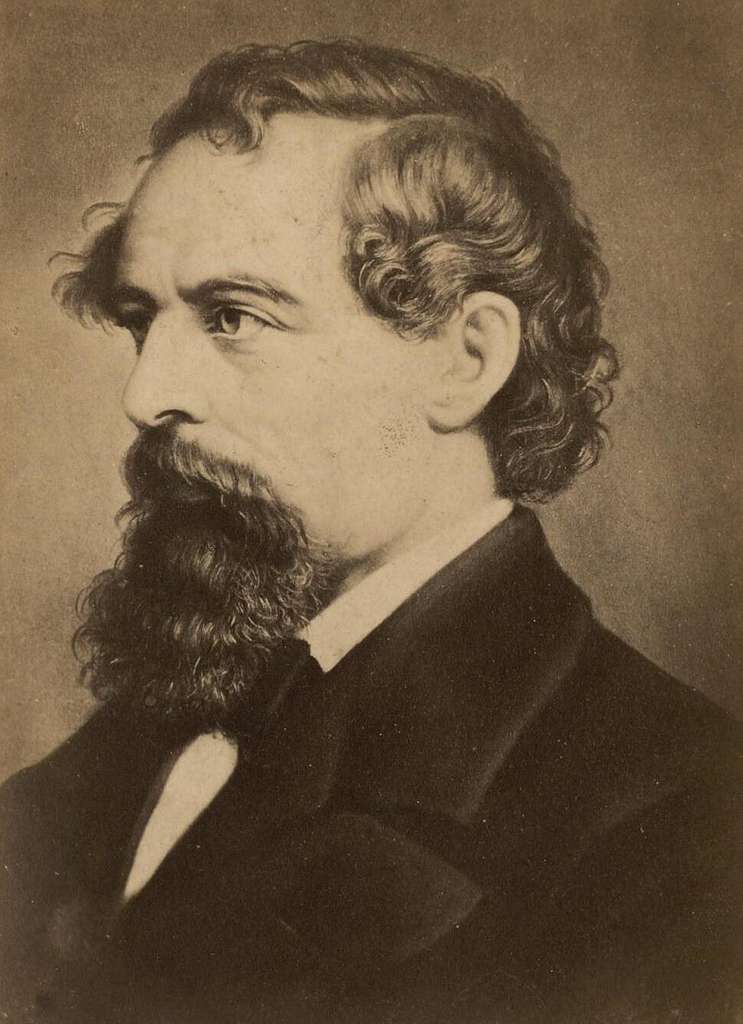
Even today, books by Charles Dickens remain widely read. His works never went out of print, he remains one of the most-sold writers even today, and a Tale of Two Cities is regarded as one of the bestselling novels of all time.
When Charles Dickens published his second book, The Pickwick Papers, serialized from 1836 to 1837, he rose to fame and became England’s most popular writer and should remain so until his death in 1870.
His influence on the literary landscape was so huge that his name, similar to that of Franz Kafka, became a term. The word ‘Dickensian’ describes works reminiscent of those by Charles Dickens. These works focus on themes such as poor social and working conditions, class struggles and other elements he’s known for.
Ever since I read A Tale of Two Cities more than a decade ago, I’ve been a great fan of books by Charles Dickens.
While most fans of classical literature will, without a doubt, know A Tale of Two Cities, and his other most popular works, I also think many of his lesser-known works are worth reading. If you’re interested in the works of other classical writers, I urge you to check out my lists of the best Mark Twain books and the best Hemingway books.
For this list, however, I want to focus almost entirely on his novels and provide you with a list of the twelve essential books by Charles Dickens.
Fiction by René Rehn


The Old Curiosity Shop

The Old Curiosity Shop is one of Charles Dickens’ earlier works, yet it contains one of his most vivid characters.
This book by Charles Dickens revolves around the orphan Nell Trent, who lives and works with her grandfather at the titular shop.
Their troubles begin when her grandfather gambles away what little money they have. This gives one Mr. Quilp the opportunity to take possession of the shop and evict them.
Nell’s good-natured and virtuous and to save herself and her grandfather from Quilp, the two of them embark on a journey that the leads them out of London.
It’s her hope to find a better life for themselves, but throughout the journey, Nell grows progressively weaker. Even worse, Quilp is coming after them.
While many books by Charles Dickens can be rather sentimental, The Old Curiosity Shop took things to a new level. Even Charles Dickens himself described it as a work that glorifies Victorian sentimentality.
It’s interesting to note that the novel was even read by Queen Victoria, who famously described it as ‘very interesting and clever written.’
While not one of Charles Dickens’ most popular or well-known works, The Old Curiosity Shop is definitely worth reading. It’s a fantastic novel that combines beautiful descriptions of landscape and London cityscape with a depiction of how terrible a place Victorian England could be.
Our Mutual Friend

Our Mutual Friend is often regarded as one of the most sophisticated and complex books by Charles Dickens. It’s also the last novel he ever completed.
When a man named John Harmon dies, his fortune passes on to his servants Mr. and Mrs. Boffin, for his estranged son is presumed to be dead.
They take in a woman named Bella Wilfer, who was supposed to marry John Harmon’s son. At the same time, they hire a young man to be their secretary. It’s soon revealed there’s more to this young man and Bella, who’s still set to marry for money, seems to have a strange connection with him.
Our Mutual Friend is a novel with a vast cast of characters and various subplots. It features a group of friends, employees and even estranged family members who all try to manage one man’s fortune. Chaos unfolds.
The novel centers on a mystery of mistaken identities, but also features emotional generosity, violent drama and rich humor. Its central theme, however, is the power of money, how it can corrupt people and what it pushes them to do.
Our Mutual Friend might not be the most well-known or popular of the many books by Charles Dickens, but his many themes and multi-faceted plot make it very worth reading.
Hard Times

Hard Times is Charles Dickens’ tenth novel. It’s rather untypical for a novel by him since it’s a short book of only about three-hundred pages. It can be seen as a satire on the harsh social and economic conditions of the time.
Its set in an imaginary town named Coketown. It’s a place consumed by soot and smoke of heavy industrialization and that depends on the exploitation of its many workers.
The novel’s plot concerns one Thomas Gradgrind, a wealthy, retired merchant. He devotes his life to the philosophy of utilitarianism. This leads him to a no-nonsense approach in both education and parenting. He raises his children, Tom and Luisa allowing them no fanciful or imaginative pursuits.
This harsh upbringing leads to them suffering in their later adult life. While Luisa lets her father decide her marriage using statistics, his son Tom has his own ideas about life and falls into delinquency.
Yet, the novel also focuses on the lives of the many workers who don’t profit from the economic boom following the Industrial Revolution. It showcases its readers the reality of worker conditions and makes them acknowledge them.
Hard Times is a novel that focuses heavily on social and moral themes. Utilitarianism was a philosophy that was popular, but Charles Dickens criticizes it heavily. He makes it clear to us that there’s more to human life than reason. There’s heart and imagination as well.
Hard Times is Charles Dickens’ harshest and most on-point critique of British Industrialization and explores the correlations between morality and capitalism. For this reason alone, I believe it’s one of the many books by Charles Dickens definitely worth reading.
Nicholas Nickleby

Nicholas Nickleby was Charles Dickens’ third novel.
Once again, it’s a novel that deals heavily with the class struggles of the Victorian era.
While it can be a grim novel, it might, overall, be the most high-spirited out of all the books by Charles Dickens. It also harshly criticizes the Yorkshire schools which many families sent their unwanted children to.
The story begins with the death of Nicholas Nickleby’s father. Following this, his mother and younger sister, Kate, have to give up their comfortable life in Devonshire. They travel to London to get help from their only reality, Ralph Nickleby, Nicholas’ uncle. Ralph, however, is a cold and ruthless man and has no desire to help them. Even worse, he hates Nicholas.
To save his family from financial ruin, he embarks on his own journey and begins work at Dotheboys Hall school in Yorkshire. The board master, Wackford Squeer, however, makes his life a living hell, even after he escapes. It’s here he also befriends Smike, another boy and also a victim of Squeer’s.
Yet, the novel isn’t as bleak as it sounds. When Nicholas and Smike flee from the school, they run into the Crummles traveling trope and join them.
This, however, isn’t all there’s to this novel.
What’s interesting to note is that Charles Dickens paid visits to many of the Yorkshire schools to do research and learn about their harsh conditions. His resentment of these schools, however, might also stem from his time at the Wellington House Academy in Camden Town. He describes it as a terrible experience.
Overall, Nicholas Nickleby is another fantastic book by Charles Dickens. It might be one of his earlier novels, but his literary genius is already visible.
The Pickwick Papers

The Pickwick Papers is Charles Dickens’ very first novel and second overall book. It’s considered one of the most decisive debuts in English fiction.
It chronicles the comical adventures of an eccentric but good-hearted man named Samuel Pickwick, his servant Sam Weller, and a group of friends known as the ‘Pickwick Club.’ Those friends include Tracy Tupman, Augustus Snodgrass and Nathaniel Winkle.
Yet, The Pickwick Papers is not a traditional novel. It’s rather a collection of nineteen loosely linked adventures, episodes and tales.
It follows the Pickwick Club on their various day-trips out of London and around England. During their time, they befriend everyone they meet, become heavily drunk and get entangled in many strange situations. In the end, however, things somehow always work out.
It’s a book that’s as hilarious as it’s sentimental. It establishes many of the elements Charles Dickens should become known for. The Pickwick Papers features many ironic situations, an English setting, a cast of eccentric characters and an examination of upper and lower class tensions.
Overall, The Pickwick Papers is an early example of Charles Dickens’ satirical style and it serves as a perfect introduction to his body of works.
Little Dorrit

Little Dorrit is probably the most powerful of Charles Dickens’ major works and also one of his most personal.
When Charles Dickens penned Little Dorrit, he drew from his own childhood experiences. His father, too, was imprisoned for debt and a young Charles Dickens had to fend for himself. One can also assume that the power-hungry businesswoman Mrs. Clennam was modeled after Charles Dickens’ own mother, who he grew to hate.
Little Dorrit is essentially a satirical critic of England’s legal and court system, its bureaucracy and the uselessness of the debtor’s prison.
In the novel itself we encounter Amy Dorrit, the youngest child of her family. She was born and raised in London’s Marshalsea prison because her father was imprisoned for debt.
Eventually, because of an inheritance, her family becomes one of wealth. Amy Dorrit also encounters one Arthur Clennam after he returns from a twenty-year absence to start a new life.
Little Dorrit is a rags-to-riches epic that once more showcases the strict class divide in Victorian era society.
Over the course of the novel, characters prevail, mature and many of the situations they encounter resonated deeply with readers at the time.
Not much needs to be said about Little Dorrit. It’s a masterpiece and one of the most powerful books by Charles Dickens.
A Christmas Carol

A Christmas Carol is the only novella on this list, but one can’t help but include it in a list of the best books by Charles Dickens.
It’s probably the most popular and well-known Christmas story of all time and one of the most famous books by Charles Dickens, if not the most famous.
Not much needs to be said about it. Everyone’s familiar with the unpleasant and grumpy Ebenezer Scrooge who hates the Christmas holiday. When he’s visited by the ghosts of Christmas Past, Present and Future, however, he recognizes the errors of his way, changes and becomes a kind man.
It’s both a beautiful tale of redemption and a critique of Victorian society.
A Christmas Carol is a tale that reminds us to be kind to one another, to help the poor and those in need, especially during the holidays.
A Tale of Two Cities

“It was the best of times, it was the worst of times.”
Who doesn’t know this famous opening line?
A Tale of Two Cities is Charles Dickens’ most well-known work of historical fiction and one of the best-selling novels of all time.
Yet, it’s, again, rather uncharacteristic of a book by Charles Dickens. It’s shorter than most of his other works, and his usual humorous and satirical elements are almost entirely missing.
It’s set before and during the French Revolution and set in both London and Paris. While it may not be historically accurate, it’s still a vivid portrait of one of history’s most tumultuous periods.
The novel features one doctor Manette who was wrongfully imprisoned in the Bastille for eighteen years. When he’s released, he sets out to live with his daughter, Lucie. They reunited in Paris and travel back to London to start a new life.
Lucie eventually falls in love with Charles Darnay, a Frenchman who takes a stance against the poor treatment of the lower class. Because of this, the family’s once more trust in danger for the rest of Darnay’s family might not share his ideals. Soon enough, they realize no one’s safe and fear and suspicion are abound.
A Tale of Two Cities is a masterpiece that’s beautiful told from beginning to end. If you want to read Charles Dickens at his best, read A Tale of Two Cities.
Oliver Twist

Oliver Twist is the second novel Charles Dickens wrote and the one that cemented his role as a social critic of the era. It’s, by many, seen as his first proper social novel.
The titular character of Oliver Twist is born in a workhouse. As an orphan, he’s sold into apprenticeship for an undertaker. Soon enough, he runs away, travels through London and joins a group of young pickpockets. The groups led by an elderly criminal named Fagin, who draws homeless boys into a life of crime. Yet, Fagin himself is under the thump of the villainous criminal mastermind, Bill Sikes.
While thrown into horrible circumstances, our hero Oliver always remains hopeful and pure while we follow him on his unlikely journey.
Oliver Twist is a novel full of unusual friends, unexpected kindness and larger-than-life villains.
Yet, it can be a dark novel at times and Charles Dickens never describes events through rose-tinted glasses. Its themes heavily concern child labor, domestic violence, the recruitment of children as criminals and the life of street children in the Victorian era. It exposes the terrible treatment of orphans, how poverty forces children into horrible circumstances and the negative effects of the Industrial Revolution.
It’s a novel that’s part pleasure, part education, but always exciting. While I highly recommend it to anyone, it’s especially great for children. It’s also a perfect introduction to books by Charles Dickens.
Bleak House

Bleak House is, by many, considered being the greatest of all books by Charles Dickens. At the same time, however, it’s criticized by others for its strange narrative choices, the meandering plot and the many subplots and characters.
It’s a satire of the slow, corrupt process of the law, especially the Court of Chancery, where cases could be dragged out for years. It’s also a heavy critique of the 19th century English society as a whole.
The novel’s plot details the inheritance case of Jarndyce and Jarndyce, which is so complex it has been drawn out for generations. It’s a larger-than-life court case about who’s inheriting the vast family fortune.
Bleak House features a vastly complicated plot full of twists, ploys, murders, secrets and spies. It’s a fantastical novel that’s at times comical, at others profound.
Over the course of the novel, we’re introduced to a vast cast of characters. We meet, amongst many others, the feisty Esther Summerson, Sir Leicester and Lady Deadlock who live in a stately home in Lincolnshire, and also the poor crossing sweeper Little Joe.
Bleak House also contains many of the elements so common for books by Charles Dickens. It features characters from all parts of society, a vivid description of London, satirical elements, and, of course, social criticism.
While I enjoyed Bleak House immensely, it’s not a novel for everyone. Many fans of books by Charles Dickens might highly enjoy it, but others might find it as bleak as the title suggests.
It can make for some challenging reading. It’s a convoluted and gratuitous satire of the Court of Chancery, which was characterized by its convoluted and gratuitous nature.
Overall, though, Bleak House is a stark contender for Charles Dickens’ greatest novel and everyone should try reading it at least once.
David Copperfield

David Copperfield is another one of the most-famous books by Charles Dickens. It’s often heralded as his greatest literary triumph and he himself considered it his magnum opus.
It was highly admired by many other writers, including Leo Tolstoy and Franz Kafka. Even Virginia Woolf, who was not a fan of Charles Dickens’ works, praised David Copperfield.
It’s a highly autobiographical novel, as one can note by the initials of the main character. The novel’s essentially a combination of Charles Dickens’ own life and fictional accounts.
Written as a first person narrative, the plot details the trials and tribulations of its titular character from infancy to maturity.
David Copperfield’s father is long dead at the outset of the novel, and he’s still very young when his mother, too, dies. While Charles Dickens blamed his parents for the miseries of his childhood, it’s David’s stepfather, Mr. Murdstone who takes on this role in David Copperfield.
Over the course of the novel, we witness David’s struggles through childhood and adolescence until he starts a successful career as a novelist and gets married.
David Copperfield features a vast cast of characters, but the most memorable among them are the glamorous Steerforth, the unlucky but cheerful Mr. Micawber, Betsey Trotwood, David’s eccentric aunt, the wicked Mr. Murdstone and, of course, the villainous Uriah Heep.
The biggest themes of the novel are personal growth and change, but one can also tell that it’s a work that helped Charles Dickens himself to grow and confront his own life.
David Copperfield features many of Charles Dickens’ usual elements. It talks about class structure, the criminal justice system, child labor and the status of woman in society.
Another core theme, however, is the question if one can leave behind their roots without becoming corrupted by either the past or newfound advantages.
David Copperfield is also a more serious and much more personal book by Charles Dickens. It’s here we can witness his style change from juvenile and humorous to more mature and serious.
What’s interesting to note is that David Copperfield is not a character of special importance. It makes him very different from the usual, larger-than-life protagonists of other novels at the time.
Not much more needs to be said about David Copperfield. It’s one of the best books by Charles Dickens, a masterpiece and simply a joy to read.
Great Expectations

Great Expectations is yet another coming of age story. It’s the tale of a young boy who sets out to become a gentleman.
It’s one of the most popular books by Charles Dickens and by many considered his finest work.
The novel’s plot follows the orphan Pip. While born into humble beginnings, he sets out to escape the lower class.
In his youth, he often visits the bitter Miss Havisham who was left at the altar. She brings up her beautiful, adopted daughter Estella to hate men. It’s no other than her that Pip falls heavily in love with.
To prove himself to her, he begins to work for a blacksmith, and soon lives in London with the help of a mysterious benefactor.
Yet, his heart gets broken when Estella marries someone else and he has to realize that ‘great expectations’ might not come to play out.
This, however, is merely a part of the novel’s intricate plot.
Great Expectations is the tale of a young man who’s been persecuted and deceived, but whose goodness of heart always remains. It’s this that rescues him from falling into snobbery and delusion.
The novel features a fantastic and memorable cast of characters. There’s, of course, Pip, our protagonist, but also the larger-than-life convict Magwitch, the sinister Miss Havisham, the good-hearted Joe and the beautiful, but cold Estella.
Great Expectations is a romantic, heart-warming tale with quite a few plot twists. It’s probably the finest and most moving of all books by Charles Dickens.
It’s a perfectly crafted novel about love, loss, and class divisions and worthy of the number one spot on this list.


