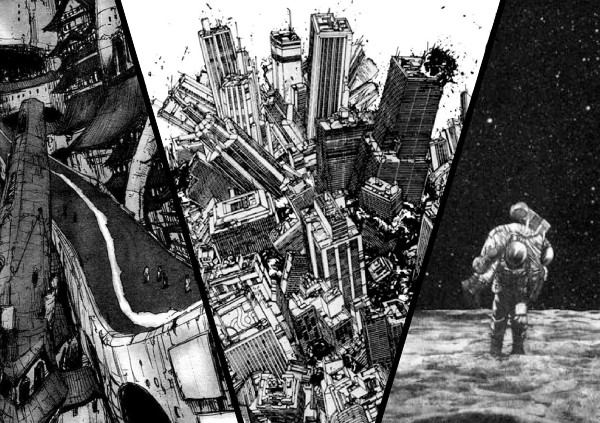
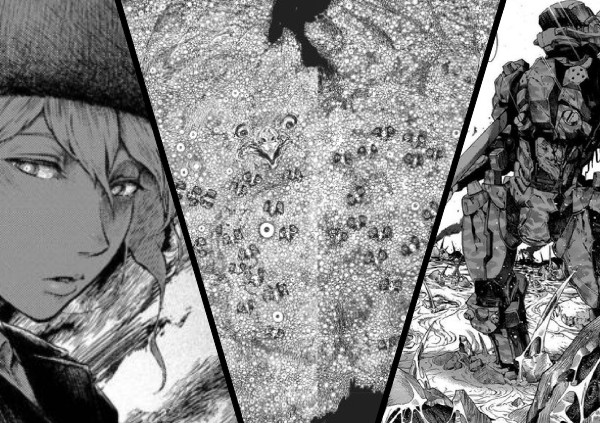
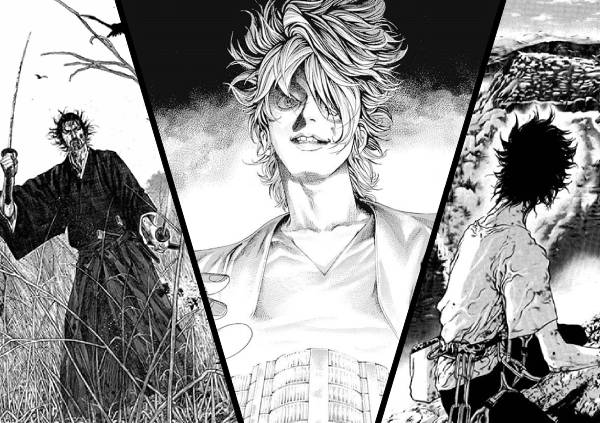
Dystopian stories have only become more popular over the last decade, so it makes sense that dystopian manga is a huge favorite, too. There’s something compelling about watching people survive under authoritarian societies, cruel social systems, or futures where the world is high-tech, but human life is worth less than ever.
This list covers a broad spectrum of dystopian manga, from grounded settings that feel only one step away from modern life to full-blown cyberpunk nightmares packed with corporate control, surveillance, and technological horrors. Every series earns its spot by showing what happens when society goes rotten and the people inside it are crushed, warped, or forced to adapt.
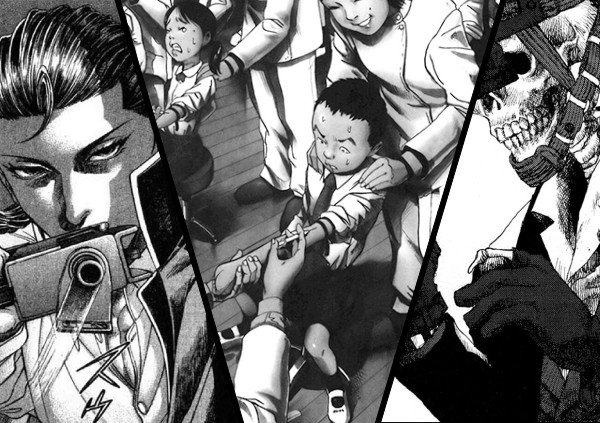
Dystopian manga took off in the 1980s alongside the rise of cyberpunk, with stories that leaned into high-tech futures where power structures used technology to tighten their grip. Since then, countless creators have put their own spin on dystopia, showcasing political oppression, class systems that trap entire populations, or worlds so broken that normal life is barely possible.
Some picks here, like Freesia or Ikigami, portray dystopias in the purest sense, with horrifying laws and systems designed to control people. Others, like the cyberpunk worlds of Tsutomu Nihei, drop you into technological futures where individuals feel meaningless, swallowed up by megastructures, corporations, or systems that don’t care about them. And then you’ve got more modern stories like Heavenly Delusion, which explores dystopia on a smaller, more intimate scale.
Mild spoiler warning: I focus mainly on each series’ dystopian setting, but I may mention certain plot details to explain why a manga belongs on this list.
With that said, here are the best dystopian manga (last updated: February 2026).
13. AD Police
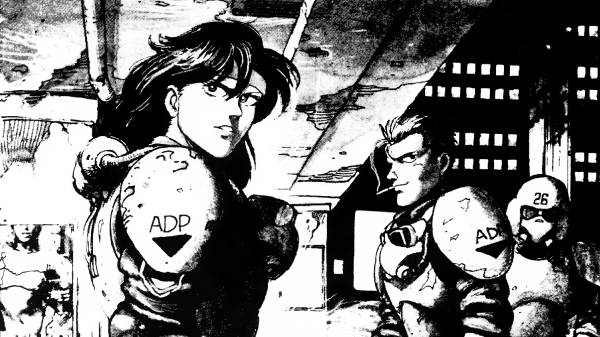
AD Police is dystopian cyberpunk in its purest late-1980s form: dirty neon streets, corporate power that’s practically untouchable, and a society that only functions because someone’s willing to do the dirty work. If you’re a fan of Bubblegum Crisis, this one instantly feels familiar, just with more grit and less glamor.
The story takes place in MegaTokyo, where violent crimes tied to advanced tech and rogue androids called Boomers have forced the creation of the AD Police, an elite unit with heavy firepower and expanded authority. They’re given permission to level whole blocks in the name of safety, and that’s where the dystopian core shows itself. The system doesn’t feel heroic. It feels desperate. The city is so unstable that keeping order means nothing more than containment, damage control, and hoping things don’t spiral into total chaos.
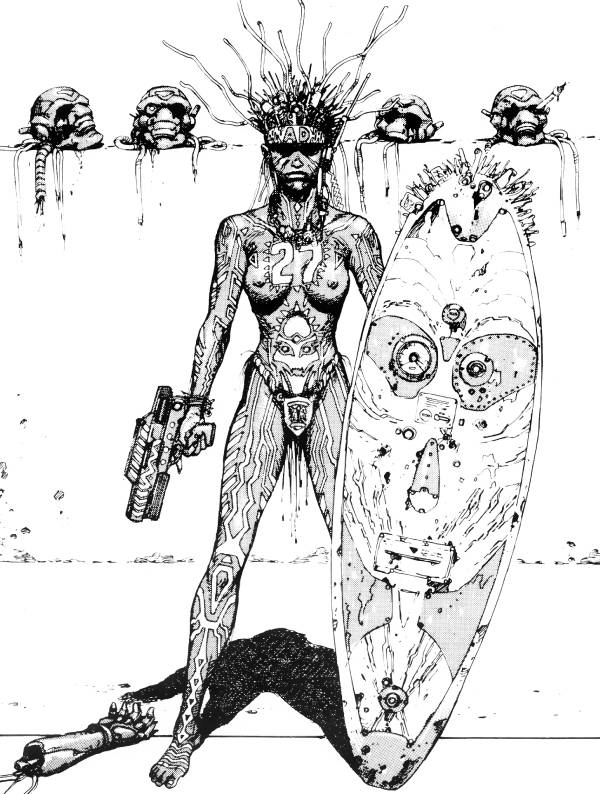
What makes AD Police work is the atmosphere. MegaTokyo feels like a place where the average person is trapped under the weight of progress. That megacorporate influence hangs over everything, with the Genome Corporation’s Boomers woven into daily life and the city’s reconstruction.
The manga also doesn’t romanticize its protagonists. The AD Police aren’t beloved defenders of the people. They’re feared, distrusted, and seen as corrupt or ineffective by the public, which gives the series a more cynical edge than a lot of other futuristic law enforcement stories. It’s not the deepest entry on the list, but it’s a strong mood piece and a sharp dystopian snapshot of an era when cyberpunk was all about corporations, decay, and losing control.
As a dystopian manga, it blends classic-era cyberpunk with gritty, street-level action.
Genres: Cyberpunk, Action, Sci-Fi
Status: Completed (Seinen)
12. No Guns Life
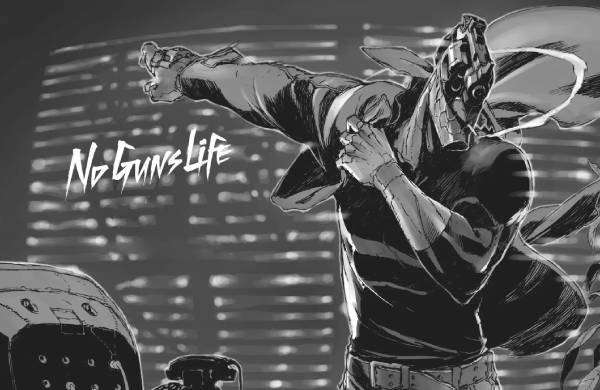
At first glance, No Guns Life might look like an outlier on a dystopian manga list. It’s a gritty detective noir story set in dim hallways, smoky clubs, and back-alley bars. But underneath that hard-boiled exterior is a bleak cyberpunk society built on corporate control, human experimentation, and people who’ve been turned into tools.
Inui Juuzou is an Extended, a human who’s undergone extensive biomechanical enhancements and had his head replaced by a revolver. He used to be a soldier, but now works as a private investigator in a postwar city populated by mechanical outcasts. Juuzou isn’t a flashy super-cop. He’s a worn-down survivor, supported by Mary, a mechanic who keeps his body running when no one else will.
The dystopian core comes from how the world treats the Extended. These people aren’t celebrated as veterans or protected as citizens. They’re disposable assets and walking reminders of a war that never really ended. Much of the suffering traces back to Berühren, the megacorporation that pioneered the technology behind the Extended and still holds enormous influence over the city. In a world like this, power doesn’t come from laws or politics. It comes from ownership of bodies, upgrades, and the technology that keeps people alive.
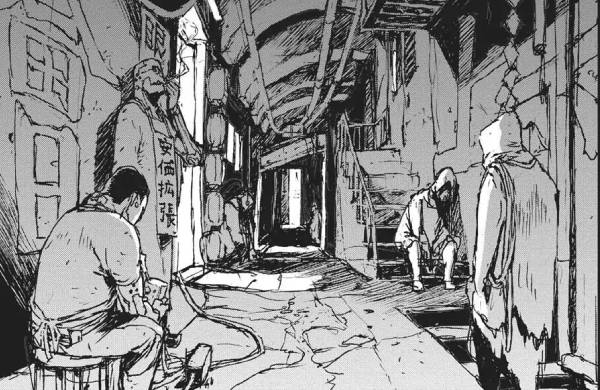
What makes No Guns Life stand out is how intimate it feels. Rather than leaning into towering skylines and endless exposition, it keeps things grounded. The horror is personal. You see what a corporate dystopia looks like at street level: broken soldiers, stolen identities, people who don’t know who or what they are anymore.
The artwork sells that mood perfectly. Karasuma’s pages are heavy with industrial textures, shadows, and grime, with mechanical designs that feel practical and grotesque at the same time. Fights can get chaotic, but they usually land with real weight and brutality.
If you want a dystopian manga that mixes cyberpunk oppression with detective noir atmosphere, No Guns Life is an easy recommendation.
Genres: Sci-Fi, Action, Cyberpunk
Status: Completed (Seinen)
11. Heavenly Delusion
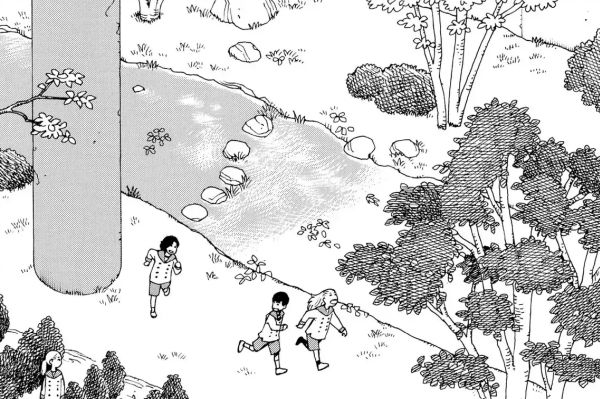
Heavenly Delusion is first and foremost a post-apocalyptic thriller, but it earns its spot on a dystopian list because of what’s hidden inside its paradise. In a world that’s already collapsed, there’s a sealed-off institute raising children, keeping them obedient, sheltered, and completely cut off from the truth.
The series runs on a dual narrative. One storyline follows a group of kids inside a sterile, nursery-like facility run by robots, where everything is safe, clean, and quietly controlled. The outside world is treated like a nightmare, and the children are shaped by rules they don’t fully understand. That’s where the dystopia lives. It’s not a massive government crushing crowds in public squares. It’s a smaller, more intimate kind of control, the kind that feels almost protective on the surface until you realize how much is being withheld.
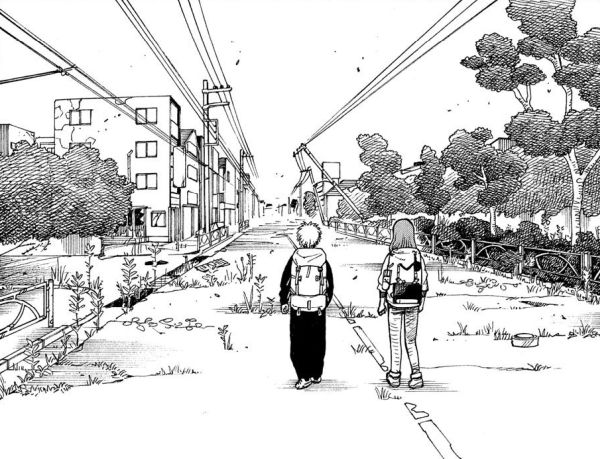
The other storyline follows Maru and Kiruko, two survivors traveling across the ruins of Japan in search of Heaven, a destination that may or may not exist. This side leans more into survival, uneasy settlements, and the constant feeling that danger is just moments away, even when people act friendly. The tension comes from watching both sides slowly circling the same mystery from different angles, with just enough hints to keep you turning the pages.
What really carries Heavenly Delusion is its atmosphere. The art has a slightly unusual look, but it’s detailed where it counts, especially when it comes to wrecked cityscapes and the unsettling creature design. It can also be unexpectedly brutal, which helps the world feel dangerous. The main drawback is that it occasionally veers into uncomfortable nudity or sexualized moments that feel misplaced for a story this bleak and tense, and the pacing can be uneven when the manga holds back information a little too long.
Heavenly Delusion is an addictive dystopian manga that blends institutional control with a post-apocalyptic mystery.
Genres: Sci-Fi, Mystery, Adventure
Status: Ongoing (Seinen)
10. Appleseed
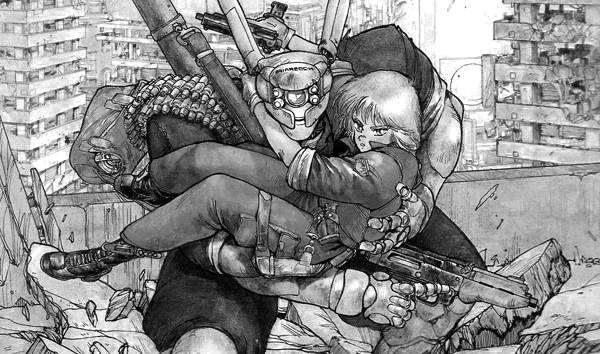
Appleseed is an action-heavy cyberpunk mecha manga at heart, built around tactical missions, firefights, and high-tech showdowns. But beneath all that spectacle, it has clear dystopian roots, especially in its supposedly perfect city of Olympus, a place where society is engineered, monitored, and governed by systems that don’t trust ordinary humans.
It’s the 22nd century, and the world has been left in ruins after the Third World War. In these trying times, Deunan Knute, a skilled former soldier, and Briareos, her cyborg partner, arrive at Olympus. They’ve been recruited by ESWAT, an elite unit tasked with protecting the city. Governed by AIs and bioroids, genetically engineered humans designed for stability, Olympus should represent humanity’s next step. In reality, it’s a managed experiment. It doesn’t just keep the peace. It shapes the rules of what people are allowed to do.
That’s what makes Appleseed feel dystopian even when it’s exploding into mecha action. Olympus is a city built to eliminate chaos, and it treats free will as a liability. Governance isn’t driven by messy debates. It’s managed, optimized, and nudged in the right direction. The bioroids exist as both a solution and a warning sign, proof that the system would rather redesign humanity than deal with its flaws. When Deunan and Briareos run into conspiracies, political friction, and unrest beneath the utopian surface, it becomes clear that even a perfect society breeds conflict. It just hides it better.
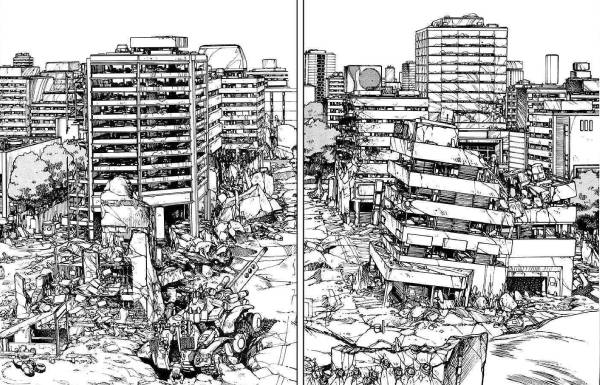
Appleseed is also fascinating as an early version of the ideas Shirow would later shape in Ghost in the Shell. You can see his obsession with the boundary between human and machine, along with the uneasy question of whether technology is saving civilization or replacing it. The difference is that Appleseed leans more militaristic and direct. Big set pieces come first, while philosophy and politics are hidden underneath.
Shirow’s art is full of details, especially in the cyborg and machinery designs, which still look impressive today. While exposition can feel heavy, and chaotic fights can be hard to follow, his ambition shines through.
If you want a dystopian manga that mixes of postwar reconstruction, cyberpunk governance, and high-octane mecha action, Appleseed belongs on your list.
Genres: Sci-Fi, Action, Mecha
Status: Completed (Seinen)
9. Ikigami
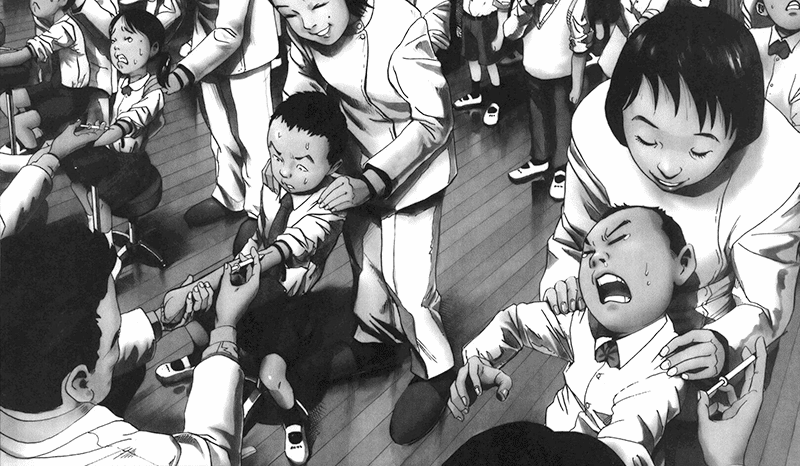
Ikigami is the most grounded dystopia on this list because its world looks almost identical to our own. The only difference is a single law, and that’s enough to turn an ordinary society into something quietly horrifying.
That law is the National Welfare Act. Every year, a number of young citizens are chosen to die for their country. The policy isn’t framed as cruelty, but as civic duty. It’s supposed to help maintain social stability and remind people to value life. Death is processed through bureaucracy, handled with forms and procedures, and normalized through social acceptance. Twenty-four hours before their death, people are handed official death notices called Ikigami. The protagonist, Kengo Fujimoto, is a government messenger tasked with delivering them.
Ikigami’s dystopia is so effective because it doesn’t rely on apocalyptic collapse, war-torn wastelands, or megacorporations running the streets. It’s a clean, functioning system where state violence is completely legal, and most citizens go along with it because they’re told it’s for the greater good. The cruelty isn’t hidden. It’s printed on official paper and delivered like any other notice. The law changes how people behave, how they plan their lives, and how they view each other, because anyone could be next.
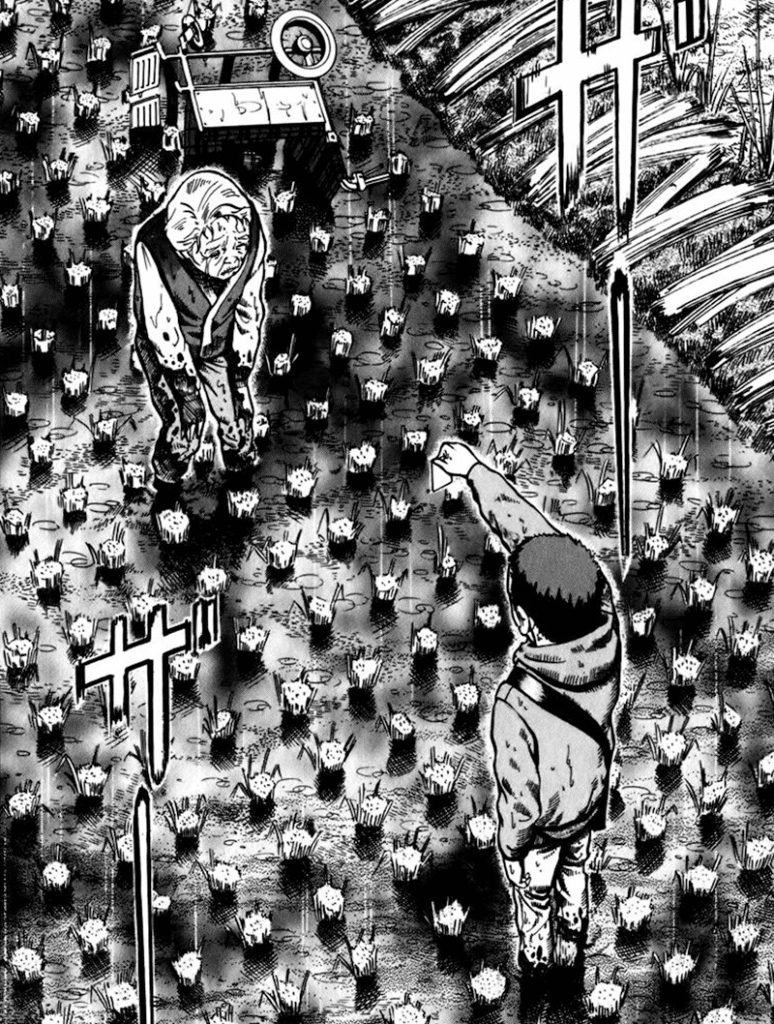
Ikigami is told via a series of vignettes, each focused on a different recipient. Some try to chase unfinished dreams, others break down, and a few try to make peace with loved ones. This episodic structure keeps the emotional impact sharp, because every story is its own small tragedy. Fujimoto’s role ties it all together. He’s neither a hero nor a villain. He’s just the face of an inhuman policy, showing that dystopian systems rely on ordinary people to function.
Motoro Mase’s art is grounded, which fits the tone perfectly. Ikigami doesn’t need shock value. The horror comes from how plausible everything feels, and how easily society rationalizes violence once it becomes the law.
Ikigami stands out as one of the most unsettling dystopian manga on this list because it feels uncomfortably plausible.
Genres: Drama, Psychological, Dystopian
Status: Completed (Seinen)
8. Battle Angel Alita
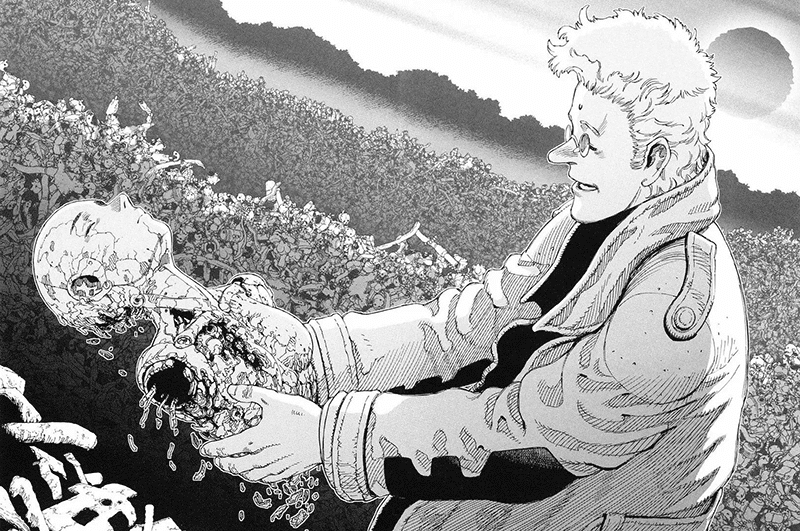
Battle Angel Alita is a character-driven cyberpunk action manga set in a broken world where the future already feels dead, and the survivors fight over what’s left. It’s not an authoritarian dystopia like Ikigami, but its world has some of the clearest examples of class-based dystopia in the genre.
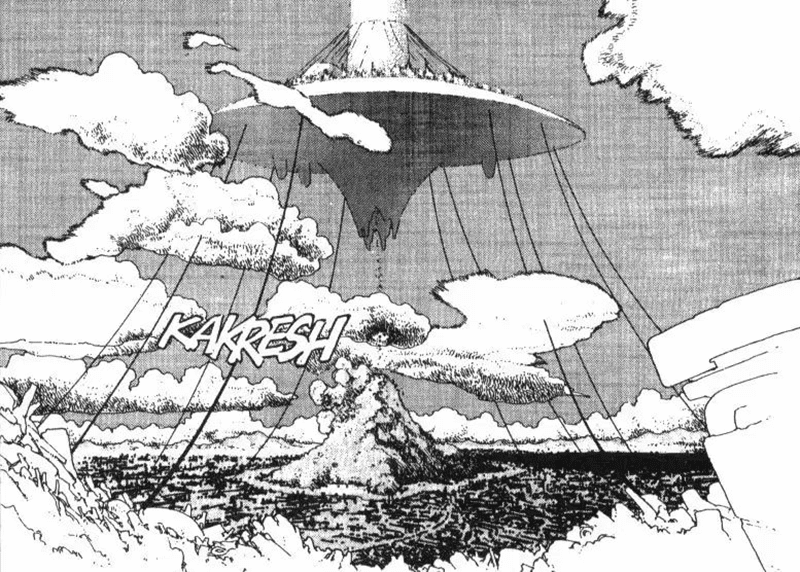
Most of the story takes place in the Scrapyard, a sprawling junk city built from the rubble discarded by Zalem, a floating utopia that hangs above. That contrast is the reason Battle Angel Alita belongs on this list. The people below live among rust, factories, and scavenged tech, while the city above remains distant, clean, and untouchable. Zalem isn’t just scenery. It’s a constant reminder that society is split between winners and disposable lives, and the gap isn’t meant to close. Even when the series focuses on street-level survival, the dystopia is always there, looming overhead.
Alita starts as literal junk. Discovered and rebuilt by cybernetics specialist Dr. Ido, Alita is innocent, curious, and has no memory of her past. Before long, she gets pulled into the city’s violence. The Scrapyard is a hellhole of mercenaries and bounty hunters, shaped by a world fueled by exploitation. Alita’s journey becomes a brutal crash course in identity, self-determination, and what it means to stay human when your body’s made of modular machinery.
What makes Battle Angel Alita so memorable is how cleanly it balances action with emotional weight. The fights have real speed and impact, especially during the Motorball arc, where combat is turned into spectacle and survival into entertainment. Alita’s evolution as a fighter never feels empty because it’s tied to her growth as a person. Later parts of the series also expand Zalem’s role and make the dystopian structure feel even more concrete.
As a dystopian manga that mixes class divide, cyberpunk grime, and one of the best action protagonists in manga, Battle Angel Alita remains essential.
Genres: Sci-Fi, Action, Cyberpunk
Status: Completed (Seinen)
7. Biomega
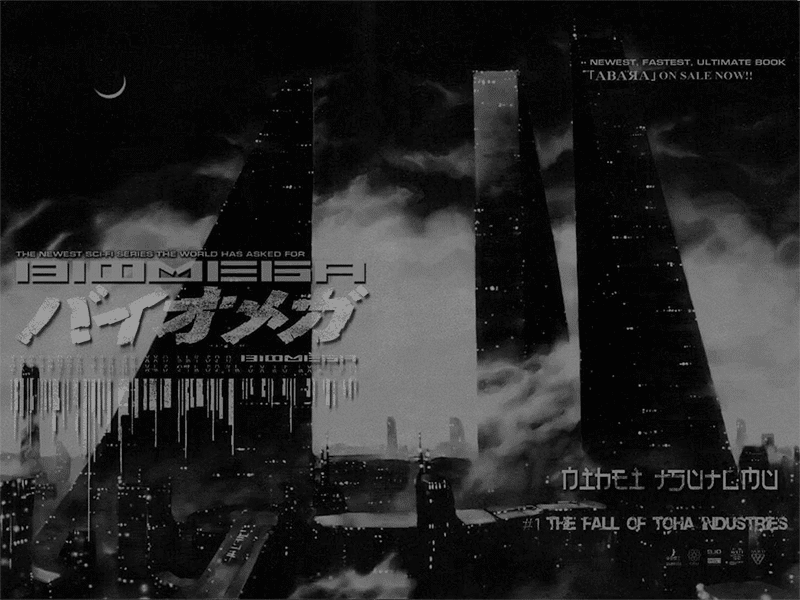
Biomega is a lightning-fast cyberpunk action story that doubles as a zombie apocalypse, packed with body horror, megastructures, and pure Tsutomu Nihei chaos. It’s one of the darkest dystopias on this list because governments barely matter here. Everything is owned, controlled, and reshaped by megacorporations that treat humanity as disposable resources.
On a ruined Earth, synthetic human Zouichi Kano and his AI companion, Fuyu, are sent to track down a person resistant to a dangerous pathogen, the N5S virus. It doesn’t just kill people. It turns them into grotesque biomechanical drones. The deeper Zouichi goes, the more the dystopian machinery reveals itself. Every major force in Biomega is corporate-backed, engineered, or manufactured. Survival isn’t determined by law or justice. It’s determined by who controls the tech, who can weaponize it, and who’s willing to wipe out what’s left of the population to rebuild the world in their own image.
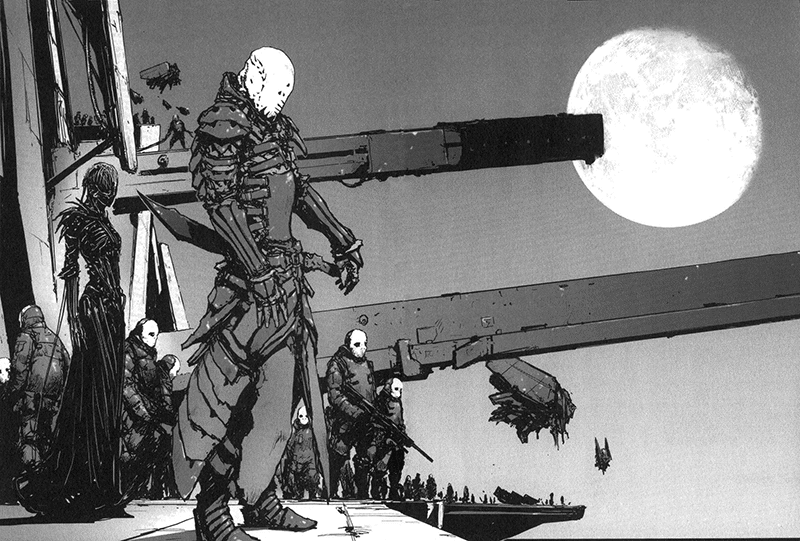
That’s where Biomega differs from traditional dystopias. The oppression here isn’t paperwork or police checkpoints. It’s biotech, engineered systems, and post-human power. The virus itself feels like the ultimate tool of control, an extinction-level disaster that turns people into resources and threats at once. Nihei’s environments sell that hopelessness perfectly. Cities stretch into impossible architecture, empty and gigantic, with characters reduced to small figures moving through ruined industrial complexes that no longer feel made for humans.
Like Blame!, Biomega often tells its story visually, with long stretches of minimal dialogue and a heavy focus on scale, movement, and atmosphere. The pacing is also relentless. Biomega’s first half speeds through nightmarish set pieces and story beats alike to the point of being disorienting. The later volumes get even stranger, throwing in new concepts and pushing the manga closer to a biopunk odyssey. Biomega is an ambitious work that never loses momentum, but the trade-offs are thin characters, forgotten plot points, and ideas that never get fully explored.
Still, Biomega is a dystopian manga that feels like a corporate-controlled apocalypse in motion, which makes it one of the most intense rides in the genre.
Genres: Sci-Fi, Action, Cyberpunk
Status: Completed (Seinen)
6. Ghost in the Shell
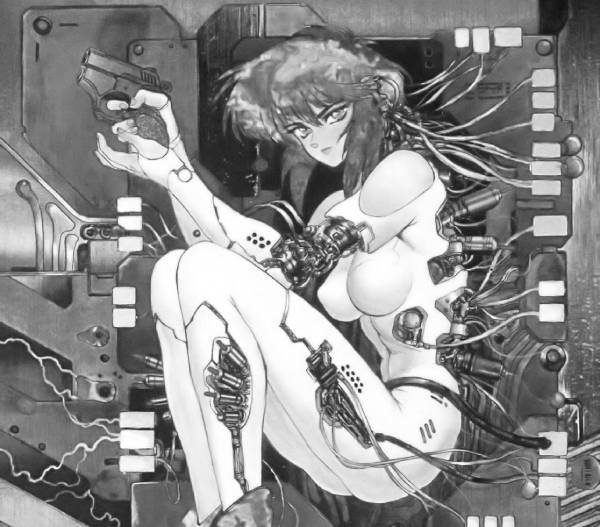
Ghost in the Shell is not only one of the core pillars of cyberpunk manga but also one of the best examples of a high-tech dystopia that doesn’t need dictators to feel oppressive. This is a world where technology is everywhere, bodies are replaceable, minds are connected, and identity can be edited like a file.
Set in 2029, after multiple world wars, society has fully embraced cybernetics and networked consciousness. People can live with cyberbrains, prosthetic bodies, and constant digital connectivity, but that convenience comes at a price. Hackers can invade the deepest corners of your mind. Memories can be manipulated. Cyberterrorism has become a daily threat. The more people rely on the Net, the easier it becomes for governments and institutions to monitor, influence, or control them. The dystopia here isn’t a single law or an obvious regime. It’s a reality where the systems you need to function are the same systems that can erase your identity.
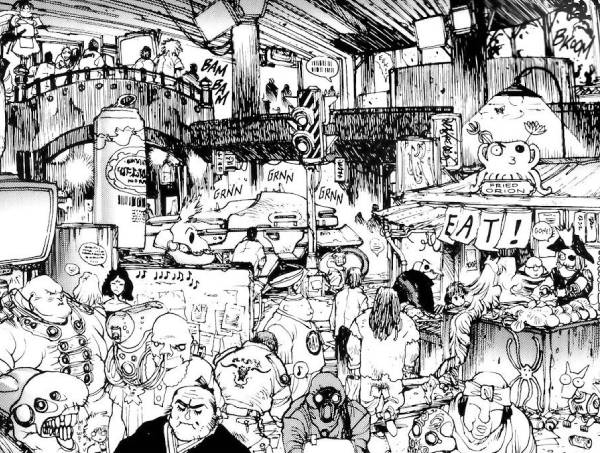
That’s where Section 9 comes in. Major Motoko Kusanagi and her team are a covert task force dealing with cybercrime, political manipulation, and threats that blur the line between human and machine. In a lot of dystopian stories, the police are the boots-on-the-ground arm of authority. In Ghost in the Shell, the dangers are so abstract and invisible that policing becomes a philosophical problem. What does justice even mean when a person can be rewritten, copied, or hijacked?
The manga itself is denser and more playful than most people expect, especially if they’re coming from the anime adaptation. It’s often episodic, jumping between cases, while Shirow dumps tech ideas, social commentary, and worldbuilding through side explanations and footnotes. Sometimes it’s brilliant, and sometimes it feels like reading a science-fiction manual mid-chapter. The action can also be chaotic in places, but the reward is a setting that feels disturbingly plausible the longer you sit with it.
Ghost in the Shell is a dystopian manga that feels more relevant than ever. It shows us a world in which the danger is the technology you can’t live without.
Genres: Sci-Fi, Action, Cyberpunk
Status: Completed (Seinen)
5. Blame!
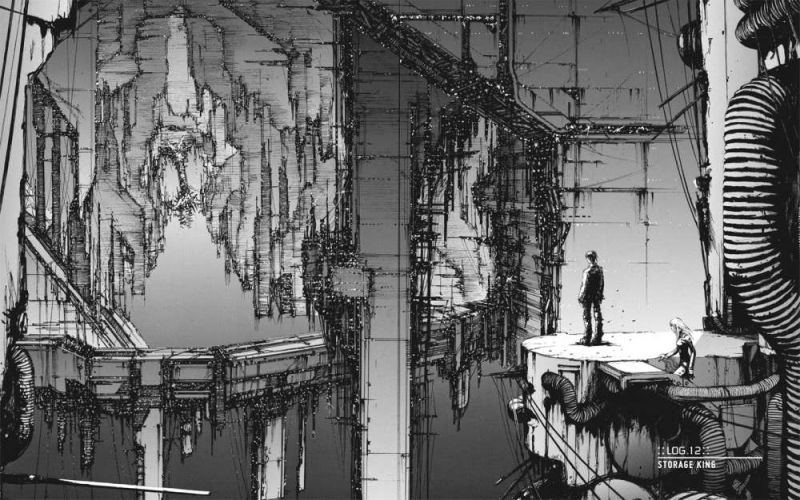
Blame! is a cyberpunk dystopia at its bleakest. It’s not about an authoritarian government tightening its grip or a megacorporation squeezing a city dry. It’s about what happens when technology takes over so completely that the world keeps expanding long after humans stopped mattering.
This nightmarish world is only known as The City, a megastructure that keeps expanding endlessly. To stop it, a man named Killy is sent to find a human with the Net Terminal Gene, a special genetic code that would allow them to access the Netsphere and regain control. The premise is simple, but the dystopia itself is overwhelming. The City doesn’t feel like a place people live in. The few humans Killy encounters exist like pests, hiding, hunted, displaced, and erased when found.
What makes Blame! so unsettling is how impersonal the oppression is. The enemy isn’t armies or politicians. It’s automated forces. The Safeguard functions like a self-correcting immune system, violently exterminating anything that doesn’t belong. Builders expand The City without question, pushing walls and corridors outward forever. Even the architecture becomes a form of dystopian control. You can’t argue with it, negotiate with it, or change it. All you can do is survive inside it as long as it allows.
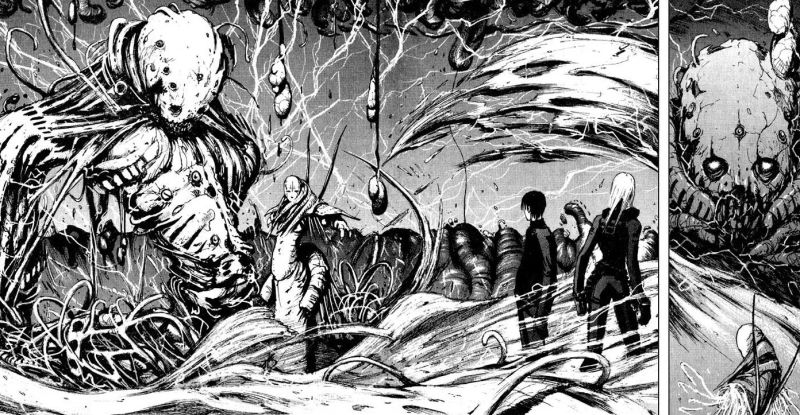
Nihei’s storytelling leans heavily on atmosphere and scale rather than exposition. Dialogue is sparse. Entire chapters play out in silence, with the environments doing most of the talking. The City is the real core of the manga, an impossible labyrinth of towers, shafts, and chambers that make Killy look tiny in every scene. That sense of size creates constant dread, like you’re exploring a place you can’t comprehend. Violence in Blame! is always sudden and catastrophic. Killy’s weapon, the iconic Gravitational Beam Emitter, doesn’t kill enemies. It tears through the world around him.
Blame! can be disorienting, especially if you want clear lore or character drama. But if you’re in the mood for a dystopian manga that feels cold, lonely, and inhuman on a cosmic scale, it’s one of the strongest reads on this list.
Genres: Sci-Fi, Action, Cyberpunk
Status: Completed (Seinen)
4. Battle Royale
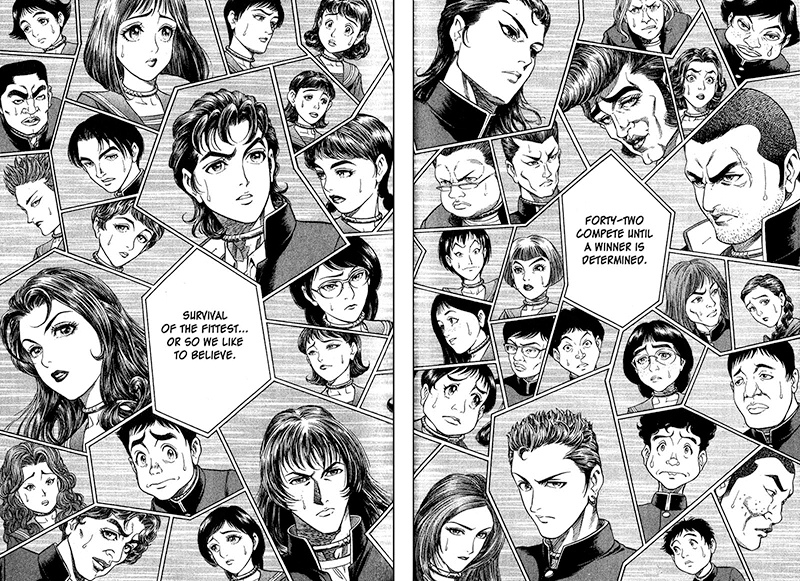
Battle Royale is a different kind of dystopian manga. Instead of spending dozens of chapters exploring the full structure of its society, it zooms in on the most horrifying part of one: a single law that exists purely to terrify the public into obedience.
In this version of Japan, the government runs The Program, a state-mandated death game where a randomly selected class of junior high students is shipped to a remote location and forced to kill each other until only one survives. The premise is infamous, but what makes it dystopian isn’t just the violence. It’s the intent behind it. The Program exists as a tool of social control, a brutal spectacle designed to crush rebellion before it starts and to keep the population afraid, compliant, and easy to manage. Even worse, it targets children. Not soldiers. Not criminals. Ordinary students, treated as disposable symbols in a system that values stability over human life.
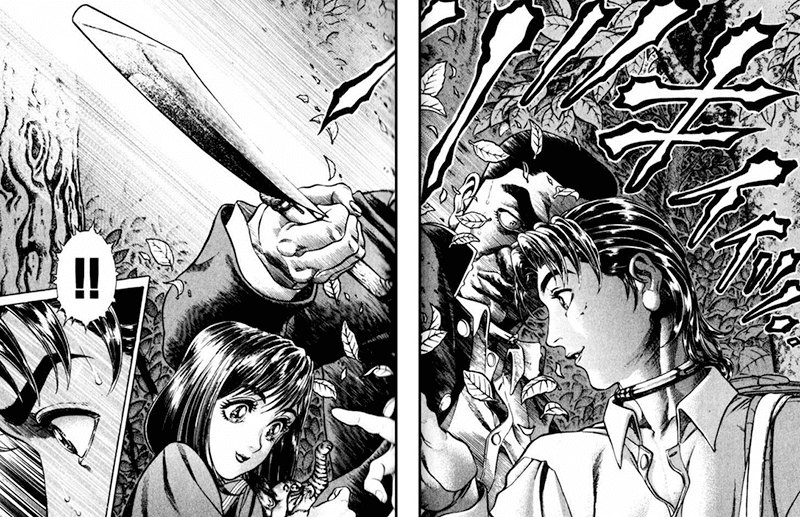
The story follows Shuya Nanahara and his classmates as they’re thrown into that nightmare. With explosive collars locked around their necks, rules that leave no room for mercy, and weapons in their hands, there’s no way out. The manga shines when it focuses on how different students react under the same pressure. Some cling to friendship, some panic and self-destruct, some rationalize murder as survival, and others reveal ugliness that was always there. That range of reactions keeps Battle Royale from feeling like pure shock value. It’s violent, yes, but it’s also a grim character study about fear, selfishness, and what people become when a system gives them permission to do the unthinkable.
Compared to the movie, the manga digs deeper into backstory and motivation, which adds more weight to the deaths and makes the island feel even more suffocating. The downside is that the structure can feel repetitive, especially when the story cycles through character introductions and rapid eliminations. The artwork is a mixed bag. At best, it’s raw and nightmarish, capturing desperation, gore, and psychological breakdown. At worst, it leans into excess, with moments of sexualization that seem out of place and character designs that can be distractingly inconsistent.
Still, it lands. Battle Royale remains one of the most upsetting dystopian manga out there because it’s so direct about its message: in a truly authoritarian society, not even kids are safe, and everyone becomes collateral.
Genres: Action, Thriller, Dystopian
Status: Completed (Seinen)
3. Eden
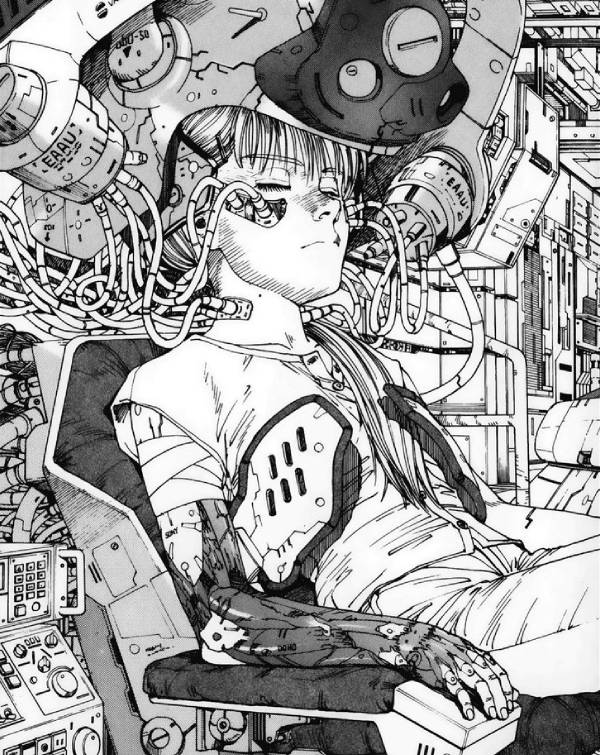
Eden: It’s an Endless World! is one of the most ambitious dystopian manga on this list, starting off as a post-pandemic survival story before expanding into a continent-spanning cyberpunk thriller. It’s brutal, political, and deeply human, and it’s the kind of series that doesn’t just show you a broken world but asks what people turn into once the system collapses and something worse replaces it.
The setting is a near-future Earth after the Closure Virus devastates civilization and throws global politics into chaos. In the power vacuum, the Propater Federation rises as a government-like superstructure with monopolistic control over huge parts of the world. That’s where Eden’s dystopia hits the hardest. Instead of a single city or a sole dictator, you get an international order shaped by shadowy organizations, corporate interests, and militarized control. Nations become pieces on a board. People become collateral. Even safety feels temporary, because the world is run by forces that operate above morality, and often above consequences.
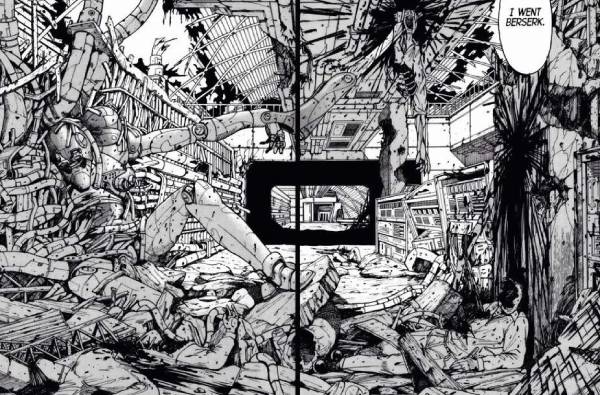
Eden follows multiple perspectives, but the core storyline centers on Elijah Ballard, a kid pulled into a life of violence and survival as he clashes with Propater’s reach, all while dealing with the legacy of his father in South America. What makes the manga special is how it refuses to simplify anyone. Characters can be sympathetic one chapter and horrifying the next. The world is too messy for clean heroes, and Eden commits to that. It also uses its dystopian setting properly, showing how corruption, poverty, war economics, and exploitation distort people over time, not just in one dramatic moment.
Endo’s art supports that realism. It’s grounded, adult, and unglamorous, with violence and sex portrayed as ugly facts of survival rather than stylish window dressing. There’s also a strong philosophical undercurrent, with ideas pulled from Gnostic mythology and bigger questions about technology, faith, and meaning in a world that’s falling apart. The only real downside is that Eden’s scale can feel overwhelming at times, because it juggles a huge cast and consistently shifts locations, but the payoff is a world that feels massive and alive.
Eden is an essential dystopian manga with real scale, cyberpunk politics, and raw human desperation.
Genres: Sci-Fi, Action, Cyberpunk
Status: Completed (Seinen)
2. Akira
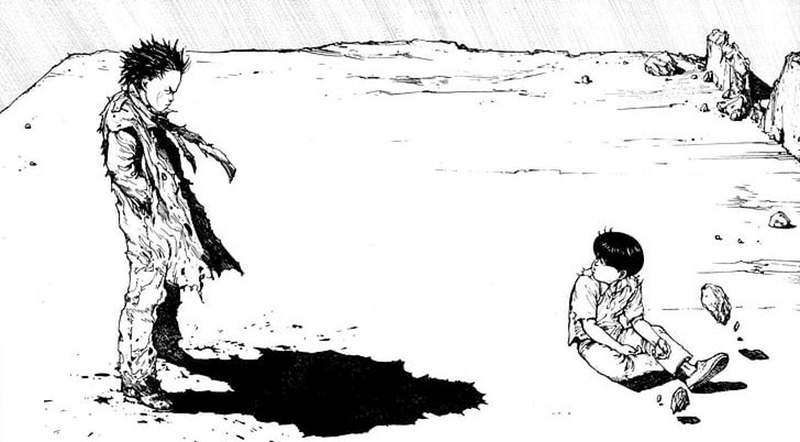
Akira depicts one of manga’s most iconic dystopias: Neo-Tokyo, a sprawling futuristic city where corruption is baked into the concrete. It’s loud, violent, and unstable, a place that feels like it’s always one riot away from collapse.
Neo-Tokyo is ruled by a mix of corrupt politicians and military power, and the people living under them don’t have much of a voice. The streets are packed with biker gangs, radicals, and desperate civilians trying to survive in a society that’s already rotten from the inside. The dystopia here isn’t subtle. We see it in constant unrest, heavy-handed authority, and the sense that the government’s real priority isn’t protecting people but controlling them. That control becomes even more disturbing once the story reveals the existence of secret experiments on children, with the military treating human lives like disposable research material in pursuit of power.
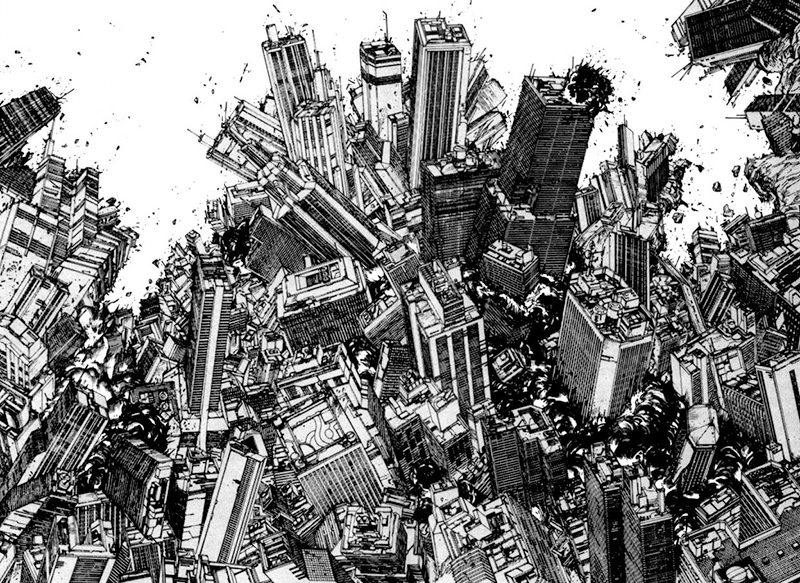
The story follows Kaneda and Tetsuo, two reckless youths shaped by Neo-Tokyo’s chaos. Their friendship doubles as a rivalry and feels like the natural result of a world with no stable future. Once the story kicks into gear, Akira evolves into something much bigger than street-level cyberpunk, with psychic powers, military crackdowns, and escalating destruction that swallows the entire city. Halfway through, the tone shifts and the setting starts to feel post-apocalyptic, but the dystopian weight never fully disappears. It just changes form, from an oppressive, authoritarian system into a world where control is enforced through overwhelming power and fear.
What makes Akira endure is Otomo’s sheer visual ambition. Neo-Tokyo feels dense and real, filled with debris, crowds, and grime, with paneling that has a cinematic clarity that still holds up today. While the characters may be archetypal, and the story sometimes trades clean structure for escalation, the spectacle is the point.
Akira is a timeless dystopian manga that gives you societal decay, political rot, and end-of-the-world destruction all in a single package.
Genres: Sci-Fi, Action, Dystopian
Status: Completed (Seinen)
1. Freesia
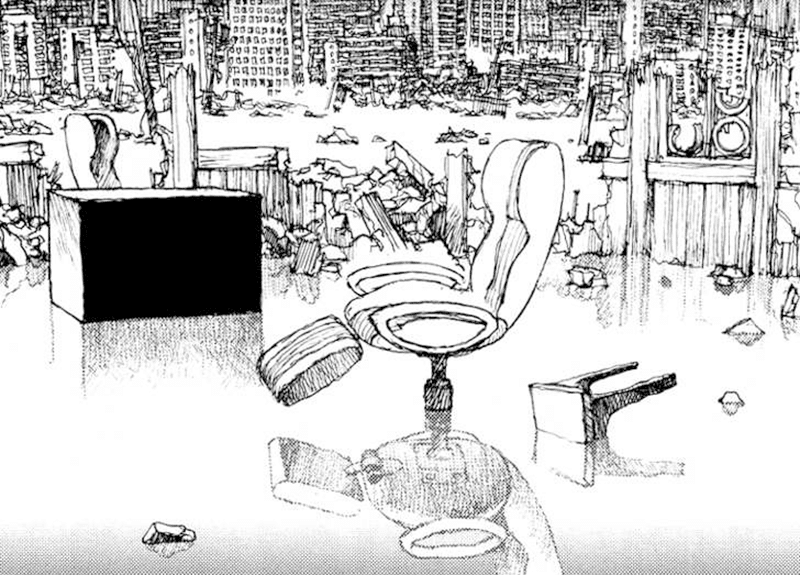
Freesia is a dystopian manga about a Japan that has legalized murder and watches as the people inside it fall apart. It’s grimy, psychologically abrasive, and so emotionally warped that even justice feels like another form of violence dressed up in paperwork.
In this society, a law has been passed that allows retaliatory killings. If someone murders a loved one, you’re allowed to kill the perpetrator in return or hire a government-approved executioner. That one policy is enough to make the setting a dystopia. It turns grief into a transaction and murder into a service industry. Kano is one of the people who carry out these revenge killings. It’s framed as restoring the balance, but in reality, it normalizes cruelty that slowly erases any meaningful boundary between victim and perpetrator.
What makes Freesia so chilling is that the manga rarely argues about the law. It shows what the people who live under it become. It distorts relationships, reshapes morality, and turns ordinary citizens into hunted targets for professional killers. The government doesn’t need cameras on every street corner. The population polices itself through fear, bitterness, and the knowledge that violence is legal on paper. It’s a dystopia built on societal rot, where everyone is already exhausted, and the solution for pain is more pain.
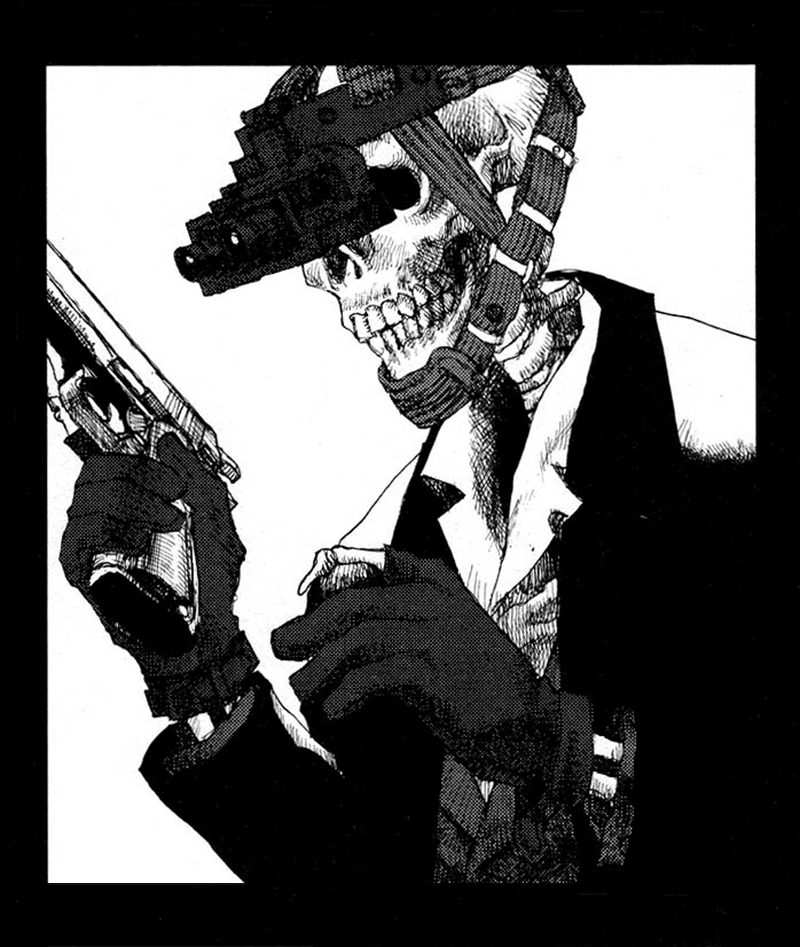
This atmosphere comes through in the way the story is told. Matsumoto’s art is raw and ugly in the best way possible, with gritty environments and faces that sometimes look uncanny. The world feels unstable, as if reality itself is eroding. Scenes can shift abruptly. Conversations fracture or trail off into nonsense. The manga slips into hallucinations and memory gaps without warning, making you feel uncertain about what’s real and what’s not. That’s largely because of Kano. He’s mentally ill, his mind is unreliable, and Freesia forces you to live inside that damaged perspective. This is a world where sanity is collateral damage, and mental illness is not treated like a tragic exception, but the natural endpoint of living in a society that legalized revenge.
A lot of the supporting cast is equally broken. One of the most unsettling examples is Mizoguchi, a man who treats targets like prey and talks about hunting them like animals. He’s brutal at work, violent at home, and uses intimidation to make people comply. Then a flashback shows him as something else entirely: a normal man and a loving husband. It’s one of Freesia’s sharpest moments, because it doesn’t excuse what he becomes. It shows you how a rotten system can hollow someone out and twist them into a monster.
Freesia isn’t a comfortable read, and it’s not meant to be. It’s surreal, depressing, and relentlessly bleak, with almost no catharsis to soften the blow. But as a dystopian manga, it’s one of the most haunting portrayals of social decay you’ll find.
Genres: Crime, Psychological, Drama
Status: Completed (Seinen)