Mysteries are some of the most beloved stories in all of fiction, so it’s no surprise that mystery manga are incredibly popular. There’s just something about unresolved murders, conspiracies, or strange events coming to light.
This list covers a wide variety of mystery manga, from investigative stories built around brutal crime cases to ambitious series built around large-scale conspiracies. But it also includes more intimate, personal stories, where the biggest question isn’t just what happened, but what it does to the people caught inside it.
Mystery as a genre has a long tradition, stretching back to the 19th century with the detective stories of Edgar Allan Poe. Similarly, mystery manga can be traced back to the 1950s, and the genre has only grown more popular since then. The appeal is simple: readers get to follow along, pick up on details, and hunt for clues that might reveal what’s actually going on before it’s spelled out.
Some series on this list, like Ouroboros and A Suffocatingly Lonely Death, focus on complex crime cases. Others, like Naoki Urasawa’s 20th Century Boys and Billy Bat, pull you into conspiracy mysteries where the characters are dwarfed by what they uncover. And then there are personal mysteries like Inside Mari and Homunculus, where the questions become uncomfortable, psychological, and deeply tied to identity.
Every pick here stands out because a bigger mystery is hiding beneath the surface, whether it’s a crime case, a conspiracy, or something more intimate.
Mild spoiler warning: I’ll focus on each series’ mystery elements, but some plot details may be necessary to explain why it made the list.
With that said, here’s my list of the best mystery manga (last updated: March 2026).
17. Tonari no Jii-san
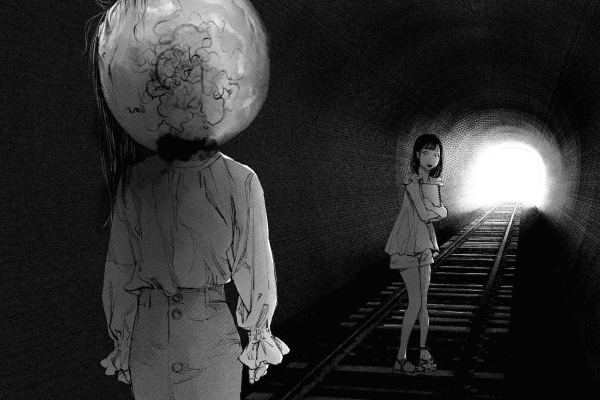
Tonari no Jii-san is a supernatural mystery manga set in a quiet rural town where reality feels slightly off, and everyone acts like that’s normal. It’s slow-burn horror built on denial, absence, and the creeping feeling that something impossible is being treated as normal.
Yuki lives a mostly ordinary life until one moment changes everything. She witnesses something disturbing while she’s seeing her sister off, but the real shock isn’t what happens. It’s the town’s response. None of the townspeople acknowledge it. That silence becomes the story’s core, because the mystery isn’t just about what she saw, but why she’s the only one reacting to it. From there, every normal interaction feels staged, as if the town is quietly enforcing an unseen rule.

As the story develops, small inconsistencies stack up into something much uglier. Folklore creeps in, but it never settles into a traditional ghost story format. Instead, it expands into a broader town secret filled with grotesque hints and unnatural transformations, including the infamous bubble-head imagery that’s genuinely hard to shake. The series escalates patiently, which is exactly why it works. It doesn’t rush to explain itself. It lets the uncertainty speak for itself, and it keeps widening the gap between what Yuki experiences and what everyone else insists is normal. Even when the manga starts leaning into higher-concept ideas, it holds onto its core question: who can you trust when nobody sees the world the way you do?
The art is full of heavy shadows, warped textures, and sudden distortions, giving even quieter scenes a sickly tension, as if the town itself is watching.
Tonari no Jii-san is ideal for readers who want an atmospheric mystery with rural horror and constant unease.
Genres: Horror, Mystery, Psychological, Supernatural, Drama
Status: Ongoing (Seinen)
16. Shikabane Kaigo

Shikabane Kaigo is a modern horror mystery manga about a live-in caregiver who accepts a new job that feels wrong from the first conversation. It doesn’t rely on jump scares. Instead, it builds dread through rules, routines, and the sense that everyone around you is carefully pretending nothing is unusual.
Akane Kuritani takes a position deep in the mountains, where she’s assigned to care for an elderly woman named Hiwako inside an isolated Western-style mansion. What sounds straightforward quickly turns unsettling. The house has strict rules. Her coworkers are polite in a way that feels rehearsed. Even casual conversations carry a strange sense of pressure, as if Akane is being probed. The core mystery isn’t just what’s wrong with the patient. It’s what this place is designed to do, and why everyone involved seems invested in keeping Akane confused and compliant.
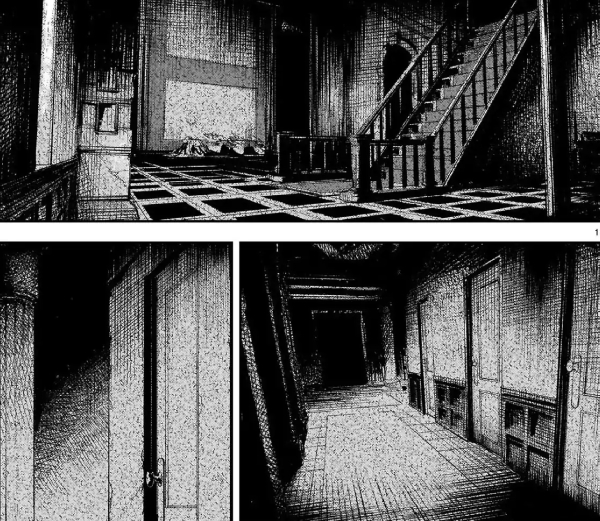
That’s what makes the series so gripping. The mystery doesn’t stay locked to one chapter. It spreads outward, pulling in the employer, the house itself, and the unsettling atmosphere surrounding the job. Shikabane Kaigo understands that fear hits harder when it’s grounded in ordinary life. The horror comes from isolation, from the feeling of being constantly watched, and from the friction between what Akane sees and what the people around her insist is normal. Hiwako is especially unnerving, drawn with such clinical detail that she feels less like a person and more like the remains of one.
The artwork only heightens the unease. Shadows sit heavy in the background, textures feel grimy and tangible, and empty rooms carry a strange, unseen tension.
Shikabane Kaigo is a slow-burn mystery that turns the mundane act of caregiving into a nightmare of secrets and quiet paranoia.
Genres: Horror, Mystery, Psychological
Status: Ongoing (Seinen)
15. Another
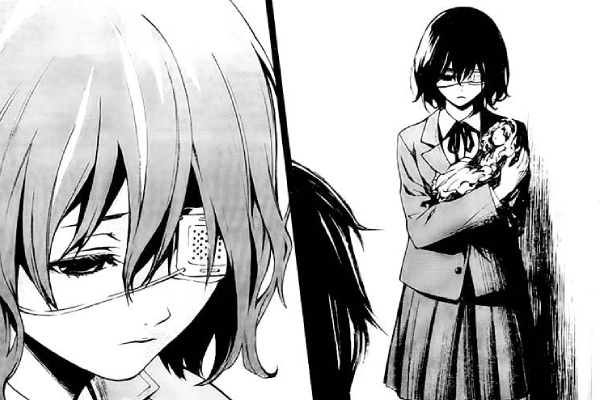
Another is the most horror-coded entry on this list, and it’s the kind of mystery manga that makes you feel uneasy before anything happens. It centers on a curse hanging over Class 3-3 at Yomiyama North Middle School, where the students behave as if they’re all participating in a silent lie.
Kouichi Sakakibara transfers into the class, and immediately senses that something is wrong. Everyone is tense, careful, and weirdly formal, as if one mistake could set something off. The most unsettling detail is Mei Misaki, a quiet girl who sits in plain sight, yet everyone treats her as if she doesn’t exist. The bizarre social rule becomes the story’s driving force: Kouichi doesn’t just want answers. He needs them. Once he starts digging, a series of horrific, inexplicable deaths begins.
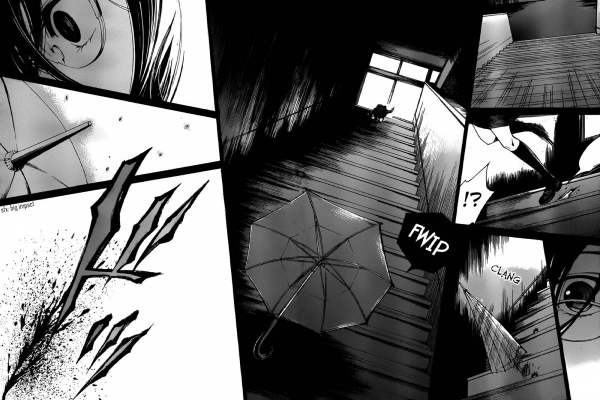
What makes Another work is its clean, paranoid momentum. It’s not a detective story in the traditional sense, but it’s structured like one. Kouichi follows clues, uncovers buried history, and tries to connect patterns before the next tragedy hits. The tension is constant because the mystery doesn’t stay abstract. It punishes people in sudden, brutal ways, which is why this is easily the most gruesome pick in the lower half of this list. Even when the deaths get a little over-the-top, they still serve a purpose, forcing the characters into panic, denial, and desperate reasoning.
The artwork leans into moody shadows and quiet dread, and the manga format gives the story a more grounded tone than you might expect. Not every plot element lands perfectly, and a few reveals happen a bit late, but the final stretch pulls everything together in a way that feels surprising, satisfying, and genuinely tragic.
Another blends curses, paranoia, and ghost-story dread into a tight, tragic mystery.
Genres: Horror, Supernatural, Mystery, Thriller, Tragedy
Status: Completed (Seinen)
14. The Kurosagi Corpse Delivery Service
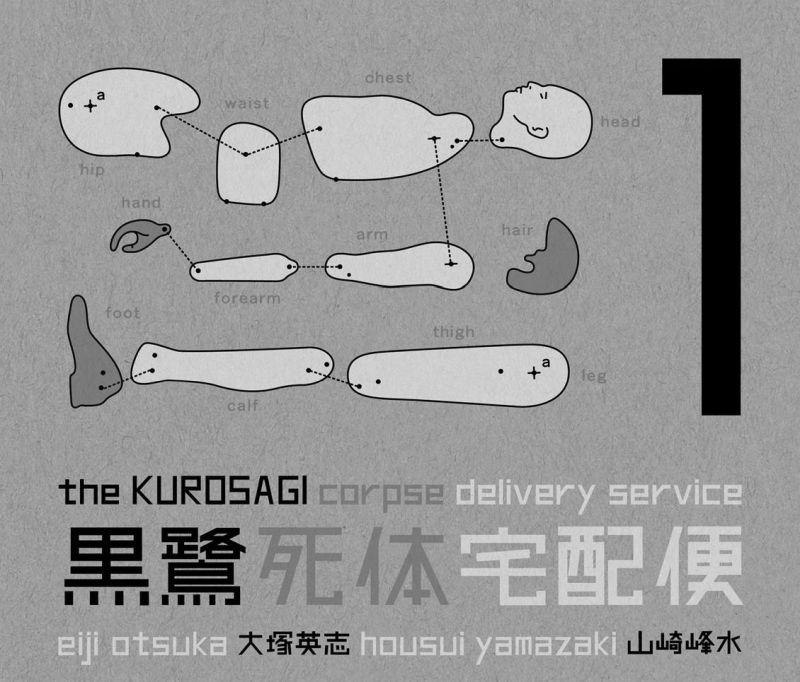
The Kurosagi Corpse Delivery Service is a supernatural mystery manga, but it doesn’t build toward one massive, intricate conspiracy. Instead, it runs on smaller, isolated cases, and each one is a weird little puzzle about death, regret, and what someone needs to finally be laid to rest. It’s episodic by design, but the cases stay sharp enough that it never feels repetitive.
The setup centers on a group of Buddhist university students who run a delivery service for the dead, tracking down bodies and fulfilling their final wishes. Each member brings something useful to the job. Kuro Karatsu is the standout because he’s able to communicate with the dead and help uncover what happened. That makes every case a blend of investigation and the supernatural, where the questions aren’t just about how someone died. It’s also about why they died, who benefited, and what hidden ugliness gets exposed when a corpse refuses to stay quiet. Murders, cover-ups, cruelty, and buried trauma show up constantly, and the best arcs land because the mystery isn’t just a plot device. It’s tied to someone’s unfinished business.
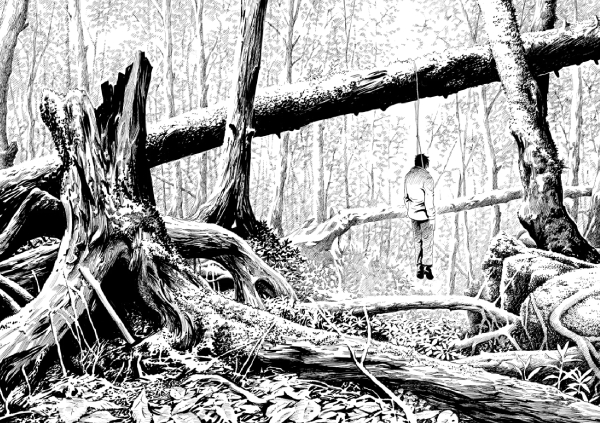
What really separates The Kurosagi Corpse Delivery Service from darker, more oppressive mysteries is its tone. It’s grim, but it’s also funny in a way that feels intentional rather than forced. The cast is quirky, the banter is sharp, and the story uses black comedy to keep the series from becoming emotionally exhausting. The manga can jump from absurdity to something genuinely unsettling without breaking its own rhythm, and the episodic structure helps maintain momentum. Even when one case wraps up quickly, the next one brings a new kind of problem, which keeps the series fresh even across a long run.
The art supports that blend perfectly. It’s grounded enough to make the bodies and crime scenes feel real, but it also leans into eerie expressions and surreal moments when the supernatural side pushes through.
The Kurosagi Corpse Delivery Service is a cult classic for a reason. It’s a mystery manga with a supernatural twist, strong character chemistry, and case-by-case storytelling.
Genres: Horror, Mystery, Supernatural, Comedy, Drama
Status: Ongoing (Seinen)
13. Homunculus
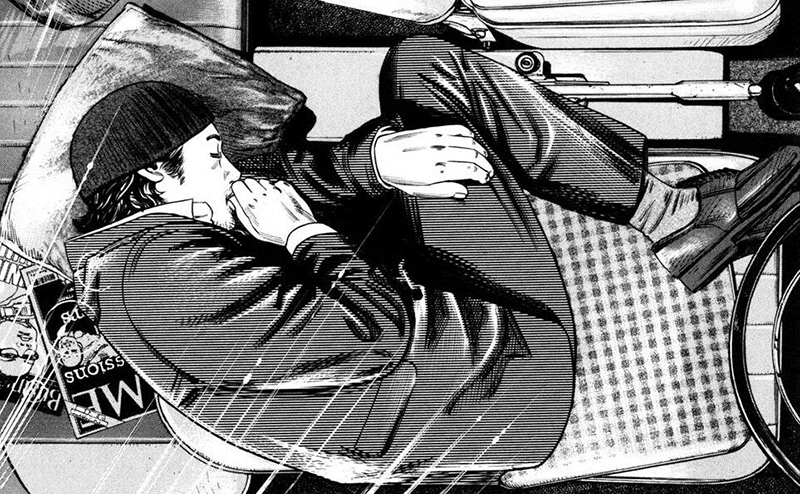
Homunculus is first and foremost a psychological character study, but it has enough unanswered questions and creeping uncertainty to earn its place on this list. It’s the kind of story where the central mystery isn’t a crime scene. It’s the human mind, and what happens when you peel it open.
Susumu Nakoshi lives out of his car, stuck in a strange limbo between luxury hotels and a park where the desperate sleep. He’s homeless, but not in the usual sense. Still, he’s clearly running from something. Then he meets Manabu Ito, a medical student obsessed with trepanation, a procedure meant to expand consciousness by drilling into the skull. Nakoshi agrees, and afterward he begins seeing grotesque distortions in other people, visions that seem to expose their hidden selves. These homunculi become the story’s hook, but they’re also the beginning of the mystery. What exactly are they? Something supernatural? A psychological projection? Brain damage dressed up as revelation? Hideo Yamamoto never gives a clear answer, which is what makes the series so unsettling.
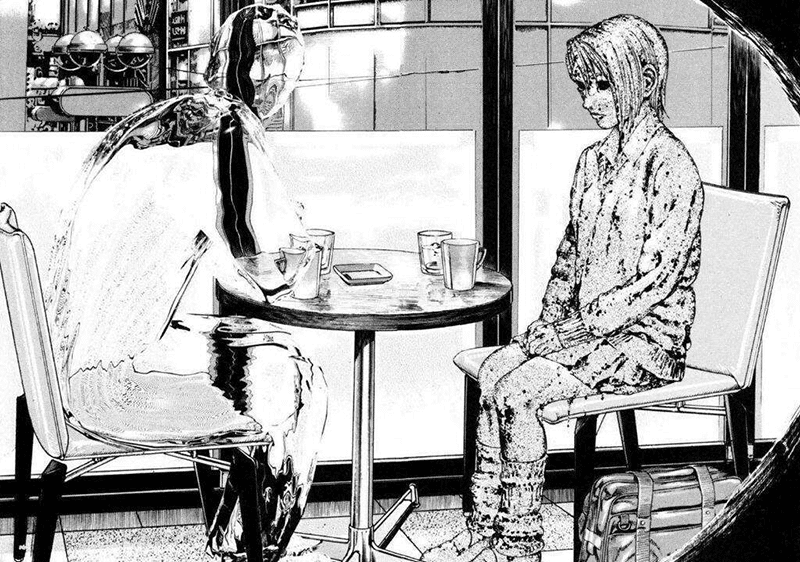
The mystery keeps widening the further Nakoshi spirals. It isn’t a detective story, but it’s still driven by investigation, just aimed inward instead of outward. Nakoshi is constantly searching for meaning in what he sees. At the same time, the manga teases another set of questions that slowly become impossible to ignore: who was Nakoshi before this life? Why is he living like this if he clearly understands money and status? And what made him someone who looks functional on the surface, but seems fundamentally hollow underneath?
Homunculus succeeds because it refuses to play safe. It’s eerie at first, then becomes deeply uncomfortable, and eventually slips into territory that feels like a full mental breakdown on the page. The art is a major reason it works, mixing grounded realism with distortions that look like body horror, visual metaphor, and pure nightmare all at once.
Homunculus is an unforgettable mystery manga that leans hard into identity, perception, and psychological decay.
Genres: Psychological, Horror, Drama
Status: Completed (Seinen)
12. Ouroboros
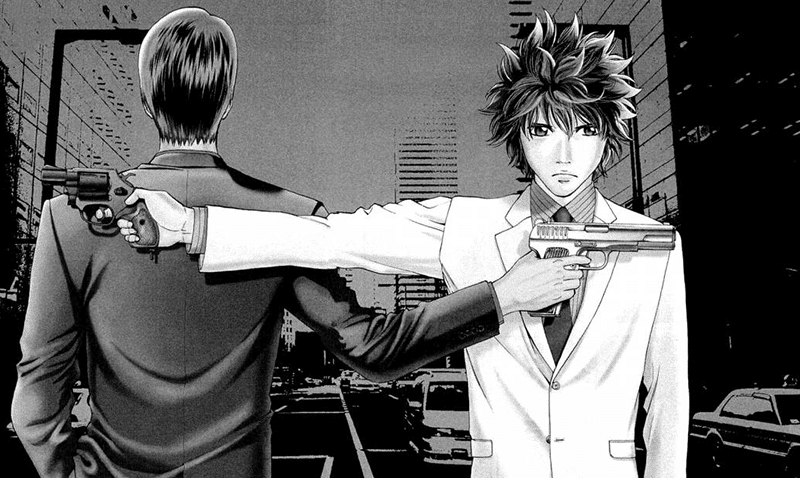
Ouroboros is a crime mystery manga that stays tense because it works from both sides of the system at once. One lead investigates from inside the Shinjuku police, while the other moves through the yakuza, and the story constantly asks the same question: who’s closer to the truth?
Ryuzaki Ikuo and Danno Tatsuya both grew up in an orphanage and were raised by a caretaker who gave them stability and a sense of family. When she’s murdered in front of them, the moment becomes the central mystery hanging over the entire series. Instead of chasing the killer head-on, they choose opposite paths to get answers. Ryuzaki climbs the police ranks to access case files, evidence, and internal networks. Danno enters the underworld, building connections the law can’t touch. That split makes Ouroboros work. It isn’t just an investigation. It’s two parallel hunts for the same truth, each shaped by a different kind of power, risk, and compromise.
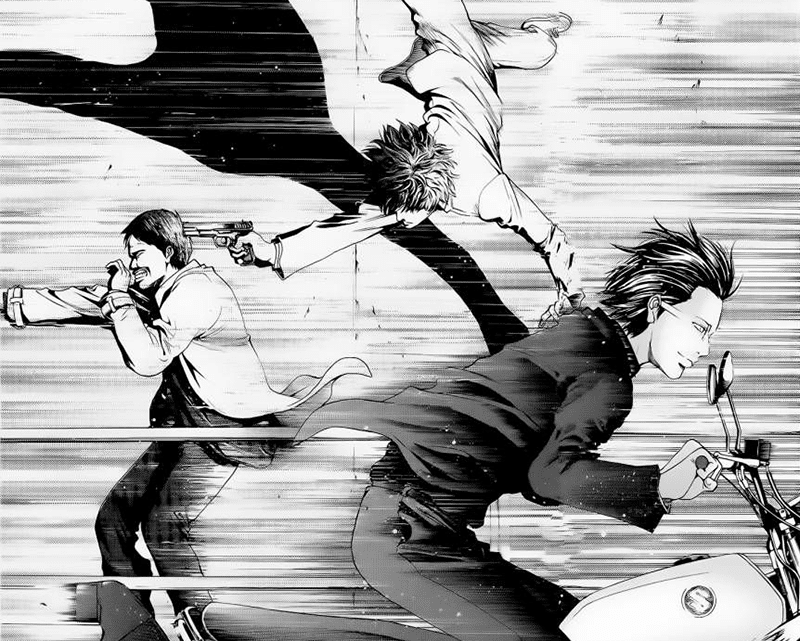
The manga also plays smart with structure. Early on, it features small investigations, but they never feel like filler. Each case introduces new players and shows you how the two leads operate when they’re forced to improvise. More importantly, those side investigations quietly feed into the larger conspiracy behind the orphanage murder. The deeper the story goes, the harder it becomes to trust anyone. Ryuzaki might wear a badge, but politics and corruption limit what he can actually do. Danno can reach people Ryuzaki can’t, but every step forward puts a target on his back. Their partnership is productive, but it’s never clean, and that ethical tension is where the story gets a lot of its bite.
Ouroboros shines when it turns information into a weapon. It’s full of moments where characters think they have control, only for the narrative to reveal they’re missing a key piece. The conspiracy angle is genuinely gripping because it unfolds slowly, with enough moving parts to keep you guessing. It gets a bit more outlandish toward the end, and a couple of developments lean into familiar thriller territory, but the ride stays strong because the emotional goal never changes.
Ouroboros is a bingeable crime mystery manga with underworld tension, police procedure, and a long-running conspiracy driving everything forward.
Genres: Mystery, Thriller, Crime, Drama
Status: Completed (Seinen)
11. A Suffocatingly Lonely Death
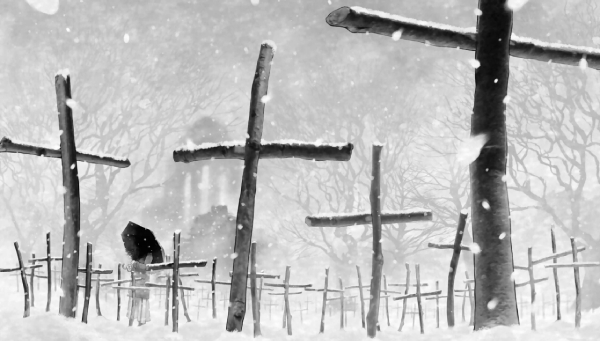
A Suffocatingly Lonely Death is one of the purest examples of an investigative mystery manga. It centers on a disturbing crime case that keeps growing heavier the deeper you dig. It’s a slow-burn police thriller where dread comes from procedure, contradictions, and the feeling that someone has been shaping the truth for years.
The story opens with a grisly incident involving murdered children in the basement of a mansion, and Detective Jun Saeki is pulled in as the details refuse to line up. The scene feels wrong in a way that’s hard to explain at first. Not flashy or theatrical, just subtle details that don’t line up. From there, the core mystery tightens through interviews with witnesses who are damaged, evasive, or outright unreliable. Eventually, the mansion’s owner, Juuzou Haikawa, becomes the prime suspect, but the series doesn’t give you the comfort of an easy villain. Every time Saeki gets closer to a clean explanation, the manga reveals another layer of fear, manipulation, or trauma underneath.
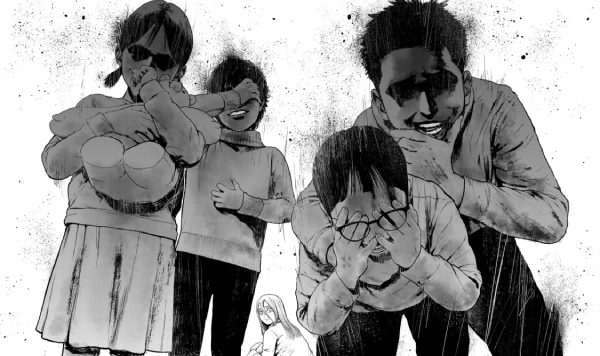
What makes it work is how grounded it feels. Saeki has to earn answers the hard way, and the story makes you feel the grind of extracting the truth. The tension spikes whenever behavior becomes evidence, because the most important clues aren’t hidden in the obvious places. They’re in pauses, inconsistencies, and the moments someone’s story doesn’t line up. The investigation becomes increasingly intimate once Kanon Hazumin enters the story and the way the case brushes up against Saeki’s own life. That personal connection matters. You’re not just watching a detective work. You’re watching him get pulled deeper into a case that seems to refuse clear answers.
A Suffocatingly Lonely Death is bleaker and more restrained than My Dearest Self With Malice Aforethought, trading constant twists and cliffhangers for slow, methodical dread. It’s about the creeping sense that the truth is ugly, human, and hidden in plain sight. If you want a crime-focused mystery that feels methodical, tense, and psychologically heavy, A Suffocatingly Lonely Death is an easy pick.
Genres: Mystery, Thriller, Crime
Status: Ongoing (Seinen)
10. Pluto

Pluto is a slow-burn mystery manga set in a science-fiction world. It’s a methodical murder investigation where the victims aren’t just important. They’re legendary.
Based on Osamu Tezuka’s Astro Boy, Naoki Urasawa reshapes it into something colder and more grounded. Even without having read Astro Boy, Pluto will instantly pull you in: someone is destroying the most advanced robots on Earth, and the pattern suggests the killer isn’t acting randomly. The story follows the elite robot detective Gesicht, who investigates the first high-profile death and quickly realizes he’s dealing with something bigger than a single suspect. As his investigation continues, the name “Pluto” comes up again and again, but instead of a person, it feels like an approaching catastrophe.
What makes Pluto so effective is the way it builds tension through process. Urasawa doesn’t rush. He lets the case expand through interviews, uneasy connections, and quiet reveals that reframe what you thought you understood. With every clue, the investigation becomes bigger, slowly encompassing politics, robotics law, and the fallout of an older war that never truly ended. As the case grows, the mystery shifts from who’s responsible to why it feels so personal. That sense of intent keeps the pages turning. The killer doesn’t just eliminate targets. They leave messages behind, and it forces Gesicht and the reader to start questioning the entire structure of this world.
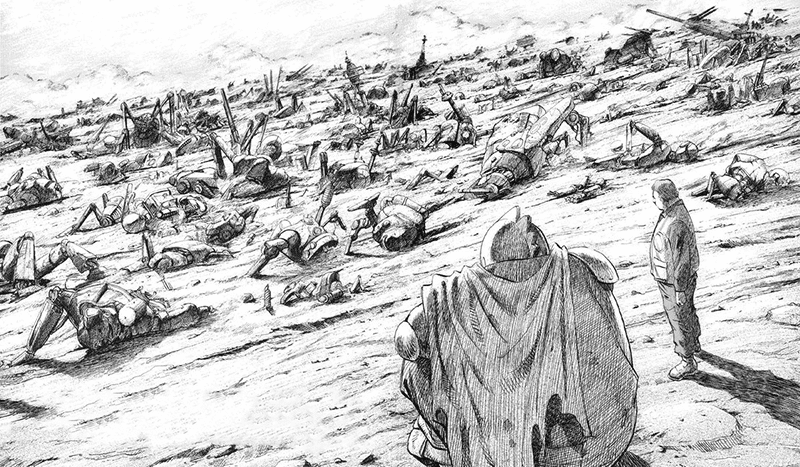
Gesicht is also the perfect lead for this kind of story because he carries emotional weight he isn’t supposed to have. He’s a robot, yet he feels guilt, has nightmares, and is haunted by things that don’t neatly fit into his logic or programming. This inner turmoil gives the mystery framework a deeply intimate psychological edge.
Pluto is strongest in the middle stretches when the mystery hits peak momentum, and the case grows too large to contain. The final act leans more toward mythic resonance than strict police-work grit, but it still lands emotionally and as a tribute to Astro Boy.
Pluto is one of Urasawa’s most gripping reads. It’s a tense, devastating murder mystery that slowly expands into a larger conspiracy.
Genres: Mystery, Thriller, Sci-Fi, Drama
Status: Completed (Seinen)
9. The Summer Hikaru Died
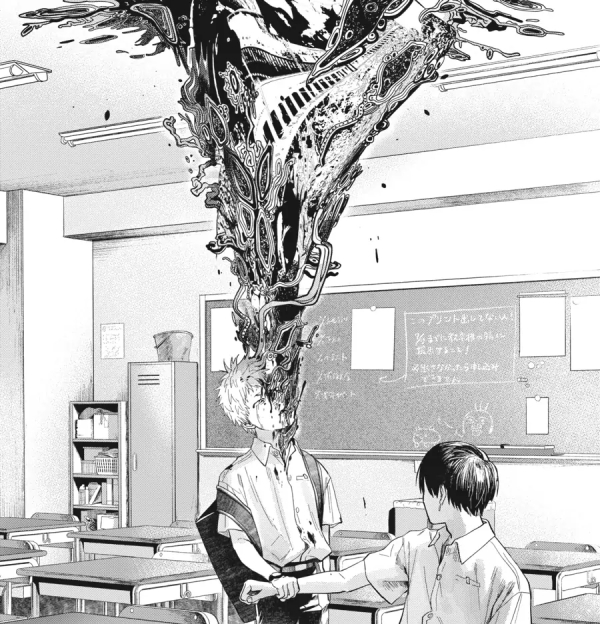
The Summer Hikaru Died is a mystery manga that doubles as an intimate cosmic horror story, where the most terrifying question isn’t what’s out there, but who you’re standing next to. It starts with a quietly crushing premise: Yoshiki knows his best friend is dead, and something else that looks and sounds exactly like him takes his place.
The series doesn’t drag out the obvious. Early on, it makes it clear that this isn’t the real Hikaru, and that choice strengthens the mystery instead of undercutting it. Because once you accept that something else is wearing Hikaru’s face, the story opens into a bigger set of questions. What is this new Hikaru? Where did it come from, and what happened to the original? Why did it choose this town, and why does it seem strangely attached to Yoshiki? The setting matters, too. This is a remote town where people keep secrets, and the supernatural feels woven into daily life. The deeper Yoshiki gets involved, the more the town reveals its cracks, including local folklore tied to an entity known as Nounuki-sama. Ghosts appear. Unexplained events pile up. It becomes less about one replacement and more about what’s been waiting in the hills all this time.
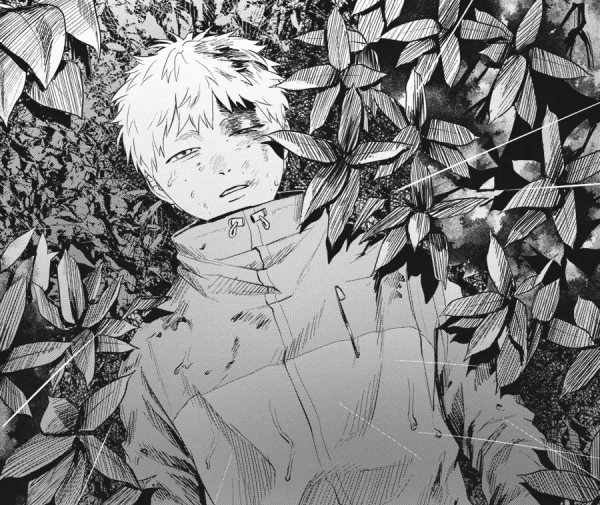
What makes the manga hit so hard is the emotional core underneath the horror. Yoshiki isn’t only afraid. He’s grieving, forced to share space with something that shouldn’t exist, while still craving the comfort of the person he lost. That tension gives every scene a soft, aching weight, and it turns the mystery into something deeply personal. Mokumokuren also nails the slow dread. The story is full of small pauses, strange conversations, and moments where you can feel something’s about to happen. And when the cosmic horror imagery breaks through, it’s genuinely striking, with Hikaru’s true form spilling out into something massive, alien, and impossible to fully process.
There are BL undertones, but they’re handled with sincerity rather than fanservice. The intimacy is often uncomfortable on purpose, like the story is forcing Yoshiki to confront how badly he wants to believe. It’s tender, eerie, and quietly devastating.
As a mystery manga, The Summer Hikaru Died blends rural folklore and cosmic dread with a surprisingly emotional hook.
Genres: Horror, Mystery, Supernatural, Drama
Status: Ongoing (Seinen)
8. Billy Bat
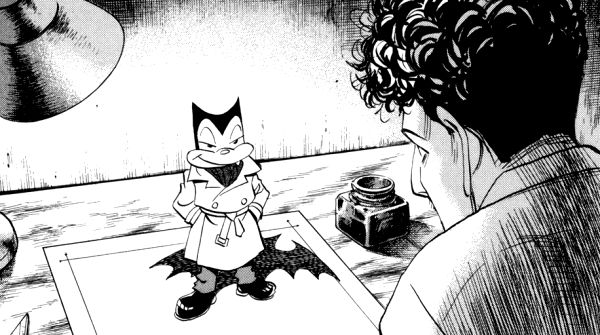
Billy Bat is a mystery manga built around a global conspiracy so strange it feels impossible at first, and that’s exactly why it hooks you. It starts with something harmless, a cartoon character, then slowly reveals that this bat might be tangled up in violence, power, and history itself.
A Japanese-American comic artist named Kevin Yamagata creates a detective series called Billy Bat, and it becomes a hit. Then he makes a horrifying discovery: years before he drew it, the character already existed in Japan. Kevin returns to Japan to look into it, afraid he’s accidentally plagiarized someone. This is where things turn darker. The central question quickly shifts from who he stole it from to why the character keeps appearing around death and major events. The deeper Kevin goes, the more the mystery starts behaving like a curse, as if Billy Bat isn’t just a drawing, but a symbol that keeps resurfacing in the worst possible places.
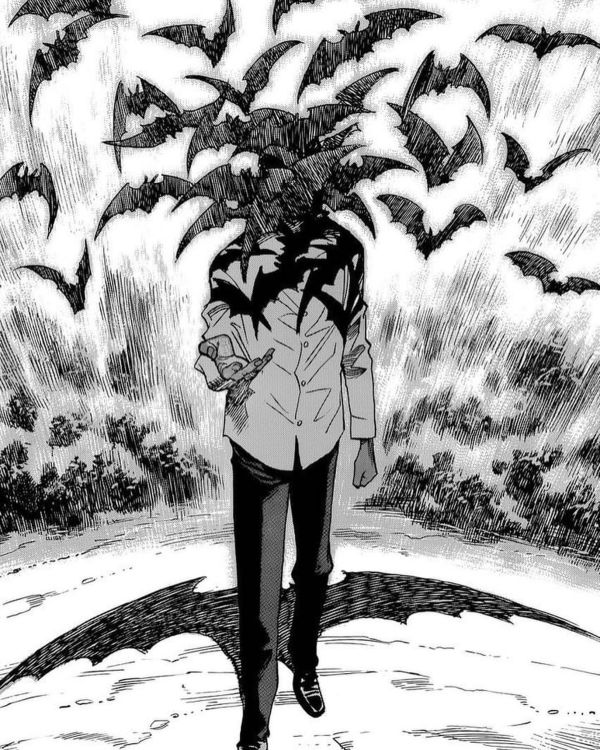
Urasawa builds the story like a puzzle box that keeps expanding. Kevin follows leads, moving from murders to hidden documents to secret networks that treat the bat like a tool, an omen, or something they’re actively trying to control. That escalation is Billy Bat’s real strength. Each answer feels like progress, but it always leads to a bigger revelation. The conspiracy isn’t just hidden. It’s protected, and learning the truth comes with consequences. The scale also becomes increasingly ambitious as the narrative connects political movements, historical moments, and mythic undertones into a long chain of cause and effect. It’s not subtle about its scope, and that’s part of the appeal.
Urasawa is at his best when he’s building cliffhangers, and Billy Bat always wants you to read one more chapter. At the same time, this is easily one of his densest works. It can feel messy if you’re expecting something as clean and focused as Monster. But if you’re willing to stick with it, the payoff is getting one of the most complex conspiracy stories in manga.
Billy Bat is a mystery manga that’s big on paranoia, hidden history, and long-form escalation.
Genres: Mystery, Thriller, Crime, Drama
Status: Completed (Seinen)
7. My Dearest Self With Malice Aforethought
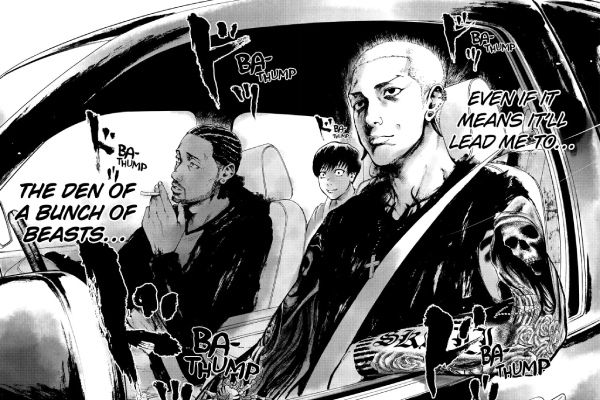
A lot of mystery manga take a slow approach, carefully laying out clues and building toward the truth one step at a time. Not My Dearest Self With Malice Aforethought. This is one of the fastest-paced mystery manga on this list, and its first half is genuinely one of the most addictive reads I’ve ever encountered.
Eiji Urashima wakes up with missing days, a stranger insisting she’s his girlfriend, and the sickening realization that his normal life might be built on lies he doesn’t even remember. At first, it feels like a simple memory mystery, but it quickly escalates into something much uglier. Eiji starts digging into his own life and finds contradictions everywhere. Relationships don’t line up. People react to him with fear or caution. Small details suggest something violent happened. Soon he realizes that he might have a second personality. From there, the biggest question isn’t what happened during these lost days, but what his other personality is actually capable of. That’s what keeps the pages turning. The mystery isn’t happening somewhere else. It’s inside the protagonist’s head, and it seems to actively work against him.
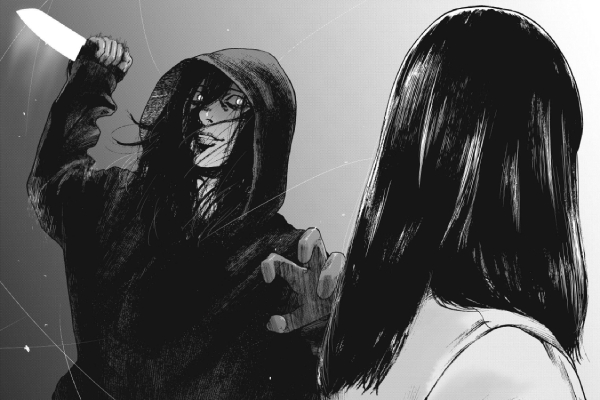
The author is constantly manipulating the reader’s expectations. The manga teases a conclusion, only to pull the rug out from under it moments later. Betrayals, withheld information, and sudden revelations arrive at a ruthless tempo, and it makes you want to read on because the story never stabilizes. My Dearest Self With Malice Aforethought is strongest during the first half, where every new reveal reframes everything and the narrative never slows down. It’s pulpy and sensational at times, but the emotional core stays sharp throughout. Eiji isn’t a hero or a mastermind. He’s a confused and terrified young man who fears he might be the villain in his own story.
As the series continues, the pacing settles into a more linear push toward resolution. The chaos becomes more structured, which makes the finale feel more coherent, even if it loses a bit of that manic early energy. Still, the mystery holds together surprisingly well, and it does a solid job paying off the major questions without relying on a cheap final shock.
My Dearest Self With Malice Aforethought is a twist-heavy mystery manga that feels like a trap slowly closing around someone’s identity.
Genres: Mystery, Thriller, Psychological, Drama
Status: Completed (Seinen)
6. 20th Century Boys
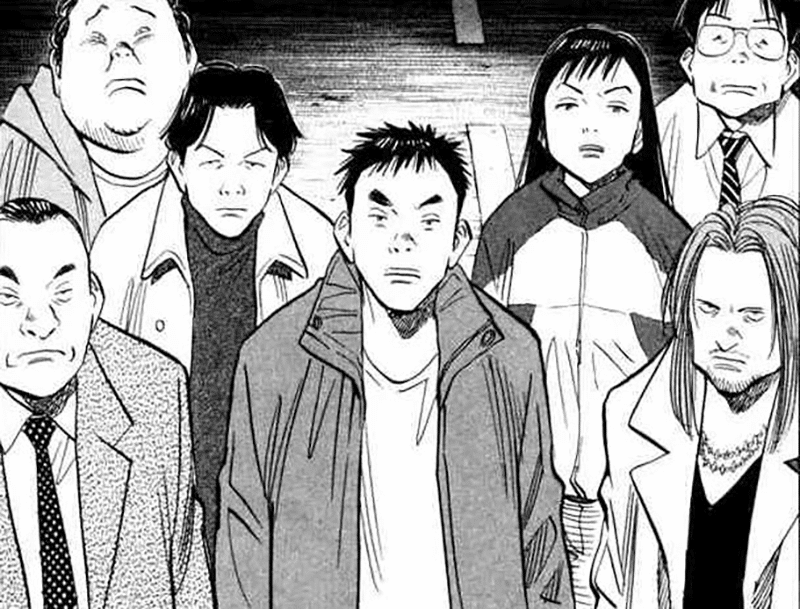
20th Century Boys might be the most popular mystery manga of all time, and it earns that reputation fast. It tells a sprawling conspiracy story through multiple time periods, constantly flashing back to childhood while building toward a mystery that grows bigger, stranger, and more dangerous with every reveal.
Kenji Endo lives a normal adult life until it’s suddenly impossible to keep pretending everything is fine. A childhood friend dies, and around the same time, a cult led by a masked figure known only as Friend begins rising to power. The disturbing part isn’t just the cult itself. It’s the symbolism. Friend’s rhetoric and iconography echo the Book of Prophecy Kenji and his friends created as kids, a goofy homemade story that was never meant to become real. That connection becomes the core mystery: how did a silly childhood game turn into a blueprint for real-world terror? Kenji gathers his old friends and starts pulling at the threads, only to realize the conspiracy isn’t hidden in the shadows. It’s spreading in plain sight.
Urasawa’s structure is one of the biggest reasons the story works. The manga jumps between the late 1990s, the year 2014, and the so-called Friend Era, while layering in flashbacks from the 1960s and 1970s showing the characters as children. Those timelines never feel like a gimmick. They’re an essential part of the puzzle, and the contrast between nostalgia and dread is where the series truly shines. The childhood sections are especially effective because they don’t just exist for emotional texture. They actively reshape what you think you know, turning innocent memories into evidence and rewriting the meaning of small details you’d normally ignore.
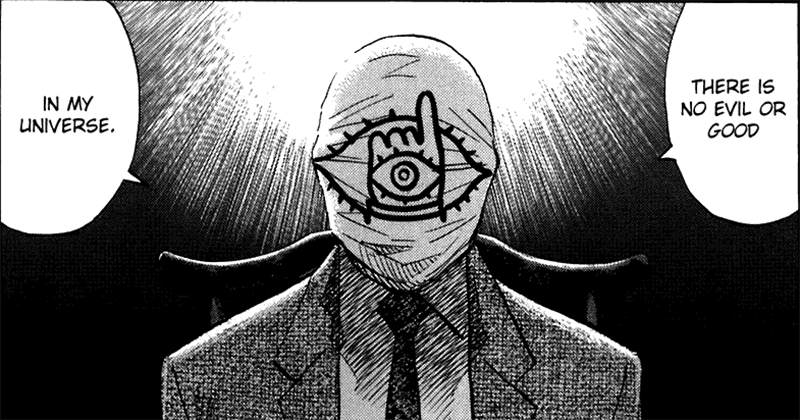
The first two arcs are among the strongest long-form mystery storytelling in manga. They’re packed with shifting alliances, red herrings, and slow, satisfying realizations where the conspiracy widens at exactly the wrong moment. It’s also character-driven in a way most conspiracy thrillers aren’t. Kenji isn’t a superhuman genius. He’s a regular guy forced into a role he never wanted, and the story constantly reminds you how fragile his group really is when the world turns against them.
The latter stretch gets messier and more outlandish, and the sheer scale of the conspiracy can feel almost too huge to believe. But even when the story overreaches, it’s overreaching with ambition, not laziness. The suspense stays strong, and the central mystery keeps pulling you forward because you need to know who Friend really is and how deep it goes.
20th Century Boys is a mystery manga packed with conspiracy paranoia, unforgettable characters, and momentum that won’t let you go until the end.
Genres: Mystery, Thriller, Drama
Status: Completed (Seinen)
5. Death Note
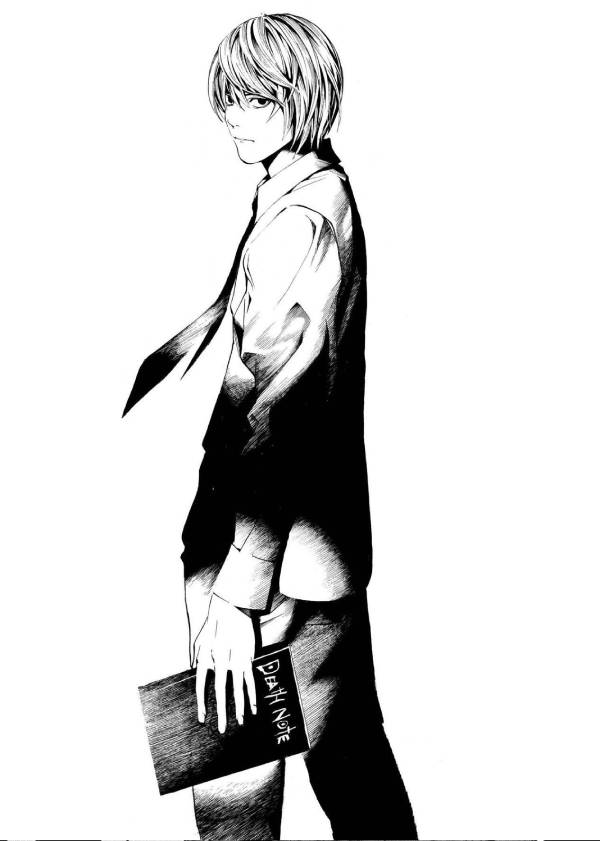
Death Note is one of the most popular cat-and-mouse mystery manga ever written, built around a battle of wits where both sides are constantly trying to uncover the other’s identity. One day, prodigy high schooler Light Yagami finds a strange notebook. The rules are simple: if you write someone’s name in it, they die. After some initial tests, he decides to use it to reshape the world from the shadows. The real suspense comes from what follows: a detective hunt where every move creates a new trap.
Light isn’t a desperate underdog stumbling into power. He’s confident, controlled, and convinced he’s doing the right thing, which makes the mystery sharper because the story isn’t asking if he can win. It’s asking how long he can keep winning without being exposed. Once Light becomes Kira, the stakes keep rising. The police chase him. Light baits them. L enters the story. Light responds. Every arc is built around prediction, misdirection, and the fear of making one irreversible mistake. Even dialogue-heavy moments feel tense because those conversations aren’t filler. They’re tests, and a single slip means the end.
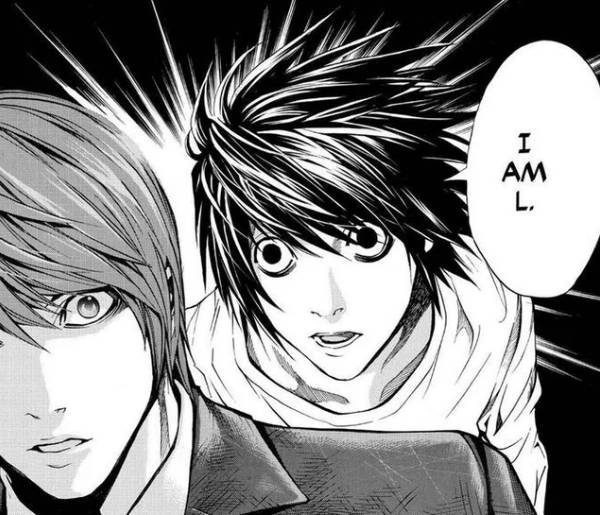
The cat-and-mouse structure is why Death Note qualifies for this list. It’s not a procedural mystery, and it isn’t about clue-gathering in the traditional sense, but it absolutely runs on investigation logic. L is constantly narrowing the pool of suspects through deduction, surveillance, and psychological pressure. Light is constantly trying to control what information exists, how people interpret it, and what evidence can be allowed to exist. In other words, the mystery here isn’t about who Kira is, but what counts as proof when death looks like coincidence. That’s what makes the early stretch so electric. The reversals are clever, the pacing is ruthless, and the story keeps raising the stakes without relying on physical fights.
Obata’s sharp compositions and heavy shadows help sell it. They give the manga a cold, dramatic intensity that fits the paranoia perfectly. It’s stylish, sometimes theatrical, and less of a grounded police story and more an intellectual duel, but it works because it fully commits to the mind-game tone.
The usual criticism is the later arcs. They simply don’t match the raw tension of the initial showdown, and the structure shifts once new players enter the game. Still, even with that dip, Death Note remains one of the best mystery manga of all time.
Genres: Mystery, Thriller, Psychological, Supernatural
Status: Completed (Shonen)
4. Inside Mari
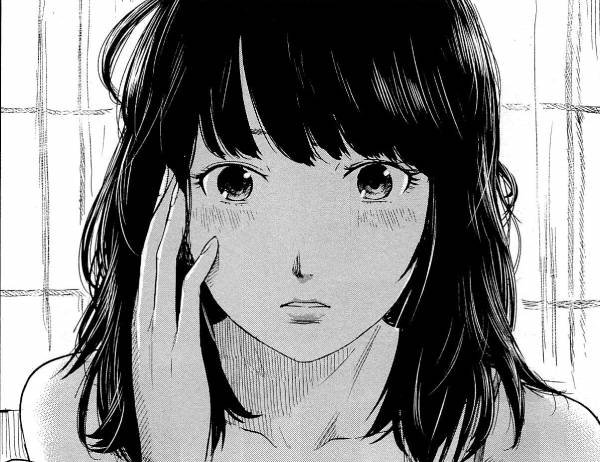
Inside Mari is an intimate psychological story, but it spends most of its pages moving like a mystery, built around one question that won’t leave you alone. One day, college dropout Isao Komori wakes up in the body of Mari, a high school girl he’s been quietly obsessed with, and nothing about it makes sense. It’s an unsettling, slow-burn mystery manga where the real horror comes from identity slipping out of your hands.
Isao isn’t a normal protagonist. He’s isolated, detached, and drifting through life with no real anchor, and Mari becomes a symbol of everything he thinks he’s lost. Then the story breaks reality in a single moment and refuses to explain itself. Why is he in Mari’s body? Where did Mari go? Is she gone, trapped, watching, or erased? That’s what drives the early chapters, because Inside Mari doesn’t treat the body swap like a gimmick. It treats it like a crime scene in the mind. Isao has to imitate a life he doesn’t understand while chasing fragments of the truth. The stakes keep rising because every day he’s in Mari’s body, the more impossible it feels to return to normal. The mystery also creates constant tension through social pressure. Mari’s friends, her home, and her daily life all become obstacles. One wrong move can expose him, and exposure means losing the only chance he has to ever understand what happened.
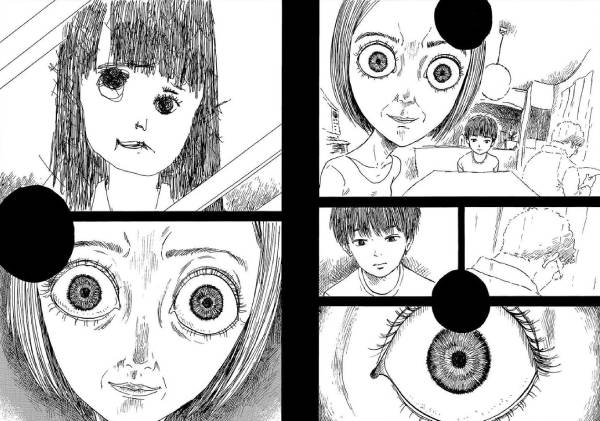
What makes Inside Mari stand out is how the mystery changes shape as it progresses. It starts with a straightforward question, almost like a detective story about an impossible event. But the deeper Isao goes, the more personal and psychological it becomes. Oshimi turns the mystery into a descent through repression, sexual guilt, dissociation, and self-destruction. The story keeps asking what’s really happening, but the meaning keeps changing. Instead of chasing a single twist, you’re watching identity get peeled open layer by layer.
Oshimi’s pacing is patient and controlled, and he excels at sustaining discomfort without relying on shock. Quiet scenes feel tense because the characters are always one scene away from breaking apart. His clean, expressive art captures shame, confusion, and panic in a way that makes even mundane settings feel claustrophobic. And when the revelation finally lands, it doesn’t feel like a cheap trick. It reframes the entire story in a way that’s genuinely satisfying, because it’s rooted in character rather than spectacle.
Inside Mari is a psychological mystery manga that turns identity into an intimate investigation.
Genres: Mystery, Psychological, Drama
Status: Completed (Seinen)
3. MPD Psycho
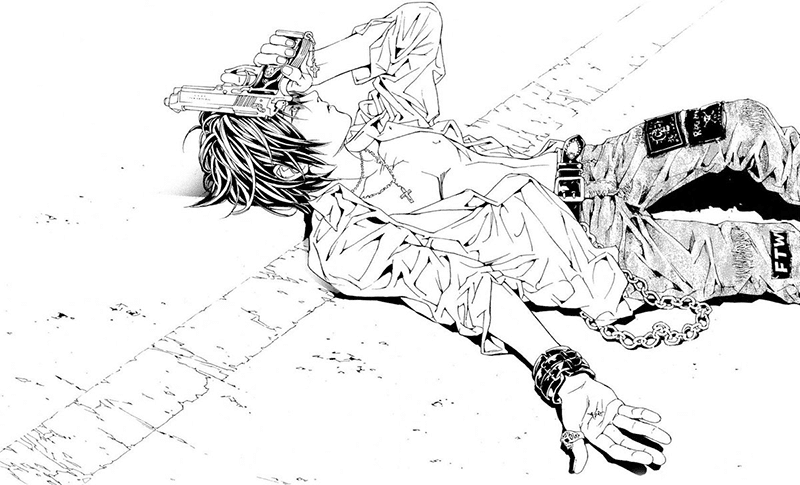
MPD Psycho is not only the most graphic entry on this list; it’s also the most complex mystery manga here, and that combination makes it linger in a way you can’t fully shake. It starts like a brutal detective series, then keeps expanding until the entire story feels like an overarching conspiracy.
The main reason it’s so labyrinthine is the protagonist. Detective Kazuhiko Amamiya suffers from multiple personality disorder, and the manga uses that fractured identity to drive everything that follows. Early on, you watch him investigate grotesque murder cases: ritualistic scenes, unnerving patterns, and violence that goes far beyond typical noir. The more cases he investigates, the more they echo each other. That’s where the mystery takes shape. These crimes aren’t isolated. They’re connected, guided, and circling around something larger than the cases themselves. Soon, Amamiya realizes that the investigation is tied to his past in ways he doesn’t fully understand. Every answer leads to another question: what’s going on behind the scenes, and why does it feel like Amamiya is part of it?
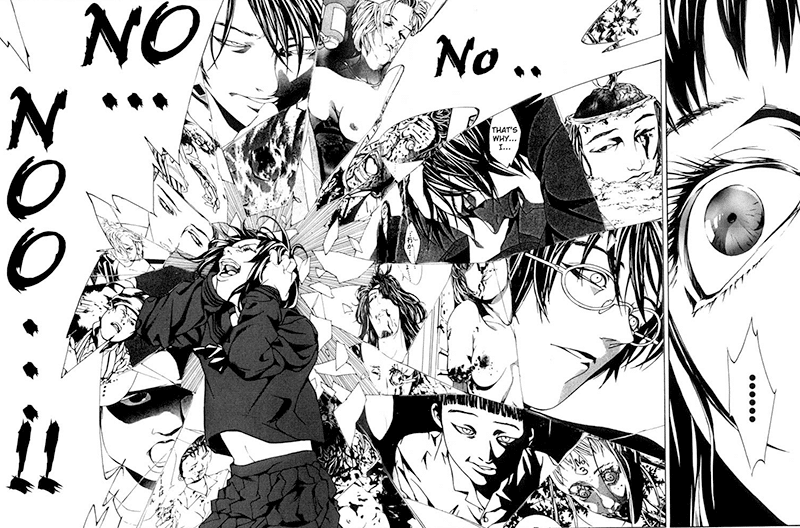
What makes MPD Psycho stand out is the way it turns mystery structure into psychological pressure. Amamiya’s different personalities aren’t just a gimmick. They actively reshape how the story unfolds because each identity carries its own motives, blind spots, and emotional weight. That fragmentation makes the plot feel unstable in a deliberate way. Some arcs feel like casework, others feel like paranoia spirals, and the conspiracy keeps widening until you’re no longer sure if you’re chasing a killer, a system, or a method of control. This makes it rewarding if you like dense stories that demand attention. The downside is that it can be challenging to track, especially once the narrative stacks layers of manipulation and personality shifts.
The art by Shou Tajima is a huge part of why it works. His hyper-detailed, grounded style makes the violence feel physical instead of stylized. That realism makes the disturbing moments so hard to shrug off. This is a bleak thriller, and it comes with content that can be genuinely rough, including cruelty and sexual violence. But it rarely feels like empty shock. The brutality reinforces the manga’s core theme: identity is fragile, and the world is full of people willing to exploit that fragility.
MPD Psycho is a mystery manga that feels like a true-crime noir story collapsing into a conspiracy nightmare.
Genres: Mystery, Thriller, Crime, Psychological, Horror
Status: Completed (Seinen)
2. Monster
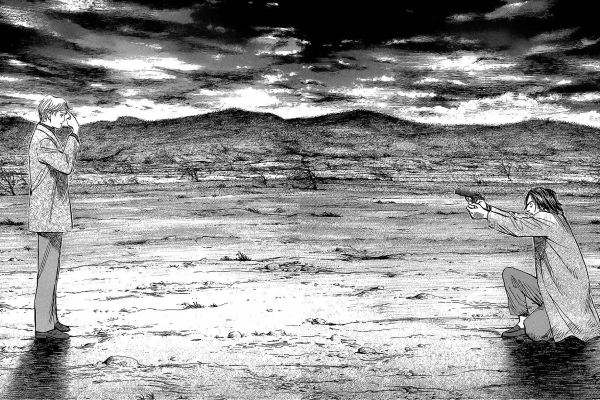
Monster is a slow-burn mystery manga that steadily grows bigger. It starts with a single good deed, then spreads outward until it feels like every place and every person falls under its shadow. Naoki Urasawa doesn’t build suspense through spectacle. He builds it through inevitability, where the horror is already in motion by the time you realize what you’re dealing with.
In a German hospital, Japanese surgeon Dr. Kenzo Tenma makes a single decision that should destroy his career: instead of saving an influential politician, he saves a young boy. The real consequences arrive years later. The boy, Johan Liebert, reappears as a serial killer so calm and controlled that he barely registers as human. Horrified, Tenma decides to undo his past mistakes, and the story turns into a long, grounded pursuit across post-Cold War Europe. It’s not a chase in the action-thriller sense. Tenma keeps moving, following traces that disappear as quickly as they form, trying to stop something that keeps slipping away.
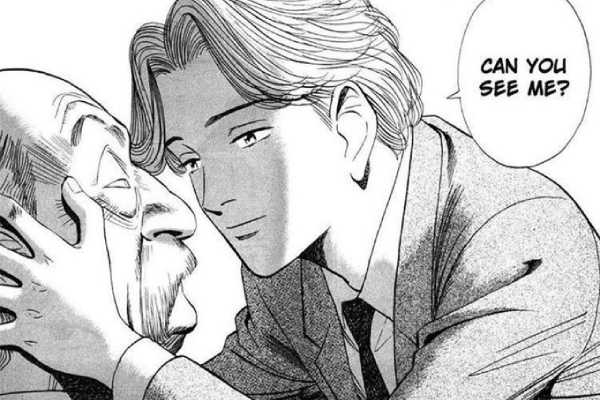
The mystery narrative works on multiple levels. The obvious is Johan’s location and how to stop him, but the deeper hook is how little Johan behaves like a normal criminal. Tenma doesn’t uncover him through convenient clues or twists. He finds him through scattered testimonies in broken communities, vanished witnesses, and the lingering aftermath of violence. Many arcs play like standalone mysteries, where Tenma enters a town, senses something rotten beneath the surface, and realizes Johan has already been there. The series constantly reinforces the idea that Johan doesn’t just kill people. He manipulates them. He plants a thought, preys on a weakness, and convinces others to destroy themselves, leaving almost no proof he was even involved. That’s what makes the whole story feel paranoid. Every small conversation carries the threat of unseen influence, and anyone could be a pawn.
What makes Johan so terrifying is his calm and quiet demeanor. He is evil, but in a composed, rational, and almost gentle way, which makes it worse. Tenma serves as the ideal counterbalance. He’s a normal man, trapped in an impossible dilemma. Stopping the monster he’s unleashed is the right thing to do, but it might also mean doing something that goes against his morals. This turns the suspense emotional, not just plot-driven, because the story keeps asking what it would actually mean for him to take a life.

Monster thrives on anticipation, not shock. The tone is bleak but grounded, and Urasawa’s restrained art makes the horror land even harder because it happens in ordinary places: apartments, train stations, hospitals.
It’s not flawless, and it sometimes leans on coincidence, but its control over dread and pacing is almost unmatched. As a mystery manga, Monster is tense, human, and morally brutal, featuring one of manga’s most unsettling antagonists.
Genres: Mystery, Thriller, Psychological, Drama
Status: Completed (Seinen)
1. Godchild
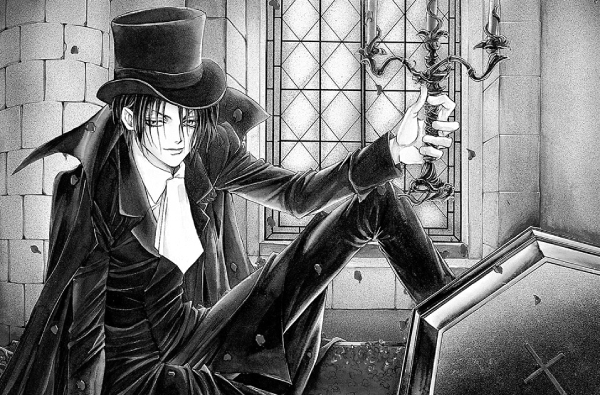
Godchild may be a surprising pick for the #1 spot on this list, but to me it’s one of the most compelling long-form mystery manga I’ve ever read. It takes a classic Victorian crime setup, filters it through gothic tragedy, and makes every case feel both elegant and vicious at the same time.
Set in 19th-century London, you’re introduced to young aristocrat Cain Hargreaves, who investigates macabre mysteries alongside his loyal servant, Riff, and his half-sister, Mary Weather. The early structure is deceptively episodic: Cain arrives at a social gathering and soon witnesses a murder. What makes it interesting is that many of these cases are cruel and personal, driven by inheritance or obsession. You get poisons, traps, blackmail, warped family dynamics, and crimes that aim to ruin, not just kill. It’s about reputation and destroying someone’s legacy.
At first glance, this makes Godchild appear similar to Sherlock Holmes. Where it differs is in the payoff. A case might be solved, the murderer might be found, but it seldom brings comfort. There’s always a bitter aftertaste, and there are always implications that the real villain is often something larger and institutional.
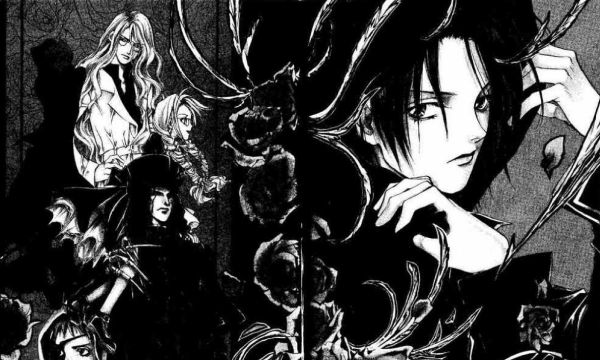
What makes Godchild so good is the larger mystery it weaves beneath the episodic structure. Cain’s world is bleak and rotten, and every case reveals another layer. Eventually, Cain’s family legacy becomes its own evolving mystery, tied to a web of secrets and a shadowy organization circling around him. The more Cain learns, the more unstable his sense of self becomes, because the truth isn’t just another case he can solve. It’s something that threatens to break him. That’s the hook that keeps you reading, even during the series’ slower stretches.
Godchild also succeeds in presentation. The gothic Victorian backdrop is perfect for mystery storytelling, and Godchild leans hard into it. Social rituals, rich mansions, foggy streets, and brutality hidden behind pleasantries. The art is a huge part of why the series feels so distinct. Because it’s shoujo, everything has this melancholic beauty to it, and that contrast makes the violence land harder. The murders are sudden and mean, but the world surrounding them is hauntingly gorgeous, which gives the whole manga a strange emotional weight.
If you want a mystery manga with a gothic atmosphere, episodic crime cases, and a larger conspiracy tightening around the protagonist’s life, Godchild is an easy pick, especially if you like elegant stories that feel genuinely cruel.
Genres: Mystery, Thriller, Gothic, Historical, Drama
Status: Completed (Shoujo)