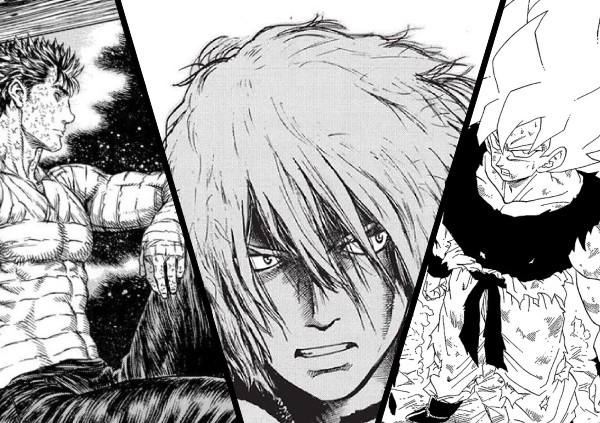
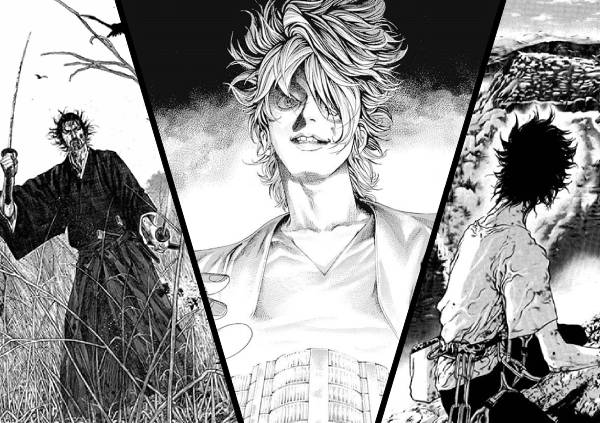
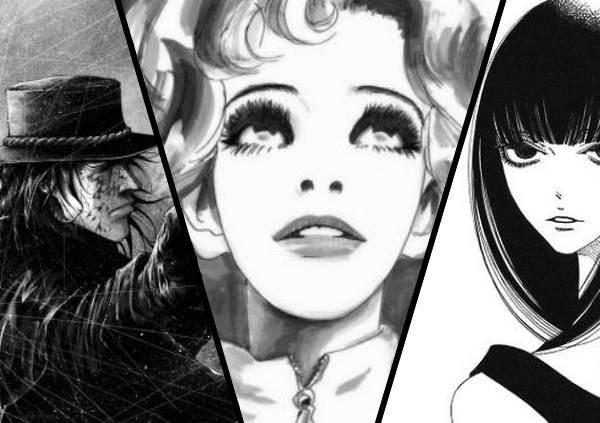
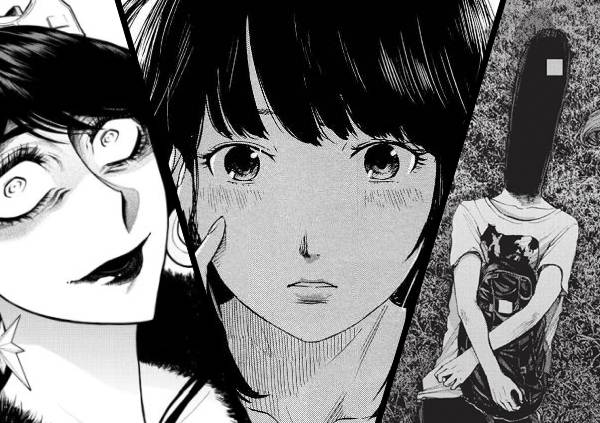
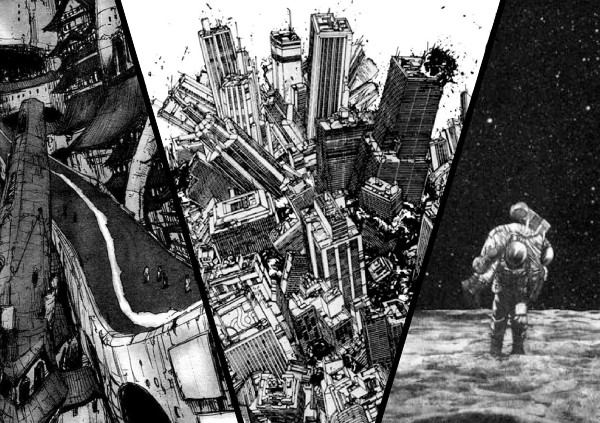
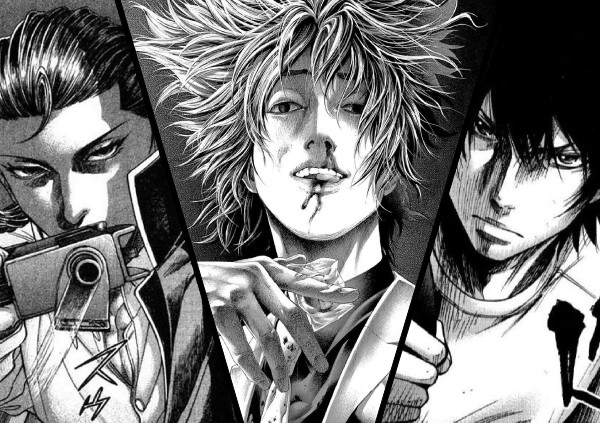
I’ve been reading manga for over two decades now, but sometimes you come across a weird manga that not only leaves you in awe but also makes you wonder what you’re even reading. There’s something inherently fascinating about titles that break the mold, stories that stray from traditional structure or abandon genre conventions entirely.
On this list, you’ll find everything from over-the-top comedies, strange genre mixes, and surreal horror stories to experimental works that break almost every rule imaginable. Each series stands out for its own kind of weirdness, through story, art style, characters, or all of the above.
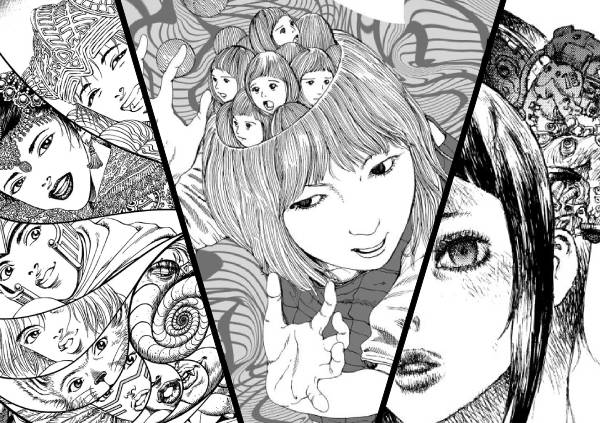
People rarely search for weird manga, but when they stumble upon one, it tends to linger on their minds long after reading. They offer experiences unlike anything else, showcasing the limitless creative potential of manga. This list is dedicated to these works.
Some dive deep into the human mind, pushing depictions of psychological breakdowns and illness to their limits, like Homunculus or Freesia. Others, such as Dorohedoro or BIBLOMANIA, present beautifully surreal worlds unlike anything seen before. Then there are the true outliers, works so strange they defy classification, like Dementia 21 or Joshikouhei, or twist the medium itself into something entirely new, like Ultra Heaven.
All of them share one thing: they reveal manga in forms never seen before, each uniquely weird in its own way. If you want even stranger recommendations, check out my lists of the best comedy manga, short manga, and cyberpunk manga.
Mild spoiler warning: I’ll focus on each manga’s strange aspects, but some light plot details may be mentioned.
Fiction by René Rehn


Here’s my list of the 30 weirdest manga I’ve ever read (last updated: April 2026).
30. Kono Yo no Owari e no Tabi
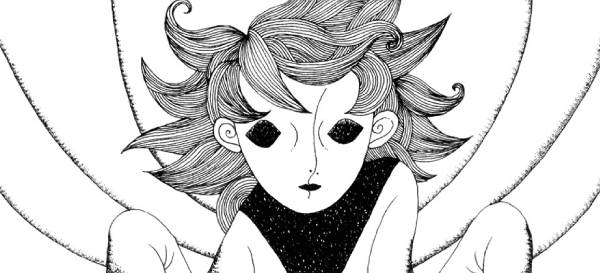
Few creators embody the essence of weird manga like Nishioka Kyoudai. Their art feels alien, cartoonish yet decadent, grotesque yet strangely elegant. Kono Yo no Owari e no Tabi is one of their most peculiar works, a short but unforgettable descent into absurdism and surreal philosophy.
The story follows a nameless man who one day decides to abandon his repetitive life. His route to the station splits into impossible directions, and instead of following logic, he simply keeps walking. From here, his world dissolves into a hallucinatory odyssey. The man becomes a pirate, visits an island of cannibals, wanders a desert and much more.
Nishioka Kyoudai’s visual style amplifies the absurdity. Heavily inked lines, hollow faces, and uneven text placements make the experience feel weirdly unstable.
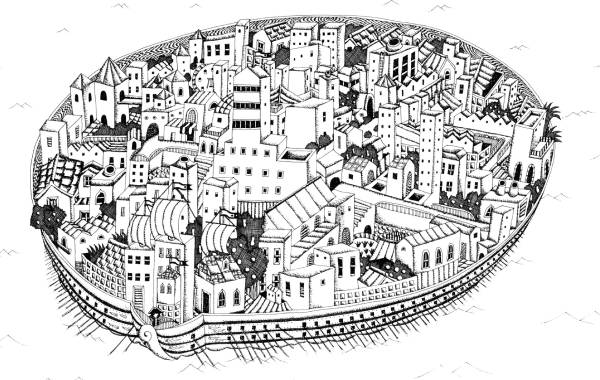
Kono Yo no Owari e no Tabi isn’t meant to be understood in any conventional sense. There’s no clear plot, no character development, and the protagonist isn’t even named. He exists as an empty vessel through which the reader witnesses the meaninglessness of his journey.
Yet beneath all the nonsense lies something oddly profound. The manga reflects on how humans wander through life, often merely pretending to understand its rules. The tone is detached, the humor dry and crude, and the imagery shifts between nightmarish and poetic.
Reading Kono Yo no Owari e no Tabi feels like stepping into a fever dream you can’t understand but can’t look away from. It’s one of those weird manga that lingers in your mind, not because it explains anything, but because it dares to say nothing.
Genres: Weird, Psychological, Philosophical
Status: Completed (Seinen)
29. Chimamire Sukeban Chainsaw

Chimamire Sukeban Chainsaw is pure chaos and utterly unhinged in its execution. Rei Mikamoto’s cult splatterpunk series turns the delinquent schoolgirl trope into an explosion of gore, absurd comedy, and Frankenstein-style weirdness. It’s the kind of weird manga that feels like it was drawn under the influence.
The story follows Geeko, a tough but slightly unhinged schoolgirl armed with a roaring chainsaw. One of her classmates, a mad science prodigy named Nero, has turned the rest of the class into grotesque cyborg-zombies. What follows is a nonstop spree of dismemberment, blood, and absurd punchlines. It’s violent, ridiculous, and gleefully self-aware of its own stupidity.
But Chimamire Sukeban Chainsaw is more than just another gorefest. It’s a weird manga through and through. Every chapter feels right out of a grindhouse movie where parody, horror, and exploitation collide. The tone jumps from splatter horror to slapstick comedy to erotic absurdity without any restraint. Characters pose provocatively mid-battle while fountains of blood spray everywhere.
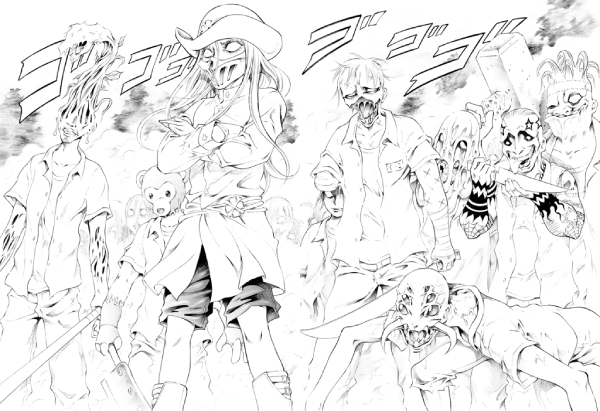
Mikamoto’s art perfectly complements the madness. It’s sketchy, raw, and bursting with energy. The anatomy is off, expressions are exaggerated, and every page feels alive in the worst possible way. Even if it’s trash, it’s stylish trash, a manga that revels in its own bad taste.
Chimamire Sukeban Chainsaw isn’t thoughtful horror, but it doesn’t want to be. It’s a love letter to low-budget, over-the-top excess, the kind of thing you stumble upon late at night wondering why you’re even reading it. And that’s exactly what makes it so unforgettable. It’s gloriously stupid, refuses to ever tone itself down, and that’s exactly why it belongs on this list.
Genres: Weird, Horror, Action, Comedy, Gore
Status: Completed (Seinen)
28. Daidai wa, Hantoumei ni Nidone Suru
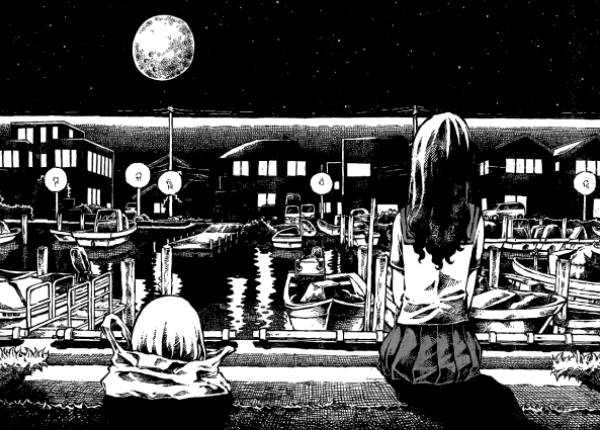
If you ever wanted to read a slice-of-life manga that feels like it was drawn during a fever dream, Daidai wa, Hantoumei ni Nidone Suru is the right choice. Set in a quiet coastal town, this series presents the everyday life of its residents, except nothing is normal. It’s a weird manga that redefines the mundane, where absurdity is simply another part of the world.
Each chapter offers a self-contained vignette: people explode when they fall in love and confess their feelings, a lone girl battles the town’s sea creatures under the delusion she’s repelling an alien invasion, or someone finds a mermaid on the streets and wonders what would happen if she ate her. Every scenario is ridiculous, yet the tone stays calm, as if that’s simply how life works. That’s the manga’s core theme: how completely ordinary the extraordinary becomes.
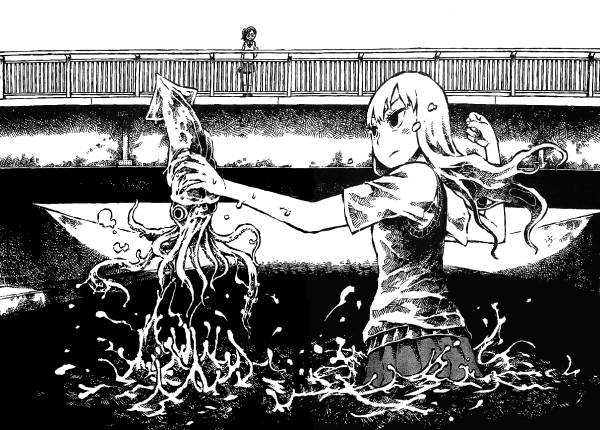
The art softens the chaos with a whimsical touch, blending sketchy realism and simple, almost cute character designs. This contrast makes the surreal feel oddly natural, as if the town operates by an internal logic we can’t quite grasp. It’s the kind of manga that makes you pause and wonder what you’re reading, yet keeps you turning the pages in fascination.
At its core, Daidai wa, Hantoumei ni Nidone Suru doesn’t try to make sense. It’s a playful satire of slice-of-life storytelling, turning normalcy inside out until nonsense starts to feel meaningful. There’s no big mystery, no answers, only the strange comfort of a world that refuses to be understood. For fans of experimental, dreamlike storytelling, this is one of the best weird manga you can find.
Genres: Weird, Comedy, Slice of Life, Sci-Fi
Status: Completed (Shonen)
27. Reiwa Hanamaru Gakuen
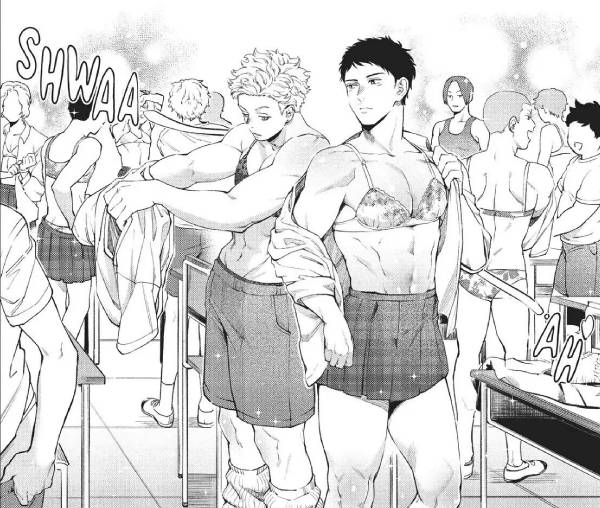
On the surface, Reiwa Hanamaru Gakuen seems like your average slice-of-life school comedy. It follows the daily lives of the students of Hanamaru Academy, an all-girls’ school where they gossip about outfits, compare hairstyles, play sports, and get caught up in over-the-top teenage antics. Each short chapter focuses on a small moment of youth. It’s lighthearted, silly, and seemingly familiar.
And then you realize that something’s terribly, hilariously off. All of these girls are, in fact, enormous, muscular men.
That single visual twist transforms Reiwa Hanamaru Gakuen from a cute school comedy into one of the strangest weird manga ever made. The entire cast looks like they’ve stepped out of a testosterone-fueled 1980s action manga, yet they’re portrayed with the same sparkly innocence as a high school rom-com. Scenes of blushing, skipping, or cheering at sports day suddenly feel like surreal performance art. The effect is so absurd, you can’t help but laugh and stare in disbelief.
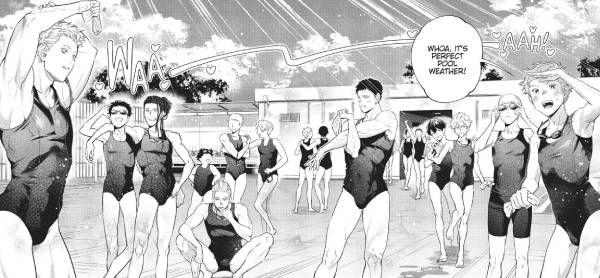
What makes the series work is how straight-faced it plays its own premise. There’s no moment of meta-humor or self-awareness. The author commits completely to the illusion, treating these bodybuilder schoolgirls as if nothing were out of place. The contrast between their macho physiques and bubbly personalities creates a bizarre, almost wholesome charm that’s as funny as it is confusing.
Short, sharp, and genuinely unique, Reiwa Hanamaru Gakuen thrives on that single brilliant gag and never lets it wear out. It’s pure commitment to absurdity and a perfect reminder that manga doesn’t need horror or surrealism to be memorable. Sometimes all it takes is a straight face, a school uniform, and a pair of giant biceps.
Genres: Weird, Comedy, Slice of Life, Parody
Status: Completed (Seinen)
26. No. 5
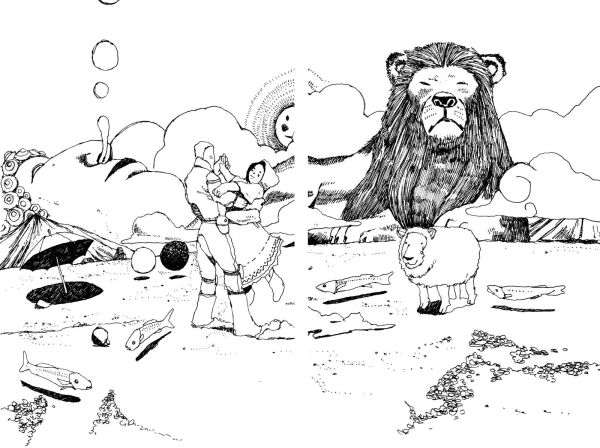
When it comes to surreal worldbuilding and abstract storytelling, few creators rival Taiyō Matsumoto, and No. 5 may be his most cryptic and alien work to date. Set in a future where the world has become 70% desert, the story follows No. 5, a marksman of the elite Rainbow Council, who inexplicably goes rogue. Together with the mysterious Matryoshka, he travels across a scorched and dreamlike wasteland, while hunted by his former comrades, each more bizarre than the last.
On paper, No. 5 is a science-fiction thriller. In practice, it’s a psychedelic riddle. Matsumoto builds a universe that makes sense only to itself, with no exposition, hand-holding, or clear rules. The narrative begins midstream and expects you to keep up, as if you already know everything that came before. Some readers may find this disorienting; others, like me, find it exhilarating. Coded symbolism and tonal shifts are ever-present. Violence, beauty, and absurdity merge into something that can only be described as pure weird manga.

The real power of No. 5 lies in its art. Matsumoto’s distinct style, which is loose, sketchy, and expressive, creates a world that’s gritty and cartoonish at once, often reminiscent of European graphic novels or surreal animation. Even when the plot makes no sense, the art carries the series.
No. 5 isn’t an easy read, and it doesn’t try to be. It thrives on confusion, leaving you unsure whether you’ve missed something profound or nothing at all. Yet that’s the magic of Matsumoto’s work: even when his stories make no sense, they feel meaningful. For readers who love strange, artistic, and visionary manga, No. 5 is a beautiful, incomprehensible masterpiece.
Genres: Weird, Action, Sci-Fi, Psychological, Surreal
Status: Completed (Seinen)
25. Dead End
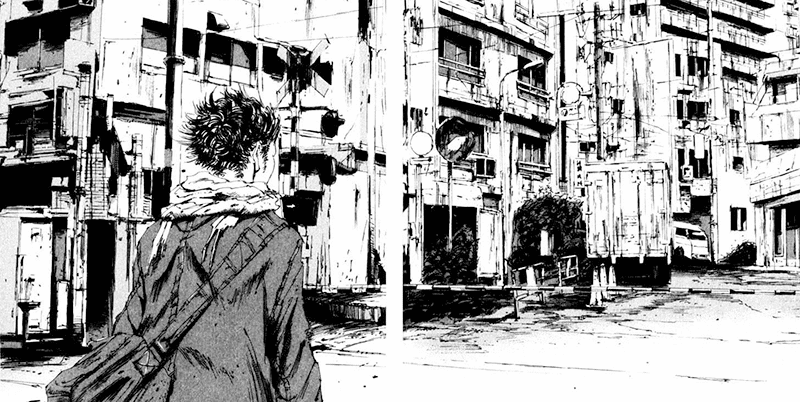
Shōhei Manabe has a gift for turning realism into nightmare, and Dead End might be his strangest creation. What begins as a gritty urban thriller gradually morphs into something far darker and more surreal.
Shirou, a weary construction worker, lives a quiet, blue-collar life until the day he encounters a mysterious, naked woman named Lucy. Within hours, his world collapses: his friends are slaughtered, and a strange man rescues him from an explosion before vanishing. From there, Shirou descends into the underworld, meeting a bizarre cast of misfits who seem connected to his past.
The early chapters read like a hard-boiled crime story, full of smoky bars, grimy backstreets, and tough characters pulling off larger-than-life feats. But as the plot unfolds, things slowly start getting stranger. What began as clashes between underworld thugs slowly becomes battles against supernatural foes, as if the manga changed genres mid-story and turned into a surreal fever dream.
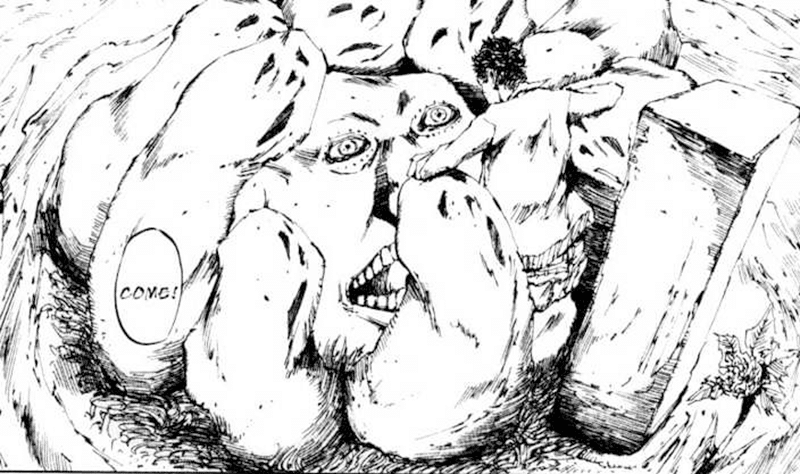
Manabe’s signature art amplifies the strangeness. His worlds are grimy and dense, soaked in dirt and shadows, while his characters are strangely realistic, sometimes even ugly. It’s an aesthetic that rejects polish in favor of grit, and while it takes time to get used to, it makes the weirdness on display feel more tactile and alive.
Dead End is a grim fever dream disguised as a thriller, a story that grows weirder with every chapter. For those drawn to the darker side of manga and surreal works, it’s one of the most original weird manga you’ll ever read.
Genres: Weird, Psychological, Thriller, Supernatural
Status: Completed (Seinen)
24. Fourteen

Kazuo Umezu has always walked a fine line between genius and madness, but Fourteen is where that line disappears completely. It’s part doomsday epic, part fever dream, and one of the most baffling pieces of storytelling ever drawn. Even among weird manga, it stands in a league of its own.
Set in the 22nd century, the story begins at a chicken production factory. One day, what was supposed to be another piece of chicken breast grows into a hyper-intelligent mutant named Chicken George. Outraged by humanity’s cruelty toward nature, he declares war on mankind and vows to remake the planet. That premise alone sounds unhinged, but Fourteen goes much further. Soon we have green babies, Earth’s lush greenery replaced entirely by props, billionaires turning into cosmic horrors, and a T-Rex shaped spaceship.
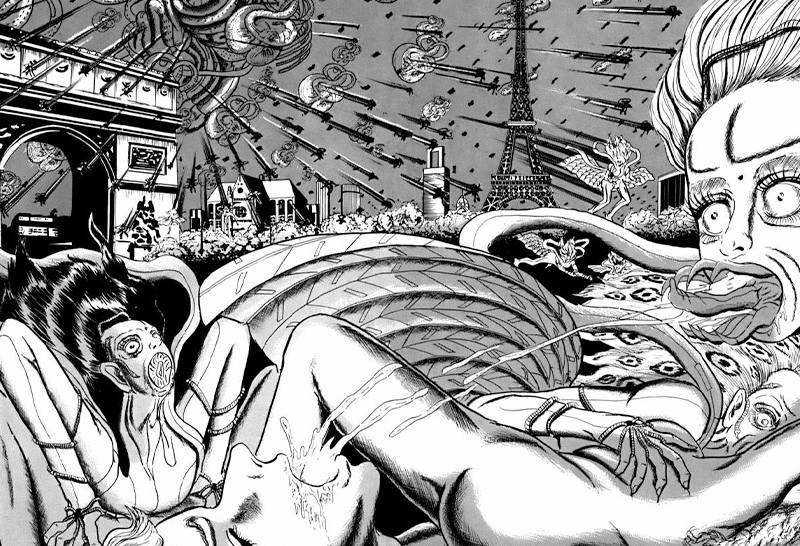
What makes Fourteen unforgettable is Umezu’s absolute commitment. There’s no irony, no tongue-in-cheek humor. Instead, every absurd event is delivered with total sincerity. The tone stays dead serious even as the narrative collapses into pure nonsense. The result feels like watching the most ridiculous end of the world straight out of a fever dream.
Umezu’s vintage art only heightens the weirdness. His dramatic faces, heavy contrasts, and stiff poses make every page look like a 1970s science-fiction melodrama gone completely off the rails. It’s ugly, loud, yet strangely addicting.
Fourteen isn’t logical or even coherent, but it’s impossible to put down. Each chapter somehow outdoes the previous in sheer insanity. Ridiculous and unintentionally hilarious, it’s a manga that shouldn’t work but becomes unforgettable precisely because it doesn’t.
Genres: Weird, Horror, Sci-Fi, Apocalypse
Status: Completed (Seinen)
23. Gyo
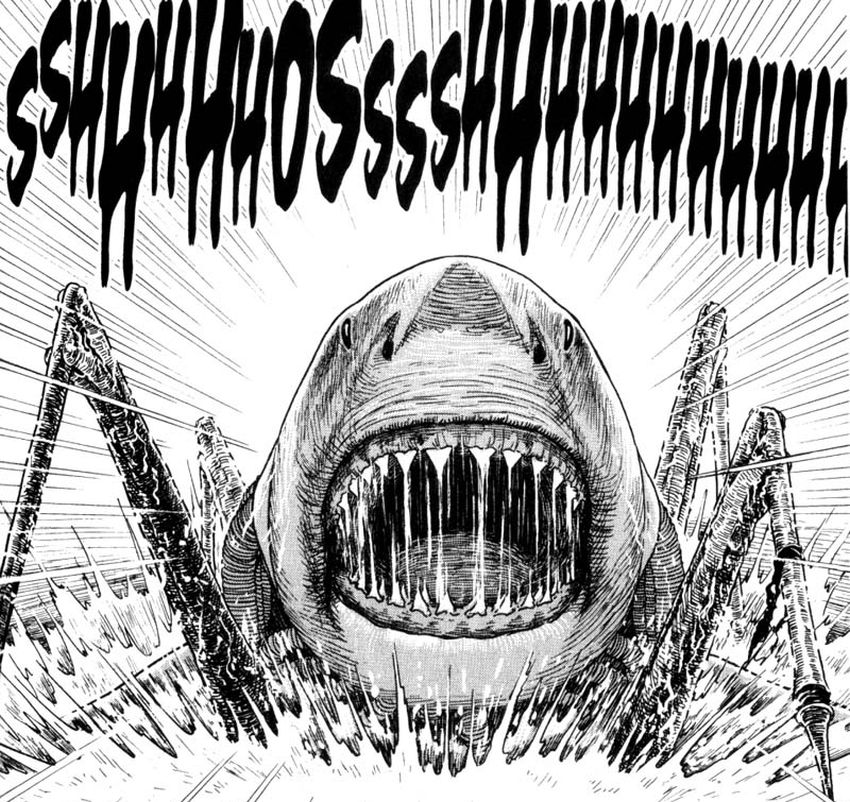
When people talk about Junji Ito, they usually mention Tomie or Uzumaki. But for sheer strangeness, nothing compares to Gyo. It’s a manga so bizarre and illogical that it feels almost like a joke, while also being one of the most disturbing horror manga of all time.
The story begins innocently enough. Tadashi and his girlfriend Kaori are on vacation when she starts complaining about a terrible smell. The source turns out to be a dead fish, one skittering through their apartment on mechanical legs. From that moment, the world spirals into insanity. Sharks, squids, and every imaginable sea creature march out of the ocean, each attached to the same strange insect-like machinery. Tokyo is soon flooded, not with water, but with hordes of legged fish spewing a death stench that engulfs the living.
This premise alone makes Gyo unforgettable. Ito’s imagination runs wild here, crafting some of the most grotesque and absurd scenes in all of manga. The mechanical appendages, the bloated corpses, and endless waves of crawling sea life combine into a spectacle reminiscent of an apocalyptic comedy. It’s horrifying, yes, but also so weird it borders on absurd.
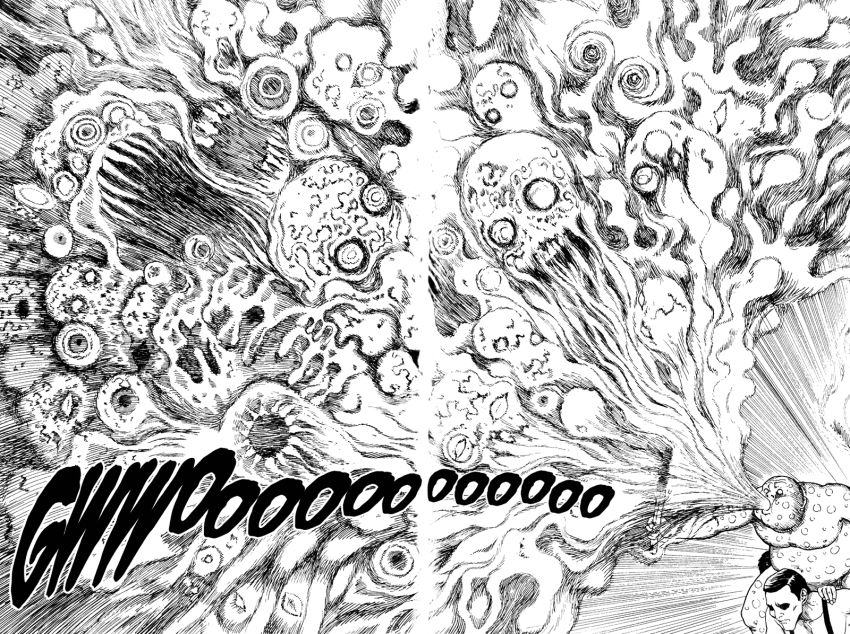
When Ito tries to explain the phenomenon, things get even stranger, though not in a good way. The origin of the robotic legs involves a convoluted experiment with biological gas and lost wartime machinery. It’s so nonsensical that it nearly derails the entire story.
Visually, Gyo is peak Ito: intricate linework, suffocating atmosphere, and nightmarish creature design. The infamous circus chapters stand out, showcasing some of Ito’s most intricate and disturbing page spreads. Even though the plot collapses under its own weight, the art alone keeps Gyo captivating throughout.
Equal parts disgusting, imaginative, and absurd, Gyo remains one of the most iconic weird manga ever made.
Genres: Weird, Horror, Sci-Fi, Apocalypse
Status: Completed (Seinen)
22. Lychee Light Club
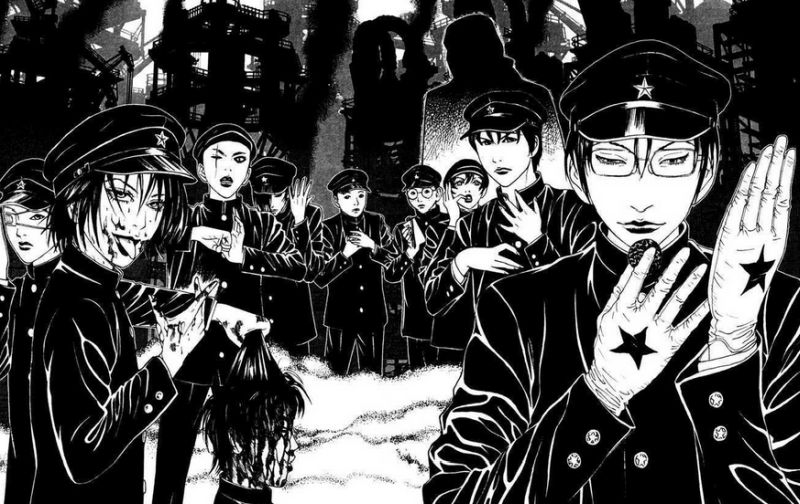
Lychee Light Club is part grotesque allegory, part surreal stage play, and a full-on fascist fever dream drenched in adolescent obsession. Usamaru Furuya adapts his own underground theater piece into one of the strangest and most visually disturbing manga ever created.
The story follows the members of the Hikari Club, a secret society of middle school boys. Idolizing beauty, intellect, and power, they build a humanoid robot named Lychee and program it to kidnap beautiful girls. What begins as an eccentric schoolboy fantasy quickly descends into ideological collapse. Their leader, Zero, becomes paranoid and despotic, turning their pursuits into violence and madness.
It’s an absurd premise, but Furuya presents it with total seriousness. The result lies somewhere between tragedy and grotesque, fascist parody, an adolescent power fantasy warped by sexual repression and cruelty. Dressed in military-style uniforms, the boys perform their atrocities like actors in a dark operetta, echoing the manga’s stage play origins.
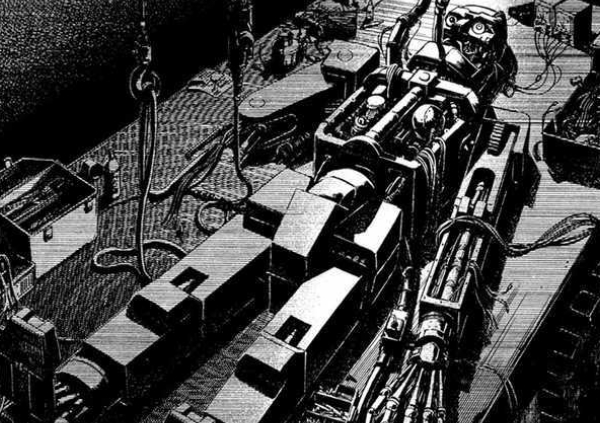
Furuya’s art, reminiscent of that of Suehiro Maruo, reflects this theatrical sensibility. Every panel feels like a stage scene, withsymmetrical compositions, exaggerated expressions, and elegant, almost erotic details that clash with the brutality on display.
As the story unravels, so do the boys’ minds. Their unity fractures, their desires blur, and their once-pure ideals collapse into madness and self-destruction. It’s horrifying, but also deeply surreal, essentially an absurdist commentary on ideology, and the way innocence vanishes under pressure.
Lychee Light Club is a disturbing and unforgettable work, a demented opera of youth, power, and fascism presented as an adolescent fever dream.
Genres: Horror, Psychological, Sci-Fi, Thriller, Romance
Status: Completed (Josei)
21. Ashizuri Suizokukan
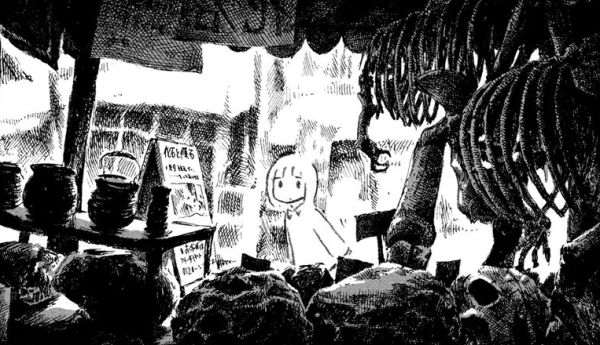
A girl wanders through a world that may or may not exist. That’s the simplest way to describe Ashizuri Suizokukan, a quiet, surreal collection of vignettes by panpanya. Each short story feels like a half-remembered dream, where the everyday and the impossible coexist without explanation.
The stories follow a curious little girl named Watashi as she explores strange corners of her world. One day, she visits a shopping district where you can buy anything that ever existed, past or future. Another day, she stumbles into a museum that’s constantly under construction, so everything inside always feels new. In another, she wanders through a city of the dead, where friendly monsters trade kindness for pieces of baguette. None of those moments are ever explained, and they don’t need to be.
What makes Ashizuri Suizokukan so weird isn’t just its content; it’s how normal it all feels. The bizarre is presented with the calm rhythm of daily life, and Watashi never questions what’s happening around her. She accepts it with the innocent logic of a child, walking through dreamlike landscapes as if they were ordinary streets. The result is a sense of surreal comfort, similar to observing the logic of dreams through eyes too young to be afraid.
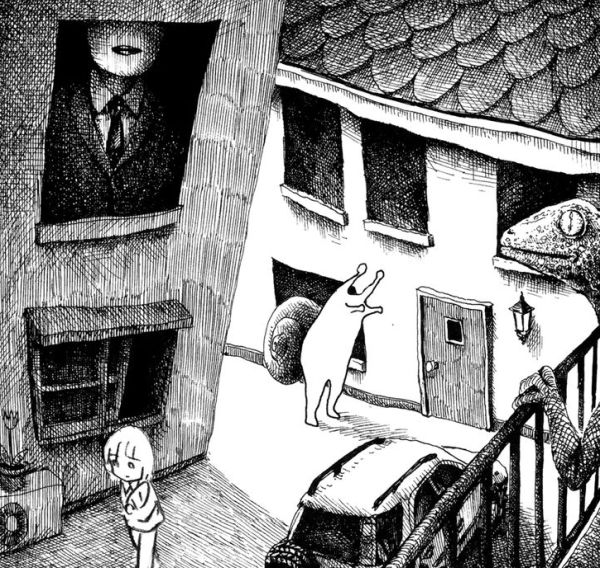
Panpanya’s art perfectly mirrors the tone. The characters are drawn in a simplistic, almost doodle-like style, while the backgrounds are dense, realistic, and unsettlingly beautiful. This contrast makes the world feel slightly off, as if reality itself is out of focus. His shading is full of delicate pencil textures, stark whites, and intricate linework, which create an atmosphere that feels nostalgic and alien at once.
Every story in Ashizuri Suizokukan feels open to interpretation. Some read like fables, others like meditations on perception and memory. But collectively, they form a portrait of quiet strangeness, and a place where dreams and reality blend seamlessly together.
Ashizuri Suizokukan isn’t just a weird manga, but a gentle glimpse into a quiet, dreamlike world.
Genres: Weird, Slice of Life, Fantasy, Surrealism
Status: Completed (Seinen)
20. Keep on Vibrating
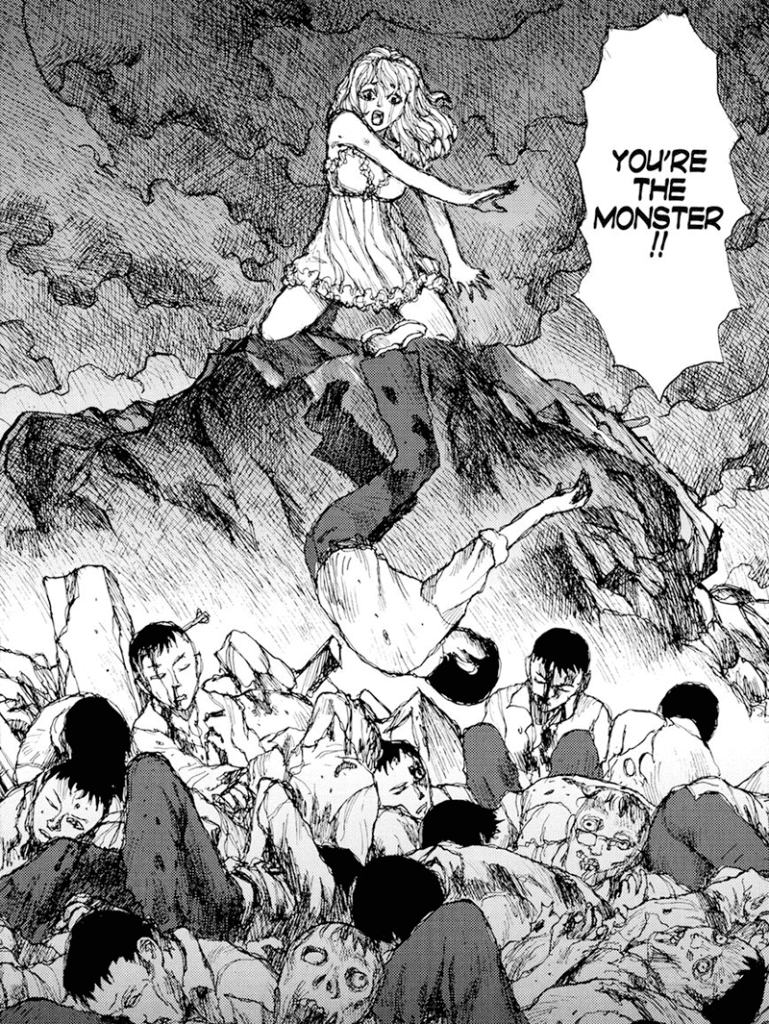
Few manga capture pure artistic chaos quite like Keep on Vibrating. Created by Jiro Matsumoto, one of the most provocative and transgressive voices in underground manga, this collection pushes every conceivable boundary: sexual, psychological, and aesthetic. It’s messy, explicit, and undeniably strange, yet it’s also the perfect entry point into Jiro Matsumoto’s body of work.
Instead of a single storyline, Keep on Vibrating offers a series of loosely connected vignettes, each diving headfirst into surrealism and degeneracy. The opening chapter alone feels like a fever dream of sex, gore, and madness, setting the tone for everything that follows. From there, Matsumoto leads readers through derelict back alleys and war-torn towns while the characters populating them talk as if the world around them were entirely normal.
At times, it’s impossible to tell what’s real and what’s not, and that’s entirely the point. Most of the seven stories unfold without logic or clear resolution. Instead, they feel like glimpses into mad dreams recorded for others to experience.
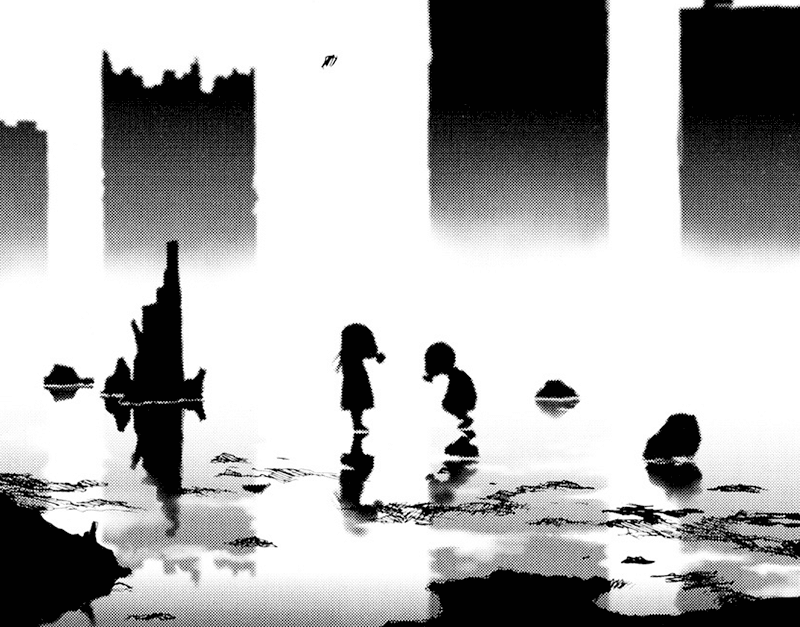
Matsumoto’s art perfectly reflects this instability. His gritty, sketchy linework makes every panel feel raw and unstable. His style shifts between grotesque realism and abstract absurdity, heightening the sense of disorientation.
The manga often feels like shock for shock’s sake, filled with explicit sex, brutal violence, and taboo-breaking excess. Yet beneath that surface lies something more deliberate, a strange rhythm that gives its insanity a hypnotic, pulsating energy.
The result is a singularly weird experience, a raw, feverish exploration of the human condition through the lens of erotic absurd. Keep on Vibrating isn’t just disturbing, but surreal, transgressive, and psychedelic all at once, and that’s the genius of it.
Genres: Weird, Psychological, Drama, Erotica
Status: Completed (Shonen)
19. BIBLIOMANIA
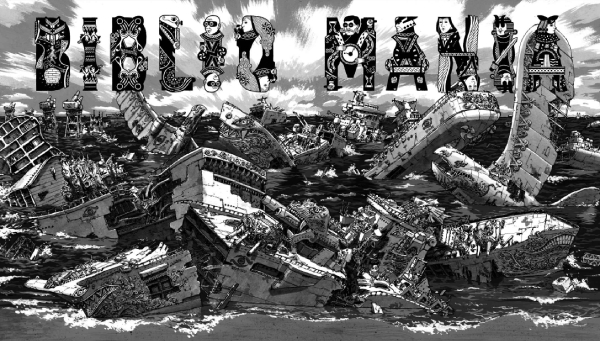
BIBLIOMANIA is a short, feverish descent into one of the strangest, most visually striking worlds ever drawn in manga. It’s a surreal reimagining of Alice in Wonderland, filtered through decay, metamorphosis, and dream logic.
The story begins with a girl named Alice, who awakens in room 431 of a crumbling mansion. A talking serpent explains that if she leaves, her body will rot away. Naturally, she ignores the warning and begins a journey through a labyrinth of rooms, each stranger and more disorienting than the last.
Every chamber of this mansion feels like its own miniature world: grotesque laboratories, endless libraries, birdlike monsters, masked heroes, and shifting corridors. The deeper Alice ventures, the more her body changes. It melts, transforms, and loses its human shape as if the mansion itself were consuming her. This tightening spiral of metamorphosis and identity loss is both nightmarish and mesmerizing.
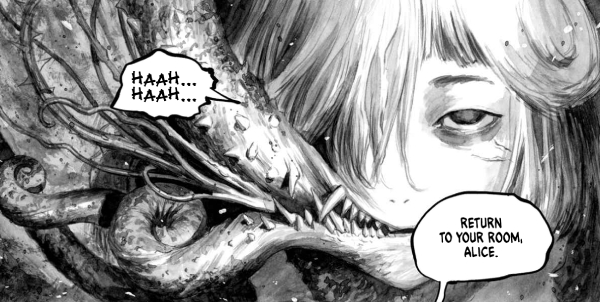
What truly makes BIBLIOMANIA so strange isn’t just its imagery, but its structure. The manga unfolds like a dream without rules, each page more abstract and ornate than the last. The art is breathtakingly detailed, and every panel is alive with structures of ruin and beauty. Alice’s cute, doll-like design clashes violently with the decaying madness around her, creating a deliberate, deeply unsettling contrast.
And then, in its final chapter, BIBLIOMANIA reveals a framing narrative that changes everything. It’s a meta twist that makes the entire manga even stranger.
At under a hundred pages, BIBLIOMANIA is short, elegant, and impossible to categorize. It’s not just a dark fairytale, but an artistic exercise in transformation and decay, more art book than coherent story. A true showcase of what a weird manga can be: haunting, beautiful, and almost entirely incomprehensible.
Genres: Weird, Horror, Fantasy, Psychological, Drama
Status: Completed (Seinen)
18. Wakusei Closet

Wakusei Closet is a story that begins as a dream and unravels into a cosmic nightmare.
Aimi, an ordinary student, finds herself transported to an alien world whenever she falls asleep. There, she meets Flare, another girl trapped in this strange, shifting world. The two of them become fast friends as they try to understand the strange rules of the planet and the terrifying creatures that inhabit it. The result is a surreal mix of intimacy, horror, and cosmic mystery.
On the surface, Wakusei Closet feels whimsical and delicate, but the illusion doesn’t last long. Soon, the dream world bleeds into reality. Aimi’s classmate is devoured by a monstrous serpent in the waking world and later reappears in the dream as a grotesque, twisted caricature of himself. From that moment on, the manga abandons all pretense of normalcy and plunges into pure surrealism. It becomes a story filled with parasitic entities, body transformations, and cosmic unease drawn from nightmare logic rather than coherent reality.

What makes Wakusei Closet such a standout weird manga is its balance of innocence and horror. The art is soft and rounded, yet what unfolds is deeply disturbing and alien. The contrast between its moe aesthetic and apocalyptic imagery gives it a haunting, unforgettable energy.
And just when you think you’ve understood everything, Wakusei Closet delivers one of the most mind-boggling twists in modern manga, a revelation that reframes the entire story.
Beautiful and deeply surreal, Wakusei Closet is the kind of weird manga that lingers long after you finish it. It’s both tender and horrifying, a story about friendship, fear, and dreams turned into nightmares.
Genres: Weird, Fantasy, Psychological, Horror, Shojo Ai
Status: Completed (Seinen)
17. Jagaaan
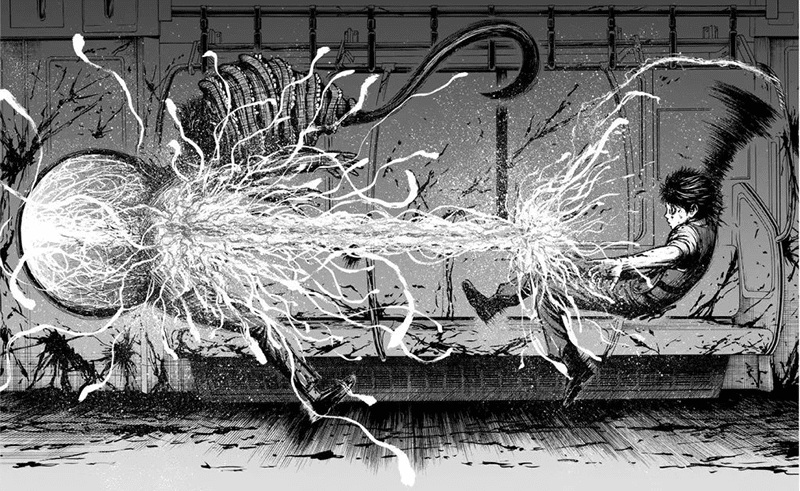
Jagaaan is one of those series that makes you stop mid-page and wonder what the hell you’re reading. It’s grotesque, hilarious, violent, and deeply surreal, the kind of chaos that defines a truly weird manga.
The story begins with an ordinary police officer named Jagasaki, a man whose life feels empty and repetitive. That changes when a rain of frogs falls over Tokyo. These creatures infect humans, feeding on repressed desires and transforming them into grotesque monsters called fractured humans. Those who resist the corruption gain strange powers that let them to fight back. Jagasaki is one of them, now able to shoot explosive blasts from his fingers.
From there, the manga only gets stranger. People mutate into nightmarish parodies of their own vices: lust, greed, rage, and despair. These transformations are pure body horror, disgusting, fascinating, and among the best monster design in modern manga.
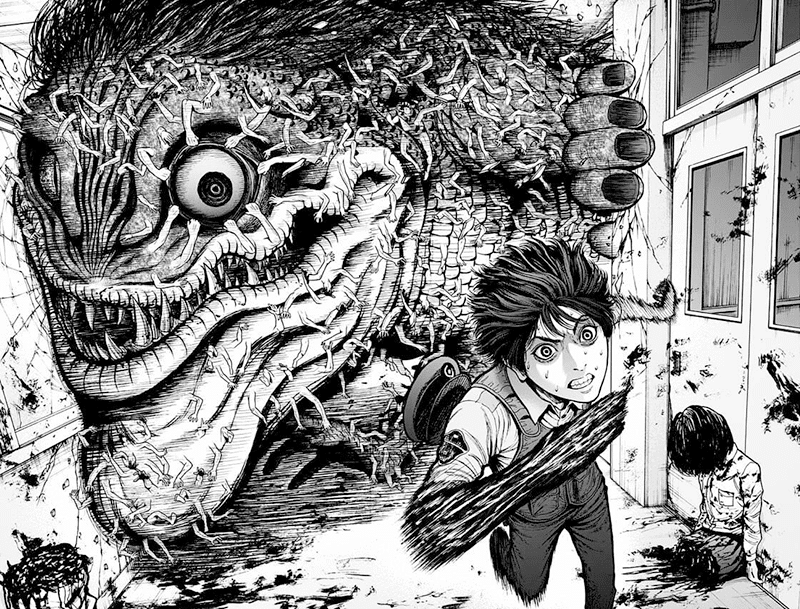
Kaneshiro’s approach to storytelling is as wild as his characters. The manga is packed with eccentric characters, dark humor, and unapologetically absurd scenarios. One chapter explores depression, while the next surreal eroticism. It’s grotesque, satirical, and darkly funny in the most uncomfortable way. At times, though, the manga goes too far, turning grotesque imagination into outright degenerate excess.
What makes Jagaaan such a standout weird manga isn’t its bizarre premise alone, but the way it fuses chaos with character. Jagasaki is a deeply flawed protagonist, cynical, self-loathing and slowly unraveling. His journey from bored officer to monstrous anti-hero mirrors the manga’s continuous descent into madness.
Equal parts edgy and entertaining, Jagaaan is a grotesque spectacle of transformation and desire, depraved, brutal, and fascinating in its madness.
Genres: Weird, Action, Horror, Supernatural, Comedy
Status: Completed (Seinen)
16. JoJo’s Bizarre Adventure: Part 6 – Stone Ocean
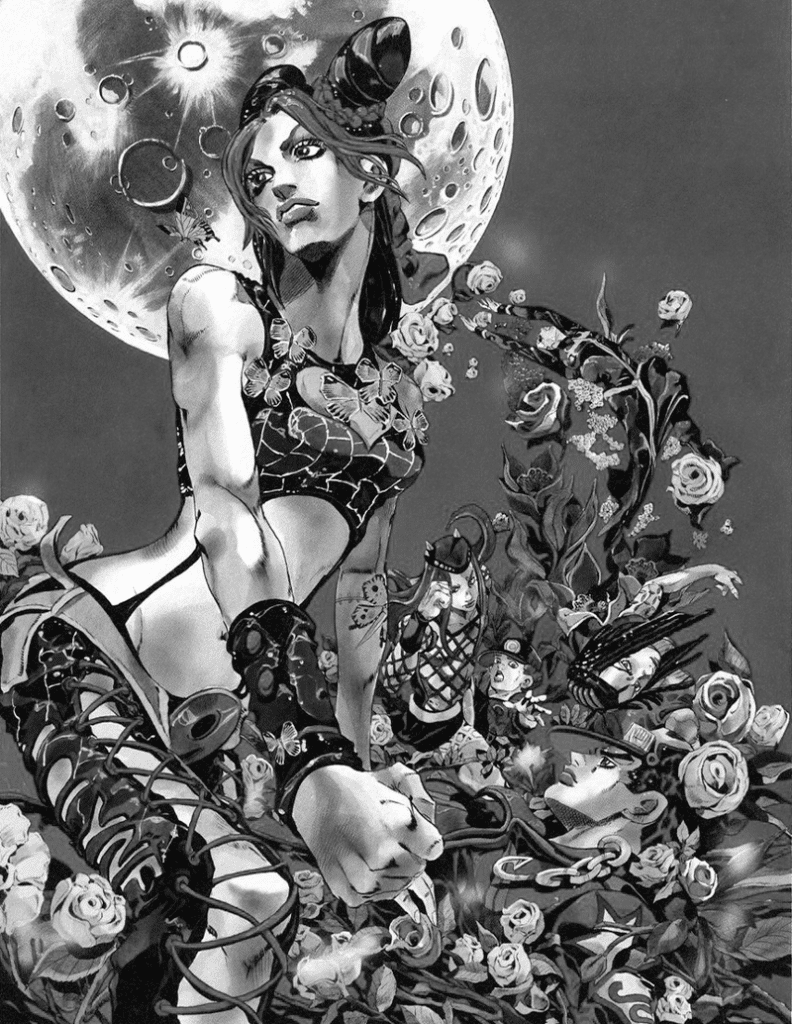
Hirohiko Araki’s JoJo’s Bizarre Adventure has always lived up to its title. From vampire supermen and Nazi cyborgs to psychic manifestations of the soul, JoJo has always been a weird manga. Yet, it’s Part 6 that takes this weirdness to its absolute peak.
Set in Florida, Stone Ocean follows Jolyne Cujo, the daughter of Jotaro Kujo, who finds herself framed for murder and locked away in Dolphin Street Jail. That’s where the story truly begins. Jolyne awakens her Stand, Stone Free, a power that lets her unravel her body into strings. Soon, she finds herself caught in a battle against one of Dio Brando’s fanatical disciples.
What makes this part so remarkable isn’t just its flamboyant cast or stylish action sequences, but the sheer inventiveness and absurdity of its ideas. Stands have always been strange, but in Stone Ocean they often border on near incomprehensible. One Stand not only controls the weather but turns people into snails; another operates on the principle of Feng Shui; and yet another one rewrites causality itself. Araki gleefully pushes past the boundaries of logic, crafting encounters that feel more like mad riddles than battles.
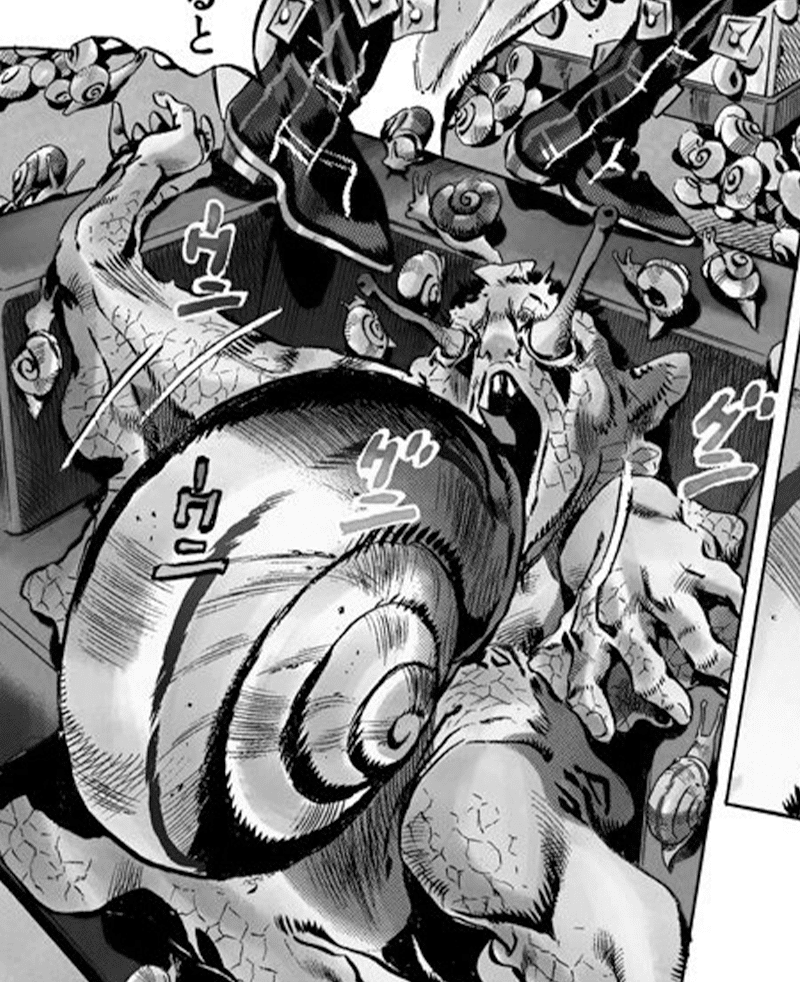
As the story unfolds, Stone Ocean gradually slips from the tangible into the abstract, culminating in one of the strangest endings in all of manga. It’s bold, divisive, and unforgettable, the kind of ending only Araki would dare attempt.
JoJo’s Bizarre Adventure: Part 6 – Stone Ocean marks the moment Araki fully embraced surrealism, creating the series’ strangest and most daring entry. For readers drawn to visually inventive stories and mind-bending battles, this is one of the most iconic weird manga ever made.
Genres: Action, Supernatural, Psychological, Surreal
Status: Completed (Shonen)
15. Franken Fran

Franken Fran is a masterpiece of grotesque imagination. It’s a weird manga stitched from equal parts comedy, horror, and pure medical madness. Created by Katsuhisa Kigitsu, it tells the story of Fran Madaraki, a stitched-up artificial girl created by a legendary surgeon. When her creator disappears, Fran takes over his laboratory, offering surgeries to anyone desperate enough to ask.
Each chapter stands alone, and every story begins with a simple request: to cure an illness, to be beautiful, or to gain certain abilities. What follows is always unexpected. Fran’s genius knows no limits, but her morality is questionable at best and nonexistent at worst. People leave her lab alive but rarely unchanged: some are reborn as human-insect hybrids, others receive horrific improvements that do more harm than good, and some are cloned into oblivion.
The result is a series that’s endlessly inventive, funny, and deeply disturbing. Franken Fran balances its surgical horror with absurd humor. A story might make you squirm on one page, and laugh on the next. Fran herself makes it all work. Cheerful, polite, and completely detached from the chaos she causes, she treats every disaster as a curiosity. Her optimism in the face of the horrors of her own making gives the manga its strange, surreal charm.
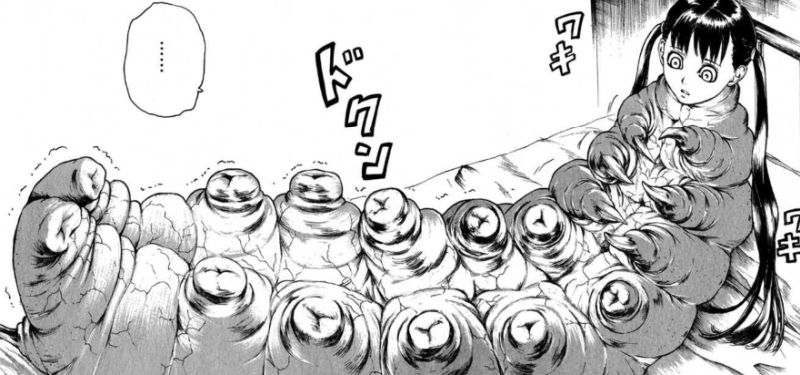
Visually, Kigitsu’s art is sharp and clinical, every medical procedure drawn in vivid, unsettling, and realistic detail. Yet the tone is far from grim. The world of Franken Fran feels almost cartoonishly bright, even when its characters are literally falling to pieces. It’s this unsettling contrast between cheerfulness and horror that makes it one of the most unique and weird manga ever created.
And yet, not every story fully lands. Franken Fran’s chapters occasionally switch from dark medical comedy to almost over-the-top slapstick parody, and while the former is fantastic, the latter can be quite jarring.
At its core, Franken Fran is a manga centering on curiosity, whether scientific, moral, and human. It asks how far people will go to fulfill their desires, then pushes that question to hilarious extremes. Sick, smart, and strangely endearing, Franken Fran remains one of the best dark comedies in manga.
Genres: Weird, Horror, Science / Medical, Sci-Fi, Comedy
Status: Completed (Shonen)
14. The Legend of Koizumi
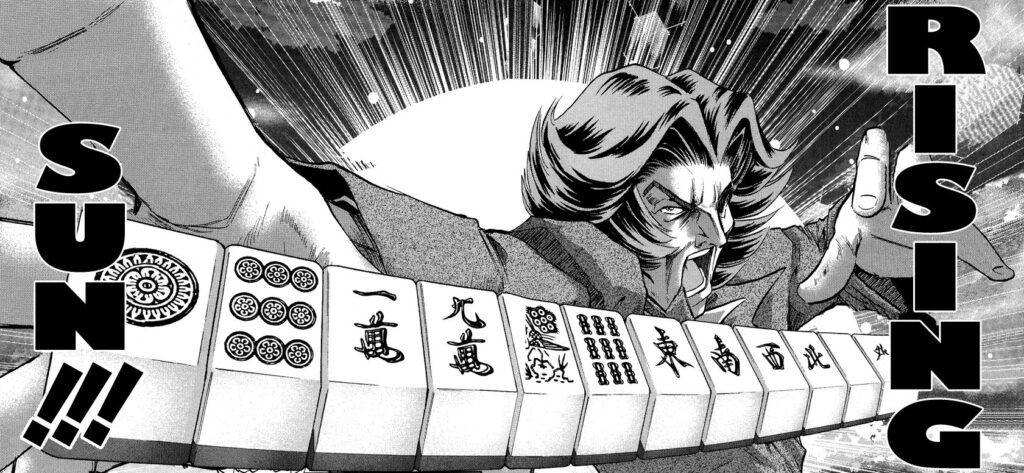
What if global politics were decided not by war or diplomacy, but through high-stakes mahjong battles? That’s the premise of The Legend of Koizumi, a manga so outrageously absurd that it transcends parody entirely. Few series capture the spirit of weird manga as perfectly as this one.
The story features an all-star cast of real political figures: Junichiro Koizumi, George W. Bush, Vladimir Putin, Pope Benedict XVI, and even Adolf Hitler. The manga starts off tame, but quickly escalates into full-blown madness: the Nazis are hiding on the moon, plotting world conquest. Thus begins a mahjong tournament to decide the fate of the world, and from there, things only get more insane. The Pope recreates Genesis with divine tiles, and Hitler transforms into the Legendary Super Aryan complete with golden hair and an aura worthy of Dragon Ball Z.
Every match plays out like a shonen battle, full of finishing moves, transformations, and power levels. Each player has a special move of their own. We bear witness to Putin’s Siberian Express, Wagner’s Ring of the Nibelungen, and Koizumi’s patriotic Rising Sun attack. Every panel is drawn with total sincerity, as if the fate of the world truly depends on the next winning hand.
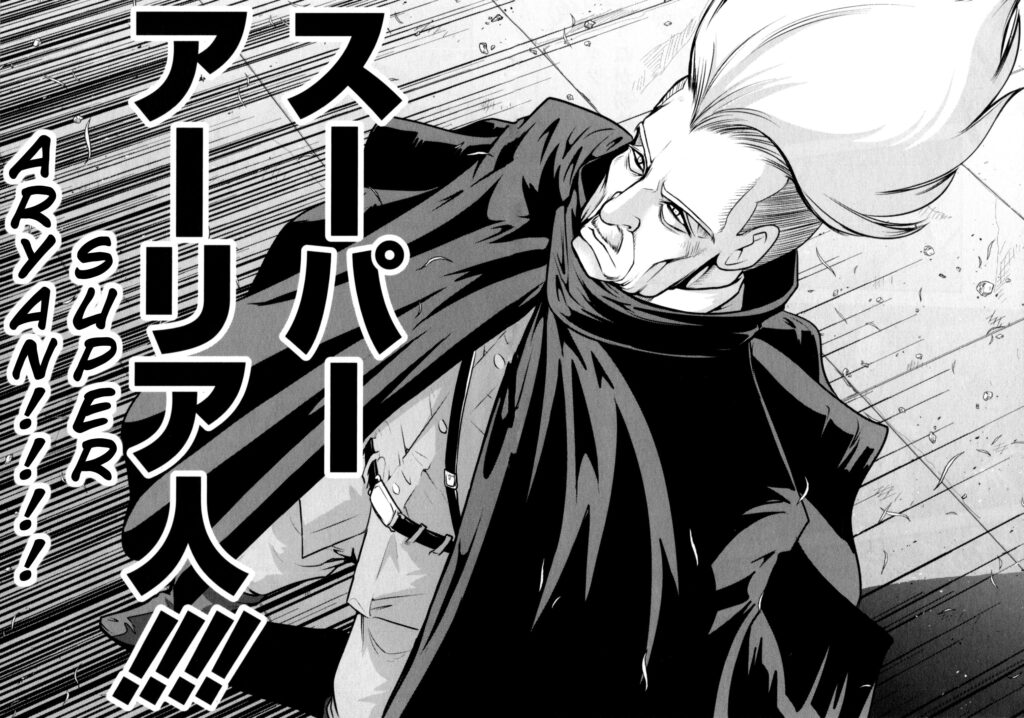
What makes The Legend of Koizumi so gloriously weird is how seriously it takes its own lunacy. There are no fourth-wall breaks or hints of self-awareness. Instead, it dives headfirst into its own delusion and becomes one of the most unironically epic parodies ever drawn. It’s beautiful in its stupidity, and that’s exactly what makes it so funny.
Despite the chaos, the art is bold, dramatic, and surprisingly polished. Every character is instantly recognizable, from Putin’s stoicism to the Pope’s divine fury. And somehow, against all odds, it works.
The Legend of Koizumi is a hidden gem of political absurdity, a manga you read once and never forget. Ridiculous, cringy, and completely sincere, it’s a must-read for fans of surreal satire and weird manga that push absurdity to new heights.
Genres: Weird, Comedy, Political, Parody, Sports
Status: Completed (Seinen)
13. Dorohedoro
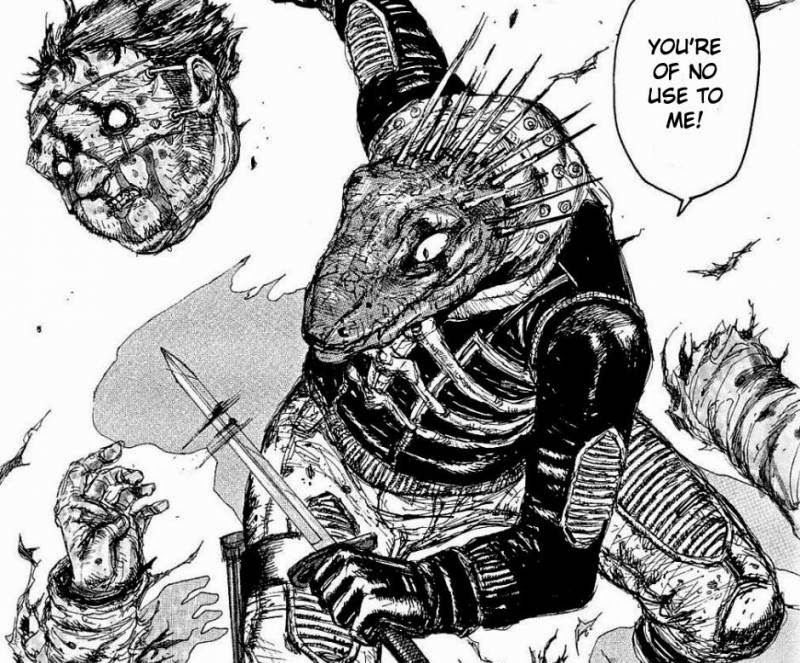
Few manga embody pure creative chaos quite like Dorohedoro. Written and illustrated by Q Hayashida, it’s a weird manga that lives entirely in its own category, blending apocalyptic nightmare, dark comedy, and surreal urban fantasy.
The story takes place in Hole, a filthy, industrial city where the streets run thick with blood and magic. Sorcerers from another dimension use the city’s residents as test subjects for their spells, transforming and mutilating them for sport. One such victim is Kaiman, a man with the head of a reptile and no memory of who he once was. Alongside his friend Nikaido, he hunts sorcerers in search of the one who cursed him.
The premise alone is bizarre, but Dorohedoro only grows stranger from there. There’s a talking cockroach-man, sorcerers who turn people into mushrooms, and a hammer-wielding killer whose magic can dismember people without killing them. Hayashida’s world makes no attempt at logic. Instead, it’s a melting pot of the grotesque and the whimsical, the violent and the absurd.
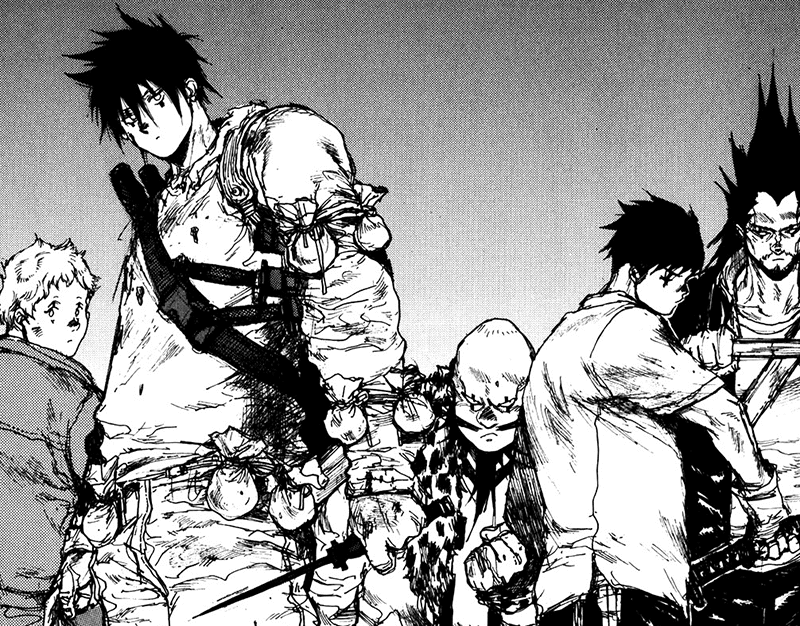
What makes Dorohedoro such a uniquely weird manga isn’t just the setting or the characters, but the tone. Despite the gore, dismemberment, and body horror, Dorohedoro feels weirdly cozy. One chapter might show them eating gyoza, the next has them fighting for their lives. It’s horror delivered with a grin; as brutal as it is hilarious and heartwarming.
Q Hayashida’s scratchy, textured art perfectly captures both the filth and vibrancy of Hole. The city feels alive, claustrophobic, and weirdly beautiful. Her attention to grime and surreal detail makes every panel as terrifying as it is charming. The Sorcerer’s World, by contrast, is a gothic fever dream, one of the most vibrant settings in manga history.
Dorohedoro is a surreal masterpiece of brutal violence and grotesque charm. Yet it also makes you care deeply for its lunatics, monsters, and mutants, standing tall as one of the most distinctive and brilliantly weird manga ever made.
Genres: Weird, Dark Fantasy, Horror, Action, Comedy
Status: Completed (Seinen)
12. Dementia 21
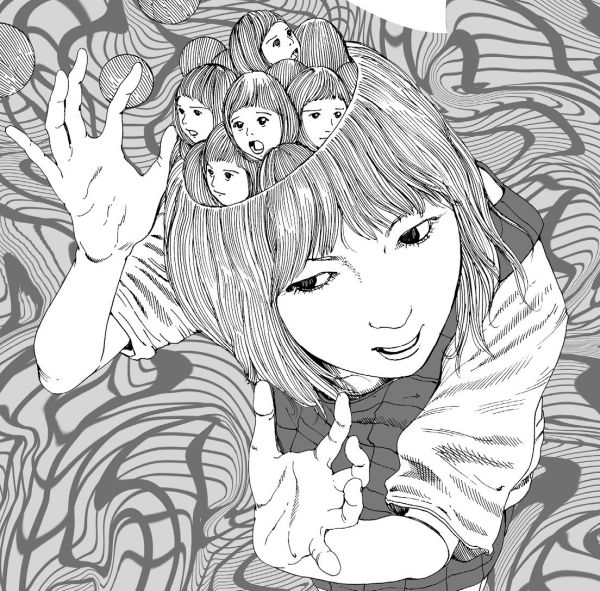
At first glance, Dementia 21 sounds like a slice-of-life manga about caregiving. Don’t be fooled, though. After all, this is a manga by Shintaro Kago, one of the most twisted and inventive minds in manga. He turns the story of a home-care nurse into one of the strangest, funniest, and most unpredictable manga you’ll ever read.
Each chapter follows Yukie Sakai, a relentlessly upbeat caregiver assigned to increasingly bizarre patients. One day, she’s tending to a washed-up superhero, the next, she’s visiting a futuristic nursing home, and then she’s battling competitors in a brutal elder-care contest. Every story spirals into absurdity, turning ordinary caregiving into an unhinged nightmare.
Like much of Kago’s work, Dementia 21 blurs the line between genius and madness. There’s no central plot, only surreal vignettes filled with deadpan humor, social critique, and imaginative chaos. The tone swings wildly between darkness and absurd humor. One page satirizes Japan’s aging population, the next plunges you into a grotesque dystopia. It’s uncomfortable, fascinating, and consistently hilarious.
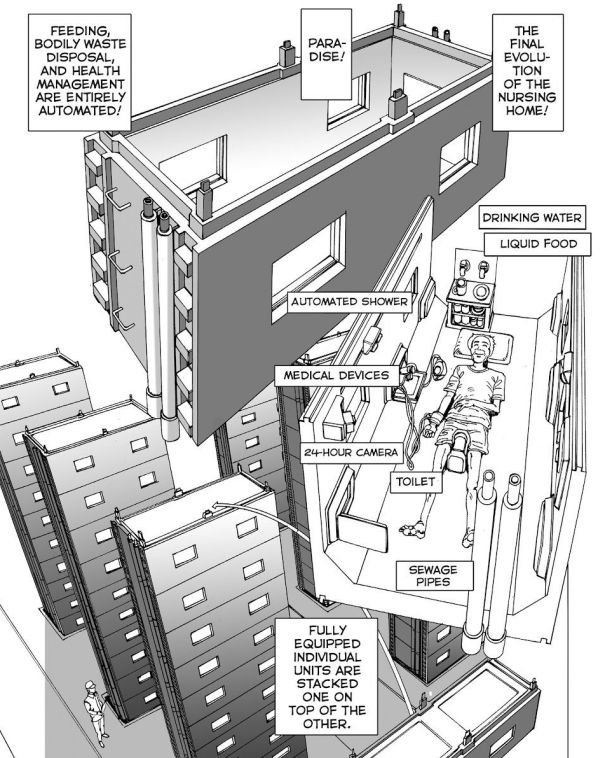
Kago’s trademark weirdness is on full display: ultra-detailed art, warped perspectives, and outrageously exaggerated characters. Yet compared to his more extreme works, Dementia 21 feels oddly accessible. Here, horror gives way to absurdist comedy, and violence is replaced by the cruelty of the elder care system and modern technology.
There are still flashes of Kago’s signature darkness, including sexual undertones, twisted humor, and satirical brutality, but they are toned down in favor of biting social commentary. Beneath all the insanity, the manga touches on aging, loneliness, class, and human dignity in a world that stopped caring.
Across just two volumes, Dementia 21 is both a brutal critique of modern society and a delirious comedy masterpiece. Each chapter outdoes the last in sheer absurdity, leaving you laughing, cringing, and questioning your sanity all at once. For Kago at his most playful and inventive, Dementia 21 is a must-read.
Genres: Weird, Comedy, Satire, Psychological
Status: Completed (Seinen)
11. Onani Master Kurosawa

Few series embody the phrase “don’t judge a book by its cover” quite like Onani Master Kurosawa, literally ‘Masturbation Master Kurosawa’. At first glance, it sounds like nothing more than a perverted joke. But beneath the shocking title lies one of the most heartfelt and surprisingly mature stories in all of weird manga.
Kakeru Kurosawa is your typical high school loner: quiet, cynical, and detached from his classmates. His one secret is sneaking off to an empty bathroom after school to indulge in his private ritual. When he witnesses his shy classmate Aya Kitahara being bullied, he takes revenge in his own twisted way by using his private ritual as an instrument of justice.
It’s an absurd premise that plays out with total seriousness. The early chapters parody Death Note’s self-serious tone, with Kurosawa grinning manically and declaring that everything went according to plan, as if his absurd acts were part of a grand crime drama. It’s hilarious, awkward, and undeniably strange, the perfect setup for one of the weirdest manga ever made.

But what makes it truly special is how it evolves. Gradually, the story transforms from a dark comedy into a deeply emotional coming-of-age drama. Kurosawa, once a perverted anti-hero, is forced to face the consequences of his actions. What begins as masturbation-fueled revenge becomes a raw human story about guilt, forgiveness, and self-acceptance.
By the end, Onani Master Kurosawa sheds all traces of its early shock value and becomes something genuinely beautiful, a story about growing up, understanding others, and finding redemption.
It’s bizarre, awkward, and sometimes ridiculous, but that’s exactly what makes it brilliant. Beneath all the absurdity lies one of the most sincere and emotionally powerful school dramas ever written. A masterpiece of tonal transformation, Onani Master Kurosawa proves that even the strangest ideas can become something unforgettable.
Genres: Drama, Psychological, School Life, Satire
Status: Completed (Shonen)
10. Homunculus
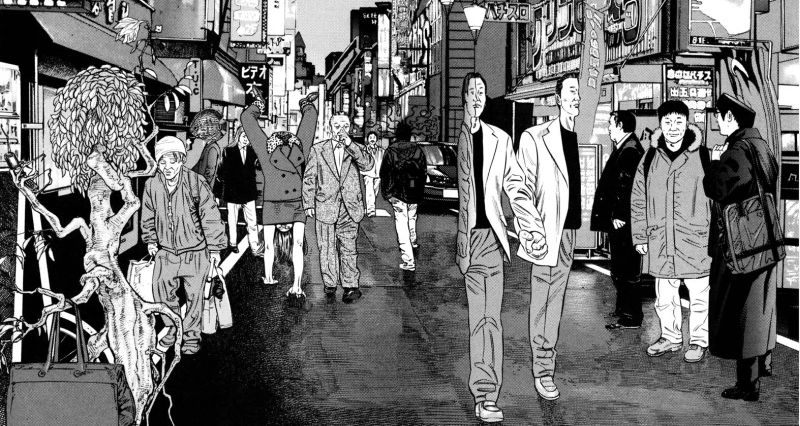
Few manga capture the unsettling overlap between science, psychology, and madness quite like Homunculus. Created by Hideo Yamamoto, this weird manga begins with an unorthodox medical experiment and spirals into one of the most disturbing explorations of the human mind ever drawn.
The story follows Susumu Nakoshi, a man living out of his car, parked between a luxury hotel and a park full of homeless. One day, he’s approached by a medical student who offers him a large sum of money to undergo trepanation, a surgical procedure involving drilling a hole into the skull to supposedly expand human perception.
Nakoshi agrees, and when the operation succeeds, his perception of reality changes forever. With his newly opened mind, he begins to see grotesque distortions of people, which he calls homunculi. Each represents a person’s buried trauma, insecurities or hidden desires.
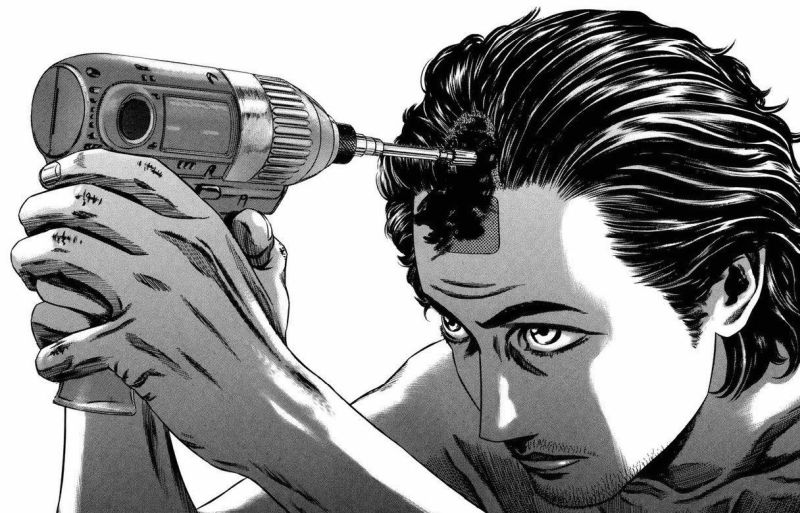
At first, Homunculus makes you wonder whether it’s a supernatural story, but it soon becomes clear that nothing here is literal. The horror lies within the human psyche itself. What Nakoshi sees may be real or merely his own delusions, and we as readers can never be sure. It’s this uncertainty that makes Homunculus such a profoundly weird manga.
Visually, Yamamoto delivers some of the most haunting imagery of his career, from surreal anatomical details to nightmarish symbolism. The deeper Nakoshi explores other people’s minds, the further he sinks into his own, until identity, morality, and memory blur beyond recognition.
What begins as a strange scientific experiment becomes a surreal, terrifying character study that plunges deep into the subconscious, exploring repression, shame, and the fragility of the human mind.
Homunculus is not an easy read, both for its narrative progression and its disturbing topical matter, but it’s unforgettable. A masterpiece of psychological horror and surreal introspection, it’s one of the most haunting fever dreams ever drawn.
Genres: Psychological, Horror, Drama, Philosophical
Status: Completed (Seinen)
9. Kamisama no Iutoori and Kamisama no Iutoori Ni
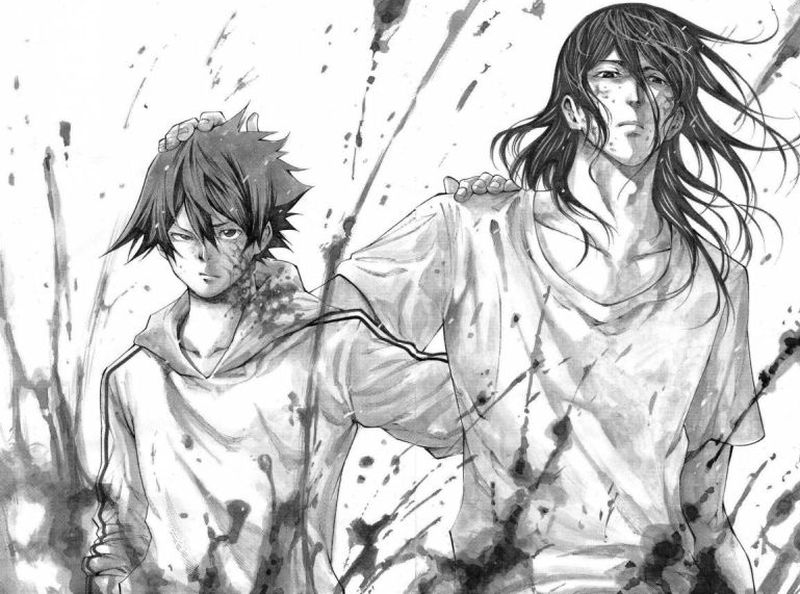
Few survival manga match the chaotic creativity of Kamisama no Iutoori and its sequel Kamisama no Iutoori Ni. Written by Muneyuki Kaneshiro of Blue Lock fame, these two series redefine what a weird manga can be. Equal parts death game, dark comedy, and madness, they take the familiar formula of battling for survival and twist it into something far stranger and more unpredictable.
The story begins with Shun Takahata, a bored high schooler whose mundane life ends when his teacher’s head explodes. A Daruma doll appears, announcing the first in a long chain of deadly games inspired by children’s toys and folk traditions. Each challenges feels both absurd and terrifying, perfectly blending playground nostalgia with sadistic cruelty.
This bizarre tonal mix is what makes Kamisama no Iutoori such a weird manga. Each game operates on dreamlike logic: rules are confusing, details hidden, and punishments comically brutal. Characters die constantly, yet the tone of their demise lurches from cruel to absurd. Kaneshiro often undercuts the horror with ridiculous setups and moments of absurd humor.
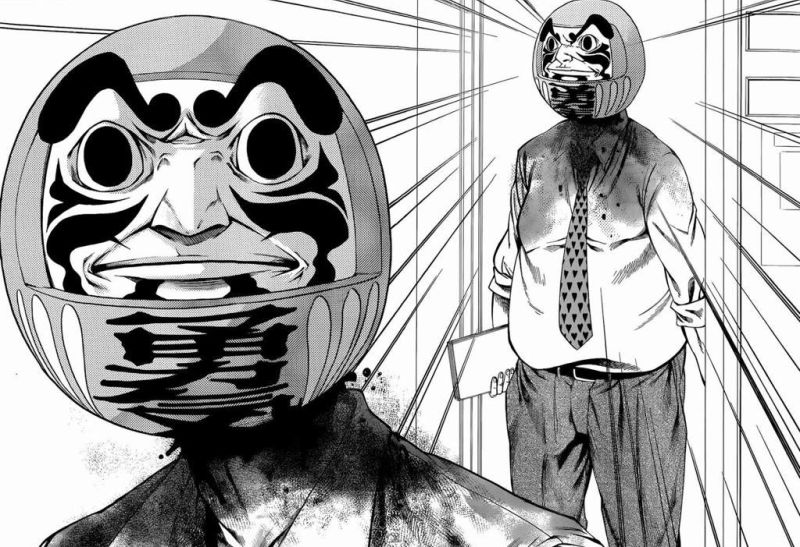
As the manga continues, we meet an ever-growing cast of eccentric, unhinged characters. Amaya stands out as a sadistic yet charismatic lunatic whose philosophy of chaos drives much of the early tension. Another, Ushimitsu, begins as unhinged as Amaya but gradually reveals surprising depth, becoming one of the manga’s most complex characters. Few of Kaneshiro’s characters are normal. The entire cast is exaggerated and theatrical, which is exactly what makes the series work so well.
By the time the prequel arrives, the story expands dramatically in scope. A new cast takes center stage, and the games become both more complex and larger in scale. The art improves dramatically, growing sharper, more detailed, and brimming with manic energy. By the end, it delivers some of the most cinematic and hype-inducing moments in any survival manga.
Wildly inventive, grotesquely funny, and absolutely relentless, Kamisama no Iutoori and Kamisama no Iutoori Ni stand as the pinnacle of death-game insanity, and proof that the weirdest ideas are sometimes the most thrilling.
Genres: Action, Psychological, Survival, Thriller
Status: Completed (Shonen)
8. Rosen Garten Saga
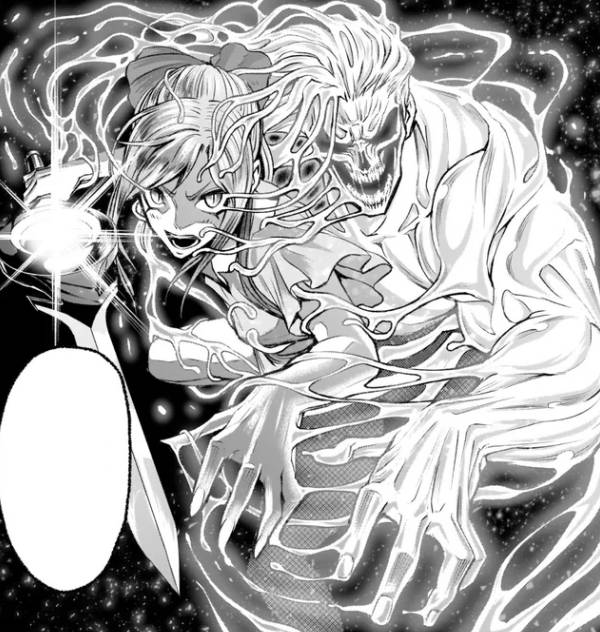
There are weird manga, and then there’s Rosen Garten Saga, a title so unhinged, depraved, and shamelessly over-the-top it becomes its own kind of genius. On paper, it’s a dark fantasy tournament manga loosely inspired by the Nibelungenlied. In execution, it’s a hentai-adjacent fever dream of sex, violence, and mythological parody that gleefully tears through every boundary of taste imaginable.
The premise alone is absurd: a young woman named Rin enters a grand tournament, wielding a sword possessed by the soul of the hero Siegfried. Around her gathers a cast of historical and legendary figures, including Beowulf, Brunhild, King Arthur, Dietrich von Bern, Alibaba, and more. All of them are reimagined as deranged, hypersexual caricatures. Beowulf is an exhibitionist, Dietrich a self-flagellating masochist, Siegfried a virgin-obsessed pervert, and Arthur leads an idol group composed entirely of cross-dressers.
It sounds impossible to take seriously, and that’s exactly the point. Rosen Garten Saga isn’t trying to titillate. It aims to annihilate taboo through sheer absurdity. Every chapter escalates the madness, turning erotic tropes into grotesque gags and sexual combat into overblown spectacle. Fights are won through fetishes, and political alliances forged through the exchange of pornography. The tone walks a perfect line between brilliant parody and complete insanity.
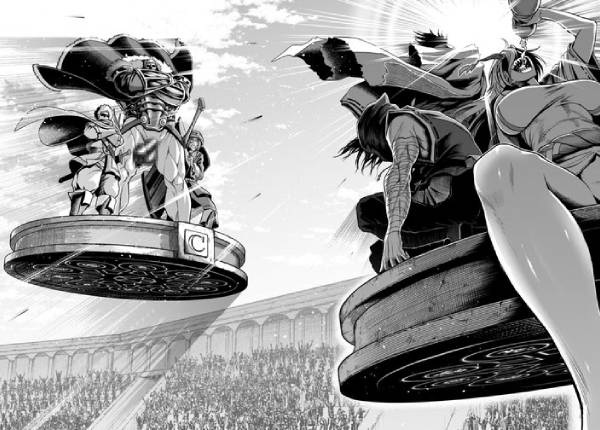
And somehow, all this madness is beautifully illustrated. The art is crisp, detailed, and full of life. Battles are cinematic and fluid, rendered with motion and precision that rival even the most serious battle manga. Every absurd scene is drawn with professional craftsmanship, making it funnier, stranger, and more impressive.
What makes Rosen Garten Saga a truly weird manga isn’t just its subject matter but the sheer conviction behind it. There’s a strange sincerity beneath all the filth. For all its degeneracy, it’s clear the author cares deeply about the art, the characters, and even his mythological reinterpretations. It’s a satire made with genuine love, and that sincerity elevates Rosen Garten Saga into something genuinely fascinating.
It’s not a manga for everyone. Many readers won’t make it past the first chapter, and that’s fair. But if you can embrace its excess and recognize the brilliance behind the obscenity, Rosen Garten Saga reveals itself for what it is: offensive, hilarious, and absolutely unforgettable.
Genres: Action, Comedy, Dark Fantasy, Erotica
Status: Ongoing (Seinen)
7. Dandadan
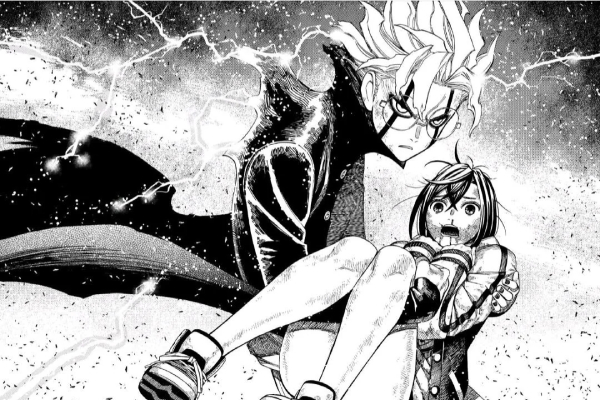
Dandadan might be the most unpredictable manga running today. It’s a chaotic fusion of alien invasion, yokai hauntings, teenage romance, and over-the-top shonen spectacle. Created by Yukinobu Tatsu, a former assistant to Chainsaw Man’s Tatsuki Fujimoto, it’s a weird manga that refuses to play by any genre’s rules, blending rom-com, body horror, and psychedelic science-fiction mayhem.
It all starts with a simple dare. Momo Ayase is an outspoken schoolgirl who believes in ghosts but not aliens, while Okarun, a socially awkward nerd, believes in aliens, but not ghosts. To prove each other wrong, they visit supposedly haunted and UFO-linked sites, only to discover that both the supernatural and the extraterrestrial are real. What follows is absolute chaos as abductions, possessions, psychic battles, and romantic awkwardness collide in one of the strangest, most high-energy series you’ll ever read.
What makes Dandadan such a weird manga is its constant tonal and conceptual whiplash. One chapter delivers grotesque, tension-filled body horror, while the next dives into slapstick school romance. Somehow, it all works. The series moves seamlessly between high-octane battles, absurd comedy, and heartfelt melodrama without ever losing momentum.
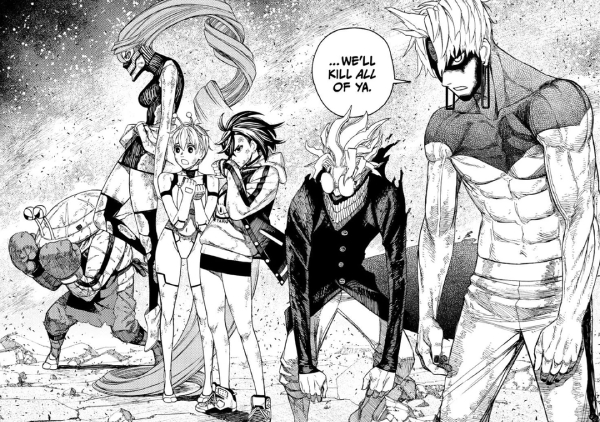
Beneath the madness lies a surprising amount of warmth. Momo, Okarun, and the bizarre ensemble around them each carry their own emotional baggage. Their trauma and insecurities drive the chaos rather than getting lost beneath it. The standouts are the tragic flashbacks, which deliver some of the series’ most heartbreaking moments and prove that Dandadan handles emotional drama as skillfully as its high-stakes battles.
Visually, Dandadan is pure spectacle. Tatsu’s artwork fuses expressive exaggeration with cinematic precision. His yokai are grotesque and folkloric, rendered with sickly detail and warped anatomy, while his aliens are sleek and biomechanical. The paneling is dynamic and kinetic, reaching jaw-dropping heights during its most outrageous battles.
Dandadan is a manga that shouldn’t work; it’s too chaotic, too strange, and too fast. Yet it somehow comes together beautifully as one of the most exciting, heartfelt, and gloriously unhinged manga of the decade. Equal parts terrifying, hilarious, and touching, Dandadan is pure controlled insanity and proof that weird can also be powerful.
Genres: Horror, Comedy, Supernatural, Action, Sci-Fi
Status: Ongoing (Shonen)
6. Nijigahara Holograph

Nijigahara Holograph by Inio Asano is one of the most haunting and structurally enigmatic manga ever created. It’s a weird manga in the truest sense, abandoning linear storytelling for fractured timelines and symbolic echoes. Reading it feels like piecing together a nightmarish puzzle composed entirely of trauma.
The story revolves around a quiet town and its broken residents. At its heart lies a horrifying childhood incident: a girl named Arie, bullied by her classmates and eventually pushed into a well. From there, the narrative branches outward, following the lives of those involved before and long after the event.
What makes Nijigahara Holograph so distinctively weird isn’t just its content but its structure. The manga jumps between past and present without logic or warning, events are told out of order while keeping character motivations frustratingly vague. You’re never sure whether what you’re reading is real or how it connects to the larger story. Even the art mirrors this instability, filled with melancholic suburban landscapes and eerily quiet moments framing acts of cruelty, despair, and self-destruction.

Asano’s signature realism becomes weaponized here. Every expression and every silence feels loaded with invisible meaning. The manga explores childhood trauma, abuse, and guilt through a surreal psychological lens. It’s less about what happens than how reality fractures beneath it. Butterflies are a recurring motif that recalls Zhuangzi’s ancient butterfly dream and hints at the story’s overall meaning.
On a first read, Nijigahara Holograph feels confusing, and alienating. On the second, patterns begin to emerge. You start to notice how events relate, how dialogue fits together, and how even the smallest details carry hidden meaning. And yet, even then, the manga resists full understanding, as if intentionally left open for readers to draw their own conclusions.
Nijigahara Holograph is disturbing, nonlinear, and devastatingly beautiful. It’s a weird manga that captures the incomprehensible logic of generational trauma. It may never fully make sense, but that disorientation makes it one of the most haunting and ambiguous manga ever created.
Genres: Psychological, Mystery, Drama, Surreal
Status: Completed (Seinen)
5. Shimeji Simulation
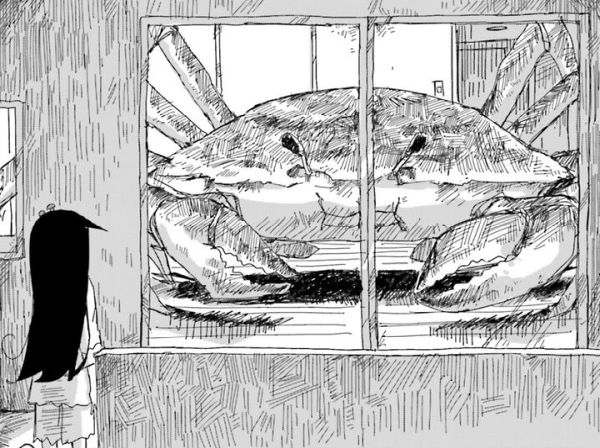
If there’s one manga that defies logic, structure, and even narrative itself, it’s Shimeji Simulation. Created by Tsukumizu, best known for Girls’ Last Tour, this isn’t just a story but an existential experiment in manga form. It’s a series that seems to make no sense whatsoever.
The story follows Shijima Tsukishima, a girl who locked herself in a closet for two years before finally deciding to rejoin society. When she emerges, she finds two shimeji mushrooms growing from her head. Soon she meets Majime, a girl with a fried egg on hers, and the two embark on a quiet, meandering journey to a world that feels like a fever dream.
On the surface, it reads like a quirky slice-of-life comedy. But beneath the cute character designs and gentle pacing, Shimeji Simulation becomes something entirely different. It turns into a meditation on loneliness, perception, and the meaning of existence. Every panel feels both deliberate and nonsensical, filled with philosophical asides, surreal metaphors, and visual contradictions.
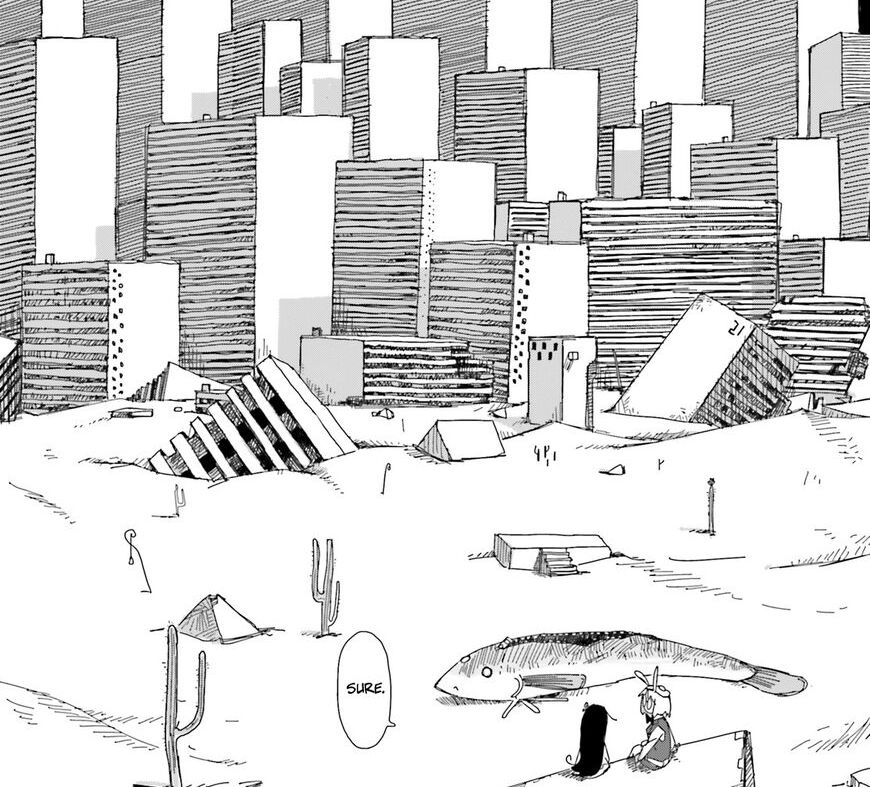
What makes this such a profoundly weird manga isn’t its strangeness alone but the fact that this strangeness feels entirely deliberate. The plot often abandons logic as scenes dissolve into abstract conversations about time, identity, and being. Tsukumizu introduces references to Heidegger, existentialism, and the nature of thought, but never pauses to explain them. The result is hypnotic, a story that seems to say everything and nothing at once.
Yet despite all its absurdity, Shimeji Simulation carries a deeply human undercurrent. Beneath the surreal tone lies a quiet melancholy, the pain of people who’ve drifted too far away from normal life and are struggling to return. It’s a manga about self-alienation, connection, and the futile yet beautiful struggle to make sense of one’s own consciousness.
Shimeji Simulation is one of the most baffling, mesmerizing and truly weird manga ever written. A work of philosophy disguised as nonsense, it isn’t for everyone, but for those who embrace it, the journey is unforgettable, even if what they take from it differs from reader to reader.
Genres: Surreal, Slice of Life, Psychological, Philosophical
Status: Completed (Seinen)
4. Joshikouhei
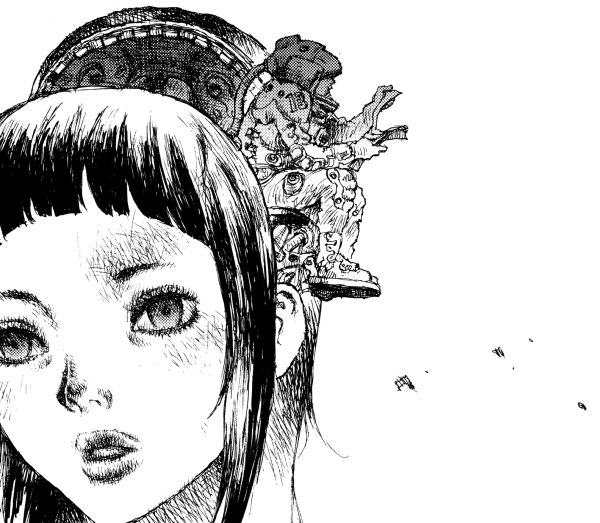
Jiro Matsumoto has long been one of manga’s most provocative creators, known for blending sex, death, and existential dread in his work. Joshikouhei may be his strangest and most extreme creation, a weird manga that twists the mecha genre into a grotesque philosophical nightmare.
The premise sounds like a joke: in a futuristic interdimensional war, soldiers pilot colossal humanoid machines known as Assault Girls, battle mechs that look exactly like teenage schoolgirls. These girls are the ultimate weapon, capable of wiping out entire armies. But the longer a pilot stays connected, the more they lose their sense of self, slowly coming to believe they are high-school girls. Their speech, thought, and emotions warp alongside the machine’s identity, creating a deeply unsettling fusion of body horror and psychological collapse.
Lieutenant Takigawa, commander of the Hyena Platoon, specializes in hunting corrupted Assault Girls, pilots who’ve lost all grip on reality. What begins as a bleak war story soon descends into full-blown insanity. By its final arc, Joshikouhei transforms from grim science-fiction into pure surrealism, questioning the nature of self and identity.
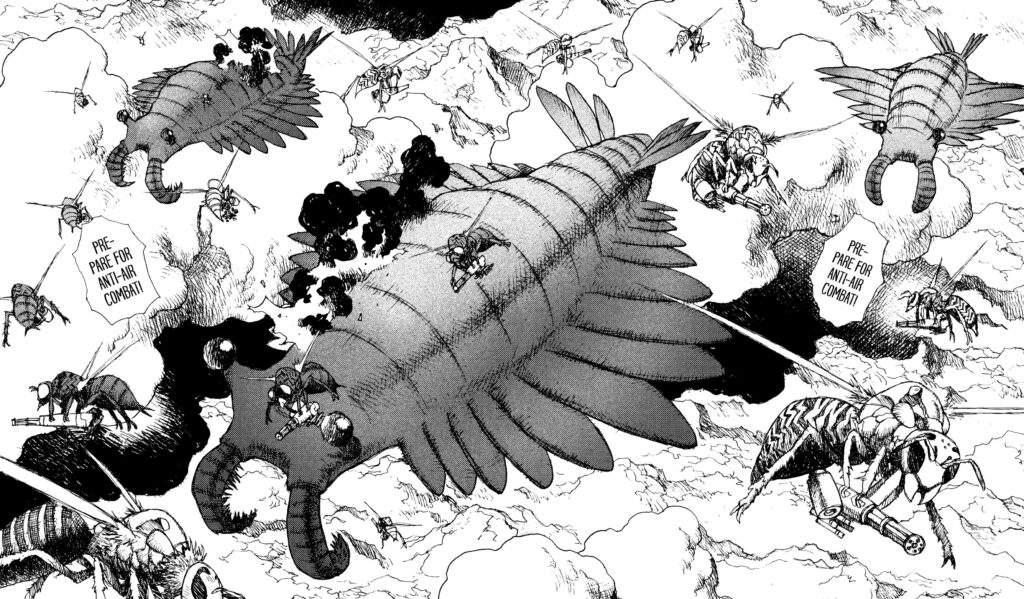
As expected from Matsumoto, Joshikouhei is unapologetically transgressive. It contains extreme nudity, graphic violence, and moments of pure shock, none more infamous than an orgy sequence where a group of Assault Girls melt into a grotesque mass of flesh and appendages. It’s explicit but horrifying rather than erotic, serving as a nightmarish metaphor for the collapse of identity.
Matsumoto’s sketch, frantic art style only heightens the chaos. Battles are gory and chaotic, while quieter moments feel eerily hollow. As in Matsumoto’s other works, the story feels like a mixture of stark reality and fever dream, but here the boundaries collapse entirely.
Joshikouhei isn’t just bizarre; it’s disturbing, philosophical, and uniquely mesmerizing. It starts strange, grows stranger, and ends in pure philosophical surrealism. For anyone fascinated by boundary-pushing seinen manga, this remains one of the most original and disturbing weird manga ever created.
Genres: Psychological, Sci-Fi, Mecha, Surreal, Erotic Horror
Status: Completed (Seinen)
3. Freesia
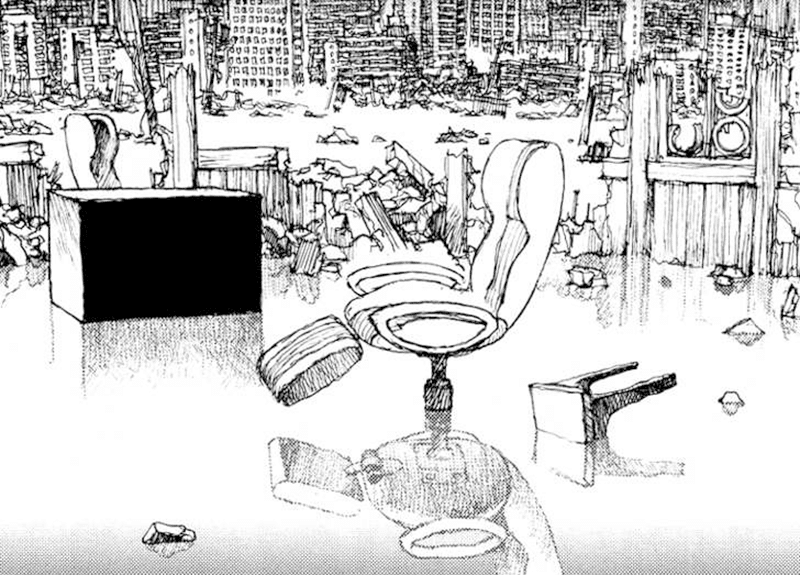
Jiro Matsumoto’s Freesia is one of the bleakest and most haunting manga ever drawn. While not as outwardly grotesque as Joshikouhei, it’s arguably even more disturbing in how quietly insane it feels. It’s a weird manga not because of aliens or monsters, but because it drags you inside a shattered mind and forces you to see the world through its eyes.
Set in a decaying, war-torn Japan, the story centers on a new law that legalizes retaliatory killings. If someone murders your loved ones, you can take justice into your own hands, or hire someone to do it for you. Kano works for a government-sanctioned agency that carries out these legal executions. Yet while the setup suggests a violent revenge thriller, Freesia is something else entirely. The killings are rarely the true focus; instead, Matsumoto delves into the psychological decay of everyone involved.
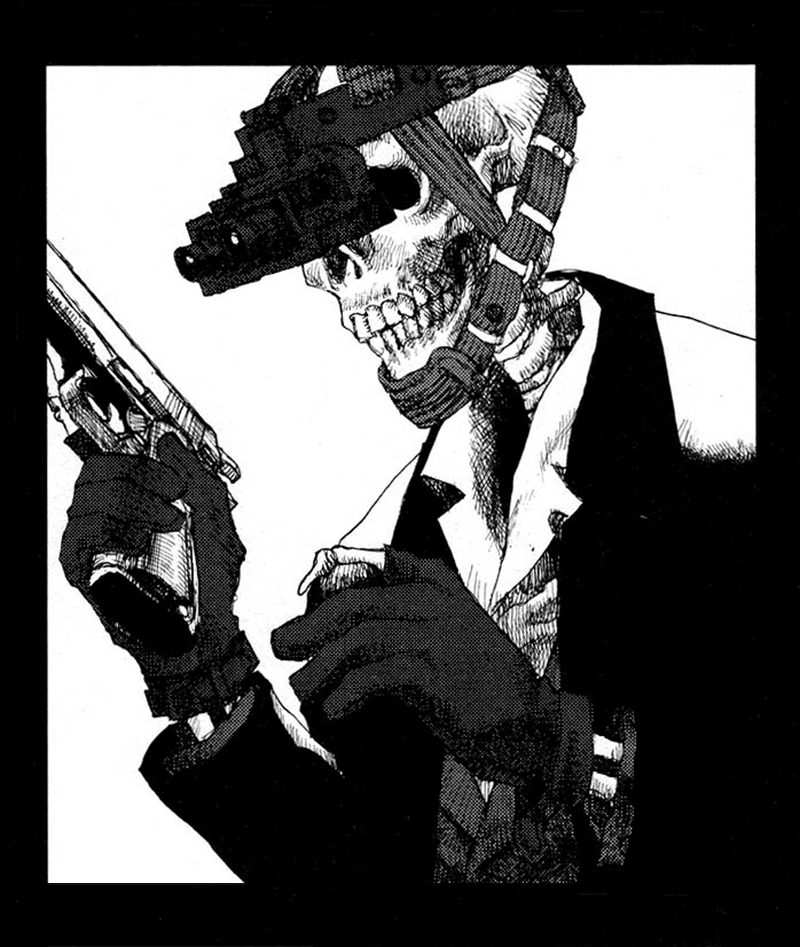
The result is suffocating. The art is rough, unpolished, full of noise and grime, giving even quiet moments a sickly unease. Backgrounds are claustrophobic and cluttered, while faces are rendered with unnerving simplicity.
Kano, the heart of the manga, is among the most unreliable protagonists in the medium. He suffers from schizophrenia, vivid hallucinations, and memory lapses, often unable to tell what’s real and what isn’t, and neither can we. Matsumoto never clarifies what’s illusion and what’s fact. We’re trapped inside Kano’s head, forced to endure his delusions alongside him.
The other characters fare no better. Nearly everyone harbors their own psychosis, delusions, or violent impulses. Everyone drowns in guilt or apathy, and no one seems capable of genuine human connection.
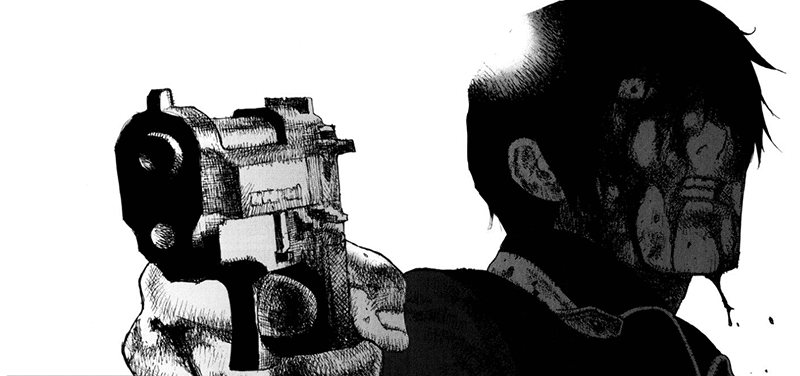
While Freesia follows an episodic yet straightforward plot, its focus is more on mental atmosphere. It’s less about retaliatory killings and more about the disintegration of the mind, empathy, and meaning itself in a world already broken.
Bleak, hypnotic, and profoundly unsettling, Freesia is one of Jiro Matsumoto’s defining works and a masterpiece of psychological horror. It begins as dystopian fiction, but transforms into one of the most intimate depictions of insanity ever drawn.
Genres: Psychological, Crime, Drama, Dystopian
Status: Completed (Seinen)
2. Soil
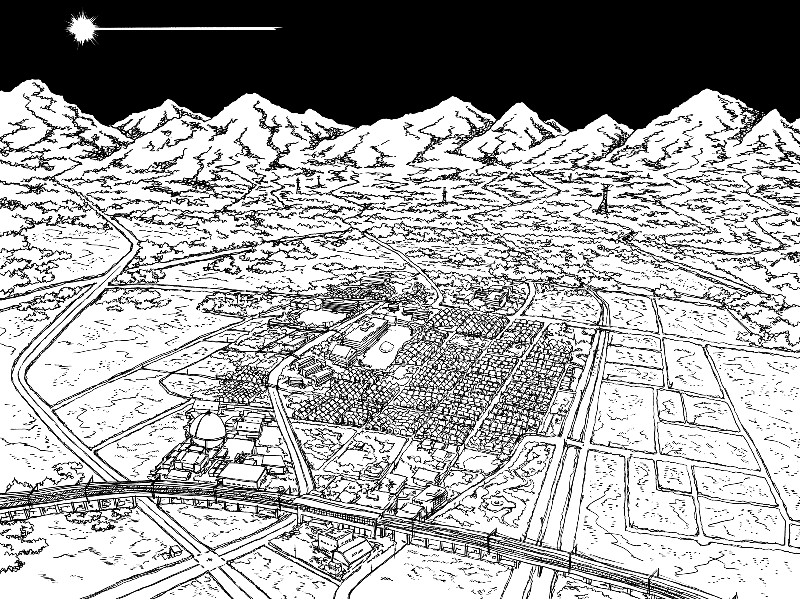
Few manga capture the sensation of reality collapsing under its own weight quite like Soil by Atsushi Kaneko. What begins as a routine missing-person case mutates into a descent into pure absurdism and visual madness. By the end, you’ll be asking yourself what happened, and whether any of it made sense.
The premise is deceptively ordinary. In the sterile, picture-perfect Soil New Town, a model family disappears overnight. Two detectives arrive to investigate: the volatile and unpleasant Yokoi and his patient yet increasingly unnerved partner, Onoda. At first, it feels like a procedural crime, but soon small oddities start piling up.
The investigation unravels into something surreal and indecipherable, and before long the town distorts so completely it detaches from reality. From there, the manga abandons logic almost entirely, becoming less a straightforward story than a nonsensical, cosmic fever dream.
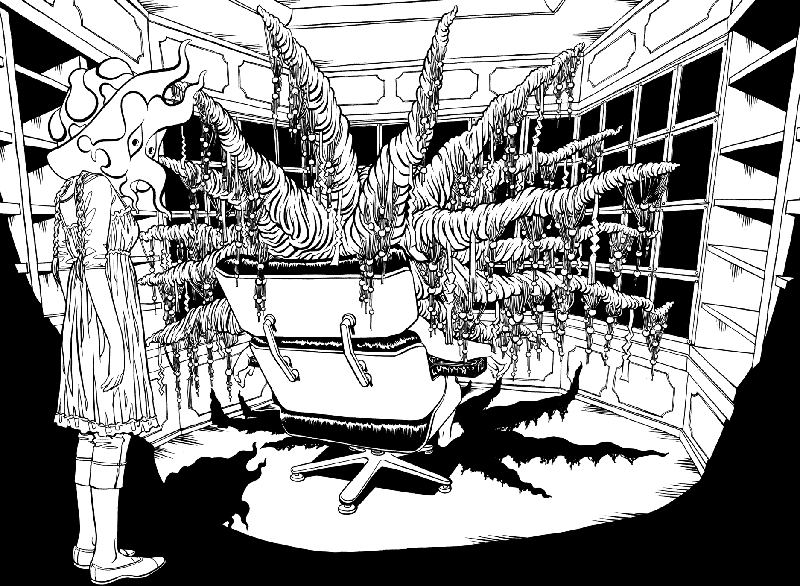
Visually, Soil is striking in its own way. Kaneko’s artwork is minimalistic and clean, drawing clear inspiration from Western comics. As the story progresses, the visuals grow increasingly unstable. Architecture warps, characters unravel, and surreal dreamlike sequences take over.
Soil shifts constantly between genuine horror and absurdist comedy, never clearly distinguishing between the two. The ridiculous and the grotesque coexist seamlessly. One moment you might laugh at Yokoi’s vulgar tirades, the next you’re watching another incomprehensible event unfold. This tonal chaos is what makes Soil such a weird manga, one that thrives on confusion and disorientation rather than answers.
That’s the key: Soil doesn’t want to make sense or be solved. It isn’t just a puzzle missing pieces, but one that reshapes itself the more you try to assemble it. Each revelation adds to a mountain of unsolvable mysteries, and each layer strips away another fragment of normalcy. By its final chapters, Soil abandons all coherence and becomes an exercise in how far madness can be pushed.
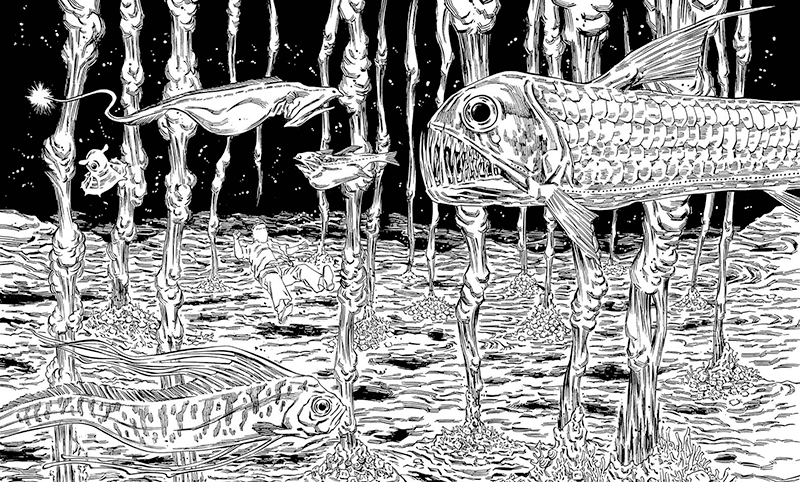
Whether it’s genius or nonsense, Soil is unforgettable. It’s a work that rejects logic to capture the essence of surreal and absurdist storytelling. Yet, as so often, the journey matters more than the destination, and with Soil, you’ll want to experience every moment, even if the ending makes no sense whatsoever. For those drawn to the uncanny, cosmic absurdism, and to works that defy reason, Soil stands among the greatest weird manga ever created.
Genres: Horror, Crime, Mystery, Psychological, Philosophical, Surreal
Status: Completed (Seinen)
1. Ultra Heaven
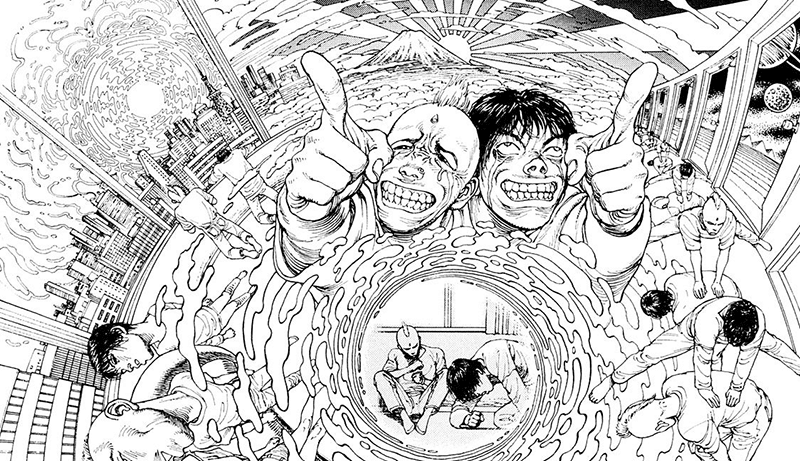
Reading Ultra Heaven is an experience like no other. It’s a mind-expanding, reality-shattering descent into psychedelic madness that pushes the manga medium to its absolute limits. It’s not just a story, but a hallucinatory fusion of art, philosophy, and sensory overload.
Set in a bleak future where emotions themselves can be synthesized and sold as drugs, Ultra Heaven follows Kabu, a junkie who deals and consumes artificial feelings to escape the emptiness of everyday life. Everything changes when he’s offered a new substance called Ultra Heaven.
Once Kabu takes it, Ultra Heaven turns from a grounded narrative into one of the wildest, most metaphysical trips ever drawn. Keiichi Koike’s artwork abandons the rigid boundaries of conventional manga. Panels twist, splinter, and collapse into each other. Pages morph into sprawling fractal compositions where human faces dissolve and cityscapes melt into pure abstraction. It’s one of the few works that truly feels like a psychedelic experience, both thematically and visually.
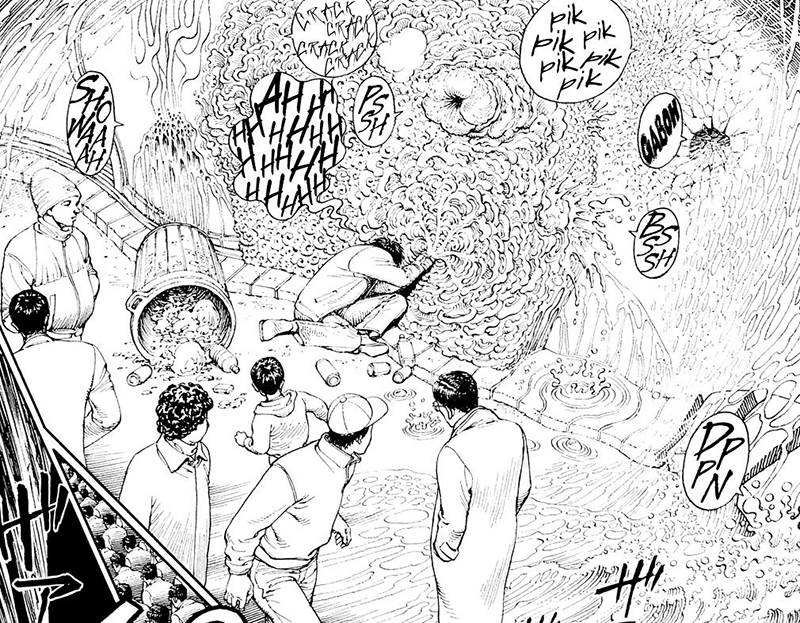
What makes Ultra Heaven such a uniquely weird manga is that its strangeness arises not from the supernatural, but from perception itself. The boundary between hallucination and reality dissolves. At times, you’re not even sure what’s happening. Is Kabu still tripping? Dying? Already dead? Or has he achieved enlightenment? Koike uses that uncertainty to explore consciousness, the illusion of self, and whether true awakening is indistinguishable from madness.
The final chapter pushes the journey even further. After the chemical chaos of the first two acts, Ultra Heaven shifts toward meditation and introspection, suggesting that true transcendence can be achieved not through drugs but through sheer will and mental focus. It’s a fascinating turn that stays true to the manga’s central theme of awakening and enlightenment.
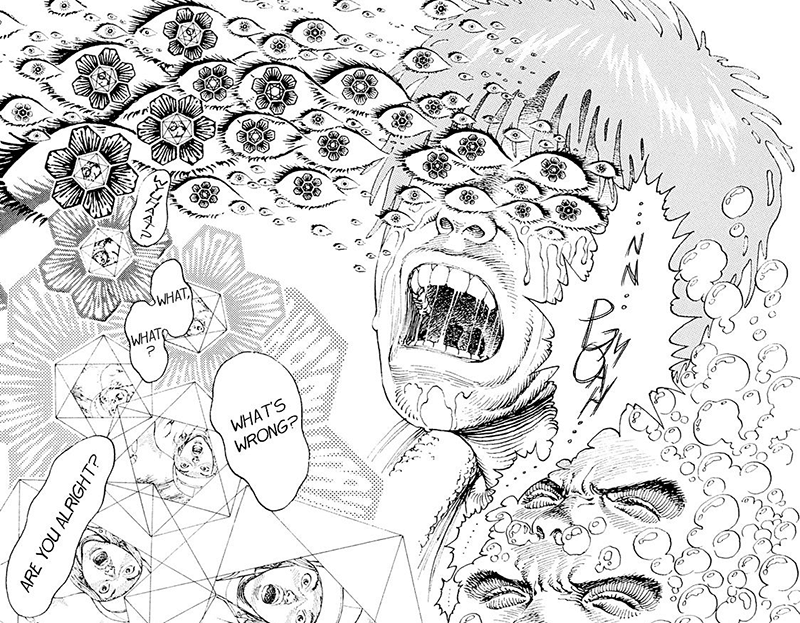
Ultra Heaven is not an easy read. Long sections feel fragmentary, nonlinear, and often incomprehensible. Yet that’s what makes it so brilliant. It captures the instability of consciousness itself, how easily it can warp, and reflects it perfectly in art.
When I first finished Ultra Heaven, it felt like I’d witnessed a work that transcends what manga can achieve, a fusion of surreal storytelling and pure visual experimentation. As a weird manga, it stands at the top: a dazzling, disorienting visual masterpiece unlike any other.
Genres: Psychological, Sci-Fi, Experimental
Status: Completed (Seinen)