Kokoro was never supposed to be a novel. When Natsume Soseki began writing it for the Asahi Shimbun newspaper in 1914, his plan was a series of separate short stories gathered under a single umbrella title, Kokoro. The first of them, Sensei’s Testament, kept growing, until Soseki abandoned the rest of the plan and published that one story as the whole book. The result became one of the best-selling novels in Japanese history.
The Natsume Soseki guide covers the novel’s story and where it sits among his other books, and our Japanese novels ranking discusses its ending and its place in the tradition. This page is about how the book came to be, what its title means, which translation to buy, and the history sitting underneath it. It’s a novel I know through its critics and translators rather than through reading it.
The story that swallowed the collection
Soseki explained what happened in his preface to the book edition. He had intended to write a number of short pieces and bring them together under the name Kokoro, but the story meant to open the series turned out far longer than he expected, so he decided to publish it alone.
The serialization ran from April 20 to August 11, 1914, under the title Kokoro: Sensei’s Testament. When the novel appeared as a book later that year, the subtitle was dropped, and the title word itself was changed from the kanji character to hiragana script.
The original subtitle survives as the name of the novel’s third and longest part. The book is divided into three sections, Sensei and I, My Parents and I, and Sensei’s Testament, and the lopsided proportions, with the final section taking up roughly half the novel, are easier to understand once you know the book began as one story that outgrew its plan.
What kokoro means
English translators have almost always left the title untranslated, because no single English word covers it. Kokoro means heart, but it also carries the senses of mind, spirit, feeling, resolve, courage, and what the English manga edition’s subtitle calls the heart of things. The word gathers emotion, thought, and will into one.
That range matters to the book. Kokoro is a novel about what goes on inside people that they cannot say to one another, about loyalty, guilt, and isolation, and the untranslatable title points at exactly the interior the characters keep hidden.
The shape of it
Almost nothing happens, which is the usual warning and the usual praise. A student attaches himself to an older man he calls only Sensei, visits him with increasing frequency, is taken into his home and his marriage, graduates, goes back to the provinces to sit with his dying father, and then receives a long letter.
Reviewers consistently note two things about that structure. The first is that the novel builds a sense of crescendo out of very little action: the stakes rise, the pace does not. The second is that the handover, from the student’s narration to Sensei’s letter, is a bold move for 1914, because the book gives up its narrator two-thirds of the way through and never returns to him. Several critics have compared Sensei’s reticence to Stevens in Kazuo Ishiguro’s The Remains of the Day, which is a fair guide to the register.
The history underneath the ending
The novel is set at the very end of the Meiji era, and one historical event does a great deal of work in it: the death of General Nogi Maresuke, who took his own life on the day of Emperor Meiji’s funeral in 1912, in an act of junshi, following one’s lord in death.
Nogi’s story was known to every reader in 1914. He had lost an imperial banner in battle during the Satsuma Rebellion and spent decades trying to atone for it. He had taken Port Arthur in the war with Russia at a cost in his own men that he never got over, and had asked the emperor for permission to die, which was refused. When Meiji died, he no longer had a master to serve.
In his introduction, Edwin McClellan makes the point that Soseki was too modern to be fully in sympathy with the general, and that Sensei is too, which is the tension the novel’s close is built on. That’s as much as can be said here without spoiling the book.
A school classic
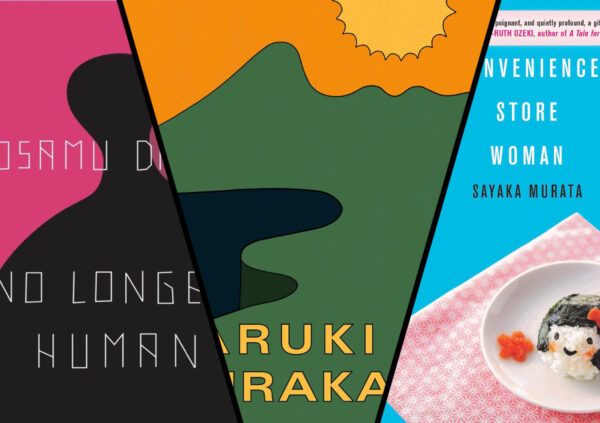
In Japan, Kokoro is one of the most widely read novels ever published, and it’s a fixture of the school curriculum, where generations of students have studied parts of it. It’s regularly named alongside Osamu Dazai’s No Longer Human as one of the two best-selling novels in the country’s history.
That status gives it a peculiar double life. For Japanese readers it’s a shared cultural reference, something nearly everyone has encountered in a classroom. For English readers it’s more often discovered as a quiet, demanding literary novel, usually through one of its two main translations.
Which translation, and the reason the old one exists

There are two versions most readers will meet, plus a little history.
Edwin McClellan’s 1957 translation was for decades the only one in circulation, and it exists for an unusual reason: McClellan was a doctoral student at Chicago under the economist Friedrich Hayek, and he translated Kokoro in part to convince his supervisor that Soseki was a writer worth a dissertation. He went on to found the university’s Japanese studies program and to win the Noma Prize for translation and the Order of the Rising Sun. His English is elegant and a little formal, and some readers find it keeps the book at arm’s length.
Meredith McKinney’s 2010 translation for Penguin Classics is the modern alternative, generally judged clearer and more naturally phrased without losing the restraint. The Soseki guide notes the scholar J. Keith Vincent’s argument that the older version softens the homoerotic currents running through the book, which is the strongest reason to choose McKinney.
For completists: an earlier English version by Ineko Kondo appeared in 1941, and a Tuttle edition pairs McClellan’s text with an introduction by Vincent. Any of them will do if it’s what your library has, but buy McKinney if you’re choosing.
On screen and on the page
Kokoro has been adapted for film at least twice, first by Kon Ichikawa in 1955 and later by Kaneto Shindo in 1973. For readers who prefer a visual introduction, there’s also an English-language manga adaptation, Soseki Natsume’s Kokoro: The Manga Edition.
Where to go next
The rest of Soseki’s shelf, from the comedy of Botchan to the unfinished Light and Dark, is on the Natsume Soseki guide. For the other great best-seller of modern Japanese fiction, see the No Longer Human page, and for Soseki’s successors in the tradition, the Yasunari Kawabata guide.
This page touches on suicide. If that’s weighing on you, please reach out to someone. In the US you can call or text 988, and the International Association for Suicide Prevention keeps a directory of crisis centers worldwide.