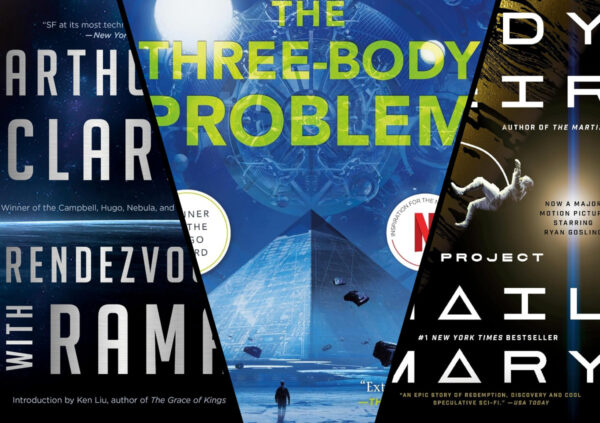
Post-apocalyptic books get confused with dystopian ones constantly, including by lists that should know better. You’ll find 1984, The Hunger Games, and Do Androids Dream of Electric Sheep filed under post-apocalyptic on sites with real budgets, and they don’t belong there. The neighboring shelf is my climate fiction books list.
The distinction is simple and worth stating, because it changes what a book is actually about.
Dystopian fiction has a functioning society that is wrong. There’s a government, an economy, laws, and institutions. The horror is that all of it works, and works against you. Someone is in charge.
Post-apocalyptic fiction has no society left. The institutions are gone, the supply chains are gone, and whatever the survivors build has to be built from nothing by people who mostly don’t know how. Nobody is in charge, and the terror is that this turns out to be worse.
Plenty of books cross over, since a collapse followed by a tyranny is a well-worn shape, but the center of gravity is usually clear. If you want the other tradition, my list of the best dystopian novels covers it properly.
What post-apocalyptic books are really about is infrastructure: what it takes to keep people alive, how much of it we take for granted, and how quickly a person becomes something else once it’s gone. The best ones are as interested in seed stock and antibiotics as in violence.
Thirty post-apocalyptic books, chronological, from the first one to now. For the canon beyond the ruins, see my list of the best science fiction books.
Fiction by René Rehn


The Best Post-Apocalyptic Books at a Glance
| Year | Title | Author |
| 1826 | The Last Man | Mary Shelley |
| 1912 | The Scarlet Plague | Jack London |
| 1949 | Earth Abides | George R. Stewart |
| 1951 | The Day of the Triffids | John Wyndham |
| 1954 | I Am Legend | Richard Matheson |
| 1957 | On the Beach | Nevil Shute |
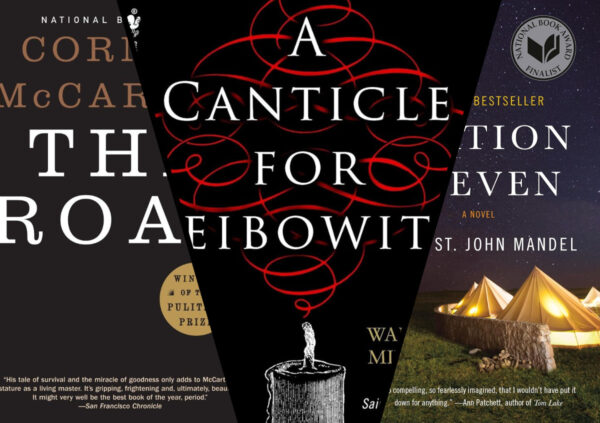
| 1959 | A Canticle for Leibowitz | Walter M. Miller Jr. |
| 1959 | Alas, Babylon | Pat Frank |
| 1980 | Riddley Walker | Russell Hoban |
| 1978 | The Stand | Stephen King |
| 1987 | Swan Song | Robert R. McCammon |
| 1977 | Lucifer’s Hammer | Niven and Pournelle |
| 1985 | The Postman | David Brin |
| 2011 | Wool | Hugh Howey |
| 2006 | The Road | Cormac McCarthy |
| 2006 | World War Z | Max Brooks |
| 2014 | Station Eleven | Emily St. John Mandel |
| 2018 | Severance | Ling Ma |
| 2018 | Moon of the Crusted Snow | Waubgeshig Rice |
| 2014 | The Girl With All the Gifts | M. R. Carey |
| 2010 | The Passage | Justin Cronin |
| 2014 | Bird Box | Josh Malerman |
| 1990 | Wolf and Iron | Gordon R. Dickson |
| 1956 | The Death of Grass | John Christopher |
| 1984 | Emergence | David R. Palmer |
| 2020 | The Book of Koli | M. R. Carey |
| 2012 | The Dog Stars | Peter Heller |
| 1982–94 | Nausicaä of the Valley of the Wind | Hayao Miyazaki |
| 1984 | The Wild Shore | Kim Stanley Robinson |
| 1961 | Some Will Not Die | Algis Budrys |
The Last Man by Mary Shelley (1826)

The first post-apocalyptic novel in English, written by the woman who also wrote the first science fiction novel, and almost nobody has read it.
Set in the late twenty-first century, it follows Lionel Verney through a plague that moves across the world with no cure and no explanation, reducing humanity to a handful of survivors and eventually to one. The politics of a republican England occupy the first third. The disease occupies everything after.
Shelley wrote it after Percy drowned, after Byron died, after she had buried three of her four children, and the novel is not really about a plague. It’s about being the last person who remembers a particular set of people, and it’s almost unbearable in places.
It was savaged on publication and stayed out of print for over a century. It reads now like the origin point of every post-apocalyptic novel written since.
The Scarlet Plague by Jack London (1912)
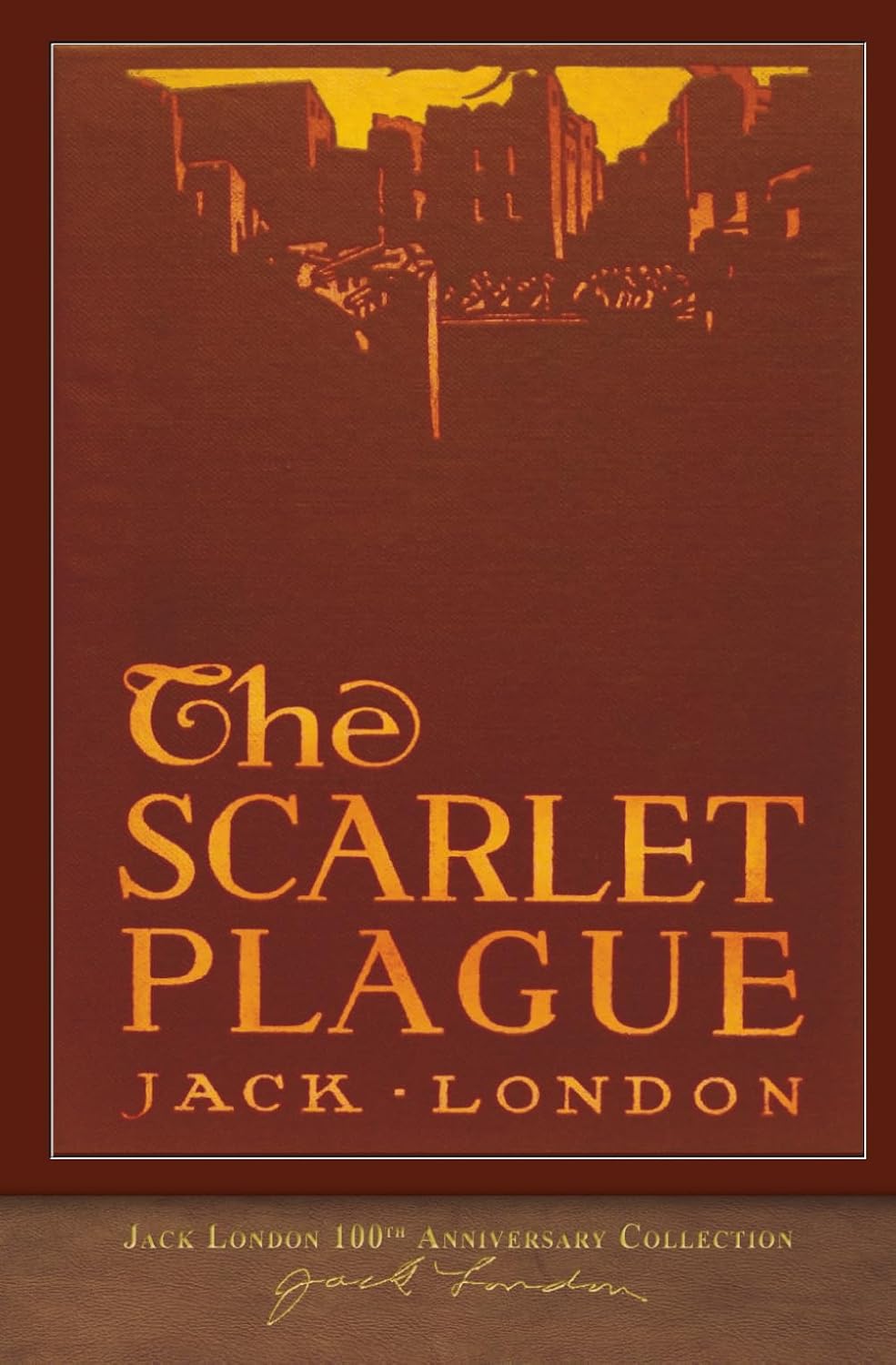
Sixty years after a pandemic wiped out civilization, an old man tries to explain the world he grew up in to his grandchildren, who are illiterate, dressed in skins, and largely uninterested.
That’s the whole book, and it’s the most efficient treatment of knowledge loss anyone has written. James Smith was a professor of English literature. His grandsons cannot count past ten and think he’s making things up when he describes aeroplanes.
London is precise about the mechanics: the speed of the collapse, the failure of the state, the way survivors clustered into tribes within a single generation. He’s also blunt about class, since the plague killed indiscriminately and the new hierarchies formed around brute strength.
It’s short, it’s bleak, and it reads more contemporary than most post-apocalyptic books written a century later.
Earth Abides by George R. Stewart (1949)

The quiet masterpiece of post-apocalyptic books, and the one that influenced everything after it.
Isherwood Williams survives a plague because he was alone in the mountains with a snakebite when it swept through. He comes down to an empty California and spends the rest of his long life watching what happens next: the failure of the power grid over years rather than days, the collapse of a small community’s ability to read, the slow return of the land.
Stewart was a Berkeley English professor with a geographer’s obsessions, and it shows. The novel tracks ecological succession as carefully as it tracks people, following what happens to the cattle, the crops, the rats, and the water supply.
Its real subject is the impossibility of preserving civilization through willpower. Ish spends decades trying to teach the next generation to read and maintain the infrastructure, and the children want to hunt with bows because bows work.
Stephen King has named it a direct influence on The Stand, and most post-apocalyptic novels since owe it something. It won the first International Fantasy Award and has never been out of print.
The Day of the Triffids by John Wyndham (1951)

The most influential British catastrophe novel, and the origin of a structure you’ve seen a hundred times.
Bill Masen is in hospital with his eyes bandaged after a triffid sting when the comet display everyone else stayed up to watch leaves the world’s population blind. He removes the bandages the next morning into a city where nothing functions and nobody can see him coming.
What Wyndham does with the following weeks is the reason the book lasts. This is a collapse novel about competing plans. One faction wants to preserve Christian marriage and dies of it. Another proposes that sighted men take multiple wives and organize the blind into work parties, and is presented as monstrous and correct in equal measure. A third simply chains sighted people to gangs of the blind and marches them through London.
Wyndham gives every faction its best argument, including the ones Masen refuses to join, and the novel’s real horror is that the ruthless plan is also the one that works.
The plants themselves barely matter by the halfway point. They’re the reason nobody can rebuild, and after that Wyndham is writing about people.
I Am Legend by Richard Matheson (1954)

The novel that invented the modern apocalypse and gets misremembered by everyone who has only seen a film version.
Robert Neville is the last man alive in a Los Angeles overrun by a bacterial infection that produces something functionally identical to vampirism. His days are spent scavenging and killing the infected while they sleep. His nights are spent barricaded inside while they surround the house and call his name.
The horror is the loneliness rather than the monsters, and Matheson is exceptional on the practical grind of it: the generator maintenance, the garlic, the alcoholism, the mirror he uses to check his own face.
The ending is the point, and it is the reason the title means what it means. Every adaptation has flinched from it.
Matheson essentially invented the scientific apocalypse that post-apocalyptic books have run on ever since. Romero has said Night of the Living Dead was a direct adaptation in all but name, which means every zombie story since descends from this book.
On the Beach by Nevil Shute (1957)

The bleakest book on this list, and it contains almost no violence at all.
A nuclear war in the northern hemisphere is already over. Everyone there is dead. A radioactive cloud is drifting south at a predictable rate, and Melbourne has perhaps nine months. There is no cure, no escape, no plan, and no possibility of survival.
What Shute writes is people continuing. They plant gardens they won’t harvest. They hold a motor race. A naval officer takes a submarine north to investigate a radio signal and finds a window sash tapping a transmitter key in an empty room.
The government distributes suicide pills and people queue politely.
It shifted public opinion on nuclear weapons more than any other post-apocalyptic novel, and it works because Shute refuses melodrama entirely. Everyone behaves well, and it makes no difference.
A Canticle for Leibowitz by Walter M. Miller Jr. (1959)

The most ambitious structure in post-apocalyptic fiction: three novellas, spanning eighteen centuries, following a single monastery.
Brother Francis spends seven years illuminating a blueprint in gold leaf. He cannot read it, no one alive can read it, and the document is a wiring schematic for a piece of industrial equipment. That image, devotional labor lavished on a technical drawing by people who have lost the concept of a technical drawing, is the best thing in the genre about what knowledge loss actually looks like from inside.
The monastery is in the Utah desert and the order exists to hoard scraps: a laundry list, a note about pastrami, fragments recovered from a fallout shelter. Their founder was an electrical engineer who smuggled books before a mob killed him.
Miller built the novel in three parts separated by six hundred years each, so you watch the same institution occupy completely different positions: guardian of knowledge nobody wants, obstacle to scientists who do, and finally a body arranging spacecraft for the children of a species about to repeat itself.
Miller was a tail gunner who bombed Monte Cassino, an abbey founded in the sixth century, and converted to Catholicism afterward. He wrote one novel and shot himself in 1996.
Alas, Babylon by Pat Frank (1959)

The most practical post-apocalyptic novel ever written, and the most useful one if you actually want to know how a town survives.
Randy Bragg gets a telegram from his brother in the Air Force ending with the words “Alas, Babylon,” their private code for catastrophe, and has about a day before the missiles land. Fort Repose, Florida, is spared the blasts and left to work out how to live without electricity, medicine, or currency.
The novel’s interest is logistics: salt, antibiotics, the fish in the river, the value of a library, and the way currency collapses into barter within weeks. Frank is excellent on which skills suddenly matter and which professions become useless.
It’s dated in obvious ways, particularly its racial politics, though its Black characters are handled with more complexity than most 1959 fiction manages.
Still assigned in American schools, and still the most practical of all post-apocalyptic books.
Riddley Walker by Russell Hoban (1980)

Hoban saw a wall painting of Saint Eustace at Canterbury Cathedral and wondered what a legend would look like after two millennia of retelling by people who could no longer read. The answer he constructed is the Eusa Story, a creation myth in which a man splits the Littl Shynin Man to make a weapon and is punished for it, recited at Punch and Judy performances by government officials who use the shows as doctrine.
Riddley is twelve, has just buried his father, and inherits the job of interpreting those performances for his settlement. What he uncovers is a faction attempting to reconstruct gunpowder from the myth, working backwards from a recipe garbled into scripture.
Every word of the book is written in an invented broken English, spelled as spoken. It slows you to the pace of someone sounding out meaning, which is precisely the experience the characters are having with everything they have inherited.
Hoban spent five and a half years on it and said afterward that it permanently changed how he wrote, and the small society that has grown up around the book is fiercely devoted.
The Stand by Stephen King (1978)

The definitive American apocalypse, and the book most people mean when they say the genre.
Captain Trips gets out of a facility in California because one guard makes one entirely understandable decision, and King spends the opening chapters following the infection through gas stations, roadside diners, and family cars, watching it cross the country at the speed of an ordinary journey.
That first section is the finest thing he has written. He keeps the frame tight, one dying man, one confused doctor, one woman who doesn’t yet know why her father won’t wake up, and the enormity accumulates in the background.
What follows is a book about a country that stops working. The electricity holds for a while because generating stations run themselves until something trips. Water pressure fails floor by floor in tall buildings. There is no one to remove the bodies from the highways, and the highways become impassable, and that fact alone reshapes where the survivors can go.
Larry Underwood walking through the Lincoln Tunnel in total darkness, hearing something moving, is one of the most frightening sequences King has staged. The uncut edition restores about four hundred pages and is the one to read.
Swan Song by Robert R. McCammon (1987)

The other great American apocalypse novel, published nine years after The Stand and unfairly overshadowed by it.
Nuclear war arrives in the first fifty pages. What follows tracks several survivors across seven years: a homeless woman in New York carrying a glass ring that shows people what they could become, a girl with a disfiguring growth on her face, and a military officer whose grip on reality dissolves into a private mythology.
McCammon is nastier than King and more physical. The radiation injuries are described in detail, the environmental collapse is worked through properly, and the villain is a genuinely disturbing creation.
It won the Bram Stoker Award, tying with Misery, and it’s among the most physical post-apocalyptic books ever written. If you finished The Stand and wanted more, this is what you want.
Lucifer’s Hammer by Niven and Pournelle (1977)

The most technically rigorous disaster novel in the genre.
A comet strikes the Earth. Niven and Pournelle spend the first third of the book on the science and the anticipation, then depict the impact and its immediate aftermath, the tsunamis, the earthquakes, the year without a summer, with an engineer’s attention to consequence.
The back half is about rebuilding, and specifically about the fight over whether to preserve a nuclear power plant, which the novel treats as the difference between a technological future and a permanent dark age. A scientist wraps books in plastic and buries them in a septic tank, which is the image everyone remembers.
The politics are conservative and unsubtle, and the treatment of the antagonist group is genuinely ugly in ways worth knowing about going in.
As a portrait of how a technological society actually fails, no other post-apocalyptic novel matches it.
The Postman by David Brin (1985)

A far better novel than the Costner film suggests, and the sharpest thing anyone has written about legitimacy after collapse.
Gordon Krantz survives sixteen years after a war and social collapse by traveling and performing Shakespeare for isolated settlements. He finds a dead postal worker’s uniform and takes it for the warmth. Then people start treating him as a representative of a Restored United States that does not exist, and he starts delivering their letters.
The novel’s argument is that civilization is substantially a story people agree to believe, and that a convincing lie about institutional continuity can generate the real thing. Gordon’s fraud gradually becomes a government, which is a question few post-apocalyptic books bother asking.
Brin is also good on the ideology of collapse, and his survivalists are a specific and well-observed target.
Wool by Hugh Howey (2011)

The self-publishing phenomenon that turned out to be genuinely good.
The silo is a buried structure of a hundred and forty-four levels housing thousands of people, with a rigidly enforced social order and one absolute taboo: nobody may express a desire to go outside. Those who do are sent out to clean the sensors, and they always clean, and they always die.
Howey published it as a novella, and the story of why people clean is one of the most satisfying reveals in recent science fiction. He then expanded it into a full novel and let other writers publish in his world.
It’s technically dystopian inside the silo and one of the better post-apocalyptic novels outside, and the interplay between those two things is the whole point.
The Road by Cormac McCarthy (2006)

The most beautifully written post-apocalyptic novel, and the most physically specific.
Everything in this novel is an inventory. The cart and what is in it. The tarp. The pistol and how many rounds remain, and what the last one is for. McCarthy tracks his characters’ possessions with the attention of someone who understands that in a world with no production, every object is finite and irreplaceable.
Ash covers everything. Nothing photosynthesizes. There are no animals, no crops, and no prospect of any, which means the remaining food was manufactured before the event and the clock on the species has already run out.
The scavenging is the plot. Whether to enter a house. How long to spend. What the smell from a cellar means. When they find an intact bunker with tinned peaches and a working shower, the relief is so physical it becomes unbearable, because you know they cannot stay.
The people who eat other people are not written as monsters. They are the only group with a sustainable food supply, which is the coldest observation in the book.
It won the Pulitzer, and no book in the genre gives a more complete answer to what remains when the infrastructure is all gone.
World War Z by Max Brooks (2006)

The best-structured apocalypse novel of this century, and much better than its reputation as the zombie book.
It’s an oral history, assembled as interviews with survivors a decade after the war, and Brooks uses that structure to write the collapse from every angle: a Chinese doctor at patient zero, a South African intelligence officer proposing a triage plan, a Japanese hikikomori, an American soldier describing the catastrophic Battle of Yonkers.
The military and logistical material is the achievement. Brooks worked out why modern armies would fail against this enemy, with ordnance designed to wound rather than kill and supply chains that assume territory, and the Yonkers chapter is a convincing account of a professional force being destroyed by its own doctrine.
Read it as a book about institutional failure rather than as one of the zombie post-apocalyptic books. The zombies are the mechanism, not the subject.
Station Eleven by Emily St. John Mandel (2014)

The gentlest apocalypse in the genre, and the one that reads differently after 2020.
A man has a heart attack playing Lear in Toronto on the evening the Georgia Flu reaches North America, and Mandel spends the rest of the novel tracing the people whose lives touched his: two ex-wives, a paparazzo who tried to help, and a child actress who grows up to travel between settlements with an orchestra.
The Severn City Airport becomes the book’s best idea. Stranded passengers stay, build a community in the terminal, and one of them starts a Museum of Civilization in the departure lounge: mobile phones, credit cards, a pair of red stiletto heels, all arranged in cabinets for children who have never seen electricity and cannot make sense of any of it.
Around that sit the comics that give the book its title, two self-published issues drawn by a woman who never intended anyone to read them, which end up mattering enormously to two people who never meet.
The connective tissue is the point: Mandel is arguing that what persists after a collapse is mostly arbitrary, and that this is not a tragedy.
Severance by Ling Ma (2018)

The funniest post-apocalyptic novel, and the most precise about work.
Shen Fever turns the infected into loops of their own routines: they fold clothes, set tables, and repeat a familiar task until they starve. Candace Chen keeps going into her Manhattan publishing job after everyone else stops, partly under contract, partly because she has nothing else, and continues maintaining the company blog in an empty city.
Ma’s satire is aimed at how little difference there is between the fevered and the employed, and the novel is very funny about office life right up until it isn’t.
The other half is immigration: Candace’s parents, their move from Fuzhou, and the specific loneliness of being the person who documents things. It’s the best-written debut among post-apocalyptic novels this century.
Moon of the Crusted Snow by Waubgeshig Rice (2018)

An Anishinaabe community in northern Ontario loses power, then phone service, then contact with the south entirely, as winter closes in.
The genius of the book is its perspective: for this community, the apocalypse already happened, several generations ago, and the elders point out that they have survived the end of the world before. Evan Whitesky’s family knows how to hunt, preserve, and ration. The crisis arrives when southerners start turning up.
Rice writes the collapse as a slow tightening rather than an event, and the horror is the arrival of people who expect to be accommodated.
It’s short, it’s cold, and it’s among the most original post-apocalyptic books of the last twenty years.
The Girl With All the Gifts by M. R. Carey (2014)

The best fungal apocalypse novel, and the one that earns its twist honestly.
Melanie is ten years old, cell-bound, and brighter than any of the soldiers guarding her, and the ruined Britain outside her military facility is why the guards never lower their guns around a child. The infection she carries has ended the country, and the book’s real question is what a recovery would even mean.
The ending is the reason it’s here, because Carey refuses the restoration the entire genre has trained you to expect. Most post-apocalyptic books treat the old world as the thing to be won back. This one asks whether the old world has any claim to the future at all, and it answers with one of the boldest final chapters in recent genre fiction.
The biology underneath is real enough that the book also sits on the harder end of the shelf, and I’ve covered the cordyceps mechanics on my biopunk list, where they belong.
The Passage by Justin Cronin (2010)

The most ambitious of the modern epics, and the one with the most abrupt quality change.
A military virus project produces twelve test subjects who become something between vampires and a hive organism, and they get out. The first two hundred pages, covering the project, the outbreak, and a federal agent taking a six-year-old girl on the run, are outstanding.
Then the novel jumps ninety-three years to a walled colony in California running out of the batteries that power its lights, and becomes a different book: slower, more populated, more concerned with the mechanics of a settlement that has forgotten what it’s defending against.
That colony section is genuinely good on the logistics of a besieged community, which is what the best post-apocalyptic books are made of. The trilogy’s later volumes are weaker.
Bird Box by Josh Malerman (2014)

The most effective single premise in recent post-apocalyptic fiction.
Something has appeared in the world, and seeing it drives people to lethal violence. Society collapses within weeks, not from the entities but from the response: everyone indoors, windows painted, nobody willing to open their eyes outside.
Malorie navigates a river blindfolded with two children who have been trained since birth to listen. The chapters alternate between that journey and the house where she spent four years with a group of strangers.
Malerman never shows you anything, which is the discipline the premise requires, and the tension in the house sections, where the threat is that someone might open a door, is remarkable.
Wolf and Iron by Gordon R. Dickson (1990)

A quiet, unfashionable book that survivalists and wilderness readers rate very highly.
After an economic collapse rather than a bang, Jeebee Walther walks across America toward his brother’s ranch in Montana, and gradually forms a partnership with a wolf. The novel is mostly about the practical business of staying alive: tanning, trapping, trading, the construction of a wagon.
The wolf material is the reason to read it. Dickson researched actual wolf behavior and the relationship is negotiated rather than sentimental, built on the animal’s terms.
Nobody talks about this one and they should. It’s among the most practical post-apocalyptic novels here.
The Death of Grass by John Christopher (1956)

The most brutal British catastrophe novel, and the fastest descent into savagery in the genre.
A virus kills all grasses, rice, wheat, barley, corn, and the resulting famine sweeps Asia before reaching Britain. John Custance leads his family out of London toward his brother’s defensible valley farm in Westmorland.
The book’s argument is that decent middle-class people become murderers within about a week, and Christopher demonstrates it step by step. The moment the group commits its first killing, and the speed with which it stops being remarkable, is genuinely shocking.
There’s no redemption arc. The people who survive are the ones who adapted fastest to being terrible, which is the argument underneath a great many post-apocalyptic books.
Emergence by David R. Palmer (1984)
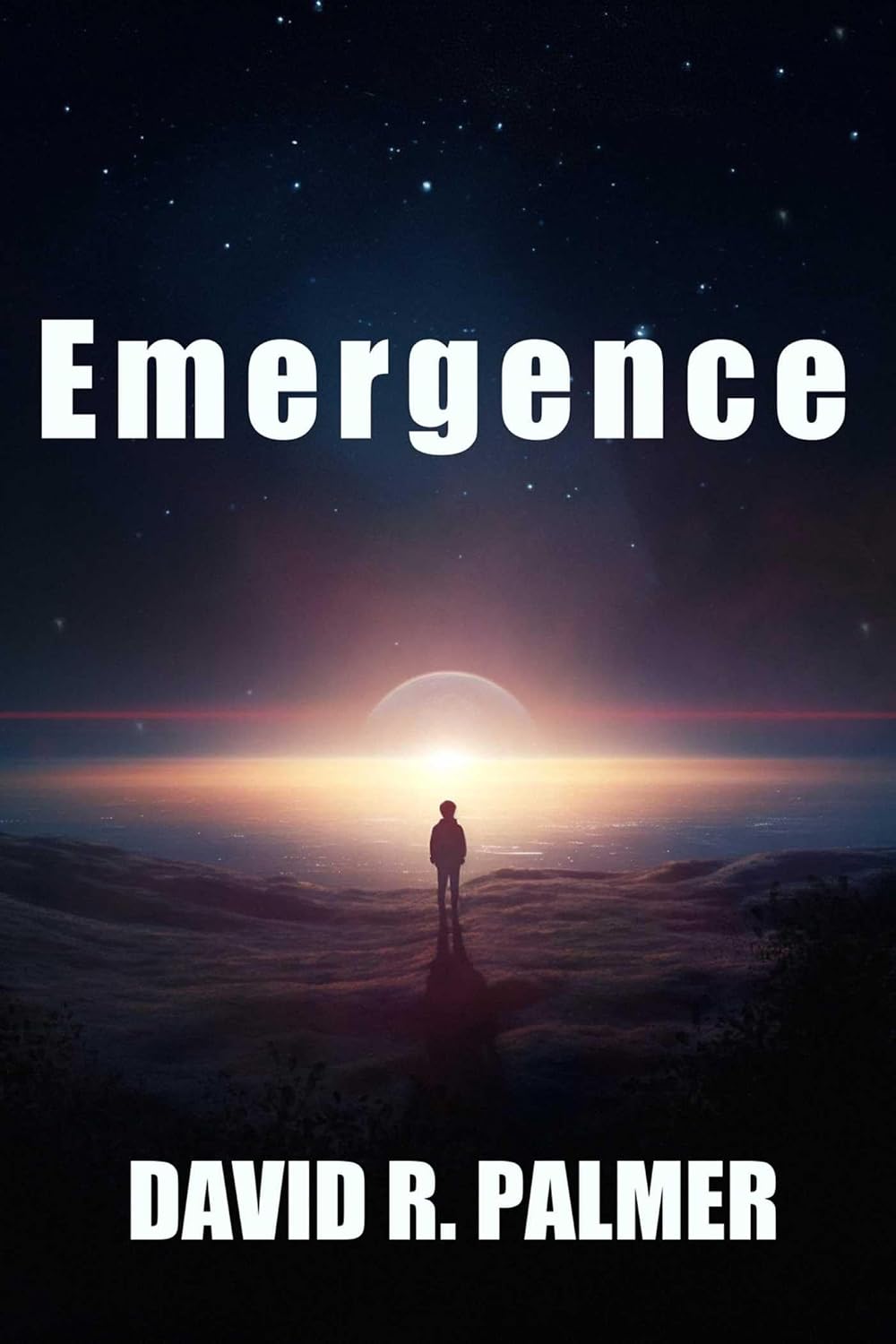
A cult favorite, largely forgotten, and unlike anything else here.
Candy Smith-Foster is an eleven-year-old genius who emerges from a shelter after a biological war to find nearly everyone dead. She’s also homo post hominem, a new species, which is why she survived.
The novel is written as her diary in a compressed shorthand, articles and pronouns dropped, telegraphic and fast, which takes about ten pages to acclimatize to and then becomes extremely readable.
It’s optimistic in a way almost no post-apocalyptic novels are, and Candy is a great character: competent, funny, and eleven.
The Book of Koli by M. R. Carey (2020)

Carey’s second appearance, and the best recent world-building in the genre.
Centuries after an ecological collapse, humanity survives in fenced villages because the trees have become predatory: genetically engineered flora that moves, hunts, and kills anything under sunlight. Koli is exiled from his village and travels with a scavenger and a solar-powered music player containing an AI.
Carey’s forest is the best-imagined hostile environment in recent post-apocalyptic books, and the technology remnants, tech that only obeys those it has bonded to, generate the social order.
The narrative voice is a light dialect, far more approachable than Riddley Walker, and unusually for post-apocalyptic books the trilogy is finished.
The Dog Stars by Peter Heller (2012)

The most beautifully written recent entry, and the loneliest.
Nine years after a flu killed almost everyone, Hig lives at a small Colorado airport with a dog and a heavily armed misanthrope named Bangley, flying patrols in a 1956 Cessna. He remembers his wife. He fishes in a dying river. He hears a transmission on the radio one day and eventually decides to fly beyond the point of no return to find the source.
Heller writes in a fragmented, unpunctuated style that shouldn’t work and does, and it’s the most lyrical of these post-apocalyptic novels, as much about grief as about survival.
The relationship between Hig and Bangley, a pacifist and a killer who need each other exactly, is the best thing in it.
Nausicaä of the Valley of the Wind by Hayao Miyazaki (1982–94)

Manga rather than prose, and it belongs here because it’s one of the most complete post-apocalyptic visions anyone has built.
A thousand years after industrial civilization destroyed itself, humanity survives at the edges of the Sea of Corruption, a toxic fungal forest patrolled by enormous insects. Nausicaä is the princess of a small valley who understands the forest better than anyone and spends the series trying to prevent a war between the surviving states.
The manga is far darker and more complex than the film, running seven volumes, and its ecological argument, that the poisonous forest is purifying the earth and that humanity is the contamination, is worked through with real rigor.
The ending is morally complicated in ways almost no post-apocalyptic books attempt.
The Wild Shore by Kim Stanley Robinson (1984)

Robinson’s debut and the most thoughtful American entry.
Sixty years after neutron bombs destroyed the United States’ cities, the survivors on the Californian coast live in a fishing village under an international quarantine that prevents any technological recovery. Henry is seventeen and has to decide whether the resistance movement’s plan is worth anything.
It’s the first of Robinson’s Three Californias triptych, three incompatible futures for the same place, and it’s the least dramatic and most humane.
His interest is in what a genuinely small-scale life would feel like from inside, and whether the loss is as total as the older characters insist.
Some Will Not Die by Algis Budrys (1961)

An underread classic covering two generations after a plague kills most of the American population.
The first half follows a survivor in New York during the immediate collapse. The second jumps forward to his son’s generation, in which a warlord is reassembling the eastern seaboard by force and calling it a restoration of the United States.
Budrys is unusually clear-eyed about the political question the genre usually avoids: somebody will rebuild the state, they will do it with violence, and the people who benefit will call it order.
It’s short, it’s hard, and it sits closer to political fiction than most post-apocalyptic novels.
If you’re starting from nothing: Earth Abides for the foundational text, The Road for the prose, Station Eleven for the humanity, World War Z for the structure, and Riddley Walker if you want the genre’s summit and have the patience for it.
Where to Go Next
The shelves on either side of this one are the dystopian novels list, where the catastrophe is the government, and the climate fiction list, where it is the weather.