The SCP Foundation is one of the biggest and most popular fiction collaborations on the internet.
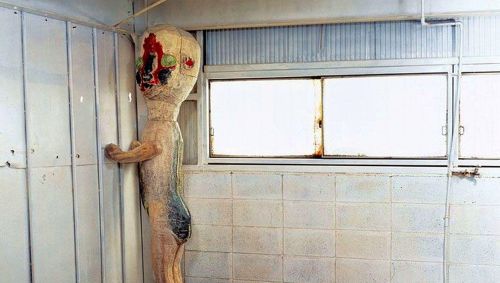
It all started back in 2008 on 4chan’s x board when a user posted a log-based creepypasta about an animate statue, SCP-173, and how to contain it which I also included on my list of the best creepypasta of all time.
The post quickly sparked the interest of other users, who soon began writing their own SCPs.
I first learned of the SCP Foundation and the horrors it contains back in the late 2000s when SCP-173 was frequently shared on 4chan and on other places online. Yet, I never looked deeper, never visited the actual SCP-Wiki and read none of the many other SCPs.
Since I’m a horror writer, I love all horror fiction, be it as books, manga, or creepypasta shared over the internet.
In recent years, the popularity of the SCP Foundation has grown significantly. Many YouTube channels small and big talk about various SCPs and several video games have been released.
Before long, my interest was piqued and at the end of last year, I finally checked out the SCP Foundation myself. And thus my deep-dive into the world of Secure, Contain and Protect began.
To my surprise, the SCP-Wiki and many of its entries differed from what I’d originally thought. I’d expected that most of the articles would be containment procedures for anomalous objects or creepy monsters akin to SCP-173.
Instead, the content of the SCP-Wiki had evolved over the years. By now, it contains many different styles and genres. You can find horror, science-fiction, comedy, historical fiction and even meta-fiction, all in the form of SCPs.
The anomalous objects and monsters, too, have evolved. We can find articles about Elder Gods and monsters, but also concepts, dangerous thoughts, memes, parallel dimensions, the future, the past and so much more.
As part of this deep-dive I read as broad and wide as I could. Many articles, lists or videos concerning the SCP Foundation talk about the most popular articles, but that doesn’t do it justice. Overall, there’s over six-thousand SCPs out there by now.
I didn’t read all of them, of course, but I read a good part of it, almost a thousand entries.
While taste is subjective and not all the SCPs I read were good, I found quite a few that were truly amazing.
That’s why I put together my personal list of the best SCPs of all time.
Notice: All articles cited here are licensed under CC-BY-SA.
I included a small list of honorable mentions because I sometimes came upon articles I didn’t truly enjoy, but which were too well-crafted to ignore.
The articles here are all outstanding, well-written or took tremendous effort. Many of them are amongst the most popular articles in the SCP-Wiki. And yet, I had my problems with them. It could’ve been the narrative, the story told, the complexity, missing information or certain aspects I didn’t enjoy.
Still, I think they are all worth reading, or at least worth a look.
With that, I present you twenty honorable mentions that didn’t make it into my overall list of the best SCPs.
Series I is where it all started. Those are the very first SCPs, and they were written during simpler times.
Today, Series I is often criticized for being poorly written, having no character development, or being too simple.
While many of the articles in Series I are considered classics and rank high on the best-of-all-time list, it’s often more because of age and popularity than actual quality. A great example is the now defunct heritage collection, which includes some of the most popular SCPs of all time.
And yet, for all the criticism Series I is getting, the articles here can be quite effective. They are short and to the point, often reminiscent of creepypasta, and can be best described as monster-of-the-week articles.
They are less grand, less imposing and there’s no bigger mythos surrounding them. It’s because of this that they have a certain charm to them, at least some of them.
Overall, I read a good chunk of Series I, especially the more popular articles. While I believe the consensus of them being weaker compared to later Series holds true, I still enjoyed some of them. It’s here, I want to share those hidden little gems from Series I that I included in my list of the best SCPs.
With Series II, a lot of things changed for the SCP-Wiki. Series II can be best described as a deconstruction of series I.
During Series I, the SCP-Wiki didn’t have a general tone. While some people wrote more realistic pieces, others wrote wacky and over-the-top articles. Those would later be known as lolFoundation. In these articles, the SCP Foundation is a crazy place, populated by insane, over the top characters.
Series II was a movement against this. The SCP-Wiki grew grimdark in tone. The world of the SCP Foundation became a cold, hard place. It’s dark and horrible, and many of the articles in Series II mirror it by being grim and depressing.
Series II was also heavily influenced by the SCP-1000 contest and its winner. It turned the SCP-Wiki away from its horror roots and more towards, including folklore, the unusual, and the fantastical.
In Series II, we also encountered the very first format screw, articles who incorporated other elements, moved away from the normal SCP format or disregarded it entirely.
Overall, Series II can be best described as a transitional period, one in which the SCP-Wiki moved away from the creepypasta roots of Series I and more towards the grander, more scientific style of Series III. Still, Series II is well worth reading, and many of its articles are amongst the best SCPs on the SCP-Wiki.
Series III is where things grew in size. It’s here where we find higher concepts, much more world-building and quite a few of the best SCPs of all time.
The articles of Series III are longer and often more story-driven than earlier ones. They are often grander in style, concerning anomalous creatures or concepts of an entirely different order. We’re not talking about monsters in cages anymore, we’re talking about entities that could threaten the entire SCP Foundation.
In Series III, we also get a much clearer picture of the various groups of interest, their motifs and the impact they have on the world and the SCP Foundation.
Once more, the tone of the SCP-Wiki changed. The grimdark tone that had taken root in Series III was replaced by a more ambiguous one. The SCP Foundation could still be unethical and often was. As a whole, however, it was concerned with keeping the world a safe place and protecting humanity.
Series IV is known mostly for how Meta it was. Many of the articles in Series IV played with tropes and twisted them in various creative ways.
It features some of the most creative and bizarre articles ever published on the SCP-Wiki. Format screws, Meta narratives, author inclusion and many other concepts came into play here.
While meta-articles were here to stay and would evolve, Series IV can be considered the most meta-heavy series out of all of them. And yet, as many meta-articles as Series IV contains, it also contains of a plethora of fantastic articles and many of the best SCPs of all time.
Series V is one of the newer Series, and one I haven’t explored as deeply as some of the earlier ones, yet.
In Series V, the SCP-Wiki returned to its horror roots. Once more, many of its articles would center on horrible, ghastly and creepy creatures. It’s also in Series V that one of the most popular and best SCPs in the horror genre was written.
One thing I noticed during Series V is that the writing was absolutely outstanding. It was here I discovered many of my favorite authors on the SCP-Wiki who’ve produced some of the most well-written and best SCPs of all time.
Series VI was yet another series that brought fresh wind to the SCP-Wiki. Once more, writers would try out new things and brought forth new ideas.
We can see an influx of different format screws, multi-page articles or entirely fresh forms of SCPs.
Series VI also took a step away from the horror and the more serious articles that dominated Series V. Instead, we saw a multitude of silly or humorous articles, many of which I enjoyed tremendously.
The writing, however, stayed on the same high level as during series V and I once more found many outstanding articles that make a worth addition to this list of the best SCPs of all time.
Series VII is the current and newest series, but it already features some absolutely fantastic articles.
The SCP-6000 contents might be my all-time favorite contest and features some grand, outstanding and well-written articles.
Overall, the quality I’ve seen in the articles of Series VII so far might be the best I’ve seen on the SCP-Wiki so far. While Series VII is new, many of the articles can be considered among the best SCPs of all time.
Anyone who’s spent some time on the SCP-Wiki has heard about SCP-001 and the many 001-Proposals.
Being the number 001, many people had ideas what SCP-001 was supposed to be. Some said it had to be the very first SCP ever discovered, others said it had to be the most important or dangerous one.
It was eventually decided to keep the slot open, and instead fill it with proposals of what SCP-001 could be.
In-universe, SCP-001 was so important and dangerous, it was to be kept a secret and well-hidden. To keep its identity a secret, a variety of false entries were created to throw off any unauthorized reader.
What this meant is simple. The true SCP-001 could be any of them, it could be all of them, or none of them.
The SCP-001 proposals are a writer’s most ambitious work, their grandest article and the culmination of their efforts.
It’s because of this that the SCP-001 articles are seen as the cream-de-la-crop and the best SCPs on the entire SCP-Wiki.
After reading all of them, I have to agree.
Many of the 001-Proposals are amongst the most ambitious and best SCPs on the entire SCP-Wiki. As the last part of this list, I want to present to you the best of the almost fifty proposals there are on the SCP-Wiki.
As a horror writer, I’ve always been fascinated by the extremes of the genre. It wasn’t just fear I was looking for, but violence and the grotesque. Some manga go far beyond psychological scares or supernatural themes and dive straight into raw brutality. This list is dedicated to those works, to some of the most brutal manga out there.
Brutal manga are violent, graphic, and often deeply disturbing. They show dismemberment, cruelty, revenge, and the ugliest sides of humanity in all their glory. These manga aren’t just gory. They‘re intense, uncompromising and hard to forget.
Whether it’s physical savagery, emotional devastation, or grotesque imagery, every entry on this list pushes the limits of what can be shown and what readers can handle.
So if you’re looking for the most brutal manga out there, this is where to start.
Mild spoiler warning: I keep things vague, but it’s hard to talk about brutality without giving anything away.
Here’s my curated list of the most brutal manga I’ve ever read (last updated: July 2025).
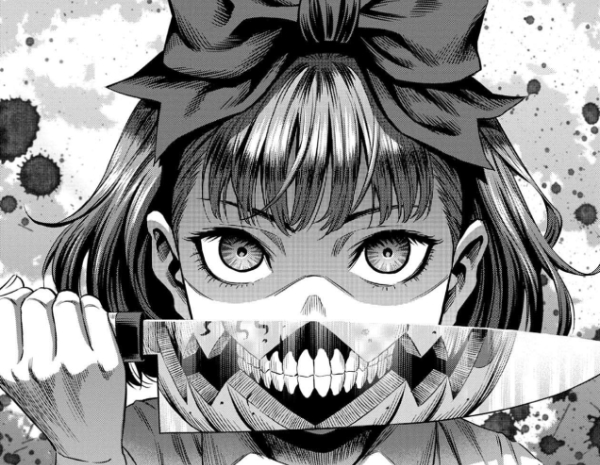
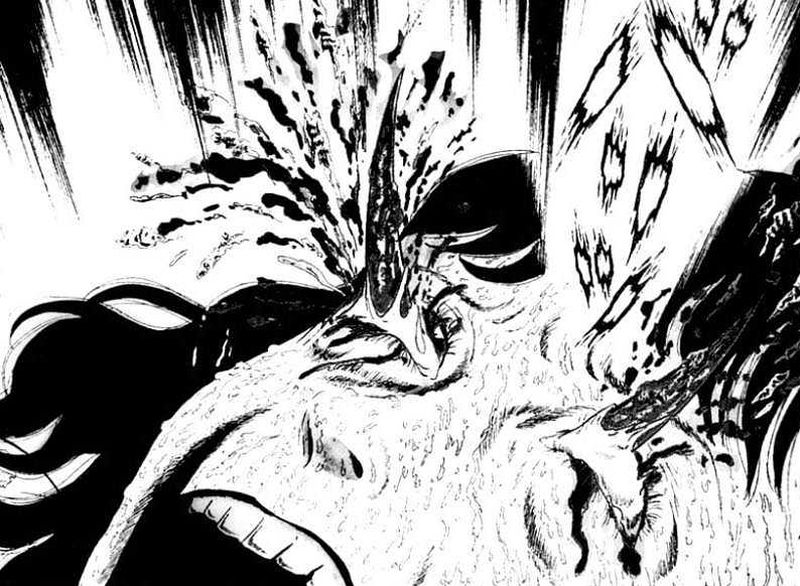
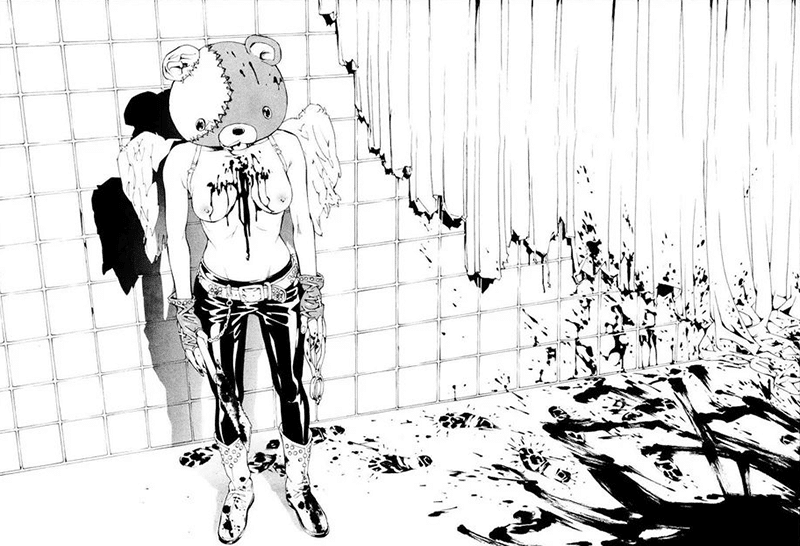
Pumpkin Night by Hokazono Masay and Seima Taniguchi is a grotesque, over-the-top slasher manga that exists for one reason alone: to show ultraviolent carnage in the most creative and absurd ways possible.
After enduring horrific bullying and being institutionalized, Naoko Kirino escapes from a mental hospital and sets out for revenge, now wearing a pumpkin head and armed with an appetite for murder. The kills are inventive, excessive, and genuinely brutal: faces carved off by jagged scopes, brains dissolved with acid, and intestines flying across page after page.
While the manga carries an ecchi tag, it’s fairly tame, aside from a few fanservice scenes. What takes the center stage is clearly the unforgiving violence.
What really sets Pumpkin Night apart is how ridiculous it gets. The story quickly descends into chaotic madness, eventually involving government conspiracies, cartoonishly evil side characters, and even Donald Trump makes an appearance. It’s completely unhinged, but it knows it is.
While the writing is pure B-movie exploitation schlock, and the characters barely resemble real people, the artwork is surprisingly strong, making the gore scenes disturbingly effective.
Another thing that stands out is the manga’s fan translation. It leans heavily into the manga’s edgy tone, and adds its own crude, and occasionally offensive humor to the mess.
Pumpkin Night is pure guilty pleasure splatterpunk. It’s not a good manga, so if you’re looking for something sophisticated, skip it. But if you want raw, unapologetic violence pushed to absurd extremes, be sure to check it out.
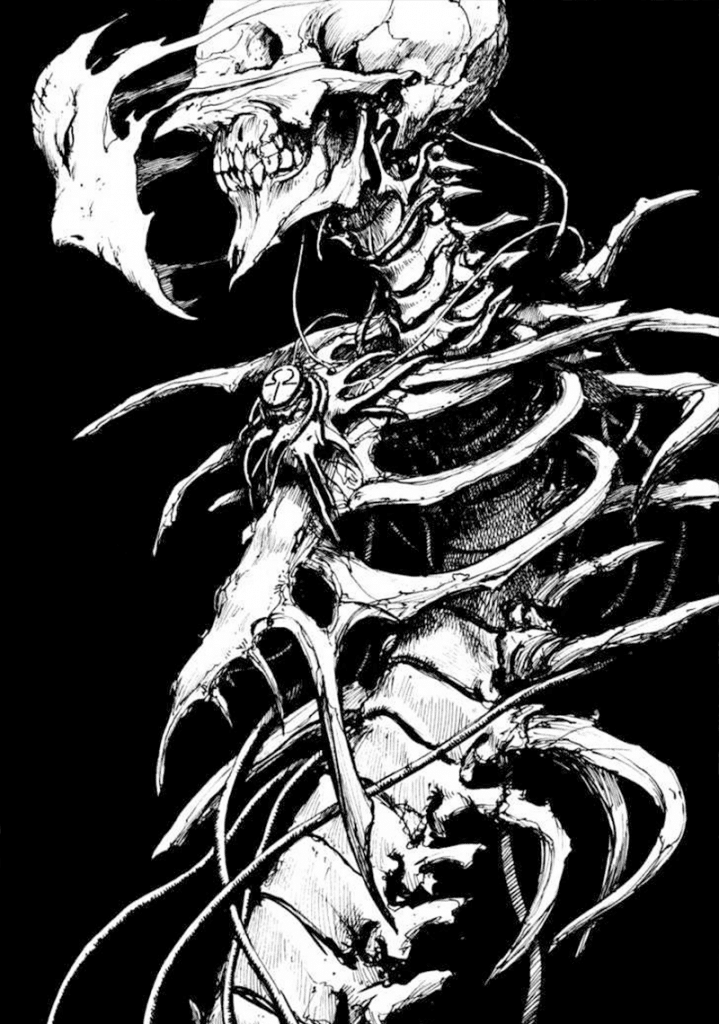
Dai Dark is what happens when you let Q Hayashida, the chaotic mind behind Dorohedoro, go crazy in space.
The premise is simple: Zaha Sanko’s bones are cursed, and whoever possesses them can have any wish granted. This makes him a walking target across the entire galaxy. Instead of angst and terror, however, Dai Dark turns this setup into a black comedy drenched in sci-fi gore. Sanko and his companions, Avakian, Shimada, and Damemaru, slice, melt, and obliterate their way through hordes of cosmic freaks, all while cracking deadpan jokes.
The violence is absurdly over-the-top: bodies explode, bones erupt from skin, and people are dismembered mid-sentence. Yet it’s all delivered with a bizarre, almost casual sense of humor. It’s brutal, sure, but so exaggerated it becomes hilarious.
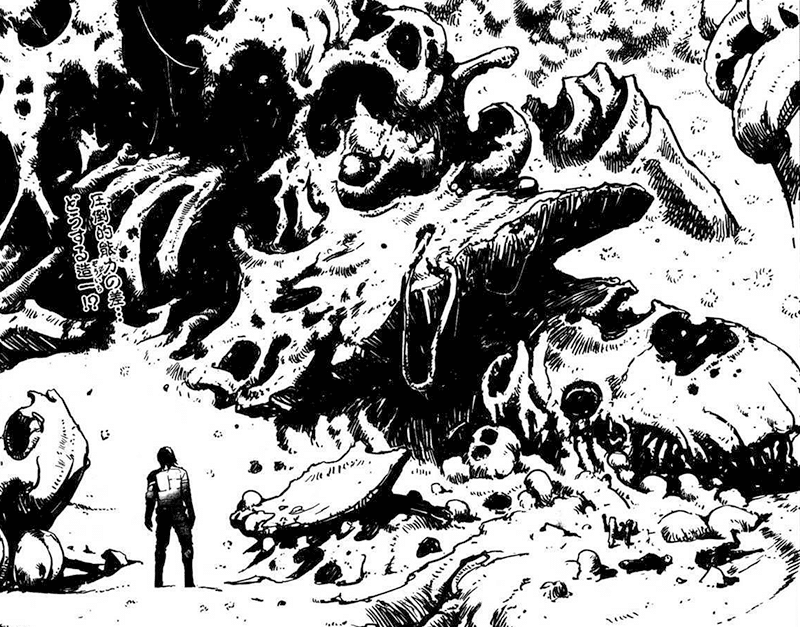
Compared to Dorohedoro, this manga leans even harder into chaos and absurdity. The art is stunning, grotesque, amongst the best in the medium, and full of nightmarish creatures and space-tech horrorscapes.
That said, Dai Dark doesn’t have tight plotting or emotional depths. It’s an unrestrained space adventure, and its overarching plot feels more like an excuse to add more visual madness. The cast, while fun and charming, is less memorable than Dorohedoro’s. We occasionally catch a glimpse of Sanko’s past at the Leviathan Elementary School Ship Treegun, but these rarely have any impact on the story. It’s clear that the bizarre imagery is front and center here.
Dai Dark is a hyper-violent, ultra-creative descent into sci-fi insanity. It’s not here to make deep points, it’s here to melt faces, tear off limbs, and make you laugh while you witness it. If you’re in for carnage, Q Hayashida delivers non-stop.
Juujika no Rokunin is one of the most controversial revenge manga of recent years, and for a good reason. It’s exploitative, morally bankrupt, and almost laughably over the top. Surprisingly, though, it’s also a guilty pleasure for anyone craving a raw, sadistic payback.
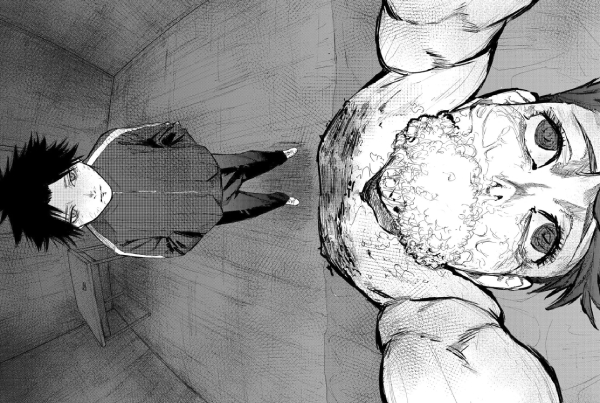
Shun Uruma is bullied severely by five deranged classmates. When they target his family, his life collapses completely. Under the guidance of his WWII veteran grandfather, Uruma trains in secret for four years before enacting his revenge. What follows is a vicious murder spree that takes graphic retribution to absurd extremes.
Juujika no Rokunin is, bluntly, torture porn in manga form. Every villain is cartoonishly evil, women exist only to be sexually assaulted. The writing takes itself way too seriously, and the violence is ridiculous. Yet the art is damned good, and it’s weirdly satisfying to watch Uruma dismantle each of his abusers.
The biggest problem is the manga’s second half. Juujika no Rokunin pivots from a tight revenge story to a bloated, unfocused mess. There’s a timeskip, new characters, and an endless final arc that has long lost its momentum. What starts off as an entertaining brutal manga centering on revenge becomes nothing but a slog.
Still, if you want brutal violence, creative torture scenes, and cold-blooded revenge, this delivers, at least for the first 100 chapters. Just don’t expect anything profound or balanced. Juujika no Rokunin is an ugly, excessive and undeniably brutal manga.
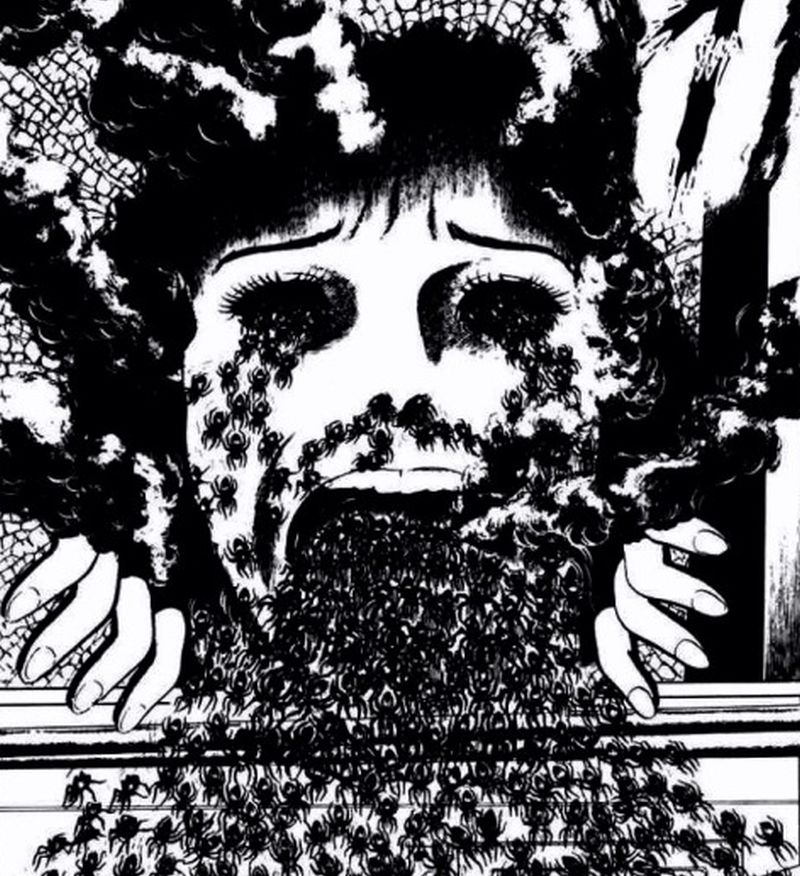
Kazuo Umezu is a name every horror manga fan should know. Often considered the godfather of the genre, Umezu’s influence runs deep. While The Drifting Classroom is his most famous work, God’s Left, Devil’s Right Hand is by far his most brutal.
The manga follows a boy Sou, who experiences supernatural visions of disturbing events before they happen. Each arc centers on gruesome incidents, some grounded in real-world horrors like serial killers, other delving into the surreal, the occult, or full-on nightmare logic. Every single story is soaked in violence. Whether it’s mutilation, dismemberment or grotesque body horror, Umezu delivers some of the most extreme imagery in his career.
Especially the infamous Eroded Scissors and Tongue of the Spider Queen arcs loaded with disturbingly creative gore.
That said, not all chapters are equal. Some are stronger and more coherent than others, but they’re all exceedingly brutal. And while Umezu’s art style might not appeal to everyone, and is often described as old-fashioned, stiff, and ugly, it’s uniquely effective when it comes to delivering horrifying visuals.
God’s Left Hand, Devil’s Right Hand, is violent, strange, and at times completely unhinged. It may be a mixed bag, but for its sheer intensity and originality, it remains one of the most brutal horror manga ever made.
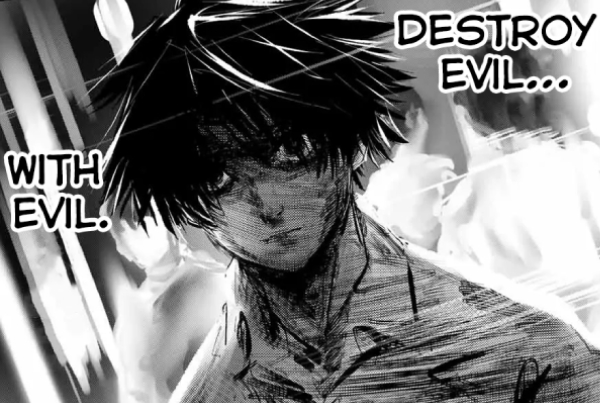
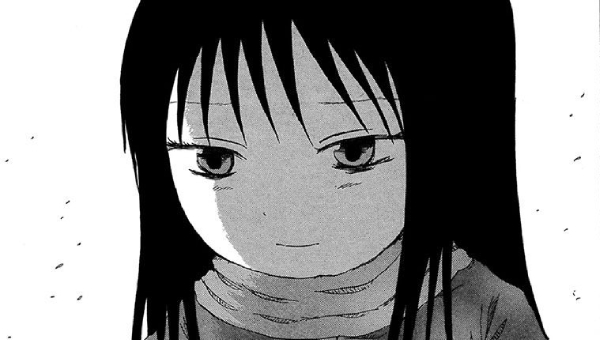
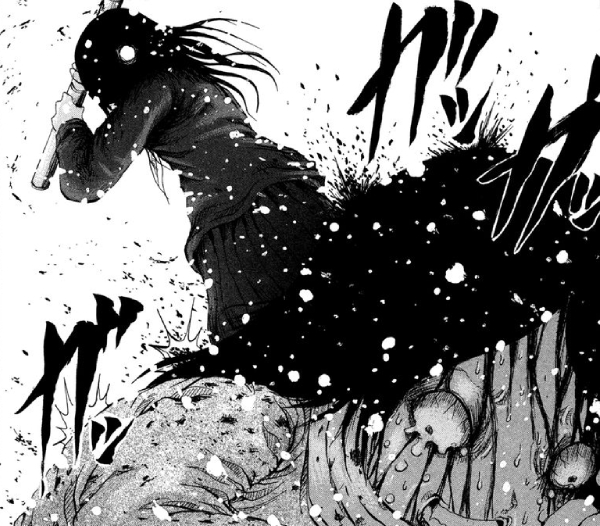
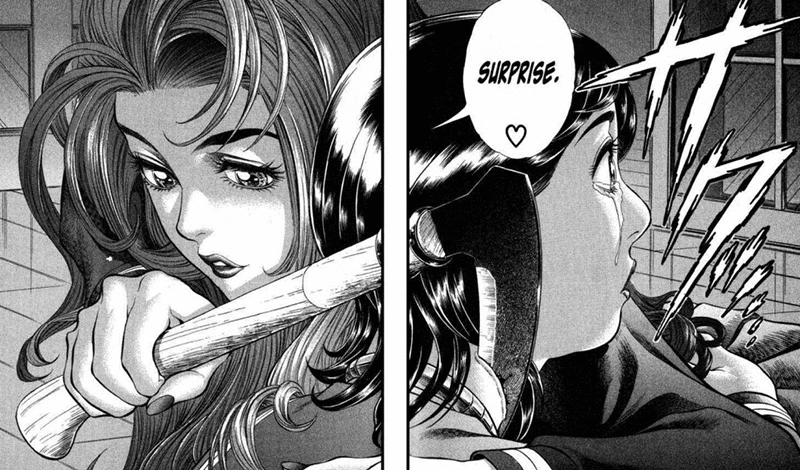
Misumisou is one of the most brutal revenge manga ever written. It’s made even more disturbing by the fact that nearly every character involved is a middle schooler.
After moving from Tokyo to a rural town, Haruka Nozaki becomes the target of relentless bullying. Her classmates torment her in increasingly violent ways until one horrifying incident pushes everything past the point of no return. What follows is a blood-soaked descent into revenge, trauma and psychological collapse.
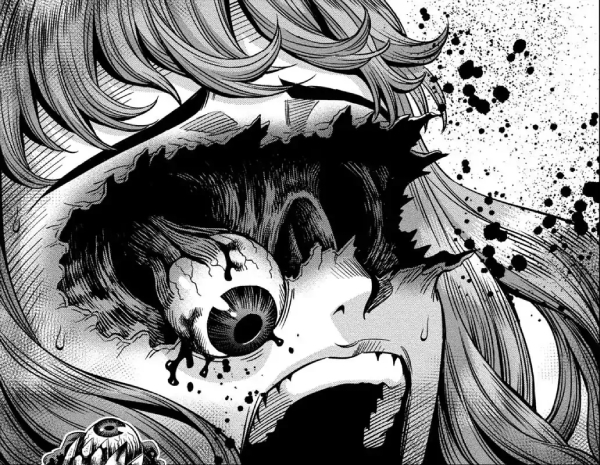
This brutal manga is infamous for its sheer intensity. The violence is extreme: faces are slashed, skulls crushed, guts spill freely, and the characters, all teenagers, stab, bludgeon and kill each other without remorse. It isn’t just gory, it’s nasty.
At times, Misumisou seems to strive for social commentary, suggesting that abuse breeds abuse, and violence begets more violence, but the execution is messy. Many of the characters feel like deranged caricatures, from the cartoonishly evil bullies to the morally bankrupt adults. Everyone feels unhinged, which can undercut the realism the manga tries to convey.
The art is divisive. Rensuke Oshikiri has a unique style and his characters often were grotesque, exaggerated expressions that can look more unintentional than unsettling. This, however, makes the violent scenes hit even harder.
Misumisou is not a refined work. It’s blunt, ugly, and emotionally draining. But if you’re looking for sheer brutality, few manga go this far. Just be prepared for a deeply uncomfortable ride, and a story that trades nuance for shock value.
Genres: Horror, School Life, Tragedy, Revenge (Josei)
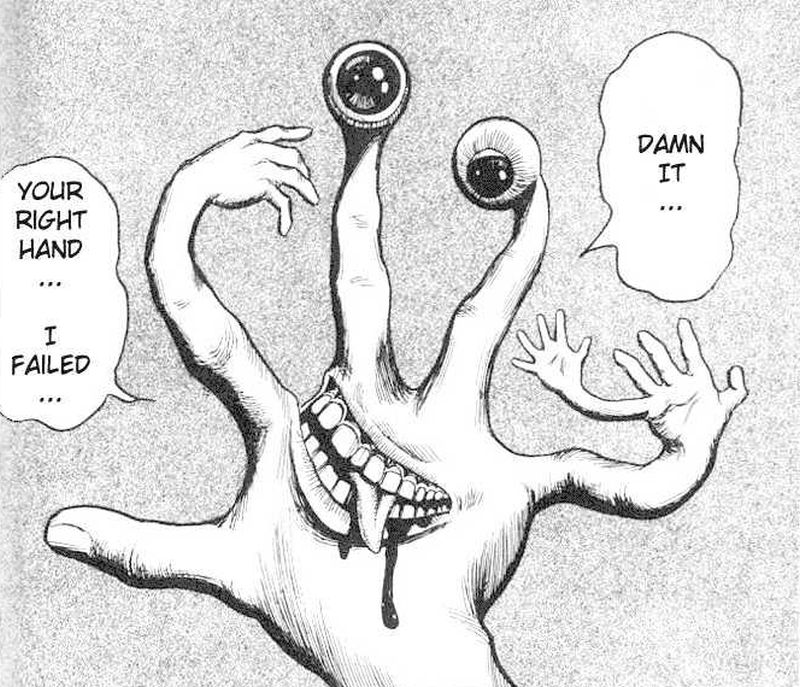
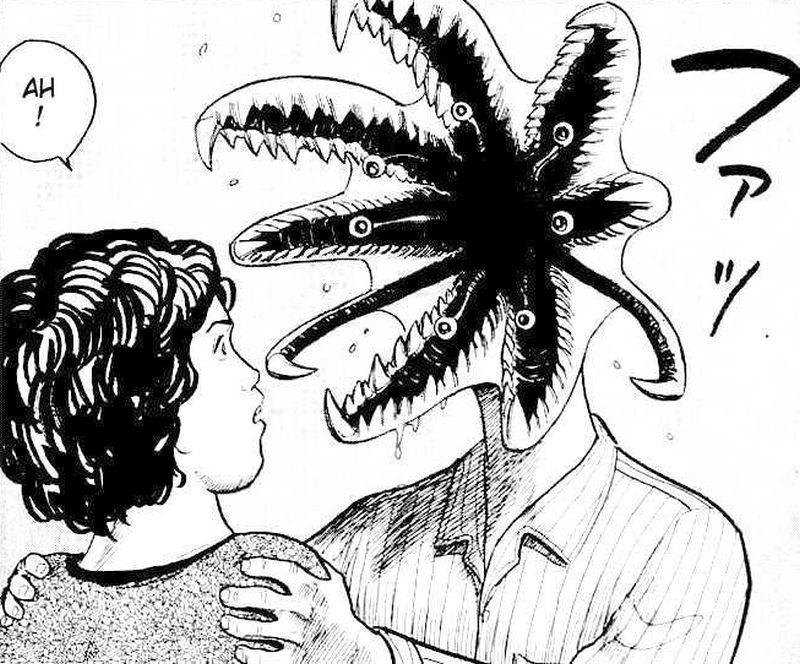
Parasyte is one of the most iconic body horror manga ever created, and easily one of the most brutal of its time. First serialized in the 90s, this sci-fi horror classic by Hitoshi Iwaaki still holds up today thanks to its grotesque creature design, visceral violence, and bleak, unflinching tone.
The story follows Shinichi Izumi, a high school student who’s attacked by a worm-like alien parasite. Unlike most victims, he stops the creature from reaching his brain, so it settles in his right hand instead. The two are now forced to coexist, but other parasites aren’t so restrained. They fully consume their human hosts and go to feed on other humans in secret.
Parasyte doesn’t hold back in showing what these creatures are capable of. Each parasite can reshape its host’s body into deadly forms. We see tentacles, flesh blades, mouths, and much more. These transformations are nightmarish, and the speed and efficiency with which these monsters kill is terrifying. Victims are mauled, torn to shreds or even devoured alive. There are panels in this manga that are outright disturbing in how detailed the violence is. Parasyte may be philosophical in part, but the carnage is front and center.
Despite its age, Parasyte remains one of the goriest, most brutal manga to come out of its era, and one of the smartest. It’s a rare blend of high-concept sci-fi horror and ruthless, full-page splatter. If you want something that’s equal parts intelligent and horrifyingly brutal, Parasyte is a must-read.
MPD Psycho is one of the most brutal and cerebral crime-horror manga ever written. Don’t expect edge just for edge’s sake, though. What makes this manga so disturbing is its cold, clinical brutality, rendered in almost surgical detail.
The story follows Kazuhiko Amamiya, a detective suffering from dissociative identity disorder. At first, the manga seems episodic, with Amamiya solving a string of grotesquely violent murders. Before long, however, it morphs into something much deeper and darker. What unfolds is a sprawling psychological mystery.
The brutality in MPD Psycho isn’t just about flashy splatter or revenge carnage, it’s about systematic cruelty and body horror delivered without an ounce of empathy. Victims are dissected, reassembled into grotesque sculptures, or turned into living dolls. It’s hard to stomach not just the gore, but the complete emotional detachment with which it’s presented.
Shou Tajima’s artwork is razor-sharp and unflinching. There’s no messiness. Every corpse and every mutilation is drawn with chilling precision. The cleanliness of the linework only makes the violence feel more sterile and real.
What separates MPD Psycho from other brutal manga is that it doesn’t glorify the violence, it intellectualizes it. That makes it more disturbing, but also more impactful. The story is complex, sometimes to a fault because of shifting personalities, and a dense, twisting plot that demands close attention. But beneath it all is a manga obsessed with identity, control, and what happens when the human mind is broken on purpose.
If you’re looking for relentless violence, MPD Psycho delivers, but with surgical restrained rather than splatterpunk. It’s one of the smartest and most haunting brutal manga of its kind.
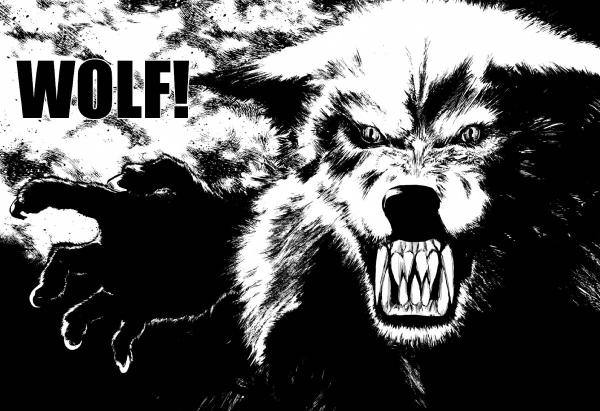
Wolf Guy: Ookami no Monshou is one of the most brutal and controversial action-horror manga out there. Stylish, savage, and soaked in blood, it’s a manga that offers one of the most feral depictions of the werewolf mythos in modern manga. It also dives into incredibly dark, at times, deeply uncomfortable territory.
The story follows Akira Inugami, a lone transfer student who seems to invite violence wherever he goes. After surviving a gang attack, he arrives at his new school without a scratch. Unbeknownst to his classmates, Inugami is a werewolf. He heals instantly, doesn’t age normally, and tries to stay out of conflict.
This manga doesn’t hold back. It features extreme violence, torture, sexual assault, and an overwhelming sense of hopelessness at times. Characters are mutilated, shot, eviscerated, and brutalized. Later arcs involve a mass shooting and a prolonged sequence of sexual abuse. These moments make Wolf Guy one of the most difficult manga on this list to stomach, and one of the most controversial. Many readers drop it entirely during that stretch and it’s easy to see why.
And yet, for all its faults, Wolf Guy is strangely compelling. Akira is a stoic, almost mythical protagonist, while Haguro is one of the most sadistic villains in manga. The art is sleek and cinematic, especially during the many vicious fight scenes.
If you’re drawn to unrelenting violence and tragedy with a supernatural edge, there’s nothing quite like it. But be warned, Wolf Guy isn’t for the faint of heart. It’s one of the most brutal manga out there.
Genres: Action, Psychological, Supernatural, School Life
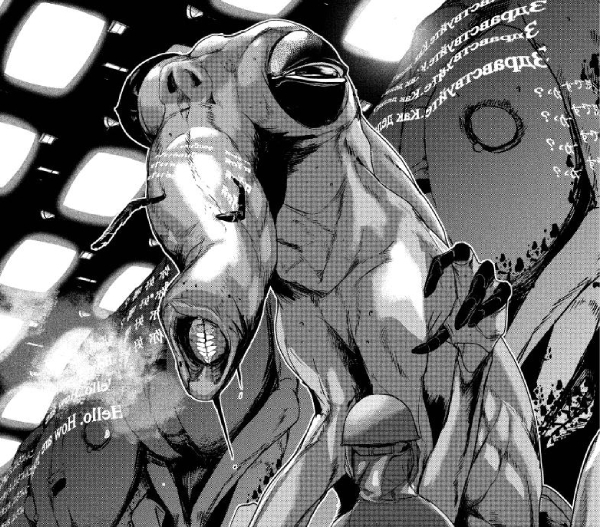
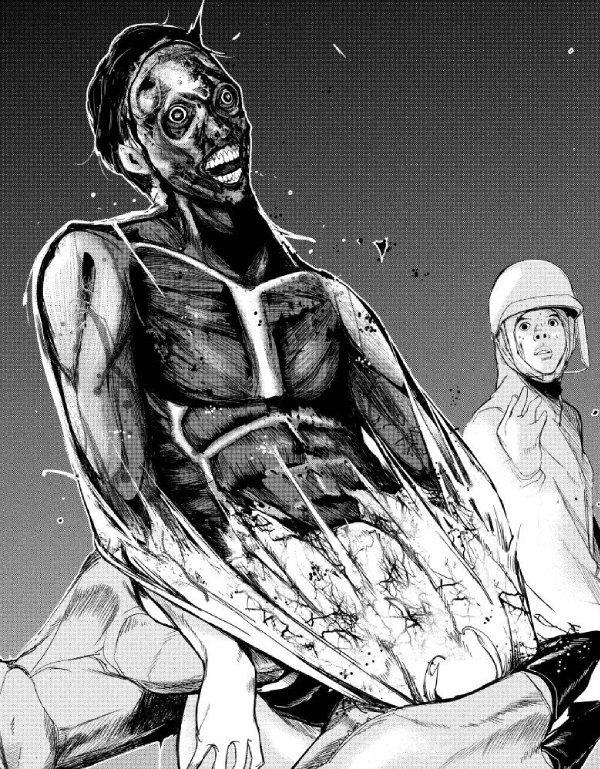
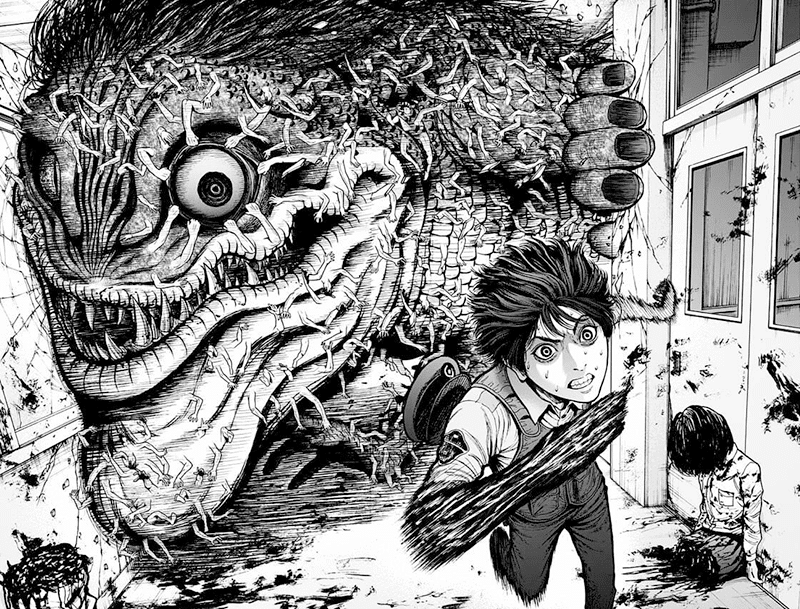
Starving Anonymous is one of the most viscerally brutal horror manga of the last decade. It’s grotesque, disturbing and relentless in its depiction of human suffering.
The premise alone is horrific enough. Two high schoolers, Ie and Kazuo, are kidnapped and wake up in a refrigerated truck full of corpses. They’re inside a secret human meat processing facility where people are fattened like livestock, forcibly bred, harvested or fed alive to monstrous insectoid aliens.
This gore isn’t just there for shock value. No, it’s systemic, mechanical brutality. We see rows of humans being pumped with synthetic feed, bred like cattle, and butchered without mercy.
Things get even worse once the aliens show up. They are nightmarish, insectoid creatures with only a single purpose to consume. Their victims are skinned alive, crushed into pulp, ripped limb from limb, or devoured in seconds. The sheer variety and detail of the violence is staggering.
The art by Inabe Kazu leans into every moment of carnage. It’s drawn with unflinching precision. We watch flesh splitting, bones snapping and eyes bulging in terror. There’s a near-clinical insanity to the way it captures pain, panic, and body horror.
Unfortunately, the manga veers into sci-fi action midway through, introducing regenerating humans, conspiracies, and escalating insanity. Even though it never loses its oppressive, dehumanizing tone. The violence is constant, and the sense of despair never fades.
Starving Anonymous is not for the faint of heart. It’s pure dystopian carnage: nihilistic, grotesque and absolutely brutal. Few manga deliver this level of gore and horror with such sustained intensity.
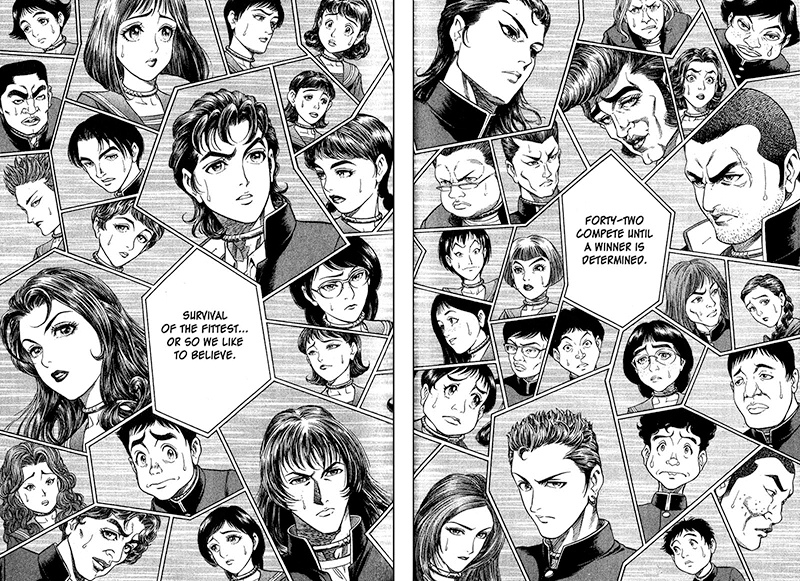
Battle Royal is one of my favorite movies of all time. The manga adaption of Koushun Takami’s novel, while more exaggerated than either the film or the book, is without a doubt one of the most brutal manga I’ve ever read.
Each year, one middle school class is randomly chosen to participate in The Program. They are then dropped onto a remote island and forced to kill each other until only one remains. Shuuya Nanahara, our protagonist, rejects the system and seeks to survive without taking lives, though, as the bodies pile up, that goal becomes harder and harder to keep.
The setup is already disturbing, but what makes Battle Royal especially intense is the level of graphic violence. The manga goes all in. We see beheadings, disembowelments, brutal stabbings, exploding collars, and plenty of emotional breakdowns. It’s relentless and messy, but in the best way possible.
The story expands the original novel by giving each student a backstory, some heartfelt, others horrifying, before inevitably killing them off. The structure can feel formulaic, but it creates emotional weight and tension even for minor characters.
The manga’s not without flaws, though. The character design is wildly inconsistent. Some look like normal teenagers, others like children, and some like they’re in their thirties. Kawada, in particular, feels like an entirely different age group. While the tone leans into psychological horror, it sometimes veers into manga-style exaggeration that strains believability.
Still, Battle Royal remains a standout in the brutal manga category. It’s raw, nihilistic, and disturbing. If you’re into death games, psychological violence, and chaos, this one’s a must-read.
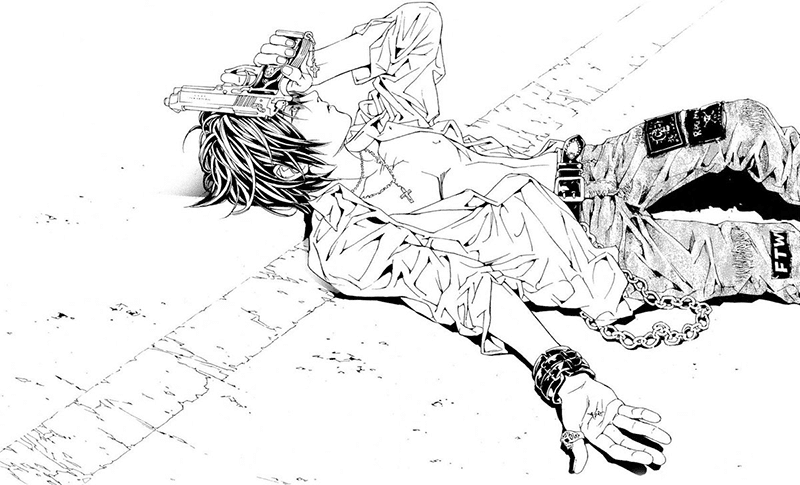
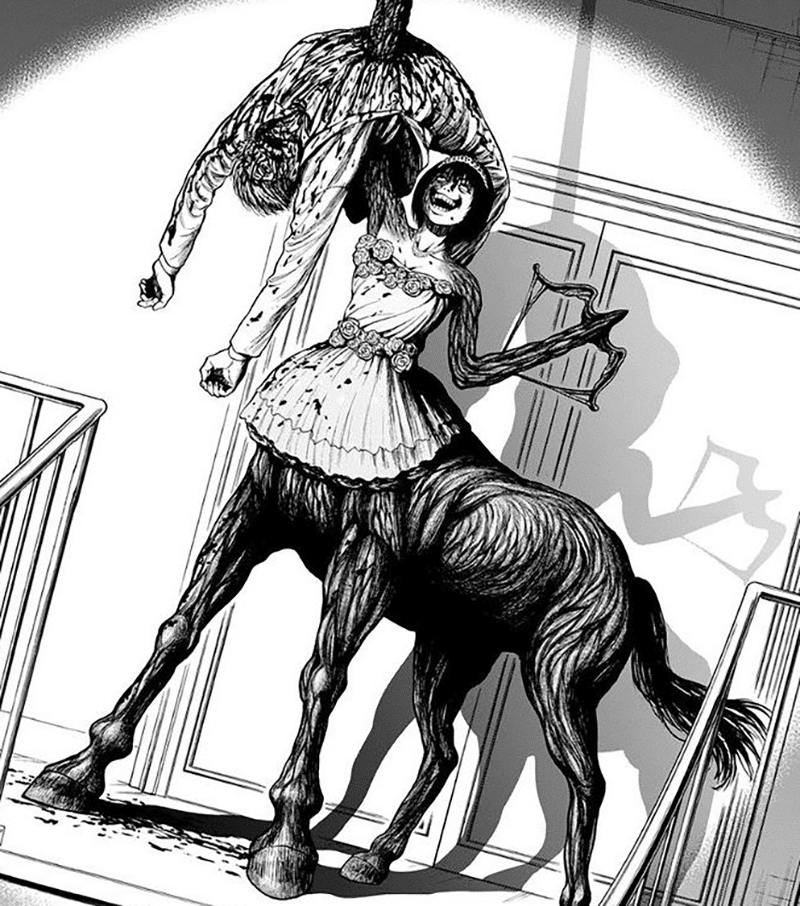
Jagaaaaaan is a hyper-stylized, ultra-violent descent into madness, body horror, and psychosexual chaos, brought to life by some of the most grotesquely detailed art in modern manga.
Written by Muneyuki Kaneshiro, the story follows Shintarou Jagasaki, a disillusioned neighborhood cop who secretly fantasizes about blowing away people who annoy him. One day, those fantasies become a horrifying reality when a man on a train transforms into a monster and starts slaughtering civilians. In the chaos, Jagasaki discovers his own powers: the ability to fire explosive bullets from his arm. Thus begins his transformation into a fractured human, and his quest to eradicate them. The violence in Jagaaaaaan is excessive in every way possible. Bodies erupt, flesh tears, skulls are smashed, and the sheer scale of destruction can be overwhelming.
The gore is constant, unapologetic, and made even more jarring by Kensuke Nishida’s gorgeous, twisted art. The fractured humans themselves are truly grotesque, and each transformation is a nightmarish blend of personal vice and physical mutation.
Jagaaaaaan isn’t just brutal for the sake of action. It’s also disturbing in its themes. Many fractured humans act out their suppressed desires, often with horrifying consequences. There’s one recurring character in particular whose actions push the story into extreme territory.
Stylistically, Jagaaaaaan is pure excess, narratively and visually. The tone swings from black comedy, grotesque violence, and uncomfortable sexual content. The cast is loaded with eccentric, twisted and unhinged characters.
Ultimately, Jagaaaaaan is not for everyone. It’s loud, edgy and often offensive. But if you’re looking for stylized brutality, disturbing concepts, and some of the best monster design out there, this one delivers.
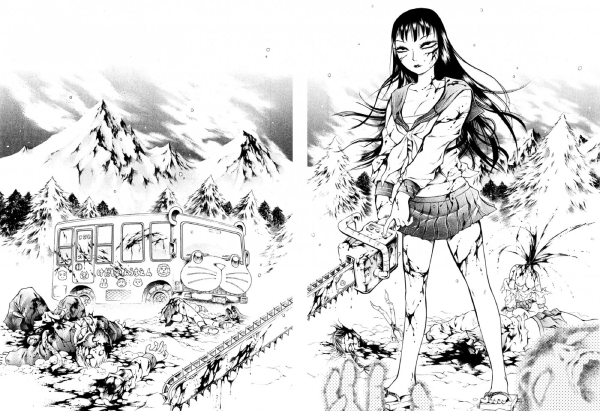
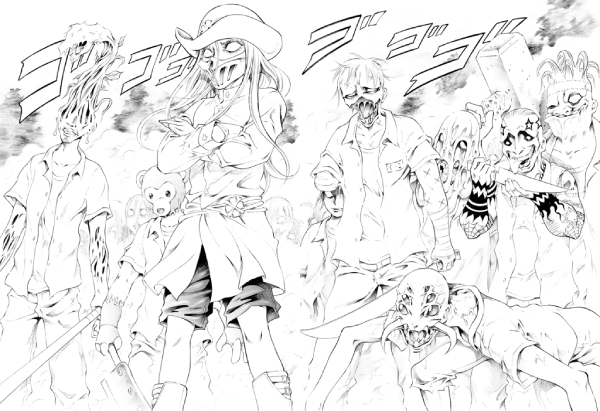
Chimamire Sukeban Chainsaw is easily the weirdest, trashiest, and most unapologetically stupid manga on this list, and that’s exactly why it earns its spot.
This splatterpunk fever dream follows Geeko, a delinquent schoolgirl armed with a chainsaw, as she battles herself through hordes of former classmates who’ve been turned into grotesque, zombified monsters by her deranged science-obsessed ex-friend, Nero. The premise is absurd; the tone is chaotic, and the violence is turned up to eleven.
Calling this manga over-the-top would be an understatement. It’s an explosion of hyper-violence, dumb comedy, and excessive fanservice. Bodies are torn apart in ludicrously gory ways, limbs fly, and blood splatters across the page. But it’s not trying to be scary or serious. This can be best described as Troma-core in manga form.
One thing that might turn a lot of readers off is the excessive fanservice. The manga features copious amounts of nudity, and constantly shows Geeko, a teenager, in skimpy outfits and exaggerated poses. Yet the manga doesn’t even try to justify it. No, it wants to be trashy; it thrives on it, and goes the full way.
The art is rough, but it suits the chaotic tone. Action scenes are energetic, if occasionally messy, and the monster design is genuinely creative and gross. Unfortunately, the characters suffer from same-face syndrome and anatomical oddities.
Still, for all its flaws, Chimamire Sukeban Chainsaw is an unfiltered exploitation manga. It’s grotesque, stupid, loud, but also incredibly fun if you’re in the mood for something outrageous. This isn’t just brutal. It’s the equivalent of a shitty midnight movie, and boy, do I love it.
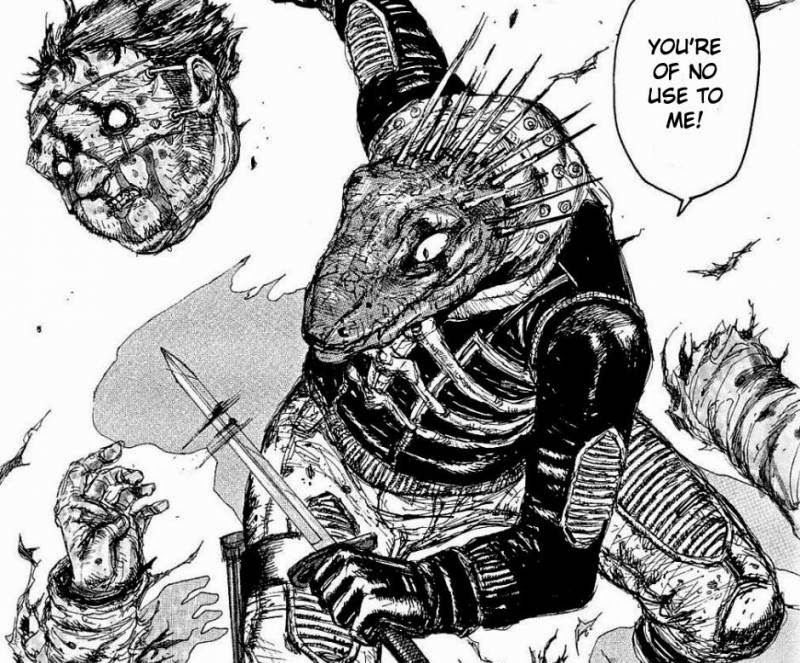
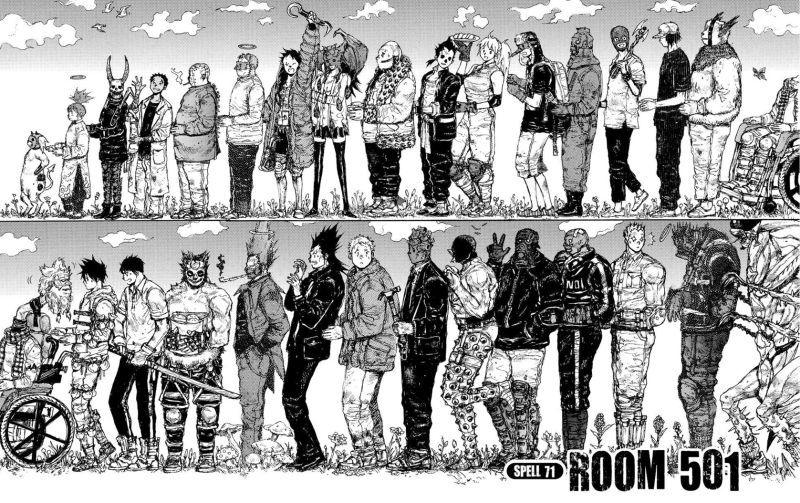
Dorohedoro is one of the most brutal manga you’ll ever read, but also one of the strangest. Q Hayashida blends grotesque violence with slapstick humor and surreal world-building in a way that feels uniquely unhinged, but never incoherent.
Set in the bleak, run-down city of Hole, where magic users treat humans as disposable test subjects, Dorohedoro kicks off with a reptile-headed man named Kaiman. Immune to magic and cursed with amnesia, he hunts sorcerers to find the one responsible for his transformation.
Violence is a constant in Dorohedoro. Heads explode, limbs are torn off, and guts spill across city streets. Yet it isn’t the gore that makes Dorohedoro so memorable, it’s the way it plays horror for laughs, while still delivering disturbing body horror with a straight face. The tonal whiplash is part of its brilliance. One moment you’re chuckling about a joke, the next you watch someone being brutally dismembered.
Later arcs ramp things up to outright nightmare fuel. The final arc is especially vicious. We witness grotesque transformation, ritualistic slaughter, and outright carnage. Kaiman himself becomes a walking nightmare, sprouting twisted, tumor-like heads from his body in scenes that are as visually stunning as they are disturbing.
Q Hayashida’s gritty art seals the deal. Her dense, grimy linework gives texture to both the dingy Hole and the bizarre elegance of the Sorcerer’s World. Every panel feels alive with grime, chaos, and character.
Dorohedoro is surreal, hilarious, and deeply violent. The fact it can be this brutal while also being fun is a testament to just how original and bizarre a masterpiece it truly is.
Genres: Horror, Fantasy, Supernatural, Mystery, Slice of Life
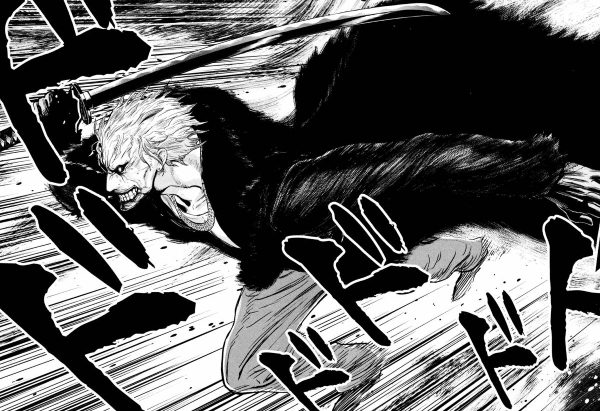
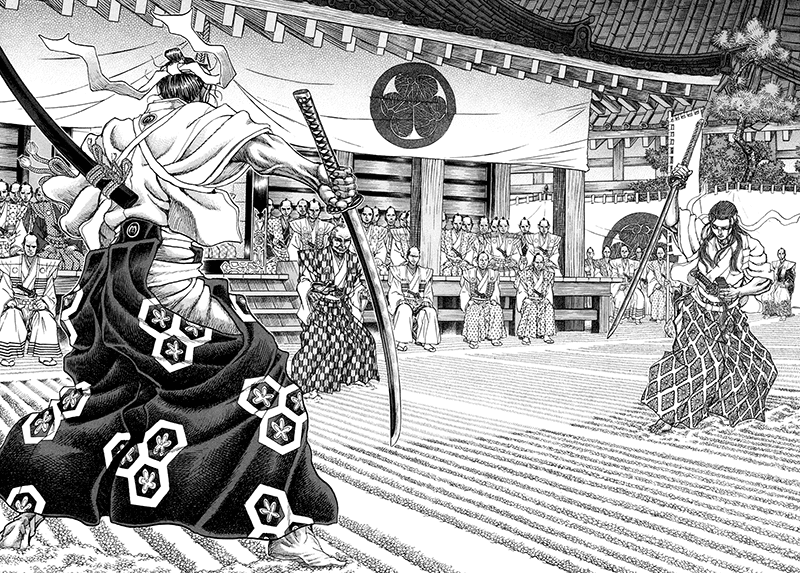
Shigurui is arguably the most brutal samurai manga ever created. Not just in terms of violence, but in its unflinching portrayal of a culture built on cruelty, hierarchy, and dehumanization.
Based on the first chapter of Norio Najo’s novel, Shigurui begins with a grim spectacle: a one-armed swordsman, Gennosuke Fujiki, is set to fight the blind and lame Seigen Irako in a martial arts tournament using live blades. Rather than jumping straight into the bloodbath, however, the manga pulls back and shows us the path that led both men to this moment.
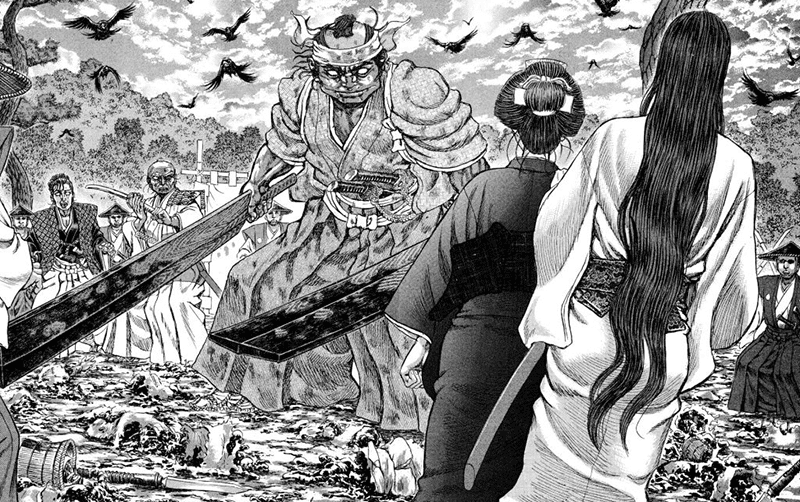
Make no mistake, Shigurui is astonishingly brutal. Bodies are cleaved open, intestines spill, and limbs fly. The gore is anatomical, detailed, and deeply grounded in its era’s cold reality. But what makes Shigurui truly disturbing is how violence reflects the character’s inner corruption.
Author Takayuki Yamaguchi doesn’t romanticize the bushido code. Instead, he tears it apart, revealing a world where honor is pretext for sadism, and loyalty becomes an excuse for subjugation. Nowhere is this clearer than in the brutal treatment of women. Characters like Mie are reduced to tools for producing heirs, with no agency beyond what their male masters allow. The manga doesn’t exploit this; it condemns it.
Shigurui is visually stunning. Its art is meticulous, with breathtaking spreads and richly rendered characters that heighten both the beauty and horror of every moment. It’s one of the best-drawn manga out there.
Grim, elegant, and absolutely unrelenting, Shigurui is not for the faint of heart. If you’re looking for a samurai manga that dares to be brutally honest about the cost of its code, there’s nothing else like it.
Genres: Action, Historical, Drama, Tragedy, Martial Arts
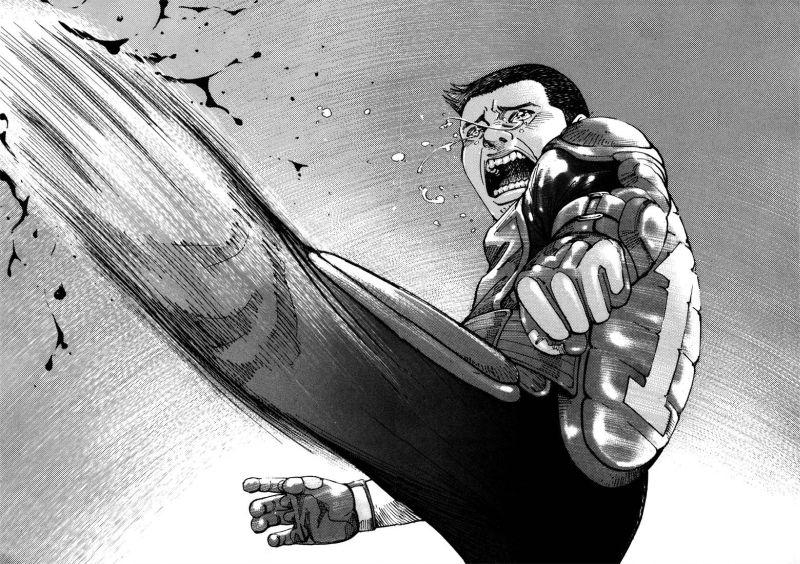
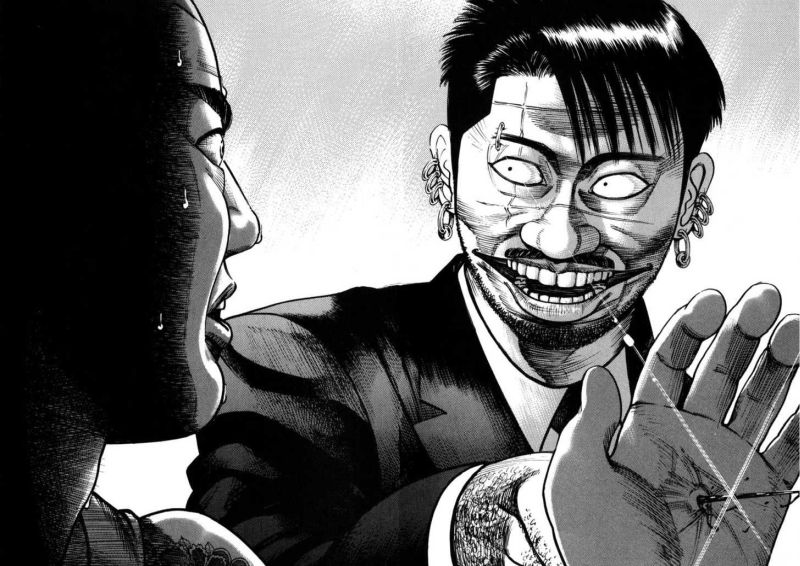
Ichi the Killer is one of the most depraved, disturbing, and brutal manga ever created, and yet, it’s also one of my favorites.
The story follows two heavily damaged men: Ichi, the titular killer, a repressed emotionally unstable young man, manipulated into committing gruesome acts of violence; and Kakihara, a sadistic yakuza enforcer obsessed with pain, chaos, and finding his missing boss. Their paths collide in a blood-soaked descent into the darkest corners of human desire and cruelty.
Ichi the Killer is soaked in violence. It features graphic mutilations, torture, rape, and murder. But it’s no mere gorefest. What elevates Ichi the Killer is its psychological depth. It explores sadism and masochism, trauma, manipulation, and identity in ways that are as horrifying as they are thought-provoking. These aren’t caricatures of madness; they’re disturbing reflections of broken psyches pushed to the extreme.
There’s no filter here. Hideo Yamamoto drags us through the filthy underbelly of society, presenting some of the most twisted characters you’ll ever meet. It’s sick, yes, but it’s also incredibly compelling. The tension between revulsion and intrigue is where Ichi the Killer thrives.
It’s not a manga for the faint of heart. In fact, it might be too much for many readers. If you can stomach its depravity, however, you’ll find one of the rawest, most psychologically intense stories ever told. Brutal, unsettling, and unforgettable.
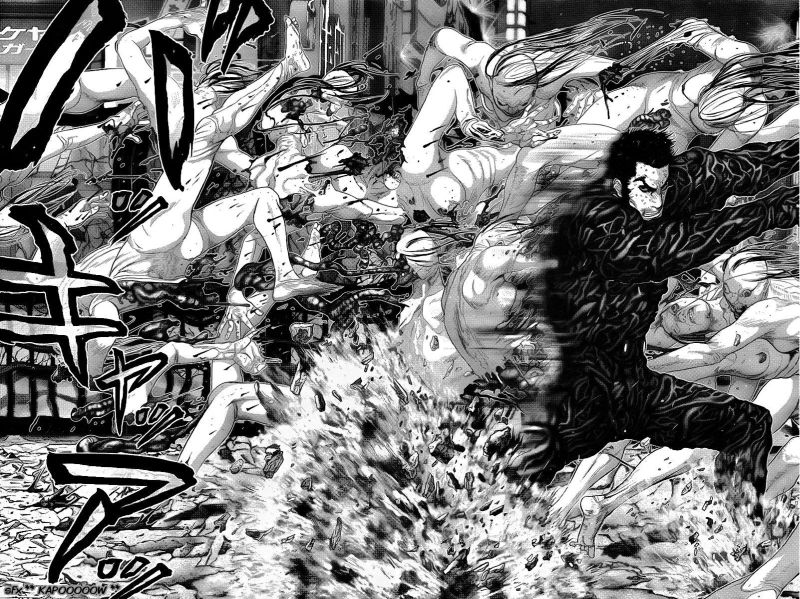
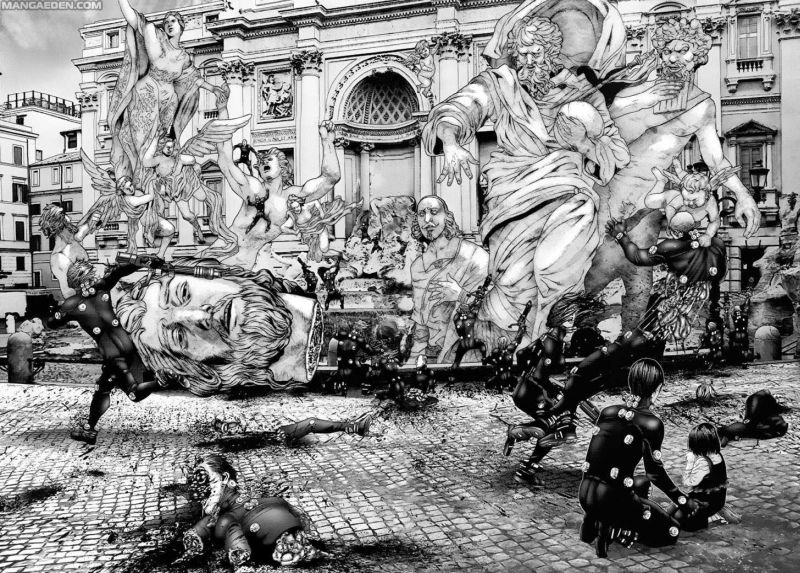
Gantz is one of the most insane, violent and over-the-top brutal manga ever created, and that’s exactly why it stands out.
The story begins with Kei Kurono and his childhood friend Katou getting killed in a train accident. Instead of dying, they wake up in a strange Tokyo apartment with a group of other recently deceased people and a mysterious black sphere named Gantz. It gives them weapons, suits, and a mission: hunt and kill aliens hiding among humans. Refusal means death; success means survival, at least until the next mission.
What starts off as a gritty survival manga quickly spirals into something much larger. The enemies become bigger, weirder, and more grotesque, the action becomes increasingly chaotic, and the body count never stops climbing. Gantz is brutal in every sense. People are torn apart, crushed, sliced, and dismembered. The manga thrives on violence, both in and out of combat.
It doesn’t shy away from sexual violence, bullying, mass shootings, or psychological breakdowns either. Everything is exaggerated, explicit, and unfiltered.
Gantz is not just mindless gore, though. It’s fast-paced and endlessly unpredictable. It builds momentum through escalating absurdity and pushing characters to their limits. It’s not always coherent, but it’s never boring. Interestingly enough, the character writing in Gantz is fantastic. Kurono starts out as an unlikeable, selfish teenager, but slowly develops into a dependable leader.
If you’re looking for tight, polished storytelling, Gantz isn’t it. But if you want a relentless, hyper-violent manga that constantly one-ups the madness, there’s nothing quite like it.
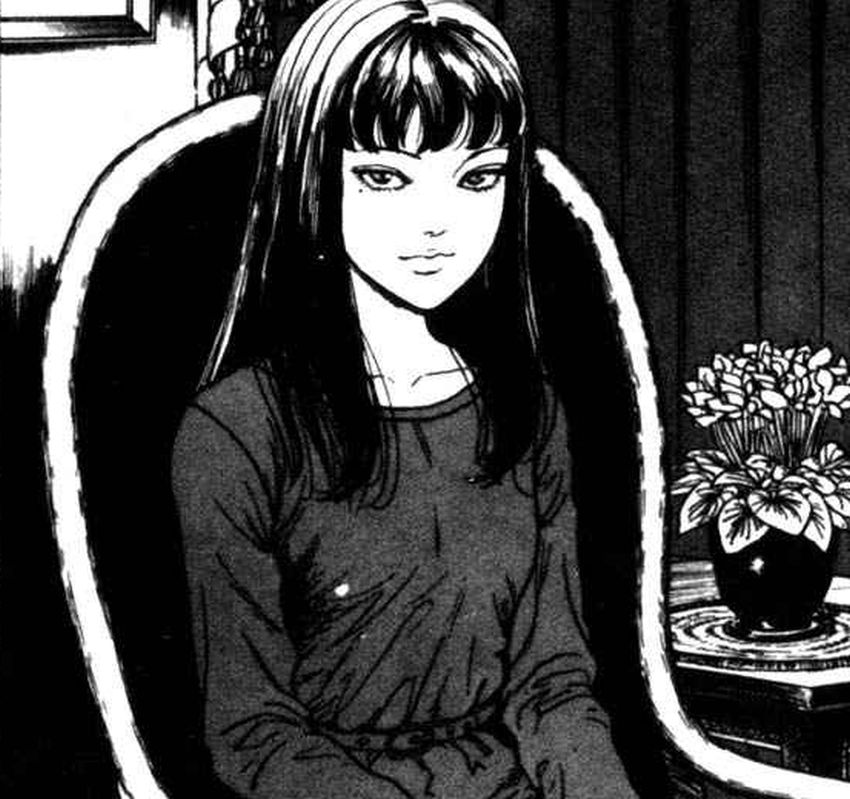
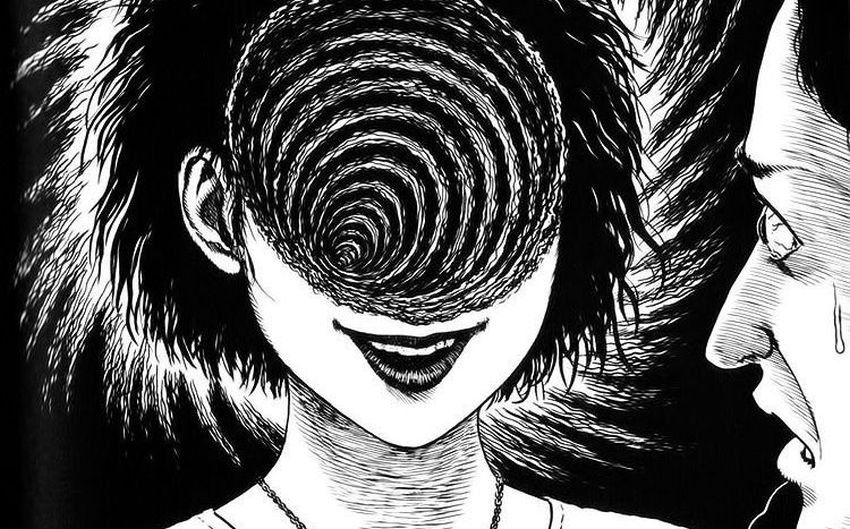
Tomie might be Junji Ito’s most brutal manga. While Uzumaki and Gyo are disturbing and grotesque in their own right, Tomie stands apart for the sheer number of mutilations, murders and acts of psychotic obsession that play out across its many chapters.
The story begins with the death of a beautiful high school student named Tomie. After she’s caught in a scandal involving both a classmate and her teacher, tensions explode during a school trip. Tomie is killed, dismembered by her classmates, and her remains are hidden. Yet the very next day, she returns to class, alive and completely unbothered.
This moment sets the tone for the rest of the series. Tomie isn’t a normal girl, but an entity with terrifying regenerative abilities. No matter how many times she is killed, stabbed, or torn to pieces, she always comes back.
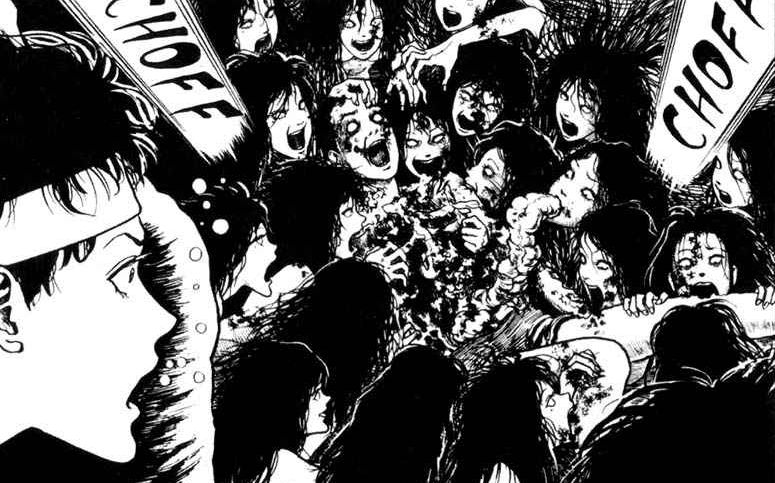
What makes Tomie so brutal is not just the repeated violence done to her body. It’s that every man she meets becomes obsessed by an uncontrollable desire to have her, and eventually to destroy her. Again and again, we witness her suitors succumb to madness, reenacting her death with disturbing glee. The cycle of desire, murder, and regeneration is horrifying, and strangely tragic.
The manga’s episodic format is uneven. Some chapters are brilliant, others forgettable. When Tomie hits, though, it contains some of Junji Ito’s most unsettling and gory imagery. Ito doesn’t flinch away from the carnage. If anything, he leans into it, showing the full consequence of obsession and the horror of beauty that can’t die.
IF you only read one Junji Ito manga and you’re here for the brutality, Tomie is the one to choose.
Rest in peace Kentaro Miura, thanks for sharing your gift with the world.
Berserk is not only one of the greatest manga ever created but also one of the most brutal.
This dark fantasy epic follows Guts, the Black Swordsman, a lone warrior wielding a sword as tall as himself on a relentless quest for revenge.
At first glance, Berserk may seem like a simple revenge story. But with the second arc, The Golden Age, Miura reveals the depth of both his world and his characters. It’s here that we come to understand Guts’ past, and meet the enigmatic Griffith, one of the most unforgettable characters in manga.
The world of Berserk is grim, violent, and merciless. War, rape, torture, ritual sacrifice, and religious fanaticism are ever-present. The brutality isn’t just for shock; it serves the narrative, painting a world where survival demands strength, and morality often doesn’t matter.
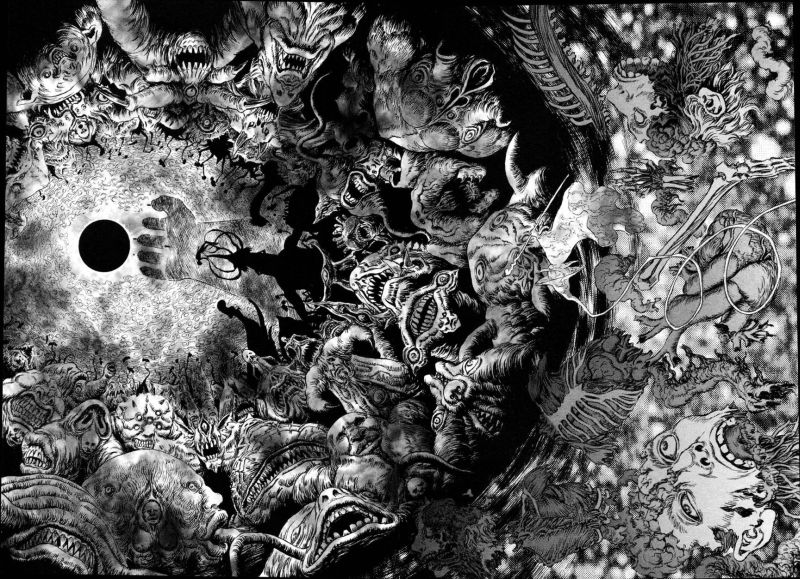
The battles are savage and spectacular, whether its medieval warfare or Guts clashing with Apostles. Limbs fly, bodies are torn apart, and blood floods the pages. And then there’s the Eclipse. It’s perhaps the single most horrifying event ever depicted in manga. It’s an event of such overwhelming violence and despair that it leaves a permanent mark on anyone who reads it.
The Apostles themselves are a masterclass in grotesque design. They are magnificent, monstrous, and merciless. Their presence signals carnage, and their victims rarely die clean.
Yes, Berserk is a brutal manga, but it’s also a masterpiece. It’s a work of staggering emotional and artistic power. If there’s one manga that deserves the top spot on this list, it’s this one.
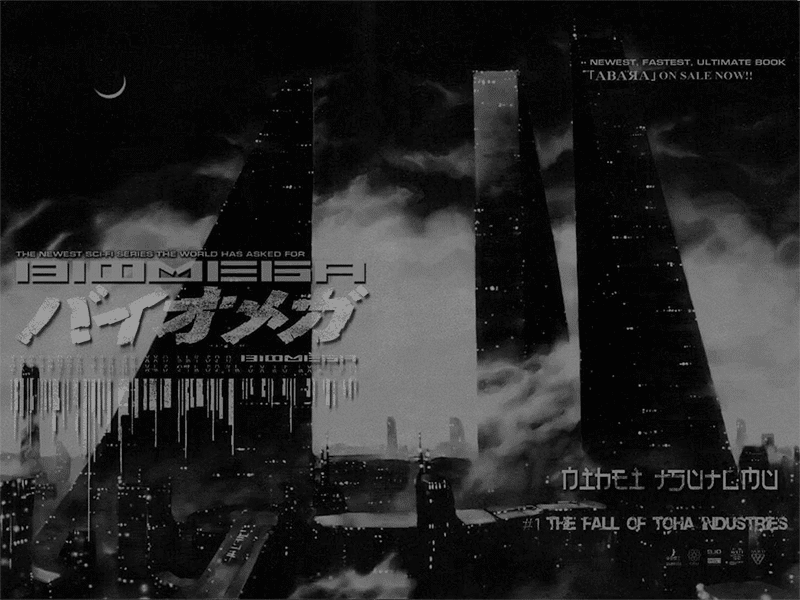
Tsutomu Nihei’s one of my favorite manga of all time and Biomega is one of my favorite works of his.
Unfortunately, Biomega is often overshadowed by its predecessor Blame! and its successor Knights of Sidonia who are both very popular. Yet, I think Biomega is a manga deserving of a lot more attention.
Following his cyberpunk masterpiece Blame!, Biomega is like it in many ways and features many similar elements.
One mega-corporations featured in the story is named Toha Heavy Industries, the manga features a dark-haired, superhuman protagonist, it features lots of high-tech and cybernetic horrors, and it comes with all of Nihei’s grand architectural world-building.
But Biomega isn’t just a carbon copy of Blame!, it’s also vastly different in many other ways.
It’s a fantastic and creative manga that pushes Nihei’s visual story-telling even further than Blame! It features Nihei’s usual dark and gritty style and the insane action so common in Blame! However, Biomega drives those things even further.
Biomega is an insanely fast-paced cyberpunk, zombie apocalypse manga full. It’s as weird and insane as it sounds, but the second half of the manga gets even weirder.
Biomega’s plot is hard to describe. The manga’s plot is as weird as it is surreal. At the outset of the story, most of the world population has turned into drones, who are basically zombies, because of the spreading N5S virus.
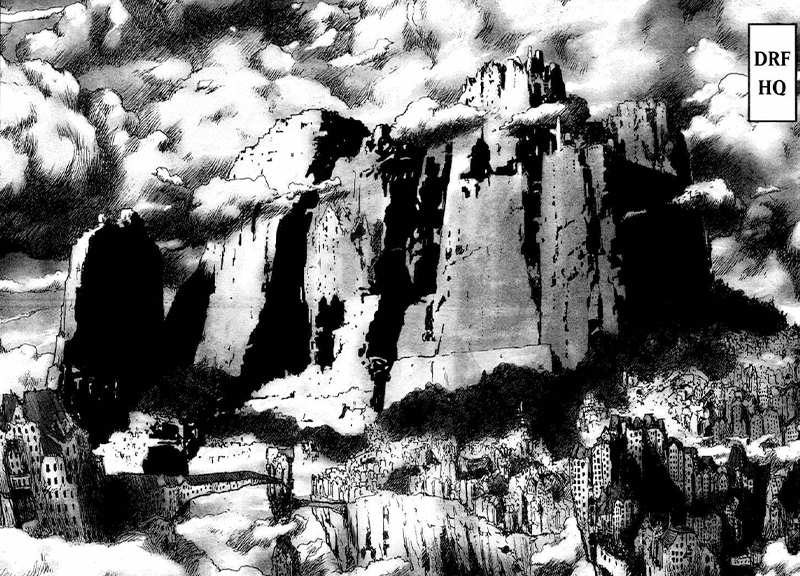
It’s soon revealed that the Data Recovery Foundation (DRF), a mega corporation, and its subsidiary, the Public Health Service (PHS), are trying to continue the spread of the virus to transform humanity.
Opposing them is Toha Heavy Industries, another mega-corporation who sends out synthetic human agents, one of them Zouichi Kanoe. He’s tasked with finding Ion Green, a young woman who’s adapted to the N5S virus.
Toha Heavy Industries searches for her and other people who have adapted to the N5S virus hoping to find a cure and to save the world.
And thus Zouichi, and Toha Heavy Industries find themselves in conflict with the DRF, the PHS and their many forces.
Similarly to Blame!, Biomega features an apocalyptic setting. Again, we don’t witness the world before the apocalypse. Instead, we’re thrown right into it and witness a derelict world devoid of normal humans and populated by twisted and disturbing drones.
Over the course of the manga, however, the setting changes radically.
While the first half of the manga is set on a dark, gritty and futuristic version of Earth, the second half of the manga is set on an entirely different world.
It’s a shift that makes sense in the story, but it’s strange, nonetheless. It’s such a radical shift that not only the setting, but even the nature of the plot changes. The entire manga becomes less dark, grim and gritty and much less fast-paced.
Like many of Nihei’s earlier works, Biomega is a highly unique manga that’s not for everyone. It’s a story told more via visuals than via dialogue, extremely fast paced and full of action.
An old saying goes, a picture says more than a thousand words, and it’s no more true than in the works of Tsutomu Nihei and especially Biomega.
Biomega is another example of a story being told via the setting and visuals. There’s no exposition, no explanations and instead we’re thrown right into a zombie-apocalypse.
Similarly to Blame! there are entire chapters with almost no dialogue. Yet, Biomega differs from Blame! in one major aspect, the pacing.
Biomega’s pacing is insanely fast, almost too fast and most of it is presented to us via visuals.
There’s always something happening, the story is always moving forward. There are no slow, somber chapters like in Blame!, at least in the first half of the manga, and this can make it hard to understand what’s going on.
Even dialogue is faced-paced, lines are omitted and only people’s reaction are shown to us. It’s an interesting choice, but it never confuses since we can always tell what was said before or what question was asked.
An example is when a certain character gets infected. We don’t see Fuyu telling her she’s infected or what happened to her, instead we only see her reaction and understanding of it.
This makes Biomega such a fast-moving manga. It feels almost like Nihei was reluctant to use dialogue, and wanted his visuals and his setting to speak for himself. While it might sound strange, it works in case of Biomega and makes it such a unique experience to read.
As in other works of Nihei’s, the world-building is done mostly via visuals.
What makes Biomega’s world-building so special is that the manga’s set in two vastly different worlds.
The first part of the manga is set in a futuristic version of the world. Yet, with the apocalypse setting in, it’s a derelict, bleak and ruined place.
It’s a world full of claustrophobic cities and complex urban sprawls.
The apocalypse is almost feasible, since the world is an empty place. As Zouichi and other characters travel through cities, they are almost completely empty, only populated by drones.
It’s a vast technological wasteland, devoid of anything in it but giant structures and military installations. This bleak atmosphere is even more feasible than in Blame!
After the first half, the manga’s setting changes radically and the second half of the manga stands in stark contrast to it.
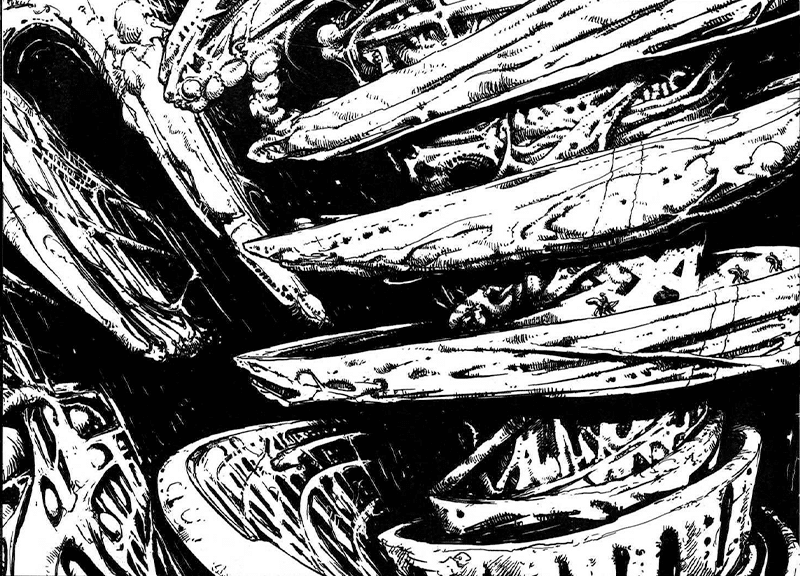
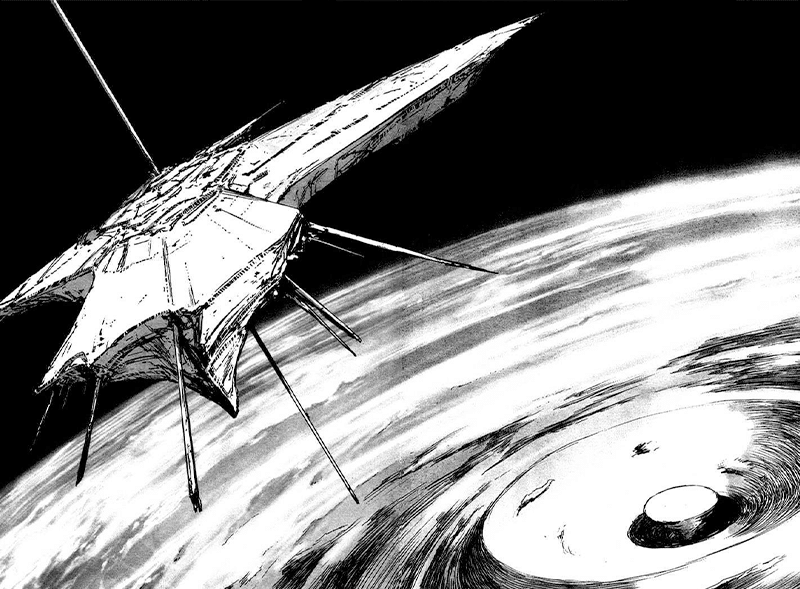
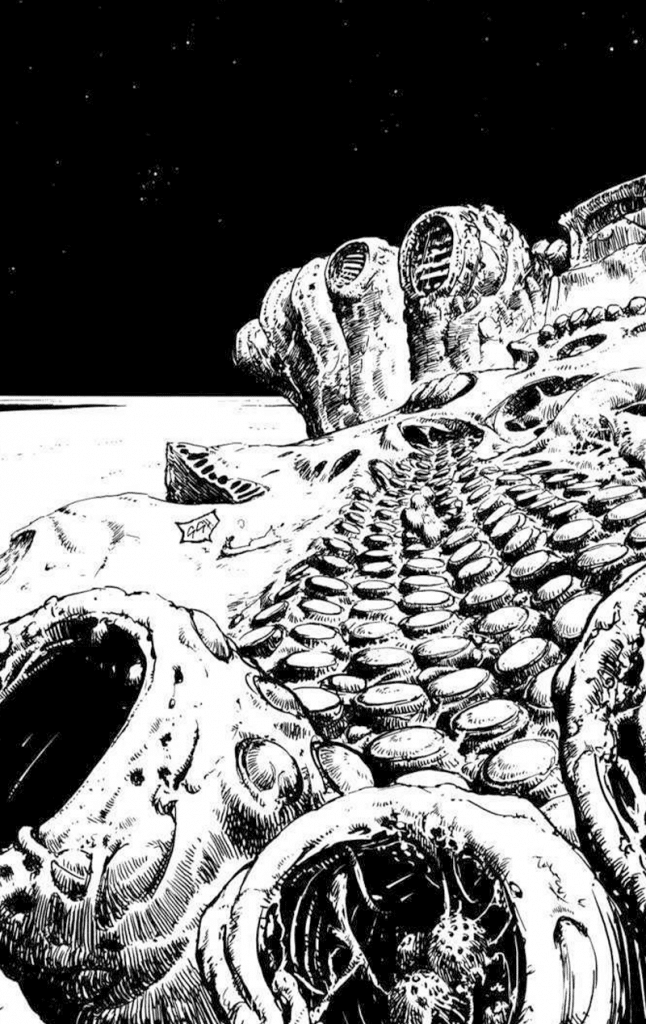
What used to be the dark, futuristic cityscapes of a future earth are replaced by unique bio-mechanical environments that look more grown than built. It’s a world reminiscent of such works as Nausicaä teeming with strange bio-mechanical horrors.
It’s a world that appears almost like a fusion of nature and the artificial, one that looks more plantlike, almost organic. We see giant structures reminding us of bones, holes akin to pores and the many life forms Zouichi encounters appear like parasites.
This strange mixture of the biological and the technological also shows in the many inhabitants of the world, be it humans or other organisms.
And yet, this second half is more reminiscent of Blame!. The manga now takes place in a strange new world of immeasurable proportions, where humans have to survive against terrible odds.
Yet, what both worlds have in common is Nihei’s attention and focus on grand design. In the first part of the magna, it’s visible in the many gigantic cities, high-tech complexes and military structures.
This goes more out of hand in the second half. The new world has a width of only 100 kilometers, but a length of 4.8 billion kilometers, essentially stretching out from Earth to Neptun.
It’s this dual-setting that makes Biomega such a unique, but also strange manga. Both worlds, however, are rendered in beautiful detail and are given a lot of attention.
Biomega is weird, way weirder than Blame! and it shows in its assortment of characters. These include our main characters, Toha Heavy Industries synthetic humans, but also immortals, a woman who’s able to use ESP to understand and learn anything in an instant and a talking bear.
The synthetic humans, Zouichi and Nishu, are very similar to the cast of Blame!. Zouichi is pretty much a replica of Killy. He’s neigh immortal, has superhuman strength and abilities, can heal himself after receiving severe damage, and can go long periods without the need to drink or eat. The major difference, however, is Zouichi’s showcase of emotions. As opposed to Killy, Zouichi, at least in certain scenes, shows strong emotional responses and seems to care about other people.
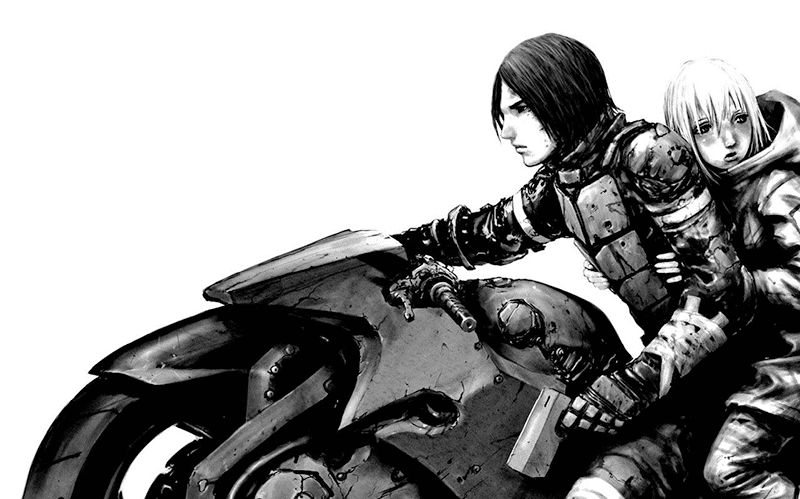
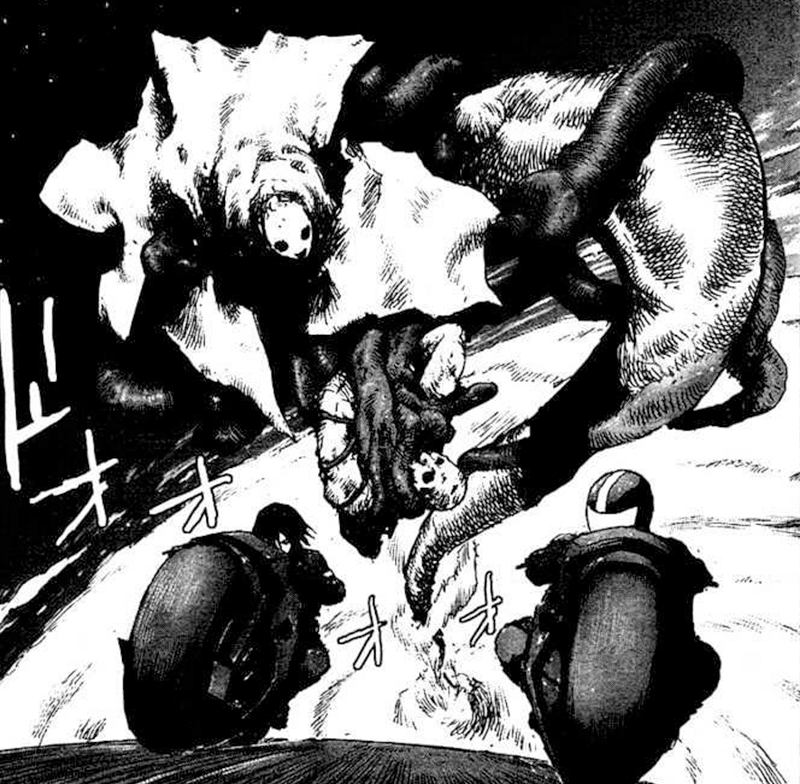
Yet it’s not only the synthetic humans who are badass. Each one of them has an AI companion who is integrated into the motorcycles they drive. This allows them to use their own assortment of weapons, including a railgun and tentacle like chais that can help them attack, move and even shield them from serious impact.
Kozlov the talking bear while a weird character is a great addition to the cast. Against early assumptions, however, he’s not merely there for contrast and comical relief, no he’s much more important to the story than anyone would expect.
The antagonists, including the aforementioned woman with ESP, are also great, are interesting as well, but aren’t featured heavily. Yet, their clear, sociopathic ambition and grand plan makes them more interesting than those of Blame!
Nihei’s manga, especially his earlier works, don’t follow conventional story-telling tropes. His stories are often confusing and sometimes ambitious.
While Biomega starts of simple and straightforward, it soon becomes confusing and hard to follow. This can in part be attributed to the incredibly fast pacing in which large parts of the manga are told.
Similarly to Blame! much of the story and its backgrounds are only revealed as we read on. Important details are given to us sparely and we have to put them together on our own.
Yet, if you read carefully, and follow what little dialogue there is, you will understand the story almost completely. The motifs of the DRF, Niardi’s plan, her conflict with Narain and even what lead to it are all revealed.
However, Biomega might be a manga that needs to be read twice. It’s a weird piece of work and especially the second half can be very confusing.
While Biomega is a cyberpunk manga, it could very well be categorized as a horror manga as well.
There’s, of course, the plot. The N5S virus outbreak is akin to a zombie-apocalypse, and the many twisted and distorted drones are horrible to look at. This is also true for the many antagonists. The DRFs Patrol officers look as if they are straight out of a horror movie. The PHS task force is reminiscent of execution squads, and the many transformations are as horrible as they are fascinating.
Yet, that’s not all.
Nihei’s horror also manifests in its setting. While Zouichi and others visit vast cities, they are almost completely abandoned and empty. It gives the entire manga a moody feeling, one of isolation and claustrophobia.
In the second half, the world is a dangerous and alien place, and once more, a world in which normal humans are almost meaningless and unimportant. This world is so big that distances become meaningless and time is measured not in months or years, but in centuries. It’s a horrible wonderland of immeasurable proportions.
I want to take some time to talk about the many themes in Biomega. The first theme, of course, is a cornerstone of cyberpunk. We don’t have countries anymore, we merely have giant cityscapes and the world is controlled by giant megacorporations, fighting each other.
While Toha Heavy Industries is benevolent and wants to save humanity, the DRF is the polar opposite. At the outset of the story, they declare themselves the world government and plan on infecting all of humanity with the N5S virus.
The evolution and the ascension of humanity are another theme. Over the course of the story, we learn why Niardi, the DRF’s overlord, wants to infect humanity. She essentially wants to wipe out normal humans and build a new world with only those who are immune and have adapted to the virus.
Another important theme in Biomega is that of immortality. One of the major conflicts in the manga is one of pro-immortality against pro-mortality.
The Big Switch is how I’d like to refer to the change that occurs between the first and the second half of the manga.
While the first half of the story represents us with cyberpunk in all its glory, what comes after chapter 27 is entirely different.
It’s not only the setting that changes radically but also many other elements of the story. The general pacing slows down, the plot changes, but with it also the elements that are used to tell it.
The second half of Biomega almost feels like a different manga. As outlined before, it can almost be called a genre shift. What started out as an apocalyptic cyberpunk manga is now more akin to a fantastic travel set in a setting that’s a mixture of cyberpunk and biopunk.
This Big Switch is one of the weirdest occurrences of its kind I’ve ever witnessed in a manga. While many manga comprise different art styles and their settings evolve, I’ve never seen one as rapid and radical as the one in Biomega.
It doesn’t ruin the manga, and it even makes sense in terms of plot, but it’s still extremely weird and can be very frustrating to some readers.
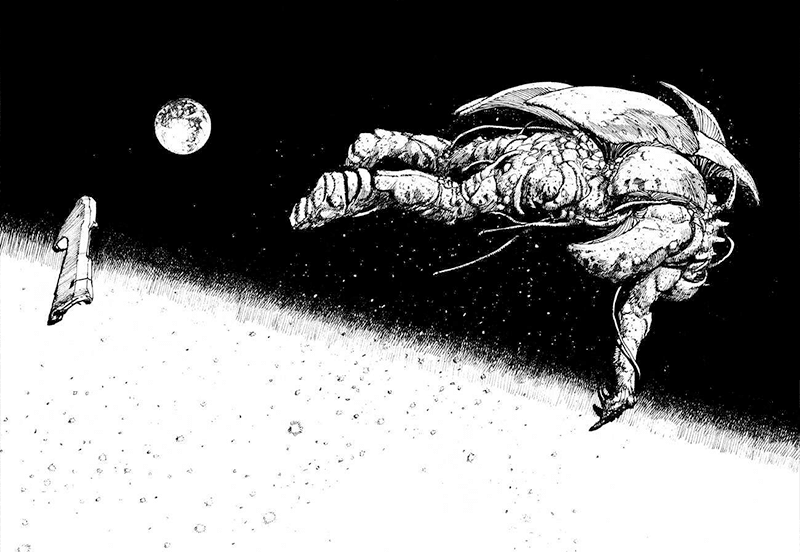
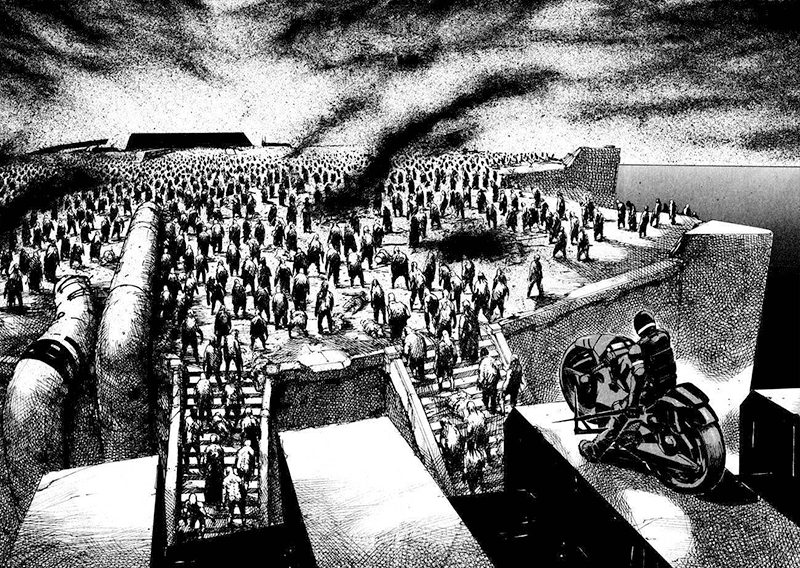
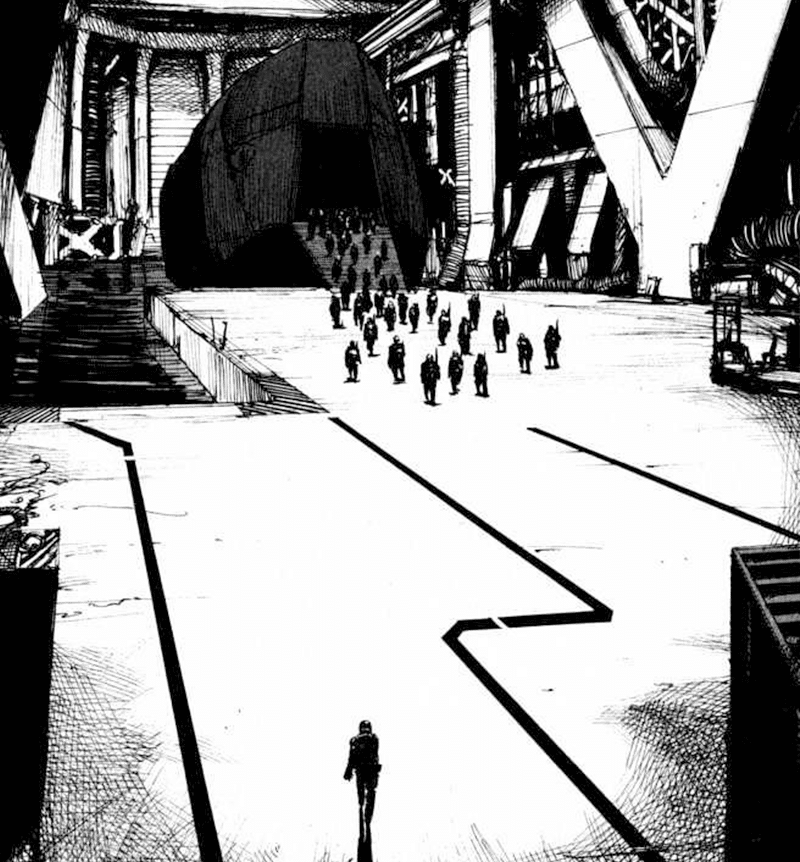
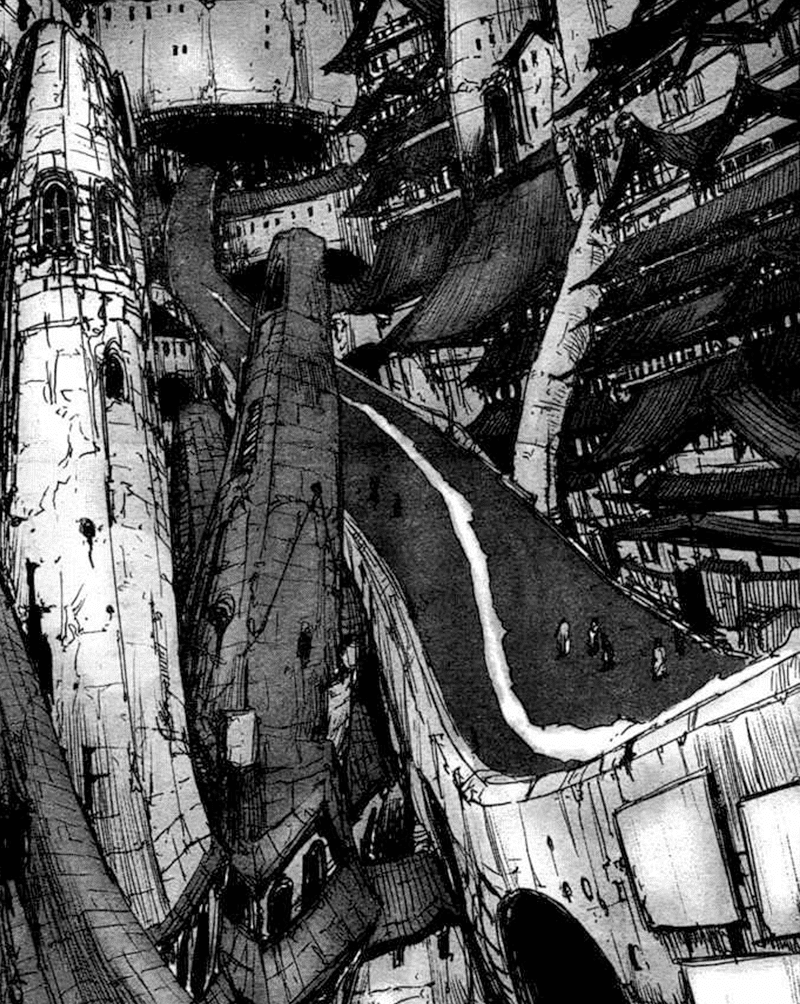
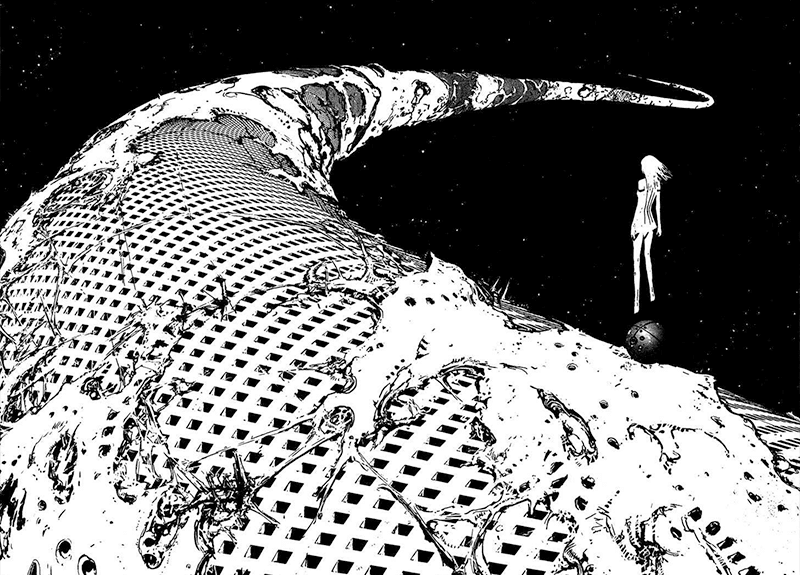
Similarly to his masterpiece Blame!, Biomega’s art is full of vast expanses and gigantic structures. Yet, even though his style depicts this unfathomable scale, it’s always incredibly detailed. This makes Biomega a delight to experience.
As opposed to Blame!, however, Biomega is much darker in its depiction and feels dirtier and sketchier, especially in its first half. This adds a lot to the atmosphere and the apocalyptic setting of the manga.
Gigantic Proportions are a staple of Tsutomu Nihei’s work and Biomega doesn’t disappoint.
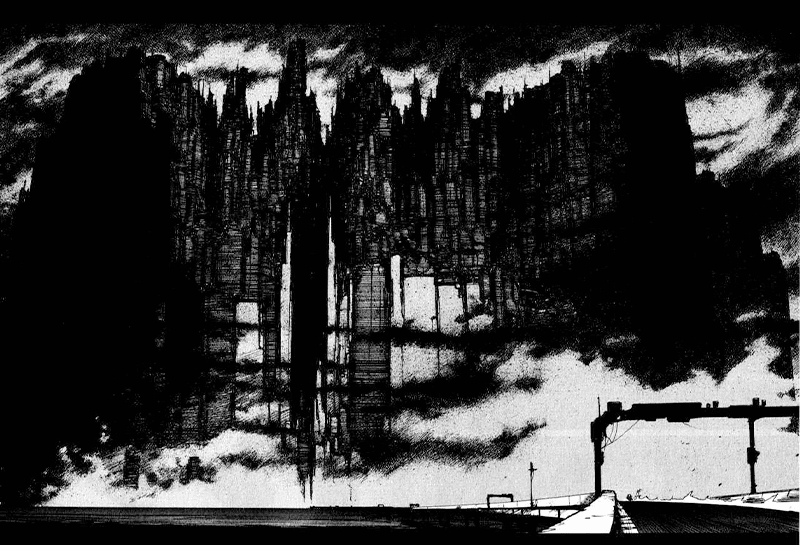
The Earth depicted in the first half of Biomega is a dark and surreal place. It seems to comprise nothing but towering cities connected by impossibly long highways.
What’s interesting about Biomega is that while it’s said in the future, many of the cities showcased have a distinct gothic look to them. They don’t look like the gigantic, pristine megastructures made of steel we’re used to from Blame! Instead, they look unorganized and wild.
Buildings are crowding together, almost pushing against one another. Every space between them is taken up by streets, pipes and cables. These pipes and cables are going everywhere and sneak around buildings in an almost chaotic fashion.
This strange futuristic, yet gothic architecture gives the cities of Biomega an almost organic style and makes them appear something that was grown rather than built.
And yet, these densely constructed cities are bleak and empty. Everything’s deserted, almost derelict, and we rarely see any people.
All of this gives Biomega a strangely eerie and claustrophobic feeling.
Biomega is a dark manga, one that seems much darker than Blame! It gives the entire work an almost oppressive, gloomy atmosphere. Yet, it’s more than fitting for a story such as Biomega.
Cities are broken down, dark and their specific gothic design and color choice make them reminiscent of giant haunted houses. What adds to this feeling is Tsutomu Nihei’s personal style. While his art is sharp, many of Biomega’s cities feel as if they have no hard outlines, adding to the general feeling of isolation and desolation.
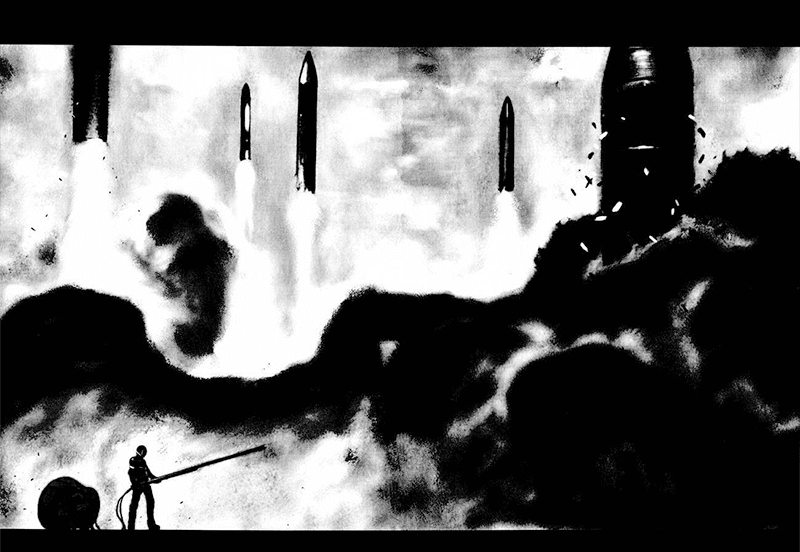
Biomega is a dark manga. Tsutomu Nihei uses lots of heavy blacks to depict the desolate, apocalyptic Earth. In many of these pages, black is not only the dominant color but also the dominant feeling. There’s a murky darkness that lays over the entire manga and adds so much to the atmosphere and general feeling.
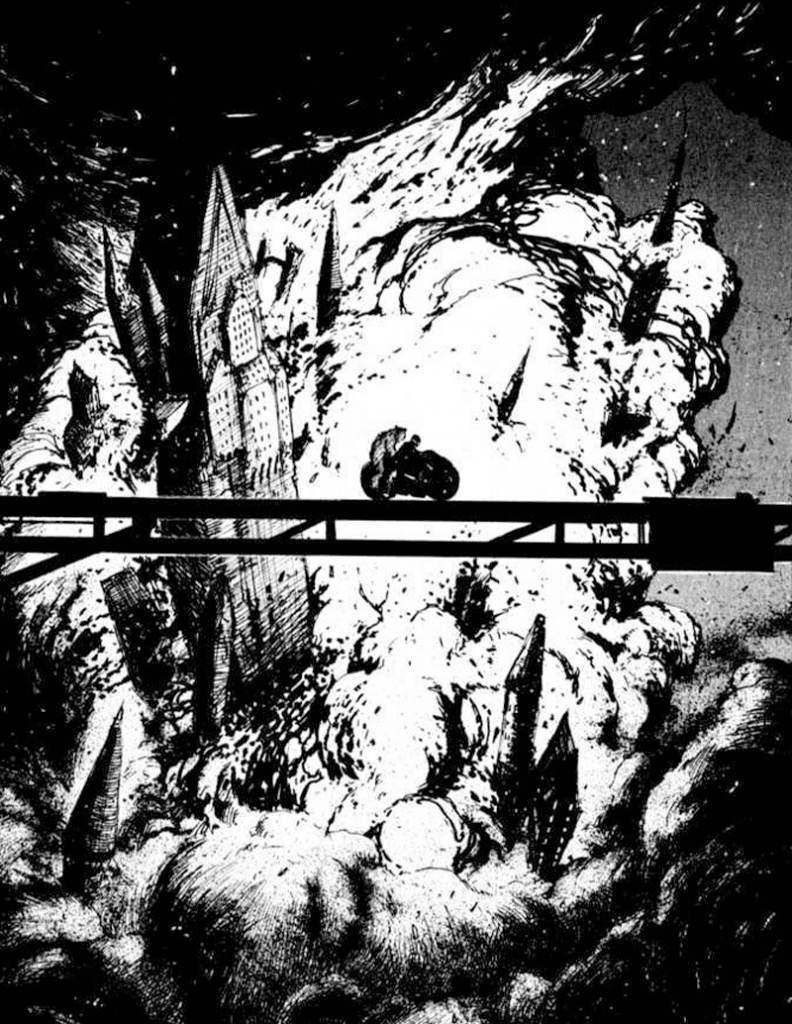
Similarly to Blame!, Tsutomu Nihei once more relies on strong contrasts between white and black. This is most prevalent in his use of negative spaces to convey light and huge explosions.
What’s most interesting about Biomega, however, is the switch that happens in the second half of the manga. While black is the most dominant color, the second half is dominated by white. This visual changes and change in color usages adds to the general change the manga goes through in its second half.
The character design in Biomega is reminiscent of that in Blame! What’s interesting about Biomega is that while the art, and especially the setting, is sketchy and dirty, character are often refined and detailed.
It’s most prevalent in the character of Zouichi. He might drive a futuristic motorcycle, but apart from that, he appears very similar to Killy, the main character of Blame! It’s not only his appearance but also his demeanor and weapons.
The DRF and especially their various cybernetic horrors are similar to the silicon life. However, their design and especially their transformations look more biological and organic than anything else.
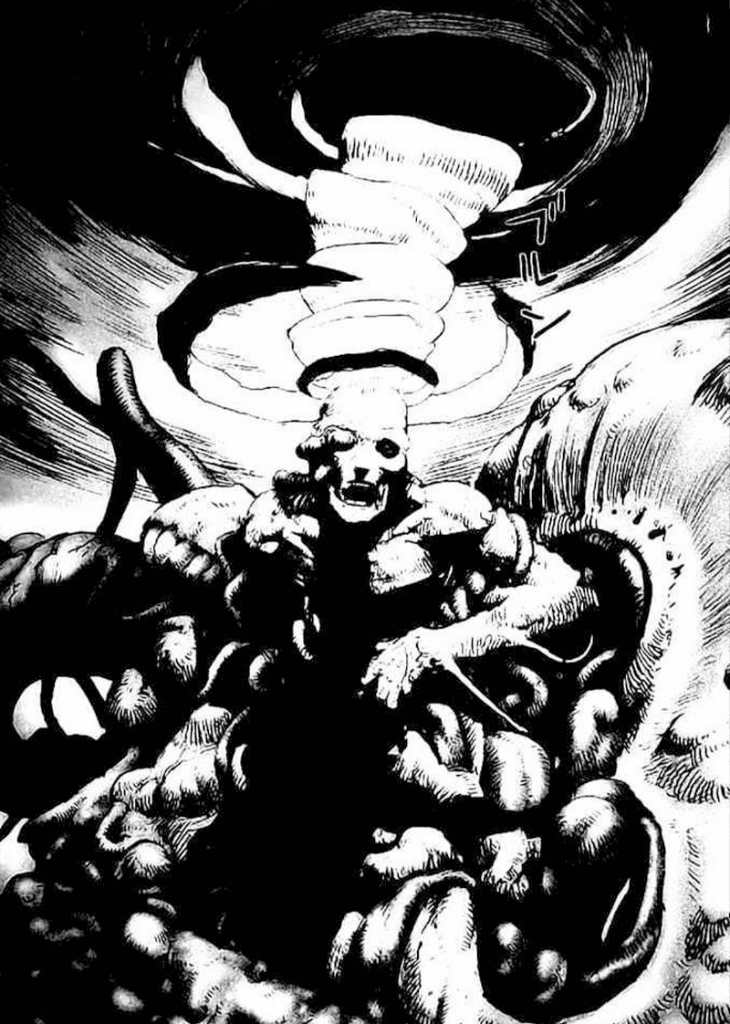
The same can be said about the drones. While they are basically zombies, Tsutomu Nihei makes them truly disturbing and nightmarish to look at. They came with strange growths, elongated limbs, and are twisted and deformed. It gives them less the appearance of general zombies, but more of that of weird mutants. They are horrible delight to look at.
While Tsutomu Nihei’s earlier work Blame! had its fair share of horror, Biomega features much more.
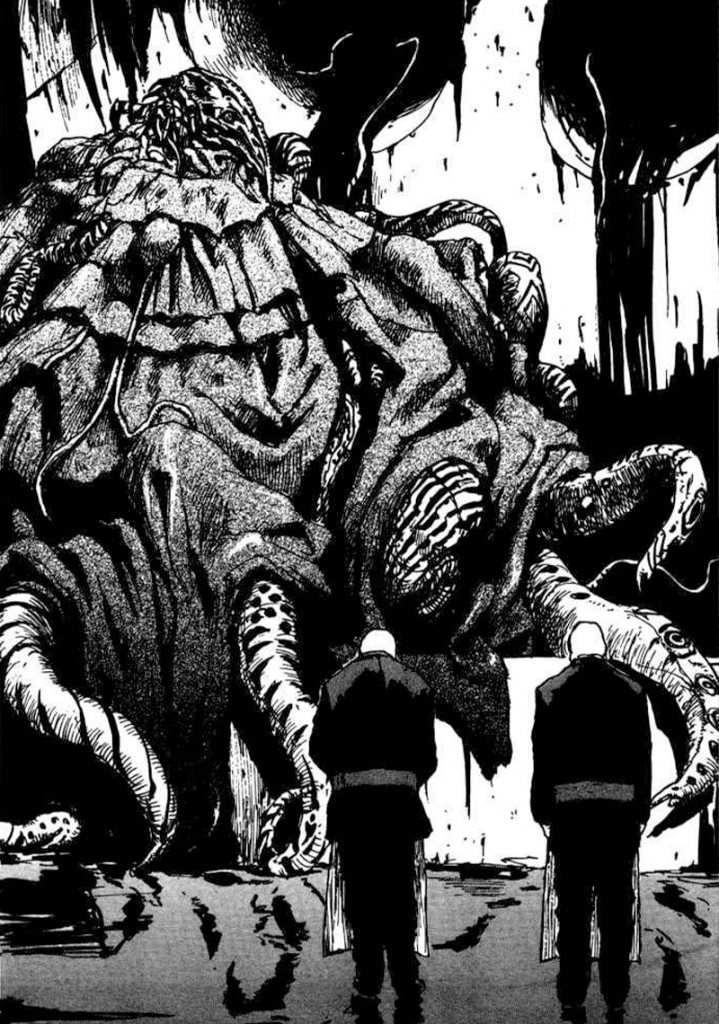
The world of Biomega is ripe with body horror. We’ve got the horribly distorted drones, the cybernetically enhanced humans and even twisted and mutated biological monstrosities.
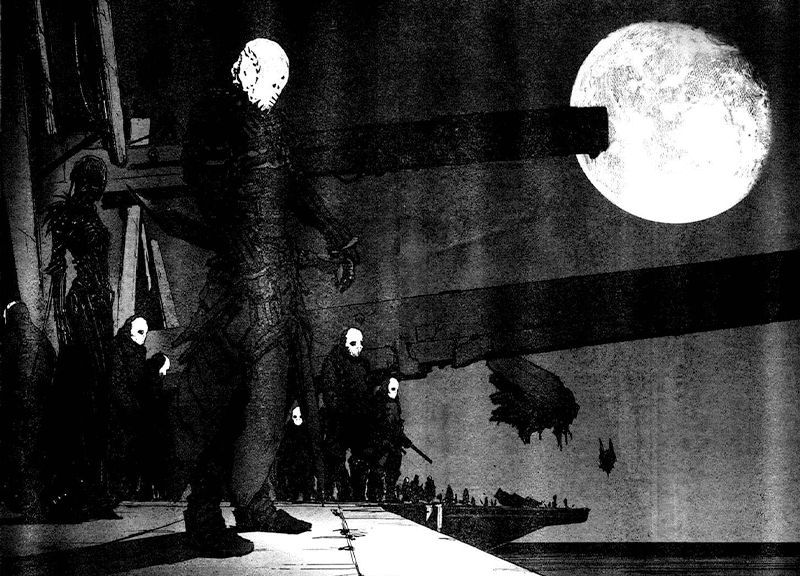
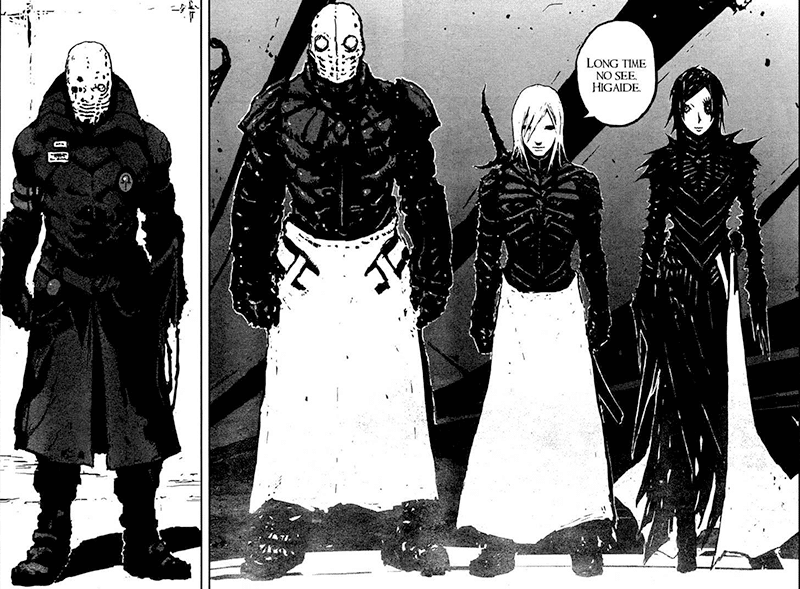
A great design choice is that of the DRF’s patrol officers. Their masks and aprons give them a distinct design, one reminiscent of butchers or even serial killers in slasher movies. And, of course, they are as deadly as they look creepy.
Biomega features a lot more horror though. Gore and violence are much more prevalent here than in Blame! People are being shot and torn apart, their heads are exploding, and we witness copious amounts of blood. It gives the manga a brutal feeling, one more reminiscent of a horror manga than a science-fiction or cyberpunk one.
Biomega is a manga that’s insanely fast paced and full of action. Its pace is much, much faster than almost any other manga I’ve ever read.
This pace adds a lot to the action. It’s often ramped up, fast, depicting only the most important details and over before you know it.
Instead of detailing fights or action-sequences, they are often shown in short, high-paced panels. At times, Biomega skips entire fights. We’re only shown the outset, and skip right to the end a few panels later.
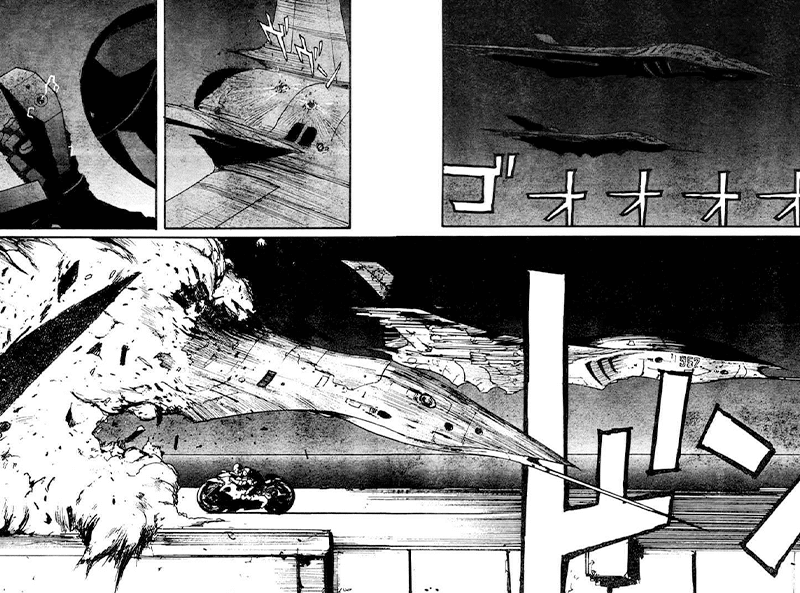
However, this can be a tad bit confusing. There’s almost too much going on in some chapters. This is especially prevalent when Zouichi makes his way back to the Toha Heavy Industry’s headquarters. It is here that he takes on an entire battalion of fighter planes and even a carrier, and takes them down in only a handful of pages.
Yet, this doesn’t mean that the action in Biomega is bad. By now means, it’s kinetic, gory, and insanely fast paced. What we see, however, is absolutely fantastic.
I mentioned the Big Switch before in terms of story and setting, but it’s also prevalent in the art and visual style of the manga.
The first half of Biomega follows a more realistic style. It’s set on Earth, even if it’s a derelict and desolation version of Earth. Most of the human characters look like actual humans or humans who have been modified.
In the second half of the manga, all that changes. As the setting becomes more fantastic, so does the style. The world is now populated by strange mechanised humans and biotechnological creatures that look almost entirely organic.
This, however, is most prevalent in the visual style of the manga changing. While black dominates the first half of the manga, the second half is dominated by white spaces. It also feels less sketchy, dirty and claustrophobic. Instead, it feels almost clean, fantastical and similar to Blame! impossibly large.
What’s also interesting to see is that this change in style is not only one in terms of colors but also in character design and general style. Tsutomu Nihei’s style changes vastly between the beginning and end of Biomega.
It’s near the end of Biomega when certain areas and characters are depicted one can see the first outliers of his style in Knights of Sidonia. It’s an interesting transformation to behold, one that also adds to the change in setting and story. Yet, I have to admit that I’m more a fan of Tsutomu Nihei’s grim dark worlds and setting and less a fan of his more recent, lighter style.
While I consider Biomega a visual and action-packed masterpiece, there are still some problems with it I want to discuss.
The first is, of course, what I call The Big Switch. It’s such a strange choice, almost a complete switch in terms of setting, story and visual style. While it makes sense in terms of the story, it’s still something that while make you wonder what exactly is going on.
The biggest problem I have with it, however, is that many important characters from the first half of the manga aren’t coming up anymore. There’s Nishu, but also Kahdal Spindal, who unfortunately never appear again.
Another problem with Biomega is that, it just moves too fast at certain times. In some chapters, the manga throws so much at you it’s hard to keep up with what’s going on.
The last problem is once more Tsutomu Nihei’s way of story-telling. We’re thrown into an apocalyptic world, ravaged by a deadly virus without knowing what’s going on. There’s no backstory, no exposition, and no explanation. Once more, Tsutomu Nihei only reveals what’s going on by bits and pieces and the occasional, very short flashback. This can make Biomega hard to read and harder to understand. Similarly to Blame! I only could grasp the entire story on my second reread.
While Biomega has some problems as outlined here, it’s still one of my favorite manga of all time. It’s an insanely high-paced, action-packed cyberpunk-horror masterpiece that I’d recommend to anyone who likes the work of Tsutomu Nihei, visual story-telling or weird science-fiction manga.
If you want to read Biomega, I recommend ordering it on Amazon:
Creepypasta has become one of the most divisive internet fiction genre. What were once scary anecdotes and urban legends shared via the internet now encompass a variety of styles and media.
As you can see in my list of the best creepypasta of all times, they can come as literary stories, blog posts and even pseudo-documentaries.
Many creepypasta detail inexplicable events, mysteries or tell stories of strange creatures or entities. The latter is what this list is about.
On this list, I want to share with you my favorite creepypasta monsters or entities.
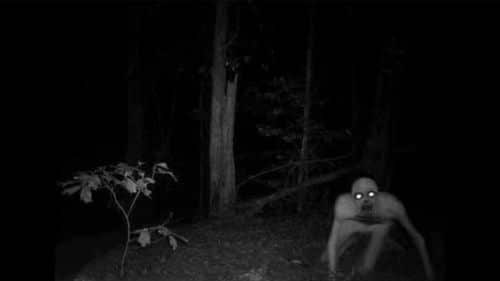
The Rake is another popular creepypasta monster. Like many other popular creepypasta, The Rake originated on 4chan, in a thread where users tried to come up with monsters.
What started as the description of a pale, hairless humanoid, soon went viral and became one of creepypasta’s most celebrated creations.
By now, this creepypasta monster is featured in a variety of stories, videos and other media.
I always enjoyed stories about cryptids stalking humans, and The Rake proved to be the most popular of these.
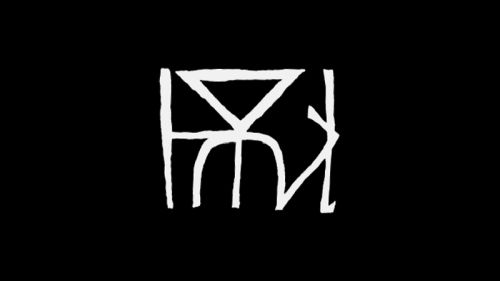
Can something like a symbol be dangerous? In the case of this weird creepypasta, we learn that it indeed can.
It begins when a man uncovers a strange symbol while browsing the internet. What started off as a strange, virtual discovery soon turns real when the symbol infests anything in the computer’s vicinity.
From here on out, the symbol slowly takes over the narrator’s world.
While The Memetic Symbol isn’t a traditional creepypasta monster, and more of a concept, I still added this story to the list. It’s one of the strangest tales I ever read, but that’s what makes it so fascinating.
Creepypasta Monster – The Thing That Stalks the Fields
The Thing That Stalks the Fields is another creepypasta classic.
The story is about a farmer and the strange creature that stalks his fields. It all begins when the man notices that the hay balls in his field are being moved away from his house.
At first he blames drunk teenagers, but he soon realizes there’s something much more sinister out there.
The Thing That Stalks the Fields was one of the first creepypasta I ever read and while the titular creepypasta monster is never named, I still regard it is one of my favorites.
The goatman from Anansi’s Goatman Story is another one famous creepypasta monster.
Like many others, the story originated on 4Chan’s / x / board. It details the story of a teenager who visits his extended family in Alabama.
When they go camping out in the woods, they encounter a figure that’s moving strangely, talking gibberish and eventually follows them.
One of the central themes of this creepypasta is the feeling of someone or something watching you. It’s a tale of paranoia, fear and terror.
Anasi’s Goatman Story is not a literary story. Instead, it’s written as a casual post on an image board, detailing an event that truly happened. The story itself, as well as the titular creepypasta monster, soon became one of creepypasta’s most popular creations.
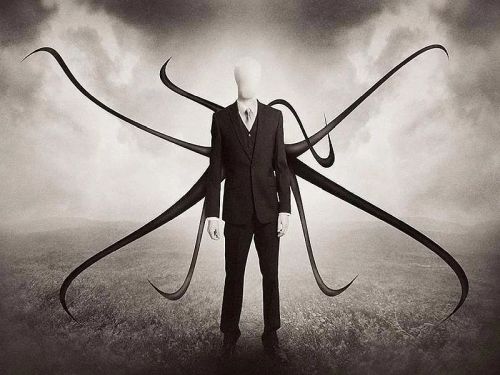
Slender Man is by far the most popular creepypasta monster ever created. It’s featured in various games, stories, video series and even spawned a feature-length movie.
Slender Man was created for a Photoshop Contest on Something Awful. One user, Eric Knudsen, created a pair of pseudo-historical photographs depicting a strange, humanoid creature.
This creepypasta monster is a tall, lanky man with unnaturally long limbs who wears a suit and has no face. As showcased in the picture, the beings primary prey seems to be children.
The most interesting fact about Slender Man is not the story or the creature itself, but how nothing but two pictures could spawn an internet phenomenon of such magnitude.
While there are various stories featuring Slender Man, I still think the original pictures do the best job of creating an unsettling atmosphere. As so many times, less is more.
The SCP Foundation has become one of the most popular places for internet horror fiction. It features a plethora of articles regarding various anomalous entities and the procedures to contain them.
What makes the SCP so interesting is the roleplaying aspect. All the articles on it are written less like stories and more like Wikipedia articles.
The one who started it all was SCP-173, a creepypasta who went viral on 4chan’s / x / board. After its inception, other users wrote similar stories and eventually the SCP Foundation was born.
These days, the SCP Foundation is one of the largest and most popular fiction communities on the internet. It features thousands of articles, accompanying tales, and other related materials.
Smile Dog is a story that brings us back to the early days of the internet.
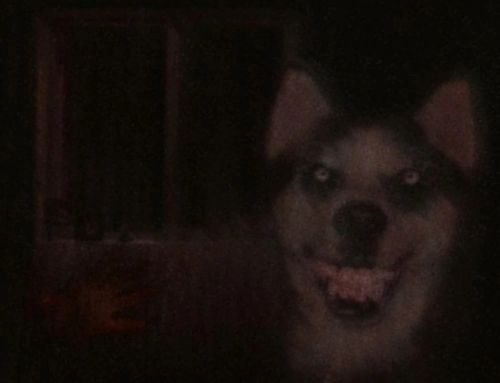
The story itself is a cursed image story than one about a creepypasta monster. Because of the accompanying, supposedly cursed, image, the creature known as Smile Dog has become massively popular.
The story centers on a young man who’s on his way to interview a young woman, Mary, who suffers from nightmares and night terrors.
We find out these nightmares are caused by an image she saw on a bulletin board. That image was titled smile.jpg, feature a creepy picture of a grinning dog.
As the story continues, we follow the narrator’s quest as he tries to figure out the legend behind the ominous picture.
I always enjoyed stories about internet mysteries and legends and Smile Dog is amongst the best.
The Dionaea House is the longest creepypasta on this list. Told via email correspondences and blog posts, this story features a different creepypasta monster.
The tale is about Mark, whose friend Eric tells him that their fellow friend Andrew shot two people and killed himself.
Before long, Mark looks into what happened to Andrew. As his investigation continues, he keeps up with Eric via email, detailing his findings.
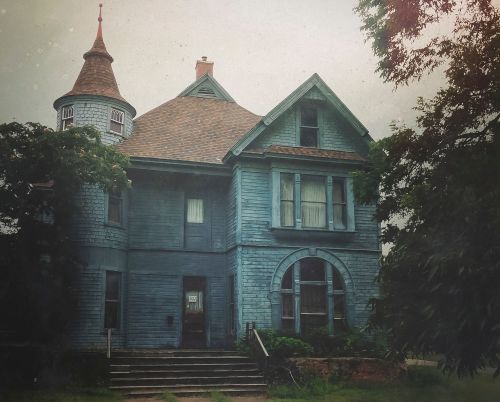
Eventually, Mark finds the Dionaea House, but it’s not the end of the story. Instead, nothing is revealed and the story itself only proves to get stranger.
The Dionaea House is a very long creepypasta. The story develops slowly, but is well put together and keeps you engaged throughout. What I came to enjoy the most, however, was the idea of The Dionaea House itself. To me, it’s one of the best creepypasta monsters of all time.
If you have some time to spare, be sure to check this one out.
The Song and Dance Man is a phenomenal piece of fiction and more literary story than creepypasta.
One day, a strange man puts up a tent in the narrator’s home and invites the townspeople to listen to music and to dance. What appears to be nothing but a bit of fun soon takes on a much more sinister nature.
The Song and Dance Man is a fantastic story. It’s less the ominous man who makes it so special, but the narrative and the writing.
It’s without a doubt one of the most well-written creepypasta out there and I highly recommend it to any horror fiction fan out there.
Abandoned by Disney is another popular creepypasta spawning one of the most well-known creepypasta monsters.
What starts out as an exploration of Mowgli’s Palace, an abandoned Disney resort, soon turns much darker.
It’s in the basement that the narrator stumbles upon a variety of Disney costumes. One of them, however, turns out to be much more than a simple costume.
Abandoned by Disney is a fantastic story. It draws you in with its intricate descriptions of an abandoned resort before things grow more and more unsettling. It’s a classic for a good reason and well worth reading.
Dogscape is amongst my favorite creepypasta of all time. It’s a weird and surreal tale.
It’s a collection of multiple tales, all detailing what happens in a world that has become a never-ending landscape of dogs.
The setting is strange enough already, but the stories themselves are even weirder. They are detailing the life and the survival of the few humans who are still inhabiting this strange new world.
The Dogscape is a dangerous place. We learn of strange dog cults, people-devouring dog heads and even of people being assimilated into the Dogscape itself.
And it’s here that we learn the Dogscape is not merely a thing, or an inanimate object. No, it’s rather a hive mind, controlled by what’s referred to as the Dogmother.
The tales of the Dogscape are as weird as they are disturbing. Violence and atrocities such as rape are a common occurrence amongst the inhabitants of the world.
While the tales vary in length and quality, I still recommend it to any creepypasta fan, if only for how surreal a scenario they depict.
If you enjoy tales that are weird and surreal, I’m sure you will love Dogscape.
Creepypasta has developed into a divisive genre, as you can see in my list of the best creepypasta of all time.
Some are more akin to literary short stories, others incorporate the internet to their advantage and read like blog posts, email correspondences or pseudo-documentaries.
In this article, however, I want to get back to the roots. Creepypasta first started out as short, scary campfire tales or urban legends shared via the internet.
That’s why I put together a list of the best short creepypasta. None of them are longer than a few paragraphs, some comprising only a few sentences.
The story outlines the practice of old to put holes into coffins. This allowed the attachment of a bell via copper tubing so people mistakenly buried could call for help. Yet, what happens when a gravedigger hears one of those bells ring?
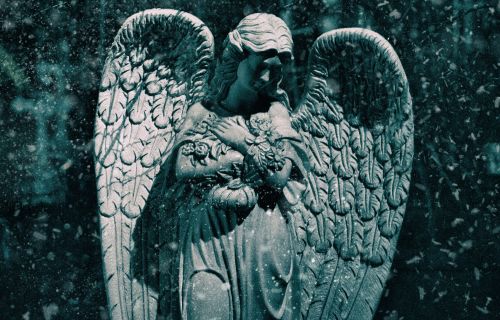
The Statue is one of the most well known, short creepypasta out there, a classic.
It tells the story of a babysitter who, after putting the kids to bed, wants to watch TV in the parent’s bedroom. Yet, there’s this strange angel statue that’s unnerving here.
It’s a well-known story, one I enjoyed a lot. It’s simple, yet effective.
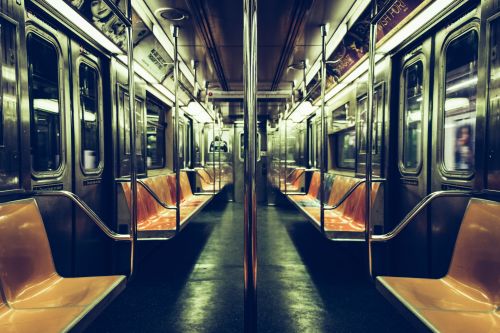
The Girl on the Train is another well-known, short urban legend.
A young woman takes the last subway home and encounters a group of three people. She soon notices that one of them, a woman, stares at her the entire time.
After a while, another passenger sits down next to her and advises her to get off at the next station.
When she follows his advice, the man tells her why she had to get off.
Another short creepypasta that’s more urban legend than story.
It details a supposed historical anecdote that happened in Berlin at the end of World War II. A blind, old man asks a young woman to deliver a letter to an address.
She agrees, but notices the old man running away moments later. His strange behaviour causes her to become concerned with the situation.
What makes this short tale so creepy is the historical background and the knowledge that something like this might have happened.
Bad Dream is a simple creepypasta. A young girl crawls into her father’s bed after a scary nightmare. What she tells him, however, proves to be quite unsettling.
This is another short one, but one I absolutely enjoyed.
Baby Dolls talks about a certain malfunction in the baby doll toys of a certain toy manufacturer. The malfunction in question would manifest in the dolls, never ceasing their crying. The only way to stop them is to destroy the dolls.
Like many others on this list, this tale reads more like an urban legend. Still, it’s quite unsettling.
Another short tale more akin to an urban legend. It’s about a man who stays at a hotel. The owner tells him to stay clear of a certain room, but overtaken by curiosity, he ignores the warning.
When he peeks into the room via the keyhole, all he sees is a pale, white woman. The moment she notices him, he retreats, but soon returns. What he sees the next time, however, is different.
What with Red is another creepypasta that’s sure to scare you.
A Painter From Queens begins with the narrator describing a bum living near his apartment.
The man, however, is an artist, and his work is fantastic. When the man offers to paint portrays, quite a few people pay him, but none of them seem to like the result.
Eventually, the narrator gets one himself. The result, however, proves different from what he expected.
This creepypasta has always been one of my favorites ever since I first read it. It’s a unique and strange tale, but a wonderful read.
It details that the patients at a certain hospital receive one of three different wristbands. The red wristbands, however, are only ever placed on people who died.
I won’t tell too much about this tale, just that it’s highly enjoyable.
The Backroom’s is a creepypasta related to an image. In the image, we can see a set of strange, unsettling rooms.
Accompanying the picture is a brief description. What we see in the picture is The Backrooms, a place you end up in when you glitch through reality.
I don’t know why, but I love eerie ideas like this. Ending up in the Backrooms can happen to anyone and if you do, you better hope the other things wandering them don’t notice you.
There are many kinds of creepypasta out there. What started out as campfire tales and urban legends shared via the internet now incorporates various styles, topics and media, as you can see in my list of the best creepypasta of all time.
One medium that’s been given a lot of attention by creepypasta writers is video games. There’s a plethora of video creepypasta out there. The subgenre is infamous for spawning some of the worst and most ridiculous creepypasta out there.
There are, however, some I truly came to enjoy. That the reason I created a list of the best video game creepypasta.
This video game creepypasta features a Morrowind Mod called Jvk1166z.esp. The mod is cryptic, strange and only works after extensive tinkering with it.
Our narrator tries his luck with the mod, but soon gives up out of frustration. An acquaintance of his he got to know via the internet doesn’t give up so soon.
As the story continues, we learn what the narrator’s acquaintance uncovers in this weird mod.
When I was a teenager, I used to play Morrowind excessively. I loved the game and enjoyed the many details given in this story.
If you’re a fan of cryptic mysteries related to video games, check this story out.
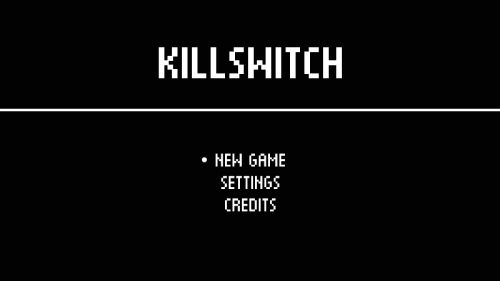
Killswitch is written more like an urban legend than a real creepypasta and details the story of a game that was supposedly released in 1989.
What makes Killswitch such an interesting video game creepypasta isn’t the content of the game itself. At first sight, it appears to be a simple story about a cryptic and bizarre video game.
What’s interesting here are the circumstances of the game and its supposed creation. Only 5000 units of the game were ever created. They were uncopiable, and the game deleted itself after finishing.
What made it even more mysterious was the fact that the game had two playable characters, but was almost impossible to play should one choose the second one.
Killswitch is an interesting video game creepypasta, and it makes one curious if games like this actually exist. While it’s not scary, and written more like an urban legend, it’s a very creative and interesting idea.
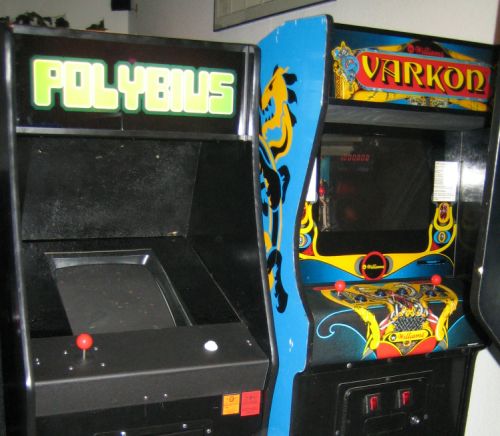
Polybius is probably the most famous video game creepypasta of all time. It’s theoretically an urban legend, but I still included it in this list, if only for its widespread popularity.
The story is about an arcade game by the same name that appeared in Portland, Oregan. The legend states that the game was highly addictive and everyone who played it suffered from side-effects. These side-effects included amnesia, night terrors, but also suicide.
After only a month, men in black removed all traces of Polybius and none of the machines were ever seen again.
Over the years, Polybius garnered a lot of attention. It was the subject of countless YouTube videos and was referenced in a variety of movies.
Polybius proves to be a very interesting story, not so much for its content, but the history surrounding it and its spread to become the dominant urban legend it is today.
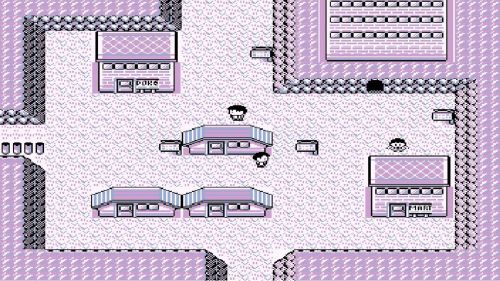
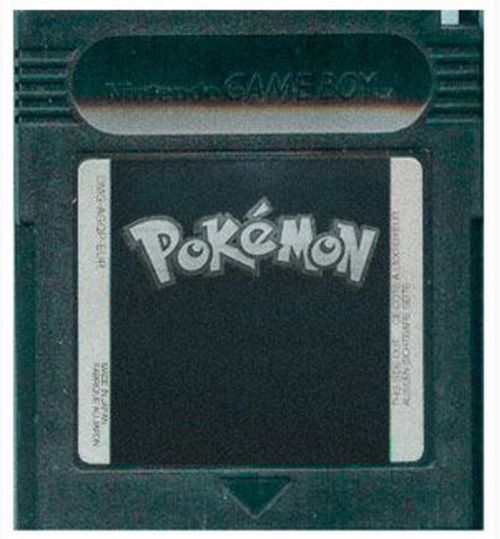
The game series Pokémon serves to be a breeding ground for video game creepypasta. The most popular of them is Lavender Town Syndrom. It’s no understatement to say that anyone who’s heard about creepypasta has heard about it.
Once more, this is less written as creepypasta, but more like an urban legend, related to the original theme of Lavender Town.
It’s a quick read for a video game creepypasta, but still enjoyable and details a rather unsettling urban legend related to a children’s game.
Ah, Ben Drowned, the story who started the trend of haunted video game creepypasta. The sub-genre revolves around haunted video games which cause the people who play them to go insane or kill themselves. It makes up a huge subset of video game creepypasta and has spawned some of the worst ones out there.
Ben Drowned, however, is a rare exception. While I’m not too big a fan of haunted video games, one has to acknowledge the influence Ben Drowned had on the genre of creepypasta.
What I enjoyed most about Ben Drowned was the attention to detail. As the story continues, we read about strange glitches, additional levels or areas created out of nowhere and various other game changes.
The story itself regards a young man who buys a used game of Majora’s Mask at a yard sale. Upon starting the game, he discovers a safe file named Ben. Ignoring it, he starts the game, but notices that NPCs occasionally refer to him as Ben. This, however, is only the beginning, and the game gets progressively strange, becoming a surreal experience for the narrator.
Ben Drowned isn’t an outstanding story, but what is outstanding is the work that went into it. The story comprises elements from multiple other media. There are not only pictures showcasing what’s happening, but even actual footage of this supposedly haunted game.
Ben Drowned doesn’t end there, however. There’s an entire ARG (alternate reality game) related to Ben Drowned. I found out about it because of a YouTube video and now see the entire story in a different light.
Ben Drowned is a very long video game creepypasta about a haunted video game cartridge. While the story isn’t the best, I still consider it a fantastic work, if only for all the work that went into it and the ARG surrounding it.
Pale Lune is among the best video game creepypasta out there.
The story revolves around an obscure text adventure only circulated in the San Francisco Bay Area.
Most people who tried the game quickly abandoned it. The game was cryptic and barely functioning.
Eventually, a young man with too much time on his hand decides to play the game himself to see if he can actually finish it.
Pale Luna is a rather short video game creepypasta, but I really enjoyed it. It’s a story about a cryptic, mysterious game and the disturbing secret hidden within.
Pokémon Black is another video game creepypasta regarding an obscure game, a Pokémon game.
If you ever explored video game creepypasta, you notice that there’s a plethora of Pokémon creepypasta out there. Many of them aren’t worth your time, but Pokémon Black proved to be different.
It’s not about a cursed or haunted game, but about an obscure hack by the titular name.
That’s what makes Pokémon Black so interesting and why it works so well. The hack itself isn’t dangerous, it’s merely a tale about an obscure hack that can be interpreted in many ways.
Another video game creepypasta that’s not about a haunted or cursed video game cartridge. Instead, the story features a strange and glitchy game.
I don’t know why, but since the first time I read The Theater, I loved it. The mystery, the minor details, the obscure nature of the game, it all fits together fantastically.
Once more, nothing bad happens to the narrator, and instead he only describes what he experiences when playing a strange, obscure game.
The Theater is a very enjoyable, short tale, one I regard as a classic.
The NES Godzilla Creepypasta is my favorite video game creepypasta of all time.
The story revolves around a young man who wants to rekindle his childhood nostalgia. Back in the day, he loved nothing more than to play the NES game Godzilla: Monster of Monsters.
His play-through of the game starts out normal enough, but soon enough, the game glitches and changes in strange ways.
The reason I like the NES Godzilla Creepypasta is less for the story, but for the visuals, the images. The creator wasn’t satisfied by merely telling a creepy story. Instead he filled it with pixel art of entire screens, bosses and monsters.
Over the course of the story, he even describes the various levels of the game in intricate detail, the bosses, and how he’s able to defeat them.
I can’t say why, but I enjoyed this play-through-style of writing.
My biggest problem with this creepypasta, however, is the story. It’s a story about a haunted video that’s clichéd at best and lackluster at worst.
What makes it stand out, however, is the game itself, the different levels and the various monsters. For that alone, it’s a delight to read, even if the story is rather weak.
If you’re interested in video game creepypasta, this one is a must-read. However, you might want to focus more on the art and the strange game it depicts than on the story itself.
Creepypasta is a divisive genre as you can see if you check out my list of the best creepypasta of all time. What used to be urban legends and scary stories shared via the internet has evolved into a genre of its own.
By now, there’s a plethora of creepypasta out there, as you can see in my list of the best creepypasta of all time.
While some creepypasta are scary and disturbing, others are sad or convey deeper meaning. Yet, there are some that can only be described as weird.
On this list, I want to share my favorite 15 weird creepypasta with you.
In this weird creepypasta, a man recounts the most fantastical story he’s ever heard. At the time of the story, the man was the headmaster at a primary school in Northamptonshire.
That day, a boy named Christopher was sent to his office. He was in a state of panic, confused, and mumbled to himself that things weren’t supposed to be like that.
After that, we hear the story Christopher told the headmaster.
Think Not of the Morrow is a great story, but what makes it a truly weird creepypasta is the unique and unsettling ending.
Burgrr Entries sticks out even in a list of bizarre and weird creepypasta. It’s one of the most surreal pieces of fiction I’ve ever read.
This creepypasta is an apocalypse story, but one that’s different from any other. The end doesn’t come in the form of zombies, aliens, or natural disasters, but in the form of new fast food.
Even stranger, this new type of food is only available at weird take out windows that appear all over town. One such window suddenly appears at the side of the narrator’s home with no visible addition to the inside.
While the narrator sees the food as disgusting and weird, most other people act as if it’s completely normal and stand in line to get it. It seems only our narrator understands what’s really going on.
As the story continues, more and more people fall prey to the lure of this strange food. From here on out, the story also gets progressively stranger.
Burgrr Entries is a weird creepypasta, one that can get quite gross, but it’s also one of the most creative and surreal ones I’ve read.
It’s unfortunate that the story devolves into a drawn out fight and escape scenario in later parts. The overall plot and theme are interesting. It’s especially the early parts of this creepypasta that stand out for their gross and bizarre imagery.
Keep a Diary was the first diary-type creepypasta I ever read. It’s also a rather unique and weird creepypasta.
The story starts with a man waking up in a giant, seemingly never-ending room. His only possession is a diary in which he details his experiences.
He’s afraid of what will happen to him, but every morning he’s provided with supplies that help him survive. At first, it’s only essentials such as food, water and clothing. Over time, however, he receives more supplies and even materials to build a shelter for himself.
Eventually, other people arrive.
Keep a Diary is a weird creepypasta, but also a very interesting one. The narrator’s earlier survival efforts, the creation of a small society and the diary format make it a rather unique experience.
It also muses on about some deeper themes that might make you ponder for a bit.
You sometimes stumble upon a story that’s so weird, you can’t help but wonder what you’re reading. The Memetic Symbol is one such tale and one of my favorite weird creepypasta.
Our narrator is a studier of memetic theories. One day while browsing the internet he comes upon a strange symbol. When he returns to the computer the next day, he realizes in shock that the symbol has not only affected his computer, but everything around it.
From here on out, the story continues as more and more of the narrator’s world is taken over by the strange symbol.
The Memetic Symbol is a short tale, but one that’s so outlandish and strange one can’t help but be reminded of other utterly bizarre and weird creepypasta.
Mice is yet another weird creepypasta I really enjoyed.
A nameless narrator talks about his colony of mice. Over the course of the story, he details how he takes care of them, how he trains them and that he’s their god.
Yet, this is a creepypasta and as so often in this medium, things might not be what they seem.
House of Rules was one of the first weird creepypasta I read and I loved it.
The narrator of the tale states he’s living in a house of rules, details how it influences his life. One might think the rules are enforced by the renting company or the neighbors. Instead, they are enforced by the house itself.
Whenever you don’t follow the rules, the house will punish you.
House of Rules is another quite creative story, one filled with an atmosphere of hopelessness and isolation.
It’s an interesting and weird creepypasta, one that’s a delight to read.
This short, weird creepypasta details a mysterious and inexplicable event.
In a quiet town in Minnesota, police uncover the charred body of a woman in a kitchen stove. What appears to be a suicide soon turns stranger when more details are revealed.
The Woman in the Oven is a short creepypasta, one more reminiscent of an urban legend. There’s no narration, no set up, no story, it merely explains a mysterious event.
It’s an unsettling tale, a weird creepypasta and one that makes you wonder what might have happened.
Cervin Birth centers on a strange video that was shared around the internet. The video was supposedly showcasing the birth of a blind deer.
After this, the story describes what the other videos by the creator of Cervin Birth contain.
Cervin Birth is another short creepypasta, merely detailing the contents of various, strange videos. Once again, there’s no narration. Instead the creepypasta is nothing more than a description of obscure videos.
Sometimes, less is more, and for Cervin Birth, it’s definitely the case.
The Backrooms is a more recent, yet quite weird creepypasta. It’s nothing but a strange picture and a description of what we’re seeing in it.
In essence, The Backrooms are the place you end up when you glitch through reality.
I love eerie ideas like this, especially since it’s depicted as something that could happen to anyone.
Should you ever end up in The Backrooms, there’s nothing you can do but wander those endless corridors forever and hope that the other things there don’t notice you.
We’ve officially made it to bizarro world. The Dream of Every dentist might be the most unique and weirdest creepypasta I ever read.
In the story, a man in a black suit offers a group of dentists a large sum of money to reveal their dream to him. At first, the men say he won’t understand it before they eventually share it with him.
The Dream of Every Dentist is not only a weird creepypasta, but one that makes you squirm while reading it. When I first read it, I stared at the computer screen for quite a while, unsure what I’d just read and why I enjoyed it so much.
An Egg centers on our existential fears and our search for meaning before it gives an answer them. This answer is one of the most interesting and remarkable ones I’ve come upon.
It’s a short creepypasta, but one that’s absolutely fascinating.
Dogscape is an utterly surreal and weird creepypasta, but also one of my all-time favorites.
The story centers on a single concept. What would happen if the entire earth would become a never-ending landscape made up of dogs?
In this strange world, the ground is covered entirely in dog fur. Strange dog trees and random dog heads are sprouting from it.
Dogscape is not a single story, but a collection of short, weird creepypasta detailing the life and survival of the people inhabiting this strange world.
The setting is as strange as it sounds, but the tales themselves are even weirder. We got to know weird dog cults. People are devoured by dog heads or become assimilated by the Dogscape itself.
While the quality of the individual tales varies in length and quality, I still think Dogscape is something any creepypasta fan needs to experience for themselves.
It is, however, a harsh world, full of gore, rape and many other atrocities.
If you like surreal and weird creepypasta, however, I am sure you will enjoy this unique collection of tales.
Kris Straub’s Candle Cove is one of the most popular creepypasta of all time and was adapted as the first season of horror anthology series Channel Zero.
It’s not only a weird creepypasta, it’s also written in a very interesting format. The entire tale is written as a conversation in a thread on a message board.
The users partaking in the thread discuss a strange children’s TV show named Candle Cove. At first, they are reminiscing about their memories and nostalgia. As more people join the discussion, however, strange and stranger details are revealed about the show.
The reason Candle Cove is so popular and well-liked is, without a doubt, the unique format and the way it is told. What starts out as a group of people rekindling childhood nostalgia slowly turns into something unsettling.
While Candle Cove is not as bizarre as some other entries on this list, I still regard it as quite the weird creepypasta, both for its format and its content.
It’s a fantastic read and anyone who hasn’t heard about it should definitely check it out.
There are many creepypasta out there. Ever since its emergence in the mid-2000s, the genre proved massively popular.
What started out as urban legends and campfire tales shared over the internet soon developed. By now there’s a variety of creepypasta out there, as you can see in my list of the best creepypasta of all time. They are including different formats, styles and topics.
While some are short, scary anecdotes, others are long epic tales. In this article, I want to share with you my favorite long creepypasta.
The Devil’s Cosmonaut is a long creepypasta set in a space station.
The tale is about the cosmonaut Boris. After Communications with the ground break down, weird things happen in the space station. He hears strange noises, even though he’s alone, and the temperature seems to rise constantly.
The Devil’s Cosmonaut is absolutely amazing. The idea of being confined to a small station in space is already unsettling, yet what’s happening to Boris makes it even worse.
Being stuck in space is terrifying enough, but not knowing what’s real is so much scarier. This story is so effective because we clearly witness Boris’ descent into madness.
The Devil’s Cosmonaut is a long tale, a slow-moving one, but it’s a fantastic read all around.
Back in 1999, our narrator, Elliot, was seven years old and loved the TV-show Pokemon. When his dad got fed up about his son’s whining to watch the show, he gets Elliot his own TV.
It isn’t long before Elliot discovers a secret channel, Channel 21, which features strange and disturbing content.
The earlier parts of this creepypasta are written more in an anthology format in which Elliot describes the various strange shows on Channel 21. This culminates in him writing a letter to his favorite show, Mr. Bear’s cellar. When he receives an invitation to the show, his father offers to drive him there.
The two of them don’t meet Mr. Bear, however, but the police and soon learn about the true nature of Channel 21.
The story doesn’t end there, however, but details Elliot’s research into the strange channel and Mr. Bear when he’s in college.
What makes 1999 work so well is the format. It’s less written like a traditional story, but more like an internet diary by Elliot detailing his findings.
The longer his research lasts and the more details he uncovers over the course of this long creepypasta, the more disturbing things get.
Stevie is a very long creepypasta, but also an extremely well written one. At the outset of the story, psychiatrist Sylvester Penn is on his way to interview a young man in a mental asylum.
Michael, the young man, is there because he murdered someone. The interview begins and we learn more about Michael’s past and his childhood.
Michael grew up in a pleasant neighborhood. Yet, there weren’t many kids there and his only friend was a boy named Michael who was slow in the head. After teasing him and playing tricks on him for a while, Michael soon developed a feeling of being responsible for him.
When more people move into the neighborhood, Michael makes friends with some of the new kids. One of them is called Stevie, who’s a lanky, weird boy, obsessed with taxidermy.
As Michael details his childhood and teenage years with his new friends, including Stevie, things soon take a turn for the worse.
Stevie is one of the longest creepypasta I ever read. It’s a tale that develops slowly, but turns progressively darker the longer it goes on. It’s a fantastic story and its great writing will keep you engaged throughout.
Humper-Monkey’s Ghost Story is not just a long creepypasta, it’s huge. The story was originally posted in a military story thread on Something Awful and proved to be extremely popular.
Our narrator, Monkey, joins the US Army in the late 1980s and is stationed in an undescriptive building in the mountains in Germany. The place is cold, isolated, but even worse, it’s supposedly haunted.
Things get strange during his first night at the building. He’s got the feeling he’s not alone in his room and that he’s watched by someone or something.
Humper-Monkey’s Ghost story is, as the name implies, a ghost story and with almost 30.000 words, the longest creepypasta on this list. The story also spawned several follow-ups and related tales.
What makes this story so great is the isolated setting. Yet, things should only get worse, as the soldiers try to uncover what is going on in the building.
Humber-Monkey’s Ghost Story is popular for a variety of reasons. The writing is great; the language is rough, and it feels realistic.
No End House is a classic, a really popular one. This long creepypasta proved so popular it was adapted as the second season of the horror anthology series Channel Zero.
The story centers on a haunted house, the titular No End House. Our narrator David learns his friend visited the place and that there’s a challenge involved. The place comprises nine rooms and whoever makes it to the end wins $500.
Soon enough, David sets out to try his luck. After all, how hard can it be?
While the first rooms start out silly, almost childish, things soon get strange and more nightmarish.
No End House might be quite a long creepypasta, but it’s a fantastic read. I love the fascinating setting, but also the creativity that went into it. If you haven’t heard about No End House, and haven’t read it, I highly recommend it.
Here we have another long creepypasta, but one that’s different. The entirety of the Dionaea House is told via email correspondences and blog entries.
This strange choice of format makes The Dionaea House not only interesting, but it also makes it feel much more realistic. It doesn’t read like a creepypasta or a short story. Instead, it feels like you’re reading a real email correspondence between friends.
The story is about Eric who gets contacted by his friend Mark, regarding a fellow friend, Andrew. Apparently Andrew snapped, shot two people and later killed himself.
From here on out, we witness Mark’s investigation as he tries to figure out what happened to their old friend and drove him to do what he did. His emails to Eric read more like an investigative diary, but are written realistically.
When Mark eventually finds his way to The Dionaea House, nothing is revealed, however. Instead, the story only proves to get stranger.
The Dionaea House is a slow-developing and very long creepypasta. It’s well put together, however, and the format keeps you engaged throughout. What I came to enjoy the most, however, was the idea of the Dionaea House itself.
If you haven’t read it yet, and you got some time to spare, be sure to check out this long creepypasta.
Ted the Caver is one of the earliest and longest creepypasta out there. As the title says, this story is all about caving.
While I’m not claustrophobic, I find the idea of exploring tight spaces and caves inherently disturbing.
Ted the Caver works so well because of all the intricate details that are added to it. The story starts out as a blog by a caving enthusiast who shares his discovery of an unknown cave system.
The earlier posts focus more on the process of caving. Each of the blog posts making up this tale features various photographs. This gives you not only more insight into the setting, but also immerses you into the story. It feels like what you’re reading is an actual story.
Ted the Caver is a long creepypasta, one that develops slowly, but it proves to be a fascinating tale. What makes it so great is the realism, and the unsettling elements that take over the story in its later half.
Ted the Caver is a classic, long creepypasta, but one very well worth reading.
I love Psychosis by Matt Dymerski. He’s one of the most talented authors of creepypasta out there. Psychosis is a long creepypasta, one that develops slowly and details a man’s descent into madness.
John, a young man, notices strange details about his life. Things don’t seem to add up anymore. As time continues, we witness as he grows increasingly paranoid and wonders what is real and what isn’t.
What makes this long creepypasta so fascinating is John’s descent into madness, his spiraling out of control. And yet, as we read on, we also wonder if John might not be right.
Psychosis is a fantastic study in paranoia and isolation. While it might be a rather long creepypasta, it’s definitely one of the best ones out there.
The Strangers is a superb story and my favorite creepypasta of all times. It’s a well-written epic, detailing what happened to a young man named Andrew Erics.
The young man got a strange habit. Whenever he’s on the subway, he can’t help but watch his fellow passengers. While most people act a bit strange, he comes upon one man who seems different. This weird character doesn’t react to Andrew’s staring at all. It doesn’t take long before Andrew becomes interested in the man and follows him on his daily trips, back and forth on the subway.
This, however, is only the beginning of this long creepypasta.
The Strangers is one of the most-well written creepypasta out there. When I first read it, I was floored by how well it’s told. Even today, after reading hundreds of other creepypasta, it still holds up as my favorite.
I can’t recommend this long creepypasta enough. It’s a fantastic read and a delight for anyone interested in horror and weird tales.
The first creepypasta were short, scary campfire tales shared via the internet. Over the years, however, as the medium received more and more attention, creepypasta have transformed. Over the time I’ve read countless creepypasta as you can see on my list of the best creepypasta of all time.
Some are more akin to literary short stories, while others use the internet to their advantage. Those are written as blog posts, email correspondences or even pseudo-documentaries.
In this article, however, I don’t want to talk about those. While most creepypasta are scary, or at least unsettling, there are some truly disturbing creepypasta out there.
In this article I want to present you with some of the most disturbing creepypasta ever.
Pale Luna is a video game creepypasta and one of the best in this subgenre.
The story is about an obscure text adventure which was only known to a few select people back in the day.
There’s something special about Pale Luna, though. The game is cryptic and barely functioning, prompting most people to abandon it out of sheer frustration. One day, a young man decides to see if there’s more to this enigmatic game.
Pale Luna isn’t as disturbing as the other creepypasta on this list. The reason I added it, however, is the final reveal and the scenario depicted.
Overall, it’s an interesting tale, surrounding a mystery in a video game.
12 Minutes is one of the strangest and most disturbing creepypasta I read.
It details what happened in the fall of 1987 when a small local news channel in Atlanta had a gap in scheduling. It was eventually filled by young Reverand Marley Sachs who used the available hour for his show ‘Words of Light with Rev. Marley Sachs.”
From here on out, things soon get weird. Complaints arrive by woman who report feeling uncomfortable while watching the show. They mention that this feeling always occurs in twelve-minute intervals. Before long, the show is cancelled as the channel has to report on a more important topic, the local miscarriage epidemic.
When a young intern takes a deeper look at the tapes of Reverand Marley Sachs’ show, however, he discovers something truly disturbing.
12 Minutes is a story I absolutely loved. It’s a mysterious, yet deeply disturbing creepypasta. It’s a tale that anyone interested in horror should check out.
Gateway of the mind is a classic in the realm of creepypasta, but also one of the most disturbing creepypasta of all time.
The story details an experiment conducted by a group of scientists. They presume that if a human being has no access to their senses, they could perceive the presence of God.
It doesn’t take them long to find a subject. It’s an old man who’s got nothing left to lose.
As the story continues, we witness how the subject grows increasingly more disoriented, paranoid and hallucinates. Before long, however, things get much, much more unsettling.
Gateway of the Mind presents an idea that’s as interesting as it is disturbing. If you had no access to your sense, and are stuck inside your own head, what happens?
What makes Gateway of the Mind such a great and disturbing creepypasta, however, is the ending. If you haven’t read this tale yet, I highly recommend you do.
Dogscape is not only weird and surreal, it’s also one of the most disturbing creepypasta ever. Yet, it has always been one of my favorite creepypasta of all time.
Dogscape details what happens after all the earth has become a never-ending landscape made up of dogs. It’s a world in which the ground is covered in dog fur, random dog heads and from which strange dog trees sprout.
This creepypasta comprises multiple tales, detailing the life and the survival of people in this strange world.
What makes Dogscape so disturbing isn’t merely the weird setting, but what happens in it. The inhabitants of the Dogscape are devoured by dog heads, kill each other or become assimilated by the Dogscape itself. It also features frequent mentions of rape happening among survivors.
It’s one of the weirdest selection of tales and something that must be experienced by anyone interested in weird horror.
The tales of the Dogscape vary in detail, length and quality. They feature gore, rape and many other atrocities. It’s truly a disturbing creepypasta, but it deserves a place on this list for its bizarre setting and imagery.
If you like weird, surreal and disturbing creepypasta, you will enjoy Dogscape. Just be warned, some tales feature explicit content.
Disturbing Creepypasta – Normal Porn for Normal People
Normal Porn for Normal People has always been one of my favorite, disturbing creepypasta. Something about tales that center on weird, hidden corners of the internet has always fascinated me.
The narrator details he received a spam mail, telling him about a website called normalpornfornormalpeople.com. The website itself is barely functional, but features a variety of strange videos. When he shares his discovery with the members of an image board, people investigate and soon discover more unsettling content.
What makes Normal Pron for Normal People so disturbing is the thought that websites like this exist somewhere in the depths of the internet.
I highly recommend this story to anyone who’s interested in scary tales. It’s well worth the read and an absolute favorite of mine.
Creepypasta have long been a staple of internet horror story-telling. They are short, scary tales, reminiscent of urban legends.
Yet, over the years, creepypasta have evolved and now come in a variety of formats. Some are written as blog posts or email correspondences, while others are reminiscent of pseudo-documentaries or diary entries.
Creepypasta is incredibly popular and there are now thousands of them out there. Over the years I’ve read countless creepypasta, some good, some bad and some fantastic, as you can see in my list of the best creepypasta of all time.
While creepypasta are horror tales, not all of them are necessarily scary. That’s why I put together a list of my favorite scary creepypasta.
Who’s in my bed is a very short, but also extremely scary creepypasta. It’s about a father who tucks his son into bed, but is asked to check under the bed for monsters.
Yet, he doesn’t find a monster there, but something much more unsettling. This scary creepypasta proves you don’t need a lot of words or a long narrative to unsettling readers.
It was also adapted as a short film. You can watch it on YouTube right here.
The Devil’s Cosmonaut is an extremely unsettling creepypasta set in a space station.
It’s the tale of a cosmonaut, Boris, who’s alone in a space station in earth’s orbit. Communication with the ground breaks down and soon strange things happen. The station grows increasingly hotter and Boris begins to hear strange noises around the station.
This is an absolutely amazing and scary creepypasta. Being confined to a small station in space is unsettling enough, but strange things happening there, makes it even worse.
It’s a crazy idea to be stuck in space, not knowing what’s real. What makes this so great and a truly scary creepypasta is to witness the decline of our narrator Boris.
It is, however, a rather long creepypasta, one that develops slowly. It’s well worth it though, and a fantastic read overall.
1999 is a very long, very scary creepypasta. It starts with our narrator, Elliot, in the year 1999 when he was five years old.
Back then, he was in love with the TV-show Pokemon. His dad, fed up about his son’s whining to watch the show, buys him his own TV.
One day, Elliot discovers a secret channel, Channel 21, which airs strange and disturbing shows.
The first part of 1999 is written more like an anthology in which Elliot describes the various strange shows airing on Channel 21. Eventually, Elliot writes a letter to his favorite show on the channel, Mr. Bear’s Cellar, and receives an invitation to the show.
Driving there with his father, they don’t meet Mr. Bear, but the police and soon discover the true nature of Channel 21 and Mr. Bear.
This, however, is only the beginning of this epic tale. In college, Elliot remembers the strange channel, Mr. Bear, and starts his own research about the events that took place during his childhood.
1999 works so well because it’s not written like a traditional short story, but as an internet blog detailing Elliot’s quest.
And the longer his research lasts, and the more details he uncovers, the more unsettling this scary creepypasta becomes.
There are many scary creepypasta out there. Some detail creepy beings or monsters, others describe unexplained incidents. Then there are some who are scary for completely different reasons.
This is one of them.
Wake Up is a tale that unsettled me. There’s always this tiny little voice in the back of my mind, asking me ‘what if’?
Ever since I first read this story, I’ve always regarded it as a truly scary creepypasta.
Mother’s Call is a classic in the realm of creepypasta.
This tale is short, extremely short, and comprises only a few sentences. Yet, as I mentioned before, you don’t need a lot of words for a scary creepypasta.
The Hidden Things is another effective and scary creepypasta. When a hotel owner receives no word from the man in room 304, he pays him a visit.
When he gets no answer, he enters the room using a spare key. Inside, he finds the man dead in a corner of the room and the walls covered in strange writings.
After a few days, the narrator enters the room again to figure out what happened to the man.
When I first read this story, I was impressed. The story is fantastically written, provides some great imagery, and the old man’s descent into madness is masterfully done.
The Hidden Things is a scary creepypasta and a delight to read.
The Russian Sleep Experiment and the image accompanying it is without a doubt one of the most popular creepypasta of all time. Yet, this popularity is for a good reason because it’s also a truly scary creepypasta.
Set in Russia, the story details what happens to a group of political prisoners who are subjected to an experiment. For the duration of thirty days, they are put in a room and kept awake by an experimental gas.
The men grow increasingly paranoid and slowly lose their mind. Things, however, don’t end there.
The Russian Sleep Experiment is an absolutely scary creepypasta classic.
Ted the Caver is a story about caving. I never liked the idea of exploring tight spaces or caves. No, it’s unsettling to me. While I’m not claustrophobic, the idea of squeezing through dark caves and tight spaces makes me anxious.
What makes Ted the Caver such a scary creepypasta is the way the story is told and the details that are put into it.
It begins as a blog by a caving enthusiast who discovers an unknown part of a cave system. The first posts detail the process of laying bare the entrance to this unknown system. Each post comes with a variety of photographs that give you more insight and immerse you more into the story. It makes it feel you aren’t reading a creepypasta, but an actual story.
Ted the Caver is a slow-moving, long tale, but it proves to be a fantastic read. While the beginning is about caving, weird details are slowly added to the story as it continues.
What makes Ted the Caver such a scary creepypasta is first the unsettling setting, but also the atmosphere the tale conveys.
Ted the Caver is truly one of the greatest, most detailed and scariest creepypasta ever written.
I’ve always loved internet horror and this creepypasta details just one such depraved and sick internet discovery.
The story begins when the narrator receives a chain letter about a weird website called normalpornfornormalpeople.com. When he visits the page, he discovers it features various, strange videos. Soon enough, the narrator shares his discovery on a certain image board. In time, members discover more and more unsettling content.
I don’t know why, but I always enjoyed stories about the strange, hidden corners of the internet. What makes this such a scary creepypasta is the idea that videos such as featured on the page most likely exist out there somewhere.
I recommend this story to anyone out there, but especially to those people who are looking for especially scary creepypasta. It also inspired one of my earlier stories, Fetish Webcam.
Psychosis by Matt Dymerski is one of my favorite creepypasta of all times. It’s a long, well-written story that details a man’s descent into madness.
It’s the story of a young man named John, who notices that many things in his life don’t seem to add up anymore. Before long, he wonders what’s real and what isn’t, and is not sure if he can trust his surroundings.
He isolates himself from the world and we witness his paranoia getting worse and worse.
What makes this story so great, and what makes it such a scary creepypasta is John’s descent into madness. As we read on, we can somewhat share his feelings, but we’re never true what’s really going on.
Psychosis is a fantastic story, a study in paranoia and isolation and one of the scariest creepypasta ever written.