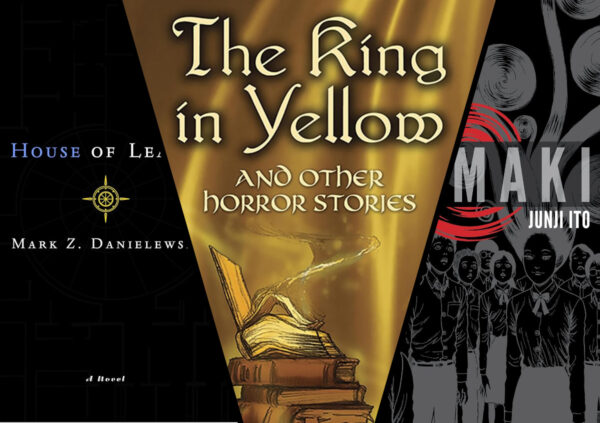
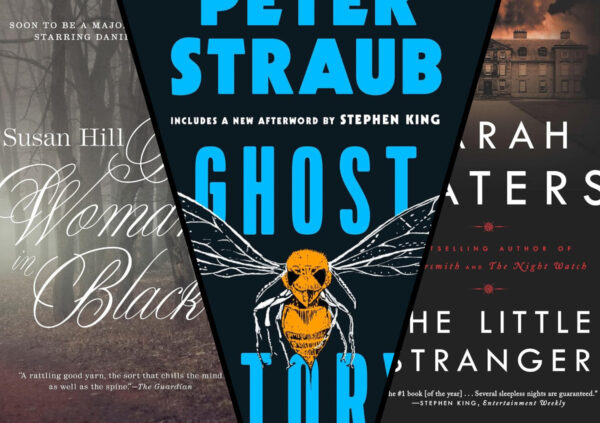
The difference between a psychological thriller and psychological horror is a single question.
A thriller asks what happened. There’s a crime, or a disappearance, or a lie, and the pleasure is in finding out. Psychological horror asks what is happening to me, and it declines to answer. The narrator is unreliable and knows it. Perception is failing. The supernatural may be present or the narrator may be unwell, and the book will not arbitrate.
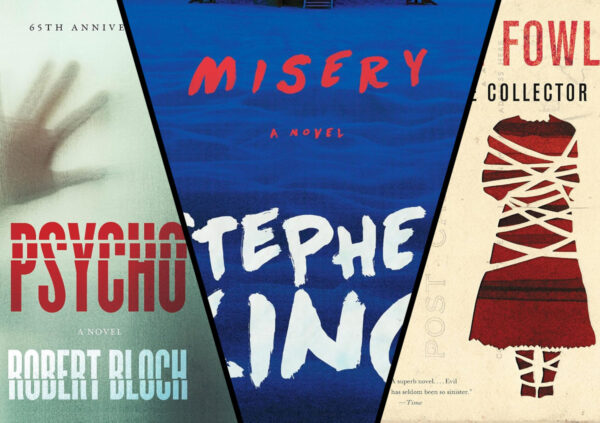
That’s the test I’ve used for this list, and it’s why you won’t find Gone Girl or The Girl on the Train here. Those are excellent books that resolve, and they belong to a different list.
What you’ll find here are psychological horror books where the threat lives inside the skull, or where you simply cannot tell. Some of them have a monster in them. In the good ones, the monster is optional.
One of these I’ve read. I’ve said which.
Fiction by René Rehn


Psychological Horror Books at a Glance
| Year | Title | Author |
| 1843 | The Tell-Tale Heart and The Black Cat | Edgar Allan Poe |
| 1892 | The Yellow Wallpaper | Charlotte Perkins Gilman |
| 1895 | The Repairer of Reputations | Robert W. Chambers |
| 1898 | The Turn of the Screw | Henry James |
| 1954 | The Bird’s Nest | Shirley Jackson |
| 1959 | The Haunting of Hill House | Shirley Jackson |
| 1959 | Psycho | Robert Bloch |
| 1963 | The Collector | John Fowles |
| 1967 | Rosemary’s Baby | Ira Levin |
| 1977 | The Shining | Stephen King |
| 1984 | The Wasp Factory | Iain Banks |
| 1987 | Misery | Stephen King |
| 1988 | The Fifth Child | Doris Lessing |
| 1991 | American Psycho | Bret Easton Ellis |
| 2000 | House of Leaves | Mark Z. Danielewski |
| 2003 | Come Closer | Sara Gran |
| 2007 | The Vegetarian | Han Kang |
| 2015 | A Head Full of Ghosts | Paul Tremblay |
| 2021 | Whisper Down the Lane | Clay McLeod Chapman |
The Ancestors
The Tell-Tale Heart and The Black Cat by Edgar Allan Poe (1843)

Poe invented the form this page is about, and these two are the clearest demonstrations.
Both are confessions. Both are narrated by men who open by insisting on their own sanity and then produce accounts that make the case for them impossible. Neither contains anything supernatural.
“The Tell-Tale Heart” is about two thousand words. A man kills an old man he lives with because of the old man’s eye, dismembers him, buries him under the floorboards, and is entirely calm when the police arrive. Then he hears the heartbeat. Poe never confirms whether the sound is real, and the story does not need to.
“The Black Cat” is the crueller of the two. A man who describes himself as tender-hearted becomes an alcoholic, mutilates his cat, hangs it, and later kills his wife with an axe when she stops him doing the same to a second animal. He blames the cat throughout.
The narrator’s confidence is the horror. Everything on this page since is working with that device, and Poe built it around 1843 with no precedent anywhere.
Full ranking on the best Poe short stories.
The Yellow Wallpaper by Charlotte Perkins Gilman (1892)

A physician husband brings his wife to a rented country house for a summer of enforced rest, her diagnosis a temporary nervous depression, his prescription total idleness. Work is forbidden. Writing is forbidden. Even her baby is kept from her. Her room is upstairs, its windows barred, its bed nailed down.
The psychological horror is the cure itself. Not one person in the story wishes her ill. John is competent and affectionate, following the accepted medicine of his day without a flicker of doubt, and each new restriction comes gift-wrapped in kindness. For most of the story, she agrees with him.
The craft is in the diary itself, kept in secret, its entries thinning and warping as the summer runs, so the deterioration reaches you through the sentences before she reports a single symptom.
Mitchell, the rest cure’s inventor, had prescribed it to Gilman herself. The story was her reply, and she made sure he received a copy.
Six thousand words, public domain, and the ending is one of the most upsetting images in American fiction.
The Turn of the Screw by Henry James (1898)

The founding text of the ambiguous psychological horror story, and the model almost everything else on this page is working from.
A young governess arrives at a remote house to raise two orphans, under one standing order from their absent guardian: never write to him, whatever happens. In time she becomes convinced the children are receiving visits from two dead servants who corrupted them in life.
James engineered it so neither reading can ever be eliminated. If the ghosts exist, she’s the only thing standing between them and the children. If they don’t, then the danger to the children is her certainty. The text funds both cases in full and settles neither.
What makes it psychological rather than merely ambiguous is the self-audit: she entertains the diagnosis on the page, gives it a fair hearing, and files it away, and every reader reviews that filing differently.
Her class position is the other half of it. She is young, poor, employed, isolated, forbidden to appeal to anyone, and in love with a man she has met twice.
The late-James sentences are their own gatekeeper, and a share of the famous ambiguity is grammatical.
The Repairer of Reputations by Robert W. Chambers (1895)

I’ve read The King in Yellow, and this is the best unreliable narrator story of the nineteenth century.
Hildred Castaigne fell from a horse, spent time in an asylum, and has come out changed. He describes an America in 1920, which was the future when Chambers wrote it, with legalized suicide and government Lethal Chambers opening in public squares. He describes his cousin Louis, an officer, who is engaged. And he describes Mr. Wilde, the repairer of reputations, who keeps a register of everybody’s secrets in a room upstairs with a cat that attacks him.
And he describes his own claim to the throne of America, whose crown he keeps in a safe.
Chambers gives you exactly enough to sort what is true from what is not, and it takes a second reading. The Lethal Chamber is real. The crown almost certainly is not. Mr. Wilde exists and his business is a different thing from what Hildred believes.
It is the first story in the collection and it establishes the play without ever quoting more than a few lines.
More on the Robert W. Chambers page.
The Mid-Century
The Bird’s Nest by Shirley Jackson (1954)

Jackson’s third novel, and the only one that takes on multiple personality directly.
At twenty-three, Elizabeth Richmond has a museum job, a room in her aunt’s house, chronic headaches, chronic backaches, and stretches of time she cannot account for. Then letters begin arriving in her own handwriting. Over the course of the novel, four selves surface, Elizabeth and Beth and Betsy and Bess, and it’s Betsy who bolts for New York in search of a mother who is dead.
The psychological horror wears the name Doctor Wright, and he’s why the book sits this high on the page. Vain, self-satisfied, unintentionally comic, serenely confident in his own skill, he approaches the four selves as a fascinating case rather than a human being. The names they carry are his inventions. Which of them gets to go on existing is his decision.
Where Jackson’s sympathy lies is never in doubt: with the selves who have no interest in being merged out of existence at his direction.
It predates The Three Faces of Eve by three years and Sybil by two decades, takes the condition far more seriously than either, and is probably the least read of all her novels.
The Haunting of Hill House by Shirley Jackson (1959)

Four people spend a summer in a house with a reputation, and the novel never once confirms that anything supernatural occurs.
For every event, a psychological explanation stands ready, and Jackson always hands you both. The chill on the landing, the hammering at the doors, the chalked message, the hand gripped in the dark. Eleanor witnesses everything, centers everything, and is the one occupant whose self-reporting cannot be trusted.
Her position powers everything: eleven years nursing the mother whose death she blames herself for, a cot in her sister’s nursery for a bedroom, nothing of her own, and her sister’s car, taken without asking, pointed at Hill House. She arrives starving to be wanted, and the house is the first place that feeds it.
Theodora’s cruelty in the second half is the part people forget, and it is what actually breaks Eleanor.
The final act is either the house taking her or a woman with nowhere to go making a decision, and the book gives you no way to settle it.
More on the Shirley Jackson page.
Psycho by Robert Bloch (1959)

Norman Bates runs a motel the rerouted highway forgot, under the house where he lives with Mother, and Bloch draws him at forty and going to seed: occult-curious, drink-dependent, charmless.
Perkins’s boyish, nervous replacement is the one the culture kept, and the swap flattered everybody. The Norman on the page is colder, more pathetic and far harder to look away from.
The psychological horror is the architecture of the delusion, and Bloch builds it carefully. Norman’s conversations with Mother are on the page, in her voice, and she is present as a character with opinions and a temper long before the reader is told what she is. The prose does not signal it.
The famous structural gamble, the lead dead at the one-third mark, sits in these pages before Hitchcock ever touched it.
Gein’s farm sat less than fifty miles from Bloch’s desk when the story broke. Knowing little beyond the headlines, Bloch kept only the thought that such a man could live next door unnoticed.
The Collector by John Fowles (1963)

Frederick Clegg, butterfly collector and council clerk, has watched art student Miranda Grey for two years when the pools pay out. The money buys a Sussex house with a cellar, and time to prepare it, and then he takes her.
The psychological horror is the first half, Clegg’s own telling, innocent of itself: attentive, generous with clothes and records and art books, sexually undemanding and offended anyone would think otherwise, wounded by her ingratitude and patient in explaining the wound. Courtship, in his ledger, going through a difficult patch.
Miranda’s diary then reruns the same weeks, and the retrospective damage is discovering how much of her you had taken on his terms.
It was Fowles’s first novel, written while he taught school, and the captivity narrative begins here. Six decades on, the voice is still unbeaten.
Rosemary’s Baby by Ira Levin (1967)

Against the warnings of an old friend who knows the building’s history, the Woodhouses sign a lease at the Bramford. Next door live the Castevets, elderly, nosy, impossible to refuse. Guy’s stalled acting career abruptly un-stalls, and not long after that, Rosemary is expecting.
The psychological horror is that Rosemary is right about everything and is talked out of all of it, and every person doing the talking loves her.
Each alarm she raises gets met at the door by devotion: the pain is normal for a first pregnancy, the doctor too distinguished to bother with baby books, the daily drink nothing but Minnie’s home remedies. Her one warning friend dies. Her one piece of evidence gets confiscated. And Guy slides from patient to tired to concerned-about-her with a smoothness that’s terrible to watch.
Strip the coven out and the novel still stands: a career purchased with a wife, by a man who never stops sounding reasonable.
Not a sentence wasted across its two hundred and forty pages.
The Modern Wave
The Shining by Stephen King (1977)

Jack Torrance takes a winter caretaking job at an empty Colorado hotel with his wife and five-year-old son. Jack’s drinking already cost him a teaching career after he put hands on a student, it once cost Danny a broken arm, and every person involved understands that no job comes after this one.
The psychological horror is that the Overlook does not have to overpower him. It offers respect, authority, an audience, a history he can imagine himself into, and a drink, and it agrees with him, and King is exact about how little pressure that takes on a man who already believes he has been treated unfairly.
Wendy’s position is the part that ages best. She has been managing a violent husband for years, has learned to read his moods, and spends the novel calculating, and King writes that from inside rather than as a plot mechanism.
See the film and read it anyway, because the two run on different Jacks. Kubrick’s arrives already lost. King’s fights for his footing to the last, and the losing is what makes it hurt.
More on the best Stephen King books.
The Wasp Factory by Iain Banks (1984)
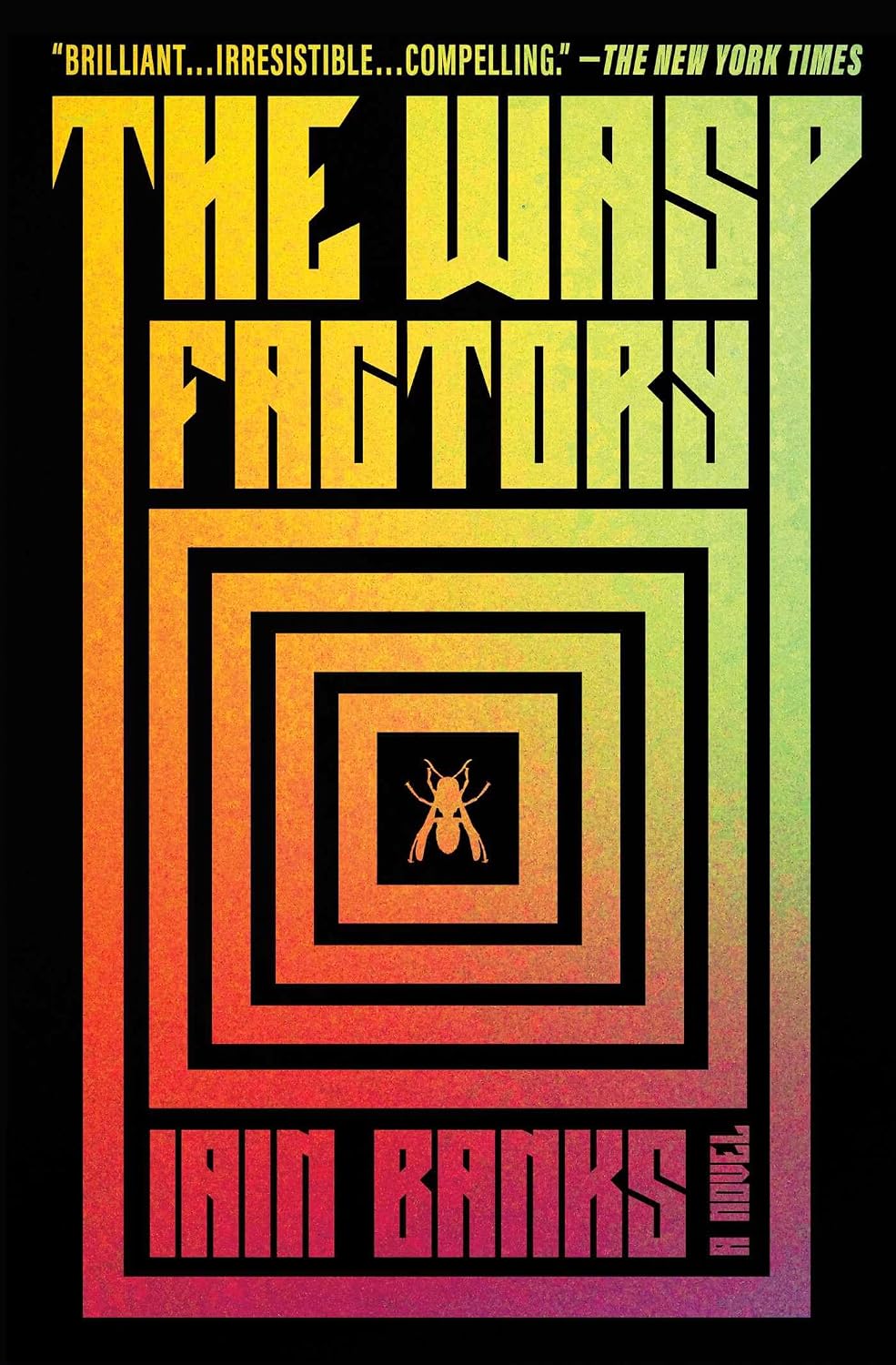
Frank Cauldhame is sixteen, lives with his father on a small Scottish island, and has killed three children. He tells you this in the opening pages, in the same tone he uses for the weather.
He also maintains an elaborate private religion. Sacrifice Poles around the island with animal skulls on them. A Wasp Factory in the loft, an old clock face converted into a maze with twelve chambers, into which he introduces a wasp and reads the manner of its death as prophecy.
The psychological horror is the voice. Frank is precise, funny, methodical and entirely without a sense that any of this requires justification, and Banks never once steps outside him to signal that the reader should be appalled.
His brother Eric escapes from a psychiatric hospital at the start of the novel and is walking home, phoning periodically, and that provides the clock.
The final reveal about what Frank’s father has done to him is either the making of the book or the thing that unbalances it, and readers split evenly. It was Banks’s debut and reviewers in 1984 were genuinely unpleasant about it.
Misery by Stephen King (1987)

Paul Sheldon wakes in a farmhouse in Colorado with both legs shattered, in the care of Annie Wilkes, a former nurse who pulled him out of his crashed car and did not call anybody.
She is his number one fan. She has read every Misery Chastain novel, and she has just finished the new one, in which he kills Misery off so he can write something serious. The only manuscript of that serious book is in his travel case, and the section where she reacts to all of this is the most frightening thing in the book.
The psychological horror is Annie’s weather. She cycles: maternal, girlish, sulking, absent behind the eyes, and Paul learns to read the signs the way you learn a language, because reading them wrong costs him something physical. King is exact about the calculation involved in surviving somebody like that.
The counterweight subject is the writing itself. Survival means delivering the novel she demands, and the book refuses to pretend coerced pages can’t be good, which is its most uncomfortable finding.
King has said Annie is cocaine, and that he was deep in addiction when he wrote it.
The Fifth Child by Doris Lessing (1988)

Harriet and David marry in the late sixties, want a large family in a large house, and get four children in six years. They are happy, deliberately, against the grain of the period, and the house fills with relatives at every holiday.
Then Harriet is pregnant with Ben, and the pregnancy is violent from the inside. He kicks hard enough to bruise. She takes sedatives to get through it. He is born enormous, hostile, and physically wrong in ways no doctor will name.
The psychological horror is that Lessing offers no diagnosis and no supernatural explanation. Ben may be a throwback, a changeling, or a child with an unnamed condition, and the novel refuses to say, which puts the reader in exactly the family’s position.
What happens next is the hard part. The household quietly agrees Ben cannot stay, an institution is arranged, and Harriet goes to see it and does not accept what she finds, and the cost of bringing him home destroys everything.
Nobody in it is cruel. Everybody is complicit. A hundred and thirty pages and it does not let anybody off.
American Psycho by Bret Easton Ellis (1991)

Patrick Bateman is twenty-six, works in mergers and acquisitions at Pierce and Pierce, and narrates his own life in exhaustive detail: the suits, the labels, the restaurants, the business cards, the skincare routine, the stereo components.
The psychological horror is the flatness. The murders are described in the same register as the reservations and the moisturizer, with the same brand names and the same attention, and Ellis never modulates the tone to signal which parts matter.
And the novel is entirely deliberate about whether any of it happens. Bateman confesses repeatedly and nobody hears him. His lawyer says he had dinner with a man Bateman claims to have killed. He is misidentified constantly, by everybody, throughout, because none of these men can tell each other apart.
The violence is extreme and it is not the reason the book is difficult. The reason is four hundred pages of a voice with nothing behind it.
It was dropped by its original publisher after staff objected, and the National Organization for Women boycotted Vintage over it.
Come Closer by Sara Gran (2003)

An architecture career, a marriage that works, a freshly bought apartment: Amanda’s life is fine right up until the tapping begins, audible to her alone. A vicious memo goes to her boss under her name, and she has no memory of typing it. Her sleeping husband wakes with a cigarette burn she cannot explain having given him.
The psychological horror is the sequencing. Gran gives you an ordinary competent woman and lets her behavior deteriorate in increments that each have a plausible explanation, and Amanda supplies those explanations herself, reasonably, until she cannot.
A book on demonology falls into her hands, complete with a symptom checklist, and she works down it ticking boxes, and Gran takes care never to rule on whether the list is a diagnosis or a mirror.
What makes it more disturbing than the premise suggests is the pleasure. Amanda starts enjoying it. The thing arriving is offering her permission for things she already wanted, and the erosion of her marriage is partly her doing.
It runs a hundred and seventy quick pages, and among heavy horror readers it has quietly turned into one of the century’s most passed-along titles.
A Head Full of Ghosts by Paul Tremblay (2015)

Marjorie Barrett, fourteen, is either possessed or schizophrenic, and while that question hangs open, a camera crew is in the house, because the Barretts have signed on for a reality show called The Possession.
Every incentive in the house points away from the truth, and Tremblay arranges them with care. Dad, jobless, has discovered God. The show’s checks are covering the mortgage. Let a psychiatrist put a name on it and the contract dies. Even the priest draws a fee. In the middle of it all stands Marjorie, sharp and funny and furious, who sees the whole machine clearly and has figured out her own uses for it.
Merry, eight years old during the events, narrates the past. At twenty-three, being interviewed for a book, she narrates the present. And threaded between the two timelines, a horror blogger recaps the broadcast episode by episode, which is Tremblay smuggling a critical essay into his own novel.
Then the last chapter rearranges everything you thought you’d settled, and that chapter is why readers press this book into each other’s hands.
Won the Bram Stoker Award, and King’s cover blurb says it “scared the living hell out of me,” and it appears to be sincere.
Also on ghost books.
Whisper Down the Lane by Clay McLeod Chapman (2021)

The Satanic Panic as psychological horror, built directly on the McMartin preschool trial, and the question of what is actually happening is the whole book.
1983: Sean is five, alone with an anxious single mother in a new town, and he tells a story he cannot take back. The accusation, ritual abuse, a kindergarten teacher, spreads through the community the way those accusations actually spread, on coaxed testimony from children too young to know what they are confirming.
The present: Sean lives under a new name, Richard, art teacher at a private school, married, stepfather to a five-year-old. Then staged incidents start arriving, Satanic-flavored and addressed to who he used to be. The school rabbit first.
The horror runs on this page’s exact test: either something followed Sean out of 1983, or a lie is coming home with interest, and Chapman keeps both live. The honest caveats are a guessable mid-book twist and dread that thins between the interrogation scenes. This Is Horror still put it plainly: “It speaks to a great talent.”
House of Leaves by Mark Z. Danielewski (2000)

The Navidsons’ Virginia house is a quarter inch bigger on the inside than the outside, which is impossible, and which is only the beginning. A closet materializes in a wall that backs onto nothing. Then comes the hallway: lightless, cold, and running out far beyond where the property ends.
The psychological horror is not the house, it is the second narrator. Johnny Truant finds a manuscript in a dead blind man’s apartment, an academic study of a documentary that does not exist, and he transcribes it, and his footnotes take over. He stops sleeping, he stops working, he becomes convinced something is following him, and his account of his mother, delivered through letters in an appendix, is the most upsetting material in the book.
Nothing supernatural ever demonstrably happens to Johnny. He reads about a house and comes apart, and the novel puts the reader in the same position by making the physical act of reading it disorienting.
The typography is doing that work rather than decorating it. You rotate the book, follow footnotes into dead ends, and lose your place, exactly as designed.
More on the Mark Z. Danielewski page.
The Vegetarian by Han Kang (2007)
2007 · translated by Deborah Smith · 2015

Yeong-hye has a dream she does not describe fully and stops eating meat. That is the entire inciting incident, and everything that follows comes from a Korean family’s reaction to a woman making one decision about her own body without explaining herself.
The novel is in three parts and none of them is hers. Her husband narrates the first and finds her embarrassing. Her brother-in-law narrates the second and becomes obsessed with painting her. Finally, her sister narrates the third, in a psychiatric hospital, and is the only one who tries to understand and arrives far too late.
The psychological horror is the escalation of other people’s responses. Her father force-feeds her at a family dinner in front of everybody. Her husband’s chief concern is his colleagues. Nobody at any point asks her what the dream was.
Han never explains her either, and that discipline is what holds the whole thing together.
It won the International Booker in 2016 and Han won the Nobel in 2024, and it remains the hardest of her books to read.
Where to Start
Start with The Haunting of Hill House, and give it whole evenings rather than stolen minutes.
If you want something short that does the same thing, read Come Closer, which is the best-kept secret on this page.
If you want the oldest version, read “The Yellow Wallpaper”, which takes half an hour and is free everywhere.
And if you want the one that will genuinely upset you, read The Fifth Child or The Collector, and don’t read them back to back.
A note on support: this page mentions suicide. If you’re struggling, you don’t have to handle it alone. In the US you can call or text 988, the Suicide and Crisis Lifeline. Elsewhere, the International Association for Suicide Prevention keeps a directory of crisis centers at iasp.info.
Questions About Psychological Horror
What’s the Difference Between Psychological Horror and a Psychological Thriller?
A thriller asks what happened, and the pleasure is in finding out. Psychological horror asks what is happening to me, and declines to answer. Gone Girl resolves. The Haunting of Hill House never does, and that refusal is the genre.
What’s the Best Psychological Horror Book?
The Haunting of Hill House, read in whole evenings rather than stolen minutes. The best-kept secret on the page is Come Closer, which does the same slow slide in a hundred and seventy pages.
Does Psychological Horror Have Monsters?
Sometimes, and in the good ones the monster is optional. The Fifth Child refuses to diagnose Ben, A Head Full of Ghosts keeps possession and schizophrenia in play to the last chapter, and The Turn of the Screw built that refusal in 1898.
What Was the First Psychological Horror Story?
Poe’s confessions, “The Tell-Tale Heart” and “The Black Cat,” both 1843. Two narrators insisting on their sanity while dismantling the case for it, nothing supernatural anywhere, and no precedent anywhere either.
Where to Go Next
For the wider canon, see my horror classics page. Poe was doing this before the genre had a name for it.