Mark Lawrence books come from the genre’s strangest double life. Reputation one: the man who wrote modern fantasy’s most argued-about protagonist, a boy atrocity in a crown, and planted the flag the whole grimdark debate has waved ever since. Reputation two: the community’s most generous citizen, a research scientist who worked on artificial intelligence before turning novelist, and who founded the Self-Published Fantasy Blog-Off, the contest that has been surfacing indie careers since 2015. The same man wrote the blurb crowning John Gwynne as Gemmell’s heir, and his own covers carry George R. R. Martin’s three-word verdict, “an excellent writer,” which from that source counts as a parade.
The catalog has grown at better than a book a year since 2011, with every series seen through to its ending, and the Broken Empire alone sits on my best fantasy books pillar and anchors the grimdark list. The shelf splits cleanly by temperament, and this page is the fork in the road: the knife, the heart, or the ideas, with the full reading order for each.
One note on register: I’m relaying the long consensus on these books, the arguments included, not personal verdicts. Where readers split, and with Lawrence they split often and loudly, I’ll give you both camps and let you pick your side.
Fiction by René Rehn


The short version
Pick by what you can stomach and what you want held. Prince of Thorns if you want the knife, eyes open, knowing exactly what you’re signing. Red Sister if you want the heart, by common consent the most loved thing he’s written. The Book That Wouldn’t Burn if you want the ideas, his biggest swing. Every completed series on the shelf is complete, a rarer virtue in fantasy than it should be, and the newest series launched this March with Daughter of Crows. The Mark Lawrence books reward commitment, but they never leave you waiting a decade for an ending.
Mark Lawrence books in order
The table runs by first publication, which is also the sensible reading order within each series.
| Year | Title | Series or type | Notes |
| 2011 | Prince of Thorns | The Broken Empire, book 1 | The debut |
| 2012 | King of Thorns | The Broken Empire, book 2 | |
| 2013 | Emperor of Thorns | The Broken Empire, book 3 | Gemmell Legend Award |
| 2014 | Prince of Fools | The Red Queen’s War, book 1 | Same world as the Broken Empire |
| 2015 | The Liar’s Key | The Red Queen’s War, book 2 | Gemmell Legend Award |
| 2015 | Road Brothers | Stories | Broken Empire world |
| 2016 | The Wheel of Osheim | The Red Queen’s War, book 3 | |
| 2017 | Red Sister | Book of the Ancestor, book 1 | First of the Abeth books |
| 2018 | Grey Sister | Book of the Ancestor, book 2 | |
| 2019 | Holy Sister | Book of the Ancestor, book 3 | |
| 2019 | One Word Kill | Impossible Times, book 1 | Science fiction |
| 2019 | Limited Wish | Impossible Times, book 2 | |
| 2019 | Dispel Illusion | Impossible Times, book 3 | |
| 2020 | The Girl and the Stars | Book of the Ice, book 1 | Abeth again, on the ice |
| 2021 | The Girl and the Mountain | Book of the Ice, book 2 | |
| 2022 | The Girl and the Moon | Book of the Ice, book 3 | |
| 2023 | The Book That Wouldn’t Burn | The Library Trilogy, book 1 | |
| 2024 | The Book That Broke the World | The Library Trilogy, book 2 | |
| 2025 | The Book That Held Her Heart | The Library Trilogy, book 3 | |
| 2026 | Daughter of Crows | The Academy of Kindness, book 1 | Published in March |
| 2026 | The Bookshop Book | Library world standalone | Due October 20, 2026 |
Where to Start With Mark Lawrence
There are three honest doors, and they open onto very different houses. Readers with a strong stomach who want to see what the grimdark argument is actually about start with Prince of Thorns, the book that made his name and the one every darker-than-thou debut still gets measured against. Readers who want the warmth without the war crimes start with Red Sister, the fan favorite and the gentlest on-ramp, if a convent that trains child assassins counts as gentle. If you want the big ideas start with The Book That Wouldn’t Burn, the most ambitious thing in the catalog.
What you should not do is start with a book two. Every Lawrence series is built to be read in order, and the two trilogies set in the Broken Empire world share a map and a clock, so Prince of Thorns before Prince of Fools is the richer sequence even though both work alone. The Book of the Ice assumes you’ve read Book of the Ancestor and pays Ancestor readers accordingly.
If you want one more data point before choosing: among the Mark Lawrence books, Red Sister is the one most often pressed into strangers’ hands, Prince of Thorns is the one most often argued about, and the Library is the one most often called his best. That fork is the whole shelf in miniature.
Mark Lawrence’s Life, Briefly
Lawrence was born in 1966 and describes himself as American-British, American-born and raised in Britain. He took a degree in physics and a PhD in mathematics, then spent his working life as a research scientist in artificial intelligence, holding secret-level security clearance with both the US and UK governments along the way.
He wrote fiction on the side for years before Prince of Thorns sold, and it arrived in August 2011 from Harper Voyager in the UK and Ace in the US, the publishers who have carried the main shelf since. In 2015 Harper Voyager bought the Book of the Ancestor trilogy in a six-figure deal, and the day job eventually gave way to the books, which have reportedly sold around two million copies across more than two dozen languages.
The other thing he built is the Self-Published Fantasy Blog-Off, founded in 2015 and run annually ever since. The mechanics are simple and brutal: around 300 self-published novels are split among ten fantasy blogs, each blog champions one finalist, and every finalist gets scored by all ten. The contest has launched real careers, The Grey Bastards and The Sword of Kaigen among its winners, and its most famous alumnus, Senlin Ascends, didn’t even reach the final round: the attention it earned along the way carried it to a mainstream deal anyway. For a writer whose most famous character burns villages, Lawrence has spent a remarkable amount of his spare time holding doors open for strangers.
The Broken Empire
Prince of Thorns, King of Thorns, Emperor of Thorns, 2011 to 2013, one book a year, finished on schedule. This is the home series, the reason Lawrence books get argued about at all, and at three short volumes it remains one of the tightest serious commitments in modern fantasy. Read it in publication order. Road Brothers, the companion story collection, slots in afterward.
Prince of Thorns (2011)

Prince of Thorns is the lightning rod, still crackling fifteen years on. Jorg Ancrath is thirteen when the book opens, leading a band of grown killers along the road, and the opening chapters show that band doing what such bands do, murder and rape included, narrated in Jorg’s beautiful, amused, utterly unrepentant voice. Those pages are the acts every essay about grimdark’s limits cites. They are not a stumble: they’re the filter, placed at the door on purpose, and the trilogy’s whole game is what it does with your revulsion afterward.
The split has been loud since 2011. Robin Hobb blurbed it as “dark and relentless,” a book that “will pull you under and drown you in story,” while The A.V. Club called Jorg an “irredeemable monster who’s hard to care about,” and both judgments still have armies behind them. What nobody disputes is the prose, aphoristic and knife-bright, which is half of why the arguments never end: style that good in service of a narrator that bad feels like a dare. The book was a Gemmell Morningstar finalist and made the Prix Imaginales shortlist in France, so the juries were paying attention too.
Jorg himself is running from the night his mother and younger brother were murdered, and what the thorns of the title have to do with that night is the book’s to tell. The broken world he crosses also has a secret in its bones, one of the genre’s great slow reveals, and it stays sealed here. If you want to understand why Mark Lawrence books polarize people, this is the book doing the polarizing.
King of Thorns (2012)

King of Thorns is the book that converted a lot of the skeptics. Four years on from the debut, Jorg holds a small mountain kingdom and faces the Prince of Arrow, a good man with a far bigger army and a credible claim to unite the empire, which puts the reader in the uncomfortable position of rooting against the better candidate. The novel runs on two interleaved timelines, the single day of a siege and the four years that led to it, and the structure clicks shut with real craft.
The consensus holds this as the strongest volume of the three: the monster of book one starts to read as a damaged boy without ever being excused, the memory-box device that drives the dual timeline is the series’ best trick, and the set-piece defense of the Haunt earns its length. It was a Gemmell Legend Award finalist in 2013. Middle books of trilogies rarely carry this much of the load, and readers who wobbled on Prince of Thorns tend to decide here whether Lawrence is for them. Most who make it this far stay.
Emperor of Thorns (2013)

Emperor of Thorns closes the trilogy at the Congression in Vyene, where the Hundred gather to elect an emperor nobody has managed to elect in generations, while something far worse than imperial politics, the Dead King, presses on the world’s margins. Jorg travels to the vote the way Jorg travels anywhere, leaving the road worse than he found it, and the book finally opens the box on what the Broken Empire actually is, the reveal the first two volumes kept rationing.
It won the David Gemmell Legend Award in 2014 and reached the Sunday Times bestseller list, the trilogy’s commercial and critical peak. The common verdict is that the ending lands, and lands hard: the trilogy’s defenders point here when they argue the opening brutality was in service of something, and even many detractors concede the architecture. Among Lawrence books it’s the proof of concept, the demonstration that the shock of the debut was a wager rather than the whole game. The thorns keep their last secrets until the final pages, where they belong.
Road Brothers (2015)

Road Brothers is the Broken Empire story collection, a set of short pieces about Jorg’s band of road brothers, the murderers, cowards and occasional almost-decent men who follow him through the trilogy. Several stories fill in how individual brothers came to the road, others catch Jorg himself at ages the novels skip, and a few land small revelations that reward trilogy readers directly, which is exactly who the book is for.
The honest framing is that this is a completist volume: nothing here is required, and newcomers should not start with it. But the short form suits Lawrence’s aphoristic style, the best pieces have the punch of the novels at a tenth the length, and it makes a satisfying coda for readers not ready to leave the Broken Empire after three books. Read it after Emperor of Thorns.
The Red Queen’s War
The second trilogy, Prince of Fools, The Liar’s Key and The Wheel of Osheim, runs 2014 to 2016 and is the counterweight: same world as the Broken Empire, same years on the calendar, opposite engine. It reads richer after the first trilogy, since the two share a map and a clock and brush against each other in passing, but it also works alone as the door for readers who want Lawrence’s world without Jorg’s company. Read it in order, and expect the funniest writing on this page.
Prince of Fools (2014)

Prince of Fools introduces Prince Jalan Kendeth, a coward, a gambler and a liar of real charm, tenth in line to the Red Queen’s throne and planning to stay there, until a Norse warrior named Snorri ver Snagason and a witch’s working drag him onto the road north. Where Jorg dares you to follow him, Jalan begs you not to make him go, and the double act, the berserker who believes in things and the princeling who believes in exits, powers the whole trilogy.
The common comparison is Fraser’s Flashman, and it’s earned: Jalan narrates his own cowardice with a self-awareness that becomes its own kind of honesty, and the book is genuinely funny in a way the Broken Empire never tried to be. Under the jokes it quietly runs its own knife, because Snorri’s reasons for going north are not funny at all, and the trilogy keeps cashing that contrast. It was a Gemmell Legend finalist, and of all the Lawrence books it’s the one that converts people who bounced off Jorg. The humor is the door. What’s behind the door is still Lawrence.
The Liar’s Key (2015)

The Liar’s Key is the middle book that won Lawrence his second David Gemmell Legend Award, in 2016, making him a two-time winner of the fan-voted prize within three years. The premise is pure mythic escalation: Loki’s key, which can open any lock in creation, is loose in the world, and every power with ambitions wants the hand that holds it. Jalan mostly wants to get back to the bars and bedrooms of Vermillion, which is of course not what happens.
The book stretches its leash further than Prince of Fools, south through banking houses and old magic, and the consensus rates it the strongest of the three: bigger stakes, deeper history, and the series’ best material on what the key actually costs the people who carry it. The humor stays, but this is where the Red Queen’s War stops reading like a comic detour through the Lawrence books and starts reading like the other half of the Broken Empire’s story.
The Wheel of Osheim (2016)
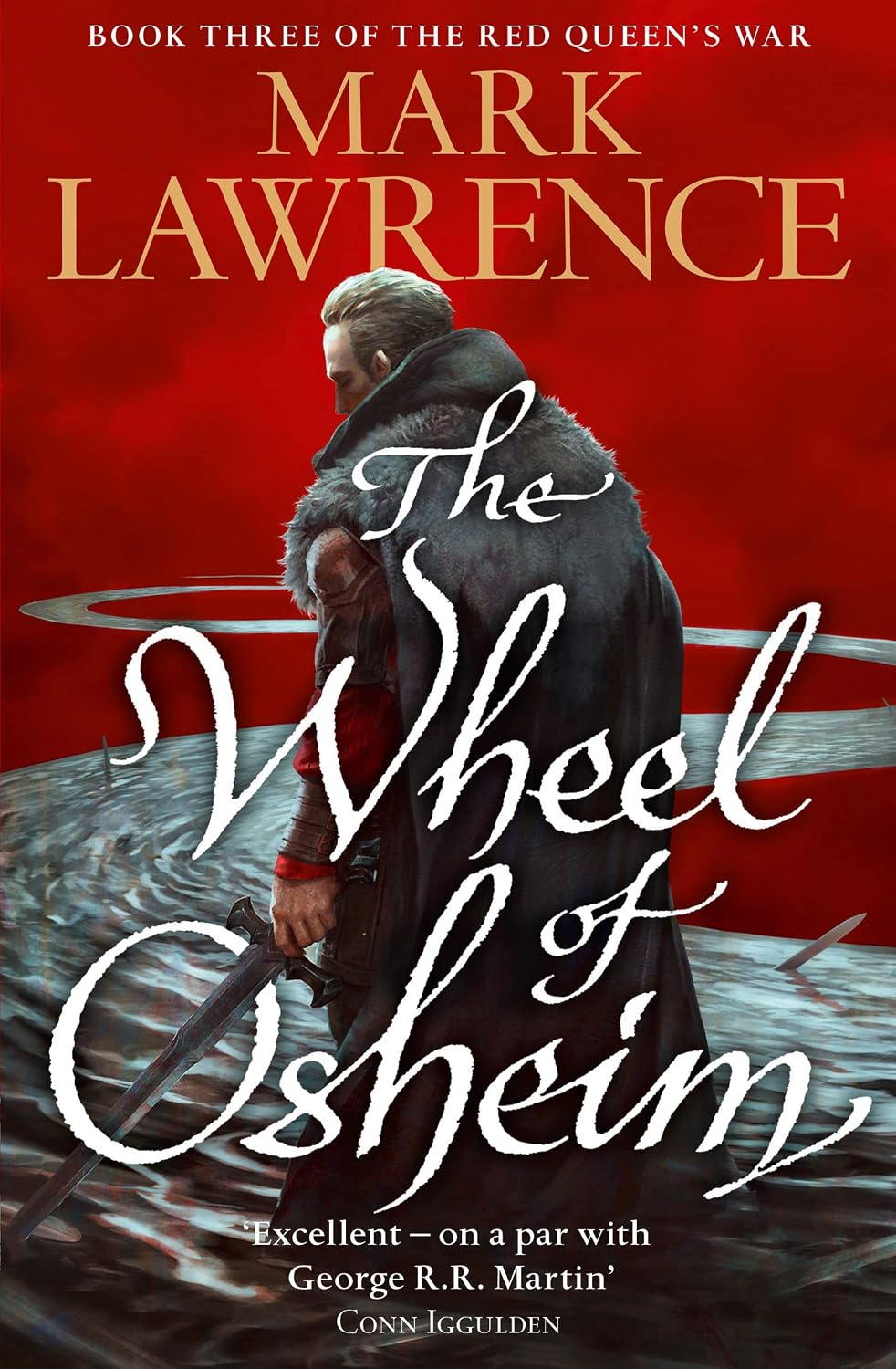
The Wheel of Osheim closes the trilogy at the Wheel itself, the source of the magic that has been bleeding into the world all series, now spinning toward a point where everything breaks. The finale opens with Jalan in the worst place the series can put him and spends its length converging every debt the first two books ran up, while the clock it shares with the Broken Empire runs down in the background, and readers of both trilogies get to watch the same days from the second angle.
The general verdict is a strong landing: the Red Queen’s long game comes clear, Jalan’s cowardice is finally priced honestly, and the last stretch earns emotions the series pretended it wasn’t dealing in. It was a Gemmell Legend finalist like its siblings, and it completes what many readers consider the most purely entertaining of the Lawrence trilogies. If the Broken Empire is the argument, this is the reward.
Book of the Ancestor
Red Sister, Grey Sister and Holy Sister, 2017 to 2019, left the Broken Empire behind for Abeth, a dying world circling a failing sun, its habitable band kept open by a mechanical moon and narrowing by the century. This is the most loved shelf in the catalog, the series people hand to friends who would never touch Prince of Thorns, and the one that proved Lawrence’s range. Publication order is the only order.
Red Sister (2017)

Red Sister opens with one of the most quoted first lines in modern fantasy, a piece of deadpan advice about how large an army you need if you intend to kill a nun. The sentence is a fair contract for the book. Nona Grey, small, fierce and headed for a hanging, is taken instead into the Convent of Sweet Mercy, where the Church of Abeth raises girls into blades, poisoners and mystics, and what follows is the warmest thing Lawrence has written without ever going soft.
The found sisterhood is the engine: Nona’s ferocious, unreasonable loyalty to her friends gives the book a heart the Broken Empire deliberately withheld, and the convent’s classes in blade-work and poison are the magic-school formula executed with a killer’s discipline. Behind it all sits the dying world, the ice walls closing in, and whoever controls the moon holding the fate of everyone under it. The book was a Gemmell Legend finalist in 2018 and has become the standard first recommendation among Mark Lawrence books. If Jorg is why people argue about Lawrence, Nona is why people love him.
Grey Sister (2018)

Grey Sister moves Nona up the convent’s ladder into Mystic Class and discovers that the deadliest ground on Abeth is not the ice but the Church and the court, where her enemies from the first book have longer reaches and better lawyers. The middle volume splits its attention between convent politics, which tighten like a noose, and a stretch of the book that takes Nona out of Sweet Mercy entirely and strips her of everything the convent gave her, which is where the series shows its teeth.
Readers tend to rank it a half-step below Red Sister, mostly because the school framework that made book one so moreish spends long stretches offstage. What it adds is scope: Abeth’s factions, the real stakes of the narrowing Corridor, and Nona under pressures that friendship alone can’t answer. The UK spelling of the title is original and consistent everywhere, so no, the American edition is not called Gray Sister.
Holy Sister (2019)
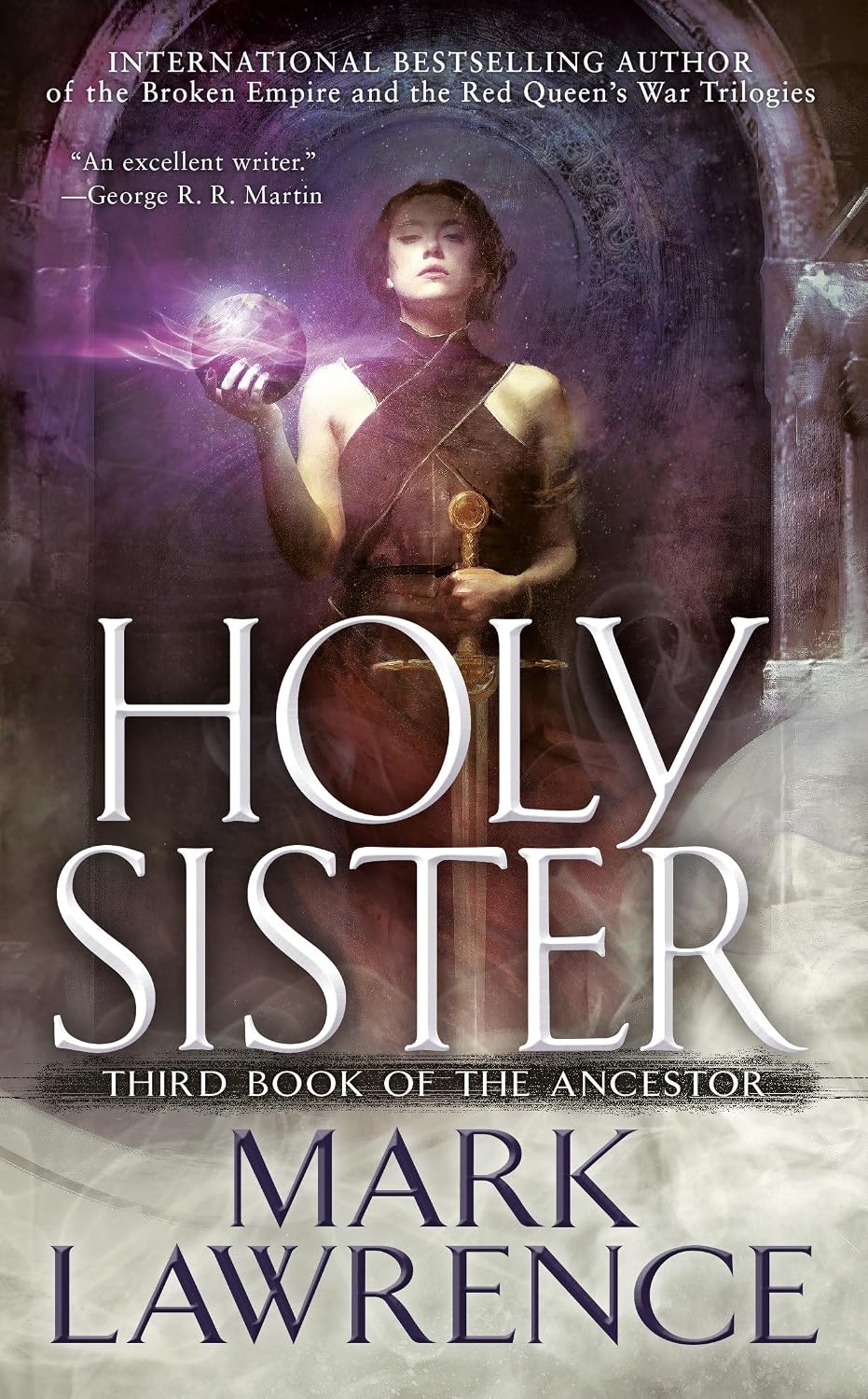
Holy Sister brings the ice to the walls. The Corridor has narrowed past the point of pretending, war has come with it, and everything the convent taught Nona across two books gets spent in one converging campaign, told partly in a timeline that picks up threads the second book left deliberately loose. It is the shortest of the three and the most relentless, a finale with almost no idle scenes in it.
The consensus calls the landing clean, and for a lot of readers this trilogy’s ending is the most satisfying thing Lawrence has done, the emotional bill of three books paid in full and on time. There are dissenters who wanted more pages and more answers about Abeth itself, and the Book of the Ice later went back for exactly those answers. Finish this one before you start that one, and keep tissues in reach either way.
Book of the Ice
The Girl and the Stars, The Girl and the Mountain and The Girl and the Moon, 2020 to 2022, walk the same world as Book of the Ancestor but out on the ice the Corridor books only feared, following Yaz of the Ictha, a girl of the polar tribes whose people throw their weak and their different into a pit beneath the ice. The trilogy answers questions about Abeth the Ancestor books raised and left standing, and the two series converge in ways that reward reading Ancestor first. It is the rawer, stranger shelf, and one entry covers it here because the sensible purchase is book one and the sensible path is straight through.
The Girl and the Stars (2020)

The Girl and the Stars begins at the pit where the priesthood culls the tribes’ children, and puts Yaz in the one place no story about the pit is supposed to continue: the underside. What she finds beneath the ice, a buried world of outcasts, older machines and things that hunt in the dark, reframes everything the Ancestor books said about Abeth from below, and the series runs on that double vision, survival horror in the foreground and deep history underneath.
The common reading rates the trilogy a notch below Book of the Ancestor as a story and a notch above it as worldbuilding, with a middle volume that travels hard and a finale, The Girl and the Moon, that pays off both series at once. Readers who loved Nona should know she is not the point here, Yaz is, and Yaz is a quieter, stranger lead. Among the Lawrence books this is the shelf for people who want Abeth’s machinery opened up. Buy The Girl and the Stars, and if the underside takes you, the other two are waiting.
Impossible Times
The wild card on the shelf is a science fiction trilogy, written by the man who did artificial intelligence research for a living, and all three books, One Word Kill, Limited Wish and Dispel Illusion, landed in a single year, 2019. They are short, sharp and personal in a way the fantasy rarely admits to, and one anchored entry covers the set because the three books are one story and the obvious buy is book one.
One Word Kill (2019)

One Word Kill opens in London in January 1986 with fifteen-year-old Nick Hayes getting a leukemia diagnosis, and it filters everything that follows, time travel included, through his Dungeons and Dragons group, the one place where dying teenagers still get to be wizards. A stranger appears who knows things about Nick’s life that nobody could know, a girl joins the table, and the plot that unfolds is a tight, mathematically honest loop that the trilogy expands in Limited Wish and closes in Dispel Illusion.
This is the clearest look at the scientist behind the swords: the time mechanics are worked out with a physicist’s conscience, and the D&D scenes are written by someone who has clearly rolled the dice. They are lean books, though, with none of the epic architecture of the fantasy shelves, and readers who come for Broken Empire density sometimes find them slight. Taken as what they are, a love letter to 1980s nerdery with a real ache in it, they’re the hidden gem among Mark Lawrence books. Read the three in order across a weekend.
The Library Trilogy
The Book That Wouldn’t Burn (2023), The Book That Broke the World (2024) and The Book That Held Her Heart (2025) are the current peak of the catalog and its biggest swing: an infinite library and an argument older than empires about whether knowledge saves people or chains them. The trilogy is complete, and the world already has an encore on the way, covered at the end of this section. Read the trilogy in order, and read it before the standalone.
The Book That Wouldn’t Burn (2023)

The Book That Wouldn’t Burn opens the trilogy on two lives that should never touch. Livira is a brilliant orphan out of the wasteland called the Dust, clawing her way into the city of Crath and the library that rules it. Evar has grown up inside the library itself, trapped in one vast chamber with his adopted siblings, raised by mechanical guardians, with no way out and no memory of how they got in. The library connecting them is effectively infinite, and the book’s central mysteries run on time, memory and the question of who gets to keep knowledge.
The reception was the warmest of Lawrence’s career to that point: reviewers leaned hard on the ideas, the chapter epigraphs sharp enough to collect, and a late turn that recontextualizes the whole volume. The common caveat is pace, the first half builds slowly and trusts you to wait. For readers deciding where the Lawrence books have been going for a decade, the answer is here.
The Book That Broke the World (2024)

The Book That Broke the World is the middle volume, and it widens the war the first book only diagrammed: the ancient quarrel over the library, between those who would preserve everything and those who would burn it all so humanity can stop repeating itself, stops being a philosophy seminar and starts costing characters things they can’t get back. Saying much more about who stands where would spoil the first book’s late turns, which this series guards more jealously than most.
The consensus take is a true second act: more momentum than book one, more pieces on the board, and a structural trick with time that some readers found the series’ best and others found one knot too many. Either way it ends in a place that makes waiting for the finale genuinely uncomfortable, which, with the finale now published, you are spared. The epigraph game is still strong, and the trilogy’s larger argument about memory and censorship moves to the center where it belongs.
The Book That Held Her Heart (2025)

The Book That Held Her Heart closes the trilogy, published in April 2025, with the library’s civil war at full burn and Livira’s scattered allies divided across time, space and factions. Publishers Weekly starred the finale, writing that Lawrence “pulls out all of the stops” to close Livira and Evar’s story, and one wing of readers calls the trilogy, finale included, his best and most ambitious work.
The book also takes the series’ biggest risk: a thread set in Nazi Germany, our own history walking into a fantasy about burning books. Reviewers split on it exactly as you’d expect, some finding it the point of the whole trilogy made flesh, others finding the step into real atrocity heavier than the story could carry. A visible dissent also rates the finale below its two predecessors, bittersweet where they were sharp. Both camps agree on the ride there, and on this much: the trilogy ends on purpose, saying what it came to say.
The Bookshop Book (2026)

The Bookshop Book is the Library’s encore, a standalone novel due from Ace on October 20, 2026, and the obvious preorder for anyone finishing the trilogy about now. The premise stays in the Library Trilogy’s world but at street level: Frederick “Red” Archer finds a bookshop that changes his life, and Rose Penrose, trapped inside a book her mother wrote, leaps into another book in that same shop. The publisher promises trilogy readers will discover how it all fits, while Library Journal’s early review calls it “a delightful novel that can be read on its own.”
At 224 pages in the ebook edition, it is sized as a visit rather than a residence, closer to a coda than a fourth volume. Read the trilogy first anyway: the world is the reward, and the handshakes will land harder.
The Academy of Kindness
The newest series started in March 2026 and shows no sign that the book-a-year engine is slowing. Book two, Daughter of Ruin, is already listed by retailers and book databases for 2027, though the publisher has not formally announced it. This is the one shelf on the page where you’ll be waiting, but on Lawrence’s record the wait will be short and the ending will arrive.
Daughter of Crows (2026)

Daughter of Crows opened the new series on March 24, 2026, and it may be the darkest thing Lawrence has published, which is a sentence that means something on this page. The Academy of Kindness trains agents of retribution cast in the image of the Furies, the kindly ones of the old euphemism. A hundred girls are sold to it each year, three survive the decade of training, and Rue, who sold herself, is now an old woman who found peace late and has just had war delivered to her doorstep.
Early reception praises exactly the Lawrence strengths: seductive prose, a structure that alternates Rue’s present with her academy years in a way reviewers compared to Red Sister, and a protagonist who is older, bitter and new territory for him. The same reviews warn that the school chapters lean into outright horror, with a body count that discourages attachment. Anyone who came up through the grimdark end of the Lawrence books will feel at home here. Anyone who came for Nona should check their footing first.
Mark Lawrence: Deep Dive and FAQ
What Runs Through Mark Lawrence’s Books
The first thread is the voice. Every Lawrence narrator, monster or coward or nun or librarian, speaks in the same aphoristic register, sentences built to be quoted, and your tolerance for prose that knows it’s good is a fair predictor of your tolerance for the whole shelf. The second is damage. His protagonists are shaped by a wound the story circles back to, and the books are less about whether broken people can be fixed than about what they can still choose while broken.
The third thread is buried truth. Every world he’s built carries a secret in its foundations, disclosed on the book’s schedule rather than the reader’s, and the slow reveal of what a setting actually is has become his signature move across the catalog. And the fourth is completion: series that end, on time, as designed. In a genre that measures some waits in decades, the reliability is almost a theme in itself, and it changes how safely a reader can commit to the Mark Lawrence books mid-series.
Prizes and Honors
The trophy shelf centers on the David Gemmell Legend Award, the big fan-voted fantasy prize of its era: Emperor of Thorns won it in 2014 and The Liar’s Key won it again in 2016, with King of Thorns, Prince of Fools, The Wheel of Osheim and Red Sister all shortlisted in their years, and Prince of Thorns a Morningstar finalist for best debut. Prince of Thorns was also shortlisted for France’s Prix Imaginales, and Emperor of Thorns reached the Sunday Times bestseller list.
The Goodreads Choice Awards have nominated his books for best fantasy eleven times, with One Word Kill adding a science fiction nomination, a fair reflection of where his base lives: with readers. The juried American awards have largely gone to other shelves, which his fans consider an oversight and his detractors consider a verdict, and that, too, is a very Mark Lawrence state of affairs.
Which Mark Lawrence Editions to Buy
Everything is in print and nothing is hard to find: Harper Voyager carries the fantasy catalog in the UK and Ace carries it in the US, in standard paperback, ebook and audio, with one exception: the Impossible Times trilogy comes from Amazon’s 47North imprint everywhere. The UK editions of the first two trilogies wear Jason Chan’s cover art, which won the Gemmell Ravenheart Award twice, for Emperor of Thorns in 2014 and The Liar’s Key in 2016, and collectors tend to prefer those printings for that reason.
Two practical notes. The titles keep their original UK spellings everywhere, so Grey Sister is Grey Sister in every market, and buying by exact title avoids confusion with lookalike covers. And because the trilogies are finished, box sets and bundled ebook editions of the Broken Empire and Book of the Ancestor turn up regularly, worth checking before buying three volumes separately, though editions shift too often to promise what’s on offer in any given month.
Questions About Mark Lawrence
What Order Should I Read Mark Lawrence’s Books In?
Within each series, publication order, no exceptions. Across series, start with Prince of Thorns, Red Sister or The Book That Wouldn’t Burn depending on taste. Read the Broken Empire before the Red Queen’s War, since they share a world and a timeline, and read Book of the Ancestor before Book of the Ice for the same reason.
What Is Mark Lawrence’s Best Book?
Red Sister is the most loved, Prince of Thorns the most influential and most argued about, and the Library Trilogy the most acclaimed as complete work, with The Book That Wouldn’t Burn the common pick for his best single volume. Ask three Lawrence readers and expect three answers, delivered with heat.
Are Mark Lawrence’s Series Finished?
Yes, all of them except the newest. The Broken Empire, the Red Queen’s War, Book of the Ancestor, Book of the Ice, Impossible Times and the Library Trilogy are all complete. The Academy of Kindness, which began with Daughter of Crows in March 2026, is ongoing, with a second book, Daughter of Ruin, listed for 2027.
Do the Broken Empire and the Red Queen’s War Share a World?
Yes. Both trilogies run on the same map and across the same span of years, and they brush against each other in passing. Each stands alone, but reading the Broken Empire first makes the Red Queen’s War noticeably richer, and the two endings illuminate each other.
Is Red Sister Connected to Prince of Thorns?
No. Red Sister takes place on Abeth, a different world with its own rules, dying sun included, and nothing in Book of the Ancestor requires the earlier trilogies. Book of the Ice is the series that shares Abeth with Red Sister. Long-haul readers enjoy hunting deeper connections across the catalog, but every setting works entirely on its own terms.
What Is the Self-Published Fantasy Blog-Off?
An annual contest Lawrence founded in 2015: around 300 self-published fantasy novels are divided among ten blogs, each blog advances one finalist, and all ten score every finalist. Winners include The Grey Bastards and The Sword of Kaigen, and Senlin Ascends famously rode the attention from the contest to a mainstream publishing deal without winning it.
Is There a Mark Lawrence TV Series or Movie?
Not so far. As of late 2026 nothing from the catalog has reached film or television, and no adaptation is in announced production. The Broken Empire and Red Sister come up constantly in adaptation wish lists, but there is nothing concrete to point at yet.
What Is Mark Lawrence’s Newest Book?
Daughter of Crows, published March 24, 2026, which opens the Academy of Kindness series. The Bookshop Book, a standalone set in the Library Trilogy’s world, follows on October 20, 2026, and Daughter of Ruin carries a 2027 listing. The book-a-year pace, in other words, continues.
Where to Go Next
The nearest neighbor is Joe Abercrombie, the other pillar of the grimdark decade, whose First Law books trade Lawrence’s lyric voice for dialogue and black comedy: the Joe Abercrombie books guide covers the whole shelf. The full lineage around Prince of Thorns, ancestors and descendants both, is laid out on the grimdark books list, with the broader shadow-country one shelf over on the dark fantasy books list.
And for the heroic counterweight, the writer Lawrence himself blurbed as the heir to David Gemmell, John Gwynne writes battles with all of the blood and none of the nihilism, the natural next door for Red Sister readers in particular.