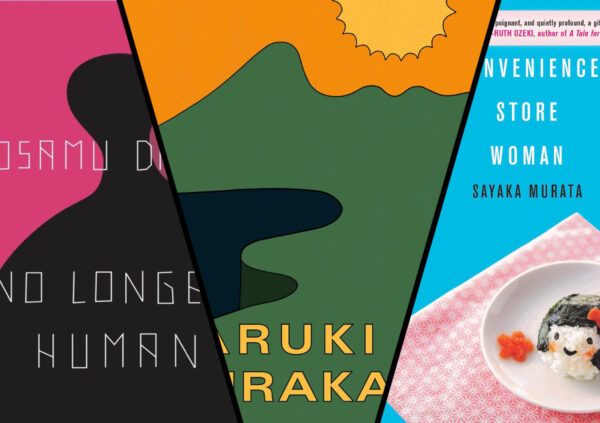
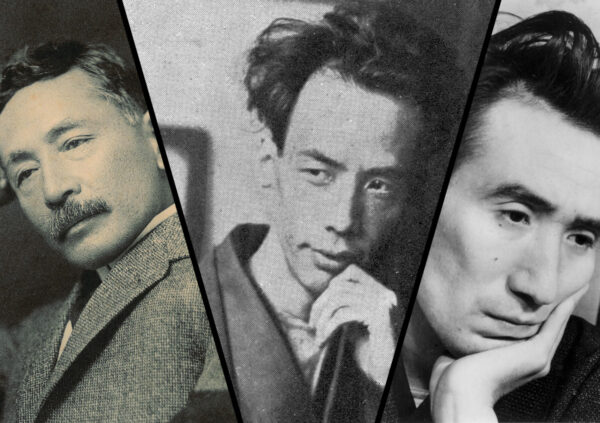
Osamu Dazai books have a problem no other Japanese writer has: there are too many versions of them.
No Longer Human exists in three English translations, with a fourth arriving in 2027. Few Japanese novels get retranslated at that pace, and it means the single most important decision you will make about Dazai is not which book to read but whose English you read it in. The full canon is ranked on my best Japanese novels list. The author index lives on my Japanese authors hub.
The Osamu Dazai books were written across about fifteen years. He died in 1948 at thirty-eight, and left behind a body of work that has spent the last decade being rediscovered by publishers and by an entirely new readership that found him through anime and TikTok rather than through literature courses.
This covers which Osamu Dazai books exist in English, which translation to buy, and where to start.
Start Here
No Longer Human if you want the book everyone means. It is still one of the ten best-selling books in Japan seventy-five years after publication, and it is the reason you have heard of him.
The Setting Sun if you want the better novel, which a fair number of readers think it is. An aristocratic family disintegrating in the years immediately after the war, narrated by a daughter watching her mother die and her brother destroy himself.
Schoolgirl if you want to know whether you like him before committing. A single day in the life of a teenage girl, written when Dazai was thirty, and one of the strangest acts of ventriloquism in Japanese fiction.
Do not start your Osamu Dazai books with the short story collections. They are excellent and they assume you already have a sense of the man.
The Translation Problem
This is the part that matters, and no other page on Japanese literature has to deal with anything like it.
Dazai’s work is out of copyright. That means any publisher can commission a new translation without paying for rights, and since roughly 2018 they have, repeatedly. The result is a genuine surplus.
No Longer Human, Four Ways

- Donald Keene, New Directions, 1958. The standard for sixty years and still the most widely read. Keene’s introduction is worth the book on its own, and his argument is that Dazai worked like a photographer rather than a memoirist: sharp, brief, selected, and not remotely the artless confession it presents itself as.
- Mark Gibeau, Stone Bridge Press, 2018, published as A Shameful Life. Closer to the shape of Dazai’s Japanese, including its awkwardness. The retitling is a deliberate argument, since the original, Ningen Shikkaku, means something nearer to disqualified as a human being.
- Juliet Winters Carpenter, Tuttle, 2024. The most recent complete version and the most readable of the three.
- David Boyd, Penguin Classics, 2027. Announced, not yet published. Boyd’s stated emphasis is on directness and vulnerability.
Which to buy. Keene first, because it is the version the book’s reputation was built on and it reads beautifully. Gibeau if you want to argue with it afterwards, because the differences are real and the title alone tells you where he stands. Carpenter if you want a clean modern read and no historical baggage.
And the Rest of Him
The surge in new Osamu Dazai books is not limited to one novel. Sam Bett translated The Flowers of Buffoonery for New Directions in 2023, stressing the ironic humor that the somber reputation buries. Juliet Winters Carpenter followed her No Longer Human with a new Setting Sun in 2025. Leo Elizabeth Takada published Retrograde, three early stories, with One Peace Books in 2025.
Behind them sit the older translations that are still the only way to read most of him: Ralph McCarthy’s Self Portraits and Blue Bamboo, James O’Brien’s Crackling Mountain, James Westerhoven’s Return to Tsugaru, Allison Markin Powell’s Schoolgirl.
The Life, and How Much of It You Need
Shuji Tsushima was born in 1909 into a wealthy landowning family in Kanagi, in the far north of Japan, the tenth of eleven children, and raised largely by servants. The wealth matters: he spent his life uncomfortable about it, briefly involved with communist politics, and permanently unable to decide whether he was a victim or a beneficiary.
The writer who made him possible was Masuji Ibuse, the older novelist who took him on, got him published and remained a fixed point through the chaos. Ibuse wrote Black Rain, the great novel of Hiroshima, and the two of them are about as far apart in temperament as two writers can be.
Dazai’s life was disordered by any measure: addiction, a collapsed first marriage, a second to the schoolteacher Michiko Ishihara, chronic illness that kept him out of the war, and repeated attempts on his own life across two decades, the last of which succeeded in June 1948, weeks after he finished No Longer Human. It was published about a month later.
How much you need in order to read him is more than with most writers and less than the mythology suggests. He wrote what Japan calls the I-novel, fiction built openly out of the author’s life, and Osamu Dazai books are routinely read as straight autobiography. Keene’s warning is the right corrective: the selection and the composition are the art, and treating No Longer Human as a suicide note flattens a controlled piece of writing into a document.
Two of his contemporaries tell you more than any critic has. Kawabata, judging the first Akutagawa Prize, passed him over with a remark about the cloud hanging over his personal life, and Dazai answered with a public letter that swung between pleading and abuse. And Mishima, who disliked him intensely, said the thing he despised about Dazai was that Dazai exposed precisely what Mishima most wanted to hide about himself.
That last sentence is the most useful thing anyone has said about him.
The Essential Books
No Longer Human (1948). Yozo’s story survives as three notebooks, passed to us through a stranger who says they fell into his hands. Yozo cannot parse what the people around him are doing or what for, works out early that continuous clowning will stop anyone looking closely, and follows that strategy through school, art college, addiction, a series of women, and out of his own life. The original title means disqualified as a human being.
The Setting Sun (1947). The novel that made him famous in Japan, and the one that put the phrase shayozoku, the setting-sun class, into the language as a term for the ruined postwar aristocracy. Kazuko watches her mother, the last genuinely aristocratic person she knows, die slowly, while her brother Naoji comes back from the war addicted and unable to live. It is more controlled than No Longer Human and considerably sadder.
Schoolgirl (1939). A day in the life of a fourteen-year-old, from waking to sleeping, in her voice. Dazai was thirty and it is uncanny. It made his name before the war and remains the best argument against reading him as a man who could only write himself.
The Flowers of Buffoonery (1935). An early novella, and a companion piece to No Longer Human: same character, Oba Yozo, in a seaside sanatorium after an attempt on his life. Bett’s 2023 translation brings out the comedy that the later novel buries, and reading them together shows how much of Dazai’s despair is deliberately performed.
Run, Melos! (1940) is the outlier: a straight retelling of a Greek legend about friendship and loyalty, sincere, uncynical, and taught in Japanese schools to this day. Written by the man everyone thinks of as the patron saint of despair.
The Rest of the Catalog
Self Portraits (McCarthy, 1991) collects the autobiographical short pieces and is the best single volume for understanding how he built his own myth. Blue Bamboo (McCarthy, 1993) is fantasy and romance and shows a warmth nobody expects. Crackling Mountain (O’Brien, 1989) includes his reworkings of Japanese folk tales, sardonic and often very funny. Return to Tsugaru (Westerhoven, 1985) is a travel memoir about going home to the north, and it is the gentlest thing he wrote. Good-Bye is his last, unfinished work, broken off mid-sentence.
There are a great many more Osamu Dazai books in Japanese, and they are arriving steadily now that the rights are free.
The Manga, and the New Readership
The current global audience for Osamu Dazai books did not come from literature departments.
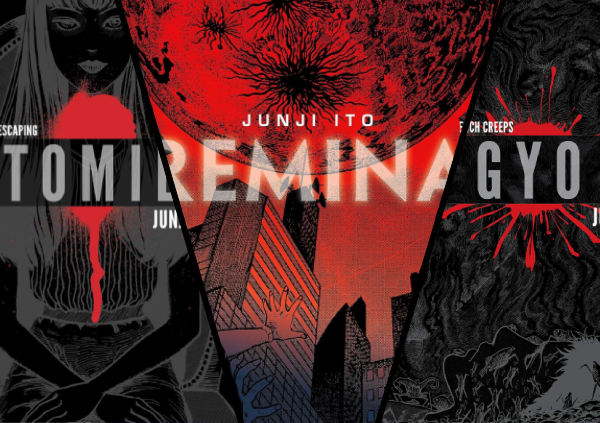
Two manga adaptations of No Longer Human exist and most readers only know one. Usamaru Furuya’s came first, in 2009, for the centenary of Dazai’s birth, and relocates Yozo to the present day. Junji Ito’s, from 2017, is the famous one, runs to over six hundred pages, and writes Dazai himself into the story as a character.
Furuya’s is the better adaptation. It understands that Yozo’s performance is the horror and does not need to make anything monstrous to prove it. Ito’s externalizes everything, which is what Ito does, and it is a genuine Ito work rather than a literary side project.
And then there is Bungo Stray Dogs, the manga and anime in which Dazai appears as a character alongside Ranpo, Akutagawa and Kunikida, all reimagined with superpowers named after their own books. It is responsible for an enormous share of the current international readership, and if you find that undignified, consider that Dazai spent his career turning himself into a character.
The Full English List at a Glance
Novels and novellas: No Longer Human, also published as A Shameful Life · The Setting Sun · Schoolgirl · The Flowers of Buffoonery · Pandora’s Box · Good-Bye
Story collections: Self Portraits · Blue Bamboo · Crackling Mountain and Other Stories · Run, Melos! and Other Stories · Retrograde
Nonfiction and other: Return to Tsugaru · One Hundred Views of Mount Fuji
If you want to see where he sits in the wider tradition, and which of his contemporaries are worth reading next, I have written about that over at the best Japanese novels. His manga adaptations are covered in more detail on all of Junji Ito’s books ranked.
No Longer Human has its own page, on why Japan keeps remaking it and what the manga and film versions change.