Most guides to Japanese authors are a list of strangers. Twenty names, two books each, no sense that any of these people ever met. The full canon is ranked on my best Japanese novels list.
They did. Repeatedly, and often badly, and that is the thing most guides to Japanese authors miss.
The man who invented Japanese detective fiction personally published the writer whose new school destroyed his. Mishima lost the Nobel Prize to his own mentor and praised him in public anyway. The author of the Sarashina Diary was the niece of the woman who wrote The Gossamer Years, and the aunt’s book opens by calling romances fabrications while the niece’s is about giving her whole life to them. The two greatest writers of the Heian court served rival empresses married to the same emperor, and one of them could not stand the other.
The Japanese authors below are not a shelf of isolated geniuses. It is a small, argumentative, densely connected culture that has been reading itself for a thousand years. This is a guide to the people in it, arranged by period, with the connections left in.
The Heian Court
Murasaki Shikibu
c. 973 to c. 1014
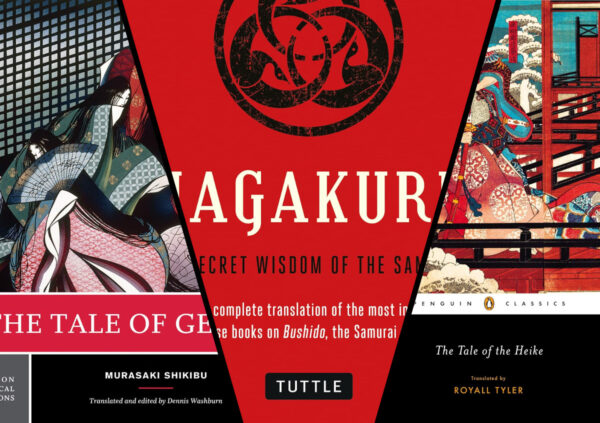
We do not know the name of the first of the Japanese authors on this page. Murasaki comes from a character she invented, Shikibu from a post her father held. She served the Empress Shoshi, was widowed early, and had an education that was unusual to the point of being a liability: her diary records her hiding the extent of her Chinese, because a visibly learned woman attracted the wrong sort of comment.
She produced The Tale of Genji for a court circle a few dozen strong, all known to one another, most of them smuggled into it in light disguise. Whether it counts as the first novel is an argument with better uses for an afternoon.
She also kept a diary, and the woman in it is not the serene classicist of the reputation. She is watchful, competitive and extremely unkind about her colleagues.
Sei Shonagon
c. 966 to c. 1017 or later
Also not her name. Sei is a family name, Shonagon a junior court office that most likely belonged to a husband, and whatever she was called did not survive.
She attended the Empress Teishi. Murasaki attended the Empress Shoshi. Both empresses were married to the Emperor Ichijo. The two foundational works of Japanese prose therefore came out of two rival households inside one marriage, written within a few years of each other by women who were institutionally opposed. Murasaki’s diary is scathing about her, and predicts her showing off will end badly.
She wrote The Pillow Book, which is not a novel or a diary but a thousand years of lists, complaints, weather and opinion, and it is still the funniest thing produced in Japan before the eighteenth century.
The Mother of Michitsuna
c. 935 to 995
Recorded only as somebody’s mother. She was the second wife of a powerful man who kept several, and her diary, The Gossamer Years, is twenty years of a marriage failing slowly.
She begins by explaining why she bothered, and the explanation is a hostile review of everything else being read at court. The romances everyone was passing around struck her as invention with nothing behind it. She thought a plain record of an unhappy marriage would be worth more than any of them, and then produced one.
Her niece was Takasue’s daughter, who wrote the Sarashina Diary about a girlhood spent praying for exactly those romances and an old age spent regretting it. Two women, one family, opposite verdicts on whether fiction is worth having.
Ki no Tsurayuki
c. 872 to c. 945
He sat at the top of the Heian literary establishment: an imperial anthologist, a canonical poet, a provincial governor. In 935 he finished a posting in Tosa and sailed back to the capital, and wrote up the fifty-five days it took.
He published it without his name on it, in kana, and in the voice of a woman traveling in the governor’s party. Until then the word for diary described an administrative log written by men in Chinese. His daughter had died during the posting, and the explanation Japanese scholarship generally favors is the simplest one: he could not write about her as himself.
The form he invented is the one the Heian women then used to produce the greatest works in the tradition.
Meiji and Taisho
Natsume Soseki
1867 to 1916
The first modern novelist among Japanese authors, and the man who worked out what modern Japanese prose could sound like. Two miserable years in London left him with a poor opinion of Western sophistication and a worse one of the Japanese men imitating it, and he came home and wrote a satire narrated by a cat.
His face was on the thousand-yen note for two decades. Murakami calls him the representative modern novelist of the country. Every Japanese schoolchild is made to read him, which normally finishes a writer off and has not made the slightest dent in him.
Ryunosuke Akutagawa
1892 to 1927
Of all the Japanese authors here he was the most prolific in the least time, writing well over a hundred stories in about twelve years, and he gave Japanese short fiction the shape it still has. Kurosawa’s Rashomon takes its title and setting from one of his stories and its plot from another.
He died at thirty-five, and the prize named after him is the one nearly every writer further down this page either won or was nominated for. Dazai wanted it badly and never got it.
Junichiro Tanizaki
1886 to 1965
Sixty years of work, and across all of it the same preoccupations: obsession, physical decline, and the friction between Japanese and Western taste. He was also the only writer on this page whose masterpiece was shut down by wartime censors for being insufficiently martial, a judgment that was entirely correct.
He wrote the essay on shadow and dim light that architects have been citing for ninety years, and he lived long enough to be a serious Nobel contender. And he also translated Genji into modern Japanese, three separate times.
Edogawa Ranpo
1894 to 1965
Born Taro Hirai, and the pen name is Edgar Allan Poe said quickly in Japanese, which tells you both the ambition and the sense of humor.
He founded Japanese detective fiction more or less single-handedly and is claimed equally by horror, because his real subject was the body: confinement inside it, distortion of it, the desire to watch without being seen. The line from The Human Chair runs directly to Junji Ito, and his full entry opens the Japanese mystery novels list.
And he did the least self-interested thing anyone on this page did. In the fifties, when Matsumoto’s social realists arrived to take the genre apart, Ranpo could have fought it. Instead he praised Matsumoto in print, reached for a comparison with Basho, and ran his serial in Hoseki, the magazine Ranpo himself was editing. He gave the platform to the man closing his era.
The Postwar Spine
Yasunari Kawabata
1899 to 1972
The first of the Japanese authors to take the Nobel, in 1968, and a writer whose method has more in common with linked verse than with the European novel, which is why he is so vulnerable to translation.
He was also Mishima’s mentor, and he took the prize Mishima had been openly campaigning for. Mishima praised him for it, at length and without visible resentment, which is either grace or the most disciplined performance of his career.
Osamu Dazai
1909 to 1948
Born into a wealthy landowning family in the far north, the tenth of eleven children, and permanently unable to decide whether that made him a beneficiary or a victim.
Masuji Ibuse found him, published him and stayed. Ibuse was the steadiest figure in a life with almost no steady figures, and he also wrote the definitive Japanese novel about Hiroshima, which gives you some sense of how little the two men had in common.
His reputation now rests on a readership that arrived through anime and social media rather than through literature courses. Mishima loathed him, and said the reason was that Dazai kept exposing the things Mishima had built an entire persona around concealing.
He died in 1948 at thirty-eight, weeks after finishing the novel.
Yukio Mishima
1925 to 1970
More of his work exists in English than of Kawabata and Oe put together, and both of those men have Nobel Prizes.
He left the Peers’ School in 1944 as its top student, with a commendation from the Emperor in hand. In his thirties he remade his body deliberately and publicly. In his forties he raised a private militia, tried to provoke a military uprising in November 1970, and took his own life when the soldiers laughed at him. His publisher received the last volume of his tetralogy that same morning.
The politics are not separable from the late work, and any guide to Japanese authors that leaves them out is not being honest about him. He was also, on the evidence, one of the two or three best novelists Japan has produced.
Kobo Abe
1924 to 1993
He qualified in medicine and never practiced, and the training is audible: he writes about people the way a researcher writes up a subject.
He is also the clearest case here of a reputation collapsing. In 1972 a specialist listed the five Japanese books best known in the West and Abe was on it. Fifty years later he is absent from almost every English-language list. Nothing happened to the work. The conversation simply moved and left him standing in it. The book that keeps him read has a page of its own: Woman in the Dunes.
Shusaku Endo
1923 to 1996
Baptised at eleven at his mother’s insistence, and permanently uncertain afterwards whether the faith had taken or merely been installed. He studied in Lyon, was ill for most of his life, and wrote as a member of a religious minority of well under one percent of his own country.
Graham Greene called him one of the finest living novelists and the comparison stuck, mostly because both men wrote about belief as a problem rather than a comfort. Scorsese spent nearly thirty years trying to film him.
Kenzaburo Oe
1935 to 2023
Japan’s second Nobel laureate, in 1994. A Personal Matter came out of the birth of his son Hikari with a brain hernia, and it refuses to let its protagonist be sympathetic about it. Hikari became a composer, and Oe kept writing about him to the end.
John Nathan, who had been hired at twenty-three to translate Mishima, chose to translate Oe instead, and by most accounts that ended the Mishima relationship.
Fumiko Enchi
1905 to 1986
Her father was a philologist of real standing, and she built a career out of women whom the archives mention only as somebody’s household. Her major novel took her close to a decade.
She also rendered The Tale of Genji into modern Japanese, and critics hear that in her own sentences. Consider what that means: she spent years in the interior of Murasaki Shikibu’s court before turning the same attention on the Meiji marriages of her grandmothers’ generation. Two of the writers on this page separated by nine hundred years, and one of them did the other’s translation.
Crime and Horror
Seishi Yokomizo
1902 to 1981
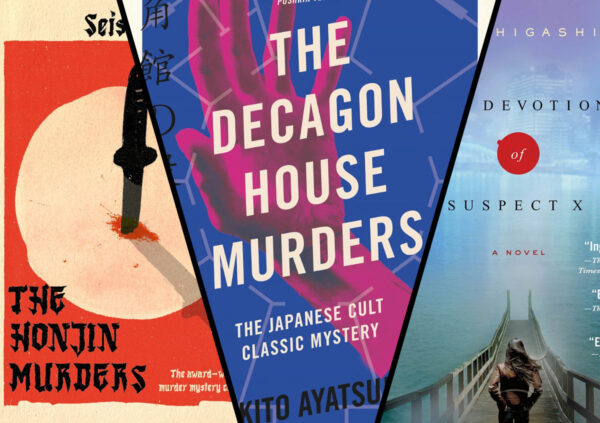
The bridge between two eras of Japanese authors, and the one whose survival was least guaranteed. He was writing elaborate fair-play puzzles in 1946, in a country with no paper and no appetite, twenty years after Ranpo invented the form and forty before a group of students brought it back. Without him there would have been nothing for them to bring back to. He wrote seventy-seven books about the same scruffy detective.
Seicho Matsumoto
1909 to 1992
He came to writing late, from a printing job and no university, and then produced more than four hundred and fifty books and out-earned every other writer in Japan for a decade.
What he did to the genre in 1957 was a hostile takeover. His argument was that the elaborate puzzle had become a party game, and that a murder is the product of a society rather than of a clever floor plan. It worked. For thirty years afterwards Japanese crime fiction was about corruption, poverty and institutions, and the puzzle writers had to wait for a generation of university students to bring it back.
He also rejected the word detective. He preferred deduction, and he was particular about it.
Koji Suzuki
born 1957
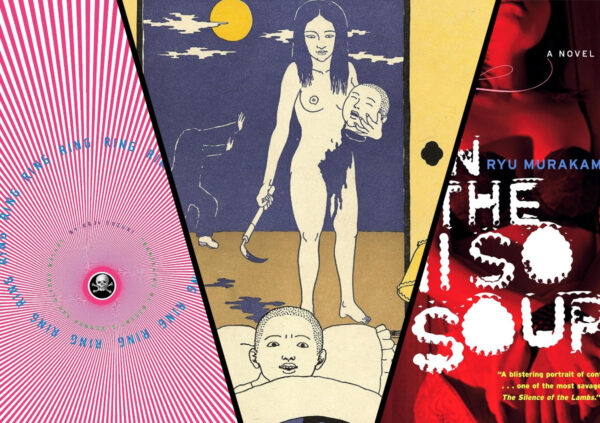
Of all the Japanese authors on this page he has had the largest effect on Western popular culture and the least recognition for it. Ring reshaped a decade of horror and almost nobody outside Japan knows his name.
He is a case study in what happens when an adaptation eclipses its source. The film is a ghost story. The book is not, and anyone who arrives expecting one finds something considerably more technical and more modern underneath.
He was a stay-at-home father when he wrote it, which is not the biography anyone expects, and he has since written on parenting as well as horror. What is beyond argument is the reach: for roughly a decade, Western studios treated Japanese horror as a genre, and that genre was substantially one man’s idea being remade. His full guide lives on the horror side of this site: Koji Suzuki.
Ryu Murakami
born 1952
The other Murakami, no relation, and the most confrontational of the contemporary Japanese authors. He played drums in a school band, went to art college in Tokyo, dropped out, and won the Akutagawa Prize in 1976 with his first novel, which sold over a million copies.
His subject is a country that has sold off its own interior and now rents the emptiness out by the hour, and he pursues it with a level of violence that has kept the argument about him going for fifty years.
He is also a film director, a television host and a longstanding public provocateur, which is a career shape no other writer here has. Miike adapted him and the adaptation is more famous than the novel, a fate he shares with Koji Suzuki two entries up.
Contemporary
Haruki Murakami
born 1949
The most widely read of living Japanese authors and the most Western-facing, which is precisely why some Japanese critics have held him at arm’s length for forty years. Jazz, whisky, the Beatles, American fiction, talking cats, missing wives, and men cooking spaghetti while their lives quietly come apart.
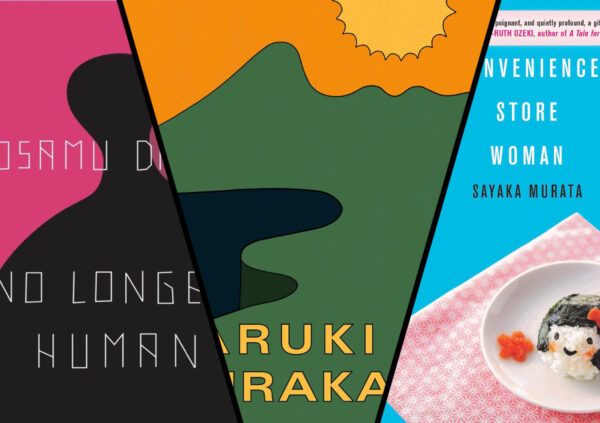
He is also the reason a great deal of what follows him got translated at all. I have written about all sixteen of his novels over at Haruki Murakami books ranked.
Banana Yoshimoto
born 1964
In 1988 she published four novels. All four were bestsellers. She was twenty-four, and the Japanese press called it Bananamania in a tone that was not entirely admiring.
Her father, Takaaki Yoshimoto, shaped postwar Japanese criticism as much as anyone alive. The pen name came from banana flowers, chosen she said for its androgyny, which tells you she had thought about her reception before printing a word, and she has spent the four decades since declining every version of fame on offer.
Almost every one of her books begins with a death, and what follows is not catharsis but accommodation.
Yoko Ogawa
born 1962
The most quietly unsettling of the Japanese authors working today, and the most prolific: over fifty books in Japanese, of which English readers have perhaps a dozen.
What she does is refuse to change tone. Whatever is being described, the sentences stay level, courteous and faintly medical, and the reader supplies the alarm. It works on horror and it works equally well on tenderness, which is why her range confuses people who have only read one of her books. She keeps a diary of the weather. She has said she writes for an hour a day and stops.
Sayaka Murata
born 1979
Convenience Store Woman was her tenth novel in Japanese and the first anyone read in English, which is why she appears in the West to have arrived fully formed. Japan had already given her four major prizes across thirteen years and a reputation for disturbing fiction.
Her method is not to invent horrifying worlds. It is to alter one social rule and then describe the consequences in the flat, mildly bored voice of someone recounting an awkward afternoon. The reader supplies the horror.
Mieko Kawakami
born 1976
Among Japanese authors her route in is the strangest: a singer-songwriter with three albums before she was a poet, and a poet before she was a novelist. From a poor family in Osaka, and she writes in the dialect.
Tokyo’s governor at the time, Shintaro Ishihara, an Akutagawa winner himself and a professional provocateur, told the press her prizewinning novella was unpleasant and intolerable. The committee had already disagreed.
Murakami backed her early and publicly. She then sat down with him for a published interview and put the question about the women in his novels straight to him, which almost nobody in Japanese letters had been willing to do to him in print.
And the Ones With Pages of Their Own
Several of the Japanese authors here have been covered at length elsewhere on this site, and rather than compress them:
Yukio Mishima · Ryunosuke Akutagawa · Osamu Dazai · Sayaka Murata · Mieko Kawakami · Banana Yoshimoto · Keigo Higashino · Uketsu · Toshikazu Kawaguchi · Kazuo Ishiguro
And several more who belong in any account of Japanese authors and are covered inside the list articles: Otsuichi, the best short horror writer Japan has produced in thirty years. Ueda Akinari, who invented the literary Japanese ghost story in 1776. And Izumi Kyoka, whom Mishima said pushed the Japanese language to its highest potential.
The People Who Made Them Readable
No other guide to Japanese authors mentions a translator, which is strange, because a handful of people decided what English readers think this tradition is.
Edward Seidensticker translated across four centuries: Genji, The Gossamer Years, Snow Country, The Makioka Sisters. Stephen Snyder is responsible for four of the books on this site. Ginny Tapley Takemori translates Murata, Kyoka and Miyabe. Ralph McCarthy carries both Ryu Murakami and Dazai. John Nathan, signed for Mishima at twenty-three, defected to Oe. Michael Gallagher was a Jesuit who translated the first half of Mishima’s tetralogy and Endo’s novel about Catholic doctors. Philip Gabriel handles Kafka on the Shore and a bestselling cat road-trip novel. Ho-Ling Wong belongs to the same Kyoto mystery club Ayatsuji came out of. Bryan Karetnyk works in Russian as well as Japanese.
And where they disagree, it matters. Three of Murakami’s novels were only available for years in editions sold in Japan to people learning English. Mishima’s four-volume masterpiece was handed to three different translation teams. No Longer Human exists in three English versions with a fourth coming. Whichever of these writers you start with, the book you are holding is a decision somebody made.
If you want the books rather than the Japanese authors who wrote them, start with the best Japanese novels, or go to Japanese classics, Japanese horror books or Japanese mystery novels.
Fourteen of these writers now have guides of their own: Natsume Soseki, Yasunari Kawabata, Junichiro Tanizaki, Kenzaburo Oe, Shusaku Endo, Yoko Ogawa, Natsuo Kirino, Seishi Yokomizo, Yukito Ayatsuji, Seicho Matsumoto, Hiromi Kawakami, Yoko Tawada, Ryu Murakami, Michiko Aoyama.