J. R. R. Tolkien books present a strange problem for a new reader: he published four books of fiction in his lifetime, and there are now well over twenty with his name on the spine.
The gap is his son. Christopher Tolkien spent forty years after his father’s death editing the mountain of unpublished material he left behind, and the result is a shelf that runs from genuine standalone novels to twelve volumes of annotated drafts. Nobody tells you which is which. Every reading-order guide lists them all in sequence with a cheerful “more accessible than The Silmarillion” tag, and readers buy the wrong one, bounce off it, and conclude the deep Tolkien isn’t for them.
So this is a guide organized by who each book is actually for. The two everyone should read, the next step if the world took hold of you, the ones worth it once you’re committed, the material that is genuinely apparatus rather than reading, the non-Middle-earth work almost nobody mentions, and the biographical books worth knowing about.
One piece of advice up front, because the internet will tell you otherwise. Read in publication order, not chronological order. The chronological approach puts The Silmarillion first, which means starting with the single densest, most reference-like thing Tolkien wrote before you have any reason to care about the world it catalogues. That order has defeated more first-time readers than any other single piece of bad advice. Start where the readers of 1937 started.
For books that feel like Tolkien rather than by him, my list of books like Lord of the Rings covers his influences and descendants. His place in the genre’s history is on my best fantasy books list.
Fiction by René Rehn


Start Here
The Hobbit (1937)

The door into Middle-earth, and the only Tolkien book written for children.
Bilbo Baggins is a comfortable, unadventurous hobbit press-ganged into a quest by a wizard and thirteen dwarves who want their mountain and their gold back from a dragon. It’s a small, warm, episodic adventure, narrated in a chatty voice that occasionally addresses the reader directly, and it moves at a pace nothing else Tolkien wrote comes close to.
Read it first even though it’s the lightest thing here, because The Lord of the Rings assumes you know it. Bilbo, the Ring, the character of hobbits, and the events at the Lonely Mountain are all load-bearing later, and the opening chapters of Fellowship take your familiarity with them for granted.
It takes an afternoon or two. The tonal distance between it and what follows is enormous, and that’s worth knowing so the shift doesn’t throw you.
The Lord of the Rings (1954-55)

The book that made the modern genre, and the reason the rest of this list exists.
One story in three volumes, published separately for commercial reasons and intended as a single novel. Frodo inherits the Ring, learns what it is, and carries it toward the one place it can be destroyed, while a continent mobilizes around him. The scale expands continuously from a quiet corner of the Shire to a war involving kingdoms, and the genius is that Tolkien never loses the small hobbit at the center of it.
The practical advice: read the three volumes as one, without stopping, because the story doesn’t pause cleanly between them. The Shire chapters are slow by design and are where readers stall. Push through to Bree and the pace never lets up again. The songs can be skipped. The appendices are substantial, genuinely rewarding, and best read after the main story rather than never.
Everything the genre became is a response to this book, including the parts of it that set out to reject it. It’s the essential Tolkien and, for most readers, the essential fantasy.
The Next Step
If the world took hold of you and you want more, these two are where to go, and the order matters less than the guidance.
The Silmarillion (1977)

The deep history of Middle-earth, and the most misunderstood book Tolkien produced.
This is the mythology behind everything: the creation of the world, the making of the great jewels the title refers to, the wars of the First Age thousands of years before The Hobbit, and the long defeat that shadows all of it. Gandalf, Sauron, elves, and the shape of the world all originate here.
The crucial thing to understand before you start is that it is not a novel and does not read like one. It’s written as mythology, in a high, compressed, biblical register, covering thousands of years and hundreds of names at the pace of a history book. Readers expecting another narrative like The Lord of the Rings find it impenetrable, and they’re not wrong about the experience, only about what they were handed.
Read it the right way and it’s extraordinary. That means: read it after The Lord of the Rings, when you already care. Don’t try to hold every name. And know that the Beren and Lúthien chapter and the fall of Gondolin are the emotional peaks, summarized here and told in full elsewhere. Many readers find it only opens up on a second attempt. It rewards the effort more than anything else Tolkien wrote, and it asks for more.
The Children of Húrin (2007)

The most accessible of the deep Tolkien, and for many readers the better next step than The Silmarillion.
This is a complete, standalone, novel-length telling of the tragedy of Túrin Turambar, a First Age hero cursed by the dark lord Morgoth, and it’s the closest the posthumous material comes to reading like an actual novel. Christopher Tolkien assembled it from his father’s most finished drafts into a single continuous narrative, and it works as one.
It is also the darkest thing Tolkien wrote by a wide margin: a doom-laden tragedy of pride, exile, and catastrophe that owes more to the Norse sagas and Greek tragedy than to the comfort of The Hobbit. There are no easy consolations in it.
Here’s the practical case for reading it before The Silmarillion rather than after: it gives you one of the legendarium’s great stories in full narrative form, which makes the compressed version in The Silmarillion land far harder when you reach it. If the density of The Silmarillion put you off, this is the way back in.
For the Committed
Real books, worth reading, once the deep history has its hooks in you. Not apparatus.
Unfinished Tales (1980)

The best of the posthumous collections and the natural next step after The Silmarillion.
It’s a gathering of narratives and essays from across all three ages: a fuller account of Gandalf’s mission and the other wizards, the founding of Rohan, the tale of the man who would become the tragic hero of The Children of Húrin, the story of how the Ring was lost, and a great deal about Númenor. The material is more finished than The History of Middle-earth and considerably more readable.
The catch is in the name. These are genuinely unfinished, so pieces break off, and Christopher Tolkien’s editorial notes are extensive enough to be part of the reading experience. That’s a feature for the committed and a frustration for anyone expecting clean narratives.
It’s where to go when The Silmarillion has worked on you and you want more of that world at that depth.
Beren and Lúthien (2017) and The Fall of Gondolin (2018)

The two great tales of the First Age, each given a full volume late in Christopher Tolkien’s life.
Both stories appear in compressed form in The Silmarillion. These volumes expand them, tracing how each tale evolved across decades of Tolkien’s drafts, from early poetic versions through to late prose. Beren and Lúthien is the love story at the heart of the whole legendarium, the one Tolkien had carved on his and his wife’s shared headstone. The Fall of Gondolin is the account of the hidden elven city and its betrayal, and it’s the oldest story in the mythology, the first piece Tolkien ever wrote of it.
Be clear about what these are, because it’s the difference between satisfaction and frustration. They aren’t single clean novels like The Children of Húrin. They’re presented as the evolution of a tale across versions, with Christopher’s commentary throughout, so you read the same story several times in developing forms. For a reader who loves these two tales, that’s a gift. For a reader who wants one definitive narrative, it’s not the format they’re hoping for.
Read The Children of Húrin first. If that volume’s approach delighted you, these are more of it. If it didn’t, these will test you further.
For Scholars Only
The History of Middle-earth (1983–96)
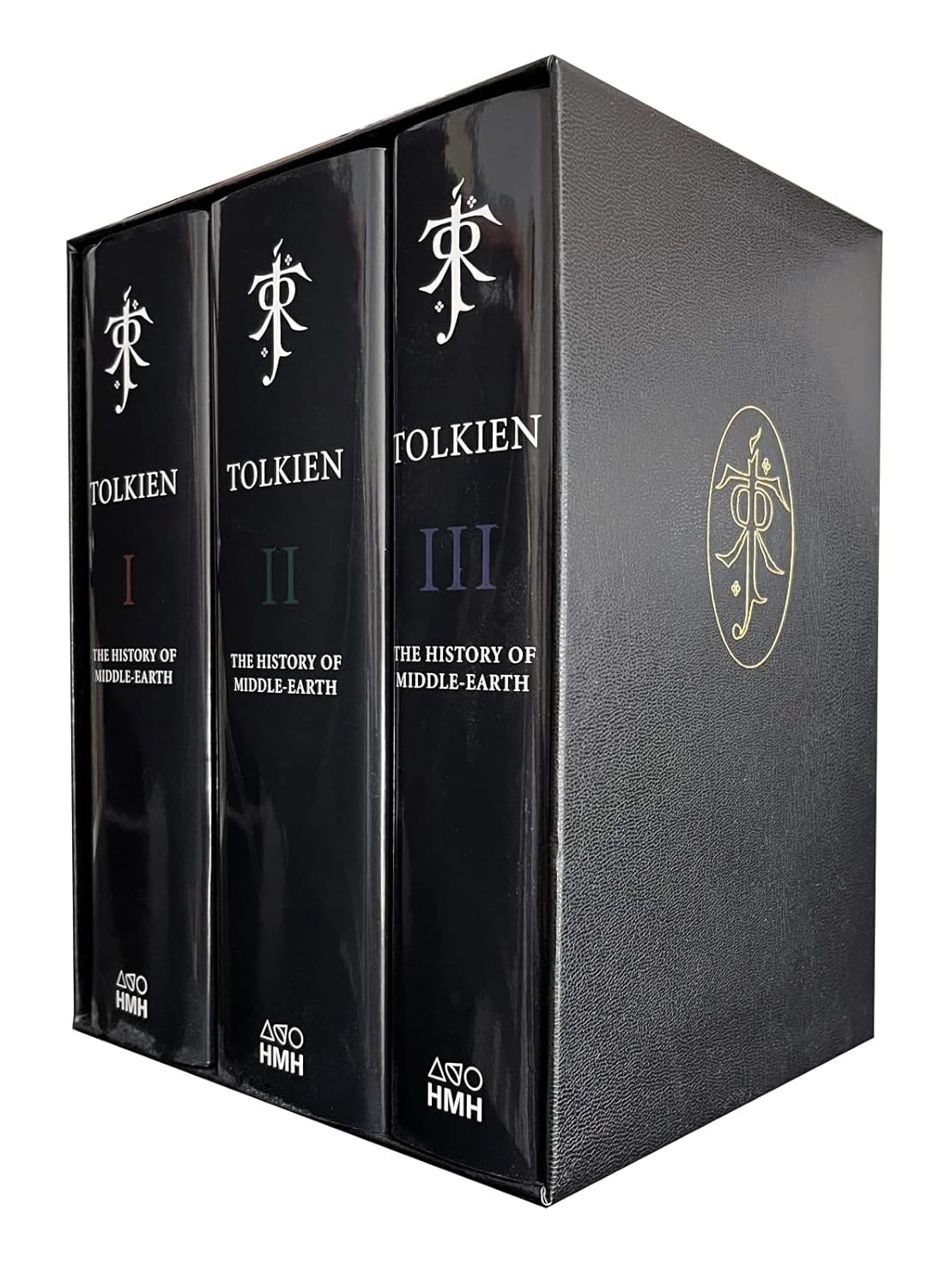
Twelve volumes, and you should know exactly what they are before you spend a penny.
This is Christopher Tolkien’s complete scholarly edition of his father’s drafts: every version of every story, the abandoned openings, the shifting names, the marginal notes, the false starts, all annotated and cross-referenced across the entire span of Tolkien’s writing life. Volume by volume, you can watch the legendarium form and re-form over fifty years.
It is not a reading experience in the ordinary sense. It’s a scholarly apparatus, and it is magnificent as one, but a reader who buys The Book of Lost Tales expecting a novel will find early, alternate, incomplete drafts of material told better elsewhere, wrapped in academic commentary. That’s not a criticism. It’s the entire purpose of the project. It’s simply not what most people mean when they ask what Tolkien to read next.
For a certain kind of obsessive, and I say this with respect, it’s the greatest thing on the shelf. For everyone else, it’s the point at which “reading Tolkien” becomes “studying Tolkien,” and that’s a real and worthwhile line to notice before you cross it.
The Other Tolkien
The non-Middle-earth work, which nearly every reading-order guide ignores entirely, and which contains some of his most charming writing.
The Shorter Fiction: Farmer Giles of Ham, Smith of Wootton Major, Leaf by Niggle, Roverandom

Four small gems, none set in Middle-earth, none requiring any of the above.
Farmer Giles of Ham is a mock-heroic comedy about a reluctant farmer, a cowardly dragon, and a kingdom that doesn’t deserve either, and it’s genuinely funny in a way people don’t expect from Tolkien. Roverandom is a bedtime story he invented for his son, about a real dog turned into a toy, sent to the moon and under the sea. Smith of Wootton Major and Leaf by Niggle are shorter, stranger, and more personal: Leaf by Niggle in particular is a quiet allegory about an artist who never finishes his great work, written by a man who feared he never would either, and it’s among the most moving things he wrote.
These are collected together in Tales from the Perilous Realm, which is the single volume to buy if you want all of them. They ask nothing of you and reward you immediately, which makes them the perfect thing to read between the heavier works.
The Poems: The Adventures of Tom Bombadil, The Lay of Aotrou and Itroun, The Fall of Arthur

Tolkien was a poet as much as a novelist, and the verse is easy to overlook.
The Adventures of Tom Bombadil collects light verse set in the world of The Lord of the Rings and is the most approachable. The Fall of Arthur is his unfinished attempt at the Arthurian legend in Old English alliterative metre, and it’s remarkable even incomplete. The Lay of Aotrou and Itroun is a darker Breton-styled narrative poem that almost nobody reads.
These are for readers who love the sound of Tolkien’s language specifically. If the songs in The Lord of the Rings were a highlight rather than something you skipped, start here.
His Translations and Retellings: Sir Gawain, The Legend of Sigurd and Gudrún, Beowulf

Tolkien the scholar, doing the medieval work that fed everything else.
His translation of Sir Gawain and the Green Knight is the accessible one and a genuinely great version of a great poem. The Legend of Sigurd and Gudrún is his retelling of the Norse Völsung material in modern English but ancient metre, and it shows you the raw ore that became so much of Middle-earth. His Beowulf translation, published in 2014 with his lectures alongside it, is essential for understanding how he read the poem that shaped him more than any other.
These aren’t Middle-earth, but they’re where Middle-earth came from, and for a reader who wants to understand Tolkien rather than just enjoy him, they’re the most direct route.
The Biographical and Reference Shelf
For when you’ve read the fiction and want to understand the man and the work.
The Letters of J. R. R. Tolkien (1981, expanded 2023)

The most valuable single book about Tolkien, and it’s by Tolkien.
His correspondence, selected by Humphrey Carpenter, and it’s revelatory: Tolkien explaining his own work to fans and publishers, arguing about the meaning of the Ring, describing his methods, complaining about adaptations, and writing with enormous warmth to his children. The 2023 revised edition restores a great deal of previously cut material and is the one to get.
If you want to know what Tolkien thought his books meant, this is where he tells you, at length and without the mediation of a critic. It’s the first reference book any serious reader should reach for.
J. R. R. Tolkien: A Biography by Humphrey Carpenter (1977)
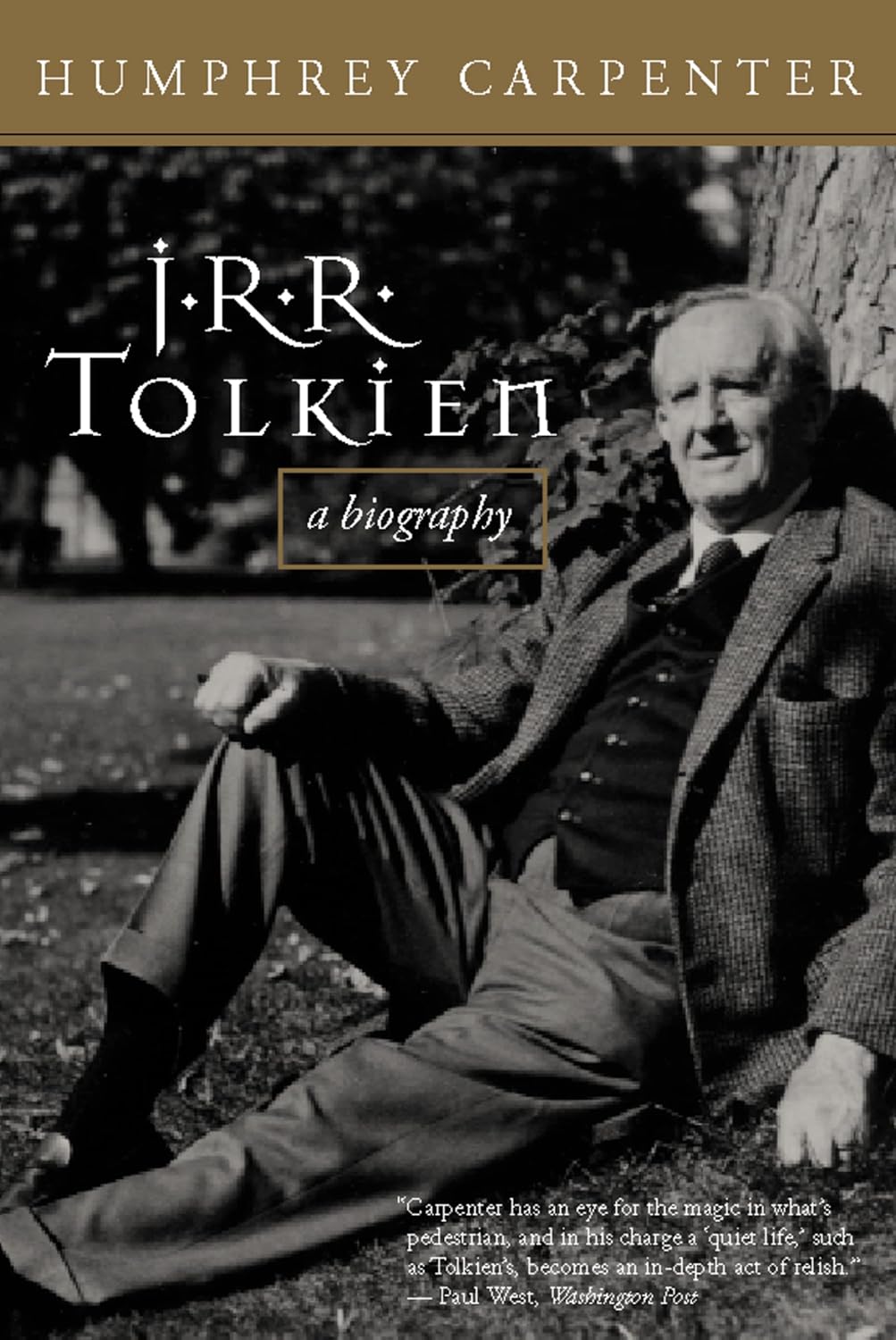
The authorized biography, written with access to the papers and the family, and still the standard.
Carpenter covers the whole life: the early bereavements, the trenches of the First World War, the Oxford career, the Inklings, and the decades of slow work on the legendarium. It’s balanced, well-written, and not hagiographic, and it remains the best single account of how the books came to exist.
Later biographies have added detail, particularly on the war, but Carpenter is where to start.
The Reference Works: The Complete Guide to Middle-earth, The Atlas of Middle-earth

For readers who want to navigate the world itself.
Robert Foster’s Complete Guide to Middle-earth is the standard encyclopedia, an A-to-Z of every character, place, and thing. Karen Wynn Fonstad’s Atlas of Middle-earth maps the whole legendarium across its ages, and it’s a genuine work of scholarship and love. Neither is necessary. Both are a pleasure for the kind of reader who finishes the fiction and isn’t ready to leave.
If you’re starting from nothing: The Hobbit, then The Lord of the Rings, and stop there if that’s all you want, because it’s complete in itself. If the world took hold of you, The Children of Húrin next rather than The Silmarillion, and then decide from there how deep you want to go. Almost nobody needs The History of Middle-earth, and the people who do already know who they are.