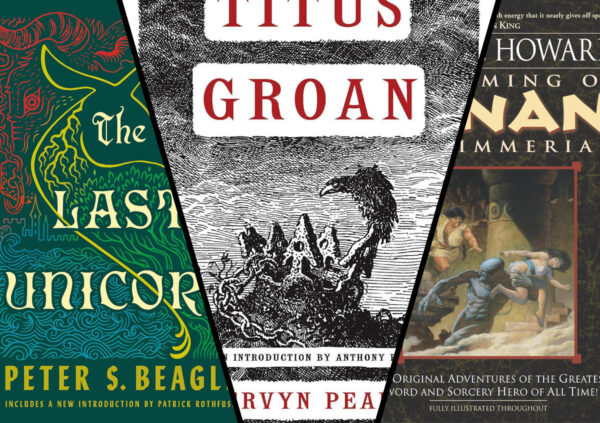
Peter S. Beagle books orbit one immortal center, The Last Unicorn, and the strange truth of his career is that most people who love that book have never read another word of him. This page exists to fix that, and to tell the stranger story around it: the writer who published his first novel at nineteen, wrote the screenplay for the animated The Lord of the Rings, spent his seventies in court fighting to get his own unicorn back, and is now, at eighty-seven, in the middle of an honest-to-goodness late renaissance.
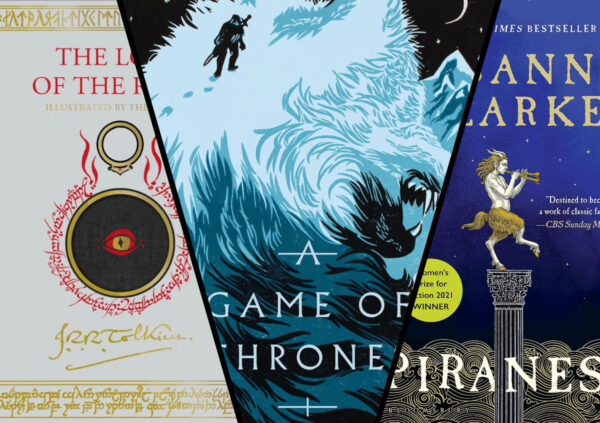
The screen trivia alone would make him a footnote king. Beagle wrote the screenplay for Ralph Bakshi’s 1978 animated Lord of the Rings, the version a whole generation met Tolkien through, scripted the beloved 1982 animated film of his own novel, and wrote “Sarek,” one of the most admired episodes of Star Trek: The Next Generation. But the books are the point, and The Last Unicorn earns spots on both my best fantasy books list and my books like Lord of the Rings roundup. Here’s the shelf behind the unicorn.
Fiction by René Rehn


The short version
Read The Last Unicorn. Then read “Two Hearts,” its Hugo- and Nebula-winning coda, best gotten now in The Way Home, and only after the novel. From there, fork by taste: A Fine and Private Place for where he started, The Innkeeper’s Song for his own favorite, I’m Afraid You’ve Got Dragons for the brand-new one. Order barely matters outside the unicorn’s own orbit.
The Last Unicorn
1968. One of the great works of fantasy, and it knows what fairy tales cost.

A unicorn in her lilac wood overhears two hunters agree that no unicorn has been seen in a generation, and leaves the safety of her trees to learn where the rest have gone. The road gives her Schmendrick, an immortal magician whose magic mostly won’t obey him, and Molly Grue, a worn woman who meets her miracle decades too late and says so, in one of the genre’s most quietly devastating scenes. The trail ends at the sea-bitten kingdom of King Haggard and the Red Bull that drove the unicorns away, and what happens there I’ll leave to the book.
What makes it immortal is the doubleness. It’s a genuine fairy tale, played with full sincerity, and simultaneously an elegy about fairy tales, characters half-aware of the story they’re in, jokes and anachronisms glinting through the myth, and prose so exact that lines from it get read at weddings and funerals alike. It arrived in 1968, in the first flush of fantasy’s post-Tolkien boom, the very era the Ballantine list was minting an adult-fantasy canon, and it has outlived nearly everything printed beside it: the book is widely considered one of the great works the genre has produced, full stop. One adaptation note, and it’s the opposite of the situation one page over on my Diana Wynne Jones guide: the 1982 animated film is Beagle’s own screenplay and remarkably faithful, so if it formed your childhood, the book will feel like coming home with the lights turned further up. Reports of a live-action remake surface periodically, and nothing is on a screen yet. Completists can also find The Lost Journey, the published version of his abandoned first draft, in which the story began as something much odder.
Two Hearts and The Way Home
The coda. Read only after the novel.

Nearly forty years later, Beagle returned to that world with “Two Hearts,” a novelette narrated by Sooz, a nine-year-old whose village is being eaten by a griffin, and whose search for help draws two familiar figures out of retirement. It won both the Hugo and the Nebula, and it earns them: it’s a story about what heroes owe and what age takes, told with all the original’s grace. The Way Home (2023) pairs it with “Sooz,” a new novella following her into adulthood, darker and stranger, and the two together make the right single purchase. But read the novel first, always, because the coda spends emotional currency only the novel can mint.
The early and middle masterworks
The shelf nobody visits, and should.

A Fine and Private Place (1960) was written when Beagle was nineteen, and it reads like the work of a wise old man: a bankrupt recluse living in a Bronx cemetery, two ghosts falling in love on borrowed time, and a talking raven with strong opinions, all handled with a tenderness about death that most writers never reach. It’s the debut as finished miracle, and the right second novel for anyone the unicorn wins.

The Innkeeper’s Song (1993) is the one Beagle has often called his own favorite: three mysterious women arrive at a country inn, one of them recently dead, pursuing the wizard who taught two of them, and the tale passes between a dozen first-person narrators like a jug at the table. It’s his most formally ambitious novel and his most adult, and its devotees consider it his true masterpiece. Tamsin (1999) is the warm one, a New York girl transplanted to a Dorset farm who befriends the three-hundred-year-old ghost of the title, with real English folklore prowling the hedgerows. The late, quiet novels, Summerlong and In Calabria, are minor-key Beagle, myth arriving in ordinary lives, best kept for when you already love the voice.
The fight for his own unicorn, and the late renaissance

The hardest part of the story gets told plainly, because Beagle himself fought to make it public record. Through his seventies, the years that should have been his victory lap, he was locked in litigation with his former manager over control of his work and his finances, and the courts ultimately found the man liable for financial elder abuse, fraud, and breach of fiduciary duty. Beagle got his unicorn back.
What followed is one of the best late acts in the genre: the two-volume Essential Peter S. Beagle collections gathering the short fiction, The Way Home, and in 2024 a wholly new novel, I’m Afraid You’ve Got Dragons, a comic and melancholy tale of a kingdom where dragons are household vermin and the boy whose job is exterminating them dreams of anything else. The honors caught up along the way, a World Fantasy award for life achievement and the SFWA Grand Master title among them, and at eighty-seven he is, by every account including his own social media, still writing. Few careers in fantasy have a third act at all. His is a comeback.
A note on where to actually start
It’s The Last Unicorn, taken slowly, with the film’s songs allowed to play in your head if that’s how you first met it. Then “Two Hearts,” then the cemetery, then the inn. The Peter S. Beagle books beyond the famous one are the best-guarded open secret in classic fantasy, a whole career of grace notes hiding behind a single perfect myth, and the man who wrote about the last of anything has turned out, happily, to be nowhere near his own.