Utopian fiction has an image problem, and it is worth naming up front: perfect societies make terrible stories. Drama needs conflict, and a world that has solved conflict has, on the face of it, nothing left to dramatize, which is why the shelf of utopian books is so much thinner than its dystopian twin and why so many of the best ones cheat, smuggling in tension, threat, or doubt to keep the pages turning.
The genre’s great secret is that the most enduring utopias are not really blueprints for paradise at all. They are arguments, thought experiments, and quiet warnings dressed as dreams. The utopian books below are the ones that make the cheat work, and my Ursula K. Le Guin guide covers the writer who did it best.
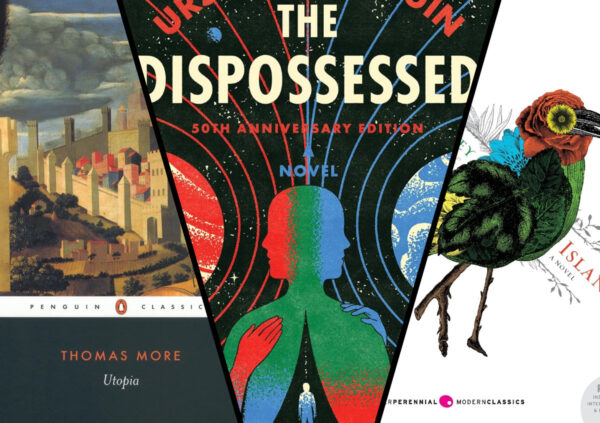
That is also what makes the form worth reading now. A utopia tells you what its author believed was worth wanting, and reading them in sequence is a tour of what different centuries thought a good life required: common ownership, ecological balance, the abolition of gender roles, the end of money, freedom from work. Where the best dystopian books show us the futures we fear, these show us the ones we have hoped for, and the honest ones admit how hard those hopes are to reach. This list runs from the recent and the overlooked back to the founding texts that gave the genre its name.
Fiction by René Rehn


The Best Utopian Books at a Glance
| Year | Title | Author |
| 1974 | The Dispossessed | Ursula K. Le Guin |
| 1976 | Woman on the Edge of Time | Marge Piercy |
| 1975 | Ecotopia | Ernest Callenbach |
| 1915 | Herland | Charlotte Perkins Gilman |
| 1888 | Looking Backward | Edward Bellamy |
| 1890 | News from Nowhere | William Morris |
| 1948 | Walden Two | B. F. Skinner |
| 1905 | A Modern Utopia | H. G. Wells |
| 1516 | Utopia | Thomas More |
| 1993 | The Fifth Sacred Thing | Starhawk |
| 1962 | Island | Aldous Huxley |
| 1405 | The Book of the City of Ladies | Christine de Pizan |
The Dispossessed by Ursula K. Le Guin (1974)

Simply the finest utopian novel ever written, and the one that solved the genre’s central problem.
Le Guin subtitled it An Ambiguous Utopia, and the ambiguity is the whole achievement. Shevek, a brilliant physicist, lives on Anarres, a barren moon settled generations ago by anarchists who walked away from the wealthy, hierarchical capitalist world of Urras to build a society with no laws, no money, no government, and no owning. Anarres works, genuinely, and Le Guin shows both its real beauty and the subtle new tyrannies that creep into even a free society: conformism, bureaucracy by another name, the quiet punishment of those who stand out. When Shevek travels back to Urras, the contrast cuts in both directions.
What makes it the model for everyone who came after is that Le Guin refuses to lie to you. Her utopia is better than our world and still imperfect, still a work in progress, still costing its people something. It swept the Hugo, Nebula, and Locus awards in one year, a triple almost no novel manages, and my Ursula K. Le Guin guide has more on where it sits in her work. If you read one utopian novel, read this one.
Woman on the Edge of Time by Marge Piercy (1976)

A feminist utopia with a knife in it, and a book that keeps getting more relevant.
Consuelo Ramos, a poor Mexican American woman, is committed to a brutal New York psychiatric hospital and begins receiving visits from Luciente, an emissary from a gentle future of ecological balance, communal child-rearing, dissolved gender roles, and genuine equality. The trick that makes it grip is jeopardy: that hopeful future is not guaranteed. It is one possibility among several, and the darker one, glimpsed in flashes, is a nightmare of bodily control and commodified women. What Connie does in the present, from inside the asylum, may decide which future arrives.
Piercy grounds the fantasy in the very real horror of how the powerless are treated now, which keeps the utopia from ever feeling weightless. It is angry, visionary, and structurally clever, and it has aged into one of the essential utopian books precisely because its warnings did not expire.
Ecotopia by Ernest Callenbach (1975)

The book that imagined the green society before it had a name, and quietly shaped the movement.
Set in a near future where Northern California, Oregon, and Washington have seceded to form an independent nation built entirely around ecological sustainability, it unfolds as the reports and private diary of the first outside journalist allowed in. He arrives skeptical and is slowly won over by a society of recycling, renewable energy, reduced work, decentralized democracy, and a completely rethought relationship with the natural world. Much of what Callenbach invented as fantasy in 1975, from the environmental politics to the lifestyle, has since become mainstream aspiration.
It is more manifesto than novel in places, and the honest note is that its pleasures are ideas rather than plot, but as a founding document of ecological utopianism it is genuinely important, and it reads today as a strange mix of the prophetic and the dated.
Herland by Charlotte Perkins Gilman (1915)

The feminist utopia that is also, unexpectedly, a comedy.
Three male explorers stumble onto an isolated society composed entirely of women, who have reproduced without men for two thousand years and built a civilization with no war, no crime, no poverty, and no hierarchy. The engine of the book is the men’s baffled reactions, their assumptions about women crashing repeatedly into a reality that ignores them, and Gilman uses that gap for sharp satire and real argument about how much of what her era called “human nature” was simply the shape of male power.
It is light, witty, and startlingly modern for 1915, and while its ideas about motherhood and its blind spots on race are very much of their moment, it remains one of the foundational feminist utopian books and a surprisingly fun read.
Looking Backward by Edward Bellamy (1888)

The utopia that became a genuine political movement, and one of the best-selling novels of its century.
Julian West, a wealthy young Bostonian, falls into a hypnotic sleep in 1887 and wakes in the year 2000 to find the United States transformed into a cooperative socialist society: industry nationalized, wealth shared equally, poverty and class conflict abolished, everyone retiring in comfort at forty-five. The bulk of the book is his host explaining how it all works, which is as much economic tract as story, but the vision was potent enough to spark real-world “Nationalist Clubs” dedicated to bringing Bellamy’s future about.
It is a period piece now, and its faith in centralized organization reads very differently after the twentieth century, but it is a cornerstone of the genre and the direct provocation that produced several other books on this list. Read it as history as much as fiction.
News from Nowhere by William Morris (1890)
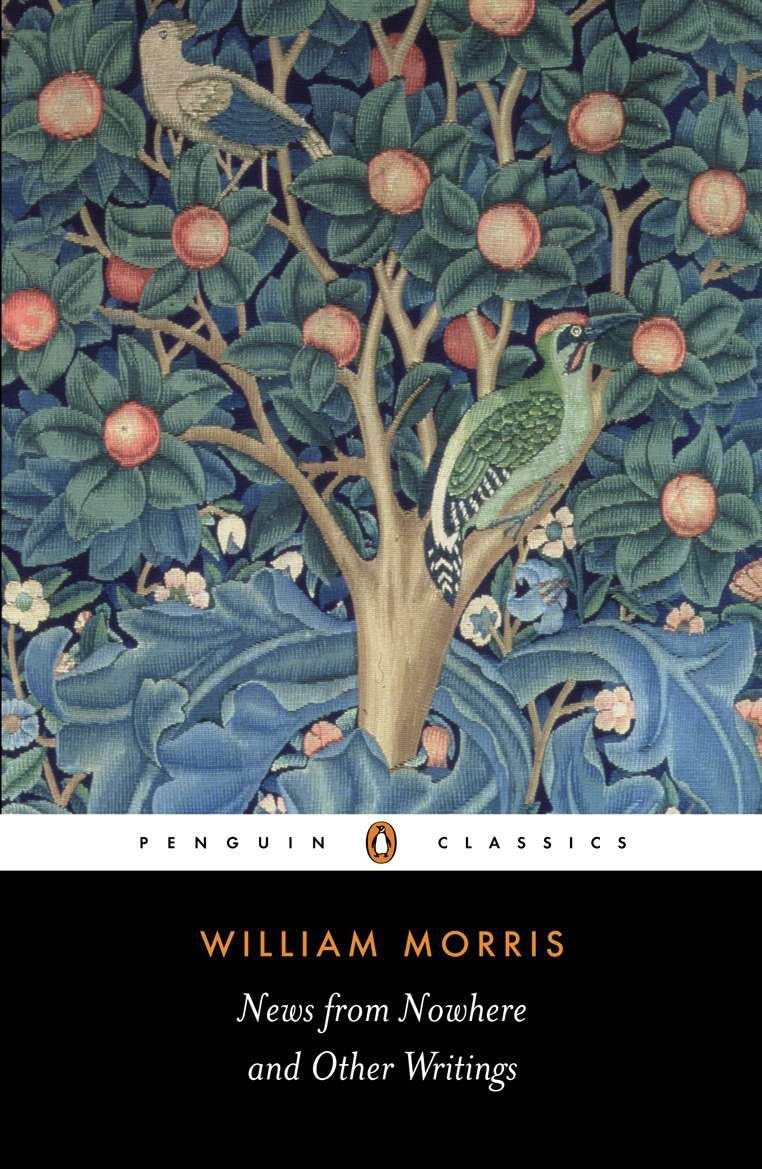
The handmade utopia, written in direct answer to Bellamy, and the warmer vision for it.
Morris, the artist and socialist, disliked Bellamy’s vision of a centralized, industrial, machine-run future, and wrote News from Nowhere as a rebuttal. His narrator wakes in a future London transformed into a green, decentralized, craft-based society where work is a pleasure rather than a burden, common ownership is total, and the ugliness of industrial capitalism has been replaced by beauty, leisure, and human-scale community. It is a pastoral, almost dreamlike book, more interested in the texture of a good day than in the mechanics of governance.
Where Bellamy trusted the system, Morris trusted people and craftsmanship, and the contrast between the two novels is the clearest window the genre offers into the socialist imagination of the era. It endures as the gentlest and most beautiful of the classic utopian books.
Walden Two by B. F. Skinner (1948)
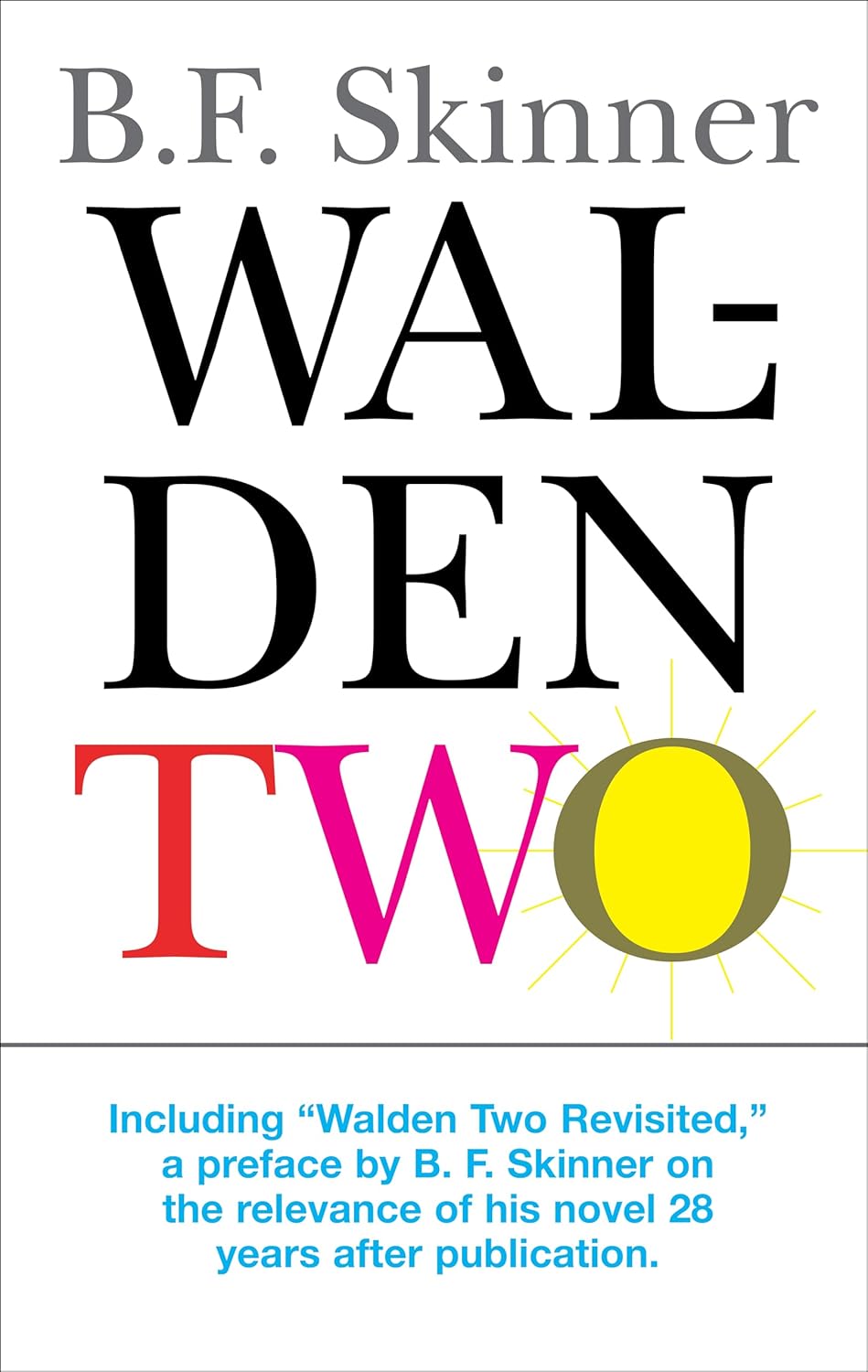
The most controversial utopia on this list, and the one that still starts arguments.
Written by the founder of behavioral psychology, it depicts an experimental community of a thousand people designed from the ground up on the principles of behavioral conditioning, where careful social engineering has produced a genuinely happy, productive, cooperative society free of the frustrations of ordinary life. To some readers it is a hopeful blueprint that inspired real intentional communities, and to many others it is deeply unsettling, a “utopia” that has engineered away the very freedom that makes happiness meaningful.
That tension is exactly why it belongs here. Walden Two forces the genre’s hardest question, whether a perfectly happy society bought with conditioning is a dream or a nightmare, and readers have never agreed on the answer. It sits fascinatingly close to the dystopian shelf it superficially opposes.
A Modern Utopia by H. G. Wells (1905)

The founding father’s own attempt, and a bridge between the old utopias and modern science fiction.
Wells imagines an alternate Earth, a duplicate of our own planet down to doubles of every living person, organized as a single world state built on reason, science, and efficient administration, its order maintained by a voluntary elite order called the Samurai who live by a strict code of service and self-denial. It is a deliberately restless book that argues with itself, aware that a static perfect society is a contradiction, and it insists that any real utopia must be “not a stagnant, but a kinetic” thing, always changing.
That single idea, the utopia as a process rather than a destination, is Wells’s real contribution to the genre and points directly toward Le Guin seventy years later. My H. G. Wells guide covers where it fits in his enormous output.
Utopia by Thomas More (1516)

The book that named the genre, and it has been arguing with its readers for five hundred years.
More coined the word itself, from Greek roots meaning both “good place” and “no place,” a pun that has haunted the form ever since. His narrator describes an island commonwealth where property is held in common, everyone works and everyone is educated, gold is despised, war is held in contempt, and religious tolerance is the law, a startling vision from a man who was Lord Chancellor of England and would later be executed for his Catholic convictions. Scholars still argue over how much of it More endorsed and how much is satire aimed at the England of his own day.
That ambiguity is the point and the reason it lasts. Read as a straight blueprint it is quaint, and occasionally chilling in its details, but read as the sharp, ironic social criticism it partly is, it remains the foundation the entire genre is built on.
The Rest of the Shelf
Several more utopian books reward the reader who wants to go further.
The Fifth Sacred Thing by Starhawk (1993) builds a spiritually grounded, ecological utopia in a future California and sets it against a militarized threat, blending activism and ritual into its vision.
Island by Aldous Huxley (1962), his final novel and the deliberate counterpart to Brave New World, imagines a functioning good society on a Pacific island and is covered in full on my Aldous Huxley guide.
The Book of the City of Ladies by Christine de Pizan (1405) is often called the first feminist work, an allegorical city built by and for women centuries ahead of its time.
And for a modern take, the works of Kim Stanley Robinson, especially the Mars trilogy and The Ministry for the Future, carry the utopian impulse into contemporary hard science fiction, insisting that a better world is still buildable from here.
These are the books that keep the flame of the possible alive, and the best of the utopian books are not naive about how far away that better world remains. They just refuse to stop imagining it.
Where to Go Next
If these hopeful futures drew you in, their dark mirror is just as rewarding, and my best dystopian books list maps the futures we fear rather than the ones we want.
If it was Le Guin’s ambiguous, humane vision specifically, the Ursula K. Le Guin guide is the place to follow her further.
And if you want the broader tradition these books belong to, the best science fiction books list sets the utopian imagination alongside everything else the genre can do.