Ursula K. Le Guin books get organized into series by publishers and reading-order sites, and one of those series is largely an invention. The Hainish novels share a universe but almost nothing else, and Le Guin herself, asked one time too many about the correct order, answered with visible irritation that there is no order and the books can be read any way you like. The Earthsea cycle, on the other hand, is a real sequence, and the back half of it quietly takes the front half apart. Knowing which kind of series you are holding is most of what a reading guide can do for you, so this one starts there.
She published twenty-one novels, a dozen story collections, four major essay collections, a shelf of poetry and children’s books, and a rendition of the Tao Te Ching, and the quality across that span is almost unreasonably high. Two of her novels sit high on my list of the best science fiction books of all time, and A Wizard of Earthsea holds its slot among the best fantasy books ever written. No other writer appears that high on both shelves.
This guide covers all the Ursula K. Le Guin books worth your money: the famous ones, the quiet masterpieces behind them, and the completist titles, with an honest word on each about what you are getting into. I am relaying the critical consensus rather than personal verdicts here, and where readers genuinely split on a book, the entry says so.
Fiction by René Rehn


The Short Version
Read A Wizard of Earthsea if you want fantasy. It is short, it is perfect, and it does more in about two hundred pages than most trilogies manage in two thousand. Read The Left Hand of Darkness if you want science fiction, because it is her most important novel and the one that changed what the genre was allowed to be about. The Dispossessed is the other peak, the anarchist utopia book, and many serious readers call it her best. And The Lathe of Heaven is the sleeper: short, strange, and the easiest door in for readers who do not usually touch the genre.
Ursula K. Le Guin Books in Order
The table runs by first publication and sticks to the books a reader is likely to buy: the novels, the major collections, and the essential nonfiction. The children’s picture books and most of the poetry are beyond its scope.
| Year | Title | Type | Notes |
| 1966 | Rocannon’s World | Hainish novel | Her first novel, source of the word ansible |
| 1966 | Planet of Exile | Hainish novel | |
| 1967 | City of Illusions | Hainish novel | The three above are sold as Worlds of Exile and Illusion |
| 1968 | A Wizard of Earthsea | Earthsea | |
| 1969 | The Left Hand of Darkness | Hainish novel | Hugo and Nebula |
| 1971 | The Tombs of Atuan | Earthsea | Newbery Honor |
| 1971 | The Lathe of Heaven | Novel | |
| 1972 | The Farthest Shore | Earthsea | National Book Award |
| 1974 | The Dispossessed | Hainish novel | Hugo and Nebula |
| 1975 | The Wind’s Twelve Quarters | Stories | Includes the Omelas story |
| 1976 | Orsinian Tales | Stories | Orsinia |
| 1976 | The Word for World Is Forest | Hainish novel | Hugo for the 1972 novella |
| 1976 | Very Far Away from Anywhere Else | Novel | Short, realist YA |
| 1978 | The Eye of the Heron | Novel | |
| 1979 | Malafrena | Novel | Orsinia |
| 1979 | The Language of the Night | Essays | |
| 1980 | The Beginning Place | Novel | |
| 1982 | The Compass Rose | Stories | |
| 1985 | Always Coming Home | Novel | The Kesh ethnography |
| 1987 | Buffalo Gals and Other Animal Presences | Stories | |
| 1989 | Dancing at the Edge of the World | Essays | Carries the Carrier Bag essay |
| 1990 | Tehanu | Earthsea | Nebula |
| 1991 | Searoad | Stories | Linked Oregon stories |
| 1994 | A Fisherman of the Inland Sea | Stories | |
| 1995 | Four Ways to Forgiveness | Stories | Hainish story cycle |
| 1996 | Unlocking the Air | Stories | |
| 1997 | Tao Te Ching | Translation | Her rendition of Lao Tzu |
| 1998 | Steering the Craft | Craft book | Revised in 2015 |
| 2000 | The Telling | Hainish novel | |
| 2001 | Tales from Earthsea | Earthsea | Stories |
| 2001 | The Other Wind | Earthsea | World Fantasy Award |
| 2002 | The Birthday of the World | Stories | |
| 2002 | Changing Planes | Stories | |
| 2004 | Gifts | Annals of the Western Shore | |
| 2006 | Voices | Annals of the Western Shore | |
| 2007 | Powers | Annals of the Western Shore | Nebula |
| 2008 | Lavinia | Novel | Her last novel |
| 2012 | The Unreal and the Real | Stories | Two-volume selected stories |
| 2016 | Words Are My Matter | Essays | |
| 2017 | No Time to Spare | Essays | The blog years |
Where to Start
Either flagship works as a genuine starting point, and they share nothing. A Wizard of Earthsea is the fantasy door, The Left Hand of Darkness the science fiction one, and neither requires the other.
Two cautions will save you some grief. Do not start with the early Hainish trio in Worlds of Exile and Illusion just because the stories come first in the universe’s chronology, because they are apprentice work next to what follows. And do not start Earthsea with Tehanu, which is a great novel that only works as a response to the three books before it.
Readers who want the shortest possible proof of what the fuss is about should read “The Ones Who Walk Away from Omelas” in The Wind’s Twelve Quarters. It runs a few pages, and it has not loosened its grip on the culture in fifty years.
Le Guin’s Life, Briefly
Ursula Kroeber was born on October 21, 1929, in Berkeley, California, into a house full of professional attention to other cultures. Her father was the anthropologist Alfred Kroeber, her mother the writer Theodora Kroeber, and the habit of looking at a society from outside, as a made thing that could have been made differently, became the engine of her fiction. She took a BA at Radcliffe and an MA in French at Columbia, and in 1953, on the Queen Mary bound for France, she met the historian Charles Le Guin. They married in Paris that December.
From 1959 the Le Guins lived in Portland, Oregon, where Charles taught at Portland State and where she stayed for the rest of her life. The career started slowly, with rejections through the 1950s, then the early Hainish novels in the mid-1960s, and then the astonishing run from 1968 to 1974 in which she published A Wizard of Earthsea, The Left Hand of Darkness, The Lathe of Heaven, The Tombs of Atuan, The Farthest Shore, and The Dispossessed. Few writers in any genre have had six years like that.
She spent the rest of her career refusing to be anyone’s monument. She wrote feminist revisions of her own classics, an ethnography of an invented California people, realist stories about the Oregon coast, poetry, children’s books, and some of the sharpest criticism the field has produced.
Le Guin also fought publishing itself when she thought it deserved fighting, refusing a Nebula in 1977 in protest after the SFWA stripped Stanisław Lem’s honorary membership, resigning from the Authors Guild in 2009 over its Google Books settlement with the words “You decided to deal with the devil,” and using her 2014 National Book Foundation medal speech to attack Amazon’s power over publishing. She died at home in Portland on January 22, 2018, at eighty-eight.
The Earthsea Cycle
Six books across thirty-three years, and the remarkable thing about them is that the second half spends its time questioning the first. The original trilogy built one of fantasy’s foundational worlds: an archipelago of islands, a school of wizards, and a magic that runs on the true names of things. The later three books came back as an older writer’s answer to a younger writer’s assumptions, asking who was left out of that world and what its heroics actually cost. Read them in publication order, because the argument only lands that way.
A Wizard of Earthsea (1968)

A Wizard of Earthsea is the book that quietly out-wrote most of the fantasy canon at a fraction of the length. A boy called Sparrowhawk discovers he has power, trains at the wizard school on Roke decades before wizard schools became furniture, and, showing off, tears a hole in the world and lets something through. The rest of the novel is him hunting it, and the hunt inverting.
Le Guin’s magic runs on true names. To know the true name of a thing is to hold power over it, so wizardry here is a discipline of language and restraint rather than firepower. That restraint is the argument running through all the Le Guin books. Most fantasy escalates, and Earthsea insists that the mature act is almost always to refrain.
Also worth knowing: Ged is dark-skinned, as are most people of the archipelago, and Le Guin was explicit that this was deliberate, a quiet refusal of the genre’s defaults that cover artists and filmmakers spent decades undoing. It reads in an evening or two, and it is the right first step into Earthsea.
The Tombs of Atuan (1971)

The Tombs of Atuan is the second Earthsea book and, for many readers, the better one. Tenar is taken as a small child to serve as the reborn high priestess of the Nameless Ones, in a desert temple complex whose heart is a labyrinth of total darkness that only she may enter. Then a wizard comes into her labyrinth looking for half of a broken ring, and she has him trapped.
It is the most claustrophobic of the Le Guin books, a story about a girl given absolute authority inside a system that has consumed her whole life, and what it costs to walk out of it. Ged, seen from outside this time, is more impressive here than in his own book. It took a Newbery Honor, and its reversal of perspective is the first sign that Earthsea was never going to be a simple trilogy.
The Farthest Shore (1972)

The Farthest Shore concludes the original trilogy, and it is the one about death. Magic is failing across the archipelago. Wizards forget their spells, singers lose the songs, and the cause is a sorcerer who has bought immortality at the world’s expense. An aging Ged sails to the edge of the world with a young prince, Arren, to close what was opened.
It won the National Book Award for Young People’s Literature, and the final crossing of the dry land is the strangest, most austere writing in the sequence. The honest caveat is pace: this is a somber sea voyage with a meditative middle, and readers who wanted the adventure of the first book sometimes stall in it. Stay for the ending, which is the trilogy’s whole point.
Tehanu (1990)

Eighteen years later, Le Guin came back and dismantled her own trilogy. Tenar is now a middle-aged widow on Gont, having chosen an ordinary life over power, and she takes in a small girl who has been raped and burned and left for dead. Ged returns from the events of The Farthest Shore with nothing left. The novel is what happens after the hero’s story ends, told from the kitchen rather than the tower.
What Tehanu does is look at the world of the first three books and ask who was excluded from it. Wizardry belongs to men, and the book wants to know why, and what the women’s knowledge it dismissed was worth. It won the Nebula, and it divided readers permanently. Some find it angry, domestic, and far slower than the Le Guin books before it, and they are not wrong about the pace. Others, and I lean this way on the consensus, think the sequence only becomes great literature here.
Tales from Earthsea (2001)

Tales from Earthsea gathers five stories and a descriptive essay, published the same year as The Other Wind and built to carry weight, not to mop up. “The Finder” reaches back centuries to show how Roke was founded, and by whom, which lands hard once you know the school’s later politics excluded women. “On the High Marsh” gives you a stray animal-healer with a past, and “Dragonfly” is the direct bridge into the final novel, the story of a woman who forces the question Roke was built to avoid.
For a completist this is essential connective tissue, and for everyone else it is simply a strong collection. Read it between Tehanu and The Other Wind, where it was designed to sit.
The Other Wind (2001)

The Other Wind is the last Earthsea novel, and it resolves the cycle’s oldest wound. The dead are pressing against the low stone wall of the dry land, asking to be set free, and a village sorcerer whose wife has died dreams of them every night. The answer pulls together everyone the series has cared about, Tenar and Tehanu and the dragon question included, and quietly re-litigates the afterlife the original trilogy took for granted.
It won the World Fantasy Award, and it completes an argument very few writers have attempted: going back into your own foundational work and correcting it in public, book by book, without disowning what made it loved. Together with Tehanu it turns Earthsea from a classic trilogy into something much rarer.
The Hainish Novels
Not a series. Long ago the people of Hain seeded human life across many worlds and then forgot about them, and the novels are separate reports from that scattered family, written in no order and sharing no plot. What they share is a method: each book drops an observer into a society built on one deep difference and lets the difference do the work. The word ansible, the instant-communication device half the genre borrowed afterward, comes out of these books. Read them in any order at all. Le Guin said so herself, repeatedly, with feeling.
The Left Hand of Darkness (1969)

The Left Hand of Darkness is the most important science fiction novel of its era, and it is the center of any shelf of Ursula K. Le Guin books. Genly Ai, an envoy from the human worlds, comes alone to the ice-age planet Gethen to invite it into the interstellar community. The Gethenians have no fixed sex. For most of each month they are neither male nor female, becoming one or the other only briefly in their cycle, and every structure of their politics, religion, and daily life is built on that fact.
The novel is a first-contact story where the alien thing is gender itself, and its most famous sentence, about a pregnant king, still does in five words what whole books about the subject fail to do. It is also, in its second half, a survival story: two people hauling a sledge across eight hundred miles of ice, learning to trust each other. That crossing is among the great sustained passages in the genre.
It won the Hugo and the Nebula, the first time a woman took both for best novel, and it has never been out of the conversation since. Readers should expect a deliberate pace and a lot of Gethenian myth between chapters, and the myths are load-bearing. For anyone mapping her shelf, this is the summit, and everything else on this page stands in its shadow.
The Dispossessed (1974)

The Dispossessed is the one many serious readers rank above everything else she wrote. Two worlds orbit each other: Urras, rich, beautiful, and propertied, and its moon Anarres, settled generations ago by anarchists who walked out, poor in everything except the society they built. Shevek, the greatest physicist of his age, becomes the first Anarresti in a century and a half to travel to Urras, and the novel alternates his journey with the life that led to it.
Its subtitle is “An Ambiguous Utopia,” and the ambiguity is the achievement. Le Guin takes her anarchist society completely seriously, which means showing the scarcity, the social coercion that replaces law, and the bureaucratic moss growing over the revolution, and the book is still more generous to it than to the glittering alternative. It is political philosophy that never stops being a novel about one stubborn man.
It took the Hugo and the Nebula both, like Left Hand before it, and it anchors the tradition my utopian books list maps. The honest warning is that it is talky, and readers who need plot momentum will feel the alternating structure as a brake. Readers who want the genre’s best sustained act of political imagination will not.
The Word for World Is Forest (1972)

The Word for World Is Forest is her angriest book. On the forest world of Athshe, a human logging colony has enslaved the small, green-furred natives, who have no concept of murder until the colonists teach it to them by example. The novella version won the Hugo in 1973, and the standalone book followed in 1976, Vietnam burning visibly behind every page.
The portrait of Captain Davidson, the colony’s most committed brute, is Le Guin working without her usual sympathy, and she later said the book ran hotter than she liked. It is short, furious, and effective, and any reader who has seen a certain blockbuster about blue-skinned forest natives will recognize how much of its skeleton was standing here first. As polemic it is the least subtle of the major Le Guin books, which is exactly why some readers bounce off it and others call it prophetic.
Worlds of Exile and Illusion (1966-1967)

Worlds of Exile and Illusion collects the three short novels that started the Hainish universe, Rocannon’s World, Planet of Exile, and City of Illusions, in one omnibus volume, which is the sensible way to buy them. They are apprentice work, closer to the planetary romance of the era than to what she became, and nobody should start here. They are also better than apprentice work has any right to be.
Rocannon’s World plays a scientist’s long walk across a feudal world for myth, and invents the ansible on the way. Planet of Exile marries a human colony’s decline to an oncoming generational winter. City of Illusions sends an amnesiac across a depopulated far-future Earth ruled by liars. Completists get something extra: watching the themes of the mature Le Guin books assemble themselves in rough form, one volume at a time.
The Telling (2000)
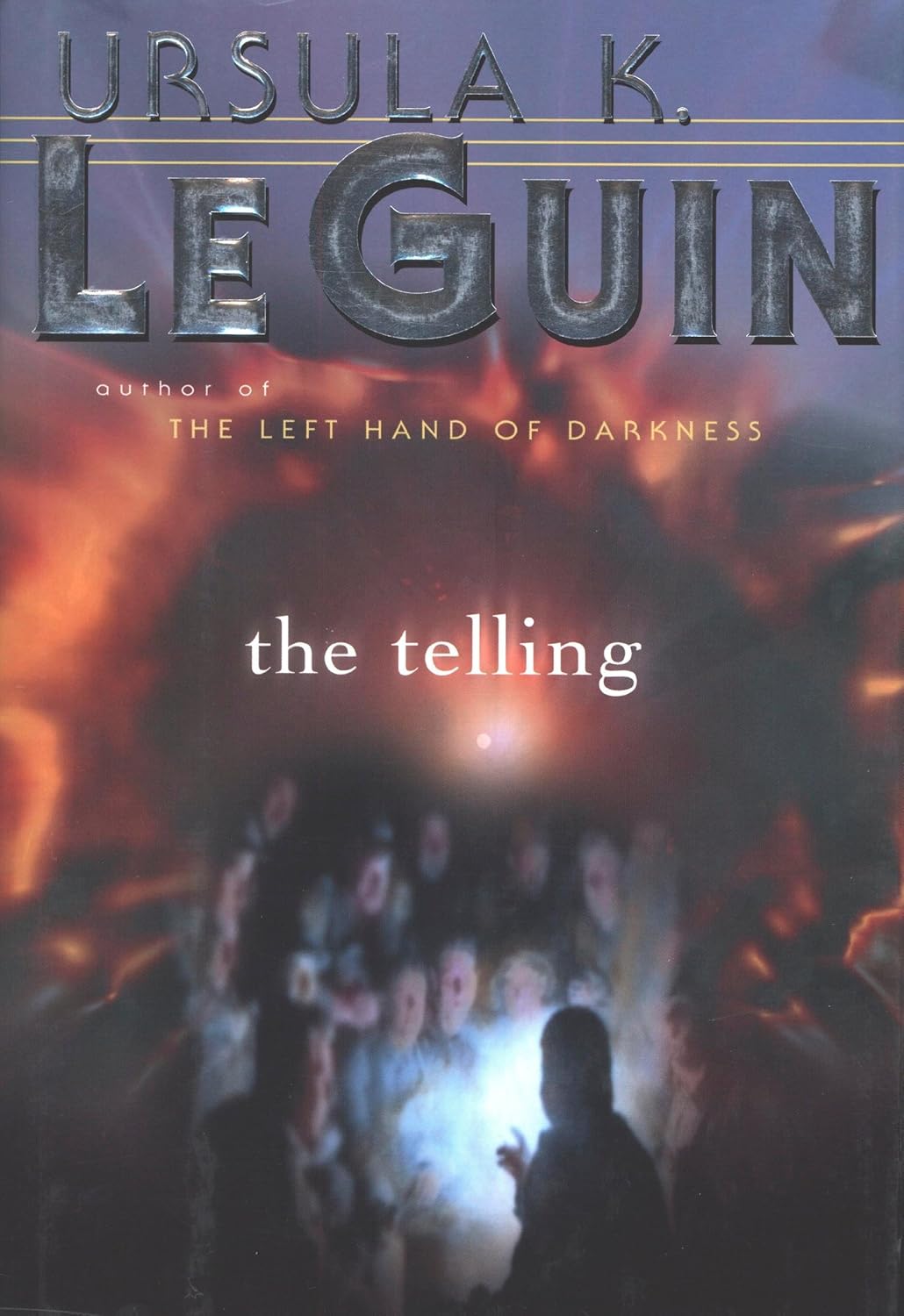
The Telling is the last Hainish novel, and the quiet one. Sutty, an observer from Earth, is sent to the planet Aka, whose corporate state has outlawed its own past: the old writing, the old stories, the whole oral practice its people call the Telling. Her job becomes listening to what survives in the mountains, where the banned culture persists as smuggled books and whispered recitation.
It was written in open sympathy with Taoism and in open anger at the suppression of traditional culture, and consensus treats it as minor Le Guin that majors in atmosphere. The pace is contemplative even by her standards. Readers who loved the anthropological patience of Always Coming Home tend to love this, and readers who wanted another Left Hand of Darkness tend to drift. It is a 100-page mood sustained across 250 pages, and on the right evening that is a feature.
The Standalone Novels
The Lathe of Heaven (1971)

The Lathe of Heaven is the easiest Le Guin novel to hand to someone who does not read science fiction, and the one that feels most like Philip K. Dick, a writer she admired and corresponded with. George Orr dreams, and when he wakes, reality has quietly rearranged itself to match, with only George remembering the world before. The state assigns him a therapist, Dr. Haber, who realizes what his patient can do and starts dictating the dreams.
Every fix makes the world stranger. Haber dreams away overpopulation and racism and war, and each cure arrives with a monstrous invoice, because a dream solves a problem the way a dream would. It is a short, Taoist, blackly funny book about the arrogance of improvement, and its Portland of gray rain and remade skylines is home ground written with love. If the big Hainish novels feel like a commitment, this is the fast proof, a complete Le Guin education in one slim evening.
Always Coming Home (1985)

Always Coming Home is the strangest and most ambitious thing she ever made. It is not a novel so much as the ethnography of a people who do not exist yet, the Kesh, living in a far-future Napa Valley long after our civilization has receded. The book assembles their poems, recipes, maps, plays, oral histories, and one longer narrative, the life of a woman called Stone Telling, whose story threads through the whole.
Her parents’ discipline is all over it, turned toward invention instead of record. There is no plot to pull you, and that is the point: you read it the way an anthropologist lives in a village, and the reward is the slow conviction that the place is real. Some readers never finish it, and some reread it for life, and both camps are describing the same book honestly. It is the purest expression of what separates the Le Guin books from the genre around them.
Lavinia (2008)

Lavinia is her last novel, and a late masterpiece that most people outside the readership never heard about. Its Lavinia is the king’s daughter in the Aeneid whom Aeneas marries at the end, and who never speaks a line in Virgil’s poem. Le Guin gives her the voice Virgil withheld, a whole interior life in Bronze Age Italy, and, in the book’s boldest move, an ongoing conversation with the dying poet himself, who knows she exists because he failed to imagine her fully.
It is a book about being a minor character in someone else’s epic, written by a woman at the end of a career spent giving voices to the unconsulted. The prose is as clean as anything she wrote. Readers who know the Aeneid get an extra layer, and readers who do not still get the thing itself, a quiet, confident historical fantasy about piety, war, and authorship.
The Eye of the Heron (1978)

The Eye of the Heron is a completist title with one great idea at its center. On the colony world Victoria, two settlements share an exile: a city founded by transported criminals and a farming town founded by transported pacifists, and the city has begun treating the town as its property. The novel is the collision, told mostly through Luz, a daughter of the city who crosses over.
It is a fable about nonviolence that refuses to pretend nonviolence is safe, and its middle section carries real weight. The consensus knock is thinness: the sides are drawn plainly, and at novella-plus length nothing gets the room the big books give their societies. Worth reading once the major Le Guin books are behind you, and its questions stay with you longer than its characters do.
The Beginning Place (1980)

The Beginning Place is the oddest of the completist titles, a portal fantasy about two unhappy young adults from strip-mall suburbia who separately find a gateway into a twilight country where time runs slow. Hugh and Irena each want the place for themselves, the town inside it wants something from them, and what it wants turns out to have teeth.
The book reads as Le Guin’s cool-eyed answer to escapism: the fantasy land is genuinely restorative and genuinely a trap, and growing up means walking through it rather than living in it. It is minor, deliberately small, and quietly disturbing in its middle stretch. Readers who come to it expecting Earthsea’s grandeur will be puzzled, and readers who take it as a dark psychological fable usually rate it the best of her small books.
Orsinia

Before the Hainish worlds and Earthsea, Le Guin invented a small Central European country. Orsinia sits somewhere unnamed between Austria and the Slavic lands, with its own history running from the Middle Ages through 1956, and she wrote it across her whole career as a place to think about politics, art, and quiet lives under empires. It is the least famous province of the Le Guin books and a favorite of readers who like her best in a minor key. The Library of America gathered all of it as The Complete Orsinia, which made her one of the few living writers the series had taken in.
Malafrena (1979)
Malafrena is a nineteenth-century novel in the full Stendhal sense, written by a science fiction master and published as neither. Itale Sorde, heir to a lakeside estate in the Malafrena valley, leaves for the capital to join the liberal ferment of the 1820s, and the book follows him into journalism, prison, and the slow discovery of what revolutions cost the people who are not their heroes.
Nothing fantastical happens in it. The pleasure is the thing itself: a patient, fully furnished historical novel about idealism meeting the Habsburg-flavored machinery of a police state, with the women of the Sorde family quietly stealing the second half. Consensus calls it her most underrated novel, and for readers who came to the Le Guin books through Earthsea it is the clearest proof of her range.
Orsinian Tales (1976)
Orsinian Tales carries eleven stories from the invented country, ranging across five centuries, from a medieval keep to factory towns under the postwar regime. The standouts are small masterpieces: “Brothers and Sisters” and “A Week in the Country” carry whole novels’ worth of feeling, and “Imaginary Countries,” the closer, is as close to autobiography as the collection gets.
The collection is where her realist gift lives, and it pairs naturally with Malafrena. Readers who only know the spaceships are sometimes startled that she could have had an entire respectable career writing exactly this. Start with the three stories named above and the collection will finish the argument on its own.
The Annals of the Western Shore
Gifts

Gifts opens her late young-adult trilogy, and the right way to buy the Annals is one book at a time starting here. In the Uplands, poor hill domains hold each other in check with hereditary powers, and the gift of Orrec’s line is unmaking, a look that kills. Orrec’s gift will not wake, or will not aim, and his father blindfolds him rather than risk what he might do. The novel is what a boy becomes when everyone around him treats his eyes as weapons.
The sequels widen the shore. Voices moves to an occupied city where books are contraband, and Powers, which won the Nebula, follows an enslaved boy with perfect memory across the whole map. Each stands alone, linked by walk-on characters rather than plot, so read them in publication order and stop wherever you like. As young adult fantasy goes, this is the real thing, built on the same questions about power and restraint as the grown-up Le Guin books.
The Story Collections
She was one of the great American short story writers, full stop, and the collections are not a side dish. Four earn entries here, and the completist can keep going: The Compass Rose, Buffalo Gals, Searoad, A Fisherman of the Inland Sea, and Unlocking the Air all reward the trip.
The Wind’s Twelve Quarters (1975)

The Wind’s Twelve Quarters is the essential first collection, seventeen stories from the first decade, including the germ stories of Earthsea and several Hainish worlds. It also holds “The Ones Who Walk Away from Omelas,” the Hugo-winning parable about the shining city whose happiness depends on one locked room, which may be the most anthologized, most argued-with short story the genre has produced.
“Nine Lives,” “Vaster than Empires and More Slow,” and “The Day Before the Revolution,” her elegy for the founder of Anarres, make this the single highest-density volume among the Le Guin books. If you buy one collection, buy this one. Nearly every door in her catalog, Earthsea, Hain, Orsinia, the pure fables, has its first hinge somewhere in these seventeen stories.
Four Ways to Forgiveness (1995)

Four Ways to Forgiveness runs four linked novellas about Werel and Yeowe, twin worlds built on slavery, during and after the uprising that ends it. Each piece pairs two damaged people across the lines the system drew, an aging politician and a historian, a freedwoman and a spaceman, and lets forgiveness be exactly as hard as it would be.
It is the most emotionally direct thing in the Hainish canon, and consensus rates “A Woman’s Liberation” among the best novellas she wrote. Later editions add a fifth story, “Old Music and the Slave Women,” under the title Five Ways to Forgiveness, and that is the version to look for if you have the choice.
The Birthday of the World (2002)

The Birthday of the World collects eight late stories, most of them Hainish, most of them about marriage, sex, and kinship arranged otherwise than ours. “Coming of Age in Karhide” returns to the world of The Left Hand of Darkness from the inside, thirty years of second thoughts later, and the four-person marriages of “Mountain Ways” are worked out with her father’s ethnographic patience. The closer, “Paradises Lost,” is her one full treatment of the generation ship, and it quietly argues with the whole tradition behind that idea.
This is late Le Guin at ease with her instruments, and for readers who want the mature voice without committing to a novel it is the ideal single volume.
The Unreal and the Real (2012)

The Unreal and the Real is the two-volume selected stories she chose herself, Where on Earth for the realist and Orsinian side, Outer Space, Inner Lands for the fantastic, later also sold as one fat combined volume. As a map of forty years it is unbeatable, and her own introductions, dry and faintly amused at the sorting exercise, are worth the price on their own.
For a new reader deciding between this and The Wind’s Twelve Quarters: this is the broader portrait, that is the sharper early peak. Completists end up with both on the shelf, and the two volumes together make the best gift edition of her short fiction in print.
Changing Planes (2002)

Changing Planes is the light one, and a sly delight. An airport, in this book, is where you change planes in the other sense: stuck between flights, sufficiently miserable, you can slip into other worlds, and the book is a tourist’s notebook of them. One plane shares dreams, one has engineered its children for silence, one is entirely corporate.
It is satire in the Swift line rather than a story collection with arcs, and it works best dipped into rather than read straight through. Minor Le Guin, cheerfully so, and funnier than her reputation suggests. It is also the right sickbed or airport book in her catalog, which, given the premise, she would have appreciated.
The Essays, the Craft Book, and the Tao Te Ching
The Language of the Night (1979)

The Language of the Night is the essential critical collection from the first half of her career, the book where American fantasy and science fiction got their serious defense. “Why Are Americans Afraid of Dragons?” and “From Elfland to Poughkeepsie” are still the standard answers to why fantasy matters and why its prose style matters, and the pieces on Tolkien and on her own early mistakes have lost nothing.
Anyone who writes in the genre, or argues about it on the internet, is downstream of this book whether they know it or not. The revised editions carry her later second thoughts in the notes, and watching her argue with herself is part of the value.
Steering the Craft (1998)

Steering the Craft is her writing manual, rebuilt top to bottom in 2015 as A 21st-Century Guide to Sailing the Sea of Story, and the revision is the one to buy. It is short, practical, and opinionated in the best way: chapters on the sound of prose, on point of view handled as a craft problem rather than a rule, and exercises she actually expects you to do.
Against the shelf of inspirational writing books it is almost shockingly concrete. For working writers it may be the single most useful thing she published, which is a strange claim against a career that includes The Dispossessed, and plenty of writers make exactly that claim.
No Time to Spare (2017)

No Time to Spare is her blog, which she started in her eighties after reading Saramago’s, selected into a book. The pieces run from cats to capitalism to the mail from strange readers, and the one about the word “fuck” and the ones about her cat Pard are already small classics. It won a Hugo for related work, published weeks before her death.
It is the closest thing to sitting in her kitchen that print offers, and the right gift copy for someone who loves her novels. Words Are My Matter, the 2016 collection of her lectures and book reviews, is the more formal companion and belongs beside it.
Tao Te Ching (1997)
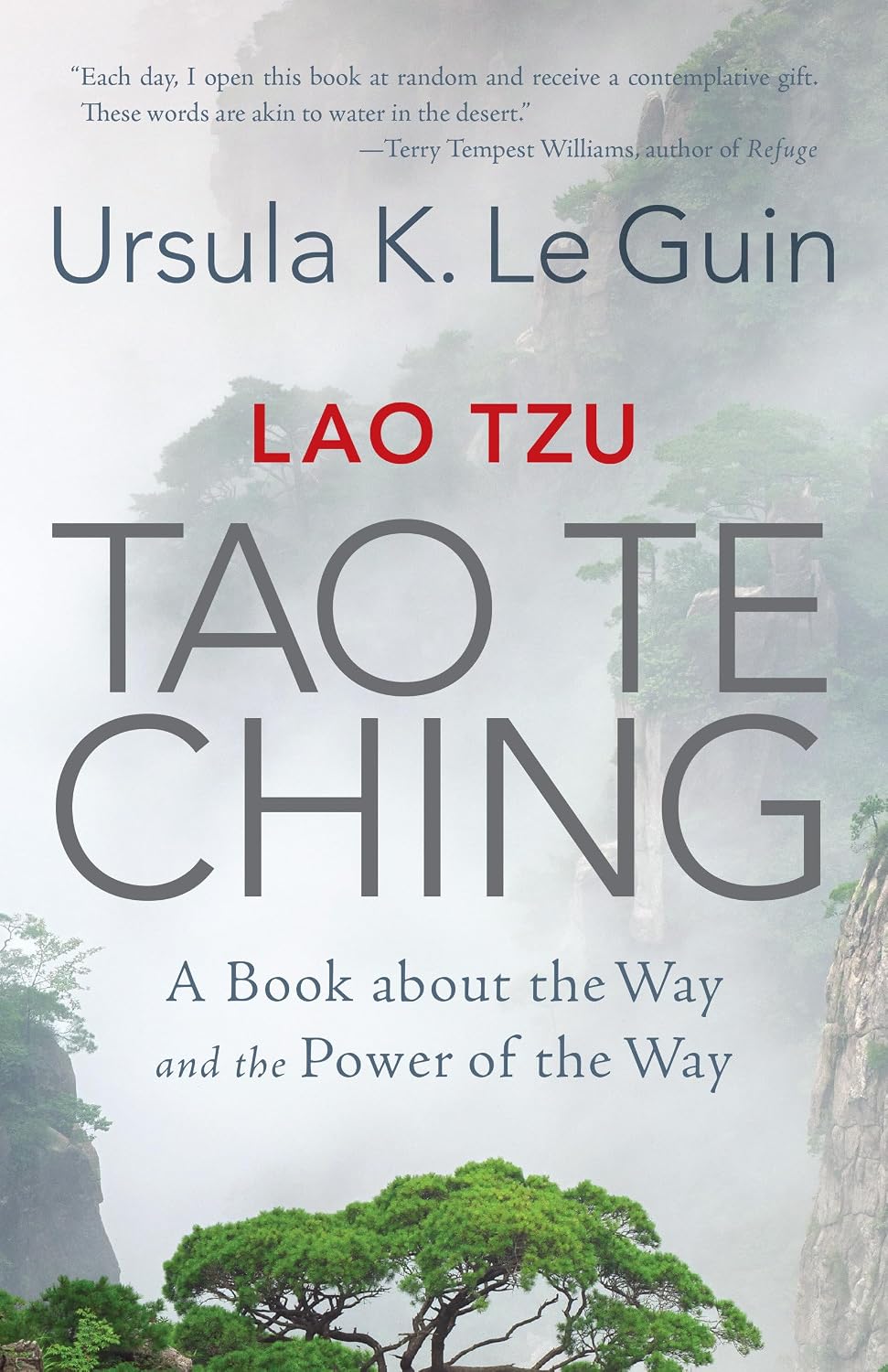
Her Tao Te Ching is not a scholarly translation, and she never claimed one. It is a rendition, made over forty years with the sinologist J. P. Seaton’s help, of the book she grew up with in her father’s house, and it reads like what it is: a great English stylist tuning eighty-one short chapters until they sound inevitable. Her notes are frank about where she bent the text and why.
Taoism is the quiet operating system of the Le Guin books, from Ged’s restraint to George Orr’s stillness, and this volume is the key in her own hand. Readers split on renditions versus translations as a class, and if you want philological rigor, look elsewhere and she would tell you the same.
Ursula K. Le Guin: Deep Dive & FAQ
What Runs Through Le Guin’s Books
The anthropology came first, and it never left. She grew up in the house of the man who wrote the discipline’s textbooks, and every major Le Guin book is built the way a fieldworker builds an account: get the kinship system right, get the economy right, and let the story be what the system does to one person. That is why her worlds persuade where most invented societies decorate.
The second constant is Taoism, absorbed young and held for life. Her heroes succeed by refraining, balancing, and letting go, in a genre whose default verbs are conquer and escalate. A Wizard of Earthsea, The Lathe of Heaven, and the Tao Te Ching rendition are one argument in three forms.
The third is the long feminist self-correction. She wrote the early classics inside the field’s male defaults, saw it, and spent the back half of her career revising her own worlds in public, Tehanu most famously. Among major writers in any genre, almost no one else has done that, and nothing else in the Le Guin books is more admired or more argued about.
Prizes and Honors
The headline run: Hugo and Nebula for The Left Hand of Darkness, the first time a woman won both for best novel, then both again for The Dispossessed. The Hugo for The Word for World Is Forest. Nebulas for Tehanu and for Powers. The National Book Award for The Farthest Shore, a Newbery Honor for The Tombs of Atuan, and the World Fantasy Award for The Other Wind.
The institutional honors tell the second half of the story: Library of Congress Living Legend in 2000, SFWA Grand Master in 2003, only the second woman named, and the National Book Foundation’s Medal for Distinguished Contribution to American Letters in 2014, where she used the podium to warn against Amazon’s grip on publishing and against selling literature like deodorant. The speech traveled far beyond the room. The Library of America began collecting her while she was alive to see it, which almost no genre writer and few writers of any kind have experienced.
Which Ursula K. Le Guin Editions to Buy
For Earthsea, the one to know about is The Books of Earthsea, the complete illustrated edition with Charles Vess’s art, all six books plus the stray stories in one enormous volume. It is gorgeous and it weighs like a paving stone, so buy it as the keeper copy and read the paperbacks in the bath.
For the Hainish novels, the Library of America two-volume Hainish Novels and Stories set is definitive, with her late introductions. The LOA also publish The Complete Orsinia and an expanded Always Coming Home, the author’s own preferred text. For everything else, the standard trade paperbacks are well made, and the only real trap is buying the 1998 Steering the Craft when the 2015 revision exists.
Le Guin on Screen
Her screen luck was mostly bad, and she said so with precision. The one she liked was the 1980 public-television Lathe of Heaven, made on a budget she enjoyed describing, with her own participation in the casting and script. Decades later she called it an oldie but still a goodie. The 2002 A&E remake came and went without her blessing or her anger.
Earthsea fared worse. The 2004 Sci Fi Channel miniseries cast a mostly white Earthsea, shut her out of the production, and prompted her Slate essay “A Whitewashed Earthsea: How the Sci Fi Channel wrecked my books,” which remains the sharpest thing any novelist has written about being adapted.
Studio Ghibli’s Tales from Earthsea followed in 2006, directed by Goro Miyazaki after his father Hayao, whose work she had come to love, had asked for the rights decades earlier and been turned down. Her published response praised its beauty and its quiet farm-work scenes and was honest about the rest, the incoherence and the borrowed violence, and to the young director’s face she kept it to one clean sentence: it was not her book, it was his movie, and it was a good movie. A fully faithful Earthsea still does not exist, which may be the most Le Guin outcome available.
Questions About Ursula K. Le Guin
What Order Should I Read the Earthsea Books In?
Publication order: A Wizard of Earthsea, The Tombs of Atuan, The Farthest Shore, Tehanu, Tales from Earthsea, The Other Wind. The later books are a deliberate response to the earlier ones, so the order is part of the meaning. Do not start with Tehanu.
Do the Hainish Novels Need to Be Read in Order?
No, and Le Guin was emphatic about it. They share a universe, not a story. Start with The Left Hand of Darkness or The Dispossessed and go wherever you like from there.
What Is Ursula K. Le Guin’s Best Book?
The consensus splits between The Left Hand of Darkness for importance, The Dispossessed for depth, and A Wizard of Earthsea for perfection of form. Tehanu and Lavinia both have serious partisans. There is no wrong answer in that set.
Is Earthsea for Children?
The first three books were published for younger readers and read beautifully at any age. Tehanu and The Other Wind are adult novels in every sense and assume you have grown up alongside Tenar and Ged.
Did Le Guin Win the Hugo and Nebula Awards?
Repeatedly. She was the first woman to win both top novel awards in the same year, for The Left Hand of Darkness, and did it again with The Dispossessed. Tehanu and Powers added Nebulas, The Word for World Is Forest a Hugo, and The Other Wind the World Fantasy Award.
What Is an Ansible?
Her invention: a device allowing instant communication across any distance, introduced in Rocannon’s World. The word escaped her books entirely, and writers from Orson Scott Card onward borrowed it as if it were public infrastructure, which, in a way, she made it.
Was Ursula K. Le Guin a Fantasy Writer or a Science Fiction Writer?
Both at the highest level, which almost nobody else has managed, plus realist fiction, poetry, essays, children’s books, and a Tao Te Ching. The label she preferred was simply novelist, and the Le Guin books make the case that the borders were never load-bearing.
Where to go next
If the Hainish method of building a society around one deep difference is what grabbed you, Octavia Butler is the natural next shelf, and my guide to Octavia Butler books runs through her the same way this page runs through Le Guin. Readers drawn to the cerebral, literary end of the genre should meet Stanisław Lem, whose books get the full treatment on my Stanisław Lem guide, and Le Guin herself fought the SFWA on his behalf, so the connection is more than thematic. And if Earthsea was your door in, the wider canon it crowns is mapped on my list of the best fantasy books of all time