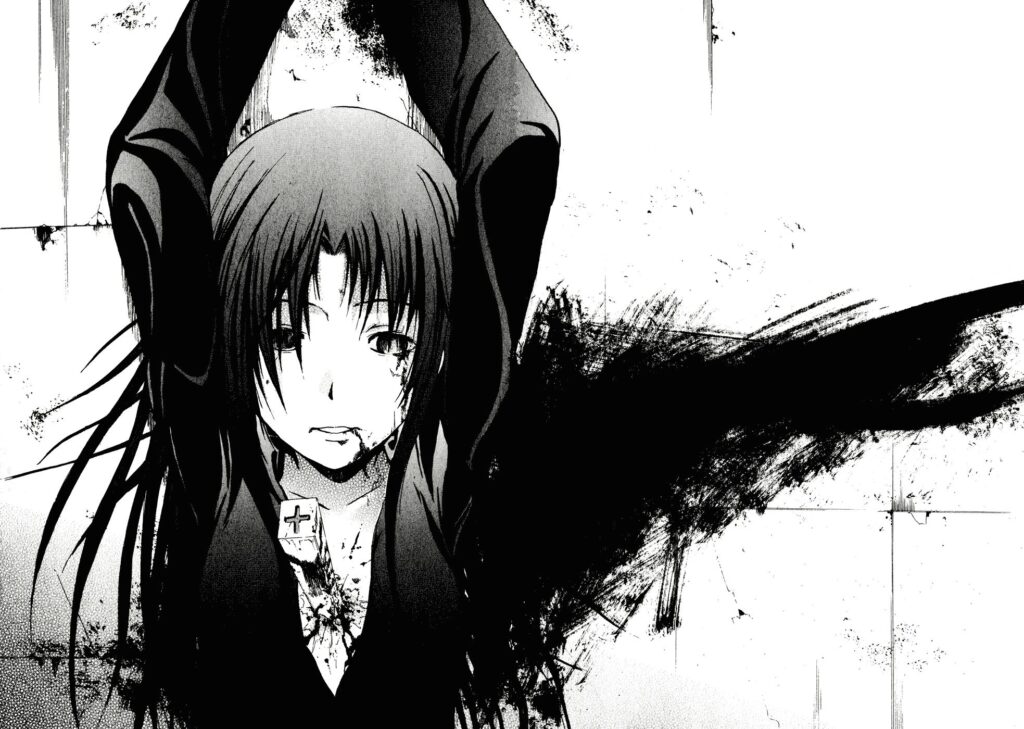
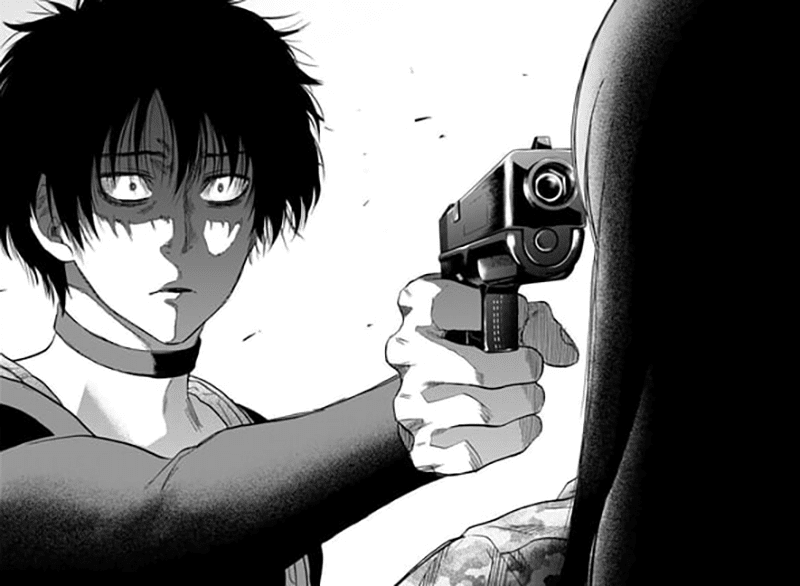
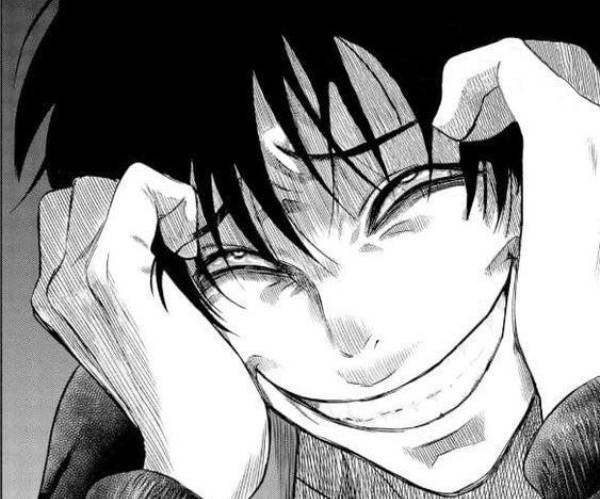
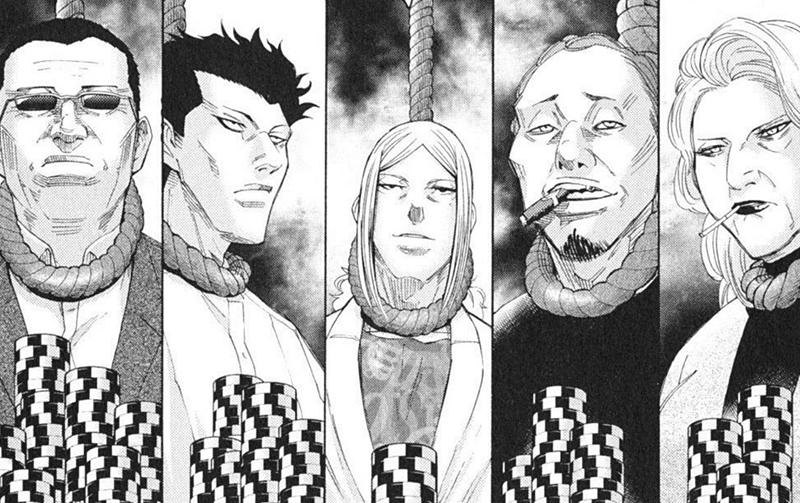
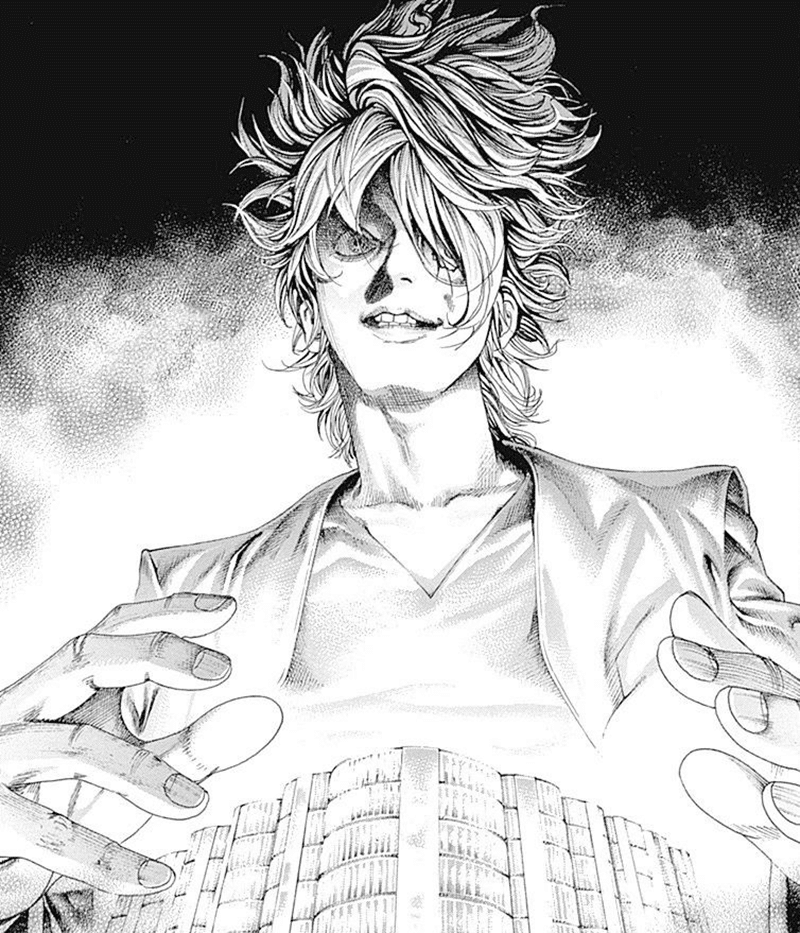
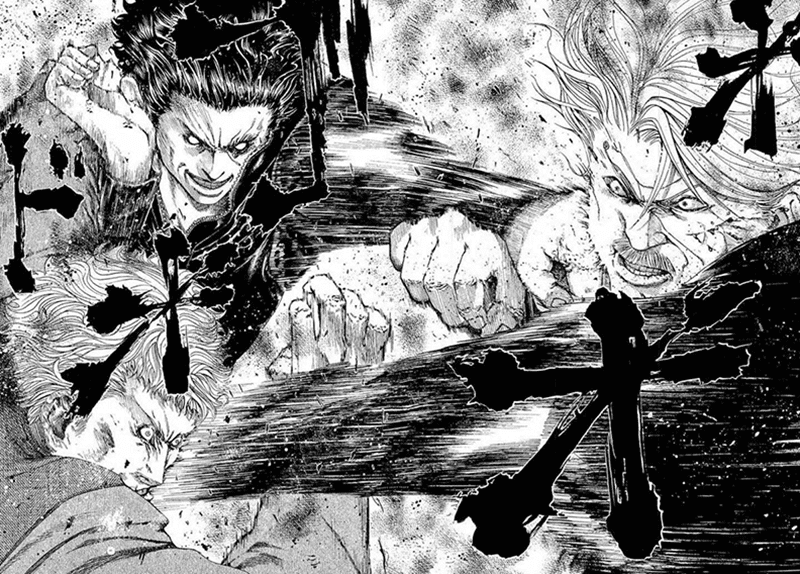
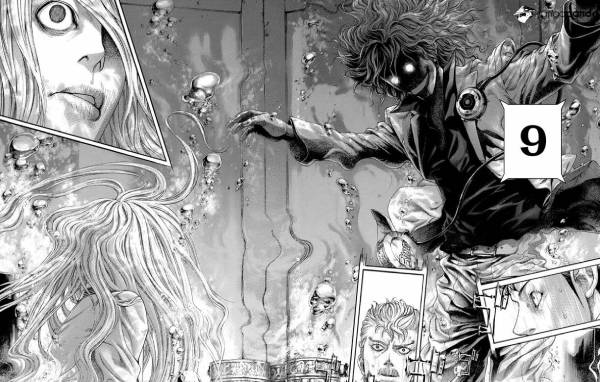
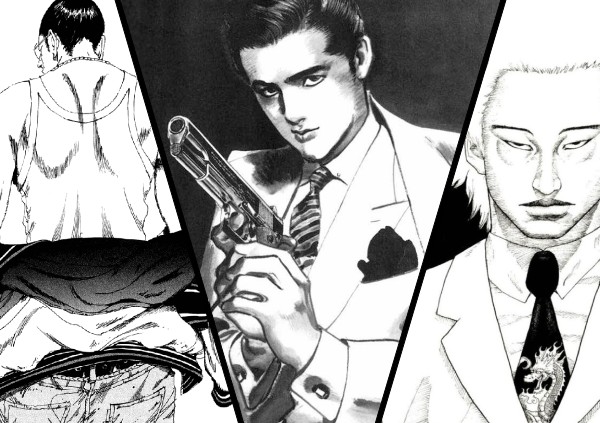
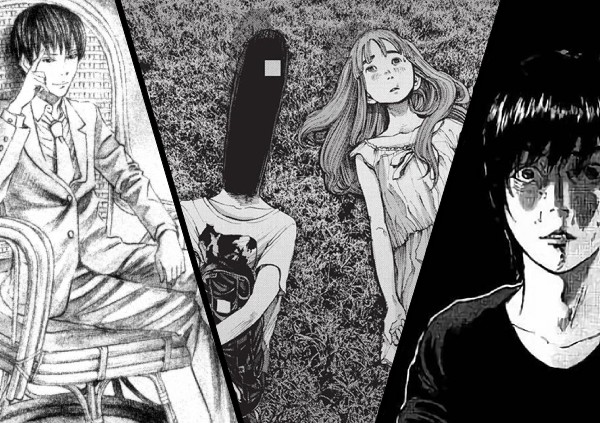
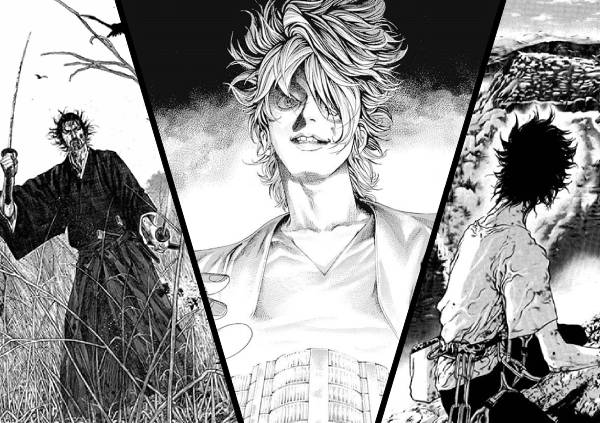
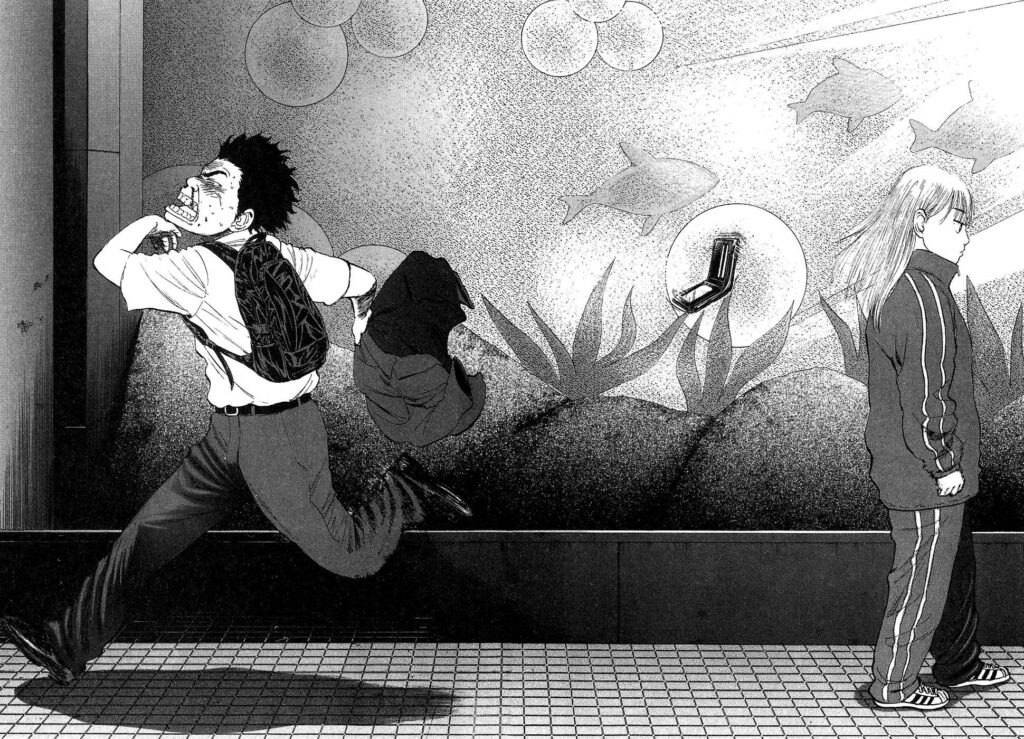
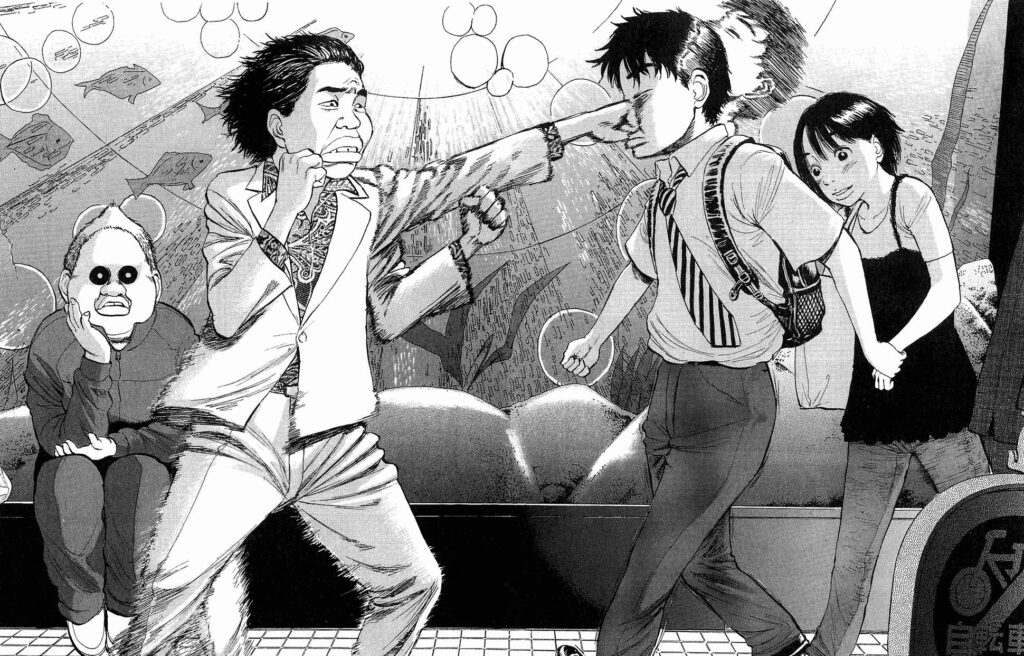
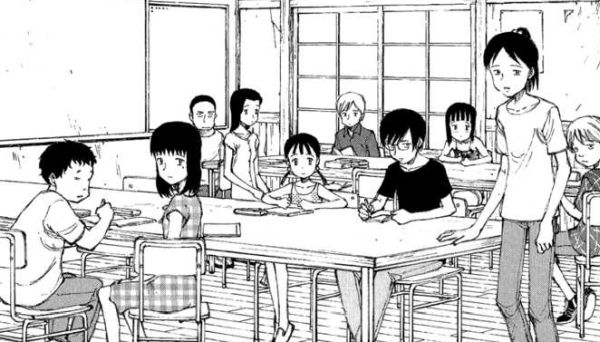
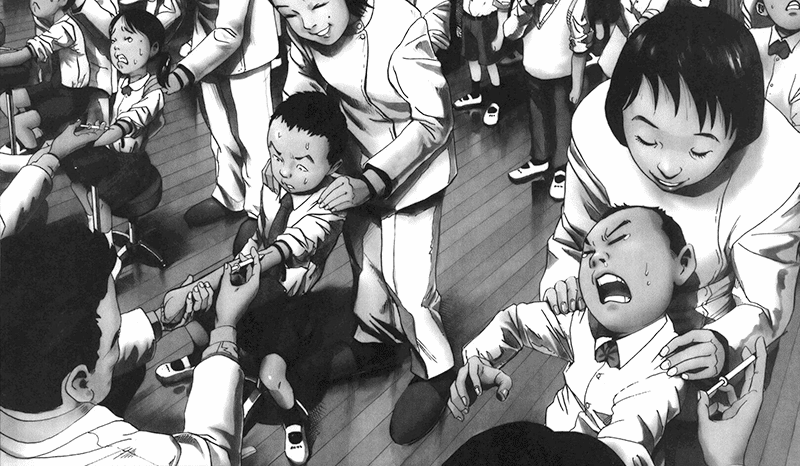
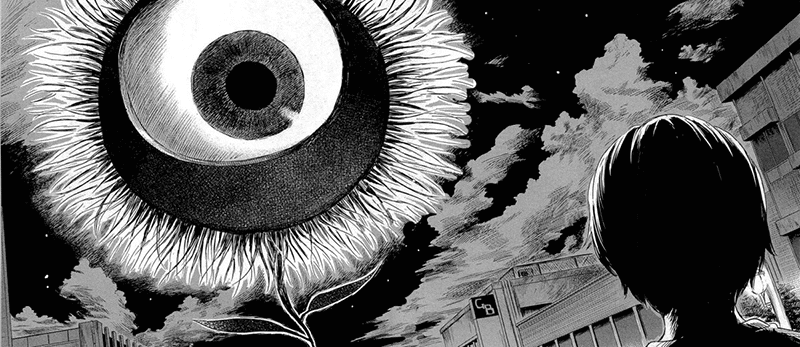
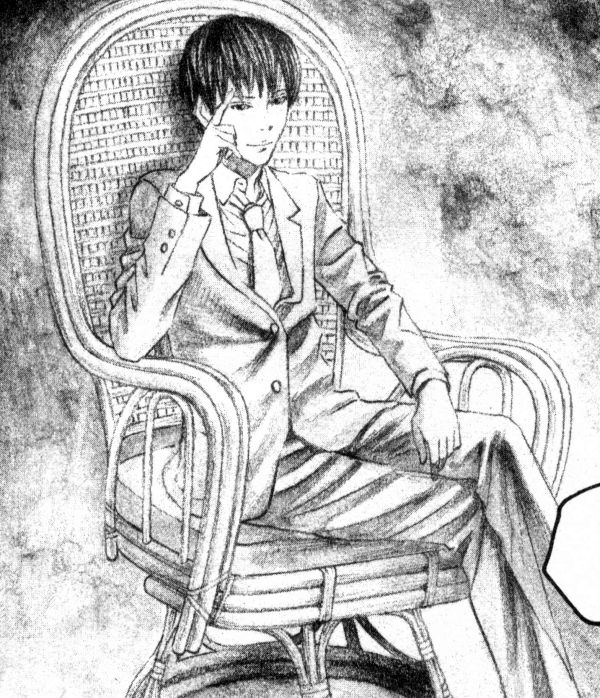
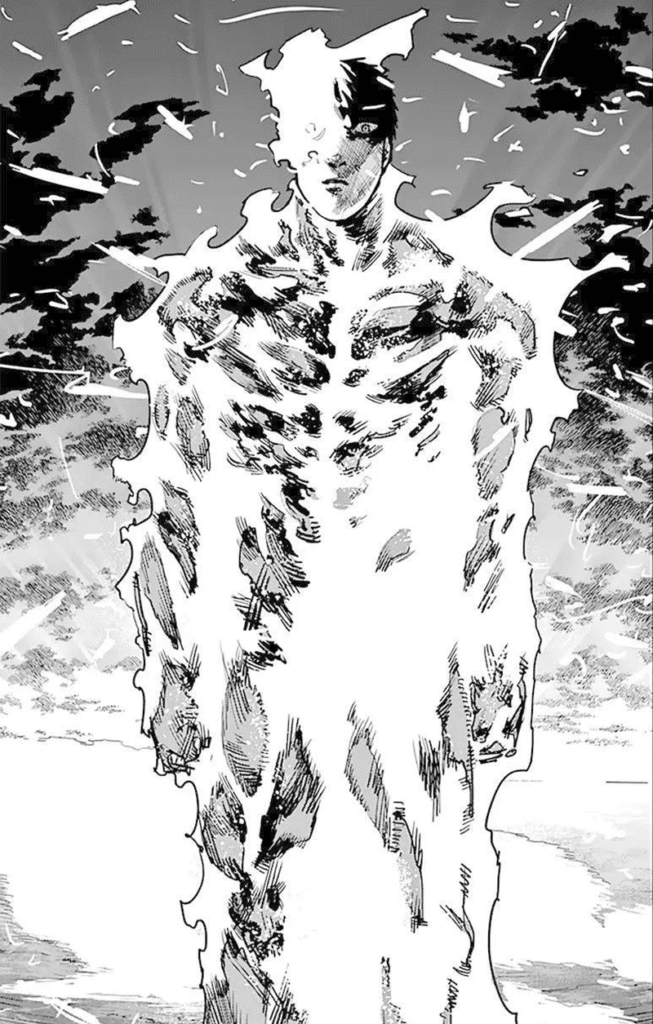
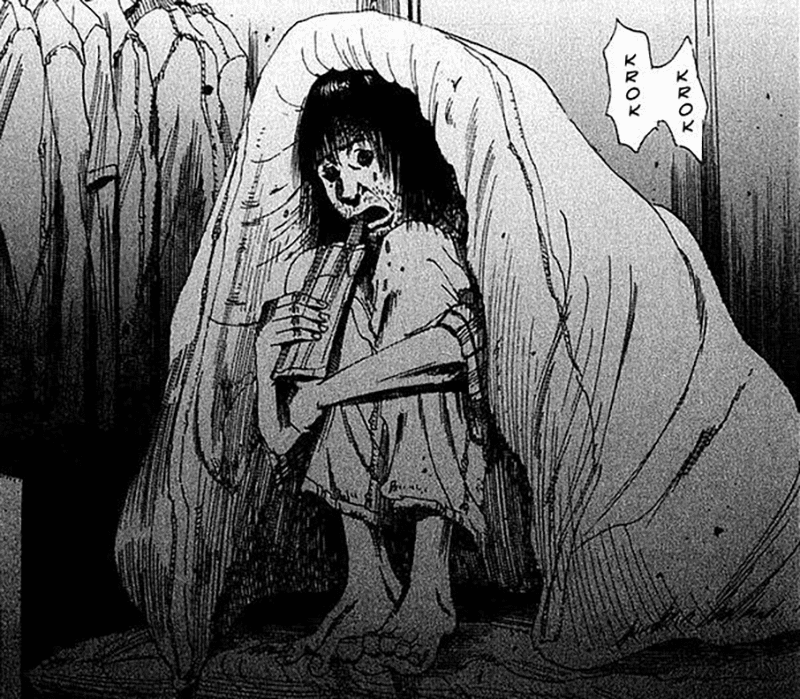
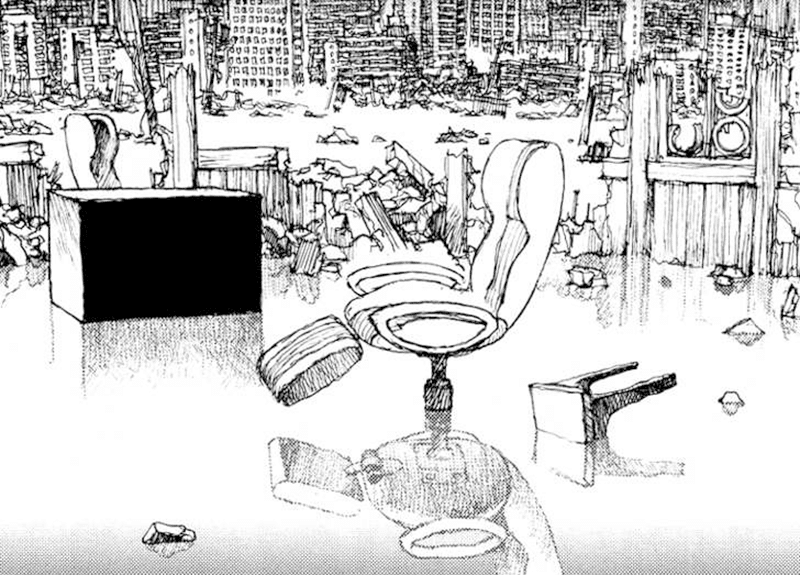
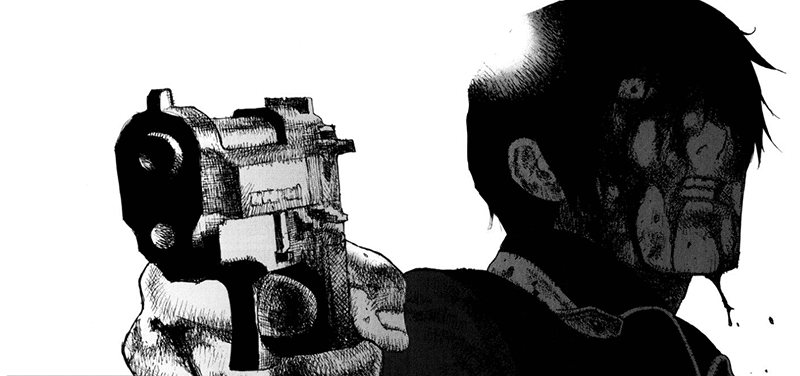
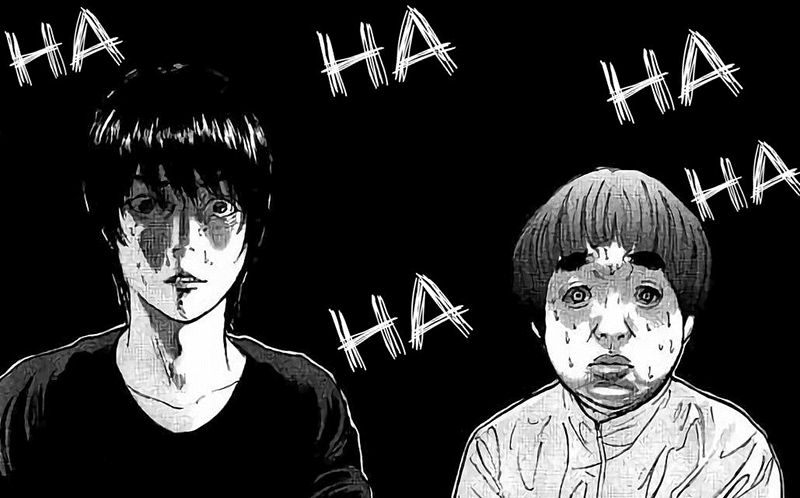
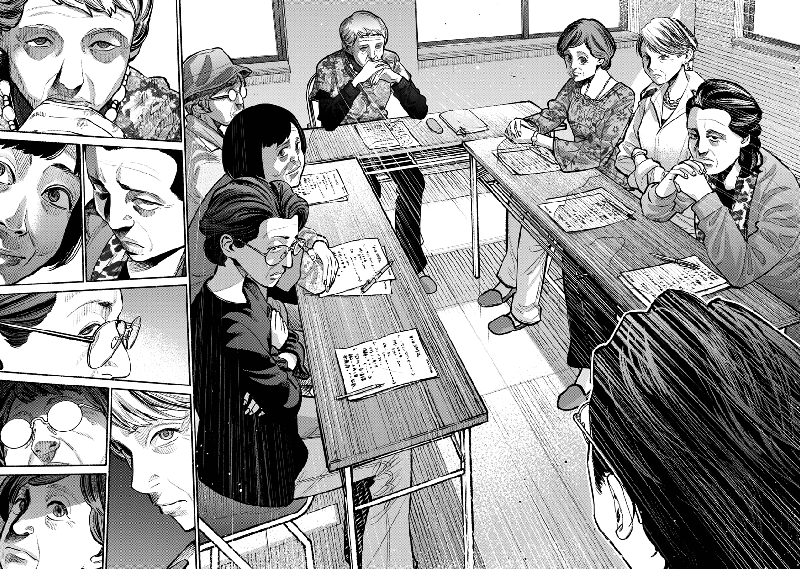
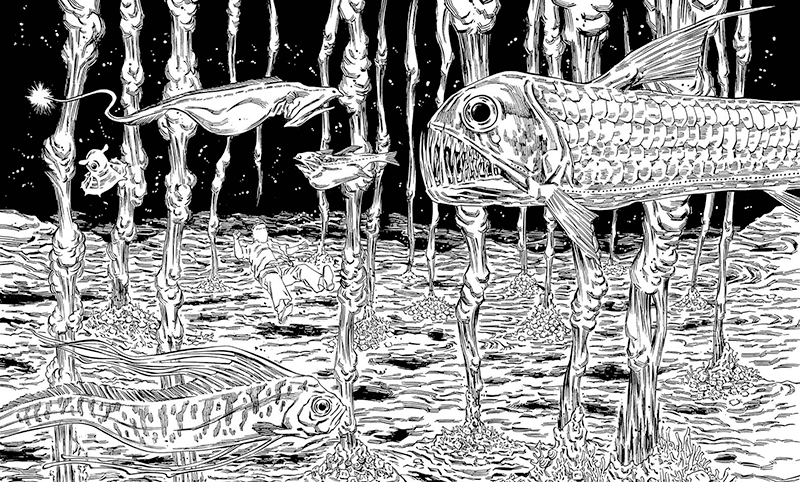
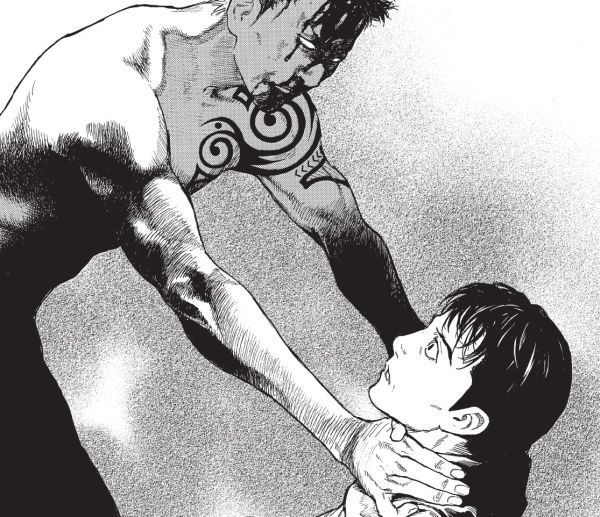
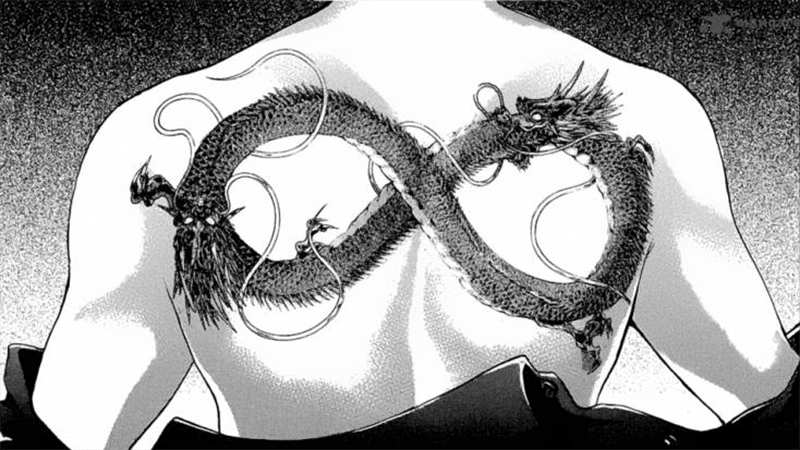
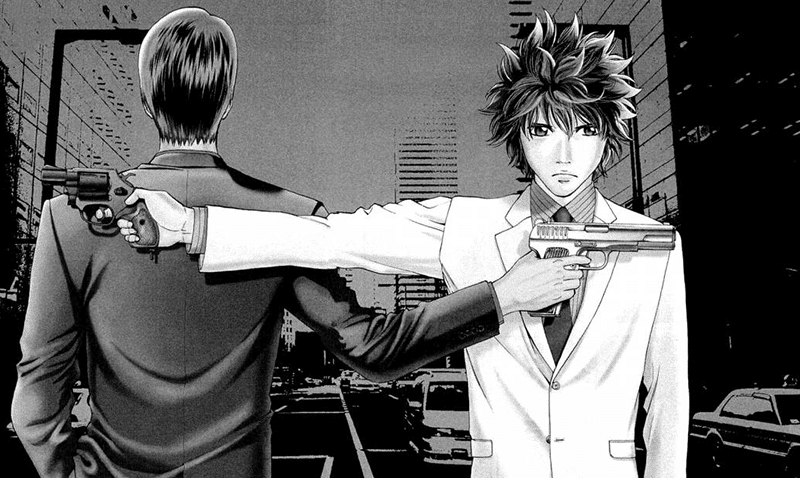
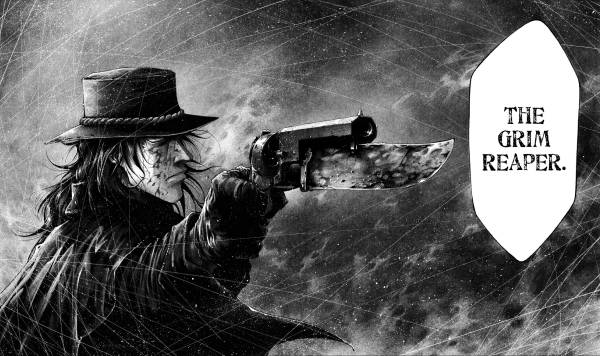
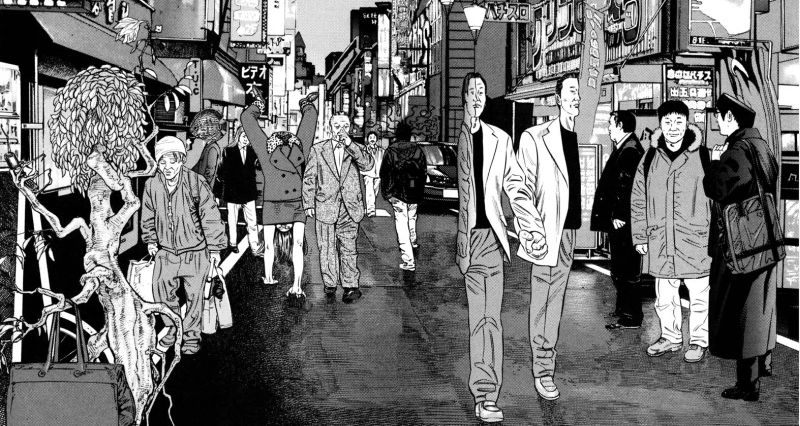
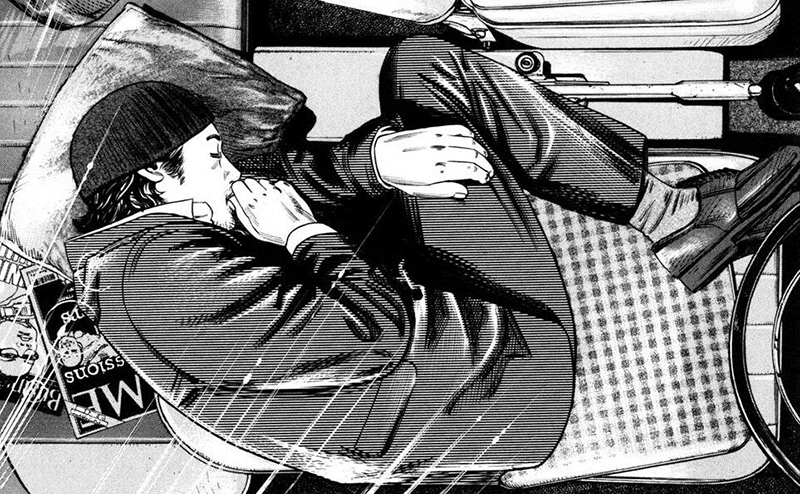
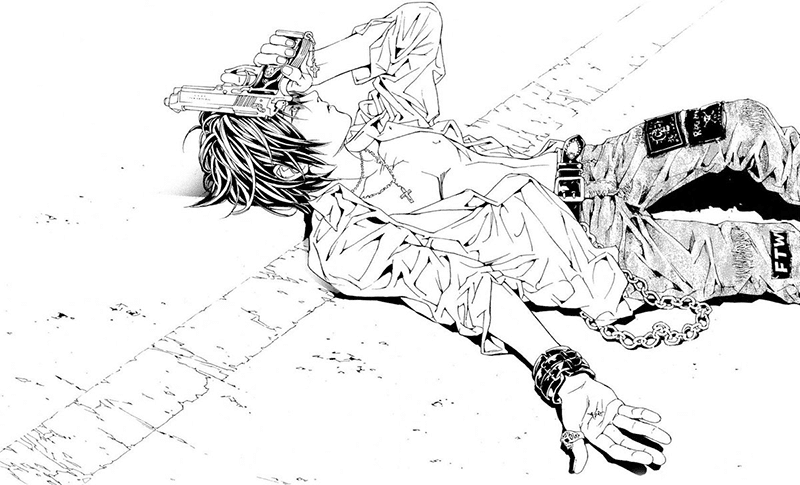
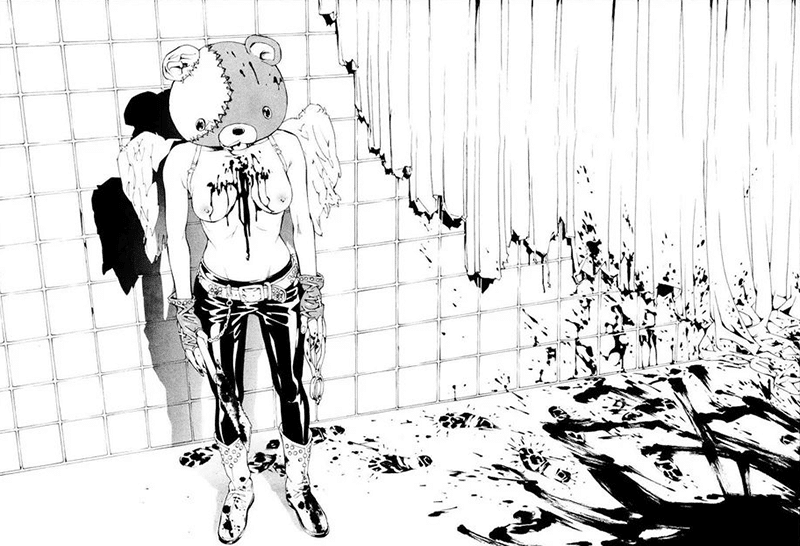
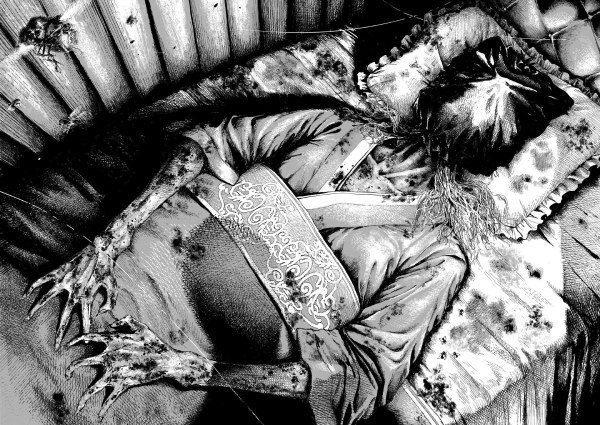
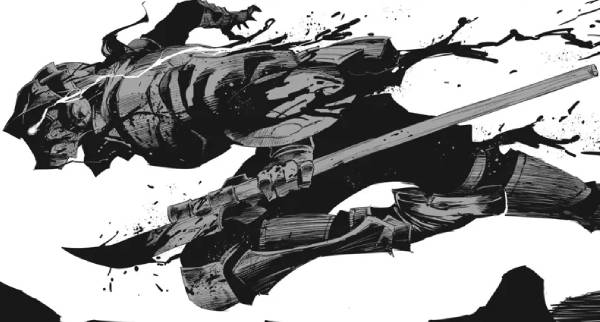
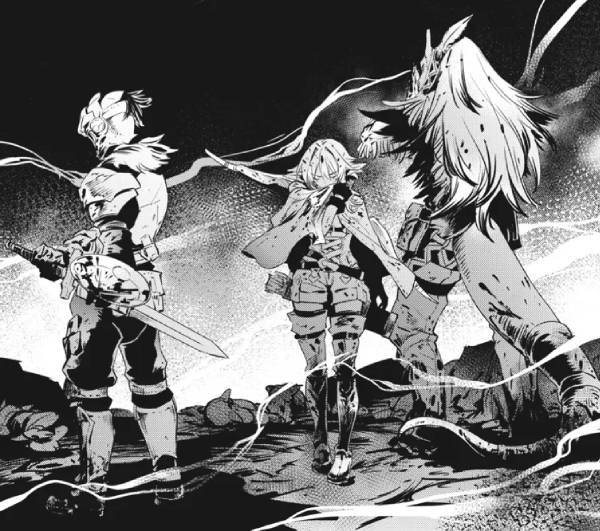
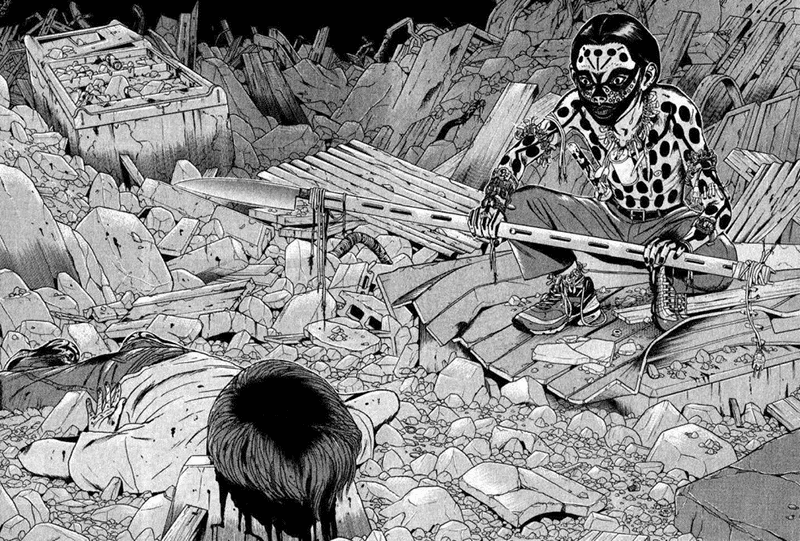
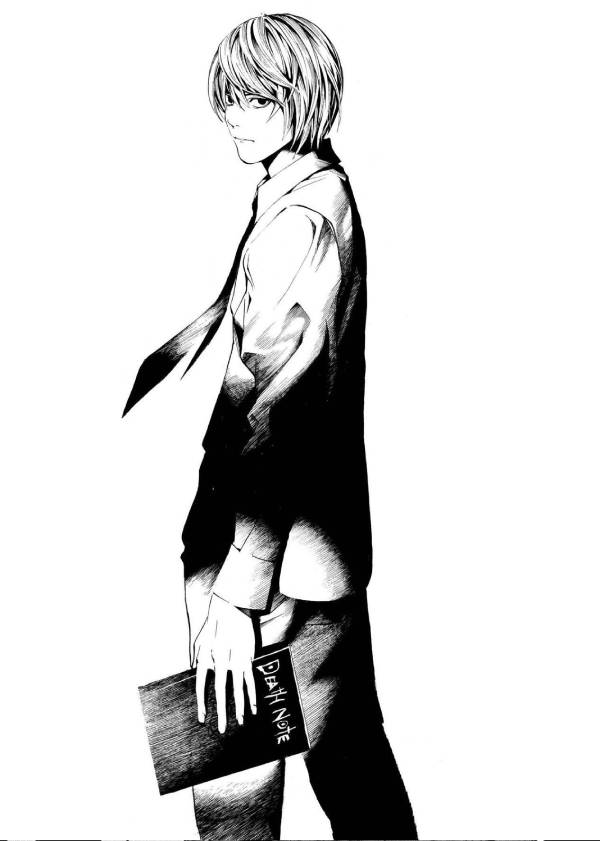
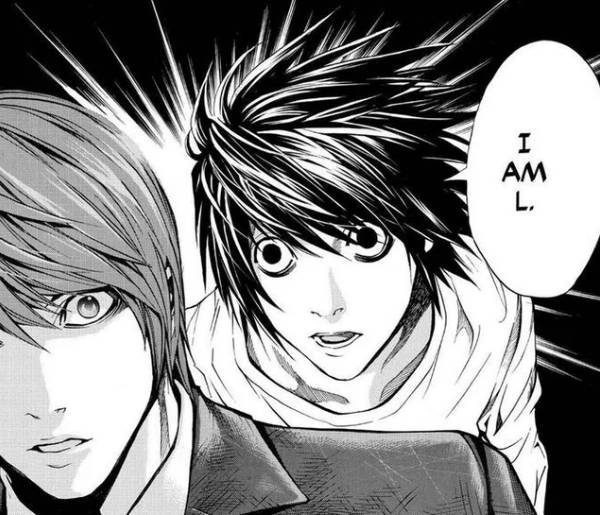
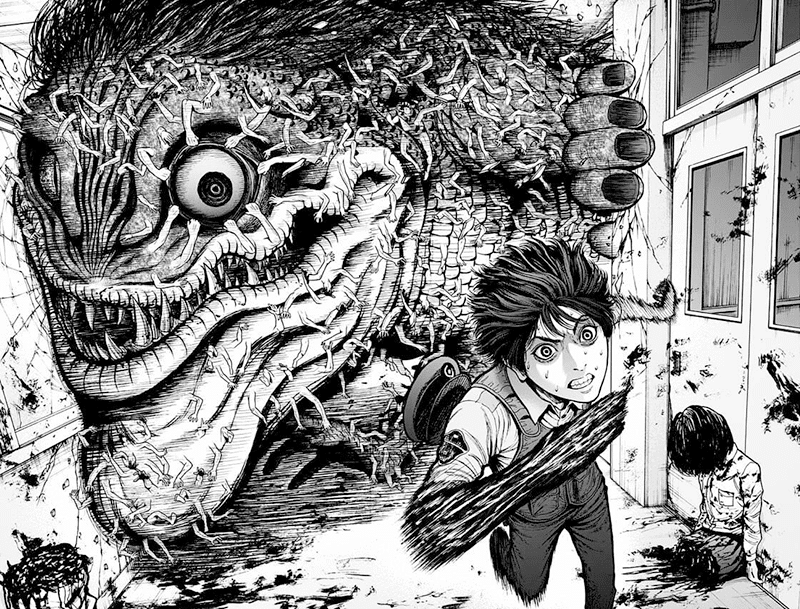
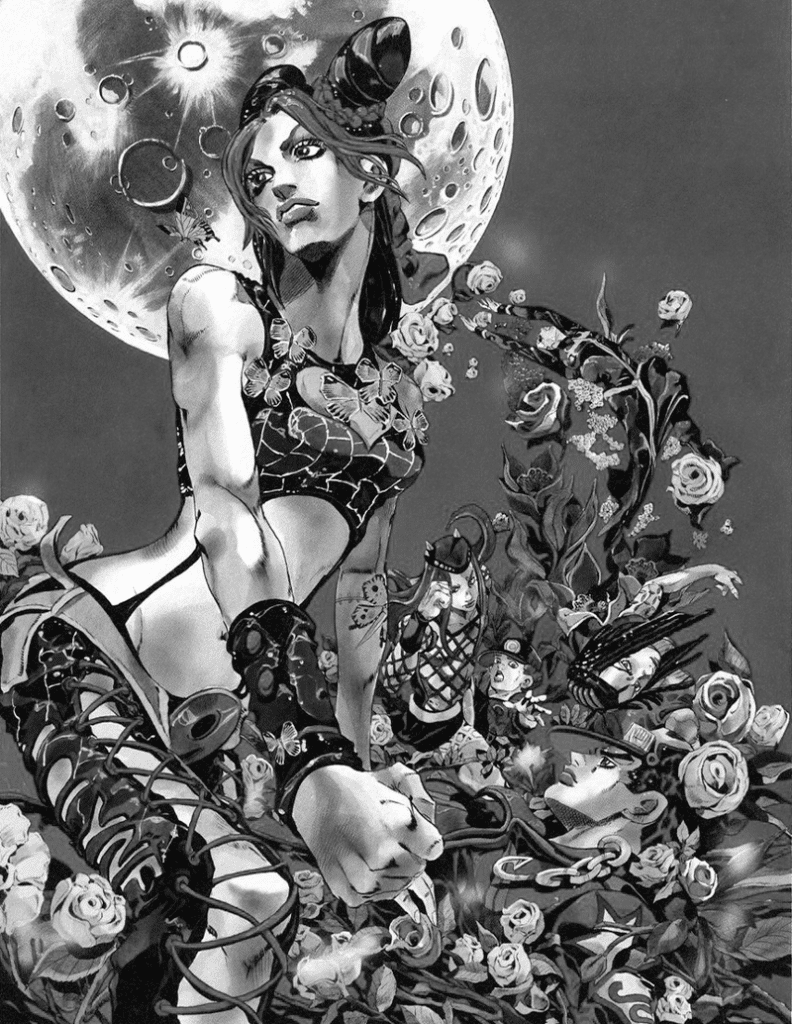
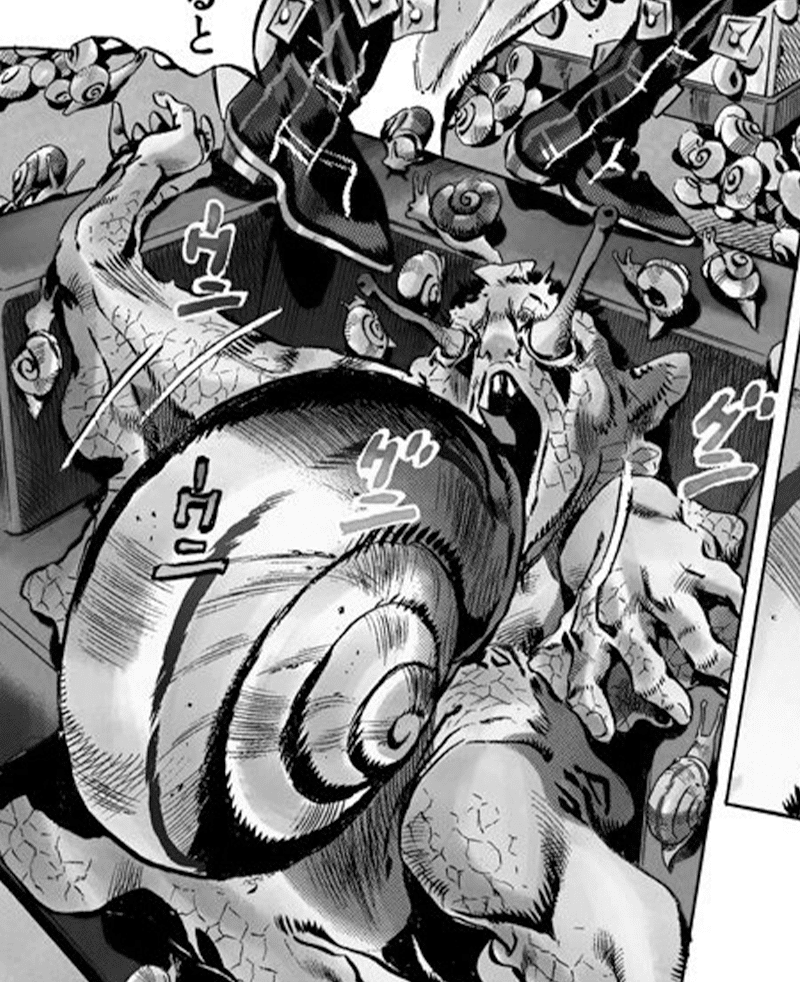
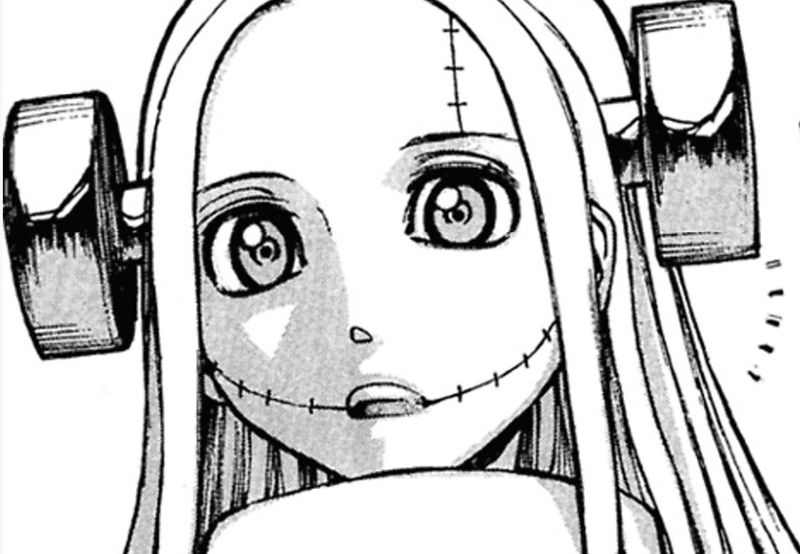
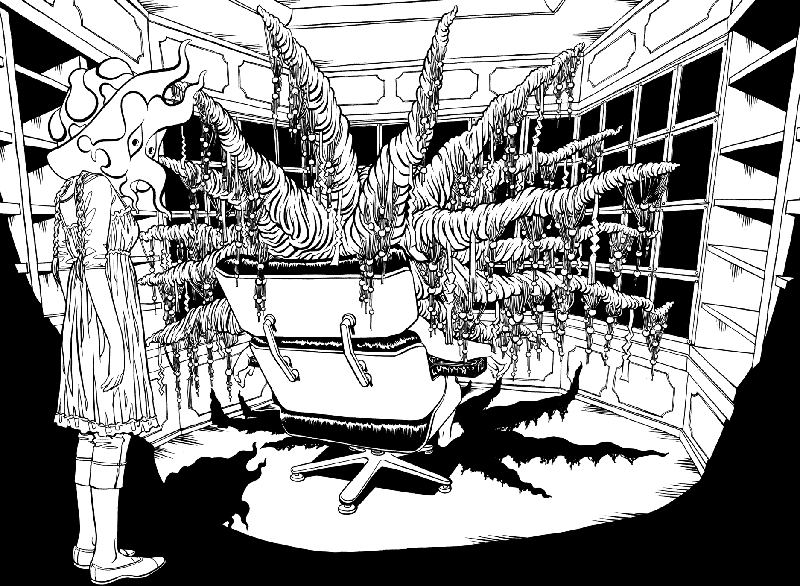
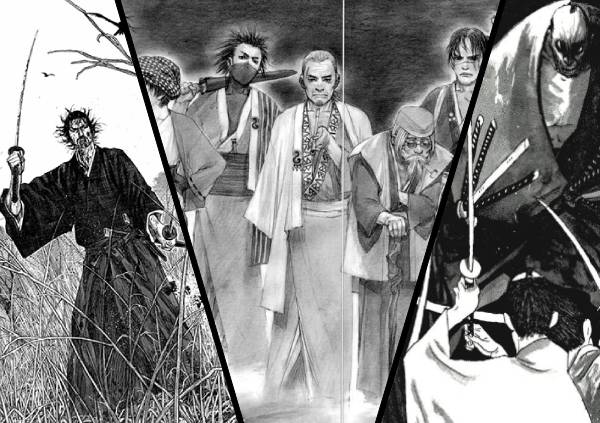
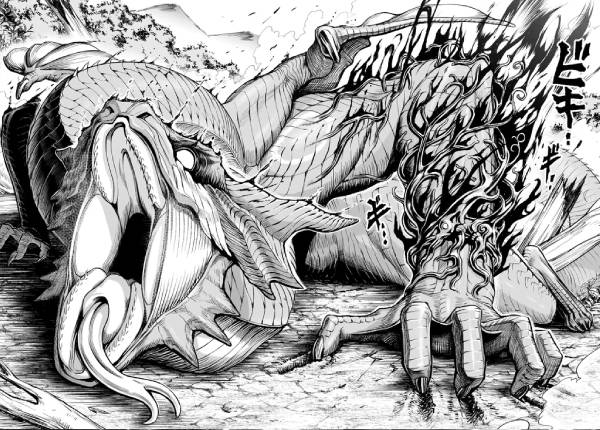
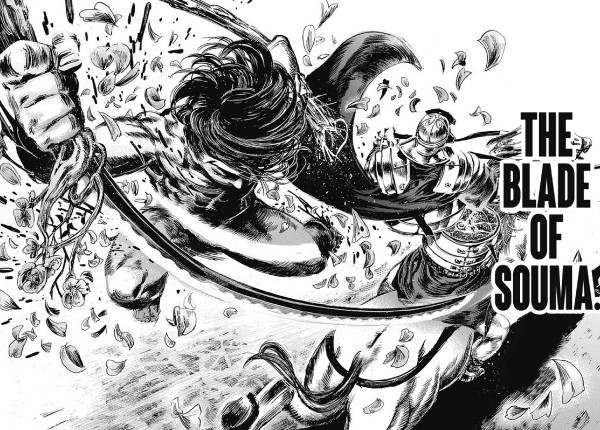
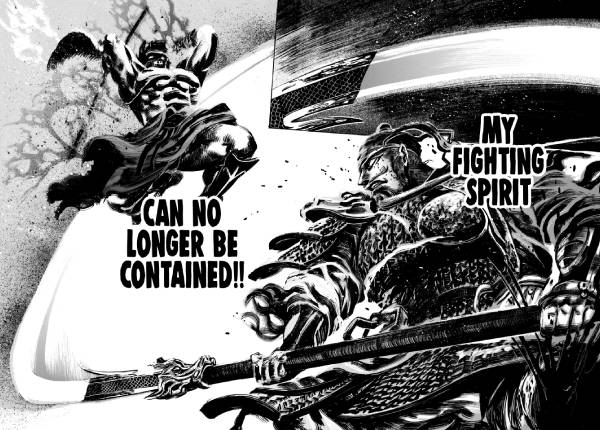
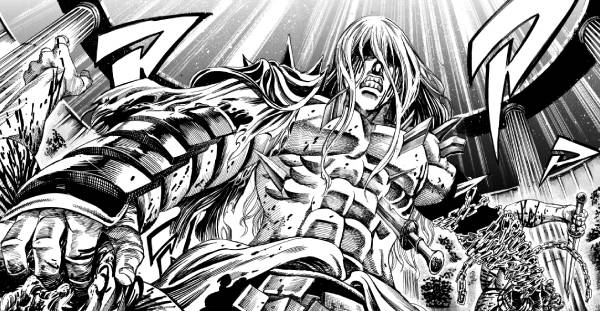
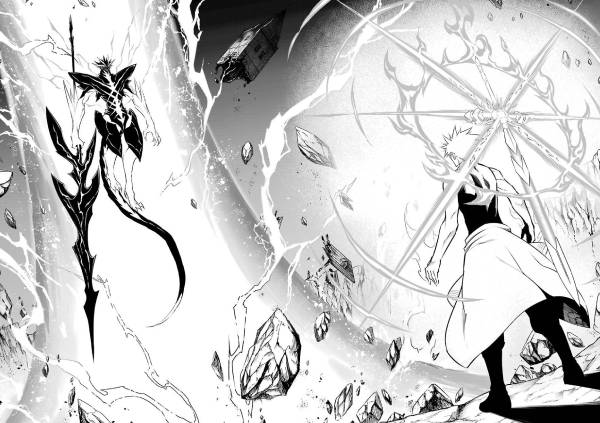
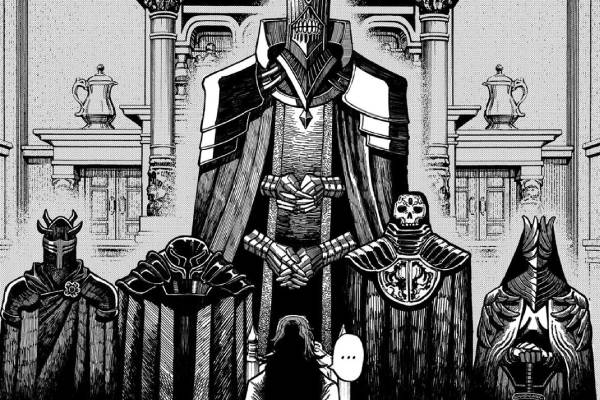
Death game manga are one of my favorite subgenres. They turn survival into a set of rules. Whether it’s an elimination game, a rigged social experiment, or a high-stakes gamble, the appeal is the same: people get trapped, pressure rises, and you see who can think clearly when everything’s on the line.
This list is short, but it covers the range that makes the subgenre so addictive. Some entries are brutal survival stories where the games end in death, like Alice in Borderland and Kamisama no Iutoori. Others lean into a different kind of punishment, where the damage is psychological, financial, or social, like Kaiji or Liar Game.
In recent years, death game manga have only gotten more popular, with mainstream hits like Netflix’s Squid Game putting elimination formats in the spotlight. But the subgenre is broader than that. Some series depict pure survival-of-the-fittest scenarios. Others build tension through mind games centered on deception, group psychology, and people exploiting the rules. And then you have hybrids, which push high-stakes gambling into something that feels dangerous even when the game isn’t openly a death match.
All of these series stand out for the twisted situations they throw their characters into. Whether the players are students, ordinary people, or seasoned gamblers, death game manga show how fast morality bends under pressure, and how far people will go to survive or come out on top.
Mild spoiler warning: I avoid major plot revelations, but I’ll touch on each series’ premise and the games involved.
With that said, here’s my list of the best death game manga (last updated: January 2026).
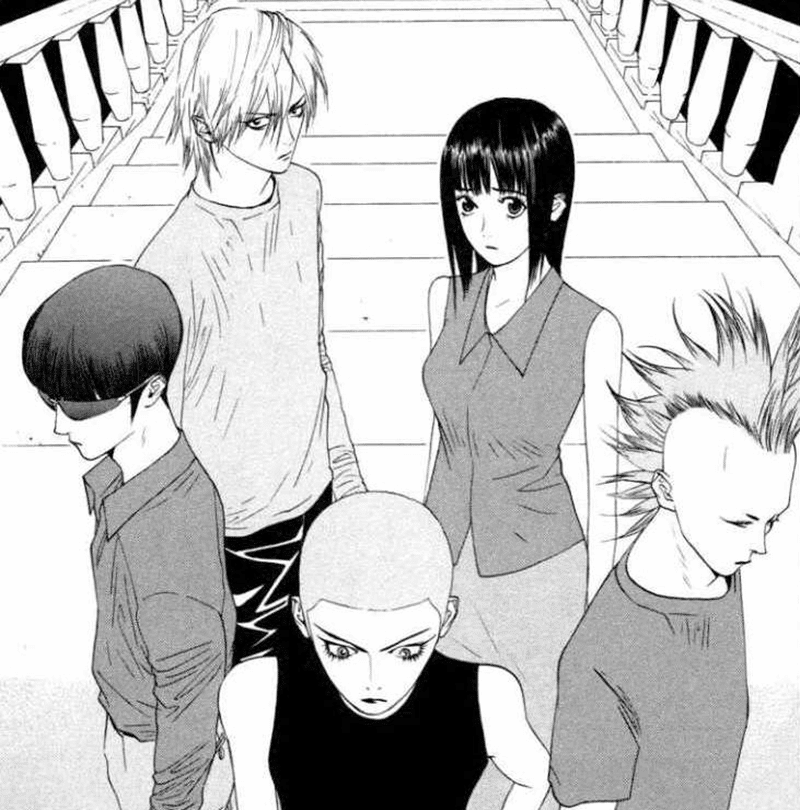
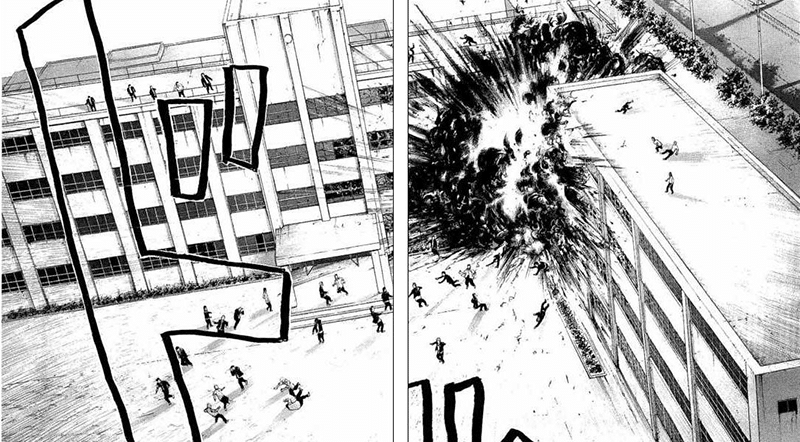
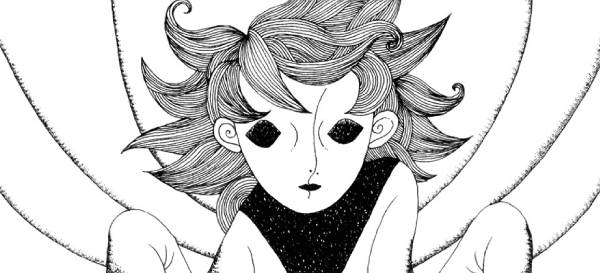
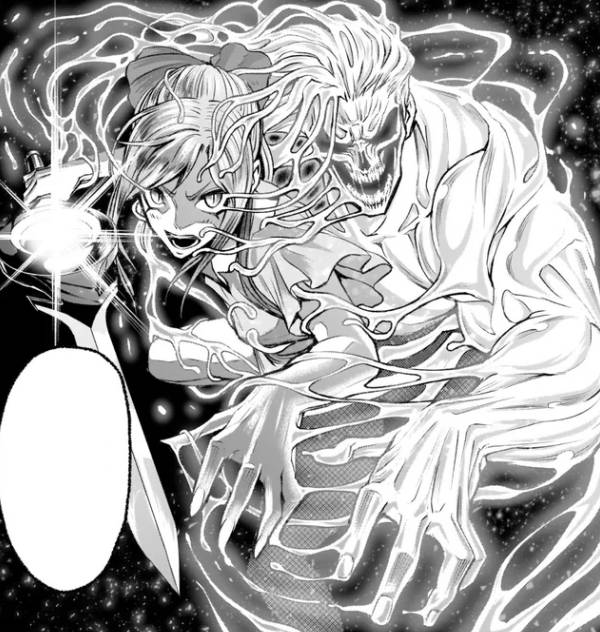
Jinrou Game takes the familiar Werewolf game and makes it literal. A group of high school students wake up trapped in an isolated space, assigned hidden roles as villagers or werewolves, and forced to follow rules that don’t bend. Every round tightens the noose, and the worst part is how quickly suspicion turns ordinary people into accusers, collaborators, or targets.
As a death game manga, it’s straightforward on purpose. The series sticks close to the villager’s perspective, which keeps the paranoia simple and readable instead of turning it into an elaborate mastermind narrative. Votes, nighttime murders, and the fear of being singled out do most of the heavy lifting. The plotting isn’t trying to reinvent the format, but it moves fast enough that predictability rarely has time to sour into boredom. It’s built to be consumed in one sitting, offering clean escalation and just enough small reveals to keep you flipping pages.
That speed comes at a trade-off. Character depth is limited, partly because the body count doesn’t give you much time to settle in. For some readers, that emotional distance is a weakness. For others, it’s part of the atmosphere, because it mirrors how the players feel. They’re confused, uninformed, and forced to judge people based on fragments. The art matches that approach. It’s solid and semi-realistic, more functional than striking, and it keeps the focus on expression and reactions over elaborate set pieces.
If you want a low-commitment death game manga, Jinrou Game works as a tight, accessible example of why social deduction games translate so well into manga. It won’t satisfy readers looking for deep psychological characterization or complex rules, but it’s a quick, readable spiral into group paranoia. If the setup grabs you, there’s more to explore afterward in follow-ups like Jinrou Game: Beast Side and Jinrou Game: Crazy Fox.
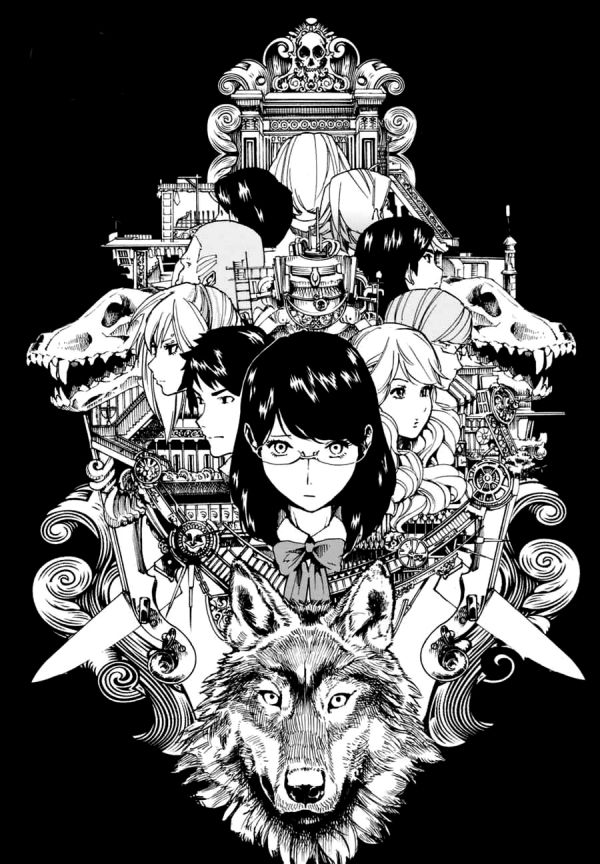
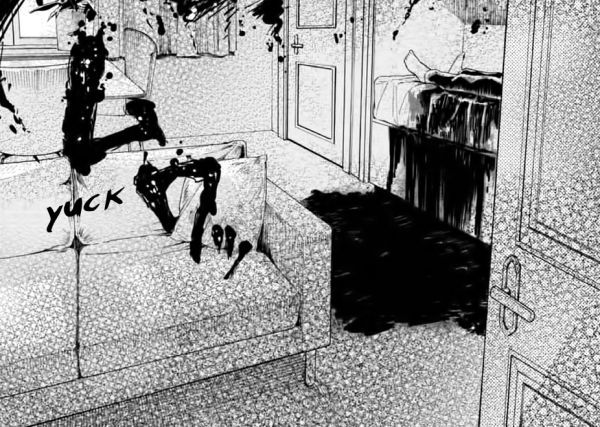
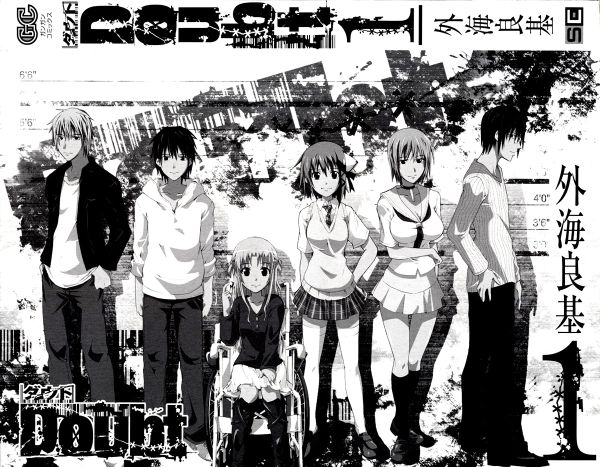
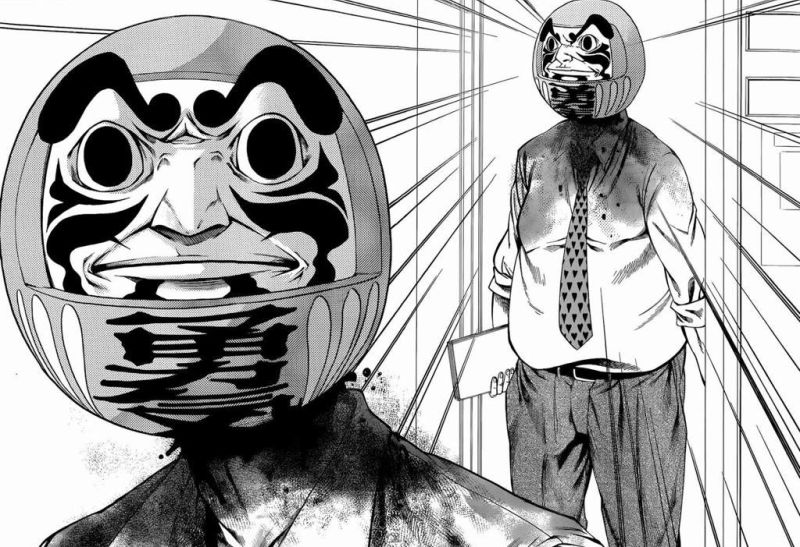
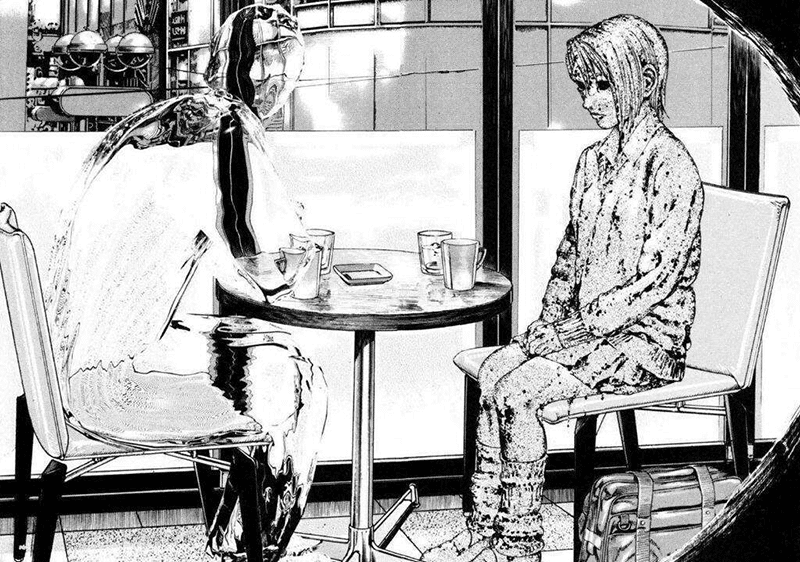
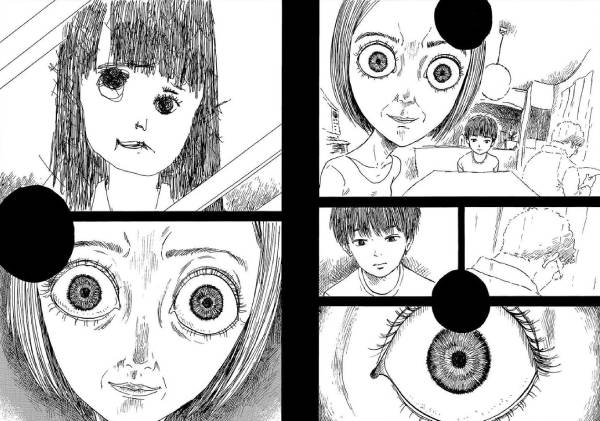
Doubt takes a familiar social-deduction format and turns it into a locked-room horror setup. The hook is the cell phone game Rabbit Doubt, where a group of rabbits has to identify the wolf hidden among them before they’re picked off one by one. When a handful of players meet up in real life, they end up trapped in an abandoned building, and the game restarts with real consequences.
What makes it work as a death game manga is how quickly it turns simple rules into paranoia. The group is small, the space is claustrophobic, and every conversation becomes a test of who’s performing and who’s panicking. Doubt wants you to play along, too. It gives you just enough information to form theories, then pressures you into second-guessing them as the situation deteriorates. If you liked the social suspicion of Jinrou Game, this hits the same nerve, even if Doubt leans more into horror.
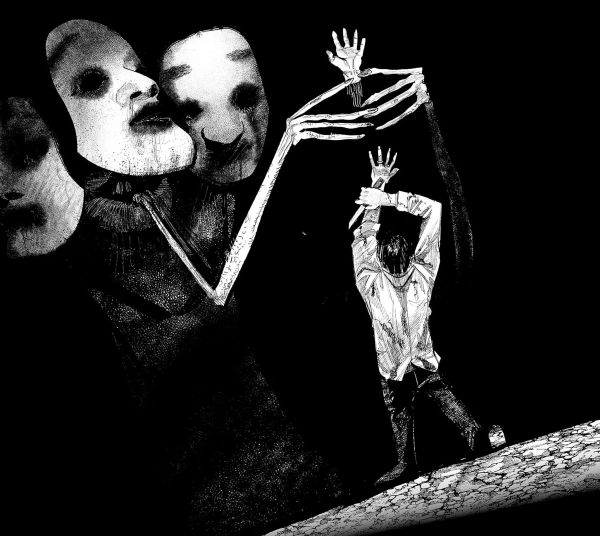
It’s also a quick read, but that brevity is part of its appeal. The series moves fast, keeps the cast lean rather than deeply explored, and leans into a horror movie rhythm where personalities matter less than the shifting alliances. The rabbit imagery helps, too. Those masks and repeated game prompts become a nasty visual signal, and the art genuinely supports the tension, even if some of the violence can feel abrupt.
The main problem is that Doubt is stronger in the ride than in the explanation. The ending is divisive, and some later turns can feel more like escalation than careful payoff. If you want clever clueing and a perfectly logical solution, this might frustrate you. But if you want a short, twisted death game manga that delivers suspicion, confinement, and a steady spiral of mistrust, it’s still effective, especially in a single sitting.
Tomodachi Game works because it turns friendship into a liability. It starts with a setup that feels almost petty: five high school friends saddled with debt after their class trip money goes missing, but the series doesn’t stay small for long. The game they’re forced into is built to weaponize trust, turning every round into a test of who’s lying, who’s panicking, and who’s willing to sell others out to survive.
As a death game manga, this one leans more psychological than bloody. The tension doesn’t come from gore or elaborate traps. It comes from rules designed to cause social damage. Each challenge pushes the characters into situations where cooperation becomes a strategic pose instead of a real bond. If you like stories where manipulation matters more than physical prowess, Tomodachi Game is the right choice.
The core reason it stands out is the protagonist Yuuichi Katagiri. He isn’t written like a typical shonen lead. Even early on, you can tell he’s comfortable doing the ugly thing if it gets results, and half the thrill is watching him shift from mild-mannered friend to cold operator. The art sells that transformation well, especially in moments where he stops pretending and takes control. A lot of the suspense comes from the question of what kind of person he actually is, and how far he’ll go when the rules reward cruelty.
That said, Tomodachi Game has a real weakness: escalation becomes excessive. The series loves reversals, secret motives, and late reveals, and sometimes leans on retcons or shaky logic to keep the surprises coming. Over time, the constant twists can dull the suspense, because you start expecting the next big twist instead of feeling it. There’s also some fan service that can undercut scenes that would otherwise land harder.
Even with those flaws, it’s hard to deny the pull. Tomodachi Game stays addictive because its best rounds center on destroying established social dynamics, and the theme remains intact: what does friendship mean when trust has a price, and survival depends on betrayal.
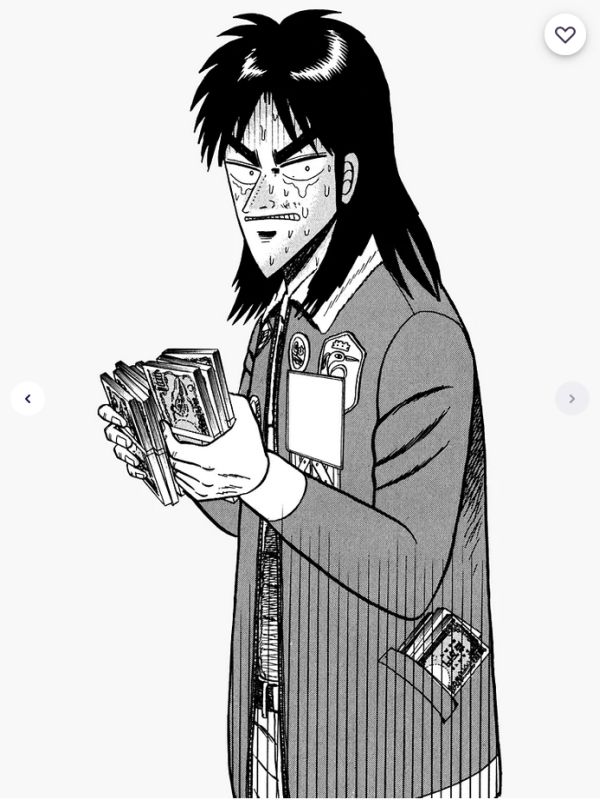
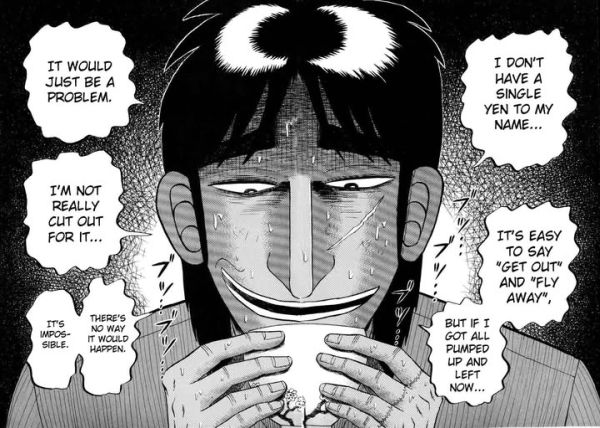
Kaiji starts from an ugly place, which is exactly why it works. Itou Kaiji is a broke drifter with no plan and no discipline, and he keeps making the same mistakes. When a debt collector shows up and tells him he’s inherited a massive loan he co-signed for someone else, the series sets its tone immediately. There’s no safety net, only interest rates, pressure, and people waiting to profit from your panic.
The hook is clean: Kaiji is offered a way out, but the escape route is a rigged gambling environment designed to produce losers. That’s why it belongs on a death game manga list even without constant bloodshed. The stakes are systemic. Win and crawl back to normal life. Lose and you fall into deeper debt, humiliation, and forms of punishment that feel like social execution. The games are structured to make desperation visible, forcing players to calculate risk in public, betray each other under stress, and rationalize decisions they’ll regret five minutes later.
Kaiji’s biggest strength is that it makes strategy readable. Every round follows a clear logic, and the tension comes from watching Kaiji try to stay rational while his fear screams at him. Fukumoto lingers on thought processes, what-if scenarios, and split-second calculations, which turn simple mechanics into psychological warfare. You’re not just waiting to see who wins. You’re watching someone fight against his own impulses, and against the way the room turns cruel the moment money enters the equation.
The series also has a sharp moral core. Kaiji isn’t framed as a cold mastermind. He’s often kind-hearted in ways that get him punished, and he keeps wanting to believe other people can be decent, even when the environment rewards the opposite. That tension between trust and survival gives the manga its emotional bite, and it supports the wider critique running underneath: poverty and corruption aren’t abstract forces. They’re machines that turn people into predator and prey.
Fukumoto’s art can look odd at first, but it’s brutally effective at selling fear. Close-ups, sweat, and distorted expressions make every decision feel physical. If you enjoy Gambling Apocalypse Kaiji, there are also countless follow-ups in the broader Kaiji saga.
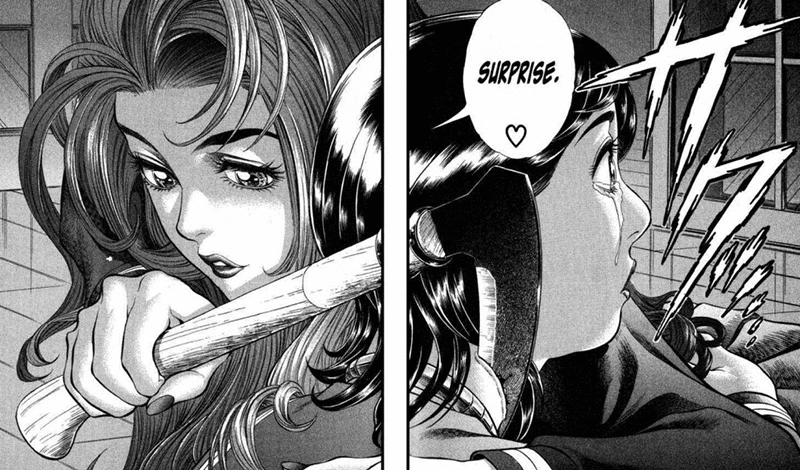
Battle Royale is the most brutal title on this list, and it isn’t brutal in a stylish, action-heavy way. It’s visceral, ugly, and often gratuitous, the kind of violence that’s meant to make you flinch instead of cheer. If you come to death game manga for pure survival pressure culminating in a sole survivor, this is one of manga’s most punishing reads.
Each year, a class of students is selected for a government program that strands them in an isolated location and forces them into a kill-or-be-killed scenario until only one remains. The rules are simple, but the psychological fallout isn’t. Battle Royale spends much of its time on how quickly group dynamics collapse. Alliances form, fracture, and turn ruthless. Some kids cling to decency, some freeze, and others give in to violence because it gives them the illusion of control. What sets the manga apart from many later imitators is how much space it gives its cast. As an adaptation of Koushun Takami’s novel, it leans into backstories, motivations, and personal relationships, which makes the deaths feel more personal. The result is a steady sense of dread, because you’re not just watching people die. You’re watching ordinary teenage conflict get warped by life-and-death paranoia.
Masayuki Taguchi’s art is a huge part of the impact. It’s detailed, unflinching, and designed to emphasize desperation. When it works, that brutality sells the horror of the scenario. When it doesn’t, the series tips into excess, including moments of needless sexualization, and some of the violence can feel more stylized than it should. Structural repetition is also an issue. The manga cycles through introductions, backstories, and sudden elimination. Another flaw is character design. Despite the cast being roughly the same age, some characters look far younger or oddly older, which can pull you out of the moment.
Still, the core experience lands. I also have a soft spot for it because Battle Royale is one of my favorite movies, and the manga scratches a similar itch while expanding the material in its own way. If you want a death game manga that’s uncompromising, nihilistic, and hard to forget, this one delivers.
Liar Game is one of the cleanest arguments that death game manga don’t need gore to feel vicious. Its threat isn’t violence or death, but a rule set built around deceit, where every round rewards manipulation, punishes trust, and turns basic decency into a tactical weakness.
The hook is simple but effective. Kanzaki Nao is drafted into a competition where the stakes are absurd sums of money, and the game is designed to make you lose them. Nao is painfully honest, almost pathologically so, which makes her the perfect target in a system that assumes everyone will lie. After she’s conned early, she recruits Shinichi Akiyama, a recently released con artist and master strategist. Their partnership becomes the series’ driving force. Nao anchors the moral dilemma, and Akiyama treats every room like a puzzle full of exploitable behavior.
What makes Liar Game work is the structure of its rounds. The games often begin with rules that seem manageable, then reveal hidden incentives that turn cooperation into a trap. Kaitani is good at building situations where the real problem isn’t the rules. It’s the people. Who panics first, overplays confidence, or hides behind fairness to control others. The suspense comes from watching Akiyama read motives, set traps, and anticipate counter-traps from opponents who are just as committed.
When the manga introduces other power players, the story shifts into psychological warfare. Some side characters are more archetypal than memorable, but the stronger arcs compensate by making group dynamics feel unstable and transactional. Even when the games get complicated, the tension stays rooted in social pressure, and the fear of being outmaneuvered in public.
Liar Game isn’t flawless. Rule explanations can run long, and if you don’t enjoy dense mechanics, the pacing will drag. The ending also feels smaller than the buildup suggests, like the series shies away from fully committing to its harsher themes. Still, as a death game manga built on strategy, bluffing, and human weakness, Liar Game is hard to beat.
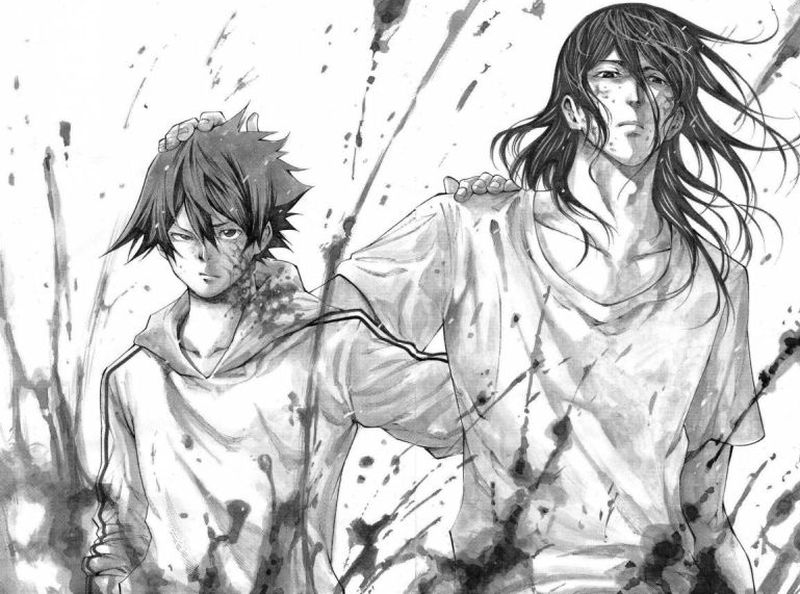
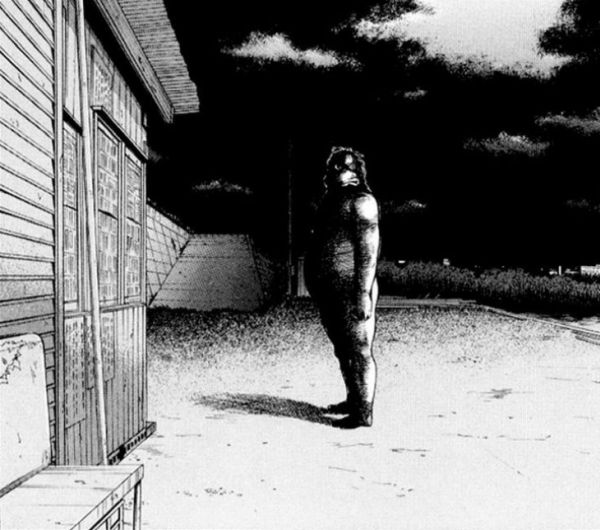
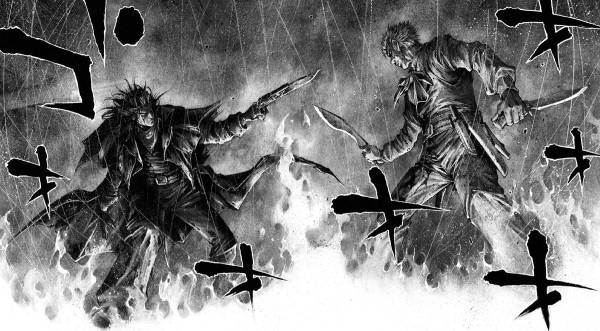
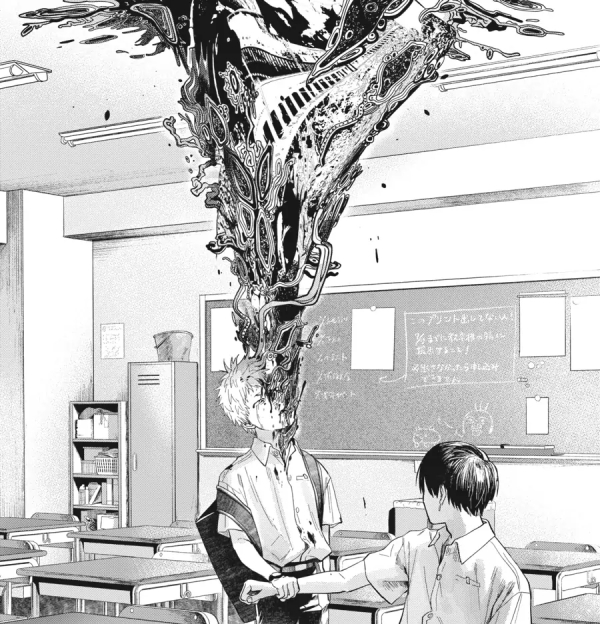
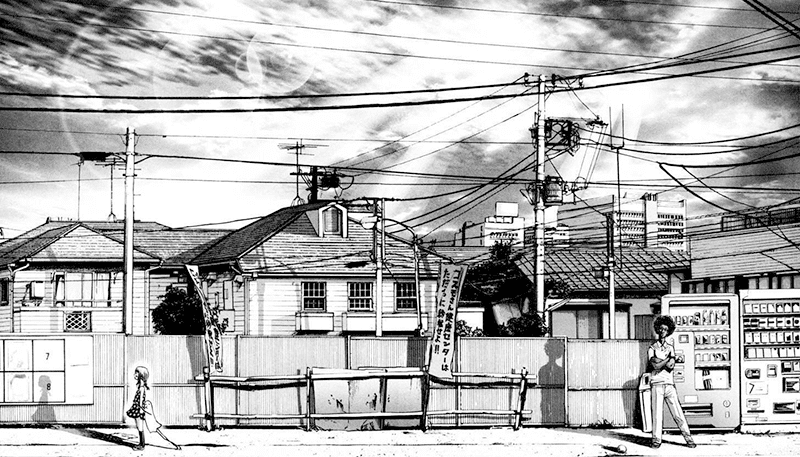
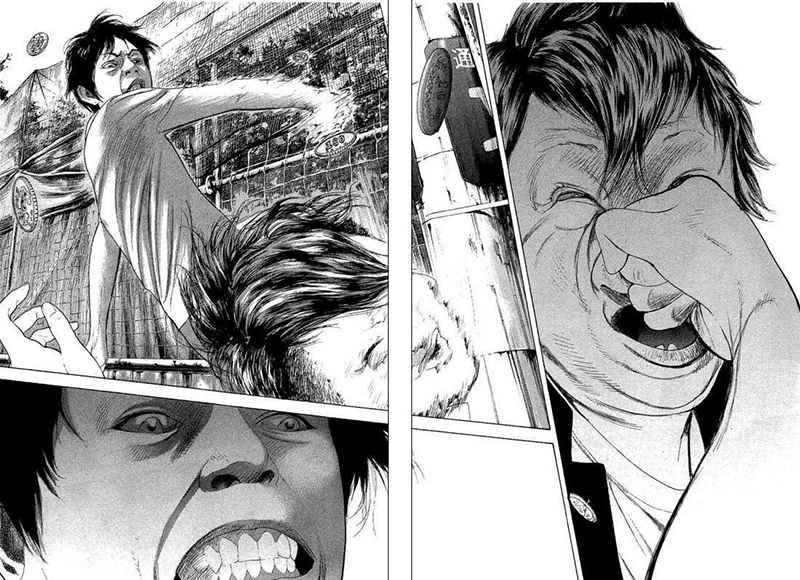
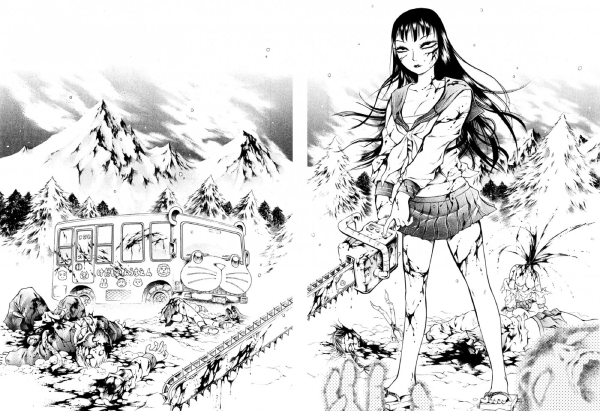
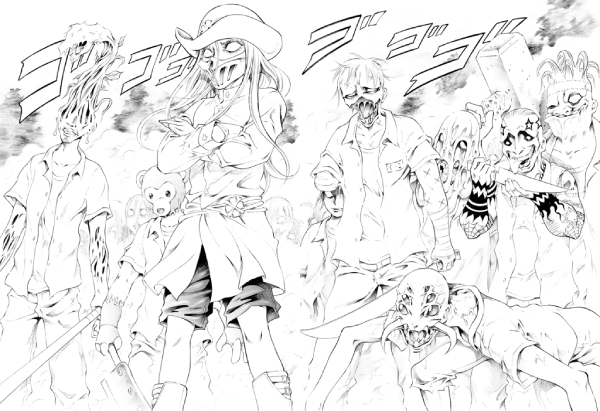
A lot of death game manga keep things grounded, or at least plausible. Kamisama no Iutoori and its sequel reject that approach almost immediately. The series treats the collapse of normal life as a baseline, then builds its tension through absurdity, folklore, and games that feel like they were designed by someone cruel and childlike. It’s also my favorite manga in the subgenre, largely because it stays unpredictable without feeling random.
The story starts when a normal high school day is interrupted by a deadly children’s game, and then commits to escalation through variety. Each challenge starts as a recognizable activity or tradition, but twisted into a rule system where one misunderstanding can get you killed. The games are rarely about brute strength. They’re about noticing constraints and figuring out the real objective before panic turns into chaos.
The cast is a big part of why the series stays sharp. Instead of leaning into safe archetypes, it thrives on unstable personalities. Amaya sets the tone as a charismatic sociopath who treats the games like his personal playground, and the story shows how dangerous that mindset becomes to others who are trying to survive. Ushimitsu is the standout, though. He starts as a volatile wildcard and gradually becomes one of the series’ deepest and most nuanced characters. Not everyone lands so well. Akashi, Part 2’s protagonist, is a classic good-hearted lead, and that can feel a little odd next to the manga’s wilder elements.
It also helps that the series comes in two parts, with Kamisama no Iutoori Ni expanding the scope through a new group of players before circling back to the original plot. The jump in art between parts is noticeable. Part 1 is solid, while Part 2 is more detailed, more stylized, and better at showcasing high-pressure moments.
There are flaws. Some later games run long, and the ending remains divisive. Still, if you want a death game manga that leans into surreal cruelty, inventive rule design, and characters who feel one bad decision away from death, this is a strong pick.
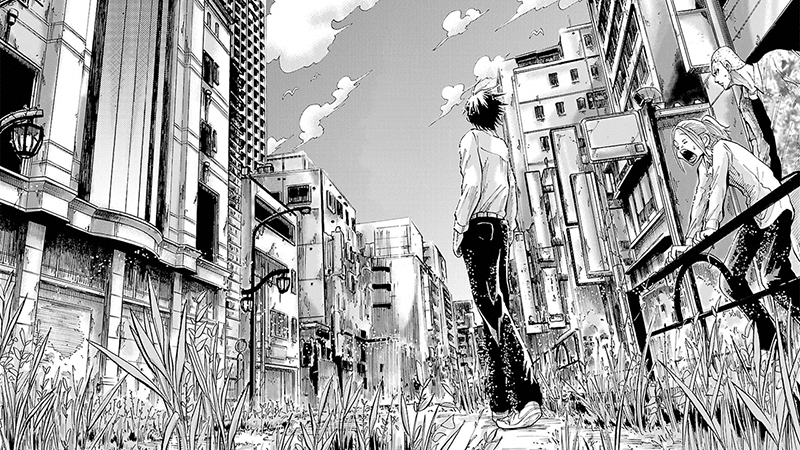
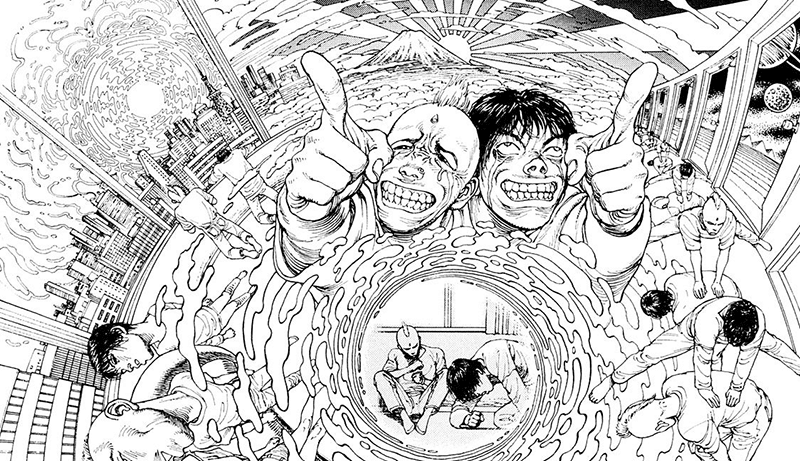
Alice in Borderland drops its cast into an empty version of Tokyo and makes survival feel bureaucratic. You don’t just need to win a game to stay alive. You need to earn time, measured in visas, and once your time runs out, the punishment is absolute. That structure creates constant pressure because every victory is temporary, and every delay is a gamble.
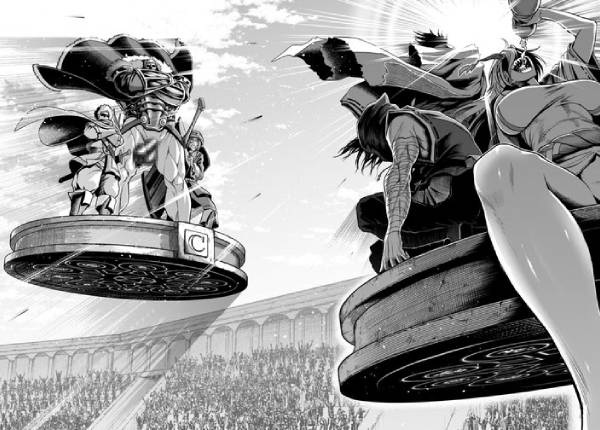
The series’ smartest choice is how it categorizes its challenges. Each game is tied to a playing card suit and a difficulty rating. The suits usually tell you what kind of problem you’re walking into. Spades lean into physical prowess, diamonds reward logic, clubs are for teamwork, and hearts center on trust, empathy, and emotional vulnerabilities. That variety keeps the tension from flattening into a single rhythm. At times, the rounds are brutally simple, built around quick comprehension and fast movements. At others, they’re slower, more psychological, and more cruel, because they force the players to weigh survival against loyalty.
As a death game manga, it also avoids the trap of relying on a single omniscient genius to carry the suspense. Ryohei Arisu is smart and observant, but he isn’t a superhuman mastermind. He makes mistakes, hesitates, and acts like someone who’s trying to function under pressure. That grounded perspective helps the games land as real experiences rather than brutal puzzle showcases. It also leaves room for other players to matter, especially characters like Usagi or Chishiya.
Haro Aso’s art does a lot of work to sell the setting. The deserted cityscapes feel eerily calm, while the game spaces feel meticulously engineered. When violence arrives, it’s staged clearly, without turning the suffering into spectacle. The result is an atmosphere that stays tense even between games, because the world itself feels hostile.
The main downsides are pacing and focus. Later stretches can feel more episodic, shifting attention from the main cast to expand the world. Depending on your taste, that either deepens the world or loosens the tight momentum of the early arcs. The ending is also divisive. It fits thematically, but it might undermine the manga’s earlier tension and stakes.
If you want a survival thriller with clear rules, varied game design, and a strong sense of escalation, Alice in Borderland is one of the most competent death game manga out there.
If you want high-stakes gambling treated as a life-or-death scenario, Usogui is the standard. It treats games the way some manga treat combat, as a discipline with its own mechanics, tells, and counters. The difference is that the damage starts as psychological until it doesn’t. Every gamble has consequences enforced by an underground organization that doesn’t tolerate excuses.
Baku Madarame, the Lie Eater, enters these matches with an almost unnatural calm. He isn’t framed as a moral hero or a relatable underdog. He’s a specialist, someone who understands the most reliable weapon in a closed rule set is control of perception. The organization that oversees the gambles, Kakerou, matters because it turns them into binding contracts. Their referees don’t care who deserves to win. They care about every bet being honored, and that keeps the tension clean. When the rules are absolute, the only question is who can exploit them better.
Usogui can be deceptive at the start. The opening stretch is rougher and more survival-leaning, and the art is less refined early on. It’s not the series at its full strength. The shift happens once the games emphasize layered deception, hidden information, and strategy that unfolds over time. The Labyrinth arc is where the manga shows its real identity, built around cheating, double bluffs, and psychological pressure that keeps escalating without losing coherence.
From there, the manga becomes increasingly ambitious. The games grow more complex, but they remain readable. You can track why a move works, why a bluff lands, and why a mistake is fatal. The art evolves alongside the escalation. Panels get sharper, motions become clearer, and the pacing feels more controlled.
The peak arcs are famous for a reason. Air Poker is one of the most distinctive, high-tension gambles in manga, not because it’s complicated for its own sake, but because of the art direction, clever strategies, and constant reversals. Surpassing the Leader delivers the same pressure on an even larger stage, pushing the series toward its most extreme form of mind-game storytelling.
As a death game manga, Usogui is a rare example that keeps raising the ceiling. If you want psychological warfare treated with the seriousness of a duel, and you don’t mind a slower early stretch before it becomes addictive, this is a crowning achievement.
Depressing manga can be powerful, not because they aim to shock or devastate, but because they linger. They’re stories of emotional erosion and psychological collapse that stay with you long after you finish reading. They leave behind unresolved feelings, uncomfortable truths, and characters who don’t fully heal.
This list focuses on manga that confront depression head-on, whether personal, societal, or existential. Some explore it through trauma, guilt, and abuse. Others explore isolation, alienation, or the slow realization that life has become unrecognizable. These aren’t stories of momentary sadness. They’re defined by emotional weight accumulated over time, and the lasting damage it leaves behind.
These manga aren’t all the same, and this list aims to reflect that range. Some series are overtly bleak, filled with violence, cruelty, or relentless suffering. Others are quieter and introspective, centered on memory, regret, or the inability to move forward. What unites them isn’t just depression. It’s how it reshapes identity, relationships, and perception itself.
Several entries lean toward psychological horror. Blood on the Tracks depicts the slow warping of ordinary life and family bonds. Others, such as Yamikin Ushijima-kun and Nijigahara Holograph, expose the depth of human depravity, and show how easily ordinary people slide into despair. Works like Utsubora and Helter Skelter take a more intimate approach, focusing on characters in the art and entertainment industries, and how ambition and obsession gradually destroy them. You’ll also find character-driven narratives like Bokutachi ga Yarimashita and Boys on the Run, about ordinary people trapped in hells of their own making.
All of these depressing manga depict despair in different forms, but all land at the same devastating conclusions. Whether through intimate family drama, personal failure, or social decay, they show what happens when people stop believing change is possible.
Mild spoiler warning: I avoid major plot revelations, but I do reference themes and key moments to explain why each series belongs here.
With that said, here’s my list of the best depressing manga that linger (last updated: January 2026).
Boys on the Run earns its place on a depressing manga list because of its protagonist, not shock value or extreme tragedy. Watching 26-year-old Tanishi repeatedly sabotage his own life is exhausting, frustrating, and quietly devastating in a way that feels uncomfortably real. This is not a story about hitting rock bottom once. It’s about never climbing out in the first place.
At its core, Boys on the Run is a character study of what it means to stay stuck. Tanishi works a dead-end job, lives with his parents, and drifts through life with no real direction or confidence. Opportunities appear in front of him with surprising regularity, whether through romance, work, or boxing. Each time, he finds a way to ruin it. Not out of cruelty or malice, but out of insecurity, indecision, and an almost impressive inability to grow. The result is a portrait of a man trapped inside his own limitations.
What makes this manga so depressing is how recognizable it feels. Tanishi isn’t an outlier or an extreme case. He’s painfully normal. He lacks talent, charisma, and discipline, but he also lacks the insight to change. Watching him fail is infuriating, yet that frustration comes from proximity. Many readers will recognize a piece of themselves or others they know in his excuses, his self-pity, and his fleeting bursts of motivation that never last.
Rather than portraying depression as overt despair, Boys on the Run presents it as lethargy. Tanishi doesn’t collapse in a dramatic fashion. He simply stays where he is. His failures pile up quietly, turning embarrassment into shame and shame into resignation. Over time, it becomes clear that the most depressing aspect of life isn’t what happens to him, but that he never changes.
Kengo Hanazawa’s expressive and rough art style reinforces the tone. Faces contort with humiliation, panic, and brief flashes of hope that vanish moments later. Nothing feels glamorized. Boxing scenes, romantic moments, and workplace interactions all carry a raw awkwardness that mirrors Tanishi’s inner state. The manga often feels ugly, both visually and emotionally, but it feels honest.
This is a depressing manga at its most grounded. There are no grand metaphors or philosophical monologues, just a man failing in small, cumulative ways. Boys on the Run offers endurance more than catharsis or redemption. It asks the reader to sit in frustration, secondhand embarrassment, and the uncomfortable realization that some people never transform. They just keep going, unchanged.
For readers drawn to stories about quiet despair, personal stagnation, and the psychological toll of being ordinary, Boys on the Run is a painfully effective experience. It doesn’t aim for sadness. It just wears you down.
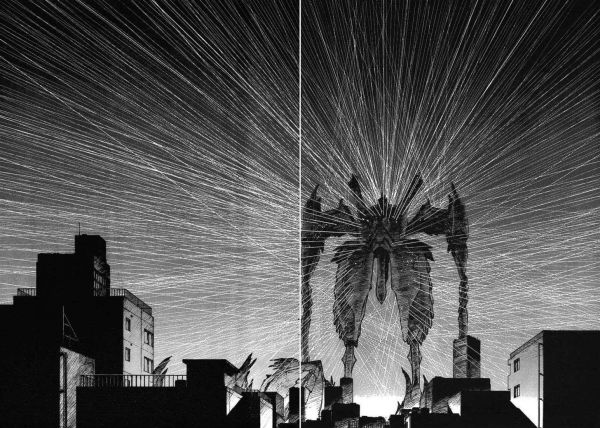
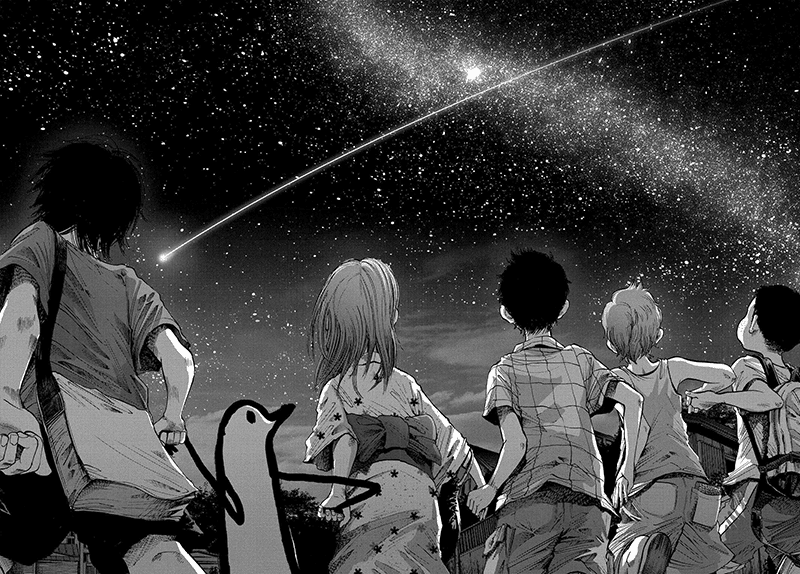
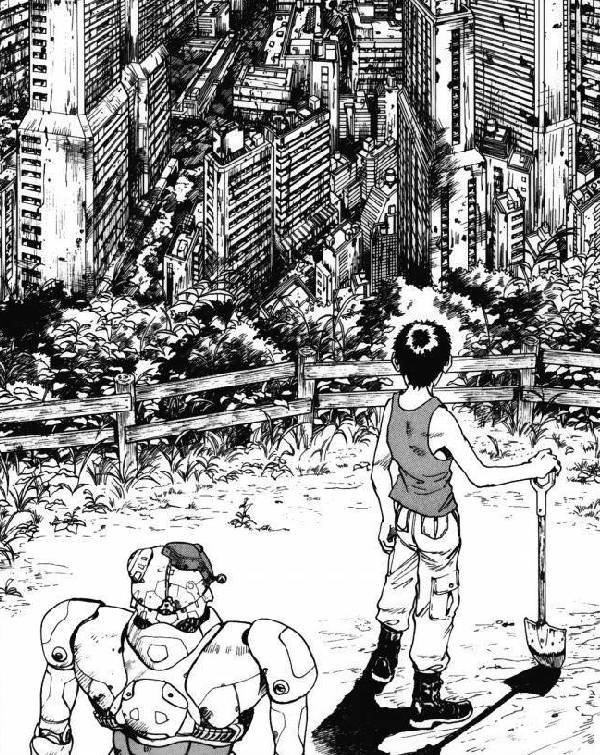
Bokurano sits in the same grim tradition as Evangelion, turning the idea of children piloting mechas into a horror premise rather than a power fantasy. The central hook is simple and cruel: a group of middle schoolers stumble into a game that asks them to pilot a massive robot to protect the world. Then the cost reveals itself, and what looks like an adventure becomes a nightmare.
What makes Bokurano a depressing manga isn’t just the inevitability baked into its premise, but the way it frames everything around it. Each fight is less about spectacle than consequences. People die, cities get leveled, and the kids are forced to reckon with the fact that heroism doesn’t erase the damage. The series keeps returning to the same quiet question in different forms: what do you do with your remaining time when the world expects you to die for it?
Bokurano works like a chain of character studies, shifting focus from child to child, each with their own emotional backstory. Some of the kids grasp for meaning, some detach, some spiral, and some lash out. The darkness isn’t confined to the cockpit either. Several children carry their own trauma into the story, and the manga doesn’t flinch from topics such as abuse, exploitation, and toxic families. That grounding makes the premise hit harder, because the suffering doesn’t feel like a science-fiction tragedy. It feels like human misery, using science-fiction as the lens.
I first encountered Bokurano through its anime adaptation, but it’s the manga version that fully commits to the bleakness. It leans hard into the uglier implications, and it’s more willing to sit in discomfort instead of only hinting at things. That said, it’s also a divisive work. The deadpan tone, the occasional clunky philosophical interlude, and characters who don’t react like real kids can be jarring. For others, the emotional numbness reads as the point, another symptom of a situation too large to process.
Either way, Bokurano leaves a mark. It’s less interested in saving the world than in documenting the cost, and how little comfort anyone gets in return. If you want a depressing manga that’s fatalistic, ethically nasty, and focused on psychological erosion rather than catharsis, this one is hard to forget.
Ikigami is depressing in a brutally clinical way. It doesn’t begin with a tragedy that spirals out of control. It begins with paperwork. In this world, the National Welfare Act selects a small number of young citizens to die for the stability of the country, and they are told exactly twenty-four hours before their death. The one-day countdown is brutal, but the deeper despair is what it implies: society has normalized state murder.
The manga centers on Kengo Fujimoto, a government messenger tasked with delivering the death notice called Ikigami. His job forces him face-to-face with people at their rawest. Each vignette follows a recipient’s final day, and the emotional range is what makes it hit so hard. Some characters try to repair past relationships, some rage against the system, and others simply collapse under the weight of knowing there’s no way out. Even the best outcomes carry a cold aftertaste.
What separates Ikigami from stories that use death as shock value is its focus on resignation. It’s not just about the fear of dying. It’s about how quickly people accept the unacceptable, and how isolation intensifies once the public knows they’ve received an Ikigami. Friends, employers, and even family members often react in ways that reveal selfishness, cowardice, or desperation. The most depressing moments aren’t always the ones where someone breaks down. They’re the moments where everyone behaves as if this is normal.
Fujimoto’s perspective adds another layer of numbness. He’s not a hero, and he isn’t framed as one. He’s a cog in an unfeeling machine, and the manga uses this to underline how systemic cruelty survives. Not through overt villains, but through ordinary people doing their jobs, repeating the same phrase, and pushing responsibility upward until no one feels accountable.
Motoro Mase’s grounded art style suits this tone. There’s no hint of melodrama. Faces carry subtle panic, denial, and shame, but this restraint makes the despair more believable. It’s bleak without being performative, and it lingers because it feels plausible as a thought experiment about societal control.
If you’re looking for a depressing manga that treats depression as societal, not personal, Ikigami is one of the sharpest examples. It isn’t asking whether life is fragile. It’s showing what happens when a country turns fragility into policy, and indifference becomes the norm.
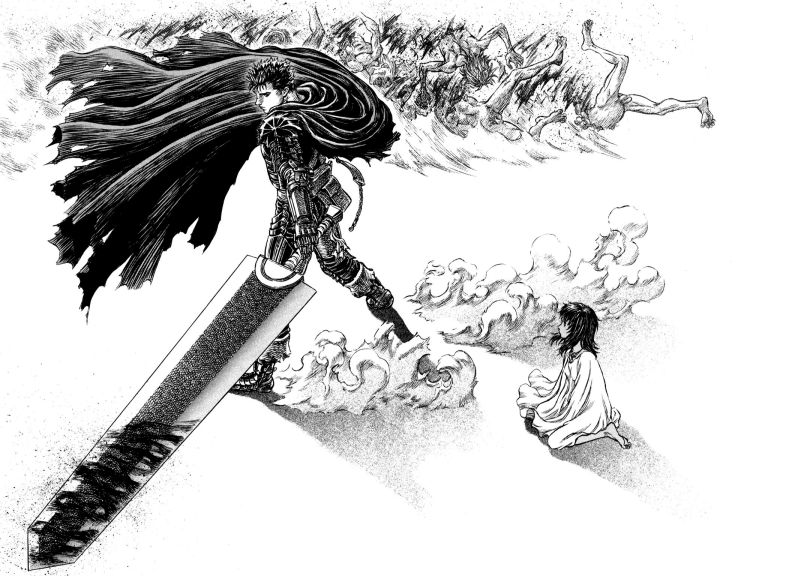
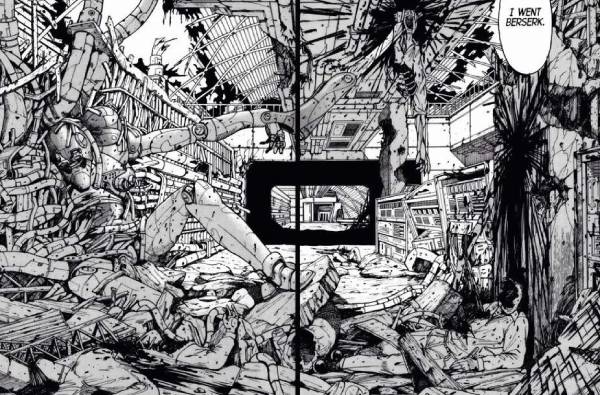
Most people come to Berserk for the brutality, the creature design, or Kentaro Miura’s unmatched art. What hits harder is how relentless the series treats trauma as something you carry, not something you conquer. Beneath the battles and spectacle sits a story about emotional damage that shapes identity, intimacy, and perception.
The setting is bleak in a way that feels realistic rather than theatrical. War isn’t romanticized. Cruelty isn’t rare. Bands of mercenaries leave ruin behind, institutions that claim moral authority commit atrocities, and monstrous forces prey on people. The atmosphere matters because it never lets the characters feel safe. Recovery requires stability, and Berserk refuses to offer it.
Guts is the clearest example. His childhood is defined by violence and abuse, and the series doesn’t frame those experiences as mere backstory. They remain open wounds. You see it in how he reacts to closeness, how he panics during gentle moments, and in how quickly tenderness becomes unbearable. The early version of Guts, cold and abrasive, is less about edginess and more about survival. He’s built walls to protect himself from a world that’s only made him suffer.
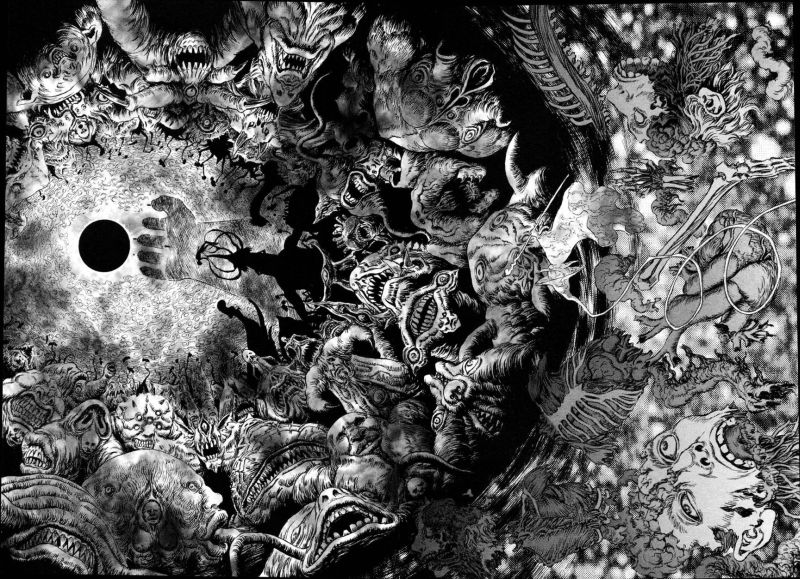
The story’s central relationship with Griffith deepens that depression further. It’s not only a clash of ideals and ambitions. It’s a lesson in how trust can be used, and how betrayal can rewrite someone’s entire internal world. The aftermath of the Eclipse doesn’t just fuel revenge. It poisons everything around it, including the part of Guts that still longs for connection.
Casca’s arc is the cruelest extension of that theme. She’s introduced as capable and battle-hardened before her mind is fractured by an act of unfathomable violence. For a huge portion of the narrative, she exists as a living reminder that trauma can erase self.
That’s why Berserk belongs on a depressing manga list. Its sadness isn’t a single tragic event. It’s the long, grinding toll of survival in a world that keeps wounding you, and keeps finding new ways to reopen those wounds.
Genres: Horror, Dark Fantasy, Action, Tragedy, Psychological
Status: (continued by Kouji Mori after Kentaro Miura’s death)
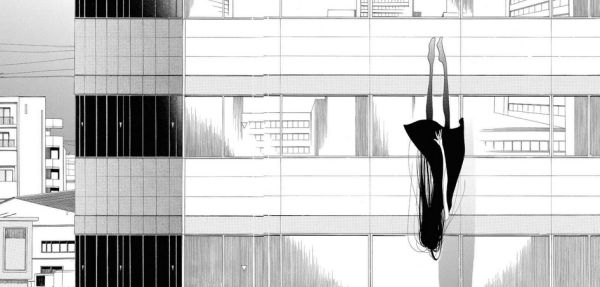
Few manga capture the misery of adolescence like Aku no Hana. It isn’t tragic or sweeping. It’s suffocating, humiliating, and intimate, built out of the kind of mistake that feels small at first and life-defining a week later. For a story set in an ordinary middle school, it has some of the most emotionally punishing atmosphere in manga.
Takao Kasuga is introduced as a boy who wants to be seen as refined and sensitive, but is terrified of being exposed as strange or pathetic. That insecurity becomes the starting point of the series. A single impulsive theft, motivated less by lust and more by self-loathing and curiosity, gives Sawa Nakamura the leverage she needs. Her blackmail works because it hits something deeper than the fear of getting caught. It targets his desperate need to uphold the image he created of himself.
What makes Aku no Hana land as a depressing manga is how it treats rebellion as another form of captivity. Nakamura frames transgression as freedom, but her demands create a system where shame is both punishment and proof of belonging. Saeki, meanwhile, represents the fantasy of normalcy, and the more Kasuga tries to win her approval, the more he realizes he can’t go back to who he was. Nobody here feels stable. Everyone hides behind a facade, and the cracks are showing.
Shūzō Oshimi’s character work helps the manga stand out. Kasuga isn’t a sympathetic victim, and Nakamura isn’t a glamorous agent of chaos. They are emotionally raw kids, using whatever they can to create meaning out of boredom, grief, and resentment. The escalation in the first half might spiral into unrealistic territory, but it also shows how teenage emotions can make ordinary spaces feel like prisons.
The art style strengthens the claustrophobia. Faces are vulnerable and unflattering. Silences hang heavy. Small-town streets and classrooms feel exposed, as if there’s nowhere to hide from the prying eyes of others.
The latter half slows down and pivots into consequences, reflection, and rebuilding. It won’t satisfy readers who are looking for escalation, but it complements the first half in a way that feels earned, and even hopeful. Still, it’s the earlier stretches that linger, the part that turns self-discovery into something raw and painful.
Osamu Dazai’s No Longer Human has its reputation for a reason. It’s one of Japan’s defining portraits of shame, alienation, and self-erasure, and Usamaru Furuya’s modern manga adaptation doesn’t soften any of that. Framed as an online diary discovered by Furuya himself, the story reads like a document that was never supposed to be found, but still pulls you in deeper.
At the center is Youzou Ooba, a young man who experiences other people as a threat. His solution isn’t violence or rebellion. It’s performance. At first, he tries to get people to laugh and does whatever he can to keep his underlying panic at bay. Then he tries to overcome emptiness through sex, substances, and self-sabotage. The most depressing part isn’t any single moment. It’s the way Youzou’s life narrows until even ordinary days feel like a slow collapse.
Furuya’s strongest choice is how he treats Youzou’s destructiveness as not only personal, but also environmental. Bad influences matter, and so do social expectations, money, and the cruelty of other people who sense weakness and exploit it. Youzou isn’t romanticized as a doomed artist or a misunderstood genius. He’s someone who can’t hold on to stability, and who confuses intimacy with self-harm because that’s the only form of contact that doesn’t require real trust.
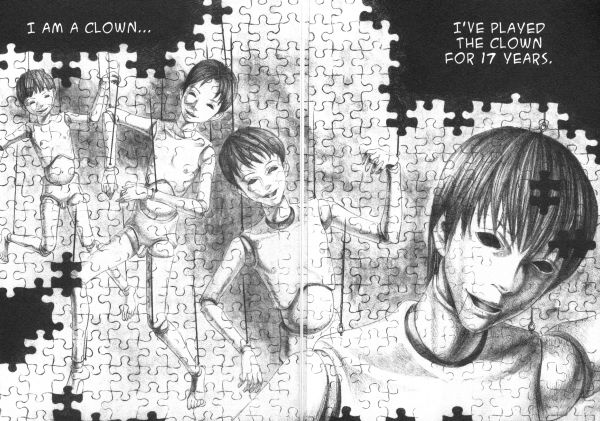
Visually, the adaptation stays grounded, but it knows when realism isn’t enough. At key moments, the art turns into metaphor, rendering Youzou as a puppet, or other people as invasive presences rather than individuals. These sequences reveal his inner state without ever spelling it out, making the manga’s bleakness feel real rather than theatrical.
If you’re looking for a depressing manga that focuses on sustained emotional erosion, No Longer Human stands out. It’s not a mere tragedy, and it isn’t interested in recovery. It’s a study of a mind trying to retreat from life, even when it’s begging to be saved. Other adaptations exist, including Junji Ito’s, but Furuya’s version feels closest to the novel’s depiction of depression as a long, humiliating unraveling.
Fire Punch earns its place on a depressing manga list through attrition more than through tragedy. Tatsuki Fujimoto builds a world where suffering is the norm. It starts with a brutal premise, then grinds it down until revenge, identity, and even hope evaporate.
Agni’s situation is the clearest example. Gifted with regeneration, he becomes the victim of punishment that never ends. His body won’t die. He’s trapped in constant, agonizing pain, but forced to keep going because stopping changes nothing. His drive isn’t heroism; it isn’t even dignity. It’s his way of clinging to the one person he loved. That makes Agni’s struggles less inspiring than unsettling.
Fujimoto’s setting amplifies that despair. Communities don’t just fail; they rot into systems that normalize atrocities. Cannibalism, exploitation, and public cruelty aren’t treated as exceptions. They’re treated as just another part of life. Fire Punch is bleak in a way that feels institutionalized, as if the world itself is designed to break people until morality vanishes.
Midway through, the manga turns into something even stranger. Togata arrives as a walking contradiction: funny, charismatic, deeply damaged, and obsessed with turning Agni’s suffering into a movie. That shift matters because it reframes the violence as spectacle. It’s as if the series is asking what it means to watch misery, turn it into a narrative, and keep demanding escalation. That said, Togata is also one of the most human characters in the story, not because they offer comfort, but because they represent another kind of trapped existence, rooted in a body and identity that can never be changed.
By the time the story pushes into its later arcs, the revenge structure has become hollow. Fire Punch becomes a study in what’s left when purpose collapses, and when survival stops feeling meaningful. That’s why it belongs among depressing manga, even if it’s chaotic and often absurd. The series doesn’t aim for catharsis. It goes for the numb aftermath, the kind that makes you sit and wonder what you just read.
Shūzō Oshimi has a talent for revealing the violence hiding inside ordinary life. Blood on the Tracks is his most intimate take on that idea, a story that treats the family home as a closed system where love, dependence, and fear become impossible to separate. It reads like psychological horror, but what makes it linger is how relentlessly depressing it is.
The setup is deceptively simple. Seiichi Osabe is a quiet middle-schooler living under the shadow of his mother, Seiko, whose affection is constant and smothering. At first, her control isn’t drenched in cruelty. It’s overprotective, possessive and hard to name. Then an early, shocking moment traps Seiichi in a relationship he can’t escape, and can’t explain to anyone. From there, it becomes a study of emotional captivity, where the worst punishment isn’t violence but the way a child’s sense of reality gets rewritten.
Oshimi weaponizes pacing. He stretches moments until they feel unbearable, letting silence do the work that dialogue usually covers. A single expression can dominate an entire chapter, and the effect is crushing. You don’t just understand Seiichi’s paralysis; you feel trapped in it. The art reinforces that claustrophobia through tight framing, lingering close-ups, and backgrounds that fade into irrelevance because the real threat is the person closest to you.
As a depressing manga, Blood on the Tracks hits harder because it corrupts something basic. A parent is supposed to be the one place you can retreat to without thinking. Oshimi turns that bond into a trap. Seiichi isn’t just frightened; he’s reshaped, trained to second-guess his instincts, and to apologize for his own fear.
The bleakness deepens when Seiko becomes more than a villain. Later revelations reframe her as someone profoundly damaged, the kind of person who needed help long before she had a child to cling to. That doesn’t soften or excuse what she does, but it makes the story even heavier. You’re not watching an evil presence invading a family, but one built around damage.
If you’re looking for psychological realism over plot mechanics, this is one of the most devastating examples of a depressing manga. It’s quiet, controlled, and emotionally brutal in ways that feel uncomfortably plausible.
Genres: Horror, Psychological, Tragedy, Philosophical, Slice of Life
Utsubora: The Story of a Novelist hitsharder than most stories about artists because it isn’t interested in romanticizing the creative life. It treats writing as something that magnifies insecurity, envy, and longing until a person confuses craft with identity. That’s why it belongs on this depressing manga list. The sadness here isn’t a single tragedy. It’s the slow discovery that life can be built around an illusion, and that the fall from it can be quiet, elegant, and final.
Shun Mizorogi is introduced as a novelist who’s already past his peak. The attention that once validated him is fading, and his relationship to his own work is deteriorating. When a young woman named Aki Fujino reaches out to him and then dies by suicide, the series doesn’t play it as melodrama. It’s presented as an intrusion that exposes how fragile Mizorogi’s sense of control is. Soon after, Aki’s identical twin Sakura Miki enters the story, and the manga turns into a psychological study of authorship, imitation, and identity. A plagiarism scandal surrounding Mizorogi’s latest work becomes the external crisis, but the real collapse is internal. He keeps choosing self-preservation over honesty, and then watches those choices destroy him.
What makes Utsubora so bleak is how thoroughly everyone feels damaged in their own way. Mizorogi’s desperation isn’t about poverty or survival. It’s desperation for relevance, the fear of becoming ordinary, and the shame that comes with needing praise to believe you exist. Aki’s absence haunts the narrative, reminding us of what happens when a person’s pain is ignored until it’s irreversible. Sakura’s presence adds a colder, more unsettling dimension, as if grief has become strategic. The story never needs to spell these themes out, but shows them via the character’s actions.
The art of Asumiko Nakamura is a huge part of this effect. The linework is delicate and restrained, and faces are drawn with a calm that feels almost eerie in dramatic scenes. That composure creates a lingering unease, as if people are merely watching as their lives derail. Even the eroticism carries a muted melancholy, as if it’s less about pleasure and more about connection.
Utsubora rewards careful reading, but it’s not a mystery for the sake of it. It’s a portrait of creative decay and identity erosion. It leaves you with the uncomfortable sense that the most catastrophic endings don’t arrive with noise or theatrics, but just happen quietly. It’s a devastating, depressing manga because it’s intimate, psychologically sharp, and artistically restrained.
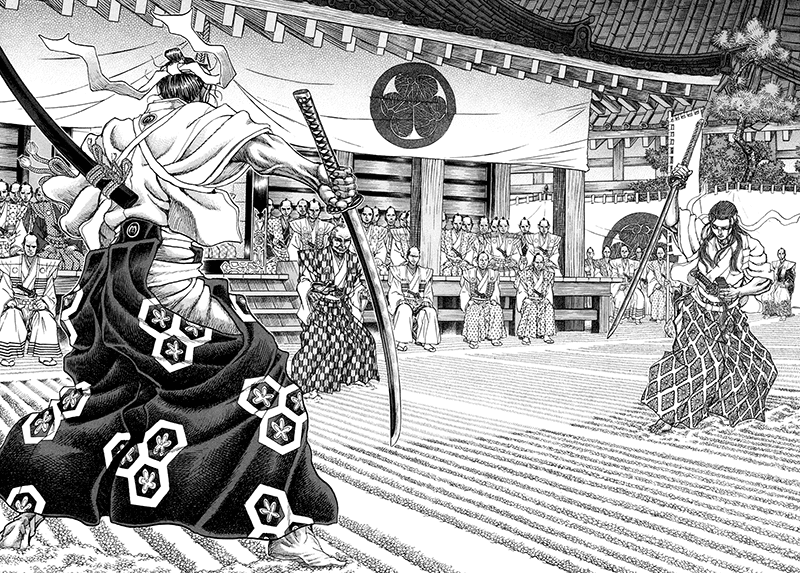
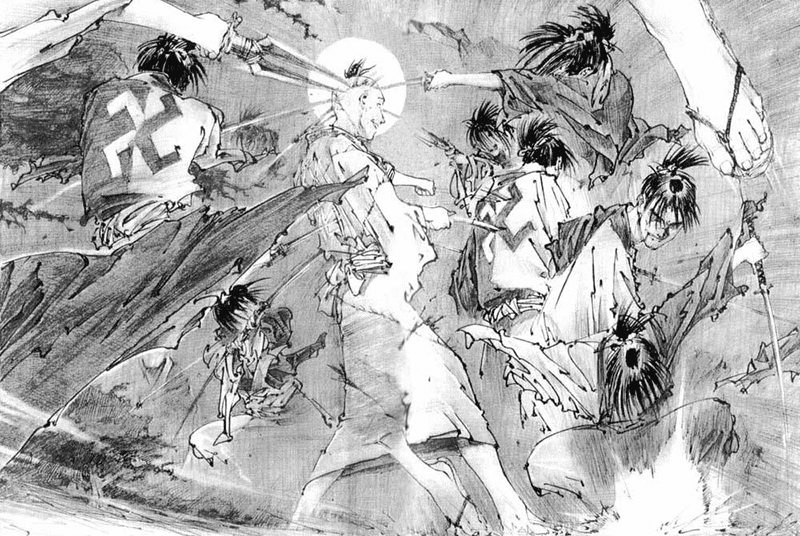
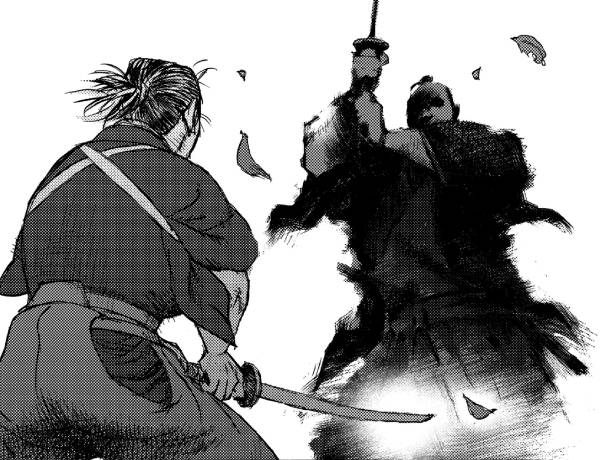
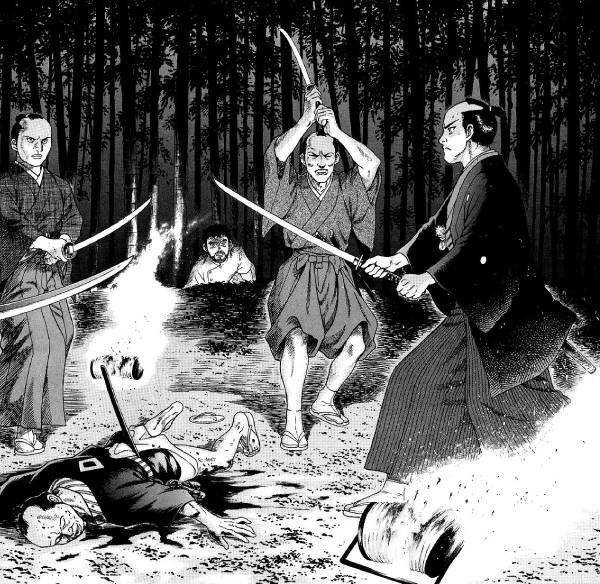
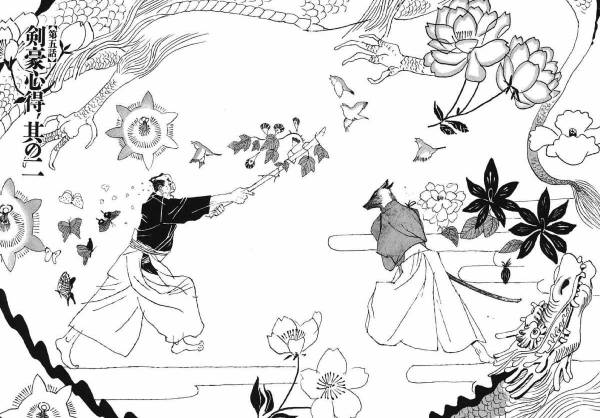
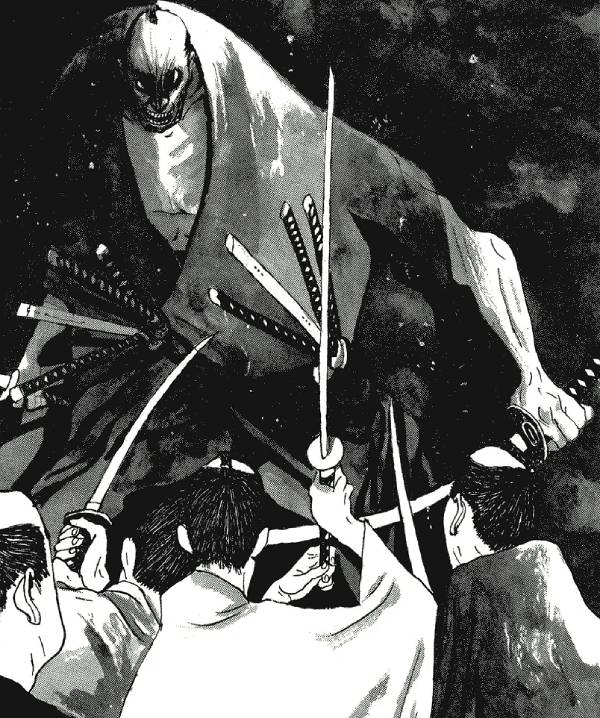
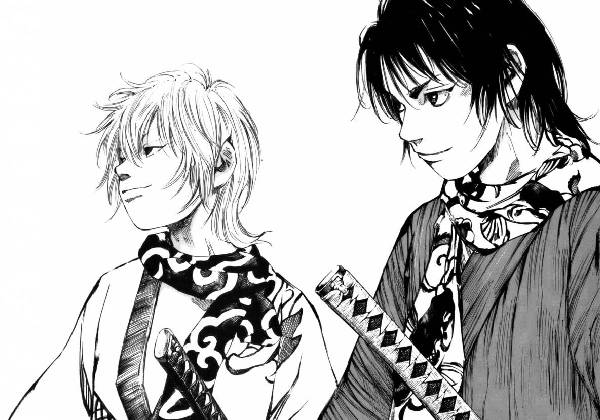
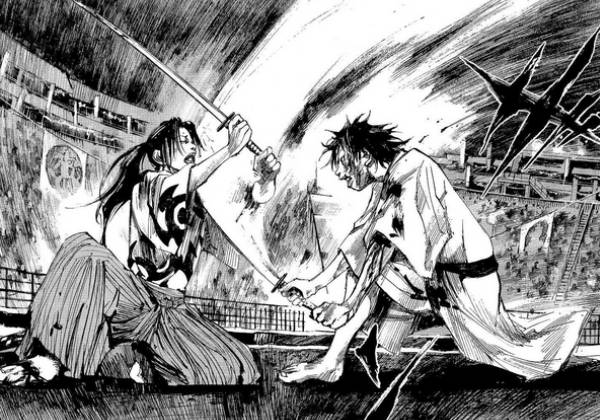
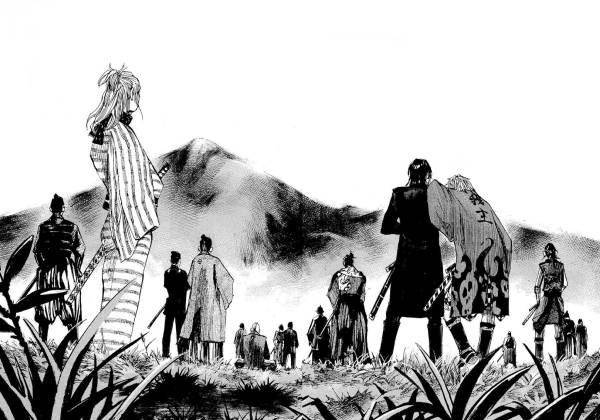
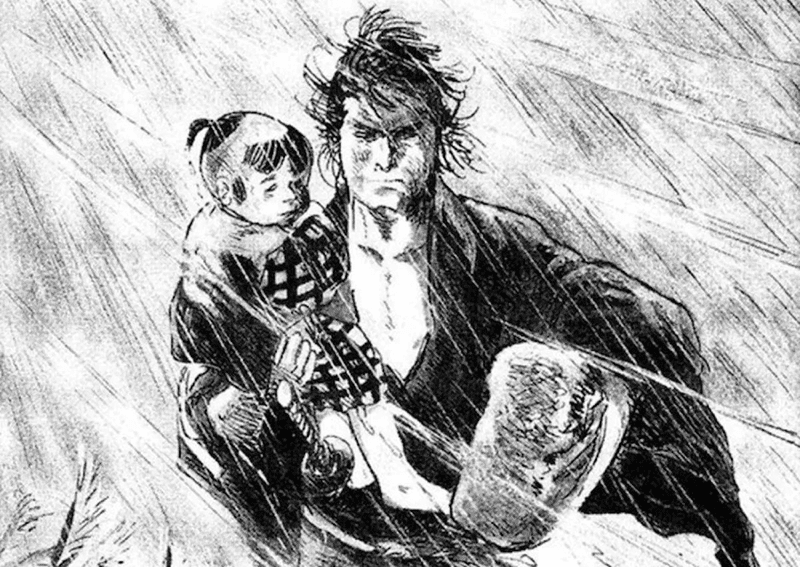
A samurai manga can look like an odd pick for this list, but Shigurui earns its place through tone. It isn’t just violent. It’s emotionally devastating, built around a society where obedience is treated as a virtue, cruelty is routine, and human life is weighed against pride, status, and inheritance. The result is one of the coldest portrayals of power I’ve seen in manga, and one of the most punishing experiences on this depressing manga list.
The story opens with a spectacle that immediately exposes the era’s moral decay. The daimyo Tadanaga Tokugawa stages a tournament where men fight with real blades, and the first bout is between a one-armed swordsman and a blind, lame opponent. Shigurui works backwards to explain how those two men ended up in that position, and the answer isn’t romantic tragedy. It’s institutional conditioning. Dojo hierarchy, patronage, and political pressure turn people’s rivalries into something inescapable, and the manga treats it as a machine that grinds people down until they’re useful or ruined.
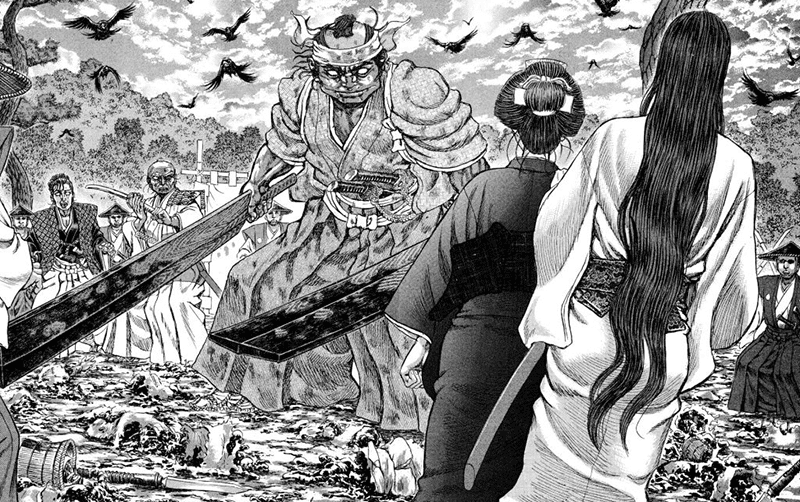
What makes the series so bleak is how it frames skill and discipline. A samurai’s dedication can be impressive, but Shigurui never lets admiration become comfort. Training becomes obsession, self-harm, and submission to a code that has no mercy for the weak. Gennosuke Fujiki and Seigen Irako read less like heroes and more like case studies in how a culture can distort ambition into self-destruction. Their rivalry isn’t a clash of ideals. It’s the predictable outcome of a system designed to manufacture violence and call it honor.
The treatment of women is just as bleak. Lady Iku and Mie aren’t allowed lives of their own the way men are. They’re property, leverage, or proof of legitimacy, which makes the setting’s brutality feel broader than swordplay. The point is clear: no one here is free, and bodies are controlled, traded, and punished.
Visually, the manga sharpens the despair. Takayuki Yamaguchi draws with obsessive clarity, making serene landscapes and architecture feel eerily calm beside sudden, surgical gore. The violence lands hard because it isn’t stylized as heroic. It’s matter-of-fact, anatomical, and brutal. Beauty and horror share the same page, but neither offers any relief.
Shigurui has structural flaws. Later sections drift into unresolved side plots, and the ending can feel abrupt, likely because the adaptation never covers the full scope of the source novel. Still, the conclusion it delivers fits the story’s main themes. There’s no catharsis, no redemption, and no real sense that anything could’ve turned out differently. If you want a depressing manga that treats despair as societal rather than personal bad luck, Shigurui is relentless.
Genres: Action, Historical, Drama, Tragedy, Martial Arts
Calling Yamikin Ushijima-kun bleak undersells what it’s doing. Manabe Shōhei builds the series around the moment people realize they’ve run out of options. The illegal loans are only the entry point. What follows is desperation, self-deception, and quiet collapse, where the real horror is how ordinary each downfall plays out. If you want a depressing manga that treats misery as routine rather than spectacle, this one is hard to top.
Ushijima’s business model is surprisingly simple in the most predatory way possible: crushing interest, short deadlines, and zero excuses. The people who take the deal aren’t thrill seekers. They’re addicts, fragile families, small-time dreamers, and exhausted workers who mistake a temporary fix for a way out. That mix matters, because the series isn’t just focusing on the foolish. It’s showing how easily shame, hubris, or bad luck can push someone into a system that’s designed to keep them there.
Each arc plays out like a case study in social failure. Debt isn’t treated as a number on a page, but as a force that reshapes identity. Characters lie to partners, abandon friends, double down on gambling, or accept humiliations they never would otherwise. Even when they choose their next steps, the choice is usually just another kind of damage. The manga keeps returning to the same brutal reality: repayment rarely means money alone. It means leverage, bodies, and dignity.
What makes the series especially grim is the wider ecosystem around Ushijima. He’s exploitative, and often cruel, but the story repeatedly introduces people who are worse, including scammers, violent criminals, and corporate predators who hide behind respectability. That escalation creates a bleak outlook. You might end up rooting for Ushijima, not because he’s redeemable, but because the surrounding world makes him almost sympathetic. It’s one of the manga’s sharpest points about morality in an environment that’s entirely rotten.
Manabe’s art reinforces that tone. People look tired, sweaty, and painfully real, and this ugliness never feels stylized. Scenes play out with an oppressive inevitability, as if society itself decides what happens to the people who fall behind.
The main criticism is also part of its identity: Yamikin Ushijima-kun can feel relentless. The series offers the occasional flicker of hope, but it’s comfortable pushing characters past the point where lessons are learned. That intensity is exactly why it belongs here. It’s a depressing manga that refuses to pretend consequences are neat, recoverable, and fair.
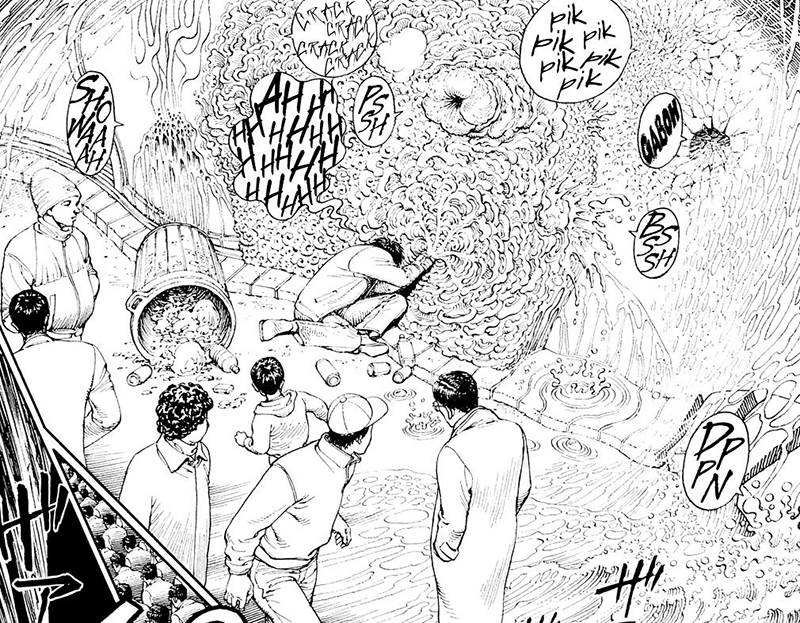
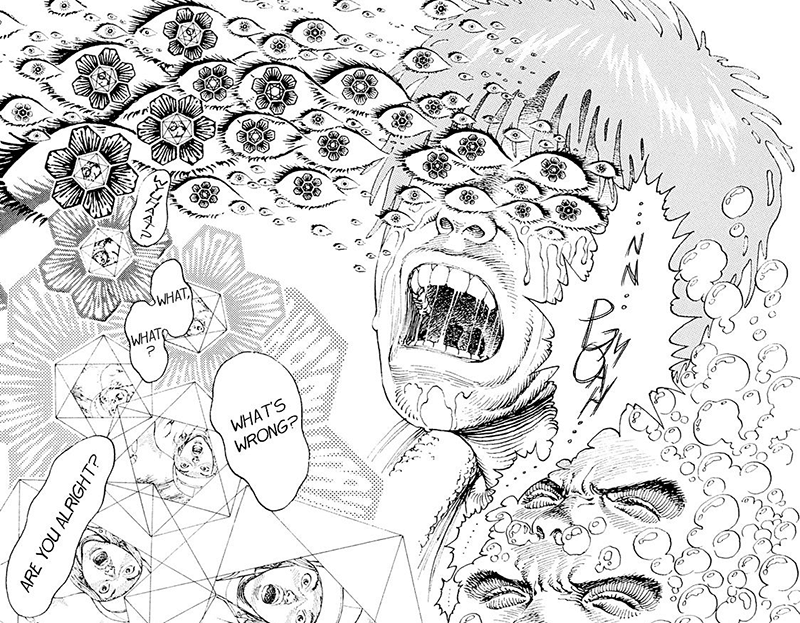
Nijigahara Holograph is infamous for how hard it is to follow, but that reputation can distract from what it’s actually doing. The confusion isn’t a gimmick. Inio Asano builds a story where trauma and guilt are never resolved, and where time feels like a loop the characters can’t escape. If you’re looking for a depressing manga that treats damage as permanent, this is one of manga’s harshest portraits.
The manga revolves around a small-town incident that doesn’t stay in the past. A childhood act of cruelty becomes a quiet shadow that later lives revolve around, even when characters pretend they’ve moved on. Nijigahara Holograph doesn’t frame trauma as a single defining moment, either. It spreads outward, shaping friendships, relationships, self-image, and the ways people hurt others or themselves. That ripple effect makes the narrative feel so suffocating.
Asano’s structure reinforces the emotional logic. Scenes jump between years without warning, points of view blur, and cause and effect often arrive out of order. You’re asked to assemble a meaning from fragments, but the act of assembling never produces relief. Characters aren’t redeemed through understanding what happened. They’re trapped repeating behavior that feels inevitable, even when it’s ugly or self-defeating.
The content is also relentlessly dark. Abuse, sexual violence, murder, and other atrocities appear not as isolated shocks, but as part of a world steeped in cruelty. What makes it especially bleak is the ordinariness around it. The town looks ordinary. The people look normal. The art is precise and grounded, which makes the eruptions of ugliness land harder because nothing about the presentation signals distance or fantasy.
Nijigahara Holograph will alienate readers who want clear answers or tidy timelines. It’s closer to a psychological study than a conventional plot, and it’s easy to finish it feeling unsettled, but not fully understanding it. But if you can tolerate the ambiguity, and are open to rereading, the experience is devastating in a way few manga attempt. It’s a depressing manga about generational trauma as a lingering condition. The worst isn’t what happened, but how it influences those who survived it.
Freesia isn’t depressing because it piles tragedy on top of tragedy. It’s depressing because it imagines a society that has legalized its worst instincts and then shows the psychological price for the people living in of it. Jiro Matsumoto frames the retaliation law as order, but it functions like a slow-acting poison. Once revenge becomes policy, violence stops being an exception and becomes institutional, and the people tasked with carrying it out rot along with the system.
The setup is deceptively simple. If someone is killed, the relatives or loved ones are granted the right to retaliate, either personally or through hired enforcers. Kano is part of that system, tracking down and killing people who’ve been designated as targets. It’s starts like a revenge thriller, but Matsumoto is after something uglier. The killings aren’t climactic payoffs. They’re administrative outcomes.
Kano’s perspective makes the entire world feel unstable. His hallucinations and delusions aren’t treated as stylish or dramatic twists. They’re presented as a constant condition that bleeds into everything until reality and disorientation become inseparable. The result is an unusually intimate depiction of mental illness, one that doesn’t offer the reader a safe, objective distance. You’re inside Kano’s head, forced to share his uncertainties.
What makes it hit harder is how little comfort anyone else provides. Nearly every character feels compromised, damaged, or numb. The law that’s supposed to balance loss multiplies it, pushing ordinary people into roles they won’t survive emotionally. Freesia’s normal ambiguity centers on that theme. Targets aren’t always monsters. Some are remorseful, some are pathetic, and some are products of the same society that doomed them. Yet none of that matters once your name is on the list. Guilt and innocence don’t matter. Procedure does.
Matsumoto’s bleakest insight is how this kind of work twists people over time. The retaliation enforcers aren’t stylized as antiheroes. They’re men whose sense of empathy has been burned away, sometimes violently. Mizoguchi is the perfect example. Now he’s a monstrous killer who loves hunting his targets and abuses his wife, he was once a loving husband. That contrast doesn’t redeem him. It shows how thoroughly the world has broken him.
The art matches the mood. Faces look worn down, streets feel claustrophobic, and the line between gritty realism and surreal hallucination is thin enough to blur at any moment. Sex and violence are depicted in ways that feel grotesque rather than exciting, reinforcing how dehumanized everyone has become.
Freesia stands out for how it explores societal decay through the inner collapse of its characters. It’s not a story about catharsis; it’s about a world that’s been stripped of all meaning.
Bokutachi ga Yarimashita is depressing in how it treats guilt not as a moment, but as a lifelong condition. Kaneshiro Muneyuki, best known for Blue Lock, wrote a story that’s far more intimate here. It’s a character study about ordinary teenagers who make one reckless choice, then discover that moving on doesn’t mean the weight disappears.
Tobio Masubuchi and his friends are entirely ordinary, drifting through high school and the rest of life with the same uncaring attitude. When one of them is humiliated by delinquents from another school, they decide on retaliation, more prank than crime. The point isn’t the scheme, but the moment it escalates. Once consequences arrive, the manga stops caring about excuses and documents the damage.
What follows is psychological erosion. Each character responds differently to the same guilt: denial, forced normalcy, impulsive self-destruction, or cold rationalization. None of it works. The longer they try to talk themselves out of responsibility, the more they spiral into panic, paranoia, and self-hatred. Bokutachi ga Yarimashita is a depressing manga because it understands how guilt shapes people, and how it becomes routine. It creeps into relationships, reshapes identity, and turns everyday moments into tests of whether you can live with it.
Kaneshiro’s writing stays close to the characters’ shame without turning it into melodrama. The tension often comes from what isn’t said or done: a laugh that’s a little too loud, a blank stare held too long, a conversation where everyone’s pretending they’re fine because admitting otherwise would shatter the illusion. The art supports that restraint. It isn’t flashy, but it’s sharp about body language, facial expressions, and the physical awkwardness of people trying to act normal while they’re unraveling.
The most punishing element is the lack of catharsis. This isn’t a redemption story, and it doesn’t offer emotional release. Even when life appears to stabilize, the story insists on a harsher truth: some wounds don’t heal, but become part of who you are. If you want a depressing manga about moral collapse and the aftermath of a single devastating choice, this one will linger long after you finish it.
Helter Skelter is one of the bleakest portrayals of the entertainment industry in manga, treating fame as a machine that first manufactures a person, then disposes of them once they stop selling. Kyoko Okazaki builds the story around that theme, and the result is less a cautionary tale than an analysis of what happens when identity is reduced to image.
Liliko Hirokuma exists at the peak of celebrity perfection, but that perfection is engineered. Her body has been reconstructed through surgery, and her public persona is maintained through constant performances. The early tension doesn’t come from a single scandal or dramatic turning point. It comes from deterioration. As her body begins to fall apart and attention starts to drift elsewhere, the life she built becomes impossible to sustain. That’s where the manga’s depression lives, in the realization that she has no stable self to retreat to once the world turns away.
Liliko is written as both victim and predator, and Okazaki never asks you to simplify her into one or the other. She’s clearly been shaped by exploitation and obsession, then discarded the moment she’s deemed useless. At the same time, she responds by turning her fear outward. Her cruelty has an ugly logic. If she’s going down, she’ll take others with her. Watching her spiral is devastating because it isn’t framed as madness coming from nowhere. It’s a survival reflex inside a system that rewards self-erasure until it stops being profitable.
What makes Helter Skelter stand out among depressing manga is how wide the collateral damage feels. Liliko’s collapse isn’t contained within her own inner life. She drags other people down with her, whether through manipulation, jealousy, or the sheer pull of someone trying to remain the center of the world. The story offers no comfort, no moral cleansing, and no tidy resolution. It lands on the uglier truth that some people are broken by what they’re made to be, and they break others in return.
Okazaki’s art reinforces that instability. The linework is raw and uneasy, with expressions that feel slightly off even in quieter moments. It isn’t aiming for glamor, and that choice matters. The visuals keep reminding you that the polished surface is a lie, and that the body and mind underneath are coming apart. Helter Skelter is a depressing manga that’s unforgettable for how it captures vanity, addiction, and the horror of being consumed by your own image.
Few manga commit to hopelessness as fully as Himizu. Minoru Furuya doesn’t treat despair as a dramatic spiral or a single breaking point. He presents it as a lived condition, a daily atmosphere that seeps into every thought, relationship, and decision. The result is a depressing manga in the most direct sense, not because of shock, but because it shows how misery can become routine.
Sumida’s goal is painfully modest. He doesn’t want greatness or escape, only a quiet, ordinary life with as little trouble as possible. Even that proves to be unattainable. He’s abandoned by his mother, trapped with an abusive alcoholic father, and left to grow up without stability, protection, or any adult safety net.
What makes Himizu hit so hard is how it captures the psychology of a person who feels spent. Sumida isn’t written as sympathetic, innocent, or purely a victim. He recognizes his own ugliness, but keeps repeating the same behavior anyway. The tension between self-awareness and powerlessness is where the manga’s depression takes shape. It’s not about a single traumatic event. It’s about what happens when a person believes nothing better is possible. The supporting cast reinforces the bleakness instead of offering relief.
The people around Sumida aren’t here to fix him or provide him with a path forward. They reflect different forms of the same problem: instability, denial, misplaced hope, and the kind of optimism that feels delusional when not even basic necessities are met. This never turns into melodrama. It stays cold, grim, and uncaring.
Furuya’s art is a major part of why the series feels so unpleasant, in the right way. Faces stretch and warp in moments of panic or humiliation, and the ugliness reads as emotional truth rather than stylistic noise. It’s a visual language that refuses comfort. Even when scenes are quiet, the expressions and body language suggest people are merely waiting for the next problem.
Himizu also denies the reader any form of release. There’s no breakthrough or happiness waiting at the end, no moral balance, and no sense that suffering produces wisdom. It’s a story about enduring, and sometimes failing to endure, with nothing guaranteed except the days continuing to tick by. If you want a depressing manga about alienation, self-hatred, and hopelessness, Himizu is one of the harshest examples in manga.
Genres: Psychological, Drama, Tragedy, Slice of Life
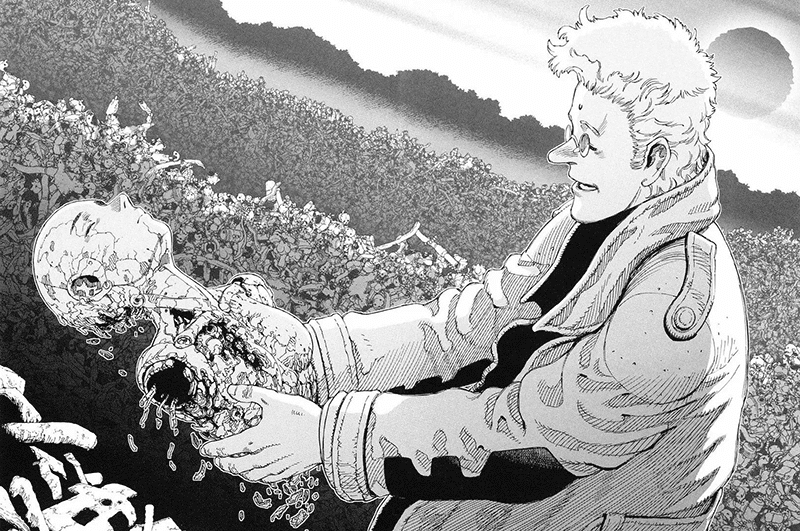
By reputation, Oyasumi Punpun is impossible to ignore. It’s often cited as the most devastating depiction of emotional collapse in manga, and it isn’t built on cheap tragedy. Inio Asano’s approach is slower, harsher, and more personal. This is a depressing manga where life doesn’t break in one moment, but erodes through neglect, shame, and the long aftermath of formative damage.
Punpun Onodera enters the story as an ordinary child with small hopes. That ordinariness matters because the manga never frames him as exceptional. Asano focuses on the mundane sources of ruin: a home defined by instability, adults who can’t protect anyone because they barely function, and relationships that offer comfort one moment and harm the next.
The early setup is understated, but the accumulation is relentless. Oyasumi Punpun isn’t about shocking events. It’s about drifting through life, and the tiny, quietly devastating moments that stack up until they consume you.
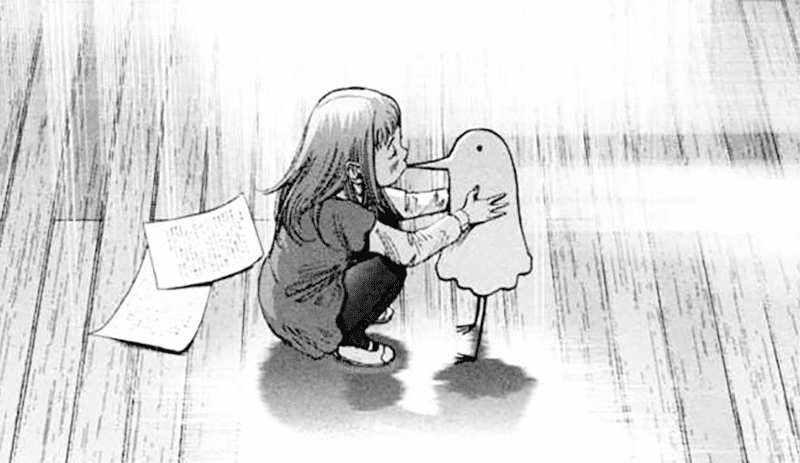
Asano’s most striking choice is visual. The environments are rendered with intense realism, down to cramped rooms and harsh urban details, while Punpun and his family appear as simplified, bird-like figures. It creates distance without making the emotions abstract. Punpun looks out of place in his own life, and that dissonance becomes the series’ quiet core.
The emotional weight comes from how unromantic the series feels. Depression isn’t a mood, and it isn’t a single traumatic wound. It’s guilt, desire that turns obsessive, and self-loathing that becomes normalcy. Many of the relationships are intimate in a way that feels dangerous, manipulative, and shaped by dependency, or the need to be saved by someone who themselves needs saving. Asano doesn’t offer moral clarity. People might be sympathetic and damaging in the same scene, and this ambiguity makes the story feel so real.
The final arc grows louder and more chaotic, and the escalation feels melodramatic compared to the earlier, quieter suffocation. For me, it works, but not consistently. When depression and self-hatred stop being internal, they become volatile, sometimes violent, and rarely reversible.
Oyasumi Punpun succeeds in showing the most intimate kind of darkness, the kind that doesn’t rely on spectacle to hurt. It’s less about sadness than the gradual loss of identity and the unsettling fact that life keeps going.
Stories about crime, criminal organizations, and the underworld have always fascinated me. There is something uniquely compelling about crime manga, whether it’s the characters they follow, the brutality they depict, or the slow moral decay that unfolds over time.
This list covers a broad range of crime manga, from organized crime and yakuza stories to crime noir and series centered on morally gray protagonists trying to get ahead at any cost. Each manga here stands out for how it portrays crime or the underworld, and how contact with that world shapes, distorts, or ultimately destroys the lives of those involved.
Crime manga have a long tradition in manga, dating back to the postwar era, and they remain a favorite among manga fans. Part of their appeal lies in their variety. Some focus on law enforcement and the pursuit of justice, others on gangsters clawing their way upward, and still others on the hidden parts of society where crime flourishes. Many of these stories explore how relying on violence, corruption, or exploitation inevitably carries a cost.
Some series, like Ichi the Killer or Homunculus, use crime as a framework for deeply uncomfortable psychological exploration. Others, such as Ikigami or Freesia, examine systemic rot and how society can warp its people. Manga like Yamikin Ushijima-kun delve into Japan’s underbelly, portraying the people who live and operate within it. There are also crime stories centered on investigation and law enforcement, such as MPD Psycho or A Suffocatingly Lonely Death, which focus on twisted cases and the people tasked with uncovering the truth.
All of these manga stand out for their distinct portrayals of crime. Whether they follow criminals, investigators, or ordinary people pulled into the underworld, they show what happens when lives collide with the darker corners of society.
Mild spoiler warning: I focus primarily on each manga’s criminal elements, but I may reference occasional plot details to explain why a series belongs here.
With that said, here’s my list of the best crime manga (last updated: January 2026).
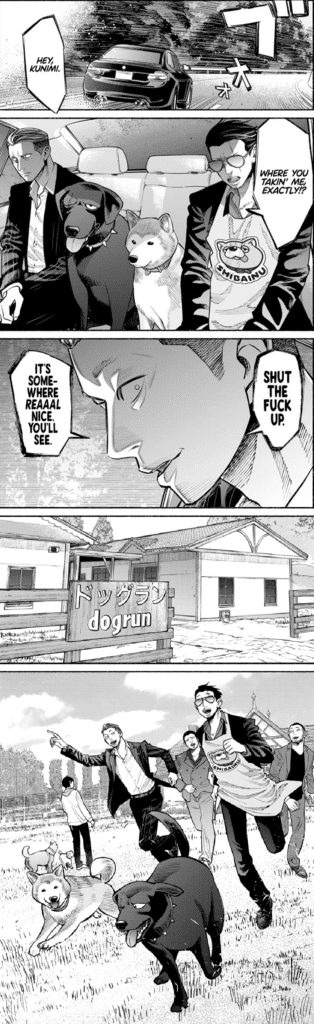
The Way of the Househusband is easily the most atypical entry on this list. It’s a pure comedy manga, yet it more than earns its place among crime manga. Rather than showing criminal activity, the series sticks to everyday domestic life, but frames it with the gravity, tension, and visual language of a brutal underworld drama or yakuza thriller.
At the center is Tatsu, once known as the infamous Immortal Tatsu, a legendary yakuza feared throughout the criminal world. Now retired, he has chosen a different life as a devoted househusband. While the core joke never changes, the execution remains consistently sharp. Neighborhood encounters feel like territorial confrontations, grocery shopping resembles nerve-racking negotiation, and even the most casual conversations carry the weight of Tatsu’s violent history, even when they’re about nothing more than discounts or cleaning supplies.
What makes the series stand out is its complete commitment to tone. The manga never undercuts its own premise or breaks character for cheap laughs. Everything is played straight, which allows the contrast between subject matter and presentation to work.
The artwork plays a major role in selling this idea. Dramatic composition, clean lines, and exaggerated facial expressions mirror the visual intensity of serious action and crime manga. Mundane tasks are framed with a sense of suspense that gives even the smallest moments real weight. The art never feels cluttered, and the clarity of the panels keeps the pacing tight and punchy.
The supporting cast reinforces this theme, since many of them share a past similar to Tatsu. Former yakuza trying to go straight still react to one another as if violence is about to erupt at any moment. Miku, Tatsu’s wife, and his old associate Masa provide both warmth and grounding without diluting the absurdity.
While The Way of the Househusband does not explore crime in the traditional sense, it offers a unique and hilarious perspective on criminal identity and life after the underworld. It’s a fun read that turns crime-manga intensity into deadpan humor, and it’s one of the most consistently enjoyable comedy series out there.
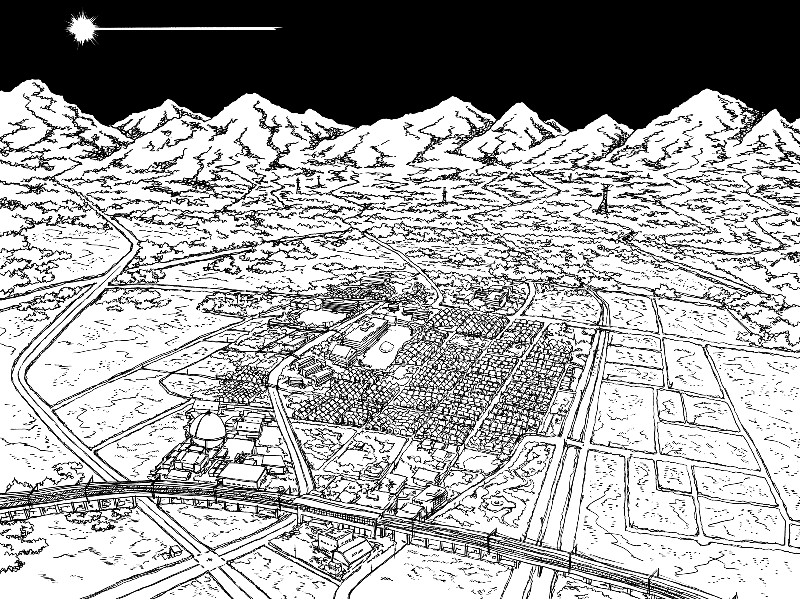
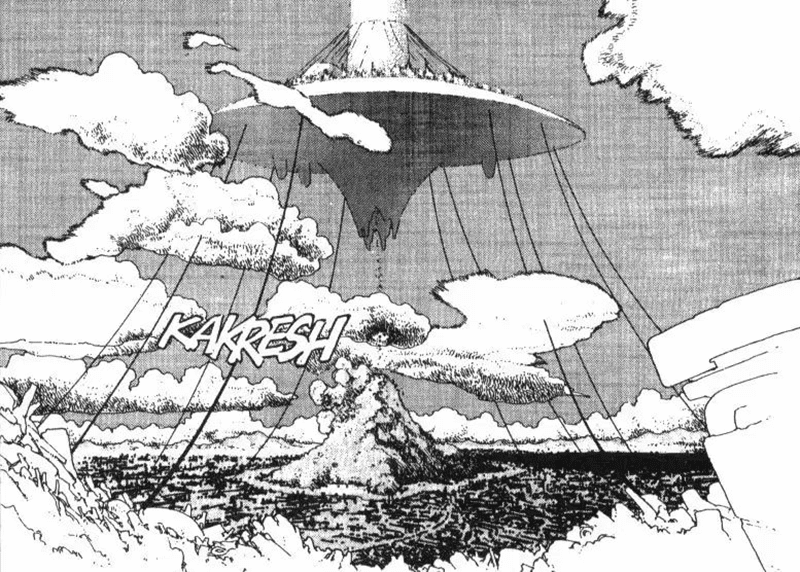
Soil is an outlier on this list, and one of the strangest crime manga you’re likely to encounter. It begins as a grounded investigation before it gradually sheds structure, logic, and even reality itself. This turns a crime story into an exploration of collapse at every level.
The premise is simple. In the newly built and pristine Soil New Town, an entire family vanishes without explanation. Two detectives are dispatched to look into the case. Yokoi is volatile, deeply unpleasant, and barely functional, while Onoda acts as his more stable counterpart. Early chapters stick to standard police work and interviews, but the unease builds quietly. The town appears clean and ordinary, but something feels wrong right from the start.
As the investigation continues, the town’s secrets start to surface. Over time, the case itself stops making sense as absurd details begin to pile up. Instead of answers, each new revelation introduces further distortion. Eventually, the town itself collapses under the weight of absurdity, warping the story from small-town mystery into cosmic surrealism.
Atsushi Kaneko’s artwork reinforces that shift with precision. Early chapters use stiff, almost awkward compositions that feel intentionally restrained. As the story progresses, that restraint dissolves. Environments bend unnaturally, panel layouts become chaotic, and characters themselves turn into grotesque caricatures of themselves. This visual language mirrors the breakdown of reality, putting you in the same disoriented headspace as the series’ protagonists.
Characterization plays a major role in keeping the story unsettling. Yokoi, in particular, is difficult to sympathize with. He’s abrasive, impulsive, and morally compromised, yet impossible to look away from. Even worse are the inhabitants of Soil New Town. Portrayed as good, happy people early on, almost none of them are trustworthy, and all hide dark secrets of their own. While the disappearance is thought to be an isolated incident, it soon becomes clear that crime has infected almost the entirety of Soil New Town.
Soil ultimately abandons a clean resolution and leans completely into absurdity. The investigative framework disintegrates and is soon replaced by unanswered questions and surreal imagery. For some readers, this might feel too experimental. For others, it’s exactly what makes Soil so memorable. As a crime manga, Soil doesn’t offer justice or closure. It shows what happens when not only an investigation but any system meant to impose order and stability stops functioning.
Prophecy is a compact, contemporary crime manga that uses the internet as both weapon and battleground. Rather than focusing on traditional organized crime, it centers on vigilantism shaped by social media, anonymity, and collective outrage. The result is a grounded, sometimes uncomfortable look at how quickly public frustration can be weaponized.
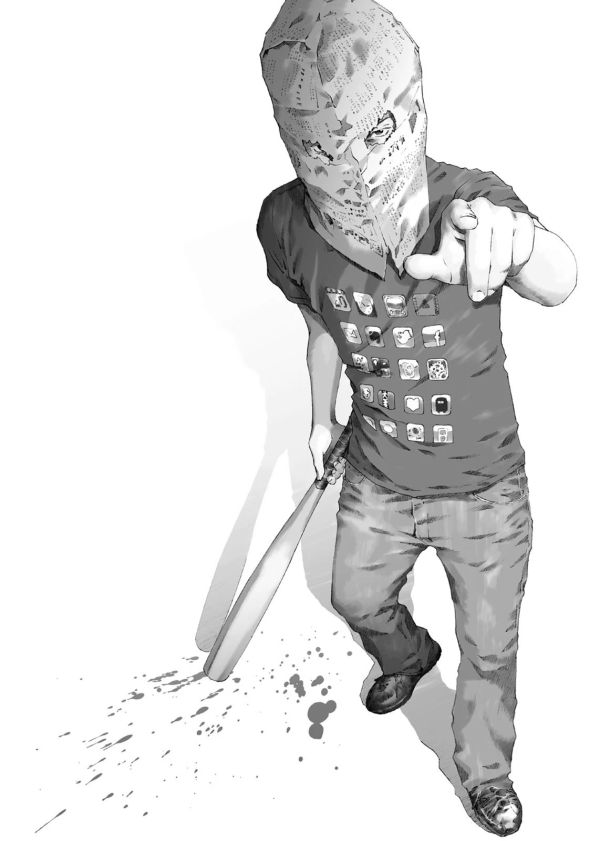
The story follows a masked figure known online as Shinbunshi, or Paperboy, who broadcasts his actions while exposing everyday acts of cruelty, corruption, and abuse that often go unpunished. His targets, however, aren’t criminal organizations, but ordinary people, institutions, and systems that benefit from apathy or power imbalances. As his popularity grows, so does the severity of his actions, drawing the attention of the Tokyo Police Department’s Cybercrime Division and its driven, pragmatic leader, Erika Yoshino. What unfolds is less a mystery than a prolonged pursuit, ultimately shedding light on Shinbunshi’s real motives.
What makes Prophecy stand out among crime manga is its focus on process and consequence. The narrative rarely relies on twists. Instead, it builds tension through escalation. Each act invites a public reaction, which in turn fuels the next step. Shinbunshi’s actions resonate because they address real problems, yet the methods he uses to enforce accountability mirror the ones he claims to oppose.
The police presence is intentionally restrained and often frustrating to follow. Law enforcement is portrayed as rigid and reactive, struggling to adapt to crime that spreads via social media, comments, and viral attention. This imbalance reinforces the manga’s core idea: systems built for physical crime falter when faced with digital mob mentality.
Visually, the manga maintains a clean, realistic style that supports its modern setting. Character designs avoid exaggeration, grounding the story in something that feels close to everyday life. Screens, message boards, and online commentary are integrated directly into panels, reinforcing how deeply digital space shapes perception and action.
Prophecy is not a masterpiece, but it does exactly what it sets out to do. It offers a focused examination of vigilante crime in the internet age, raising questions about responsibility and public anger. For readers interested in a crime manga that engages with modern social dynamics rather than traditional underworld hierarchies, this is a solid, thought-provoking read.
MW stands as one of the earliest and most unsettling examples of adult crime manga, and it still feels confrontational decades after its initial release. Created by Osamu Tezuka in the 1970s, during the period when more adult stories were starting to break into the medium, it’s a bleak, nihilistic, pulpy work that feels foundational, even if it’s rough around the edges.
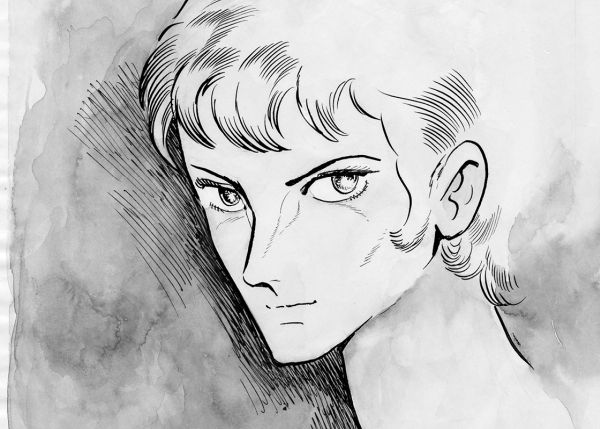
At the center is a deeply toxic relationship between Garai, a Catholic priest consumed by guilt, and Michio Yuki, a brilliant, beautiful criminal whose actions grow increasingly extreme. Rather than positioning crime as something to be solved, MW treats it as an expression of systemic rot. Yuki is less a conventional antagonist and more a mastermind able to exploit the weaknesses of everyone around him. His manipulation of Garai is relentless, blurring the line between obsession, coercion, and complicity.
The power dynamic between the two men drives the story more than any specific criminal scheme. Garai represents faith, denial, and self-deception, clinging to morality while enabling harm. Yuki, by contrast, embodies pure amorality. He is charming, cruel, and disturbingly empty, committing atrocities with no hesitation or remorse. Their bond is intentionally uncomfortable, especially because the manga engages so openly with sexual violence and manipulation for its era. Their shared backstory pushes into controversial territory, and it may be upsetting.
As a crime manga, MW is less interested in criminal procedures or investigation. Authority figures appear ineffective, systems are corrupt and indifferent, and violence escalates without ever offering catharsis. Yuki feels like a force of nature, almost unstoppable. His crimes feel inevitable and hollow, reinforcing the manga’s nihilistic worldview.
The artwork reflects the period it was created. Tezuka’s gekiga-influenced style gives many characters a cartoonish appearance that can clash with the disturbing subject matter. This dissonance can be jarring, especially during the story’s darkest moments. At the same time, his page composition remains strong, and the layered symbolism and visual metaphors add unexpected weight to key scenes.
MW is not without flaws. The pacing is slow, dialogue-heavy, and sometimes melodramatic. Yuki’s excesses and schemes often feel exaggerated to the point of unreality. Yet these qualities also contribute to its strange intensity. For readers interested in the roots of dark crime manga, and in seeing how far manga was willing to push its boundaries early on, MW remains a worthwhile read.
Ikigami approaches crime from an institutional angle rather than through criminals or investigators, which makes it one of the more unusual entries on this list. Instead of illegal acts committed in the shadows, it presents a society where the worst criminal is fully legalized and bureaucratic. The result is a restrained but deeply unsettling crime manga about power, obedience, and normalized violence.
The setting is a near-future Japan governed by the National Welfare Act, a law that mandates the random execution of a small number of young citizens each year. The stated purpose is social stability. Death is presented as a necessary sacrifice, without spectacle, and processed through paperwork. Kengo Fujimoto works as a government messenger tasked with delivering the official death notices, known as Ikigami, exactly twenty-four hours before the recipient’s death.
Rather than building a single escalating plot, it unfolds in self-contained vignettes focused on the notice recipients. Each vignette explores a different response to state violence. Some individuals attempt to reconcile with loved ones, others lash out, and some quietly collapse under the weight of the inevitable. Crime appears around the edges, but it’s rarely the focus. The real fault lies in the system itself, which treats human lives as nothing but an expendable tool.
Fujimoto’s role places him in a morally compromised position. He’s not a villain, but he’s part of an inhuman system. His growing discomfort mirrors the reader’s, showing how institutions rely on ordinary people to function. Authority in Ikigami is impersonal. There’s no single antagonist to confront, only laws, procedures, and social pressure. This absence of a clear enemy reinforces the manga’s bleak atmosphere.
The artwork is grounded and realistic, favoring body language and facial expressions over dramatic escalation. This approach suits the material perfectly. The emotional impact comes from quiet moments rather than spectacle, allowing each story to linger in the reader’s mind. While attachment to some of the characters suffers due to the episodic structure, many leave a lasting impression through small, human details.
As a crime manga, Ikigami stands out for reframing crime as a policy rather than personal deviance. It examines how cruelty becomes acceptable when it’s the law and how societies rationalize violence in the name of order. If you’re drawn to stories about systemic abuse of power, moral compromise, and institutional decay, Ikigami will stay with you.
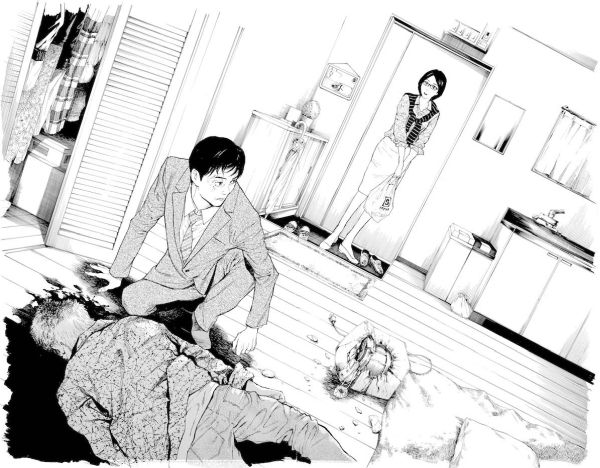
My Home Hero is a domestic crime thriller that turns an ordinary family into unwilling participants in organized crime. Its hook is simple and brutally effective: a normal salaryman discovers his daughter has been abused, uncovers her boyfriend’s ties to a syndicate, and makes a desperate choice he cannot undo. From there, it becomes sustained pressure: one bad decision forces another, and survival depends on keeping the story straight while dangerous people ask more and more questions.
What makes it stand out among crime manga is how grounded the initial conflict feels. Tetsuo is neither a professional killer nor a hardened underworld figure. He’s a father with a strong sense of responsibility, a sharp mind, and no real experience with violence or fighting. This creates constant tension between capability and panic. The early cat-and-mouse dynamic works because the criminals feel plausible, patient, and threatening, but also because Tetsuo’s wins rarely feel clean. Even when he stays ahead, it’s through improvisation, emotional strain, and, occasionally, pure luck, rather than competence.
The moral tension is the series’ backbone. Tetsuo’s actions come from love and fear, but the narrative never lets him off the hook for what those actions require. The story also benefits from its focus on partnership. His wife, Kasen, is not a passive bystander. She becomes essential to the cover-up and the decisions that follow, which makes the family dynamic feel like a central part of a thriller rather than a mere background detail.
Structurally, the series is dialogue-heavy and detail-oriented, which suits the narrative. The suspense often comes from planning, interrogation, and small mistakes that could destroy everything. That said, this changes as the story expands. Later arcs become slower and more sprawling compared to the tighter, earlier ones, even if the core tension remains intact.
For readers who want a crime manga built around family, moral compromise, and sustained paranoia, My Home Hero delivers a tense, often exhausting ride that takes its premise seriously and commits to the consequences.
Ouroboros is a crime manga built on a simple but effective premise: one protagonist works inside the system as a Shinjuku police investigator, while the other is a member of the yakuza. That split perspective gives the series its identity. It’s not just about solving cases, but about how power operates in different layers of society, and how justice depends on who can get the right information first.
The story centers on Ryuzaki Ikuo and Danno Tatsuya, two men bound by a shared past. As children, they lived in an orphanage and were raised under the care of a woman who mattered deeply to both of them. When they witnessed her murder, their lives fractured, but they quickly formed a singular goal. They wanted the truth, and they wanted the person responsible. Because of that, one takes the police route; the other goes into the underworld. From here on out, the manga constantly plays with the friction between those roles.
Narratively, Ouroboros follows a more episodic rhythm, with casework and smaller investigations that establish the tone and the protagonists’ skill sets. This procedural approach is the manga’s true strength, not a weakness. It shows how both men navigate information, pressure, and influence, and it gradually builds credibility for the larger conspiracy the story is working toward. The overarching narrative tightens as clues accumulate and the scope widens. The mystery gains weight as it develops through steady exposure rather than sudden revelation.
The strongest element is the partnership itself. Ryuzaki and Danno are complex, and their cooperation feels uneasy by design. They operate under different rules, with different risks, and with different tolerances for compromise. That moral tension gives the story momentum. It’s also where Ouroboros mirrors classic police-and-underworld narratives the most, blending institutional investigations with criminal access in a way that keeps the stakes personal.
The art supports the grounded atmosphere. It’s not flashy, but it’s clear, readable, and realistic in character design, which fits the tone of the police and yakuza material. The cast also helps to carry the story forward. Side characters are well written, even when the story keeps you unsure what side they’re really on.
The manga’s biggest fault is that the story can lean too heavily into twists later on, and a few push closer to melodrama than realism.
The mix of episodic casework and long-term conspiracy makes Ouroboros a compelling read for anyone who likes crime stories with both street-level grit and bigger institutional rot.
Green Blood is another atypical entry on this list, not because it drifts away from crime, but because of its setting. Instead of the familiar terrain of Japanese cities, neon lights, and yakuza hierarchies, it drops the reader into post-Civil War New York, where poverty and gang violence collide in the Five Points district. The shift in location gives the manga a distinct flavor, turning it into a hard-boiled crime saga filtered through a Western noir lens.
At its core, Green Blood is built around two brothers, Brad and Luke Burns, whose lives have been shaped by the same slums but who’ve taken entirely different paths. Luke dreams of escaping the district and building something stable, while Brad has already become part of its violent underbelly. As an assassin for the Grave Digger gang, Brad embodies the underworld, where survival depends on reputation, brutality, and the ability to pull the trigger first.
This is a crime manga at its most direct. Power is held by gangs and opportunists, while the law feels distant and irrelevant. The Five Points functions like a closed ecosystem, with immigrants and the poor caught between forces they cannot control.
Green Blood also uses that environment to explore societal rot and the people stained by it. It’s especially interested in how far they will go to keep what little power they’ve managed to claim. This often results in bloody confrontations and shootouts where morality and allegiance don’t matter.
Masasumi Kakizaki’s artwork carries much of the atmosphere. The pages are dense with shadows and textures, evoking classic Western comics and old gangster films. Period details, from clothing to architecture to weapons, are handled with care, and the city feels alive and realistic rather than staged. Action scenes are choreographed with a cinematic clarity that makes the violence visceral without becoming messy. Even when the plot leans into familiar revenge tropes, the visual execution keeps it sharp.
Green Blood is not without limitations. Some side characters aren’t fully realized, and the story’s scope can feel too large for its five-volume run, especially as it approaches the finale. Still, the atmosphere is strong enough to carry those weaknesses. For readers who want a crime story defined by grit, brotherhood, and a sense of historical brutality, Green Blood offers a memorable detour from the usual settings, while staying firmly rooted in underworld drama.
A Suffocatingly Lonely Death is one of the purest investigation-driven entries on this list. Where many crime stories split their attention between multiple arcs, underworld factions, or shifting settings, this series builds its momentum around a single, grotesque case and the people caught in its gravity.
The story opens with a horrific case involving the murder of multiple children in a mansion, pulling detective Jin Saeki into an investigation that immediately feels wrong. The case isn’t flashy or designed to impress. It’s a slow-burn mystery. Saeki follows leads that rarely paint a clear picture, and interviews people who are damaged by buried trauma. Suspicion soon falls on Juuzou Haikawa, the mansion’s owner, a man tied to the witnesses’ past. Yet it remains uncertain whether he’s guilty, unhinged, or was manipulated by other forces.
What sets the manga apart from other crime manga is its restraint. The horror is rooted in realism rather than flashy escalation, which makes the atmosphere heavier. The most disturbing moments involve small details, unsettling implications, and the sense that the truth is buried deeper than originally thought. The pacing is methodical, allowing dread to build through procedure, dialogue, and slow revelations.
Character psychology is treated as evidence in itself. Saeki is not a detached genius solving a case from a distance. Instead, the deeper he digs, the more personally he becomes involved, first through the enigmatic Kanon Hazumin, and later his own brother’s connection to the case. At the same time, the manga’s scope slowly widens, as more characters and hints at a far deeper, overarching narrative are introduced.
Written by Hajime Inoryuu and illustrated by Shota Ito, the duo behind My Dearest Self With Malice Aforethought, the series carries a similar tension, but channeled through a slower, more grounded investigative structure. If you enjoy long-form mysteries where every answer adds more questions, and darkness comes from people, not monsters, A Suffocatingly Lonely Death is worth your time.
Shinjuku Swan is a crime manga set in a place other series rarely touch: the everyday workings of Tokyo’s nightlife. Instead of centering on detectives or yakuza bosses, it follows the people who profit from the gray zone between entertainment and exploitation, where money decides what’s permitted and violence functions as negotiation. Set in Kabukicho, the manga treats the red-light district as its own ecosystem, complete with rival factions, informal rules, and the constant threat of punishment for stepping out of line.
The protagonist, Tatsuhiko Shiratori, begins working as a scout for a talent agency, tasked with recruiting women for the adult entertainment industry. That premise alone makes the story uneasy in a way that’s different from other crime narratives. The series does not romanticize his work. It shows the manipulation, coercion, and predatory dynamics surrounding the business, and it makes clear that even legal operations can be deeply criminal in effect. Tatsuhiko is not a typical underworld operator, either. He enters this world with a stubborn sense of empathy and a naïve belief that he can protect people while still playing the game. The manga’s tension comes in large part from watching those ideals collide with a system designed to destroy them.
Power in Shinjuku is a volatile thing. Rival scouting companies fight for territory, hosts and agencies compete for influence, and the yakuza are an ever-present, final authority. Conflicts escalate through intimidation, bribery, betrayal, and shifting alliances, while victories are decided by resources and numbers. No group is clean, and even the characters who seem principled may be complicit, complicating any simple moral reading. This ambiguity is one of the series’ biggest strengths.
The cast is large, and the story grows more complex as it expands beyond its early arcs. Characters who initially appear one-dimensional gain nuance, and antagonists frequently become more unstable once their motivations surface. The writing shows characters through behavior and expression rather than exposition, which helps the series feel grounded even when the stakes rise.
Visually, the manga develops over time. Early chapters can look rough, but the artwork becomes increasingly detailed and consistent, especially in character design, clothing, and facial expressions. Wakui’s style captures weariness, calculation, and sudden violence with a realism that fits the setting. Most importantly, the series often emphasizes the aftermath of brutality rather than glamorizing the act itself.
For readers interested in crime manga that explore social decay through nightlife, exploitation, and territorial conflict, Shinjuku Swan offers a harsh, messy look at how the underworld functions when it’s embedded in everyday business.
My Dearest Self With Malice Aforethought is a psychological thriller that treats identity as its primary weapon. Rather than focusing on gangs, police procedure, or underworld hierarchy, it builds tension through disorientation, misdirection, and the slow realization that the protagonist’s life may be a lie. It’s one of the darker entries on this list, not because it relies on graphic violence, but because it frames crime as something intimate, personal, and difficult to escape from.
Eiji Urashima appears to be an ordinary college student until his reality collapses overnight. He wakes up with no memory of the last few days, and the gap in time is a major mystery to him. A stranger claims to be his girlfriend, he’s made the acquaintance of dangerous people, and small details suggest terrible things happened while he was absent from his life. From there, the story escalates into a cascade of revelations involving hidden motifs, false identities, and buried secrets.
What makes the series stand out among other crime manga is its relentless pacing. The first half is razor-sharp, with each new revelation reshaping the narrative. This constantly forces readers to reassess what they know, and the sensation of certainty never lasts long. This approach makes the manga addictive, though it may overwhelm readers who prefer a more methodical structure.
As the series progresses, the storytelling becomes more linear and resolution-focused. The chaos tightens into a clearer direction, giving themes and character arcs more room to solidify. Some of the electric tension of the earlier chapters fades, but the core mystery remains engaging, and the eventual payoff stands as a satisfying conclusion.
Shota Ito’s clean, realistic art style keeps the story grounded even as events become increasingly extreme. The setting feels tangible; the characters are expressive without exaggeration, and the paneling remains clear during moments that could easily become confusing. This clarity strengthens the psychological tension because it prevents the manga from slipping into theatrics. The tension here comes from plausibility, from the sense that the worst possibilities are not supernatural, but hidden within your own mind.
Written by Hajime Inoryuu and illustrated by Shota Ito, the series also serves as a stark contrast to their later work, A Suffocatingly Lonely Death. While that manga leans into procedurals and slow-burn tension, this one is twist-driven and aggressive, prioritizing momentum over restraint. For readers who want a fast-paced crime manga where secrets keep getting deeper rather than resolving quickly, My Dearest Self With Malice Aforethought is a grim, addictive read.
Genres: Crime, Psychological, Thriller, Mystery, Drama
Smuggler is proof that a crime story doesn’t need dozens of chapters to leave a mark. In only a single volume, Manabe Shōhei delivers a tight, grimy thriller that feels cinematic without relying on elaborate twists or an extended narrative. It’s fast, violent, and oddly funny in the darkest places, built around underworld logic where small jobs turn fatal because everyone involved is already desperate.
The setup is immediate and gripping. Yosuke Kinuta, a failed actor buried under debt, has run out of respectable options. When he accepts work with a corpse disposal group, the decision isn’t framed as a moral fall from grace. It feels like a necessity, an ugly job taken because there are no alternatives left. This grounded motivation is important because Yosuke serves as the story’s anchor among a cast of hardened criminals and cold-blooded killers.
The underworld in Smuggler is not a distant backdrop. It’s an active setting driven by competing factions, volatile egos, and opportunism. Yosuke’s role places him in a conflict he doesn’t understand, and that becomes increasingly dangerous. What begins as routine quickly transforms into mob warfare. When two ruthless Chinese assassins appear, the story becomes even more chaotic and unpredictable. The tension spikes when Yosuke makes a mistake that could cost him his life.
As a crime manga, Smuggler stands out through its character work. Manabe fills a short narrative with personalities that feel sharp and memorable, from hardened professionals who treat death like logistics to the assassins whose menace is inseparable from absurdity. There’s black humor threaded throughout, but it’s never used to soften the violence. It’s there to underline how warped these people are, and how normal brutality has become in their world.
Manabe’s art fits the tone perfectly. Faces look strikingly human but slightly grotesque, and the environments are detailed, dirty, and realistic. The paneling keeps the action clear and forceful, and the grounded visual style helps the more outrageous characters and moments to stand out even more.
Smuggler is the kind of manga you can finish in one sitting, but its key moments will linger long after. If you want a short crime manga with sharp pacing, morally compromised characters, and a strong finale, Smuggler delivers.
The Fable doesn’t revolve around crime so much as it lives in its aftermath. Its protagonist isn’t climbing the underworld or solving a case. Instead, he’s trying to survive a year without drawing attention, and that restraint becomes the story’s central theme.
Akira Saito, known in the criminal world as The Fable, is an infamous professional killer with a reputation that borders on myth. When his boss commands him to take a one-year sabbatical in Osaka, the rules are simple: don’t kill anyone. Akira and his partner, Youko, move under new identities and pretend to be siblings. The threat behind the order is obvious. If Akira breaks the rule, consequences will follow.
What makes the Fable stand out among crime manga is its tone and structure. Much of the story is about friction. Akira is hyper-competent, but socially alien. He can read danger instantly, yet struggles with basic human interaction, workplace etiquette, and the small negotiations of everyday life. The manga plays this contrast straight, creating a strange blend of deadpan comedy, slice-of-life routine, and sudden, sharply grounded violence. Humor comes from how sincerely Akira attempts to be normal, and how badly he fits the role.
At the same time, trouble doesn’t vanish just because he wants peace. Before long, tensions explode, and when violence hits, it lands heavier after the story’s long stretches of restraint.
The series also offers a rare perspective on professional criminality. Akira isn’t romanticized as a stylish hitman. He feels like a sharpened tool, and the story explores what happens when a person built for violence is forced to exist without it. That psychological angle is understated but persistent, especially as Akira forms fragile connections with people who have no idea what he really is.
Katsuhisa Minami’s artwork reinforces the grounded atmosphere. The realism is striking, capturing Osaka streets, cramped apartments, and subtle facial expressions with a precision that makes both comedy and danger feel plausible. Characters look distinctly human, and the visual restraint suits a story that relies on awkward silence as much as action.
The supporting cast adds a lot to the experience. Youko adds volatility and humor, while the yakuza, local gangsters, and ordinary citizens create a social web that constantly threatens to expose Akira’s true nature. It’s a crime manga full of tension, absurdity, and a genuine sense of realism that stays funny and quietly unsettling without feeling forced.
Gannibal is one of the more horror-leaning entries on this list, but it earns its place through how tightly it frames policing, dread, and the isolation of a closed community. It’s a rural noir crime manga that treats the countryside not as a refuge, but as a place where violence lies hidden behind tradition, politeness, and local authority.
The story follows Daigo Agawa, a police officer who transfers to a remote village with his wife and young daughter. On paper, it’s a quiet post, perfect for healing. In practice, it becomes a trap. The village operates by its own rules, and Daigo is an outsider in every way possible. His predecessor disappeared under suspicious circumstances, the residents are evasive, and the Goto family holds a level of influence that makes the police feel irrelevant. When a brutally maimed corpse appears, rumors and reality begin to blur, and Daigo is forced to consider a terrifying possibility that becomes harder and harder to dismiss.
What makes Gannibal stand out is its use of restraint. The manga is not driven by constant action. It’s driven by atmosphere, escalation, and the slow realization that institutional protection doesn’t exist here. Every conversation feels heavy with meaning. Every act of cooperation comes with a hidden cost. Daigo is surrounded by people who may be complicit, terrified, or both, and the lack of reliable allies turns routine investigation into something psychological and exhausting.
Masaaki Ninomiya’s artwork strengthens the realism. Faces are expressive and grounded, and the rural setting feels tangible rather than stylized. The violence, when it arrives, is shocking, but it’s not presented as spectacle. It has weight, and it leaves consequences. The contrast between scenic calm and human brutality makes the horror hit harder.
Daigo himself is not a clean hero. He’s flawed, stubborn, and sometimes reactive, which makes his fear and anger feel more credible. The Goto family, meanwhile, is not written as mere monsters. They are menacing, but they also feel like products of an environment where cruelty has become tradition.
Gannibal blends investigation with suffocating horror and social decay, delivering a tense, immersive descent into rural violence.
Homunculus is a borderline inclusion on this crime list, but it fits in a way that feels true to the genre’s darker edges. It’s primarily a psychological character study, yet it repeatedly brushes against exploitation, coercion, and the kind of moral decay that often sits beneath the surface of crime manga. Rather than presenting crime as a plot, it treats it as an environment that exposes what people will do when they believe no one is watching.
The story centers on Susumu Nakoshi, a man living in his car parked between a park full of the homeless and luxurious hotels. A medical student, Manabu Ito, approaches him with an offer: trepanation, a procedure that drills into the skull in the belief that it can expand consciousness. Nakoshi agrees after being promised payment, and the decision becomes the catalyst of everything that follows. Once the operation is over, he begins seeing grotesque distortions in the people around him, visions he comes to interpret as homunculi, manifestations of hidden selves, trauma, and self-deception.
What begins as a strange experiment quickly becomes an uncomfortable exploration of identity. Nakoshi’s ability reveals other people’s damaged selves, and the series repeatedly places him in situations where boundaries collapse. Some encounters drift into the criminal or predatory. Others slide into pure psychological horror, but the unifying threat is exploitation, both emotional and physical.
Hideo Yamamoto’s artwork is essential to the experience. Realistic character work is punctuated by surreal, often disturbing transformations that feel both symbolic and bodily. The homunculi designs are visual metaphors, but they are also viscerally grotesque, blurring the line between hallucination and reality. This ambiguity is intentional. The story never fully clarifies whether Nakoshi is accessing the truth or simply unraveling, and that uncertainty becomes part of the manga’s unsettling atmosphere.
Nakoshi and Ito are both compelling characters because neither is clearly sympathetic. They are both broken in their own way, and their interactions often reflect each other’s pain. This gives the manga more depth. As the series progresses, the narrative becomes increasingly surreal, culminating in a divisive ending that abandons neat explanations in favor of utter psychological collapse.
Homunculus won’t satisfy anyone looking for a traditional crime narrative. It’s unsettling, messy, and difficult to pin down, but as a crime manga overlapping with psychological horror, exploitation, and identity collapse, it’s one of the medium’s strangest descents.
Genres: Crime, Psychological, Horror, Philosophical, Drama
MPD Psycho is one of the most twisted crime manga on this list. It begins with brutal casework and gradually mutates into something far larger and more disturbing. It starts as a familiar detective narrative, which slowly transforms into a labyrinth of violence, identity fracture, and conspiracy. The result is neither comfortable nor clean.
The series follows Kazuhiko Amamiya, a man diagnosed with multiple personality disorder and working as a police detective. Early chapters often read like standalone investigations, each built around ritualistic crime scenes and grotesque murders. These cases aren’t presented as clever mysteries. They’re meant to feel contaminated. The violence is extreme, the motifs are often warped, and the atmosphere leans toward unhinged psychological horror.
Over time, the manga reveals these crimes are anything but isolated. A larger structure emerges, involving cult influences, manipulation, and experiments. The procedural framing dissolves as the story becomes more conspiracy-driven, and the reader is forced into a growing web of shifting motifs, characters, and organizations. This transition is where MPD Psycho becomes uniquely compelling, but also demanding. The narrative can be difficult to follow, especially as Amamiya’s identities shift and the distinction between personal trauma and manipulation dissolves.
The art by Shou Tajima is central to the experience. The linework is clean and grounded. When the manga becomes graphic, it’s graphic with intention. Violence isn’t decoration. It’s there to show how dehumanizing the world of the story is, and it mirrors its main theme of the fragility of the self. The visual clarity also helps anchor a narrative that constantly threatens to shift into chaos.
All of this is held together by Amamiya himself. His fractured identity is not a gimmick, but a thematic anchor that reinforces the manga’s obsession with control, coercion, and the ways people can be shaped by trauma. The story repeatedly raises the question of who is acting and who is being acted upon, which gives even its most outlandish elements a psychological foundation.
MPD Psycho rewards patience. It’s dense, bleak, and often brutal, but it’s also relentlessly inventive. For readers who can tolerate graphic violence and want crime manga that push standard investigation into conspiracy, identity collapse, and the uglier side of human behavior, this is one of the most compelling in the medium.
Monster is often called one of the greatest mystery thrillers in manga, but at its core it’s a crime story. The story revolves around a serial killer, institutional cover-ups, and a long pursuit that drags its protagonist through the darker corridors of post-Cold War Europe. It doesn’t focus on gangs or underworld hierarchy, but it belongs on a crime manga list because its narrative is shaped by violence and the systems that enable it.
The central figure is Dr. Kenzo Tenma, a Japanese neurosurgeon whose life derails after a single ethical decision. He chooses to save a young boy’s life instead of prioritizing that of an important politician, defying hospital pressure and paying for it professionally. Years later, the boy, Johan Liebert, resurfaces as a calculating killer, and Tenma is forced to confront the consequences of his compassion. The story becomes a manhunt that stretches across borders, with Tenma pursuing a person who functions less like a conventional villain and more like a moral catastrophe.
What makes Monster stand out among crime manga is its psychological focus. Johan is frightening not because he’s impulsive, but because he’s calm, intelligent, and persuasive. He does not rely on brute force. Instead, he manipulates people, isolates them, and nudges them toward their darker impulses as if testing how fragile the human mind really is. His crimes ripple outward, drawing civilians, police, and officials into situations where fear and self-interest override morality. The series treats evil as something that can be rational, socially contagious, and disturbingly ordinary once the right pressure is applied.
Tenma’s role adds a second layer of tension. He’s not a detective or a professional investigator. He’s a man guided by conscience, forced into choices that erode his certainty. The question driving the story is not whether he can catch Johan, but what justice looks like when you created the problem. Urasawa fills the narrative with morally compromised characters, many of whom operate within institutions that protect reputations rather than people. Police investigations, political maneuvering, and quiet corruption appear repeatedly, reinforcing the sense that crime is not only personal but also structural.
Urasawa’s artwork supports this realism. Character designs are grounded, expressions are subtle, and the pacing relies on slow dread rather than spectacle. Small conversations and empty spaces carry as much tension as overt violence, which makes each escalation feel earned. The story occasionally leans into coincidence, but its methodical structure and emotional weight keep it compelling throughout.
Monster is ultimately a crime manga about the fragility of empathy, moral decay, and the consequences of saving the wrong life. It’s one of manga’s defining thrillers.
Freesia is a psychological crime manga where violence is police and sanity is collateral damage. Its premise sounds almost procedural, but the execution is anything but clean. Jiro Matsumoto builds a world where crime has become part of the legal system, and the result is not order, but a society that’s spiritually exhausted and morally compromised.
In this dystopian Japan, retaliatory killing is legal. If a loved one is murdered, the victim’s family can legally kill the perpetrator in return, either personally or by hiring a government-approved executioner. Kano works inside that system, carrying out state-sanctioned killings that are framed as justice, but operate like revenge on paperwork. The story is not interested in debating the law in abstract terms. Instead, it shows what the law does to people, and how it normalizes violence until everyone involved becomes numb, warped, or hollow.
The setting is bleak and oppressive. War sits in the background as a constant condition rather than a plot point, and cruelty feels like routine. The atmosphere is reinforced by Matsumoto’s art, which is gritty, raw, and often deliberately ugly. Backgrounds can be intensely detailed, while faces are sometimes simplified to the point of eeriness, creating a visual dissonance that matches the story’s emotional instability. The manga’s reality also slips without warning. Scenes fracture, transitions feel abrupt, and the reader can never be fully certain what’s real and what’s filtered through damaged perception.
Kano’s mental state is the central reason for this. He experiences hallucinations, memory gaps, and a persistent sense that his mind cannot be trusted. This is what elevates Freesia. Instead of showing us Kano’s workings from an external perspective, Matsumoto pulls us into his fragmented consciousness, using confusion to showcase just how corrupted the world has become. Many other characters are similarly broken, not presented as exceptions but as the natural result of living in a society that has legalized murder as a coping mechanism.
One of the manga’s strongest choices is its moral ambiguity. While Kano and his colleagues are legal killers, the story frequently humanizes their targets, and even those who deserve retaliation are rarely simple monsters. Each killing carries its own tragedy, often exposing how easily victimhood and guilt can overlap. That complexity keeps Freesia from becoming a simple revenge fantasy and turns it into a portrait of a deeply rotten society.
Freesia is not an easy read. It’s surreal, depressing, and psychologically abrasive. Still, it’s unforgettable, and it stands out among crime manga precisely because it refuses any form of catharsis. If you’re drawn to stories about institutional cruelty, moral decay, and fractured identity, Freesia offers a bleak, hypnotic experience unlike any other.
Sanctuary is one of the defining crime and political thrillers in manga because it treats power itself as the subject. The series is built around the idea that crime is not limited to the underworld, but also embedded in boardrooms, government offices, and the quiet bargains that decide who gets to rule. Buronson and Ryoichi Ikegami turn that thesis into a sweeping dual narrative that moves between yakuza brutality and political ambition with equal confidence.
Akira Houjou and Chiaki Asami are two childhood friends whose goal is to drag Japan out of regression and remake it into their own sanctuary. They take opposite paths to get there. Houjou works to consolidate control over the yakuza through alliance, intimidation, and decisive violence. Asami, meanwhile, enters the realm of politics, aiming for the seat of prime minister, climbing through elections, influence, and backroom manipulation. Together, they represent two sides of the same coin, one legal on paper, the other criminal by definition, but the manga shows that both operate through the same ruthless logic.
This dual structure is Sanctuary’s greatest strength. The underworld side provides turf wars, gang negotiations, and the yakuza’s role as an informal power structure that shapes what the law can actually enforce. The political side focuses on campaigns, media, and institutional leverage, showing how public legitimization is manufactured. The rhythm works because each half complements the other. Government decisions begin to look like organized crime conducted in suits, and yakuza leadership begins to resemble political governance conducted through fear.
The supporting cast adds weight to the conflict. Rivals are ambitious and dangerous, and the story is filled with schemers who understand that ideology often functions as justification rather than motive. Isaoka stands out as a particularly formidable opponent, a character who encompasses the series’ core message that pragmatism and cruelty can thrive in any institution when the stakes are high enough.
Ikegami’s art style is clean, bold, and sharply composed, making every conversation feel like a confrontation, and power plays feel physical even before violence arrives. Diet chambers, smoky bars, Tokyo nightlife, and office interiors are drawn with cinematic confidence, reinforcing the story’s obsession with status, dominance, and larger-than-life characters.
Despite its strengths, Sanctuary is not without flaws. The further the story goes, the more it leans into operatic escalation and power fantasy. Some developments stretch plausibility, but it gives the series a certain type of pulpy charm. It’s less interested in realism and more in momentum and mythmaking. Its most jarring flaw is its dated depiction of women, who are painted as sex objects or love interests.
As a crime manga, Sanctuary stands out because it shows power moving through every layer of society, from alleyways up to the parliament. For readers who want a sweeping story of schemes, corruption, and charismatic antiheroes, it remains a cornerstone of the genre.
Ichi the Killer is one of the most infamous yakuza stories in manga, and it earns that reputation through how extreme it is. It’s a crime manga that doesn’t look away, presenting the underworld as a place populated by broken people who use violence as language, identity, and ritual. The content is graphic enough to repel many readers, but beneath that surface lies a bleak psychological portrait of trauma, sadism, and exploitation.
The narrative centers on two men who are equally disturbing, but for different reasons. Ichi is a traumatized killer whose brutality is overwhelming and seemingly uncontrollable, while Kakihara is a yakuza whose obsession with pain and cruelty borders on devotion. After Kakihara’s boss disappears, his search puts him in direct confrontation with Ichi, and the story becomes a collision of two equally broken minds. The yakuza structure functions as a framework, but the real conflict is internal. These characters are not fighting for money or territory in any conventional way. They’re chasing buried trauma, compulsion, and the next sensation that might make them feel alive.
What separates Ichi the Killer from more typical crime narratives is how it ties violence to psychology. The manga is explicit about torture, sexual abuse, degradation, and humiliation, but rarely treats these as shock devices alone. Instead, it forces us to look into the darkest corner of human society, where domination is power.
Yamamoto’s art is defined by clean linework, realistic character designs, and grotesquely warped facial expressions. Violence is depicted in unflinching detail, and often so exaggerated it feels surreal. It’s compelling and difficult to stomach, but that’s exactly the point. It’s not meant to glamorize, but to nauseate, and to force the question of how people can commit these deeds.
The story can be chaotic at times, and some plot elements remain messy or unexplained, but that disorder fits the material. Ichi the Killer is not tidy, and it doesn’t want to be. It’s an ugly, disturbing, and deliberately nihilistic story.
For readers who can tolerate the extreme content, Ichi the Killer offers a uniquely uncompromising look at yakuza violence and psychological ruin. It’s not a comfortable recommendation, but as a crime manga, it remains one of the genre’s most uncompromising works.
Manabe Shōhei’s Yamikin Ushijima-kun is my favorite crime manga, and it earns that place by being brutally honest about what crime looks like when it’s ordinary. There are no glamorous gangs, no stylized shootouts, and no comforting moral distance. Instead, it drops readers into the world of illegal moneylending and keeps the focus on the people who end up there, the predators who benefit, and the system that encourages them.
Kaoru Ushijima runs a loan shark business with terms that sound impossible: fifty percent interest due in ten days. The series makes it clear why anyone would accept that deal. Ushijima’s clients are not clever criminals chasing easy money. They are gamblers, addicts, exhausted workers, aimless young men, and people one bad decision away from total collapse. Debt is not treated as a mere number, but a chain that pulls people into worse and worse situations. It uses an episodic structure, showcasing different clients and how each one falls apart in a different way.
Ushijima himself is not a hero, and the manga does not ask you to pretend he is. He’s a professional predator preying on the weak, whose job it is to extract payment through intimidation, humiliation, and whatever other leverage works. The difference is that Ushijima is honest about what he does. His world is full of scammers, gangsters, pimps, and corporate sharks who operate with even less restraint, and that contrast becomes one of the series’ defining strengths. Over time, you may even find yourself rooting for Ushijima simply because he feels the least monstrous.
What sets Yamikin Ushijima-kun apart is its realism and its scope. It’s not only about loan repayment. It’s about the wider underworld that debt connects to, including organized crime, petty theft, prostitution, scams, and the quiet violence of social shame. The manga repeatedly shows how fast a life can unravel once someone is isolated, embarrassed, and short on options. Many arcs feel almost unbearably bleak, but that harshness is the point. The stories are not meant to comfort; they are meant to expose.
Manabe’s artwork reinforces the tone. Faces look like real people, often tired, crooked, or desperate, and the environment feels grimy and alive. The paneling is straightforward and functional, prioritizing clarity over style, which makes the violence and humiliation land harder. None of it feels theatrical; it feels possible.
As the manga progresses, it expands from short cautionary tales into longer arcs that track people’s downfall from beginning to end. These sections are where the series becomes genuinely unforgettable, because it shows not only what happens to people who cannot pay, but how they convince themselves that the next lie, the next scheme, or the next loan will fix everything.
Yamikin Ushijima-kun isn’t a pleasant read, but it’s one of the most uncompromising portraits of the Japanese underworld in manga. If you want a crime manga that feels grounded, bleak, and disturbingly plausible, it’s hard to top.
Getting into new manga can be difficult, especially with the sheer number of ongoing series these days. That’s why I put together this list of my favorite manga that are currently running. These are ongoing manga that are genuinely worth keeping up with, whether you read weekly or catch up in chunks.
This list is not simply a collection of the most popular titles. It’s a mix of personal favorites and standout series that impressed me early on and continue to deliver. You’ll find everything from unsettling horror manga and high-energy battle shonen to more thoughtful, psychological works. Some of these series have been running for dozens or even hundreds of chapters, while others are newer releases that may have slipped under your radar.
I gravitate more toward seinen manga, so this list naturally leans in that direction. That said, there is still a strong selection of excellent shonen series here as well, especially ones that stand out for their consistency, creativity, or long-term potential.
What all of these manga have in common is simple: they are ongoing and worth your time. Whether you’re looking for the slow-burn horror of a series like Tonari no Jii-san, the brutal martial arts action of Kengan Omega, or the quiet, contemplative character work of Blue Period, there’s something here worth following.
If you’re tired of the usual recommendations and want manga that feel current, fresh, and genuinely engaging, this list is a great place to start.
Mild spoiler warning: I avoid major plot details whenever possible, but brief story elements may be mentioned to explain why a series earns its spot.
With that said, here’s my list of the best currently ongoing manga (last updated: January 2026).
Quiet horror often lingers longer than anything overly violent, and Tonari no Jii-san understands that perfectly. Instead of shock, it builds unease through absence, denial, and the unsettling sense that reality itself is being ignored. This makes it stand out among modern ongoing manga series.
The story centers on Yuki, a reserved girl growing up in a small rural town. Her ordinary life fractures after a disturbing experience she witnesses during a trip to see her sister off. What makes the moment so unsettling is not just what she sees, but the reaction that follows. No one acknowledges it. No one questions it. The world simply continues as if nothing happened. From there, the manga leans hard into uncertainty, forcing both Yuki and the reader to question whether the horror lies in the event itself or in the collective refusal to recognize it.
As the series develops, its focus shifts from personal paranoia to a broader and more disturbing mystery. Hints of local folklore and grotesque transformations suggest that the town’s exterior is hiding something profoundly unnatural. The horror escalates patiently, and even as the focus gradually shifts from its folkloric roots to a more science-focused narrative, its core themes stay the same.
The artwork plays a major role in sustaining the atmosphere. Heavy shadows, unsettling textures, and distorted imagery give the manga a surreal quality that fits its themes perfectly.
Still early in its run, Tonari no Jii-san stands out as a slow-burn series worth following closely. Even when the story switches to more outlandish ideas, it remains one of the most compelling ongoing manga currently being published.
N thrives on fragmentation and uncertainty, using short, unsettling episodes to build a larger sense of unease. Each chapter introduces a different scenario, from eerie online encounters to modern urban legends, all presented with minimal exposition. What initially feels disconnected gradually reveals a deeper pattern beneath the surface, placing the series firmly among the most unsettling ongoing manga today.
As the series progresses, recurring symbols and references begin to link the stories together. A shadowy organization known only as N emerges, suggesting that these incidents are not isolated. The narrative remains deliberately opaque, but it never feels random. Careful readers are rewarded as details quietly echo across chapters, forming a loose but intentional structure.
The artwork helps massively in sustaining the horror. The rough, almost unstable linework gives the manga a raw quality that suits its subject matter. Faces warp unnaturally, expressions linger too long, and panels feel strangely off balance in ways that heighten the discomfort. When the series leans into visual horror, it does so without restraint.
What makes N compelling as an ongoing manga is its focus on atmosphere over exposition. Even with its irregular release schedule, the material published so far establishes a distinct identity rooted in modern anxieties and internet-era horror. It stands comfortably alongside such classics as Fuan no Tane and PTSD Radio, while carving out its own distinct identity.
For readers interested in contemporary Japanese horror that values mood, implication, and lingering dread, N remains worth following.
Ragna Crimson leans heavily into excess, embracing scale, violence, and spectacle in ways that make it easy to keep reading even when its ideas are familiar. It does not aim for quiet introspection or subtle worldbuilding. Instead, it commits to momentum, escalation, and sharp tonal shifts that keep the story unpredictable, which helps it stand out among current running manga.
The series starts with what appears to be a conventional fantasy setup, following dragon hunter Ragna, but quietly abandons that comfort zone. Early twists push the narrative into something far grander and more unstable, setting the tone for a world where survival depends as much on manipulation as raw strength. The introduction of Crimson reshapes the series entirely. Their presence turns the story into a volatile partnership built on conflicting goals, uneasy trust, and constant power imbalance. This relationship drives the manga forward.
As the scope expands, Ragna Crimson reveals an ambitious setting filled with dragon monarchs, fractured nations, and strange technological elements layered onto traditional fantasy imagery. That mix can feel chaotic at first, but later developments suggest a deliberate logic behind the setting’s contradictions.
Large-scale battles quickly become more frequent, and the antagonists grow increasingly memorable, with the dragon monarchs themselves showing greater nuance and more developed personalities than the human cast.
Visually, the manga excels during action sequences. Combat is brutal and energetic, with dynamic compositions that emphasize impact and speed, even if clarity occasionally suffers in denser panels.
The early chapters can feel rushed and are full of familiar revenge beats, but the series improves steadily once it finds its rhythm. As an ongoing manga that continues to escalate its stakes, Ragna Crimson remains a flawed but highly engaging read for fans of dark fantasy.
Centuria wastes no time and immediately presents us with a bleak fantasy world that treats human life as expendable and the supernatural as utterly indifferent. From its opening chapters, the series establishes a myth-heavy tone rooted in suffering, sacrifice, and forces far beyond human control. This sets it apart from many other contemporary fantasy titles.
The narrative revolves around Julian, a lone survivor whose life becomes bound to an ancient sea deity after a catastrophic event. Rather than focusing on power fantasy, the manga frames his newfound strength as a burden. As the story expands, hints of a wider cosmology emerge, suggesting a larger conspiracy tied to ancient powers. The sense of looming inevitability gives the series a weight that carries it forward.
Centuria’s art makes it one of the strongest ongoing manga in the dark fantasy space. Tohru Kuramori’s artwork emphasizes texture and scale, rendering grotesque creatures and vast environments with meticulous detail. Monsters feel alien and oppressive, while large-scale action conveys a cinematic sense of destruction without losing emotional clarity.
Despite its oppressive atmosphere, the series remains grounded in shonen storytelling conventions. Characters often fall into clearly defined roles, and recent arcs devote considerable time to extended combat. These sequences can slow the pace, especially when battles dominate multiple chapters.
Even so, the broader mystery surrounding the world and Julian’s role within it continues to deepen. That steady expansion of lore keeps Centuria engaging as an ongoing manga, particularly for readers drawn to mythological horror and large-scale fantasy with a consistently dark edge.
Genres: Horror, Dark Fantasy, Action, Supernatural
Mujina into the Deep feels like Inio Asano deliberately stepping into more overt action territory while sticking to his usual themes. It blends urban violence, sexual provocation, and political anxiety into a setting that feels uncomfortably close to the present, even when its action turns surreal or exaggerated.
The manga starts with Terumi Morgan, an unremarkable salaryman whose stagnant life collides with a runaway teenager and Ubume, a professional assassin known as mujina. From there, the series presents us with a world of social decay, economic pressure, and casual brutality. Rather than presenting clear heroes or villains, Asano frames his characters as a product of their environment, often acting out of desperation rather than ideology.
Visually, the manga carries Asano’s familiar strengths. Backgrounds are dense and grounded, while character designs feel deliberately overdrawn and outlandish. Action scenes move at a brisk pace and favor impact over elegance, which suits the story’s chaotic tone. At the same time, some character designs and motifs are reminiscent of earlier works, giving the cast a strangely familiar feeling.
Mujina into the Deep remains divisive. Its use of sex and violence feels intentionally abrasive, though its larger themes are still taking shape. There are hints of broader social critique beneath the surface, but the series has yet to fully reveal them.
Still, its momentum and unpredictability make it compelling to follow chapter by chapter. For readers interested in an ongoing manga that combines Asano’s psychological sensibilities with raw action and modern political unease, Mujina into the Deep is worth keeping an eye on as it continues to develop.
Kagurabachi thrives on mood, violence, and immediacy, positioning itself as a stripped-down revenge fantasy prioritizing impact over psychological complexity. From the outset, it makes its intentions clear by leaning into sharp aesthetics, brutal confrontations, and a tightly focused emotional core.
At the center is Chihiro, a quiet and driven protagonist whose life is shaped by loss and an unrelenting desire to reclaim what was taken from him. His motivation is straightforward, and so far the series does little to complicate his inner life. Instead, the manga relies on atmosphere, visual symbolism, and an escalation of threats to maintain interest. The enchanted swords serve as both narrative anchor and spectacle driver, each battle pushing the story forward through action rather than introspection.
Visually, Kagurabachi is confident and stylish. Sword techniques are easy to follow, magic effects are distinctive, and the blend of modern clothing and traditional weapons gives the setting a clear identity. Action scenes avoid excessive abstraction, favoring clean composition that emphasizes lethality and momentum.
Kagurabachi’s pacing remains a double-edged sword. Chapters move quickly from setup to confrontation, but extended internal monologues and flashbacks can occasionally stall tension mid-fight. Character depth beyond the protagonists is almost non-existent, leaving much of the long-term appeal dependent on how the cast expands.
Even with those limitations, the series maintains strong forward momentum. For readers looking for an ongoing manga driven by style, violence, and a clear revenge framework, Kagurabachi is an engaging title worth following as it continues to define itself.
Unease settles quickly in Shikabane Kaigo, a horror series built on restraint and atmosphere rather than sudden shock. From its opening chapter, the manga establishes a suffocating sense of wrongness that grows heavier with each scene, making it a standout among recent ongoing manga.
The premise centers on Akane Kuritani, who accepts a job as a live-in caregiver in the remote mountains. There she’s tasked with tending to a bedridden elderly woman. The work itself seems straightforward, but every detail surrounding it appears subtly wrong. House rules are overly specific, coworkers behave with unsettling politeness, and the decaying Western-style mansion feels less like a home and more designed to trap its inhabitants.
The horror unfolds gradually, driven by isolation rather than escalation. Conversations feel off, and the sense of being watched never fully disappears. The patient, Hiwako, is especially disturbing, depicted with an almost clinical level of detail that makes her look as if she’s already dead. Her presence alone is enough to make every scene she appears in pure nightmare fuel.
Visually, the manga excels at grounding its horror. Textures are heavy, shadows linger, and empty spaces feel charged with hidden intent. Nothing is exaggerated, which makes the grotesque elements land even harder when they appear.
Still early in its run, Shikabane Kaigo already excels in tone and pacing. For readers drawn to psychological dread and slow-burning tension, this ongoing manga is well worth keeping up with as it continues to unfold.
Goblin Slayer commits fully to its narrow premise. Rather than expanding its world with sprawling lore and heroic fantasy, the series stays focused on grim dungeon crawling, where survival depends on preparation, caution, and the willingness to fight dirty. That focus gives the manga a consistency that many fantasy series lack, especially among long-running ongoing manga.
The story revolves around a single-minded adventurer who accepts only goblin extermination quests. His approach is practical to the point of obsession, relying on traps, terrain, and resource management instead of flashy techniques. Encounters feel grounded because victory comes from planning rather than power escalation. Even small mistakes carry consequences, reinforcing the setting’s hostility.
Goblin Slayer truly shines during combat and underground exploration. Battles are cramped, chaotic, and violent, emphasizing smoke, darkness, and limited space. Goblins are depicted as repulsive and dangerous, not because of strength, but because of numbers and cruelty. While town scenes can feel plain, the dungeons themselves are convincingly oppressive.
The series is not without issues, though. Its episodic structure leaves little room for long-term narrative growth, and character development remains minimal by design. The bleak subject matter, including sexual violence tied to goblins, establishes a harsh and edgy tone early on that may turn some readers away, even though the manga treats it seriously rather than exploitatively.
As an ongoing manga, Goblin Slayer succeeds by knowing exactly what it wants to be. It offers repetition with intent, delivering methodical dark fantasy for readers who value tactical combat over narrative complexity.
Dai Dark by Q Hayashida treats death, space travel, and body horror with casual irreverence. Rather than building toward a traditional narrative arc, it thrives on constant escalation, piling bizarre ideas on top of one another with complete confidence. That approach makes it one of the most distinctive ongoing manga in publication right now.
The premise revolves around Zaha Sanko, a man whose bones are rumored to grant wishes, turning him into a moving target across a filthy, lawless universe. Instead of leaning into drama, the series frames this concept as an excuse for relentless absurdity. Space is depicted as a dumping ground for trash and corpses, violence is routine, and morality barely registers. Sanko’s companions, a cast of morbid oddballs, reinforce the tone through deadpan humor and casual cruelty.
Hayashida’s artwork carries much of the series’ identity. Panels overflow with grime, warped anatomy, and grotesque machinery, yet it always remains easy to read. The violence is extreme, but its exaggerated presentation turns gore into a punchline rather than shock moments. Horror and comedy coexist without ever canceling each other out.
Narratively, the series remains loose and episodic. Long-term plot developments move slowly, and character growth takes a back seat. The structure may frustrate some readers looking for progression, but it suits the manga’s anarchic and chaotic spirit.
Dai Dark succeeds by refusing to settle into predictability. It offers consistency in tone and creativity, ideal for readers who want cosmic horror filtered through gleeful nonsense and unrestrained imagination.
Loss is the central theme of The Summer Hikaru Died, shaping a horror story that values emotional weight over disturbing spectacle. Set in a quiet rural village, the series opens with an unsettling truth rather than a mystery. Yoshiki already knows that his closest friend is gone, even though something identical has returned in his place. That acceptance defines the tone from the start and sets this ongoing manga apart from more conventional horror.
The entity wearing Hikaru’s face is soon revealed to be something profoundly inhuman. Its true form appears as a mass of shifting colors and alien forms beyond human understanding. Yet the narrative focuses on Yoshiki’s grief. Instead of running or fighting, he clings to the presence that still resembles the person he loved. That decision drives the story’s quiet tension, where fear and affection exist side by side.
The relationship carries subtle boys’ love undertones expressed through closeness and emotional dependency rather than overt romance. Moments of physical intimacy feel deeply uncomfortable, not just because they shock, but because they blur the line between mourning and denial. It’s from this contradiction that the horror emerges.
The surrounding village adds another layer of unease. Folkloric elements, silent forests, and the rumored presence of a local deity suggest that this tragedy is part of something far older and stranger. Each chapter expands that context without rushing answers.
The Summer Hikaru Died remains remarkably consistent in tone and intent. It’s ideal for readers who are looking for horror rooted in emotion, memory, and the pain of refusing to let go.
Tenkaichi is a manga that succeeds at one thing and one thing alone: pure spectacle. It exists to showcase violent showdowns between historical figures pushed to superhuman extremes. This singular purpose makes it a fantastic series to keep up with, especially for readers drawn to action-focused ongoing manga.
Set in an alternate version of seventeenth-century Japan, the series focuses on a brutal martial arts tournament designed to decide the nation’s future. Political nuance takes a backseat to physical dominance, as legendary warriors are reimagined as exaggerated combatants. Familiar names such as Sasaki Kojirō, Miyamoto Musashi, Fūma Kotarō and Hattori Hanzō, among others, carry immediate weight, which helps each match feel significant even before the fights begin.
The artwork is where Tenkaichi truly excels. Character designs are aggressive and distinct, with exaggerated physics and expressive faces that sell both arrogance and desperation. Fight choreography favors clarity and rhythm, allowing techniques to unfold with theatrical timing. Panel layouts lean into scale and momentum, making every clash feel decisive and larger than life.
Narratively, the series keeps things lean. Character backstories and motivations are delivered quickly, often serving as fuel for the next strike or technique rather than long-term development. That simplicity can feel repetitive for some readers, but it also ensures consistent pacing and frequent payoffs.
Tenkaichi delivers exactly what it promises. It prioritizes excitement over depth and visual impact over introspection. For readers interested in stylized historical combat and high-stakes tournaments, it remains one of the best and most exciting ongoing manga.
Kengan Omega expands its predecessor’s foundation without abandoning what made it compelling in the first place. While brutal hand-to-hand combat remains the core attraction, this continuation places greater emphasis on long-term storytelling, turning the series into something broader than a single tournament showcase. That shift gives the manga a different rhythm compared to Kengan Ashura, but it also makes it more interesting to follow as an ongoing manga.
The series introduces new characters early on, most notably Narushima Koga, whose perspective offers a grounded entry point into the Kengan world. Alongside him is Gaoh Ryuki, a fighter tied to a larger, mystery that unfolds gradually. Their presence keeps the narrative fresh and unpredictable, rather than simply repeating familiar plot beats.
Structurally, Kengan Omega moves between different conflicts and fights rather than locking itself into one central event. Rival organizations, underground factions, and competing schools of martial arts clash as often as individual fighters. This broader scope gives the narrative not only more intrigue, but also room to breathe. At the same time, Omega’s plot can feel more outrageous, featuring exaggerated conspiracies, secret bloodlines, and high concepts such as cloning that push the narrative into more fantastical territory.
Even so, the fights remain exceptional. The choreography is sharp, the techniques are distinct, and the character designs continue to be a major strength. Each battle feels purposeful, whether it advances the plot or simply delivers spectacle.
As an ongoing manga, Kengan Omega succeeds by balancing continuity with escalation. It may not match its predecessor’s tournament focus, but it remains a must-read for fans who value intense martial arts combat.
Bleak atmosphere and psychological tension define A Suffocatingly Lonely Death, a series that prioritizes dread through implication rather than spectacle. It operates closer to a crime thriller than traditional horror, but its subject matter and emotional weight firmly place it among the darker ongoing manga worth following.
The story unfolds around a disturbing crime case that draws investigator Jin Saeki into a web of violence, buried trauma, and unreliable testimony. From the outset, the narrative establishes an oppressive tone. Every detail complicates the truth instead of clarifying it. Suspects feel unstable, motivations remain obscure, and connections between characters hint at long-standing psychological damage.
Much of the manga’s impact comes from its restraint. Rather than following its predecessor, My Dearest Self With Malice Aforethought, and relying on constant twists, the series lets unease accumulate through pacing and detail. Conversations feel loaded, the truth feels painfully out of reach, and the sense that something is fundamentally wrong never dissipates. The artwork reinforces this approach with sharp line work and harsh expressions that make moments of violence feel intimate rather than sensational.
The storytelling here feels more controlled. The mystery develops methodically, allowing tension to build without rushing toward shock value. That measured progression gives the narrative a grounded detail that suits its themes.
A Suffocatingly Lonely Death stands out for its consistency and quiet confidence. Readers drawn to psychological horror rooted in crime, trauma, and human cruelty will find it an ongoing manga to keep up with as its mysteries continue to unfold.
Few series rely so completely on setting as Made in Abyss. Its power comes from immersion, drawing readers into a world that feels ancient, hostile, and impossibly beautiful all at once. Rather than relying on action-based battles, the manga builds tension through descent, where every step downward carries irreversible consequences. That focus makes it a standout among ongoing manga.
The plot focuses on Riko, the daughter of a legendary Cave Raider, who wants to follow in her mother’s footsteps. She enters the Abyss alongside Reg, a mysterious robot boy she believes is connected to her mother’s disappearance. Yet this plot feels almost superficial because the Abyss itself dominates the narrative. Layered environments, alien wildlife, and forgotten technology create a vertical world that feels alive and indifferent. Exploration is treated as both wonder and danger, with each new discovery carrying a physical and psychological price. The infamous Curse of the Abyss, tied to ascending, ensures that progress is permanent, reinforcing the story’s sense of dread and inevitability.
Visually, the manga thrives on contrast. Soft character designs and playful expressions clash with grotesque injuries and environmental cruelty. That dissonance is intentional, amplifying shock when innocence collides with suffering. The artwork is dense with detail, making each layer of the Abyss feel distinct and meticulously realized.
Despite its status as an ongoing manga, the series releases chapters irregularly. Long gaps between updates mean it’s better approached as something to revisit occasionally rather than follow weekly. Even so, its consistency in tone and worldbuilding remains the same across volumes.
For readers drawn to immersive environments, existential danger, and slow-burning despair, Made in Abyss remains a dark fantasy experience unlike almost anything else currently being published.
Few works in the medium carry the same weight as Berserk. It’s not only a landmark dark fantasy series, but also a showcase of what manga can achieve in terms of scale, emotion, and artistic ambition. Decades after its debut, it remains one of the most influential series ever created, and its impact continues to shape modern fantasy storytelling.
The narrative centers on Guts, a hardened warrior whose life is defined by violence, loss, and an unbreakable will to survive. His bond with Griffith, once built on a shared dream and mutual respect, evolves into one of the most tragic relationships in manga history. Surprisingly, Berserk’s plot doesn’t just focus on revenge and brutal fights, but explores such themes as trauma, obsession, and endurance, allowing suffering to shape its characters and world alike.
That world is relentlessly bleak. War-torn landscapes, religious fanaticism, and grotesque demonic beings form a setting that feels oppressive yet meticulously crafted. The visuals elevate everything further. Miura’s artwork combines extreme detail with a sense of scale few artists have ever matched, balancing brutality with moments of haunting beauty.
Although Kentaro Miura’s death marked a devastating turning point, the series continues under Kouji Mori and Studio Gaga, following the path Miura shared with them. While releases are infrequent, the series still earns its place as an ongoing manga.
For readers willing to endure a slower release schedule, Berserk’s new chapters remain a must-read. As an ongoing manga, its legacy, thematic depth, and visual mastery still place it among the highest achievements in the medium.
Genres: Horror, Dark Fantasy, Action, Tragedy, Psychological
The comedy in The Way of the Househusband comes from contrast rather than punchlines. The series treats everyday domestic life with the same visual intensity usually reserved for over-the-top crime thrillers, turning routine chores into dramatic showdowns. That commitment to tone keeps the manga consistently entertaining, even deep into its run, which is why it remains a standout ongoing manga.
Tatsu, once feared as a legendary yakuza, now dedicates his life to cooking, cleaning, and supporting his wife. The joke never changes, but the execution stays sharp. Grocery shopping feels like a high-stakes negotiation, neighborhood encounters resemble territorial standoffs, and casual conversations carry the weight of criminal history. The humor works because the manga never winks at the reader, playing everything completely straight.
The artwork does much of the heavy lifting. Clean lines, exaggerated expressions, and dramatic paneling sell the absurdity without clutter. The visual language of action manga is repurposed for mundane tasks, and that consistency keeps each chapter punchy. Supporting characters, many of whom share Tatsu’s criminal past, add variety without overstaying their welcome. Miku and Masa in particular ground the series with warmth and comedic timing.
Narratively, the series is episodic and intentionally repetitive, which suits the comedic rhythm. Releases can be infrequent, with breaks between chapters, but the formula never wears thin. As an ongoing manga, it rewards casual check-ins rather than constant tracking.
For readers who enjoy deadpan humor, strong visual comedy, and absurd situations played out with total sincerity, The Way of the Househusband remains one of the most reliable comedy manga still being published.
Nikubami Honegishimi is one of the most intriguing ongoing manga in the horror genre right now. It builds unease piece by piece, letting strange details linger until they form a larger, deeply disturbing picture. That patience gives the series a distinct feel.
The narrative operates across two periods, weaving together past investigations with present consequences. Early chapters focus on paranormal casework by occult magazine editor Inubosaki and photographer Asama, where each incident feels self-contained. These encounters are not only shocking, but they establish patterns, recurring imagery, and unanswered questions point toward something larger and unresolved. In the present, Inubosaki’s nephew is searching for the truth about the events that led to her death, turning what seemed episodic at first into fragments of a larger mystery.
The horror here relies heavily on atmosphere. Silence, implications, and quiet dread do more work than explicit violence. This general discomfort carries over from one chapter to the next, while slowly shedding light on the overarching narrative. This slow pacing might not appeal to everyone, but it gives the manga a distinct identity.
Artistically, the manga stands apart. Character designs are exaggerated and occasionally playful, which contrasts with the grotesque and often disturbing monster imagery. When the series leans into creature design, it delivers some of the most striking visuals in modern manga.
While still early in its run, Nikubami Honegishimi already shows strong confidence in tone and structure. As an ongoing manga, it’s especially appealing to readers who value mood, originality, and folkloric horror over immediate payoff.
Sui Ishida is best known for Tokyo Ghoul, but his new work Choujin X is already shaping up to be another standout. At its heart sits uneasy transformation, but rather than turning toward spectacle, the series builds tension through instability, asking what happens when ordinary people stumble into power they are not equipped to handle. That restraint gives Choujin X a distinct identity among modern ongoing manga.
The story revolves around two childhood friends whose lives change after a desperate decision exposes them to the world of Choujins, humans warped by supernatural abilities. The imbalance between them becomes central. One adapts quickly, while the other struggles with fear, self-doubt, and the visible consequences of transformation. That uneven dynamic grounds the narrative and creates space for psychological conflict alongside action.
Tonally, Choujin X balances grim subject matter with moments of dark humor and surrealism. Violence is present, but it rarely feels indulgent. Instead, confrontations often highlight the emotional cost of power and the fragility of identity. The world itself remains loosely defined, hinting at larger powers and factions without overwhelming early chapters.
Visually, Sui Ishida’s strengths are immediately apparent. Panel layouts are expressive, anatomy is fluid, and sudden bursts of abstraction heighten moments of panic or loss of control. The artwork reinforces the sense that reality itself can bend or fracture at any moment.
Release schedules have been intentionally flexible, allowing the series to progress at its own pace. Choujin X benefits heavily from that freedom, maintaining a consistent tone while gradually expanding its scope. For readers interested in action-driven stories with psychological weight, it remains one of the best ongoing manga to follow.
Shinichi Sakamoto’s DRCL: Midnight Children treats gothic horror as something to be experienced rather than simply read. Every chapter prioritizes mood, texture, and emotional instability, resulting in a work that feels closer to visual literature than conventional manga. That commitment to atmosphere and operatic visuals immediately separates it from most ongoing manga.
The series reshapes familiar vampire mythology into something fragmented and dreamlike. The setting, a rigid boarding school steeped in repression and hierarchy, is the perfect place for a story centering on obsession and decay. As Dracula’s presence seeps into the narrative, reality begins to slip. Scenes unfold like half-remembered nightmares, where desire, fear, and identity blur together without clear boundaries.
As with his earlier works, Sakamoto resists linear story progression. Instead of clear plot beats, the manga relies heavily on symbolism, repetition, and visual metaphor. Thoughts and memories overlap, and emotional states often matter more than concrete events. This approach demands attention, but also rewards readers who are willing to engage with it on its terms rather than through a straightforward adaptation.
The artwork is extraordinary and among the finest in the medium. Sakamoto’s pages are dense with motion, shadows, and anatomical exaggerations. Bodies twist unnaturally, faces turn into animalistic expressions, and entire sequences unfold through abstract imagery rather than action. Even the story’s quieter moments are full of unnatural beauty.
DRCL: Midnight Children progresses deliberately. It’s a mesmerizing reinterpretation of one of the world’s most famous vampire stories. For readers who are drawn toward experimental horror, gothic sensuality, and visual ambition, it remains among the most compelling series still in publication.
Among the ongoing series on this list, Blue Period stands out as one of the most contemplative. It approaches creativity with honesty and restraint, focusing less on inspiration and more on discipline, insecurity, and the slow erosion of certainty that comes with choosing a difficult path.
The story centers on Yatora Yaguchi, a high-achieving student who outwardly excels but feels internally disconnected. His encounter with art does not offer comfort or easy fulfillment. Instead, it introduces frustration, doubt, and an overwhelming awareness of his own limitations. The manga treats learning as a grinding process shaped by repetition, failure, and uncomfortable self-reflection. One of its defining ideas is the rejection of effortless genius in favor of relentless effort, a perspective that will resonate with anyone who has ever taken creative work seriously.
Supporting characters deepen that theme. Each represents a different response to pressure, ambition, or fear of inadequacy. Their struggles are not exaggerated for drama, but presented as everyday emotional realities, which gives the series a grounded tone. Conversations about technique, critique, and comparison are woven naturally into character interactions, making the artistic process feel tangible rather than abstract.
Visually, the artwork prioritizes expression and intimacy over spectacle, reinforcing the story’s inward, psychological focus. Faces, postures, and small gestures carry emotional weight, while discussions of composition and color reinforce the story’s focus on craft.
Blue Period remains one of the most compelling ongoing manga because of its consistency and sincerity. It does not chase climaxes or shortcuts. It’s a powerful, intimate, and deeply affirming story about the psychological struggles of creative commitment.
More than three decades into its run, JoJo’s Bizarre Adventure continues to prove that reinvention is its greatest strength. The JoJoLands, the ninth main installment, feels strikingly modern while remaining unmistakably JoJo. It’s a reminder that even this late into the franchise, Araki can still surprise, unsettle, and entertain in equal measure, making it one of the most compelling ongoing manga right now.
Set in contemporary Hawaii, the story shifts focus toward crime, money, and ambition. The cast operates on the fringes of legality, pulling off scams and robberies rather than heroic quests. At the center is Jodio Joestar, a protagonist defined less by righteousness than calculation and volatility. His willingness to escalate violence without hesitation gives the series an edge that immediately separates it from earlier parts. The supporting cast adds texture, especially as their loyalties and motivations gradually come into focus.
The central mystery revolves around a strange lava rock tied to wealth and attraction, which functions as both plot device and thematic anchor. Araki uses it to keep the narrative moving, with each confrontation revealing more about its rules rather than stalling momentum. The pacing remains tight, and the status quo shifts frequently, preventing earlier chapters from feeling static.
The artwork maintains Araki’s expressive, fashion-focused style. Stand abilities are bizarre even by JoJo standards, but they are introduced with clarity and purpose. While some thematic threats remain underdeveloped so far, what’s there is promising and hints at a bigger, more complicated narrative to come.
The JoJoLands feels fresh, confident, and unpredictable. It shows that even thirty years as an ongoing manga, JoJo still has room to evolve.
Tatsuki Fujimoto’s Chainsaw Man thrives on instability, both tonally and emotionally. That restless energy is exactly why it remains such a compelling ongoing manga. It takes familiar shonen components and twists them until they feel uncomfortable and then pushes even further into insanity.
It’s a series that runs on pure excess and spectacle. Devils manifest as grotesque embodiments of fear, violence is sudden and messy, and action scenes arrive with little warning. Fujimoto’s rough, scratchy art reinforces the chaos, favoring impact and momentum over polish. The fights feel uncontained, often exploding across the page in ways that mirror the story’s emotional volatility.
What anchors all of this is Denji. His goals are small, almost pathetic, yet painfully human. He wants comfort, affection, and a sense of agency in a life that keeps reducing him to a tool. The tension between crude desire and emotional emptiness defines the series. As the cast expands, especially with figures like Aki, Power, and the unnerving Makima, the manga reveals a sharper focus on exploitation, grief, and power dynamics beneath its absurd surface.
Part 2 leans even harder into discomfort and unpredictability. The scope widens, the humor turns darker, and the sense that anything can collapse at any moment becomes central rather than incidental. That commitment to risk keeps the series from stagnation.
Chainsaw Man deserves its high position on this list by refusing to settle. It remains volatile, emotionally abrasive, and impossible to predict, which makes each new chapter a must-read.
Few shonen series feel as untamed as Dandadan, an ongoing manga that seems determined to ignore genre limits entirely. Created by Yukinobu Tatsu, formerly an assistant to Tatsuki Fujimoto, the series carries that same feeling of excess while carving out an identity that’s loud, strange, and surprisingly sincere.
Rather than easing readers in, the manga sprints forward from the outset. After a dare between the nerdy Okarun and the sharp-tongued Momo Ayase, supernatural threats escalate rapidly, bouncing between urban legends, aliens, and folklore with no warning. The pacing stays aggressive, yet it never collapses into noise. Each arc builds on the last, adding new characters and complications while maintaining a clear sense of forward momentum.
The tonal whiplash is deliberate. Grotesque horror sequences sit beside romantic comedy and explosive battle shonen spectacle. One chapter leans into absurd humor, the next into body horror or large-scale destruction before moving back to intimate character moments. What holds it all together are its emotions. Backstories reveal grief, isolation, and lingering trauma, giving weight to characters who might otherwise feel purely chaotic.
Visually, Tatsu operates at a higher level than most. Yokai designs feel rooted in folklore but pushed into unsettling territory, while alien technology and combat favor clean lines and overwhelming scale. Action spreads emphasize motion without sacrificing clarity, which keeps even the most insane fights readable.
Similar to Chainsaw Man, Dandadan thrives on unpredictability without ever losing cohesion. It rewards readers who enjoy momentum, tonal risk, and characters that grow beneath spectacle. Few ongoing manga feel this alive from chapter to chapter.
Very few series attempt the level of scale Kingdom does, and fewer sustain it for as long. As one of the medium’s longest-running titles, this ongoing manga stands as a monumental commitment to historical warfare, ambition, and endurance. Yasuhisa Hara treats the Warring States period of China not as a background flavor, but as a living setting driven by politics, bloodshed, and human will.
The protagonist Shin, a former servant boy, dreams of becoming a Great General under the Heavens. Yet the series doesn’t focus on his heroics alone. Instead, the manga depicts intense, long-lasting campaigns. We witness armies maneuvering across entire regions, supply lines, moral breaks, and tactical decisions lasting across dozens of chapters. Large-scale warfare is the manga’s core appeal, with battles unfolding as layered contests of deception, formation control, and psychological pressure. Victory often feels earned through planning rather than brutal force.
The political dimension reinforces that weight. Power struggles within Ei Sei’s court and between rival states shape every conflict, ensuring that battles never exist in isolation. Ambition drives nearly every major figure, whether it’s the dream of unification or the desire to crush it. Commanders like Ouki, Riboku, and Kanki bring sharply defined personal philosophies to war, which keeps confrontations ideologically charged rather than repetitive.
Hara’s artwork evolves dramatically over time. Early chapters feel restrained, but later arcs showcase massive city sieges, sweeping cavalry charges, and dense battlefield compositions that showcase the scale convincingly. Few manga handle crowd scenes and motion with this level of clarity.
Despite its intimidating length and shonen-style first arc, Kingdom remains an ongoing manga worth keeping up with. Its consistency, escalating stakes, and historical ambition make it one of the most rewarding long-form epics still in publication.
I’m not a soccer fan, yet this ongoing manga keeps pulling me back chapter after chapter. Blue Lock works because it treats soccer less like a sport and more like a psychological battleground, where ego, pressure, and self-belief decide who survives. That reframing alone makes it compelling even for readers who usually skip sports manga.
The structure is ruthless. Hundreds of young strikers are locked into a system that rewards selfishness, adaptability, and mental resilience above all else. Matches are elimination rounds rather than friendly competitions, with careers ending the moment someone loses. Yoichi Isagi begins as an ordinary player, but the series focuses on awareness, decision-making, and growth rather than raw talent.
What truly sells the series is its presentation. Yusuke Nomura’s artwork transforms plays into internal wars. Mental states manifest visually through exaggerated expressions, distorted anatomy, and symbolic imagery that communicates more than what’s said in words. Goals feel earned through positioning and timing rather than luck, which keeps tensions high even when the actions become exaggerated.
The cast remains strong despite its vast size. Rivalries drive momentum, and new opponents consistently force Isagi and others to redefine their strengths. Later arcs further expand the scale but always without losing focus, pushing the series onto an international stage while maintaining the same cutthroat tone.
As an ongoing manga, Blue Lock thrives on escalation and consistency. It’s not realistic soccer, but a story of ambition, pressure, and pure hype that remains worth following as it continues to escalate.
Sakamoto Days starts as a comedy manga. Yet what keeps the series gripping as an ongoing manga is how confidently it transforms its playful premise into one of modern shonen’s sharpest action showcases. Sakamoto Days shines with momentum, clarity, and timing that outshine most other titles currently running, and it never wastes a chapter.
The core idea is deceptively simple. A former legendary assassin now lives quietly, committed to family life and a strict no-killing rule. Trouble arrives constantly in the form of professional killers who underestimate him, which turns every encounter into a problem-solving exercise rather than a power contest. Violence becomes choreography, not escalation, and restraint is the defining challenge.
Early chapters lean heavily into humor and improvisation, with everyday spaces turning into battlegrounds through clever staging. As the cast expands, the scope widens. Underground organizations, elite assassins, and long-buried grudges begin shaping a broader conflict. The shift never feels abrupt, and the series grows without ever losing its playful edge.
Yuto Suzuki’s art carries much of the impact. Action reads cleanly and stands out with some of the best choreography in battle shonen. Movements are sharp and intentional, violence is brutal, and each fight communicates personality as much as technique. Few series balance readability and spectacle this well.
Character chemistry keeps the tone light even when fights turn brutal. Banter, rivalries, and absurd timing coexist with bone-shattering hits. Emotional depth is secondary, but this focus on style over substance is done by design.
Sakamoto Days is currently my favorite ongoing manga because it delivers some of the best and most inventive action in modern manga. The narrative stays fresh, the stakes are consistently escalating, and it remains fun all around, making it one of the best series to keep up with as it continues.
I’ve always been a fan of psychological stories, and because of that I’m a big fan of psychological manga. There’s something inherently fascinating about the human mind and the way it works, breaks, or twists under pressure, and countless manga explore it in deeply creative ways.
On this list you’ll find a broad selection of psychological stories, ranging from psychological thrillers and personal tragedies to surreal and experimental works that reveal the hidden corners of the mind. Each series here stands out for its ability to expose or examine the human psyche, whether revealing how fragile it can be, how easily it can warp, or how profoundly it shapes our lives.
Psychological manga have long been a favorite among readers. People enjoy these stories for different reasons: some for their twisted characters, others for tight, unpredictable storytelling, or even for the philosophical questions they raise. These works offer deeper, more intricate narratives, often blending mystery, horror, or drama to expose the darker layers of human thought.
Some, like Helter Skelter and Utsubora, dissect the vanity and manipulation of the entertainment world. Others, such as Yamikin Ushijima-kun, dive into the depths of desperation and moral decay. There are also intimate, devastating stories like Blood on the Tracks and Oyasumi Punpun, which explore family trauma and the pain of growing up in a cold, indifferent world. Then there are intricate mysteries like Monster and MPD Psycho, where psychology and crime intertwine.
All of these manga have one thing in common. They peel open the human mind, exposing what lies beneath the surface. Whether grounded in reality or spiraling into madness, they each reveal something true and often unsettling about what it means to be human.
Mild spoiler warning: I’ll focus on each manga’s psychological aspects, but certain plot details may be mentioned when necessary to explain why a series was included.
Here is my list of the best 30 psychological manga I have read (last updated: November 2025).
At first, Hideout might seem like a straightforward survival story, but beneath the surface lies one of the most chilling explorations of the human mind in any psychological manga. Written and illustrated by Masasumi Kakizaki, this short but devastating tale captures the total mental collapse of a man consumed by grief and resentment.
Seiichi Kirishima, a failed novelist, takes his wife to a remote island under the pretense of mending their relationship after the death of their child. His real motive, however, is much darker. When his attempt to murder her fails, she escapes, leading to a frantic chase through the jungle and into a forgotten cave system. They soon realize there is more than shadows waiting underground.
Through stark flashbacks, Kakizaki reveals the depth of Seiichi’s madness. What begins as grief shifts into hatred and self-pity until every trace of empathy is gone. The deeper he moves into the cave, the more detached he becomes from reality. Hideout uses this setting not only to trap its characters but also to mirror the isolation of a collapsing mind.
Kakizaki’s art amplifies this descent with precise, suffocating intensity. His use of thick shadows and meticulous detail gives the manga a near cinematic quality. The atmosphere is oppressive, the violence brutal, and the pacing relentless.
As a psychological horror manga, Hideout excels at showing how tragedy and guilt can push a person toward complete ruin. It’s a study of human fragility disguised as a horror story. Bleak, merciless, and unforgettable, Hideout lingers long after the final page.
Tomodachi Game is one of the most engaging examples of modern psychological manga, combining the intensity of a death game with the tension of mental warfare. Created by Mikoto Yamaguchi and Yuki Sato, it doesn’t rely on action or violence but thrives on manipulation, deceit, and strategy, making it a must-read for fans of high-stakes psychological storytelling.
The story begins with five friends who are suddenly abducted and forced to participate in the mysterious Tomodachi Game. Someone among them has secretly stolen the class trip money to enter the game, plunging the group into a web of distrust. Each round of the game is designed to see how far they will go to protect themselves or betray their friends. What begins as a test of honesty quickly becomes a brutal study of how fragile friendship and human relationships can be.
At the center of this chaos is Yuuichi Katagiri, the series’ dark and fascinating protagonist. Unlike the typical, upbeat shonen hero, Yuuichi hides a calculating streak beneath his polite exterior. As the challenges escalate, he begins to reveal his true nature and manipulates the players around him to gain the upper hand. Watching him shift from quiet observer to cold, unflinching strategist is one of the most gripping parts of the series.
The games themselves are cleverly structured and often force characters to betray or outthink one another. However, the story sometimes leans too heavily on twists, with new revelations arriving so quickly that they begin to lose impact. Even so, the psychological tension remains strong throughout, and the sharp art captures both Yuuichi’s shifting emotions and the rising paranoia of those around him.
As a psychological manga, Tomodachi Game succeeds in exploring how greed, trust, and manipulation shape human relationships. It shows how easily people can turn against each other when pushed to extremes, and how darkness can hide beneath even the most ordinary of friendships. Despite its flaws, it remains one of the most addictive and clever mind-game series of the last decade.
Motoro Mase’s Ikigami is a chilling and thought-provoking psychological manga set in a dystopian society ruled by the National Welfare Act. This law dictates that a small percentage of citizens between the ages of eighteen and twenty-four will be randomly selected to die for the sake of the nation’s stability. Twenty-four hours before their death, they receive a government-issued notice known as an Ikigami.
The series follows Kengo Fujimoto, a government messenger responsible for delivering these death notices. Each chapter focuses on a different recipient and explores how that person reacts to learning that their life will end within a day. Some seek redemption, others fall into despair, and a few rebel against the system. Through these stories, Ikigami examines the fragility of human emotion, the instinct for self-preservation, and the question of what truly gives life meaning.
While the structure is mostly episodic, there’s a quiet overarching narrative about Fujimoto’s growing doubts regarding the morality of his job. His internal struggle mirrors the reader’s and forces us to question the ethics of a world that uses death as a tool of control. The alternating viewpoints between messenger and recipient create a rhythm of empathy and dread, giving each short arc emotional weight.
The art is clean and grounded, and reflects the bleak realism of the setting. Mase’s use of expression and subtle body language captures the terror, denial, and resignation of those facing death. Though the visuals aren’t flashy, they serve the psychological tone perfectly, drawing the reader into the quiet despair of each final day.
As a psychological horror manga, Ikigami stands out for its unflinching look at mortality and social conditioning. It portrays not only how individuals react to death but also how an entire society rationalizes cruelty in the name of order. Bleak, haunting, and sometimes beautiful, Ikigami stays on the mind long after the final chapter, leaving readers to ask themselves one simple question: how would you spend your last day?
Goth has always held a special place in my heart because it was one of the first manga I ever read. Based on Otsuichi’s novel of the same name and illustrated by Kenji Ooiwa, it’s a short but unforgettable psychological manga that explores the fascination with death, the allure of darkness, and the fragile boundary between curiosity and obsession.
The story follows Itsuki Kamiyama and Yoru Morino, two high school students with a morbid fixation on murder. They aren’t detectives or heroes, but rather observers who are drawn to the darkness surrounding them. Kamiyama investigates murders not to solve them, but to understand the killer’s methods and psychology, while Morino is drawn to death in a quieter and more passive way.
Each chapter presents a new murder case, creating an anthology-like structure where every story delves into another twisted mind. The violence is stark and often shocking, but it is the cold detachment of our protagonists that leaves the deeper impression. The manga studies what it means to be fascinated by death and what happens when empathy erodes completely.
Ooiwa’s artwork supports this atmosphere perfectly. His clean, grounded style makes the brutality of each scene feel disturbingly real. While the art is not overly stylized, it conveys tension and psychological unease through subtle expressions and stark contrasts.
As a psychological manga, Goth stands out for its minimalism and emotional precision. It captures how easily curiosity turns into fixation and how some people find beauty and allure in despair. Its short length only amplifies its impact, leaving readers unsettled and reflective. For me, Goth was one of the first truly unsettling manga I ever read, and that’s why it continues to resonate with me years later.
Dragon Head by Minetarō Mochizuki is one of the most unsettling and realistic depictions of human collapse in any psychological manga. What begins as a survival story quickly becomes a study of fear, madness, and the fragile line between reason and despair.
The manga opens in the aftermath of a catastrophic train derailment inside a tunnel. Three high school students named Teru, Ako, and Nobuo are now trapped in total darkness, surrounded by wreckage and corpses. Cut off from the world, they struggle to find light, food, and a way out. At first, the horror is physical, but it soon becomes entirely psychological. The isolation, suffocating heat, and claustrophobic environment slowly erode their sanity.
When the three finally escape, they discover that the world outside is far worse. The landscape is destroyed, cities lie in ruins, and the few survivors they encounter are unstable and violent. There is no clear cause of the devastation, only an overwhelming sense of hopelessness and fear. As the story continues, Dragon Head transforms from a tale of endurance into a profound exploration of how people unravel when stripped of order and safety.
Nobuo’s descent into paranoia and complete madness is one of the most unforgettable arcs in psychological manga. His transformation from a frightened boy to a delusional aggressor captures how fear can consume and distort the human mind. Yet even outside the tunnel, Mochizuki continues to show how fragile humanity becomes when faced with the incomprehensible.
The art mirrors the story’s tension perfectly. Every panel feels heavy with grime, sweat, and exhaustion. The ruined world looks disturbingly real, and it’s this destruction that presses down on our characters like the weight of despair itself. The absence of a clear explanation for the catastrophe reinforces that the true horror lies not in what happened, but in how people react to it.
As a psychological horror manga, Dragon Head is about more than survival. It examines the limits of human endurance and the terrifying instability that lies beneath our civility. Bleak, tense, and unforgettable, it remains one of the most powerful portrayals of psychological breakdown in an apocalyptic setting.
This is the first of Shūzō Oshimi’s manga on this list. It may be the lowest ranked, but it is still a fantastic work. Aku no Hana, or The Flowers of Evil, is one of the most daring and uncomfortable psychological manga ever written. Set in a seemingly ordinary middle school, it transforms a familiar coming-of-age story into a dark exploration of obsession, humiliation, and identity.
The story centers on Takao Kasuga, a quiet, literature-obsessed boy who idolizes Baudelaire’s Les Fleurs du Mal. One afternoon, he impulsively steals his crush’s gym clothes. The act would’ve gone unnoticed if not for Sawa Nakamura, a foul-mouthed classmate who witnesses the theft and decides to use his secret against him. What begins as blackmail quickly becomes a warped bond built on guilt, shame, and teenage rebellion.
What sounds like a standard school drama goes far deeper. Aku no Hana becomes a study of adolescence as psychological warfare, where curiosity and desire collide with fear and self-loathing. As Nakamura manipulates Kasuga, their relationship spirals into a chaotic struggle for control and meaning. Oshimi portrays the confusion of growing up with painful authenticity, showing how a young mind can twist under the weight of repression.
The artwork mirrors this descent beautifully. The characters’ faces are expressive yet raw; their emotions are often communicated through stillness, silence, and posture rather than dialogue. The small-town setting feels both suffocating and empty, a perfect reflection of the characters’ internal isolation. As the story progresses, Oshimi blends surreal imagery into his panels, capturing moments when reality seems to fracture under emotional pressure.
The series’ second half takes a slower, more introspective turn, focusing on recovery and the lingering scars of adolescence. While it abandons some of the shock value of the earlier chapters, it provides closure that feels emotionally earned.
As a psychological manga, Aku no Hana stands out for its fearless honesty about youth and moral corruption. It shows how rebellion can become self-destructive, and how the search for identity can lead into darkness. Disturbing, intimate, and unforgettable, it remains one of Shūzō Oshimi’s defining works.
I first read Onani Master Kurosawa almost two decades ago, and it remains one of the few manga I still think about today. What looks like a crude joke at first glance becomes one of the most emotionally rich psychological manga ever made. Created by Katsura Ise and Takuma Yokota, it takes a shocking premise and reshapes it into a surprisingly moving story of guilt, growth, and redemption.
The story follows Kakeru Kurosawa, a fourteen-year-old loner who spends his afternoons indulging in a secret, shameful ritual inside an unused bathroom. When his mousy classmate Aya Kitahara is bullied by the popular girls, he decides to take revenge in his own disturbing ways. His actions catch up with him when Kitahara discovers the truth and blackmails him into continuing.
At first, Onani Master Kurosawa reads like a dark parody of Death Note, but its early focus on perverse deeds soon transforms into something far more mature. It becomes a genuine coming-of-age narrative about love, isolation, regret, and the painful process of learning empathy. Kurosawa’s psychological journey defines the manga. We see him at his lowest, angry, self-absorbed, and cruel, only for him to evolve into someone capable of understanding and forgiveness. His growth feels raw and earned, turning what could’ve been a shock-driven story into something deeply human.
The artwork reflects the story’s tone. The sketchy lines and subdued shading mirror Kurosawa’s confusion and emotional volatility. There’s no fanservice here; every uncomfortable scene serves a narrative purpose, grounding the story in realism rather than indulgence.
As a psychological manga, Onani Master Kurosawa stands out for its compassion and honesty. It dives into the mind of a socially alienated teenager and shows how redemption is possible even for someone who has hit rock bottom. It is one of the few stories that begins in edgy darkness but ends in hope, proving that even the most flawed individuals can find peace through understanding and change.
Kasane is one of those rare psychological manga that begins as a dark showbiz drama and slowly becomes a harrowing portrait of identity, beauty, and self-destruction. Written and illustrated by Daruma Matsuura, it explores the length to which a person will go to be seen and loved, and how ambition can consume not only their dreams but their very sense of self.
Kasane Fuchi is the daughter of a celebrated stage actress who inherits her mother’s immense talent, but none of her looks. Her disfigured face makes her a target of relentless cruelty and isolation. Kasane’s life changes overnight when she remembers her mother once told her to wear her lipstick and kiss the person she desires. Kasane learns that this allows her to swap faces, temporarily assuming their appearance. What begins as a miracle soon becomes a curse, as Kasane starts using her borrowed beauty to chase fame and acceptance, only to lose herself in the process.
As the narrative unfolds, Kasane shifts from a story about jealousy and ambition into an intense psychological character study. The more she borrows the faces of others, the further she drifts from her true self. The series examines how our identities are shaped by perception, how vanity can erode authenticity, and how easily admiration turns into obsession. It’s a deeply psychological and twisted story that reflects the pressure and cruelty of the entertainment industry, where self-worth is often tied to appearance.
The art captures this duality perfectly. Matsuura’s illustrations are elegant but eerie, emphasizing expressions and subtle body language. The moments when Kasane’s emotions crack through her borrowed beauty are haunting, her despair and desire palpable. The theatrical framing of many panels mirrors the stage world the story is set in, giving many scenes the feel of a tragic performance.
As a psychological horror manga, Kasane stands out for its exploration of identity and moral decay. It reveals how easily success can collapse into self-annihilation when built on deceit and longing. Beneath its supernatural premise lies a powerful meditation on envy, loneliness, and the hunger to become someone else.
Himizu is among the bleakest psychological manga ever written. Created by Minoru Furuya, it is a story about broken people and about what happens when life offers no dreams, no purpose, and no redemption. There are no heroes or villains here, only ordinary people crushed beneath the weight of their own failures.
The story follows Sumida, a middle school boy who wants nothing more than to live a normal, uneventful life. He doesn’t wish for success or happiness, only to avoid misfortune. But life denies him even that small comfort. Abandoned by his mother and abused by his drunk father, Sumida is left to fend for himself.
At first glance, Himizu feels like a slice-of-life story that shows glimpses of the day-to-day existence among Japan’s forgotten youth. But beneath the mundane lies a deeply psychological portrait of depression, self-hatred, and disillusionment. Sumida is a prime example of modern alienation. He’s self-aware yet powerless, lashing out at others while despising himself for doing so. He’s a hypocrite, a victim, and a mirror of anyone who has ever felt trapped in meaninglessness.
Furuya’s art amplifies this discomfort. His style is raw and often unpleasant to look at. Faces distort grotesquely in moments of anguish or excitement, and backgrounds are saturated with grime. The exaggeration is deliberate, forcing readers to confront emotions that are not beautiful or cinematic but painfully real. Even the supporting characters, from Sumida’s unstable friend Shozo to the well-meaning but delusional Keiko, embody the same fractured humanity. They don’t move the plot as much as they deepen the atmosphere of hopelessness that defines Himizu.
What makes Himizu stand out as a psychological horror manga is its refusal to offer catharsis. There are no miracles, no redemption arcs, only the quiet persistence of people trying to exist in a world that gives them nothing. It strips away fantasy to reveal the emptiness that lies beneath our ordinary lives, showing how despair can become its own kind of routine.
Ugly, honest, and unforgettable, Himizu is not an easy read, but it’s one of the truest depictions of human suffering in psychological manga.
Genres: Psychological, Drama, Tragedy, Slice of Life
Nijigahara Holograph is probably the most cryptic manga I’ve ever read. Written and illustrated by Inio Asano, it’s a work that abandons linear storytelling entirely, unraveling its narrative like a fever dream of memory, guilt, and trauma. More than a story, it feels like a haunting mosaic of broken lives.
Set in a quiet town overshadowed by a terrible childhood incident, the manga follows a group of former classmates still haunted by what happened years ago. A young girl named Arie was bullied and pushed into a well. This event becomes the moment that binds all their lives together. From there, Nijigahara Holograph jumps through time, showing past, present, and sometimes a possible future, all to illustrate how this single event ripples through each of them in disturbing ways.
What makes Nijigahara Holograph stand out as a psychological manga is its fragmented and dreamlike structure. The story offers no clear sequence or explanation, forcing readers to assemble the pieces through intuition rather than logic. Asano’s precise and realistic artwork grounds even the most nightmarish scenes, making the transitions between memory, imagination, and reality feel almost seamless. The result is a world that feels broken beyond repair, where every character carries invisible scars that quietly shape their behavior.
Themes of generational trauma, abuse, and guilt run through every layer of the story. Every relationship we see is defined by loss or cruelty, and every attempt at connection ends in self-destruction. Asano uses quiet moments like empty hallways, drifting butterflies, or still skies to evoke the unbearable weight of emotional collapse.
The more you read, the more Nijigahara Holograph reveals its complexity. Patterns emerge, scenes relate to one another, and bits of dialogue you once dismissed take on new meaning. Yet even after multiple readings, I could never fully make sense of it. I found only hints of its true meaning and a strange connection to Zhuangzi’s butterfly dream. It’s as if Asano wants us to experience confusion and despair alongside his characters and to feel the damage rather than simply understand it.
As a psychological horror manga, Nijigahara Holograph is both devastating and mesmerizing. It confronts trauma not as an event but as something that shapes entire generations. Disturbing, nonlinear, and emotionally suffocating, it remains Asano’s darkest and most enigmatic work to date.
I first discovered Death Note through its anime adaptation, and like many others, ended up marathoning it over the course of a single weekend. It was one of those rare stories that immediately grabbed me and refused to let go. Created by Tsugumi Ohba and illustrated by Takeshi Obata, Death Note remains one of the defining psychological manga of the 2000s, blending supernatural intrigue with one of the most gripping mind battles in modern storytelling.
The premise is simple. High school prodigy Light Yagami discovers a mysterious notebook dropped by a Shinigami, a death god. Any name written inside it causes that person’s death. Initially using it to eliminate criminals, Light soon becomes consumed by the idea of reshaping the world into a utopia ruled by his own sense of justice. Adopting the alias Kira, he becomes both savior and executioner. His reign of terror draws the attention of L, a reclusive genius detective whose intellect matches his own, setting the stage for a tense psychological duel that defines the entire series.
What makes Death Note such an exceptional psychological manga is the way it explores morality, power, and identity through logic and manipulation. It’s both terrifying and believable to watch Light transform from an idealistic student to a tyrant with a god complex. His unraveling isn’t sudden but gradual, built on rationalizations that mirror how real people justify their worst impulses. At the same time, L’s obsessive pursuit of justice borders on madness, turning the rivalry between the two into a study of mirrored obsession.
Obata’s art amplifies every ounce of that tension. The bold contrasts, expressive close-ups, and cinematic paneling give every confrontation a sense of grandeur. Even dialogue-heavy scenes feel electric, powered by the characters’ intellect and arrogance. The gothic tone, the looming shadows, and the sharp symbolism turn what could’ve been a simple thriller into a battle of wits unlike anything else in manga.
While the second half doesn’t quite reach the height of the first, Death Note’s impact is undeniable. It redefined what a shonen story could be, proving that psychological tension could rival physical combat intensity. It’s a story of ambition, moral decay, and the dangers of intellect without empathy. Few works capture the thrill of watching two brilliant minds outplay each other so perfectly.
My Dearest Self With Malice Aforethought is one of the most addictive thrillers I’ve read in years. Illustrated by Shota Ito and written by Hajime Inoryuu, it’s a tightly woven psychological manga that keeps readers guessing at every turn. What begins as a case of mild amnesia quickly transforms into one of the most twisted, energetic thrillers in manga.
The story follows Eiji Urashima, an unremarkable college student who wakes up one morning beside a woman claiming to be his girlfriend. The problem is, he has no memory of ever meeting her. What seems like an awkward misunderstanding escalates when Eiji discovers that several days of his life are missing, and that during that time, someone who looks exactly like him may have committed a violent crime. As he searches for answers, he finds himself caught between two selves: the one he remembers, and the one capable of horrifying things.
As a psychological horror manga, My Dearest Self With Malice Aforethought excels at manipulating both its readers and the protagonist. The premise of your other self working against you is terrifying, but the execution elevates it further. Every revelation reshapes the story, forcing you to question what’s real and who can be trusted.
The first half of the manga is a relentless series of twists. Almost every chapter upends expectations, transforming what you thought was a straightforward mystery into something much darker. In the second half, the pacing slows, giving the story room for reflection and character depth, though some of the psychological turns push believability to the limit. Even so, the emotional and psychological core remains strong, and the final act delivers a satisfying resolution.
Visually, the art is crisp and cinematic. Ito’s clean lines and realistic faces contrast sharply with the story’s psychological volatility. Every expression carries tension, and every shadow feels deliberate. It’s this grounded presentation that keeps the manga gripping even when the narrative edges into unrealistic territory.
My Dearest Self With Malice Aforethought is a rare example of a thriller that balances unpredictability with psychological depth. Beneath its shocking twists lies a story about identity, guilt, and the terrifying idea that our worst enemy may be part of our own mind.
Few series capture the horror of multiple personality disorder as thoroughly as MPD Psycho. Written by Eiji Otsuka and illustrated by Shou Tajima, this is one of the most ambitious and disturbing crime thrillers in manga. What begins as a gritty detective story gradually transforms into an intricate psychological manga that dives into identity, trauma, and the fracturing of the human mind.
The story follows detective Kazuhiko Amamiya, who suffers from multiple personality disorder. The setup seems straightforward: a string of bizarre and gruesome murders, an investigation haunted by the past, and a noir tone that borders on nihilism. Soon enough, the cases begin to connect in strange, unnerving ways. The trail leads to shadowy organizations, brainwashing experiments, and cults that manipulate memory. Each revelation pulls the reader further into a web of conspiracies.
As a psychological manga, MPD Psycho explores the boundaries between self and other, and between sanity and madness. Amamiya’s condition is not just a character quirk but the central lens through which the story unfolds. His split personalities each reveal a different piece of the truth, and the struggle between them mirrors the story’s larger themes of control, identity, and moral corruption. The idea of who Amamiya really is becomes the ultimate mystery, and the answer is as horrifying as any crime scene.
The art by Shou Tajima is both brutal and beautiful. Every panel is rendered with surgical precision, giving even the most gruesome moments a cold, clinical clarity. The violence is extreme, but rather than feeling gratuitous, it reflects the breakdown of the human psyche the story dissects so meticulously. Characters look real, exhausted, and scarred, grounding the chaos in a deeply unsettling realism.
MPD Psycho isn’t an easy read. The plot is dense, disorienting, and often horrifying, but it rewards patience with a narrative that feels like peeling back the layers of a collective nightmare. It stands as a masterpiece of psychological storytelling, where identity itself becomes a crime scene. For anyone interested in complex, intelligent, and uncompromising crime thrillers, MPD Psycho is a must-read.
Manabe Shōhei’s Yamikin Ushijima-kun is one of the darkest, most unflinching portrayals of modern Japan ever put to paper. This long-running series dives into the world of black-market moneylenders, where desperation and debt drive people to ruin. It’s a brutally realistic psychological manga about human greed, weakness, and survival in a society designed to crush the vulnerable.
The story follows Kaoru Ushijima, a loan shark who lends money at absurdly high interest rates. His clients are society’s discarded, including overworked salarymen, gambling addicts, single mothers, or dreamers chasing impossible success. Ushijima himself is neither villain nor savior. He’s simply a man doing his job, collecting what he’s owed no matter the cost. His methods range from intimidation and extortion to manipulation and violence, all executed with chilling professionalism.
Yamikin Ushijima-kun is disturbing not for its brutality, but for its authenticity. There are no fantasy elements, no heroes, no easy redemption. Each arc introduces new victims and new tragedies, painting a mosaic of modern-day desperation. The manga shows how quickly people spiral from ordinary hardship into total collapse, often for reasons that feel painfully believable. These stories of downfall aren’t just crime tales but psychological studies of what happens when people lose all hope.
As a psychological manga, its impact lies in its unusual blend of empathy and honesty. It examines not only the predators but also their prey, showing how poverty, loneliness, and pride can push people into impossible situations. Even Ushijima, cold and methodical, reflects the society that created him. The more the manga progresses, the clearer it becomes that he’s not the true monster; it’s the world around him.
Manabe Shōhei’s art reinforces that bleak realism. His characters look weathered and human, with none of the gloss or exaggeration typical of most manga. Every backdrop, alleyway, and sweat-drenched face feels alive. The result is a world that feels oppressive yet entirely believable.
Unpleasant, gripping, and unforgettable, Yamikin Ushijima-kun stands as one of the most powerful depictions of Japan’s underworld. It offers no catharsis and no glamor, only raw truth about human nature and the systems that exploit it. This is a must-read for anyone interested in crime fiction that digs deep into the psychology of desperation.
I first became interested in Utsubora: The Story of a Novelist because of its subtitle alone. As a writer myself, that was enough to draw me in. What awaited me was one of the most delicate and quietly devastating works I’ve ever read. It’s a psychological manga about identity, obsession, and the slow decay of artistic purpose.
Our protagonist, Shun Mizorogi, is a once-celebrated novelist whose creativity has withered away. When a young woman named Aki Fujino commits suicide after contacting him, her identical twin, Sakura Miki, suddenly appears. When Mizorogi’s latest book becomes the center of a plagiarism scandal, the lines between fiction and reality blur completely. The more Mizorogi tries to maintain control, the more his world unravels.
Utsubora shines as a psychological manga on several levels. It’s about the fragility of identity, both artistic and personal, but also about the dangerous temptation to live through one’s creation. Mizorogi is a man haunted by mediocrity and fading relevance, and his descent feels both tragic and disturbingly relatable. The ambiguity of the narrative reflects this disorientation and mirrors the collapse experienced by those who cannot separate art from life.
Asumiko Nakamura’s art is a perfect match for the material. Her delicate linework, restrained paneling, and expressive faces create an atmosphere of quiet but persistent unease. Characters often appear calm, even in moments of emotional chaos, giving the manga a hypnotic tension that lingers long after reading. There’s an elegance to every scene, whether it’s a simple conversation or a moment of eroticism tinged with melancholy.
What makes Utsubora remarkable is its maturity. It never overexplains and never resorts to shock. Instead, it invites readers to interpret the story’s mysteries by themselves. Beneath its surface lies a deep exploration of creation, plagiarism, and the way art becomes a mirror for self-destruction. It’s a rare, introspective work that rewards patience and close attention, one that lingers in the mind.
With its elegant art, melancholic characters, and beautifully unsettling story, Utsubora stands as one of the most refined pieces of psychological fiction in manga. For readers drawn to stories about the inner life of artists or identity crises, this is a must-read.
Kyoko Okazaki’s Helter Skelter is one of the most disturbing and psychologically complex manga ever created. It offers a harrowing look at the dark side of fame, vanity, and identity, told through the unraveling mind of a woman who built her life on illusion. It’s an undisputed masterpiece of psychological manga that explores what happens when beauty turns into madness.
Haruko ‘Liliko’ Hirukoma is Japan’s most famous model, but unbeknownst to the general public, her entire body has been surgically reconstructed. She’s adored by millions, constantly photographed, and envied for her perfection. But behind the camera lies something grotesque. As her body begins to deteriorate, her popularity starts to fade, and her carefully constructed identity collapses. As a result, the glamorous portrait of celebrity life turns into an unflinching descent into paranoia, cruelty, and self-destruction.
Liliko is one of the most haunting protagonists in psychological manga. She is both victim and monster, a woman cursed by her need to remain in the limelight. Her downfall feels inevitable, but Okazaki renders it with such humanity that it’s impossible to look away. Beneath the surface story of fame gone wrong lies a deeper critique of how society objectifies women, devours youth, and rewards self-erasure. Liliko’s tragedy is that she becomes exactly what the world demands: a product without soul, authenticity, and peace.
Okazaki’s art captures this decay perfectly. The sketchy, uneven lines, the raw faces, and the sense of movement all feel slightly off balance, but deliberately so. The style isn’t meant to be pretty. It’s meant to unsettle. Every imperfection reflects Liliko’s own psychological disintegration. The minimalist paneling and cold white spaces give the manga an avant-garde edge.
What makes Helter Skelter unforgettable is its honesty. It doesn’t moralize or exaggerate. Instead, it confronts the reader with the psychological horror of being consumed by one’s image. Liliko’s self-destruction feels both personal and universal, a depiction of a society obsessed with perfection.
Dark, bleak, and deeply unsettling, Helter Skelter is a landmark in psychological manga and one of the boldest examinations of identity ever written.
The second of Shūzō Oshimi’s works on this list, Blood on the Tracks is widely regarded as his masterpiece. It’s a dark, intimate, and deeply disturbing story about the slow psychological destruction of a young boy under the weight of his mother’s control. Among modern seinen works, few psychological manga capture horror this quietly or this completely.
Seiichi Osabe is a shy middle-school boy who lives under the watchful eye of his mother, Seiko. Her affection feels overly protective but harmless, nothing more than a mother who loves her son too much. Then, a single shocking moment tears their ordinary life apart. What follows is a suffocating portrait of manipulation, dependency, and fear. Seiichi soon realizes that love can be the most terrifying form of control.
While other manga of this kind rely on violence or disturbing imagery, Blood on the Tracks is such a powerful psychological manga because of its restraint. Oshimi stretches time until every moment, every silence, and every trembling glance feels unbearable. The terror comes not from violence but from implication, from watching a mother’s smile slowly warp into something inhumane. The pacing is deliberate, forcing the reader to sit and watch the discomfort of emotional abuse.
Oshimi’s art is deceptively simple yet devastatingly precise. His clean lines, empty spaces, and close-up panels of faces communicate volumes without dialogue. Every detail, from Seiko’s calm eyes to Seiichi’s hesitant posture, adds another layer to the story’s emotional suffocation. The rare moments of open scenery or movement feel like temporary gasps of air before being pulled back under.
At its core, Blood on the Tracks is a story about love corrupted. It exposes the fragile boundary between affection and obsession, and how easily the human mind can twist devotion into horror. It’s a slow, painful descent into the psychology of abuse, one that never looks away or offers false comfort.
Beautiful, haunting, and emotionally exhausting, Blood on the Tracks remains one of the most unforgettable psychological studies in modern manga.
Genres: Psychological, Horror, Tragedy, Philosophical, Slice of Life
Alice in Borderland by Haro Aso is one of the most gripping death-game series ever written. Combining brutal survival challenges with complex emotional stakes, it stands as one of the strongest examples of how psychological manga can blend intellect, despair, and hope within a single narrative.
The story follows Ryohei Arisu, a disillusioned teenager who feels aimless in the real world. One night, after witnessing a burst of mysterious fireworks with his friends Karube and Chota, he awakens in an empty version of Tokyo known as the Borderland. Here, the only way to survive is to compete in deadly games, each designed to test a different aspect of human nature. Failure means death, and even victory only grants temporary safety.
Each game carries a playing-card symbol that determines its focus. Spade games demand physical strength, clubs emphasize teamwork, diamonds challenge logic, and hearts test emotional endurance. The “heart” games, in particular, highlight the psychological nature of the series, forcing participants to betray, manipulate, or destroy one another to live. These moments reveal not only the cruelty of the system but also the fragile limits of human morality when pushed to the breaking point.
As the story progresses, Alice in Borderland evolves from a survival thriller into a broader study of purpose and meaning. Arisu undergoes a gradual psychological transformation, learning to confront loss, guilt, and the question of why he should continue fighting in a world that no longer feels real. The other characters, from the enigmatic Chishiya to the resilient Usagi, each embody different responses to despair, making the ensemble as layered as the games themselves.
Haro Aso’s art captures both chaos and quiet reflection. The vast, deserted Tokyo skyline feels almost apocalyptic, while the precision of the game sequences gives every trap and twist a chilling realism. The violence is sudden and cold, yet never gratuitous. Instead it serves the story’s psychological impact rather than spectacle.
By its end, Alice in Borderland becomes less about survival and more about human connection. It explores how people adapt when stripped of comfort, structure, and trust, and how even in the darkest places, hope can persist. For fans of intelligent thrillers and character-driven tension, it’s a must-read and a perfect example of how psychological manga can balance heart and horror in equal measure.
Liar Game by Shinbo Kaitani is one of the most brilliant mind-game series ever created. It takes the concepts of trust, deceit, and manipulation and turns them into a constant battle of wits that keeps readers hooked from start to finish. Though it rarely delves into overt character psychosis, it remains one of the purest examples of a psychological manga built entirely around human reasoning, strategy, and the darker sides of human behavior.
The story follows Kanzaki Nao, a young woman so honest she struggles to tell even a small lie. Her life changes when she’s suddenly invited to participate in the Liar Game, a mysterious competition where contestants use deception to steal each other’s money. Almost immediately, Nao is tricked and loses everything. Desperate, she seeks the help of Shinichi Akiyama, a recently released con artist with an exceptional understanding of human psychology. Together, they continue the game, out-thinking and outmaneuvering the game’s most cunning participants.
What defines Liar Game as a psychological manga is the precision of its games. Each round introduces a unique scenario built around group psychology, logic, and social manipulation. The rules may seem simple at first, but every match evolves into a layered psychological battle involving betrayals, alliances, and clever reversals. Kaitani explores game theory, herd mentality, and the fragility of trust in ways few manga have ever attempted.
Akiyama’s calm intellect contrasts perfectly with Nao’s moral idealism, creating a fascinating dynamic between reason and empathy. The series also features unforgettable opponents like Yokoya and Harimoto, who force Akiyama into increasingly complex mental duels. Every encounter feels like a chess match where emotions, logic, and human weakness become the deciding factors.
Kaitani’s clean, precise artwork complements the story’s focus on psychological tension. The facial expressions are often exaggerated but manage to capture the shock, paranoia, and realization that accompany every twist. The layouts remain clear and fast-paced, even when the narrative grows dense with strategic explanations.
Some arcs may feel overly technical or dialogue-heavy, yet that depth is part of the series’ charm. The reader is constantly challenged to think ahead, to test their own understanding of trust and manipulation. Even with an ending that feels somewhat abrupt, the journey remains one of the most rewarding experiences in seinen storytelling.
Jiro Matsumoto’s Joshikouhei is one of the strangest, most psychologically complex works in manga history. It takes the familiar structure of a military science-fiction story and mutates it into something deeply disturbing and unforgettable. Beneath its grotesque surface lies a psychological manga that explores identity, consciousness, and the disintegration of the self in ways few creators would ever attempt.
The premise alone borders on absurdity. In a distant, war-torn future, humanity fights an endless interdimensional conflict, deploying humanoid mechs called Assault Girls, giant war machines in the shape of high school girls. These weapons are controlled through neural synchronization, allowing their pilots to merge minds with the machines. The longer a soldier remains connected, the more their sense of self erodes. Their thoughts, emotions, and speech slowly transform until they begin to believe they are the teenage girls they pilot.
The protagonist, Lieutenant Takigawa, commands the Hyena Platoon, a special unit tasked with eliminating corrupted pilots who have completely lost touch with reality. His mission takes him deep into the heart of madness, where the boundaries between flesh and machinery, soldier and weapon, and human and inhuman begin to blur. What begins as grim military science-fiction evolves into a surreal descent into the psyche.
As a psychological horror manga, Joshikouhei is both visceral and cerebral. Its horror is rooted not just in gore or sexual shock, but in the terrifying question of what defines identity when consciousness itself can be rewritten. The story’s final arc spirals into philosophical surrealism, making you question the entire narrative that came before.
Matsumoto’s art mirrors this collapse perfectly. His frantic, sketch-like style creates a sense of chaos and motion that feels almost alive. The violence is raw and overwhelming, but the quiet moments between them reveals the manga’s true terror. There’s a sense that everything is constantly unraveling.
Despite its explicit content and disturbing imagery, Joshikouhei is more than shock art. Beneath its grotesque exterior lies an ambitious meditation on identity, autonomy, and the fragility of the human mind. It’s a transgressive, nightmarish, and intellectually rich experience that blurs every boundary between body, machine, and soul.
For readers fascinated by the outer edge of manga’s imagination, Joshikouhei stands as a rare masterpiece of surreal science-fiction and psychological manga.
Naoki Urasawa’s Monster is his psychological and philosophical masterpiece, a monumental work of suspense and moral complexity that redefined what a thriller manga could be. Set in post-Cold War Europe, it combines noir atmosphere, philosophical depth, and masterful pacing to create one of the greatest manga ever written.
The story begins with Dr. Kenzo Tenma, a brilliant Japanese neurosurgeon working in Germany. One night, against orders from above, he saves the life of a young boy, Johan Liebert, instead of that of an important politician. His decision destroys his career, but the true consequences emerge years later, when Johan reappears as a remorseless killer. What follows is a long, haunting pursuit across Europe, as Tenma tries to stop the monster he once saved.
Monster excels as a psychological manga because it dives deep into the nature of good and evil. Johan is a terrifyingly calm figure whose charisma and intellect allow him to manipulate others into violence and despair. He doesn’t act out of greed or madness, but pure nihilism. His view of humanity is detached and analytical, treating people as objects to break. Watching him work is chilling precisely because his evil is rational.
Tenma, by contrast, is a man driven by conscience. His journey is as much internal as external, a moral pilgrimage where he must decide what justice truly means. Urasawa fills the story with morally gray figures who each reflect facets of Johan or Tenma’s internal struggles. The question that echoes throughout is simple yet profound: if evil can exist without reason, how can we define humanity?
Urasawa’s art heightens the realism and tension. His grounded character designs and cinematic paneling create a quiet dread that builds over time. Instead of jump scares or sudden violence, Monster thrives on its slow-burn atmosphere. Every conversation, each empty hallway, and each fleeting smile from Johan feels like a moment suspended between life and death.
While the manga occasionally stretches coincidence, its 162 chapters remain gripping throughout. The story’s structure, the process of moving from city to city and revealing new pieces of Johan’s past feels deliberate and methodical, reflecting Tenma’s slow realization that he isn’t hunting a man but confronting an idea.
Monster is ultimately about moral decay and the fragility of empathy. It’s not just a chase story, but an examination of what happens when a single act of compassion unleashes something inhuman. Profound, tense, and relentlessly intelligent, it remains one of the defining works of modern seinen fiction and psychological manga.
Shinichi Sakamoto’s The Climber is less a psychological thriller or mystery and more a psychological coming-of-age character study that uses mountaineering as a metaphor for confronting and overcoming inner demons. It’s one of the most hauntingly beautiful manga ever drawn, and a testament to Sakamoto’s mastery as both artist and storyteller.
The story follows Buntarou Mori, a withdrawn and directionless teenager whose life changes on a whim. After being challenged by a classmate to scale the school, Mori accepts and in the process awakens something inside of himself. That moment of quiet rebellion becomes the start of his obsession. From then on, climbing isn’t just his passion, but his reason for living.
What begins as a grounded sports narrative soon transforms into something far deeper. Mori is not a typical protagonist; he’s detached, introspective, and almost alien in how little he connects with others. Through climbing, however, he begins to experience transformation, not through social struggles or external validation, but through isolation and endurance. Every ascent mirrors an internal struggle. Each wall of rock is a confrontation with the limits of his mind and body.
This makes The Climber a deeply effective psychological manga. It explores obsession not as a destructive force, but as a means of transcendence. Sakamoto’s portrayal of solitude is unnervingly raw. When Mori climbs, there are no inner monologues, no cheers, just the vast, cold silence of the mountains and the rhythm of survival. These moments of silence speak louder than any dialogue.
The manga also stands out for its unflinching realism. Climbing is shown not as an adventure sport but as a negotiation with death. The danger is constant and matter-of-fact, never dramatized. Characters fall, disappear, or are buried in snow without glory. Yet, that brutality gives the series its spiritual weight. Death is not the enemy; it is part of the climb, part of pursuing something greater than self-preservation.
Sakamoto’s art is simply breathtaking. His double spreads of towering mountain ranges are among the finest in all manga. His meticulous use of shading, texture, and lighting captures the sheer scale and beauty of nature with photographic precision. Many sequences unfold without a single word, relying entirely on visual storytelling. When Mori hangs from a cliff in the freezing air, you feel the height and fear, but also the serenity of that moment.
Originally co-created with writer Yoshio Nabeta, The Climber underwent a major tonal shift when Sakamoto took over solo. What began as a relatively straightforward sports drama evolved into a meditative, philosophical work about purpose, loneliness, and the human drive to ascend.
The deeper question that drives the story, that of why we climb mountains, is never answered directly. The simple answer, echoing the words of mountaineer George Mallory, is “because they are there.” Yet Sakamoto turns that simplicity into something profound. For Mori, climbing is not about accomplishment but about facing the void within himself. It’s about finding meaning in suffering, beauty in danger, and transcendence in endurance.
The Climber is a rare kind of psychological manga, one that communicates through silence and image rather than dialogue or dramatic twists. It’s a meditative experience: slow, melancholic, and overwhelmingly human.
Ichi the Killer might be the most graphic and disturbing work on this list. Created by Hideo Yamamoto, it is, on the surface, an ultraviolent yakuza thriller about two men hunting each other. But beneath its shocking exterior lies one of the richest, most psychologically complex stories ever told in manga.
At its core, Ichi the Killer is a study of pain and power, revolving around two unforgettable figures. Ichi is a traumatized young man, manipulated into becoming a murderer. His counterpart, Kakihara, is a flamboyant, sadomasochistic yakuza enforcer who feels alive only through pain. When Kakihara’s boss disappears, his obsessive search leads him to Ichi, setting off a brutal collision between two broken souls.
It would be easy to dismiss Ichi the Killer as nothing more than an exercise in shock value, but doing so would overlook its brilliance as a psychological manga. The graphic violence, sexual depravity, and moral collapse all serve a larger purpose: to explore the extremes of human psychology. Yamamoto constructs a grim world where empathy and cruelty, pleasure and pain, become indistinguishable.
The psychological element extends beyond its two leads. Yamamoto uses their story to expose the darkest corners of society itself. The manga delves into the underbelly of Tokyo’s criminal world with unflinching realism, portraying it as a place where manipulation and abuse are normalized, and where vulnerability is constantly exploited. Every character, no matter how minor, seems trapped in a cycle of dominance and submission.
Visually, Ichi the Killer is as striking as it is repulsive. Yamamoto’s art is hyper-detailed yet eerily clean, a contradiction that heightens this discomfort. His mastery of facial expressions gives the characters a manic, grotesque intensity, often revealing their mental state more clearly than the dialogue ever could. When Ichi cries or laughs, it’s never clear where fear ends and pleasure begins. Kakihara’s scarred face, perpetually grinning through agony, becomes a symbol of both sadism and tragedy.
The violence itself deserves mention, not for its shock factor but for how purposefully it’s framed. Yamamoto glorifies it, but it’s often so over-the-top and chaotic it becomes exhausting and disturbing to witness. The scenes of torture and sexual degradation leave a psychological imprint, one that forces readers to question why they keep turning the pages. It’s less entertainment and more confrontation.
The manga’s deeper theme is trauma and how it can be weaponized. Ichi’s fragile psyche is systematically exploited by those around him, turning his naïveté into a tool of destruction. Kakihara, too, is a prisoner of his conditioning, chasing pain as a substitute for feeling. In the end, both men are broken by a system that breeds monsters, not through genetics, but through cruelty, neglect, and manipulation.
As disturbing as it is, Ichi the Killer remains a remarkable psychological manga precisely because it refuses to look away. It doesn’t moralize or romanticize its subjects, but dissects them. Yamamoto opens a window into the abyss of human behavior, and what he finds there is no evil for its own sake, but brokenness, loneliness, and the perverse way people try to feel alive.
Reading Ichi the Killer can be a punishing experience but also an unforgettable one. It’s grotesque, fascinating, and disturbingly honest about the human capacity for violence. Beneath its surface of blood and pain lies a story about control and manipulation.
The final mind-game manga on this list is also the best the genre has to offer. Usogui by Toshio Sako stands at the peak of high-stakes strategy storytelling, a sprawling, intricate series that transforms gambling into a psychological battlefield. While it may not explore the human mind in the same way as darker, introspective works, it remains a brilliant psychological manga for how it captures tension, intellect, and the sheer willpower of every confrontation.
The series centers on Baku Madarame, the Lie Eater, a man who dives into deadly games overseen by Kagerou, a powerful underground organization that ensures every wager, no matter how lethal, is honored. Baku’s brilliance lies in his ability to see through deception, anticipation, and manipulation while maintaining absolute composure no matter how desperate the odds become. His opponents range from brilliant tacticians to sadistic killers, and every match becomes a duel of logic, deception, and nerve.
In its early chapters, Usogui feels rough around the edges. The first arc, which places Baku in an abandoned building against a psychotic killer, is more survival horror than a mind-game. Yet even in these early chapters, Sako’s storytelling reveals his talent for building pressure. By the time the manga reaches the Labyrinth arc, it hits its stride. From then on, each gamble becomes a masterpiece of tension, full of layered deceits, double bluffs, and sudden reversals that keep you guessing until the last page.
As the series progresses, it becomes increasingly complex yet remains surprisingly clear. The rules of almost every game, no matter how complex, are explained with precision, and the psychological warfare between players is the true draw.
By the Tower of Karma and Protopos arcs, Usogui ascends to another level entirely. The legendary Surpassing the Leader arc is the culmination of everything the series stands for: simple rules, impossible stakes, and strategies so deep they verge on the impossible. What could’ve been a simple gambling setup becomes one of the most insane and nerve-wracking duels in manga history.
Throughout its runtime, Sako’s artwork evolves dramatically, becoming sharper and more cinematic. His control over light, shadow, and perspective heightens each twist, turning the act of bluffing and betting into a visual spectacle.
Baku himself is a fascinating psychological figure. Though not an introspective protagonist in the traditional sense, his every action reveals his unrelenting will and mastery of human behavior. He embodies the spirit of psychological manga, but not through self-doubt or trauma, but through sheer intellect, observation, and focus. His charisma dominates the page, making him one of the most compelling strategic minds in the medium.
The supporting cast adds further depth. The ominous Kagerou referees give the series mythic weight. Opponents like Soichi Kimura and Vincent Lalo push Baku to his limits, forcing him to reveal layers of cunning and creativity that are almost supernatural.
If you enjoy strategic battles, high-stakes games, and stories that reward attention to detail, Usogui is an absolute must-read. It’s intense and deeply satisfying, a testament to how far psychological storytelling can be pushed within a competitive framework. Few series reach this level of precision or ambition, making Usogui one of the greatest seinen and psychological manga ever made.
This list wouldn’t be complete without including Oyasumi Punpun, Inio Asano’s dark, psychological masterpiece. While Monster examines the nature of evil through a grand, suspenseful lens, Punpun turns inward instead. Its protagonist isn’t a genius or nihilist; he’s just an ordinary boy crushed beneath the quiet weight of life. This is one of the most psychologically bleak manga ever created, a work that details a slow, painful descent into despair, and one of the most powerful character studies in modern storytelling.
At first, Oyasumi Punpun feels deceptively gentle. We meet Punpun Onodera, an awkward eleven-year-old who falls in love for the first time and dreams small, innocent dreams. Yet his world is about to unravel. His parents fight, his family fractures, and the adults around him fail to offer guidance. What begins as a story about childhood quickly becomes a chronicle of emotional decay. Punpun drifts through adolescence and adulthood, his life shaped by trauma, guilt, and the crushing realization that the world doesn’t care about him.
The brilliance of Asano’s storytelling lies in how he visualizes that alienation. The world of Oyasumi Punpun is drawn with hyper-realistic precision: gritty streets, cluttered rooms, and city skylines that seem alive. Against this backdrop, Punpun and his family are drawn as crude, bird-like caricatures. It’s a jarring but genius choice, emphasizing Punpun’s disconnection from his surroundings. He looks like he doesn’t belong, and he doesn’t. This visual metaphor, both surreal and subtle, gives the manga its haunting psychological heart.
As the story unfolds, Asano strips away the illusions of youth and replaces them with the full weight of adult reality. Abuse, sexual trauma, family dysfunction, and loneliness are all explored without sentimentality. Every smile hides pain, and every act of affection is tinged with selfishness or desperation. The relationships in Oyasumi Punpun are messy and often toxic, but they feel painfully real. Asano doesn’t moralize or redeem his characters. He simply observes them, exposing the small cruelties and accidents that shape their lives.
What makes this such a powerful psychological manga is how gradual the transformation feels. Punpun doesn’t go insane in any dramatic sense. Instead, he slowly fades. Every disappointment and betrayal chips away at him until there’s almost nothing left. The darkness in the manga isn’t supernatural or exaggerated; it’s the quiet, invisible sort that accumulates over years of neglect and disillusionment. As readers, we see the slow erasure of innocence in excruciating detail, until we can no longer tell whether Punpun is a victim or his own worst enemy.
The later arcs of the manga push these ideas to their limit. Punpun’s young adult years become a fever dream. Some moments feel chaotic or even melodramatic, but that messiness is part of its authenticity. Asano captures how depression and self-hatred can reach an irreversible breaking point. But even then, life simply continues on, and this might be the most painful thing of all.
At its core, Oyasumi Punpun asks how an ordinary person becomes lost. It’s not a story about villains or heroes, but about small moments, the words left unsaid, the love that never arrived, the dream that died quietly. There’s no redemption, only understanding. It’s dark, raw, and deeply uncomfortable, but it’s also profoundly human.
Inio Asano’s magnum opus is not an easy read, but it’s impossible to forget. It’s a rare example of a manga that treats adolescence and adulthood with brutal honesty, showing how fragile identity can be when tested by the world’s indifference. For readers looking for a psychological manga that cuts to the bone, Oyasumi Punpun stands as one of the most haunting works the medium has ever produced.
Hideo Yamamoto’s Homunculus is his true psychological masterpiece. While Ichi the Killer shocked readers with violent depravity, Homunculus trades blood and gore for something far more disturbing: a descent into the human mind. The story begins with a strange medical experiment but transforms into one of the most haunting and intellectually stimulating psychological manga ever written.
We’re introduced to Susumu Nakoshi, a man literally and metaphorically stuck between two worlds. He lives in his car, parked between a lavish hotel and a park full of homeless people. One day, a young medical student named Manabu Ito approaches him with a bizarre proposal: to undergo trepanation, an ancient procedure that involves drilling a hole into the skull to unlock hidden parts of consciousness. Desperate for money, Nakoshi agrees. But the moment the surgery is done, he begins to see horrifying, distorted reflections of the people around him: their homunculi.
At first, these hallucinations appear to be supernatural. Nakoshi sees people as grotesque monsters, their physical form warped beyond recognition. But as the story unfolds, it becomes clear that these visions are more than hallucinations. Each homunculus represents the inner trauma, desire, or insecurity of the person he’s looking at. The result is a deeply unsettling journey through the subconscious, where reality and metaphor constantly overlap.
What makes Homunculus so powerful as a psychological manga is how Yamamoto uses its surreal premise to dissect identity and perception. Nakoshi’s gift, or curse, forces him to confront both his own suppressed past and the hidden ugliness within others. The more he sees, the less stable his sense of self becomes. By the midpoint of the manga, the focus shifts inward. The story stops being about strange powers and becomes a study of mental collapse, repression, and the fragility of identity. Nakoshi’s reality disintegrates, and the line between self and others begins to blur entirely.
Visually, Homunculus is astonishing. Yamamoto’s realistic art style captures every nuance of expression, every flicker of discomfort, while the design of the homunculi is nothing short of disturbing. Some are erotic, others grotesque, but all feel deeply symbolic. They expose the raw, unfiltered emotions that people hide behind their social masks. The art doesn’t just show distortion; it feels distorted, as if the reader is trapped in the same world Nakoshi is.
As the story moves into its later volumes, logic begins to fracture. The narrative grows increasingly weird as the boundaries between illusion and reality collapse. The ending remains controversial, but that ambiguity is part of its brilliance. Homunculus doesn’t give answers. Instead, it forces you to question your own understanding of self.
This is a rare work that truly earns the label of psychological manga. It’s an exploration of consciousness, identity, and trauma that might require multiple rereads to fully process. Every chapter feels loaded with symbolism, and the later parts of the story resemble a mental labyrinth.
Unsettling, intelligent, and profoundly human, Homunculus remains one of the greatest achievements in seinen storytelling. It’s a haunting exploration of what lies beneath perception, a surreal and philosophical masterpiece that proves that the mind itself can be the most terrifying thing of all.
Genres: Horror, Psychological, Philosophical, Drama
The final manga by Shūzō Oshimi on this list, and my personal favorite among his works, is Inside Mari, one of the most intriguing and unsettling reading experiences I ever had. What appears at first to be a weird body-swap story evolves into a haunting exploration of identity, repression, and the fragility of self. It’s a psychological manga of the highest order: intimate, unnerving, and impossible to forget once you’ve experienced it.
Isao Komori is a lonely college dropout who’s shut himself off from the world. His only comfort is quietly watching a high school girl named Mari at the local convenience store, admiring her from afar as a symbol of purity and normality. Then, one night, everything changes. Isao wakes up in Mari’s body with no explanation or memory of how it happened. At first, the premise feels like a gender-bender fantasy, but Oshimi’s true intent becomes clear in time.
From that shocking start, Inside Mari transforms into a slow-burn mystery about the human mind. Every chapter peels back a layer of denial and self-deception as Isao struggles to understand what’s really happening. The body-swap itself becomes symbolic of deeper trauma, and Oshimi uses it to explore isolation, sexual guilt, dissociation, and the hidden self. By the time the truth emerges, the story has turned into a profound study of the human psyche.
Oshimi’s storytelling thrives on moments of tension and vulnerability. He lingers on quiet, intimate moments that make the reader uncomfortable, not because of shock value, but because of their emotional honesty. The characters’ inner turmoil is so vividly drawn that you feel it. There are no easy answers. Instead, it’s the unfiltered honesty that makes Inside Mari such a remarkable psychological manga.
The art, as always with Oshimi, amplifies the unease. His clean, expressive linework captures every flicker of shame and confusion on a character’s face. The mundane city settings feel oppressive, reflecting the claustrophobia of inhabiting someone else’s body.
What’s most impressive is how controlled the narrative is. Oshimi builds mystery with patience and precision, guiding readers through increasingly unreal developments without ever losing emotional clarity. When the final revelation comes, it reframes everything before it in a way that’s deeply satisfying. It’s a twist that doesn’t rely on shock, but on emotional truth.
Inside Mari is not an easy manga to summarize, and it isn’t meant to be. The less you know going in, the more powerful the experience will be. It’s disturbing, unpredictable, and quietly devastating, but it’s also beautiful in how it confronts loneliness and the search for self. Few works in manga capture the inner landscape of the human mind with this level of intimacy and rawness.
Strange, emotional, and masterfully told, Inside Mari is Shūzō Oshimi at his boldest and most mature. It’s one of the best psychological manga I’ve read in years, and a must-read for anyone drawn to stories that explore the hidden corners of the mind.
Nowadays Kaneshiro Muneyuki is best known for his shonen sports hit Blue Lock, but years before that, he wrote one of the darkest and most psychologically complex character studies in manga. Bokutachi ga Yarimashita begins as a simple slice-of-life story about bored teenagers, only to spiral into one of the bleakest and most unsettling depictions of guilt and consequences I’ve ever read. This is not a story about redemption but about survival, both mentally and morally.
The premise is deceptively ordinary. Tobio Masubuchi and his three friends, Isami, Maru, and Paisen, are typical high schoolers drifting through their youth. They hang out, complain about life, and occasionally fantasize about doing something reckless. When Maru is beaten up by delinquents from a nearby school, the group decides to take petty revenge. What starts as a childish prank meant to scare their rivals turns into a disaster, forcing the four friends to live with the unbearable consequences of what they’ve done.
From that point on, Bokutachi ga Yarimashita becomes a slow, agonizing unraveling of the human psyche. There are no heroes, no justice, and no clean resolution. The real focus is on what guilt does to people. Each one of them copes differently, with denial, self-destruction, or desperate rationalization, but they all crumble in their own way. Watching their mental states deteriorate is both painful and mesmerizing. It’s this intimate focus on emotion and moral decay that makes it one of the most striking psychological manga of its kind.
Kaneshiro writes with a kind of cruel precision. Every scene feels raw, and every moment of silence is charged with emotion. The tension doesn’t just come from action, but from the quiet moments of reflection, the lingering looks, and the inability of the characters to face themselves. The art, while understated, shines in how it captures body language and facial expressions. An empty stare, forced laughter, or pearls of sweat forming on someone’s face say much more than any monologue could. You can feel the characters breaking, page by page.
Thematically, the manga is about guilt, regret, and the impossibility of escaping one’s past. It asks whether people can ever truly move on from what they’ve done, or if the weight of guilt becomes a permanent part of who they are. Bokutachi ga Yarimashita doesn’t offer redemption or forgiveness, and that’s what makes it hit so hard. It’s brutally honest about the way trauma lingers and about how ordinary people crumble when confronted with extraordinary consequences.
What struck me the most was the hopelessness that permeates every chapter. There are no dramatic speeches or grand lessons, only the suffocating realization that actions cannot be undone. Kaneshiro presents this with a grim realism that feels closer to psychological drama than crime fiction.
By the end, you’re left with something rare in manga: a story that doesn’t seek to entertain but confront. Bokutachi ga Yarimashita is a harrowing portrayal of guilt and human weakness, and one of the most deeply affecting works in modern seinen storytelling. For anyone drawn to stories that dig into the darkest corners of the human conscience, this psychological manga is a must-read.
Keiichi Koike’s Ultra Heaven is one of the most visually ambitious and mind-bending manga ever created. Unlike most psychological manga that explore trauma or inner conflict, this one turns its focus outward toward transcendence, altered consciousness, and the limits of perception itself. It’s not just read; it’s experienced. Few works in the medium commit as completely to visual and conceptual experimentation, and none do it quite like Ultra Heaven.
The story unfolds in a bleak futuristic city where emotions are bought and sold like narcotics. Its protagonist, Kabu, is a heavy user of synthetic feelings, using artificial bliss to numb the emptiness of modern life. When he’s introduced to a new substance called Ultra Heaven, Kabu’s world begins to dissolve. It doesn’t just alter his emotions; it shatters reality itself. From that moment on, Kabu is propelled into a spiraling odyssey through hallucinations, meditative states, and existential awakenings, blurring the line between mind, body, and soul.
What makes Ultra Heaven so remarkable is not the concept of addiction or escapism, but how completely Koike visualizes it. The art is nothing short of a revelation. Realistic depictions of futuristic streets give way to chaotic kaleidoscopic imagery that bends the rules of the medium. Panels overlap, dissolve, and contort as Kabu’s mind unravels. Perspectives melt, faces stretch, and pages transform into psychedelic compositions. Koike doesn’t just illustrate hallucination; he creates it using the structure of manga itself to simulate the fragmentation of consciousness. Reading Ultra Heaven feels like being pulled into someone else’s trip gone wrong.
Though its premise recalls cyberpunk and dystopian classics like Brave New World, the heart of Ultra Heaven lies not in critique but in metaphysical pursuit. The series moves from drugs to meditation, from external highs to internal stillness, suggesting that enlightenment can be reached by multiple, equally dangerous paths. The narrative continually questions the nature of reality: is transcendence freedom, or just another illusion? These philosophical undercurrents make it a deeply cerebral experience and give it its own place among the greatest psychological manga of its time.
Kabu himself is an unreliable guide, consumed by his obsession with expanding awareness even if his sanity slips. The other few characters we encounter act almost as archetypes of different approaches to enlightenment.
Ultra Heaven doesn’t follow the rules of conventional storytelling. It’s composed of three volumes that feel like evolving states of mind rather than story arcs. Questions are raised but rarely answered, and the final section, focused almost entirely on meditation and inner dissolution, abandons plot altogether in favor of pure abstraction. This might frustrate some readers, but it’s precisely what makes the work so daring. Koike’s goal isn’t clarity; it’s transcendence.
While other creators such as Shūzō Oshimi or Inio Asano have occasionally toyed with surreal or distorted imagery, none have committed so fully to mirroring the instability of consciousness through visual form. Ultra Heaven pushes the manga medium to its limits, turning the page itself into a psychedelic medium.
It may not probe the personal, emotional depths that define other psychological masterpieces, but its exploration of enlightenment and the dissolution of the self is equally profound. Both a philosophical and sensory experience, Ultra Heaven is a masterpiece of visual storytelling and one of the boldest artistic experiments in modern manga.
Putting Freesia in the top spot might be a controversial choice, but for me it easily earns the title of my favorite psychological manga. Jiro Matsumoto’s work is dark, transgressive, and deeply unsettling, yet no other story captures mental illness and societal decay quite like this one. It’s a rare kind of manga that doesn’t just show madness, but traps you inside it.
Set in a near-future Japan torn apart by war, Freesia presents a society that has legalized revenge. If someone kills a loved one, the government grants permission to the victim’s family to retaliate, either directly or by hiring professionals to do it. Kano, the protagonist, works for an organization that specializes in hunting down people marked for execution. On paper, it sounds like a revenge thriller, but it becomes an intimate, fragmented exploration of morality, guilt, and insanity.
What makes Freesia so powerful is how it portrays mental illness from the inside out. Kano suffers from severe hallucinations and delusions, and the story never gives us a clear sense of what is real. Matsumoto’s genius lies in his presentation. He never treats it as an external affliction, but instead pulls us deep into his psyche until we share in his confusion and paranoia. It’s one of the most striking depictions of insanity I’ve ever seen in manga.
But Freesia isn’t just about Kano. The entire cast feels infected by the sickness of their world. Every character, from killers to clients to targets, feels corrupted in some way. The retaliation law is meant to restore balance, but it only spreads more violence and despair. Matsumoto takes this grim setup and uses it to examine how justice, when left to emotion and revenge, becomes indistinguishable from cruelty.
The brilliance of the manga lies in its moral ambiguity. The people marked for execution are not all irredeemable monsters. Many are remorseful, broken, or victims of circumstance, but it no longer matters. Once their name is on the list, they’re condemned. This blurring of guilt and innocence creates an oppressive atmosphere where every death feels tragic.
Matsumoto’s art is as rough and haunting as his themes. The world is rendered in gritty textures and claustrophobic streets. His characters look exhausted, their faces empty or streaked with grief. The visual style mirrors the instability of the story itself, shifting abruptly between grounded realism and surreal hallucination. At times, sex and violence erupt in ways that feel grotesque but necessary, emphasizing how broken and dehumanized this world has become.
What sets Freesia apart from other dark manga is its quiet humanity amidst all the madness. For all the bleakness, there are moments of painful introspection. Kano himself is a broken man, one who’s severely mentally ill, but he knows, and tries his best to handle the nightmarish world he’s got to endure.
Calling Freesia a psychological manga barely captures its depth. It’s about trauma, dissociation, and the human capacity for both cruelty and guilt. It’s about what happens when justice loses meaning and morality becomes fluid. Most of all, it’s about a man trying to navigate a reality he can no longer trust, and a society that reflects his own broken state of mind.
Dark, surreal, and transgressive, Freesia is a masterpiece of psychological manga and one of the most haunting works ever published in the seinen genre. It’s not an easy read, but for me, it remains a singular and unforgettable vision of madness, morality, and decay.
I’ve read thousands of manga over the years, from mainstream hits to obscure one-shots. Every once in a while, I stumble upon special works that few people seem to know. These underrated manga are often powerful, strange, and emotionally resonant hidden gems that remind me why I love this medium so much.
This list is dedicated to those overlooked masterpieces. Some were victims of poor marketing, bad timing, or abrupt magazine cancellations. Others were simply too unconventional to ever gain a wide audience. Yet each delivers something unforgettable, whether it’s the raw psychological intensity of Freesia, the psychedelic art of Ultra Heaven, or the gripping tension of Me and the Devil Blues.
You’ll find all kinds of manga here: gritty crime stories, experimental horror, operatic historical epics, and emotional character studies. While many of them aren’t easy reads, all of them are rewarding and deserve far more attention than they ever received.
If you feel like you’ve already read every great manga out there, this list might just prove you wrong.
Mild spoiler warning: I keep things as vague as possible, but a few plot details are unavoidable.
So here’s my list of the 25 best underrated manga you need to read (last updated: November 2025).
I discovered Holyland by sheer chance years ago, having never heard anyone talk about it. Yet it quickly became one of the most powerful and realistic martial arts stories I’ve ever read. On the surface, it looks like a simple street-fighting manga, but beneath the punches and bruises lies one of the best coming-of-age stories in the medium.
The story follows Yuu Kamishiro, a lonely high school outcast who trains obsessively to defend himself. When he gets into fights, a single perfect punch earns him fame on the street as the thug hunter, pulling him deeper into a violent, chaotic world where every victory brings new enemies.
What makes Holyland exceptional is its realism. Every fight, stance, and counter feels grounded in real technique. Its true strength, however, lies in its characters: Yuu’s desperate struggle to belong and the moral complexity of figures like Masaki Izawa and Shougo Midorikawa.
Holyland sometimes lingers too long on technique explanations or circling back to the same themes, but those flaws never dull its impact. If you’re looking for a realistic, character-driven, and deeply emotional story, Holyland is one of the most underrated manga you can read.
I’ve long considered Manabe Shōhei one of manga’s most underrated creators. He’s a master of gritty realism and an expert at exposing society’s dark underbelly. Dead End might be his most obscure and outlandish work, but it’s also one of his best, an underrated manga that deserves more attention.
The story begins with Shirou, a construction worker whose quiet life shatters when a mysterious naked girl named Lucy literally falls into his world. Hours later, his friends are slaughtered, Lucy has disappeared, and a strange man urges him to flee before an explosion engulfs the scene. From there, Shirou gathers a group of rough-edged figures from his past to uncover the truth behind the chaos.
At first, Dead End resembles a hard-boiled crime thriller full of smoky bars, broken men, and violent encounters. But halfway through, Shōhei changes course as supernatural and surreal elements creep in, transforming the story into something entirely its own.
The art is rough, realistic, and full of texture, perfectly matching the rawness of its world and characters.
If you enjoy gritty, unpredictable storytelling that blurs the line between crime and nightmare, Dead End is an underrated manga that deserves far more recognition.
Green Blood by Masasumi Kakizaki is a hard-boiled crime drama unlike anything else in manga. Set in New York’s infamous Five Points district after the Civil War, it trades neon alleys and yakuza dens for muddy streets, saloons, and the raw desperation of 19th-century America. It’s a setting that instantly makes Green Blood stand out as an underrated masterpiece.
The story follows two brothers: Brad and Luke Burns. Luke dreams of escaping poverty, while Brad hides a brutal secret: he’s the Grim Reaper, a feared assassin working for the Grave Digger gang. What follows is a tale of brutal violence, gang wars, and the dying embers of the American Dream.
Kakizaki’s artwork is jaw-dropping. Every page bursts with cinematic energy, from gunfights and smoke to the weary faces of men who’ve seen too much. His attention to detail in clothing, architecture, and period weaponry gives Green Blood a rare authenticity.
Despite its short run, it delivers striking atmosphere, sharp pacing, and moments of real emotional power.
If you want a violent, stylish, and beautifully drawn story about brotherhood and revenge, Green Blood is an underrated manga that deserves far more recognition.
Tenkaichi is one of the most underrated manga currently running. It’s a high-stakes tournament epic that blends Japan’s samurai history with the over-the-top spectacle of modern battle manga, creating pure adrenaline from start to finish.
Set in 1600, ten years after Oda Nobunaga unified Japan, the aging warlord announces a tournament where sixteen of the nation’s strongest warriors will fight to the death. The winner’s master will earn the right to rule Japan. It’s a simple premise, but that simplicity is its strength. The series exists purely to deliver the most jaw-dropping fights imaginable.
Every match feels monumental, featuring reimagined legends like Miyamoto Musashi, Hattori Hanzo, Honda Tadakatsu, and Sasaki Kojirō. Each warrior is larger than life, their fighting styles exaggerated to mythic proportions. The art is nothing short of spectacular, with detailed character designs, sweeping spreads, and dynamic choreography.
What makes Tenkaichi special is its self-awareness. It knows exactly what it is and executes that vision flawlessly. There’s no filler, no fluff, just beautiful, brutal detail drenched in style and history.
If you’re looking for an ongoing, underrated manga that celebrates pure combat spectacle, Tenkaichi deserves far more attention than it gets.
Some stories carry a quiet brilliance that lingers long after reading. Omoide Emanon by Kenji Tsuruta is one of those rare works. Adapted from a novel by Shinji Kajio, it’s a short, deeply emotional, and profoundly human story that deserves far more recognition as one of the most underrated manga of its kind.
The story opens with a young man traveling home on a ferry. There, he meets a mysterious woman named Emanon, and their conversation gradually turns from small talk to something extraordinary. What follows is less a plot-driven story and more an intimate reflection on memory, identity, and the quiet passage of time.
Tsuruta’s art is soft, natural, and filled with a quiet warmth. His characters feel alive, and every background looks drawn from real observation. The melancholic tone, paired with Emanon’s haunting presence, gives the manga a timeless quality that’s hard to put into words.
At just one volume, Omoide Emanon evokes more emotion than many long-running series ever manage.
Sometimes, it’s the smallest things that stay with you the longest, and Omoide Emanon might just be one of them.
I first read the manga 6000 years ago, and it has remained one of my favorite horror manga ever since. Few series capture the suffocating terror of deep-sea isolation as effectively as 6000. Set six kilometers beneath the ocean’s surface, 6000 plunges readers into an undersea research station where sanity and reality slowly dissolve. It’s a haunting, visually driven, and truly underrated manga that deserves far more attention.
The story follows a team of engineers sent to restart an abandoned undersea facility after a string of mysterious deaths. From the moment they arrive, the deserted station feels deeply wrong. As paranoia takes hold, grotesque visions of bloated corpses and sinister rituals blur the line between hallucination and reality, culminating in the appearance of a monstrous entity straight out of a cosmic horror story.
Nokuto Koike’s scratchy, high-contrast art traps readers in endless corridors of black ink. The station feels both infinite and claustrophobic, and the fragmented visual storytelling mirrors the descent into madness.
6000 is not an easy read. Its narrative is cryptic and the pacing is deliberately disorienting, but that’s what makes it so powerful. For those drawn to oceanic dread and cosmic horror, this is one of the most underrated manga you should not miss.
I read Kasane only recently, but it left a deep impression. At first, it seems like a dark drama about beauty and envy in the acting world, but beneath the surface lies one of the most psychologically unsettling stories I’ve ever read. It’s a haunting, emotionally complex, and deeply underrated manga.
The story follows Kasane Fuchi, daughter of a legendary stage actress. She inherits her mother’s incredible talent but not her beauty, and her disfigured face makes her a target of cruelty. Everything changes when she recalls her late mother’s strange advice: to wear the lipstick and kiss whoever she desires. Doing so allows Kasane to swap faces with others, granting her a terrifying chance to achieve her dreams at a devastating cost.
As Kasane sinks deeper into the illusion of beauty, she begins to lose sight of who she is. The series transforms from a showbiz drama into a slow psychological spiral about identity, self-loathing, and the monstrous cost of ambition.
The art isn’t flashy, but in key moments, when Kasane’s expression twists between despair and obsession, it’s unforgettable. Kasane may not be perfect, but it’s a rare and daring exploration of vanity, cruelty, and madness that deserves to be recognized as one of the most underrated manga of its kind.
Tsubana is a creator I had somehow never heard of until recently, but Wakusei Closet instantly stood out as something special. Among their catalog, this is the one work that feels like a true hidden gem. It blends dreamlike fantasy, cosmic body horror, and emotional storytelling, making it one of the most striking underrated manga I’ve read.
The story begins innocently enough. Each time Aimi falls asleep, she awakens on a mysterious planet, where she meets another girl named Flare. Together, they try to piece together the world’s bizarre rules. What first seems whimsical and cute slowly mutates into a nightmare, as more and more of the planet’s horrifying inhabitants are revealed.
Tsubana’s soft, moe-inspired art style makes the terror even more striking. The warm, rounded designs clash violently with scenes of mutation, parasitism, and despair. One moment feels tender, the next grotesque. That contrast makes both sides hit even harder.
What truly sets Wakusei Closet apart, however, is its writing. Beneath the surreal horror lies a genuine emotional core that builds toward one of the best late-story twists I’ve read in years.
Beautiful and terrifying, Wakusei Closet is a surreal masterpiece too few readers have discovered. It’s a must-read for anyone seeking an underrated manga that balances heart and horror in equal measure.
The name Q Hayashida is almost synonymous with Dorohedoro, her cult-classic masterpiece of grime and madness. But because that series is so beloved, her follow-up Dai Dark often flies under the radar. It’s a shame, because it’s every bit as brilliant and easily one of the most underrated manga still running.
The premise is simple. Zaha Sanko’s bones can grant any wish, making him the most wanted being in the galaxy. Instead of turning this into grim survival horror, Hayashida does what she does best, creating a space odyssey where dismemberment, bone-harvesting, and cosmic slaughter are treated as casual entertainment. Sanko and his bizarre crew, including Avakian, Shimada Death, and Damemaru, drift through space cracking jokes while butchering anyone who stands in their way.
Dai Dark’s universe is grotesque and absurd, filled with monstrous aliens and shadowy cosmic cults. Yet the tone is gleefully ridiculous, with ultraviolence played for laughs, horror presented as comedy. Hayashida’s art remains breathtaking: dense, filthy, and mesmerizing.
Like Dorohedoro, Dai Dark is episodic, weird, and deeply chaotic, and that’s exactly the point. It’s both a surreal joyride through space and a fever dream of death, humor, and cosmic absurdity. This underrated manga proves that Q Hayashida remains one of the medium’s best and most unique creators.
Utsubora by Asumiko Nakamura is a haunting psychological drama about identity, obsession, and the collapse of artistic integrity. The story follows Shun Mizorogi, a novelist whose life unravels after a young woman named Aki Fujino takes her own life. When her supposed twin, Sakura Miki, appears, Mizorogi’s latest novel becomes the center of a plagiarism scandal that forces him to confront his own moral decay.
What follows is a slow, disorienting spiral in which truth and fiction merge. The narrative grows increasingly unreliable, yet offers just enough clues to piece together the truth. Nakamura uses this ambiguity masterfully, crafting a mystery that doubles as a meditation on creative paralysis.
Visually, Utsubora is beautiful in its restraint. Nakamura’s clean, delicate lines and expressive faces give the story a quiet, dreamlike melancholy. Every page feels still and tense, filled with unspoken emotions.
As a story about writers, Utsubora felt both familiar and deeply personal to me. It captures the loneliness of the craft, the temptation to steal inspiration, and the fear that one’s best work is already behind them. For anyone who has ever tied their identity to art, the line “you don’t live to write, you write to live” feels achingly familiar.
Elegant, melancholic, and disturbingly intimate, Utsubora is an underrated manga that rewards careful reading. For those drawn to slow-burn mysteries and stories exploring the fragile psychology of artists, it’s a rare and unforgettable experience.
Atsushi Kaneko’s Soil is one of the strangest manga I’ve ever read. It’s a surreal, nightmarish mystery that starts grounded in reality and gradually descends into pure madness. It’s a genre-defying experience that almost no one talks about today, making it one of the most criminally underrated manga in existence.
The story opens in the quiet, spotless community of Soil New Town, where an entire family vanishes overnight. Two detectives, the unhinged Yokoi and the methodical Onoda, arrive to investigate. At first, it feels like a simple missing-person case, but as they probe deeper, the town’s immaculate surface begins to crack, revealing grotesque secrets.
By Soil’s halfway point, logic completely collapses, and the mystery mutates into a surreal, cosmic nightmare. Kaneko’s art is intentionally rough, more reminiscent of an indie comic than traditional manga. Yet it evolves alongside the narrative, perfectly capturing the town’s descent into madness.
Soil trades resolution for atmosphere and coherence for absurdity. It isn’t about solving a mystery, but about witnessing one unravel until reality itself stops making sense.
Weird, darkly funny, and profoundly unsettling, Soil is a singular work of surreal fiction and one of the most underrated manga ever made.
If Guy Ritchie ever made a manga, it would probably look like Smuggler. Written and illustrated by Manabe Shōhei, this short crime thriller is violent, stylish, and steeped in pitch-black humor. It’s a true underrated manga that proves a story doesn’t need a long run to make a lasting impact.
The story follows Yosuke Kinuta, an aspiring actor drowning in debt, who’s forced to take a job hauling corpses for the yakuza. It’s a dirty gig, but it pays, until he finds himself caught between rival gangs and two unhinged Chinese assassins. From that point on, Kinuta’s world collapses into pure chaos.
What makes it so addictive is its perfect balance between realism and absurdity. Yosuke is the only grounded character in a cast of madmen, stoic killers, and unhinged mob bosses. Manabe’s gritty art amplifies the tension: sharp lines, expressive faces, and an unfiltered look at Japan’s criminal underbelly.
Despite its short length, Smuggler delivers brutal violence, sharp humor, and a fantastic final act. It’s proof that Manabe is one of the medium’s most overlooked talents and that Smuggler remains one of the most underrated manga out there.
Even within Shintaro Kago’s catalog of grotesque and absurd works, Fraction stands out as something extraordinary. Often dismissed as a mere shock-artist, Kago proves here that he’s one of manga’s most intelligent and daring storytellers. Brutal, self-aware, and conceptually wild, Fraction is a truly underrated manga that turns narrative conventions inside out.
The story begins as a grim crime thriller about the Slicing Devil, a serial killer who bisects his victims with surgical precision. It feels grounded at first until Kago abruptly shifts gears by inserting himself as a character. From there, he begins dissecting his own plot, explaining storytelling devices and manga tropes directly to the reader. What begins as a conventional mystery quickly mutates into a chaotic meta-narrative that deconstructs the medium itself.
This tonal shift leads to one of Kago’s most jaw-dropping twists, one that left me staring at the page in sheer disbelief. From there, the story spirals into Kago’s trademark blend of surrealism, body horror, and black comedy. The result is both disturbing and absurdly nonsensical.
Fraction also includes several side stories, notably Voracious Itches, a piece so viscerally uncomfortable it’s unforgettable. Like much of Kago’s work, it’s graphically divisive, and impossible to look away from.
Provocative, meta, and utterly insane, Fraction is a masterclass in experimental storytelling and one of the most underrated manga ever created.
Sanctuary by Buronson and Ryoichi Ikegami is one of the greatest crime thrillers in manga and one of the most underrated manga ever made. Blending yakuza grit with political ambition, it tells an epic story of two men determined to reshape Japan.
The plot follows childhood friends Akira Houjou and Chiaki Asami, survivors of a dark past who share one vision: to rebuild their country as their own sanctuary. To achieve it, they take opposing paths. Houjou rises through the underworld, uniting the yakuza, while Asami climbs the ranks of government to claim the seat of Prime Minister. This dual narrative gives the story its pulse. One half is about blood and loyalty, the other about manipulation and politics.
What makes Sanctuary so brilliant is how it mirrors both worlds. Whether in back alleys or boardrooms, the same hunger for power drives everyone. The cast is packed with larger-than-life figures, none more memorable than Isaoka, a political rival whose cunning makes him one of manga’s all-time great antagonists.
Ikegami’s art is pure 90s: slick suits, sharp expressions, and smoky Tokyo nights rendered with cinematic precision. While dated in its portrayal of women and increasingly operatic by the end, Sanctuary remains a masterpiece of ambition, greed, and loyalty.
For fans of crime sagas and political intrigue, Sanctuary is a gripping, forgotten classic that deserves far more recognition.
Before Blue Lock made Kaneshiro Muneyuki a household name, he wrote Bokutachi ga Yarimashita, a dark, character-driven masterpiece few people talk about today. It’s a painfully human story about guilt and the irreversible consequences of one terrible mistake. A truly underrated manga, it’s as bleak as it is unforgettable.
The story follows four aimless teenagers named Tobio, Isami, Maru, and Paisen, whose prank to humiliate local delinquents ends in catastrophe. Overnight their lives collapse, but what follows isn’t an action-driven crime story; it’s a slow psychological breakdown. Each of the boys copes differently: denial, self-destruction, repression. The result is one of the most haunting portrayals of guilt and moral decay in modern manga.
Kaneshiro’s storytelling is immaculate. The pacing is tense yet patient, and the emotional fallout portrayed with frightening realism. The art might look simple at first, but it’s remarkably expressive. Twitches, grimaces, and downward glances reveal each character’s unraveling mental state.
What makes Bokutachi ga Yarimashita so powerful is its refusal to offer catharsis. There are no heroes here, only flawed kids trying to overcome the weight of what they’ve done. The ending offers no redemption, only quiet, crushing acceptance.
Bleak, intimate, and psychologically gripping, Bokutachi ga Yarimashita is an underrated manga that deserves far more recognition as one of Kaneshiro Muneyuki’s finest works.
Yamikin Ushijima-kun by Manabe Shōhei is one of the darkest and most brutally realistic crime manga ever written. It’s a rare underrated manga that peers straight into Japan’s underworld without flinching.
The series follows Kaoru Ushijima, a black-market loan shark who lends money at an obscene fifty-percent-in-ten-days rate. His clients are people on the edge: gamblers, overworked salarymen, desperate housewives, and those drowning in bad decisions. Ushijima doesn’t care about excuses. His only goal is getting paid back, no matter how ugly the method, whether it’s extortion, prostitution, or worse.
Each arc focuses on a different debtor, painting a bleak portrait of modern despair. These stories often end in ruin, sometimes with brief flashes of hope, but they all feel painfully real. There are no heroes or villains here, only people making desperate choices in a system that punishes the weak. Over time, Ushijima himself begins to seem almost sympathetic, not because he’s good, but because everyone else is worse.
Manabe’s raw, unpolished art perfectly suits the material. Characters look human, not idealized, and the plain paneling captures the suffocating realism of poverty, greed, and exploitation.
More sociological than sensational, Yamikin Ushijima-kun shows how debt and desperation destroy lives, and how the underworld feeds on both. It’s an uncompromising, hard-hitting masterpiece, and one of the most underrated manga in crime fiction.
Written by Muneyuki Kaneshiro and illustrated by Akeji Fujimura, Kamisama no Iutoori and its sequel stand as the pinnacle of death-game manga. It’s a series that’s brutal, surreal, and endlessly inventive. Despite its brilliance, it remains largely overlooked, making it one of the most underrated manga duologies in the genre.
The story begins when Shun Takahata’s teacher’s head explodes and a Daruma doll forces the class into a deadly children’s game. From there, Shun and other players face a string of bizarre survival challenges inspired by childhood activities, each more grotesque and unpredictable than the last. The sequel introduces a new cast before eventually looping back to Shun’s arc.
What truly sets Kamisama no Iutoori apart are its characters. Instead of tired archetypes, it gives us chaos incarnate: from the gleefully deranged Amaya to the complexity of the wildcard Ushimitsu. Their unhinged antics make them standouts and drive much of the series’ tension.
Visually, the jump in quality from Part 1 to 2 is immense. The later chapters deliver explosive spreads with some of the best composition in shonen.
Weird, violent, and gleefully unhinged, Kamisama no Iutoori is a death-game fever dream that proves the genre can still surprise. A wildly creative and criminally underrated manga that deserves far more attention.
Helter Skelter by Kyoko Okazaki is one of the darkest, most psychologically raw manga I’ve ever read. It’s a disturbing look at beauty, identity, and the dark side of the entertainment industry, and deserves far more recognition.
The story follows Haruko “Liliko” Hirukoma, Japan’s top model, whose entire body has been reconstructed through surgery. She’s beautiful, famous, and utterly fake. But as her body begins to deteriorate and the industry that made her discards her, Liliko spirals into paranoia, cruelty, and self-destruction. What begins as a glossy depiction of celebrity quickly unravels into a harrowing psychological breakdown.
I didn’t expect to enjoy Helter Skelter this much. It’s brutal, honest, and far darker than its premise suggests. Liliko is a fascinating protagonist. She’s broken, manipulative, and deeply human. She’s both victim and monster, consumed by the system that built her. Watching her unravel is horrifying, not because of the violence, but for how real it feels.
Okazaki’s sketchy, imperfect art perfectly fits the tone. Every jagged line mirrors the distortion of Liliko’s world and the ugliness beneath her glamorous facade. It’s not meant to be beautiful; it’s meant to hurt.
Helter Skelter isn’t just a critique of fame. It’s a story about losing yourself in pursuit of perfection, and the price you pay for it. Haunting, stylish, and fearless, it’s one of the greatest psychological stories ever written and one of the most criminally underrated manga of its era.
Joshikouhei by Jiro Matsumoto is one of the most bizarre, disturbing, and philosophically rich manga ever written. It’s a surreal fusion of sex, death, and existential horror. It’s also one of Matsumoto’s most underrated manga, pushing his trademark themes to their absolute extremes.
The premise alone sounds like satire: in a futuristic interdimensional war, soldiers pilot colossal humanoid mechs called Assault Girls, war machines that look exactly like teenage schoolgirls. But as pilots remain connected, their minds begin to erode. They slowly lose their identity, adopting the thoughts, emotions, and speech of their mechanical avatars. What begins as grim science-fiction soon spirals into psychological collapse.
Lieutenant Takigawa, leader of the Hyena Platoon, hunts corrupted pilots who’ve merged completely with their machines. Through his eyes, Joshikouhei evolves from a bleak war story into a full-blown metaphysical nightmare about identity, gender, and the human mind.
Matsumoto’s frantic, sketch-like art mirrors the chaos perfectly. The infamous orgy scene, in which multiple Assault Girls melt into a single, writhing mass, remains one of the most shocking scenes in manga.
Transgressive, grotesque, and hauntingly intelligent, Joshikouhei is not for everyone. But for those who are drawn to philosophical surrealism and boundary-breaking storytelling, it’s a criminally underrated masterpiece.
Few manga haunt the mind like Freesia. Another work created by Jiro Matsumoto, it’s his most straightforward and coherent story, yet also one of the strangest, darkest, and most unsettling underrated manga ever made.
Set in a dystopian Japan where a new law permits revenge killings, Freesia follows Kano, an emotionally detached man who executes targets on behalf of grieving clients. Beneath its revenge-thriller premise lies something far more disturbing, a story of society and psyche coming apart.
Kano remains one of the most fascinating protagonists in manga. He suffers from memory gaps, hallucinations, and schizophrenia, and Matsumoto doesn’t just tell us about it, he makes us experience it. Panels shift seamlessly between reality and delusion, drawing the reader into Kano’s disorientation, uncertain what’s real and what’s imagined. It’s a masterful narrative technique that turns the act of reading into a psychological descent.
Once again, Matsumoto’s art perfectly matches the tone, remaining rough, grimy, and often surreal. His city is bleak; his characters weary. Violence erupts, but seldom as spectacle, more often as a consequence of a collapsing society and collapsing minds.
Despite its grimness, Freesia remains profoundly human. Kano knows he’s broken and navigates his insane world as best as he can. The revenge targets, rarely bloodthirsty killers, are humanized, making their end tragedies in their own right. It’s bleak, suffocating, but also unforgettable.
Freesia is a surreal, nihilistic nightmare that lingers long after the final page. A psychological masterpiece and one of the most underrated manga on this list.
Shinichi Sakamoto, best known for The Climber and his recent DRCL Midnight Children, reached his artistic peak with Innocent and its sequel, Innocent Rouge. Set in pre-revolutionary France, the series follows Charles-Henri Sanson, the royal executioner of Paris, and later his sister, Marie-Joseph. Together, they navigate duty, guilt, and beauty amid one of history’s bloodiest eras. Despite its brilliance, Innocent remains a shockingly underrated manga, especially considering its staggering artistry.
Sakamoto transforms history into a baroque opera. The manga is lavish, grotesque, and emotionally extravagant, unfolding like a grand stage performance. Scenes of public execution are rendered with breathtaking elegance, balancing horror with grace. Lace, wigs, and guillotines become recurring symbols of decadence and decay. The linework is meticulous, transforming manga pages into stunning works of art.
Narratively, Innocent rejects straightforward storytelling in favor of dreamlike expression. Sakamoto leaps through time, weaving symbolism with surrealism, and fusing classic beauty with modern excess. The sequel, Innocent Rouge, shifts focus to Marie-Joseph, turning her into a revolutionary figure whose defiance mirrors the coming storm. Some find its fragmented pacing alienating, while others see it as the very reason Innocent is so unforgettable.
More than historical fiction, Innocent is about the paradox of progress, the dream of humane execution, the beauty of cruelty, and the nobility of sin. It’s erotic, philosophical, and visually decadent, serving as a testament to manga as fine art.
Dark and unrelentingly beautiful, Innocent is not only a masterpiece of historical fiction, but one of the most criminally underrated manga of its generation.
Toshio Sako’s Usogui is the greatest high-stakes gambling manga that, unfortunately, remains known only within a small but devoted fandom. It’s a brilliant, underrated manga that deserves far greater recognition. What begins with a rough, horror-tinged survival game soon evolves into one of the smartest and most ambitious psychological thrillers in the medium.
The story follows Baku Madarame, known as the Usogui, meaning Lie Eater. He’s a genius gambler who risks his life in games overseen by Kagerou, a secret organization that ensures every deadly bet is honored. From his first wager onward, Usogui becomes a dizzying escalation of stakes, strategy, and willpower.
At first, the art and structure feel unpolished, but with each arc, the series refines itself. By the Labyrinth arc, the psychological duels evolve into intricate masterpieces of misdirection and logic. During its final arcs, the famous Air Poker and Surpassing the Leader, Usogui has reached heights few manga ever achieve. It’s a breathtaking fusion of tension, brilliance, and spectacle.
Yet it’s not merely Baku who stands out. The Kagerou referees shine whenever they appear, and adversaries like Vincent Lalo and Soichi Kimura nearly outshine Baku with their audacity and intellect.
I’ve read countless psychological and high-stakes manga, but Usogui is one of the most astonishing I’ve ever encountered. It’s a masterpiece of intellect and suspense, and one of the most criminally underrated manga ever created.
Blade of the Immortal by Hiroaki Samura is, without question, one of the greatest manga ever created and among my absolute favorites. It’s a masterpiece that remains shockingly underrated outside of hardcore seinen circles. Overshadowed by Vagabond and Shigurui, Blade of the Immortal stands apart as a brutal, stylish, and deeply human epic.
The story follows Manji, an immortal swordsman cursed with sacred bloodworms that heal any wounds. To regain his mortality, he vows to slay one thousand evil men. His path crosses with Rin Asano, a young girl seeking revenge against the Itto-ryu, the sword school that massacred her family. What begins as a simple tale of vengeance transforms into a sprawling odyssey of pain and moral ambiguity.
Samura’s cast is phenomenal. Every character feels alive, conflicted, and fully realized, from the idealistic Rin and cynical Manji to the charismatic, larger-than-life antagonist Anotsu Kagehisa. Even side characters like Makie, Hyakurin, and the unhinged Shira leave unforgettable marks on the story.
The art is equally distinctive: sketchy yet precise, alternating between raw immediacy and breathtaking detail. The battles in Blade of the Immortal are among the best ever drawn. They are fast, feral, and showcase some of the best choreography in all of manga. Despite its supernatural premise, Manji’s victories are hard-earned, and the violence is raw, real, and visceral.
Blade of the Immortal rejects the romanticism of Bushido. It’s not a story about honor but about the gray space between justice and vengeance. With its layered characters, punk energy, and staggering artistry, Blade of the Immortal is a once-in-a-generation work, and an underrated masterpiece every manga fan should experience.
Before Prison School, Akira Hiramoto created Me and the Devil Blues, a masterpiece few people know of and even fewer have read. A surreal retelling of blues legend Robert Johnson’s rumored deal with the devil, it’s one of the most daring and underrated manga ever made.
Set in the Jim Crow South of the 1930s, the story follows Robert “RJ” Johnson, a struggling musician who sells his soul at the crossroads for musical genius. But the gift quickly turns into a curse as RJ is pulled into a nightmare of violence, racism, and supernatural dread.
What makes this manga remarkable is its atmosphere, its relentless tension and quiet menace. Hiramoto sustains a sense of unease for entire chapters, every page radiating dread and paranoia. Though not traditional horror, it’s more haunting and unsettling than most works in the genre. The oppressive South, defined by racial violence and moral decay, becomes a living, breathing character.
Hiramoto’s art is stunning. His depiction of 1930s America is meticulous and cinematic, filled with dusty roads, smoke-choked juke joints, and sweat-drenched blues performances. The character work is equally rich. RJ’s quiet suffering contrasts with the charm of outlaw Clyde Barrow and the chilling presence of Stanley McDonald, one of the most sinister figures in manga.
Me and the Devil Blues fuses myth, history, and horror into something wholly original. It’s a brilliant yet criminally underrated manga that deserves far more recognition.
Ultra Heaven by Keiichi Koike is a truly mind-altering experience. It’s a psychological masterpiece that pushes manga to its absolute limits and then shatters them. Even among the most daring seinen works, Ultra Heaven stands in a class of its own both visually and conceptually.
Set in a bleak future where emotions can be bought and sold, the story follows Kabu, a small-time dealer and addict chasing synthetic feelings. His life changes when he’s introduced to a mysterious new drug called Ultra Heaven. What follows is less a narrative than an odyssey through altered states, a spiraling descent into perception, consciousness, and illusion.
Koike’s artwork is astonishing. His cityscapes are grim and tactile, but once the hallucinations begin, the pages dissolve into kaleidoscopic chaos. Panels melt, twist, and fuse together, creating one of the most visually experimental works in the medium. Reading Ultra Heaven feels like being trapped in a psychedelic trip gone wrong: ecstatic, disorienting, and terrifying all at once.
Thematically, the manga explores drugs, meditation, and the search for enlightenment, both chemical and spiritual. It’s a metaphysical freefall that questions whether reality is fixed or merely another illusion.
At only three volumes, Ultra Heaven feels brief and unresolved, but that’s part of its charm. It’s not a conventional story; it’s an experience. For anyone interested in obscure works that turn art into philosophy, Ultra Heaven is a must-read. It’s one of my absolute favorites, and without a doubt, one of the most underrated manga of all time. One can only hope its long-overdue English release finally brings it the recognition it deserves.
I’ve been reading manga for over two decades now, but sometimes you come across a weird manga that not only leaves you in awe but also makes you wonder what you’re even reading. There’s something inherently fascinating about titles that break the mold, stories that stray from traditional structure or abandon genre conventions entirely.
On this list, you’ll find everything from over-the-top comedies, strange genre mixes, and surreal horror stories to experimental works that break almost every rule imaginable. Each series stands out for its own kind of weirdness, through story, art style, characters, or all of the above.
People rarely search for weird manga, but when they stumble upon one, it tends to linger on their minds long after reading. They offer experiences unlike anything else, showcasing the limitless creative potential of manga. This list is dedicated to these works.
Some dive deep into the human mind, pushing depictions of psychological breakdowns and illness to their limits, like Homunculus or Freesia. Others, such as Dorohedoro or BIBLOMANIA, present beautifully surreal worlds unlike anything seen before. Then there are the true outliers, works so strange they defy classification, like Dementia 21 or Joshikouhei, or twist the medium itself into something entirely new, like Ultra Heaven.
All of them share one thing: they reveal manga in forms never seen before, each uniquely weird in its own way.
Mild spoiler warning: I’ll focus on each manga’s strange aspects, but some light plot details may be mentioned.
Here’s my list of the 30 weirdest manga I’ve ever read (last updated: November 2025).
Few creators embody the essence of weird manga like Nishioka Kyoudai. Their art feels alien, cartoonish yet decadent, grotesque yet strangely elegant. Kono Yo no Owari e no Tabi is one of their most peculiar works, a short but unforgettable descent into absurdism and surreal philosophy.
The story follows a nameless man who one day decides to abandon his repetitive life. His route to the station splits into impossible directions, and instead of following logic, he simply keeps walking. From here, his world dissolves into a hallucinatory odyssey. The man becomes a pirate, visits an island of cannibals, wanders a desert and much more.
Nishioka Kyoudai’s visual style amplifies the absurdity. Heavily inked lines, hollow faces, and uneven text placements make the experience feel weirdly unstable.
Kono Yo no Owari e no Tabi isn’t meant to be understood in any conventional sense. There’s no clear plot, no character development, and the protagonist isn’t even named. He exists as an empty vessel through which the reader witnesses the meaninglessness of his journey.
Yet beneath all the nonsense lies something oddly profound. The manga reflects on how humans wander through life, often merely pretending to understand its rules. The tone is detached, the humor dry and crude, and the imagery shifts between nightmarish and poetic.
Reading Kono Yo no Owari e no Tabi feels like stepping into a fever dream you can’t understand but can’t look away from. It’s one of those weird manga that lingers in your mind, not because it explains anything, but because it dares to say nothing.
Chimamire Sukeban Chainsaw is pure chaos and utterly unhinged in its execution. Rei Mikamoto’s cult splatterpunk series turns the delinquent schoolgirl trope into an explosion of gore, absurd comedy, and Frankenstein-style weirdness. It’s the kind of weird manga that feels like it was drawn under the influence.
The story follows Geeko, a tough but slightly unhinged schoolgirl armed with a roaring chainsaw. One of her classmates, a mad science prodigy named Nero, has turned the rest of the class into grotesque cyborg-zombies. What follows is a nonstop spree of dismemberment, blood, and absurd punchlines. It’s violent, ridiculous, and gleefully self-aware of its own stupidity.
But Chimamire Sukeban Chainsaw is more than just another gorefest. It’s a weird manga through and through. Every chapter feels right out of a grindhouse movie where parody, horror, and exploitation collide. The tone jumps from splatter horror to slapstick comedy to erotic absurdity without any restraint. Characters pose provocatively mid-battle while fountains of blood spray everywhere.
Mikamoto’s art perfectly complements the madness. It’s sketchy, raw, and bursting with energy. The anatomy is off, expressions are exaggerated, and every page feels alive in the worst possible way. Even if it’s trash, it’s stylish trash, a manga that revels in its own bad taste.
Chimamire Sukeban Chainsaw isn’t thoughtful horror, but it doesn’t want to be. It’s a love letter to low-budget, over-the-top excess, the kind of thing you stumble upon late at night wondering why you’re even reading it. And that’s exactly what makes it so unforgettable. It’s gloriously stupid, refuses to ever tone itself down, and that’s exactly why it belongs on this list.
If you ever wanted to read a slice-of-life manga that feels like it was drawn during a fever dream, Daidai wa, Hantoumei ni Nidone Suru is the right choice. Set in a quiet coastal town, this series presents the everyday life of its residents, except nothing is normal. It’s a weird manga that redefines the mundane, where absurdity is simply another part of the world.
Each chapter offers a self-contained vignette: people explode when they fall in love and confess their feelings, a lone girl battles the town’s sea creatures under the delusion she’s repelling an alien invasion, or someone finds a mermaid on the streets and wonders what would happen if she ate her. Every scenario is ridiculous, yet the tone stays calm, as if that’s simply how life works. That’s the manga’s core theme: how completely ordinary the extraordinary becomes.
The art softens the chaos with a whimsical touch, blending sketchy realism and simple, almost cute character designs. This contrast makes the surreal feel oddly natural, as if the town operates by an internal logic we can’t quite grasp. It’s the kind of manga that makes you pause and wonder what you’re reading, yet keeps you turning the pages in fascination.
At its core, Daidai wa, Hantoumei ni Nidone Suru doesn’t try to make sense. It’s a playful satire of slice-of-life storytelling, turning normalcy inside out until nonsense starts to feel meaningful. There’s no big mystery, no answers, only the strange comfort of a world that refuses to be understood. For fans of experimental, dreamlike storytelling, this is one of the best weird manga you can find.
On the surface, Reiwa Hanamaru Gakuen seems like your average slice-of-life school comedy. It follows the daily lives of the students of Hanamaru Academy, an all-girls’ school where they gossip about outfits, compare hairstyles, play sports, and get caught up in over-the-top teenage antics. Each short chapter focuses on a small moment of youth. It’s lighthearted, silly, and seemingly familiar.
And then you realize that something’s terribly, hilariously off. All of these girls are, in fact, enormous, muscular men.
That single visual twist transforms Reiwa Hanamaru Gakuen from a cute school comedy into one of the strangest weird manga ever made. The entire cast looks like they’ve stepped out of a testosterone-fueled 1980s action manga, yet they’re portrayed with the same sparkly innocence as a high school rom-com. Scenes of blushing, skipping, or cheering at sports day suddenly feel like surreal performance art. The effect is so absurd, you can’t help but laugh and stare in disbelief.
What makes the series work is how straight-faced it plays its own premise. There’s no moment of meta-humor or self-awareness. The author commits completely to the illusion, treating these bodybuilder schoolgirls as if nothing were out of place. The contrast between their macho physiques and bubbly personalities creates a bizarre, almost wholesome charm that’s as funny as it is confusing.
Short, sharp, and genuinely unique, Reiwa Hanamaru Gakuen thrives on that single brilliant gag and never lets it wear out. It’s pure commitment to absurdity and a perfect reminder that manga doesn’t need horror or surrealism to be memorable. Sometimes all it takes is a straight face, a school uniform, and a pair of giant biceps.
When it comes to surreal worldbuilding and abstract storytelling, few creators rival Taiyō Matsumoto, and No. 5 may be his most cryptic and alien work to date. Set in a future where the world has become 70% desert, the story follows No. 5, a marksman of the elite Rainbow Council, who inexplicably goes rogue. Together with the mysterious Matryoshka, he travels across a scorched and dreamlike wasteland, while hunted by his former comrades, each more bizarre than the last.
On paper, No. 5 is a science-fiction thriller. In practice, it’s a psychedelic riddle. Matsumoto builds a universe that makes sense only to itself, with no exposition, hand-holding, or clear rules. The narrative begins midstream and expects you to keep up, as if you already know everything that came before. Some readers may find this disorienting; others, like me, find it exhilarating. Coded symbolism and tonal shifts are ever-present. Violence, beauty, and absurdity merge into something that can only be described as pure weird manga.
The real power of No. 5 lies in its art. Matsumoto’s distinct style, which is loose, sketchy, and expressive, creates a world that’s gritty and cartoonish at once, often reminiscent of European graphic novels or surreal animation. Even when the plot makes no sense, the art carries the series.
No. 5 isn’t an easy read, and it doesn’t try to be. It thrives on confusion, leaving you unsure whether you’ve missed something profound or nothing at all. Yet that’s the magic of Matsumoto’s work: even when his stories make no sense, they feel meaningful. For readers who love strange, artistic, and visionary manga, No. 5 is a beautiful, incomprehensible masterpiece.
Shōhei Manabe has a gift for turning realism into nightmare, and Dead End might be his strangest creation. What begins as a gritty urban thriller gradually morphs into something far darker and more surreal.
Shirou, a weary construction worker, lives a quiet, blue-collar life until the day he encounters a mysterious, naked woman named Lucy. Within hours, his world collapses: his friends are slaughtered, and a strange man rescues him from an explosion before vanishing. From there, Shirou descends into the underworld, meeting a bizarre cast of misfits who seem connected to his past.
The early chapters read like a hard-boiled crime story, full of smoky bars, grimy backstreets, and tough characters pulling off larger-than-life feats. But as the plot unfolds, things slowly start getting stranger. What began as clashes between underworld thugs slowly becomes battles against supernatural foes, as if the manga changed genres mid-story and turned into a surreal fever dream.
Manabe’s signature art amplifies the strangeness. His worlds are grimy and dense, soaked in dirt and shadows, while his characters are strangely realistic, sometimes even ugly. It’s an aesthetic that rejects polish in favor of grit, and while it takes time to get used to, it makes the weirdness on display feel more tactile and alive.
Dead End is a grim fever dream disguised as a thriller, a story that grows weirder with every chapter. For those drawn to the darker side of manga and surreal works, it’s one of the most original weird manga you’ll ever read.
Kazuo Umezu has always walked a fine line between genius and madness, but Fourteen is where that line disappears completely. It’s part doomsday epic, part fever dream, and one of the most baffling pieces of storytelling ever drawn. Even among weird manga, it stands in a league of its own.
Set in the 22nd century, the story begins at a chicken production factory. One day, what was supposed to be another piece of chicken breast grows into a hyper-intelligent mutant named Chicken George. Outraged by humanity’s cruelty toward nature, he declares war on mankind and vows to remake the planet. That premise alone sounds unhinged, but Fourteen goes much further. Soon we have green babies, Earth’s lush greenery replaced entirely by props, billionaires turning into cosmic horrors, and a T-Rex shaped spaceship.
What makes Fourteen unforgettable is Umezu’s absolute commitment. There’s no irony, no tongue-in-cheek humor. Instead, every absurd event is delivered with total sincerity. The tone stays dead serious even as the narrative collapses into pure nonsense. The result feels like watching the most ridiculous end of the world straight out of a fever dream.
Umezu’s vintage art only heightens the weirdness. His dramatic faces, heavy contrasts, and stiff poses make every page look like a 1970s science-fiction melodrama gone completely off the rails. It’s ugly, loud, yet strangely addicting.
Fourteen isn’t logical or even coherent, but it’s impossible to put down. Each chapter somehow outdoes the previous in sheer insanity. Ridiculous and unintentionally hilarious, it’s a manga that shouldn’t work but becomes unforgettable precisely because it doesn’t.
When people talk about Junji Ito, they usually mention Tomie or Uzumaki. But for sheer strangeness, nothing compares to Gyo. It’s a manga so bizarre and illogical that it feels almost like a joke, while also being one of the most disturbing horror manga of all time.
The story begins innocently enough. Tadashi and his girlfriend Kaori are on vacation when she starts complaining about a terrible smell. The source turns out to be a dead fish, one skittering through their apartment on mechanical legs. From that moment, the world spirals into insanity. Sharks, squids, and every imaginable sea creature march out of the ocean, each attached to the same strange insect-like machinery. Tokyo is soon flooded, not with water, but with hordes of legged fish spewing a death stench that engulfs the living.
This premise alone makes Gyo unforgettable. Ito’s imagination runs wild here, crafting some of the most grotesque and absurd scenes in all of manga. The mechanical appendages, the bloated corpses, and endless waves of crawling sea life combine into a spectacle reminiscent of an apocalyptic comedy. It’s horrifying, yes, but also so weird it borders on absurd.
When Ito tries to explain the phenomenon, things get even stranger, though not in a good way. The origin of the robotic legs involves a convoluted experiment with biological gas and lost wartime machinery. It’s so nonsensical that it nearly derails the entire story.
Visually, Gyo is peak Ito: intricate linework, suffocating atmosphere, and nightmarish creature design. The infamous circus chapters stand out, showcasing some of Ito’s most intricate and disturbing page spreads. Even though the plot collapses under its own weight, the art alone keeps Gyo captivating throughout.
Equal parts disgusting, imaginative, and absurd, Gyo remains one of the most iconic weird manga ever made.
Lychee Light Club is part grotesque allegory, part surreal stage play, and a full-on fascist fever dream drenched in adolescent obsession. Usamaru Furuya adapts his own underground theater piece into one of the strangest and most visually disturbing manga ever created.
The story follows the members of the Hikari Club, a secret society of middle school boys. Idolizing beauty, intellect, and power, they build a humanoid robot named Lychee and program it to kidnap beautiful girls. What begins as an eccentric schoolboy fantasy quickly descends into ideological collapse. Their leader, Zero, becomes paranoid and despotic, turning their pursuits into violence and madness.
It’s an absurd premise, but Furuya presents it with total seriousness. The result lies somewhere between tragedy and grotesque, fascist parody, an adolescent power fantasy warped by sexual repression and cruelty. Dressed in military-style uniforms, the boys perform their atrocities like actors in a dark operetta, echoing the manga’s stage play origins.
Furuya’s art, reminiscent of that of Suehiro Maruo, reflects this theatrical sensibility. Every panel feels like a stage scene, withsymmetrical compositions, exaggerated expressions, and elegant, almost erotic details that clash with the brutality on display.
As the story unravels, so do the boys’ minds. Their unity fractures, their desires blur, and their once-pure ideals collapse into madness and self-destruction. It’s horrifying, but also deeply surreal, essentially an absurdist commentary on ideology, and the way innocence vanishes under pressure.
Lychee Light Club is a disturbing and unforgettable work, a demented opera of youth, power, and fascism presented as an adolescent fever dream.
A girl wanders through a world that may or may not exist. That’s the simplest way to describe Ashizuri Suizokukan, a quiet, surreal collection of vignettes by panpanya. Each short story feels like a half-remembered dream, where the everyday and the impossible coexist without explanation.
The stories follow a curious little girl named Watashi as she explores strange corners of her world. One day, she visits a shopping district where you can buy anything that ever existed, past or future. Another day, she stumbles into a museum that’s constantly under construction, so everything inside always feels new. In another, she wanders through a city of the dead, where friendly monsters trade kindness for pieces of baguette. None of those moments are ever explained, and they don’t need to be.
What makes Ashizuri Suizokukan so weird isn’t just its content; it’s how normal it all feels. The bizarre is presented with the calm rhythm of daily life, and Watashi never questions what’s happening around her. She accepts it with the innocent logic of a child, walking through dreamlike landscapes as if they were ordinary streets. The result is a sense of surreal comfort, similar to observing the logic of dreams through eyes too young to be afraid.
Panpanya’s art perfectly mirrors the tone. The characters are drawn in a simplistic, almost doodle-like style, while the backgrounds are dense, realistic, and unsettlingly beautiful. This contrast makes the world feel slightly off, as if reality itself is out of focus. His shading is full of delicate pencil textures, stark whites, and intricate linework, which create an atmosphere that feels nostalgic and alien at once.
Every story in Ashizuri Suizokukan feels open to interpretation. Some read like fables, others like meditations on perception and memory. But collectively, they form a portrait of quiet strangeness, and a place where dreams and reality blend seamlessly together.
Ashizuri Suizokukan isn’t just a weird manga, but a gentle glimpse into a quiet, dreamlike world.
Few manga capture pure artistic chaos quite like Keep on Vibrating. Created by Jiro Matsumoto, one of the most provocative and transgressive voices in underground manga, this collection pushes every conceivable boundary: sexual, psychological, and aesthetic. It’s messy, explicit, and undeniably strange, yet it’s also the perfect entry point into Jiro Matsumoto’s body of work.
Instead of a single storyline, Keep on Vibrating offers a series of loosely connected vignettes, each diving headfirst into surrealism and degeneracy. The opening chapter alone feels like a fever dream of sex, gore, and madness, setting the tone for everything that follows. From there, Matsumoto leads readers through derelict back alleys and war-torn towns while the characters populating them talk as if the world around them were entirely normal.
At times, it’s impossible to tell what’s real and what’s not, and that’s entirely the point. Most of the seven stories unfold without logic or clear resolution. Instead, they feel like glimpses into mad dreams recorded for others to experience.
Matsumoto’s art perfectly reflects this instability. His gritty, sketchy linework makes every panel feel raw and unstable. His style shifts between grotesque realism and abstract absurdity, heightening the sense of disorientation.
The manga often feels like shock for shock’s sake, filled with explicit sex, brutal violence, and taboo-breaking excess. Yet beneath that surface lies something more deliberate, a strange rhythm that gives its insanity a hypnotic, pulsating energy.
The result is a singularly weird experience, a raw, feverish exploration of the human condition through the lens of erotic absurd. Keep on Vibrating isn’t just disturbing, but surreal, transgressive, and psychedelic all at once, and that’s the genius of it.
BIBLIOMANIA is a short, feverish descent into one of the strangest, most visually striking worlds ever drawn in manga. It’s a surreal reimagining of Alice in Wonderland, filtered through decay, metamorphosis, and dream logic.
The story begins with a girl named Alice, who awakens in room 431 of a crumbling mansion. A talking serpent explains that if she leaves, her body will rot away. Naturally, she ignores the warning and begins a journey through a labyrinth of rooms, each stranger and more disorienting than the last.
Every chamber of this mansion feels like its own miniature world: grotesque laboratories, endless libraries, birdlike monsters, masked heroes, and shifting corridors. The deeper Alice ventures, the more her body changes. It melts, transforms, and loses its human shape as if the mansion itself were consuming her. This tightening spiral of metamorphosis and identity loss is both nightmarish and mesmerizing.
What truly makes BIBLIOMANIA so strange isn’t just its imagery, but its structure. The manga unfolds like a dream without rules, each page more abstract and ornate than the last. The art is breathtakingly detailed, and every panel is alive with structures of ruin and beauty. Alice’s cute, doll-like design clashes violently with the decaying madness around her, creating a deliberate, deeply unsettling contrast.
And then, in its final chapter, BIBLIOMANIA reveals a framing narrative that changes everything. It’s a meta twist that makes the entire manga even stranger.
At under a hundred pages, BIBLIOMANIA is short, elegant, and impossible to categorize. It’s not just a dark fairytale, but an artistic exercise in transformation and decay, more art book than coherent story. A true showcase of what a weird manga can be: haunting, beautiful, and almost entirely incomprehensible.
Genres: Weird, Horror, Fantasy, Psychological, Drama
Wakusei Closet is a story that begins as a dream and unravels into a cosmic nightmare.
Aimi, an ordinary student, finds herself transported to an alien world whenever she falls asleep. There, she meets Flare, another girl trapped in this strange, shifting world. The two of them become fast friends as they try to understand the strange rules of the planet and the terrifying creatures that inhabit it. The result is a surreal mix of intimacy, horror, and cosmic mystery.
On the surface, Wakusei Closet feels whimsical and delicate, but the illusion doesn’t last long. Soon, the dream world bleeds into reality. Aimi’s classmate is devoured by a monstrous serpent in the waking world and later reappears in the dream as a grotesque, twisted caricature of himself. From that moment on, the manga abandons all pretense of normalcy and plunges into pure surrealism. It becomes a story filled with parasitic entities, body transformations, and cosmic unease drawn from nightmare logic rather than coherent reality.
What makes Wakusei Closet such a standout weird manga is its balance of innocence and horror. The art is soft and rounded, yet what unfolds is deeply disturbing and alien. The contrast between its moe aesthetic and apocalyptic imagery gives it a haunting, unforgettable energy.
And just when you think you’ve understood everything, Wakusei Closet delivers one of the most mind-boggling twists in modern manga, a revelation that reframes the entire story.
Beautiful and deeply surreal, Wakusei Closet is the kind of weird manga that lingers long after you finish it. It’s both tender and horrifying, a story about friendship, fear, and dreams turned into nightmares.
Genres: Weird, Fantasy, Psychological, Horror, Shojo Ai
Jagaaan is one of those series that makes you stop mid-page and wonder what the hell you’re reading. It’s grotesque, hilarious, violent, and deeply surreal, the kind of chaos that defines a truly weird manga.
The story begins with an ordinary police officer named Jagasaki, a man whose life feels empty and repetitive. That changes when a rain of frogs falls over Tokyo. These creatures infect humans, feeding on repressed desires and transforming them into grotesque monsters called fractured humans. Those who resist the corruption gain strange powers that let them to fight back. Jagasaki is one of them, now able to shoot explosive blasts from his fingers.
From there, the manga only gets stranger. People mutate into nightmarish parodies of their own vices: lust, greed, rage, and despair. These transformations are pure body horror, disgusting, fascinating, and among the best monster design in modern manga.
Kaneshiro’s approach to storytelling is as wild as his characters. The manga is packed with eccentric characters, dark humor, and unapologetically absurd scenarios. One chapter explores depression, while the next surreal eroticism. It’s grotesque, satirical, and darkly funny in the most uncomfortable way. At times, though, the manga goes too far, turning grotesque imagination into outright degenerate excess.
What makes Jagaaan such a standout weird manga isn’t its bizarre premise alone, but the way it fuses chaos with character. Jagasaki is a deeply flawed protagonist, cynical, self-loathing and slowly unraveling. His journey from bored officer to monstrous anti-hero mirrors the manga’s continuous descent into madness.
Equal parts edgy and entertaining, Jagaaan is a grotesque spectacle of transformation and desire, depraved, brutal, and fascinating in its madness.
Hirohiko Araki’s JoJo’s Bizarre Adventure has always lived up to its title. From vampire supermen and Nazi cyborgs to psychic manifestations of the soul, JoJo has always been a weird manga. Yet, it’s part 6 that takes this weirdness to its absolute peak.
Set in Florida, Stone Ocean follows Jolyne Cujo, the daughter of Jotaro Kujo, who finds herself framed for murder and locked away in Dolphin Street Jail. That’s where the story truly begins. Jolyne awakens her Stand, Stone Free, a power that lets her unravel her body into strings. Soon, she finds herself caught in a battle against one of Dio Brando’s fanatical disciples.
What makes this part so remarkable isn’t just its flamboyant cast or stylish action sequences, but the sheer inventiveness and absurdity of its ideas. Stands have always been strange, but in Stone Ocean they often border on near incomprehensible. One Stand not only controls the weather but turns people into snails; another operates on the principle of Feng Shui; and yet another one rewrites causality itself. Araki gleefully pushes past the boundaries of logic, crafting encounters that feel more like mad riddles than battles.
As the story unfolds, Stone Ocean gradually slips from the tangible into the abstract, culminating in one of the strangest endings in all of manga. It’s bold, divisive, and unforgettable, the kind of ending only Araki would dare attempt.
JoJo’s Bizarre Adventure Part 6: Stone Ocean marks the moment Araki fully embraced surrealism, creating the series’ strangest and most daring entry. For readers drawn to visually inventive stories and mind-bending battles, this is one of the most iconic weird manga ever made.
Franken Fran is a masterpiece of grotesque imagination. It’s a weird manga stitched from equal parts comedy, horror, and pure medical madness. Created by Katsuhisa Kigitsu, it tells the story of Fran Madaraki, a stitched-up artificial girl created by a legendary surgeon. When her creator disappears, Fran takes over his laboratory, offering surgeries to anyone desperate enough to ask.
Each chapter stands alone, and every story begins with a simple request: to cure an illness, to be beautiful, or to gain certain abilities. What follows is always unexpected. Fran’s genius knows no limits, but her morality is questionable at best and nonexistent at worst. People leave her lab alive but rarely unchanged: some are reborn as human-insect hybrids, others receive horrific improvements that do more harm than good, and some are cloned into oblivion.
The result is a series that’s endlessly inventive, funny, and deeply disturbing. Franken Fran balances its surgical horror with absurd humor. A story might make you squirm on one page, and laugh on the next. Fran herself makes it all work. Cheerful, polite, and completely detached from the chaos she causes, she treats every disaster as a curiosity. Her optimism in the face of the horrors of her own making gives the manga its strange, surreal charm.
Visually, Kigitsu’s art is sharp and clinical, every medical procedure drawn in vivid, unsettling, and realistic detail. Yet the tone is far from grim. The world of Franken Fran feels almost cartoonishly bright, even when its characters are literally falling to pieces. It’s this unsettling contrast between cheerfulness and horror that makes it one of the most unique and weird manga ever created.
And yet, not every story fully lands. Franken Fran’s chapters occasionally switch from dark medical comedy to almost over-the-top slapstick parody, and while the former is fantastic, the latter can be quite jarring.
At its core, Franken Fran is a manga centering on curiosity, whether scientific, moral, and human. It asks how far people will go to fulfill their desires, then pushes that question to hilarious extremes. Sick, smart, and strangely endearing, Franken Fran remains one of the best dark comedies in manga.
What if global politics were decided not by war or diplomacy, but through high-stakes mahjong battles? That’s the premise of The Legend of Koizumi, a manga so outrageously absurd that it transcends parody entirely. Few series capture the spirit of weird manga as perfectly as this one.
The story features an all-star cast of real political figures: Junichiro Koizumi, George W. Bush, Vladimir Putin, Pope Benedict XVI, and even Adolf Hitler. The manga starts off tame, but quickly escalates into full-blown madness: the Nazis are hiding on the moon, plotting world conquest. Thus begins a mahjong tournament to decide the fate of the world, and from there, things only get more insane. The Pope recreates Genesis with divine tiles, and Hitler transforms into the Legendary Super Aryan complete with golden hair and an aura worthy of Dragon Ball Z.
Every match plays out like a shonen battle, full of finishing moves, transformations, and power levels. Each player has a special move of their own. We bear witness to Putin’s Siberian Express, Wagner’s Ring of the Nibelungen, and Koizumi’s patriotic Rising Sun attack. Every panel is drawn with total sincerity, as if the fate of the world truly depends on the next winning hand.
What makes The Legend of Koizumi so gloriously weird is how seriously it takes its own lunacy. There are no fourth-wall breaks or hints of self-awareness. Instead, it dives headfirst into its own delusion and becomes one of the most unironically epic parodies ever drawn. It’s beautiful in its stupidity, and that’s exactly what makes it so funny.
Despite the chaos, the art is bold, dramatic, and surprisingly polished. Every character is instantly recognizable, from Putin’s stoicism to the Pope’s divine fury. And somehow, against all odds, it works.
The Legend of Koizumi is a hidden gem of political absurdity, a manga you read once and never forget. Ridiculous, cringy, and completely sincere, it’s a must-read for fans of surreal satire and weird manga that push absurdity to new heights.
Few manga embody pure creative chaos quite like Dorohedoro. Written and illustrated by Q Hayashida, it’s a weird manga that lives entirely in its own category, blending apocalyptic nightmare, dark comedy, and surreal urban fantasy.
The story takes place in Hole, a filthy, industrial city where the streets run thick with blood and magic. Sorcerers from another dimension use the city’s residents as test subjects for their spells, transforming and mutilating them for sport. One such victim is Kaiman, a man with the head of a reptile and no memory of who he once was. Alongside his friend Nikaido, he hunts sorcerers in search of the one who cursed him.
The premise alone is bizarre, but Dorohedoro only grows stranger from there. There’s a talking cockroach-man, sorcerers who turn people into mushrooms, and a hammer-wielding killer whose magic can dismember people without killing them. Hayashida’s world makes no attempt at logic. Instead, it’s a melting pot of the grotesque and the whimsical, the violent and the absurd.
What makes Dorohedoro such a uniquely weird manga isn’t just the setting or the characters, but the tone. Despite the gore, dismemberment, and body horror, Dorohedoro feels weirdly cozy. One chapter might show them eating gyoza, the next has them fighting for their lives. It’s horror delivered with a grin; as brutal as it is hilarious and heartwarming.
Q Hayashida’s scratchy, textured art perfectly captures both the filth and vibrancy of Hole. The city feels alive, claustrophobic, and weirdly beautiful. Her attention to grime and surreal detail makes every panel as terrifying as it is charming. The Sorcerer’s World, by contrast, is a gothic fever dream, one of the most vibrant settings in manga history.
Dorohedoro is a surreal masterpiece of brutal violence and grotesque charm. Yet it also makes you care deeply for its lunatics, monsters, and mutants, standing tall as one of the most distinctive and brilliantly weird manga ever made.
Genres: Weird, Dark Fantasy, Horror, Action, Comedy
At first glance, Dementia 21 sounds like a slice-of-life manga about caregiving. Don’t be fooled, though. After all, this is a manga by Shintaro Kago, one of the most twisted and inventive minds in manga. He turns the story of a home-care nurse into one of the strangest, funniest, and most unpredictable manga you’ll ever read.
Each chapter follows Yukie Sakai, a relentlessly upbeat caregiver assigned to increasingly bizarre patients. One day, she’s tending to a washed-up superhero, the next, she’s visiting a futuristic nursing home, and then she’s battling competitors in a brutal elder-care contest. Every story spirals into absurdity, turning ordinary caregiving into an unhinged nightmare.
Like much of Kago’s work, Dementia 21 blurs the line between genius and madness. There’s no central plot, only surreal vignettes filled with deadpan humor, social critique, and imaginative chaos. The tone swings wildly between darkness and absurd humor. One page satirizes Japan’s aging population, the next plunges you into a grotesque dystopia. It’s uncomfortable, fascinating, and consistently hilarious.
Kago’s trademark weirdness is on full display: ultra-detailed art, warped perspectives, and outrageously exaggerated characters. Yet compared to his more extreme works, Dementia 21 feels oddly accessible. Here, horror gives way to absurdist comedy, and violence is replaced by the cruelty of the elder care system and modern technology.
There are still flashes of Kago’s signature darkness, including sexual undertones, twisted humor, and satirical brutality, but they are toned down in favor of biting social commentary. Beneath all the insanity, the manga touches on aging, loneliness, class, and human dignity in a world that stopped caring.
Across just two volumes, Dementia 21 is both a brutal critique of modern society and a delirious comedy masterpiece. Each chapter outdoes the last in sheer absurdity, leaving you laughing, cringing, and questioning your sanity all at once. For Kago at his most playful and inventive, Dementia 21 is a must-read.
Few series embody the phrase “don’t judge a book by its cover” quite like Onani Master Kurosawa, literally ‘Masturbation Master Kurosawa’. At first glance, it sounds like nothing more than a perverted joke. But beneath the shocking title lies one of the most heartfelt and surprisingly mature stories in all of weird manga.
Kakeru Kurosawa is your typical high school loner: quiet, cynical, and detached from his classmates. His one secret is sneaking off to an empty bathroom after school to indulge in his private ritual. When he witnesses his shy classmate Aya Kitahara being bullied, he takes revenge in his own twisted way by using his private ritual as an instrument of justice.
It’s an absurd premise that plays out with total seriousness. The early chapters parody Death Note’s self-serious tone, with Kurosawa grinning manically and declaring that everything went according to plan, as if his absurd acts were part of a grand crime drama. It’s hilarious, awkward, and undeniably strange, the perfect setup for one of the weirdest manga ever made.
But what makes it truly special is how it evolves. Gradually, the story transforms from a dark comedy into a deeply emotional coming-of-age drama. Kurosawa, once a perverted anti-hero, is forced to face the consequences of his actions. What begins as masturbation-fueled revenge becomes a raw human story about guilt, forgiveness, and self-acceptance.
By the end, Onani Master Kurosawa sheds all traces of its early shock value and becomes something genuinely beautiful, a story about growing up, understanding others, and finding redemption.
It’s bizarre, awkward, and sometimes ridiculous, but that’s exactly what makes it brilliant. Beneath all the absurdity lies one of the most sincere and emotionally powerful school dramas ever written. A masterpiece of tonal transformation, Onani Master Kurosawa proves that even the strangest ideas can become something unforgettable.
Few manga capture the unsettling overlap between science, psychology, and madness quite like Homunculus. Created by Hideo Yamamoto, this weird manga begins with an unorthodox medical experiment and spirals into one of the most disturbing explorations of the human mind ever drawn.
The story follows Susumu Nakoshi, a man living out of his car, parked between a luxury hotel and a park full of homeless. One day, he’s approached by a medical student who offers him a large sum of money to undergo trepanation, a surgical procedure involving drilling a hole into the skull to supposedly expand human perception.
Nakoshi agrees, and when the operation succeeds, his perception of reality changes forever. With his newly opened mind, he begins to see grotesque distortions of people, which he calls homunculi. Each represents a person’s buried trauma, insecurities or hidden desires.
At first, Homunculus makes you wonder whether it’s a supernatural story, but it soon becomes clear that nothing here is literal. The horror lies within the human psyche itself. What Nakoshi sees may be real or merely his own delusions, and we as readers can never be sure. It’s this uncertainty that makes Homunculus such a profoundly weird manga.
Visually, Yamamoto delivers some of the most haunting imagery of his career, from surreal anatomical details to nightmarish symbolism. The deeper Nakoshi explores other people’s minds, the further he sinks into his own, until identity, morality, and memory blur beyond recognition.
What begins as a strange scientific experiment becomes a surreal, terrifying character study that plunges deep into the subconscious, exploring repression, shame, and the fragility of the human mind.
Homunculus is not an easy read, both for its narrative progression and its disturbing topical matter, but it’s unforgettable. A masterpiece of psychological horror and surreal introspection, it’s one of the most haunting fever dreams ever drawn.
Few survival manga match the chaotic creativity of Kamisama no Iutoori and its sequel Kamisama no Iutoori Ni. Written by Muneyuki Kaneshiro of Blue Lock fame, these two series redefine what a weird manga can be. Equal parts death game, dark comedy, and madness, they take the familiar formula of battling for survival and twist it into something far stranger and more unpredictable.
The story begins with Shun Takahata, a bored high schooler whose mundane life ends when his teacher’s head explodes. A Daruma doll appears, announcing the first in a long chain of deadly games inspired by children’s toys and folk traditions. Each challenges feels both absurd and terrifying, perfectly blending playground nostalgia with sadistic cruelty.
This bizarre tonal mix is what makes Kamisama no Iutoori such a weird manga. Each game operates on dreamlike logic: rules are confusing, details hidden, and punishments comically brutal. Characters die constantly, yet the tone of their demise lurches from cruel to absurd. Kaneshiro often undercuts the horror with ridiculous setups and moments of absurd humor.
As the manga continues, we meet an ever-growing cast of eccentric, unhinged characters. Amaya stands out as a sadistic yet charismatic lunatic whose philosophy of chaos drives much of the early tension. Another, Ushimitsu, begins as unhinged as Amaya but gradually reveals surprising depth, becoming one of the manga’s most complex characters. Few of Kaneshiro’s characters are normal. The entire cast is exaggerated and theatrical, which is exactly what makes the series work so well.
By the time the prequel arrives, the story expands dramatically in scope. A new cast takes center stage, and the games become both more complex and larger in scale. The art improves dramatically, growing sharper, more detailed, and brimming with manic energy. By the end, it delivers some of the most cinematic and hype-inducing moments in any survival manga.
Wildly inventive, grotesquely funny, and absolutely relentless, Kamisama no Iutoori and Kamisama no Iutoori Ni stand as the pinnacle of death-game insanity, and proof that the weirdest ideas are sometimes the most thrilling.
There are weird manga, and then there’s Rosen Garten Saga, a title so unhinged, depraved, and shamelessly over-the-top it becomes its own kind of genius. On paper, it’s a dark fantasy tournament manga loosely inspired by the Nibelungenlied. In execution, it’s a hentai-adjacent fever dream of sex, violence, and mythological parody that gleefully tears through every boundary of taste imaginable.
The premise alone is absurd: a young woman named Rin enters a grand tournament, wielding a sword possessed by the soul of the hero Siegfried. Around her gathers a cast of historical and legendary figures, including Beowulf, Brunhild, King Arthur, Dietrich von Bern, Alibaba, and more. All of them are reimagined as deranged, hypersexual caricatures. Beowulf is an exhibitionist, Dietrich a self-flagellating masochist, Siegfried a virgin-obsessed pervert, and Arthur leads an idol group composed entirely of cross-dressers.
It sounds impossible to take seriously, and that’s exactly the point. Rosen Garten Saga isn’t trying to titillate. It aims to annihilate taboo through sheer absurdity. Every chapter escalates the madness, turning erotic tropes into grotesque gags and sexual combat into overblown spectacle. Fights are won through fetishes, and political alliances forged through the exchange of pornography. The tone walks a perfect line between brilliant parody and complete insanity.
And somehow, all this madness is beautifully illustrated. The art is crisp, detailed, and full of life. Battles are cinematic and fluid, rendered with motion and precision that rival even the most serious battle manga. Every absurd scene is drawn with professional craftsmanship, making it funnier, stranger, and more impressive.
What makes Rosen Garten Saga a truly weird manga isn’t just its subject matter but the sheer conviction behind it. There’s a strange sincerity beneath all the filth. For all its degeneracy, it’s clear the author cares deeply about the art, the characters, and even his mythological reinterpretations. It’s a satire made with genuine love, and that sincerity elevates Rosen Garten Saga into something genuinely fascinating.
It’s not a manga for everyone. Many readers won’t make it past the first chapter, and that’s fair. But if you can embrace its excess and recognize the brilliance behind the obscenity, Rosen Garten Saga reveals itself for what it is: offensive, hilarious, and absolutely unforgettable.
Dandadan might be the most unpredictable manga running today. It’s a chaotic fusion of alien invasion, yokai hauntings, teenage romance, and over-the-top shonen spectacle. Created by Yukinobu Tatsu, a former assistant to Chainsaw Man’s Tatsuki Fujimoto, it’s a weird manga that refuses to play by any genre’s rules, blending rom-com, body horror, and psychedelic science-fiction mayhem.
It all starts with a simple dare. Momo Ayase is an outspoken schoolgirl who believes in ghosts but not aliens, while Okarun, a socially awkward nerd, believes in aliens, but not ghosts. To prove each other wrong, they visit supposedly haunted and UFO-linked sites, only to discover that both the supernatural and the extraterrestrial are real. What follows is absolute chaos as abductions, possessions, psychic battles, and romantic awkwardness collide in one of the strangest, most high-energy series you’ll ever read.
What makes Dandadan such a weird manga is its constant tonal and conceptual whiplash. One chapter delivers grotesque, tension-filled body horror, while the next dives into slapstick school romance. Somehow, it all works. The series moves seamlessly between high-octane battles, absurd comedy, and heartfelt melodrama without ever losing momentum.
Beneath the madness lies a surprising amount of warmth. Momo, Okarun, and the bizarre ensemble around them each carry their own emotional baggage. Their trauma and insecurities drive the chaos rather than getting lost beneath it. The standouts are the tragic flashbacks, which deliver some of the series’ most heartbreaking moments and prove that Dandadan handles emotional drama as skillfully as its high-stakes battles.
Visually, Dandadan is pure spectacle. Tatsu’s artwork fuses expressive exaggeration with cinematic precision. His yokai are grotesque and folkloric, rendered with sickly detail and warped anatomy, while his aliens are sleek and biomechanical. The paneling is dynamic and kinetic, reaching jaw-dropping heights during its most outrageous battles.
Dandadan is a manga that shouldn’t work; it’s too chaotic, too strange, and too fast. Yet it somehow comes together beautifully as one of the most exciting, heartfelt, and gloriously unhinged manga of the decade. Equal parts terrifying, hilarious, and touching, Dandadan is pure controlled insanity and proof that weird can also be powerful.
Nijigahara Holograph by Inio Asano is one of the most haunting and structurally enigmatic manga ever created. It’s a weird manga in the truest sense, abandoning linear storytelling for fractured timelines and symbolic echoes. Reading it feels like piecing together a nightmarish puzzle composed entirely of trauma.
The story revolves around a quiet town and its broken residents. At its heart lies a horrifying childhood incident: a girl named Arie, bullied by her classmates and eventually pushed into a well. From there, the narrative branches outward, following the lives of those involved before and long after the event.
What makes Nijigahara Holograph so distinctively weird isn’t just its content but its structure. The manga jumps between past and present without logic or warning, events are told out of order while keeping character motivations frustratingly vague. You’re never sure whether what you’re reading is real or how it connects to the larger story. Even the art mirrors this instability, filled with melancholic suburban landscapes and eerily quiet moments framing acts of cruelty, despair, and self-destruction.
Asano’s signature realism becomes weaponized here. Every expression and every silence feels loaded with invisible meaning. The manga explores childhood trauma, abuse, and guilt through a surreal psychological lens. It’s less about what happens than how reality fractures beneath it. Butterflies are a recurring motif that recalls Zhuangzi’s ancient butterfly dream and hints at the story’s overall meaning.
On a first read, Nijigahara Holograph feels confusing, and alienating. On the second, patterns begin to emerge. You start to notice how events relate, how dialogue fits together, and how even the smallest details carry hidden meaning. And yet, even then, the manga resists full understanding, as if intentionally left open for readers to draw their own conclusions.
Nijigahara Holograph is disturbing, nonlinear, and devastatingly beautiful. It’s a weird manga that captures the incomprehensible logic of generational trauma. It may never fully make sense, but that disorientation makes it one of the most haunting and ambiguous manga ever created.
If there’s one manga that defies logic, structure, and even narrative itself, it’s Shimeji Simulation. Created by Tsukumizu, best known for Girls’ Last Tour, this isn’t just a story but an existential experiment in manga form. It’s a series that seems to make no sense whatsoever.
The story follows Shijima Tsukishima, a girl who locked herself in a closet for two years before finally deciding to rejoin society. When she emerges, she finds two shimeji mushrooms growing from her head. Soon she meets Majime, a girl with a fried egg on hers, and the two embark on a quiet, meandering journey to a world that feels like a fever dream.
On the surface, it reads like a quirky slice-of-life comedy. But beneath the cute character designs and gentle pacing, Shimeji Simulation becomes something entirely different. It turns into a meditation on loneliness, perception, and the meaning of existence. Every panel feels both deliberate and nonsensical, filled with philosophical asides, surreal metaphors, and visual contradictions.
What makes this such a profoundly weird manga isn’t its strangeness alone but the fact that this strangeness feels entirely deliberate. The plot often abandons logic as scenes dissolve into abstract conversations about time, identity, and being. Tsukumizu introduces references to Heidegger, existentialism, and the nature of thought, but never pauses to explain them. The result is hypnotic, a story that seems to say everything and nothing at once.
Yet despite all its absurdity, Shimeji Simulation carries a deeply human undercurrent. Beneath the surreal tone lies a quiet melancholy, the pain of people who’ve drifted too far away from normal life and are struggling to return. It’s a manga about self-alienation, connection, and the futile yet beautiful struggle to make sense of one’s own consciousness.
Shimeji Simulation is one of the most baffling, mesmerizing and truly weird manga ever written. A work of philosophy disguised as nonsense, it isn’t for everyone, but for those who embrace it, the journey is unforgettable, even if what they take from it differs from reader to reader.
Genres: Surreal, Slice of Life, Psychological, Philosophical
Jiro Matsumoto has long been one of manga’s most provocative creators, known for blending sex, death, and existential dread in his work. Joshikouhei may be his strangest and most extreme creation, a weird manga that twists the mecha genre into a grotesque philosophical nightmare.
The premise sounds like a joke: in a futuristic interdimensional war, soldiers pilot colossal humanoid machines known as Assault Girls, battle mechs that look exactly like teenage schoolgirls. These girls are the ultimate weapon, capable of wiping out entire armies. But the longer a pilot stays connected, the more they lose their sense of self, slowly coming to believe they are high-school girls. Their speech, thought, and emotions warp alongside the machine’s identity, creating a deeply unsettling fusion of body horror and psychological collapse.
Lieutenant Takigawa, commander of the Hyena Platoon, specializes in hunting corrupted Assault Girls, pilots who’ve lost all grip on reality. What begins as a bleak war story soon descends into full-blown insanity. By its final arc, Joshikouhei transforms from grim science-fiction into pure surrealism, questioning the nature of self and identity.
As expected from Matsumoto, Joshikouhei is unapologetically transgressive. It contains extreme nudity, graphic violence, and moments of pure shock, none more infamous than an orgy sequence where a group of Assault Girls melt into a grotesque mass of flesh and appendages. It’s explicit but horrifying rather than erotic, serving as a nightmarish metaphor for the collapse of identity.
Matsumoto’s sketch, frantic art style only heightens the chaos. Battles are gory and chaotic, while quieter moments feel eerily hollow. As in Matsumoto’s other works, the story feels like a mixture of stark reality and fever dream, but here the boundaries collapse entirely.
Joshikouhei isn’t just bizarre; it’s disturbing, philosophical, and uniquely mesmerizing. It starts strange, grows stranger, and ends in pure philosophical surrealism. For anyone fascinated by boundary-pushing manga, this remains one of the most original and disturbing weird manga ever created.
Jiro Matsumoto’s Freesia is one of the bleakest and most haunting manga ever drawn. While not as outwardly grotesque as Joshikouhei, it’s arguably even more disturbing in how quietly insane it feels. It’s a weird manga not because of aliens or monsters, but because it drags you inside a shattered mind and forces you to see the world through its eyes.
Set in a decaying, war-torn Japan, the story centers on a new law that legalizes retaliatory killings. If someone murders your loved ones, you can take justice into your own hands, or hire someone to do it for you. Kano works for a government-sanctioned agency that carries out these legal executions. Yet while the setup suggests a violent revenge thriller, Freesia is something else entirely. The killings are rarely the true focus; instead, Matsumoto delves into the psychological decay of everyone involved.
The result is suffocating. The art is rough, unpolished, full of noise and grime, giving even quiet moments a sickly unease. Backgrounds are claustrophobic and cluttered, while faces are rendered with unnerving simplicity.
Kano, the heart of the manga, is among the most unreliable protagonists in the medium. He suffers from schizophrenia, vivid hallucinations, and memory lapses, often unable to tell what’s real and what isn’t, and neither can we. Matsumoto never clarifies what’s illusion and what’s fact. We’re trapped inside Kano’s head, forced to endure his delusions alongside him.
The other characters fare no better. Nearly everyone harbors their own psychosis, delusions, or violent impulses. Everyone drowns in guilt or apathy, and no one seems capable of genuine human connection.
While Freesia follows an episodic yet straightforward plot, its focus is more on mental atmosphere. It’s less about retaliatory killings and more about the disintegration of the mind, empathy, and meaning itself in a world already broken.
Bleak, hypnotic, and profoundly unsettling, Freesia is one of Jiro Matsumoto’s defining works and a masterpiece of psychological horror. It begins as dystopian fiction, but transforms into one of the most intimate depictions of insanity ever drawn.
Few manga capture the sensation of reality collapsing under its own weight quite like Soil by Atsushi Kaneko. What begins as a routine missing-person case mutates into a descent into pure absurdism and visual madness. By the end, you’ll be asking yourself what happened, and whether any of it made sense.
The premise is deceptively ordinary. In the sterile, picture-perfect Soil New Town, a model family disappears overnight. Two detectives arrive to investigate: the volatile and unpleasant Yokoi and his patient yet increasingly unnerved partner, Onoda. At first, it feels like a procedural crime, but soon small oddities start piling up.
The investigation unravels into something surreal and indecipherable, and before long the town distorts so completely it detaches from reality. From there, the manga abandons logic almost entirely, becoming less a straightforward story than a nonsensical, cosmic fever dream.
Visually, Soil is striking in its own way. Kaneko’s artwork is minimalistic and clean, drawing clear inspiration from Western comics. As the story progresses, the visuals grow increasingly unstable. Architecture warps, characters unravel, and surreal dreamlike sequences take over.
Soil shifts constantly between genuine horror and absurdist comedy, never clearly distinguishing between the two. The ridiculous and the grotesque coexist seamlessly. One moment you might laugh at Yokoi’s vulgar tirades, the next you’re watching another incomprehensible event unfold. This tonal chaos is what makes Soil such a weird manga, one that thrives on confusion and disorientation rather than answers.
That’s the key: Soil doesn’t want to make sense or be solved. It isn’t just a puzzle missing pieces, but one that reshapes itself the more you try to assemble it. Each revelation adds to a mountain of unsolvable mysteries, and each layer strips away another fragment of normalcy. By its final chapters, Soil abandons all coherence and becomes an exercise in how far madness can be pushed.
Whether it’s genius or nonsense, Soil is unforgettable. It’s a work that rejects logic to capture the essence of surreal and absurdist storytelling. Yet, as so often, the journey matters more than the destination, and with Soil, you’ll want to experience every moment, even if the ending makes no sense whatsoever. For those drawn to the uncanny, cosmic absurdism, and to works that defy reason, Soil stands among the greatest weird manga ever created.
Reading Ultra Heaven is an experience like no other. It’s a mind-expanding, reality-shattering descent into psychedelic madness that pushes the manga medium to its absolute limits. It’s not just a story, but a hallucinatory fusion of art, philosophy, and sensory overload.
Set in a bleak future where emotions themselves can be synthesized and sold as drugs, Ultra Heaven follows Kabu, a junkie who deals and consumes artificial feelings to escape the emptiness of everyday life. Everything changes when he’s offered a new substance called Ultra Heaven.
Once Kabu takes it, Ultra Heaven turns from a grounded narrative into one of the wildest, most metaphysical trips ever drawn. Keiichi Koike’s artwork abandons the rigid boundaries of conventional manga. Panels twist, splinter, and collapse into each other. Pages morph into sprawling fractal compositions where human faces dissolve and cityscapes melt into pure abstraction. It’s one of the few works that truly feels like a psychedelic experience, both thematically and visually.
What makes Ultra Heaven such a uniquely weird manga is that its strangeness arises not from the supernatural, but from perception itself. The boundary between hallucination and reality dissolves. At times, you’re not even sure what’s happening. Is Kabu still tripping? Dying? Already dead? Or has he achieved enlightenment? Koike uses that uncertainty to explore consciousness, the illusion of self, and whether true awakening is indistinguishable from madness.
The final chapter pushes the journey even further. After the chemical chaos of the first two acts, Ultra Heaven shifts toward meditation and introspection, suggesting that true transcendence can be achieved not through drugs but through sheer will and mental focus. It’s a fascinating turn that stays true to the manga’s central theme of awakening and enlightenment.
Ultra Heaven is not an easy read. Long sections feel fragmentary, nonlinear, and often incomprehensible. Yet that’s what makes it so brilliant. It captures the instability of consciousness itself, how easily it can warp, and reflects it perfectly in art.
When I first finished Ultra Heaven, it felt like I’d witnessed a work that transcends what manga can achieve, a fusion of surreal storytelling and pure visual experimentation. As a weird manga, it stands at the top: a dazzling, disorienting visual masterpiece unlike any other.
I’ve always been a fan of darker, more twisted stories, and few genres embrace them as completely as dark fantasy manga. There’s something endlessly fascinating about grim worlds filled with grotesque creatures, cursed heroes, and dangerous magical powers. These stories often blend horror, tragedy, and epic fantasy into something uniquely haunting.
On this list, you’ll find everything from gothic thrillers and vampire tales to stories of militaristic brutality and humanity standing against unnatural monstrosities. Each of these series explores a different facet of darkness, whether through blood-soaked battlefields, cursed lands, or melancholic fairy-tale settings.
Dark fantasy has become one of the most beloved genres in manga, though not every title lives up to its potential. Many series rehash familiar tropes and story beats, offering little beyond predictable violence or edginess for its own sake. Yet, a few truly stand out, works that elevate the genre through atmosphere, worldbuilding, and emotional depth. This list is dedicated to these exceptional titles.
Some unfold in sprawling, tragic worlds like Berserk and Claymore, while others, such as Black Butler or March Story, embrace a rich gothic aesthetic. Then there are stories like Dorohedoro or The Girl From the Other Side, which conjure up entirely unique worlds of their own. All of them, however, have one thing in common: they are unforgettable reads for anyone drawn to dark, twisted, or emotionally charged tales.
If you’re looking for lighter or more traditional fantasy stories, check out my list of the best fantasy manga, filled with grand adventures or magical coming-of-age tales.
Mild spoiler warning: I’ll avoid major reveals, but some plot details may be mentioned to give context to each series.
With that said, here’s my list of the 21 best dark fantasy manga to read right now (last updated: October 2025).
Rosen Garten Saga is an outlier on this list, and likely the most explicit title ever classified as a dark fantasy manga. It’s a hentai-adjacent sex comedy overflowing with depravity, featuring nearly every taboo imaginable: rape, masochism, cuckolding, gender-bending, traps, lolis, and more. It’s unapologetically obscene, proudly offensive, and yet somehow brilliant.
At its core, Rosen Garten Saga is a darkly comedic retelling of the Nibelungenlied as a tournament battle manga. The story follows Rin, a young woman who decides to join after her village was attacked, wielding a magical sword containing the soul of the hero Siegfried. Around her gathers a cast of other legendary figures from myth and folklore, including Brunhild, Beowulf, King Arthur, Dietrich von Bern, and even Alibaba, but none of them are what you remember. Here, they’ve all been reimagined as hysterically degenerate caricatures: Siegfried is a virgin-obsessed deviant, Dietrich a masochist, Beowulf a proud exhibitionist, and Arthur and his knights? They are now an idol band entirely composed of traps.
If this sounds insane, it’s because, well, it is. Rosen Garten Saga doesn’t just break taboos, it destroys them. Every chapter is an exercise in absurd escalation, filled with graphic nudity, sexualized fighting styles, and jokes so unhinged they become surreal. It’s a manga where people literally fight with their fetishes and private parts, and yet the sheer commitment makes it impossible to look away. Rather than erotic, the result feels grotesque, chaotic, and genuinely hilarious.
What makes Rosen Garten Saga genuinely impressive, though, is that it shouldn’t look this good. The artwork is fantastic, clean, detailed, and bursting with energy. Every fight is beautifully choreographed, with dynamic paneling that rivals mainstream battle manga. These fights are absurd and over-the-top, yet drawn with such precision that you can’t help but be invested. It’s the type of series that makes you laugh on one page and gasp at the art on the next.
Despite its constant barrage of degeneracy, Rosen Garten Saga never feels lazy. Beneath the chaos, there’s real effort and creative spark, from its playful reinterpretations of mythological figures to its surprisingly coherent story structure, and the occasional beat of genuinely good character development. It’s a self-aware parody, but never a soulless one. You can tell the author cares about the craft, even while gleefully tearing down every boundary of good taste.
Of course, this isn’t a manga for everyone. Many readers will bounce off within the first chapter, and that’s completely understandable. It’s offensive, grotesque, and profoundly unfiltered. But if you can stomach the excess and appreciate the genius behind the depravity, Rosen Garten Saga is one of the most unhinged and entertaining dark fantasy manga ever written. To me, it’s the greatest manga I can never openly recommend to anyone, and that’s exactly why it deserves a spot on this list.
Genres: Action, Adventure, Comedy, Dark Fantasy, Erotica
Kurogane no Valhallian is one of those rare titles that takes a familiar premise and pushes it to its limits. It’s essentially an isekai battle manga, except our protagonist isn’t sent to another world, but to Valhalla, the resting place of fallen warriors. This premise alone sets it apart and places it firmly in the realm of dark fantasy.
The story follows Tetsujirou Souma, a samurai who survived the Mongol invasion of Japan during the Kamakura period. After his untimely death, he awakens in Valhalla, where legendary heroes and warlords from across history battle for a chance at reincarnation. Guided by a mysterious Valkyrie named Hrist, Tetsujirou quickly learns that the only way to survive is to fight. What follows is a mythological war filled with brutal battles, ancient heroes, and spectacular duels.
The main appeal of Kurogane no Valhallian lies in its premise. Seeing Tetsujirou team up with warriors like Guan Yu, Kublai Khan, and Spartacus to face enemies such as Crassus or Napoleon is pure thrill. It’s not a deep or philosophical story, but it perfectly captures the excitement of seeing historical icons clash in beautifully illustrated, over-the-top combat sequences. Each new battle introduces another famous warrior from a different era, keeping things fresh and unpredictable.
Toshimitsu Matsubara’s art is one of the manga’s biggest strengths. The linework is detailed and dynamic, capturing both the ferocity of combat and the grandeur of its setting. Massive double-page spreads showcase chaotic army engagements, and while the violence is intense and visceral, it never becomes unreadable.
That said, the manga’s characters are archetypal, and the story often prioritizes spectacle over development. There are a few stretches where the pacing slows under its own weight, and the ending arrives a bit too early. Readers seeking nonstop action will get exactly that, a constant stream of heroic clashes.
At its best, Kurogane no Valhallian feels like Record of Ragnarok mixed with classical samurai action, filtered through a darker, more mythological lens. As a dark fantasy manga, it may not be profound, but it’s undeniably entertaining. Seeing legendary figures fight through the afterlife is an absolute joy, and what makes Kurogane no Valhallian one of the most exciting hidden gems in the genre.
Ragna Crimson is one of the newer, flashier entries on this list. It may lack the depth or maturity of classic dark fantasy manga, but it more than makes up for it with style and pure entertainment value. It’s the kind of manga that takes a familiar trope and keeps you turning the pages to see how wild it can get.
Set in a world ruled by dragons, the story follows Ragna, a young dragon hunter who dreams of protecting his companion, Leonica. It begins with a fairly typical shonen setup, an illusion that’s shattered almost immediately. Within the first chapter, Ragna’s fate takes an unexpected turn that completely changes the story’s direction.
The story truly takes off once Ragna joins forces with the mysterious and morally ambiguous Crimson. Together, they set out to destroy the dragon monarchs who dominate the world, though Crimson’s true motivations remain unclear. The dynamic between the two of them is the backbone of the series. Ragna is the straightforward warrior driven by revenge, while Crimson is a manipulative schemer whose cunning and cruelty make him feel like both enemy and ally at once. Their chemistry is chaotic, shifting between serious and absurd, but it always keeps the story unpredictable.
As a dark fantasy manga, Ragna Crimson mixes familiar elements such as swords, sorcery, and monsters with moments of genuine horror and despair. The worldbuilding is ambitious, filled with various kingdoms, monstrous dragon lords, and strange technology. The inclusion of guns and machinery alongside medieval magic can feel jarring, but later reveals hint at a logical explanation.
The artwork is another major draw. The action scenes are beautifully drawn and brutal, with plenty of energy and flair. The artist clearly knows how to stage a fight, even if some panels can be difficult to follow.
However, the manga isn’t without flaws. The early chapters are weak, rushing through key moments and relying too heavily on revenge tropes. It’s only during the capital arc that Ragna Crimson beings to shine, as the series finds its rhythm with large-scale battles and more complex antagonists. The supporting cast is a mixed bag of archetypal side characters and the occasional comic relief. Ironically, the dragon monarchs turn out to be the most interesting characters, with many of them displaying genuine personality and emotional depth that surpasses the heroes.
Despite its flaws, Ragna Crimson is an addictive, thrilling read and one of the most promising modern dark fantasy manga currently running. It’s far from perfect, but for those looking for an exciting mix of brutality, spectacle, and mystery, I highly recommend it.
Among the new wave of modern dark fantasy manga, Centuria by Tohru Kuramori stands out as one of the most compelling. It’s a grim mythic tale that begins with a scene of pure brutality and never lets go of the same intensity. The story opens aboard a slave ship caught in a violent storm, where ninety-nine captives are slaughtered before a mysterious sea god intervenes. The sole survivor is a teenage boy named Julian, who receives unfathomable power from the entity. From that moment on, his fate becomes inseparable from the supernatural forces that rule this world.
The opening chapters instantly set Centuria’s darker tone. There’s something mythic in how Kuramori depicts the sea god, the monstrous creatures, and the world’s cold indifference to human suffering. It carries an eerie, Lovecraftian energy that’s rarely found in shonen manga. Julian’s journey from traumatized survivor to reluctant protector feels both tragic and purposeful.
Visually, Centuria is stunning. Kuramori’s art balances raw emotion with intricate, highly detailed design work. The monsters are grotesque yet fascinating, drawn with such natural detail that each one feels alive. Landscapes and large-scale battles are beautifully rendered, giving the manga a cinematic sense of scope. While it’s easy to compare it to works like Berserk, Centuria carves out its own unique identity, blending mysticism with surreal imagery.
Yet despite its dark atmosphere, Centuria is still firmly rooted in the shonen genre. The story’s tone and visuals often suggest moral ambiguity, yet the characters remain straightforward. Many are clearly drawn as heroes or villains, righteous or monstrous, leaving little room for nuance and moral grayness. The most recent arc also leans heavily into action, allowing long battle sequences to dominate the narrative and thin out the pacing.
That being said, Centuria remains a captivating read, particularly as larger, more intriguing mysteries surrounding Julian and the world at large begin to unfold. This keeps the series engaging, even when fights overstay their welcome. There’s a constant sense of foreboding, as if a much larger conspiracy is at play.
Despite its shonen simplicity and occasional pacing issues, Centuria stands among the most promising dark fantasy manga in recent years. It captures the feeling of myth and nightmare, offering a tale that’s both violent and strangely intriguing. If you’re looking for an ongoing dark fantasy manga that blends mythological horror, cinematic artwork, and just enough mystery to keep you hooked, Centuria is worth reading.
Genres: Horror, Dark Fantasy, Action, Supernatural
March Story is one of the most visually stunning and stylistically unique entries on this list. Created by Korean artists Hyung Min and Kyung-il Yang but serialized in Japan, it blurs the boundaries between manga and manhwa. Despite its unusual origins, it fully deserves recognition as one of the most striking dark fantasy manga of the modern era.
Set in 18th-century Europe, March Story unfolds across misty villages and ornate cities. Within this beautiful setting lurk the Ill, demons that hide in masterpieces of art, jewelry, and antiques, born from the anguish and regret of their creators. Those who are drawn to their beauty risk being possessed and driven to madness. To prevent such tragedies, the Ciste Vihad roam the land, hunting the Ill and purging them before they can claim more victims. One of these hunters is March, whose own past is intertwined with these very demons.
At its core, March Story reads like a gothic fairy tale filtered through the lens of horror. Its episodic structure allows for haunting, self-contained tales, often revolving around a cursed object or possessed soul, yet a quiet melancholy runs beneath the blood and violence. Flashbacks gradually reveal March’s tragic story and the curse that defines it. The narrative patiently weaves together these threads, leading to a powerful, emotional conclusion in its final chapters.
The art is nothing short of breathtaking. Kyung-il Yang, known for Shin Angyo Onshi, brings an extraordinary level of craftsmanship to every panel. Baroque architecture, elaborate costumes, and intricately designed monsters give the series a luxurious, almost painterly aesthetic. It’s a work that drips with atmosphere, balancing elegance and grotesqueness. When violence erupts, it’s rendered with cinematic precision, and even the most horrific scenes retain a strange beauty. Few works blend such detailed art with such a haunting tone.
However, March Story is far from perfect. Its tone shifts can be jarring, moving from grim gothic horror to sudden bursts of comedy or melodrama that sometimes undercut the story’s seriousness. Some supporting characters, like Belma, serve mostly as comic relief rather than meaningful participants for large stretches of the story. While effective early on, the episodic structure sometimes leaves the story fragmented, and the manga’s short length makes the ending feel abrupt.
Even so, March Story remains a hidden gem. Beneath its tonal inconsistencies lies a genuinely beautiful and tragic narrative, carried by one of the best art styles in dark fantasy. It combines gothic aesthetics, mythic themes, and emotional storytelling to create something memorable and distinct. While it may not have the depth or consistency of Berserk or The Witch and the Beast, it easily ranks among the most visually stunning and atmospheric dark fantasy manga of the 21st century.
Genres: Action, Supernatural, Gothic, Dark Fantasy
The Girl From the Other Side: Siúil, a Rún is one of the most haunting and melancholic dark fantasy manga ever written. Set in a world divided between the Inside and the Outside, it tells the quiet, sorrowful tale of two unlikely companions: a cursed, beastly Outsider known only as Sensei, and a young human girl named Shiva. The two live together in exile, unable to touch each other because of a cruel law of nature: if a human touches an Outsider, they too become cursed. What unfolds is a slow, dreamlike story about love, loneliness, and the boundaries that separate people from one another.
The manga’s world feels like something straight out of a fairy tale. The Inside and the Outside may be part of the same world, but they are divided by superstition and cruelty. Anyone found entering the Outside is branded as cursed and forbidden from ever returning. It is here that the relationship between Shiva and Sensei becomes profoundly human. Their bond, filled with warmth and melancholy, gives the series its emotional weight.
What makes The Girl From the Other Side truly stand out is its art. The illustrations are sparse and delicate, resembling old European picture books, with thick ink lines and gentle shading that evoke classic woodcut prints. The stillness of its pages, the silence between words, and the graceful movement of its characters create an experience closer to visual poetry than to a typical fantasy narrative.
However, this also means the manga is not for everyone. The pacing is glacial, and at times entire chapters pass with almost no advancement in the plot. It’s a story more concerned with mood and subtle emotion than with major twists or revelations. For some readers, this can feel profound; for others, it can feel frustratingly slow and even pretentious. The later chapters shift from quiet, fairy-tale-like storytelling to dense worldbuilding and lore expansion, introducing political plots and divine mysteries that clash with the intimate tone of the earlier volumes. The ending, though touching and thematically fitting, is also ambiguous, leaving readers divided.
Despite these flaws, The Girl From the Other Side remains a work of quiet brilliance. It captures the essence of dark fantasy not through blood and violence, but through mood, isolation, and grief. Readers who appreciate slower, more atmospheric works will find it mesmerizing, while those looking for action and traditional pacing may struggle.
In the end, The Girl From the Other Side: Siúil, a Rún stands as one of the most unique and emotionally resonant dark fantasy manga of the past decade. Its picture-book art style, haunting tone, and tragic tenderness give it a timeless quality, like a forgotten fairy tale.
Genres: Supernatural, Dark Fantasy, Slice-of-Life, Drama
What Do You Wish For With Those Murky Eyes: Record of Highserk War is one of the most brutal and grounded dark fantasy manga in recent years. Technically an isekai, it abandons nearly every familiar trope of the genre. There are no cheat skills or item inventories, no overpowered heroes or colorful cast of allies. Instead, this story drops us into a grim medieval world consumed by endless warfare.
The protagonist Raizou Takakura dies of a heart attack in modern Japan and is reborn as Walm, the third son of a poor farmer in a small empire surrounded by enemies. He grows up to become a soldier in the Highserk Empire’s army, fighting a war with no clear heroes or villains. From the first battle, it’s clear this is no power fantasy. Walm is competent, even gifted, but far from unstoppable. He bleeds, is afraid, and suffers through exhaustion and guilt as he slaughters men just as desperate as himself.
Rather than following the typical isekai structure, Highserk War reads more like a military drama set in a dark fantasy world. Magic exists, but it’s treated as a terrifying weapon rather than a flashy trick. Walm’s gradual mastery of it enhances his survival, but he never ascends into a superhuman figure.
The tone is bleak yet restrained. The manga explores the futility and hypocrisy of war, painting every nation in shades of gray. The Highserk Empire is the defender, but it’s no better than its enemies. There’s no moral high ground here. Instead, there’s only war, and it’s mechanical, necessary, and soul-crushing. Walm himself becomes the embodiment of the title’s murky eyes, a man who’s seen too much.
Art plays a huge role in creating this atmosphere. The battlefields are dense with details; armor, flames, and falling bodies are rendered with such clarity that the chaos feels tangible. The designs of the various nations, soldiers, and weapons are impressive, adding depth to a world that feels alive and dangerous.
There are flaws, of course. The pacing can be uneven, and with only twenty-five chapters released, the story feels incomplete. Some readers feel that Walm’s introspection doesn’t run deep enough; others feel the world’s politics aren’t explored thoroughly enough. Yet for all its roughness, Highserk War succeeds where most isekai fail: it feels real.
If you’re tired of cheerful fantasy worlds with invincible heroes, What Do You Wish For With Those Murky Eyes: Record of Highserk War offers something different. It’s a story of soldiers drowning in war, where victory and defeat are equally hollow. This is dark fantasy manga at its most grounded, merciless, and human.
Genres: Action, Drama, Dark Fantasy, Military, Isekai
Few manga embody the raw, unfiltered energy of dark fantasy quite like Übel Blatt. This long-running series, written and illustrated by Etorouji Shiono, begins as a tale of vengeance soaked in blood and betrayal, then mutates into a sweeping war epic. It’s grim, violent, sexual, and unapologetically over-the-top, the kind of manga that feels ripped straight from a heavy metal album.
The story opens with the legend of the Seven Heroes, who once saved the empire from invasion. When the so-called Four Lances of Betrayal resurface, a mysterious silver-haired swordsman named Köinzell appears. Out for revenge against the Lances, his black sword and signature scar soon become symbols of fear and hope.
The early chapters of Übel Blatt are peak grimdark fantasy. Heads roll, blood flows, and morality barely exists. It’s brutal, at times overly sexual, and full of atrocities, but also deeply atmospheric. Shiono’s artwork shines here, with moody medieval towns, towering fortresses, and grotesque battles that capture both grandeur and filth. Köinzell’s vengeance is ferocious but tinged with tragedy. He’s not a mindless killer, but a haunted remnant of a forgotten era. Many fans call these first arcs some of the best storytelling in dark fantasy.
Unfortunately, Übel Blatt’s long publication history, spanning over fifteen years and several magazines, left its tone uneven. After its first major hiatus, the story shifts away from its original revenge narrative and toward broader political intrigue and warfare. The second half introduces different kingdoms, scheming nobles, and massive armies. While these later arcs expand the worldbuilding and add scale, they also soften the story’s original edge. The series gradually becomes more shonen-style adventure full of moral speeches and subplots that clash with its grim origins.
The other major shift is in tone and presentation. Nudity and sexual content were always present, and while explicit, they initially fit the story’s darker themes. Later volumes, however, edge into outright hentai territory. While this might be a product of editorial pressure rather than authorial intent, it dilutes the raw, brooding energy that defined the manga. Still, even in its messier stretches, Übel Blatt never stops being entertaining. There’s an undeniable thrill in its grand battles, gothic architecture, and the sheer audacity of its world and characters.
In the end, Übel Blatt is a series of extremes. Its best chapters make it an exceptional dark fantasy manga, blood-soaked, tragic, and unapologetically mature. Its weakest moments falter under shonen tropes and overindulgence. For fans of grim worlds, cursed heroes, and metal-infused violence, it remains an unforgettable read.
Genres: Action, Adventure, Dark Fantasy, Revenge, Erotica
Before Berserk became the face of dark fantasy manga, there was Bastard!!, an unholy fusion of swords, sorcery, and heavy metal chaos. Written and illustrated by Kazushi Hagiwara, it’s one of the most influential works of the genre, a monument to 1980s excess.
Set in a fantasy world where humanity is under siege by monsters, orcs, and demons, the last hope of salvation lies in something even more dangerous: Dark Schneider, the world’s most arrogant, and ridiculously overpowered wizard. Once sealed inside a young boy, he’s resurrected to battle his former allies, four dark generals plotting to revive the god of destruction, Antharsax.
From the start, Bastard!! is a glorious train wreck of metal-inspired fantasy. The story begins with dungeon-crawling battles and demonic invasions, all backed by an aesthetic straight out of an ‘80s album cover: long hair, leather, fireballs, and cleavage. Dark Schneider himself is the embodiment of unrestrained excess. He’s proud, ruthless, absurdly funny, and utterly self-absorbed. He kills as if it’s nothing, seduces enemies, mocks allies, and can never shut up. Yet he’s so charismatic you can’t help but love him.
What really defines Bastard!! is its evolution from edgy dungeon fantasy to apocalyptic madness. The early volumes are violent, funny, and easy to follow, but halfway through, the series takes a wild turn into divine warfare, introducing angels, gods, and cosmic revelations. The tone shifts from raunchy fantasy adventure to an all-out theological fever dream. The world expands to mythic proportions, the art becomes breathtakingly detailed, but the plot borders on incomprehensible. It’s messy, disjointed, and surreal, but also fascinating in its audacity.
Visually, Hagiwara’s art evolved into something legendary. What began as a solid 1980s shonen aesthetic eventually became some of the most intricate, highly detailed artwork in manga, full of gothic architecture, celestial beings, and armor design that would influence a plethora of modern fantasy works. His love of Western metal culture is unmistakable. Characters, spells, and even entire kingdoms are named after bands and albums, giving the world a raw, rebellious flavor.
Of course, Bastard!! is notorious for its adult content. Violence, nudity, and sexualized character designs are everywhere, sometimes absurdly so. This isn’t a manga that hides what it is. It’s indulgent, self-aware, and proud of its own vulgarity.
In short, Bastard!! is one of the dark fantasy manga that defined the genre’s aesthetic and attitude before the era of grim realism. For fans of Übel Blatt and Berserk, or anyone who just wants to watch a narcissistic demigod scream metal-sounding spells, it’s pure, glorious madness.
Genres: Action, Adventure, Dark Fantasy, Heavy Metal, Erotica
Jun Mochizuki is most famous for her manga Pandora Hearts, and many fans would agree that it’s her best work. Personally, I prefer The Case Study of Vanitas. Both works stand out for their ornate worlds full of beauty and tragedy. In The Case Study of Vanitas, however, she refined her vision into something both elegant and haunting. It’s a vampire-themed dark fantasy manga that fuses steampunk Paris with psychological complexity and gothic horror. It’s not as relentlessly bleak as Berserk or Übel Blatt, but its emotional darkness and quiet melancholy easily earn it a place among the most atmospheric works of the genre.
The story takes place in an alternate 19th-century Paris, where vampires coexist with humans. They aren’t monsters by nature. Instead, they live ordinary lives, working, socializing, and maintaining their own society. That is, until their true names become corrupted, and they are driven to madness. Vanitas, a human doctor, claims he can heal cursed vampires with a mysterious grimoire known as the Book of Vanitas. Alongside Noé Archiviste, a vampire scholar, Vanitas travels through Paris attempting to cure the afflicted.
It’s a fascinating premise: a world where vampirism is treated as a disease rather than a curse, and salvation comes not through faith or violence but through understanding and science. Mochizuki turns familiar gothic horror tropes on their head, offering a surprisingly modern take on the genre while still embracing the elegance of Victorian melodrama.
Visually, The Case Study of Vanitas is stunning. Mochizuki’s art has evolved far beyond Pandora Hearts. The manga is full of ornate, intricate costumes, expressive faces, and fluid motion. The steampunk elements blend seamlessly with the gothic architecture, creating an elegant and otherworldly setting filled with airships, ballrooms, cathedrals, and moonlit streets.
The characters themselves are the heart of the manga. Vanitas is both charismatic and infuriating, a joker whose motives are never fully clear. His chemistry with Noé carries the story, alternating between banter, rivalry, and quiet moments of trust. Jeanne, a warrior bound by duty and trauma, adds another layer of emotional tension. Mochizuki’s characters are defined by contradiction: strength and vulnerability, humor and despair, cruelty and compassion.
That said, The Case Study of Vanitas can be uneven in tone. Mochizuki often mixes intense drama with broad comedy, and that humor doesn’t always land. Early chapters are especially guilty of jarring tonal shifts, where slapstick gags interrupt otherwise haunting scenes. Fortunately, as the series matures, it gives more weight to the darker, more introspective aspects of its world.
Despite these missteps, The Case Study of Vanitas stands out for its intricate worldbuilding and layered storytelling. It’s one of the most beautiful dark fantasy manga ever made, a gothic mystery and romance, exploring the line between monster and human.
Genres: Historical, Dark Fantasy, Vampire, Supernatural, Gothic
Few manga embody the spirit of a Dungeons & Dragons campaign quite like Goblin Slayer. Adapted from Kumo Kagyu’s light novel series, it feels like someone took a dark and savage tabletop adventure and made it into a manga. This is a world in which adventurers die screaming in caves, and even the smallest monsters are capable of the most unspeakable acts.
At its core, Goblin Slayer is brutally simple: a lone warrior known only by his title devotes his life to exterminating goblins. While most adventurers chase glory or riches, he takes only goblin-related missions, hunting them with terrifying efficiency. Along the way, he rescues a young priestess from a disastrous first quest and reluctantly builds a small party around himself.
The premise sounds laughably straightforward, but Goblin Slayer thrives on this focus. Every fight and every dungeon crawl feel grounded. Tactics, preparations, and realism take center stage. Traps, torches, poisons, chockpoints: they not only matter but are vital. When Goblin Slayer fights, it’s not flashy or heroic. It’s dirty, methodical, and brutal.
Artistically, the series is strong. While its everyday settings and cityscapes can feel uninspired, the manga truly shines during its battles. They are dense, kinetic, and brutal, full of smoke, blood, and motion. The goblins themselves are filthy, malicious creatures, terrifying not because of their size but their sheer number. The paneling can occasionally get chaotic, but the visual direction makes its dungeons feel claustrophobic and deadly.
That said, Goblin Slayer is not for everyone. Its first chapter famously shocked readers with a disturbing depiction of sexual violence, setting the tone for its grim world. In this setting, goblins reproduce through rape, and while later chapters rarely show it in detail, the aftermath and trauma remain a recurring element. The manga never eroticizes or glorifies it, but readers should still know this edge is central to the story.
The manga’s greatest strength, the hyper-focused, episodic nature of dungeon crawls, is also its biggest weakness. The story doesn’t evolve much, and major plot arcs are rare. It’s largely a goblin-hunt-of-the-week structure, punctuated by the rare breath of worldbuilding or Goblin Slayer’s tragic past. Character development, too, is minimal, and while its characters can be endearing, they are archetypal by design, each representing a DnD class made flesh.
For some readers, this simplicity might be disappointing. For others, it’s exactly the point. Goblin Slayer is the dark fantasy manga equivalent of a dungeon crawl: repetitive, yes, but intentionally so.
Tower Dungeon marks a surprising turn in Tsutomu Nihei’s career. Known for his silent science-fiction epics like Blame! and Biomega, Nihei trades his cybernetic labyrinths for a medieval world ruled by sorcery, monsters, and an impossibly vast tower.
The premise could not be more traditional. After an evil sorcerer slays the king, takes over his body, and kidnaps the princess, he carries her off to the legendary Dragon Tower. The royal knights attempt a rescue, only to be crushed, and in the aftermath a humble farmhand named Yuva is conscripted to help climb the tower. Carrying supplies and armed with little more than a pot lid for a shield, he joins the remnants of the expedition and begins an ascent through the horrors that await within.
Nihei fuses this classic setup with his trademark fascination for architecture. The Dragon Tower isn’t just a building but a character in its own right. Its scale is impossible, its geometry oppressive, and its constricted corridors are populated by grotesque monstrosities.
The art style is closer to Aposimz, featuring the same soft lines and lighter tone. The characters are simple and expressive, standing in sharp contrast to the dense, textured architecture surrounding them. At first glance, the linework can appear rough, but once Yuva and his companions enter the tower, the style begins to work. The looseness adds energy, giving the battles a chaotic intensity that suits the manga’s blend of fantasy and horror.
Where the art stands out is in the creature design. Nihei’s monsters aren’t your typical dragons or demons, but strange abominations, their forms as alien as those of the cybernetic monstrosities from Blame! We encounter shape-shifting dragonkin, giant basilisks, and zombies reminiscent of the rotten, biomechanical drones of Biomega.
One thing that separates Tower Dungeon from Nihei’s older works is accessibility. Where Blame! and Biomega often felt cold and cryptic, Tower Dungeon carries a strange warmth. Yuva and his companions are likeable and human in a way few of Nihei’s earlier characters were. Their camaraderie, small jokes, and banter add humanity to their ascent.
That said, Tower Dungeon remains a niche title for a reason. The pacing is slow due to the monthly release schedule, but also Nihei’s habit of favoring atmosphere over explanation. The world beyond the tower is only hinted at through fragments, but almost none of them are shown. For some readers this can be frustrating; for others, it’s a defining trait of Nihei’s work.
While it may not match the monumental scale of Blame!, Tower Dungeon stands as a fascinating experiment. It combines the visual enormity of Nihei’s cyberpunk imagination with the grounded appeal of a dark fantasy manga. It’s a hidden gem, where architecture takes center stage.
Few manga have ever ignited the industry like Demon Slayer: Kimetsu no Yaiba. Koyoharu Gotouge’s debut began as a modestly successful shonen series before exploding into a cultural phenomenon that even dethroned One Piece in sales. It’s a work that doesn’t attempt to refine the genre, but instead perfects it, channeling the emotional clarity and traditional structure of classic shonen through a distinctly darker, more tragic lens.
At its core, Demon Slayer is a revenge story. Tanjiro Kamado returns home to find his family slaughtered by demons, with only his sister Nezuko surviving, though transformed into one of them. He sets out bent not only on revenge but also on finding a cure for her. This duality becomes the manga’s central theme: a brother’s compassion in a world that defines monsters as irredeemable.
While Demon Slayer operates as an action-adventure, its tone often borders on gothic tragedy. Every demon once had a name, a life, and sorrow that turned into something monstrous. These personal histories unfold during battle, turning each fight into a moment in which hunter and hunted have to confront their humanity. The result is a series that often feels mournful rather than triumphant.
The battles themselves are the series’ visual heartbeat. Gotouge’s art may seem simple at first glance, but their use of motion, rhythm, and elemental imagery is breathtaking. Each Breathing Style feels alive, be it a swirl of water, a flare of flame, or a violent gush of wind. These flowing attacks give the combat an almost poetic rhythm.
One of the most remarkable things about Demon Slayer is how it turns predictability into strength. The structure is pure shonen: training arcs, ranked enemies, escalating powers, tragic flashbacks, and an inevitable final confrontation. Yet, instead of feeling tired, the formula feels revitalized by sincerity and pacing. There’s no bloat, no meandering subplots, and every chapter drives the story toward a decisive conclusion.
Critics often point to its familiarity, and it’s true that Demon Slayer doesn’t reinvent either dark fantasy or shonen storytelling. But what it offers is refinement, a clear emotional through line that never loses focus. Its world of demon-slaying swordsmen may echo countless predecessors, yet few portray that struggle with such earnest conviction.
By the end, Tanjiro’s journey closes as cleanly as it began, without dragging on past its emotional peak. It’s a rare manga that knows exactly when to end. Demon Slayer: Kimetsu no Yaiba might not be the most daring dark fantasy manga on this list, but it remains one of the most finely crafted.
At first glance, Black Butler seems like a quirky, over-the-top shonen series about an impossibly perfect butler and his bratty master. The opening chapters do little to challenge that impression and lean closer to comedy than horror. But that lighthearted facade gradually fades, and what lies beneath is a twisted and atmospheric dark fantasy manga.
Set in Victorian England, Black Butler follows Ciel Phantomhive, a twelve-year-old earl who serves as the Queen’s Watchdog, an agent tasked with investigating crime in London’s underworld. At his side stands Sebastian Michaelis, his loyal butler. Together, they investigate murder mysteries, supernatural conspiracies, and the darkness below England’s polished high society.
The first few arcs can be daunting. The tone wavers between grim and goofy, mixing broad humor, the exaggerated Phantomhive servant antics, and even a curry-cooking competition that feels entirely out of place. Yet as Black Butler progresses, its true identity becomes increasingly clear. By the time the iconic Circus Arc begins, the series has fully transformed into a genuine gothic thriller exploring childhood trauma, the illusion of morality, and the thin line between civility and savagery.
It’s this ability to evolve that makes Black Butler so fascinating. What starts out as a supernatural comedy slowly turns into a sinister, gothic tale whose best moments can rival masterpieces like Godchild.
Ciel himself is an unorthodox protagonist. Despite his youth, he carries the weight of unimaginable suffering: orphaned, branded, and forced into a Faustian pact to survive. His cold, calculating demeanor often borders on cruelty, and his partnership with Sebastian is built on necessity, not affection. Sebastian’s charm and humor seem to mask something inhuman, and it’s never quite clear whether his rare moments of care are genuine or merely indulgent play.
Visually, Black Butler can be uneven, especially in earlier chapters. Toboso has a talent for both the elegance and decay of Victorian London. The costumes are meticulously drawn, and the gothic architecture is full of mood and texture. The circus arc stands out in particular, full of theatrical details, expressive body language, and dramatic contrast. Yet when the setting is not drenched in his typical gothic aesthetic, it can feel rather uninspired and even bland.
The manga’s structure also remains episodic throughout its entire run, alternating between standalone mysteries and longer, serialized arcs. Some arcs, particularly the earlier ones, suffer from uneven pacing or overly shonen flair. Another point of contention is the innuendos involving Ciel, which not only feel out of place, but are rather off-putting.
Black Butler is not a flawless manga, and getting through the earlier chapters can be a challenge, but those who persist will find a surprisingly rich and sinister dark fantasy experience.
Genres: Dark Fantasy, Mystery, Gothic, Supernatural
Few dark fantasy manga build a world as haunting and alluring as Made in Abyss. Written and illustrated by Akihito Tsukushi, this series is a masterclass in environmental storytelling that pulls readers into one of the most striking settings ever imagined.
At the heart of the story lies the Abyss: an immense vertical pit that plunges deep into the earth, layered with ancient ruins, alien ecosystems, and relics of lost civilizations. At its edge lies the city of Orth, home to adventurers known as Cave Raiders who risk their lives exploring its depths. Among them is Riko, a curious orphan whose mother vanished into the chasm years before. When Riko discovers a mysterious robot boy named Reg on one of her expeditions, she becomes convinced that his existence is tied to her mother’s fate. Together, they descend into the Abyss, chasing answers that lie far beyond the reach of sunlight.
At first, Made in Abyss presents itself as a whimsical adventure. The childlike art style and playful tone create an illusion of safety with soft faces, rounded silhouettes, and backdrops of wonder. Yet as the descent continues, the manga’s true nature reveals itself. Each new layer of the Abyss brings breathtaking vistas alongside fresh horrors: mutated beasts, grotesque relics, and the infamous Curse of the Abyss, an otherworldly affliction that makes ascending excruciatingly painful, if not impossible.
Tsukushi’s art plays a crucial role in this transformation. Every page is meticulously drawn, filled with intricate textures and alien details that make the Abyss feel alive. The mix of innocence and monstrosity is where Made in Abyss earns its place among the best dark fantasy manga. The visual contrast between fragile children and surreal, hostile environments creates a stark dissonance.
What begins as exploration soon becomes a struggle for survival. The manga’s gradual descent mirrors a moral and emotional one as curiosity gives way to obsession, and innocence dissolves under the weight of what Riko and Reg encounter. Tsukushi’s world is merciless yet hypnotic, rewarding the brave while punishing the naïve. The deeper they go, the more the story exposes the cost of knowledge and the cruelty of discovery.
It’s impossible to discuss Made in Abyss without acknowledging its disturbing edge. Despite its child protagonists, the series contains moments of shocking brutality: graphic injuries, psychological trauma, and acts of survival that feel almost unbearable to witness. Whether this mix of innocence and horror is meant to deepen tragedy or simply provoke discomfort remains debated, but the effect is undeniable.
For readers drawn to intricate worlds, emotional storytelling, and the unsettling beauty of the unknown, Made in Abyss is a must-read. It’s a dark fantasy manga as gorgeous as it is grotesque.
Few series blend Korean myth, samurai-style vengeance, and political tragedy as powerfully as Shin Angyo Onshi. Created by In-Wan Yoon and Kyung-il Yang, this Korean-made dark fantasy was serialized in Japan, giving it the structure of a manga, but the moral gravity of a Korean epic. Its blend of sharp artwork, moral ambiguity, and tragic storytelling makes it one of the most underappreciated dark fantasy manga of its era.
The story takes place in the fallen kingdom of Jushin, once protected by secret government agents known as the Angyo Onshi, wandering enforcers who punish corruption and defend the innocent. Among the few who survived Jushin’s collapse is Munsu, a cynical, battle-hardened agent who continues to deliver justice long after the kingdom’s destruction. He now roams the ruined land, chasing redemption and revenge.
Early on, the series follows a mostly episodic structure. Munsu travels from town to town, exposing greed, cruelty, and human weakness wherever he finds it. These chapters work almost like twisted fables, each revealing another fragment of the manga’s broken world. But as the story progresses, a much larger narrative emerges, one that reveals the cause of Jushin’s fall, the truth behind Munsu’s past, and the shadow of a former friend turned nemesis.
It’s around this midpoint that Shin Angyo Onshi truly comes into its own. What begins as a wandering samurai tale grows into a sweeping revenge epic of tragedy, war, and supernatural forces. Munsu’s journey becomes as much about vengeance as it is about facing guilt and loss. His methods are ruthless; his morality is fractured.
Kyung-il Yang’s artwork deserves particular praise. The linework is cinematic, filled with dramatic compositions and painterly backgrounds that rival the best seinen manga. Every battlefield and ruin feels alive, and the combat sequences have a brutal elegance. The character design, especially for Munsu and his enemies, radiates charisma and menace in equal measure.
Like many great dark fantasy manga, the series has its uneven moments. The opening volumes are slower and more episodic, occasionally weakened by tonal shifts or misplaced humor. Supporting characters, like the scantily clad Sando, sometimes feel at odds with the story’s grim tone. Once the main narrative takes shape, however, the manga transforms into something exceptional. As the emotional stakes deepen, the violence carries moral consequences, and the world’s tragic history comes into focus.
Shin Angyo Onshi may take time to find its footing, but by its conclusion, it delivers one of the most satisfying and thematically rich endings in all of dark fantasy manga. For those who enjoy the bleak heroism of Berserk or the moral weight of Claymore, Shin Angyo Onshi is a must-read.
Few manga have shaken the industry like Attack on Titan. When Hajime Isayama first introduced his grim, claustrophobic world, it began as a niche dark fantasy about survival and fear but soon grew into one of the most influential and debated manga of the modern era. Combining elements of apocalyptic horror, military drama, and political mystery, Attack on Titan redefined what dark fantasy could look like within the shonen genre.
The story opens within a massive walled city. This is humanity’s last refuge against the Titans, towering humanoid creatures that devour humans. For generations, the walls provided a fragile illusion of safety, until one day a colossal Titan breached the outer barrier, unleashing chaos and death. Among the survivors is Eren Yeager, a boy whose mother was killed in the attack. Driven by grief and rage, he joins the military alongside his friends Mikasa and Armin, vowing to exterminate every Titan in existence. But soon, Eren discovers a horrifying secret: he possesses the power to transform into a Titan himself.
That single twist launches Attack on Titan from a tale of vengeance into an ever-expanding mystery. The early arcs thrive on tension and claustrophobia. Humanity huddles behind walls, soldiers die on expeditions, and the Titans are an ever-looming, horrible presence. As the manga progresses, new revelations about the Titans peel back the world’s layers, forcing both characters and readers to question everything they thought they understood.
Artistically, the series has always divided readers. The early chapters are undeniably rough, with crude anatomy and rigid panels, but Isayama’s growth over time is extraordinary. By the series’ midpoint, his style sharpens into something dynamic and cinematic. The vertical maneuvering gear sequences stand among the most exhilarating action scenes in manga, fast, kinetic, and drenched in a strange sense of realism. The Titans themselves, drawn as naked, grinning parodies of humanity, are among the most disturbing monster designs ever put to page.
As the story continues, it shifts from this visceral horror toward complex moral conflict. The later volumes trade immediate dread for political intrigue and global warfare, exploring themes of nationalism, rebellion, and the futility of hatred. Not all fans, myself included, appreciated this tonal evolution, and many missed the pure survival horror of the earlier arcs.
And then there’s the ending. Even years after its conclusion, few endings in manga have provoked such heated debate. Some readers admire its tragic scope and bold choices, while others see it as a betrayal of the characters and themes that came before.
Despite its flaws, Attack on Titan stands as one of the defining dark fantasy manga of its generation. Brutal, emotional, and unflinchingly ambitious, it uses shonen action to tell a story about fear, power, and the price of freedom.
Genres: Dark Fantasy, Action, Mystery, Post-Apocalyptic
Among modern dark fantasy manga, few works have impressed me as much as The Witch and the Beast by Kousuke Satake. It’s stylish, intricate, and visually mesmerizing, a rare series that fuses gothic aesthetics, mythic storytelling, and cinematic paneling into something uniquely its own. While it’s not as widely discussed as it deserves to be, I genuinely think this is one of the best dark fantasy manga of the last decade.
Set in a world haunted by witches and magic, the story follows an unlikely pair: Guideau, a brash, impulsive young woman, and Ashaf, a calm, enigmatic man who travels with a coffin strapped to his back. Together, they serve the Order of Magical Resonance, an organization tasked with investigating supernatural crime. Guideau’s personal goal, however, is far more vengeful: she’s searching for the witch who cursed her, hoping for either a cure or a chance at revenge.
The manga is rather episodic, with Guideau and Ashaf arriving in cities afflicted by strange curses or magical outbreaks. Each case introduces not only new forms of magic but also new characters. The standout is Phanora Kristoffel, a necromancer whose side story functions as a perfectly self-contained tale in a larger universe.
The Witch and the Beast’s world thrives on atmosphere, full of vast cityscapes, rain-soaked cobblestones, and gothic architecture. Satake’s art is exquisite, some of the best in modern manga, defined by jagged, sketch-like linework that gives everything a sense of movement. The action sequences are chaotic but alive, filled with fluid motion and otherworldly details. The creature design ranks among the best in years, with Phanora’s death knights as clear highlights. It’s the kind of art you can get lost in, just admiring how gorgeous certain pages look.
Narratively, the manga is more opaque. Satake rarely tells; instead, he reveals his world through dialogue, behavior, and subtle events. While it can be grating to some readers, it perfectly fits the manga’s tone.
Still, The Witch and the Beast isn’t without flaws. The vampire arc, while ambitious, introduces a sudden tonal shift and a flurry of lore that can feel disorienting. The pacing can drag, particularly in later arcs, and some of the battle scenes are so visually dense that they become hard to follow. Character-wise, Guideau can be grating, her constant rage occasionally undercutting the story’s tone. Ashaf, by contrast, is fantastic: reserved, composed, and full of quiet mystery.
Unfortunately, the series went on an indefinite hiatus in 2023 due to the author’s poor health. It’s an enormous shame, because the manga was still expanding, weaving past arcs together and reintroducing earlier characters, hinting at a larger interconnected story. Few ongoing dark fantasy manga had this much promise.
In the end, The Witch and the Beast feels like a forgotten gem, a gothic, melancholic epic that blends supernatural investigation with visual decadence. Its world of witches, necromancers, undead, and cursed souls is both haunting and seductive, brought to life with some of the most beautiful art in manga. An ornate masterpiece, The Witch and the Beast is one of my absolute favorite modern dark fantasy manga.
Norihiro Yagi’s Claymore remains a cornerstone of 2000s dark fantasy manga, a cold, brutal world of monsters, vengeance, and doomed heroines that stands apart from the flashier battle manga of its time. It’s grim, haunting, and filled with gothic energy.
The story unfolds in a bleak medieval setting overrun by Yoma, shape-shifting demons that feed on human flesh. To protect what’s left of civilization, a secretive organization engineers half-human, half-Yoma hybrids known as Claymores. They are silver-eyed warrior women capable of matching these monsters in battle, but always at risk of losing control and becoming one themselves. Among them is Clare, a stoic fighter whose calm demeanor hides a deep and painful past. Her quest for revenge against the monstrous Priscilla, who slaughtered her mentor Teresa, becomes the emotional and thematic core of the series.
At first, Claymore follows a familiar structure: short arcs of monster hunts that gradually reveal the world’s rules. As the chapters progress, the tone deepens, and the scale widens. What begins as isolated battles changes into a sprawling tale of self-determination and rebellion, not only against the Yoma but the very organization that created the Claymores.
Yagi’s artwork is outstanding, and balances horror and elegance. Long flowing lines define both the Claymores’ angelic beauty and the grotesque transformation of their enemies. The monster design deserves particular praise. Few artists have created monsters that look so otherworldly, yet so disturbingly organic and beautiful. Every fight feels like Clare and her allies are facing off against some sort of eldritch abomination.
Still, Claymore isn’t flawless. The battle choreography, while intense, sometimes becomes chaotic, with angles and perspectives that obscure rather than enhance action. The settings, though gorgeously rendered, are often underused, with battles taking place in empty spaces rather than making use of the intricate environments. The villain Priscilla, built up early as the ultimate threat, disappears for most of the story, and her late reappearance dulls some of the tension. And while the final arc offers long-awaited answers about the Yoma and the organization’s origins, its exposition-heavy reveal feels abrupt and verges on deus ex machina.
Even so, Claymore’s strength far outweighs its stumbles. It’s a rare series where tone, art, and theme align perfectly to create a story about identity, humanity, and revenge. For readers who love the medieval despair of Berserk but prefer a more structured, mission-driven narrative, Claymore is a must-read. It combines the grit of seinen storytelling with the pacing of shonen adventure to create something beautifully hybrid and unforgettable.
There are dark fantasy manga, and then there’s Dorohedoro, Q Hayashida’s filthy, funny, and utterly unhinged masterpiece. It’s not your typical dark fantasy by any measure. Instead of knights and castles, it offers gangsters, mutants, and sorcerers rampaging through a postindustrial hellscape. Equal parts horror, absurdist comedy, and surreal urban fantasy, Dorohedoro is as grotesque as it is heartfelt, a work that defies all conventions.
The story takes place in Hole, a decrepit city suffocating under smoke, grime, and decay. This urban wasteland is used as a testing ground by magic users from a different dimension, the Sorcerer’s World. Here, they experiment on the powerless residents, transforming them into monsters, corpses, or worse. The result is a society where death, mutation, and violence are part of daily life.
Amid this chaos, we meet Kaiman, a man with a reptilian head and no memory of who he used to be. Immune to magic and obsessed with uncovering the truth behind his transformation, he hunts down sorcerers alongside his partner Nikaido, a cheerful yet mysterious woman who runs a restaurant and harbors secrets of her own. Their escapades form the backbone of the story, but what begins as a simple revenge plot quickly spirals into something much larger, a tangled web of secret histories, parallel worlds, and shifting loyalties that bind Hole and the Sorcerer’s World together.
What makes Dorohedoro such a brilliant dark fantasy manga is its duality. For every scene of horrifying violence, there’s a moment of absurd comedy. One chapter might make you laugh at a giant talking cockroach named Johnson; the next will confront you with some of the most disturbing gore in mainstream manga. It’s an impossible balance that somehow works, giving the series an unpredictable rhythm few creators could ever achieve.
Hayashida’s art is equally striking. Her world is dense and chaotic, drawn with gritty, hand-textured detail that feels tangible and alive. Hole is a festering industrial labyrinth, while the Sorcerer’s World feels like a surreal gothic fever dream. The character and creature designs are unforgettable. We see patchwork sorcerers in plague masks, stitched-together demons, and monstrous hybrid forms that look straight from a nightmare. Despite all the filth and gore, every page feels deliberate, beautifully constructed, and bursting with imagination.
One of Dorohedoro’s most fascinating traits is its moral ambiguity. There are no heroes, only killers, freaks, and survivors. Yet everyone, even the most grotesque villain, is oddly likeable. Hayashida turns her world of blood and ruin into something weirdly warm and human.
Still, Dorohedoro is not for the faint of heart. The violence is relentless, and the later arcs dive headfirst into pure nightmare fuel. For some, the dense lore and surreal structure may feel overwhelming. For others, that’s exactly what makes this manga so intoxicating, a dive into chaos that never feels random, only purposeful in its madness.
Grotesque, hilarious, and deeply imaginative, Dorohedoro is one-of-a-kind dark fantasy. Beneath the blood and absurdity lies a strangely touching story about friendship, identity, and survival in a dark, twisted world. It’s violent, bizarre, and often disgusting, yet it remains one of the best dark fantasy manga ever made, and easily the most unique.
Genres: Dark Fantasy, Horror, Supernatural, Mystery, Slice of Life
If there’s one manga that defines dark fantasy, it’s Berserk. Kentaro Miura’s magnum opus isn’t merely a great manga; it’s a cultural landmark, a brutal meditation on fate, suffering, and the will to survive. Every page radiates intensity, from the raw savagery of its action to the staggering intricacy of its artwork. Few series in any medium have achieved this level of depth, influence, or visual perfection.
The story follows Guts, the infamous Black Swordsman, a lone mercenary who cuts through both man and monster with a sword as large as himself. His journey begins with vengeance, driven by a desire to kill Griffith, the charismatic leader of the Band of the Hawk who betrayed him. What starts as a tale of blood and revenge grows into something far greater: an epic about destiny, ambition, and those who struggle against fate.
Berserk opens with the Black Swordsman Arc, a descent into a medieval nightmare, full of demonic horrors called apostles, and a Guts so violent and detached he appears more villain than hero. But then comes the Golden Age Arc, the series’ emotional core. Here, Miura slows the pace, turning what began as a revenge fantasy into a sweeping tragedy of friendship and betrayal. Guts is turned from a hollow killer into a fully realized human being, while Griffith evolves into one of the most fascinating and terrifying antagonists in manga. Their intertwined destinies, one black and of rage, the other white and of ambition, form the duality of Berserk.
That duality runs through the entire series. For every moment of beauty, there’s horror; for every spark of hope, a plunge into despair. The Lost Children and Conviction arcs in particular push the boundaries of darkness in fiction. They aren’t just violent, but existentially bleak, filled with some of the most grotesque imagery in manga. And yet, Miura never loses sight of the story’s human heart. Gut’s feelings for Casca, his gradual rediscovery of compassion, and the fragile friendships he forges along the way remind us that even in a world such as this, humanity endures.
Miura’s art is the stuff of legend. His landscapes are stunning, his medieval castles meticulously detailed, and his battlefields are among the greatest in manga history. The apostles are among the most inventive and disturbing creature designs ever drawn, equal parts grotesque and mesmerizing. It’s no exaggeration to say that Berserk features some of the most beautiful and horrifying artwork in manga history.
Still, Miura’s vision isn’t without excess. Some scenes, especially those featuring the infamous Wyald, cross the line into indulgence, their brutality so extreme and erratic that it feels gratuitous. The series’ pacing fluctuates, alternating between epic battles and drawn-out contemplative stretches. Yet these imperfections only highlight how ambitious a work it truly is.
Berserk’s influence on dark fantasy is immeasurable. Video games like Dark Souls, Elden Ring, and countless other manga owe their grim tone and monstrous aesthetics to Miura’s vision. The series reshaped how fantasy itself could be portrayed, not as a heroic adventure, but as a tale of cosmic despair. It’s not just dark fantasy; it’s bleak fantasy.
Tragically, Kentaro Miura passed away in 2021 before completing his life’s work. His close friend Kouji Mori, entrusted with Mirua’s outlines and story plans, continues the manga alongside Miura’s longtime assistants. Whether the full scope of Berserk will ever be realized, however, remains unknown.
At its heart, Berserk is about the will to keep moving forward, even when fate itself seems set against you. It’s brutal, profound, and endlessly human. For readers seeking the pinnacle of dark fantasy manga, there’s no contest: Berserk stands at the top, unmatched in ambition, artistry, and sheer emotional power.
Genres: Dark Fantasy, Action, Horror, Tragedy, Psychological
Status: Ongoing (continued by Kouji Mori after Kentaro Miura’s death)
I’ve always had a soft spot for samurai manga. There’s something timeless about the image of a lone swordsman facing impossible odds: the clash of steel, the rhythm of the duel, and the raw physicality of every strike. I love the choreography of sword battles, but just as much the quieter, more contemplative moments that accompany them. Beyond the action, samurai manga offer glimpses into Japan’s past, reflections on honor, duty, and the thin line between life and death.
There’s no shortage of manga that feature samurai or samurai-like characters. It’s an archetype that has become one of the most popular and influential in Japanese storytelling. Not all of them are worth your time, though. That’s why I put together this list of my favorites, samurai manga that stand out for their storytelling, atmosphere, and unforgettable characters.
Some of these stories are brutal revenge tales; others are deep character studies or meditative journeys about purpose and the warrior spirit. While some might lean more toward fantasy, others feature tournament-style action packed full of larger-than-life characters and sheer spectacle.
And yet, each of them stands out and has a reason for being on this list. From the elegant brushwork of Takemitsu Zamurai to the savage beauty of Shigurui, and from the philosophical artistry of Vagabond to the chaotic energy of Gintama, this list spans the full spectrum of samurai fiction.
Mild spoiler warning: I’ll avoid major reveals, but some plot details are necessary for context.
Below is my ranking of the 12 best samurai manga and what makes each one worth reading (last updated: October 2025).
Most samurai manga celebrate noble swordsmen or stoic masters of the blade, but Ichigeki takes a different path entirely. Written by Yoshio Nagai and illustrated by Jiro Matsumoto, it’s a grim and grounded historical samurai manga set during the final days of the Edo Period, as Japan teeters on the edge of the Meiji Restoration. Instead of polished warriors, the story focuses on peasants pressed into military service. They are normal men given swords, minimal training, and the vague promise of glory.
The story follows Ushigorou, a farmer recruited into a one-strike, one-kill squad tasked with covert attacks against the Satsuma forces. Alongside nine other conscripts, he learns to fight with a single decisive blow, since defense is a luxury they can’t afford. What unfolds is a raw, unflinching depiction of class, desperation, and the illusion of honor.
Matsumoto’s sketch-like art perfectly complements the tone. The loose lines and rough shadows capture motion and chaos alike: the blur of blades, the exhaustion of soldiers, and the confusion of men fighting battles they barely understand. It’s not a traditionally beautiful manga, but it’s fiercely alive. Every panel feels grimy, real, and human, which suits a story about moral decay and emotional ambiguity.
What makes Ichigeki stand out among other samurai manga is its focus on perspective. Instead of romanticizing the samurai ideal, it exposes its dark truth. For most, the sword was not a symbol of honor, but a tool for survival. Ushigorou and his later rival Imuta embody this tension: two men from opposite sides of the conflict, each shaped and scarred by the same violence.
Though its pacing can feel uneven and the political background may confuse readers unfamiliar with the Meiji era, Ichigeki remains one of the most original and brutally authentic samurai stories in recent memory. Short, sharp, and unforgettable.
Few series capture the thrill of sword duels like Gamaran. Written and illustrated by Yosuke Nakamura, this samurai manga is a pure celebration of swordsmanship, and a tale of warriors who live and die by the blade. Set in the Edo period, it takes the structure of a grand tournament and turns it into a relentless display of combat techniques, discipline, and pride.
The story begins when the daimyo of Unabara declares a massive competition to determine his successor. Each of his sons must choose a champion to represent them, and only one will remain. Naoyoshi Washitsu sets out to recruit the infamous swordsman Kurogane Jinsuke, but instead finds his son Gama, a prodigy with untold potential. What follows is a cascade of duels as Gama faces martial artists from across Japan, each specializing in distinct weapons, schools, and philosophies.
Rather than focusing on melodrama or politics, Gamaran is entirely devoted to the art of battle. Every encounter feels like a lesson in samurai discipline. More than thirty different fighters appear throughout the series, each showcasing their own martial approach, from precise swordsplay to raw, brutal strikes. Nakamura explains their techniques and weapons in enough detail to make the fights feel grounded, yet never slows down the pace. The result is one of the most dynamic and readable action series of its kind.
Visually, the manga emphasizes clarity over flash. The choreography is crisp, every strike carries weight, and the motion feels almost cinematic. It’s a grounded, tactile kind of action that many samurai manga lack. When blades meet, there’s always the sense that one wrong move means death, and this tension keeps every chapter alive.
If there’s a weakness, it’s in the storytelling depth. Beyond Gama’s determination to grow stronger, the plot doesn’t evolve much, and character arcs are minimal. But that simplicity is part of Gamaran’s strength. It never pretends to be more than a showcase of martial skills and raw intensity.
For readers looking for the best samurai manga centered on dueling, training, and the spirit of competition, Gamaran remains a standout.
Among all the samurai manga on this list, Jin stands out for one simple reason: it isn’t about warriors. Instead, it’s about a man of science, navigating a world ruled by the sword. Written and illustrated by Motoka Murakami, Jin tells the story of Minakata Jin, a modern brain surgeon who, after a bizarre medical incident involving a fetus found in a patient’s skull, is suddenly thrown back to 19th-century Edo. Stranded in a time before antibiotics or anesthesia, Jin must use his knowledge to treat the people of the era while struggling to understand why he was sent there in the first place.
Set on the brink of the Meiji Restoration, this historical manga captures a time when tradition and modernity were violently colliding. Samurai still held political power, but Western science was beginning to reshape the country. Murakami uses Jin’s medical work as a bridge between those worlds. Each chapter focuses on a different illness or injury, from head trauma to epidemics, revealing both the miracle and fragility of life.
What makes Jin remarkable is its attention to historical and medical detail. The surgeries are drawn with clinical precision, and the setting, from narrow Edo streets to candlelit sickrooms, feels alive and authentic. Rather than relying on spectacle, the manga builds tension through intellect and empathy. Watching Jin improvise with crude tools or collaborate with local healers carries the same thrill as a duel might in a more traditional samurai manga.
At times, the medical jargon and technical discussion can be overwhelming, and the time-travel explanation itself verges on abstract. Yet that hardly matters. Jin isn’t about science-fiction; it’s about humanity, and saving lives in a world defined by violence.
For readers interested in stories beyond sword fights and revenge, Jin offers something not only different but deeper, a thoughtful, emotionally grounded story that redefines what a samurai manga can be. It’s a history lesson, a character study, and a celebration of how knowledge can change lives.
If there’s one title on this list that defies every expectation of what a samurai manga can be, it’s Takemitsu Zamurai. Written by Issai Eifuku and illustrated by Taiyō Matsumoto, the manga reimagines the classic wandering swordsman tale through an avant-garde lens. It’s both meditative and unpredictable, filled with humor, melancholy, and brushstroke art that feels closer to ink painting than to traditional manga panels.
The story follows Souichiro Senou, a mysterious ronin who settles in a poor Edo tenement after abandoning the life of a warrior. Hoping to leave violence behind, he trades his katana for a bamboo blade and spends his days quietly observing the world: chasing butterflies, befriending neighbors, rediscovering the simple joys of life. But Edo is not a place to seek peace. When assassins and old grudges resurface, Souichiro is forced to confront both his past and the bloodlust that still hides inside of him.
Matsumoto’s art makes Takemitsu Zamurai a masterpiece. His calligraphic linework evokes the spirit of woodblock prints and Edo-period ink paintings. Characters bend and flow with the brush, the world drips with atmosphere, and whole scenes play out without dialogue, conveying emotion purely through movement and shadow. The result is an experience that feels both ancient and experimental. It’s easily one of the most visually striking works among the best samurai manga ever made.
What’s remarkable is how human the story remains beneath its abstraction. Souichiro isn’t a grand hero or a brooding archetype, but a man learning to live again. His interactions with the townspeople, from curious boys to weary landlords, create a gentle rhythm that makes each burst of violence even more haunting.
While the plot is deceptively simple, the execution is brilliant. Each chapter feels like a vignette, a glimpse of a man caught between peace and duty. For readers open to something different, poetic, and deeply Japanese, Takemitsu Zamurai remains one of the most unforgettable historical samurai manga ever drawn.
Hideaki Sorachi’s Gintama is one of the strangest, longest-running, and most beloved samurai manga ever created, though it hardly resembles a traditional example of the genre. Equal parts science-fiction, slapstick comedy, and sincere character drama, it reimagines Edo Japan under alien occupation. Swords have been outlawed, the samurai class has fallen, and the once-proud warriors now scrape by in a world ruled by absurdity and bureaucracy. Yet, even in this absurd parody of history, Gintama captures the heart of what makes samurai stories so enduring: perseverance, loyalty, and the struggle to uphold one’s honor in a changing world.
The story follows Gintoki Sakata, a lazy former samurai turned freelancer, who runs an odd jobs business with his companions Shinpachi, Kagura, and their oversized dog, Sadaharu. Their daily lives swing from the ridiculous to the profound. One chapter might parody shonen stereotypes or break the fourth wall, while the next dives into heartbreaking flashbacks or deadly sword duels. Sorachi’s genius lies in how he balances these tones. Beneath the chaos lies genuine emotion, and beneath the jokes, an aching melancholy about a generation of samurai left behind.
While Gintama’s art starts off simple, it steadily improves through its massive 700+ chapter run. Sorachi’s clean paneling and expressive faces make the humor land perfectly, and when the story shifts into serious arcs like the Benizakura or Shogun Assassination arcs, his choreography and atmosphere rival those of any other samurai manga. The contrast between laughter and tragedy gives those moments a shocking gravity.
What truly elevates Gintama is its ability to evolve. It begins as a parody of samurai manga and ends as a love letter to the genre. Through Gintoki’s laziness, Shinpachi’s ideals, and Kagura’s alien innocence, the series explores what happens when the samurai code loses its meaning, and how individuals must redefine themselves.
Its length and tonal whiplash can intimidate, but for those who stick with it, Gintama offers one of the richest and most unpredictable journeys in manga. It’s a chaotic blend of humor and honor, and proof that even in a world ruled by aliens and absurdity, the spirit of the samurai never truly dies.
Koyoharu Gotouge’s Demon Slayer: Kimetsu no Yaiba isn’t your typical samurai manga. There are no rival clans or political wars here. Instead, it reimagines the samurai ethos through the lens of myth and fantasy, crafting a story about demon hunters wielding breathing techniques that transform swordsmanship into something almost elemental. It’s easily the most fantastical entry on this list, yet its spirit remains unmistakably samurai: duty, loss, and the pursuit of mastery through hardship.
The story follows Tanjiro Kamado, a kind-hearted boy whose family is slaughtered by demons, leaving only his sister Nezuko, now transformed into one of the monsters he’s sworn to destroy. Joining the Demon Slayer Corps, Tanjiro takes up the sword to avenge his family and find a cure for Nezuko’s condition. From that simple premise, Demon Slayer builds a vast, emotionally charged world of monsters, mentors, and tragic villains. Every battle feels personal, and every demon slain carries a story of human pain and regret.
What made Demon Slayer a cultural phenomenon isn’t originality, but precision. Gotouge’s storytelling is clean, fast-paced, and sincere. It embraces every hallmark of classic shonen, from training arcs and emotional flashbacks to ranked villains and explosive final battles, executing them with near-perfect balance. The Breath Styles and beautifully choreographed duels give the manga its unmistakable energy. You can practically feel the motion of the strikes and the flow of water and flame.
As a fantasy samurai manga, Demon Slayer transforms swordsmanship into something mythic. Its characters are not warriors of history but protectors of humanity, fighting an endless battle against the darkness within and without. It may not offer the philosophical depth of other samurai manga on this list, but it delivers a story full of emotions, courage, and compassion that will resonate with readers of all ages.
If you want sweeping action, heartfelt storytelling, and the distilled essence of modern shonen in a samurai-inspired world, Demon Slayer is a must-read. It’s a masterclass in craft and heart: proof that even the most familiar formulas can feel fresh when executed flawlessly.
I first started reading Sidooh years ago during a period when I was devouring samurai manga. At the time, I didn’t finish it, but I’m glad I went back to it. Tsutomu Takahashi’s work is far more mature and emotionally grounded than I remembered. Rather than glorifying swordsmanship or samurai ideas, Sidooh captures the harsh reality of the Tokugawa era’s end.
Set in 1855, during Japan’s turbulent transition toward modernization, the story follows two orphaned brothers, Shoutarou and Gentarou Yukimura, as they struggle to survive. Their only inheritance is their father’s sword and their mother’s dying words: to live by the Path of the Warrior, Sidooh. What begins as a tale of endurance soon evolves into something greater: a brutal chronicle of two boys forced to become men amidst corruption, war, and change.
Takahashi’s approach to storytelling is uncompromising. Every chapter pulses with tension and tragedy. Violence isn’t a spectacle, but a constant, dirty reality. The brothers encounter ronin, warlords, and revolutionaries, each scarred by loss or ambition. Over time, Sidooh becomes less a chronicle of bloodshed and more a historical epic about a society on the verge of transformation, clinging to old ideals.
Visually, Takahashi’s art is unmistakable: raw, heavy, and atmospheric. His brushwork gives every duel a sense of weight and chaos, while quieter scenes feel almost haunted. His depiction of Edo’s crumbling streets and the looming presence of Western influence make Sidooh one of the most immersive historical samurai manga out there.
Sidooh’s tone is neither romantic, idealistic, nor clean. It’s a rough, realistic, and deeply human story about two brothers carving a path through an era that no longer has a place for them. For anyone interested in a more grounded and emotionally charged take on samurai fiction, Sidooh is a must-read.
Tenkaichi is a samurai manga that fully embraces the myth of samurai legend, and it’s one of the most entertaining series I’ve read in years. It’s a high-octane, alternate history tournament where Japan’s greatest warriors face off in brutal duels to decide the fate of the nation. Think Record of Ragnarok but with samurai, ninja, and warlords from Japanese legend: all reimagined as larger-than-life martial gods.
The premise is simple but effective. The year is 1600, a decade after Oda Nobunaga unified Japan. Sensing his death approaching, he declares a grand tournament. In it sixteen of Japan’s strongest warriors will fight to the death, with the victor’s master granted the right to rule the nation. What follows is a series of cinematic, brutal duels that blur the line between history and fantasy.
Each combatant is drawn from real Japanese history and legend. Tenkaichi throws together icons like Miyamoto Musashi, Sasaki Kojirō, Honda Tadakatsu, Fūma Kotarō, and countless others, transforming them into near-mythic figures. Their designs, fighting styles, and personalities all reflect distorted echoes of the legends they’re based on. This makes it part history, part fever dream. Watching these figures collide in exaggerated, near-divine combat is a thrill in itself.
Stylistically, Tenkaichi is one of the most impressive samurai manga currently running. The art is detailed and explosive, filled with muscular anatomy, dynamic motion, and perfectly timed double-page spreads. Every swing feels heavy, every wound visceral, and every match builds to an insane crescendo. It’s pure spectacle, but it’s done with such commitment and polish that it earns every drop of hype.
What separates Tenkaichi from something like Gamaran is tone. Where Gamaran grounds its swordsmanship in believable technique and discipline, Tenkaichi goes completely over-the-top. Its samurai are closer to demigods than warriors, characters who transform and ascend to new heights in the heat of battle. And yet, despite the excess, it never loses sight of its core appeal: watching legends clash in a contest of strength, skill, and ego.
It may not be subtle or philosophical, but few series deliver action with this much flair. For fans of historical what-ifs and wild tournament arcs, Tenkaichi easily earns its place among the best samurai series of today.
Few works have defined the spirit of the samurai manga genre like Lone Wolf and Cub. Written by Kazuo Koike and illustrated by Goseki Kojima, this 1970s masterpiece remains one of the most influential manga ever created. It laid the foundation for countless later works, from gritty revenge epics to philosophical wandering-swordsman tales, and remains the definitive samurai road story.
The premise is both simple and mythic. Itto Ogami, once the Shogunate’s chief executioner, is betrayed by the scheming Yagyū clan and accused of treason. Stripped of his honor and title, he becomes a ronin, wandering the land with his infant son Daigoro in a wooden cart. Together, they take assassination contracts as they carve a blood-soaked path of vengeance across feudal Japan.
Each chapter functions like a moral parable or folktale, as the duo encounters corrupt officials, desperate villagers, and rival assassins. Beneath the endless duels lies a tale of fatherhood, duty, and the cost of violence. Ogami’s stoic resolve contrasts beautifully with Daigoro’s quiet innocence, creating one of the most iconic dynamics in manga history. It’s brutal yet tender, a story of survival, legacy, and the unbreakable bond between father and son.
Artistically, Lone Wolf and Cub is unmatched in atmosphere. Kojima’s art blends stark precision with the cinematic language of jidaigeki film. Each panel feels deliberate: blades slicing through snow, silent standoffs on moonlit bridges, wind sweeping across empty fields. The pacing is slow, meditative, and often wordless, yet every motion carries immense weight. Even half a century later, its visual storytelling remains a benchmark for other samurai manga.
Modern readers might find the pacing slow compared to newer action series, but that’s part of its timeless strength. It’s not about flashy techniques or exaggerated duels; it’s about the burden of revenge and the quiet dignity of endurance.
If you’re exploring the best samurai manga ever made, Lone Wolf and Cub is a must-read. It’s the blueprint that shaped everything that followed, a classic that captures the beauty, brutality, and tragedy of the warrior’s path.
If Lone Wolf and Cub embodies the legend of the wandering swordsman, Shigurui represents its antithesis: the corruption beneath the code. Few samurai manga have dared to strip away the myth of honor and reveal what lies beneath: pain, obsession, and decay. Based on Norio Nanjo’s novel and illustrated by Takayuki Yamaguchi, Shigurui is the most grotesque, haunting, and psychologically devastating samurai story on this list.
The manga opens with a tournament unlike any other. Daimyo Tadanaga Tokugawa announces a deadly competition in which combatants must fight not with wooden swords, but real blades. The first duel pits two broken men against each other: Gennosuke Fujiki, missing an arm, and Seigen Irako, blind and lame. From that shocking introduction, Shigurui descends into their shared past, exposing the brutal training, rivalries, and betrayals that forged them.
What separates Shigurui from most samurai manga is its refusal to romanticize the warrior class. There is no heroism here, only the suffocating weight of hierarchy and obedience. The samurai code is portrayed not as a source of honor, but as a system of cruelty. Students are beaten, mutilated, and humiliated in pursuit of perfection. Women exist as bargaining chips or victims, bound by the same dehumanizing code as their masters. Every duel, every act of violence, feels ritualistic: an expression of beauty and madness intertwined.
Yamaguchi’s art is breathtaking and horrifying in equal measure. His anatomical precision turns every sword strike into something disturbingly real. Flesh tears, bones shatter, and blood flows. Yet amid the horror, there’s an undeniable elegance. Panels are composed with painterly care, capturing the eerie stillness before death and the hypnotic motion of the blade. It’s both mesmerizing and repulsive; violence as art.
Shigurui isn’t for everyone. It’s slow, grim, and often nauseating in its detail. But for those who can stomach its intensity, it’s one of the best samurai manga ever written, a work that challenges everything the genre stands for. Beneath the gore lies a profound critique of blind devotion, power, and the human need for transcendence through suffering.
Genres: Historical, Action, Drama, Tragedy, Martial Arts
Few works in manga history reach the level of refinement and depth found in Vagabond. Written and illustrated by Takehiko Inoue, this adaptation of Eiji Yoshikawa’s Musashi is not only a landmark in the medium but often cited as the spiritual summit of samurai manga. Through stunning brushwork and philosophical storytelling, Vagabond transforms the legend of Miyamoto Musashi into a meditation on mastery, ego, and the search for peace.
The story begins with Shinmen Takezō, a violent and impulsive youth who dreams of becoming the strongest under heaven. After surviving the carnage of war alongside his friend Matahachi, he returns home, but is soon branded a criminal. His rebirth comes through the monk Takuan, who grants him a new name: Miyamoto Musashi. From that moment, the tale becomes a lifelong pilgrimage: a man’s journey to understand the sword, and ultimately, himself.
Inoue’s storytelling captures both the grandeur and the silence of the samurai era. Each duel is rendered not merely as combat but as a reflection of character and philosophy. Musashi’s early battles are savage, driven by raw instinct and pride. As he matures, his fighting style evolves. The blade becomes an extension of himself, his purpose more inward than outward. This transformation feels organic, mirroring his slow path toward enlightenment.
Artistically, Vagabond stands alone. Inoue’s ink work is fluid and painterly, bridging the gap between manga and fine art. Every page is stunning, be it the motion of grass in the wind, rain cascading through bamboo, or the stillness before a strike. His visual language conveys what words cannot: exhaustion, fear, serenity, the quiet dignity of persistence. It’s a world alive with texture, emotion, and impermanence.
What elevates Vagabond above even the best samurai manga is its willingness to confront the emptiness behind the warrior’s path. The glory of victory fades quickly, and what remains is solitude. Musashi’s story becomes a universal one, not about killing or triumph, but about learning how to live.
Though unfinished and likely to remain so, Vagabond endures as a complete experience in spirit. It captures both the ferocity and fragility of the human soul. For anyone seeking beauty, depth, and truth within samurai manga, this is the summit, an unparalleled work of art and introspection.
For many readers, Vagabond defines the peak of the samurai genre. For me, that honor belongs to Blade of the Immortal: Hiroaki Samura’s brutal, stylish, and deeply human revenge epic. Where Vagabond is meditative and philosophical, Blade of the Immortal is full of raw emotion and grit. It’s the punk sibling of Japan’s greatest epics, violent, morally tangled, and unforgettable.
The story follows Manji, the infamous Hundred Men Killer. Cursed with immortality by the nun Yaobikuni through sacred bloodworms, he’s doomed to wander the land, unable to die. Seeking redemption, Manji vows to slay a thousand evil men to regain his mortality. His path collides with Rin Asano, a teenage girl whose family was slaughtered by the Itto-ryu, a sword school that rejects all notions of honor. United by vengeance, the two travel Japan, confronting warriors, assassins, and their own consciences.
Unlike most samurai manga, Blade of the Immortal doesn’t glorify Bushido or romanticize feudal ideals. Its characters are messy, contradictory, and painfully human. Morality is fluid; even villains like Anotsu, the Itto-ryu leader, have their own ideals and philosophies. The manga constantly blurs the line between justice and revenge, exploring whether killing for a righteous cause is any less sinful than murder itself.
Samura’s art is breathtaking, scratchy, expressive, and alive. His brushwork alone balances elegance with chaos, rendering every duel as both dance and carnage. These sword fights are among the best drawn in manga: fast, visceral, full of unpredictable choreography. Blood sprays across panels, yet the violence almost always feels purposeful, seldom gratuitous.
Equally impressive is the cast. Blade of the Immortal boasts one of the richest ensembles in all of samurai manga. Women like Maki and Hyakurin are not passive bystanders but warriors and survivors, defined by strength and tragedy. Almost every other character, ally or enemy, carries scars, both literal and spiritual. The only outlier is Shira, one of manga’s most unhinged and despicable antagonists, whose scenes often spiral into excessive brutality and torture.
If Vagabond is the refined Zen of swordsmanship, Blade of the Immortal is its punk brother. It’s a story about revenge, but also about the people driven by it and what made them that way. With its unforgettable art, savage duels, and existential undercurrent, it’s not just one of the best samurai manga ever made; it’s one of the greatest manga of all time.
I’m a huge fan of cyberpunk. There’s something about the clash between futuristic vision and gritty streets, the tension between high technology and low-life, and the philosophical questions that surface when man and machine blur. That’s why I’ve assembled a list of my favorite cyberpunk manga.
In this list, you’ll find everything from claustrophobic detective stories to sprawling post-apocalyptic epics. Some are foundational pillars of the genre; others are modern additions. All of them, at least to me, are worth your time.
There aren’t a huge number of manga that lean hard into cyberpunk. Much of cyberpunk’s power lies in its unique visual and atmospheric identity: neon-drenched cityscapes, interfaces bleeding into flesh, and corporate towers casting shadows over broken streets. Yet among those who tread that ground, a few stand out.
From the gritty streets of No Guns Life to the impossibly vast, labyrinthine architecture of Blame!, from Akira’s Neo-Tokyo to Origin’s near-future ambiguity, this list offers a spectrum of cyberpunk tones and scales. Whether you’re drawn to corporate intrigue or existential machine horror, there’s something here across every tone and scale of cyberpunk.
Mild spoiler warning: I’ll try to avoid giving away major story beats, but some plot details are necessary for context.
Below is my ranking of the 11 best cyberpunk manga and what makes each title so compelling (last updated: October 2025).
It’s the year 2048, and Tokyo has become the hub of a massive Eurasian railroad, linking the entire northern hemisphere. With that connection comes every form of crime and corruption imaginable. But beneath the neon sprawl lurks something worse: inhuman beings disguised as people. Among them is Origin, a prototype android who must conceal his own existence from humanity while hunting down his murderous siblings.
Boichi’s Origin is one of those rare cyberpunk manga that perfectly captures the genre’s high-tech, low-life ideals. It’s a story about identity, loneliness, and what it means to live among humans when you aren’t one yourself. Origin, our protagonist, spends much of the series trying to understand emotions, morality, and connection while performing his secretive duties. His logical thought process and machine-like detachment create both humor and melancholy.
The series’ strongest element is Boichi’s art. His meticulous linework, intricate mechanical designs, and cinematic paneling bring his setting to life with staggering realism. Action sequences are fast, detailed, and fluid. Every clash of steel and synthetic flesh feels weighty. The more intimate moments, meanwhile, benefit from his photorealistic approach, giving the story an almost live-action look and feel.
Unfortunately, Origin is weighed down by Boichi’s more frustrating habits. The manga frequently derails into awkward fan service and tonal whiplash. It shifts from philosophical musings to exaggerated comedy or near-hentai shots. The female characters, while competently written, are often reduced to objectifying poses that distract from the atmosphere. Later arcs also lose narrative focus, and the rushed ending undercuts the thoughtful tone established earlier.
Despite these flaws, Origin remains a fascinating and visually stunning cyberpunk manga. It explores questions of humanity and artificial life through Boichi’s distinct lens, which is equal parts genius and excess. If you can tolerate the gratuitous fan service and occasional narrative chaos, you’ll find an unforgettable blend of hard science-fiction action and melancholic introspection.
No Guns Life is a hard-boiled detective story that stands apart from the usual neon-drenched cyberpunk manga the genre is known for. Instead, it focuses on grimy, dimly lit hallways, smoke-filled clubs, and alleys where half-human, half-machine mercenaries struggle to survive.
The story follows Inui Juuzou, an Extended, whose head has literally been replaced by a revolver. Once a soldier, now a private investigator, Juuzou takes on odd jobs in a postwar city overflowing with mechanical outcasts. He’s assisted by Mary, a street-smart mechanic who keeps him patched up. Together they navigate the city under the shadow of Berühren, a powerful megacorporation responsible for much of the technology and suffering that defines their world.
What makes No Guns Life special is its fusion of cyberpunk and noir. It’s less about massive futuristic skylines and more about claustrophobic interiors, flickering fluorescent lights, and surfaces covered in oil and grime. The result feels intimate, character-driven, and soaked in atmosphere. Juuzou embodies the archetypal noir protagonist: world-weary, moral in his own way, and haunted by his past. His strange design serves both as a visual metaphor and a psychological symbol for how a man turned into a tool of violence struggles to reclaim his humanity.
Karasuma’s artwork deserves special praise. Every page oozes with heavy contrast and industrial textures: metal limbs, stitched flesh, and shadowed streets are rendered in striking detail. The fight scenes can occasionally be chaotic, but when they land, they are stunning, full of brutality and kinetic motion. The creature and prosthetic designs give the manga a grotesque body-horror edge.
The storytelling can be episodic, drifting from one case to another, but that structure suits the noir tone perfectly. Each arc adds another layer to a larger mystery while letting Juuzou’s city breathe. It’s a world of broken soldiers, unethical science, and people who’ve forgotten the difference between metal and flesh.
No Guns Life may not reinvent cyberpunk manga, but it captures its soul and gives it a distinct, detective-noir edge.
Before Ghost in the Shell cemented Masamune Shirow’s legacy as one of cyberpunk’s most influential creators, there was Appleseed. It’s a sprawling, ambitious, and occasionally chaotic vision of a postwar world. Originally serialized in the 1980s, it remains one of the earliest examples of cyberpunk manga, full of towering mecha, hybrid humans, and philosophical debates about the cost of utopia.
The story takes place in the 22nd century, after the Third World War left Earth in ruins. Amid the fallout, ex-SWAT operatives Deunan Knute and her cyborg partner Briareos are recruited into ESWAT, an elite unit serving the city of Olympus, a supposed utopia governed by advanced AIs and genetically engineered humans called bioroids. As the two uncover political conspiracies and power struggles beneath Olympus’s gleaming surface, it becomes clear that perfection is an illusion, and that even in a world built by machines, humanity’s flaws persist.
Appleseed is fascinating as a bridge between eras. You can already see the early sparks of the ideas Shirow would later refine in Ghost in the Shell: the fusion of philosophy and technology, the tension between human and artificial life, and the allure of digital governance. But here, those ideas come wrapped in a much more action-driven, militaristic package. Mecha battles, tactical missions, and high-tech showdowns dominate the page, balanced by moments of political intrigue and moral questioning.
Shirow’s art captures both the scale and density of his world. The mecha and cyborg designs are outstanding for their time: intricate, functional, and distinctly industrial. The paneling and shading, however, can be overwhelming during chaotic action scenes. The result is a manga that feels visionary one moment and impenetrable the next. Likewise, the storytelling swings between gripping and ponderous, weighed down by the occasional exposition and worldbuilding dumps that read more like manuals than dialogue.
Despite these flaws, Appleseed remains a cornerstone of cyberpunk manga. It captures the optimism and paranoia of its era. It may be rough, but it captures Shirow’s developing genius, showing the early sparks that would later define one of the greatest science-fiction universes ever created.
Bubblegum Crisis is one of my favorite anime of all time and the series that first pulled me into the world of cyberpunk. So I may be biased including its darker, grittier prequel, AD Police, on this list. This short cyberpunk manga might not have the flash and scale of Bubblegum Crisis, but it expands a fascinating world of rogue androids, collapsing urban infrastructure, and overworked law enforcement trying to keep the chaos contained.
Set in the futuristic city of MegaTokyo, AD Police follows a specialized police unit created to handle Boomer-related crimes. Boomers are sentient machines originally built for labor and security that frequently go berserk. Equipped with powered armor and military-grade tech, the officers of the AD Police walk the fine line between protector and destroyer, their operations often leaving entire blocks in ruins. The citizens they protect view them with suspicion, while the officers themselves battle cynicism, burnout, and moral decay.
The manga comprises short, loosely connected cases that slowly build into a bigger narrative, one that questions humanity’s control over its own creation. The final act flirts with the idea of mechanical transcendence, as a rogue Boomer believes it can evolve into a god and liberate its own kind from human rule. It’s ambitious, but unfortunately, the series doesn’t have enough room to fully explore those ideas. At only nine chapters, it often feels like a teaser for something great.
Still, what’s there is strong. The tone is pure late-1980s cyberpunk, full of wide cityscapes and rain-slicked streets illuminated by neon lights. The art feels inspired by Akira, clean, kinetic, and slightly rough, giving MegaTokyo a sense of grime. The storytelling is tight, but unpolished, with action taking the place of character development. Yet within its nine chapters, AD Police captures a mood few other cyberpunk manga do. It’s the uneasy mix of fascination and fear toward technology that so defined the genre’s golden age.
Even though it’s short and somewhat underdeveloped, AD Police remains a hidden gem for fans of Bubblegum Crisis and classic 1980s cyberpunk. It may be a brief read, but it’s a snapshot of the era’s obsession with machines, morality, and dystopia.
Tsutomu Nihei is one of my favorite mangaka, and few artists have shaped cyberpunk manga as profoundly as he has. Known for his works like Blame! and Knights of Sidonia, Nihei built a reputation for towering architecture, cryptic worlds, and stories where humans are dwarfed by impossible dimensions. Aposimz marks a fascinating evolution in his career, a continuation of his themes filtered through a starker, more minimalist lens.
Set on the artificial planet of Aposimz, the story unfolds after humanity’s catastrophic defeat by the world’s inner core. The survivors are forced to live on its frozen surface, surrounded by decaying ruins and mechanical horrors. In this wasteland, a young man named Etherow encounters Titania, a mysterious fugitive pursued by the Rebedoan Empire. His decision to help her destroys his village, leaves him mortally wounded, and ultimately transforms him into a cybernetic soldier known as a Regular Frame. From there, Etherow joins a rebellion that could decide the fate of the planet itself.
On the surface, Aposimz reads like a straightforward hero’s journey, but Nihei’s approach turns it into something almost mythic. Instead of the dense and dark interiors of Blame!, we find wide, white landscapes that stretch toward infinity. We bear witness to sterile snowfields, crumbling structures, and frozen remnants of civilization. The manga’s bleached aesthetic and deliberate pacing create a haunting, frozen sense of emptiness.
Visually, Aposimz is mesmerizing. The angular designs, cybernetic anatomy, and alien machinery are distinctly Nihei, but rendered with newfound clarity and restraint. This restraint makes the violence feel cold, almost ritualistic. Especially noteworthy is the contrast between the mechanical and organic, which gives the series a tone that borders on posthumanism.
Narratively, Aposimz is more accessible than Nihei’s earlier works. It follows a clear plot and features more dialogue, but that accessibility comes with trade-offs. The characters lack the enigmatic depth of his former protagonists, and the story occasionally drifts toward shonen-style adventure. Yet even when the writing falters, the sheer imagination of Nihei’s world is entrancing.
Bleak, beautiful, and meditative, Aposimz stands as one of Nihei’s most visually distinct cyberpunk manga. It’s a story about survival after the end, and fragile remnants of humanity inhabiting it.
Ghost in the Shell isn’t just a staple of cyberpunk manga but one of its defining pillars that, standing alongside Akira in bringing Japanese manga and anime into global consciousness. The 1995 film adaptation is legendary, and one of the greatest anime of all time. Reading Masamune Shirow’s original work, however, offers an entirely different experience. It’s lighter, denser, and more playful in parts, but still full of the same deep questions about mind, machine, and self.
The story takes place in the year 2029. After four world wars, humanity has embraced cybernetics and networked consciousness. Bodies can be rebuilt, minds uploaded, and hackers can invade the deepest corners of your identity. In this world, Section 9 is a covert task force assembled to counter high-level cyberterrorism, rogue AIs, and political manipulation. Major Motoko Kusanagi, our protagonist, is a full-body cyborg with sharp wit, curious vulnerabilities, and an uncanny sense of self.
While the movie focuses on the mystery surrounding a criminal known as the Puppet Master, the manga is much more episodic. Many chapters are self-contained, detailing minor Section 9 operations often filled with philosophical musings or tech lore dropped mind-dialogue. Only as the series matures are more complex plot threads introduced, eventually culminating in the Puppet Master case and its existential revelations.
The art style is vintage, but full of character. Shirow leans heavily into detail, circuitry, crowded panels, and handwritten notes. The dense technological footnotes and elaborate interludes can slow readers down, but they also reveal how seriously Shirow approached his worldbuilding. Still, at times it feels like reading a science journal rather than a manga.
Tonally, the manga differs wildly from the solemn, atmospheric movie version. Motoko is witty, occasionally even cheeky. There’s more humor, more attitude, and a lighter touch, even during the more serious arcs. While some of the action sequences are great, many suffer from confusing layouts, making them feel jumpy, as though a panel or two were missing.
Still, Ghost in the Shell is a dense but rewarding work. Its philosophical core runs throughout the entire manga: what does it mean to be human when your body is replaceable, your mind linkable, and your memories mutable?
If you’re expecting the movie’s tone, you’ll be surprised. But approached as a sprawling, technocratic experiment that bends genre boundaries, Ghost in the Shell stands as one of the most important cyberpunk manga ever written, a cornerstone of both science-fiction and manga history.
Hiroki Endo’s Eden: It’s an Endless World! is a cyberpunk manga that fully embraces everything the genre promises. It’s not just about technological dystopia, but the messy, deeply human struggles within it. Running from 1997 to 2008, Eden begins as a post-pandemic survival tale and transforms into a sprawling geopolitical and philosophical epic.
After a global virus wipes out much of humanity, a powerful organization known as Propater seizes control of the shattered world. Entire nations collapse under its influence. In the ruins, two children immune to the virus are raised in isolation, destined to become key players in the new order. Twenty years later, one of them has become a South American drug lord whose empire collides with Propater’s reach, setting off a chain of violence, rebellion, and revelations spanning continents.
Endo’s storytelling refuses to stay in one lane. What begins as a cyberpunk revenge story expands into a discussion of religion, technology, and morality. The narrative shifts frequently from cartel foot soldiers to mercenaries, prostitutes, scientists and idealists, yet all of them remain bound by the same broken system. Endo’s world is also frighteningly real: governments are ruled by shadow organizations, cities rotting from corruption, and machines that both liberate and enslave.
Despite its futuristic setting, Eden is ultimately about people. Its characters are flawed, sometimes reprehensible, but always compelling. Endo portrays violence and sex not as spectacle, but as raw, unsettling truths about survival. His art reflects this duality: elegant yet brutal, grounded in anatomy and expression rather than exaggeration. Few manga capture physical pain or emotional exhaustion with such precision.
There’s also an undercurrent of spirituality. Endo draws loosely from Gnostic mythology, using it as a mirror for his characters’ attempts to find meaning in a collapsing world. It’s heavy thematic material, which is handled with surprising care and warmth. Even in its darkest moments, Eden finds room for humor and connection.
Eden: It’s an Endless World! stands as one of the most cohesive and rewarding cyberpunk manga ever written, a vast, unflinching, and resolutely adult exploration of technology, faith, and transcendence.
Yukito Kishiro’s Battle Angel Alita stands as one of the cornerstones of cyberpunk manga. It’s a work that balances adrenaline-fueled combat with an intimate search for identity. Serialized throughout the early 1990s, this cyberpunk manga fuses gritty, post-apocalyptic worldbuilding with a tragic yet defiant human core, embodying everything the genre represents.
The story begins in the Scrapyard, a sprawling industrial town built from debris and junk. Dr. Ido, a cybernetics engineer scavenging for parts, discovers the remains of a destroyed cyborg girl. He rebuilds her, naming her Alita. With no memories, she begins as a naïve and innocent girl but gradually hardens into a warrior who must fight to define her own purpose.
Kishiro’s setting is pure cyberpunk: neon smog and rusted iron, streets full of scavengers and bounty hunters, and above it all, the floating city of Zalem, a cold paradise that literally hangs above the suffering below. The result is a layered world that feels both fantastical and eerily plausible.
The action in Battle Angel Alita is spectacular. The Motorball arc alone is a masterclass in kinetic storytelling. Kishiro’s art captures both momentum and violence with remarkable precision. His mechanical designs, equal parts grotesque and elegant, turn every battle into a display of imagination and brutality.
Yet beneath it all, Alita is deeply human. Her relationship with Dr. Ido grounds the story, evolving from paternal affection into a philosophical conflict about freedom, morality, and the right to self-determination. As Alita gains strength, she also gains independence, and questions what it truly means to be alive.
The early volumes can be rough around the edges: faces are exaggerated, proportions are inconsistent. As the series progresses, however, Kishiro’s artwork matures into something exceptional. It’s tight, confident, and cinematic in its choreography.
Over three decades later, Battle Angel Alita remains one of the defining cyberpunk manga of all time, a brutal, beautiful, and tragic story about reclaiming humanity in a world that’s forgotten it.
Tsutomu Nihei’s Biomega is a cyberpunk manga that feels like a fever dream. Equal parts zombie horror and transhumanist odyssey, it’s one of the most striking manga of the 2000s, and arguably Nihei’s most kinetic work.
The story follows Zouichi Kanoe, a synthetic human sent by TOA Heavy Industries to retrieve a girl immune to the N5S virus, a pathogen that turns its victims into grotesque biomechanical drones. With his AI companion Fuyu Kano, Zouichi rides across a ruined Earth on a weaponized motorcycle, navigating collapsing megacities while battling corporate armies and cybernetic horrors.
From its opening pages, Biomega moves at breakneck speed. The first half is pure momentum. It’s a relentless chase propelled by Nihei’s trademark visual storytelling and sense of scale. Entire pages unfold without dialogue, with panels expanding into vast architectural madness that makes humans feel microscopic. Every bullet, every transformation, and every impact hits with a precision few artists can match.
The infected drones, which are half-machine, half-rotting corpse, showcase Nihei’s fascination with decay. His cyberpunk worlds are never sterile but corroded, broken, and mutating out of control. This blend of mechanical and organic turns Biomega from a science-fiction thriller into something more akin to a transhumanist nightmare.
Then, midway through, Nihei changes everything. The relentless action gives way to something slower, stranger, and more contemplative. Biomega evolves into a biopunk epic, almost mythic in tone, trading screen-filling explosions for surreal landscapes. This shift is abrupt enough to feel like Nihei decided to start an entirely different work. Yet, within this chaos lies the manga’s unique charm. Biomega is a fever dream, one unbound by conventions or rules, pushing the cyberpunk genre further than any other work that came before.
Admittedly, some story threads vanish, characters disappear without explanation, and the finale feels rushed. Yet even with these flaws, Biomega stands out as an audacious experiment in form, rhythm, and scope. It’s a dark, messy, and unforgettable high-velocity plunge into a cyberpunk world unlike any other.
If there’s one cyberpunk manga that defines the genre, it’s Akira. Katsuhiro Otomo’s monumental work didn’t just influence Japanese manga; it redefined how the world visualized the future. Alongside Ghost in the Shell, it marks the genre’s peak. Yet, where Ghost in the Shell dives into technology, identity, and philosophy, Akira does something entirely different. It’s a feverish dystopian epic about rebellion, psychic power, and collapse.
Set in Neo-Tokyo, a sprawling metropolis built on the rubble of Japan’s former capital, Akira drops readers into a world of biker gangs, corrupt politicians, and secret military experiments. Society teeters between decay and control, and at its center are two teenagers: Kaneda and Tetsuo. They are inseparable friends whose bond is shattered when Tetsuo’s latent psychic powers awaken after a freak accident. What begins as street brawls in a neon wasteland soon spirals into government conspiracies and the awakening of a godlike being buried beneath the city.
From its opening panels, Akira is an overwhelming sensory experience. Otomo’s Neo-Tokyo feels real in every sense: cracked asphalt, tangled cables, and graffiti-stained walls. His attention to architectural detail is legendary. Every building, vehicle, and explosion is rendered with obsessive precision, and the destruction scenes in later volumes remain unmatched in scale.
Character-wise, Akira leans more on archetypes than introspection. Kaneda is a punk hero defined by pure charisma and impulse, while Tetsuo, his tragic mirror, embodies human fragility twisted by unimaginable power. Their clash drives the story’s emotional and thematic core. The supporting cast of revolutionaries, soldiers, and scientists expands the scale, but rarely steals the spotlight.
What keeps Akira timeless isn’t realism but raw energy. The manga operates on momentum rather than explanation. Psychic warfare, riots, coups, and citywide annihilation are all presented with a manic rhythm. Otomo’s storytelling feels closer to a visual symphony than a traditional narrative. It’s chaotic, yet meticulously composed. Even when coherence bends under the sheer weight of spectacle, you’re too entranced to care.
Revisiting Akira today feels like opening a time capsule from the 1980s. It’s a rare work full of youth rebellion, nuclear fear, and mistrust of authority, all expressed through the lens of cyberpunk manga. Decades later, it still radiates its rare kind of power.
Akira isn’t just a great cyberpunk manga; it is the cyberpunk manga. Monumental, operatic, and endlessly imitated, it remains a cornerstone of both science-fiction and the manga medium.
If Akira and Ghost in the Shell defined the birth of cyberpunk, Tsutomu Nihei’s Blame! marked its evolution. It’s the point where the cyberpunk genre transcends dystopian cityscapes and crosses into the realm of cosmic nihilism. Released in the late 1990s, long after cyberpunk’s 1980s boom, Blame! reimagines what the genre could be: not just a vision of a decaying society, but a universe that has outgrown humanity entirely.
The story follows Killy, a silent, gun-toting wanderer moving through the endless labyrinth known simply as The City. His mission is to search for a human with the Net Terminal Gene, a genetic key that could reconnect what’s left of mankind with the Netsphere and restore some semblance of control over the world’s technology. But Nihei’s genius lies in how little he tells you. The narrative unfolds through visuals, through atmosphere and architecture rather than exposition.
The City itself is one of the greatest achievements in manga worldbuilding. It’s an infinite, self-expanding megastructure stretching beyond comprehension, with walls the size of continents, voids deeper than oceans, and corridors that never end. Nihei’s panels often reduce Killy to a single speck swallowed by the impossible scale. It’s awe-inspiring, alien, and terrifying.
The inhabitants of this nightmare are no less memorable: biomechanical entities, deranged cyborgs, Builders who continue expanding The City, and the relentless Safeguard. Each design fuses machinery, flesh, and abstraction into something beautiful and grotesque.
Dialogue in Blame! is minimal, and emotion comes through composition and seldom through speech. Killy’s expression rarely changes, yet his determination never wavers. When violence erupts, it’s sudden and cataclysmic. Killy’s iconic Gravitational Beam Emitter doesn’t just kill; it eradicates. These bursts of destruction contrast perfectly with the long stretches of silent exploration, reinforcing the loneliness and futility that define the manga.
Where Akira gave us revolution and Ghost in the Shell gave us philosophy, Blame! offers something colder: a vision of the future where humanity is entirely irrelevant. It’s a cyberpunk manga reinterpreted as cosmic horror, stripped of politics and emotion until only scale, silence, and entropy remain.
Few works capture that feeling of existential smallness so perfectly. For me, Blame! isn’t just one of the best cyberpunk manga; it’s one of the greatest manga ever created. It’s a stark, monumental journey through architecture and annihilation.