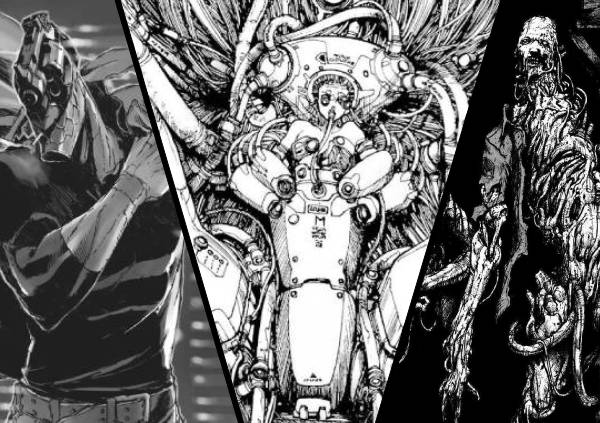
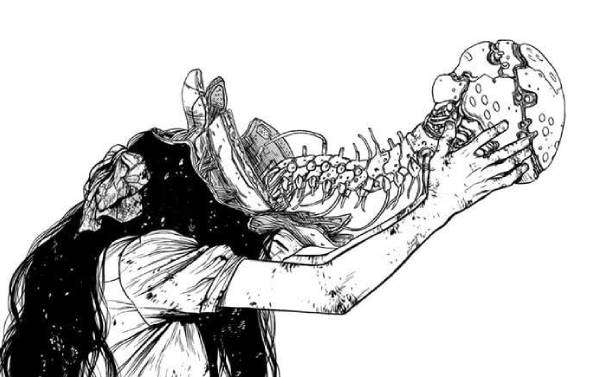
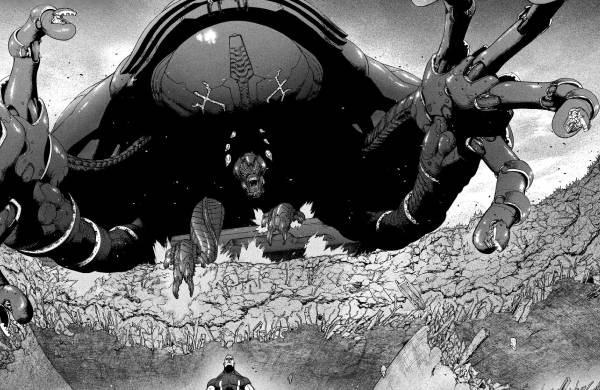
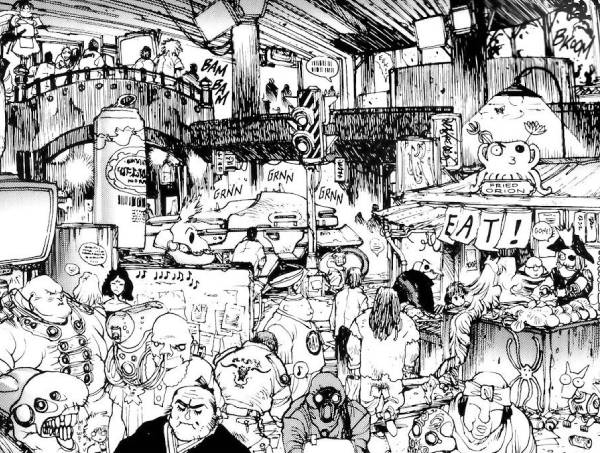
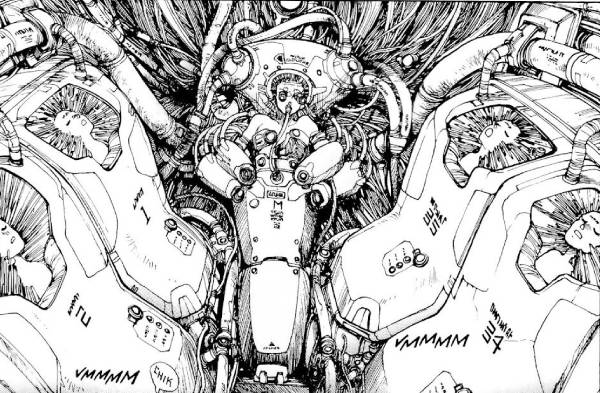
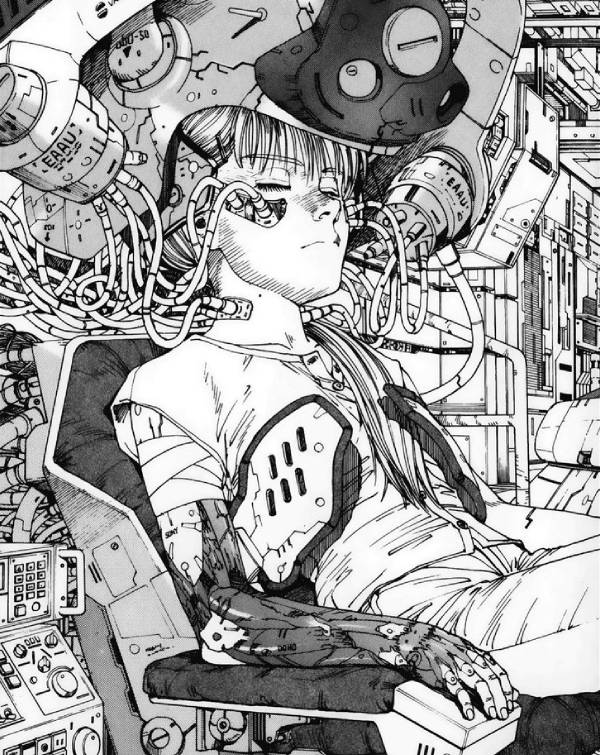
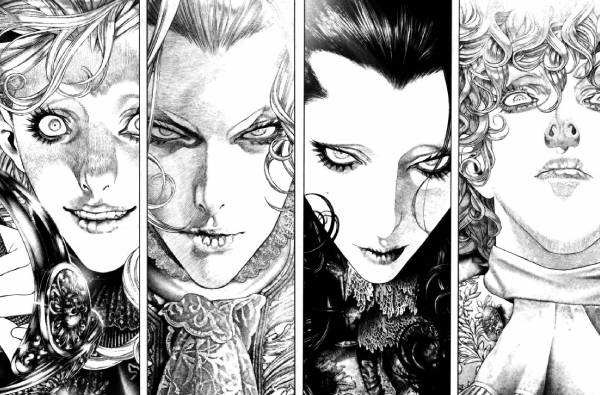
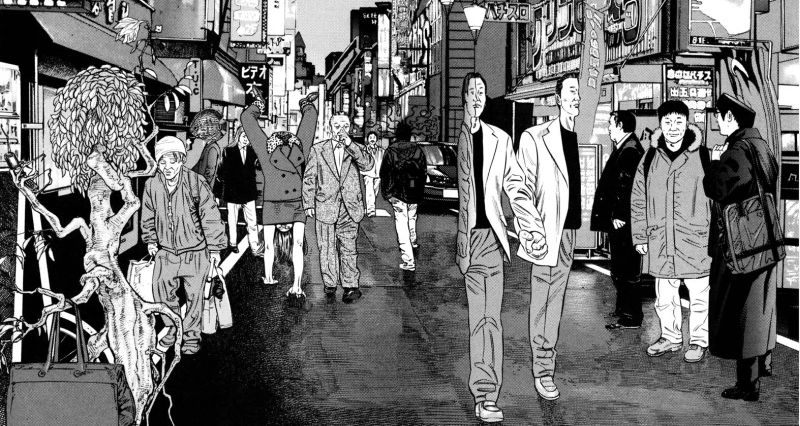
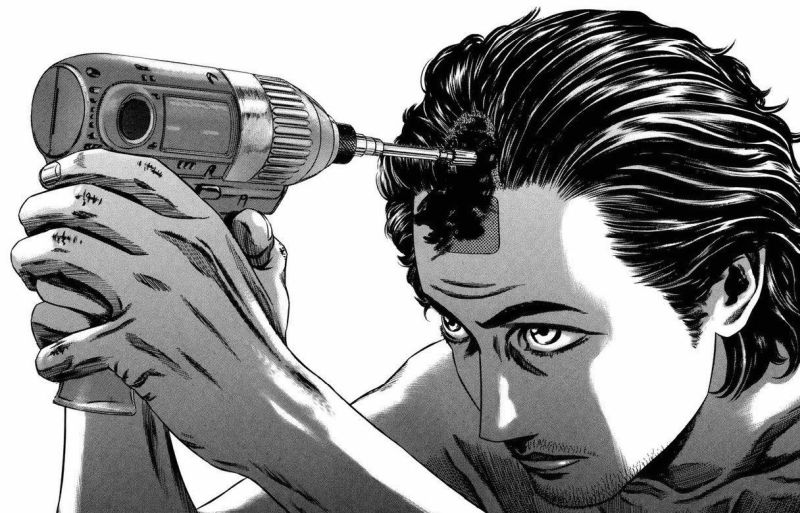
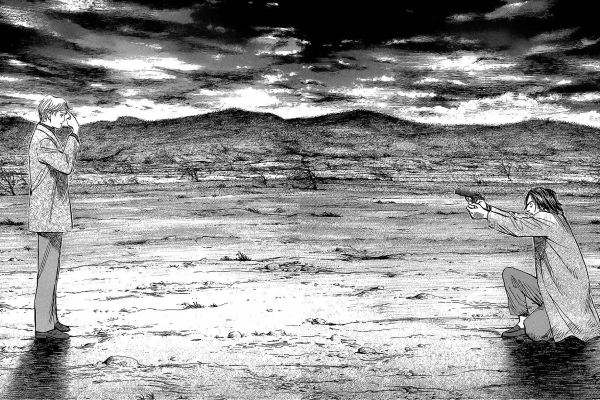
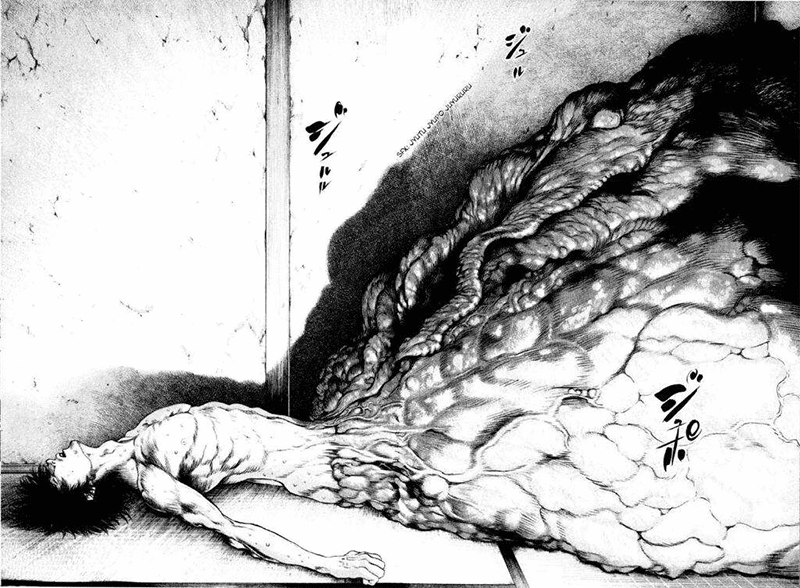
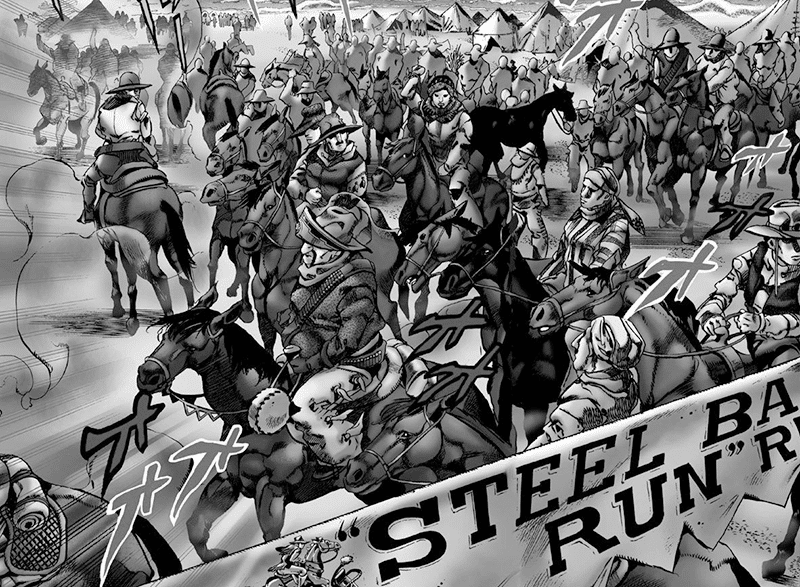
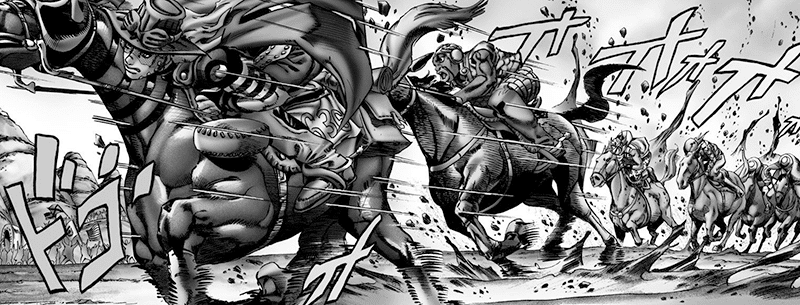
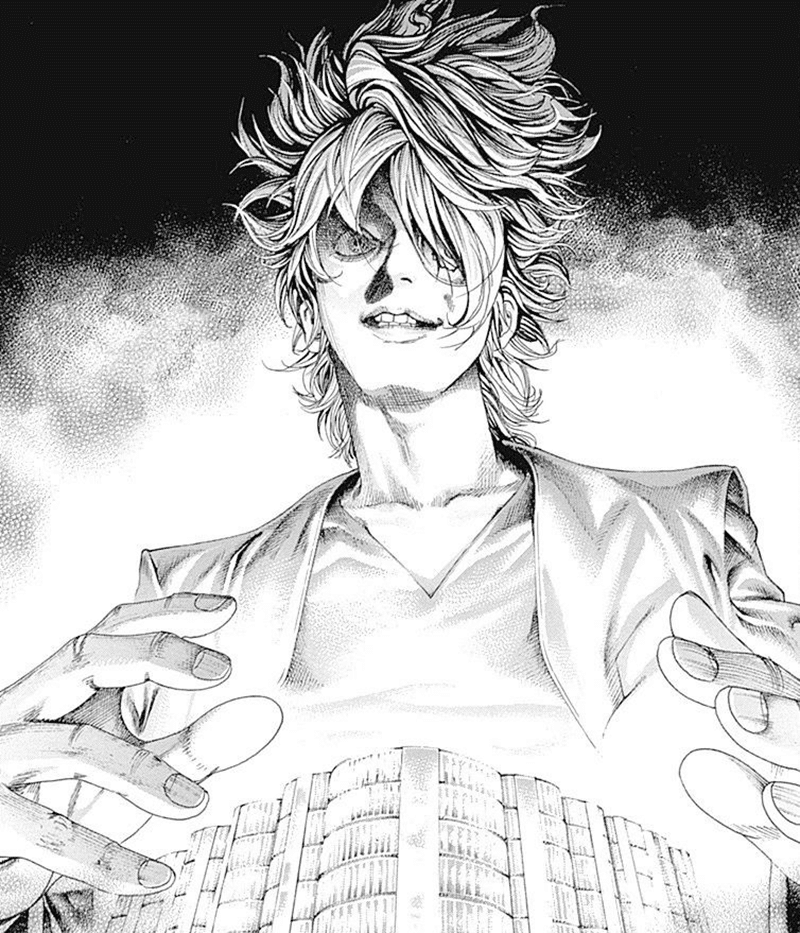
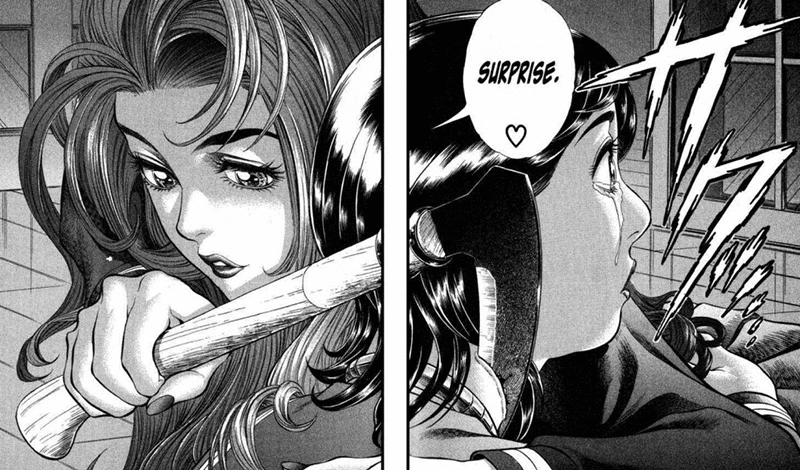
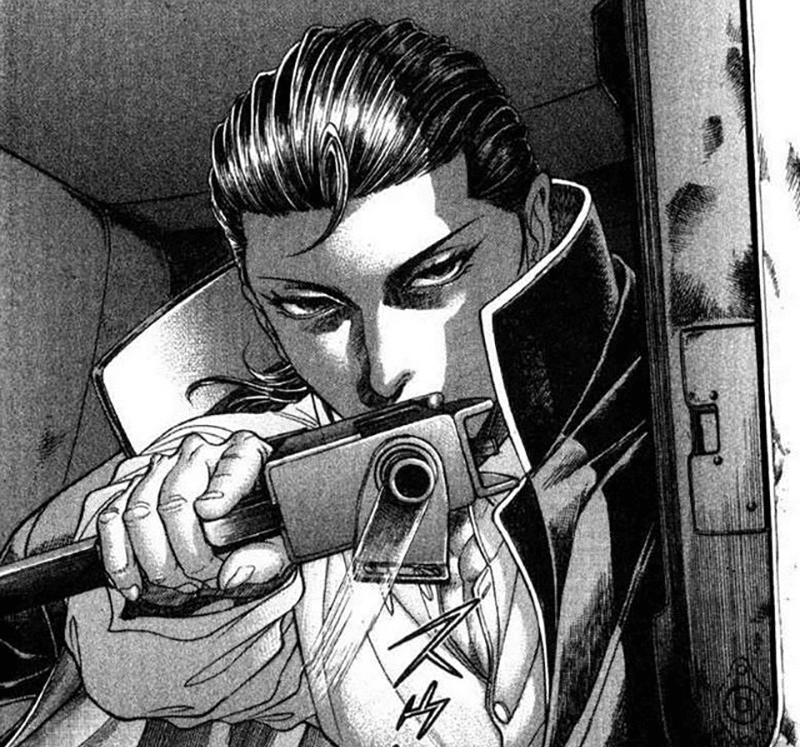
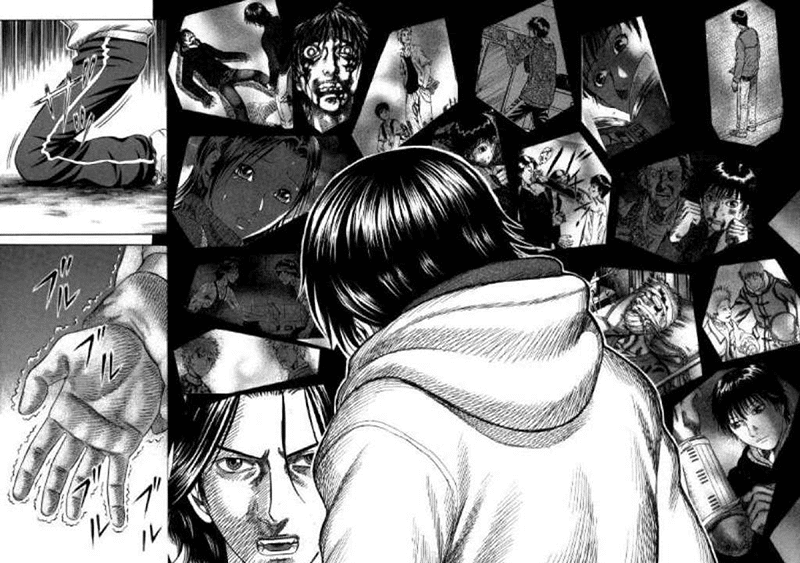
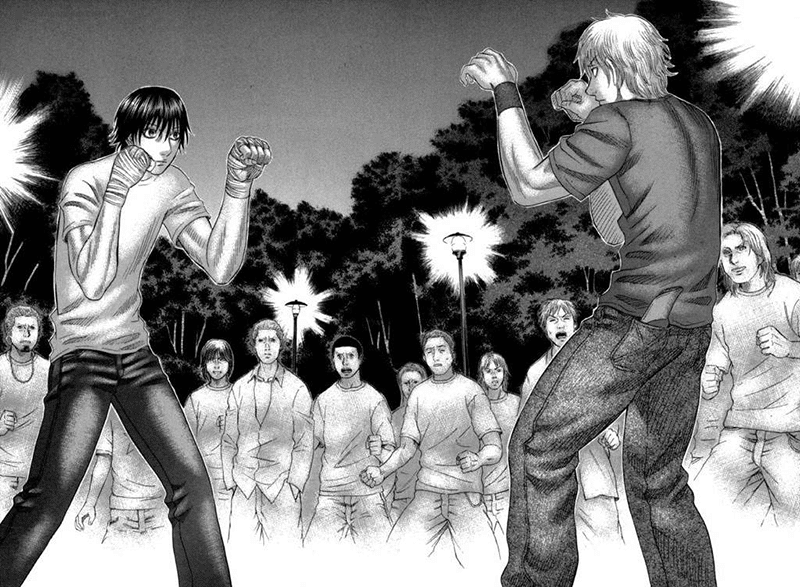
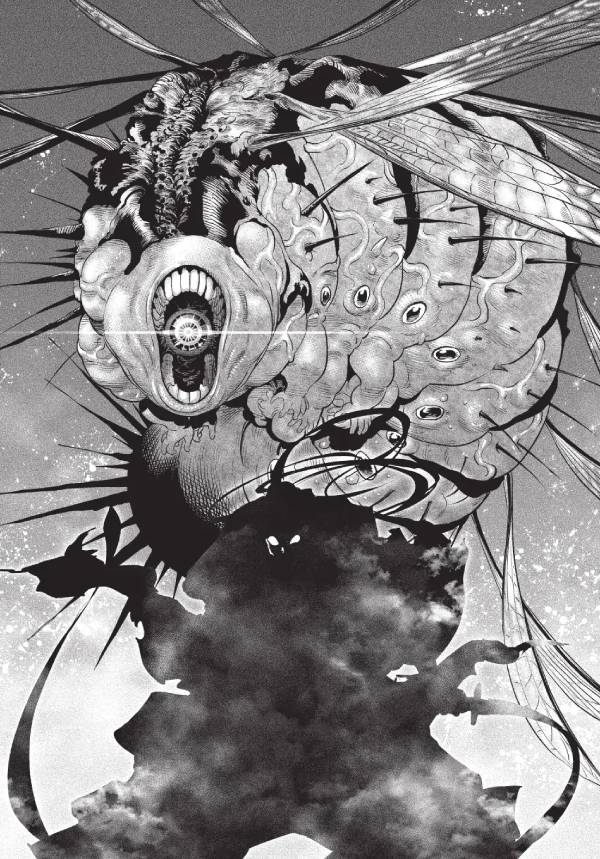
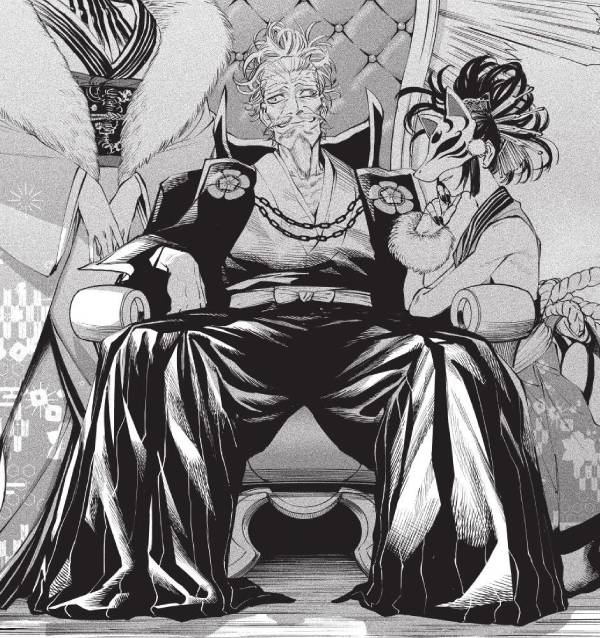
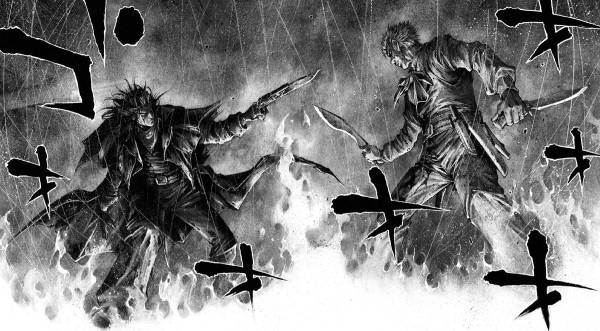
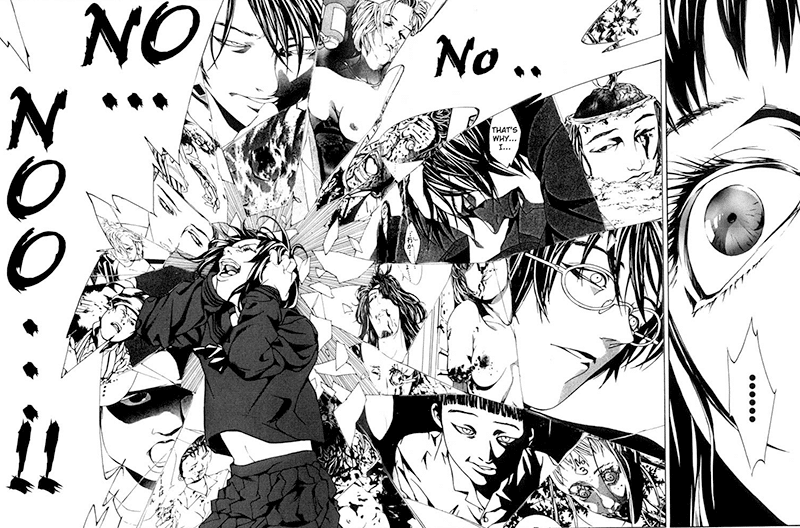
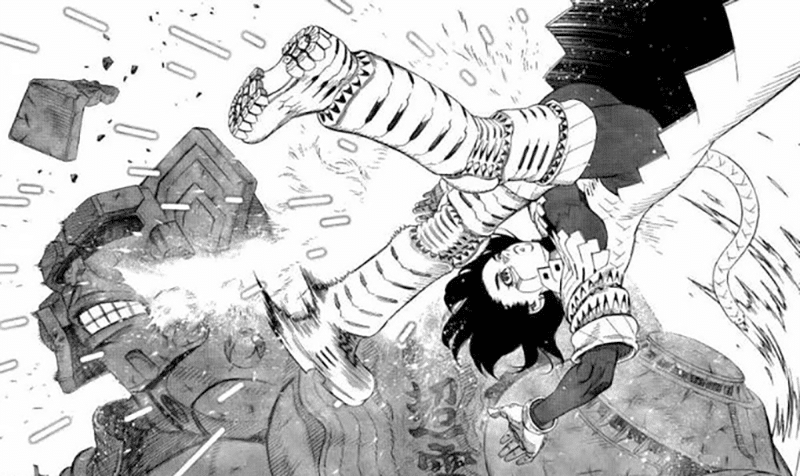
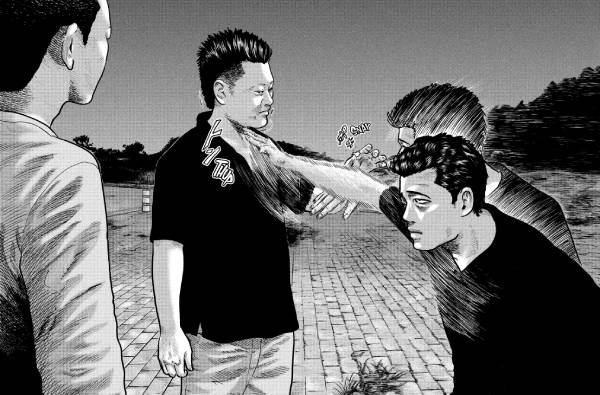
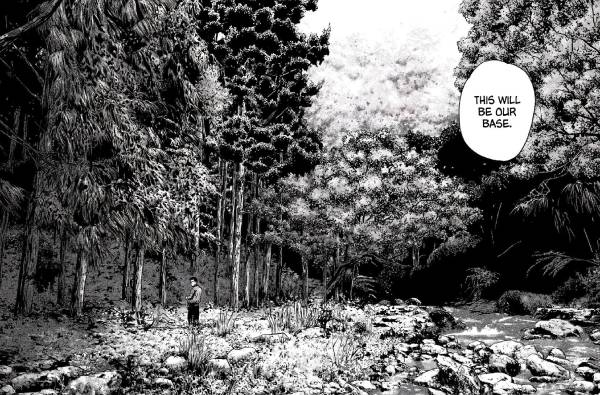
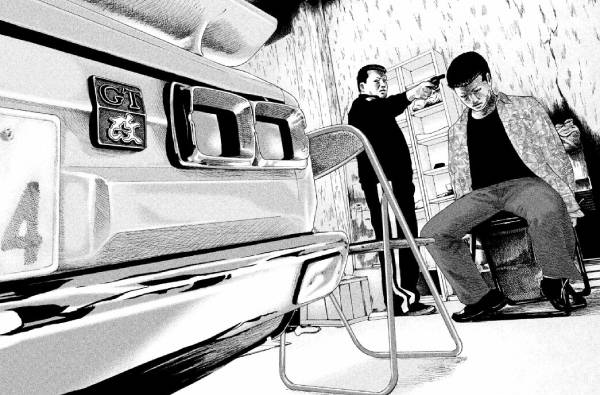
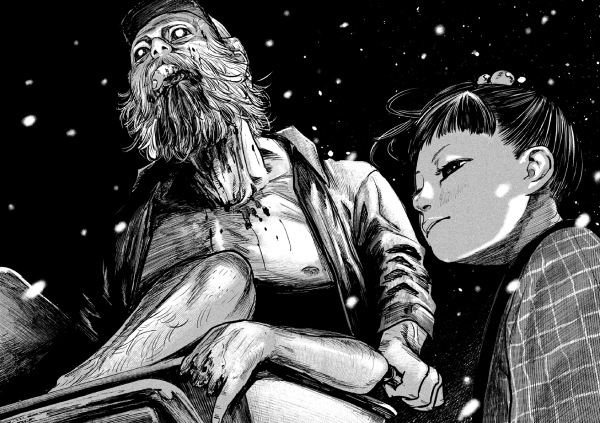
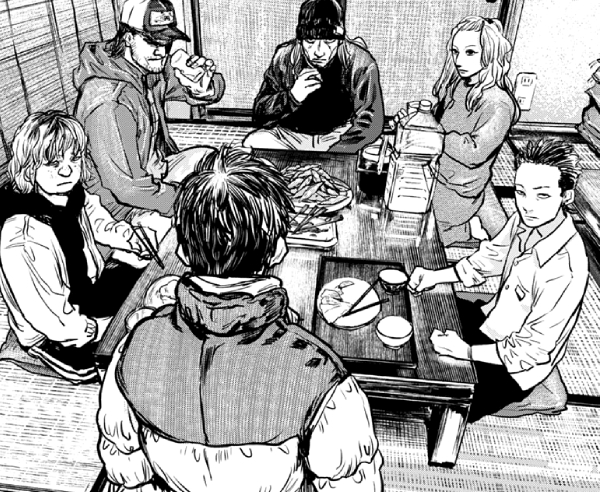
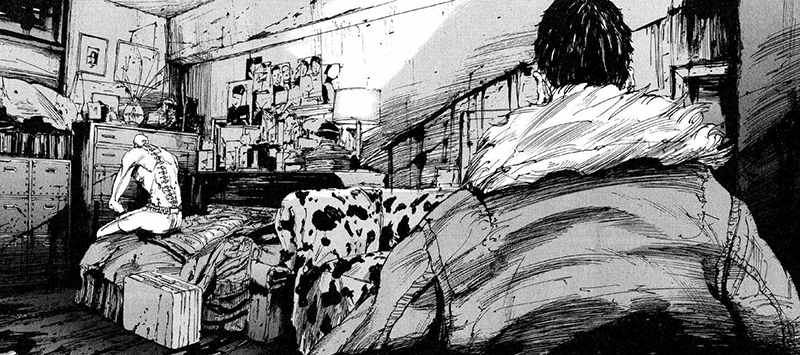
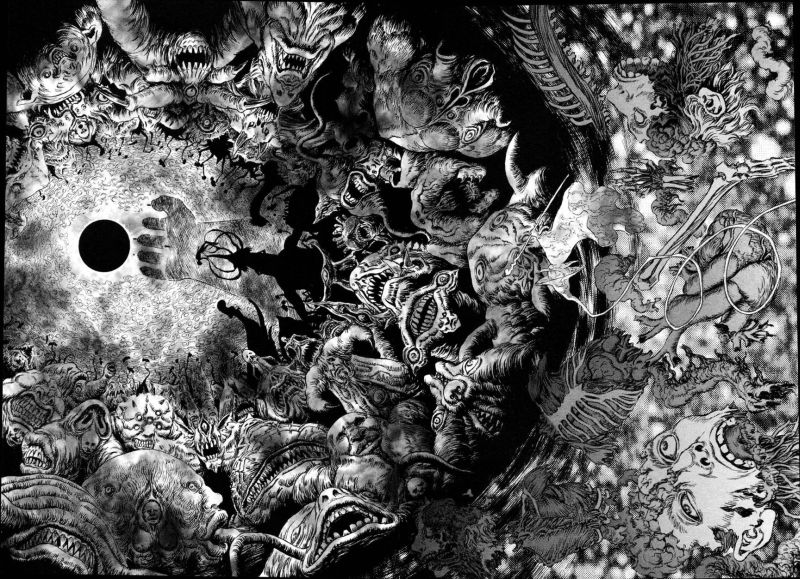
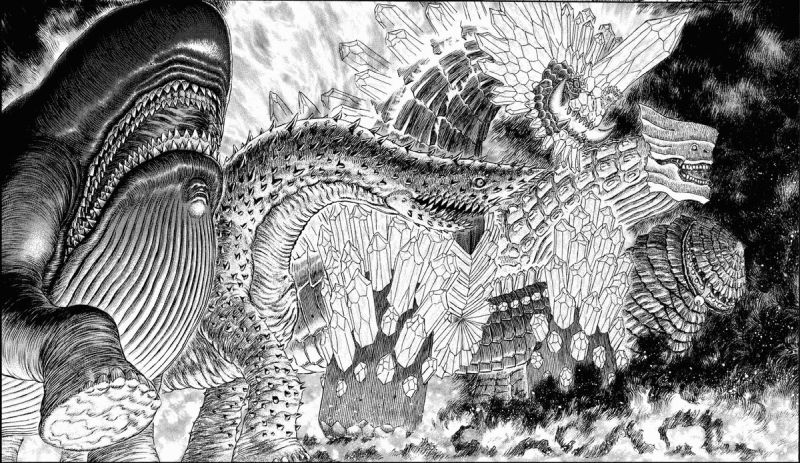
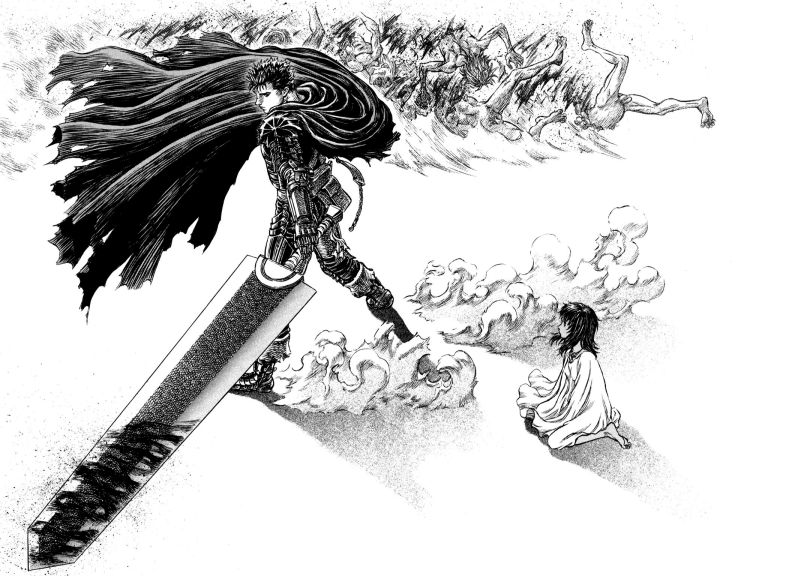
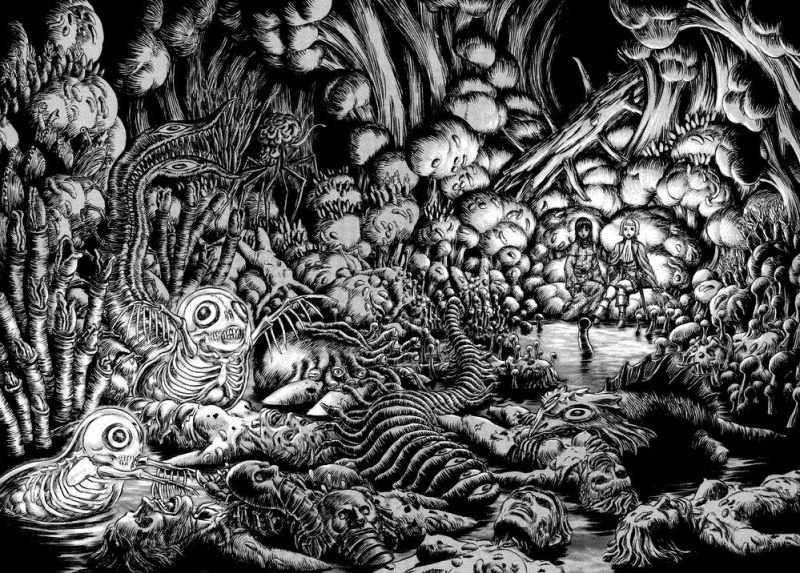
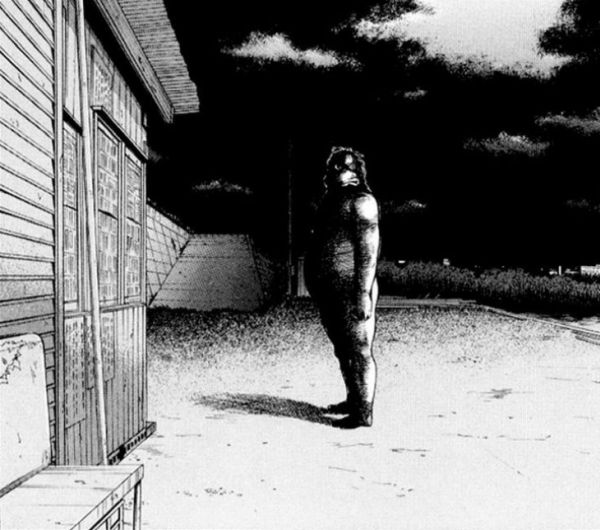
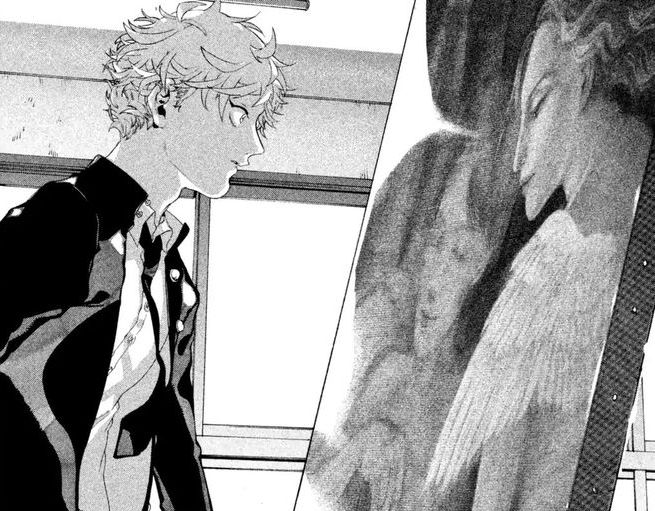
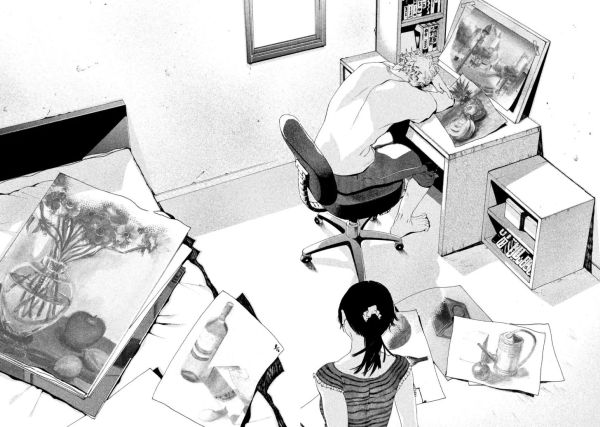
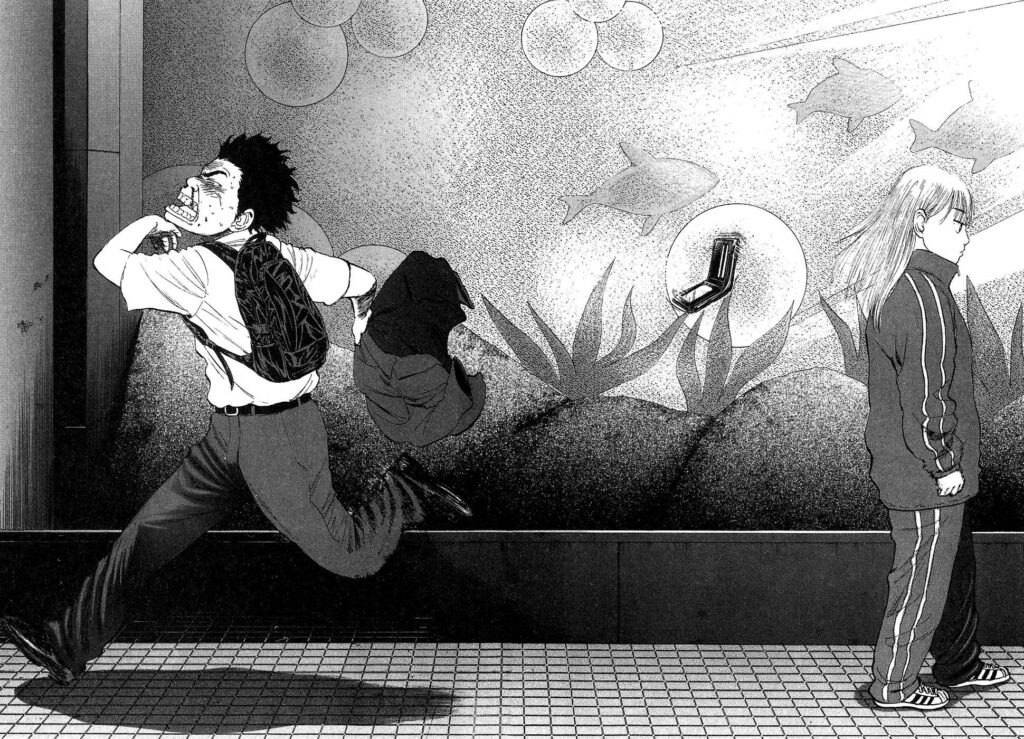
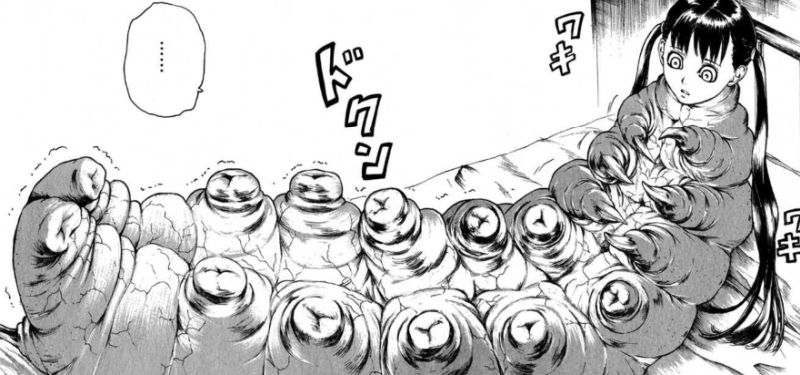
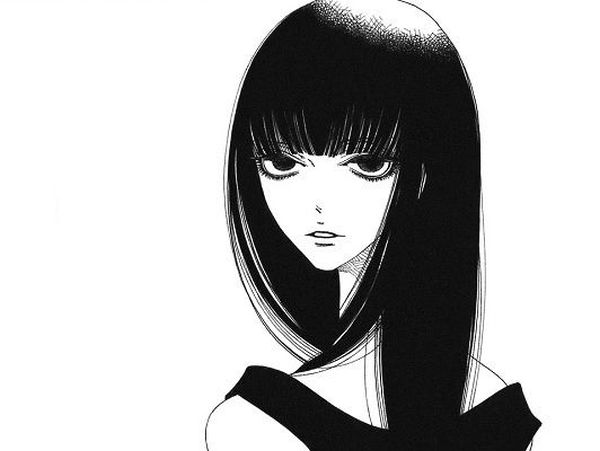
I’m a huge fan of cyberpunk. There’s something about the clash between futuristic vision and gritty streets, the tension between high technology and low-life, and the philosophical questions that surface when man and machine blur. That’s why I’ve assembled a list of my favorite cyberpunk manga.
In this list, you’ll find everything from claustrophobic detective stories to sprawling post-apocalyptic epics. Some are foundational pillars of the genre; others are modern additions. All of them, at least to me, are worth your time.
There aren’t a huge number of manga that lean hard into cyberpunk. Much of cyberpunk’s power lies in its unique visual and atmospheric identity: neon-drenched cityscapes, interfaces bleeding into flesh, and corporate towers casting shadows over broken streets. Yet among those who tread that ground, a few stand out.
From the gritty streets of No Guns Life to the impossibly vast, labyrinthine architecture of Blame!, from Akira’s Neo-Tokyo to Origin’s near-future ambiguity, this list offers a spectrum of cyberpunk tones and scales. Whether you’re drawn to corporate intrigue or existential machine horror, there’s something here across every tone and scale of cyberpunk.
Mild spoiler warning: I’ll try to avoid giving away major story beats, but some plot details are necessary for context.
Below is my ranking of the 11 best cyberpunk manga and what makes each title so compelling (last updated: October 2025).
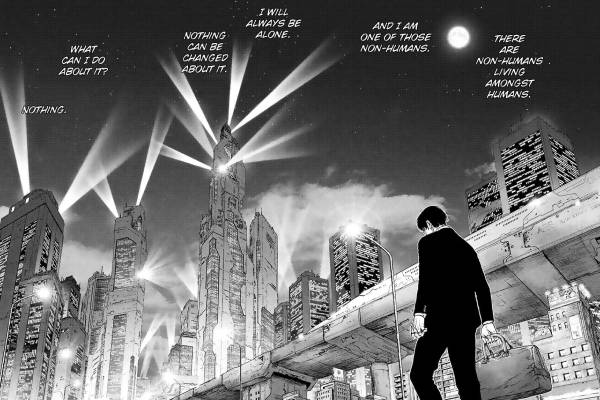
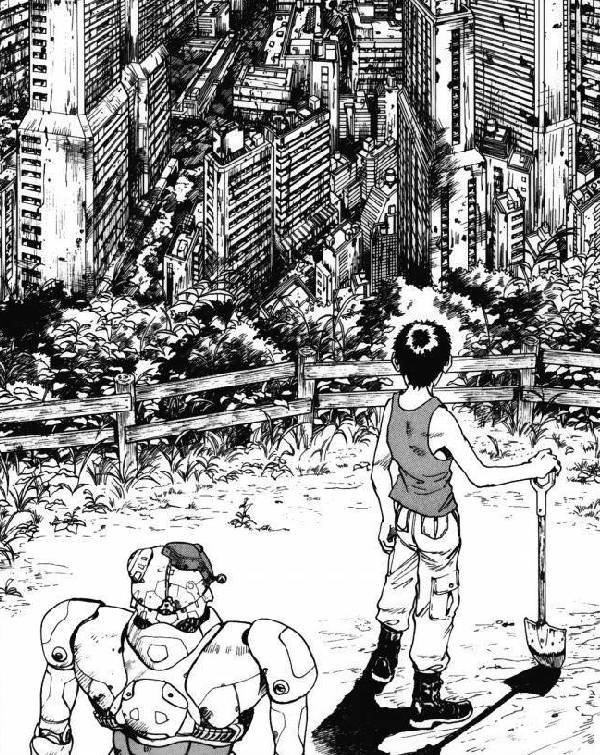
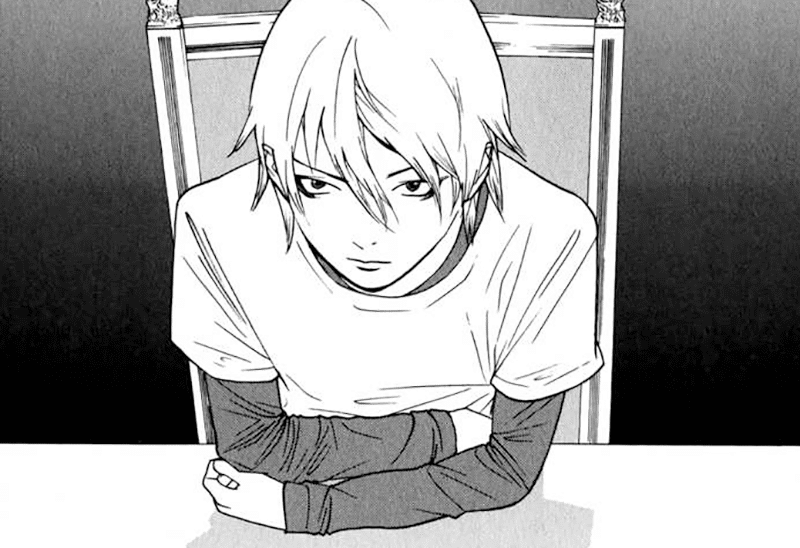
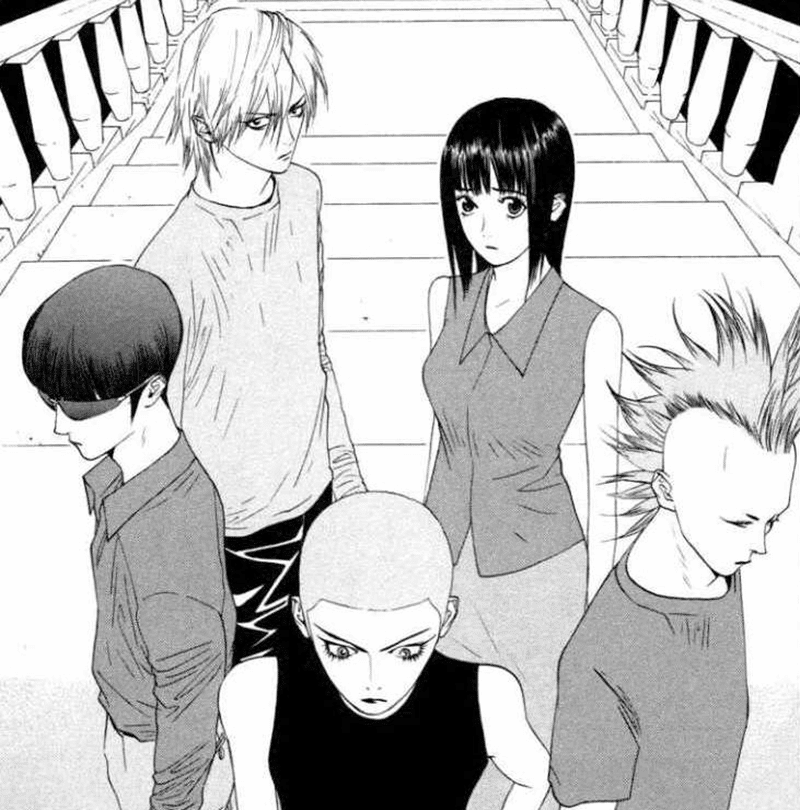
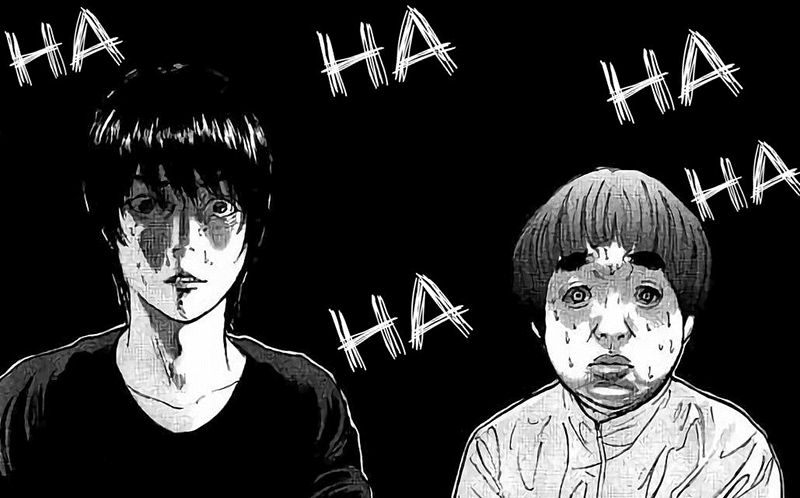
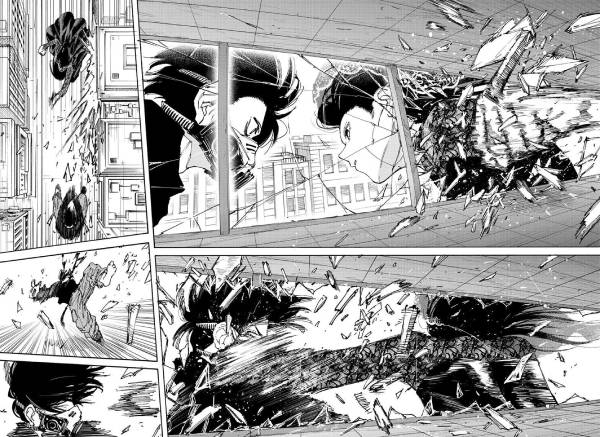
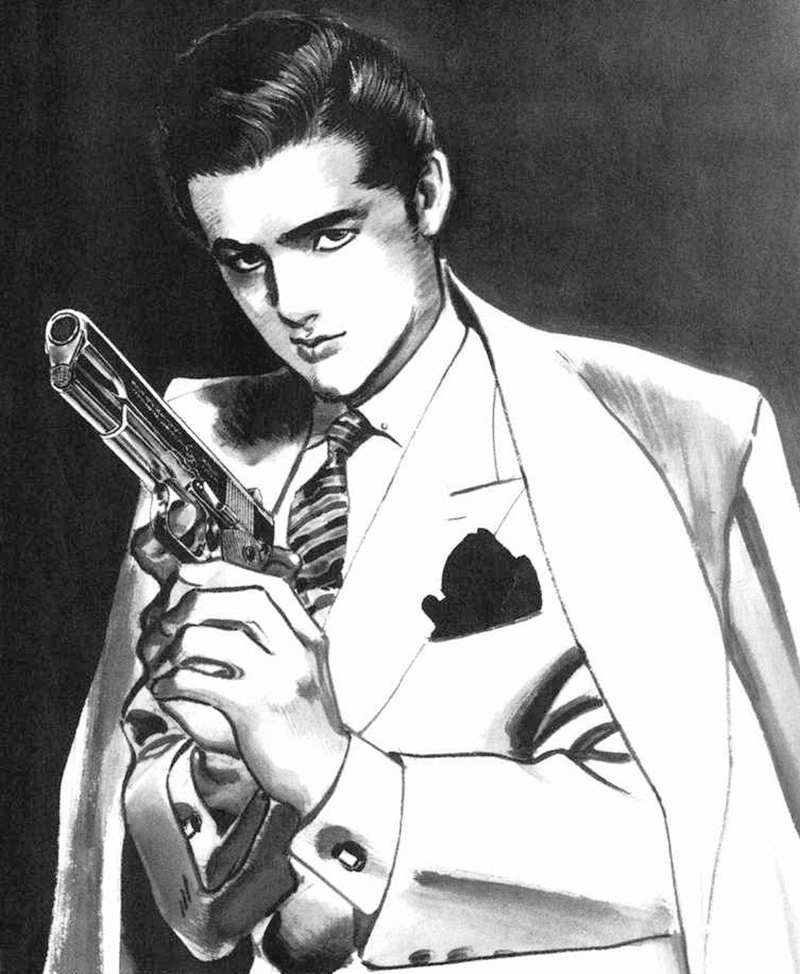
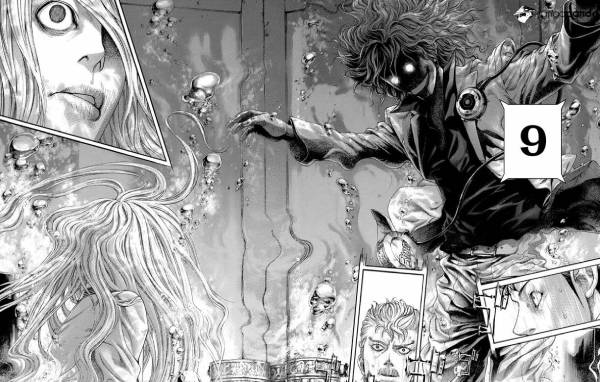
It’s the year 2048, and Tokyo has become the hub of a massive Eurasian railroad, linking the entire northern hemisphere. With that connection comes every form of crime and corruption imaginable. But beneath the neon sprawl lurks something worse: inhuman beings disguised as people. Among them is Origin, a prototype android who must conceal his own existence from humanity while hunting down his murderous siblings.
Boichi’s Origin is one of those rare cyberpunk manga that perfectly captures the genre’s high-tech, low-life ideals. It’s a story about identity, loneliness, and what it means to live among humans when you aren’t one yourself. Origin, our protagonist, spends much of the series trying to understand emotions, morality, and connection while performing his secretive duties. His logical thought process and machine-like detachment create both humor and melancholy.
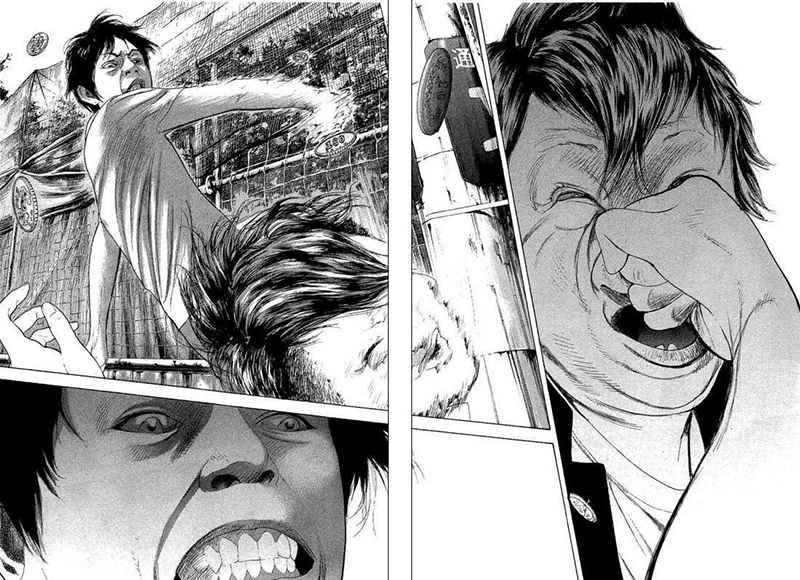
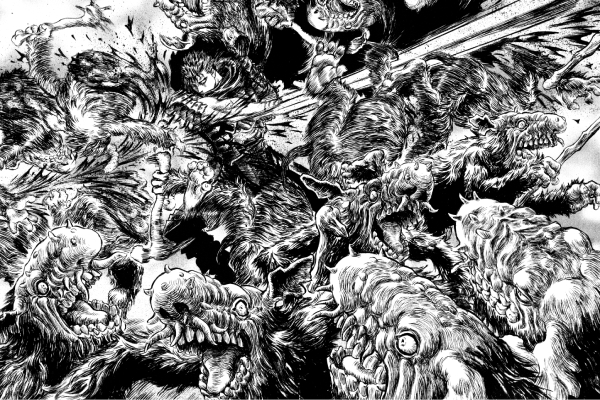
The series’ strongest element is Boichi’s art. His meticulous linework, intricate mechanical designs, and cinematic paneling bring his setting to life with staggering realism. Action sequences are fast, detailed, and fluid. Every clash of steel and synthetic flesh feels weighty. The more intimate moments, meanwhile, benefit from his photorealistic approach, giving the story an almost live-action look and feel.
Unfortunately, Origin is weighed down by Boichi’s more frustrating habits. The manga frequently derails into awkward fan service and tonal whiplash. It shifts from philosophical musings to exaggerated comedy or near-hentai shots. The female characters, while competently written, are often reduced to objectifying poses that distract from the atmosphere. Later arcs also lose narrative focus, and the rushed ending undercuts the thoughtful tone established earlier.
Despite these flaws, Origin remains a fascinating and visually stunning cyberpunk manga. It explores questions of humanity and artificial life through Boichi’s distinct lens, which is equal parts genius and excess. If you can tolerate the gratuitous fan service and occasional narrative chaos, you’ll find an unforgettable blend of hard science-fiction action and melancholic introspection.
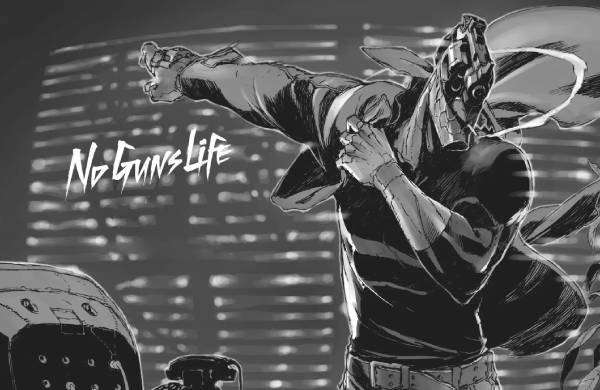
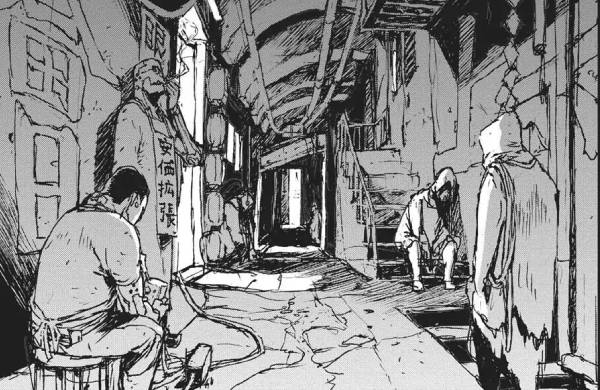
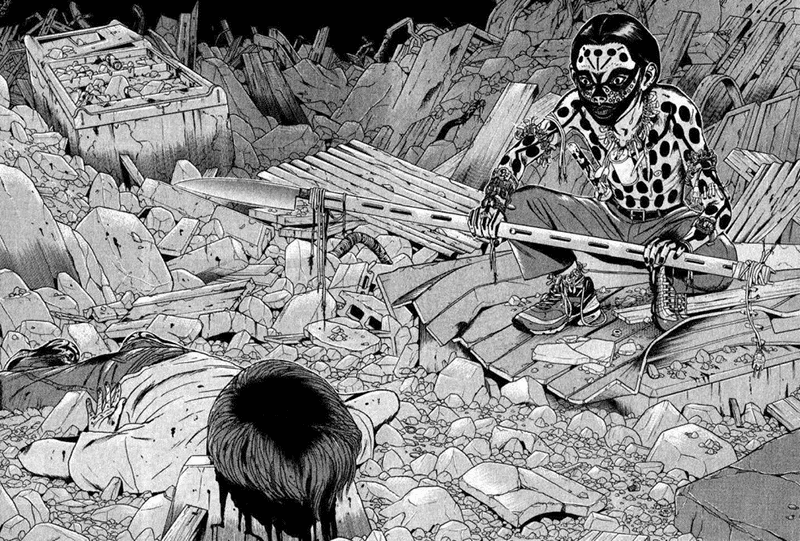
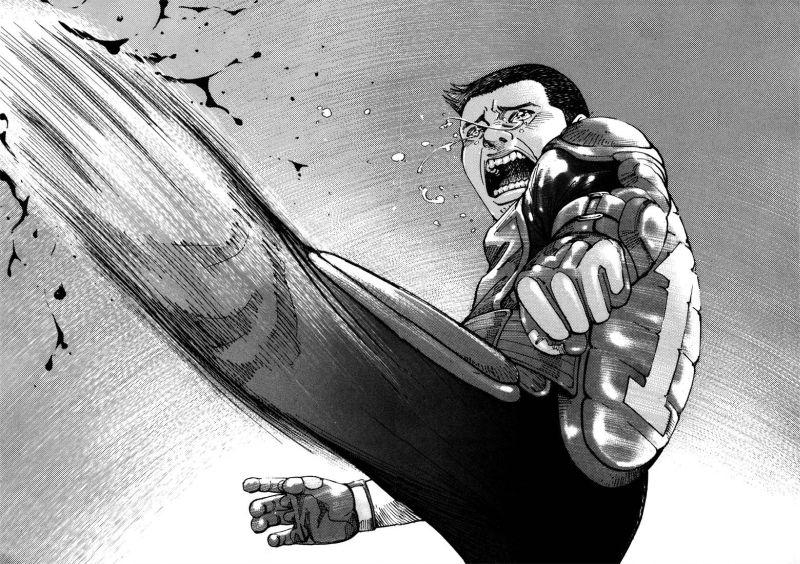
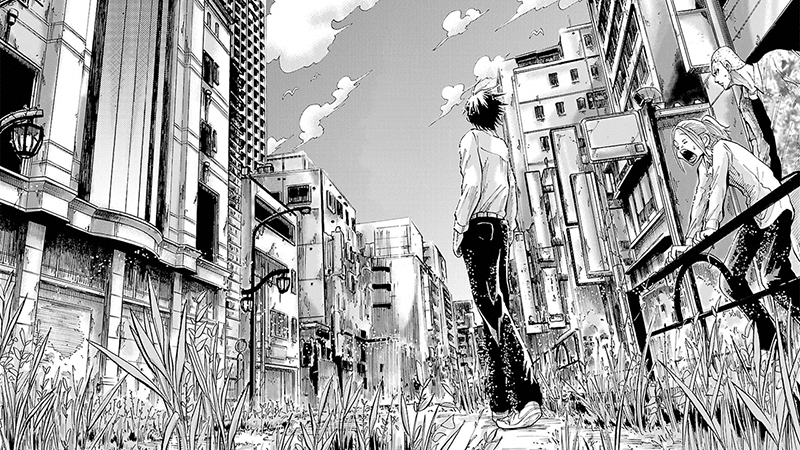
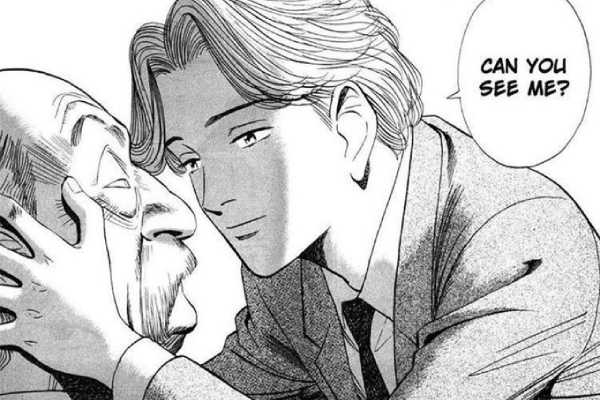
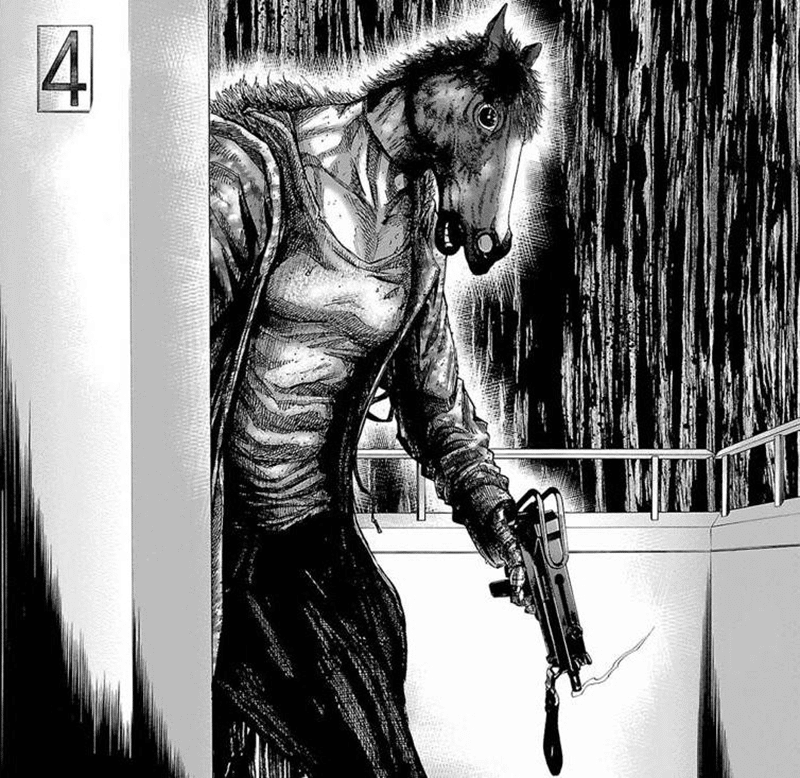
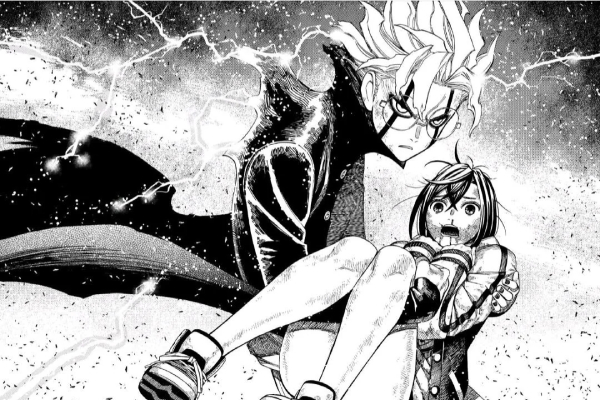
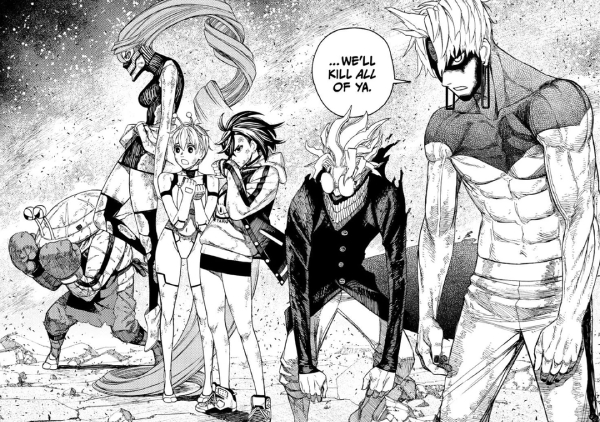
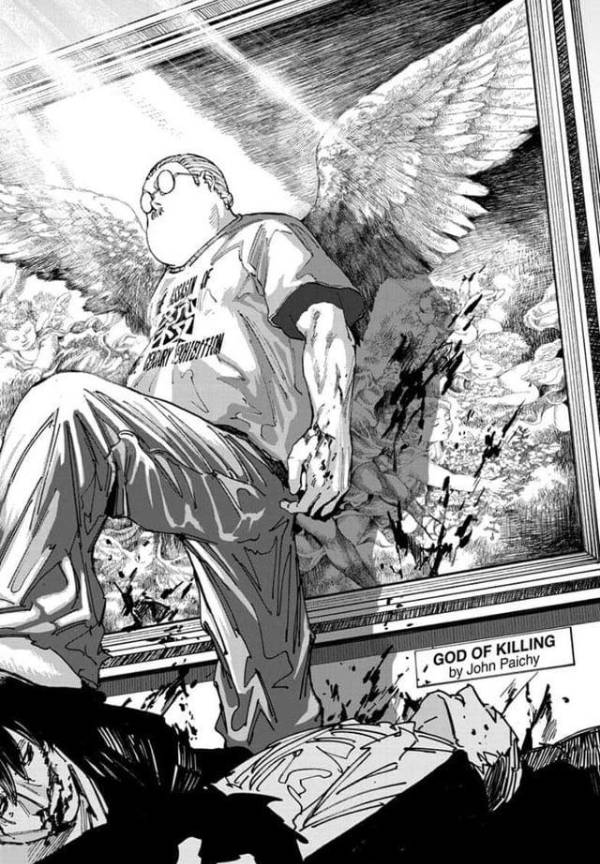
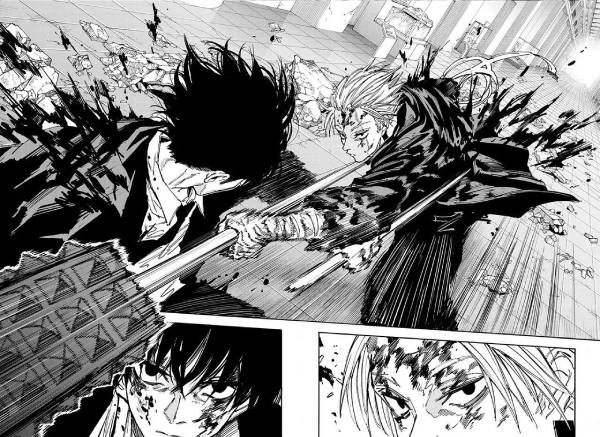
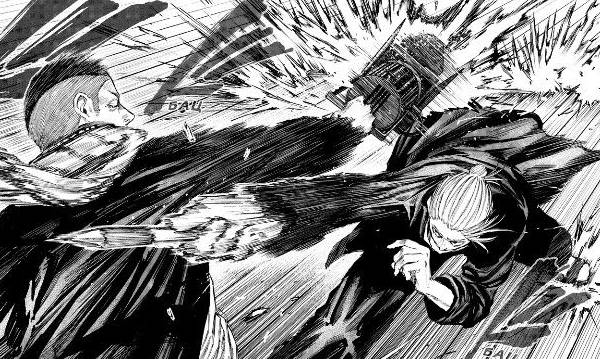
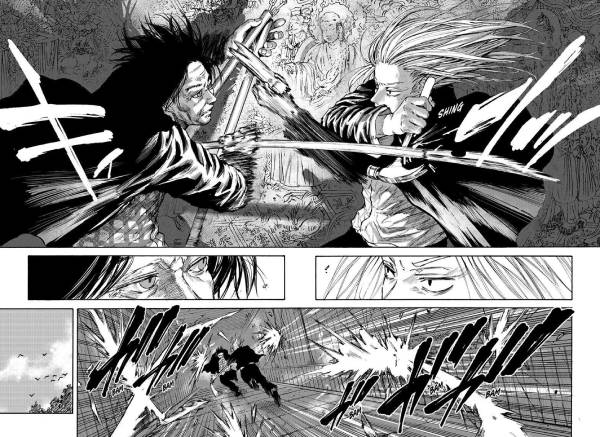
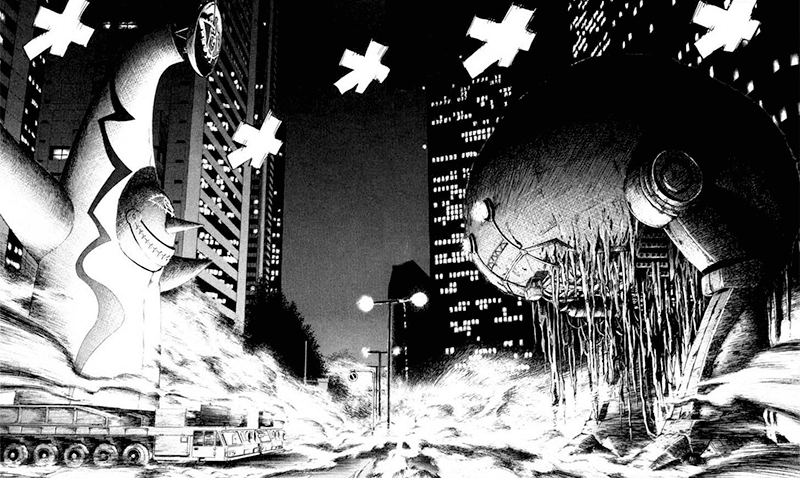
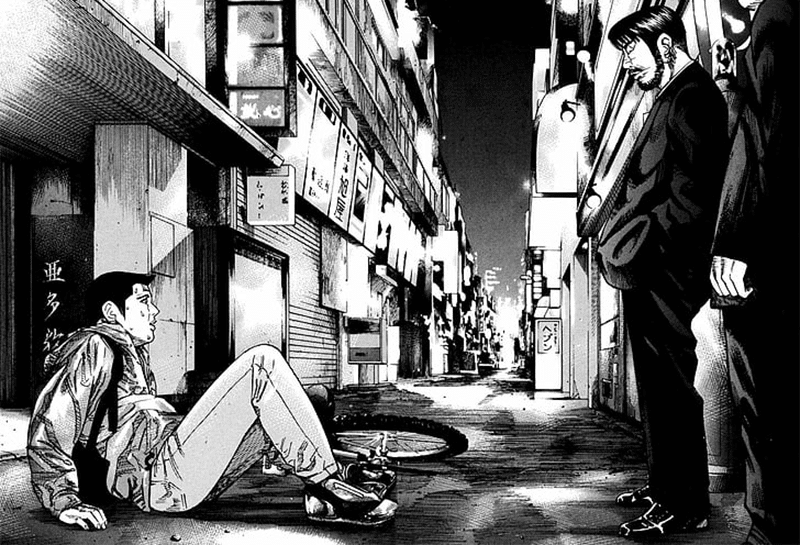
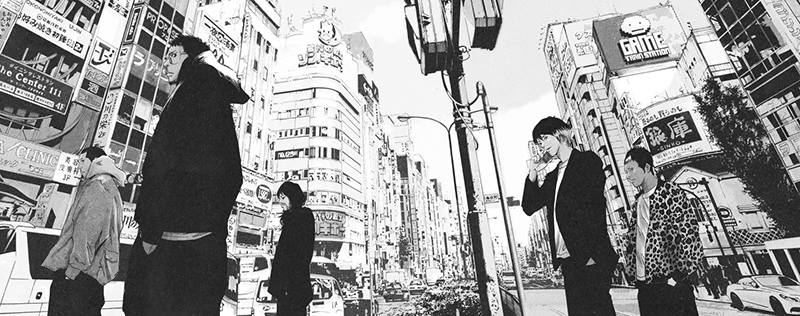
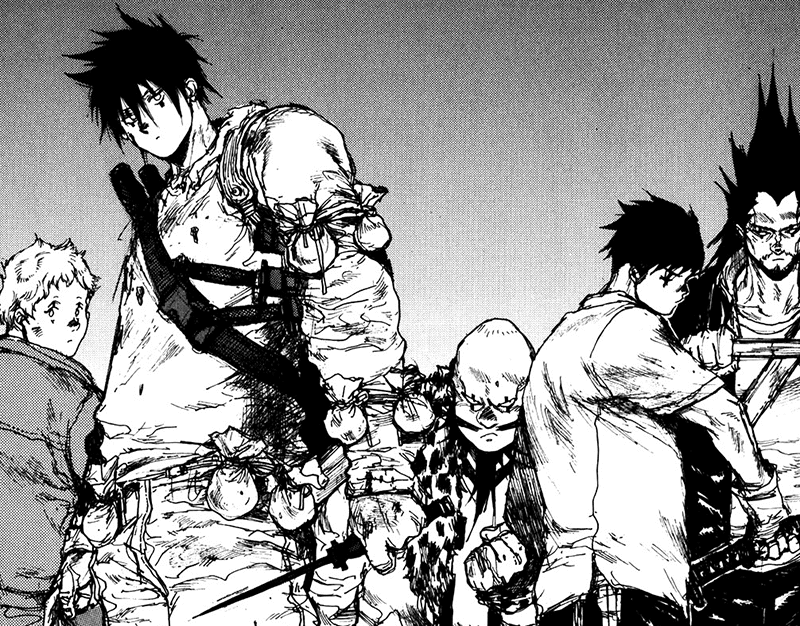
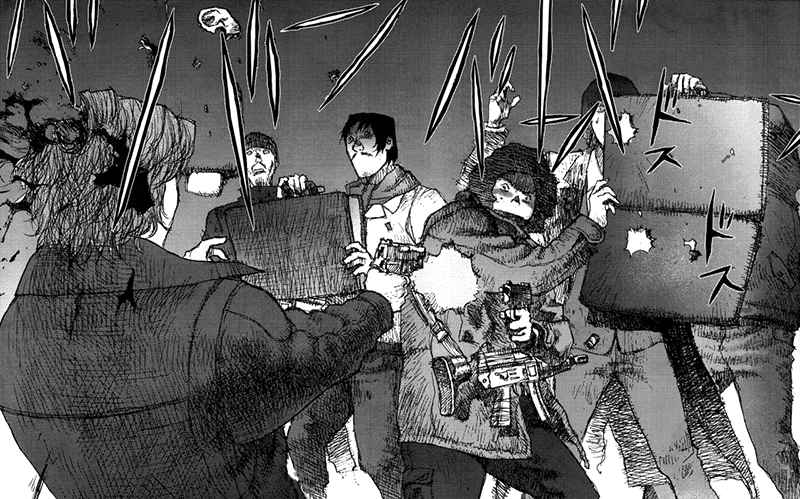
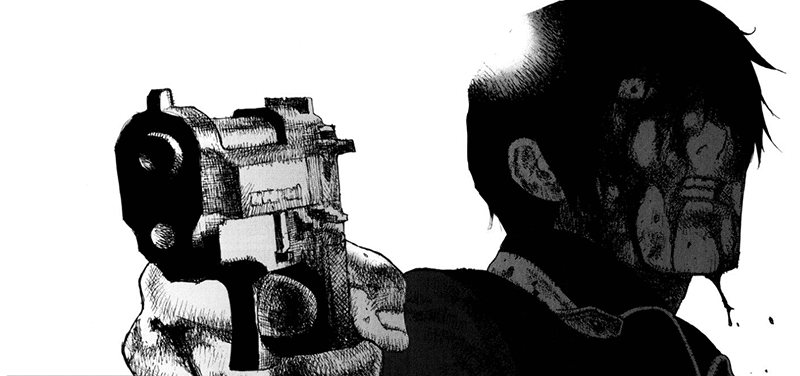
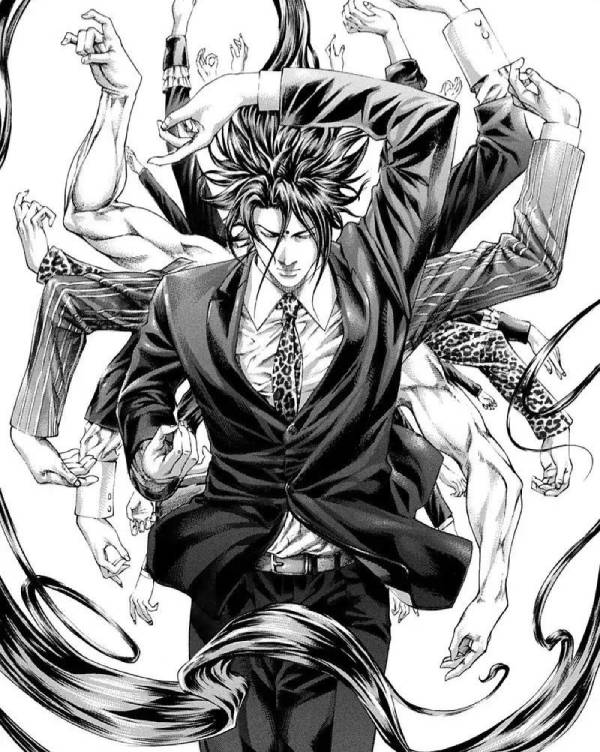
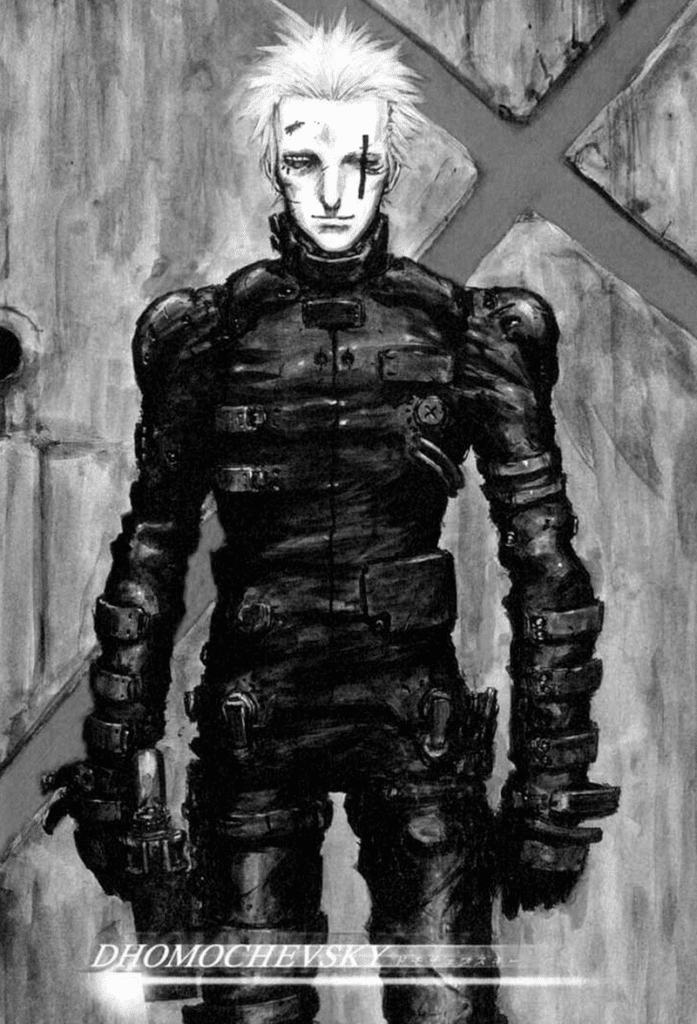
No Guns Life is a hard-boiled detective story that stands apart from the usual neon-drenched cyberpunk manga the genre is known for. Instead, it focuses on grimy, dimly lit hallways, smoke-filled clubs, and alleys where half-human, half-machine mercenaries struggle to survive.
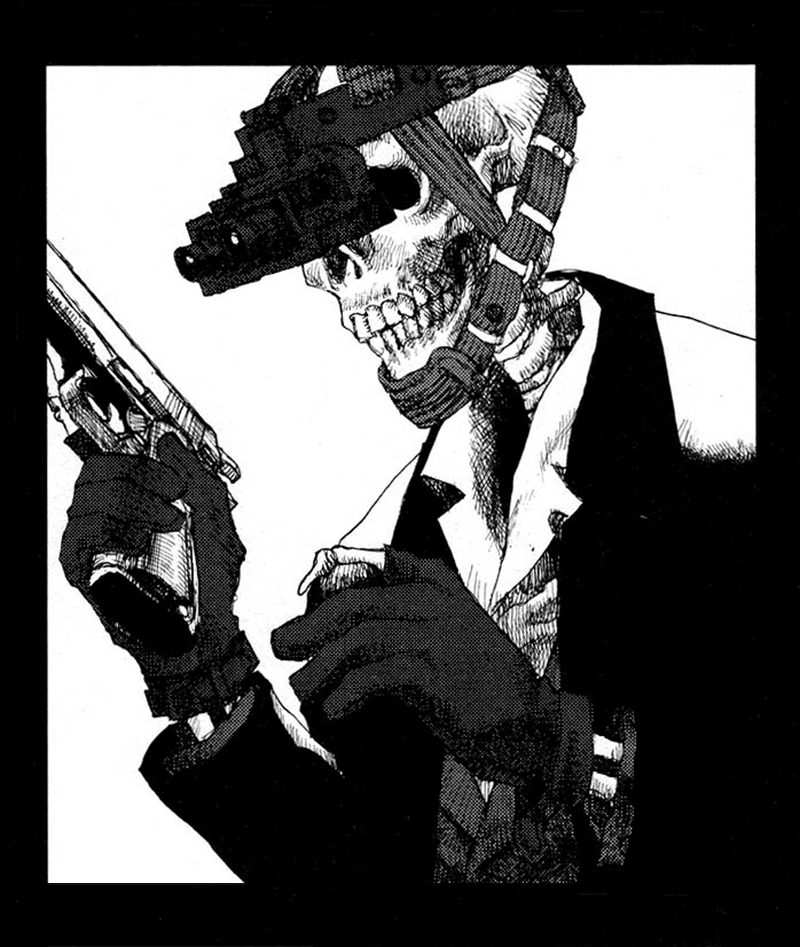
The story follows Inui Juuzou, an Extended, whose head has literally been replaced by a revolver. Once a soldier, now a private investigator, Juuzou takes on odd jobs in a postwar city overflowing with mechanical outcasts. He’s assisted by Mary, a street-smart mechanic who keeps him patched up. Together they navigate the city under the shadow of Berühren, a powerful megacorporation responsible for much of the technology and suffering that defines their world.
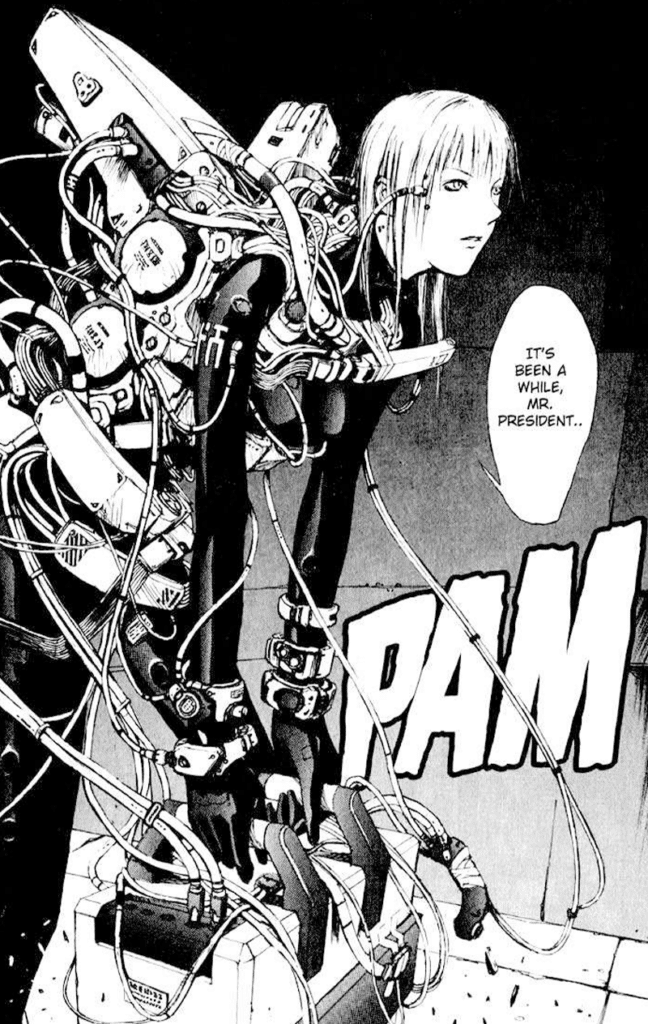
What makes No Guns Life special is its fusion of cyberpunk and noir. It’s less about massive futuristic skylines and more about claustrophobic interiors, flickering fluorescent lights, and surfaces covered in oil and grime. The result feels intimate, character-driven, and soaked in atmosphere. Juuzou embodies the archetypal noir protagonist: world-weary, moral in his own way, and haunted by his past. His strange design serves both as a visual metaphor and a psychological symbol for how a man turned into a tool of violence struggles to reclaim his humanity.
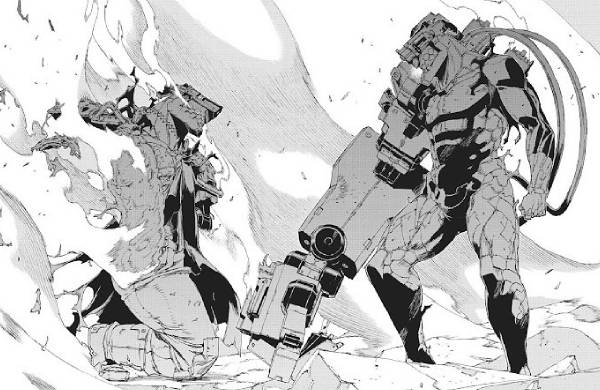
Karasuma’s artwork deserves special praise. Every page oozes with heavy contrast and industrial textures: metal limbs, stitched flesh, and shadowed streets are rendered in striking detail. The fight scenes can occasionally be chaotic, but when they land, they are stunning, full of brutality and kinetic motion. The creature and prosthetic designs give the manga a grotesque body-horror edge.
The storytelling can be episodic, drifting from one case to another, but that structure suits the noir tone perfectly. Each arc adds another layer to a larger mystery while letting Juuzou’s city breathe. It’s a world of broken soldiers, unethical science, and people who’ve forgotten the difference between metal and flesh.
No Guns Life may not reinvent cyberpunk manga, but it captures its soul and gives it a distinct, detective-noir edge.
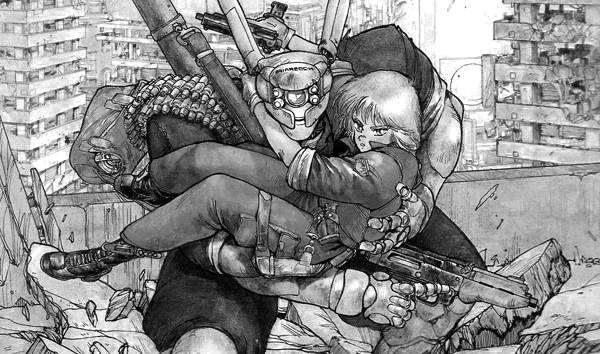
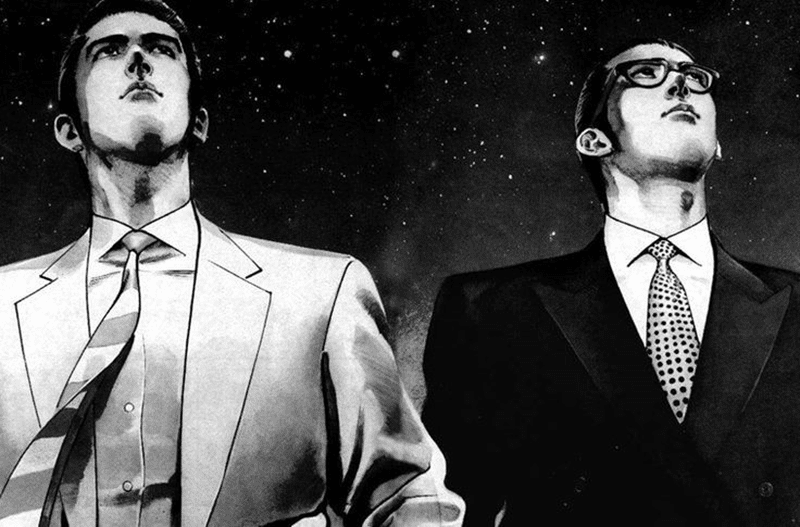
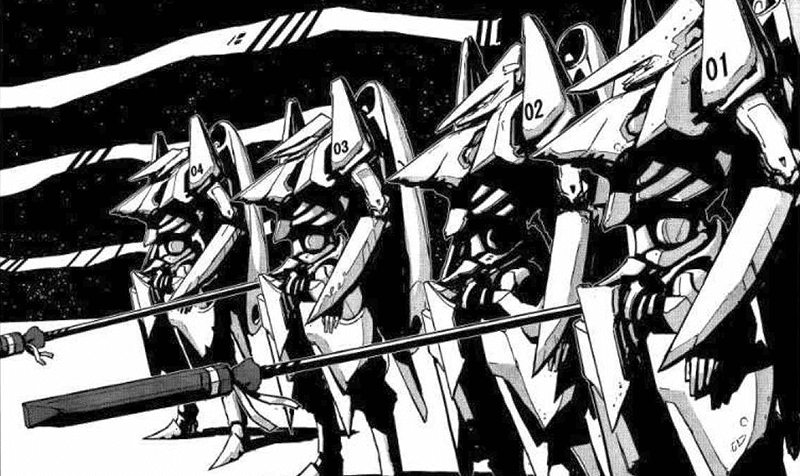
Before Ghost in the Shell cemented Masamune Shirow’s legacy as one of cyberpunk’s most influential creators, there was Appleseed. It’s a sprawling, ambitious, and occasionally chaotic vision of a postwar world. Originally serialized in the 1980s, it remains one of the earliest examples of cyberpunk manga, full of towering mecha, hybrid humans, and philosophical debates about the cost of utopia.
The story takes place in the 22nd century, after the Third World War left Earth in ruins. Amid the fallout, ex-SWAT operatives Deunan Knute and her cyborg partner Briareos are recruited into ESWAT, an elite unit serving the city of Olympus, a supposed utopia governed by advanced AIs and genetically engineered humans called bioroids. As the two uncover political conspiracies and power struggles beneath Olympus’s gleaming surface, it becomes clear that perfection is an illusion, and that even in a world built by machines, humanity’s flaws persist.
Appleseed is fascinating as a bridge between eras. You can already see the early sparks of the ideas Shirow would later refine in Ghost in the Shell: the fusion of philosophy and technology, the tension between human and artificial life, and the allure of digital governance. But here, those ideas come wrapped in a much more action-driven, militaristic package. Mecha battles, tactical missions, and high-tech showdowns dominate the page, balanced by moments of political intrigue and moral questioning.
Shirow’s art captures both the scale and density of his world. The mecha and cyborg designs are outstanding for their time: intricate, functional, and distinctly industrial. The paneling and shading, however, can be overwhelming during chaotic action scenes. The result is a manga that feels visionary one moment and impenetrable the next. Likewise, the storytelling swings between gripping and ponderous, weighed down by the occasional exposition and worldbuilding dumps that read more like manuals than dialogue.
Despite these flaws, Appleseed remains a cornerstone of cyberpunk manga. It captures the optimism and paranoia of its era. It may be rough, but it captures Shirow’s developing genius, showing the early sparks that would later define one of the greatest science-fiction universes ever created.
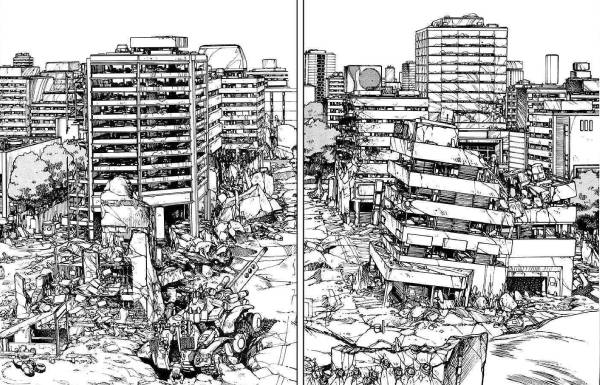
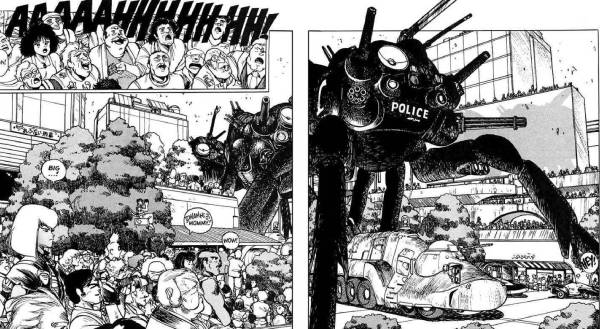
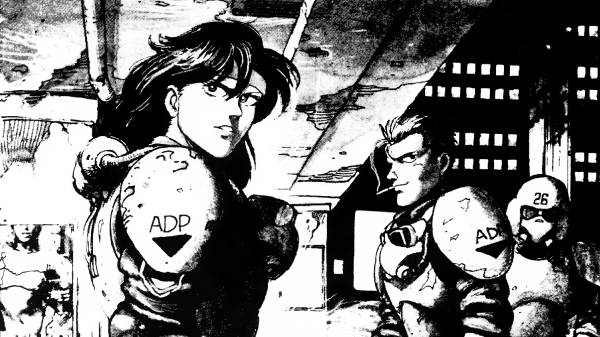
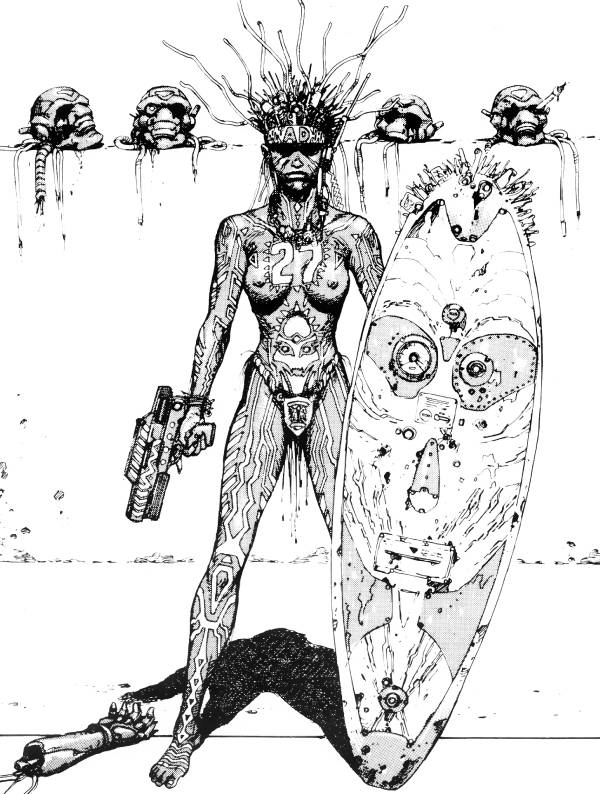
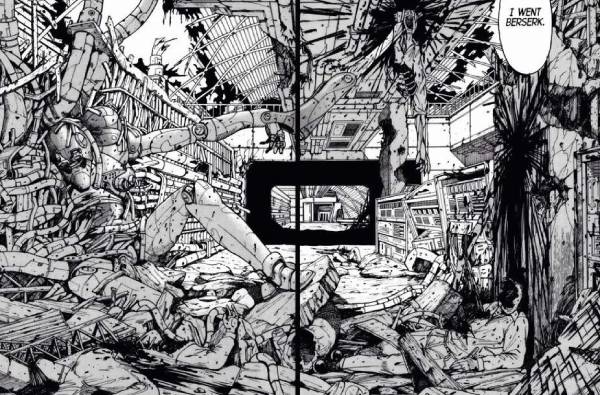
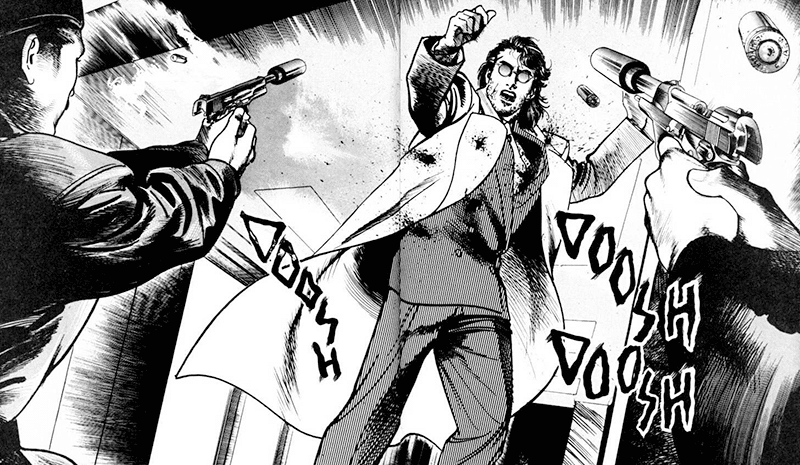
Bubblegum Crisis is one of my favorite anime of all time and the series that first pulled me into the world of cyberpunk. So I may be biased including its darker, grittier prequel, AD Police, on this list. This short cyberpunk manga might not have the flash and scale of Bubblegum Crisis, but it expands a fascinating world of rogue androids, collapsing urban infrastructure, and overworked law enforcement trying to keep the chaos contained.
Set in the futuristic city of MegaTokyo, AD Police follows a specialized police unit created to handle Boomer-related crimes. Boomers are sentient machines originally built for labor and security that frequently go berserk. Equipped with powered armor and military-grade tech, the officers of the AD Police walk the fine line between protector and destroyer, their operations often leaving entire blocks in ruins. The citizens they protect view them with suspicion, while the officers themselves battle cynicism, burnout, and moral decay.
The manga comprises short, loosely connected cases that slowly build into a bigger narrative, one that questions humanity’s control over its own creation. The final act flirts with the idea of mechanical transcendence, as a rogue Boomer believes it can evolve into a god and liberate its own kind from human rule. It’s ambitious, but unfortunately, the series doesn’t have enough room to fully explore those ideas. At only nine chapters, it often feels like a teaser for something great.
Still, what’s there is strong. The tone is pure late-1980s cyberpunk, full of wide cityscapes and rain-slicked streets illuminated by neon lights. The art feels inspired by Akira, clean, kinetic, and slightly rough, giving MegaTokyo a sense of grime. The storytelling is tight, but unpolished, with action taking the place of character development. Yet within its nine chapters, AD Police captures a mood few other cyberpunk manga do. It’s the uneasy mix of fascination and fear toward technology that so defined the genre’s golden age.
Even though it’s short and somewhat underdeveloped, AD Police remains a hidden gem for fans of Bubblegum Crisis and classic 1980s cyberpunk. It may be a brief read, but it’s a snapshot of the era’s obsession with machines, morality, and dystopia.
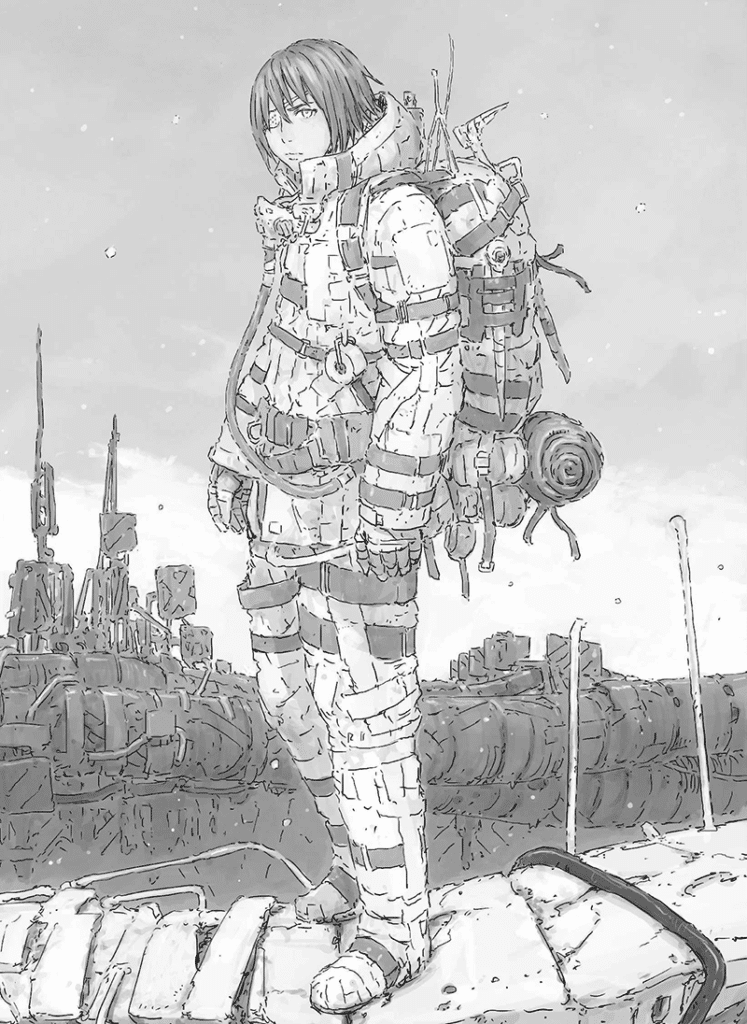
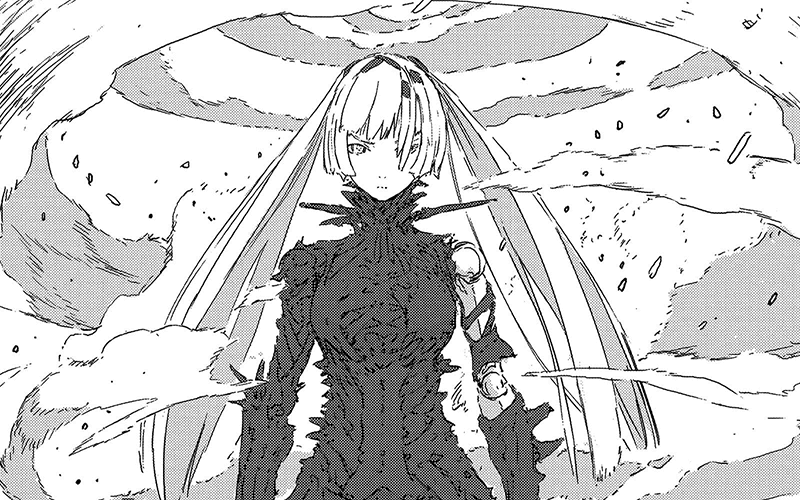
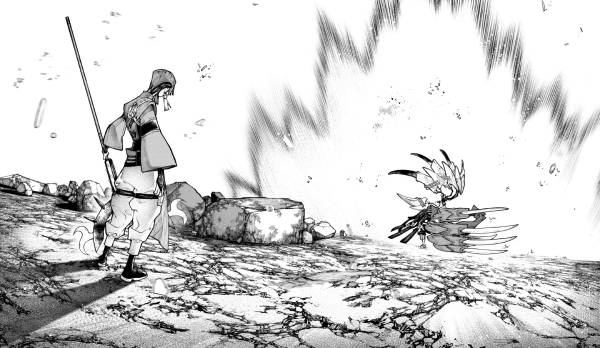
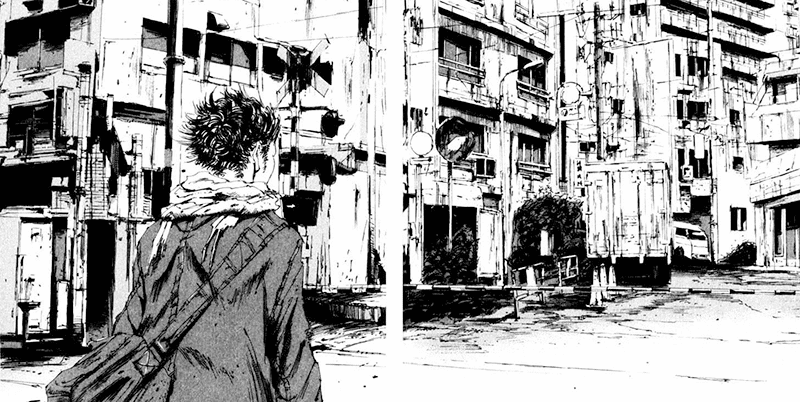
Tsutomu Nihei is one of my favorite mangaka, and few artists have shaped cyberpunk manga as profoundly as he has. Known for his works like Blame! and Knights of Sidonia, Nihei built a reputation for towering architecture, cryptic worlds, and stories where humans are dwarfed by impossible dimensions. Aposimz marks a fascinating evolution in his career, a continuation of his themes filtered through a starker, more minimalist lens.
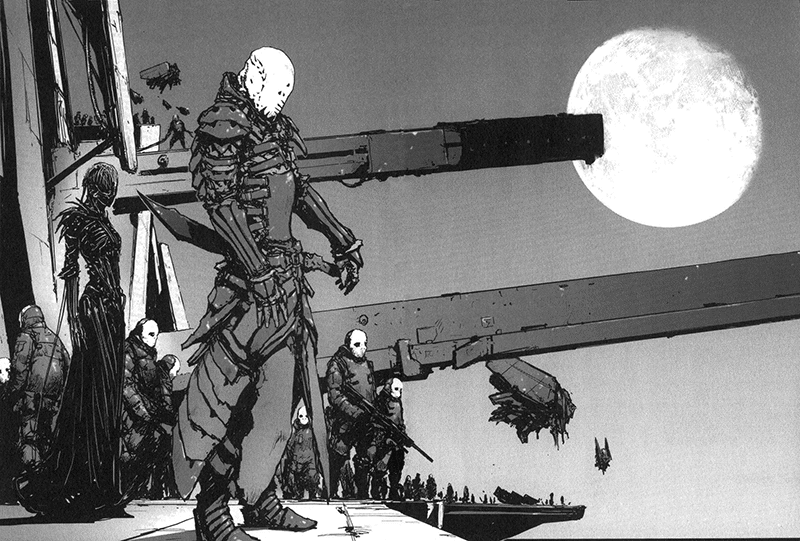
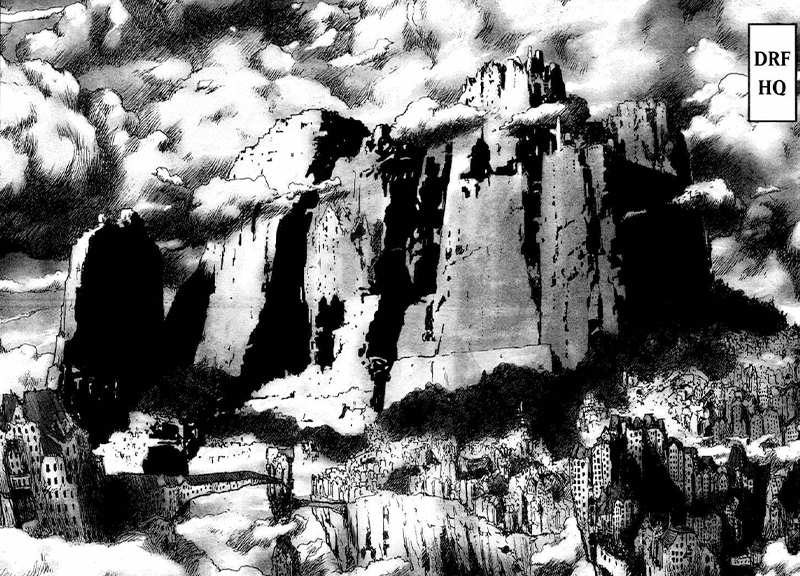
Set on the artificial planet of Aposimz, the story unfolds after humanity’s catastrophic defeat by the world’s inner core. The survivors are forced to live on its frozen surface, surrounded by decaying ruins and mechanical horrors. In this wasteland, a young man named Etherow encounters Titania, a mysterious fugitive pursued by the Rebedoan Empire. His decision to help her destroys his village, leaves him mortally wounded, and ultimately transforms him into a cybernetic soldier known as a Regular Frame. From there, Etherow joins a rebellion that could decide the fate of the planet itself.
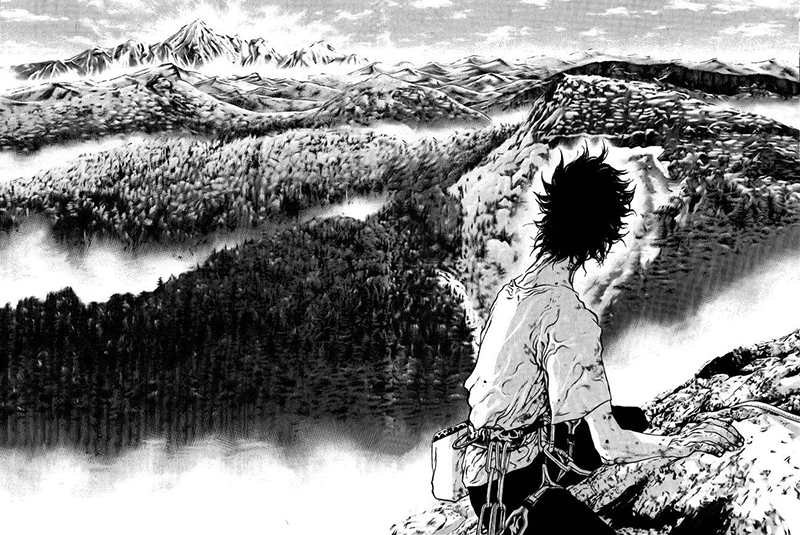
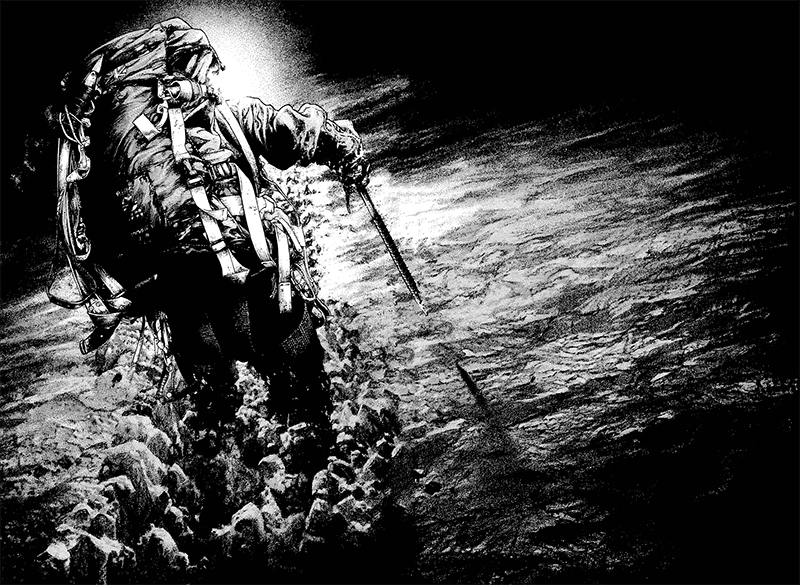
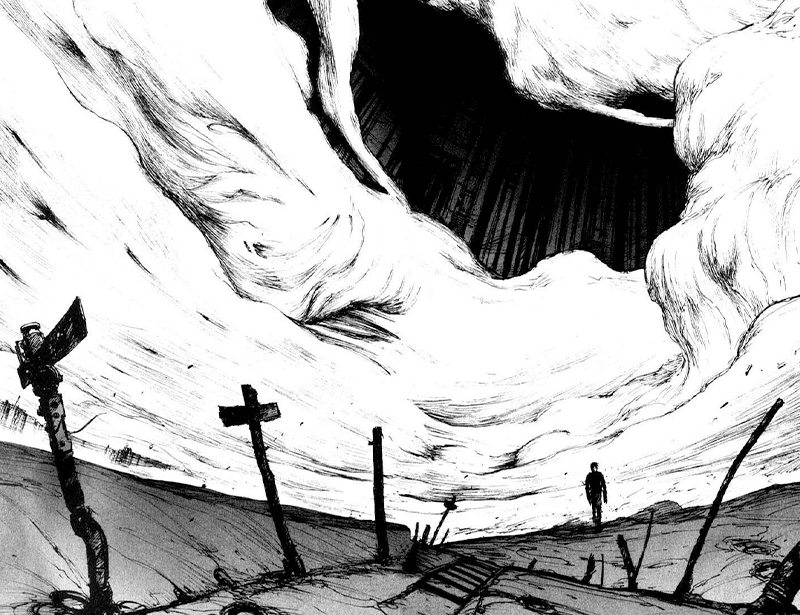
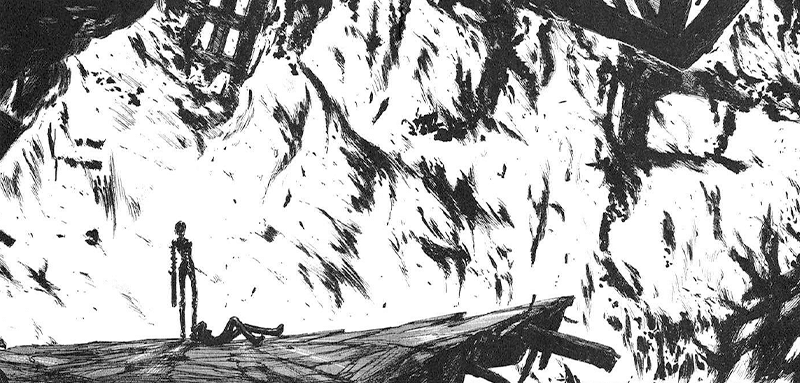
On the surface, Aposimz reads like a straightforward hero’s journey, but Nihei’s approach turns it into something almost mythic. Instead of the dense and dark interiors of Blame!, we find wide, white landscapes that stretch toward infinity. We bear witness to sterile snowfields, crumbling structures, and frozen remnants of civilization. The manga’s bleached aesthetic and deliberate pacing create a haunting, frozen sense of emptiness.
Visually, Aposimz is mesmerizing. The angular designs, cybernetic anatomy, and alien machinery are distinctly Nihei, but rendered with newfound clarity and restraint. This restraint makes the violence feel cold, almost ritualistic. Especially noteworthy is the contrast between the mechanical and organic, which gives the series a tone that borders on posthumanism.
Narratively, Aposimz is more accessible than Nihei’s earlier works. It follows a clear plot and features more dialogue, but that accessibility comes with trade-offs. The characters lack the enigmatic depth of his former protagonists, and the story occasionally drifts toward shonen-style adventure. Yet even when the writing falters, the sheer imagination of Nihei’s world is entrancing.
Bleak, beautiful, and meditative, Aposimz stands as one of Nihei’s most visually distinct cyberpunk manga. It’s a story about survival after the end, and fragile remnants of humanity inhabiting it.
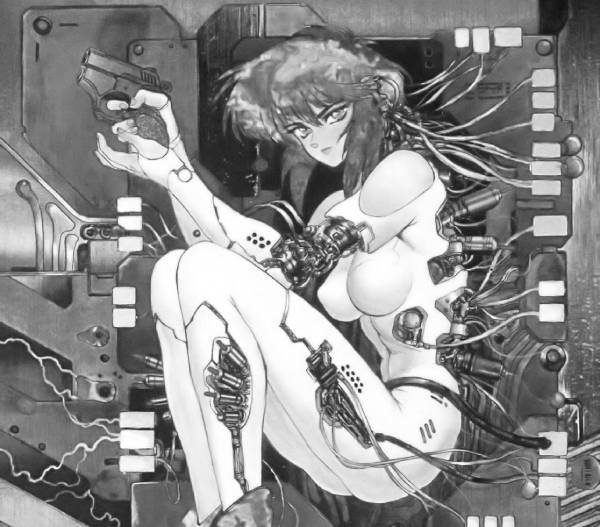
Ghost in the Shell isn’t just a staple of cyberpunk manga but one of its defining pillars that, standing alongside Akira in bringing Japanese manga and anime into global consciousness. The 1995 film adaptation is legendary, and one of the greatest anime of all time. Reading Masamune Shirow’s original work, however, offers an entirely different experience. It’s lighter, denser, and more playful in parts, but still full of the same deep questions about mind, machine, and self.
The story takes place in the year 2029. After four world wars, humanity has embraced cybernetics and networked consciousness. Bodies can be rebuilt, minds uploaded, and hackers can invade the deepest corners of your identity. In this world, Section 9 is a covert task force assembled to counter high-level cyberterrorism, rogue AIs, and political manipulation. Major Motoko Kusanagi, our protagonist, is a full-body cyborg with sharp wit, curious vulnerabilities, and an uncanny sense of self.
While the movie focuses on the mystery surrounding a criminal known as the Puppet Master, the manga is much more episodic. Many chapters are self-contained, detailing minor Section 9 operations often filled with philosophical musings or tech lore dropped mind-dialogue. Only as the series matures are more complex plot threads introduced, eventually culminating in the Puppet Master case and its existential revelations.
The art style is vintage, but full of character. Shirow leans heavily into detail, circuitry, crowded panels, and handwritten notes. The dense technological footnotes and elaborate interludes can slow readers down, but they also reveal how seriously Shirow approached his worldbuilding. Still, at times it feels like reading a science journal rather than a manga.
Tonally, the manga differs wildly from the solemn, atmospheric movie version. Motoko is witty, occasionally even cheeky. There’s more humor, more attitude, and a lighter touch, even during the more serious arcs. While some of the action sequences are great, many suffer from confusing layouts, making them feel jumpy, as though a panel or two were missing.
Still, Ghost in the Shell is a dense but rewarding work. Its philosophical core runs throughout the entire manga: what does it mean to be human when your body is replaceable, your mind linkable, and your memories mutable?
If you’re expecting the movie’s tone, you’ll be surprised. But approached as a sprawling, technocratic experiment that bends genre boundaries, Ghost in the Shell stands as one of the most important cyberpunk manga ever written, a cornerstone of both science-fiction and manga history.
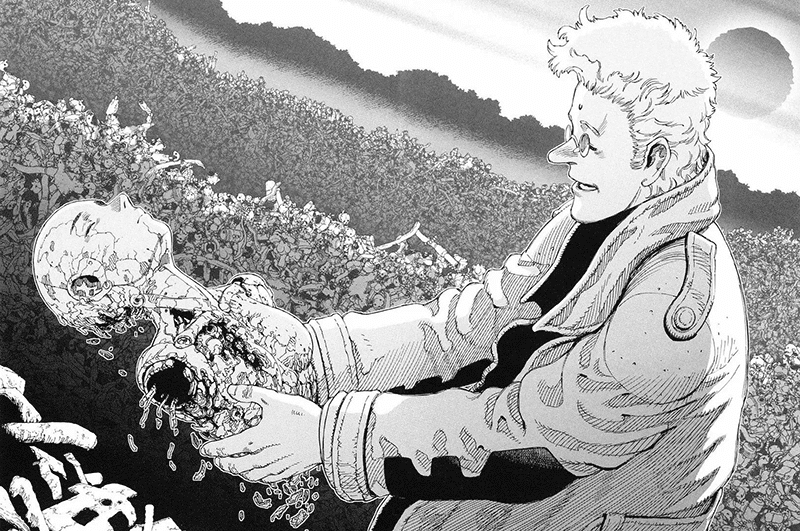
Hiroki Endo’s Eden: It’s an Endless World! is a cyberpunk manga that fully embraces everything the genre promises. It’s not just about technological dystopia, but the messy, deeply human struggles within it. Running from 1997 to 2008, Eden begins as a post-pandemic survival tale and transforms into a sprawling geopolitical and philosophical epic.
After a global virus wipes out much of humanity, a powerful organization known as Propater seizes control of the shattered world. Entire nations collapse under its influence. In the ruins, two children immune to the virus are raised in isolation, destined to become key players in the new order. Twenty years later, one of them has become a South American drug lord whose empire collides with Propater’s reach, setting off a chain of violence, rebellion, and revelations spanning continents.
Endo’s storytelling refuses to stay in one lane. What begins as a cyberpunk revenge story expands into a discussion of religion, technology, and morality. The narrative shifts frequently from cartel foot soldiers to mercenaries, prostitutes, scientists and idealists, yet all of them remain bound by the same broken system. Endo’s world is also frighteningly real: governments are ruled by shadow organizations, cities rotting from corruption, and machines that both liberate and enslave.
Despite its futuristic setting, Eden is ultimately about people. Its characters are flawed, sometimes reprehensible, but always compelling. Endo portrays violence and sex not as spectacle, but as raw, unsettling truths about survival. His art reflects this duality: elegant yet brutal, grounded in anatomy and expression rather than exaggeration. Few manga capture physical pain or emotional exhaustion with such precision.
There’s also an undercurrent of spirituality. Endo draws loosely from Gnostic mythology, using it as a mirror for his characters’ attempts to find meaning in a collapsing world. It’s heavy thematic material, which is handled with surprising care and warmth. Even in its darkest moments, Eden finds room for humor and connection.
Eden: It’s an Endless World! stands as one of the most cohesive and rewarding cyberpunk manga ever written, a vast, unflinching, and resolutely adult exploration of technology, faith, and transcendence.
Yukito Kishiro’s Battle Angel Alita stands as one of the cornerstones of cyberpunk manga. It’s a work that balances adrenaline-fueled combat with an intimate search for identity. Serialized throughout the early 1990s, this cyberpunk manga fuses gritty, post-apocalyptic worldbuilding with a tragic yet defiant human core, embodying everything the genre represents.
The story begins in the Scrapyard, a sprawling industrial town built from debris and junk. Dr. Ido, a cybernetics engineer scavenging for parts, discovers the remains of a destroyed cyborg girl. He rebuilds her, naming her Alita. With no memories, she begins as a naïve and innocent girl but gradually hardens into a warrior who must fight to define her own purpose.
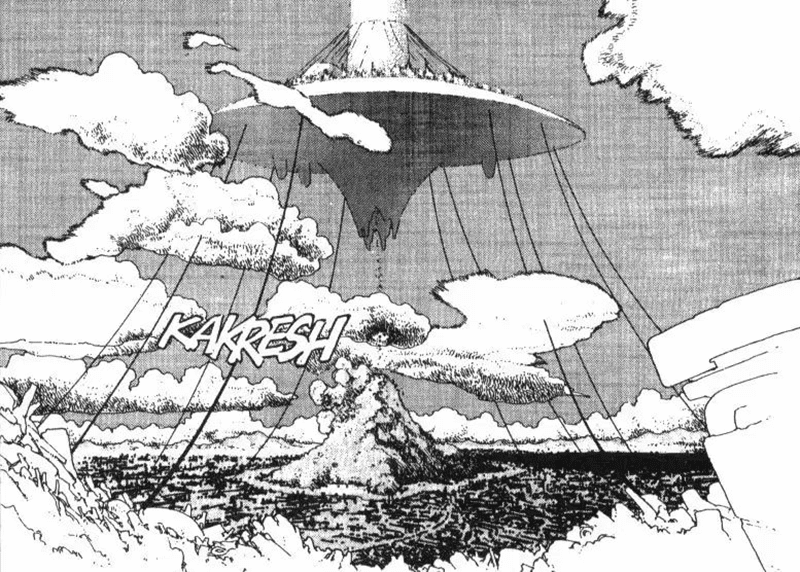
Kishiro’s setting is pure cyberpunk: neon smog and rusted iron, streets full of scavengers and bounty hunters, and above it all, the floating city of Zalem, a cold paradise that literally hangs above the suffering below. The result is a layered world that feels both fantastical and eerily plausible.
The action in Battle Angel Alita is spectacular. The Motorball arc alone is a masterclass in kinetic storytelling. Kishiro’s art captures both momentum and violence with remarkable precision. His mechanical designs, equal parts grotesque and elegant, turn every battle into a display of imagination and brutality.
Yet beneath it all, Alita is deeply human. Her relationship with Dr. Ido grounds the story, evolving from paternal affection into a philosophical conflict about freedom, morality, and the right to self-determination. As Alita gains strength, she also gains independence, and questions what it truly means to be alive.
The early volumes can be rough around the edges: faces are exaggerated, proportions are inconsistent. As the series progresses, however, Kishiro’s artwork matures into something exceptional. It’s tight, confident, and cinematic in its choreography.
Over three decades later, Battle Angel Alita remains one of the defining cyberpunk manga of all time, a brutal, beautiful, and tragic story about reclaiming humanity in a world that’s forgotten it.
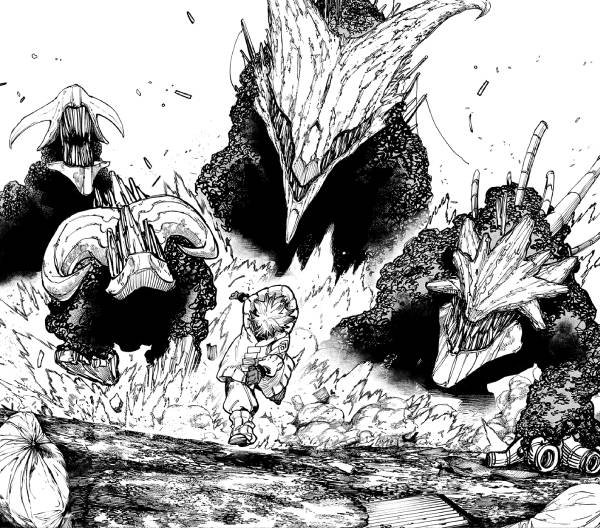
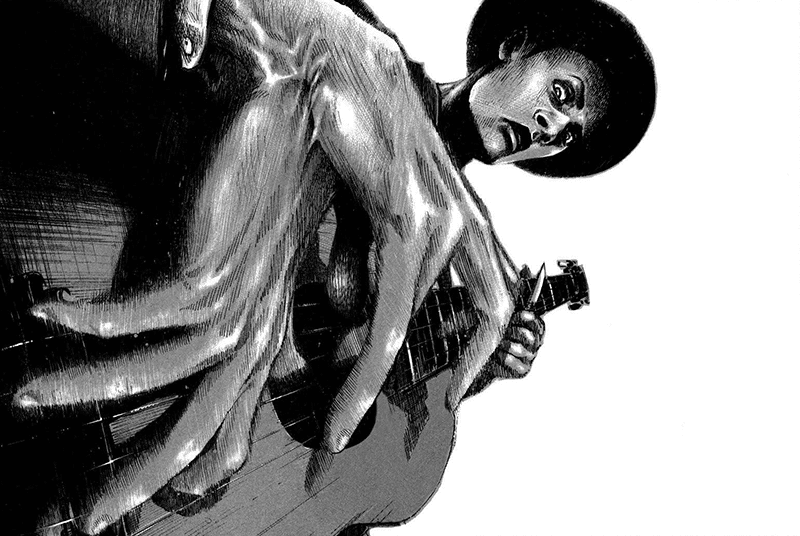
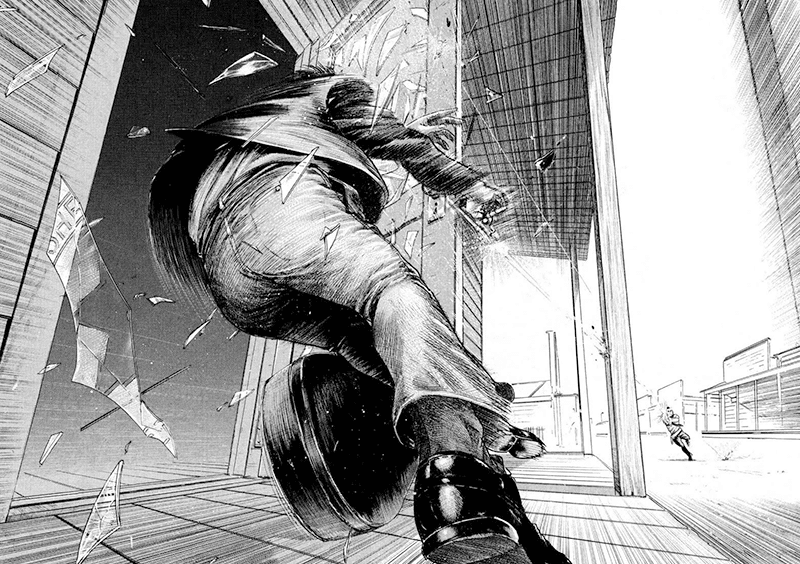
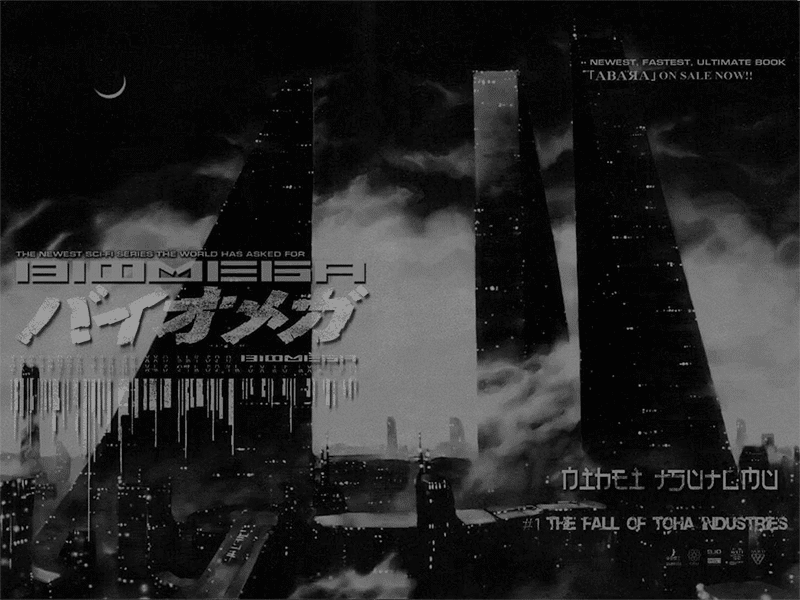
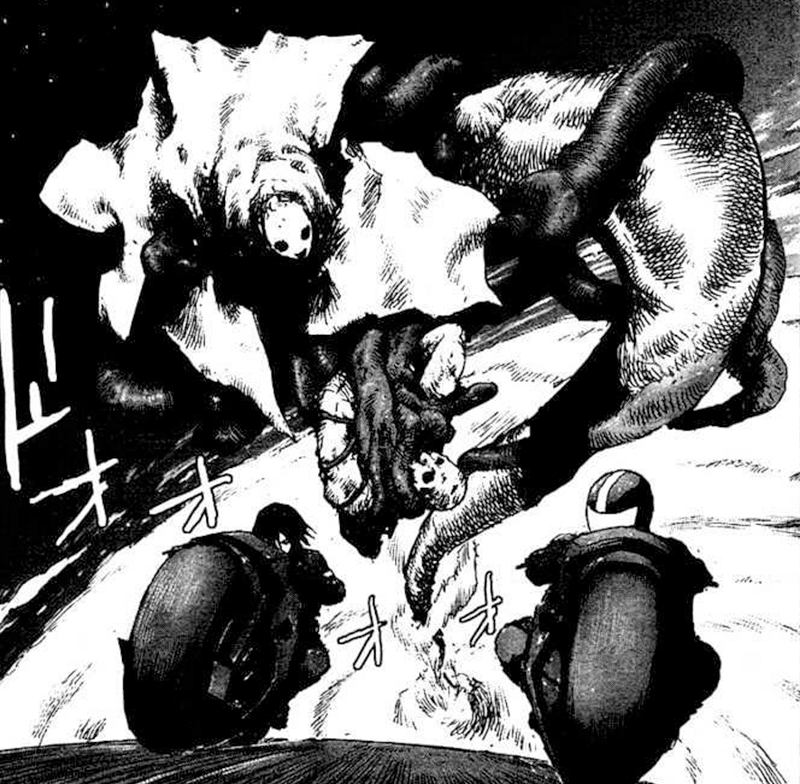
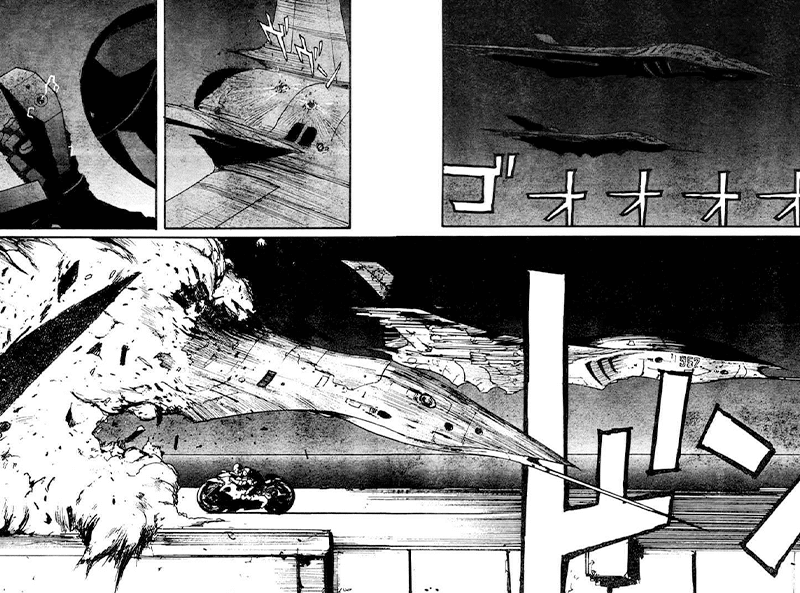
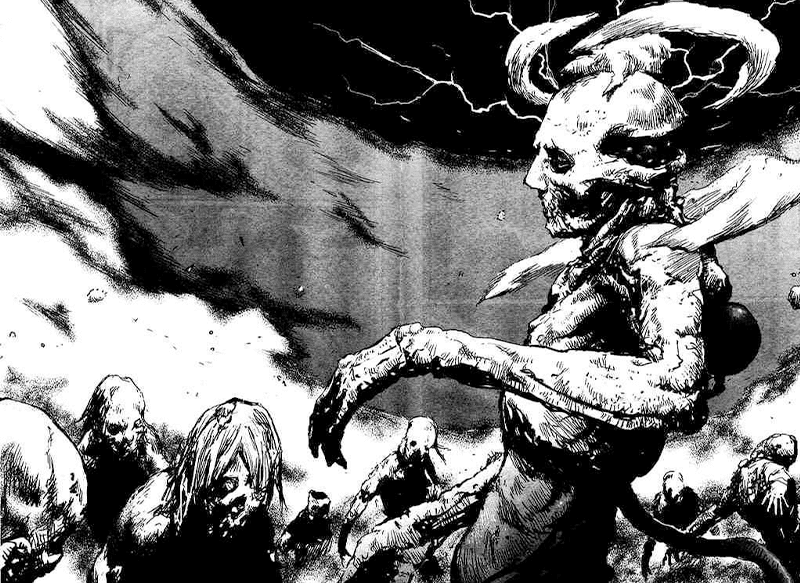
Tsutomu Nihei’s Biomega is a cyberpunk manga that feels like a fever dream. Equal parts zombie horror and transhumanist odyssey, it’s one of the most striking manga of the 2000s, and arguably Nihei’s most kinetic work.
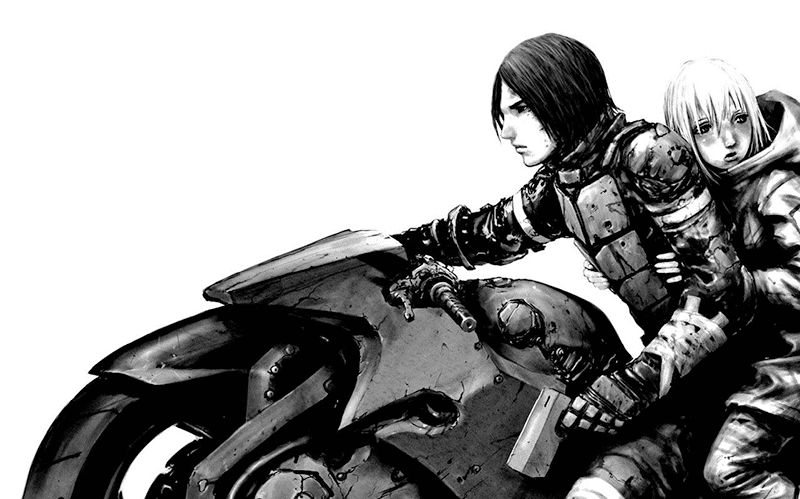
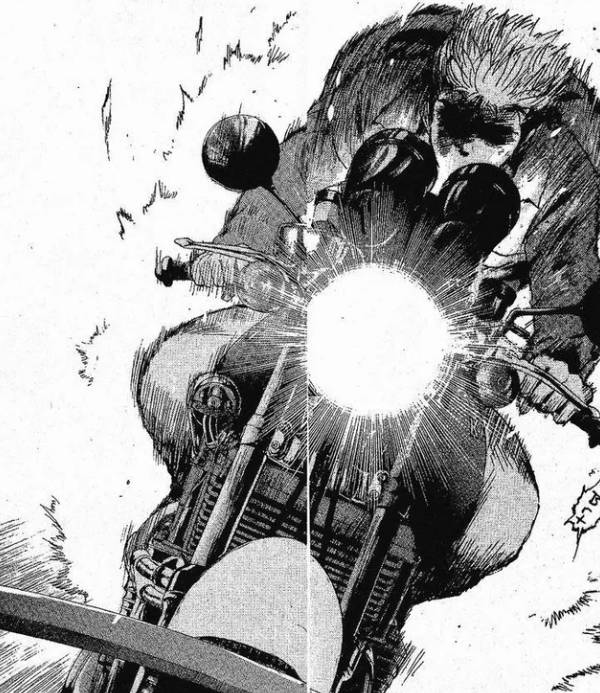
The story follows Zouichi Kanoe, a synthetic human sent by TOA Heavy Industries to retrieve a girl immune to the N5S virus, a pathogen that turns its victims into grotesque biomechanical drones. With his AI companion Fuyu Kano, Zouichi rides across a ruined Earth on a weaponized motorcycle, navigating collapsing megacities while battling corporate armies and cybernetic horrors.
From its opening pages, Biomega moves at breakneck speed. The first half is pure momentum. It’s a relentless chase propelled by Nihei’s trademark visual storytelling and sense of scale. Entire pages unfold without dialogue, with panels expanding into vast architectural madness that makes humans feel microscopic. Every bullet, every transformation, and every impact hits with a precision few artists can match.
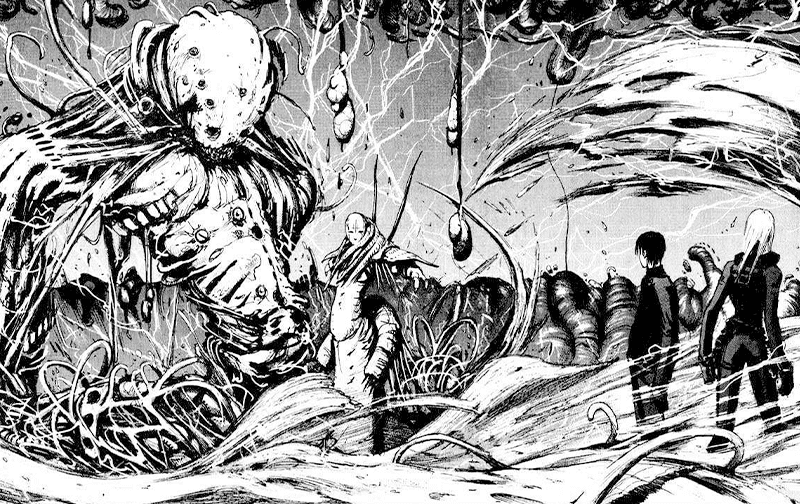
The infected drones, which are half-machine, half-rotting corpse, showcase Nihei’s fascination with decay. His cyberpunk worlds are never sterile but corroded, broken, and mutating out of control. This blend of mechanical and organic turns Biomega from a science-fiction thriller into something more akin to a transhumanist nightmare.
Then, midway through, Nihei changes everything. The relentless action gives way to something slower, stranger, and more contemplative. Biomega evolves into a biopunk epic, almost mythic in tone, trading screen-filling explosions for surreal landscapes. This shift is abrupt enough to feel like Nihei decided to start an entirely different work. Yet, within this chaos lies the manga’s unique charm. Biomega is a fever dream, one unbound by conventions or rules, pushing the cyberpunk genre further than any other work that came before.
Admittedly, some story threads vanish, characters disappear without explanation, and the finale feels rushed. Yet even with these flaws, Biomega stands out as an audacious experiment in form, rhythm, and scope. It’s a dark, messy, and unforgettable high-velocity plunge into a cyberpunk world unlike any other.
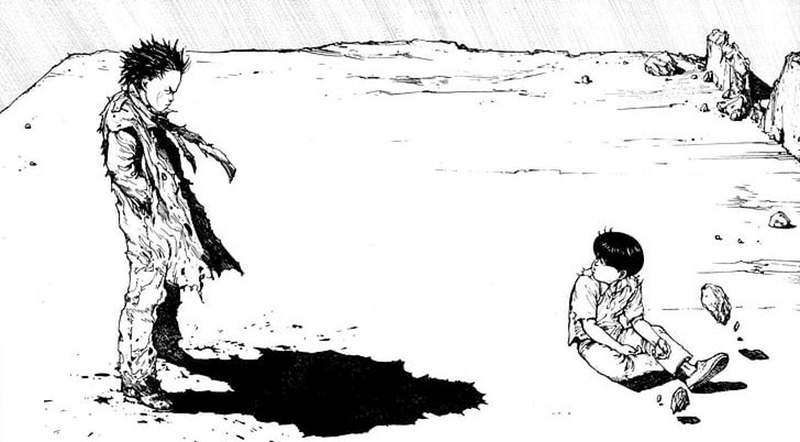
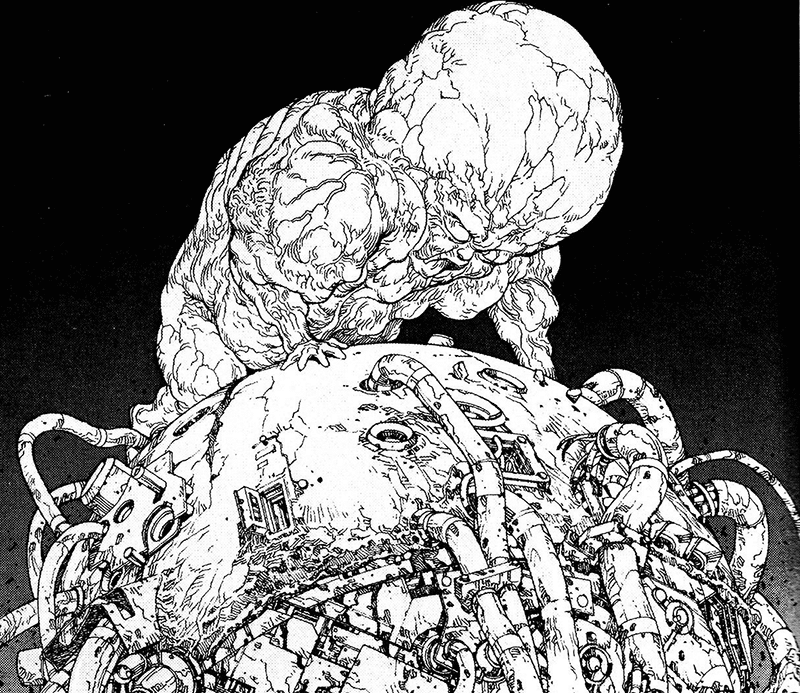
If there’s one cyberpunk manga that defines the genre, it’s Akira. Katsuhiro Otomo’s monumental work didn’t just influence Japanese manga; it redefined how the world visualized the future. Alongside Ghost in the Shell, it marks the genre’s peak. Yet, where Ghost in the Shell dives into technology, identity, and philosophy, Akira does something entirely different. It’s a feverish dystopian epic about rebellion, psychic power, and collapse.
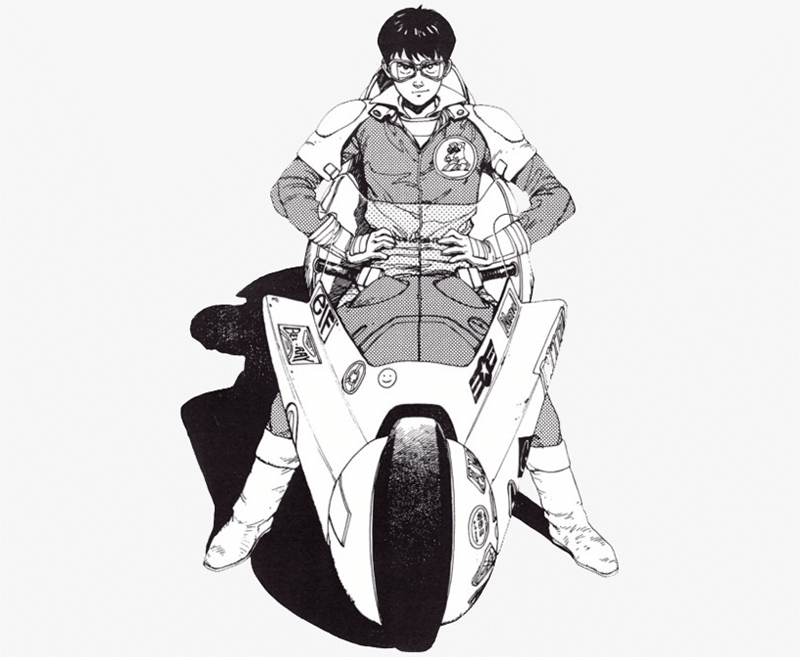
Set in Neo-Tokyo, a sprawling metropolis built on the rubble of Japan’s former capital, Akira drops readers into a world of biker gangs, corrupt politicians, and secret military experiments. Society teeters between decay and control, and at its center are two teenagers: Kaneda and Tetsuo. They are inseparable friends whose bond is shattered when Tetsuo’s latent psychic powers awaken after a freak accident. What begins as street brawls in a neon wasteland soon spirals into government conspiracies and the awakening of a godlike being buried beneath the city.
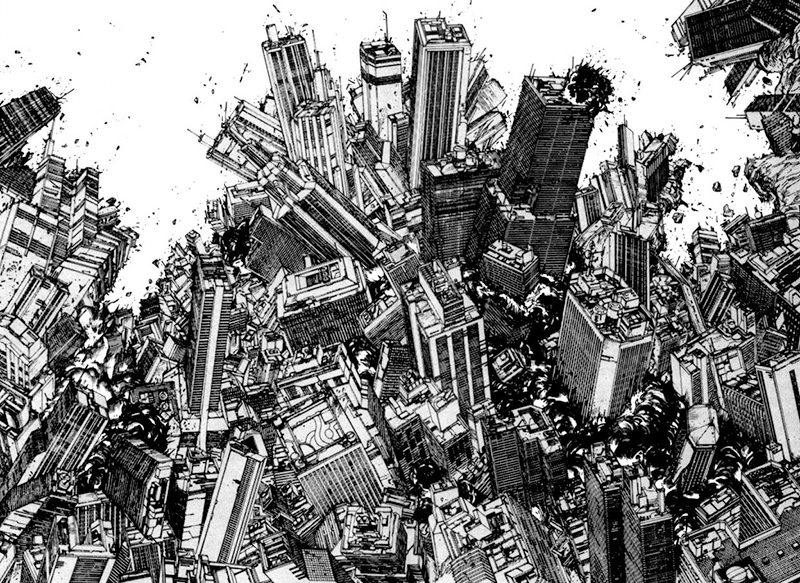
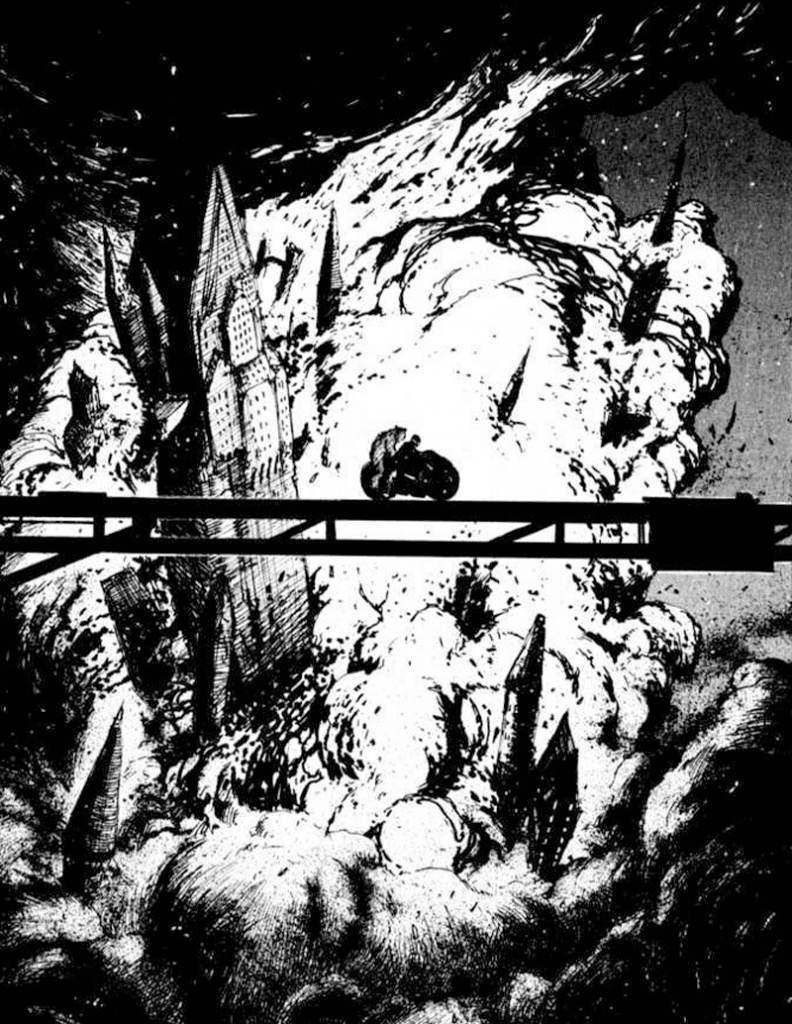
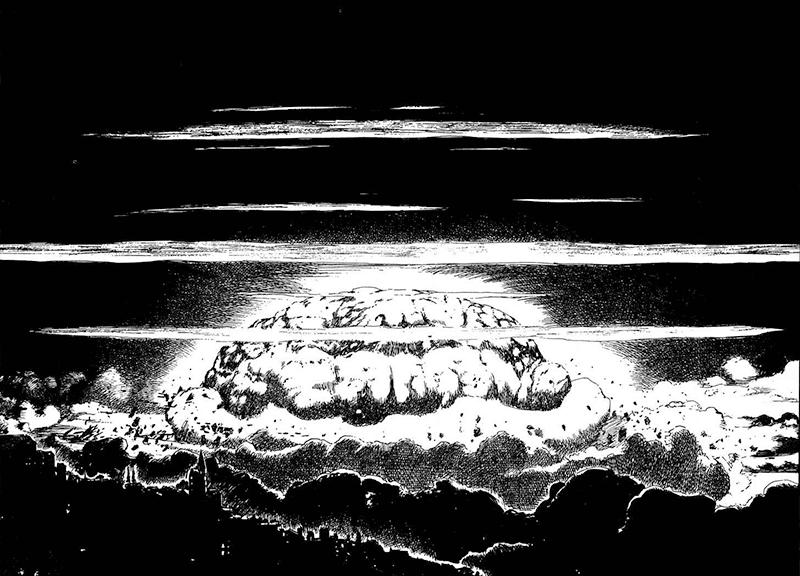
From its opening panels, Akira is an overwhelming sensory experience. Otomo’s Neo-Tokyo feels real in every sense: cracked asphalt, tangled cables, and graffiti-stained walls. His attention to architectural detail is legendary. Every building, vehicle, and explosion is rendered with obsessive precision, and the destruction scenes in later volumes remain unmatched in scale.
Character-wise, Akira leans more on archetypes than introspection. Kaneda is a punk hero defined by pure charisma and impulse, while Tetsuo, his tragic mirror, embodies human fragility twisted by unimaginable power. Their clash drives the story’s emotional and thematic core. The supporting cast of revolutionaries, soldiers, and scientists expands the scale, but rarely steals the spotlight.
What keeps Akira timeless isn’t realism but raw energy. The manga operates on momentum rather than explanation. Psychic warfare, riots, coups, and citywide annihilation are all presented with a manic rhythm. Otomo’s storytelling feels closer to a visual symphony than a traditional narrative. It’s chaotic, yet meticulously composed. Even when coherence bends under the sheer weight of spectacle, you’re too entranced to care.
Revisiting Akira today feels like opening a time capsule from the 1980s. It’s a rare work full of youth rebellion, nuclear fear, and mistrust of authority, all expressed through the lens of cyberpunk manga. Decades later, it still radiates its rare kind of power.
Akira isn’t just a great cyberpunk manga; it is the cyberpunk manga. Monumental, operatic, and endlessly imitated, it remains a cornerstone of both science-fiction and the manga medium.
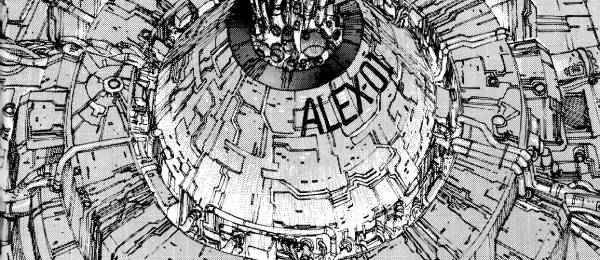
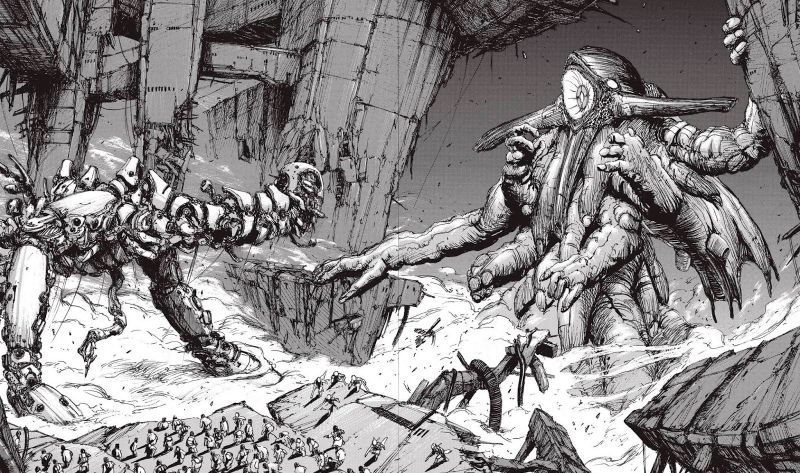
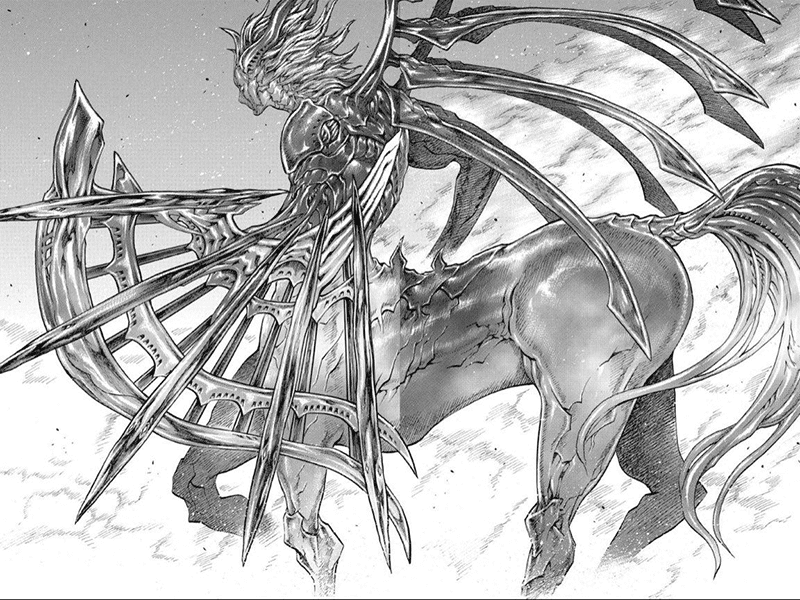
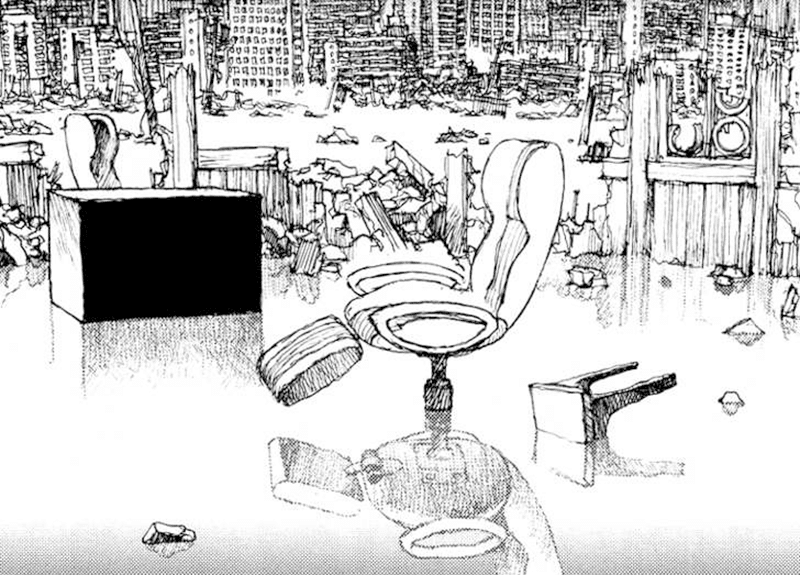
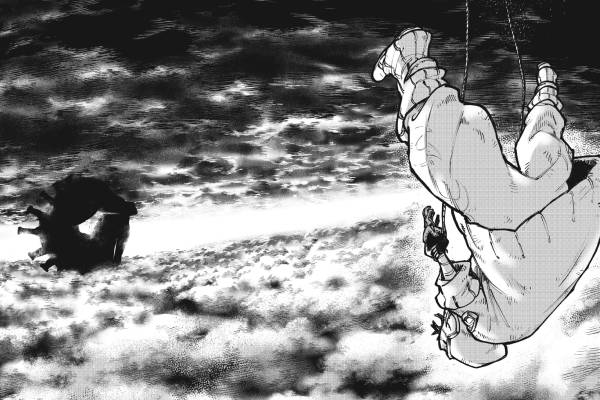
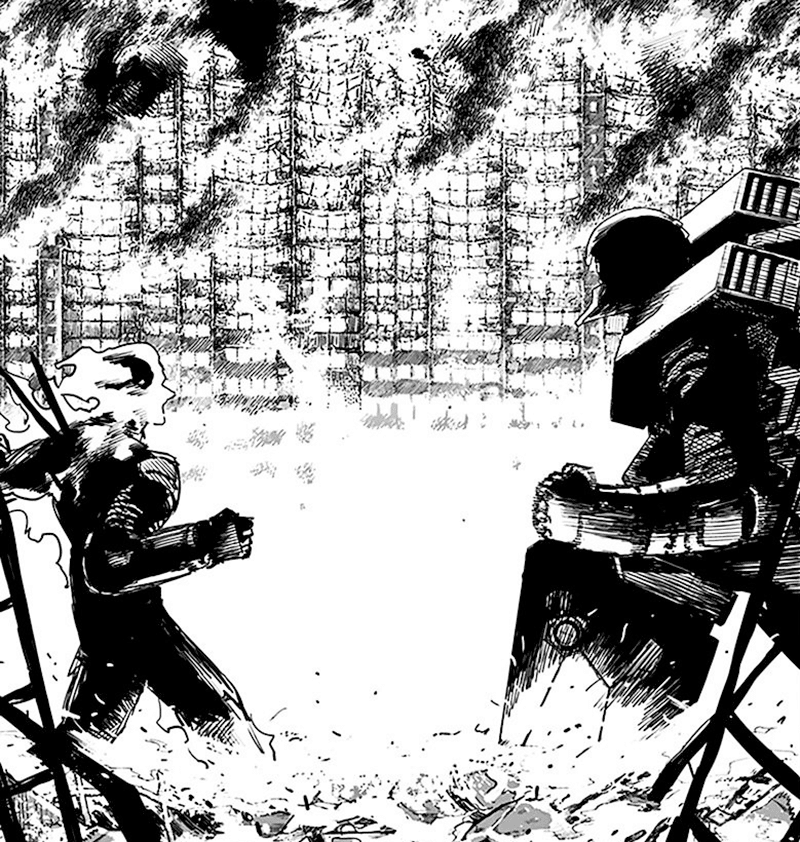
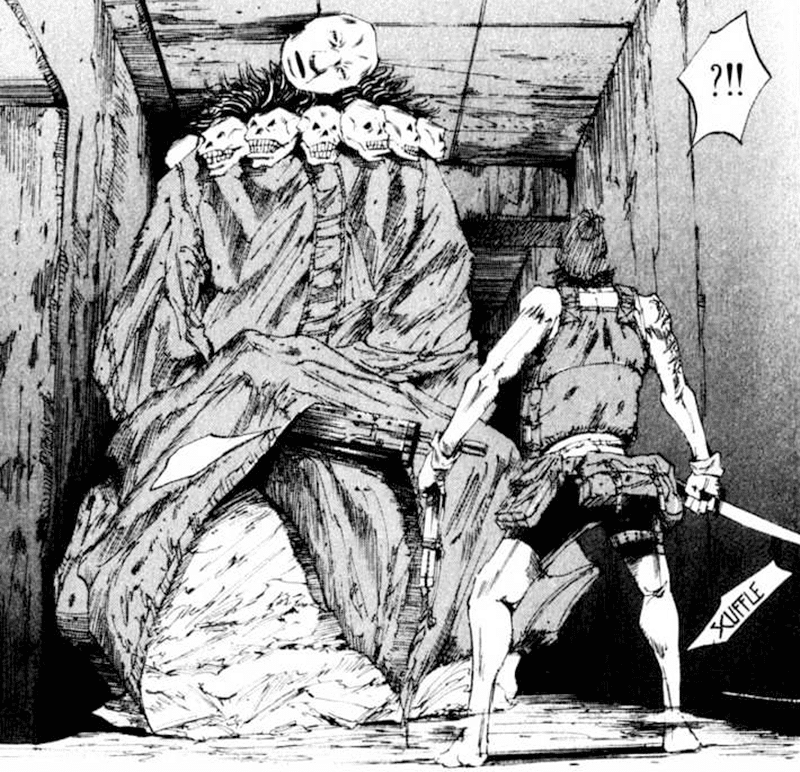
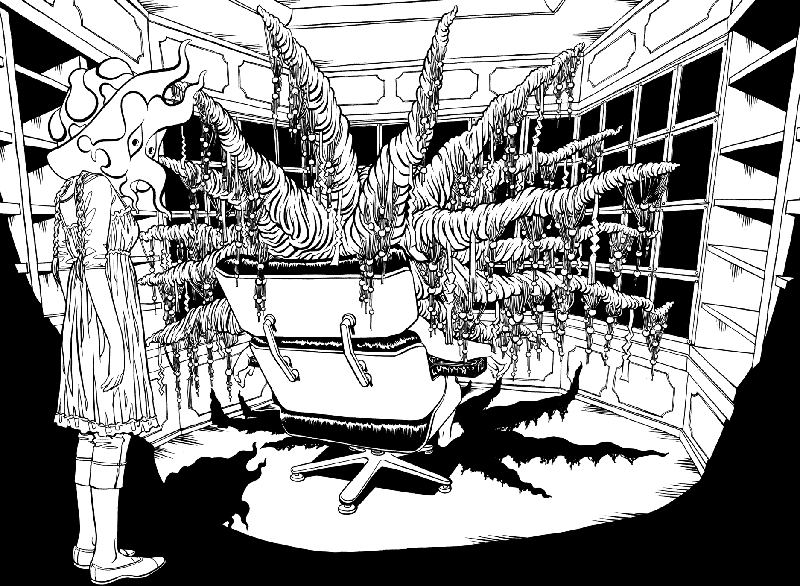
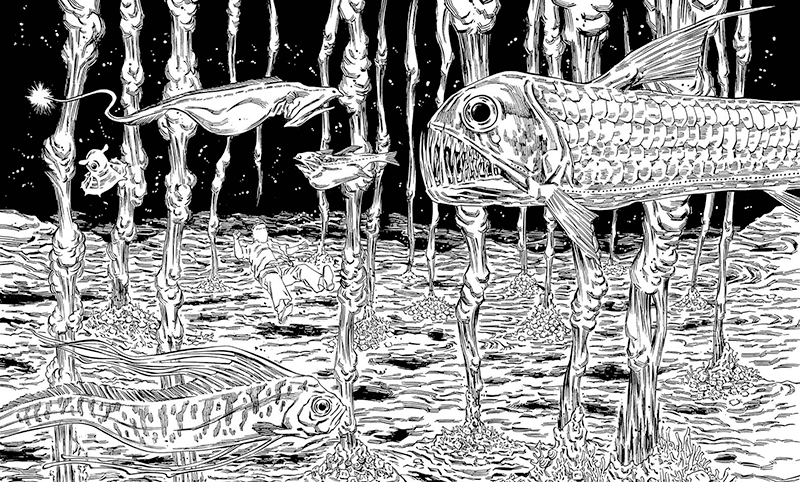
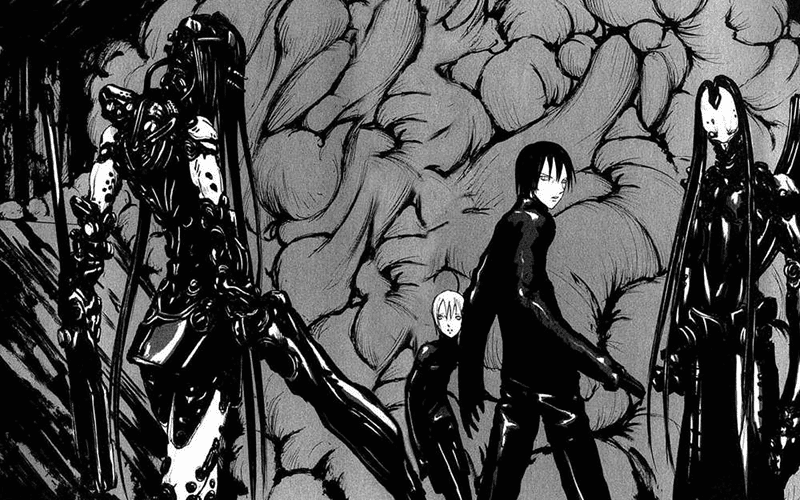
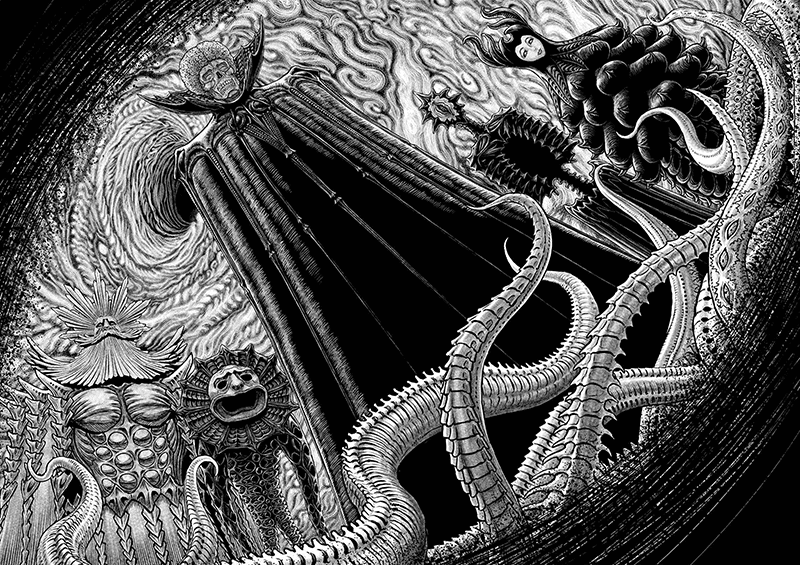
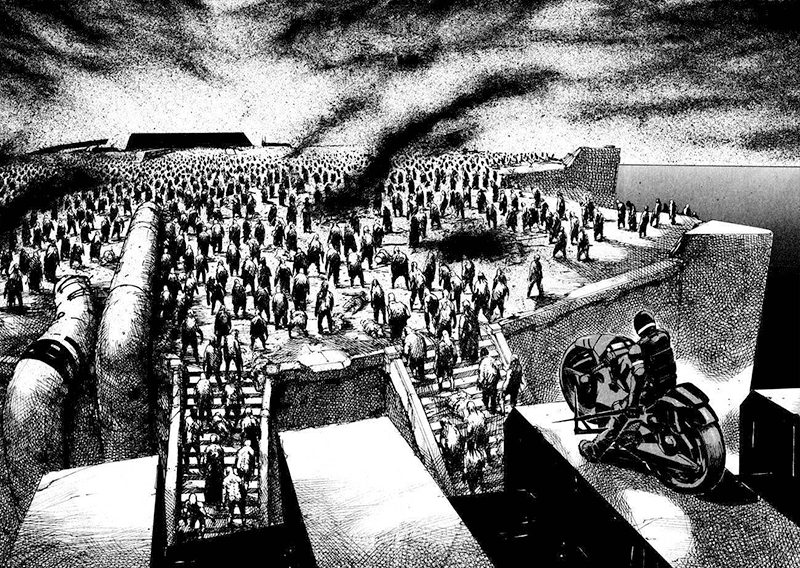
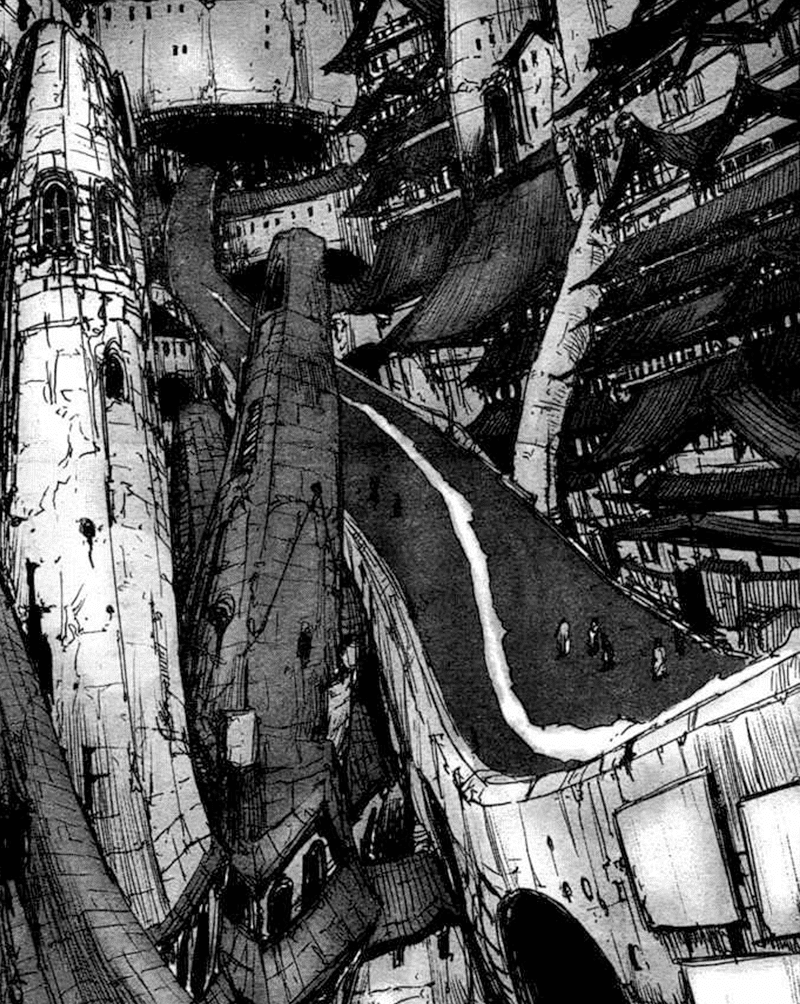
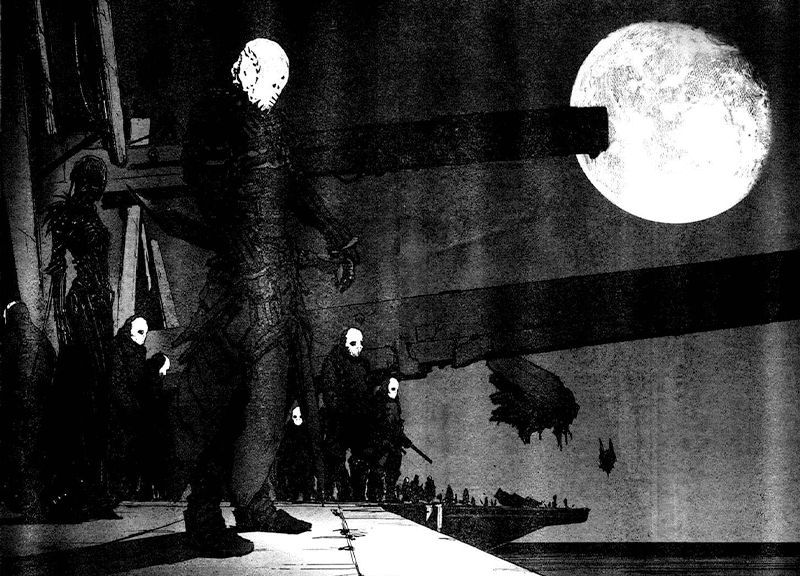
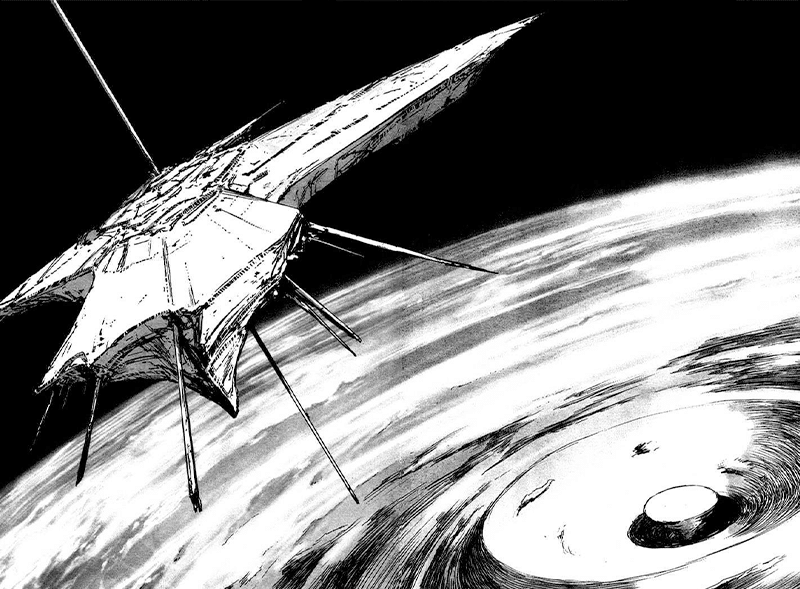
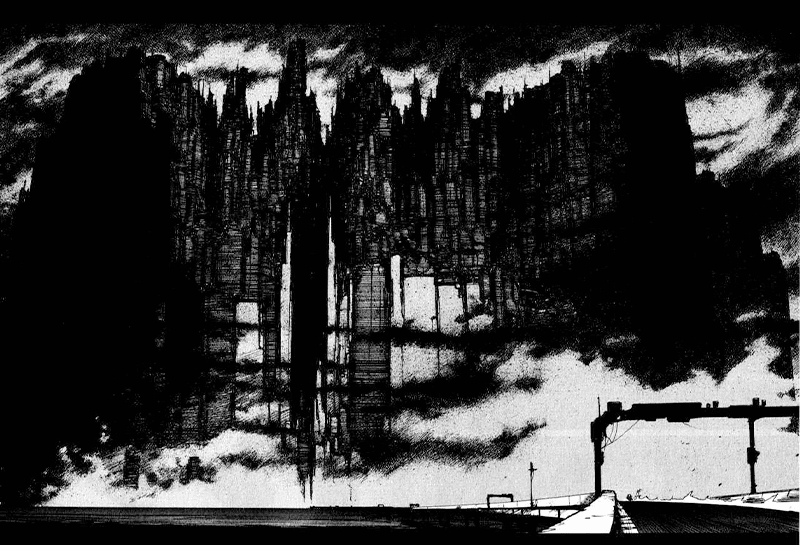
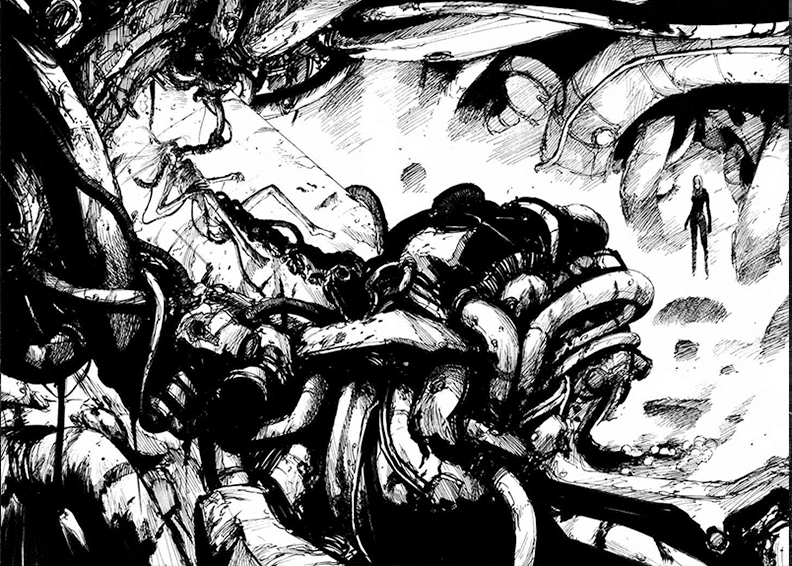
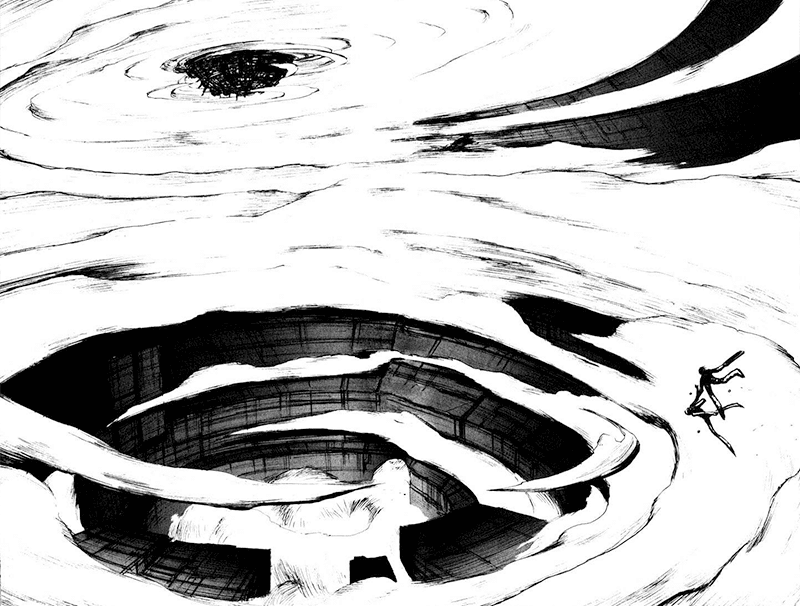
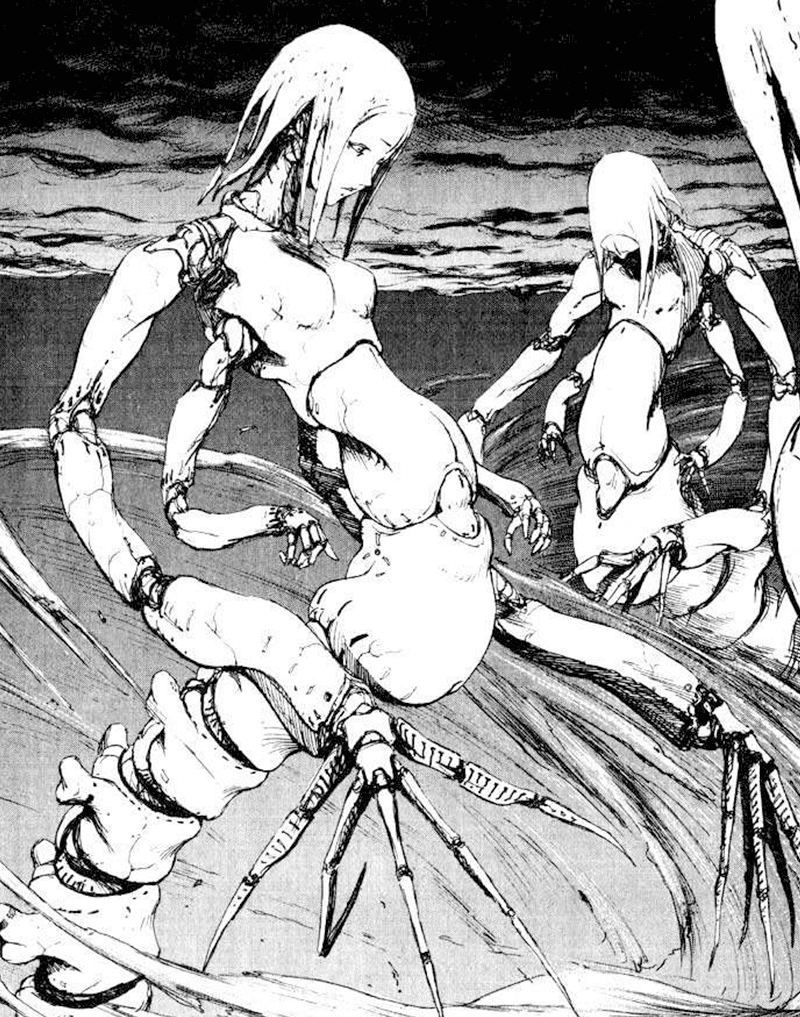
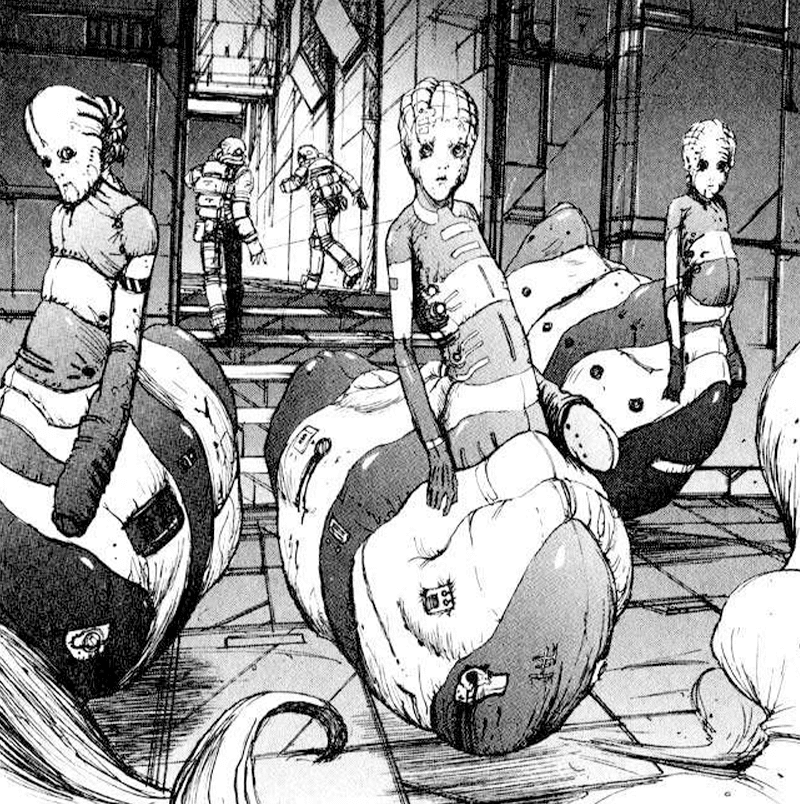
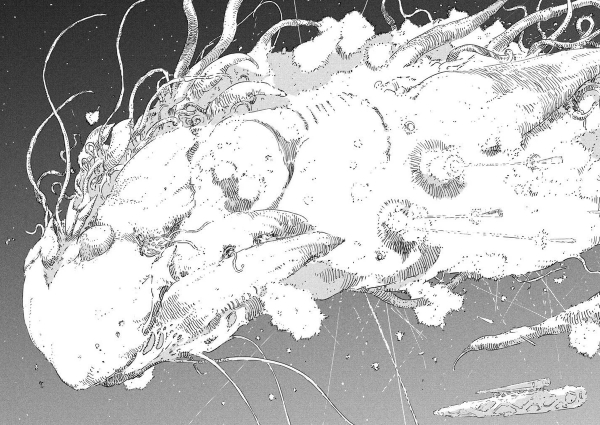
If Akira and Ghost in the Shell defined the birth of cyberpunk, Tsutomu Nihei’s Blame! marked its evolution. It’s the point where the cyberpunk genre transcends dystopian cityscapes and crosses into the realm of cosmic nihilism. Released in the late 1990s, long after cyberpunk’s 1980s boom, Blame! reimagines what the genre could be: not just a vision of a decaying society, but a universe that has outgrown humanity entirely.
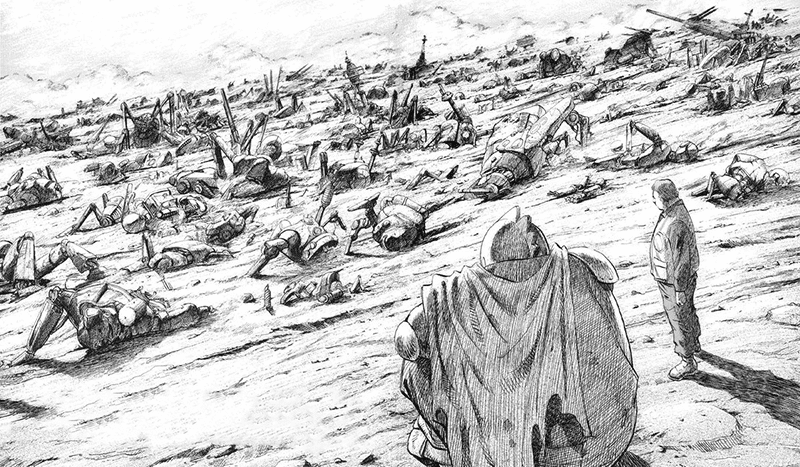
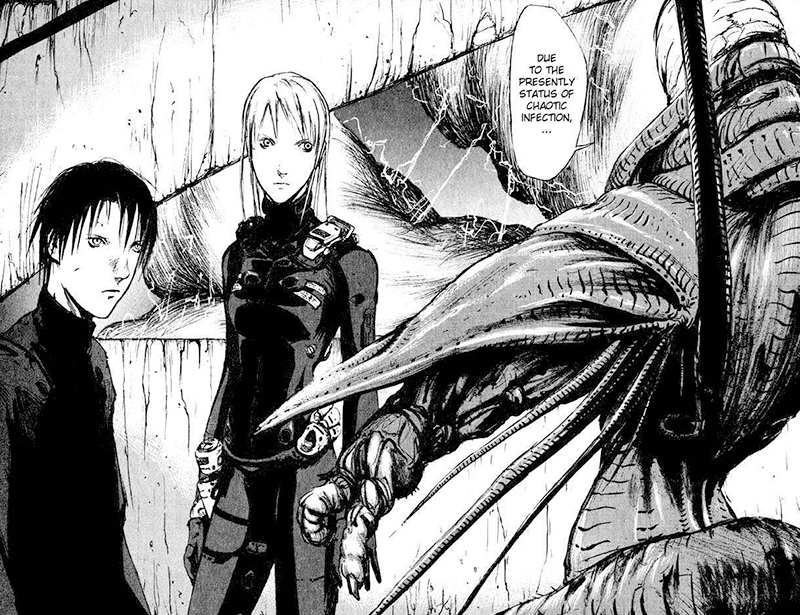
The story follows Killy, a silent, gun-toting wanderer moving through the endless labyrinth known simply as The City. His mission is to search for a human with the Net Terminal Gene, a genetic key that could reconnect what’s left of mankind with the Netsphere and restore some semblance of control over the world’s technology. But Nihei’s genius lies in how little he tells you. The narrative unfolds through visuals, through atmosphere and architecture rather than exposition.
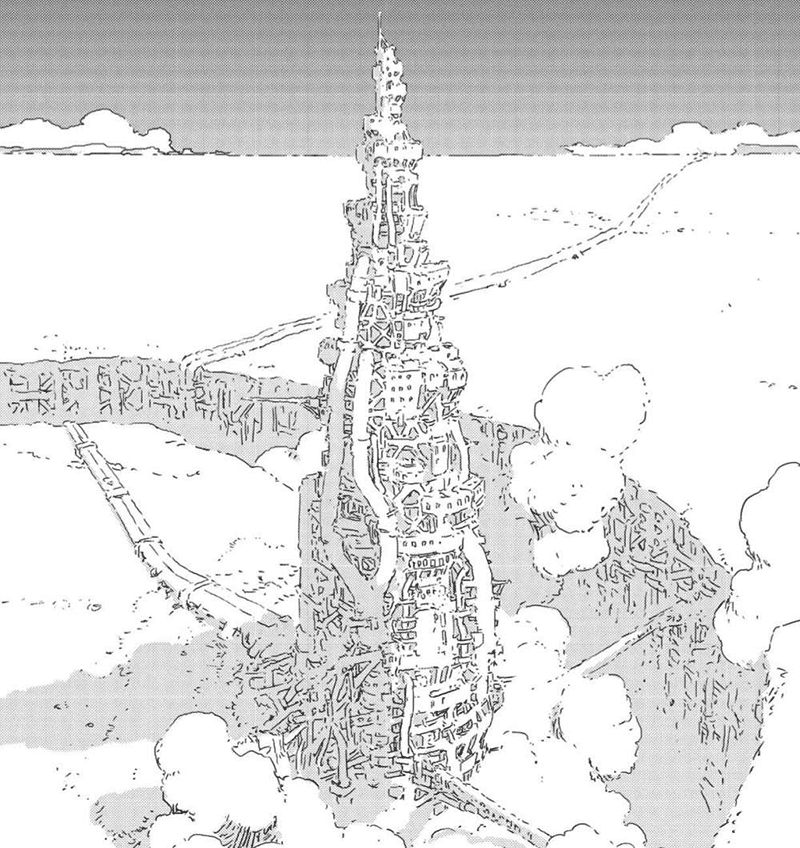
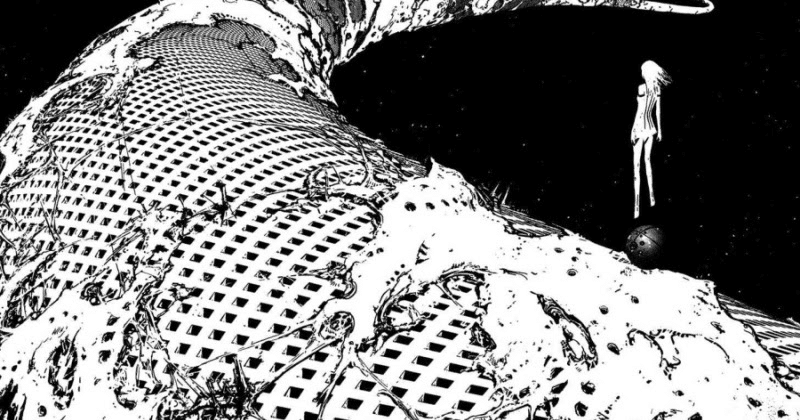
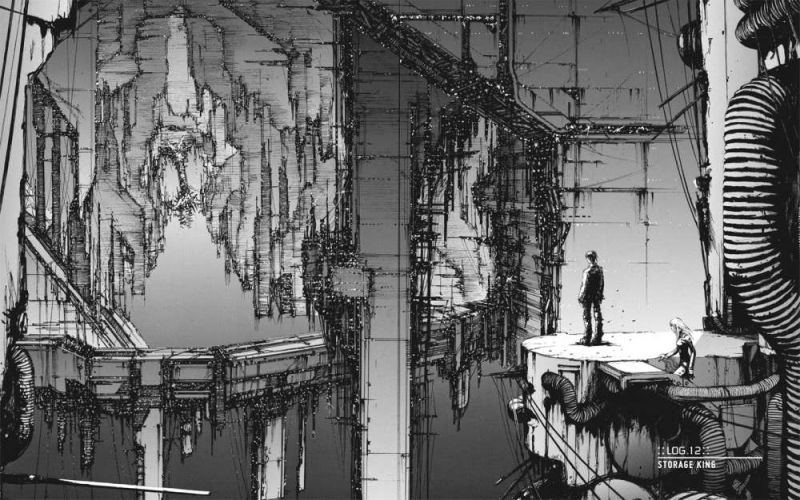
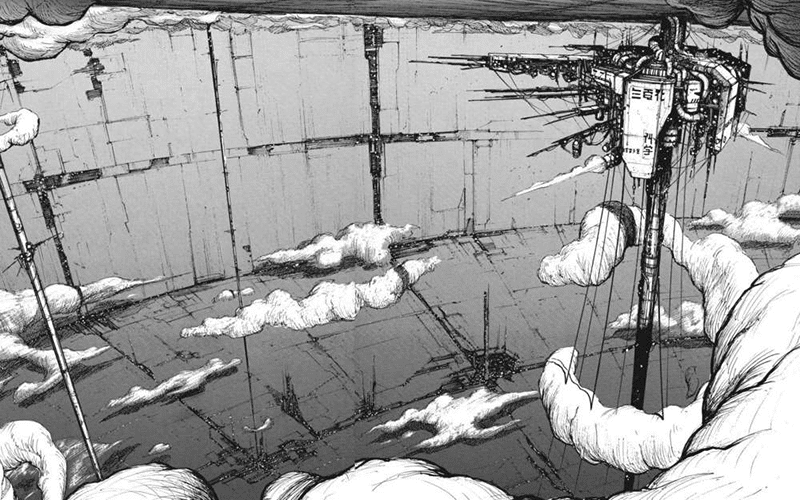
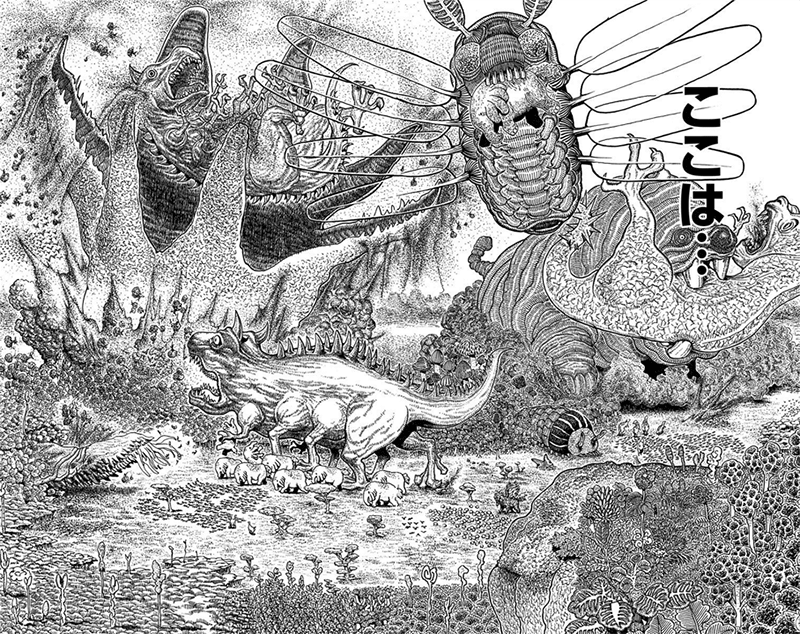
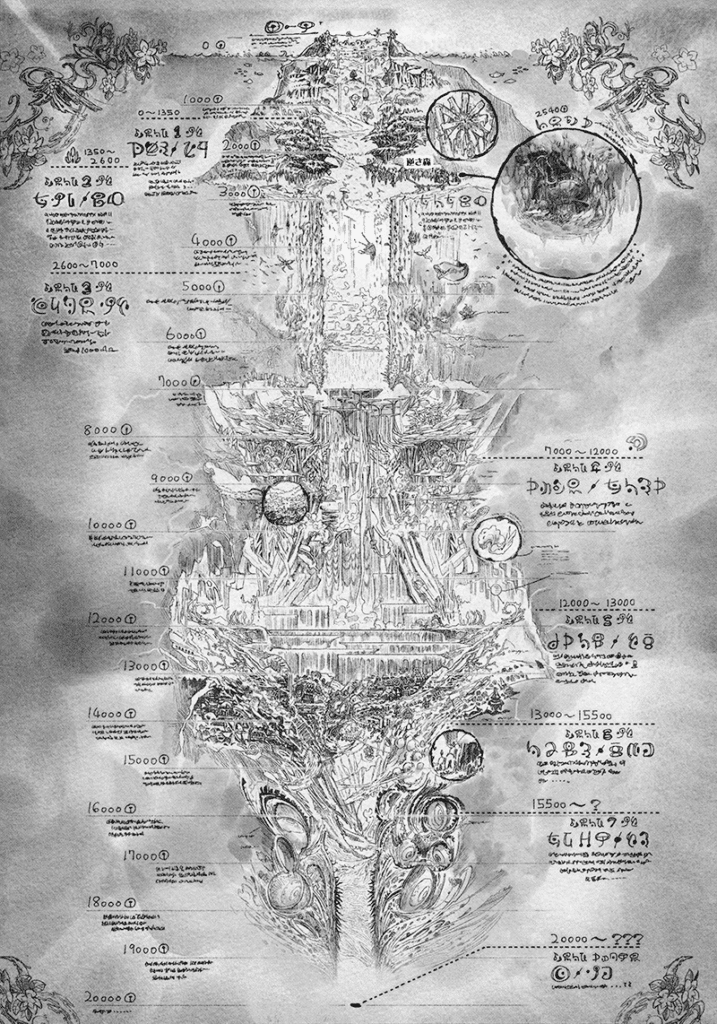
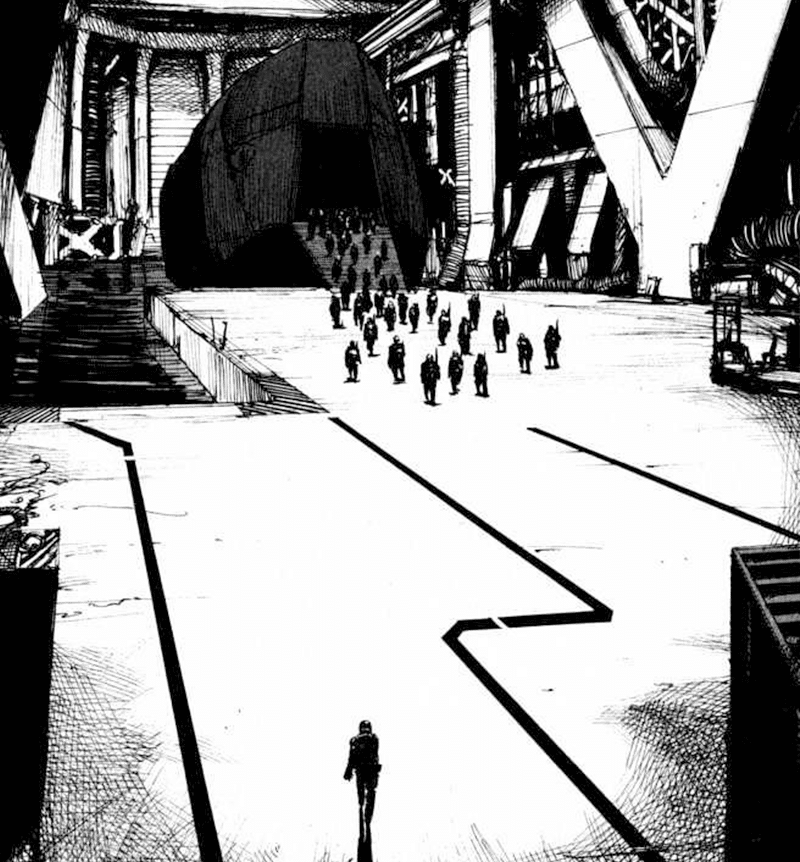
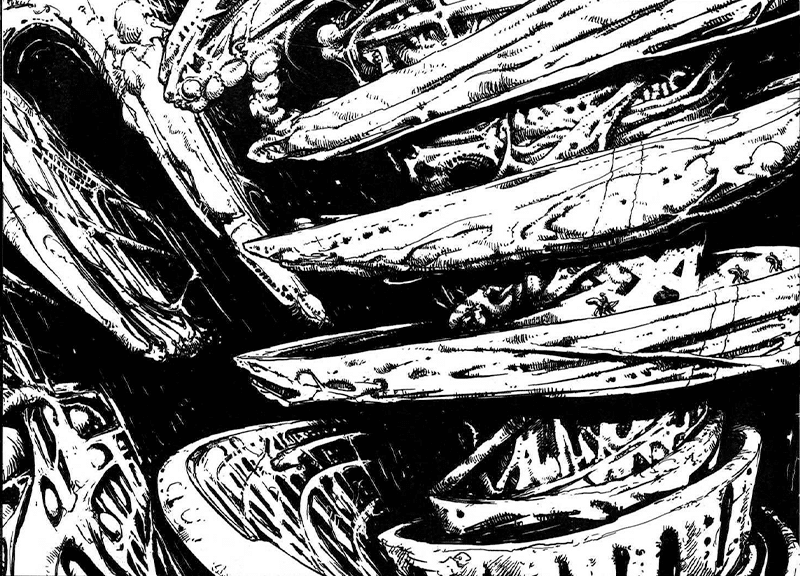
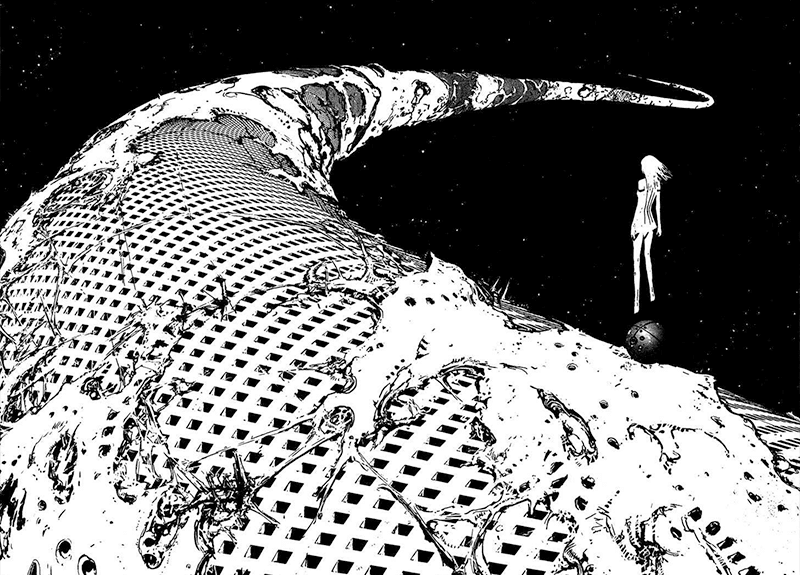
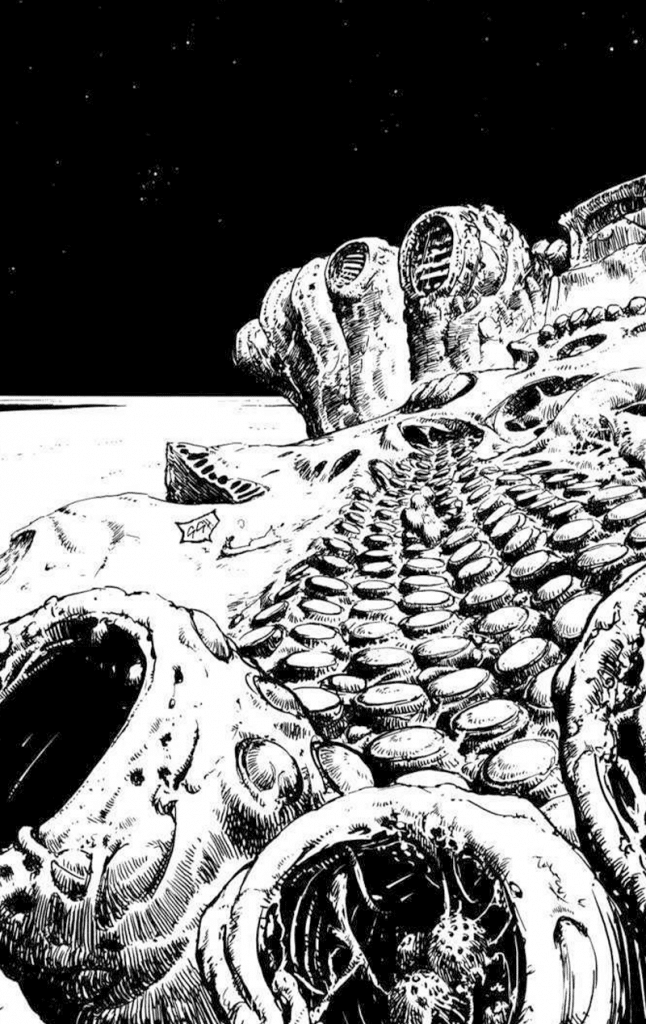
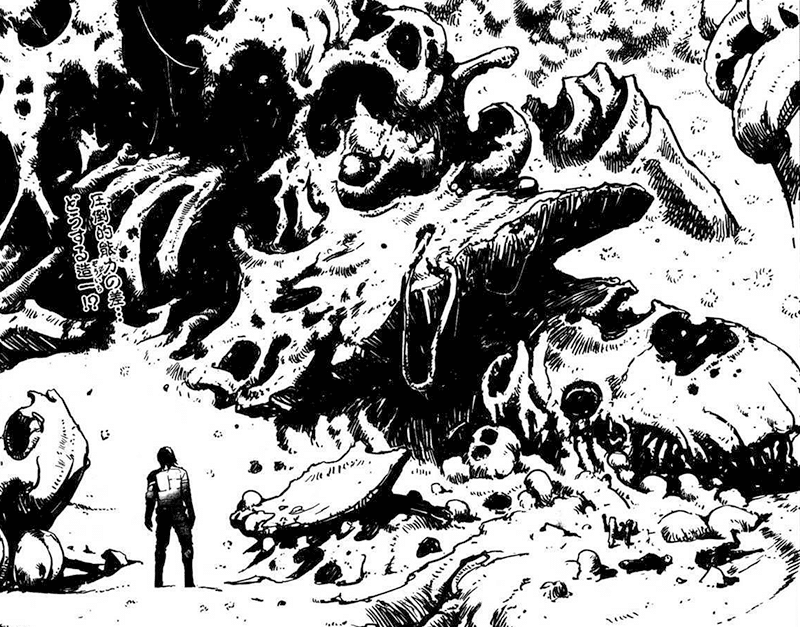
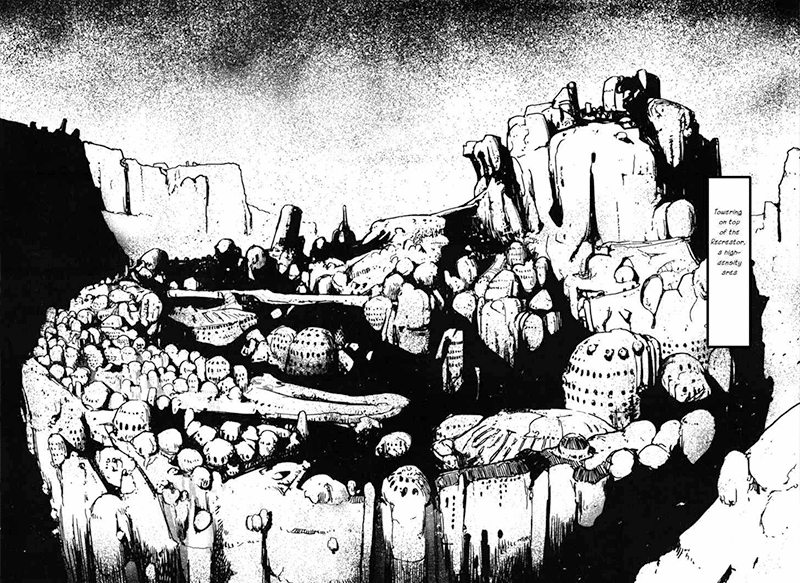
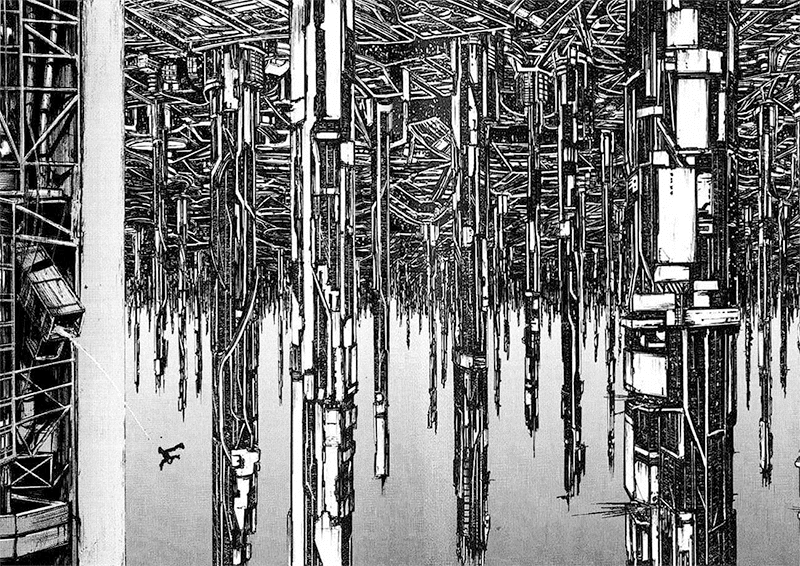
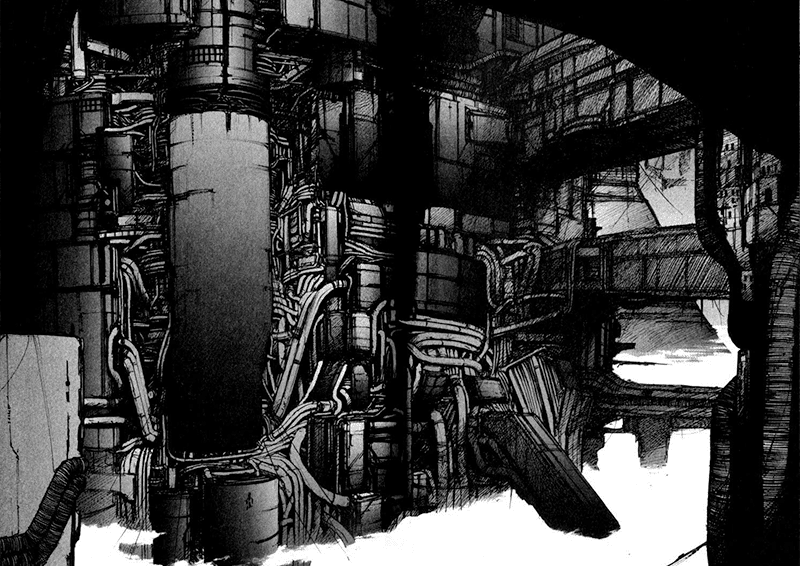
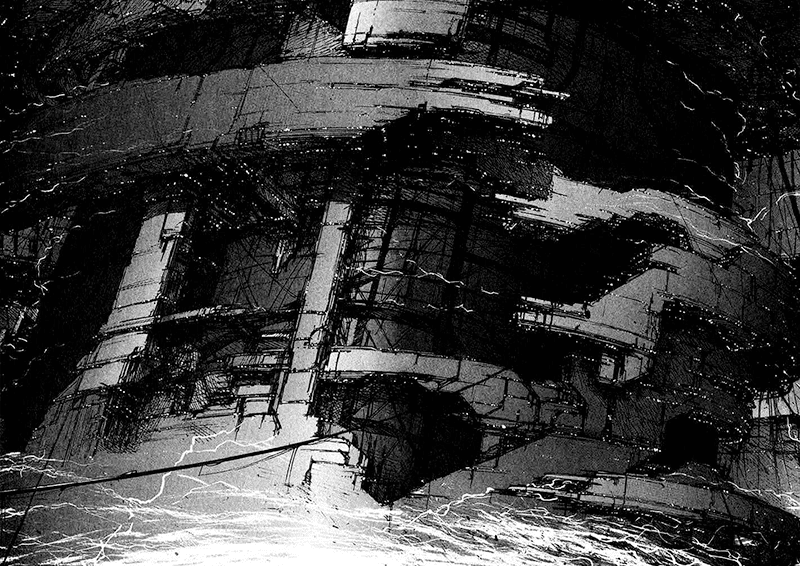
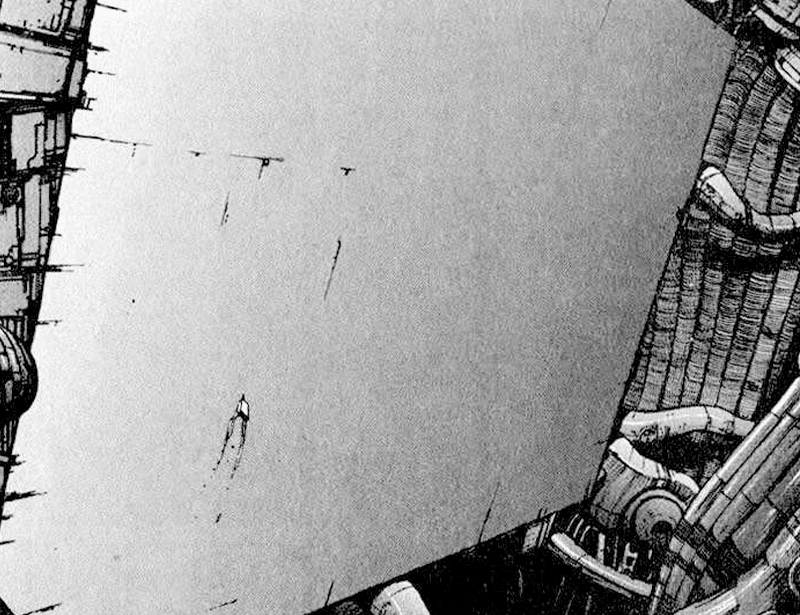
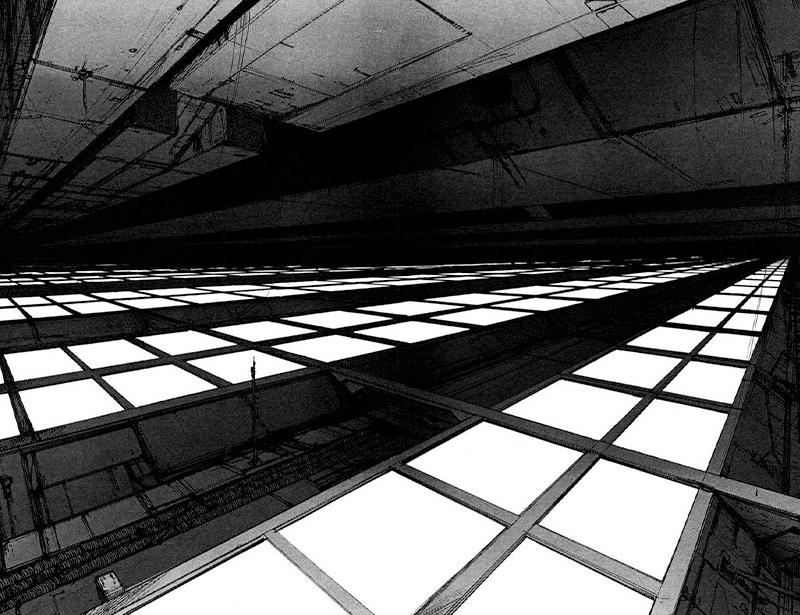
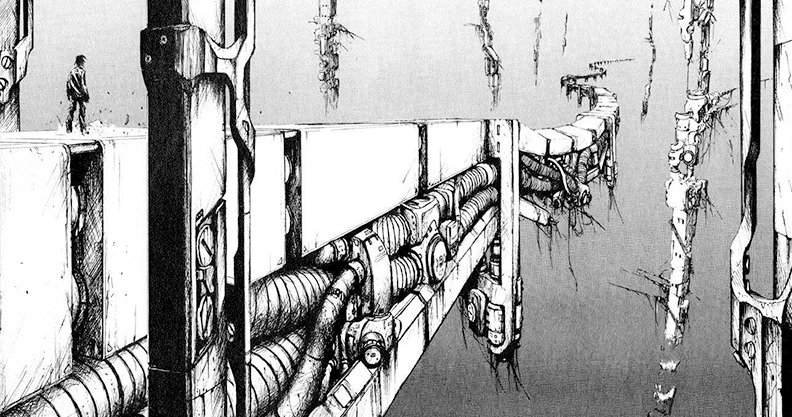
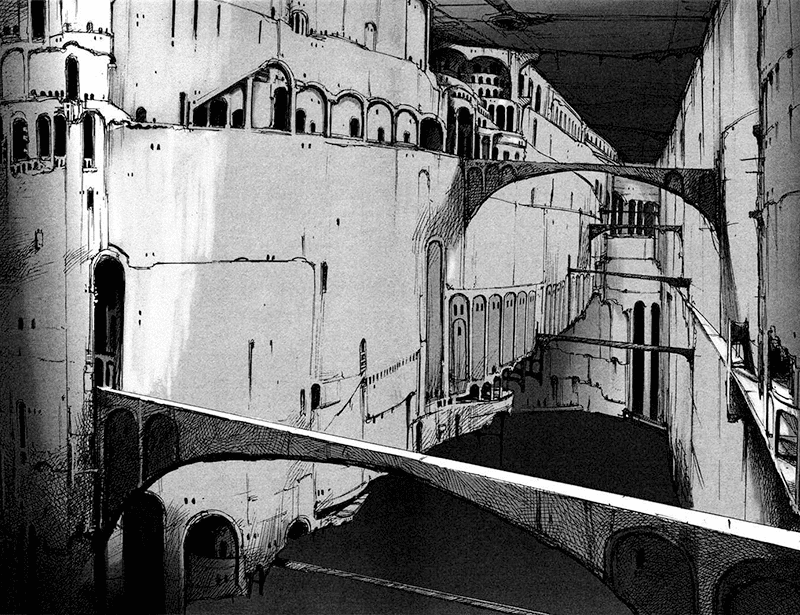
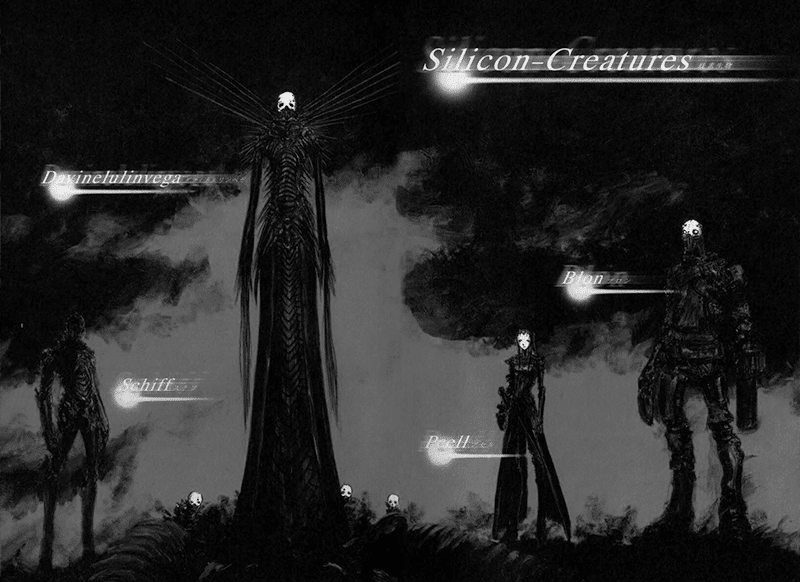
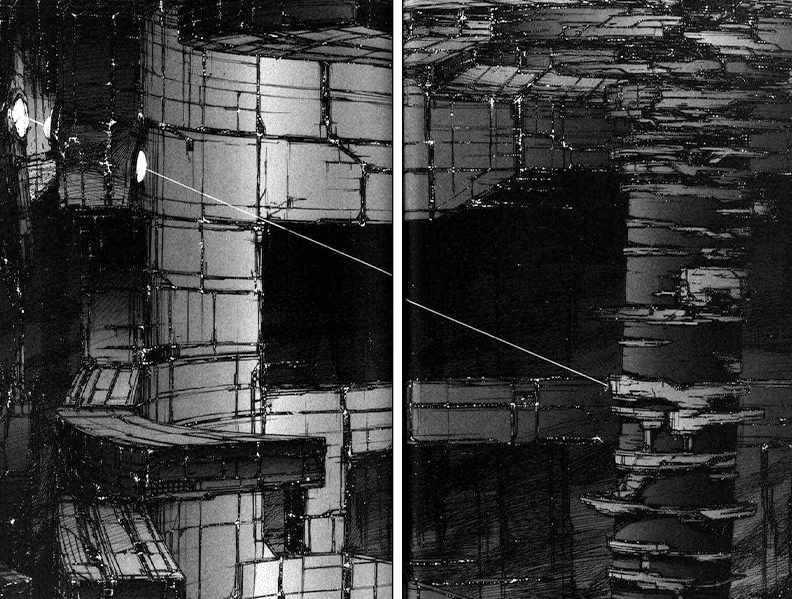
The City itself is one of the greatest achievements in manga worldbuilding. It’s an infinite, self-expanding megastructure stretching beyond comprehension, with walls the size of continents, voids deeper than oceans, and corridors that never end. Nihei’s panels often reduce Killy to a single speck swallowed by the impossible scale. It’s awe-inspiring, alien, and terrifying.
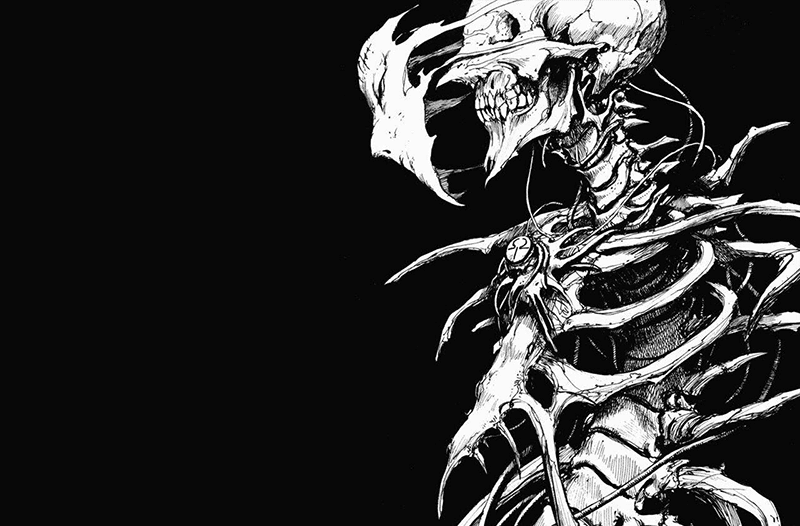
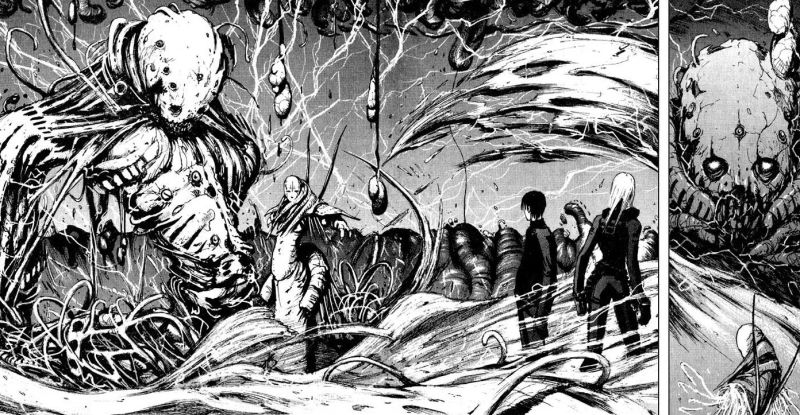
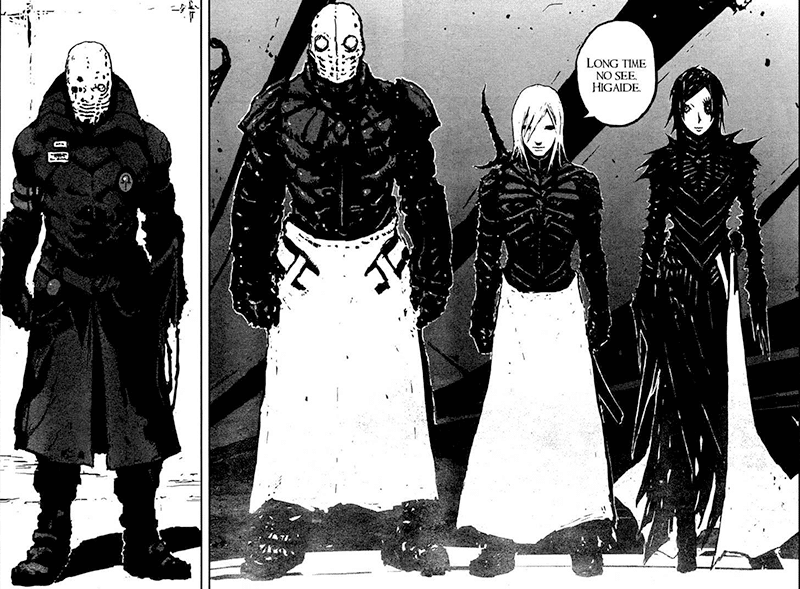
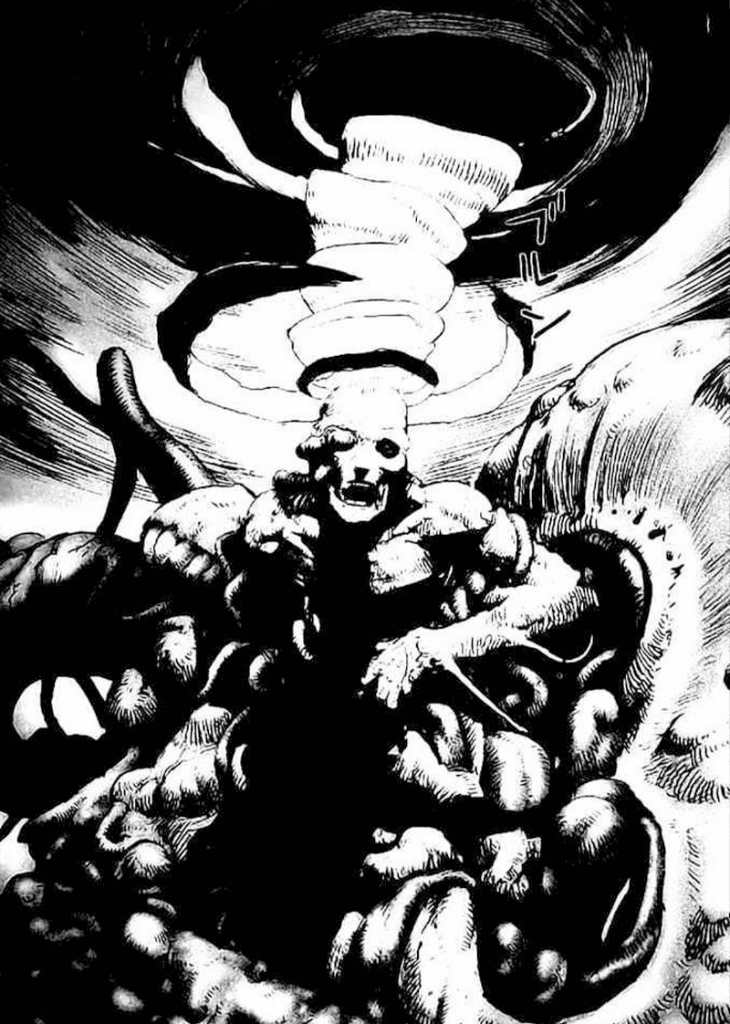
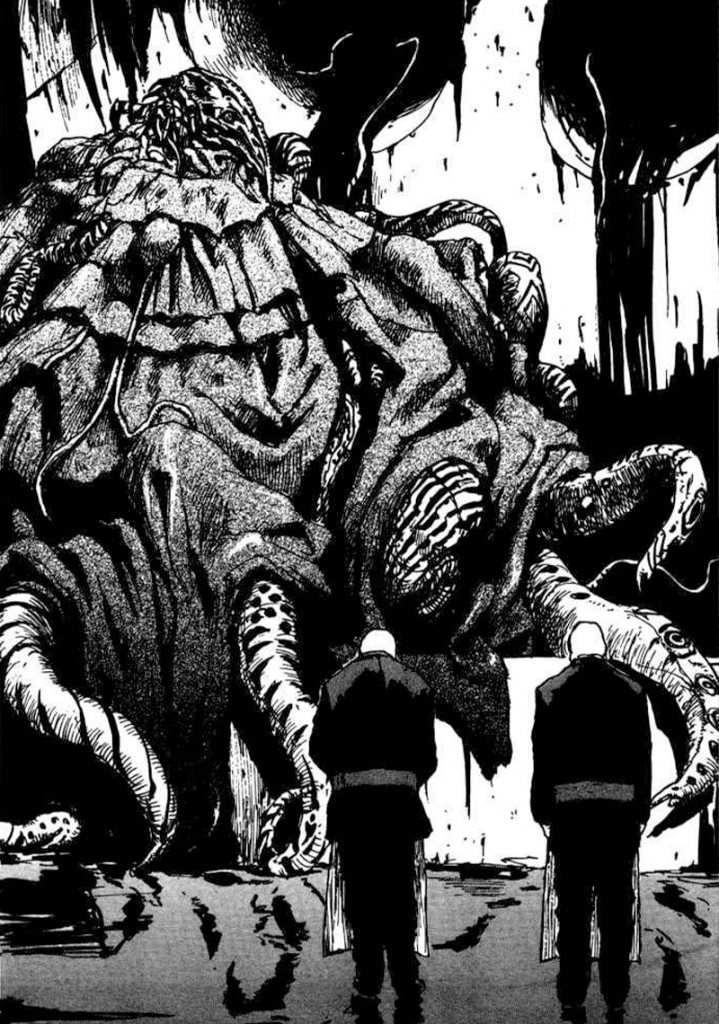
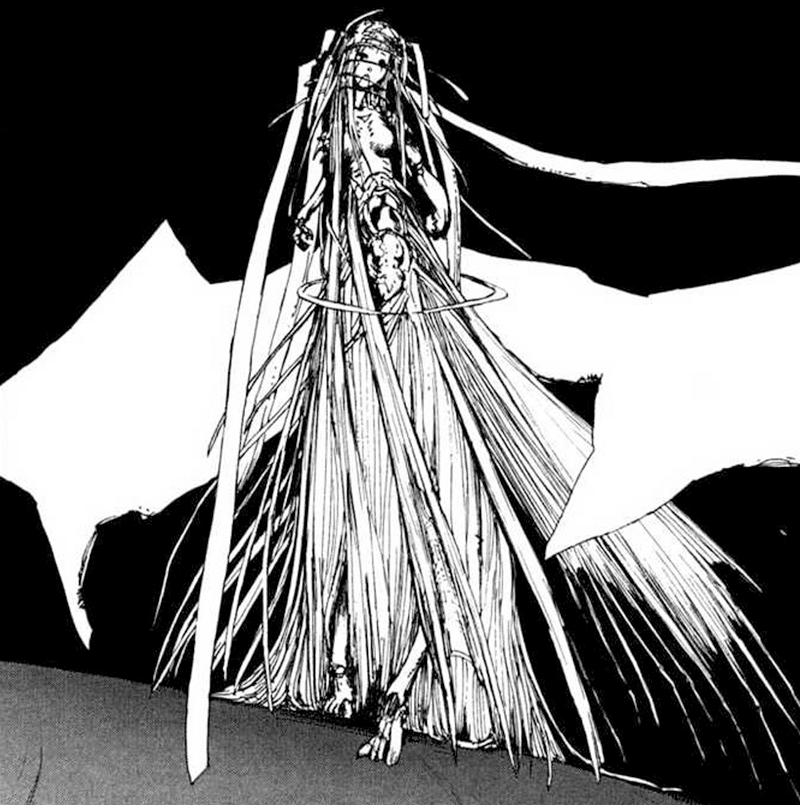
The inhabitants of this nightmare are no less memorable: biomechanical entities, deranged cyborgs, Builders who continue expanding The City, and the relentless Safeguard. Each design fuses machinery, flesh, and abstraction into something beautiful and grotesque.
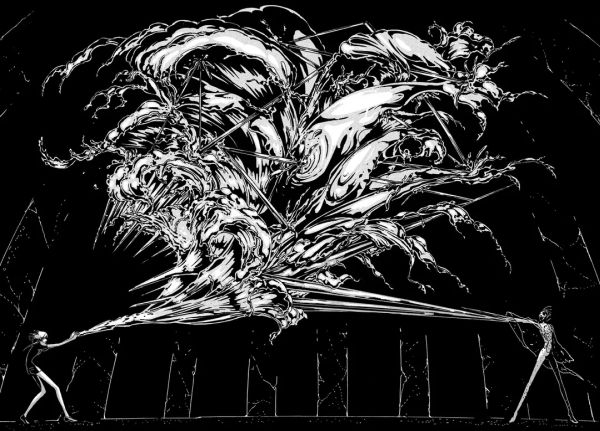
Dialogue in Blame! is minimal, and emotion comes through composition and seldom through speech. Killy’s expression rarely changes, yet his determination never wavers. When violence erupts, it’s sudden and cataclysmic. Killy’s iconic Gravitational Beam Emitter doesn’t just kill; it eradicates. These bursts of destruction contrast perfectly with the long stretches of silent exploration, reinforcing the loneliness and futility that define the manga.
Where Akira gave us revolution and Ghost in the Shell gave us philosophy, Blame! offers something colder: a vision of the future where humanity is entirely irrelevant. It’s a cyberpunk manga reinterpreted as cosmic horror, stripped of politics and emotion until only scale, silence, and entropy remain.
Few works capture that feeling of existential smallness so perfectly. For me, Blame! isn’t just one of the best cyberpunk manga; it’s one of the greatest manga ever created. It’s a stark, monumental journey through architecture and annihilation.
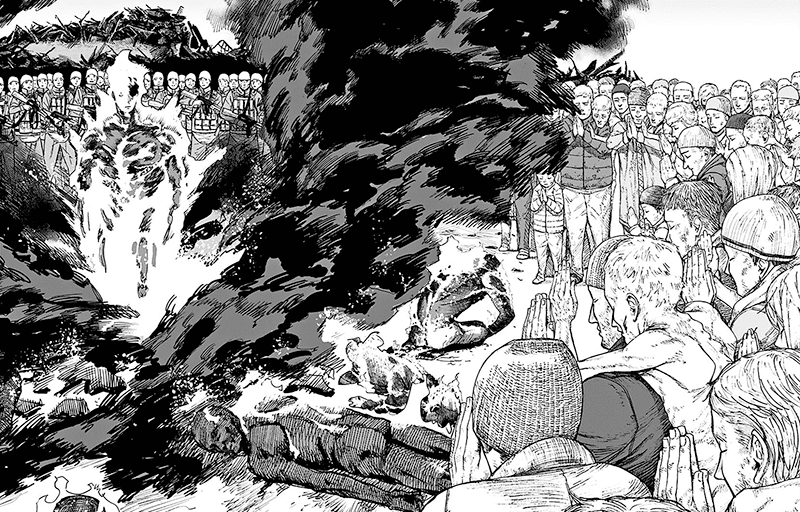
Finding new manga to read can be surprisingly difficult, especially when so many popular series are still ongoing or endlessly delayed. That’s why I put together this list of my favorite completed manga. These are stories you can dive into and finish without having to wait for the next chapter.
This list isn’t just a collection of classics, though. It’s a mix of personal favorites that left a lasting impression on me. You’ll find anything from dark psychological thrillers and brutal action sagas to heartfelt slice-of-life dramas and surreal experiments. Some are all-time greats that shaped the medium, while others are hidden gems that deserve far more recognition.
I naturally gravitate toward seinen manga, so the list leans heavily in that direction. If you prefer shonen stories, I recommend you check out my list of the best shonen manga, where you can find high-energy adventures and battle manga.
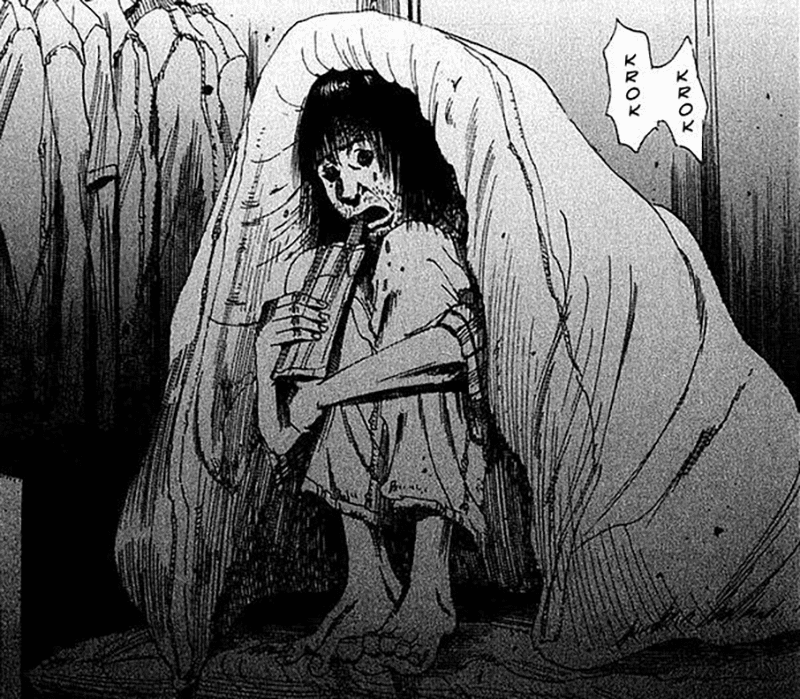
What all titles here have in common is that they’re completed manga with a clear, satisfying conclusion. Whether you’re drawn to the existential horror of Uzumaki, the gritty realism of I Am a Hero, or the emotional depth of A Silent Voice, you’ll find something unforgettable here.
If you’re tired of cliffhangers and want a manga you can binge from beginning to end, you’re in the right place.
Mild spoiler warning: I’ll try to avoid giving away major story beats, but some plot details are necessary for context.
With that said, here’s my curated list of the 47 best completed manga (last updated: October 2025).
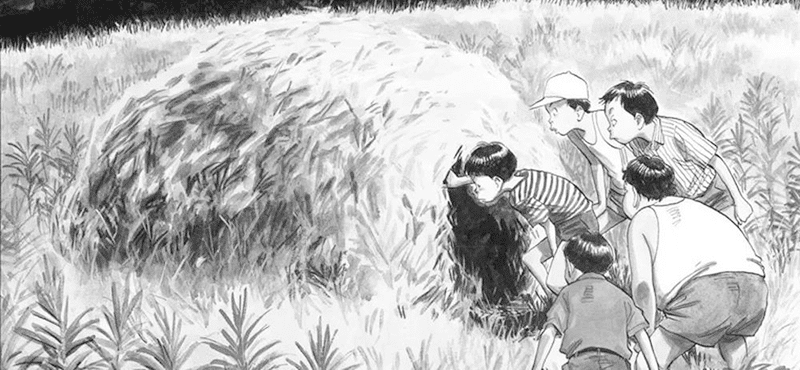
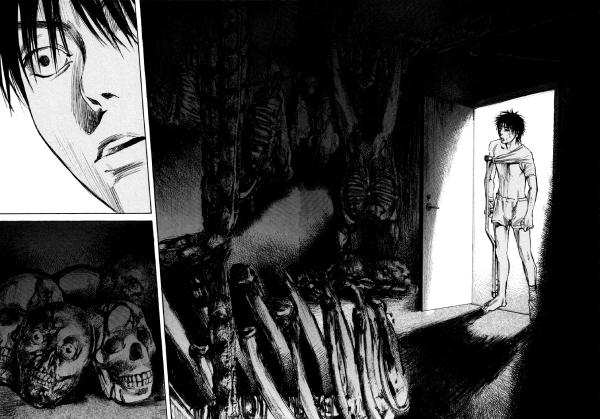
Masasumi Kakizaki’s Hideout is a masterclass in short-form psychological horror. This completed manga proves a story doesn’t need length to leave a lasting impression. Across only nine chapters, it charts a descent into madness that’s brutally tight and claustrophobic.
The story follows Seiichi Kirishima, a failed novelist whose grief and resentment have rotted into something monstrous. On the surface, he’s taking his wife on a healing trip to a remote tropical island after the death of their son. In truth, he’s planning to murder her. When his attempt goes wrong, the nightmare turns literal as both are driven into a labyrinth of underground caves. It’s a sinister place, one that hides something far more dangerous than mere darkness.
Kakizaki’s art elevates Hideout from good to unforgettable. His obsessive detail and command of shadows make every panel suffocating. The contrast between blinding light and creeping darkness gives the pages a cinematic texture. You can feel the damp air and hear the echo of footsteps in the cave.
Unlike many other horror series that leave threads dangling, Hideout feels perfectly resolved. Its conclusion is twisted, yet strangely fitting. This is not a happy story, but one about the inevitable collapse of a man who’s already lost everything.
It stands as one of the most haunting, self-contained horror stories in the medium, and for readers seeking one of the best completed manga in psychological horror, Hideout is unforgettable.
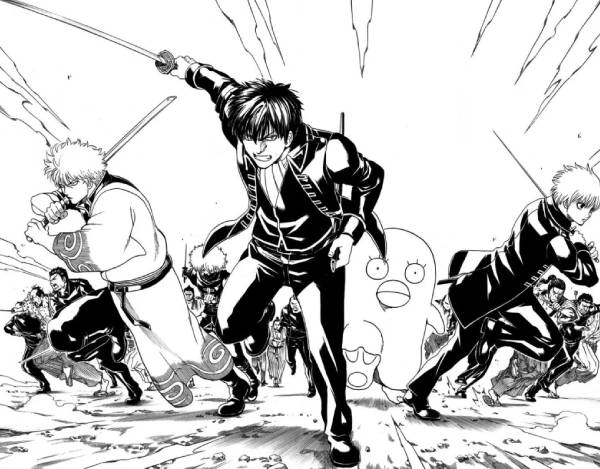
Hideaki Sorachi’s Gintama defies easy classification. It’s a series that can make you laugh, then hit you with the weight of an epic samurai fight moments later. Spanning more than 700 chapters, this completed manga blends slapstick comedy, heartfelt drama, and sharp social satire into something truly unique.
Set in an alternate Edo overrun by alien invaders known as the Amanto, the story follows Gintoki Sakata, a lazy samurai freelancer who runs the Yorozuya business alongside straight-laced Shinpachi, gluttonous alien Kagura, and their oversized dog, Sadaharu. Their daily odd jobs spiral into bizarre escapades involving corrupt officials, alien conspiracies, and some of the most ridiculous situations in manga history.
At first glance, Gintama feels like pure parody. It’s a barrage of fourth-wall-breaking comedy that mocks every shonen trope imaginable. But beneath the absurdity lies a deeply emotional pulse. Sorachi balances chaos and poignancy with remarkable precision, turning recurring gags into reflections of friendship, loss, and the passage of time. The later arcs, especially the Shogun Assassination and Shinsengumi arcs, transform the series into a full-blown tragedy without ever losing its sense of humor.
Visually, Sorachi’s art improves steadily throughout the series, pairing exaggerated expressions with fluid cinematic action. His ability to shift from manic comedy to deadly serious sword fights is unmatched.
Gintama leaves behind a lasting impression few other completed manga can match. Hilarious, heartfelt, and deeply human, it stands as a must-read for anyone seeking a blend of parody, tragedy, and samurai epic.
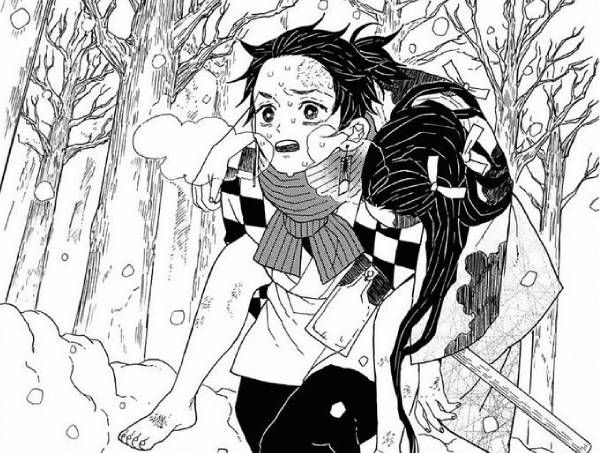
Koyoharu Gotouge’s Demon Slayer: Kimetsu no Yaiba is a rare phenomenon. It’s a breakout debut that became one of the most beloved and best-selling manga in history. What began as a humble shonen about vengeance and family evolved into a cultural phenomenon that blends breathtaking action with heartfelt emotion and striking visual imagination.
The story opens with tragedy. Tanjiro Kamado, a kind-hearted boy from the mountains, returns home to find his family massacred by demons. Only his sister Nezuko survives, but she has been transformed into a demon herself. Driven by love and guilt, Tanjiro joins the Demon Slayer Corps to find a cure and hunt down the monster responsible. What follows is an unrelenting journey of hardship, compassion, and courage that captures the very essence of classic battle manga.
Every confrontation in Demon Slayer feels meaningful. The demons aren’t mere villains, but echoes of broken humanity, and their deaths are steeped in sorrow rather than triumph. Gotouge’s art mirrors this duality. The delicate flow of sword techniques, rendered as vivid elemental arcs, contrasts beautifully with moments of brutality and loss. Even without color, Gotouge’s panels pulse with movement and emotion.
Demon Slayer stands out for its pacing and finality. It never overstays its welcome, and each arc builds naturally toward an emotionally satisfying conclusion. For readers seeking one of the best completed manga that perfectly balances action and heart, Demon Slayer remains a modern classic.
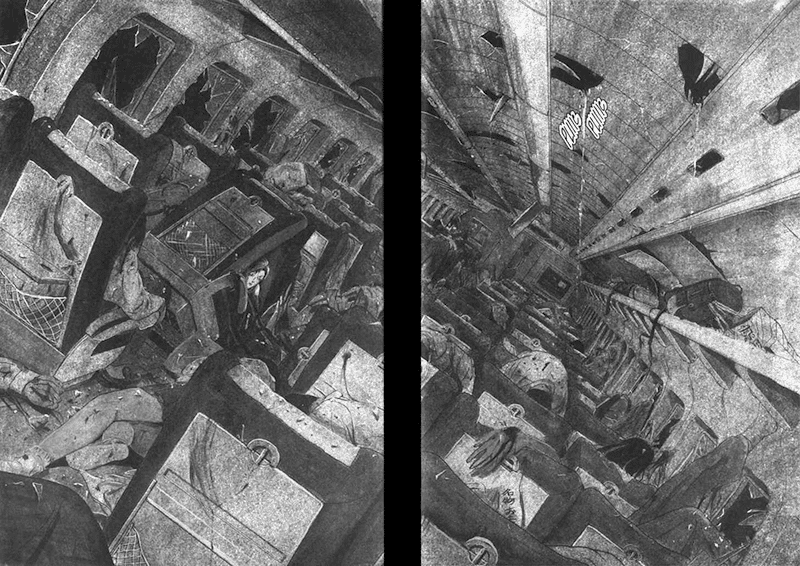
Minetarō Mochizuki’s Dragon Head is a masterpiece of psychological and survival horror. It’s a completed manga that strips away civilization to expose the raw terror of the human mind. Serialized in the late 90s, it begins with an ordinary school trip and ends in a world utterly devastated and bleak.
The story opens with a train crash inside a long mountain tunnel, leaving only three survivors: Teru, Ako, and Nobuo. Trapped in darkness and surrounded by corpses, they face the slow disintegration of both body and sanity. What starts as a claustrophobic survival tale quickly spirals into madness as fear and paranoia consume them. When they finally find a way out, the world above offers no comfort. What they find are scorched cities, silent skies, and the creeping dread that humanity may have already ended.
Mochizuki’s artwork is suffocating in the best way. His heavy blacks, trembling lines, and close-up expressions make every page feel oppressive. The atmosphere hums with heat, dust, and psychological decay. The moment Nobuo loses himself to insanity is one of the most haunting portrayals of how fear can twist people beyond recognition.
Unlike most survival manga, Dragon Head offers no answers. There’s only one question: what remains human when everything else collapses? This ending feels final yet uncertain, a fitting close for such an unrelenting descent into despair.
For readers searching for one of the best completed manga in psychological and survival horror, Dragon Head is highly recommended.
Naoki Urasawa’s Pluto is a rare achievement. It’s a completed manga that reimagines Osamu Tezuka’s Astro Boy and transforms it into a deeply human science-fiction masterpiece. Inspired by Tezuka’s classic story ‘The Greatest Robot on Earth,’ Urasawa creates something entirely of his own: a noir-style thriller where empathy, memory, and morality collide in haunting ways.
Set in a near future where humans and robots coexist, the story begins with the murder of Mont Blanc, a beloved robot hero known for his compassion. His death shocks the world, and Gesicht, a fellow advanced robot and Europol detective, takes on the case. What appears to be a targeted killing soon unfolds into a far more sinister conspiracy.
Urasawa’s approach to mystery is meticulous and mature. His pacing builds tension not through spectacle but through silence and emotion. Every conversation carries philosophical weight, questioning what it truly means to be alive. Gesicht himself is one of Urasawa’s most complex creations: a machine capable of love, guilt, and fear, all while trying to uphold justice.
The artwork complements the tone perfectly. It’s grounded, cinematic, and filled with quiet melancholy. Each expression and each shadowed panel feels deliberate, reinforcing the story’s emotional core.
Since it’s a completed manga, Pluto delivers a fully realized and emotionally conclusive story that honors Tezuka’s legacy while standing as a modern classic in its own right. For readers looking for a great science-fiction or mystery manga, this one’s a must-read.
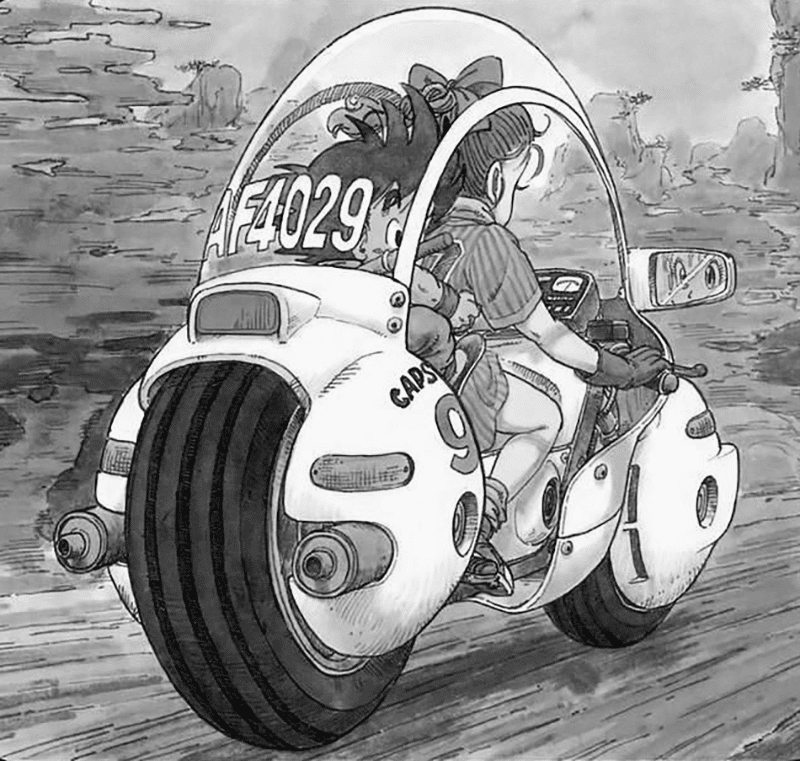
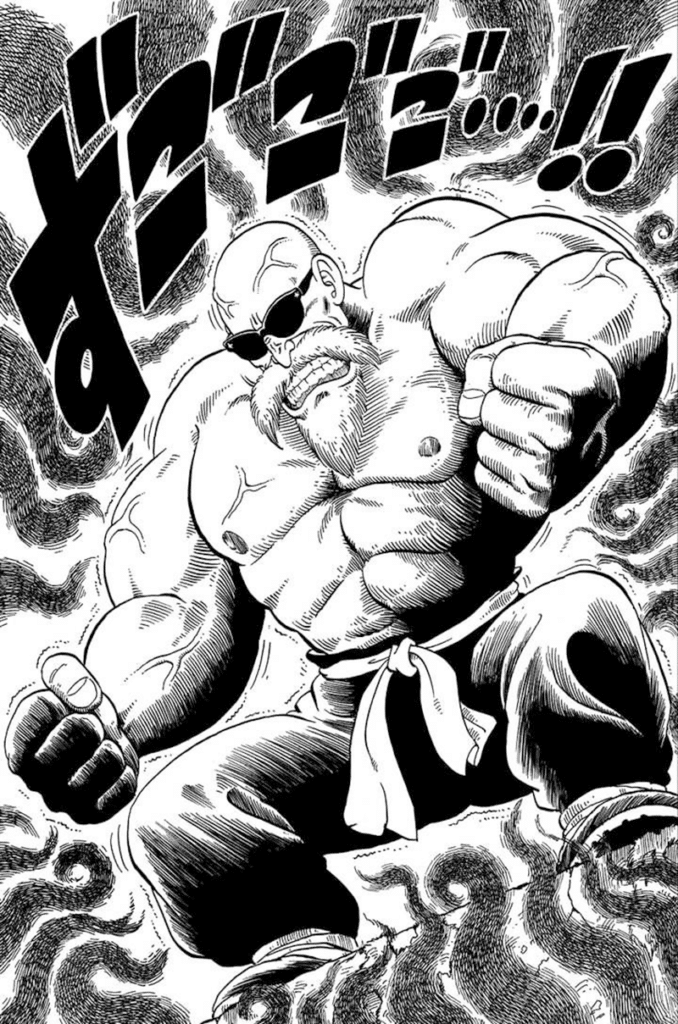
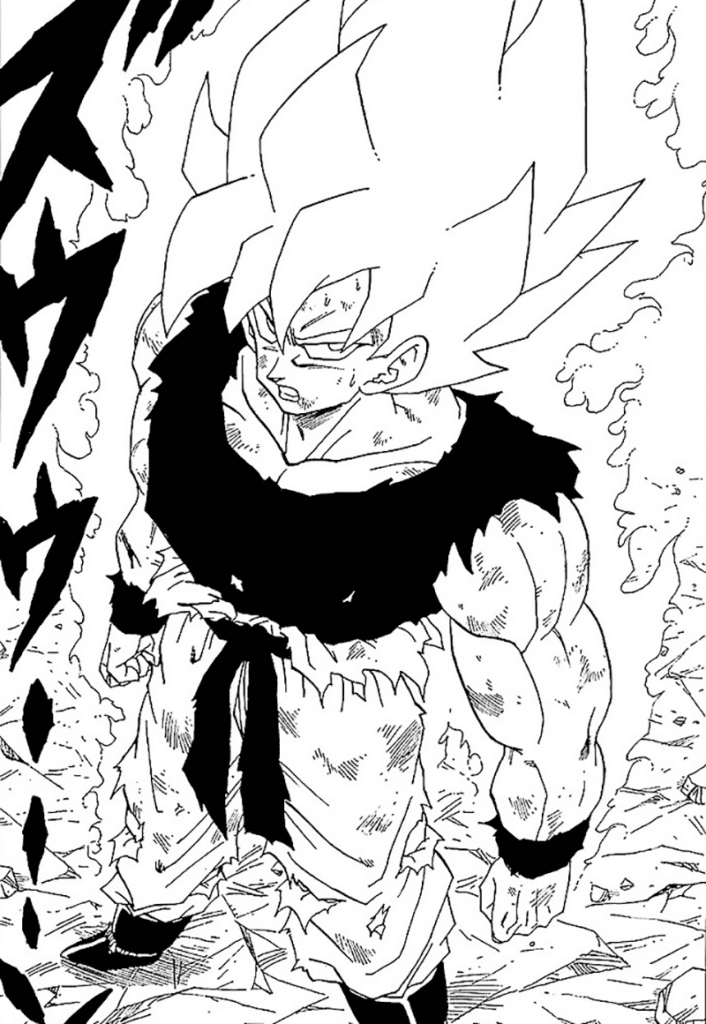
Akira Toriyama’s Dragon Ball isn’t just a classic; it’s the foundation of modern shonen storytelling. First serialized in 1984, it remains one of the most influential works in Japanese pop culture, inspiring generations of artists and readers alike. While later continuations like Dragon Ball Super expand the story, the original run, lasting from Goku’s first adventure to the Buu Saga, stands as a self-contained masterpiece.
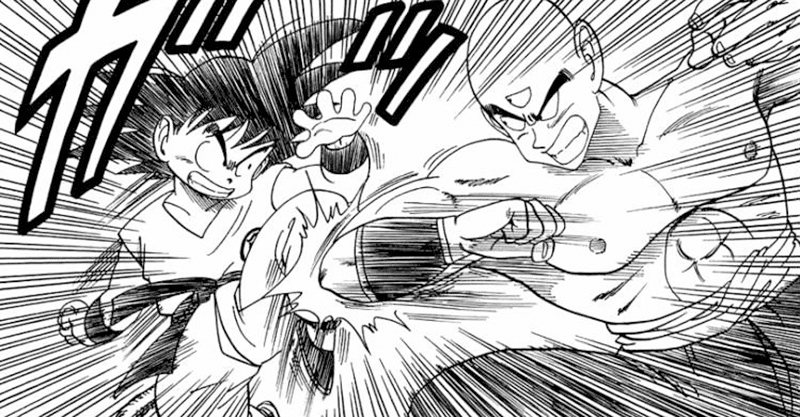
At its heart, Dragon Ball is the story of growth. We follow Son Goku from his humble beginnings as a cheerful boy in the wilderness to his rise as the world’s greatest warrior. What starts as a comedic martial arts adventure quickly evolves into an epic saga of aliens, superhumans, and destiny. Toriyama’s pacing, sense of humor, and knack for dynamic action make every arc unforgettable, be it the early World Martial Arts Tournaments or the planet-shattering battles against Freeza, Cell, and Buu.
Toriyama’s clean, kinetic art remains unmatched in clarity and motion. Every punch, kick, and energy blast is easy to follow yet packed with impact, making his battles one of the most enjoyable to witness. At the same time, his intricate backgrounds breathe life into the world he built.
Dragon Ball is one of manga’s greatest stories, and witnessing Goku’s long journey is nothing short of amazing. If you want a completed manga that defined the battle shonen genre and continues to inspire countless others, Dragon Ball is more than worth your time.
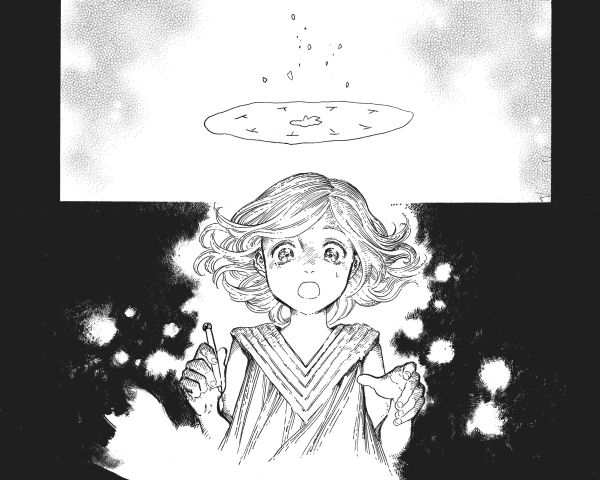
Yoshitoki Ōima’s To Your Eternity is a sprawling, sorrowful, and profoundly human story. It’s a completed manga that stands among the most emotionally resonant works of the past decade, blending fantasy and philosophy into a meditation on life, loss, and what it truly means to exist.
It begins with something simple: an orb cast down on Earth, capable of taking on the form of anything that leaves an impression on it. That shapeless being slowly evolves, first into a rock, then a wolf, and eventually a young boy. This marks the beginning of a centuries-long journey of transformation. Each encounter, every friendship and tragedy, becomes a lesson for Fushi, shaping both his body and soul.
Ōima storytelling carries a rare tenderness. Every character Fushi meets, from March’s innocent hope to Gugu’s unspoken courage, leaves a mark that lingers long after their arcs end. Few manga capture the weight of impermanence so gracefully. Every moment of joy is always shadowed by the inevitability of loss, yet it is never without meaning.
The artwork mirrors the emotional balance. Expansive landscapes capture both loneliness and wonder, while Ōima’s subtle facial expressions and tender character interactions give each encounter its melancholic core.
To Your Eternity eventually reaches a conclusion that’s both powerful and poetic while preserving its sense of mystery and awe. If you’re after a completed manga about love, memory, and the beauty of existence, it’s an unforgettable masterpiece.
Kengo Hanazawa’s I Am a Hero begins like a quiet slice-of-life story about failure and alienation, but transforms into one of the most chilling and intelligent zombie epics ever drawn. It’s a completed manga that offers a rare mix of psychological realism and apocalyptic horror, taking the familiar zombie formula and twisting it into something disturbingly human.
Hideo Suzuki is not the type of protagonist you’d expect in a story like this. He’s a struggling manga assistant in his thirties, insecure, delusional, and barely able to hold his life together. When a mysterious infection spreads across Japan, transforming people into the living dead, Hideo has to tackle not only his own survival but also his fragile, broken mind plagued by hallucinations.
Hanazawa’s art is exceptional, transforming everyday cityscapes into claustrophobic nightmares and haunting ruins of civilization. The infected are depicted with horrifying precision. Their twisted anatomy and fragmented speech often make them more pitiful than monstrous.
What truly sets I Am a Hero apart is its psychological depth. It’s less about the apocalypse itself than about witnessing it from the mind of someone already broken. Even the series’ ending, while controversial and ambiguous, feels thematically right, even if it might leave you unsatisfied.
For anyone searching for one of the best completed horror manga or psychological intimate storytelling, I Am a Hero stands as a masterpiece of paranoia, human fragility, and zombie apocalypse suspense.
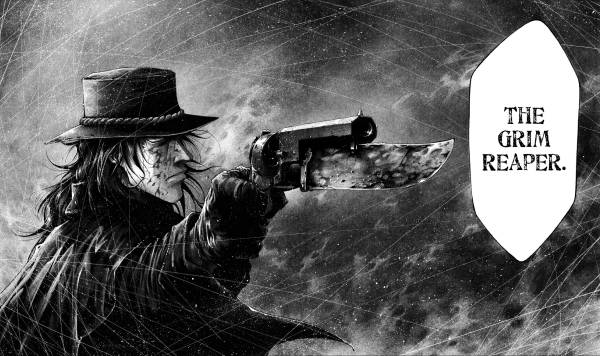
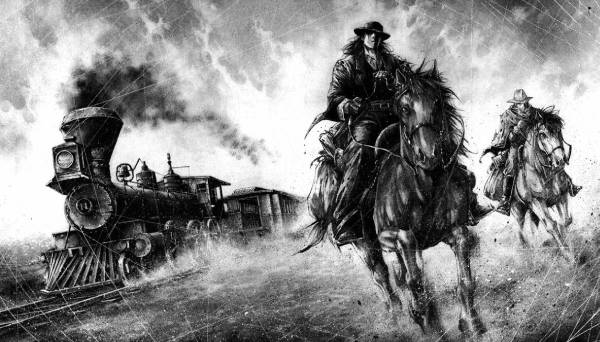
Masasumi Kakizaki’s Green Blood is a grim and haunting vision of 19th-century New York, a time when the city was drowning in filth, violence, and broken dreams. Set in the infamous Five Points district, this manga delivers a tightly constructed tale of brotherhood and revenge that fuses the grit of a Western with the tragedy of classic crime noir.
The story follows two brothers, Brad and Luke Burns, who grow up in the slums. Luke yearns for an escape, while Brad has already surrendered to the city’s darkness. He’s secretly working as the Grim Reaper, a ruthless enforcer for the Grave Digger gang. As their story continues, it evolves into one full of violence, blood and betrayal, as well as brotherhood and the cost of freedom.
Kakizaki’s artwork is breathtaking in its realism. Every page captures the suffocating atmosphere of the Five Points, thick with soot, sweat, and desperation. Later pages offer breathtaking views of the wide plains of the American Wild West. His action scenes are raw, full of brutal clarity, while the quieter panels, rich in shadow and texture, emphasize the story’s tragic tone.
While Green Blood is a completed manga and offers a satisfying conclusion, its ending arrives sooner than expected. At its heart, it’s a story of two brothers, both shaped by a brutal world, and the choices they make to claim the freedom they dream of. Green Blood is a fantastic choice for readers who seek a unique manga that blends historical grit, stunning visuals, and emotional weight.
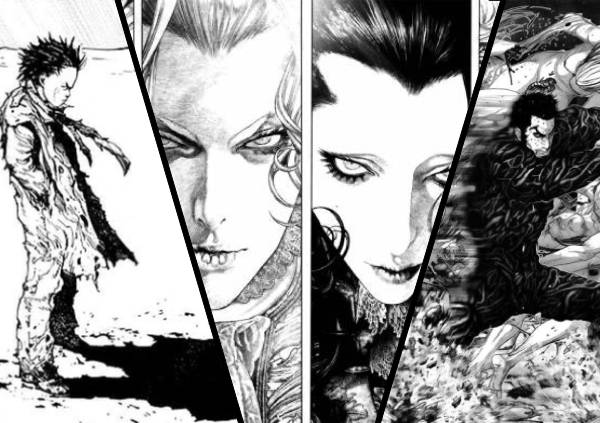
Kouta Hirano’s Hellsing is a spectacle of blood, style, and unrelenting action. It’s a gothic epic that redefined vampire action for an entire generation. While the anime adaptation refines its pacing, the original completed manga is chaos incarnate, unfiltered, unhinged, and wholly self-aware of its excess.
At its core, Hellsing chronicles the endless war between monsters and men. The Hellsing Organization, led by the unflinching Integra Hellsing, fights to protect Britain from supernatural threats. Their greatest weapon is Alucard, an ancient, arrogant vampire who delights in slaughtering anything and anyone foolish enough to challenge him. Alongside his apprentice, Seras Victoria, he faces countless enemies, the most notable being Millennium, an army of Nazi vampires eager to unleash a new world drenched in blood.
Every page of Hellsing drips with personality. Hirano’s art is bold and heavy with ink, its dynamic linework turning every gunfight and dismemberment into a grim sort of beauty. The dialogue is full of bravado and dark humor, while its cast is full of superhuman madmen like the zealot priest Anderson, and the almost operatic Major.
Hellsing remains one of the best completed manga in the horror genre, perfect if you’re looking for stylish brutality, gothic spectacle, and unhinged characters. It stands as a bloody, glorious classic that still defines the vampire action genre.
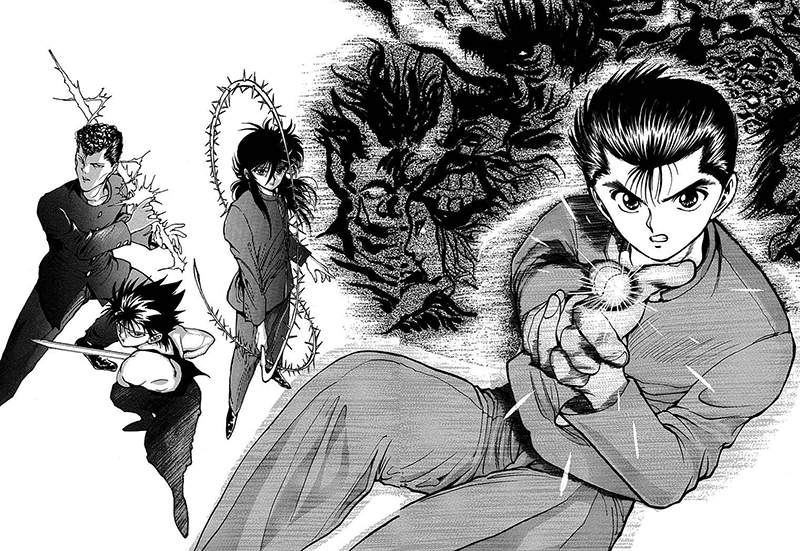
Before Hunter x Hunter cemented Yoshihiro Togashi as a big name in manga history, there was Yu Yu Hakusho. It’s a wild and profoundly influential supernatural adventure that stood apart when most series relied solely on martial arts battles.
The story begins when teenage troublemaker Yusuke Urameshi dies unexpectedly while saving a child’s life. It was an act so surprising that not even the afterlife knows what to do with him. Given a rare second chance, Yusuke returns as a Spirit Detective, investigating crimes that cross between the human and demon realms. What starts as a simple supernatural mystery story soon escalates into high-stakes battles, brutal tournaments, and political intrigue in the underworld.
Togashi’s true genius lies in his characters. Yusuke grows from a reckless punk into a deeply human hero, while Kurama, Hiei, and even Kuwabara quickly became fan favorites, each with their own arc and individual personality. Their chemistry is fantastic, and every major battle builds upon their bond.
The Dark Tournament, in particular, remains a gold standard for shonen storytelling. It’s tightly written, emotionally charged, and filled with memorable battles. The clear standout of the arc is Toguro, who remains one of shonen manga’s most fantastic and layered antagonists.
While its conclusion seems cut short, Yu Yu Hakusho remains one of the best completed manga in shonen history. It endures not only for its humor and action, but for its unforgettable battles, enduring characters, and emotional resonance.
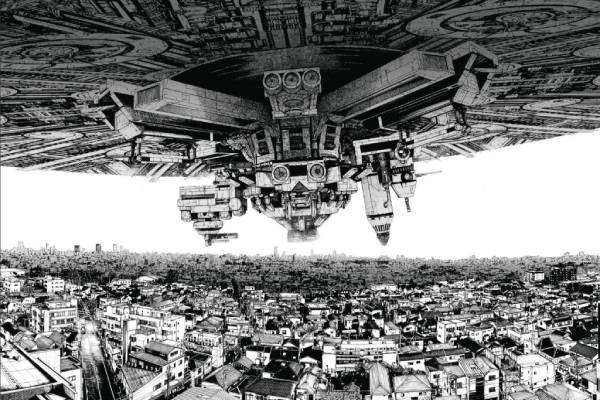
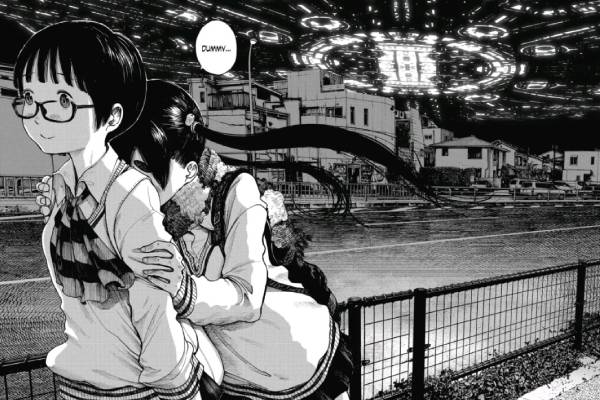
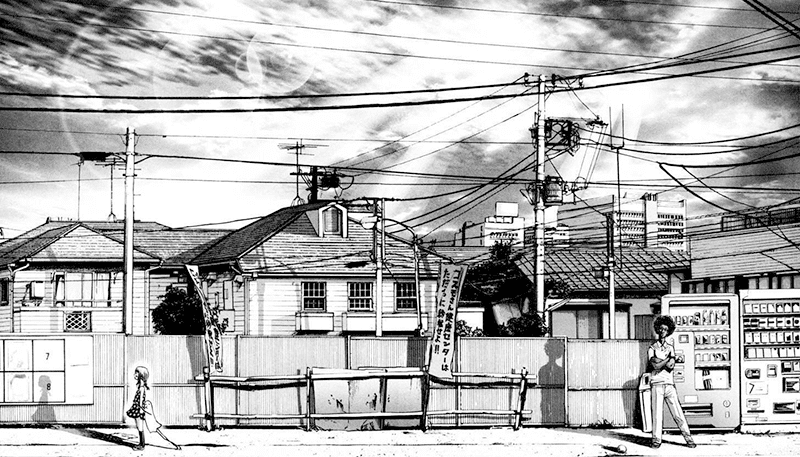
Inio Asano’s Dead Dead Demon’s Dededede Destruction begins like a slice-of-life story about two ordinary high school girls before transforming into one of the most ambiguous science-fiction manga of the 2010s. As a completed manga, it stands as Asano’s strangest and most daring achievement yet.
Set in a near-future Tokyo overshadowed by a massive alien mothership, the series follows Kadode and Ouran as they drift through everyday life. We watch them gossip, late-night argue, and daydream, while the world is overshadowed by the unknown. For long parts of the story, the invasion is nothing but background noise, absorbed by the monotony of ordinary life. Asano uses this absurd premise to dissect how people normalize danger and turn it into routine.
As the story progresses, its tone fractures. What begins as slice-of-life drama becomes full-blown science-fiction as the manga introduces high-concept ideas that warp the manga into something entirely different. While the tonal whiplash feels deliberate, the sheer audacity of the ideas can make it hard to endure the change.
Visually, Asano remains unmatched. His blend of hyperrealistic backgrounds and almost caricatured characters gives the manga an uncanny texture that feels part comedic, part unsettling.
By its final chapter, Dead Dead Demon’s Dededede Destruction ties its chaos together in a way that feels complete but also quite confusing and ambiguous, leaving more questions open than answered. Some will hate it, others will love it, but all will agree: the journey there is unforgettable.
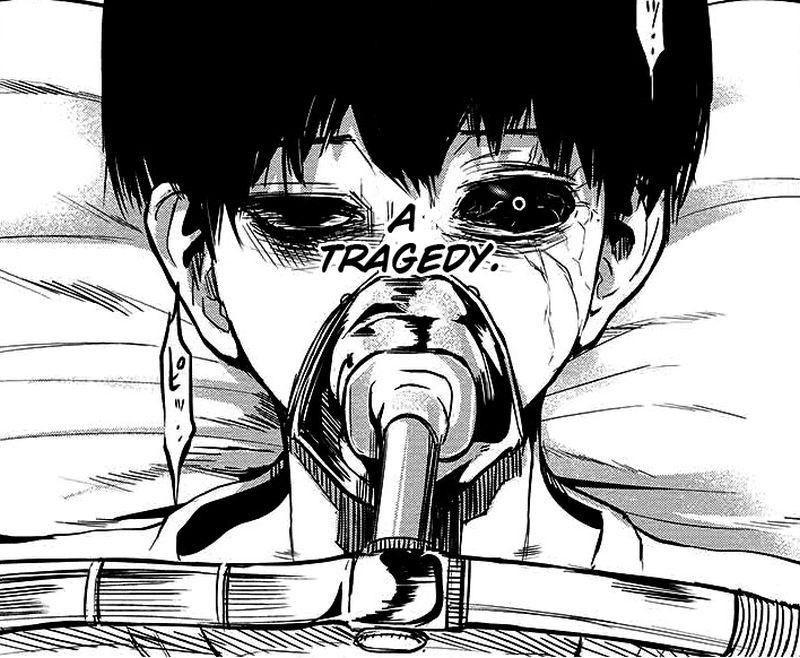
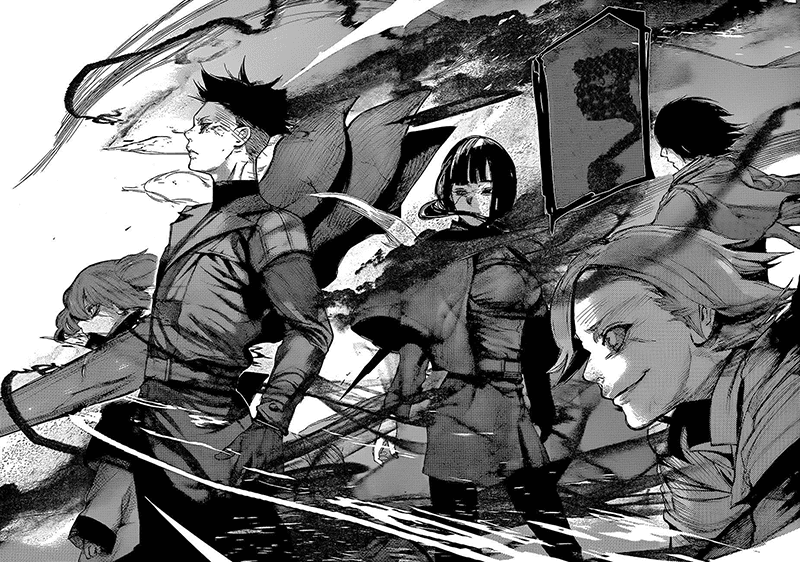
Sui Ishida’s Tokyo Ghoul is a dark, tragic masterpiece. It’s a story that mixes visceral horror with raw emotion and identity crises. It tells a haunting, fully realized story about transformation, alienation, and the fragile line between man and monster. It’s one of the most influential manga series of the 2010s, and even now, few stories can rival its mix of beautiful visuals and raw brutality.
The manga opens with Ken Kaneki, an ordinary bookish student whose life changes forever after a date gone wrong. After surviving a ghoul attack through an emergency organ transplant, he wakes up no longer fully human. Forced to walk the hidden world of ghouls and the relentless investigators of the CCG, Kaneki has to fight to keep his humanity.
Ishida’s Tokyo may be divided between hunters and the hunted, but its morality is anything but clear-cut. The ghouls who fight to survive are capable of deep love and sorrow, while human investigators often commit acts of cruelty and savagery. This ambiguity gives the manga its haunting realism, and many of the supporting cast, be it Touka, Amon, or Arima, feel shaped by their own inner demons.
Artistically, Ishida’s work is mesmerizing. His art evolves dramatically, blending fluid, sometimes chaotic battles with haunting emotional details.
Through its sequel, Tokyo Ghoul:re, the story comes to a definite, but controversial conclusion. Some find it powerful, while others find it unsatisfying. Even with its divisive ending, Tokyo Ghoul remains one of the best completed manga for readers who enjoy dark fantasy and stylish battles.
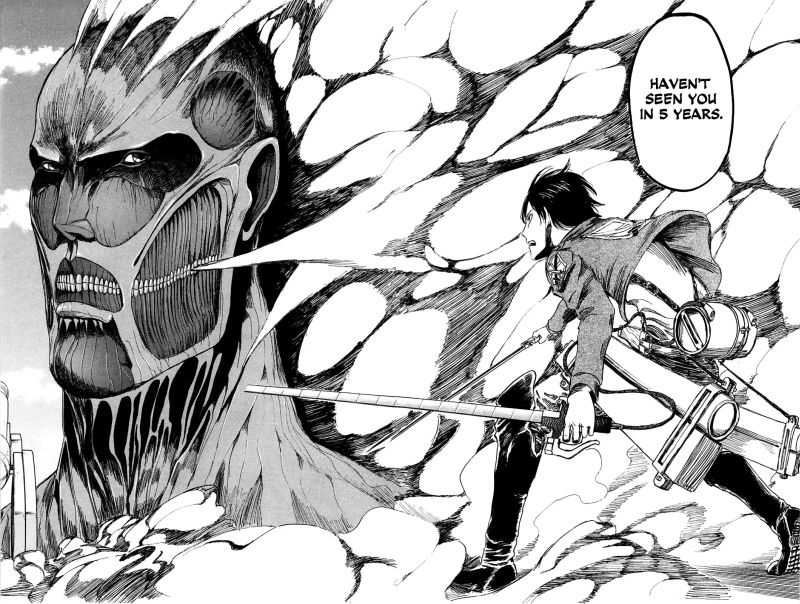
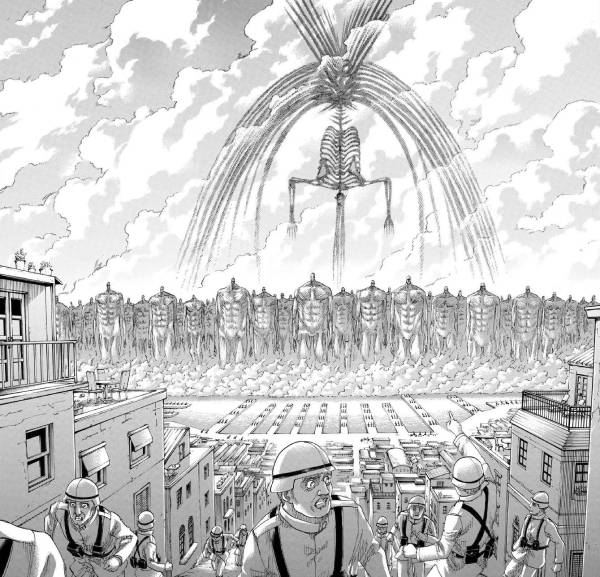
Hajime Isayama’s Attack on Titan began as a grim survival thriller and evolved into one of the most monumental sagas in modern manga. Now that it’s completed, it stands as both a cultural landmark and one of manga’s boldest creative experiments. It’s a story that fuses horror, politics, and tragedy into a single vision.
Set in a world where the last remnants of humanity live trapped behind enormous walls, the series opens with a sudden terrifying event. When a giant titan breaches the outer barrier, young Eren Yeager witnesses his mother’s death and vows to annihilate every one of these monsters. Alongside his friends Mikasa and Armin, he joins the Survey Corps, only to uncover truths far more terrifying than the titans themselves.
What starts as claustrophobic horror transforms into a sprawling political allegory. Nations clash, ideologies crumble, and Eren’s crusade for freedom twists into something monstrous. Isayama’s storytelling expands without losing focus, pushing shonen conventions into darker, more philosophical territory.
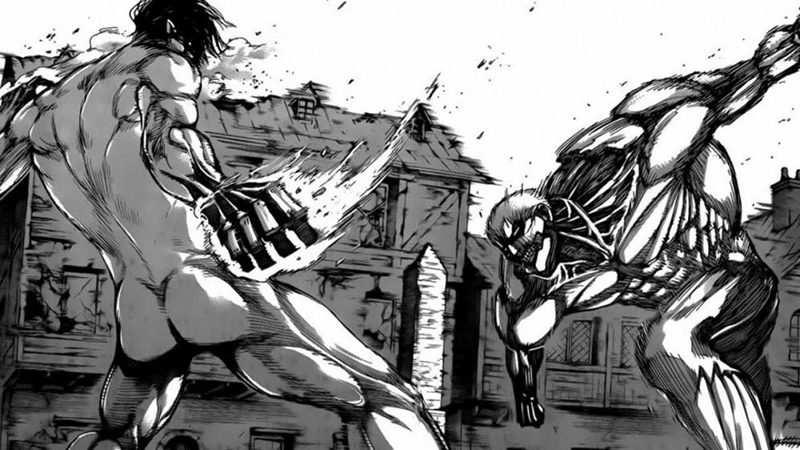
The artwork matures alongside the narrative, evolving from raw and unrefined into a cinematic spectacle. The vertical maneuvering battles remain among the most visually thrilling sequences in manga, balancing chaos and control in perfect measure.
Its finale may have divided fans, but that controversy remains part of its legacy. As a completed manga, Attack on Titan endures as a story of freedom, violence, and the endless cycles of hatred that define human history.
Genres: Dark Fantasy, Action, Mystery, Post-Apocalyptic
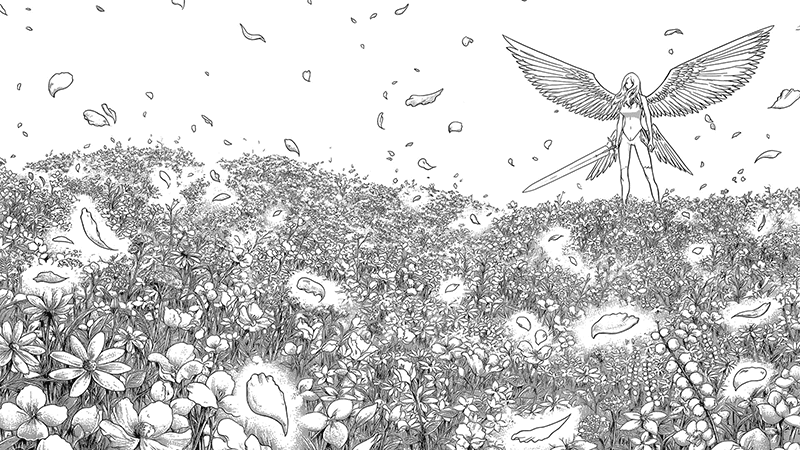
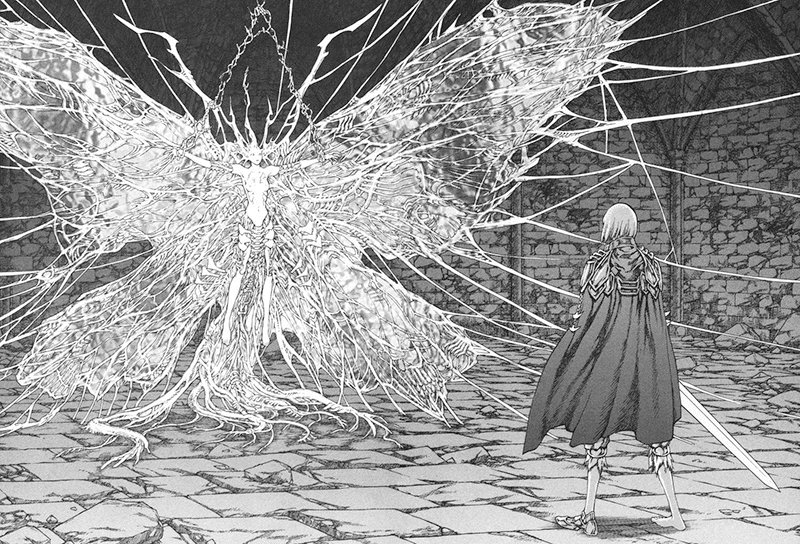
Norihiro Yagi’s Claymore is a dark fantasy story that blends elegance, brutality and emotional depth in perfect balance. As a completed manga, it delivers a fully realized revenge saga, standing amongst the most haunting shonen series of its generation.
Set in a medieval world crawling with shape-shifting demons called Yoma, the story follows Clare, a young warrior. She belongs to a secretive organization that creates Claymores, half-Yoma women who hunt these beasts while fighting the corruption within themselves. Clare’s journey begins as a solitary quest for revenge against the monstrous Priscilla, but evolves into something far greater: a rebellion against fate, power, and the cruel system that forged her.
What starts as episodic monster-hunting grows into a sweeping epic filled with betrayal, sacrifice, and shifting alliances. Each arc deepens the world’s mythology while pushing Clare ever-closer to losing her humanity. Yagi’s pacing is slow but deliberate, giving every revelation the weight it deserves.
Visually, Claymore is breathtaking. The character design balances grace and ferocity, while the Awakened Beings rank among manga’s most haunting creations: grotesque, alien, and mesmerizing. Yagi’s use of negative space and cinematic angles often creates a sense of isolation that perfectly mirrors the story’s tone.
Its final revelations may divide fans, but its sense of finality is undeniable. If you’re looking for an outstanding dark-fantasy manga, Claymore is a must-read.
Hajime Inoryu and Shota Ito’s My Dearest Self With Malice Aforethought is a slow-burn psychological thriller that turns memory, trust, and self-perception into a weapon. Since it’s a completed manga, it offers a full, twisting story that keeps readers second-guessing until the final chapter.
The series opens with Eiji Urashima, a quiet, unremarkable college student who wakes up to a life he doesn’t recognize. There’s a girlfriend he’s never met, conversations he doesn’t recall, and a blank space in his memory that keeps widening. His search for answers begins like a straightforward case of amnesia, but quickly evolves into a nightmare full of deceit, murder, and conspiracies.
The writing is razor-sharp. Even as the constant twists threaten to overwhelm, every new revelation lands logically, and shifts our understanding of the story. Throughout the first half, the tension never lets up, and each new chapter adds another layer, another question that deepens the mystery rather than resolving it. By the time the story nears its conclusion, it slows down, but once the final pieces fall into place, the payoff is deeply satisfying.
Shota Ito’s clean, grounded art style enhances the psychological edge. His subtle expressions and body language carry as much meaning as the dialogue, giving even quiet moments a feeling of unease.
My Dearest Self With Malice Aforethought is a tightly woven, fast-paced thriller that will keep you on the edge of your seat from start to finish. For fans of psychological manga packed with tension and twists, it’s one of the best completed works of its kind.
Eiji Ōtsuka and Shou Tajima’s MPD Psycho isn’t just a crime manga, but an autopsy of the human mind. This completed manga leads readers through a labyrinth of serial killers, conspiracies, and fractured identities, blurring the boundaries between detective fiction, horror, and philosophy. Even now, it remains one of the boldest and most disturbing achievements in the seinen genre.
At its core is Kazuhiko Amamiya, a detective with multiple personalities. The manga starts out episodically, following a series of grotesque and disturbing murders. Over time, the story expands into a sprawling web of psychological experiments, cult machinations, and manipulation. Every seemingly unrelated crime scene, we soon realize, is part of a larger, incomprehensible puzzle.
Tajima’s artwork amplifies that unease with surgical precision. The sterile settings, dissected bodies, and coldly symmetrical panels create an atmosphere that feels both scientific and nightmarish. The violence is shocking, but never aimless, and every image feels constructed to make the reader uncomfortable in the best way possible.
What makes MPD Psycho so unforgettable is its refusal to simplify. The narration mirrors Amamiya’s fractured psyche, intentionally disorienting the reader to reflect its themes of identity and control.
MPD Psycho stands as one of the most ambitious completed manga in psychological horror. It’s a disturbing masterpiece that ends with the same cryptic brilliance it began.
Yukito Kishiro’s Battle Angel Alita is a landmark of cyberpunk storytelling. It’s a violent yet deeply human odyssey that still resonates today. While Alita’s story is still ongoing today and currently in its third installment, I only want to focus on the first part, which was completed in 2005. It’s one of the most cohesive and emotionally charged journeys in science-fiction, balancing explosive action with philosophical depth and character development.
Set in the sprawling, destitute city known as Scrapyard, the series begins when cybernetic doctor Daisuke Ido discovers the remnants of a young android girl in a pile of discarded metal. He rebuilds her and names her Alita. As she searches for both her origins and her purpose, she becomes something between savior and a weapon.
Kishiro crafts a universe that feels both savage and beautiful. The chaos of the Scrapyard, towers of junk, desperate scavengers, and cybernetic bounty hunters, contrasts with Zalem, the pristine floating city above, a haunting symbol of class divide and technological arrogance. The series’ action sequences are nothing short of breathtaking, with the Motorball arc standing out as a kinetic masterpiece full of violence and stunning battle choreography.
Yet it’s Alita herself who anchors the story. Her evolution from lost girl to self-aware warrior gives the manga its soul. It makes it a testament to identity, resilience, and the fragility of humanity.
Battle Angel Alita remains one of the best completed manga ever written. It’s a raw cyberpunk science-fiction epic: visionary and unforgettable. Those who want more can continue the saga in Battle Angel Alita: Last Order, and Battle Angel Alita: Mars Chronicles.
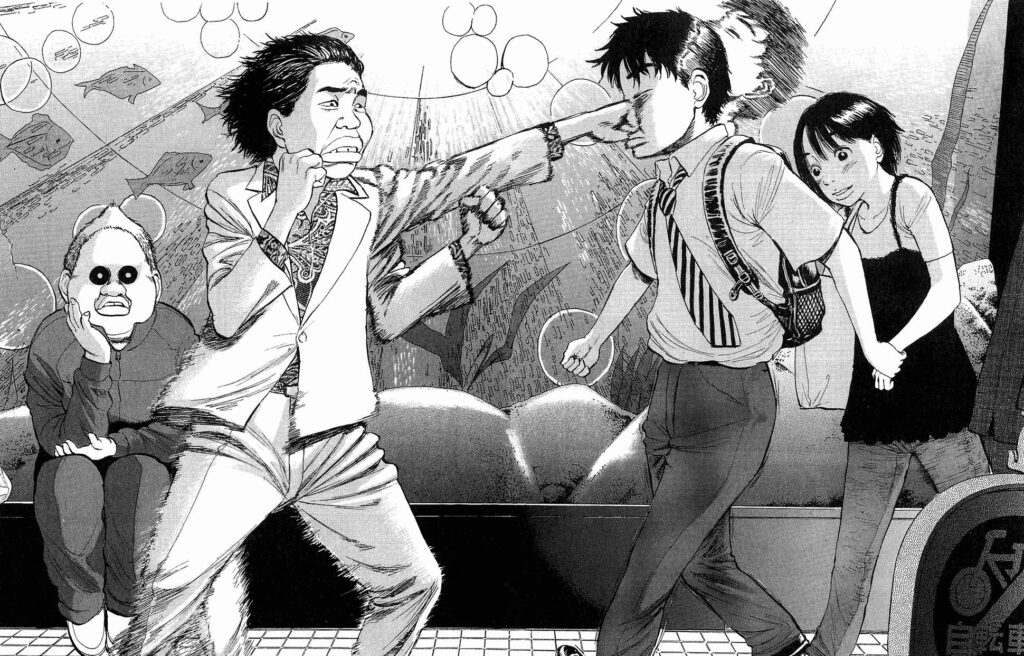
Katsura Ise and Takuma Yokota’s Onani Master Kurosawa (literally Masturbation Master Kurosawa) begins as a crude comedy and ends as one of the most heartfelt coming-of-age stories in modern manga. What starts as crude and juvenile gradually transforms into a brutally honest portrayal of adolescence, guilt and redemption. Since it’s a completed manga, it delivers one of the most satisfying emotional arcs and is proof that a great story can bloom from the strangest premises.
Kakeru Kurosawa is a reclusive middle school student who spends his days detached from the world around him, finding solace in a secret and shameful habit. When he witnesses a classmate being bullied, he uses his private ritual as a twisted way to take revenge. The setup feels absurd, almost satirical at first, but the story soon dismantles every expectation.
The story gradually shifts from dark humor to emotional introspection. Kurosawa’s early edge slowly gets replaced by remorse and real connections. It’s a rare manga that faces adolescent shame head-on, stripping away the irony to reveal something deeply human underneath. The tone grows warmer and more reflective with each chapter, leading to a quiet but powerful final scene.
Yokota’s rough, hand-drawn art perfectly complements that vulnerability. The sketch-like style feels personal and unfiltered, mirroring the raw emotional honesty of the writing.
By the end, Onani Master Kurosawa stands as one of the best completed manga about growing up: awkward, uncomfortable, and ultimately redemptive. It’s a coming-of-age story that earns every ounce of its sincerity.
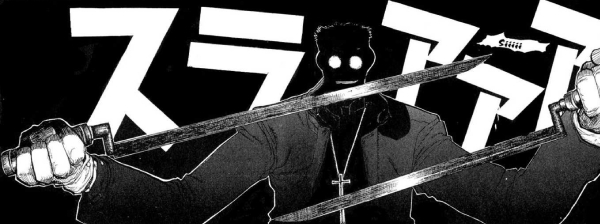
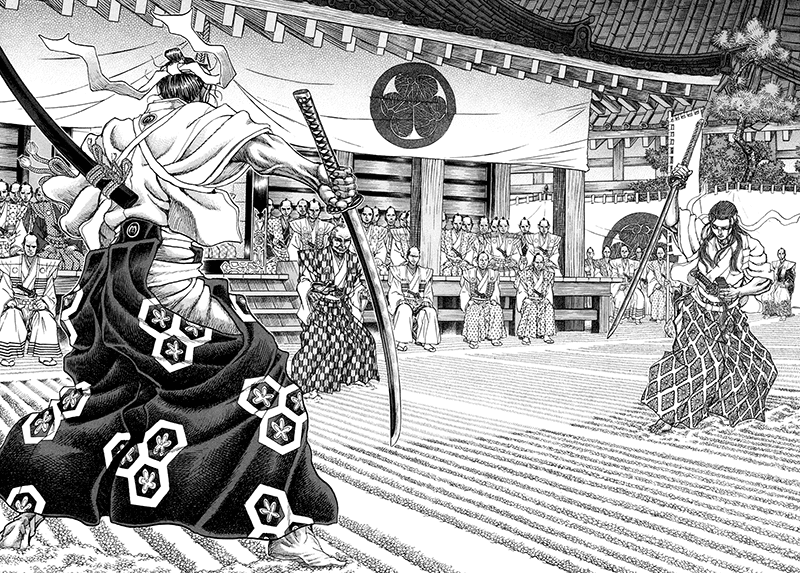
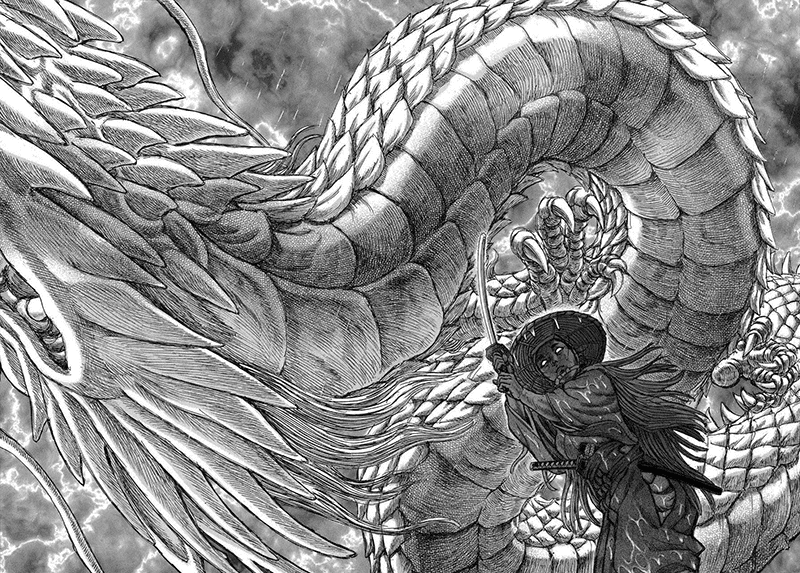
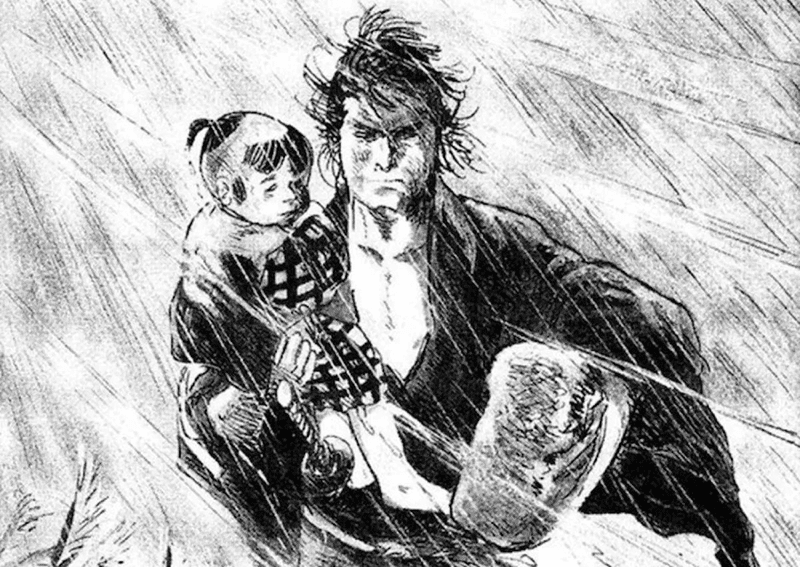
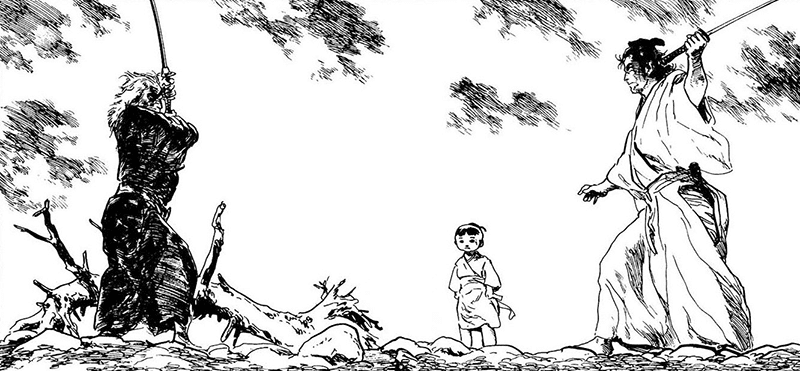
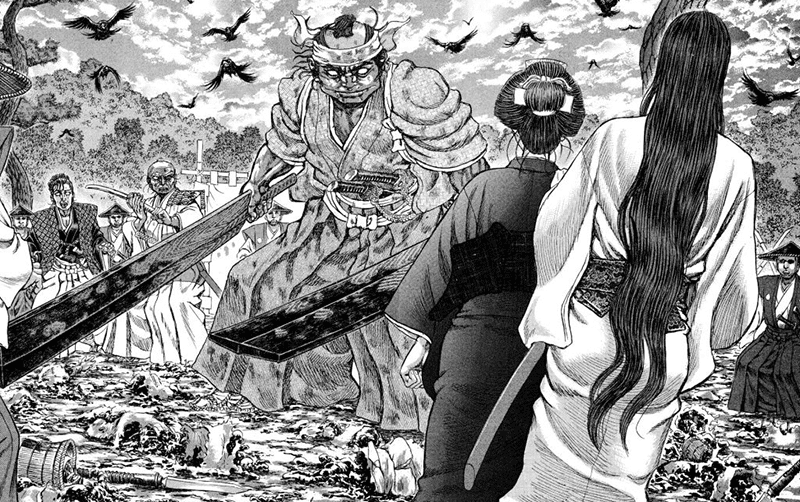
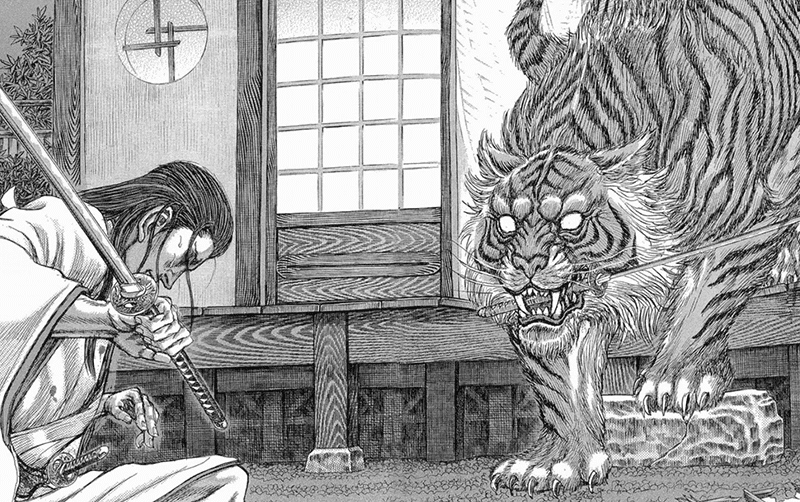
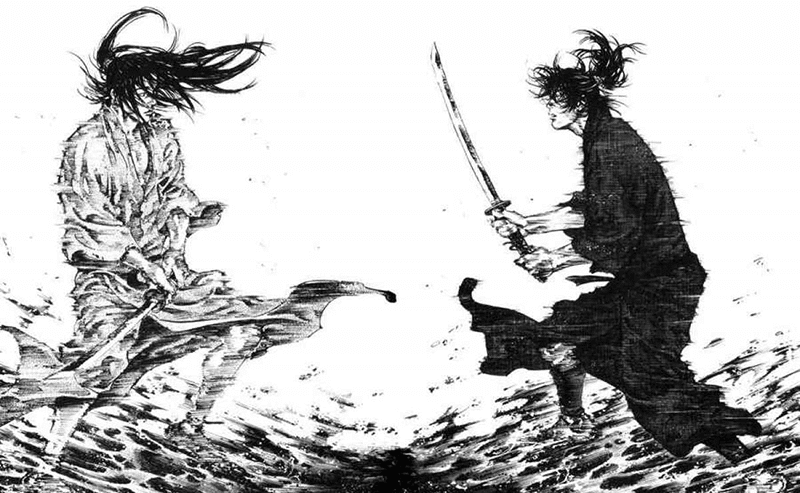
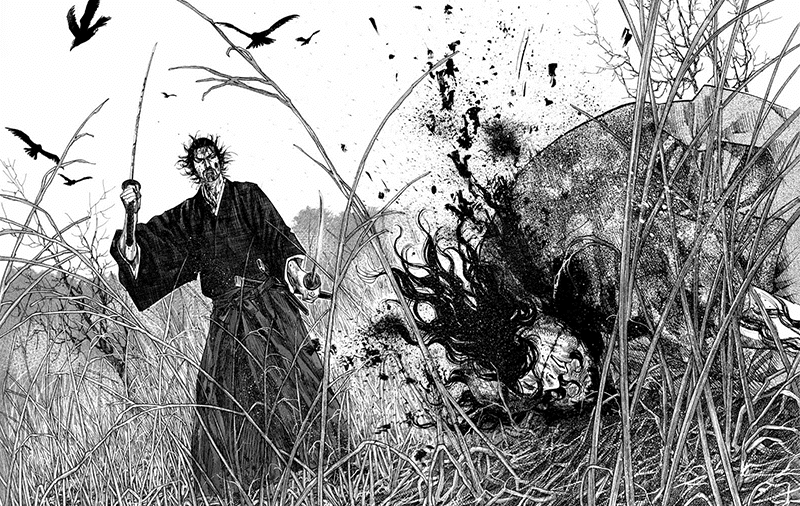
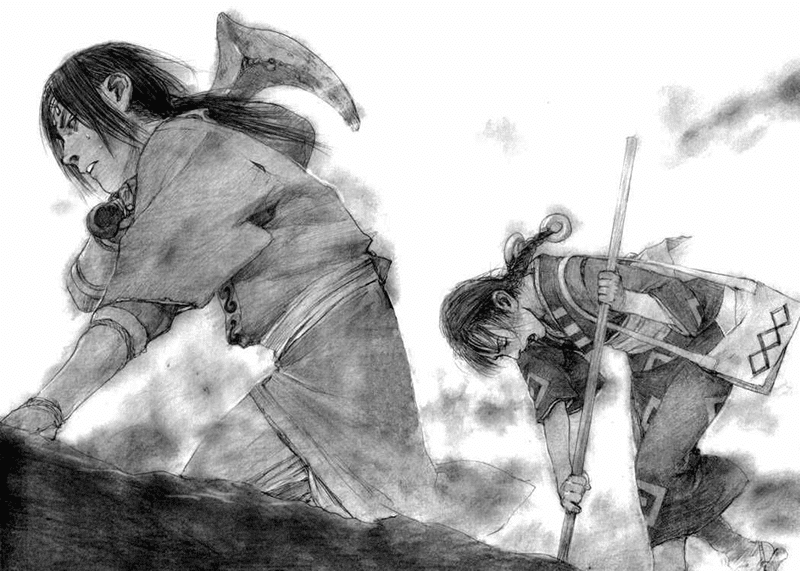
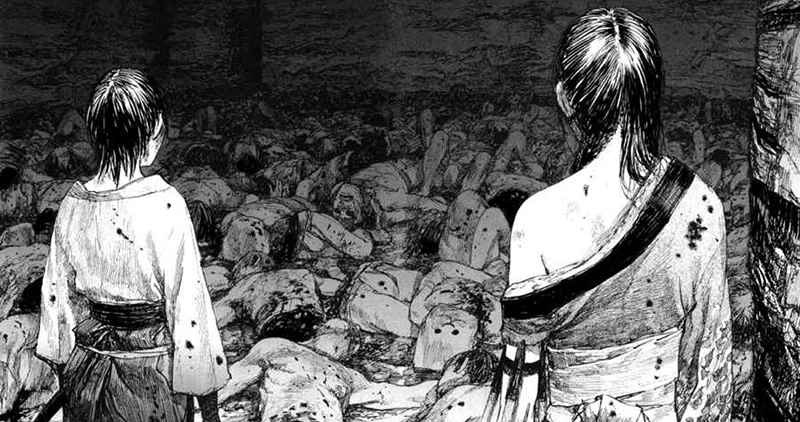
Few manga capture the cruelty and discipline of feudal Japan with the same precision and horror as Shigurui. Written by Norio Nanjō and illustrated by Takayuki Yamaguchi, this completed manga strips away the myth of the noble samurai, revealing a world ruled by ego, obsession, and blood. It’s one of the most harrowing depictions of martial honor ever drawn and a manga that dances between beauty and brutality.
Set during the Edo period, the tale opens with a grotesque tournament organized by daimyo Tadanaga Tokugawa, where warriors must fight using real swords instead of practice blades. The first match introduces two broken men: Gennosuke Fujiki, missing an arm, and Seigen Irako, blind and lame. Through flashbacks, their violent rivalry unfolds into a descent of betrayal, pride, and madness born from the system that shaped them.
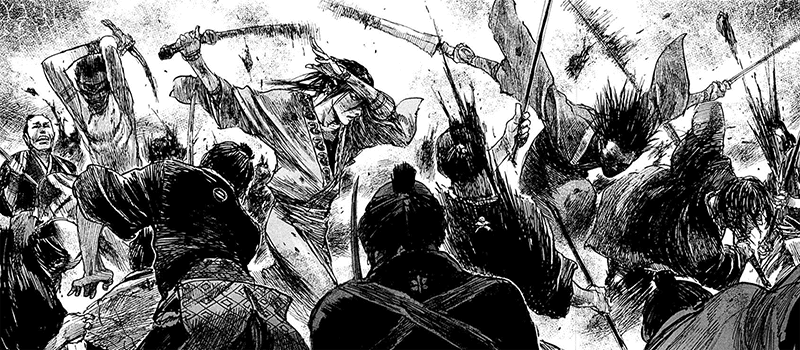
Yamaguchi’s art is staggering in its detail. Every sword swing, drop of blood, and ripple of cloth is rendered with almost painful realism. The duels are intimate, surgical, and horrifyingly beautiful. But beneath the spectacle lies something far darker: a critique of samurai ideology itself. Honor, discipline, and obedience are shown not as virtues, but as tools of dehumanization. The women trapped within this hierarchy, Lady Iku and Mie, suffer equally, treated as possessions and tools rather than people.
Though the story ends before adapting more than the first chapter of its source novel, the conclusion feels hauntingly final. It’s a grim presentation of the cost of devotion and the emptiness behind the warrior’s code.
Shigurui remains one of the best completed samurai manga ever drawn: elegant, merciless, and unforgettable.
Genres: Action, Historical, Drama, Tragedy, Martial Arts
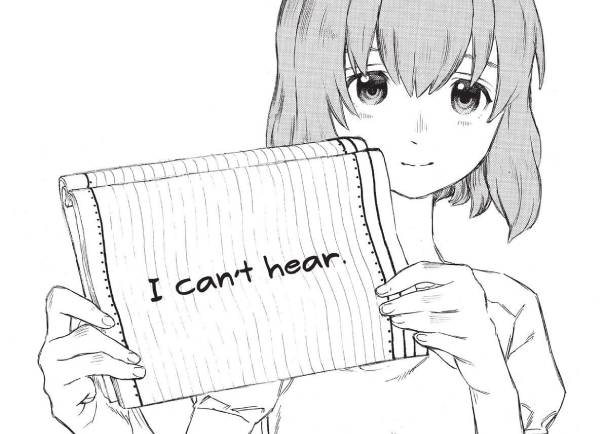
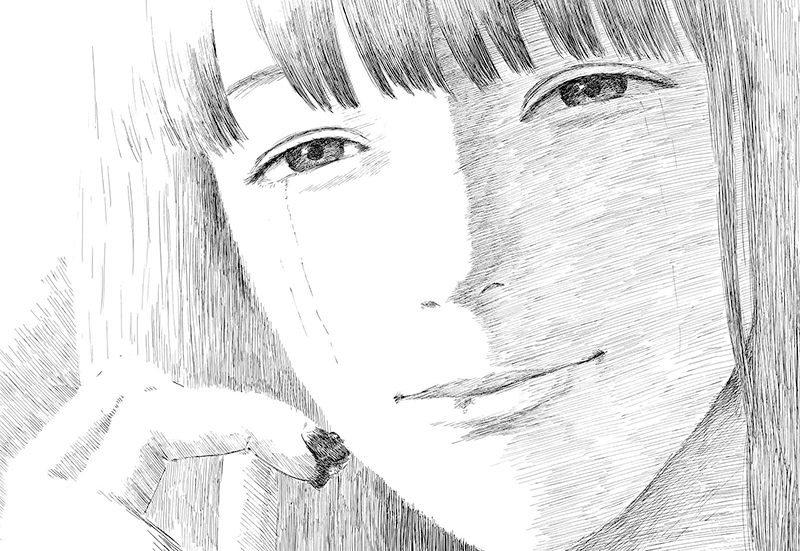
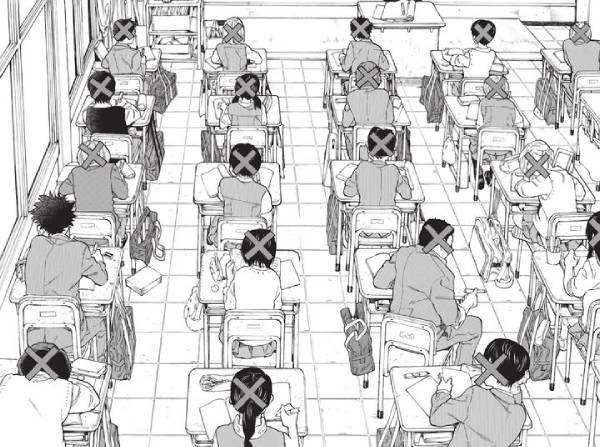
Yoshitoki Ōima’s A Silent Voice is a manga that treats adolescence not as innocence, but as a crucible of cruelty, guilt, and slow painful growth toward redemption. This completed manga offers a full, deeply emotional story that begins painfully and ends in quiet grace.
The story opens with Shouya Ishida, an energetic elementary schooler whose restlessness curdles into cruelty when a deaf girl, Shouko Nishimiya, joins his class. What starts as childish teasing becomes relentless bullying, escalating until Shouko is forced to transfer schools. The fallout is immediate. Shouya becomes the new outcast, branded by his peers as the sole villain.
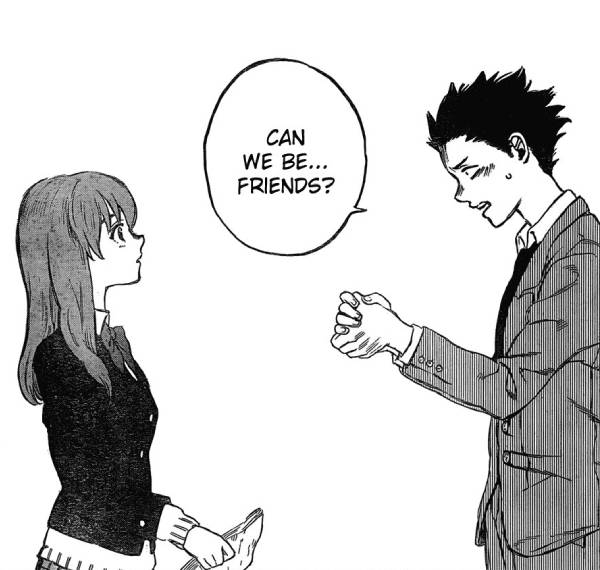
Years later, a guilt-ridden teenage Shouya lives in isolation, but eventually seeks forgiveness from the person he once tormented. From there, A Silent Voice transforms into an unflinching story about self-hatred, reconciliation, and the fragile hope of making things right. The emotional honesty of Ōima’s writing is remarkable. Redemption isn’t granted easily; and both Shouya and Shouko must learn to forgive themselves before they can forgive each other.
The artwork complements the tone perfectly. Ōima’s clean, expressive style captures the nuances of body language and silence, making communication itself feel sacred.
By its end, A Silent Voice achieves a rare sense of emotional completeness. Tender, painful, and unforgettable, it’s one of the best completed manga ever written about empathy and second chances.
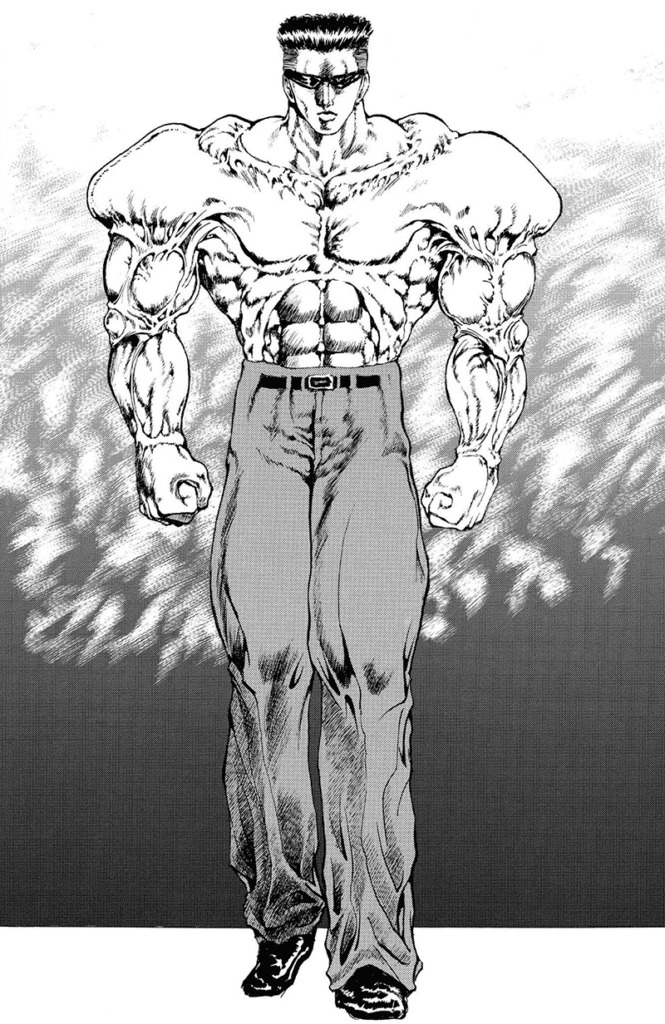
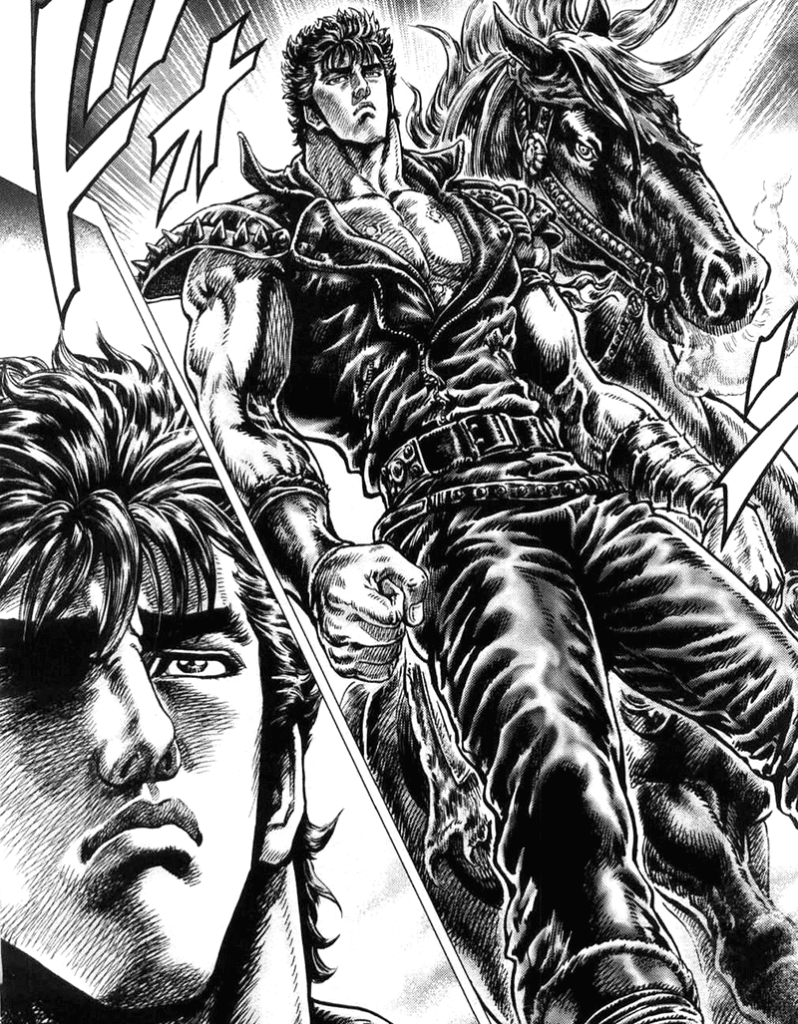
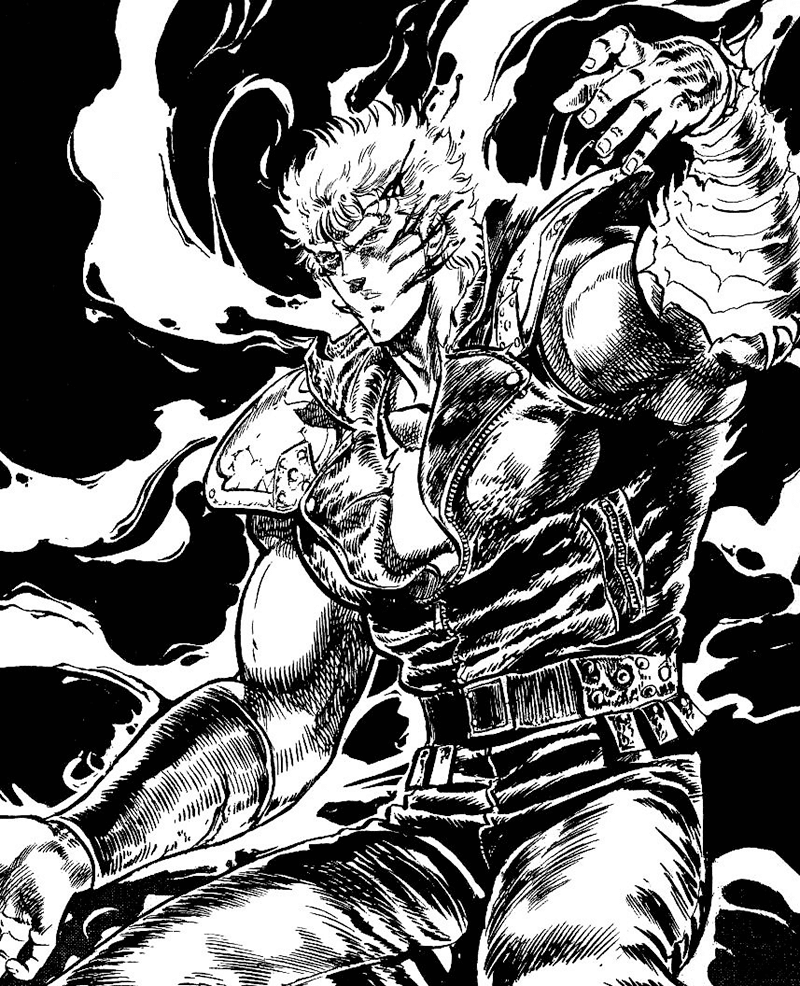
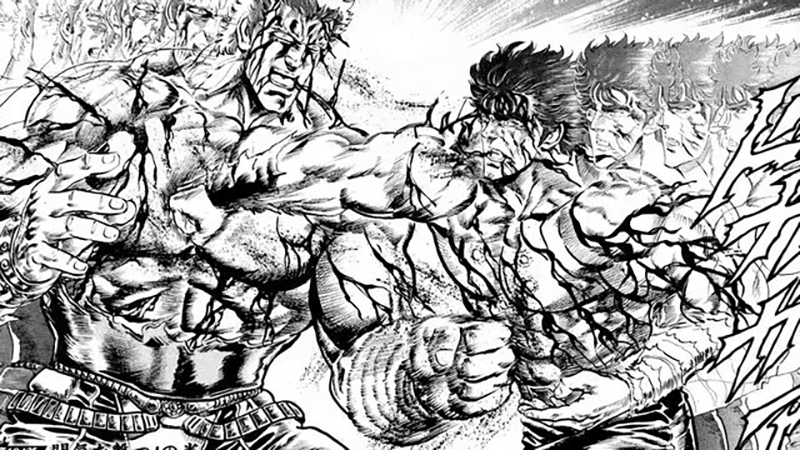
Buronson and Tetsuo Hara’s Fist of the North Star is a monument to 1980s manga: a grand, blood-soaked epic of fists, honor, and redemption that defined modern shonen. It stands tall as one of the most iconic action manga ever created, blending post-apocalyptic grit with mythic emotion in a way that still feels unmatched.
Set in a post-nuclear wasteland where civilization has crumbled, the series follows Kenshirou, successor of the deadly martial art Hokuto Shinken. With a single touch, he can make his enemies’ bodies implode, doing so with stoic precision. Wandering the deserts, Kenshirou becomes a savior of the oppressed and a destroyer of tyrants, carving a path through chaos, uttering his iconic line: “You’re already dead.”
Yet beneath this brutality lies tragedy. Kenshirou is less a power fantasy than a symbol of endurance. He’s a warrior carrying the burden of compassion in a world where kindness is weakness. Every rival, from the noble Rei to the godlike Raoh, offers a different answer to the same question: how does one live with strength in a dying world?
Hara’s artwork radiates pure power. Muscular anatomy, explosive motion, and cinematic paneling turn every battle into high drama. The violence is extreme, but always stylized, reflecting the story’s fatalistic grandeur.
Even decades later, Fist of the North Star remains one of the best completed manga for everyone who loves classic action about manly men doing manly things and shedding manly tears.
Shūzō Oshimi’s Blood on the Tracks isn’t a story you simply read, but one you endure. This completed manga crawls under your skin, transforming everyday domestic scenes into studies of fear, guilt, and emotional suffocation. By the time it ends, it feels less like a thriller and more like surviving a deeply psychological nightmare.
At the center is Seiichi Osabe, a boy whose entire world is dominated by his mother, Seiko. Her love seems smothering but harmless until a single horrific incident tears through the carefully maintained illusion of normalcy. What follows is a descent into manipulation, dependency, and the type of control that leaves scars you can’t see. The horror here isn’t supernatural. It’s maternal, emotional, and disturbingly real.
Oshimi’s storytelling is slow and deliberate, stretching time until even silence becomes unbearable. Whole pages linger on trembling hands or blank stares, building tension without ever raising their voice. Through Seiichi’s eyes, the reader is trapped, forced to endure a woman who might love him, or might want to destroy him.
Visually, Blood on the Tracks is minimalist yet devastating. The clean lines, quiet framing, and haunting close-ups make every hesitation feel monumental. It’s psychological horror delivered in whispers rather than screams.
Now that it’s finished, Blood on the Tracks stands among the best completed psychological manga ever made. It’s a chilling portrayal of family turned nightmare, and proof that true horror doesn’t need any supernatural monsters.
Inio Asano’s Oyasumi Punpun is one of those rare works that transcends genre. It’s a completed manga so intimate and devastating that it feels less like fiction and more like a reflection. It’s a story about growing up, falling apart, and realizing that the world won’t come and save you.
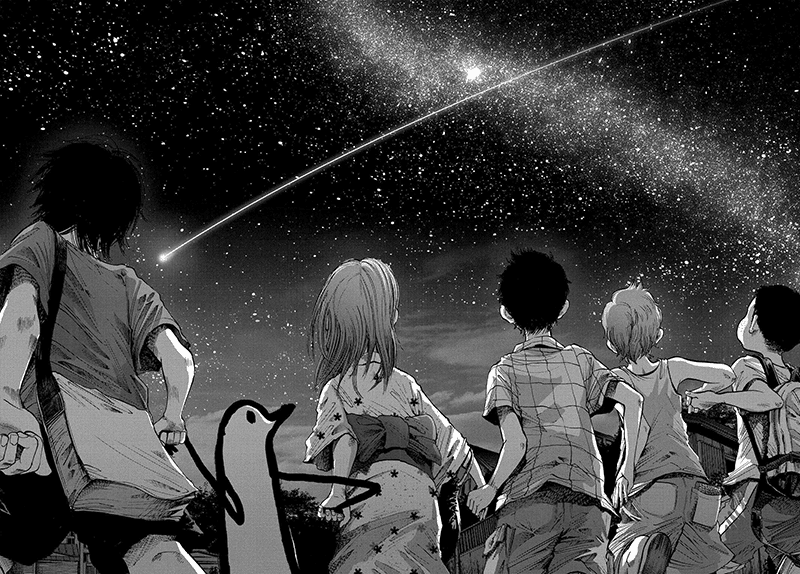
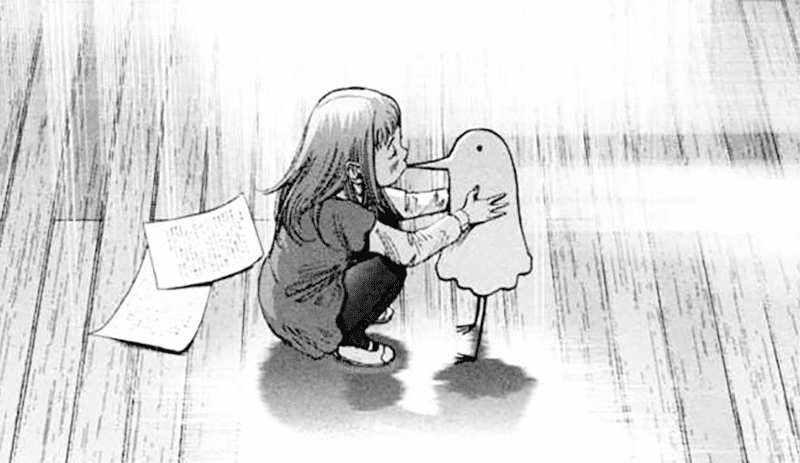
At its core, it follows Punpun Onodera, a quiet boy drawn as a cartoonish bird against hyper-detailed human backdrops. This stark visual contrast defines the series. Punpun’s simplified form isolates him from the world around him, turning him into a symbol of emotional disconnection. What begins as a tender, awkward childhood romance with a girl named Aiko soon unravels into something far darker. As Punpun matures, he stumbles through heartbreak, family trauma, and a growing sense of despair that deepens with every chapter.
Asano’s storytelling is brutally honest. There are no melodramatic outbursts or easy resolutions, only the slow corrosion of a soul struggling to find meaning. The supporting cast, from broken families to bitter friends, reinforces the theme that everyone is quietly losing their way. Visually, the realism of the environments heightens the emotional weight, grounding even the most surreal moments in a painfully recognizable reality.
By its conclusion, Oyasumi Punpun delivers emotional closure without comfort. It’s a painful, sincere, and unforgettable masterpiece that confronts the darkness of modern life head-on. For readers searching for a completed manga about loneliness, identity, and regret, Oyasumi Punpun remains unmatched.
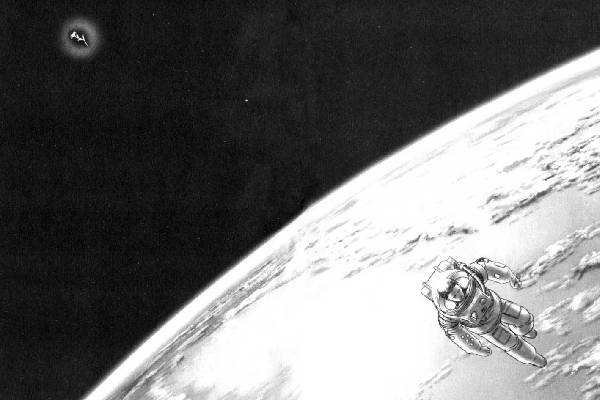
Makoto Yukimura’s Planetes is a completed science-fiction manga that finds beauty not in futuristic spectacle, but in the quiet dignity of ordinary people living among the stars. Set in the year 2075, it follows the crew of the debris-collecting ship Toy Box as they clean up the fragments of humanity’s reach into orbit. It’s hard science-fiction: grounded, technically precise, and utterly believable. Yet it’s also a deeply human story.
At the center is Hachimaki, a stubborn young astronaut chasing a dream of owning his own spaceship. Alongside him are Fee, a sharp-tongued pilot with a cigarette always in her hand; Yuri, haunted by personal tragedy; and the easygoing veteran Pops. Together, they represent different ways of coping with isolation, ambition, and the vast silence of space. Yukimura’s greatest triumph is that he never treats their struggles as small. Instead, he shows how existential questions can bloom from the most routine work.
Visually, Planetes is stunning. The detailed machinery and breathtaking voids of space contrast with the emotional vulnerability of the cast. Yukimura captures both the grandeur of the cosmos and the fragility of human life within it.
Since it’s a completed manga, Planetes delivers rare closure: its characters grow, falter, and find meaning, leaving readers with a quiet but powerful sense of fulfillment. It’s thoughtful, humane, and profoundly moving. For everyone looking for one of the best completed manga in hard science-fiction, Planetes is a must-read. It’s nothing short of a love letter to space, and the people brave enough to live there.
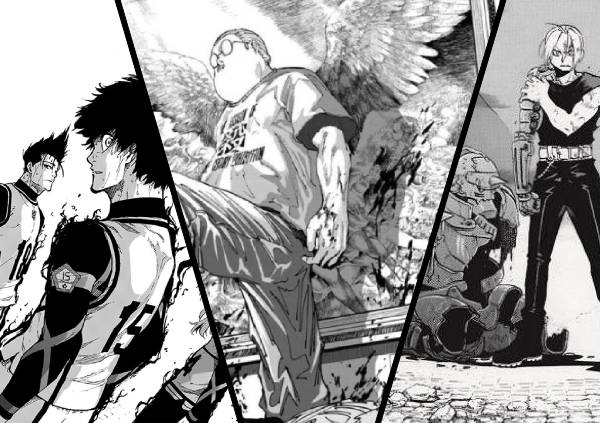
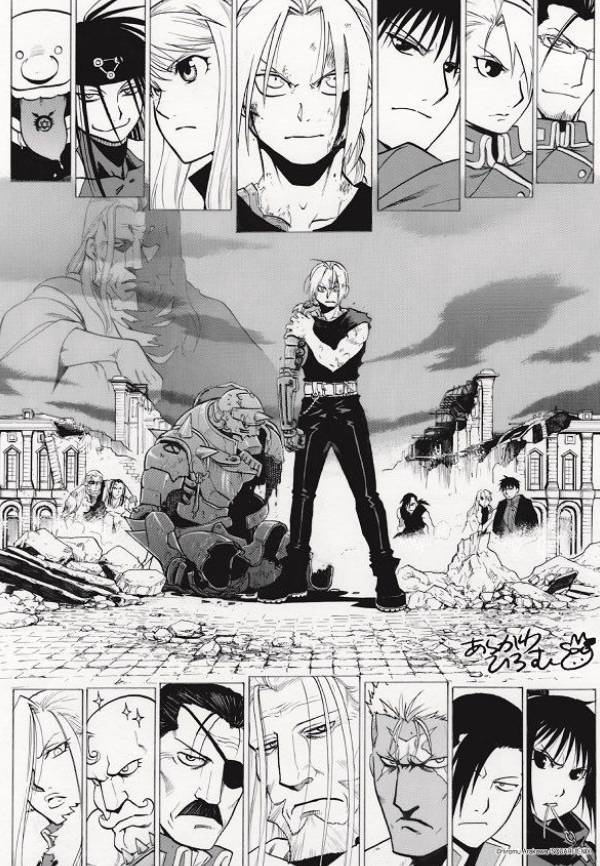
Hiromu Arakawa’s Fullmetal Alchemist stands among the best completed manga of its era. It’s a story that blends action, philosophy, and emotional depth into a perfectly balanced whole. What begins as the story of two brothers becomes an epic about the cost of ambition, the pain of loss, and the moral weight of human creation.
Edward and Alphonse Elric’s journey to reclaim what was lost in a tragic alchemical experiment anchors a sprawling narrative that stretches across the militarized nation of Amestris. This world, grounded in early industrial technology and haunted by its colonial past, feels alive and painfully relevant. Beneath its thrilling alchemic battles, Fullmetal Alchemist explores war, genocide, and the exploitation of science in the name of power. The Ishvalan conflict and its survivors, especially Scar, inject the story with a lasting moral gravity.
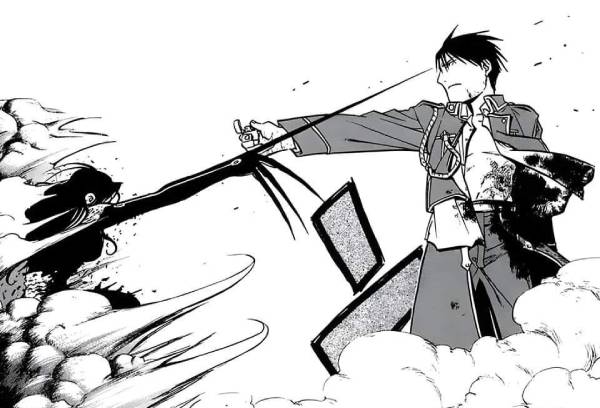
Arakawa’s ensemble cast is remarkably strong. Every major character, from Roy Mustang to Riza Hawkeye and even the terrifying Homunculi, contributes to the manga’s intricate moral tapestry. Each embodies a facet of humanity’s desires and flaws: pride, greed, envy. The Elric brothers’ confrontation with them becomes symbolic for us overcoming our own human shortcomings.
Visually, the manga combines precise storytelling with fluid action and emotional expressiveness. Its finale delivers genuine closure, rewarding readers with both catharsis and reflection. Fullmetal Alchemist endures as a modern classic, a completed manga about sacrifice, brotherhood and the price of pursuing perfection.
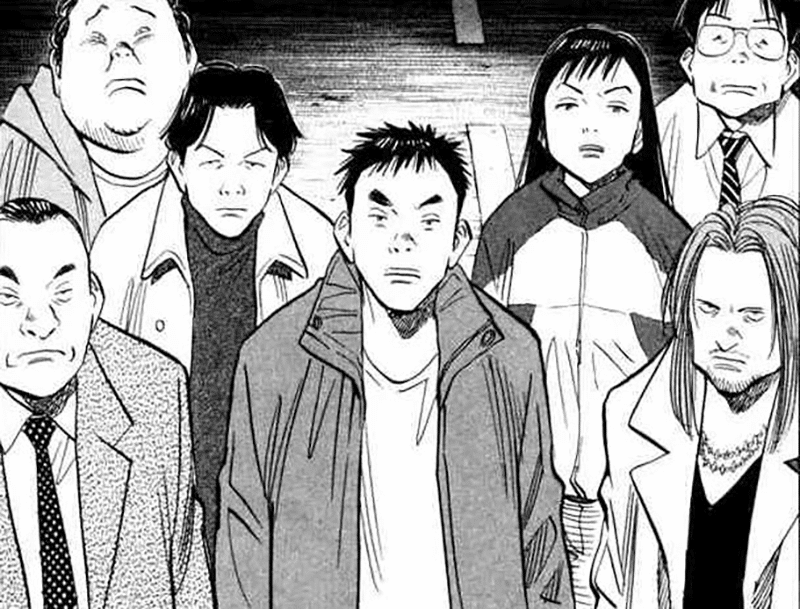
Naoki Urasawa’s 20th Century Boys is a monumental achievement in storytelling. This completed manga blends mystery, nostalgia, and global conspiracy into one of the most intricate thrillers ever written.
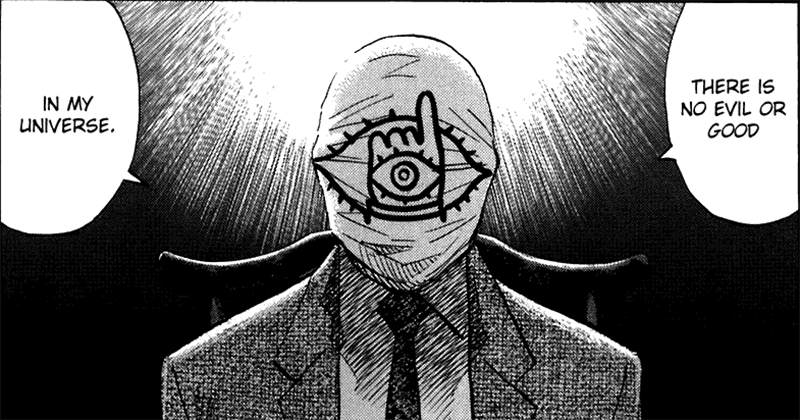
It begins simply enough: Kenji Endo, a former rock musician now running a convenience store, discovers that a mysterious cult led by a masked man called Friend is recreating events from a story he and his childhood friends once imagined. As fantasy becomes prophecy, Kenji realizes that their innocent childhood game may have become the blueprint for an apocalypse.
Spanning from the 1960s to a dystopian near-future, 20th Century Boys weaves together multiple timelines with masterful precision. Urasawa transitions seamlessly between the carefree energy of youth and the paranoia of adulthood, showing how the dreams and fears of children can echo through an entire generation. Each character, no matter how briefly they appear, feels distinct and helps ground the manga’s vast, interconnected web of events.
What sets this completed manga apart is how human it remains despite its grand scale. Beneath the cults, conspiracies, and societal collapse lies a story about friendship, guilt, and the fragile optimism that survives even the darkest times. Urasawa’s clean, expressive art and cinematic pacing make every twist both shocking and inevitable.
Even after finishing, 20th Century Boys still lingers not for its puzzles, but for its people. For readers who are seeking a fantastic mystery thriller, it stands as a timeless achievement.
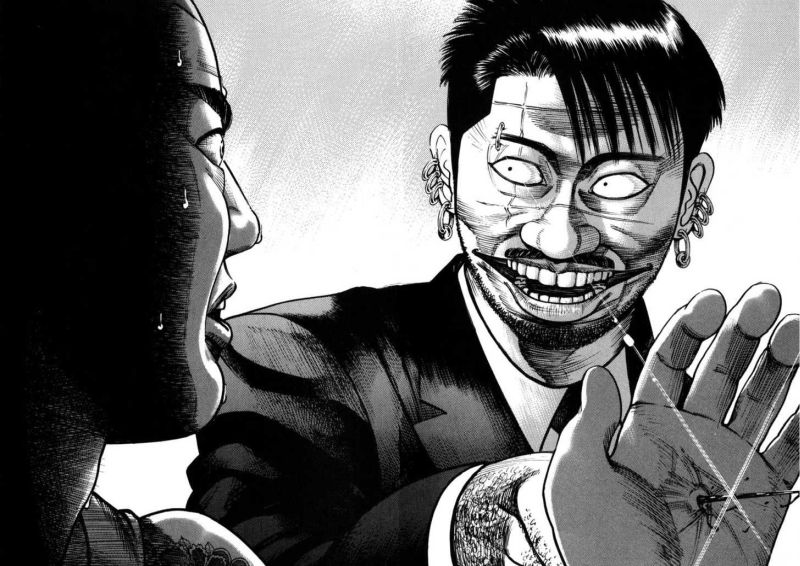
Few manga are as shocking or psychologically disturbing as Ichi the Killer. Created by Hideo Yamamoto, this completed manga stands as one of the most infamous entries in the seinen genre. It’s a brutal, unrelenting descent into the minds of two men consumed by violence and pain.
The story revolves around Ichi, a deeply traumatized assassin whose emotions oscillate between crippling fear and uncontrollable rage, and Kakihara, a sadistic yakuza obsessed with pleasure through suffering. When Kakihara’s boss disappears, his hunt for answers leads him into Ichi’s orbit, sparking a chain of blood-soaked encounters that spiral into a final confrontation.
What elevates Ichi the Killer beyond simple gore is its dissection of human depravity. Yamamoto explores the psychology of trauma, the allure of dominance, and the warped intimacy that forms between predator and victim. Beneath its ultraviolent surface lies a disturbing study of power, identity, and the ways abuse perpetuates itself.
The artwork only deepens the unease. Yamamoto’s crisp lines and exaggerated expressions capture both the grotesque physical violence and the fractured states of mind behind it. Every panel feels claustrophobic and charged, serving as a reflection of the madness driving its characters.
As a completed manga, Ichi the Killer delivers a devastatingly complete arc with no compromises. It’s ugly, mesmerizing, and unforgettable. For readers who can stomach its extremes, it remains one of the best psychological crime manga of all time. It’s a haunting, nihilistic masterpiece that refuses to hide anything.
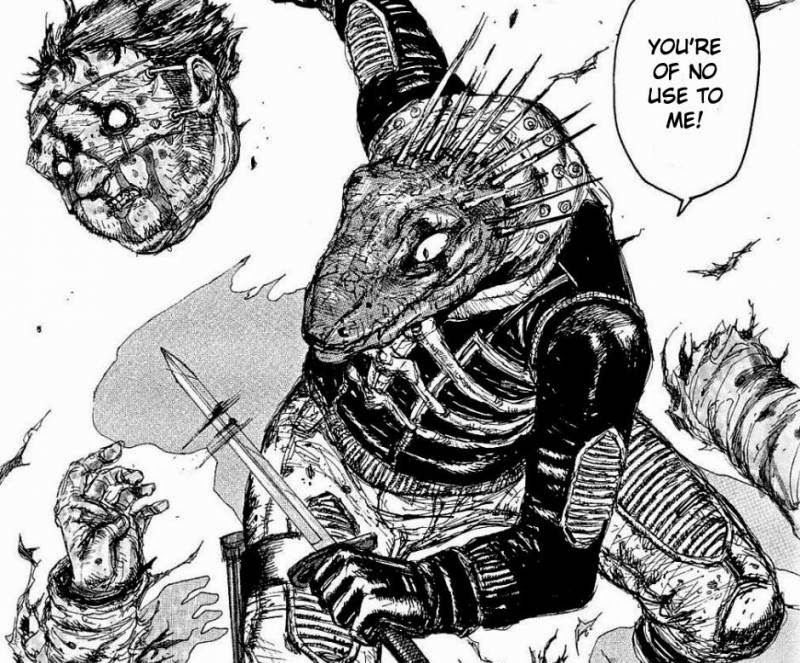
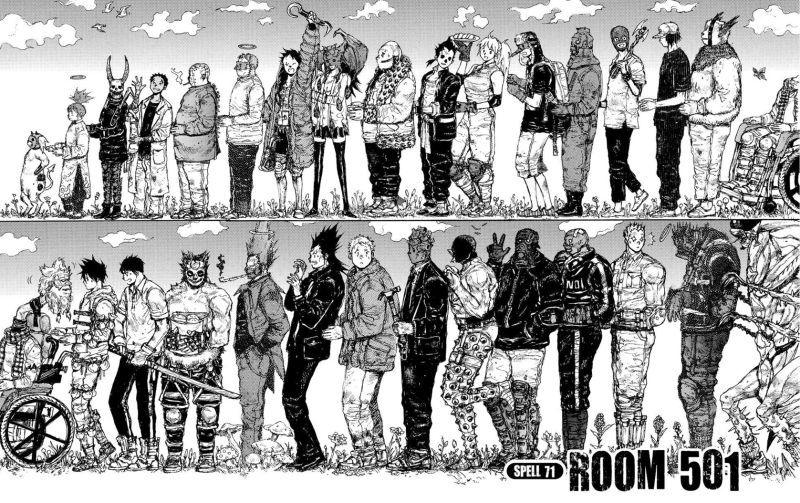
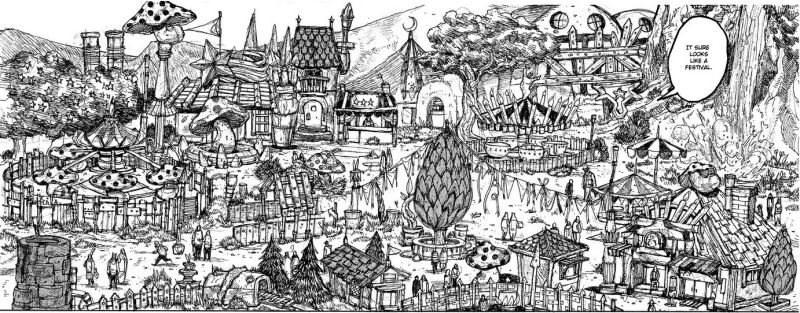
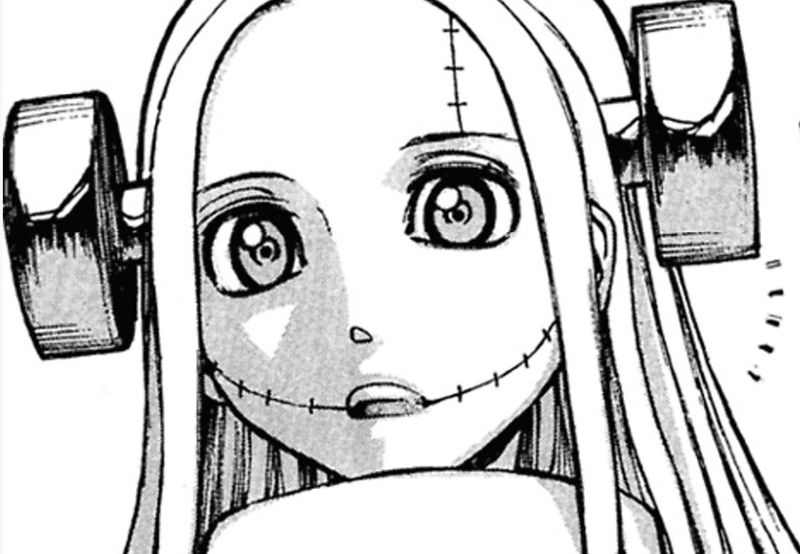
Q Hayashida’s Dorohedoro is a completed manga that thrives on contradiction, a chaotic masterpiece that’s equal parts grotesque, funny, violent, and strangely heartfelt. This makes it one of the most original dark fantasy manga ever created.
Set in the decrepit city of Hole, Dorohedoro drops readers into a world where magic users from another realm conduct experiments on ordinary people for sport. The result is a warped city of mutated bodies, corpse-strewn alleys, and everyday absurdity. In this nightmare, Kaiman, a man with a reptilian head and no memory of his past, hunts sorcerers alongside his friend Nikaido, searching for the truth about who he really is. What begins as a revenge story slowly expands into a bizarre, multi-layered saga spanning dimensions, gods, and forgotten histories.
Hayashida’s genius lies in her ability to balance brutality with warmth and humor. Between decapitations, dismemberments, and surreal transformations, its characters share meals and joke around as if their world were entirely ordinary. The grotesque and the human coexist perfectly, creating a world that feels both horrifying and oddly alive.
The art is dense, grimy, and stunning. Every panel brims with texture, from Hole’s decaying streets to the baroque strangeness of the Sorcerer’s World. Character designs, from lizard-headed antiheroes to mushroom-obsessed mob leaders, are unforgettable, adding to the manga’s cult appeal.
Dorohedoro offers a complete, unapologetically weird journey that rewards readers who embrace its madness. For fans of horror, dark fantasy, or surreal storytelling, Dorohedoro stands among the best manga ever drawn. It’s nothing short of a violent fever dream with genuine heart.
Genres: Horror, Dark Fantasy, Supernatural, Mystery
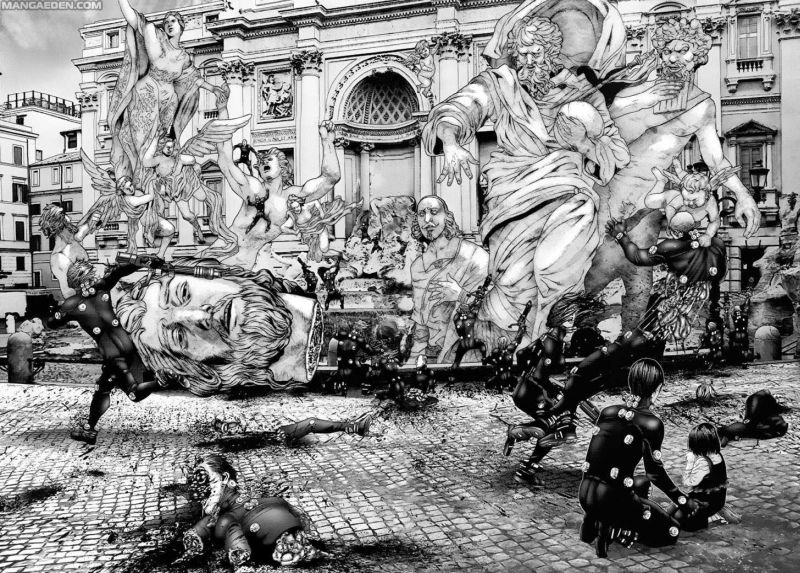
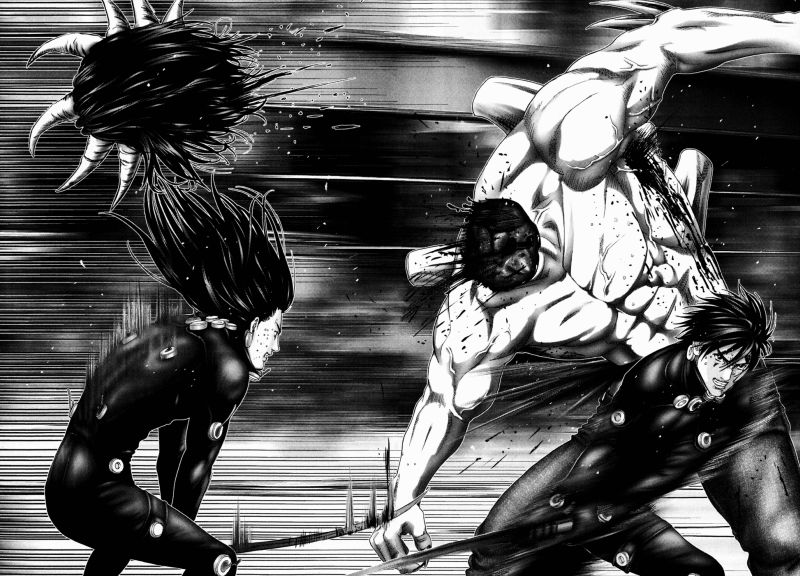
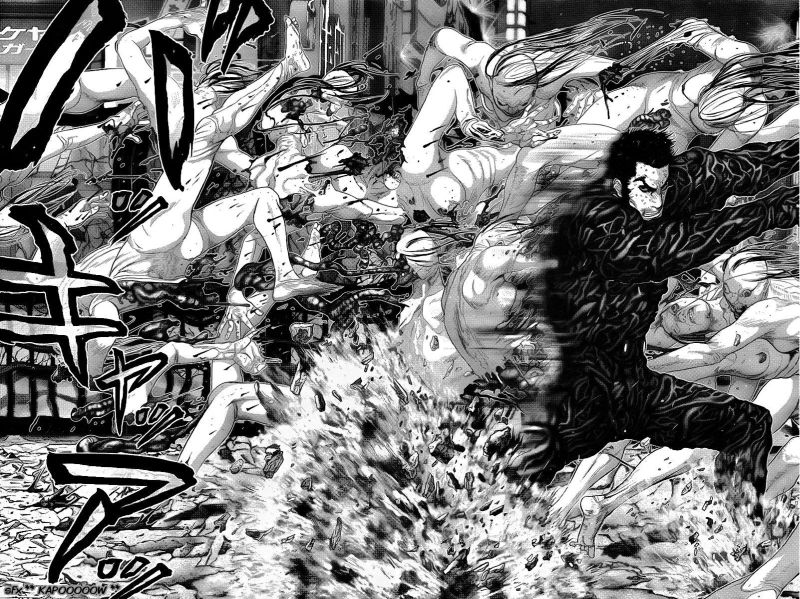
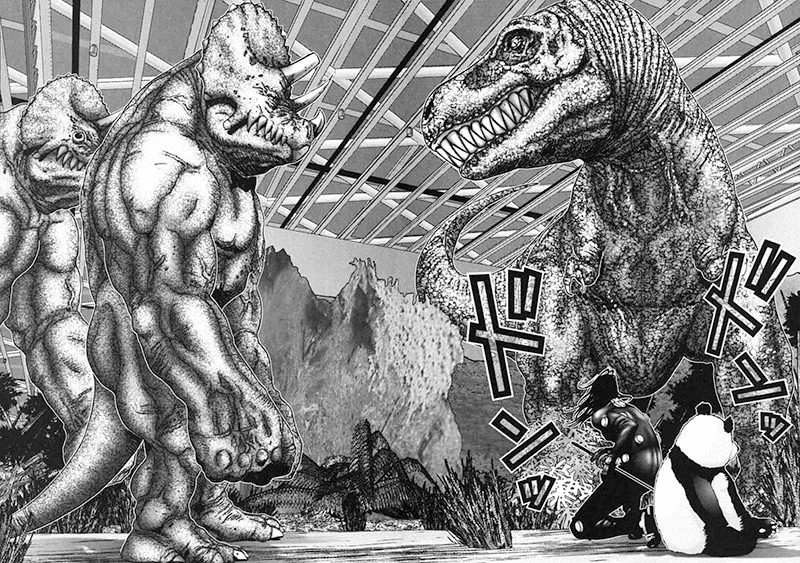
Hiroya Oku’s Gantz is the definition of excess. It’s a completed manga that fuses horror, science-fiction, and raw chaos into one of the most violent and imaginative works ever serialized. It’s notorious for its unflinching brutality and surreal energy, but also for the strange beauty hidden within its madness.
The story begins with Kei Kurono and Masaru Kato, two teenagers who die saving a drunk man from a train. Instead of passing on, they awaken in a mysterious apartment with strangers who all suffered a similar fate, and a massive black orb called Gantz. The sphere commands them to hunt aliens hiding among humans, dragging them into a series of nightmarish missions. What follows is a saga of escalating violence, absurd spectacle, and unexpected evolution.
Each chapter pushes boundaries. The aliens are grotesque, creative, and often disturbingly monstrous. The fights are choreographed with cinematic precision, blending sleek science-fiction weaponry with splattering gore. Oku’s digital art gives every scene a glossy, hyperreal sheen that feels both futuristic and nightmarish.
Yet beneath the carnage, Gantz reveals a surprisingly introspective side. Japan outside the missions is a mirror to their darkness: bullying, exploitation, and mass despair seem to be the norm. Kurono’s transformation from a selfish, apathetic teenager to a leader who values life gives the story its emotional backbone, grounding the chaos with genuine character growth.
Since it’s a finished manga, Gantz delivers a complete experience that cements its cult status. It’s daring, messy, and unforgettable. Without a doubt one of the best completed manga for fans of intense, creative, and unrestrained science-fiction horror.
Hiroki Endo’s Eden: It’s an Endless World! stands among the best completed manga in the cyberpunk and science-fiction genre. It’s an ambitious, sprawling vision of a broken future held together by violence, faith, and the will to survive. Serialized from 1997 to 2008, it offers not just a dystopian setting, but a deeply human story.
The series opens in the aftermath of a devastating global pandemic that wiped out much of humanity. A secret organization known as Propater rises to power, reshaping geopolitics and waging ideological wars across the world. Years later, the story follows Elijah Ballard, the son of a drug lord and one of the few immune to the virus. His life becomes a brutal struggle for survival amid crime syndicates, mercenaries, and the omnipresent reach of Propater. What begins as a tale of revenge evolves into a philosophical epic about technology, faith, and the moral cost of progress.
Endo’s writing is unflinchingly adult. He depicts war, sex, poverty, and trauma with stark realism rather than sensationalism. Every character, from mercenaries to revolutionaries, carries their own scars and convictions, creating a tapestry of conflicting motives and ideas. His art reflects the same maturity. It shines with detailed anatomy, brutal action, and moments of haunting quiet that underline the story’s weight.
As a completed manga, Eden delivers a powerful and fully realized narrative that closes on reflection rather than spectacle. If you want a character-driven science-fiction saga that questions what it means to be human, Eden: It’s an Endless World! remains one of the best ever written.
Shinobu Kaitani’s Liar Game stands among the best completed manga for fans of psychological warfare and intricate strategy. It’s a cerebral thriller that thrives on deception, logic, and human weakness while testing not only its characters but also its readers.
The premise is deceptively simple: Kanzaki Nao, an impossibly honest young woman, is dragged into the Liar Game, a high-stakes tournament built entirely on deceit. Participants manipulate, bluff, and betray one another for enormous sums of money, while crushing debt awaits the losers. Out of desperation, Nao turns to Shinichi Akiyama, a recently freed con artist and master strategist. What follows is a series of psychological battles where every word, gesture, and alliance carries hidden meaning.
Each new round of the game escalates in scale and complexity. Kaitani crafts elaborate scenarios that challenge logic, trust, and morality all at once. Watching Akiyama dismantle his opponents through flawless reasoning and audacious gambits is consistently exhilarating, especially as rival masterminds emerge to challenge him. The tension doesn’t come from violence or action, but from intellect and the thrill of never knowing who’s truly in control.
Though the final arc left some readers divided, Liar Game still delivers a complete and satisfying experience. It closes with a sense of resolution that emphasizes the human side of its grand psychological spectacle. Clever, tense, and endlessly re-readable, Liar Game remains one of the best manga series for anyone who loves strategic duels and moral dilemmas.
Kaneshiro Muneyuki and Hikaru Araki’s Bokutachi ga Yarimashita starts as a familiar high school story but transforms into one of the darkest, most psychologically intense completed manga of its kind. It’s a story about guilt, cowardice, and the irreversible moment when youthful stupidity turns into tragedy, a reminder that one mistake can destroy everything.
The manga centers on Tobio Masubuchi and his three friends, Maru, Isami, and Paisen. The four of them are ordinary teenagers with no real ambition. When Maru is beaten by delinquents from a rival school, the group plans a childish revenge prank to restore their pride, but it spirals out of control. In a single night, they go from carefree students to criminals haunted by what they’ve done.
What follows isn’t a revenge tale or a mystery. It’s a slow, suffocating descent into guilt. Each of the boys copes in his own self-destructive way: denial, escapism, or numb survival. Kaneshiro doesn’t romanticize their suffering; he dissects it with painful realism, showing how guilt corrodes friendships and identity alike.
The artwork amplifies this unease. Every anxious glance, trembling hand, or tearful breakdown feels disturbingly human. There’s little comfort here, and no easy redemption, only the quiet devastation of consequences that can’t be undone.
Bokutachi ga Yarimashita closes with emotional finality. It doesn’t seek forgiveness, only understanding. For readers drawn to psychological drama and moral collapse, Bokutachi ga Yarimashita stands among the best completed manga of its generation.
Haro Aso’s Alice in Borderland stands among the best completed manga in the survival and death game genre. It’s a clever, brutal, and emotionally charged series that pushes its characters to the breaking point while asking what it really means to live.
The story begins with Ryohei Arisu, a disillusioned teenager who feels alienated from the world. One night, a burst of mysterious fireworks transports him and his friends to the Borderlands, an abandoned Tokyo where survival depends on winning deadly games. Each challenge corresponds to a playing card suit: spades test strength, clubs teamwork, diamonds intellect, and hearts the psyche. This simple system forms the backbone of the series’ tension, ensuring no two games are alike.
What sets Alice in Borderland apart is how it blends psychological intensity with raw emotion. The games are thrilling because of their danger, but they also strip away pretense and reveal who each player is. Arisu’s journey from apathy to determination, and his bond with Usagi, anchor the story in something deeply human amid all the chaos.
Visually, Aso’s art brings the Borderland to life. Sprawling, empty streets contrast with meticulously designed game arenas and moments of shocking violence.
As a completed manga, Alice in Borderland offers a full, satisfying arc that balances adrenaline-fueled tension with introspective storytelling. Even after its end, it lingers as a survival thriller that’s as thoughtful as it is thrilling. It’s an easy top pick among high-stakes psychological dramas.
Muneyuki Kaneshiro and Akeji Fujimura’s Kamisama no Iutoori and its sequel Kamisama no Iutoori Ni together form one of the best completed manga in the death game genre. It’s a fusion of surreal horror, psychological tension, and outrageously absurd creativity that constantly reinvents itself.
The story wastes no time plunging into chaos. When a Daruma doll appears in a high school classroom and forces students into a deadly game, Shun Takahata’s ordinary life ends instantly. From there, reality collapses into a sequence of strange, ritualistic trials where survival depends not only on intelligence and courage, but sheer luck. The sequel expands the world even further, introducing new contestants and a larger mystery that eventually loops back to Shun’s original group.
What sets this series apart is its unpredictability. Every game is a twisted reinterpretation of something innocent. From folk toys to playground pastimes, each game expose the cruelty and fragility of human nature. Characters snap under pressure, alliances crumble, and moments of triumph often end in carnage.
The cast is equally vivid. While Akashi, the sequel’s protagonist, can feel a bit too idealistic and archetypal, maniacs like Amaya bring raw, chaotic energy to the series. The standout is Ushimitsu, who turns from a dangerous wildcard into one of the series’ most nuanced and developed characters. Combined with Fujimura’s bold kinetic artwork, which grows more confident and elaborate in the sequel, the result is nothing short of fantastic.
Kamisama no Iutoori delivers a full, unflinching arc. While its ending can be divisive, it remains a must-read for anyone looking for a blend of violence, philosophy and absurd spectacle.
Shinichi Sakamoto’s Innocent and its sequel Innocent Rouge stand among the most visually stunning completed manga ever created. They form an operatic fusion of history, psychology, and art that transforms 18th-century France into a stage of exquisite cruelty, fragile humanity, and unmatched visual beauty.
The series follows Charles-Henri Sanson, the royal executioner of Paris, and later his sister Marie-Joseph. Together, they embody the contradictions of a society obsessed with beauty and blood, progress and punishment. The Sansons’ world is one of powdered wigs and guillotines, where public execution is spectacle and duty becomes damnation.
Rather than a conventional historical drama, Innocent unfolds like a tragic opera where Sakamoto mixes fact with fever dream. Characters appear like divine performers, timelines intersect, and the grotesque becomes beauty. His France is a theater of death rendered in impossible detail. Silk corsets, cathedral windows, and glimmering blades are captured with obsessive precision. Each page is stunning, so beautiful, it feels torn from an art book rather than drawn for a manga.
The sequel, Innocent Rouge, shifts the spotlight to Marie-Joseph, whose defiance of the old world gives the story its revolutionary pulse. Her change from executioner to symbol of the rebellion mirrors France’s descent into chaos, both glorious and horrifying.
As a finished manga, Innocent delivers not just closure, but legacy. It’s a meditation on art, morality, and the birth of modernity itself. Even more so, it opens an unusually beautiful window to one of history’s most chaotic times. For readers drawn to manga that merge historical grandeur with philosophical depth, Innocent is an unmissable masterpiece.
Hideo Yamamoto’s Homunculus is one of the most haunting completed manga in the psychological horror genre. It’s a story that begins with curiosity and spirals into pure madness. Known for his extreme and transgressive works, Yamamoto trades gore for something far more disturbing: the dissection of the human psyche itself.
The manga centers on Susumu Nakoshi, a man living between two worlds. Sleeping in his car, he faces both a park full of the homeless and a row of luxurious hotels. When a young medical student, Manabu Ito, offers him money to undergo trepanation, a procedure that involves drilling a hole in the skull, Nakoshi reluctantly agrees. What follows is a transformation both physical and existential. After the operation, he begins to see people’s hidden selves, grotesque manifestations of their inner pain and desire, the homunculi.
As Nakoshi’s visions continue, Homunculus morphs from speculative horror into an unnerving study of trauma, repression, and fractured identity. Yamamoto never gives clear answers. Are these visions supernatural, psychological, or projections of Nakoshi’s own guilt? The uncertainty is the source of the manga’s power, pulling readers into a slow, suffocating descent where reality itself feels unstable.
The art is as bold as the ideas. Yamamoto’s hyper-detailed realism collides with surreal body horror, turning metaphor into something tangible and revolting. The result is both beautiful and grotesque, as if a mirror were held up to the subconscious.
Homunculus ends with ambiguity, not resolution. While it suits the manga’s theme of identity and perception perfectly, it can be daunting. Yet for anyone seeking a unique psychological manga, this remains a must-read: strange, disturbing, and unforgettable.
Naoki Urasawa’s Monster remains one of the most influential completed manga in psychological thriller history. It’s a sprawling, morally complex story about the darkness that lurks within humanity. Set in post-Cold War Germany, it follows Dr. Kenzo Tenma, a gifted neurosurgeon whose life unravels after a fateful choice: saving a young boy named Johan Liebert instead of an influential politician. That decision births a monster, and the rest of the manga becomes Tenma’s relentless pursuit of the evil he inadvertently spared.
Unlike most thrillers, Monster builds its tension through precision rather than spectacle. Every silence, every conversation, every quiet reveal deepens the sense of dread. Johan isn’t a supernatural killer or cartoonish villain. Instead, he’s terrifyingly real, capable of dismantling lives with logic, charm, and persuasion. His presence infects every chapter, even when he’s not on the page.
What truly sets Monster apart is its depth of humanity. Urasawa gives weight to every side character, from detectives to journalists or orphaned children, showing how each is affected by Johan’s manipulation. The result is a story that feels alive, intricate, and emotionally devastating.
The artwork is understated yet cinematic and heightens the realism. Urasawa’s grounded style gives the European setting authenticity and his characters expressive nuance.
Monster’s story ends with a fantastic conclusion, both moral and emotional. It’s a haunting story about guilt, empathy and the nature of evil itself. If you’re after the gold standard of psychological manga, Monster is nothing short of a must-read.
Jiro Matsumoto’s Freesia is one of those manga that linger long after you’ve finished it. It’s a bleak, surreal descent into violence, delusion, and the slow decay of human empathy. Set in a near-future Japan consumed by war, where a new law allows people to legally avenge murdered loved ones. Victims’ families can execute justice themselves or hire professionals to do it for them.
This is where the main character, Kano, comes in. He’s one of the people who work for a firm specializing in these types of retaliatory killings. But he’s far from stable. Haunted by hallucinations, fragmented memories and deep psychological trauma, he’s become a mirror of the world around him: detached, disoriented, and slowly collapsing under the weight of his own mind. Matsumoto turns this revenge-driven setup into something far stranger and more personal, a discussion of mental illness and the futility of vengeance in a collapsing society.
The artwork perfectly complements the tone. Matsumoto’s style is rough, raw, and purposefully uneven. Backgrounds are rendered with obsessive detail, while faces are sketchy and distorted, creating a haunting contrast between reality and perception. Scenes shift without warning, making it unclear whether we’re witnessing truth or delusion. It’s a stylistic choice that deepens the story’s psychological tension.
What makes Freesia unforgettable is its refusal to comfort. It offers no heroes, no redemption, only broken people. Its final pages feel strange, almost like a fourth wall break, yet they remain consistent with the manga’s themes. For readers who want to read a deeply psychological and existential completed manga, Freesia is a haunting masterpiece.
Katsuhiro Otomo’s Akira is the cornerstone of Japanese cyberpunk, a completed manga that redefined how science-fiction could look, feel, and sound on the page. Decades after its debut, it still towers as one of the most visually and thematically ambitious works ever created, influencing everything from anime and gaming to Hollywood blockbusters.
Set in the sprawling city of Neo-Tokyo, Akira opens with two teenage delinquents: Kaneda, the brash leader of a biker gang, and Tetsuo, his insecure friend and rival. Their reckless joyride collides with a secret government project, awakening destructive psychic powers in Tetsuo and triggering the catastrophic return of Akira, a being of apocalyptic potential. From this moment, the story spirals into chaos, blending political unrest, rebellion, and divine retribution in one unrelenting crescendo.
Otomo’s artwork is simply legendary; every line is filled with kinetic detail. The cluttered alleys, shattered concrete, and humming machinery of Neo-Tokyo all feel alive. His precision and cinematic framing create an energy few modern manga can ever hope to match. Even as the story grows surreal and explosive, that obsessive realism anchors it.
The characters may be archetypes such as the reckless hero, the fallen friend, and the corrupted elite, yet their raw emotions give the story its pulse. Beneath all the destruction lies a deeply human tale of power, loss, and control.
Akira closes on a haunting note of renewal after near-total destruction, a fitting end to its thematic cycle of chaos and rebirth. For readers who want to explore the roots of Japanese cyberpunk or simply want to read one of the genre’s best entries, Akira is a must-read.
Shinichi Sakamoto’s The Climber is one of those rare completed manga that completely transcends its genre. What begins as a story about mountaineering evolves into a meditation on isolation, obsession, and the quiet pursuit of meaning. It’s not only one of the best completed manga in the sports category, but one of the most hauntingly beautiful works in all of seinen.
The story follows Buntarou Mori, a withdrawn teenager whose life changes after a dare leads him to scale the school building. In that reckless moment, something awakens in him: the desire to climb, to push higher, to find something beyond human limits. From there, Mori’s journey becomes less about competition and more about survival, both physical and psychological. Mountains become mirrors of his own emptiness and the unreachable peaks within himself.
Sakamoto’s art is as breathtaking as ever. The mountain landscapes feel alive, rendered with staggering realism and atmosphere. Entire sequences unfold in silence; a single double-page spread can convey awe, terror, or existential clarity. Every cliff face and snowstorm carries emotional weight, making the act of climbing feel almost sacred.
After the introduction, The Climber shifts from a traditional sports narrative to something more introspective and philosophical. In its second half, the pacing becomes fragmented, skipping events and employing flash-forwards. This disjointed narrative can sometimes be confusing, but its central themes never lose their intensity.
The Climber is one of the best completed manga series ever created: mature, visually stunning and emotionally resonant.
Hirohiko Araki’s Steel Ball Run is not only the creative peak of JoJo’s Bizarre Adventure, but also one of the best completed manga in modern history. Though the JoJo series still continues, each part is a self-contained narrative, and Steel Ball Run may be the very best of them.
Set in an alternate 19th-century America, the story follows Johnny Joestar, a once-celebrated jockey left paralyzed after an accident. His life takes an unexpected turn when he meets Gyro Zeppeli, a mysterious racer armed with spinning steel balls that channel a secret energy known as the Spin. Drawn to his strange power, Johnny joins the continent-wide Steel Ball Run, a horse race stretching from San Diego to New York. What begins as a competition for glory soon becomes a clash of ideals, faith, and fate, as assassins, conspirators, and Stand users descend upon the race.
Steel Ball Run stands out for its perfect balance between kinetic action and emotional storytelling. The sprawling race format gives the narrative constant forward motion, while Araki’s imaginative Stand battles add layers of strategy and spectacle. His art reaches new heights: cinematic, expressive, and rich in detail, capturing both the harshness of the American frontier and the elegance of his evolving style.
By the end, Steel Ball Run delivers the perfect closure to its narrative arc. Yet even after finishing it, its emotional depth, creative audacity, and breathtaking art leave an unforgettable mark. For readers looking for one of the greatest completed manga ever drawn, Steel Ball Run is highly recommended.
Genres: Action, Adventure, Supernatural
Status: Completed (the JoJo’s Bizarre Adventure series is still ongoing)
Toshio Sako’s Usogui stands among the most intricate and exhilarating completed manga ever made. It’s a psychological rivalry disguised as a gambling story, one that begins modestly but evolves into a breathtaking saga of intellect, deception and human willpower. By the end, it’s easy to see why so many readers consider it a hidden masterpiece and one of the best manga series of all time.
The story centers on Baku Madarame, nicknamed Usogui or The Lie Eater, a fearless gambler who thrives on games where deceit and manipulation are the weapons of choice. Every match he enters is sanctioned by Kagerou, a shadowy organization that enforces the outcome of each gamble, no matter how deadly the stakes. What begins as a series of bizarre contests gradually unfolds into a much bigger story.
At first, Usogui feels rough around the edges. The opening arc leans toward survival horror, but the series quickly transforms, with each new game introducing deeper logic, sharper twists, and dizzying reversals.
By the time the Tower of Karma arc arrives, Sako’s storytelling and artwork have reached full brilliance, outclassing almost all other weekly series. His once-gritty art becomes precise and kinetic, capable of capturing both cerebral tension and explosive emotion in a single panel.
Every character, from the enigmatic Baku to ruthless opponents such as Soichi Kimura and Vicent Lalo, feels larger than life.
At over 500 chapters, Usogui is a commitment, but one well worth it. Those who dive into it and stick to it after the first few arcs will learn why it stands as a definitive mind-game masterpiece. For readers who crave psychological warfare and perfectly constructed tension, Usogui is a must-read from start to finish.
Keiichi Koike’s Ultra Heaven is a hallucinatory plunge into the depths of human consciousness and perception. It’s part cyberpunk dystopia, part psychedelic meditation, and entirely unlike anything else in the medium. For readers drawn to surreal and mind-bending stories, Ultra Heaven stands as one of the best completed manga ever made.
The story takes place in a grim future where emotions are no longer organic. People inject joy, buy enlightenment, and medicate despair. Kabu, a small-time dealer and heavy user of synthetic feelings, lives at the edge of this chemically numbed world. When a mysterious stranger offers him a new drug called Ultra Heaven, Kabu is thrust into an ever-escalating trip that blurs the line between hallucination, awakening, and insanity.
Koike’s art is nothing short of transcendent. His depiction of Kabu’s inner and outer worlds collide in impossible ways. We see buildings ripple, faces dissolve, and panels melt into spiraling fractals of ink. During Kabu’s altered state, the manga abandons linear structure entirely, becoming a living hallucination where the reader experiences his descent firsthand. It’s visual experimentation at its highest form, yet every stroke feels intentional and alive.
At only three lengthy chapters, Ultra Heaven feels brief, but it achieves a rare completion, one rooted not in plot resolution but transformation. It leaves you, similar to Kabu, changed, questioning what reality means once perception itself becomes fluid.
Ultra Heaven remains one of the most ambitious, immersive, and visually daring works ever printed. It’s a must-read for anyone interested in the outermost limits of manga and the mind.
Junji Ito’s Uzumaki stands at the pinnacle of horror, a completed manga that defines the genre. It’s a hypnotic descent into madness, obsession and cosmic dread. Even among Ito’s many works, this three-volume masterpiece stands as his crowning achievement, and one of the greatest manga ever made.
Set in Kurouzu-cho, a small coastal town, the story follows Kirie Goshima and her boyfriend Shuuichi as their home slowly falls under the curse of the spiral. At first, it’s just an eerie symbol appearing in shells and whirlpools. But soon, the pattern begins to infect everything. People twist into contorted shapes, winds form endless vortices, and the town itself bends under its weight. There is no monster here, no villain, only the spiral, an idea that consumes reality itself.
What makes Uzumaki so unforgettable is how Ito transforms a simple shape into pure dread. Each chapter reimagines the spiral in new horrifying ways, fusing body horror, psychological breakdown, and cosmic terror into visual nightmares. His meticulous linework and grotesque imagination bring the impossible to life. Every new chapter feels somehow sicker and more disturbing than those that came before.
While Uzumaki is strongest in its first two, more episodic volumes, its ending doesn’t disappoint. It feels both apocalyptic and inevitable, giving the story a haunting sense of cosmic finality, awe, and beauty.
For readers who are looking for one of the scariest and most disturbing completed manga ever created, Uzumaki is a must-read. It’s a masterpiece of spiraling dread that will stay with you long after you read its final page.
Tsutomu Nihei’s Blame! is a monumental work of science-fiction and cyberpunk, a completed manga that pushes the boundaries of visual storytelling and worldbuilding to their absolute limit. It’s not just one of the best cyberpunk manga ever created, but a singular artistic achievement that reshaped how silence, architecture, and scale could tell a story.
The manga follows Killy, a stoic wanderer navigating the endless labyrinth known simply as The City. His mission is to find a human with the elusive Net Terminal Gene. What sounds like a simple journey at first soon turns into something mythic. The City is a machine-world gone mad, a sprawling megastructure that expands without logic or end, one that has swallowed not only Earth, but large parts of the Solar System. Killy’s small figure, often dwarfed by Nihei’s impossibly vast backdrops, becomes the perfect vessel for exploring isolation and persistence in a world that’s already forgotten humanity.
Blame! communicates all this through space and texture instead of words. Dialogue is scarce, and explanation even rarer. Instead, the story unfolds through imagery. We bear witness to biomechanical creatures, human enclaves, and bursts of massive destruction that feel almost cataclysmic. Nihei’s art is both terrifying and transcendent, often fusing cyberpunk horror with gothic beauty.
Blame! is a manga that’s hard to understand, and to really grasp its final pages, multiple re-reads might be necessary. But beyond that, Blame! is a piece of art, and finishing it feels more like having witnessed something vast and incomprehensible. Few series manage to capture such haunting feelings of both loneliness and awe.
For readers who crave atmosphere, scale, and visual storytelling at its peak, Blame! remains an unmissable masterpiece, not just of the science-fiction or cyberpunk genre, but of manga itself.
Hiroaki Samura’s Blade of the Immortal stands as one of the best completed manga ever created. It’s a brutal, beautiful epic that transforms samurai revenge story into a deeply human and character-driven narrative. Since it’s long been completed, you can now enjoy this unrelenting masterpiece from start to finish.
The story follows Manji, a jaded swordsman cursed with immortality after slaughtering a hundred men. To lift the curse, he must now kill a thousand wicked souls. His journey intertwines with Rin Asano, a young girl seeking revenge on the Itto-ryu, a renegade sword school that destroyed her family. What begins as a classic tale of revenge slowly unfolds into something much bigger.
What makes Blade of the Immortal extraordinary is its character work. Its main cast, from the stoic Manji to the idealistic yet ruthless Kagehisa Anotsu, feels not only alive but fully realized. Even secondary characters like Maki, Magatsu, Hyakurin, and the sadistic Shira, all carry their own philosophies and traumas. There are no heroes here, only people driven by their own pain and conviction.
Samura’s art matches his storytelling: raw, elegant, and kinetic. His sword fights are brutal and chaotic, yet among the most fluid, gripping and best choreographed in the entire medium. The dialogue, infused with modern grit, gives the period setting an edge rarely seen in historical manga.
Blade of the Immortal is one of the greatest manga ever created, a masterpiece of character writing, style, and existential reflection. It’s a must-read for anyone who loves samurai stories, complex morality, or deeply layered characters.
Ever since I started reading manga, I’ve gravitated toward stories that dig deep into human nature and experiment with structure. That’s why I’ve always leaned more toward seinen manga. But even as a lifelong seinen reader, I can’t deny the sheer rush of shonen manga. The best titles deliver high-energy action, addictive momentum, and bold imagination that keep you turning the pages. At their peak, shonen series can be every bit as unforgettable and emotionally resonant as their seinen counterparts.
This list is my personal selection of the best shonen manga I’ve ever read. Many are classic battle shonen such as Dragon Ball and Yu Yu Hakusho, which shaped the genre. Others represent high-octane, stylish modern shonen hits like Blue Lock, Sakamoto Days, and Dandadan. And then there are some unexpected emotional outliers like A Silent Voice and To Your Eternity, which prove shonen manga can tackle complex heartfelt themes beyond traditional fights and tournaments.
While most of the titles here lean into the kinetic energy shonen manga are famous for, you’ll also find entries that push the demographics’ boundaries. They are psychological thrillers, dark fantasies, and experiments in tone or structure that you wouldn’t normally associate with shonen.
From sprawling adventures to claustrophobic survival games, this list highlights how diverse and innovative shonen manga can be.
A quick spoiler warning: I’ve avoided major twists where possible, but some plot details are necessary for context.
With that said, here’s my updated and carefully curated list of the 37 best shonen manga of all time (last updated: September 2025).
Gachiakuta by Kei Urana is one of the hottest new shonen manga today. Equal parts dystopian action series and trash-punk fever dream, it combines a classic revenge setup with one of the freshest settings in recent memory.
The story follows Rudo, a rebellious scavenger from the slums of a wealthy city. After being falsely accused of murdering his foster father and thrown into the Abyss, a massive pit where society discards not only its garbage but also unwanted people, Rudo discovers a world built entirely out of refuse. Here, grotesque monsters stalk the trash-scapes, and Cleaners wield weapons called Vital Instruments to fight them. Rudo, bent on revenge, trains to become one of them.
On paper, it sounds like a standard shonen setup: an overconfident protagonist with hidden potential, mentor figures, cool weapons, and escalating battles. And in a way it is. Yet Gachiakuta stands out because of its art direction and worldbuilding.
Kei Urana renders the trash-world in incredible detail. We bear witness to towering trash heaps, stitched-together beasts, and kinetic battle spreads. The manga’s paneling breaks rules constantly, giving it chaotic energy that matches its punk aesthetic.
The cast is a mixed bag of familiar archetypes and genuinely surprising personalities. Rudo himself is a typical shonen protagonist, but characters like Zanka Nijiku display unexpected depth, and among the antagonist, the unhinged Jabber Wonger steals every scene he’s in. This blend of tropes and outliers keeps the story lively even when it treads familiar ground.
Tonally, Gachiakuta can be weird, even surreal, but that’s part of its charm. The trash-punk setting is reminiscent of the industrial grit of Battle Angel Alita rather than the clean arenas of typical battle shonen. Thematically, it toys with ideas of class, waste, and who society chooses to discard. This gives it more weight rather than being a simple revenge plot.
Still, it’s not reinventing the shonen genre. The structure is familiar, the protagonist’s arc is predictable, and many side characters lean heavily on clichés. But the sheer style, energy, and distinctive setting elevate it above the average shonen title.
If you’re looking for an ongoing series that blends classic battle-shonen energy with a unique dystopian world and standout art, Gachiakuta is worth checking out.
Few shonen manga are as fun and addicting as Tokyo Revengers, but its flaws are harder to ignore on a closer look. Ken Wakui’s series blends time-travel suspense with delinquent gang drama, creating a story that’s equal parts melodrama and high-stakes action.
Takemichi Hanagaki is a self-described loser whose life has hit rock bottom. One day he finds out his first love, Hinata Tachibana, has been murdered by the Tokyo Manji Gang. Inexplicably sent back 12 years to his adolescent self, he gets a chance to rewrite history and save her life. The premise of revisiting your past to undo regrets is instantly compelling and gives the series a propulsive hook.
Rather than the usual zero-to-hero archetype, Takemichi remains weak and emotional throughout the series, acting more as the heart of the group than a fighter. This subversion is refreshing but also divisive: his endless tears and self-doubt can be moving or annoying depending on the reader.
Where Tokyo Revengers truly shines is in its characters and design. Wakui’s art is solid overall, but his talent for character design stands out. Each major player shows a distinct hairstyle, clothes, and accessories, making the cast visually striking and easy to tell apart. Standouts like Mikey, Draken, and Chifuyu, along with their connection to Takemichi make the series so addicting. These strong designs and personalities also help to carry the series through its long arcs, though later volumes suffer from cast bloat as Wakui adds more and more characters.
The setting of the Bosozoku, Japanese biker gangs, adds flavor but also strains credibility. Tokyo Revengers romanticizes delinquent clichés, portraying 13- and 14-year-olds as hardened gang members capable of brutal violence, rape, and even murder. Flashbacks showing children already forming gangs and driving motorcycles more than stretches the suspension of disbelief.
The story itself is gripping but highly repetitive, with Takemichi changing the past only to find the future still broken, forcing him to dive back again. While the time travel rules are consistent, later arcs can undermine their logic a little. The worst offender is the ending, which essentially erases all of the hard-won stakes and sacrifices we witnessed throughout the series.
Still, at its best, Tokyo Revengers is irresistible. It’s a mix of violent spectacle, stylish characters, emotional twists, and time-loop suspense that can easily hook you for dozens of chapters.
Dr. Stone began as one of the most unique and endearing shonen manga of the last decade. It’s both a high-energy survival adventure and a love letter to science. Created by writer Riichiro Inagaki and artist Boichi, it starts with a beautiful but simple premise: what if you had to rebuild society from scratch, using modern knowledge during the Stone Age?
After a mysterious light petrifies humanity, only high schooler Senku Ishigami and his friend Taiju awaken thousands of years later to a world reclaimed by nature. Senku is a teenage genius, essentially a walking science encyclopedia, who sets out to restore technology step by step. Early chapters revel in this process, showing soap, iron, waterwheels, and electricity emerge through clever experiments and trial-and-error. It’s part adventure, part science-show, and in its first arcs it’s genuinely thrilling.
Visually, Dr. Stone thrives on Boichi’s dynamic art style. His hyper-detailed landscapes, lush animals, and striking character designs make Dr. Stone a visual treat. Senku’s inventions feel tactile, and the cast from Chrome to Tsukasa all have bold, exaggerated designs that suit the manga’s high-energy tone. This uniqueness helped carry earlier arcs and gave Dr. Stone a distinct identity.
The series’ weaknesses, however, become clear as it stretches on. The tonal shift from science adventure to bloody faction warfare in later arcs produces tonal whiplash. The science, once lovingly detailed, becomes hand-waved as Senku develops computers, satellites, and entire infrastructures with minimal explanation. It’s understandable given the complexity, but it shifts what was once grounded into near fantasy. Characters, while likable, are often one-note and defined mostly by a single gimmick or skill, and Senku himself strains believability as a teenager who knows literally everything.
The comedy is also a sticking point. Boichi leans heavily on exaggerated faces, cartoonish renderings, and a lot of screaming. It can be funny in small doses but grows repetitive and even annoying after hundreds of chapters. The ending too is a point of contention, as not everybody was happy when it was resolved who petrified humanity.
Even so, Dr. Stone remains a standout. Its first half is one of the most original takes on shonen in years, and even as it overextended, it stayed a passionate ode to human curiosity and invention. It’s a rare shonen where science, not strength, trumps all.
Anyone who’s checked out my other manga lists knows I have a weak spot for samurai stories. Gamaran, written and illustrated by Yōsuke Nakamaru, scratches that itch perfectly. It’s a straight-up samurai tournament manga set in the Edo period, but entirely built around duels and martial mastery. It’s as pure a battle shonen as you can find.
The premise is simple. The Daimyo of Unabara, seeking a successor, announces a massive tournament. Each of his sons must choose a champion to fight on their behalf until only one remains. Naoyoshi Washitsu sets out to recruit the legendary Thousand-Man Slayer Kurogane Jinsuke, but instead finds only his son Gama, whose raw talent convinces him to bring the young swordsman into the competition. From there, Gamaran becomes an escalating parade of duels as Gama clashes with dozens of warriors, each representing a distinct fighting style and philosophy.
What makes Gamaran shine isn’t intricate plotting or deep character drama but its sheer focus. This is a manga about martial arts battles, and it embraces that identity unapologetically. Over 30 martial artists, each with unique weapons and styles, fill the tournament roster. The author takes time to explain the techniques without stalling the action. As a result, you’re constantly learning about the art of combat. At the same time, you’re watching intense, lethal matches unfold.
The art reflects this focus. While not especially flashy in everyday scenes, Nakamaru’s fight choreography is clean, precise, and easy to follow. Strikes have weight, tactics matter, and bouts end quickly rather than dragging into endless multi-chapter battles. This realism and variety give Gamaran an edge over most battle shonen. What you get is the excitement of high-stakes combat, but with a refreshing sense of speed and danger.
Where Gamaran falters is in its story and character depth. For much of the run, there’s little beyond Gama’s drive to grow stronger, and even later arcs rarely surprise. The narrative functions more as a stage for duels than as an epic in its own right. Still, that clarity of purpose is part of the charm. If you want heavy plotting, strong character development or psychological twists, you’re better off looking elsewhere.
If, however, you want a high-energy samurai tournament manga, Gamaran delivers one of the most satisfying fight-centric experiences in all of shonen manga.
Centuria by Tohru Kuramori is one of the most interesting modern shonen manga I’ve read. It’s a dark fantasy epic with a brutal opening that immediately sets it apart. The story begins aboard a slave ship caught in a violent storm. Ninety-nine slaves are slaughtered before a mysterious sea god intervenes, granting immense power to the lone survivor, a teenage boy named Julian. From this point onward, his life becomes entangled with the supernatural forces of the world.
The early chapters of Centuria feel almost mythic. The sea god, the grotesque creatures, and the sense of cosmic indifference evoke a Lovecraftian energy rarely seen in shonen manga. Julian’s journey, from surviving unspeakable violence to building a life in a small village, is compelling because it places a reluctant protagonist at the center of a vast and dangerous world. It’s shonen coming-of-age reimagined as dark myth.
The art is breathtaking. Kuramori’s monster designs are intricate and organic, from multi-headed beasts to tentacled deities. Landscapes and architecture are richly rendered, creating a cinematic sense of scale. While comparisons to Berserk or Dorohedoro feel inevitable, Centuria still carves its own niche with a distinct aesthetic. The cast around Julian, from villagers to antagonists, is expressive and helps ground the high-concept setting in human emotions.
That said, Centuria shows its shonen roots. The tone and visuals suggest moral complexity, but the characters are often painted in broad strokes. They are heroic or cruel, righteous or monstrous. This isn’t inherently bad, but can feel at odds with the manga’s otherwise grim atmosphere. The story also leans more on spectacle than depth, especially as new factions and supernatural forces emerge.
Even with these caveats, Centuria is one of the most exciting new dark shonen manga to appear in years. It combines historical grit, cosmic monsters, and a mythic sense of tragedy in a way few series dare. If you’re looking for a shonen that blends dark fantasy and jaw-dropping creature design, Centuria is absolutely worth keeping an eye on.
Crows by Hiroshi Takahashi is one of the older manga on this list, but it remains a cornerstone of the delinquent genre and is still a fantastic read even today. I first discovered it through Takashi Miike’s films Crows Zero and Crows 2, both of which feature their own unique characters, but capture the same chaotic spirit. After loving the movies, I dove into the manga, and it didn’t disappoint.
The story follows Harumichi Bouya, a cocky transfer student arriving at Suzuran High, a school so notorious for its violence that it’s nicknamed Crows High. Suzuran has long been a battlefield for gangs and cliques, and no one has ever united the school under one leader. Bouya sets his sights on doing just that, only to be dragged into a constantly shifting web of rivalries, alliances, and all-out street wars.
At its heart, Crows is a fighting manga about delinquents, and it delivers exactly that. The fights are constant and varied, and surprisingly well-choreographed for a series of its age. But what really surprised me is how distinctive and memorable the characters are. Each gang and fighter has a unique look, personality, and fighting style. Bouya is an unusually charismatic lead, and the supporting cast leaves just as strong an impression. Every time a new rival emerges, you’re actually looking forward to seeing who’s involved.
The art can be polarizing. Drawn in the early 90s, it has a rough, old-school aesthetic that might alienate readers used to sleeker, modern designs. It takes some getting used to, but once you adjust, the gritty style suits the story perfectly. And while Crows mostly revels in street fights and delinquent antics, it also dips into surprisingly poignant moments: brief flashes of tragedy, vulnerability, or character insight.
Ultimately, Crows succeeds because it knows exactly what it wants to be: a straightforward, high-energy delinquent battle manga with a streak of sincerity. It’s not about teachers or cops swooping in to stop the brawls, but about the raw clash of personalities and ambitions.
For readers looking for a classic of the delinquent subgenre, Crows remains one of the best shonen manga to read.
Dark Gathering is one of the most compelling supernatural horror manga currently running, and it’s earned its place on this list of shonen manga by combining ghost-story horror with character-driven stakes.
Keitaro Gentoga is a college student cursed with the ability to attract spirits, a gift he absolutely despises. After a traumatic supernatural incident left a friend severely scarred, he withdrew from life, haunted by both guilt and fear. But fate intervenes when he becomes the private tutor of Yayoi Hozuki, who can see ghosts and is hunting occult forces that claimed her mother. Together, they venture into haunted locales, confronting malevolent spirits, and inching toward a deeper supernatural mystery.
What sets Dark Gathering apart is how it weaves horror tropes into shonen tropes. Each chapter or arc brings new specters, haunted settings, and occult puzzles, all grounded by human emotion and relationships. The monsters feel genuinely unsettling: rooted in folklore, mutated beyond expectations, and literally dangerous. The pacing works well: horror builds steadily before releasing into action or character beats, instead of striking into endless bleakness.
Artistically, the series looks fantastic. Kenichi Kondo draws uncanny apparitions with fine textures and eerie distortions, while even ordinary scenes feel ominous by contrast.
Still, Dark Gathering isn’t perfect. Because it leans into horror first, its character development can lag. Some personalities also feel archetypal: the haunted hero, the genius child, the obsessed friend. Also, the constant shift between dread and fight sequences occasionally produces tonal whiplash. On one page you’re terrified, the next you’re thrown right into a battle.
Despite this, Dark Gathering remains one of the most thrilling ongoing shonen manga. It strikes a rare balance between being genuinely terrifying and exciting, and it invests you in its cast. For readers who want spookiness with real stakes, this is a strong pick.
Tomodachi Game by Mikoto Yamaguchi and Yuki Sato is one of the standout mind-game manga of the last decade. It’s a modern shonen series that mixes psychological twists, social experiments, and survival tension. I’ve always loved stories where intelligence and manipulation matter more than fists, and Tomodachi Game scratches that itch perfectly.
The premise is simple but ruthless. High schooler Yuuichi Katagiri and his four friends are kidnapped and forced into a mysterious contest called Tomodachi Game. One of them has secretly stolen their class trip money to enter, saddling everyone with crushing debt. Each game tests loyalty, betrayal, and greed, asking the question at the heart of the series: how much is friendship worth when money and survival are on the line?
At first, Tomodachi Game seems like a standard psychological thriller. But as the rounds progress, the games grow more elaborate, the stakes higher, and the mystery surrounding the organization deepens. Hints of Yuuichi’s past emerge, but even before those revelations, he’s clearly not your typical good-hearted shonen lead. From the beginning, he’s revealed as a dark, twisted antihero who doesn’t hesitate to use ruthless methods to win. Seeing his dark charisma and psychopathic expressions during key moments is half the thrill, and the art renders his shifts from mild-mannered student to cold manipulator with striking clarity.
Where Tomodachi Game excels is in its setup: each challenge forces characters to out-think, deceive, or manipulate one another, and the story leans heavily into this tension. However, the same strength also becomes a weakness. The series piles twist upon twist, retcons established information, and sometimes breaks its own internal logic to deliver a shock. Over time, the endless twists dull their own impact, since readers begin to anticipate constant reversals. Female characters also enter fan service territory, which can undercut otherwise intense scenes.
Still, for readers who stick with it, Tomodachi Game offers an addictive mix of suspense, manipulation, and moral collapse. Its final arc resolves the central mystery while maintaining the core theme of whether friends can truly trust one another under pressure. It’s not perfect, but as a shonen mind-game series, it’s one of the best.
Great Teacher Onizuka by Tooru Fujisawa is one of the most iconic and notorious shonen manga of the 90s. Like many people, I first discovered it through the anime adaptation, but after finishing that I dove into the manga, which is longer, rougher, and even more outrageous.
The premise is simple: Eikichi Onizuka is a 22-year-old ex-biker gang member, martial artist, and unapologetic pervert who decides he wants to become a teacher. When he lands a job, he’s assigned to Class 3-4, a notorious group of troublemakers who’ve driven out every teacher before him. Onizuka uses brute force, bizarre stunts, and occasionally flashes of genuine wisdom to win his students over.
GTO works because of its mix of absurd comedy and surprisingly heartfelt life lessons. Onizuka may be crude, but he’s also an oddball mentor who genuinely wants to help his students. Some of the best moments in the series come when he drops his clownish exterior and gives real, blunt advice or risks everything to protect a kid. These are the moments that elevate him to an unforgettable, almost mythic figure.
That said, GTO is a product of its time. The manga is full of fan service, voyeuristic gags, and questionable behavior around female characters, all treated as comedy. There are teachers planting hidden cameras, underage characters in compromising situations, and plenty of jokes that haven’t aged well. If you can’t tolerate that, the series may be a tough read.
The art reflects the era as well. It’s detailed and gritty with a very 90s aesthetic: baggy clothes, cigarette smoke, and hard-edged faces. Sometimes it’s hard to tell characters apart, especially among the female cast, but the series compensates with unforgettable reaction faces, exaggerated slapstick panels, and stylish cityscapes that give it real atmosphere.
Despite its flaws, GTO remains a cult classic for a reason. It’s over-the-top, often ridiculous, sometimes sleazy, but also funny, daring, and unexpectedly sincere. Fujisawa strikes a strange balance between outrageous antics and genuinely uplifting moments of mentorship and courage.
If you’re curious about a manga that defined the late 90s shonen comedy, or you want to experience one of the most infamous teachers in manga history, Great Teacher Onizuka is still worth picking up. It’s a wild ride, but at its best also one of the most inspiring.
While officially a shonen title, Yoshitoki Ōima’s To Your Eternity stands out for its emotional depth, existential themes, and unflinching look at life and death.
The story begins with a mysterious immortal being lacking identity or emotions. It first exists as a sphere, then takes the form of a rock, moss, and a dying wolf before finally becoming a lonely boy in a deserted tundra settlement. As it travels the world in this human form, the being, eventually named Fushi, meets people, learns from them, and inevitably loses them. Each encounter shapes Fushi, granting new abilities and a deeper understanding of what it means to live and grieve.
To Your Eternity is beautifully drawn, with stark landscapes, expressive character work, and a melancholic yet hopeful tone. The early arcs are especially powerful, offering heartbreaking stories of friendship, sacrifice, and the fleeting nature of life. Characters like March, Gugu, and Pioran leave a lasting impression and give the series its emotional core.
That said, the manga has flaws. As the story progresses through different eras and settings, it sometimes leans too heavily on tragedy, introducing new characters, only for their story to end in tragedy. Some later arcs also divide readers, with critics pointing to uneven pacing and a lack of resolution to certain mysteries. Still, these issues don’t erase the impact of the earlier volumes or the sheer originality of the concept.
At its heart, To Your Eternity is about connection, growth, and the beauty and pain of being alive. If you’re drawn to manga that makes you think and feel in equal measure, check this series out. It’s one of the best and most emotional shonen manga you can experience.
I’ve been a fan of Tsutomu Nihei for years, from Blame! to Abara, and his blend of science-fiction, cyberpunk, and architectural imagination has always been close to my heart. Aposimz is one of his newer works, and it’s both familiar and strikingly different. His earlier works leaned into shadows and density; Aposimz is bleached, open, almost alien in its sparseness.
The manga is set on Aposimz, an artificial world built around a hollow core. After humanity’s defeat by the inner core, its survivors are stranded on the frozen surface, struggling against merciless automatons. In this desolate landscape steps Etherow, a young man whose life changes when he encounters Titania, a fugitive being hunted down by the Rebedoan Empire. Helping her draws the Empire’s wrath. Etherow’s home is destroyed, he’s mortally wounded, and then transformed into a Regular Frame, a highly advanced cyborg body. From that moment on, he pledges himself to Titania’s cause and to avenging his people.
On paper, the story seems straightforward: boy meets fugitive, gets powers, and joins a rebellion. Yet Nihei’s presentation makes it an entirely different experience. Aposimz feels like a myth. Instead of the labyrinthine, bleak setting of Blame!, we get white wastelands, crumbling relics, and endless skies. The stark art style gives everything a nuclear-winter aesthetic, emphasizing fragility and exposure over claustrophobia. It’s unmistakably Nihei, but seen through an inverted lens.
The worldbuilding is another highlight. Aposimz is steeped in tribal customs, oral histories, and a sense of forgotten grandeur. Empires, rebel enclaves, and wandering cyborgs intersect in a way that suggests hidden secrets. As always with Nihei, few things are ever fully explained; origins remain mysterious, and we as readers experience the world’s wonder and confusion alongside its characters.
Yet the story also carries Nihei’s more recent tendencies. Like Knights of Sidonia, Aposimz is more accessible and more character-driven than his earlier, grittier work. Despite the harsh setting, it reads more like a shonen adventure than a grim seinen nightmare. The characters, while serviceable, are thinly sketched: Etherow, Titania, and later Keisha mostly exist to drive the plot forward. Villains fare no better, often acting as one-note foils. This distance makes it hard to feel invested in their struggles.
Still, Aposimz rewards readers who come for spectacle. Nihei’s designs of cyborg bodies, automated predators, and alien landscapes are mesmerizing. The action sequences carry his trademark sense of scale and precision. The whitewashed art and empty spaces may take some time getting used to, but once you’re attuned, it’s like stepping onto a glacier lit by a dying sun.
Overall, Aposimz may lack the density and mystery of Nihei’s classic works, but it remains a powerful entry in his catalog. It’s a hybrid of shonen manga and high-concept science-fiction. If you’re interested in strange artificial worlds, cybernetic transformations, and stark posthuman landscapes, it’s worth reading. While the story and characters aren’t its strongest points, the worldbuilding alone makes Aposimz one of the most distinctive modern shonen manga of recent years.
Go Nagai’s Devilman is the oldest entry on this list. First serialized in 1972, it remains one of the strangest, darkest, and most influential shonen manga ever published. Despite its age, its impact still reverberates; it even inspired Netflix’s acclaimed 2018 adaptation Devilman Crybaby, which introduced the franchise to a new generation of readers.
The story follows Akira Fudo, an unassuming teenager who becomes humanity’s reluctant savior. In Devilman’s world, powerful demons lurk beneath the surface, far stronger than any human. Akira’s friend Ryo Asuka believes that if a person with a pure heart merges with a demon, they can harness its powers for good. This experiment succeeds, and Akira fuses with the mighty demon Amon to become Devilman, fighting back against demonic incursions and uncovering a much larger threat to humanity.
At first glance, Devilman looks like a typical 70s super-powered action manga: a clear good-versus-evil setup with a hero who transforms to fight monsters. But reading it reveals something far stranger. Go Nagai gradually shifts the tone from monster-of-the-week battles to something much more apocalyptic and morally ambiguous. While demons are violent and terrifying, humans prove capable of equal cruelty, and society itself unravels in paranoia and violence.
Devilman is messy and experimental. Pacing jumps from small episodic arcs to huge time skips. Events escalate with little transition, and entire swaths of exposition vanish between chapters. It often feels as if Nagai was following a dream logic or rushing to pour his ideas onto the page. But that chaos is also part of its energy: you never know what’s coming next, and the ending is one of the most memorable in manga history. It’s divisive. Some readers love it, others hate it, but it’s unforgettable.
Visually, Devilman shows its age. The art is simple, cartoonish, and at times awkward. Yet there’s an eerie charm in its big eyes, exaggerated anatomy, and grotesque demons. Akira, Ryo, and Miki are archetypal characters: the heroic lead, the mysterious friend, the love interest. Yet their simplicity allows the wild imagery and apocalyptic themes to take the center stage.
In the end, Devilman is pure madness: a 70s shonen manga that starts conventionally and then spirals into cosmic tragedy. It’s weird, uneven, but also groundbreaking, with moments of genuine brilliance buried in its chaos. If you’re open to older art styles and experimental storytelling, Devilman is a must-read. It’s one of the most unique and enduring shonen manga ever created.
Jujutsu Kaisen by Gege Akutami started out as one of the strongest new shonen of the 2010s. It combined slick art, dark supernatural elements, and a modern take on battle manga that immediately drew comparisons to such titles as Bleach and Yu Yu Hakusho.
The premise is classic but effective. Curses, manifestations of negative human emotions, plague the world, and Jujutsu sorcerers fight to exorcise them. When high schooler Yuuji Itadori swallows a curse object to save his friends, he becomes the vessel of the legendary Curse Sukuna. Instead of executing him immediately, the sorcerer world offers Yuuji a deal: consume all of Sukuna’s remains first, then die to destroy him for good. From there, Yuuji enters Jujutsu High and is thrown into a brutal world of exorcists and monsters.
The early parts of Jujutsu Kaisen are fantastic. The pacing is brisk, the stakes are high, and the characters are instantly memorable. Standouts are Gojo Satoru and Nanami, while Mahito is one of the best unhinged antagonists in recent shonen, giving the series a genuine horror edge.
Once the series moves past the Shibuya Incident arc, however, the cracks begin to show. The cursed technique system, which was once satisfying and creative, becomes increasingly convoluted, leading to dense exposition dumps that rival those of Hunter x Hunter. Characters are hyped up only to die off-screen or lose anticlimactically. The final arc turns into a repetitive slugfest of Sukuna versus nearly everyone.
Then there’s the ending. It feels abrupt, rushed, and leaves little room for emotional resolution. Most loose ends are tied off, but the result feels more like an outline than a full conclusion. After such a strong start, it’s disappointing to see the story fizzle out like that.
Even with those flaws, Jujutsu Kaisen is still one of the defining shonen manga of its era. Its first half is stylish, tense, and full of memorable moments; its cast and art alone justify checking it out. Just be prepared; after Shibuya, things get complicated, and not always in a good way.
Genres: Action, Supernatural, Dark Fantasy, Horror
Naruto by Masashi Kishimoto is one of the most famous manga ever written and is my favorite of the old Big 3. While it’s remembered today as a global juggernaut, I think the real strength of Naruto lies in its first half. Back then, it was a grounded, clever ninja story built on tactics, training, and personal growth.
Naruto Uzumaki is an outcast orphan with the Nine-Tailed Fox sealed inside him. Mocked by the village but determined to become Hokage, Naruto is placed on Team 7 alongside Sasuke Uchiha, Sakura Haruno, and their teacher Kakashi. From there, the series follows their growth as shinobi while exploring a hidden world of rival villages, secret organizations, and legendary ninja.
The early arcs of Naruto are peak shonen storytelling. The Chunin Exam remains one of the best tournament arcs ever, blending character development, clever battles, and memorable rivalries. The following arc, the invasion of Konoha, raises the stakes dramatically and cements Naruto as a top-tier action series. Even the start of the second half delivers by introducing the Akatsuki, one of the coolest villain groups in shonen history. These antagonists gave us some of the best fights and most stylish designs in the series.
Unfortunately, Naruto loses its way after that. The Fourth Shinobi War arc drags on for far too long. What was once a story about teamwork, stealth, and strategy morphs into massive energy beams and godlike powers. Then there’s Kaguya, the last-minute, universe-level villain. Her arrival completely shifts the narrative and retroactively diminishes the arcs of Naruto and Sasuke. By the end, the series feels bloated and far removed from its simple roots.
That said, the first half of Naruto is still an outstanding shonen. The hand signs, traps, and jutsu counters made fights feel like tactical puzzles rather than simple slugfests, and the character arcs of Naruto, Gaara, Rock Lee, and others were some of the best of the era. Even in the second half, Kishimoto occasionally hits greatness, with the Pain invasion arc remaining legendary.
Overall, Naruto is a classic for a reason. Its highs represent some of the best shonen battles ever published, even if the later arcs became overblown. If you’ve never read it, I recommend at least experiencing the first half.
How could a manga about making manga ever work? Bakuman answers that question with style. Created by Tsugumi Ohba and Takeshi Obata, the legendary duo behind Death Note, it turns deadlines, editors, and creative rivalries into a gripping shonen saga.
The story follows Moritaka Mashiro and Akito Takagi, two high school students who decide to become professional mangaka. Mashiro handles the art, Takagi writes the stories, and together they set their sights on serialization in Weekly Shonen Jump. At its heart, Bakuman is a battle manga where the fights happen on drawing tablets, sales charts, and popularity polls. Every new rival artist, every editorial decision, and every serialization meeting becomes a dramatic showdown.
What makes Bakuman so compelling is its dual tone. On one hand, it’s optimistic and celebratory, showing the thrill of creative ambition and camaraderie between artists. On the other hand, it’s brutally honest about the manga industry. Deadlines are relentless, competition is fierce, and the risk of cancellation or burnout looms constantly. We learn early on that Mashiro’s uncle, also a mangaka, died from overwork. It’s a sobering reminder of how high the stakes can be behind the scenes. This tension between aspiration and reality gives Bakuman its drive.
The cast is another highlight. Beyond Mashiro and Takagi’s partnership, the manga fleshes out an entire ecosystem of rivals, editors, and fellow creators. Eiji Niizuma, the eccentric genius, and Kazuya Hiramaru, the awkward veteran, are just two standouts in a cast full of memorable personalities. Watching them clash, grow, and sometimes fail brings the industry vividly to life.
Visually, Obata is at the top of his game. Every workspace, office, and Tokyo backdrop feels authentic. Even more impressive, the series presents the fictional manga its characters create, with each one rendered in a different style that convincingly feels like another artist drew it. It’s an astonishing showcase of Obata’s versatility.
Bakuman isn’t flawless. The romance between Mashiro and Azuki starts as a love at first sight cliché and remains one of the weakest elements. Azuki herself feels flat and underdeveloped compared to the cast of mangaka. The romantic subplot also sometimes distracts from the central story about creative struggle and friendship.
Still, Bakuman is one of the most unique and engaging shonen manga ever published. By turning the creation of manga into its own high-stakes arena, Ohba and Obata crafted a series that’s as informative as it is thrilling. It’s a love letter to ambition, craft, and competition.
Magi: The Labyrinth of Magic by Shinobu Ohtaka is one of the purest adventure shonen manga of the 2010s. It’s a sprawling blend of dungeon diving, political intrigue, and mythic fantasy rooted in the stories of One Thousand and One Nights.
The series begins with Aladdin, a young Magi, and his djinn companion Ugo. Early on, Magi feels nostalgic, like a classic shonen quest full of treasure-filled dungeons, magical artifacts, and new friendships.
Characters like Alibaba and Morgiana quickly join the cast, and their first arcs are full of energetic battles, clever traps, and thrilling escapes. The humor here is classic shonen, full of silly misunderstandings and exaggerated reactions. Still, it’s charming enough to balance the darker elements.
Where Magi distinguishes itself is in its worldbuilding. What starts as a straightforward quest soon expands into a multi-continent epic full of warring empires, revolutionaries, and deep questions about freedom, slavery, and the role of power. Ohtaka puts genuine effort into her political systems and culture. At times, Magi reads like a shonen political thriller, with high stakes and surprising moral complexity.
The characters are another highlight. Alibaba’s self-doubt, Morgiana’s path toward freedom, Hakuryuu’s tragic arc, and Sindbad’s manipulative brilliance give the story a sense of evolving, interconnected lives rather than static archetypes. Watching these characters grow is one of the manga’s greatest strengths.
That said, the manga’s final third is famously divisive. The djinn equip system and increasingly spectacular power-ups shift Magi from an adventure-political hybrid into a much flashier, more conventional battle manga. Long lore dumps replace earlier, tighter storytelling. Even worse is the ending, which feels abrupt to some, and contradictory to earlier themes to others. For many readers, the charm of the first half gets lost under layers of cosmic lore and overexplanation.
Still, when Magi is good, it’s very good. The early dungeon arcs and the first major political storylines are some of the best in fantasy shonen manga of the past decade, and Ohtaka’s art shines in big spreads and richly detailed locations. If you’re looking for a colorful, myth-inspired adventure that grows into something much larger, Magi is well worth reading.
Shūzō Oshimi’s Aku no Hana, also known as The Flowers of Evil, is one of the most daring psychological manga I’ve read in recent years. Oshimi takes a familiar middle school setting and turns it into a stage for obsession, humiliation, and self-discovery.
The story follows Takao Kasuga, a shy and bookish student with a passion for Baudelaire’s Les Fleurs du Mal. One day he forgets his book at school, stumbles across the gym clothes of his crush Nanako Saeki, and, acting on impulse, steals them. Unfortunately, his transgression is witnessed by Sawa Nakamura, a foul-mouthed and unpredictable classmate who seizes on his secret to blackmail him. A shameful mistake spirals into a psychological tug-of-war between the three.
At first glance, Aku no Hana looks like another school life shonen manga, but it’s not. It’s a coming-of-age story about alienation, puberty, and the disorienting pressure to conform. All of this is wrapped in a tone that starts unsettling and grows increasingly surreal. As Sawa’s demands escalate, the plot pushes further into taboo and emotional violence, exposing the raw, confused interior of its characters. Oshimi’s skill lies in showing not only the consequences of their actions but the reasons they’re drawn to self-destructive behavior in the first place.
The cast is painfully human. Kasuga, Saeki, and Nakamura are not archetypes, but flawed, sometimes disturbing people. Their interactions feel both intimate and raw. The manga also explores broader themes with a seriousness rarely seen in shonen manga: grief, longing, social alienation, and the blurred line between rebellion and self-destruction.
Visually, Aku no Hana is one of Oshimi’s most striking efforts. Characters are rendered in realistic, almost vulnerable detail. The art captures emotions and atmosphere as much as events: tense silences, shameful glances, and the oppressive stillness of small-town life. As the story grows darker, so too does the world itself, with more twisted linework and surreal imagery creeping into the panels.
The second half of the series divides readers. Gone is the lurid, outlandish tone of the earlier arc. In its place is a slower, more reflective narrative about trauma, consequences, and rebuilding a broken self. For me, this shift worked surprisingly well. It’s a necessary continuation that grounds the story after its feverish first half.
My only real criticism is how quickly and extremely the first half escalates. The blackmail started off relatively normal, but quickly spiraled into unreal territory that more than stretched plausibility at times.
Despite that, Aku no Hana remains one of the most fascinating psychological shonen manga I’ve ever read. It’s symbolic, uncomfortable, and deeply human.
Tatsuki Fujimoto’s Fire Punch is one of the strangest, bleakest and most unpredictable shonen manga of the last decade. Created before Chainsaw Man made him a globally recognized name, it’s a frozen fever dream of revenge, meta-commentary, and pure misery. If you’ve read Fujimoto’s later work, you’ll recognize many of his trademark elements here, but Fire Punch feels rawer, riskier, and even less constrained.
The premise is simple and horrifying. In a world locked in perpetual winter after the Ice Witch’s curse, humanity has turned desperate and savage. Cannibal cults, military atrocities, and systematic abuse are normal. Agni and his sister Luna are Blessed with regenerative powers, surviving in a small village. When a commander named Doma burns their entire community with inextinguishable flames, Luna dies, but Agni does not. His regeneration keeps him alive, endlessly burning in agony for years. He conditions himself to endure the pain, and sets out across the ice to take revenge.
That alone would make Fire Punch disturbing, but Fujimoto escalates further. Cannibalism, sexual violence, dismemberment, and mass slaughter aren’t just isolated moments, but part of the manga’s baseline. It’s not just gory; it’s emotionally corrosive, showing how humans deform under extreme conditions. Early chapters feel almost too nihilistic, as if Fujimoto is daring readers to continue.
Then everything changes. Midway through, we meet Togata, a deranged cinephile obsessed with immortalizing Agni’s suffering on film. Suddenly, Fire Punch becomes meta, mocking shonen tropes, breaking character arcs, and parodying its own violence. Togata acts as a stand-in for Fujimoto, commenting on story beats and explaining how narratives should go. This is Fire Punch at its strongest: a furious satire about art, spectacle, and our hunger for suffering dressed up as entertainment.
But the manga never lets you relax. After Togata’s arc, Fire Punch lurches back into misery and chaos; its revenge plot collapses into philosophical musings on godhood, identity and the emptiness of narrative itself. Its final act is one of the strangest in modern shonen manga, and I still can’t decide if it’s brilliant or utter nonsense.
Visually, Fire Punch is classic early Fujimoto. Sketchy yet kinetic linework, grotesque textures, and an eye for barren spaces create a hellscape that feels both realistic and surreal. The frozen wasteland becomes a character in itself, amplifying the isolation and despair.
Fire Punch isn’t for everyone. It’s bleak, violent, and often absurd, but also experimental in ways few shonen dare to be. For those who endure the cruelty, it’s a fascinating, unforgettable glimpse of Fujimoto at his rawest.
Gintama by Hideaki Sorachi is one of the longest-running and strangest shonen manga of all time. It’s a mix of slapstick comedy, science-fiction samurai action, and a surprisingly heartfelt drama. At over 700 chapters, it’s the longest series on this list and one of the most rewarding.
Set in an alternate Edo period where aliens called the Amanto have taken over Japan and banned swords, the series follows Gintoki Sakata, an out-of-work samurai who now does odd jobs alongside straight-laced apprentice Shinpachi, gluttonous alien powerhouse Kagura, and their massive pet dog, Sadaharu. On the surface, Gintama seems like a gag manga parodying every trope under the sun, from other shonen hits to Japanese pop culture itself. Sorachi breaks the fourth wall, piles on ridiculous running jokes, and gleefully mocks his own storylines.
Yet beneath the absurdity is an unexpectedly rich world and cast. The Yorozuya trio begins as archetypes but gradually reveal real vulnerability, while the supporting cast are fleshed out with personal arcs that rival those of the main characters. When Sorachi switches from slapstick to gut-wrenching flashbacks, he does so seamlessly.
The art is solid rather than spectacular, but Sorachi’s paneling and expressions serve the comedy and fights well. Over time, his action scenes become sharper and more dynamic, especially in the larger serious arcs like the Benzakura or Shogun Assassination arcs.
Where Gintama truly shines is in its ability to deliver both cathartic comedy and cathartic drama. Readers come for the jokes but stay for the sense of camaraderie, the small life lessons, and then unexpectedly brutal samurai showdowns.
That said, its length and tonal shifts can be challenging. Some readers find the final arcs and ending divisive, but for most fans, the journey more than compensates for the destination.
If you’re looking for a shonen manga that’s completely unafraid to be ridiculous one chapter and deadly serious the next, Gintama is a unique experience. It’s science-fiction samurai chaos, pure gag-manga energy, and heartfelt character drama all in one.
Few manga ever manage to grab readers with a premise as simple yet as instantly gripping as Death Note. When prodigy student Light Yagami stumbles upon a notebook that kills anyone whose name is written inside it, his life changes forever. What follows is one of the most intense and clever cat-and-mouse battles ever put to paper, as Light, under the alias Kira, tries to remake society while being hunted down by the enigmatic detective L.
The first half of Death Note is nothing short of a masterpiece. Tsugumi Ohba and Takeshi Obata construct a razor-sharp thriller full of logical traps, reversals, and audacious gambits. Light’s transformation from ambitious honor student to self-styled god, paired with L’s obsessive counter-pursuit, creates a dynamic that keeps you glued to every page. Both characters are brilliant, but also flawed, which makes their clash unpredictable and human despite its operatic scale.
Obata’s artwork deserves equal praise. His heavy shadows, dramatic angles and obsessive detail give the series a crisp, almost cinematic tension. Even dialogue-heavy chapters are visually compelling, and his gothic, almost biblical page spreads lend the story a mythic aura. It’s easy to see why so many panels from Death Note have become iconic.
That said, the manga stumbles in its later stages. After its initial high-stakes duel, the story introduces new characters and shifts focus in a way many fans find weaker. While the tension never fully disappears, and there are still memorable twists, the pacing becomes uneven and the new antagonists lack charisma. By the end, Death Note feels more like it’s tying off plot threads than escalating them.
Despite these flaws, Death Note remains one of the greatest psychological thrillers in shonen manga. It’s stylish, endlessly quotable, and consistently surprising. Even its quirks, like Ryuk’s apple obsession, or the occasional melodramatic scenes, add to its distinctive tone. If you’ve ever wanted a battle shonen built entirely on intellect, manipulation, and moral ambiguity rather than fists or swords, this is it.
Few manga in history have exploded the way Demon Slayer: Kimetsu no Yaiba did. Koyoharu Gotouge’s debut went from a solid performing title to the hottest modern shonen phenomenon, outselling even One Piece by a large margin at its peak. And the appeal is obvious: Demon Slayer takes virtually every tried-and-true shonen element, be it tragedy, swordsmanship, colorful side characters, or villain hierarchy. It executes them with near-perfect clarity.
At its heart, the series is a classic revenge tale. Tanjiro Kamado’s family is slaughtered, his sister Nezuko becomes a demon, and he sets off on a journey to slay monsters and restore her humanity. This is as archetypal as it gets, yet Gotouge infuses it with earnestness and momentum. Tanjiro himself is the quintessential shonen protagonist: kind, determined, forged by hardship. His sincerity grounds the otherwise fantastical story.
The biggest strength of Demon Slayer lies in its emotional beats and its battles. Every demon carries a tragic backstory, and every elite slayer or Hashira has their own scars, lending fights a bittersweet weight rather than simple spectacle. The Breath Styles, flashy sword techniques, and escalating encounters give the manga its visual identity. You can almost feel water and flames bursting from each slash, even in black-and-white.
Where the series draws criticism is exactly where it finds its power: familiarity. Demon Slayer rarely strays from classic shonen tropes. We get training arcs, ranked villains, power-ups, tearful flashbacks, and a final boss showdown. Some readers find this predictable or overly tropy, especially compared to darker or more experimental contemporaries. Yet, this adherence to formula is also why it works so well. It’s a masterclass in doing the basics right, and delivering excitement without bogging down in filler or endless detours.
By the end, Demon Slayer concludes quickly and decisively, avoiding the bloated finales that plague many long-running series. It may not reinvent the genre, but it’s easily one of the most polished shonen manga ever produced.
Most fantasy manga begin with a hero’s party setting out to slay an evil, all-powerful antagonist. Frieren: Beyond Journey’s End begins after the Demon King has already been defeated. This simple inversion gives Kanehito Yamada and Tsukasa Abe’s series its defining flavor: a reflective, melancholic journey about time, memory, and the bonds we fail to appreciate until they’re gone.
Frieren herself is an elf whose lifespan dwarfs those of her human comrades. When we meet her, she’s returning home with the famed hero Himmel, priest Heiter, and the warrior Eisen, only to watch them age and pass away one by one. This slow loss forces her to confront how little she truly knew about them. Much of the earlier story is built on this regret and on her travels with Fern, her young human apprentice, as they revisit places from the party’s legendary campaign. These chapters are among the strongest of any modern fantasy manga: quiet, bittersweet, and deeply human.
The artwork supports this tone beautifully. Tsukasa Abe’s clean lines and understated character design evoke warmth and nostalgia. Landscapes are drawn with a wistful simplicity that mirrors the story’s themes of fading memory. Some towns and backdrops can feel plain, but the emotional framing of characters more than compensates, especially in panels where Frieren recalls Himmel or reflects on the brevity of human life.
Where Frieren divides readers is in its shift toward shonen conventions. Later arcs introduce mage exams, tournaments, and more straightforward shonen action sequences. While these are still well drawn, they pull focus away from the introspective, slice-of-life quality that made the opening so powerful. The demon antagonists, too, are inconsistently developed, and often treated as pure monsters even as the manga hints at deeper worldbuilding.
Yet even with these shortcomings, Frieren keeps a quiet power. It shines most when Frieren learns to express gratitude, Fern matures under her guidance, or during flashbacks of Himmel’s simple acts of kindness. It’s less about defeating enemies and more about learning how to live, to remember, and to treasure fleeting connections.
If you’re looking for a standard dungeon-crawl fantasy, this isn’t it. But if you want a slow, contemplative story about the afterglow of heroism and the ache of outliving your friends, Frieren: Beyond Journey’s End is one of the most unique manga of the last decade.
Before Hunter x Hunter turned Yoshihiro Togashi into a household name, he created Yu Yu Hakusho, a supernatural battle manga that defined early 90s shonen. Though it’s often overshadowed by his later work, I still consider it one of the best shonen manga of its era. It’s a bridge between the classic martial-arts-driven style of Dragon Ball and the darker, more complex themes Togashi would later perfect.
The series begins when fourteen-year-old delinquent Yusuke Urameshi dies unexpectedly while saving a child from a car accident. Because his selfless act surprises the afterlife bureaucracy, he’s given a chance at resurrection, but only if he agrees to become a Spirit Detective. From then on, it’s his job to investigate paranormal crime and to protect the human world from demonic incursions. What starts as a supernatural mystery-of-the-week series quickly escalates into high-stakes battles, tournaments, and political intrigue in the demon realm.
It’s clear Yu Yu Hakusho drew inspiration from Dragon Ball’s structure, but its tone and themes lean more occult than mythological. Demons, psychic powers, and an interdimensional underworld give it an edge over other shonen manga of its time. Early on, you can see Togashi experimenting with the worldbuilding instincts he’d later perfect in Hunter x Hunter.
The cast is another of the series’ strengths. Yusuke is a classic troublemaker protagonist with a cocky grin but a good heart. The demons Kurama and Hiei become instant fan favorites and still stand as some of Togashi’s best character designs. Even overshadowed characters like Kuwabara add warmth and comic relief to the group dynamic.
The Dark Tournament arc is Yu Yu Hakusho’s clear high point. It’s one of the best tournament arcs in shonen history, introducing memorable villains and raising the stakes for every fight. Toguro in particular stands out as an antagonist. He’s tragic, intimidating, and deeply layered, embodying the mix of spectacle and moral complexity that makes the series endure.
If Yu Yu Hakusho has weaknesses, they’re mostly tied to its age. The art starts off rough and stays relatively average by today’s standards, and the pacing can be uneven, especially early on. Yet these flaws fade once the story finds its rhythm.
For readers willing to look past its dated visuals, Yu Yu Hakusho remains a landmark supernatural shonen manga. With its blend of occult themes, intense battles, and surprisingly nuanced characters, it still earns its place as one of the greats of the 90s.
Akira Toriyama’s Dragon Ball is arguably the most influential shonen manga ever published. First serialized in 1984, it helped define the battle-shonen blueprint still followed today. Nearly every reader, myself included, first encountered it through its anime. Returning to the manga, however, offers a reminder of how groundbreaking it was in its own time, and how mixed its legacy can feel today.
Dragon Ball follows Son Goku from his childhood through adulthood as he searches for the seven Dragon Balls, capable of summoning the wish-granting dragon Shenron. Along the way, he meets allies like Bulma, Krillin, and Master Roshi, fights increasingly powerful adversaries, and slowly evolves from an innocent martial artist into the universe’s ultimate defender. At first glance, it’s a classic coming-of-age adventure story. But its influence on shonen manga, from tournament arcs to training sequences to rival characters becoming allies, is impossible to overstate.
The early Dragon Ball chapters may surprise readers raised on Dragon Ball Z. Before the iconic energy blasts and planet-destroying battles, Dragon Ball was a gag-heavy adventure series. Young Goku and Bulma’s road trip for the Dragon Balls had as much slapstick humor as martial arts, with Toriyama’s comedic instincts in full force. Only gradually did the series shift toward more serious battles, starting with the Tenkaichi Budokai or World Martial Arts Tournament, which remains one of the purest and best examples of tournament storytelling in manga.
As the scope widened, though, Dragon Ball lost some of its original charm. The fights became more about spectacle than techniques, moving from fast, fluid martial arts choreography to world-shattering energy attacks. The Dragon Balls themselves, once a mysterious MacGuffin, turned death into nothing but a temporary condition, dramatically undercutting the stakes. And while the series introduced dozens of memorable characters, many like Tenshinhan or Krillin were gradually sidelined as Goku, Vegeta and other Saiyan characters dominated the action.
Still, Toriyama’s art is timeless. His clean lines, inventive character designs, and playful environments give Dragon Ball its enduring visual identity. Battles are always clear and dynamic, even at their most chaotic, and the world itself feels like a mix of science-fiction, fantasy, and martial-arts pulp.
Even the series’ flaws are part of its fascination. The Buu Saga, for instance, is perhaps the strangest and most divisive arc in the entire manga. It’s a mixture of high-concept weirdness and slapstick chaos. Some readers love it, others hate it, but it perfectly illustrates how Dragon Ball was never afraid to veer from tone to tone.
Looking back, Dragon Ball may no longer feel fresh in the way it once did, because its tropes have been imitated and surpassed by countless successors. Still, it remains a foundational work of the shonen manga genre, and a reminder of where so much modern storytelling began. For readers curious about its roots, or simply looking for a fun martial arts adventure, Dragon Ball is a must-read.
Few manga tackle adolescence, guilt, and redemption with the raw honesty of A Silent Voice. Yoshitoki Ōima’s debut series begins not with a sympathetic hero but with a boy we actively dislike: Shouya Ishida, a restless elementary schooler whose boredom turns into cruelty when a deaf girl, Shouko Nishimiya, transfers into his class. At first, his teasing seems like immature pranks, but it escalates into relentless bullying. He rips out her hearing aids, mocks her speech, all while teachers and classmates look the other way. When Shouko finally transfers, the rest of the class scapegoat Shouya, and the tormentor becomes the tormented.
Years later, in high school, Shouya has withdrawn into self-loathing. Haunted by his past, he resolves to find Shouko and make amends. This is where A Silent Voice shifts from being about bullying to being about the long, messy process of atonement. Watching Shouya attempt to reconnect with Shouko gives the series its heart. He isn’t instantly redeemed; he’s insecure, ashamed, and terrified of rejection. But the gradual steps he takes, and Shouko’s own ambivalence about forgiving him, feel authentic and earned.
Ōima’s character work is stellar. While the story revolves around Shouya and Shouko, the supporting cast, comprising childhood classmates like Ueno, Sahara, and Kawai, as well as new friends like Nagatsuka and Mashiba, adds layers of conflict and perspective. They’re not archetypes but flawed, believable people who show how a single act of cruelty can ripple through many lives.
Visually, A Silent Voice is understated but powerful. Ōima’s clean, detailed art conveys subtle facial expressions and body language, especially crucial given Shouko’s deafness. Panels linger on small gestures, letting silence itself become part of the storytelling. The restrained use of screen tone and the distinct character designs keep even crowded scenes readable and emotionally resonant.
Some readers find the ending abrupt or wish certain characters received more closure, but the journey there is one of the most affecting coming-of-age stories in modern shonen manga. Rather than offering an easy way out, A Silent Voice lingers on the difficulty of self-forgiveness and the slow, tentative rebuilding of trust. It’s a reminder that redemption, when it comes, is quiet and hard-won.
If you’re looking for a manga about empathy, consequences, and the fragile hope of redemption, A Silent Voice is a must-read.
Norihiro Yagi’s Claymore remains one of the standout dark fantasy shonen manga of the 2000s. Mixing medieval horror, monstrous transformations, and tragic heroines, it’s a series that carved out a unique niche in a genre dominated by battle tournaments and high-energy rivalries. Even years after finishing it, I still think of its eerie landscapes and unforgettable creature design.
The story takes place in a bleak medieval world terrorized by Yoma, shape-shifting monsters with an insatiable appetite for human flesh. To combat them, a shadowy organization creates Claymores: half-human, half-Yoma warriors who wield immense strength at the cost of their own humanity. Our protagonist, Claire, is one of these warriors. Initially introduced as stoic and reserved, her tragic past and connection to the legendary Teresa gradually come to light, as does the looming presence of the terrifying Priscilla, a former Claymore whose power seems unstoppable.
Like many shonen manga, Claymore starts off episodically, with monster-hunting missions forming self-contained arcs. Over time, however, it grows into a sprawling saga about revenge, identity, and rebellion against the Organization itself. The early chapters set the tone perfectly; later arcs escalate to large-scale battles and political intrigue.
If Claymore’s story can feel uneven at times, its world and art more than make up for it. Yagi renders windswept plains, ruined fortresses, and medieval cities with meticulous detail. The monster designs rank among the most creative I’ve seen: grotesque, fluid, and imaginative, evoking both terror and awe. Few shonen dark fantasies commit so fully to making their monsters feel truly alien.
That said, Claymore has its shortcomings. While the fight choreography can be exhilarating, battles sometimes become hard to follow, with settings that feel under-used compared to the richly detailed world around them. Priscilla, set up early as the ultimate villain, spends much of the series as an ominous off-screen presence. And the ending, which reveals the origin of both the Yoma and the Organization, can come across as a deus ex machina exposition dump that feels out of place after so much build-up.
Even so, Claymore is one of the best dark fantasy shonen manga I’ve encountered. Its combination of gothic atmosphere, tragic characters, and breathtaking monster design make it memorable long after the last chapter. For readers who loved the gritty tone of Berserk but want a more shonen-leaning take, Claymore is a must-read.
Few manga embody raw, testosterone-fueled spectacle quite like Fist of the North Star. Created by Buronson and Tetsuo Hara in the early 1980s, it’s one of the foundational battle shonen series. Set in a post-apocalyptic world, it’s a martial arts epic brimming with grit, gore, and manly tears. If you’ve ever wanted to see a lone savior stride through a wasteland and explode villains with a single touch, this is your manga.
Set after a nuclear war has reduced civilization to rubble, Fist of the North Star depicts a brutal world where only the strong survive. Food and water are scarce, gangs rule the roads, and the weak are prey. Into this desolation walks Kenshirou, heir to the deadly martial art Hokuto Shinken. With pinpoint strikes, he obliterates enemies from the inside out, reducing even the most monstrous thugs to pulp in seconds. His mission: to rescue the innocent and bring justice to the lawless wasteland.
Alongside Dragon Ball, Fist of the North Star helped define the shonen genre. Its DNA can be found in countless other works, from JoJo’s Bizarre Adventure to modern action series. Yet it’s also darker, bloodier, and more operatic than most of its contemporaries. Even now, few shonen series go this hard on hyper-violent martial arts.
What makes Fist of the North Star so iconic is its combination of mythic scale and pulp grit. Kenshirou is less of a conventional protagonist than a wandering archetype: stoic, near-invincible, and defined by how others react to him. He’s surrounded by a plethora of musclebound tyrants, tragic warriors, and memorable allies. Antagonists like Raoh, and side characters like Rei and Mamiya, give the story texture and emotional stakes beyond simple brawls.
Visually, Tetsuo Hara’s art is a perfect match for this world. Early volumes look very much of the era, featuring blocky men and heavy inks. In time, however, the style matures into something much more striking. The post-apocalyptic cities, endless deserts, and brutal hand-to-hand combat are rendered with an intensity that’s still impressive even today. Battles aren’t just about who wins, they are about spectacle, with bodies erupting, faces contorting, and Kenshirou’s signature pressure-point strikes punctuated by the immortal “You’re already dead.”
Yet the series is also episodic and uneven. Like many long-running 80s manga, Fist of the North Star sometimes feels more like a string of connected arcs than a single cohesive narrative. Later chapters inflate the stakes to mythic extremes, and many secondary characters often drift into one-dimensionality. But when it works, it’s glorious: pure pulp heroism with just enough tragic undertone to give it weight.
Ultimately, Fist of the North Star is a time capsule of everything great and over-the-top about classic shonen manga. It’s manly men doing manly things in a nuclear wasteland: fighting evil, protecting the weak, and shedding manly tears along the way. If you want to see one of the genre’s most influential action epics in its rawest form, this is a must-read.
Ranking Attack on Titan is tough, but one has to remember that Hajime Isayama’s work shook up the shonen landscape like few other. Initially debuting as a niche dark fantasy, it exploded into a worldwide phenomenon, blending apocalyptic survival horror, military action, and long-brewing mystery into one of the most ambitious shonen manga ever serialized.
Set in a walled city that’s humanity’s last bastion, the story follows a society under constant siege by towering humanoid titans. Generations have grown up believing the walls will protect them, only to watch the outer defenses fall in a devastating attack. Among the survivors is Eren Yeager, a headstrong boy whose life is upended when he gains the terrifying power to transform into a titan himself. Together with his childhood friends Mikasa and Armin, Eren joins the Survey Corps, venturing outside the walls to fight humanity’s monstrous predators and uncover the truth behind their existence.
I’ve always loved confined, high-stakes settings, and Attack on Titan’s premise hooked me immediately. The idea of an entire civilization trapped behind walls, clinging to survival, is as tense as it is exciting. But what really makes the series stand out is how it evolves. What begins as a straightforward story of revenge against mindless giants gradually turns into a sprawling political thriller, exploring themes of freedom, propaganda, and cycles of violence. Each revelation about the titans peels back another layer of the world and challenges everything the characters thought they knew about their own history.
Artistically, Attack on Titan is divisive. Isayama’s early chapters are rough, but his growth as a mangaka is dramatic. By the time the story hits its stride around volume 6, the art becomes sharp, dynamic, and increasingly cinematic. The sense of scale is staggering. Sweeping panoramas of cities, forests, and battlefields contrast with the close-up terror of titan encounters. And the maneuvering gear sequences remain some of the most distinctive action set-pieces in shonen manga. They are chaotic yet readable, fast-paced, and meticulously staged.
I’ve always found the titans themselves deeply unsettling. They’re not snarling beasts but blank, smiling parodies of human beings, and their uncanny appearance only heightens the horror. That visual design, paired with sudden bursts of extreme violence, creates an atmosphere few other mainstream shonen manga dare to attempt.
That said, Attack on Titan isn’t flawless. Its second half shifts from survival horror toward grand-scale political intrigue and moral ambiguity, and while ambitious, that change sacrifices some of the mystery and claustrophobia that defined the earlier chapters. Some readers found the tonal shift jarring. For me, as the world of Attack on Titan grew larger, the story itself felt smaller and less interesting.
Then there’s the ending, which proved to be one of the most divisive in manga history. While some praise its ambition and tragic scope, others felt it undermined years of character development and left the story feeling inconsistent. Whether you love or hate it, the final arc cements Attack on Titan as one of the boldest, most talked-about shonen manga ever published.
Overall, Attack on Titan stands as one of the most memorable shonen manga of the last two decades. It’s dark, ambitious, and unafraid of upsetting expectations. If you’re looking for a long, complex series with intense action and a richly built world, you should definitely check it out.
Genres: Dark Fantasy, Action, Mystery, Post-Apocalyptic
Hiromu Arakawa’s Fullmetal Alchemist is one of the defining battle shonen of the 2000s. It’s a sprawling, tightly plotted adventure that mixes imaginative worldbuilding, moral complexity, and high-stakes action. On its surface, it’s a classic story: brothers Edward and Alphonse Elric, punished for dabbling in forbidden alchemy, travel the country seeking the Philosopher’s Stone to restore their bodies. But the deeper you go, the more Fullmetal Alchemist stands out, weaving political intrigue, war crimes, and questions of human value into its alchemic mystery.
The industrial nation of Amestris feels uniquely grounded. Trains, military bureaucracy, and an extensive history of colonization provide a backdrop that’s unusual for shonen manga, and that history, particularly the Ishvalan War, casts a long shadow over the present. Arakawa’s decision to treat war, genocide, and military corruption seriously makes the manga feel much weightier than its early adventure-of-the-week chapters might suggest. Scar, the Ishvalan avenger, exemplifies this tonal shift. He may be an antagonist, but his fury is understandable, even if his methods are horrific.
The villains themselves are standouts. The Homunculi, each named after one of the seven deadly sins, are not merely themed bosses but reflections of humanity’s excesses. Father, their creator, operates as both an all-powerful puppet master and a critique of unchecked ambition. Even the most monstrous characters are given enough depth to be memorable, and the Elrics’ final confrontations with them resonate because of the groundwork laid.
Edward and Alphonse remain the story’s emotional core. They’re not invincible heroes but traumatized teenagers who must live with the consequences of their choices. Their bond drives the plot forward and grounds even its wildest twists. Around them orbit some of shonen’s most beloved supporting characters like Roy Mustang, Riza Hawkeye, Winry Rockbell, but also some of its most despicable, like the infamous Shou Tucker. Each is given space to grow, fail, or reveal hidden depths, creating an ensemble rare for the genre.
Visually, Arakawa’s art balances crisp action and expressive character work. The bigger battles, particularly those later in the series, are staged with clarity and impact. Readers coming from Brotherhood will notice how closely the anime mirrored the manga’s layout, a testament to how cinematic the pages already are.
Not everything lands perfectly. Some readers find the humor uneven or the pacing in later arcs compressed, and comparisons with the darker tone of the first anime adaptation are inevitable. Taken on its own, Fullmetal Alchemist is a near-textbook example of how to do long-form shonen right: a complete story with a real beginning, middle, and end, meaningful stakes, and characters you genuinely care about.
Whether you’re coming for the mystery, the moral dilemmas, or the sheer spectacle of alchemic combat, Fullmetal Alchemist remains one of the most satisfying and most intimate journeys in shonen manga. It’s not just a fan favorite; it’s a blueprint for the modern battle shonen.
Chainsaw Man by Tatsuki Fujimoto is one of the strangest and most exhilarating shonen manga in recent memory. Coming from the creator of Fire Punch, you already know you’re in for chaos, violence, and a story that gleefully tears apart shonen conventions.
The premise sounds absurd on paper: Denji, a down-and-out young man saddled with crushing debt, merges with his pet devil Pochita and gains the power to transform into a chainsaw-headed devil hunter. At first, he works for the yakuza to scrape by, but after a brutal betrayal, he’s recruited into the Public Safety Bureau, a government agency specializing in devil extermination.
That set-up could easily have been played for parody alone, but Fujimoto uses it as a springboard for something much darker and more complex. On the surface, Chainsaw Man is about hunting grotesque, nightmarish devils, each designed with startling creativity. Underneath, it’s a story about trauma, exploitation, loneliness, and the desperate search for something resembling love or stability.
Denji himself may appear simpleminded at first. His dreams are embarrassingly basic, but as the manga progresses, his character arc deepens. He’s still crude and reckless, but he also grapples with what it means to live as more than just a tool for others. Surrounding him is one of the most memorable casts in modern shonen: Power, the unhinged and lovable fiend; Aki, whose tragic arc grounds the story in real emotion; and, of course, Makima, a magnetic, enigmatic leader whose true goal remains the series’ most chilling mystery.
The art plays a huge part in Chainsaw Man’s impact. Fujimoto’s scratchy, raw linework may seem unrefined at first glance, but it perfectly captures the chaos of the world. Fights are pure carnage featuring blood, viscera, and surreal powers. It’s stylish, grotesque, and unforgettable.
And then there’s the tone. Chainsaw Man shifts wildly from bleak nihilism to absurd comedy, from touching slice-of-life moments to absolute nightmare fuel. This instability isn’t a flaw; it’s the series’ identity. Few manga can make you laugh at a crude gag on one page, then hit you with gut-wrenching despair the next.
The manga is now well into its second part, and if anything, Fujimoto has doubled down. The story has grown even more surreal, grotesquely funny, and unpredictable. Part 2 expands the scope while continuing to push the series into uncharted territory, proving that Chainsaw Man isn’t just a one-off phenomenon but a defining work of modern shonen manga.
At its core, Chainsaw Man is pure, beautiful madness. It’s brutal, emotional, absurd, and endlessly creative. It’s a manga that burns itself into your memory. Not everyone will love it, but if you’re looking for an unhinged shonen series that breaks more rules than it follows, Chainsaw Man is a must-read.
Hunter x Hunter by Yoshihiro Togashi is one of the longest-running and most influential shonen manga ever published. It may look like a standard adventure series at first, but over time, it reveals itself as one of the most ambitious, complex, and genre-defining manga of its era.
The story follows Gon Freecss, a young boy determined to become a Hunter in order to find his absent father. Hunters are licensed adventurers granted unique privileges. To gain that license, Gon must survive the deadly Hunter Exam, a grueling trial where he meets the allies and rivals who will define the series.
Early on, Hunter x Hunter feels like a classic shonen: training, tests, and colorful fights. But the series truly hits its stride when introducing Nen, an intricate power system that lets characters manifest unique abilities tied to their personality. Nen turns battles into psychological chess matches rather than brute contests of strength, and it remains one of the most detailed and satisfying systems in manga.
A huge part of the manga’s appeal is its cast. Gon’s evolving friendship with the assassin prodigy Killua gives the story real heart, while the antagonists are equally fascinating. Hisoka stands as one of shonen‘s most unsettling and unpredictable villains, while the Phantom Troupe and their leader Chrollo carry a mythic sense of danger. Later arcs introduce one of the greatest antagonists in manga history during the iconic Chimera Ant arc.
But Hunter x Hunter isn’t flawless. Its art is famously inconsistent. Togashi can deliver breathtaking, elaborate spreads one chapter and near scribbles the next. Its arcs vary wildly in tone and quality; the Yorknew City and Chimera Ant arcs are masterful, while other arcs can feel padded or meandering. While Togashi’s love of worldbuilding and strategy is impressive, it sometimes veers into overwhelming exposition, especially in the current Succession War arc, where the sheer density of dialogue and rules can test even the most devoted reader.
Despite these flaws, Hunter x Hunter remains one of the smartest and most inventive shonen manga of all time. Its ability to evolve, take risks, and deepen its characters keeps it fresh decades after its debut. If you’re looking for a long, rich adventure that consistently reinvents itself, Hunter x Hunter is a must-read.
Alice in Borderland by Haro Aso is one of the strongest death-game shonen manga of the past decade. Mixing high-stakes survival, psychological tension, and clever game design, it’s easily one of the best titles the genre offers.
Ryohei Arisu is a directionless teenager drifting through life with his friends Karube and Chota. One night they see a strange burst of fireworks and wake up in a deserted Tokyo called the Borderland, where they must clear deadly games to earn visas or die when their time runs out.
What makes Alice in Borderland so engaging is the variety and inventiveness of its games. Each one has a difficulty ranking and suit: spades for physical prowess, clubs for teamwork, diamonds for intellect, and hearts for emotional or psychological stakes. This system keeps the tension high and ensures no two challenges feel the same. Some are brutally simple, others are dazzlingly intricate, but all are unforgiving.
The art is equally impressive. Haro Aso renders the empty cityscapes, eerie game arenas, and sudden explosions of violence in crisp detail. Characters are expressive and visually distinct, and the staging of the games is clear and cinematic.
Arisu himself stands out as one of the more grounded protagonists in the death-game genre. He’s smart and resourceful but no genius or mastermind, and his introverted, melancholy nature gives the story an emotional center. Supporting characters, especially Chishiya and Usagi, develop organically, with their own motives and backstories, lending real stakes to their fate.
In later volumes, the story occasionally shifts focus to other characters and becomes almost episodic. While this deepens the world, it can also feel uneven compared to the tightly wound early arcs. The ending is likewise divisive. It fits the story and is thematically coherent, but rather anticlimactic.
Still, these are minor issues in a series that consistently delivers tense, clever, and sometimes brutal storytelling. With its inventive mechanics, striking art, and emotionally resonant cast, Alice in Borderland is a must-read for anyone interested in death games, survival thrillers, or darker shonen manga.
Kamisama no Iutoori by Muneyuki Kaneshiro and Akeji Fujimura, alongside its sequel Kamisama no Iutoori Ni, is easily my favorite death-game manga. Brutal, surreal, and wildly inventive, it stands at the top of the genre for sheer creativity and unpredictability.
The story opens with Shun Takahata, a bored high school student whose life implodes when his teacher’s head suddenly bursts open and a Daruma doll demands the class play a deadly children’s game. From that moment onward, the rules of normal life vanish, replaced by a string of bizarre and fatal challenges. The sequel introduces an entirely new group of players before tying back to Shun’s original storyline in spectacular fashion.
What truly makes Kamisama no Iutoori special is its cast. Most death-game manga lean on stock archetypes, but this series thrives on unhinged, unpredictable personalities. The brilliant sociopath Amaya sets an early standard for chaotic menace, while Ushimitsu evolves from a dangerous wildcard into one of the story’s deepest, most compelling characters. In contrast, Akashi embodies the classic good-hearted shonen lead, which can make him feel rather clichéd.
The games themselves are another highlight. They’re twisted versions of children’s activities and folk traditions, each with hidden rules and elaborate payoffs. Rather than striving for realism, the series revels in absurdity, using it to heighten suspense and push its characters into psychological corners. This surreal puzzle-box structure makes the manga compulsively readable.
Visually, the improvement between parts is dramatic. Part 1’s art is solid but relatively plain; Part 2 explodes with detailed spreads, stylish action and some of the most striking sequences in the genre. Several late-stage chapters are genuine masterclass in pacing and panel layout, pushing the tension to its breaking point.
The series isn’t flawless, though. Some games in the sequel run a bit too long, and its ending is famously divisive. While I think it was a great way to end the series, others might truly hate it.
If you’re looking for a death-game manga that’s darker, stranger, and far more character-driven than usual, Kamisama no Iutoori and its sequel are a must-read. Surreal, gory, and packed with unforgettable personalities, it stands as the peak of shonen survival games.
JoJo’s Bizarre Adventure Part 4: Diamond is Unbreakable by Hirohiko Araki is one of the standout arcs in one of manga’s most iconic series. With over 100 volumes and nine story arcs, JoJo’s Bizarre Adventure has gone from a Fist of the North Star-inspired battle manga to a global pop-culture phenomenon, largely thanks to its widely inventive Stand system and its acclaimed anime adaptations.
While Part 7, Steel Ball Run, is my favorite, Part 4 might show Araki at his most experimental and refined. Earlier arcs like Phantom Blood and Battle Tendency were pulpy adventures about vampire hunters and ancient superhumans, culminating in the globe-trotting Stardust Crusaders and the formal introduction of Stands. Diamond is Unbreakable breaks from that formula completely, shifting from world-saving adventure to an intimate small-town mystery.
Set in the quiet town of Morioh, Part 4 follows Josuke Higashikata, the illegitimate son of Joseph Joestar, as he uncovers a growing string of bizarre Stand-related incidents. Initially guided by Jotaro Kujo, Part 3’s protagonist, Josuke investigates the mysterious Bow and Arrow, an artifact capable of awakening new Stand users. But that’s only the beginning. The real heart of Part 4 emerges when introducing Yoshikage Kira, one of the most chilling and iconic villains in shonen history.
What makes Part 4 special is its focus on the everyday. Instead of globe-trotting adventures to save the world, we get high school students, small-town residents, and a creeping sense of supernatural menace hiding behind suburban normalcy. This tighter scope gives Araki room to explore deeply weird Stand abilities beyond simple combat, turning battles into puzzles filled with surprising, often hilarious powers.
Visually, Diamond is Unbreakable marks a turning point for Araki’s art. It starts out resembling Stardust Crusaders but gradually evolves into the bold, stylized, more androgynous look that would define later parts of the series. Characters are vibrant and expressive, settings feel alive, and Stand designs reach new heights of creativity.
Altogether, Part 4 blends slice-of-life, inventive power, and one of manga’s greatest villains into an arc that’s at once bizarre and intimate. For many readers, it’s peak JoJo. It’s a classic of modern shonen manga storytelling, and a must-read for anyone curious about why JoJo’s Bizarre Adventure has endured for decades.
Dandadan might be one of the most chaotic, exhilarating, and unpredictable shonen manga running today. Written and illustrated by Yukinobu Tatsu, a former assistant to Chainsaw Man creator Tatsuki Fujimoto, Dandadan fuses horror, science-fiction, folklore, rom-com, and pure battle shonen into a single genre-hopping rocket. The result is unfiltered insanity, and that’s exactly what makes it so special.
The story kicks off with a dare. Momo Ayase, a sharp-tongued schoolgirl, believes in ghosts but scoffs at aliens. Ken Takakura, nicknamed Okarun, a nerdy outcast obsessed with the paranormal, believes the opposite. They each investigate a site linked to their chosen beliefs, only for both of them to be proven right. From that point on, Dandadan refuses to slow down, throwing the duo, and later a growing ensemble of equally memorable characters, into escalating supernatural chaos.
What sets Dandadan apart is its total disregard of tonal boundaries. One chapter plunges you into a grotesque horror scene in which a vicious yokai tears through victims with uncanny detail, while the next shifts to a breezy slice-of-life rom-com at school. It leaps from kaiju-scale battles to heartfelt teenage awkwardness, from slapstick comedy to brutal alien warfare. You never know if you’re about to laugh, cry, or witness a page-turning nightmare.
Despite the chaos, Tatsu anchors the series with moments of genuine emotional weight. Beneath the jokes and monster fights lie backstories of loss, trauma, and perseverance. These flashbacks hit like gut punches, revealing that the manga’s high-energy veneer hides something deeply human. This ability to pivot from outrageous spectacle to intimate sorrow is one of Dandadan’s greatest strengths.
Visually, the series is astonishing. Tatsu’s linework is sharp and hyperkinetic, equally comfortable with comedic exaggeration and photorealistic horror. Yokai designs feel steeped in classic Japanese folklore but rendered with fresh, modern grotesquery: wide eyes, warped limbs, textures that look wet or fungal. The alien tech and battles have the opposite energy: slick, otherworldly, and reminiscent of mecha or kaiju designs. The way Tatsu frames action scenes also deserves praise. Panels burst with motion and scale, yet remain readable; double spreads routinely deliver jaw-dropping, poster-worthy images. When characters enter battle, the page itself seems to warp under their energy.
Dandadan is often pure hype. Battles erupt with insane techniques and cinematic spectacle. Powers evolve mid-fight. Characters reveal strange auras or transformations that feel more like shonen superpowers than anything you’d expect in a horror or science-fiction story. But that’s exactly the fun of Dandadan. It’s a manga that treats every chapter like an opportunity to top the last.
Ultimately, Dandadan is proof that a manga doesn’t have to stay in one lane. It’s a shonen battle manga where yokai and aliens collide with teenage awkwardness and cosmic terror. If you’re looking for something truly unpredictable, with standout art and emotional undercurrents beneath its chaos, this is the series to dive into.
I’m usually not a fan of sports manga, and soccer doesn’t exactly excite me. Yet Blue Lock broke through that barrier and became one of my favorite reads of recent years. Written by Muneyuki Kaneshiro and illustrated by Yusuke Nomura, it takes a standard sports premise and morphs it into a full-blown battle shonen: high stakes, psychological tension, and some of the most hyped artwork you’ll find in any currently running series.
The setup is deceptively simple. Japan lacks a world-class striker. To fix this, the Japanese Football Association recruits the eccentric, manipulative coach Jinpachi Ego, who launches Blue Lock, a prison-like training facility for 300 of Japan’s best young strikers. Only one will emerge as the new national team forward; everyone else loses the right to represent Japan ever again. This ruthless premise instantly reframes soccer from a team sport into an individual survival game. Yoichi Isagi, our protagonist, begins as an unremarkable player but possesses spatial awareness and seemingly limitless potential to adapt.
What makes Blue Lock electric is how it treats soccer like a mixture of psychological warfare and shonen battles. Nomura’s art doesn’t just depict a match; it shows what’s happening inside the characters’ minds. Players unleash their special techniques, called weapons, clash in chemical reactions, or enter surreal ego states depicted as monstrous auras, glowing eyes, or metaphorical beasts erupting behind them. Even routine passes can feel like tactical assassinations. It’s pure hype, and more than once you will catch yourself holding your breath during a goal.
The cast is massive but sharp. Meguru Bachira stands out as a dribbling trickster who thrives on chaos; Seishiro Nagi is a lethargic genius with world-class ball control; Hyoma Chigiri is the speedster reborn after an injury; and Barou, the self-proclaimed King, is all ego and power. Later on, Blue Lock introduces more characters, among them Kaiser, the perfect foil to Isagi: cool, lethal, and impossibly skilled. All of these characters and their rivalries feel like a combustible mixture waiting to explode.
The series also scales brilliantly. Early arcs focus on brutal elimination matches inside Blue Lock. By the U-20 arc, the surviving players face the national team in an all-or-nothing clash. And in the current U-20 World Cup arc, they’re stepping onto a global stage, testing themselves against international prodigies. Each phase raises the tension without diluting the core thrill: watching players evolve, refine their weapons, and redefine themselves on the field.
Yes, Blue Lock can be ridiculous. High-school players pulling off world-class plays? Sure. But that’s the point. This isn’t meant to be a textbook soccer series. It’s a shonen survival manga disguised as a sport series running on ego, rivalry, and the raw thrill of victory.
Overall, Blue Lock is pure, uncut hype. It’s a manga about ambition, about evolving beyond your limits, and about weaponizing your individuality in a team setting. Even if you‘ve never cared about soccer, it’s impossible not to get swept up in Blue Lock’s hype.
At first glance, Sakamoto Days looks like a gag manga with a one-note joke: What if the world’s greatest hitman retired, got chubby, and ran a convenience store? But under that setup hides one of the most stylish, tightly drawn, and hype-fueled battle shonen of the past decade. Written and illustrated by Yuto Suzuki, this series started as a fun curiosity but has quickly transformed into my personal pick for the best ongoing shonen right now.
The premise is simple. Taro Sakamoto was the ultimate assassin: unmatched skill, countless kills, feared across the underworld. Then he fell in love, got married, and retired to run a corner shop. The twist? The past won’t leave him alone. Rival killers, bounty hunters, and ex-associates keep showing up to claim the reward on his head or to settle old scores. Sakamoto has vowed not to kill anymore, so every fight becomes a creative, kinetic puzzle: how does a man built to kill take down professional assassins without crossing his new moral line?
At first, this plays out like a parody of the overpowered man living a normal life stories. We see Sakamoto improvising household objects into weapons, turning aisles of his store into battlegrounds, and juggling parenthood with life-or-death ambushes. It’s funny, charming, and deceptively breezy.
Then the switch flips. As the story unfolds, Suzuki pulls back the curtain on a broader conspiracy. The bounty on Sakamoto’s head, the shadowy organization led by X, and a sprawling cast of rival assassins and uneasy allies. With each new arc, the tone evolves from sitcom-like comedy to high-octane action thriller. Before long, Sakamoto Days isn’t just a comedy about a retired hitman but a full-blown, no-holds-barred battle manga with choreography that rivals classics like Blade of the Immortal in flow and clarity.
That choreography is the series’ signature strength. The art is loose and sketchy yet always readable, channeling raw speed and motion in every panel. Fights unfold like carefully staged storyboard action sequences with wide shots to establish geography, sudden close-ups for impact, then elegant tracking panels that guide your eyes across flips, throws, gunfire, and blade strikes. You never lose track of where characters are, yet every page feels alive with velocity. It’s stylish in the truest sense, with just enough grit to make each hit matter.
And the characters? They are as varied and colorful as the fights. Shin, the young telepathic ex-hitman, becomes Sakamoto’s new partner. Heisuke, the sniper with comic timing and surprising depth. Nagumo, Sakamoto’s ex-partner, serves as an unpredictable wildcard. Meanwhile, characters such as Mr. Takamura serve as almost mythic-level threats. Each of these characters has distinct weapons, fighting styles, but also quirks that bounce off one another in hilarious and violent ways. It’s not just the action that sells these characters; it’s their interplay, the absurd mid-battle banter, and the sense of a living eccentric world.
The tone constantly walks the line between cartoonish and brutal. One page will have a killer exchange of deadpan jokes about retirement plans; the next, someone’s getting slammed through concrete, or dismembered. This rhythm gives Sakamoto Days its pulse: it’s gleefully over-the-top, but grounded by inventive fight logic and genuine camaraderie.
Of course, Sakamoto Days leans heavily on style over substance. The plot mostly exists to set up the next incredible fight. Emotional stakes are generally lighter than in something like Fullmetal Alchemist; major characters rarely die, and moral consequences often take a backseat to spectacle.
What makes Sakamoto Days my number one pick is how completely it commits to being fun. It’s not trying to be grimdark, profound, or the next cerebral manga. It brings us the cleanest, flashiest, most kinetic action on the market right now and a reminder of why we read shonen manga in the first place. Every chapter is a rush of movement, inventive choreography, and characters you can’t wait to see collide. For pure manga spectacle, nothing else matches it.
Ever since I started reading manga, I’ve loved stories that push boundaries and go beyond surface-level entertainment. While I still enjoy the high-energy rush of many modern shonen titles, I’ve always preferred seinen manga. These series explore mature themes, complex characters, morally ambiguous situations, and will stay on your mind long after you’ve turned the last page.
This list represents my personal selection of the best seinen manga I’ve ever read. Some stand out for their storytelling and characters, others for their stunning art, and others for how far they’re willing to go in subject matter or experimentation.
Manga is a broad and versatile medium. Here you’ll find quiet psychological breakdowns like Oyasumi Punpun, samurai epics such as Blade of the Immortal and Shigurui, sprawling historical dramas like Vinland Saga and Kingdom, gritty crime fiction like Sanctuary and Yamikin Ushijima-kun, and a few bizarre, genre-bending entries like Ultra Heaven. Yet all of them have left a powerful impression on me, and I can confidently recommend every single one.
A quick spoiler warning: I’ve tried to avoid major plot points in my reviews, but some details may be necessary.
With that said, here’s my updated and carefully curated list of the 51 best seinen manga of all time (last updated: September 2025).
Manabe Shōhei is one of my all-time favorite mangaka, and Dead End is among his most distinctive works. While it’s one of his stranger, more outlandish series, it’s one I thoroughly enjoyed, and I consider one of the best seinen manga.
The story follows Shirou, a construction worker whose life changes forever when a mysterious naked girl named Lucy falls into his life. After introducing her to his friends, Shirou steps out briefly, only to return to a nightmare. Lucy has vanished, his friends have been slaughtered, and in the center of the carnage stands a mysterious man who saves him from an explosion and urges him to flee into the city’s sewers. From there, Shirou gathers a ragtag group of strange figures from his past to uncover what’s really happening.
Dead End begins almost like a grounded thriller but gradually layers in more fantastical and surreal elements. This shift creates an increasingly weird, disorienting atmosphere that makes the series feel unlike anything else in the genre.
The characters are a major reason this manga stands out. Each of them feels rough-edged and vividly alive, and their unpredictable interactions push the story into fascinating territory. Manabe Shōhei’s art style also deserves special mention. His gritty backgrounds contrast with characters who are not only realistic but also less conventionally attractive than other manga leads. This unpolished realism is part of what gives Dead End such a unique aesthetic.
If you’re looking for a raw, gritty, and surreal thriller, Dead End is an unforgettable experience and a great way to start off this list of the best seinen manga.
Battle Royale is one of my favorite movies of all time, so when I discovered the manga adaptation, I had to read it. While it’s not without flaws, it remains one of the most disturbing and best seinen manga of all time.
Written by Koushun Takami and illustrated by Masayuki Taguchi, the manga retells the original novel but spends far more time exploring each student’s backstory, motives, and relationships. It also introduces new scenes and heightens certain moments for maximum drama.
The premise is infamous: each year a class of junior high students is forced to partake in the government’s ‘Program,’ where they must fight to the death until only one survives. When Shuuya Nanahara’s class is chosen, he vows to find a way off the island without killing anyone. Yet survival under these rules seems impossible.
The series excels at showing how different personalities react under extreme pressure. Some students break down completely, some band together, and others embrace the bloodshed with chilling enthusiasm. This psychological variety adds depth to what could’ve otherwise been simple shock-value violence.
Taguchi’s artwork is brutal and unflinching, capturing gore and desperation in painstaking detail. At its best, the art amplifies the horror of the setting. At its worst, it veers into excess, especially with sexualized content and over-the-top action sequences. Likewise, the formula of introducing a character, revealing their backstory, and then killing them can feel repetitive. The manga’s biggest problem, however, is the character design. While all the characters are roughly the same age, some look as if they are elementary school students, others like they’re in their thirties. It can be rather distracting and occasionally break immersion.
Still, these issues don’t harm the impact of Battle Royale. It remains a gritty, nihilistic, and most of all, unforgettable survival story. If you’re a fan of the film or novel or enjoy death games and kill-or-be-killed scenarios, this is one of the best seinen manga you can read.
I stumbled upon Kouji Mori’s Holyland by chance, but I quickly realized it was one of the most authentic martial arts series I’d ever read. Raw, grounded, and emotionally charged, it’s easily among the best seinen manga for fans of street fighting and coming-of-age stories.
The series follows Yuu Kamishiro, a lonely teenager who doesn’t fit in at school and endures relentless bullying. Desperate to defend himself, he trains a single boxing punch to perfection. Eventually he ventures out into the streets to find his own Holyland, where he tests his skills against local thugs and gains a reputation as the feared thug hunter. But notoriety brings new challenges, and Yuu soon attracts the attention of other fighters who also exist on society’s fringes.
Holyland stands out for its realism. There are no superpowers or exaggerated techniques. Instead, every punch, hold, and counter has a basis in real fighting. This grounded approach extends to the characters, who feel nuanced and realistic. Yuu’s desperation to belong is palpable, and his friendships and rivalries are carefully developed, especially with standouts like Masaki Izawa and Shougo Midorikawa, who both have their own reasons for living outside the mainstream.
The series has flaws. The frequent insertion of technical explanations during fights can break the flow, and its character-driven narrative sometimes leads to repeating story bits. Yet these issues hardly diminish its emotional core.
The art may feel old-fashioned at first, but it soon reveals its own charm, especially during fluid, meticulously rendered fight scenes. At its heart, Holyland is about the universal struggle to find a place in the world, a theme that makes it resonate far beyond its martial arts setting.
If you’re looking for a realistic, character-driven fight series, Holyland is one of the best seinen manga you can pick up.
If you love high-stakes tournament manga, Tenkaichi is pure adrenaline. It taps into the same visceral excitement that makes fighting series like Record of Ragnarok addictive, but does so with a distinctly Japanese historical twist. It’s currently one of my favorite ongoing series, and easily among the best seinen manga if you’re looking for stylish battles rather than deep plot.
The premise is simple. The year is 1600, ten years after Oda Nobunaga unified Japan. Nearing the end of his life, Nobunaga announces a deadly tournament in which sixteen of the nation’s strongest warriors will fight to the death, and the winner’s master will gain control of the country. This thin narrative premise sets the stage for some of the most hyped, beautifully drawn battles in recent manga.
What makes Tenkaichi stand out is its roster of fighters. Each is based on a legendary historical figure. We get to see Miyamoto Musashi, Honda Tadakatsu, Fūma Kotarō, Sasaki Kojirō, and others, reimagined as larger-than-life martial artists. Seeing these iconic titans clash creates instant investment and gives the entire manga an almost mythical scale.
The art is simply breathtaking. Character designs are bold, choreography fluid, and panel layouts dramatic. Every strike, every new technique revealed, and the sheer spectacle of the fights makes each chapter a treat. Even though the story remains straightforward, the visual storytelling elevates it to something special.
That said, Tenkaichi isn’t pretending to be something it’s not. It’s a pure tournament manga, light on narrative depth and heavy on visual spectacle. Some readers may find the pacing or familiar tropes repetitive, but for fans of alternate history showdowns and over-the-top martial arts, this is exactly the point.
If you’re in the mood for brutal, gorgeous fights and legendary matchups, Tenkaichi deserves a place on the list of the best seinen manga to read right now.
If there’s one manga that redefined the zombie genre in Japan, it’s I Am a Hero by Kengo Hanazawa. Often hailed as the definitive zombie manga, it blends psychological realism, grotesque body horror, and a bleak apocalyptic vision into something far more unsettling than a typical survival story. It’s easily one of the best seinen manga for fans of horror and psychological tension.
At its center is Hideo Suzuki, a struggling 35-year-old manga assistant whose life is marked by hallucinations, paranoia, and isolation. When a mysterious infection spreads across Tokyo, Hideo faces not only the collapse of society but also his own grip on reality. Watching such an unstable, insecure man stumble through the end of the world gives the series an unusually intimate and unpredictable tone.
The infected in I Am a Hero are unlike any others. They begin as eerily lifelike corpses, muttering their final thoughts, but quickly mutate into distorted, evolving abominations. Some tower over cityscapes, while others fuse together into horrifying hive-minds. This grotesque escalation of forms makes the manga’s body horror unforgettable.
Hanazawa’s artwork is another major strength. His detailed backgrounds give the manga a chillingly realistic feel, while his close-up panels of faces and anatomy give the violence a visceral punch. Combined with slow-burn pacing and frequent moments of quiet dread, the manga achieves a level of immersion rarely seen in the genre.
While the middle arcs introduce other perspectives with mixed results, and the controversial ending left many readers divided, the overall journey remains one of the most ambitious, disturbing, and personal portrayals of an outbreak ever drawn. Beneath the gore, I Am a Hero also critiques social alienation, media hysteria, and the fragility of modern life through the eyes of a profoundly unreliable narrator.
For readers seeking a grounded, yet surreal apocalypse, I Am a Hero isn’t just another zombie story; it’s one of the best seinen manga and a landmark in horror manga.
Green Blood by Masasumi Kakizaki is a rare, hard-boiled crime saga set in one of the darkest corners of American history. Taking place in New York’s infamous Five Points district during the post-Civil War industrial boom, the manga fuses Western-noir atmosphere with explosive action. It’s one of the best seinen manga for readers craving a gritty, cinematic story far removed from typical Japanese settings.
The plot follows two brothers, Brad and Luke Burns, who grew up in poverty and violence. Luke dreams of escaping the slums and building a decent life, while Brad hides a deadly secret. He’s the Grim Reaper, an assassin for the Grave Digger gang. Their conflicting paths unfold against a backdrop of mob corruption, immigrant struggle, and the brutal realities of 19th-century New York.
What sets Green Blood apart is its striking artwork. Kakizaki’s linework is intricate and heavily shaded, evoking old Western comics and gangster films. Detailed period costumes, authentic weapons, and sprawling cityscapes create an immersive world. Every gunfight feels choreographed like a movie sequence, and the violence lands with shocking impact.
Despite its straightforward gangland revenge framework, the manga digs into themes of brotherhood, betrayal, and the American Dream gone sour. Brad and Luke’s dynamic, especially in the later parts of the manga, adds emotional weight, making their story more than just another shootout. Historical details such as the Dead Rabbits Riot help ground the series in a recognizable, if heightened, reality.
Green Blood isn’t perfect. Secondary characters are thinly sketched, it leans on familiar tropes, and it ends sooner than it should. Even so, it’s a consistently thrilling ride.
The atmosphere, pacing, and sheer craftsmanship of the visuals make it an unforgettable experience.
For readers interested in a violent, stylish crime drama with a western twist, Green Blood stands as one of the best seinen manga you can pick up, offering a glimpse of America’s underworld through the eyes of a Japanese artist at the top of his game.
Who doesn’t know Hellsing? Thanks to its iconic anime adaptations and cult reputation, Kōta Hirano’s vampire epic is one of the most recognizable names in manga. Yet even today, the original series remains a rush of stylish, over-the-top supernatural warfare that cements it as one of the best seinen manga for pure action and spectacle.
The story centers on Alucard, an immortal vampire who serves the secret Hellsing Organization, which stands as Britain’s first line of defense against supernatural threats. Alongside his stoic master Integra Hellsing and newly turned partner Seras Victoria, Alucard unleashes unstoppable carnage on ghouls, fanatics, and rival vampires. Their deadliest adversaries arrive in the form of Millennium, a Nazi vampire army intent on plunging the world into chaos.
Unlike other slow-burn vampire horror, Hellsing thrives on maximal energy. Alucard himself is less of a brooding antihero than a gleeful, gun-blazing executioner. Every supporting character, from the zealous priest Alexander Anderson to the cigar-chomping Major, feels like an exaggerated archetype, pushing the series into Grindhouse territory.
The action scenes are relentless and inventive. Gunfights, bayonets, familiars, and shape-shifters collide in set pieces that resemble high-octane action movies. Yet amid the chaos, Hirano’s sense of style keeps everything coherent. His thick black linework, sharp backgrounds, and bold paneling grow more confident with each volume, reaching a signature look by the series’ midpoint.
What makes Hellsing endure is its refusal to compromise on tone. It’s not subtle, and it’s certainly not delicate. Instead, it’s a work full of stylish characters, grotesque enemies, and apocalyptic stakes.
If you’re looking for deep psychological horror, you’re better off looking elsewhere. But if you want a supernatural series full of monsters, Nazi vampires, and one of the most unstoppable antiheroes ever drawn, Hellsing delivers. Decades later, it still stands as one of the best seinen manga for readers who crave high-octane chaos.
Few series blend absurd comedy and jaw-dropping action like One Punch Man. Created by ONE and drawn by Yusuke Murata, this manga takes a single ridiculous premise and transforms it into one of the best seinen manga experiences for readers who crave both laughs and spectacle.
The story revolves around Saitama, an unassuming man who trains himself to unimaginable strength and joins the Hero Association. Yet his unbeatable power leaves him bored and yearning for a challenge. While the gag of him defeating any enemy with one punch could have worn thin, the manga cleverly shifts focus to its vast supporting cast, creating intricate storylines in which Saitama is often absent until the climax. This contrast builds tension, hype, and humor all at once.
The art is nothing short of world-class. Murata’s monster designs, fight choreography, and page spreads rival anything in the medium. Battles like the Monster Association arc showcase massive stakes, multi-character clashes, and some of the most fluid, cinematic panels in modern manga. Even side characters such as Garou and King shine with memorable personalities and arcs that make the world feel rich beyond its central gag.
One unique quirk of One Punch Man is Murata’s perfectionism. He has been known to redraw chapters, fights, and even entire arcs multiple times to reach his desired quality. While this leads to breathtaking visuals, it has also slowed down release schedules, especially in recent arcs, frustrating fans. Still, when One Punch Man gets going, no other action-comedy comes close.
At its best, One Punch Man is a masterclass in timing: Saitama’s deadpan reactions, his plain appearance, and his casual one-hit finishes provide the punchline to sprawling, over-the-top battles.
Whether you’re here for insane fights, silly humor, or just to see a bald guy obliterate kaiju-sized monsters, One Punch Man remains one of the best seinen manga and a great example of action-comedy storytelling done right.
Few manga capture deep-sea dread as effectively as 6000 by Nokuto Koike. Set six kilometers below the ocean’s surface, this short but unforgettable series drops readers into an isolated undersea station where reality itself buckles. Equal parts psychological breakdown and cosmic nightmare, it’s one of the best seinen manga for fans of claustrophobic horror.
The plot follows a group of engineers and specialists sent to restart an abandoned research facility after a string of mysterious accidents. From the moment they descend, things feel wrong. Strange figures appear in corridors, and hallucinations blur the line between what’s real and imagined. What begins as a technical recovery mission quickly devolves into a fight to stay sane and survive whatever is lurking in the depths.
Visually, 6000 is oppressive. Koike’s scratchy, high-contrast artwork saturates the panels in black ink, making corridors feel endless and suffocating.
The underwater setting is full of creaking metal and shifting shadows that make the characters’ unease almost palpable. When the horror arrives, it’s truly grotesque: bloated bodies, strange rituals, and a monstrous entity straight out of a Lovecraftian story.
One of the manga’s boldest choices is its reliance on visual storytelling. Panel transitions are jarring, scenes overlap, and key moments unfold with little exposition. This disorientation mirrors the characters’ mental state, but it also makes the series a challenging read.
While 6000 is thin on character depth and its narrative can feel fragmented, as an experience it’s powerful. It’s not just about jump scares or gore; it’s about the crushing enormity of the unknown and how isolation erodes the human mind. For anyone drawn to deep-sea mysteries, cosmic horror, or psychologically intense settings, 6000 is an overlooked gem and one of the best seinen manga to read.
Some manga hook you with gripping characters, others with intricate plots, but Made in Abyss by Akihito Tsukushi captivates through sheer worldbuilding. The titular Abyss is one of the most breathtaking, terrifying settings ever drawn, making this series one of the best seinen manga for readers who love immersive environments.
The story follows Riko, a young orphan living in Orth, a city built around a colossal vertical chasm known as the Abyss. Her mother, a legendary cave raider, disappeared below, and Riko dreams of following in her footsteps. When she discovers a mysterious robot boy named Reg during an expedition, she believes it’s a sign somehow connected to her mother. Together, they begin a perilous descent into the Abyss, a journey where each layer reveals stranger creatures, deadlier hazards, and increasingly surreal phenomena.
Artistically, Made in Abyss is stunning. Tsukushi’s delicate, hyper-detailed art contrasts childlike character designs with sprawling alien vistas. Each page conveys wonder and menace in equal measure, capturing bizarre wildlife, ancient ruins, and the infamous Curse of the Abyss, a supernatural affliction that makes ascending far more dangerous than descending.
What begins as an almost whimsical adventure gradually becomes something darker and more unsettling. Graphic injuries, psychological trauma, and grotesque creatures also lurk beneath the surface, and the further Riko and Reg descend, the more the manga reveals its true horror-infused nature. This tonal shift gives the series its power; it’s a beautiful and horrifying tale of curiosity, sacrifice, and the cost of discovery.
Some readers may find the protagonists’ young ages off-putting, particularly given the violent and disturbing themes. Whether this contrast is meant to highlight the innocence of exploration or create dramatic dissonance remains open to interpretation. Regardless, the worldbuilding is so rich, and the narrative stakes so high, that it’s easy to be swept up in the descent.
For anyone drawn to strange worlds, emotional adventures, and the thrill of uncovering the unknown, Made in Abyss remains one of the best seinen manga out there. It’s a gorgeous, haunting journey that will linger with you long after you finish reading.
Even within Shintaro Kago’s outrageous body of work, Fraction stands out as something special. Known as the master of the erotic grotesque and absurd surrealism, Kago usually creates short, shocking vignettes. Here, however, he delivers a full-length manga that begins as a grim thriller and mutates into one of the strangest, most self-aware stories in the medium. For fans of experimental horror, it’s one of the best seinen manga you can experience.
The opening chapters follow the Slicing Devil, a sadistic serial killer who murders victims by slicing them perfectly in half. Initially, it reads like a brutal crime story, full of gritty art, twisted crime scenes, and a sense of creeping dread. Then, almost without warning, Kago tears the narrative apart. He inserts himself as a character, dissects the medium, and begins explaining genre tropes and authorial decisions to the reader. What started as a murder mystery transforms into a bizarre meta-commentary on storytelling itself.
The shift culminates in a jaw-dropping twist that reframes everything you’ve read so far. It’s one of those rare moments where form and content collide and you can only sit back in awe. From here, the manga dives headfirst into Kago’s trademark absurdity.
Fraction also includes several short bonus stories, each exploring body horror and taboo-breaking ideas. Voracious Itches is particularly infamous for its revolting premise and execution, and it still lingers on my mind years after I first read it.
Like much of Kago’s work, Fraction is not for everyone. It’s graphic, transgressive, and structurally chaotic. But it’s also astonishingly inventive. Few manga challenge the medium’s boundaries this directly, weaving narrative experimentation into a serial killer plot that becomes a commentary on itself.
If you’re intrigued by surreal horror, meta-narratives, and can stomach extreme content, Fraction is a singular experience and one of the best seinen manga for readers who want to see just how far the form can be pushed.
Few series have blended action and urban horror as successfully as Tokyo Ghoul by Sui Ishida. Hugely influential and internationally popular, it stands as one of the best seinen manga of the last decade for readers who want high-octane battles mixed with tragedy and ambiguity.
Tokyo Ghoul is set in a world not unlike ours, but in which ghouls, predators feeding on human flesh, hide among the population. At the story’s center is Ken Kaneki, an introverted college student whose life is turned upside down after a date with the mysterious Rize leads to a freak accident and an organ transplant that makes him half-ghoul. Now caught between human and monster, Kaneki must navigate the hidden world of ghouls and the relentless CCG investigators sworn to destroy them.
Early chapters focus on Kaneki’s disorientation and gradual acceptance of his new identity. Anteiku Café serves as both a sanctuary and a window into ghoul society, introducing characters whose lives are far more complex than simple villainy. As the story expands, rival factions, experimental procedures, and deadly investigators that escalate the conflict into large-scale battles that blur the line between heroes and villains.
Ishida’s artwork gives the series its distinct personality. Heavy inks, fluid linework, and the elaborate design of the ghouls’ weapons known as Kagune create a visceral, nightmarish atmosphere. Whether it’s the stunning cityscapes or the intricately choreographed fights, the manga feels both stylish and oppressive. This visual energy reaches even greater heights in Tokyo Ghoul:re, though its larger cast and more chaotic battles can sometimes be hard to follow.
Thematically, Tokyo Ghoul thrives on duality. Themes of human versus ghoul, predator versus victim, and identity versus survival are front and center here. Not every character lands, though, and the repeated use of tragic backstories can dull their impact. Kaneki himself shifts dramatically from meek student to tortured antihero, a transformation that’s divisive but undeniably memorable.
Despite its flaws, Tokyo Ghoul remains a landmark series. Its mix of horror, action, and moral complexity makes it a gripping read for anyone interested in darker manga worlds. With its unforgettable art, inventive fights, and constant tension between humanity and monstrosity, Tokyo Ghoul more than earns its place as one of the best seinen manga.
Shūzō Oshimi’s Blood on the Tracks is one of the most unsettling and engrossing psychological manga of recent years. Rather than leaning on action or mystery, it dissects family, manipulation, and trauma with a slow, suffocating intensity that cements it as one of the best seinen manga for fans of dark, character-driven storytelling.
The series follows Seiichi Osabe, a quiet middle-school boy whose life is tightly controlled by his overprotective mother, Seiko. At first, her behavior seems quirky and smothering, but mostly benign. That is, until a single shocking event changes everything. From that moment, the manga spirals into an increasingly disturbing exploration of control, guilt, and psychological damage.
What makes Blood on the Tracks unique is its pacing. Oshimi deliberately slows down key moments, sometimes dedicating entire chapters to a single interaction or expression. This creates a sense of claustrophobia and unbearable tension. Every glance and every pause feel loaded with menace. As readers, we’re placed directly into Seiichi’s perspective, sharing his confusion, dread, and emotional paralysis.
Oshimi’s artwork amplifies this effect. His paneling is restrained yet powerful, focusing on faces and subtle body language rather than overt action. Sparse backgrounds and lingering close-ups create an almost cinematic feel, while sudden wide panels hit like a punch. Even during moments of quiet, the visual storytelling keeps you on edge.
The result is a series that feels painfully intimate rather than sensationalized. Blood on the Tracks isn’t about jump scares or plot twists. It’s about the slow-motion horror of a child trapped in an abusive relationship and the psychological scars it leaves behind. Some readers may find the oppressive tone or lack of a traditional narrative difficult, but that discomfort is precisely what gives the manga its power.
For anyone interested in psychological horror, toxic family dynamics, or slow-burn suspense, Blood on the Tracks is a masterclass. It’s quiet, devastating, brilliantly drawn, and easily one of the best modern seinen manga.
Genres: Horror, Psychological, Tragedy, Philosophical, Slice of Life
If you’re searching for a manga that will keep you compulsively turning pages, My Dearest Self With Malice Aforethought is a standout. Written by Hajime Inoryuu and illustrated by Shota Ito, it’s one of the best seinen manga for thriller fans in recent years.
The story centers on Eiji Urashima, a seemingly ordinary college student whose life fractures overnight. He wakes up beside a stranger claiming to be his girlfriend, and has no memory of the past few days. As he investigates his missing time, a chain of events begins to unfold. What starts as mild amnesia soon spirals into a nightmare of false identities and long-buried secrets.
The first half of the series is especially gripping. Every other chapter hits you with a revelation that rewrites your understanding of the plot. Hidden motives, shocking betrayals, and twists arrive with ruthless frequency. This relentless pacing makes the manga wildly addictive, but also overwhelming for readers who prefer a more traditional, slow-burn approach to mystery.
As the story moves into its second half, the chaos subsides and the narrative becomes more linear, steering toward resolution. While this shift allows the themes and character arcs to land, it also loses some of the electric tension of the earlier chapters. Even so, the core mystery remains satisfying and delivers a strong conclusion.
Visually, the clean, realistic art style grounds the increasingly implausible twists, lending credibility to an otherwise sensational plot. Characters are expressive, locations feel authentic, and the paneling maintains clarity even as the narrative swerves in unexpected directions.
Above all, My Dearest Self With Malice Aforethought succeeds by manipulating expectations rather than relying on gore or shock value. It’s a mind game between author and reader, and every time you think you’ve figured out where the story goes, another twist is waiting for you. For thriller enthusiasts looking for a dark, twisting ride, it’s easily one of the best seinen manga to pick up.
Few manga embody psychological horror as intensely as MPD Psycho by Eiji Otsuka and Shou Tajima. Initially it appears to be a grisly detective story, but it evolves into a sprawling conspiracy thriller that’s dense, violent, and unforgettable. For readers who like their crime fiction dark and labyrinthine, it’s one of the best seinen manga you can find.
The series centers on Kazuhiko Amamiya, a police detective suffering from multiple personality disorder. At first, each chapter reads like an episode of true-crime noir: grotesque murder cases, ritualistic crime scenes, and a damaged investigator piecing together clues. But as the narrative unfolds, these cases reveal an overarching conspiracy involving cults, brainwashing, and much more. What begins as procedural storytelling mutates into a psychological puzzle where identity, morality, and reality itself become unstable.
Shou Tajima’s artwork is a key part of what makes MPD Psycho so striking. His lines are clean and hyper-detailed, rendering every scene with unnerving precision. It’s graphic, often shocking, but always deliberate. The sheer realism of the character design and setting grounds even the wildest moments in a credible visual world.
Yet the manga’s gore is not there for its own sake. Beneath the dismembered bodies and torture scenes lies the fragility of the self. This coincides with Amamiya’s shifting personalities, who act as both narrative device and thematic engine, showing how trauma and manipulation can fracture identity. This, however, is also the manga’s greatest challenge: keeping track of which personality is in control and how it connects to the wider plot can be confusing, especially as the narrative grows more complex.
Despite the difficulty, MPD Psycho rewards readers who stick with it. It’s narratively dense, morally bleak, and psychologically rich. This makes it one of the most uncompromising thrillers, far beyond other, more typical crime manga. If you’re prepared for extreme violence and a non-linear, challenging plot, MPD Psycho is a brutal and brilliant entry among the best seinen manga of the past decades.
Among cyberpunk manga, few titles are as iconic as Battle Angel Alita by Yukito Kishiro. It mixes high-octane action with questions of identity and survival, remaining one of the defining seinen manga of the genre.
The story begins with Dr. Ido, a cybernetics specialist, discovering the remains of a destroyed cyborg girl in the Scrapyard, a sprawling post-apocalyptic junk city. He rebuilds her, gives her a new body, and names her Alita. With no memories of her past, Alita starts as an almost childlike newcomer, but over the course of the series she grows into a battle-hardened fighter, forging her own path and uncovering the truth of her origins.
Kishiro’s worldbuilding is the series’ clear highlight. The Scrapyard is a labyrinth of factories, alleys, and cybernetic freaks, home to bounty hunters, criminals, and broken dreams. Above it floats the mysterious city of Zalem, a technological utopia whose secrets are tied to Alita’s lost history. This contrast between earthbound decay and a seemingly perfect city creates a classic cyberpunk tension.
The action sequences, particularly the legendary Motorball arc, are where Battle Angel Alita shines brightest. Kishiro captures speed, impact, and choreography with rare clarity. Cybernetic designs are inventive and grotesque in equal measure, from Alita’s own upgrades to her increasingly unhinged opponents. Even the villains stand out, especially Zapan, who evolves from a deranged bounty hunter to a full-blown nightmare.
But Alita isn’t just about action. Beneath its gritty cyberpunk exterior, the manga explores deeper themes of identity, free will, the meaning of life, and the cost of self-determination. Alita’s dynamic with Dr. Ido grounds the story emotionally, functioning as a surrogate father-daughter relationship amid the chaos. As Alita becomes more independent, her journey shifts from survival to self-definition, making her one of the most memorable protagonists in manga.
The series isn’t without flaws, though. The earliest volumes’ art can feel rough and uneven, and Kishiro’s character design sometimes veers into caricature or cartoonishness at times. As the series progresses, though, his linework, paneling, and mechanical detail improve dramatically. In the later arcs, the art becomes a full-fledged showcase of cybernetic imagination.
Battle Angel Alita remains a landmark seinen manga: grimy, kinetic, and emotionally resonant. It’s a story about forging an identity in a hostile world, framed by unforgettable battles, and a richly imagined setting. For fans of cyberpunk, science-fiction, or character-driven action, it’s a must-read, and definitely one of the best seinen manga of all time.
Few modern seinen series blend black comedy, hard-boiled crime, and slice-of-life storytelling as smoothly as The Fable by Katsuhisa Minami. It’s one of the best seinen manga of the past decade, and a grounded, unpredictable portrait of a professional killer forced to live as an ordinary man.
The premise is deceptively simple. Fable, an infamous assassin who has racked up countless kills, is ordered by his boss to take a one-year sabbatical. He and his partner Youko, posing as his sister, are told to move to Osaka, live under new identities, and, most importantly, avoid killing anyone. If he slips even once, their punishment will be severe. What begins as a quirky setup turns into a fascinating experiment: what happens when a weaponized human being is dropped into normal society?
What makes The Fable stand out is its tone. Rather than leaning on edgy grit or glorifying violence, it uses deadpan humor and everyday awkwardness to show how absurdly out-of-place Akira Satou is in the real world. Watching this stoic, ultra-competent hitman navigate mundane jobs, office gossip, and social etiquette is both hilarious and strangely endearing. At the same time, the underworld he left behind keeps intruding, leading to sudden bursts of tension and violence that feel earned precisely because the series spends so much time on quieter, human moments.
The artwork is stunning. Minami’s ultra-realistic style captures subtle body language, cramped apartments, and neon-lit Osaka streets with a photographic level of detail. Characters look grounded and distinct, free of exaggerated details. This realism enhances the humor, because even the smallest comedic beats feel plausible.
The cast is another highlight. Akira himself is a brilliant subversion of the stoic badass, equal parts terrifying and socially clueless, while Youko, the yakuza middlemen, and the various civilians all add layers of contrast and warmth.
The Fable isn’t about nonstop action. It’s about tension, absurdity, and the quiet psychological toll of trying to live like a normal person. For readers tired of formulaic crime manga or hyper-stylized assassins, The Fable offers something fresh, funny, and genuinely memorable, making it one of the best seinen manga of recent years.
Genres: Crime, Slice of Life, Dark Comedy
Status: Finished (followed byThe Fable: The Second Contact)
Masaaki Ninomiya’s Gannibal is one of the most gripping seinen manga to be published in recent years. Equal parts psychological drama, crime thriller, and rural noir, it transforms a scenic mountain village into a suffocating nightmare.
The story follows police officer Daigo Agawa, who transfers to a remote countryside post with his wife and daughter. At first, it seems like a quiet assignment, but soon tension shows beneath the surface: the villagers act oddly, his predecessor has vanished, and the powerful Goto family rules over the area with an iron grip. When a mutilated corpse surfaces, Daigo suspects the impossible: cannibalism might be more than rumor here.
Rather than relying on constant violence, Gannibal thrives on slow-burn suspense. Every polite exchange feels loaded, and every handshake could hide a threat. The sense of isolation is palpable. Daigo is cut off from allies and surrounded by people who may conspire against him. This makes it as much a psychological horror story as a crime mystery.
Ninomiya’s artwork is stellar. Characters are expressive and grounded. The rural setting is drawn in incredible detail, and when the manga unleashes its violence, it’s shocking but never gratuitous. The contrast between the tranquil village and the horrifying undercurrent gives the series its edge.
The cast is another standout. Daigo isn’t a conventional hero but a complex, burdened protagonist whose flaws make him feel human. The Goto family, meanwhile, is written with nuance. While they are menacing, they aren’t cartoonishly evil, but still embody the village’s dark history.
What sets Gannibal apart from most other seinen manga is its realism. The danger doesn’t come from supernatural power or fantasy elements, but from human cruelty, inherited trauma, and the persistence of old rituals. That grounded premise makes each revelation hit harder.
If you’re after a seinen thriller that’s tense, immersive, and beautifully illustrated, Gannibal is a must-read. It’s smart, suspenseful, and one of the most underrated entries in modern seinen manga.
Manabe Shōhei might be best known for his longer works like Dead End and Yamikin Ushijima-kun, but Smuggler proves he can deliver an unforgettable experience in just a handful of chapters. This short, but fantastic seinen manga is a favorite of mine. It’s an uncompromising crime thriller that feels like a collision between Tarantino and Guy Ritchie.
The story centers on Yosuke Kinuta, a failed actor drowning in debt, who takes a shady job as part of a corpse disposal crew. It sounds grim, and it is. Yosuke quickly discovers that his new profession places him squarely in the crosshairs of a violent mob war. Things spiral even further out of control when two lethal Chinese assassins join the mix, turning a dirty job into a deadly nightmare.
What makes Smuggler stand out is its mix of grounded grit and outrageous characters. Yosuke, as the only ordinary person in a cast of killers, becomes our anchor point. Around him swirl some of Manabe Shōhei’s most memorable creations: the unflinching crew leader, eccentric mobsters, and the assassins themselves, who steal every scene they’re in.
The art style carries Manabe’s trademark qualities: detailed backgrounds, realistic proportions, and faces that look strikingly human but slightly grotesque. It’s a distinctive approach that may polarize readers, but perfectly suits the story’s grimy, intense, and unpredictable tone.
Despite its brevity, Smuggler delivers kinetic action sequences, bursts of black humor, and moments of shocking brutality. Each chapter pushes the tension higher, culminating in a fantastic finale. It’s the type of manga you might finish in one sitting but that will stay on your mind much longer.
For me, Smuggler wasn’t just another crime story, but proof that seinen manga can be short, tightly written, and still unforgettable. If you’re drawn to morally gray characters, dark underworld settings, and stylish violence, this hidden gem is absolutely worth tracking down.
There are certain stories that contain a glimmer of absolute brilliance. Kenji Tsuruta’s Omoide Emanon is one of these rare works. It’s quiet, beautiful, and unforgettable. Adapted from a novel by Shinji Kajio, it stands as one of the best seinen manga of all time.
The story follows a young man returning home after his travels. On a ferry, he encounters a striking young woman who introduces herself as Emanon. Over dinner, she shares her story, and the encounter becomes something far more profound than a casual meeting.
There’s something ineffable about this manga. It carries a warm, solemn atmosphere that you rarely encounter. Whether it’s the quiet intimacy of the characters’ conversation, the melancholy of the young man’s journey, or the mystery surrounding Emanon herself, everything fits together perfectly.
Kenji Tsuruta’s art elevates the experience even further. Every page is beautifully illustrated, with realistic, finely detailed characters and backgrounds that feel alive. Emanon herself is rendered with particular care: she’s beautiful and charismatic, but also a little ominous.
For a manga barely one volume long, I was surprised by how many emotions it stirred. This small, delicate story hit harder than many longer-running series I’ve read.
However, sometimes it’s the smaller things in life that stay on your mind the longest. If you read Omoide Emanon, it might very well become one of these things.
Onani Master Kurosawa (Masturbation Master Kurosawa) by Katsura Ise and Takuma Yokota is one of those rare manga that completely subvert expectations. With a title like that, you’d expect a raunchy gag series. Instead, it turns into one of the most heartfelt, character-driven coming-of-age stories in seinen manga.
The premise sounds edgy at first. Kakeru Kurosawa, a fourteen-year-old antisocial loner, sneaks into a rarely used school bathroom every afternoon to indulge in his private habits. When he sees his timid classmate Aya Kitahara being bullied by two popular girls, he takes revenge into his own hands by doing what he does best. Kitahara soon discovers the truth and blackmails him, forcing him to continue targeting others. What begins as a perverse vigilante streak quickly spirals into a web of guilt, shame, and eventually reckoning.
Early on, Onani Master Kurosawa reads like a dark parody of Death Note: a teenage loner using a secret power to punish his classmates. But gradually, almost imperceptibly, it transforms into a genuine coming-of-age story about alienation, guilt, redemption, and first love. By the later chapters, the edgy premise has faded and is replaced by a poignant exploration of adolescence and the lasting consequences of youthful mistakes.
Kurosawa himself is one of the most believable protagonists you’ll find in manga. He’s awkward, flawed, sometimes disturbing, but painfully human. The intimacy of his portrayal, the way we witness his thoughts, insecurities, and gradual growth, turns what could have been a shallow joke into a striking character study. The supporting cast, though less central, also grows and changes in ways that feel authentic, particularly Kitahara herself.
The artwork mirrors the focus. The sketchy shading and careful attention to facial expressions capture raw emotional states with a realism that outshines its plain backgrounds. There’s no gratuitous fan service here. When there’s nudity or sexual elements, they are there to unsettle rather than titillate, underscoring the discomfort and moral weight of Kurosawa’s actions.
Some readers may be put off by the earlier chapters’ fantasies, but they’re essential to the story’s arc. They ground Kurosawa’s flaws and make his later transformation resonate all the more. By the final stretch, the series evolves into an almost inspirational portrait of growth and self-awareness.
Beneath its provocative title, Onani Master Kurosawa is a surprisingly mature, empathetic, and unforgettable manga. It’s one of the best examples of how seinen storytelling can take a shocking premise and turn it into something deeply human and moving. If you’re looking for an unconventional but profoundly rewarding coming-of-age story, don’t let the title scare you away.
Sanctuary by Buronson and Ryoichi Ikegami is one of the greatest crime thrillers in manga. It’s a sweeping power fantasy that fuses gangster grit with political intrigue. Part political thriller, part yakuza epic, it remains one of the most ambitious seinen manga ever published.
The story follows two childhood friends, Chiaki Asami and Akira Houjou, who share a single goal: to drag Japan out of stagnation and remake it as their own sanctuary. To accomplish this, they take opposite paths. Asami ascends the political ladder, scheming his way toward the office of Prime Minister, while Houjou seizes power in the underworld, uniting the yakuza under his banner. Together, their twin campaigns form the backbone of the series.
This dual structure is Sanctuary’s masterstroke. Asami’s side of the story plunges the reader into election campaigns, backroom deals, and Diet intrigue. Houjou’s half offers violent turf wars, gang alliances, and a portrait of the yakuza as a modern political force. The contrast between boardrooms and back alleys gives the manga a unique rhythm and keeps both halves equally gripping.
Sanctuary also boasts a cast of larger-than-life figures. From ambitious hotshots to hardened yakuza bosses and career politicians, every rival feels dangerous and motivated. Isaoka in particular stands out as one of the greatest and most formidable adversaries in manga. He’s an almost perfect foil to Asami and Houjou, blending cunning politics with ruthless pragmatism.
Ikegami’s artwork is classic 90s seinen: clean, bold, and commanding. Characters look sharp and professional, with a cinematic cool that turns even tense conversations into showdowns. Wide panels of Tokyo nightlife, Diet chambers, and smoky bars give the entire series an intoxicating atmosphere of power and ambition.
Sanctuary also has its flaws. Its depiction of women is dated. They are mostly hostesses, love interests, or sex objects orbiting the male cast. And though it begins grounded in gritty realism, the longer it goes, the more implausible its twists and power moves become. By the finale, the series has shifted fully into power-fantasy territory, and feels more operatic than plausible. Yet for many readers, this only adds to its pulpy charm.
Even with its imperfections, Sanctuary remains a landmark seinen manga, one that’s part gangster epic, part political soap opera. Asami’s storyline brims with suspense, Houjou’s with action, and the whole thing reads like an over-the-top gangster movie crossed with a political thriller. If you’re drawn to crime manga, political intrigue, and charismatic antiheroes, Sanctuary is a must-read.
Biomega by Tsutomu Nihei is what happens when cyberpunk, body horror, and a zombie apocalypse collide. Across six volumes, Nihei crafts one of the weirdest, fastest, and most visually stunning manga of the 2000s. It’s equal parts nightmare and fever dream, and easily one of the best of its genre.
The story begins with Zouichi Kanoe, a synthetic human dispatched by TOA Heavy Industries, riding across a ruined Earth with his AI companion Fuyu Kano. Their mission: retrieve a human immune to the N5S virus, a pathogen that transforms victims into grotesque bio-mechanical drones. This seemingly straightforward job quickly escalates into a multi-sided conflict involving rival corporations, mutant creatures, and the enigmatic Niarid, the leader of the DRF, whose agenda intertwines with the outbreak in increasingly bizarre ways.
Biomega is classic Nihei in tone and scope. Towering megastructures stretch into infinity, motorcycles bristle with weapons, and cybernetic monstrosities ripple with disturbing detail. The drones themselves, part robot, part decaying flesh, are some of his most memorable creations. Like in his earlier work Blame!, entire chapters unfold without dialogue, the story told instead through vast backdrops, kinetic layouts, and cinematic action sequences.
Zouichi and fellow synthetic human Nishu embody over-the-top cool: sleek outfits, massive firearms, breathtaking bike stunts. Yet Nihei’s worldbuilding keeps them grounded in a larger mystery rather than a mere power fantasy. Every faction, environment, and bio-engineered creature adds another layer to the story’s sense of scale and dread.
What sets Biomega apart from Blame! is its sheer pacing. The first half is a turbo-charged cyberpunk chase story, almost breathless in its momentum. In the second half, the manga pivots into something even stranger, turning into a cyber-fantasy odyssey overflowing with transhumanist ideas and unrestrained creature design. This tonal shift can be jarring, even disorienting, but it also shows Nihei’s wild imagination.
The speed comes at a cost, though. Plot points appear and vanish, characters get little development, and the narrative sometimes rushes past its own best ideas. The latter volumes especially feel like Nihei is trying to compress an enormous, sprawling vision into six volumes. Still, the spectacle alone, the gorgeous architecture, mutant horror, and explosive action, more than makes up for it.
Few manga are as unapologetic as Biomega. It’s a visually stunning cyberpunk nightmare of zombies, megastructures, and synthetic warriors, with a scope and creativity rarely seen even in seinen manga. For readers who love Blame!, or anyone craving a weird, brutal, and unforgettable ride through a collapsing future, Biomega is a must-read.
After reading Blood on the Tracks, I wanted to dive deeper into Shūzō Oshimi’s catalog, and Inside Mari ended up being my favorite, even surpassing his stellar Blood on the Tracks. This seinen manga is one of the strangest, most unsettling psychological stories I’ve ever read. What starts as a simple body-swap premise slowly unravels into a dark, deeply human mystery about identity, trauma, and self-perception.
The story follows Isao Komori, a socially isolated college dropout who has spent years as a hikikomori in Tokyo. His only solace is watching Mari, a seemingly perfect high school girl he dubs ‘The Angel of the Convenience Store.’ Then, one day, he wakes up inside her body with no memory of how or why. At first, it seems like a twisted gender-bender fantasy, but Oshimi takes it in a completely unexpected direction.
Inside Mari thrives on discomfort. There are long, tense stretches of introspection, voyeuristic moments that will make you squirm and scenes that explore sexuality, depression, and obsession in unnervingly direct ways. Yet none of it feels gratuitous. Oshimi’s aim is to dig into the psychological breakdown of his characters, and by the time the mystery reveals its answers, the emotional impact hits hard.
The art is classic Oshimi. It uses clean lines, emotionally expressive faces, and paneling that draws you into the character’s inner world. He’s a master at capturing shame, anxiety, and subtle body language. Even when the story takes on surreal qualities, the visuals remain grounded and realistic, which makes the psychological tension even more potent.
Critics sometimes point to Inside Mari’s slow pacing or the divisive nature of its cast, but for me those were part of the experience. Watching these deeply flawed people unravel is uncomfortable, but also fascinating. By the end, the series transforms from a creepy mystery into something strangely beautiful and cathartic.
If you’re looking for a seinen manga that goes far beyond its provocative hook, Inside Mari is a must-read. It’s weird, disturbing, at times even disgusting, but it’s also unforgettable. This is Oshimi at his boldest, and it remains one of the greatest psychological manga I’ve ever read.
Soil by Atsushi Kaneko is easily the weirdest manga on this entire list, and among the weirdest manga I’ve ever read. It begins as a seemingly straightforward mystery but spirals into one of the most surreal and unsettling experiences in the medium. By the time you reach the end, you’ll likely love the ride, yet have no idea what you just witnessed.
The story takes place in the idyllic Soil New Town, where an entire family disappears overnight. Two detectives, Yokoi, an abrasive wreck of a man, and the more grounded Onoda, are sent to investigate. At first, it feels like a standard missing-person case. But as the pair digs deeper, the town’s pristine look begins to crack. Secrets are revealed, residents begin behaving like caricatures of themselves, and the mystery slides from small-town crime into cosmic absurdity.
Kaneko’s art style perfectly matches this descent. Initially, it appears stiff, even amateurish. But as Soil unravels, the visuals grow stranger and more distorted. Faces warp, architecture bends, and pages feel like a fever dream. This shift makes the reader feel just as destabilized as the characters.
The cast is one of the strongest parts of Soil. Nobody feels like a stock archetype. Everyone’s flawed, petty, or downright disturbing. Yokoi himself is one of the most unpleasant protagonists I’ve come across. Even the town itself feels more like a living character, seeping paranoia into every panel.
This relentless weirdness is also Soil’s biggest gamble. In its second half, the plot sheds logic and coherence almost entirely. Questions multiply without resolution, and the ending is less a conclusion than another mystery on top. For some readers, this feels like genius; for others, it’s self-indulgent.
Still, the overall experience is unforgettable. Soil works best if you approach it as an immersive piece of surreal fiction rather than a neatly resolved mystery. It’s creepy, absurd, frustrating, and darkly funny all at once.
For fans of weird fiction, surreal imagery, and manga that push the boundaries of the form, Soil isn’t just a recommendation, but a must-read.
Few seinen manga have been as influential as Lone Wolf and Cub by Kazuo Koike and Goseki Kojima. Originally serialized in the 1970s, this classic samurai tale is not only one of the oldest works on this list but also one of the most enduring, shaping the way later manga approached revenge epics, father-son dynamics, and historical violence.
The story follows Itto Ogami, the Shogunate’s former chief executioner, who is betrayed and framed for treason by the scheming Yagyu Clan. Forced to flee with his infant son Daigoro, he takes up life as a wandering assassin for hire, cutting a bloody path toward vengeance. Known as the Lone Wolf and Cub, the pair travels across feudal Japan offering their services while pursuing their goal of retribution.
Early chapters are episodic, each focusing on a self-contained assassination or moral dilemma. Yet slowly the larger revenge narrative takes center stage, adding layers to Ogami’s character and the world he inhabits. Even with these stand-alone stories, Koike and Kojima pack more tension, atmosphere, and emotion than many much longer manga series.
Kojima’s art is timeless. Though firmly rooted in a classic style, it’s richly detailed and strikingly cinematic, with composition influenced by Jidaigeki film and traditional Japanese woodblock prints. His battle choreography remains a benchmark for swordplay on the page. It’s precise, brutal, yet beautiful even half a century later.
At first glance, Ogami appears to be an emotionless demon of war. But as the chapters unfold, he emerges as a deeply conflicted man, bound by honor, love for his son, and the code he lives by.
Because of its age and deliberate pacing, Lone Wolf and Cub may feel different from flashier, modern samurai seinen manga. Yet that authenticity is exactly what makes it stand apart. For anyone interested in historical epics, grounded sword fighting, or the roots of modern seinen storytelling, Lone Wolf and Cub is highly recommended reading.
Shigurui by Norio Nanjō and Takayuki Yamaguchi is one of the most uncompromising samurai manga ever created. It’s brutal not only in its violence but also in its refusal to romanticize the era. Based on the opening chapter of Nanjō’s novel, it begins with daimyo Tadanaga Tokugawa’s infamous martial arts tournament where fighters must duel with real blades. The first bout pits a one-armed swordsman, Gennosuke Fujiki, against the blind and crippled Seigen Irako. Two men, whose bloody paths are revealed through a devastating backstory.
Rather than focusing on the tournament spectacle, Shigurui immerses us in the rigid, dehumanizing system that produced these men. We’re taken into the dojo hierarchy, poisonous rivalries, and the political intrigue of the time.
Shigurui’s artwork is extraordinary. Characters, nature, and architecture are rendered with obsessive precision, creating a vivid stage for moments of serene beauty and graphic horror. Limbs are severed, entrails spill, duels unfold with surgical precision. This isn’t gratuitous spectacle, but a historically grounded vision of violence. Few manga combine aesthetic beauty and gut-wrenching brutality as effectively as Shigurui.
Its greatest achievement, however, lies in how it portrays samurai culture as a system of cruelty, obsession, and spiritual rot. There are no true heroes here. Both Gennosuke and Seigen are products of a code that rewards power and punishes weakness. Their rivalry is the inevitable result of a society built on obedience, where honor matters more than life.
Even as you admire their skill or dedication, the manga makes you question its price. Even worse is the depiction of women. Lady Iku and Mie are nothing more than property: bargaining chips, victims, or ways to produce an heir.
That said, Shigurui isn’t flawless. Later chapters drift, with an entire arc devoted to minor characters unconnected to the protagonists and left unresolved. The adaptation stops well before covering the novel’s entire tournament, which may explain the abruptness of its final chapters. Still, the ending it delivers for the two leads is thematically satisfying. It’s the grim culmination of everything the manga set out to show, even if it feels rushed.
Despite these flaws, Shigurui stands as one of the best and most brutal samurai manga ever written, and one of the strongest seinen manga of all time. It offers a devastatingly realistic look at the darker side of Japan’s warrior past and gives us an unflinching portrait of beauty, discipline, and cruelty intertwined. Anyone interested in samurai culture, martial arts, or intense historical drama should read it.
Genres: Action, Historical, Drama, Tragedy, Martial Arts
It’s impossible to talk about modern seinen manga without mentioning Oyasumi Punpun, Inio Asano’s undisputed masterpiece, and arguably one of the best seinen manga ever created. Famous for its unflinching portrayal of adolescence, alienation, and the slow corrosion of hope, this series is as dark and disturbing as it is brilliant.
The story begins innocently enough. Punpun Onodera is an awkward eleven-year-old boy living an ordinary life. He meets Aiko, a new girl in class, and falls into a first crush. But as his family life begins to crack and childhood illusions shatter, Punpun’s world starts its long descent into darkness. What starts as a slice-of-life coming-of-age story gradually transforms into the portrait of a young man sliding deeper into depression, addiction, and self-destruction. We follow Punpun through his school years, adolescence, and finally into adulthood, each stage shedding more of his innocence.
One of Oyasumi Punpun’s most striking features is its visual presentation. Asano’s backgrounds and supporting characters are rendered with hyper-realistic detail. In stark contrast, Punpun and his family appear as comical, bird-like figures. This deliberate choice puzzled me at first, but I soon realized how effective it was. It amplifies Punpun’s emotional isolation, making his awkward expressions and muted reactions stand out against the realistic setting. It’s a bold, surreal device that becomes one of the manga’s defining qualities.
Asano uses this juxtaposition to devastating effect. The story tackles abuse, sexual trauma, family dysfunction, depression, existential dread with a rawness rarely seen in manga. There’s nudity and sex, but it’s never glorified, and always used to make the reader uncomfortable and to highlight power dynamics, desperation, and emotional collapse. Punpun’s life is full of romantic failures, family issues, alcohol, and anxiety. Many characters are damaged or outright unlikeable, but that’s the point: Oyasumi Punpun isn’t trying to present us with paragons of virtue, but with real, flawed people.
I found the earlier chapters the most powerful. There’s a fragile innocence in those parts, and an almost unbearable sense of inevitability as you watch a shy boy tilt toward darkness. Later arcs become more dramatic and, at times, feel self-indulgent. The final arc in particular spirals into melodrama, losing some of the grounded relatability of the earlier volumes. Likewise, chapters focusing on side characters sometimes felt like filler, pulling the focus away from Punpun himself. Yet even when the manga falters, its emotional momentum and honesty are undeniable.
What Oyasumi Punpun captures best is how small, seemingly insignificant choices can snowball into life-altering consequences. It’s a depressing, even suffocating work, but it’s not simply misery for misery’s sake. Beneath its bleak surface lies a thought-provoking exploration of identity, longing, and the invisible fractures that shape a person’s life. Each of us can see pieces of ourselves in Punpun’s fears, mistakes, or quiet hopes, and that’s what makes it so unsettling and relatable.
Inio Asano’s art style and narrative choices create one of the most unique and haunting manga experiences I’ve ever read. It’s not an easy read, at times downright painful, but it’s also one of the most honest and immersive coming-of-age stories in the medium. If you’re ready for a psychological manga that refuses to flinch or comfort, Oyasumi Punpun is a must-read and one of the greatest seinen manga ever created.
Naoki Urasawa’s 20th Century Boys is one of the greatest mystery manga of all time and easily one of the best seinen manga ever created. I first read it years ago, and to this day it’s one of those titles that comes to my mind when I think about gripping, character-driven thrillers.
The story follows Kenji Endo, a former musician turned convenience store clerk, whose ordinary life shatters when his childhood friend Donkey suddenly dies by suicide. At the same time, a bizarre cult led by a masked figure known only as Friend rises to power. Its symbols and rhetoric echo a Book of Prophecy Kenji and his friends invented as children. Realizing their childhood games may be predicting real-world events, Kenji reunites with his old friends to uncover how their youthful fantasies became a global conspiracy threatening humanity.
20th Century Boys spans three major arcs: the late 1990s, the year 2014, and the third year of the so-called Friend Era. Interspersed are flashbacks from the 1960s and ‘70s showing Kenji and his friends as kids. These timelines are masterfully interwoven, never confusing, and they deepen both the mystery and the characters. Urasawa’s handling of these childhood sequences, alongside the adult timelines, is one of the manga’s strongest achievements, making you feel nostalgia and dread in equal measure.
Urasawa’s art may look understated at first glance, but its power becomes obvious as you read on. Every character, no matter how minor, is instantly recognizable across the decades. His backgrounds are rich and detailed, and his paneling makes even time jumps feel seamless. This grounded style lets the manga juggle multiple eras without ever losing its clarity or atmosphere.
The first two arcs are some of the finest mystery storytelling I’ve ever read. They are layered with conspiracies, shifting alliances, red herrings, and aha moments that keep you constantly guessing. The Friend arc, however, is where the story lost me somewhat. It feels more detached from the grounded paranoia of earlier sections and introduces broader, nearly world-encompassing stakes that can seem overblown. Another frustration is just how many people end up entangled in the conspiracy. At times, it feels like the protagonists aren’t battling a hidden society, but the entire world.
Then there’s 21st Century Boys, the two-volume continuation that tries to wrap up the saga. It’s essential for closure, but it introduces more speculative and even VR-based elements that feel jarring after the earlier, more grounded tone. While it was satisfying to see the characters again, the tonal shift left me conflicted and added to the feeling that the mystery was never fully resolved.
Despite these issues, 20th Century Boys remains a landmark seinen manga. It reinvents familiar conspiracy-thriller tropes with deeply human characters and a narrative that moves between nostalgia and paranoia, showing how childhood ideas can ripple into adult life. Its characters are richly drawn, its suspense is masterful, and even its flaws are born of ambition.
If you’re looking for a sprawling, suspenseful mystery packed with conspiracies, unforgettable characters, and an almost unmatched sense of intrigue, 20th Century Boys is a must-read. Even with its ambiguous, messy ending, it’s one of the best seinen manga of all time.
And now we come to one of the most graphic, disturbing, and infamous seinen manga ever created, Ichi the Killer by Hideo Yamamoto. It’s also one of the best seinen manga of all time. Known for pushing boundaries in his earlier work, Yamamoto truly outdid himself here. If his previous manga were strange, Ichi the Killer is downright unhinged.
At its core, Ichi the Killer follows two men locked in a grim orbit. One is Ichi, an enigmatic and deeply traumatized killer who butchers his victims with shocking brutality. The other is Kakihara, a deranged yakuza whose sadistic tendencies verge on the ritualistic. When Kakihara’s boss vanishes, his relentless search uncovers the truth about Ichi, setting the stage for an inevitable and horrifying confrontation.
Make no mistake: Ichi the Killer is not for the faint of heart. It’s infamous for its explicit depictions of violence, torture, sexual abuse, and psychological breakdown. But it is no mere gorefest. Beneath the extreme imagery lies a psychological study of sadism and masochism, identity disorder, childhood trauma, manipulation, and the cyclical nature of violence. Yamamoto weaves these themes together to create one of the most disturbing yet fascinating manga ever written.
That’s also what makes Ichi the Killer so compelling. It doesn’t filter or flinch. Instead, it drags you deep into the darkest corners of human depravity while still pulling off a twisted character study. Over the course of the manga, we learn Ichi is far more complex than the mindless killer he first appears to be, and Kakihara is far more than a cartoon villain. This duality makes the story both unpredictable and horrifyingly intimate.
The art style amplifies everything. Yamamoto’s clean but exaggerated linework emphasizes distorted facial expressions and mental states, while his unflinching depictions of violence are both grotesque and mesmerizing. These overdrawn expressions give the characters a warped intensity that mirrors their unhinged psyche. The violence is shown in stunningly disturbing detail, enough to unsettle even seasoned horror-manga readers.
Of course, Ichi the Killer isn’t flawless. Some scenes verge on unbearably graphic, a few plot details remain unexplained or unrealistic, and the story sometimes feels chaotic. But that chaos also feels deliberate, and a part of the manga’s feverish transgressive energy.
If you can stand the brutal violence and disturbing subject matter, Ichi the Killer rewards you with one of the most unique psychological thrillers in manga. It’s a mature, uncompromising descent into sadism, trauma, and identity, anchored by two unforgettable protagonists. For all its excesses, it remains one of the boldest and best seinen manga ever created.
Yamikin Ushijima-kun by Manabe Shōhei plunges headfirst into the world of illegal money lending, a place where people get used, betrayed, tortured, and sometimes even lose their lives. If you enjoy darker, more twisted stories, this manga is one of the best crime-focused works out there and easily one of the best seinen manga I’ve ever read.
Kaoru Ushijima, the protagonist, runs a moneylending business with outrageous terms: 50-percent interest payable within ten days. Who would take such a deal? As the series shows, plenty of people: gambling addicts, overworked employees, desperate housewives, or simply people who’ve run out of options. Ushijima doesn’t care about their reasons. His job is to get his money back by any means necessary: prostitution, identity theft, extortion, even making brutal examples of those who cross him.
What makes Yamikin Ushijima-kun stand out is its grounded realism. There are no monsters, no supernatural killers, only human mistakes, systemic exploitation, and raw desperation. Each episodic story shows how deep you can fall and how fast your life can unravel. Most of these stories end in tragedy, but sometimes, amid the ruin, there are fleeting glimmers of hope. These moments feel almost out of place but make the darkness hit even harder.
Over time, the manga reveals Ushijima isn’t even the worst predator out there. Other players, like gangsters, scammers, corporate sharks, are far more ruthless, showing that in this underworld, even a protagonist like him can be sympathetic by comparison. This inversion makes Yamikin Ushijima-kun especially fascinating: you often end up rooting for Ushijima simply because everyone else is even worse.
Manabe Shōhei’s art perfectly matches the story’s tone. It’s gritty, grimy, and unrefined, exactly right for a manga about society’s underbelly. Characters look like real, flawed people rather than stylized manga archetypes, which heightens the oppressive atmosphere. The paneling is clear and functional, focusing on realism over spectacle, and giving the world of Ushijima a claustrophobic sense of authenticity.
While the early chapters revolve around Ushijima’s schemes, later arcs broaden the focus, following the lives of those ensnared by debt. These longer, more intricate stories are heartbreaking, fascinating, and often unforgettable, and they’re where the manga truly shines. They show in excruciating detail what drives people to Ushijima’s office and what happens when they can’t pay up.
Yamikin Ushijima-kun isn’t meant to glamorize crime. It’s unpleasant by design and a cold, unflinching portrait of Japan’s dark underbelly. It shows how easy it is to make mistakes, how bad luck compounds, and how predators exploit weakness. But precisely because of that, it’s compelling.
Among crime manga, Yamikin Ushijima-kun is in a class of its own. It’s dark, grounded, and disturbingly realistic, and while its characters are often unlikeable, its stories are unforgettable. If you’re looking for a gripping, unflinching portrayal of the darker sides of society, this manga is a must-read.
There are weird manga, and then there’s Dorohedoro by Q Hayashida. This series is a grotesque, absurd, and endlessly inventive urban nightmare. Yet somehow also hilarious and even heartfelt. It’s one of the strangest, most brutal, and most unforgettable seinen manga ever created.
The story takes place in the decrepit city of Hole, a grim urban sprawl connected to the Sorcerer’s World. This connection has turned Hole into a testing ground where magic users casually experiment on the powerless, leaving behind grotesque transformations, corpses in the streets, and a population desensitized to magical atrocities.
Our protagonist, Kaiman, is an amnesiac man with a reptilian head and immunity to magic. Believing he’s one of the sorcerers’ victims, he hunts them down with his friend Nikaido, hoping to discover what happened to him and who he really is. What begins as a revenge story spirals into a much stranger narrative about secret histories, bizarre power struggles, and the connection of both worlds.
The dualism of Dorohedoro is what makes it so compelling. One moment you’re watching Kaiman and Nikaido butcher sorcerers in grimy hallways, the next you’re laughing at mushroom-obsessed villains, giant cockroaches, or absurdly deadpan jokes. It mixes death, carnage, and gore with slapstick comedy and an odd warmth unlike anything else in manga.
Hayashida’s art and worldbuilding are just as striking. Hole is a festering urban labyrinth, while the Sorcerer’s World is a surreal gothic playground. Both are rendered in dense, gritty detail and are an absolute delight to look at. Her creature and character designs are as outlandish as they are unforgettable, whether it’s mutants, sorcerers, gangsters, or monsters.
What’s most interesting is how morally gray everyone is. Neither the inhabitants of Hole nor the sorcerers are painted as purely good or evil. Instead, the sprawling cast is filled with oddballs and villains who somehow become lovable. Early on, the story centers on Kaiman, but as it progresses, it reveals deep ties between him, the city of Hole, and the Sorcerer’s World, shifting focus to an ensemble epic.
While Dorohedoro is often lighthearted, it’s also extremely violent. Heads explode, bodies melt, and characters undergo grotesque transformations that often verge on genuine nightmare fuel. This is most prevalent in the manga’s later arcs, where Hayashida fully unleashes her most twisted ideas. For all its humor, this is not a manga for the faint of heart.
There’s also an underlying question: is all this weirdness and complexity purposeful, or chaos for chaos’ sake? For some readers, the ever-expanding mythology might feel overwhelming, but for others, it’s a feature that fully immerses them in Q Hayashida’s vision.
Wildly violent yet weirdly human, Dorohedoro is one of the most original manga I’ve ever read. Its mix of absurd humor, horror, and surreal worldbuilding makes it a unique experience and one of the best seinen manga of all time. If you’re interested in horror, dark fantasy, or surreal fiction, you need to check it out.
Genres: Horror, Fantasy, Supernatural, Mystery, Slice of Life
Hiroya Oku’s Gantz is one of the wildest manga I’ve ever read. It’s an ultra-violent, surreal mix of science-fiction, horror, and action that also stands as one of the most iconic seinen manga ever made. Few series can match its combination of grotesque alien designs, bleak worldview, and relentless spectacle.
The story begins when Kei Kurono and his childhood friend Masaru Kato die saving a drunk man from an oncoming train. Instead of dying, they awaken in a strange Tokyo apartment alongside other confused strangers. At the center of the room sits a giant black sphere called Gantz, which informs them they’ve been drafted into a deadly game: hunting down aliens hiding among humans. Soon after, the first hunt begins, where death is almost guaranteed. This opening mission sets the tone for nearly 400 chapters of escalating carnage.
At its core, Gantz is about brutal alien hunts. It’s high on action and often low on dialogue, with fluidly drawn violence and glorified gore that’s as creative as it is shocking. The aliens are one of the series’ biggest draws. Their design is unique, surreal, and often terrifying. Battles are chaotic and unpredictable, with characters being dismembered or wiped out in seconds. Unlike most battle manga, it’s the humans who are disposable. Death is a normal part of Gantz, and anyone can die at any time.
Yet what makes Gantz stand out isn’t only the action, but also its absurd premise, grim world, and its standout protagonist. Outside the missions, Oku shows a Japan riddled with bullying, exploitation, sexual violence, and even mass shootings, giving the story a dystopian edge beyond the science-fiction battlefield.
Kei Kurono’s arc is especially memorable. He begins as a selfish, unlikeable teenager that you can’t help but dislike, but develops tremendously over time. Through trauma and survival, he becomes the leader of the Gantz team, growing in courage and empathy in one of the more satisfying protagonist evolutions in action manga. Most of the supporting characters are equally distinct, with their own quirks, motivations, and abilities, which makes every mission feel high-stakes.
Still, Gantz isn’t without flaws. Its length shows in a sprawl of experimental subplots and dangling threats that never truly get resolved, most notoriously, the vampire storyline. The final mission veers into strange territory with a full-on alien invasion and a rushed, confusing climax that feels like Oku was making things up on the fly. I understand the ideas he wanted to explore, but they feel compressed and had too little breathing room.
Even with these flaws, Gantz remains a weird, brutal, and gory mess in the best way possible. Its monster design is unmatched, its action is among the best in manga, and its willingness to kill off characters keeps tension sky-high. During the missions, Gantz is at its absolute best, delivering some of the most intense and unpredictable battles ever drawn.
Brutal, experimental, and visually stunning, Gantz is a landmark seinen manga. If you want a series that’s as disturbing and unpredictable as it is thrilling, this blood-soaked horror-science-fiction epic is a must-read.
Shinobu Kaitani’s Liar Game is one of my favorite mind-game manga of all time and also one of the best seinen manga ever written. It combines high-stakes psychological warfare, intricate strategy, and a steady escalation of tension into a truly addictive reading experience.
The story begins with Kanzaki Nao, a painfully honest and naïve young woman who is suddenly drafted into the Liar Game, a competition built entirely around deceit, manipulation, and mental warfare with stakes reaching into the hundreds of millions of yen. Nao is quickly conned out of her money, but when she learns that Shinichi Akiyama, a legendary swindler and psychological genius, has been released from prison, she seeks his help. Initially reluctant, Akiyama soon joins forces with her, and together they begin dismantling the game from inside.
What makes Liar Game so gripping are its ingenious rounds. Early matches start out deceptively simple, but each successive game raises the complexity and psychological tension, forcing both characters and readers to think several steps ahead. Watching Akiyama’s mind work, the traps he sets, and the counter-traps from his opponents is consistently electrifying.
The rivals also elevate the manga. Characters like Yokoya and Harimoto become true power players, pushing Akiyama to his limits and turning the story into a masterclass of strategy and one-upmanship. While some side characters are one-note archetypes, the series reaches new heights whenever it introduces a great rival or an especially complex game. The Contraband Game, in particular, is a standout moment where the manga’s elaborate twists and psychological tactics truly shine.
Visually, Liar Game’s art is clean and functional. Characters are distinct, environments well drawn, and the layouts easy to follow. The exaggerated facial expressions can feel overdone at times, but they also add a theatrical touch to the series’ many big reveals.
The manga has flaws. Some of the rule explanations go on for pages and may alienate readers who prefer a quicker pace. Another problem is the ending, which feels anticlimactic and as if the story was cut short. Still, none of this undermines how consistently thrilling the ride is.
For anyone who loves clever mind games, psychological ploys, and shifting alliances, Liar Game is a must-read. It’s smart, suspenseful, and endlessly creative, and one of the best seinen manga of all time.
I first picked up Bokutachi ga Yarimashita while looking for other works by Kaneshiro Muneyuki. At first, I didn’t know what to expect. It looked like a simple slice-of-life or delinquent story, but soon became one of the darkest seinen manga I’ve ever read. What begins as an ordinary high school drama spirals into a harrowing exploration of guilt, redemption, and the lasting consequences of one reckless decision.
The manga follows Tobio Masubuchi and his three friends, Isami, Maru, and Paisen. The four of them are average teenagers drifting through life. They’re immature, impulsive, and not particularly heroic. Their uneventful existence changes when Maru is beaten up by delinquents from a neighboring school. The group hatches a revenge prank intended to even the score, but the prank goes horribly wrong. What should’ve been harmless retaliation ends in deadly tragedy, shattering their lives overnight.
From here, Bokutachi ga Yarimashita becomes less about what happened and more about how its characters cope. It’s a purely character-driven story, and its power comes from portraying weakness rather than heroism. Tobio and his friends aren’t saints, but kids in over their heads, trying to escape the consequences of something they can barely process. Watching them unravel under the weight of guilt, fear, and desperation is deeply uncomfortable. It’s also impossible to look away from.
Kaneshiro’s storytelling is superb. The pacing is tight, the tension rises steadily, and the psychological pressure never lets up. The art may not be flashy, but it excels in facial expressions and body language, capturing the characters’ mental state in excruciating detail. This subtle expressiveness makes every emotional collapse feel authentic.
Thematically, Bokutachi ga Yarimashita digs into themes of guilt, redemption, friendship, love, and the fragility of youth itself. There’s no magical ending here, no catharsis where everything resets. Life goes on, and the characters must live with what they’ve done. That bleak realism is part of what makes the manga so powerful.
Reading Bokutachi ga Yarimashita was one of the most unique experiences I’ve had with manga. It’s a dark, suspenseful, and deeply psychological story that makes you uncomfortable at a level far deeper than shock value alone. For me, it was the best manga I read that year, and it remains one of the most haunting seinen manga I’ve ever encountered.
Kingdom by Yasuhisa Hara is one of the most popular historical and military manga ever created, and for a good reason. It’s an epic, sprawling saga of war, politics, and ambition that takes place during China’s Warring States period. Even for someone like me, who’s read dozens of military or historical manga, Kingdom stands out as one of the most ambitious and rewarding.
The story begins with Shin, a young servant boy, and Ei Sei, the soon-to-be king of Qin. When a rebellion breaks out, Shin is thrown into the political chaos and sets off on a journey to fulfill his dream of becoming a Great General under the Heavens. From that point forward, his path intertwines with Ei Sei’s quest to unify China.
Kingdom’s scope is staggering. With over 800 chapters and counting, it’s one of the longest ongoing manga and still far from finished. The series focuses on the wars and power struggles that shaped early Chinese history, but its centerpiece is the battlefield. Armies in the tens or even hundreds of thousands clash in massive engagements, and Hara presents them in stunning, painstaking detail.
The greatest part of Kingdom’s battles isn’t just the scale, but the tactics. Every campaign features carefully explained formations, strategies, and psychological feints. Readers are treated to entire chapters of maneuvering, counters, and gambits, making each fight feel like both a war epic and a high-stakes chess match.
At the same time, Kingdom devotes significant attention to politics. Ei Sei’s struggle against Chancellor Ryo Fui, who plots to overthrow him and seize the throne, provides a compelling counterpoint to the battlefield scenes. We also see events unfold across the other rival states, expanding the world beyond Qin and giving a sense of a living, shifting political landscape. This dual focus keeps the narrative layered and fresh.
Visually, Kingdom starts off with art that’s merely functional. In the earliest arc, the Sei Kyo Rebellion, the drawings do their job but feel more like a typical shonen series than a historical seinen manga. Once the story reaches its first true large-scale battle, however, Yasuhisa Hara’s art rapidly improves. The sprawling cities of ancient China, the massive walled fortresses, and the choreography of mass combat become breathtaking spreads that showcase just how far his craft has developed.
The cast of Kingdom is as vast as its scope. Standouts include Ei Sei himself, the brilliant but ruthless Ryo Fui, the legendary General Ou Ki, and the strategic genius Riboku. Yet the protagonist Shin remains a weak point for some readers, including myself. Raised as a servant boy with his friend Ri Hyou, Shin dreamed of becoming a general and sparred daily to hone his skills. But even early on, Shin’s martial prowess stretches believability, when he battles and defeats trained swordsmen and assassins despite his youth. He’s also written as a hothead, typical shonen lead whose greatness is repeatedly recognized by those around him. This characterization can feel forced, especially in the early arcs.
Fortunately, Kingdom doesn’t live on Shin alone. The focus is always on the broader picture, the statecraft, politics, and strategies, with Shin more our window into the action than its sole driver.
A word of warning: Kingdom takes liberties with historical accuracy. Names, events, and timelines are often condensed, dramatized, or romanticized. That’s less a flaw so much than an expected trade-off for turning real history into a serialized manga, but purists should be aware.
Despite these criticisms, Kingdom is a masterclass in military storytelling and political drama. Once you push through the uneven opening arc, you’re rewarded with one of the grandest epics ever drawn. Whether you’re drawn to strategy, history, or character-driven war narratives, Kingdom offers all three, and it only gets better as it goes on.
For anyone interested in large-scale warfare, political intrigue, or the human story behind history’s greatest struggles, Kingdom stands as one of the best seinen manga of all time.
Innocent and its direct sequel Innocent Rouge by Shinichi Sakamoto are among the most visually stunning and thematically daring seinen manga ever created. Set in 18th-century France on the eve of the Revolution, the series follows Charles-Henri Sanson, the royal executioner of Paris, and later his sister, Marie-Joseph, as they navigate duty, power, and the decay of a collapsing society.
At its heart, Innocent is a historical drama about the infamous Sanson family, whose legacy of public executions places them at the dark center of French history. But Sakamoto doesn’t merely dramatize history; he transforms it into a grand opera. Characters enter scenes like actors on a stage, events unfold as theatrical acts, and the manga’s tone veers between intimate melodrama, grotesque spectacle, and surreal metaphor. One moment you’re witnessing a meticulously drawn execution; the next, a character is literally singing their feelings or being framed in Klimt-inspired composition.
This unconventional structure is both a strength and a challenge. Sakamoto frequently leaps forward in time, introduces historical figures for a handful of scenes, or layers modern references into the 18th-century setting. The most daring example is portraying Marie Antoinette as a narcissistic social media influencer. It can feel fragmented or indulgent, but it also fits the manga’s operatic ambition. Innocent also isn’t a linear biography, but a symbolic exploration of power, guilt, freedom, and the grotesque beauty of death.
The art is simply breathtaking. Every page is meticulously rendered, showcasing laced embroidery, glinting guillotines, powdered wigs, and transforming grim torture chambers into luminous, painterly spreads.
Sakamoto’s characters are drawn like Renaissance deities. They are lithe, androgynous, and exaggerated in their beauty or cruelty. The violence is equally exquisite and horrifying. Public beheadings, sexual exploitation, and baroque methods of execution are all depicted with an almost decadent attention to detail. It’s simultaneously repulsive and mesmerizing, making Innocent one of the rare manga where brutality itself is stunningly beautiful.
Innocent Rouge shifts the focus from Charles-Henri to Marie-Joseph, casting her as a rebellious, proto-revolutionary figure. This change divides readers. Some see her as a caricature of liberation; others see her as the emotional core of the series. Rouge also doubles down on symbolism, sexual content, and time skips. The result can feel erratic, but it’s still daring and distinctive. Even when the narrative wobbles, Sakamoto’s artwork never does.
One of the most fascinating motifs running through both series is the dream of a human execution. Charles-Henri’s obsession with building a painless guillotine, a beautiful machine of death, adorned like jewelry, becomes a metaphor for the Enlightenment’s contradictory ideas: liberty and cruelty, progress and bloodshed.
Historically, Innocent is fairly accurate, grounding itself in real figures and events, but it’s also heavily romanticized and metaphorical. It’s not a history lesson so much as a fever dream of the Revolution’s prelude. And like the Revolution itself, it’s both intoxicating and terrifying.
For readers who want traditional plotting, Innocent and Innocent Rouge may feel too disjointed or indulgent. But for anyone willing to embrace operatic excess, symbolism, nudity, and time leaps, this two-part saga is an unforgettable experience.
It’s hard to overstate just how beautiful this manga is. Sakamoto’s linework, paneling and use of symbolism elevate the series into one of the most striking achievements in the medium. Even when it stumbles narratively, it remains a masterpiece of visual storytelling, and without question one of the most audacious seinen manga ever created.
Homunculus by Hideo Yamamoto, the creator of Ichi the Killer, isn’t as graphically violent as his infamous earlier work, but it’s far stranger and arguably more disturbing. Where Ichi explores sadism and violence, Homunculus plunges headfirst into identity, trauma, and the unreliability of perception. It’s one of the most unique, surreal, and psychologically heavy seinen manga I’ve ever read.
The story follows Susumu Nakoshi, a homeless man living out of his car, stuck between luxury hotels on one side and a park of destitute people on the other. He’s approached by Manabu Ito, a young medical student researching trepanation, the procedure of drilling a hole into the human skull to expand consciousness. After the operation, Nakoshi begins seeing warped, grotesque visions of people that become known as homunculi, seemingly revealing their hidden selves.
From here, Homunculus shifts from an intriguing setup to a full-on psychological narrative. It stops being a simple medical experiment gone wrong and instead becomes a study of vanity, trauma, materialism, identity disorder, and repressed memories. Nakoshi’s visions peel back layers of the human psyche, exposing grotesque truths and hidden desires. At first it’s eerie; later it’s outright unnerving, as the line between reality, delusion, and metaphor blurs beyond recognition.
Like its premise, the manga is unpredictable. You’re never sure whether Nakoshi’s visions are supernatural, symbolic, or the product of brain damage, and worse, Yamamoto never fully explains. This ambiguity makes Homunculus deeply unsettling and gives it the sense of a slow, steady descent into madness.
The art mirrors this psychological unease. Yamamoto mixes realistic character design with abstract, often disturbing distortions. The homunculi themselves are equal parts body horror and visual metaphor. The imagery ranges from uncomfortable sexual metaphors to outright nightmarish transformations.
Nakoshi and Ito are both fascinating, flawed characters. Their relationship drives the story far more than any single mystery. Neither man is a cliché; both are complex, human, and unpredictable. Even side characters feel fleshed out and strange, giving the world an off-kilter, uncanny feeling.
As the manga progresses, it becomes increasingly surreal. Near the end, Homunculus abandons traditional narrative logic for a hallucinatory climax that still divides readers. Some see the ending as bold and unforgettable. Others, like me, find it baffling and hard to pin down. It stayed with me long after I finished it, but I still can’t fully decide what I think about it.
Despite its unevenness, Homunculus is a psychological masterpiece. It’s less about answers than about questions: What’s real? What’s hidden inside us? What happens when those hidden parts are exposed? Yamamoto delivers one of the most complex and unforgettable character studies in manga.
For its sheer creativity, its dark psychological themes, and its willingness to venture into surreal territory, Homunculus stands as one of the best seinen manga of all time. If you’re looking for a mind-bending and haunting experience, Homunculus is a must-read.
Genres: Horror, Psychological, Philosophical, Drama
I return to Freesia again and again. It’s one of those manga that lodges itself in your head because it’s dark, surreal, and uniquely unforgettable. Created by Jiro Matsumoto, Freesia is, on paper, his most straightforward story, but it’s still one of the strangest and most disturbing seinen manga I’ve ever read.
Set in a war-torn dystopian Japan, a new law has legalized retaliatory killings. If someone murders a loved one, you’re legally allowed to kill them in return, or hire someone to do it for you. Our protagonist, Kano, works for one of these organizations, carrying out government-sanctioned executions. On the surface, it sounds like a revenge thriller; Freesia is far more interested in how a collapsing society warps the minds and souls of the people living in it.
The world of Freesia is dark, cruel, and oppressive. War looms like background noise, atrocities happen daily, and the characters are either complicit or traumatized. Each chapter radiates a sense of dread and inevitability. Matsumoto’s art mirrors this perfectly: it’s raw, unpolished, and gritty. Backgrounds are painstakingly detailed, while faces are often stark and simplified, creating an unnerving contrast that suits the story’s mood.
Almost every character in Freesia is damaged or mentally ill. Matsumoto essentially discards the idea of presenting us with well-adjusted, normal people. Kano himself suffers from schizophrenia, memory gaps, and vivid hallucinations. Yet he knows it’s not the world that’s broken but his own perception of it. Other characters display their own delusions and breakdowns. As readers, we’re constantly thrown off balance. Scenes shift without warning, and what seems real one moment may dissolve the next. It’s surreal, confusing, and deliberate.
Despite its premise, Freesia focuses more on personal stories than the system itself. We’re given glimpses not only of the killers but also of their targets, humanizing them and turning many of the retaliatory killings into tragedies of their own. This moral ambiguity, showing that no one’s purely victim or villain, elevates Freesia beyond a simple revenge narrative and makes it one of the most striking seinen manga I’ve ever read.
We also never learn much about the larger war. It remains a distant backdrop, a reason for the misery but never its full explanation. Likewise, we only get glimpses of the characters’ past, but never fully know who they are. This lack of exposition can be disorienting but also contributes to the manga’s hypnotic pull and its feeling of inhabiting Kano’s fragmented perspective.
Freesia is not an easy read. Its themes of mental illness, its surreal jumps between reality and delusion, and its unrelenting darkness can confuse or even repel some readers. Yet that’s exactly what makes it so uniquely memorable. It’s bleak and depressing, but also intimate and deeply human, with moments that cut to the core.
For me, Freesia is a surreal, one-of-a-kind experience, part revenge thriller, part psychological breakdown, part nightmare. It’s a rare manga that lingers long after you’ve finished, and like me, you may find yourself coming back to it multiple times, drawn to its darkness, hypnotic atmosphere, and quietly devastating stories.
Katsuhiro Otomo’s Akira is one of the most influential manga of all time; a landmark of science-fiction that essentially birthed the Japanese cyberpunk subgenre. Along with its equally iconic film adaptation, it reshaped how manga, anime, and even Hollywood imagined dystopian futures. Few works can match its visual ambition or cultural reach.
The story unfolds in the sprawling, neon-lit city of Neo-Tokyo, a rebuilt metropolis standing on the ruins of an apocalyptic past. Biker gangs, revolutionaries, and corrupt officials prowl the streets while a secret government project lurks in the shadows. Our protagonists, Shotaro Kaneda and Tetsuo Shima, are two reckless teenagers. They are friends but also rivals, and a direct product of this chaotic world. One night, Tetsuo pulls a desperate stunt to prove himself, triggering an accident that awakens a terrifying psychic power and sets into motion the events that lead to the awakening of Akira, the government’s ultimate secret.
From here, the manga erupts into a fever dream of conspiracies, psychic warfare, and large-scale devastation. Otomo’s worldbuilding is staggering: Neo-Tokyo feels alive, packed with minute details from cracked streets and scattered rubble to glittering skyscrapers. In the later chapters, as destruction escalates to apocalyptic proportions, Otomo delivers some of the most jaw-dropping sequences in manga history. The panels have a cinematic flow and an almost obsessive precision.
The characters’ visual design is equally stunning. Every biker jacket, every military uniform, every vehicle is rendered in obsessive detail. Personality-wise, though, the cast is archetypal. Kaneda is the brash, swaggering leader, while Tetsuo is the volatile underdog whose powers spiral out of control. The latter stands out somewhat for being both terrifying and tragic, embodying the manga’s central tension between human frailty and godlike powers. The rest of the cast, be they political players, revolutionaries, or soldiers, add color and scale but rarely achieve depth.
What makes Akira endure despite its flaws is its sheer vision. This isn’t hard science-fiction; it’s about high-energy, atmosphere, and escalation. Turf wars bleed into government coups and finally into end-of-the-world spectacles. Psychic powers are rarely explained, but their ambiguity contributes to the manga’s feverish momentum.
I’ve always loved Akira the most, however, when it focused on the ground-level grime of biker gangs, drug-fueled orgies, and conspiracies, where the cyberpunk setting feels rawest. When it pivots to massive psychic showdowns, the story sometimes trades coherence for spectacle, but a spectacle that is unmatched.
Does Akira deserve its reputation? In my opinion, yes and no. Its influence can’t be overstated, yet, like many pioneering works, it shows its age and limitations. The characters, as mentioned before, feel one-dimensional, the powers ill-defined, and the plot occasionally disjointed. But none of this undermines what Otomo achieved in art, pacing, and scope.
Simply put, Akira is a masterpiece of manga art and worldbuilding. Once you look past its flaws, you experience one of the greatest cyberpunk settings ever drawn and some of the most ambitious destruction sequences in comic history. Even decades later, it’s a must-read, not just for seinen fans, but for anyone curious about how far manga can go.
The Climber by Shinichi Sakamoto is one of the most beautiful and haunting manga I’ve ever read. I’m not usually a fan of sports manga, and I was hesitant to pick it up, but once I did, I discovered one of the best seinen manga of all time.
Our protagonist, Buntarou Mori, is a solitary, almost alienated teenager. His passion for climbing begins unexpectedly, when a classmate challenges him to scale the school building. Mori accepts without hesitation, and in that moment, something awakens inside him. From then on, climbing becomes his obsession and his lifeline.
Mori himself is fascinating to watch. At first, he seems apathetic, disconnected from everything. But as he scales one mountain after another, his life and personality slowly transform. He’s still a loner who’s unable to relate to others, but climbing gives him purpose. The parallel between external ascent and internal growth forms the heart of The Climber.
What struck me most is how Sakamoto uses Mori’s journey to explore themes of dedication, perseverance, and self-development. The manga seems to say, “If you push hard enough, you can transcend your limits.” But it’s not a simple inspirational story. Mountain climbing here is brutal and dangerous. Death isn’t dramatized as spectacle; it‘s shown as haunting, inevitable, and an integral part of the sport’s reality.
The art in The Climber is breathtaking. Sakamoto’s double-page spreads of mountain ranges are excruciatingly detailed and genuinely awe-inspiring. Even without dialogue, panels of Mori ascending a sheer cliff or standing atop a peak carry an almost spiritual weight. Many pages are pure visual storytelling, and the manga frequently speaks through silence rather than words.
Sakamoto goes even further by weaving in metaphors, allusions, and literary quotes. These flourishes give the manga a poetic texture without feeling pretentious. It’s rare to see a work this visually stunning also engage with ideas of existential struggle, isolation, and self-definition.
The Climber isn’t without flaws. Originally created by two people, the manga shifted tone when writer Yoshio Nabeta departed and Shinichi Sakamoto continued solo. It becomes less traditional sports narrative and more of an atmospheric, psychological character study. This focus on Mori as a lone figure, his psyche, his obsession, and his near spiritual-bond with nature may alienate readers expecting a more conventional story.
Frequent time skips contribute to the disorientation. Some jumps cover days, others years. It’s effective for showing Mori’s long journey and growth, but can feel abrupt, leaving you wondering what happened in the gaps. Still, the structural quirks rarely break the spell of the story.
More than a climbing manga, The Climber is a coming-of-age tale about a boy confronting his inner void. It’s about obsession, perseverance, and the cost of trying to become something greater than yourself. At times it’s heavy, even somber, but it’s never dull, and the rewards are immense.
With its staggering artwork, its unique blend of sports and philosophy, and its deeply human protagonist, The Climber stands as one of the greatest seinen manga ever made. Whether you’re drawn to mountaineering, psychological character studies, or simply gorgeous storytelling, this is a journey worth taking.
Steel Ball Run, Part 7 of Jojo’s Bizarre Adventure, is the culmination of everything Hirohiko Araki built in the decades before. While Jojo is now well into its ninth part, Steel Ball Run remains its creative high point and, in my opinion, one of the best seinen manga ever made.
For readers unfamiliar with the series, Jojo’s Bizarre Adventure began in the late 1980s as a gothic revenge story reminiscent of Fist of the North Star. By Part 3, Stardust Crusaders, Araki introduced Stands, which are supernatural manifestations of a character’s life force and changed the series’ identity forever. With each part thereafter, Araki experimented with settings, powers, and themes. Steel Ball Run is a masterpiece that brings all these innovations together.
Set in an alternate 19th-century America, Steel Ball Run revolves around a continent-spanning horse race from San Diego to New York City with a grand prize of five million dollars. Our protagonist is Johnny Joestar, a once-famous horse racer, now paralyzed from the waist down. At the race’s start, he encounters Gyro Zeppeli, a mysterious competitor who wields the power of the Steel Balls, spinning weapons imbued with secret techniques.
When Johnny touches one, he briefly regains feeling in his legs. Determined to master Gyro’s technique and reclaim his life, Johnny enters the race, unaware that it hides a deadly conspiracy involving sacred relics, assassins, and supernatural powers.
What makes Steel Ball Run so extraordinary is how it fuses the thrill of competition with Jojo’s signature bizarre battles. Unlike previous parts, the race itself remains a constant backbone for the story. Even as Johnny and Gyro confront assassins, uncover hidden plots, and duel Stand users, the momentum of the race never stops. This layered tension between a race against time and high-stakes battles gives Steel Ball Run an intensity and forward drive unlike any other manga.
Araki’s creativity reaches its peak here; the Stands are stranger and more inventive than ever, the villains memorable, and the set pieces utterly unpredictable. The American frontier setting also lets Araki experiment visually, from dusty deserts to lush forests to surreal, supernatural areas. His art, already refined, reaches full maturity: characters are more detailed and dynamic, double-page spreads are breathtaking, and the sense of motion and drama is flawless.
Equally important, the characters are some of Araki’s best. Johnny Joestar’s arc, from self-loathing to determined, is one of the most compelling in the entire Jojo saga, while Gyro Zeppeli is easily one of Araki’s most charismatic creations. Even supporting characters, like Diego Brando, a reimagined version of Dio, feel fully realized and memorable.
Steel Ball Run isn’t just another Jojo part. It’s Araki’s magnum opus and a perfect blend of spectacle, suspense, character development, and surreal invention. Whether you’re already a Jojo fan or completely new to the series, Steel Ball Run stands on its own as a masterpiece of action, creativity, and adventure, and clearly one of the best seinen manga of all time.
Genres: Action, Adventure, Supernatural
Status: Finished (the Jojo’s Bizarre Adventure series is still ongoing)
Usogui by Toshio Sako is one of the greatest mind-game and gambling manga ever created, and easily one of the best seinen manga of all time. When I first began reading it, Usogui was only a runner-up on my list. By the time I finished it, though, it had moved into my personal top 10. I’m a huge fan of psychological and strategy-heavy manga, and Usogui is the finest example of the genre I’ve ever read.
The story follows Baku Madarame, known as the Usogui, the Lie Eater, as he dives headlong into deadly gambles. These games are overseen by the mysterious referees of Kagerou, a powerful underground organization that ensures every bet is honored and every game completed. But the stakes are life and death, and Baku faces them all without fear.
At first, Usogui starts rough. The opening Abandoned Building arc feels more like a survival horror scenario, pitting Baku against a Jason-like killer. It’s a far shot from the later, more elegant gambling duels the series is famous for. The art is also relatively weak, with stiff action and less detailed character work. Yet, even here, you can feel Toshio Sako laying the groundwork for what’s coming.
Things begin to click with the Labyrinth arc, which was the first truly great battle of wits to me. Here we see intricate cheating, double and triple bluffs, and the relentless psychological tension that define Usogui. From this point, the series becomes one of the most ambitious and thrilling mind-game manga ever created.
By the time we reach the Tower of Karma arc, Usogui is at its best. The games become increasingly complex yet comprehensible, and Sako’s art evolves into something stunning. His characters are sharper, his panels more kinetic, and his sense of space and pacing is masterful.
The Protopos arc and its climactic Air Poker showdown are arguably the peak of gambling manga as a medium. Air Poker is not only one of the most unique games ever devised, it’s also one of the tensest, most unpredictable, and most creative showdowns I’ve ever read. The constant reversals, hidden strategies, and the way Baku ultimately wins are nothing short of mind-blowing. Usogui follows this with the equally brilliant Surpassing the Leader arc, cementing its legacy.
One of the things that makes Usogui so good is that it’s not just about the games themselves but also about the characters‘ psychology. Baku is a near-mythic strategist whose every move radiates confidence and mystery, but even he is almost outshined by the men he goes up against, most of all Vincent Lalo, and Soichi Kimura. But those aren’t the only standouts in the series. The Kagerou referees steal the show whenever they appear, and while many of them are the typical rule-of-cool badasses, some are interesting characters on their own.
By the final arcs, it’s breathtaking. The mind-games are equally elevated, turning the manga into a pure masterpiece of tension and intellect. While Usogui may start out decently at best, the later parts rise to a level of ingenuity and spectacle that has yet to be surpassed.
If you’re a fan of psychological battles, high-stakes gambles, and strategy-driven storytelling, Usogui is a must-read. It’s the pinnacle of its genre and one of the best seinen manga I’ve ever encountered.
Me and the Devil Blues by Akira Hiramoto is one of the most unique manga I’ve ever read. It’s a dark, supernatural retelling of the legend of blues musician Robert Johnson, set against the backdrop of the Jim Crow American South of the 1930s. On paper, the premise sounds impossible, but the execution is nothing short of stunning.
Our protagonist, Robert ‚RJ‘ Johnson, is a struggling blues guitarist desperate to master his craft. He’s no good at it, but one night, driven by obsession, he heads to a crossroads hoping to make a deal with the devil. Surprisingly, it works, and from that moment on, his fingers move like magic, but his life spirals into an ever-deepening nightmare of violence, paranoia, and supernatural mystery.
What elevates Me and the Devil Blues above almost any other manga is its atmosphere. The tension is relentless, with whole stretches of the story not letting you catch your breath. Each new chapter continues on, drives the suspense ever further, never letting up. While not purely a horror manga, it’s soaked in dread, guilt, with a constant sense that something is waiting to shatter everything.
Hiramoto’s artwork is equally unforgettable. Gritty, textured, and hyper-detailed, it perfectly captures the feel of 1930s rural America. Juke joints drip with sweat, dusty backroads stretch endlessly, and segregated towns seethe with violence. The South itself becomes a character, oppressive and alive.
The characters are just as strong. RJ is a passive, tragic figure, swept along by events he barely understands. Real-life outlaw Clyde Barrow becomes a fascinating foil and companion, while the enigmatic Stanley McDonald radiates menace every time he appears. Even minor characters are sketched with depth and weight, making the world feel lived-in and dangerous.
One of the manga’s greatest strengths is how it fuses historical authenticity with supernatural myth. The crossroads legend, the slow reveal of RJ’s bargain, and the violent racial reality of the South all intertwine seamlessly. It’s as much an American gothic as it is a Japanese manga, and it uses its unique perspective to highlight themes of desperation, corruption, and survival.
If there’s a flaw, it’s that the opening chapters can feel confusing on a first read. But once the story clicks, it never lets go. By the time you reach the midpoint, Me and the Devil Blues becomes a full-fledged fever dream of tension.
A hidden gem and masterpiece: this is a manga unlike any other. Its unrelenting suspense, gorgeous art, and haunting take on blues mythology make Me and the Devil Blues one of the best seinen manga of all time, and a must-read for anyone looking for something truly original.
Makoto Yukimura’s Vinland Saga is one of the best seinen manga of all time. It’s a gripping Viking epic that shines equally in art, story, and characters.
Our protagonist, Thorfinn Karlsefni, son of Thors, begins as a child soldier in a mercenary band led by Askeladd, the man who killed his father. Driven by revenge, Thorfinn follows Askeladd across battlefields, waiting for his chance to kill him in a duel. This twisted dynamic gives the manga its initial intensity and separates it from other historical sagas.
The story truly begins when Danish Prince Canute is kidnapped, triggering a chain of events that changes Thorfinn, Askeladd, and the power balance of Europe. Askeladd’s intricate plan pulls the reader into politics, warfare, and moral compromise, expanding the story far beyond a simple revenge plot.
Set in 11th-century Europe, Vinland Saga draws deeply from Viking culture. Yukimura doesn’t shy away from depicting the era’s brutality. We see raids, murders, and enslavements everywhere, but he still manages to make the world feel authentic and grounded. You can almost taste the salt of the North Sea, hear the creak of wooden ships, and feel the mud of the battlefield.
The art is another standout. Even the first volume looks great, but Yukimura’s skill rises to breathtaking levels as the series progresses. Towns, villages, ships, and sweeping landscapes are meticulously rendered, pulling the reader straight into medieval Europe. Later arcs, especially the quieter Farmland storyline, show just how well Yukimura can make even a snowy farmstead feel alive and authentic. Battle scenes are blunt, gory, and unflinching without feeling gratuitous, while calmer moments have a moody, almost cinematic quality.
Yet Vinland Saga isn’t just about war; it’s Thorfinn’s story. For every violent clash, there are stretches of quiet reflection where the manga slows down to explore guilt, trauma, and the cost of vengeance. These calmer chapters are just as gripping as the battles, giving the work its emotional center and thematic depth.
The characters are among manga’s best. Thorfinn begins as a rage-driven killer but grows into a complex, haunted man searching for purpose beyond revenge. Canute evolves from a timid hostage to a powerful, conflicted ruler. Even supporting characters such as Einar, Hild, and Sigurd bring their own arcs and humanity to the story.
The standout, however, is Askeladd. Initially framed as a villain, he’s revealed to be one of the most nuanced characters in the manga. He’s a charismatic tactician, father figure, and antagonist all in one. His hidden heritage and secret ambitions give him layers rarely seen in a story about warriors.
This balance between large-scale violence and intimate character drama is why Vinland Saga works so well. It’s brutal and grounded yet also reflective and humane. At its core, it’s about trauma, redemption, and the possibility of choosing peace over bloodshed, a thematic evolution that elevates it from great to masterful.
Whether it’s detailing political schemes, showing off sweeping battlefields, or lingering on a quiet farmstead, Yukimura’s storytelling is outstanding. Vinland Saga is a sweeping historical epic, a deeply human character study, and one of the best seinen manga ever created.
Vagabond by Takehiko Inoue adapts Eiji Yoshikawa’s classic novel Musashi into one of the most ambitious samurai epics ever drawn. It retells the romanticized life of Musashi Miyamoto while also offering a deeply human, grounded meditation on violence, mastery, and self-discovery. Even among the best seinen manga, Vagabond stands as a towering achievement.
We begin with Shinmen Takezo, a brash, violent young man who dreams of becoming the strongest swordsman in Japan. Alongside his childhood friend Matahachi Honiden, he enlists with the Toyotomi army and is thrown into the bloodbath of war. The two barely escape with their lives. Returning home, Takezo is declared a wanted criminal, hunted down, and left strung up at a tree to die. He’s saved by the monk Takuan Soho, who offers him a new name, Musashi Miyamoto, and a chance at redemption. From here, the manga follows Musashi’s lifelong journey to become ‘invincible under Heaven’.
One of Vagabond’s most extraordinary qualities is its art. Takehiko Inoue’s brushwork is breathtaking. Vast mountain ranges, tiny villages, chaotic battlefields, and intimate character close-ups are all rendered with obsessive detail and painterly texture. The sword fights are unlike anything else in manga. They are visceral yet composed, and limbs and heads are sliced off, yet the gore is never romanticized. This is violence presented as fact, not spectacle. Many battles hinge on timing, psychology, and subtle shifts rather than straightforward clashes, making each confrontation tense and unpredictable.
And yet, Vagabond is not only a manga about duels and death. It’s also a sprawling character study. While Musashi is the protagonist, Inoue devotes huge sections to other figures of the time, particularly Sasaki Kojiro, who becomes almost a co-lead. We also spend significant time with Matahachi and many other supporting characters, each with their own philosophies, traumas, and ambitions. The series treats its cast not as heroes or villains but as flawed humans navigating a brutal world.
Musashi’s personal evolution forms the manga’s emotional core. He begins as a feral demon child who fights recklessly for glory, but over time becomes a reflective swordsman who questions the meaning of invincibility and the cost of violence. His development is mirrored in how his fighting style changes. It evolves from sheer brutal force to calculated precision and restraint. Watching this transformation unfold slowly across the manga’s many arcs is one of Vagabond’s greatest strengths.
Thematically, Vagabond is rich with dualities: life and death, mastery and humility, ambition and acceptance. It also captures the harsh, unromanticized realities of the era, but still finds moments of quiet beauty. Long, silent sequences show Musashi climbing a hill or practicing the sword at dawn. These interludes give the series a meditative rhythm that’s rare in action manga.
Vagabond’s artistic achievements extend beyond its fights and landscapes. Each character design is unique and rendered in realistic detail. You can see exhaustion on their faces, calluses on their hands, and fear in their eyes. Few manga achieve this level of authenticity. Even minor figures feel like real people rather than background props.
Still, the series is not without flaws. Some later arcs slow considerably, and the heavy philosophical passages, while often insightful, can occasionally drift into pretension. The manga also remains unfinished and, at this point, will probably never be completed. But even with these issues, Vagabond’s high points are so strong that they overshadow any shortcomings.
Whether showing the blood-slick aftermath of a battle or the silence of a moonlit forest, Vagabond blends staggering visuals with profound introspection. It’s a manga about warriors, yes, but also about human beings, their dreams, and their fears. Few works capture the tension between brutality and transcendence as vividly.
For readers who might shy away from samurai stories or historical manga, Vagabond transcends the genre. It’s both a thrilling martial arts epic and a deeply philosophical meditation on what it means to live and grow. In every sense, it’s at the very top of the manga medium, and one of the best seinen manga of all time.
Ultra Heaven by Keiichi Koike is the most psychedelic manga I’ve ever read. It’s an experimental, boundary-breaking work that completely redefines what a manga can look and feel like. Even among the best seinen manga, Ultra Heaven is in a league of its own, a mind-altering trip rendered in ink.
Set in a grim futuristic city where emotions can be artificially manufactured, Ultra Heaven follows Kabu, a small-time dealer and hardcore user of synthetic feelings. In this society, with the right chemical, you can buy bliss, rage, serenity, even transcendence. Kabu’s life changes when a mysterious man introduces him to a new underground drug called Ultra Heaven, a substance so potent it promises an entirely new plane of experience. From that moment on, Kabu, as well as the reader, is launched into a vortex of hallucinations, meditation, and metaphysical freefall.
The premise of an addict chasing increasingly dangerous highs in a dystopia isn’t completely new. Aldous Huxley’s Brave New World even imagined a similar future full of synthetic pleasures. But Ultra Heaven’s execution and visual language elevate it far above its influences. Keiichi Koike’s art is extraordinary: gritty and realistic in the streets and characters, but kaleidoscopic and surreal inside Kabu’s mind. During drug trips or altered states, the manga abandons traditional structure. Frames warp, spiral, overlap; panels melt into each other. Pages become sprawling psychedelic collages, embodying Kabu’s fractured consciousness. Reading Ultra Heaven feels disorienting and hypnotic, like stepping into a graphic novel adaptation of a vivid hallucination or a trip gone wrong. No other manga deconstructs the medium’s visual conventions this way.
Ultra Heaven also explores themes of consciousness, perception, and transcendence. Early on, drugs are the vehicle for altered states, but later the focus shifts to meditation and mental discipline, suggesting multiple paths to the same cosmic destination. The story asks questions about reality and selfhood without ever spelling out the answers. This ambiguity is part of its power, but also part of its challenge.
The cast is intentionally small, amplifying the manga’s claustrophobic intensity. Kabu is both protagonist and unreliable guide, an addict seeking escape but also unwittingly plunged deeper into his own psyche. His main companion, a neo-hippie technophile, experiments with alternate forms of enlightenment, providing a counterpoint to Kabu’s chemical path. Their interaction serves as an anchor point a4mid the narrative’s increasingly abstract shifts.
Still, Ultra Heaven has its flaws, or rather its quirks. It’s less of a traditional narrative than a fragmented series of experiences. With only three long chapters, it feels unfinished, and more like a vivid glimpse into another world than a complete story. Plot threads appear and evaporate, explanations are sparse, and the final chapter, which is focused almost entirely on meditation, leans fully into the abstract. This can make the manga feel overwhelming and bewildering, though it’s likely intentional. Koike seems less interested in telling a clean story; instead, he immerses the readers in an unrestrained sensory experiment.
Yet, these very qualities make Ultra Heaven unforgettable. It’s not just about drugs; it’s about perception itself, and about how far a medium can bend and still be legible. In that sense, the manga mirrors its title drug: dangerous, dazzling, and transformative.
For anyone curious about psychedelic art, experimental storytelling, or the outer edges of manga as a form, Ultra Heaven is a must-read. Despite its brevity, it’s a visual and conceptual masterpiece, one of the greatest seinen manga ever created, and a cult classic still waiting to be discovered by more readers.
Uzumaki by Junji Ito is one of the most famous horror manga of all time. It’s a genre-defining masterpiece and without question one of the best seinen manga ever created. Few works are as uniquely unsettling, visually inventive, and conceptually strange as this three-volume epic.
The story takes place in Kurouzu-cho, a small coastal town slowly consumed by spirals. Our protagonists, Kirie Goshima and Shuuichi Saitou, act as the audience’s guides, stumbling from one freakish incident to another as the town’s spiral obsession escalates. The opening chapter sets the tone perfectly: Shuuichi’s father develops a mania for spirals that drives him to madness, culminating in one of the most iconic pages of Junji Ito’s career. From there, each chapter pushes the spiral motif into new, horrifying territory.
What elevates Uzumaki beyond other horror manga is its art and imagination. Ito’s creativity is boundless. Chapter after chapter, he reimagines how the spiral can infect bodies, landscapes, and minds. The inhabitants of Kurouzu-cho are stretched, coiled, and deformed in ways that are equal parts mesmerizing and grotesque.
Ito’s artwork reaches a high mark here. His distinct linework and eye for texture make every warped panel an experience. Faces are drawn with gloomy expressions and exaggerated terror in an old-school style that amplifies the surreal dread. Gore and body horror abound, yet it’s the surreal presentation, not just the violence, that leaves a lasting impression.
Another thing that sets Uzumaki apart is its premise. There’s no monster, no villain, not even a concrete antagonist. There is only the spiral, an omnipresent cosmic curse. Much of the series functions as a dark anthology; early chapters are episodic, each presenting a new spiral-themed nightmare. We meet doomed lovers, snail-like transformations, cursed pregnancies, and hypnotic hair.
It’s only in the third volume that Ito fully reveals the Lovecraftian scope of the spiral’s power and ties the vignettes together into an apocalyptic finale. This shift gives Uzumaki a sense of escalation, but it also exposes its weaknesses. Kirie, while an effective viewpoint character, is more of an observer than a protagonist, and her continued presence in town sometimes strains believability. The episodic format also makes it hard to invest in side characters. Many of them appear only to die within the same chapter, muting the emotional impact of their fate. And while the ending provides closure, it arguably explains too much. Ito’s horror always works best with ambiguity.
Yet none of these flaws diminishes Uzumaki’s power. Its creativity, art, and atmosphere make it one of the most essential horror manga ever published. Even decades later, it remains unmatched for sheer visual invention and cosmic dread.
If you’re interested in exploring more of Junji Ito’s terrifying imagination, check out my companion articles on the best Junji Ito Stories and Junji Books, where I rank and review his most unforgettable work.
For horror fans, Uzumaki is mandatory reading. For seinen fans, it’s a perfect example of how the medium can blend surreal imagination with serious craftsmanship. It’s nothing short of a masterpiece of spiraling terror.
Blame! by Tsutomu Nihei is one of the best seinen manga ever created and one of my personal all-time favorites. It’s a science-fiction cyberpunk epic unlike anything else in the medium, blending breathtaking architecture, technological horror, and near-silent storytelling into a singular, overwhelming experience.
The story follows Killy, a stoic wanderer moving through the colossal labyrinth known only as The City. His mission: to locate a human with Net Terminal Genes. Such a person is capable of accessing the Netsphere, a control system that could halt both the city’s chaotic growth and the relentless extermination of humanity by the Safeguard. That’s the premise, but the power of Blame! lies far beyond plot summary.
The worldbuilding and art are extraordinary. The City is a technological wasteland of unfathomable scale. It comprises ever-expanding megastructures of dizzying verticals, impossible bridges, and endless corridors. Nihei frequently renders Killy as a tiny silhouette swallowed by impossibly large structures, panels stretching across pages to show environments that dwarf comprehension. It’s awe-inspiring, disorienting, and immersive.
The inhabitants of The City are equally striking. Cyborgs, Builders, the Safeguard, and other biomechanical horrors stalk its corridors, each rendered with astonishing creativity and detail. Nihei’s designs fuse flesh, steel, and nightmare in ways that feel truly alien and disturbingly plausible. These creatures alone could sustain an art book, yet here they’re seamlessly woven into a haunting, hostile world.
Blame!’s storytelling diverges from typical manga. Dialogue is sparse. Exposition is minimal. Instead, Nihei tells his story visually through landscapes, implied histories, and sudden eruptions of violence. Each arc plays almost like a silent film punctuated by moments of staggering action. This minimalism reinforces Killy’s lonely, determined presence and the enormity of his journey.
That’s not to say Blame! is without characters. Cibo, Killy’s companion, adds complexity and perspective, and each arc introduces new human enclaves, factions, and antagonists.
The action sequences are breathtaking, contrasting with the quiet exploration that frames them. Killy’s Gravitational Beam Emitter is infamous. It’s a weapon of mass annihilation that turns battles into spectacles of destruction. Explosions rip through megastructures, and enemies alike.
Blame!’s biggest weakness lies in its narrative opacity. The episodic structure, combined with Nihei’s aversion to exposition, can leave readers lost. Each arc explores a new pocket of humanity or technology. Only the final chapters fully confront Killy’s original quest, but the answers we get feel cryptic, with many of the mysteries unresolved.
Yet these shortcomings never diminish the manga’s power as a visual and atmospheric masterpiece. Blame! is less a traditional story than a visual journey through colossal, mind-boggling ruins, showcasing isolation and the fragility of humanity. In terms of architecture, technological horror, and sheer imagination, there’s almost nothing that compares.
If you’re a fan of science-fiction, cyberpunk, or manga as a visual medium, Blame! is a must-read. It’s a staggering achievement in worldbuilding and one of the greatest seinen manga ever drawn.
Berserk by Kentaro Miura isn’t just a manga; it’s a landmark of the medium. Frequently hailed as the single greatest seinen manga ever created, Berserk blends dark fantasy, visceral action, and some of the medium’s most complex characters with artwork so detailed it borders on the obsessive. It is without exaggeration one of the most important and influential manga of all time.
At its core, Berserk tells the story of Guts, the Black Swordsman, a lone warrior who wields an impossibly large blade and cuts through humans and monsters alike. His quest centers on revenge and on striking down Griffith, the once charismatic and ambitious leader of the Band of the Hawk, whose betrayal reshaped Guts’ life and turned his world into a waking nightmare.
Berserk begins with the Black Swordsman arc, a brutal, almost Grindhouse opening filled with sadistic monsters known as apostles, and a Guts so uncaring he appears almost a villain himself. But it’s the Golden Age arc that elevates the series into myth. Here, Miura slows down and builds an epic about ambition, friendship, and betrayal. Guts transforms from an archetypal antihero into one of the deepest, most human protagonists in manga, while Griffith emerges as one of the most chilling and nuanced antagonists ever written. Their relationship, from its outset to its catastrophic severing, forms the heart of Berserk.
Berserk’s duality is one of its most defining symbols. Guts is dressed in all black, and embodies rage and the human will for survival; Griffith, on the other hand, appears in all white, and is the embodiment of ruthless ambition and transcendence. The interplay between these two figures alone would make Berserk worth reading, but Miura expands far beyond that, weaving a dark medieval world of foreign invasions, religious fanaticism, and eldritch creatures. As the story grows grander, it also grows darker, unflinching in its depictions of war crimes, sexual violence, and human depravity.
Yet even in this darkness, Miura finds moments of tenderness. Guts‘ bond with Caska, his slow movement from rage to purpose, and the humanity of side characters all balance the nightmare. This emotional weight grounds the series and keeps it from collapsing under its own brutality.
And then there’s the art. Berserk is, without hyperbole, one of the most beautiful manga ever drawn. From vast medieval cityscapes to intricate suits of armor and the grotesque baroque design of the apostles, Miura’s pages are a sight to behold. Every battle is a spectacle of weight and emotion, and every monster is a unique horror rendered in stunning detail. Few manga, and even graphic novels, approach this level of visual ambition.
Berserk’s influence is impossible to overstate. Dark Souls, Elden Ring, and countless other dark fantasy works owe their tone to Miura’s panels. Yet despite all its strengths, Berserk has always faced two challenges. The first is pacing: the earliest chapters are far rougher than what follows, and later arcs occasionally slow as Miura expands the world. The second is the release schedule: as Berserk’s art became more detailed, its publication slowed to a crawl.
And then, in 2021, Kentaro Miura tragically passed away. It was a devastating loss to the manga world. But Miura’s close friend Kouji Mori, who knows the direction of the story and was entrusted with Mirua’s plans, decided to continue Berserk alongside Miura’s assistants. It’s a testament to their friendship and to Miura’s legacy, though naturally readers wonder how much of Miura’s true vision will ever be realized.
Despite these uncertainties, Berserk remains a monumental achievement. It begins as a story of revenge, but evolves into an exploration of trauma, ambition, destiny, and what it means to live and fight in a cruel world. Few works are this visceral and profound at once.
If you’re interested in dark fantasy, psychological depth, or simply the highest tier of manga artistry, you owe it to yourself to read Berserk. It’s as good as manga gets.
Genres: Horror, Dark Fantasy, Action, Tragedy, Psychological
Status: Ongoing (continued by Kouji Mori after Kentaro Miura’s death)
Blade of the Immortal by Hiroaki Samura is, without a doubt, my favorite manga, and in my opinion, the single best seinen manga of all time. It’s a revenge saga disguised as a samurai epic, yet it rarely dwells on honor or Bushido. Instead, it’s raw, gritty, and deeply human.
The story follows Manji, the infamous Hundred Men Killer. To punish him for his crimes, an 800-year-old nun named Yaobikuni placed sacred bloodworms in his body, making him immortal. To free himself from this curse, Manji vows to kill 1000 evil men. His path intertwines with Rin Asano, a sixteen-year-old girl seeking vengeance against Kagehisa Anotsu, the charismatic leader of the Itto-ryu sword school who slaughtered her family. Manji becomes her reluctant bodyguard, and they embark on a journey of revenge.
At first glance, Blade of the Immortal sounds simple, but its narrative steadily deepens as new factions, ideologies, and rivalries emerge. What truly cements it as one of the best seinen manga ever made is its characters. Manji and Rin both grow enormously over the course of the story. Anotsu Kagehisa, the ostensible villain, is one of the most compelling figures in the medium, and side characters like Taito Magatsu, Makie Otono-Tachibana, Hyakurin, and the infamous Shira are equally unforgettable. Samura gives everyone a backstory, motivation, and personal philosophy. Often, the side-characters are so fascinating you find yourself more invested in them than the leads.
This lack of clear morality is the manga’s greatest strength. In Blade of the Immortal, good and evil are never black and white. Everyone has their own reasons to fight. Even Rin and Manji, while protagonists, are far from spotless. Only a few figures, such as Shira, stand out as unambiguous monsters.
Another standout is Samura’s portrayal of women. Unlike many historical or action manga, female characters aren’t sidelined. Makie and Hyakurin especially stand out as formidable warriors with their own arcs and agency. This balance adds depth and unpredictability to every encounter.
Stylistically, Blade of the Immortal also excels. Though set in historical Japan, the characters don’t speak in stiff period language. Many curse and act like street punks or gangsters, giving the series a modern, almost punk energy that undercuts traditional samurai tropes.
The art is another highlight. Samura’s style is sketchy yet fluid, at times delicate and at times explosively detailed. Every character looks distinct. The environments, from temples in city streets to forests and battlefields, are rendered in lush, gritty detail.
The action scenes are among the best ever drawn. Sword fights are savage and messy. Limbs are severed, blood gushes, and yet the violence never feels gratuitous for its own sake. Instead, it feels like an honest portrayal of life-and death combat. Manji’s immortality doesn’t undercut the stakes either; it merely levels the playing field enough for him to survive his encounters with the Itto-ryu.
Like many great manga, Blade of the Immortal isn’t without flaws. It begins slowly, with its earliest chapters the weakest, but after the first few fights and the introduction of more characters, it becomes a near-flawless ride until the end. The prison arc also feels somewhat detached from the central revenge plot and drags compared to the tighter storylines around it, though it remains compelling in isolation. And while the series’ violence is usually purposeful, some scenes, particularly Shira’s sadistic acts, especially against women, can feel almost glorified. By the final arc, however, every element reaches its peak.
More than just an average revenge tale, Blade of the Immortal is about perseverance, consequences, and the gray space between justice and vengeance. It’s an intensely character-driven story that never compromises on its vision.
For its unforgettable cast, its brutal and beautiful fights, its punk-samurai attitude, and its sheer artistry, Blade of the Immortal isn’t just one of the best seinen manga ever made; it’s a masterpiece. Anyone interested in manga, whether they care about samurai stories, should read it.
I’ve always had a soft spot for samurai manga. There’s something timeless about the image of a lone swordsman facing impossible odds: the clash of steel, the rhythm of the duel, and the raw physicality of every strike. I love the choreography of sword battles, but just as much the ...
I’m a huge fan of cyberpunk. There’s something about the clash between futuristic vision and gritty streets, the tension between high technology and low-life, and the philosophical questions that surface when man and machine blur. That’s why I’ve assembled a list of my favorite cyberpunk manga. In this list, you’ll ...
Finding new manga to read can be surprisingly difficult, especially when so many popular series are still ongoing or endlessly delayed. That’s why I put together this list of my favorite completed manga. These are stories you can dive into and finish without having to wait for the next chapter ...
Ever since I started reading manga, I’ve gravitated toward stories that dig deep into human nature and experiment with structure. That’s why I’ve always leaned more toward seinen manga. But even as a lifelong seinen reader, I can’t deny the sheer rush of shonen manga. The best titles deliver high-energy ...
Ever since I started reading manga, I’ve loved stories that push boundaries and go beyond surface-level entertainment. While I still enjoy the high-energy rush of many modern shonen titles, I’ve always preferred seinen manga. These series explore mature themes, complex characters, morally ambiguous situations, and will stay on your mind ...
I’ve always been a fan of manga, especially long manga. It’s a medium that’s always been close to my heart. You can see so in my lists of the best horror manga and the best manga of all time. What makes it so interesting to me is the combination of ...
I’m a huge manga fan. Over the years, I’ve read countless manga, as you can see on my list of the best manga of all time, the best horror manga or the most disturbing manga. In this article, however, I want to talk specifically about The Horizon manga. The Horizon ...
Tsutomu Nihei’s one of my favorite manga of all time and Biomega is one of my favorite works of his. Unfortunately, Biomega is often overshadowed by its predecessor Blame! and its successor Knights of Sidonia who are both very popular. Yet, I think Biomega is a manga deserving of a ...
Blame! is the debut series of Tsutomu Nihei, a science-fiction cyberpunk manga artist. He’s among the best and most talented manga artists out there and his art can compare to the best in the entire medium. If you want to learn more about cyberpunk, check out this amazing article on ...
Manga was once seen as a primarily Japanese medium, but over the past few decades it has grown into a true global powerhouse. Today, hundreds, if not thousands, of new series are released every year. With so much choice, finding the best manga to read can feel overwhelming, time-consuming, and ...
I’ve always been a fan of manga, especially long manga. It’s a medium that’s always been close to my heart. You can see so in my lists of the best horror manga and the best manga of all time.
What makes it so interesting to me is the combination of fantastic visuals with long, complex storylines.
While I enjoy almost all manga out there, I have a weak spot for series that are truly long. Some of them tell complex stories, while others repeat a tested formula of storytelling. Either way, I can’t help but get lost in these long manga series.
For this article, I put together my list of truly long manga, all of which exceed a total number of at least two-hundred chapters.
Kazuo Umezu is often called one of the most influential names in horror manga.
Many of his works are vastly popular. He’s the creator of such classics as God’s Left Hand, Devil’s Right and The Drifting Classroom.
His longest, and most outlandish work, however, has to be Fourteen. It’s without a doubt one of the most surreal and outlandish manga I’ve ever come upon.
This long manga’s set in a dystopian, futuristic version of Earth. Our protagonist is Chicken George, a hyper-intelligent chicken mutant who grew in a chicken production facility.
Once he’s escaped, he promptly declares war on humanity for their abuse of nature and animals.
As weird as a premise featuring a chicken man sounds, this is only the tip of the iceberg. Fourteen is far, far weirder than even this premise does it justice. It’s an utterly ridiculous story and one of the strangest and most surreal apocalypses I’ve ever read. The manga features a ploy to replace all dying plant life by props, an alien invasion and a T-Rex shaped space ship, among other things.
All of this madness is presented to us in Kazuo Umezu’s typical art style. It’s old-fashioned, at times simple and even ugly, but at others it’s nothing short of fantastic. This is especially prevalent when disaster strikes and during depictions of his strange futuristic vision of Earth.
Fourteen is a long manga, but I think it’s very well worth reading. It’s a work that’s so utterly bizarre, weird and surreal, one has to experience it. I had a blast reading it, if only for how surreal, creative and utterly stupid it was.
Zombie apocalypses are amongst the most common tropes in the horror genre. Kengo Hanazawa’s I Am a Hero, however, is a long manga that’s quite different from other zombie stories.
Foremost because of its protagonist. Hideo Suzuki is a manga assistant and a strange young man suffering from a multitude of mental problems. What makes I Am a Hero so interesting and unique is to see how someone like him handles such a scenario.
Yet, it’s not only our protagonist who’s different. The Zombies in this long manga differ markedly from those in other media. They aren’t simply walking corpses, but twisted and contorted beings that seem to change markedly as the story continues. We witness horrible versions of what was once human and eventually encounter giant, fleshy abominations.
I Am a Hero is a long manga that takes its time to get going. The first chapters are slow, and focus more on Hideo than anything else. Once the zombies appear, however, things get quite scary.
The only problem I have with the manga is the ending. It’s rather abrupt and ambiguous, almost giving us the feeling that it was rushed. This, however, doesn’t change the fact that, overall, I Am a Hero is a fantastic long manga that’s well worth reading, not only for fans of zombies.
Rurouni Kenshin by Nobuhiro Watsuki is another long manga. It’s a samurai manga that tells the story of Hitokiri Battosai. He was infamous for being a killer during the Bakumatsu War.
Yet, the manga doesn’t tell the story of the Bakumatsu War itself. It starts years afterward. By then, Hitokiri Battosai is known as Himura Kenshin, a wandering samurai. He’s far from the bloodthirsty killer his reputation makes him out to be. Instead, he turns out to be a kindhearted soul who’s haunted by what he’s done. He wields a reverse blade katana and has sworn to never kill again.
The route to redemption is never an easy one. Over the course of this long manga, Kenshin runs into various people who all hold a grudge against his alter ego, Hitokiri Battosai.
This long manga comprises multiple arcs. The first set in Edo is more episodic and focuses more on introducing Kenshin and the rest of the main cast. It’s during the second arc, the Kyoto arc, where the manga truly shines. It’s here that we are introduced to one of the most notorious antagonists in Rurouni Kenshin, Shishio Makoto.
What makes this long manga so interesting are its deeper themes. It focuses on redemption and on someone who wants to bury their past. Yet, Kenshin seems unable to do so.
It’s a fantastic long manga, one that features some fantastic action and a memorable cast. If you’re looking for a great samurai manga with some complex characters, I highly recommend Rurouni Kenshin.
Usogui by Toshio Sako is one of the longest manga on this list. It’s a manga that focuses on mind games and gambling.
It tells the story of Baku Madarama, who’s known as Usogui, the Lie Eater. Over the course of this long manga, he takes part in many deadly gambles.
Usogui’s a manga that gets crazy right from the start. After a brief introduction, no longer than a handful of chapters, we enter the very first game with deadly stakes. From here on out, things only get crazier.
What makes Usogui such a great manga are, without a doubt, the various games. While they can be complex, they are never impossible to understand. What makes them so interesting, however, are the many psychological tricks and mind games the characters employ to win.
I also quite liked the characters in this long manga. Baku is an absolute badass who never shies away from a death game or overwhelming odds. Kaji starts out as more of stand-in for the reader, but over the course of the manga he develops into a talented gambler of his own right.
I had a blast reading Usogui. I think it’s one of the best gambling and mind game manga out there. One thing to be said about Usogui, however, is that many of the scenarios and games depicted are quite unconventional and extreme. Yet, they never fail to be suspenseful and full of tension.
If you’re a fan of gambling and mind games, I highly recommend Usogui. It’s one of the best the genre offers.
What needs there to be said about Akira Toriyama’s masterpiece? Dragonball is one of the longest and most popular shonen manga of all time.
The story follows Son Goku from childhood all the way through adulthood. Over the course of this long manga, he searches for the seven Dragon Balls and battles stronger and stronger adversaries.
Dragonball is as typical as a battle shonen manga can be.
Yet, when most people hear the name Dragonball, they think of Dragonball Z, giant energy blasts and impossibly powerful adversaries. In its earlier parts, however, the manga was quite different, and a more intimate affair. It was all about Son Goku and Bulma going on wacky adventures in a world full of references to popular mythology and martial arts.
During these earlier parts, Dragonball was much more about humor and silly gags. It was only during later arcs that the manga became more serious.
The high point of Dragonball is without a doubt the art. It’s nothing short of beautiful. All the characters have a great and unique design and the world’s brought to life by the personal style of Akira Toriyama.
As a pioneer of the shonen manga, many parts of Dragonball might feel date or typical. It’s art, however, still holds up today as some of the best in the entire medium.
Dragonball is a long manga, but I enjoyed it in its entirety. While it has its faults, it’s still one of the best shonen manga of all time.
Grappler Baki by Keisuke Itagaki and all its prequels are amongst the craziest martial arts manga out there.
It tells the story of Baki Hanma, a young martial artist who partakes in violent fights in Tokyo’s underground fighting arena, the Kourakuen.
Baki’s also the only son of Yuujirou Hanma, the so-called ‘Ogre’ and ‘the Strongest Creature on Earth.’
Over the course of the installments of this long manga series, Baki fights against a variety of other fighters. His reason is simple: One day, he wants to be strong enough to stand up and defeat his hated father.
Baki can be quite crazy and over-the-top. Yet, its depiction of martial arts is more realistic than in many other shonen manga. There are no power levels or ki. Instead, it’s all about pure martial arts taken to the next level.
Since it’s a long manga series about martial arts, it’s all about fights. Each fight is well-written and detailed, making them very exciting and enjoyable. The level of dedication that went into them is quite impressive. They are also rather brutal. We can see blood spraying, bones breaking, and even flesh being torn.
What I really came to enjoy about Baki was its cast of characters. They each have their own backstory, fighting style, and reasons for fighting. My favorite amongst all of them has to be Shibukawa. He’s a tiny old man, but a master of Aiki and often takes down fighters much bigger and stronger than himself.
The biggest downside to Baki, especially in its earlier installments, is the art. It’s not only old-fashioned, but at times even ugly to look at. Yet, as time goes on, the art improves quite a bit.
Do you like blood, gore and martial arts in a post-apocalyptic setting?
In that case, Fist of the North Star by Buronson and Tetsuo Hara might be exactly what you’re looking for.
After nuclear war has devastated the world, the remains of civilization are ruled by the strong.
In this world, a mysterious wanderer called Kenshiro travels the land. Wherever he goes, he fights evil by using his deadly martial art, Hokuto Shinken.
What starts out as a rather simple, almost episodic manga soon becomes deeper and more ambiguous, as we learn more about Kenshirou.
Fist of the North Star was one of the most influential and popular manga of the eighties.
It’s a long manga that’s all about action and brutal fights. This violence can be rather gratuitous, but it’s what makes Kenshirou’s battles such a delight.
Fist of the North Star’s art is rather typical for its time period and rather manly. All the male characters are testosterone fueled masses of muscle who do manly things and shed manly tears. It’s nothing short of glorious.
While the high point of the art are the many battles, I truly came to enjoy the rendering of the desolate, post-apocalyptic setting.
Character wise, Kenshirou was a bit of an odd one. He was more vessel for the story and less character in its own right. The consequences of his actions were never shown to affect him, but the people around him. He’s almost a savior figure who simply wanders through the wastelands to fight evil.
There are, however, some characters who stand out. Namely Rei, Mamiya and also the antagonist Raoh.
Overall, Fist of the North Star comes with a great post-apocalyptic setting and some of the best action in all of manga.
Kengan Ashura by Yabako Sandrovich and Daromeon is a martial arts manga I discovered about a year ago.
If you like martial-arts tournaments in manga, you will love Kengan Ashura because it’s essentially that, a giant, long-lasting martial arts tournament.
In the world of Kengan Ashura, every major business deal in Japan is decided by martial arts matches. Watching over and responsible for these matches is the Kengan Association, whose members are the most influential figures in the Japanese business world.
Our protagonist, Ouma Tokita, wants to be the strongest martial artist. For that reason, he becomes a fighter for the Nogi Group.
After a brief introduction and a few matches against other companies, the Kengan Annihilation Tournament is announced to decide the next chairman of the Kengan Association.
The most important thing to know about Kegan Ashura and its prequel is that you get exactly what you’re looking for: brutal and over the top martial arts matches in a tournament. While the story has a few twists and turns, it never strays far from these routes.
What makes Kengan Ashura so great, however, are its characters and the fantastic art.
Each individual character has a unique design, fighting style and backstory.
The high point is clearly the art. It’s amongst the best in the entire martial arts manga genre.
This art also serves to present the brutal fights in this manga in all their glory. The fights in Kengan Ashura and Kengan Omega are all absolutely fantastic. They are often brutal, completely over the top, and feature a variety of insane techniques.
Overall, if you like crazy characters and over-the-top martial arts fights, be sure to check out Kengan Ashura.
Tokyo Manji Revengers by Ken Wakui is one of the newest manga on this list of long manga. It’s one of the most enjoyable manga I’ve read.
Takemichi Hangaki, our protagonist, has hit rock bottom. Yet, things get worse when he learns that his childhood girlfriend, Hinata Tachibana, was murdered by the Tokyo Manji Gang.
While he wonders when things went downhill, he travels back in time. Finding himself twelve years ago and still in a relationship with Hinata, he decides to not only save her life but to change the future.
The manga’s premise is interesting enough: traveling back in time to redo life and fix your mistakes.
Yet, it’s not so much the plot, but the characters that make this long manga so great. Every character’s not only unique, but likeable in their own way. Except for the obvious antagonists.
Tokyo Manji Revengers is a long manga that’s all about gang fights and almost every character is a badass fighter. Yet, Ken Wakui mixed things up. Takemichi isn’t a fight, and he doesn’t become one. No, he’s weak and cries a lot. This, however, makes him a much more grounded and realistic character. He’s rather the heart of the group.
While the characters make this manga so great, the plot is by no means bad. Especially the many time travel shenanigans and the many twists and turns make it quite engaging.
The art, while not outstanding, is good overall. It truly shines in the many fights and the character design. Every character has their own unique design and style.
Overall, I had a blast reading this long manga and absolutely loved the characters. I highly recommend anyone to check this manga out.
Tokyo Ghoul and its prequel Tokyo Ghoul:re is another vastly popular and long manga.
The world of Tokyo Ghoul is populated not only by humans but also by ghouls. Ghouls are creatures who look just like humans, mingle with them, but have to feed on them to survive.
Our protagonist is the college student Ken Kaniki. He gets to know a beautiful young woman named Rize. The two of them bond over their love for books. Unbeknownst to Kaniki, Rize turns out to be a ghoul and, driven by her hunger for human flesh, attacks him.
Kaneki survives and is saved by the mysterious Dr. Kanou. Yet, not all is well, for Kaneki learns that he’s now part ghoul and can’t stomach normal food. Eventually, he finds refuge at a café and a safe house for ghouls called Anteiku.
The earlier parts of Tokyo Ghoul focuses mostly on Kaneki, how he handles his new life and the many other characters he encounters. Before long, however, the story becomes more complex as various other factions and more dangerous entities are introduced. This is especially prevalent in the sequel Tokyo Ghoul: re which markedly expands the manga’s plot and world.
The manga’s biggest selling point is its art. Both creature and character design are fantastic. Backgrounds look great and Ishida Sui’s inky style fills the entire manga with a gloomy and dark atmosphere.
What I truly enjoyed were the manga’s many battles. They were often brutal, violent, and full of carnage. Especially the ghouls showed some fantastic powers in the forms of their kagune which were always fantastically designed.
Tokyo Ghoul is a dark and long manga, one full of brutal violence and twisted creatures, yet it’s a fantastic read.
If anyone’s famous for mystery manga, it’s Naoki Urasawa. 20th Century Boys is my favorite amongst his many works.
With about two-hundred-and-fifty chapters, it’s a long manga, but it’s also an extremely well-written one.
The manga’s story centers on Kenji Endo and his friends.
Kenji’s normal life changes when he learns of the suicide of his former friend Donkey. At the same time, a mysterious cult lead by a figure only known as Friend becomes popular in Japan. Before long, Kenji realizes that the cult and its leader are related not only to his friend’s suicide but also to his childhood.
From this point onwards, Kenji takes things into his own hands. He sets out to reunite his childhood friends and to figure out the truth.
While conspiracies plots centering on saving the world are nothing new, 20th Century Boys stands out by one thing alone: the storytelling.
With each chapter, the foreboding atmosphere and the sense of mystery never let up. Each new development brings forth more questions.
What I really enjoyed was the inclusion of different time periods. We’re often taken back to the times of Kenji’s childhood to reveal certain events and give us new pieces of the puzzle.
While I enjoyed the manga overall, and think most of the story’s masterfully told, its third and last arc is ultimately its weakest.
Overall, 20th Century Boys is fantastically well-written and amongst the best long manga out there.
Yoshihiro Togashi’s Hunter x Hunter is one of the most popular long manga out there.
The titular hunters are essentially treasure hunters with various privileges. To become a hunter, you have to pass the so-called Hunter Exam.
Gon Freecss, a young boy, and our protagonist takes part in the Hunter Exam. Thus begins the manga’s first arc, which also introduces us to our main cast.
From here on out, the manga features a variety of arcs featuring different antagonists or challenges for our main character. While some of these arcs can be weaker, others like the York New arc or the Chimera Ant arc stood out to me.
I especially want to call attention to the Chimera Ant arc, which was great overall and featured a fantastic major antagonist. What truly made this arc great, however, was the presentation of its last part, the Palace Invasion. It’s here that Hunter x Hunter broke many of its usual conventions and became something entirely unique.
Another reason I enjoyed this manga so much was the characters. All our protagonists are likeable, but the ones I truly came to enjoy were the antagonists. Hisoka is fantastically twisted and amongst the most bizarre characters I’ve ever encountered. Chrollo and the Phantom Troop are another group of characters who are exceedingly unique and interesting.
The last point I want to mention is Nen, Hunter x Hunter’s equivalent of super powers. While many manga feature super powers, the Nen System stood out to me. It’s a carefully created system with a variety of rules and restrictions.
Overall, Hunter x Hunter is one not only one of the best shonen manga out there but also one of the best long manga.
There are few manga as ambitions as Yasuhisa Hara’s Kingdom.
This long manga’s set during China’s Warring States era and depicts its unification under the state of Qin. It’s a work of tremendous scopes and at seven-hundred chapters it’s still far from done.
At the story’s outset, our protagonist Shin is a young servant boy. During a rebellion against the soon to be King of Qin, Ei Sei, he becomes involved in the matters of state.
It’s from here on that we follow Shin on his path to become a Great General under the Heavens and Ei Sei on his path to unify China.
The greatest part of Kingdom are the many large-scale battles common during the Warring States era. Every single one of them is presented in stunning details. Yet, as bloody and brutal as they are, the manga focuses more on the deployment of armies and the strategies and tactics employed.
While those battles make up most of the manga, other parts are dedicated to the power struggles at court and even the politics between the Warring States.
Since Kingdom is an incredibly long manga, it features a huge cast of characters. While Shin is a rather clichéd protagonist, many other characters are more complex and interesting. Examples include General Ou Ki, Ei Sei, Ryu Fui, Kanki, and of course, Riboku.
A word of warning, however. Kingdom might be a historical manga, but it often takes liberties to dramatize events.
The manga’s first arc is also its weakest, but the moment it’s time for the first large scale battle, it truly shines.
Overall, Kingdom is an extremely long manga, but it’s among the best in the history and military genre.
At almost four-hundred chapters, Gantz by Oku Hiroya is another extremely long manga. It’s also amongst the most insane manga I ever read.
Kei Kurono, our protagonist and his childhood friend Masaru Katou, die during a train accident. Following it, the two awaken in a Tokyo apartment, surrounded by a group of people. In the room with them is a large black sphere, called Gantz, which tells them they now have to hunt down aliens living amongst humans. Soon after, they are teleported outside and Gantz’s very first mission begins.
Gantz is a gritty and brutal manga full of gloried gore and stunning action. Over the course of the manga, our characters have to partake in various missions with constantly rising stakes. At first, they are merely about taking down a few aliens, but as the manga continues, they have to fight larger and larger groups of aliens.
Gantz’s high points are the art and the action. The action is always fluid and fights are rendered in stunning detail. The same can be said for the aliens who are often outlandish and feature fantastic creature design.
Gantz is also absolutely unforgiving. Many times, the people who are sent on missions don’t know what’s going on and serve as nothing more than cannon fodder. We witness as many of them are brutally mutilated, shredded to pieces or even devoured.
Yet, my favorite part about Gantz is its protagonist. Kurono starts out as an unlikeable and egoistic teenager, but develops tremendously and matures into the leader of the Gantz team.
Gantz is an amazing, action-packed and long manga like no other. It’s weird. It’s gory. At times it’s even nonsensical, but it’s always a fantastically wild ride.
Shinobu Kaitani’s Liar game is amongst the best mind game manga out there.
The story of this long manga centers on Kanzaki Nao. She’s an incredibly honest girl who finds herself a sudden contestant in the so-called Liar Game. It’s a game of deceit and the stakes are in the hundreds of millions.
It isn’t long before Nao is tricked, but finds help from the genius swindler Akiyama.
What makes Liar Game so great are the many games our characters have to partake in. While they start out simple, they become more and more complex as the manga goes on. Yet, it’s not merely the games that are interesting to follow. It’s the many tricks, ploys and strategies used by the characters. It’s fantastic to witness them trying to fool and out-play each other.
My two favorites were the Contraband Game and the Musical Chairs Game. Both of them were absolutely fantastic, but in huge parts because of the characters featured in them.
Most of the characters in Liar Game are simple-minded and are merely there to portray a certain stereotype or to be out-played by our protagonists. During the two aforementioned games, however, we’re introduced to Yokoya and Harimoto, respectively. They both were worthy foils for Akiyama and made the games much, much more interesting and suspenseful.
Liar Game is brilliant and amongst the most well-written long manga I’ve come upon. It features not only complex games but also clever strategies and complex characters. If you’re a fan of mind game manga, I highly recommend reading it.
I love death game manga and Kamisama no Iutoori and its sequel by Kaneshiro Muneyuki is probably the best the genre offers.
Takahata Shun, our protagonist, is a high school student who’s incredibly bored with his life. All that changes when his teacher’s head explodes and a Daruma doll appears. It’s the start of the very first death game in the series.
Over the course of this long manga, we’re introduced to a cast of fascinating characters and games that are as deadly as they are weird.
While the death games featured in this manga are weird, the same is true for its characters. Especially Amaya and Ushimitsu appear to be utter nutcases. This is slightly reverted in the case of Ushimitsu, who develops markedly over the course of the manga and eventually became my favorite.
One thing I truly enjoyed about this long manga was how it handled its characters. Since it’s a death game manga, you can expect people to die, but in Kamisama no Iutoori no one seems safe. Even members of the main cast will die and at the most unexpected moments. It gives the manga an unforgiving atmosphere.
The art is another high point of the series. While it was decent enough in the first part, it improved markedly in the second. Near the end, the art is nothing short of fantastic and many of its page spreads are stunningly gorgeous.
I had an absolute blast reading this series. If you’re a fan of weird and surreal death games, read this manga.
With eight different parts and over nine-hundred chapters, Jojo’s Bizarre Adventure by Hirohiko Araki is the longest manga on this list and one of the longest manga in general.
In its earlier parts it was more reminiscent of other manga from the eighties, especially Fist of the North Star. Our protagonists, who are always named Jojo, have to fight vampires or Aztec super humans.
All that changed with Part 3: Stardust Crusaders. It’s here Jojo’s Bizarre Adventure introduced the so-called Stands, an element that should change Jojo forever. Stands are a manifestation of a person’s life force in the form of an ethereal figure and give its user superhuman powers.
Hirohiko Araki proved to be extremely creative when he created Stands. There are, of course, pure combat Stands, but they are far from the norm. Instead, Stands take on a variety of forms, some extremely weird. They can be game consoles, toy fighter jets, can transform people into snails and even turn back time.
The story of Jojo’s Bizarre Adventure centers on the various members of the Joestar family who battle various antagonists.
While the plot of the earlier installments of the series is rather typical and centers on saving the world, later parts can be vastly different. Part 4: Diamond is Unbreakable, for example, centers on the events in the small town of Morioh and Part 7: Steel Ball Run on a cross-country horse race.
As mentioned before, Jojo’s Bizarre adventure is an extremely long manga series, but I think anyone interested in manga should check it out. While the first two parts are weaker, things get much more interesting in Part 3: Stardust Crusaders. My favorite, however, has to be Part 7: Steel Ball Run.
Vagabond by Takehiko Inoue is based on Eiji Yoshikawa’s novel Musashi, a romanticized version of the life of Musashi Miyamoto.
After the battle of Sekigahara, our protagonist, Shinmen Takezo, is declared a wanted criminal. A manhunt is started. He’s eventually caught and strung up at a tree. He’s left there to die, but gets freed by a monk named Takuan. As he sends him off into the world, he gives him with a new name, Musashi Miyamoto.
From this point onward, the plot focuses on Musashi’s travels, his pursuit of the sword and to become ‘Invincible under the Heavens.’
The first thing one will notice about Vagabond is the art. This long manga is absolutely gorgeous to look at and features some of the best art I’ve seen in the entire medium.
Vagabond is a samurai manga and thus it’s full of stunning battles. They are blood, violent and rendered in stunning detail, yet, the violence is never glamorized.
What makes Vagabond so great are its characters. There’s Musashi, who starts out as a demon child and eventually matures into a calm and philosophical man who questions what it truly means to be invincible.
As much as this manga’s the story of Musashi Miyamoto, however, it’s also the story of Sasaki Koichiro. Long parts of Vagabond are dedicated to a retelling of Koichiro’s life. As much as I enjoyed Musashi’s character, in time, I grew to like Koichiro even more.
This focus on two characters also makes the manga much more interesting. We often switch between the two of them, showcasing each character’s unique path.
There’s no need to say much more about Vagabond. It’s one of the greatest long manga of all time.
Rest in peace Kentaro Miura, thanks for sharing your gift with the world.
Berserk is one of the greatest and most influential manga of all time.
It’s a dark fantasy manga centering on the character of Guts, the Black Swordsman. He’s out on a quest for revenge and hunts down demonic beings known as apostles.
At first glance, Berserk might appear a simple, almost generic story. The more we learn about Guts, his past and his connection to the man known as Griffith, the more we realize just how complex this manga truly is.
Kentaro Miura did an amazing job showcasing their relationship, testing it and ultimately severing it at the end of the Golden Age arc.
While Berserk features amazing characters, its most known for its art and its violence.
Kentaro Miura was one of the most talented manga artist of all time. I’ve read a lot of manga, but scarcely few can compare to Berserk when Kentaro Miura was at the top of his game. The manga’s nothing short of breathtakingly beautiful.
Berserk is never shy about showcasing violence and the many atrocities committed in its world. We witness war and battles, but also rape, torture, religious fanaticism, and even ritualistic sacrifices.
Yet, the violence is always greatest when Guts is around. He fights using a sword as big as himself and cleaves his way through humans and apostles alike, leaving behind nothing but carnage.
Berserk’s apostles are, of course, the highlight of the series. They are towering, grotesque monstrosities. They are both gorgeous and terrifying.
Overall, Berserk is one of the greatest long manga of all time. I highly recommend it to anyone.
I’m a big fan of samurai manga and Blade of the Immortal by Hiroaki Samura’s not only my favorite samurai manga, but my favorite manga of all time.
Manji’s a man known as the ‘Hundred Men Killer.’ To punish him for his deeds, an eight-hundred-year-old nun has placed bloodworms inside his body, rendering him immortal. To atone for his crimes and to free himself from the curse of immortality, Manji vows to kill one thousand evil man.
After a brief introduction, Manji meets Rin Asano. She’s out on a quest for revenge against Kagehisa Anotsu, the leader of the Itto-Ryu, who murdered her parents.
This premise might appear simple, but the manga becomes increasingly complex when more factions and characters are introduced.
What I enjoyed the most about Blade of the Immortal were the characters. While Rin and Manji are both excellent characters, it was other characters I truly came to enjoy. Almost every single one of them is incredibly complex and well developed. My favorite amongst them was Anotsu Kagehisa who was the most complex character in the entire manga. Others I truly came to love were Makie Otono-Tachibana, Taito Magatsu and, of course, Shira.
While we follow Manji and Rin on their quest for revenge, the manga makes no distinction between good and evil. Every character has their own goals and reasons for what they are doing. Anotsu Kagehisa is the story’s antagonist for one reason alone and that’s because Manji and Rin are our protagonist.
As you can expect, this long manga’s full of fights. They are all absolutely outstanding and amongst the best in the entire samurai manga genre.
Blade of the Immortal is an absolutely brilliant long manga, one I recommend to anybody.
I’m a huge manga fan. Over the years, I’ve read countless manga, as you can see on my list of the best manga of all time, the best horror manga or the most disturbing manga. In this article, however, I want to talk specifically about The Horizon manga.
The Horizon is a short manga I discovered about a year ago, but it has become one of my absolute favorites.
It’s a sad, depressing, sometimes utterly heartbreaking manga. Yet, it’s not a horror manga. No, it’s one of the most emotional and deep works I’ve ever read.
In this article, I want to discuss the various elements of this manga and shed light on why I think it’s such a great work.
The Horizon starts with a little boy and his mother. There’s chaos, panic and war, as we soon learn. Within moments, the fleeing people we see in the first panels are reduced to nothing but lifeless bodies.
Before long, the boy stumbles upon his mother’s body. Shell-shocked and stunted, he begins to walk. First through the ruined, derelict remains of the city and then down the road, simply walking.
After he spends the night on a school bus at the side of the road, he meets a little girl. From then on, the two of them travel together, always onwards towards the horizon. Over the course of the manga, they encounter various other people.
The Horizon manga is set in a torn, derelict world. We don’t know what exactly happened, but it’s clear that it’s war, a war that still seems to go on.
It’s a dark and unforgiving world that showcases war and its aftermath. We see empty roads, ruined cities and encounter traumatized people, people who are lost and broken because of what they saw.
The world’s a brutal place and we learn that right from the start, but also during our characters’ many encounters with other people.
Over the course of the manga, we witness the brutality of the world in a multitude of ways. We witness explosions, fighting, dead bodies and even infectious diseases.
And yet, the death and gore are never glamorized. It’s always shocking, always there to make us feel and to showcase in how terrible a state the world is in.
Even until the end, we never learn how the world became this way, but we don’t need to. This story is about a boy and a girl who are trying to survive. All we need to know is that the world’s ended to understand their suffering.
The Horizon manga tells the story of two characters, a little boy and a little girl.
As they continue on their way, they meet multiple characters. Some are traumatized victims of war, others are soldiers or people who’ve found their own meaning in this terrible world, like the man in the suit.
Many other manga feature young characters or children to get an emotional reaction from their readers, even though the story could very well be about adults.
The Horizon manga, however, feels genuine in what it does. It’s a story specifically about children and about how they experience the horrors of war. It tells the story from their perspective, shows us their understanding of it and what their thoughts are. The Horizon manga never feels cheap or like cheating because we all know that scenarios like that are a sad reality in our world. It showcases how terrible things such as war can affect those who are most vulnerable.
The art in The Horizon manga fits the story extremely well. It’s dark and gritty, at times sketchy and simplistic, at others detailed.
What’s interesting is the omission of dialogues in earlier parts. In the first chapters, the manga relies almost entirely on narration, exposition and the art to tell its story. It succeeds fantastically even without the use of words.
The manga’s atmosphere is extremely strong, and it’s in huge parts because of the art. There are many panels that show nothing but our two characters on long empty roads or in giant empty meadows. This reliance on empty spaces, on scarce colors, and our characters only appearing as tiny dots in a corner really helps to showcase how lost and alone they are.
There’s an underlying feeling of sadness to this manga, to the world it’s set in, one that’s almost nihilistic. This is especially noticeable in the other people our characters encounter and their design. Many of them are traumatized and truly look like it. They have wild eyes, empty faces or appear endlessly tired.
Another interesting aspect is that The Horizon manga is almost entirely held in black-and-white. Yet, there are a select few pages that are in full color. This element is only used when our characters are happy, when the world seems nice for just a moment. It’s nothing short of beautiful.
While The Horizon manga is a work about traumatized, shell-shocked and broken people, it’s still full of heavy emotions.
Many times, these emotions are showcased by the art alone. This is most prevalent when a character spirals out of control. We see their eyes growing wide and see them scream in terror. As they do, the art becomes sketchier, simpler, but also more jagged and wild. The more a character’s mental state deteriorates, the more the art does. It fully serves to show the emotions characters feel. This combination of emotions and art makes The Horizon such a fantastic work.
It’s not merely that, however, as with a story such as this, there’s bound to be powerful emotions. It’s not just bystanders, but also our main characters who often show powerful emotions, especially when they are trying to understand war and the state the world is in.
The most emotionally heave segment apart from the ending, however, has to be the backstory of the little girl. It’s as sad as it is fantastic.
The Horizon manga is a tragedy. It’s a depressing, almost bleak work full of sadness. Still, it also showcases some deeper themes. It’s heavy with topics such as fear, being lost, hopelessness and futility. It shows the darkest of human existence. And yet, there are a few select moments that also show happiness and hope.
When we encounter the man in the suit, we wonder what it means to be good and what it means to be bad. Who even is good and who’s bad in a world such as this? Can a distinction such as this even be made?
The man in the suit talks about killing all the men with guns to make the world a better place. Similarly to the little girl, we too, beg the question if can ever make the world a better place by killing. It’s a moral dilemma.
The chapters with the man in the suit are a discussion of the human condition. We always believe to be in the right, we rationalize our deeds, especially in times of war or those that follow it.
The backstory of the little girl we witness in the second half of The Horizon manga is another sad and depressing part. Here, too, we witness how people handle the situation they are in.
The world’s ended and has become a hopeless place. Is it futile to even try to go on? Does it matter at all if you survive if there’s nothing out there? It shows in perfect detail how different people handle this knowledge and what they’ll do.
Many sad and depressing manga fail for a one simple reason. They descend into misery porn, throwing their characters into a worse and worse events. The Horizon manga is sad and depressing, but it never fully descends into misery porn territory. The sadness, the emotions and the events depicted never feel gratuitous, glamorized or exploitive. No, they simply showcase what’s happening.
One reason The Horizon manga succeeds so well at what it does is because of its length. At only twenty-one chapters, it’s a rather short work, but I feel it’s the perfect length. If it would’ve been any longer, the gloomy atmosphere would’ve been dragged out. We would’ve gotten used to it. And thus, the emotional impact of the story would’ve been weakened.
What I came to like truly about The Horizon manga was the ending. As sad and depressing a work as it is, it ends on a positive note. It shows that as long as there’s love, there’s always hope, even in a world such as this.
Overall, The Horizon manga is a hidden little gem. It’s a fantastically dark, depressing and sad tale, but one that’s truly beautiful.
Read it, it’s a masterpiece.
You can now also by the print-version on Amazon. You can find it right here:
Tsutomu Nihei’s one of my favorite manga of all time and Biomega is one of my favorite works of his.
Unfortunately, Biomega is often overshadowed by its predecessor Blame! and its successor Knights of Sidonia who are both very popular. Yet, I think Biomega is a manga deserving of a lot more attention.
Following his cyberpunk masterpiece Blame!, Biomega is like it in many ways and features many similar elements.
One mega-corporations featured in the story is named Toha Heavy Industries, the manga features a dark-haired, superhuman protagonist, it features lots of high-tech and cybernetic horrors, and it comes with all of Nihei’s grand architectural world-building.
But Biomega isn’t just a carbon copy of Blame!, it’s also vastly different in many other ways.
It’s a fantastic and creative manga that pushes Nihei’s visual story-telling even further than Blame! It features Nihei’s usual dark and gritty style and the insane action so common in Blame! However, Biomega drives those things even further.
Biomega is an insanely fast-paced cyberpunk, zombie apocalypse manga full. It’s as weird and insane as it sounds, but the second half of the manga gets even weirder.
Biomega’s plot is hard to describe. The manga’s plot is as weird as it is surreal. At the outset of the story, most of the world population has turned into drones, who are basically zombies, because of the spreading N5S virus.
It’s soon revealed that the Data Recovery Foundation (DRF), a mega corporation, and its subsidiary, the Public Health Service (PHS), are trying to continue the spread of the virus to transform humanity.
Opposing them is Toha Heavy Industries, another mega-corporation who sends out synthetic human agents, one of them Zouichi Kanoe. He’s tasked with finding Ion Green, a young woman who’s adapted to the N5S virus.
Toha Heavy Industries searches for her and other people who have adapted to the N5S virus hoping to find a cure and to save the world.
And thus Zouichi, and Toha Heavy Industries find themselves in conflict with the DRF, the PHS and their many forces.
Similarly to Blame!, Biomega features an apocalyptic setting. Again, we don’t witness the world before the apocalypse. Instead, we’re thrown right into it and witness a derelict world devoid of normal humans and populated by twisted and disturbing drones.
Over the course of the manga, however, the setting changes radically.
While the first half of the manga is set on a dark, gritty and futuristic version of Earth, the second half of the manga is set on an entirely different world.
It’s a shift that makes sense in the story, but it’s strange, nonetheless. It’s such a radical shift that not only the setting, but even the nature of the plot changes. The entire manga becomes less dark, grim and gritty and much less fast-paced.
Like many of Nihei’s earlier works, Biomega is a highly unique manga that’s not for everyone. It’s a story told more via visuals than via dialogue, extremely fast paced and full of action.
An old saying goes, a picture says more than a thousand words, and it’s no more true than in the works of Tsutomu Nihei and especially Biomega.
Biomega is another example of a story being told via the setting and visuals. There’s no exposition, no explanations and instead we’re thrown right into a zombie-apocalypse.
Similarly to Blame! there are entire chapters with almost no dialogue. Yet, Biomega differs from Blame! in one major aspect, the pacing.
Biomega’s pacing is insanely fast, almost too fast and most of it is presented to us via visuals.
There’s always something happening, the story is always moving forward. There are no slow, somber chapters like in Blame!, at least in the first half of the manga, and this can make it hard to understand what’s going on.
Even dialogue is faced-paced, lines are omitted and only people’s reaction are shown to us. It’s an interesting choice, but it never confuses since we can always tell what was said before or what question was asked.
An example is when a certain character gets infected. We don’t see Fuyu telling her she’s infected or what happened to her, instead we only see her reaction and understanding of it.
This makes Biomega such a fast-moving manga. It feels almost like Nihei was reluctant to use dialogue, and wanted his visuals and his setting to speak for himself. While it might sound strange, it works in case of Biomega and makes it such a unique experience to read.
As in other works of Nihei’s, the world-building is done mostly via visuals.
What makes Biomega’s world-building so special is that the manga’s set in two vastly different worlds.
The first part of the manga is set in a futuristic version of the world. Yet, with the apocalypse setting in, it’s a derelict, bleak and ruined place.
It’s a world full of claustrophobic cities and complex urban sprawls.
The apocalypse is almost feasible, since the world is an empty place. As Zouichi and other characters travel through cities, they are almost completely empty, only populated by drones.
It’s a vast technological wasteland, devoid of anything in it but giant structures and military installations. This bleak atmosphere is even more feasible than in Blame!
After the first half, the manga’s setting changes radically and the second half of the manga stands in stark contrast to it.
What used to be the dark, futuristic cityscapes of a future earth are replaced by unique bio-mechanical environments that look more grown than built. It’s a world reminiscent of such works as Nausicaä teeming with strange bio-mechanical horrors.
It’s a world that appears almost like a fusion of nature and the artificial, one that looks more plantlike, almost organic. We see giant structures reminding us of bones, holes akin to pores and the many life forms Zouichi encounters appear like parasites.
This strange mixture of the biological and the technological also shows in the many inhabitants of the world, be it humans or other organisms.
And yet, this second half is more reminiscent of Blame!. The manga now takes place in a strange new world of immeasurable proportions, where humans have to survive against terrible odds.
Yet, what both worlds have in common is Nihei’s attention and focus on grand design. In the first part of the magna, it’s visible in the many gigantic cities, high-tech complexes and military structures.
This goes more out of hand in the second half. The new world has a width of only 100 kilometers, but a length of 4.8 billion kilometers, essentially stretching out from Earth to Neptun.
It’s this dual-setting that makes Biomega such a unique, but also strange manga. Both worlds, however, are rendered in beautiful detail and are given a lot of attention.
Biomega is weird, way weirder than Blame! and it shows in its assortment of characters. These include our main characters, Toha Heavy Industries synthetic humans, but also immortals, a woman who’s able to use ESP to understand and learn anything in an instant and a talking bear.
The synthetic humans, Zouichi and Nishu, are very similar to the cast of Blame!. Zouichi is pretty much a replica of Killy. He’s neigh immortal, has superhuman strength and abilities, can heal himself after receiving severe damage, and can go long periods without the need to drink or eat. The major difference, however, is Zouichi’s showcase of emotions. As opposed to Killy, Zouichi, at least in certain scenes, shows strong emotional responses and seems to care about other people.
Yet it’s not only the synthetic humans who are badass. Each one of them has an AI companion who is integrated into the motorcycles they drive. This allows them to use their own assortment of weapons, including a railgun and tentacle like chais that can help them attack, move and even shield them from serious impact.
Kozlov the talking bear while a weird character is a great addition to the cast. Against early assumptions, however, he’s not merely there for contrast and comical relief, no he’s much more important to the story than anyone would expect.
The antagonists, including the aforementioned woman with ESP, are also great, are interesting as well, but aren’t featured heavily. Yet, their clear, sociopathic ambition and grand plan makes them more interesting than those of Blame!
Nihei’s manga, especially his earlier works, don’t follow conventional story-telling tropes. His stories are often confusing and sometimes ambitious.
While Biomega starts of simple and straightforward, it soon becomes confusing and hard to follow. This can in part be attributed to the incredibly fast pacing in which large parts of the manga are told.
Similarly to Blame! much of the story and its backgrounds are only revealed as we read on. Important details are given to us sparely and we have to put them together on our own.
Yet, if you read carefully, and follow what little dialogue there is, you will understand the story almost completely. The motifs of the DRF, Niardi’s plan, her conflict with Narain and even what lead to it are all revealed.
However, Biomega might be a manga that needs to be read twice. It’s a weird piece of work and especially the second half can be very confusing.
While Biomega is a cyberpunk manga, it could very well be categorized as a horror manga as well.
There’s, of course, the plot. The N5S virus outbreak is akin to a zombie-apocalypse, and the many twisted and distorted drones are horrible to look at. This is also true for the many antagonists. The DRFs Patrol officers look as if they are straight out of a horror movie. The PHS task force is reminiscent of execution squads, and the many transformations are as horrible as they are fascinating.
Yet, that’s not all.
Nihei’s horror also manifests in its setting. While Zouichi and others visit vast cities, they are almost completely abandoned and empty. It gives the entire manga a moody feeling, one of isolation and claustrophobia.
In the second half, the world is a dangerous and alien place, and once more, a world in which normal humans are almost meaningless and unimportant. This world is so big that distances become meaningless and time is measured not in months or years, but in centuries. It’s a horrible wonderland of immeasurable proportions.
I want to take some time to talk about the many themes in Biomega. The first theme, of course, is a cornerstone of cyberpunk. We don’t have countries anymore, we merely have giant cityscapes and the world is controlled by giant megacorporations, fighting each other.
While Toha Heavy Industries is benevolent and wants to save humanity, the DRF is the polar opposite. At the outset of the story, they declare themselves the world government and plan on infecting all of humanity with the N5S virus.
The evolution and the ascension of humanity are another theme. Over the course of the story, we learn why Niardi, the DRF’s overlord, wants to infect humanity. She essentially wants to wipe out normal humans and build a new world with only those who are immune and have adapted to the virus.
Another important theme in Biomega is that of immortality. One of the major conflicts in the manga is one of pro-immortality against pro-mortality.
The Big Switch is how I’d like to refer to the change that occurs between the first and the second half of the manga.
While the first half of the story represents us with cyberpunk in all its glory, what comes after chapter 27 is entirely different.
It’s not only the setting that changes radically but also many other elements of the story. The general pacing slows down, the plot changes, but with it also the elements that are used to tell it.
The second half of Biomega almost feels like a different manga. As outlined before, it can almost be called a genre shift. What started out as an apocalyptic cyberpunk manga is now more akin to a fantastic travel set in a setting that’s a mixture of cyberpunk and biopunk.
This Big Switch is one of the weirdest occurrences of its kind I’ve ever witnessed in a manga. While many manga comprise different art styles and their settings evolve, I’ve never seen one as rapid and radical as the one in Biomega.
It doesn’t ruin the manga, and it even makes sense in terms of plot, but it’s still extremely weird and can be very frustrating to some readers.
Similarly to his masterpiece Blame!, Biomega’s art is full of vast expanses and gigantic structures. Yet, even though his style depicts this unfathomable scale, it’s always incredibly detailed. This makes Biomega a delight to experience.
As opposed to Blame!, however, Biomega is much darker in its depiction and feels dirtier and sketchier, especially in its first half. This adds a lot to the atmosphere and the apocalyptic setting of the manga.
Gigantic Proportions are a staple of Tsutomu Nihei’s work and Biomega doesn’t disappoint.
The Earth depicted in the first half of Biomega is a dark and surreal place. It seems to comprise nothing but towering cities connected by impossibly long highways.
What’s interesting about Biomega is that while it’s said in the future, many of the cities showcased have a distinct gothic look to them. They don’t look like the gigantic, pristine megastructures made of steel we’re used to from Blame! Instead, they look unorganized and wild.
Buildings are crowding together, almost pushing against one another. Every space between them is taken up by streets, pipes and cables. These pipes and cables are going everywhere and sneak around buildings in an almost chaotic fashion.
This strange futuristic, yet gothic architecture gives the cities of Biomega an almost organic style and makes them appear something that was grown rather than built.
And yet, these densely constructed cities are bleak and empty. Everything’s deserted, almost derelict, and we rarely see any people.
All of this gives Biomega a strangely eerie and claustrophobic feeling.
Biomega is a dark manga, one that seems much darker than Blame! It gives the entire work an almost oppressive, gloomy atmosphere. Yet, it’s more than fitting for a story such as Biomega.
Cities are broken down, dark and their specific gothic design and color choice make them reminiscent of giant haunted houses. What adds to this feeling is Tsutomu Nihei’s personal style. While his art is sharp, many of Biomega’s cities feel as if they have no hard outlines, adding to the general feeling of isolation and desolation.
Biomega is a dark manga. Tsutomu Nihei uses lots of heavy blacks to depict the desolate, apocalyptic Earth. In many of these pages, black is not only the dominant color but also the dominant feeling. There’s a murky darkness that lays over the entire manga and adds so much to the atmosphere and general feeling.
Similarly to Blame!, Tsutomu Nihei once more relies on strong contrasts between white and black. This is most prevalent in his use of negative spaces to convey light and huge explosions.
What’s most interesting about Biomega, however, is the switch that happens in the second half of the manga. While black is the most dominant color, the second half is dominated by white. This visual changes and change in color usages adds to the general change the manga goes through in its second half.
The character design in Biomega is reminiscent of that in Blame! What’s interesting about Biomega is that while the art, and especially the setting, is sketchy and dirty, character are often refined and detailed.
It’s most prevalent in the character of Zouichi. He might drive a futuristic motorcycle, but apart from that, he appears very similar to Killy, the main character of Blame! It’s not only his appearance but also his demeanor and weapons.
The DRF and especially their various cybernetic horrors are similar to the silicon life. However, their design and especially their transformations look more biological and organic than anything else.
The same can be said about the drones. While they are basically zombies, Tsutomu Nihei makes them truly disturbing and nightmarish to look at. They came with strange growths, elongated limbs, and are twisted and deformed. It gives them less the appearance of general zombies, but more of that of weird mutants. They are horrible delight to look at.
While Tsutomu Nihei’s earlier work Blame! had its fair share of horror, Biomega features much more.
The world of Biomega is ripe with body horror. We’ve got the horribly distorted drones, the cybernetically enhanced humans and even twisted and mutated biological monstrosities.
A great design choice is that of the DRF’s patrol officers. Their masks and aprons give them a distinct design, one reminiscent of butchers or even serial killers in slasher movies. And, of course, they are as deadly as they look creepy.
Biomega features a lot more horror though. Gore and violence are much more prevalent here than in Blame! People are being shot and torn apart, their heads are exploding, and we witness copious amounts of blood. It gives the manga a brutal feeling, one more reminiscent of a horror manga than a science-fiction or cyberpunk one.
Biomega is a manga that’s insanely fast paced and full of action. Its pace is much, much faster than almost any other manga I’ve ever read.
This pace adds a lot to the action. It’s often ramped up, fast, depicting only the most important details and over before you know it.
Instead of detailing fights or action-sequences, they are often shown in short, high-paced panels. At times, Biomega skips entire fights. We’re only shown the outset, and skip right to the end a few panels later.
However, this can be a tad bit confusing. There’s almost too much going on in some chapters. This is especially prevalent when Zouichi makes his way back to the Toha Heavy Industry’s headquarters. It is here that he takes on an entire battalion of fighter planes and even a carrier, and takes them down in only a handful of pages.
Yet, this doesn’t mean that the action in Biomega is bad. By now means, it’s kinetic, gory, and insanely fast paced. What we see, however, is absolutely fantastic.
I mentioned the Big Switch before in terms of story and setting, but it’s also prevalent in the art and visual style of the manga.
The first half of Biomega follows a more realistic style. It’s set on Earth, even if it’s a derelict and desolation version of Earth. Most of the human characters look like actual humans or humans who have been modified.
In the second half of the manga, all that changes. As the setting becomes more fantastic, so does the style. The world is now populated by strange mechanised humans and biotechnological creatures that look almost entirely organic.
This, however, is most prevalent in the visual style of the manga changing. While black dominates the first half of the manga, the second half is dominated by white spaces. It also feels less sketchy, dirty and claustrophobic. Instead, it feels almost clean, fantastical and similar to Blame! impossibly large.
What’s also interesting to see is that this change in style is not only one in terms of colors but also in character design and general style. Tsutomu Nihei’s style changes vastly between the beginning and end of Biomega.
It’s near the end of Biomega when certain areas and characters are depicted one can see the first outliers of his style in Knights of Sidonia. It’s an interesting transformation to behold, one that also adds to the change in setting and story. Yet, I have to admit that I’m more a fan of Tsutomu Nihei’s grim dark worlds and setting and less a fan of his more recent, lighter style.
While I consider Biomega a visual and action-packed masterpiece, there are still some problems with it I want to discuss.
The first is, of course, what I call The Big Switch. It’s such a strange choice, almost a complete switch in terms of setting, story and visual style. While it makes sense in terms of the story, it’s still something that while make you wonder what exactly is going on.
The biggest problem I have with it, however, is that many important characters from the first half of the manga aren’t coming up anymore. There’s Nishu, but also Kahdal Spindal, who unfortunately never appear again.
Another problem with Biomega is that, it just moves too fast at certain times. In some chapters, the manga throws so much at you it’s hard to keep up with what’s going on.
The last problem is once more Tsutomu Nihei’s way of story-telling. We’re thrown into an apocalyptic world, ravaged by a deadly virus without knowing what’s going on. There’s no backstory, no exposition, and no explanation. Once more, Tsutomu Nihei only reveals what’s going on by bits and pieces and the occasional, very short flashback. This can make Biomega hard to read and harder to understand. Similarly to Blame! I only could grasp the entire story on my second reread.
While Biomega has some problems as outlined here, it’s still one of my favorite manga of all time. It’s an insanely high-paced, action-packed cyberpunk-horror masterpiece that I’d recommend to anyone who likes the work of Tsutomu Nihei, visual story-telling or weird science-fiction manga.
If you want to read Biomega, I recommend ordering it on Amazon:
Blame! is the debut series of Tsutomu Nihei, a science-fiction cyberpunk manga artist. He’s among the best and most talented manga artists out there and his art can compare to the best in the entire medium.
Blame! is one of my favorite manga of all time. It’s unique, beautiful, awe-inspiring and at times brutal. The manga stands out for its amazing setting, the stunning action scenes, but also the many gorgeous and disturbing cybernetic horrors that populate it.
It tells a dark, futuristic story that depicts a world in which technology is running amok and has created one of the most unique settings ever created.
The world of Blame! is a typical cyberpunk setting, depicting a world of fascinating high-tech but at the same low-life for all its inhabitants. Many other cyberpunk tropes fit Blame! as well, but the manga also features many instances of biomechanics and bio-punk.
Tsutomu Nihei was an architecture student before he became a manga artist. This knowledge of architecture is one reason Blame! is so unique and impressive. We constantly see grand, awe-inspiring buildings and massive architectural wonders. Blame!’s world isn’t just huge, it’s immeasurable and mind-boggling gigantic.
The plot of Blame! is relatively simple. Killy, our main character, wanders the world of Blame! only known as the City in search of a human with Net Terminal Genes. A person like this could access the Netsphere, stop the chaotic growth of the City and stop the Safeguard from destroying what remains of humanity.
Over the course of the manga, we follow Killy on his journey through the world of Blame! and witness his interaction with the many other inhabitants of the City.
Blame’s world is dark and beautiful, chaotic and depressing and dangerous and brutal. It’s a wondrous, technological wasteland.
Blame! is a cyberpunk manga set in the far-future, but it’s also set in a post-apocalyptic dystopia.
The apocalyptic event was the loss of control over the City and thus over the builders and the Safeguard. There’s also the infection and devolution of humans and at the time of the story, no one with Net Terminal Genes remains.
The dystopian elements are clear at first sight. The surviving humans don’t amount to much when compared to the other cybernetic horrors inhabiting the City. They huddle together in small pockets of society and constantly have to fend for survival. Another aspect is the Netsphere, an advanced virtual reality which allows people to upload their consciousness. People with the Net Terminal Gene already did so, leaving the real world or base reality, as it’s called in Blame! behind.
Blame!’s setting is entirely unique. It’s a world devoid of any natural elements. There are no forests, no normal ground and no mountains within the megastructures. Instead, everything we see in Blame! are buildings and constructions, many of which are of mind-boggling size. The City is a chaotic amalgamation of titanic architecture whose dimensions are entirely unknown to any of its dwellers. It’s essentially labyrinthine, futuristic dungeon.
Over the course of the manga, we learn more about the insane size of the City. At one point, Killy stumbles upon a single room the size of Jupiter inside the City. In the prequel NOiSE, we learn the Moon was the first celestial body incorporated into the City. It’s stated by the writer Tsutomu Nihei that the City is the size of a Dyson Sphere, meaning it stretches as far as the orbit of Jupiter.
Even now, however, the City continues to grow and is endlessly constructed by so called builders, autonomous robots. Since no human is possible to access the Netsphere, no one can communicate with the builders and so they just keep on increasing the size of the City.
There are, however, some interesting details and concerns about the City. It’s so massive that its sheer size defies the law of physics. A construction the size of a Dyson Sphere would inevitably collapse into itself. Yet, this seems to be solved by certain gravitational controllers inside the megastructure which manipulate gravity itself and keep the City from destruction.
Another interesting tidbit is the sheer amount of materials. We learn, over the course of the story, that many celestial bodies have been harvested as raw materials. Even then, there wouldn’t be enough raw materials for a construction the size of the City. It’s implied, however, that builders can convert energy into matter, are using some sort of antimatter or can simply conjure matter into existence.
The City is one of the most unique and interesting settings I’ve ever come upon in manga.
As mentioned before, humans don’t have it easy in the City. Many of them have to fight for survival and do so in various outposts and pockets of civilization. Some are smaller, others, however, like the Capitol, are bigger.
Many of the humans our main characters encounter look different from one another. Some are taller, others are smaller. The reason for this is most likely because of the often mentioned infection, devolution, and mutation. What they all have in common, however, is that they look pale, emaciated, even sick. These changes are also the reason that people aren’t carrying the Net Terminal Genes anymore.
The Safeguard was originally a security system to protect the Netsphere from unauthorized access and protect humans with the Net Terminal Gene. The Safeguard still follows these instructions, but by now hunts down and kills anyone without Net Terminal Genes.
Other dwellers of the City are the Silicon Life, cyborgs who have their own goals, are independent from the Netsphere and want to keep the chaotic growth of the City going. If humanity would regain control over the City, and thus the Safeguard, they’d most likely use them to destroy the Silicon Life. And thus they want to keep the current status quo intact.
The last important fiction is the Governing Agency, which is basically the AI administration in charge of protecting the Netsphere. They are the ones who task Killy with finding a human with Terminal Net Genes to stop the chaotic growth of the City.
Blame! is a highly stylistic and unique manga, but that also means it’s not for everyone. The manga is mostly told via visuals and has very little dialogue.
With Blame! Nihei pushes the entire manga towards the visual side and his story is told not by dialogues or conventional narration, but almost entirely by visuals.
Blame! is a grand example of virtual story-telling and of a work in which a setting drives the narrative. In Blame!, the narration is told via the setting and not the other way around.
It’s this reason that makes Blame! so special and unique because it succeeds at telling a story primarily through the art.
Many parts of Blame! comprise nothing but silence. We watch as Killy travels on through futuristic wastelands, desolation and massive derelict buildings.
There’s scarcely any dialogue in Blame! but often it’s unnecessary. A great example is Killy’s gun, the Gravitational Beam Emitter. Instead of telling us how it works and how powerful it is, Nihei shows us multiple panels of how destructive a single shot is. Another one is the City itself. We know it’s chaotically and continuously growing, but we’re never told how huge it is. Instead, Nihei conveys this entirely through the visuals. There are countless panels in which we’re shown a bird’s-eye view of Killy as he wanders through buildings and past constructions of mind-boggling proportions.
Another great way about Blame!’s specific way of story-telling is that the manga’s never bogged down by needless explanations. We don’t get long-winded explanations about how the world of Blame! works. Instead, we merely witness the stunning, bizarre and nightmarish effects of the technological wonders Nihei conjures. Blame! is all visual.
This visual story-telling also influences the pacing of the manga, which lends itself especially well to the many action-sequences of the manga.
Nihei’s fantastic at world-building and Blame!’s a masterclass in world-building.
We know right from the very first chapter that Blame!’s a world that’s unfamiliar, dangerous and even alien when compared to our own. As we watch Killy’s travels, we soon realize that the City is entirely different from our world and it gives us a feeling of alienation.
All this is only possible by the insane, futuristic technology that exists within the City. This technology, however, is never explained, we just see it. Blame! happens so far in the future and everything can be explained by technology, but technology that not even the cast of characters truly understands anymore.
A lot of the technology we witness is the stuff of dreams or nightmares. This is most prevalent in the arc about Toha Heavy Industries. It’s here we learn that teleportation, time travel and even traveling to parallel realities is possible. All that, however, is hinted at to be caused by yet another of Nihei’s strange, futuristic technologies going haywire.
What’s true about technology is also true about the many factions and the mythology of the world. We only learn more about the City and its inhabitants in bits and pieces and have to put together the entire story on our own. All of it is vague, however, at times confusing, but it adds so much more to the mystery of the story and the atmosphere.
The main characters in Blame! are stoic, quiet badasses that almost never twitch when they get hurt.
This is truer for Killy than for everyone else. As he wanders the City he barely ever utters a word. That changes when he meets up and continues to travel with Cibo, but there’s still very little dialogue compared to other works.
When reading Blame! one soon learns that Killy isn’t a normal human being, and it’s later revealed or at least hinted at that Killy, similar to Dhomochevsky and Iko, is a provisional Safeguard. Even then, his past is hazy and we never learn much about him apart from what we witness of his mission.
Many of the human characters we encounter are badasses in their own right, and one can clearly see the toll survival has taken on them. We never encounter someone who’s truly happy or truly beautiful. No, this is a dark, depressing and dangerous world and it shows as much in its setting as in its characters.
While the manga comprises various arcs within their own specific parts of the megastructure, Killy’s overall quest ties it all together.
Because of the special way Blame! is told, the manga can be confusing. There’s little dialogue and no exposition.
This is especially the case at the beginning of the manga when we don’t know what’s going on. We merely follow Killy as he wanders the City through several almost unconnected chapters.
The story only gets more engaging when Killy reaches the Capitol and meets up with Cibo.
Even then, the reader has to always put things together on their own as information is revealed slowly and only bit by bit over the course of the manga. Once one gets used to Nihei’s style of story-telling, however, the story is almost straight-forward.
And yet, Blame! might still be a manga you have to read twice. When I read Blame! for the first time years ago, I was entirely lost when I reached the ending. On my second reread, however, all was much clearer and the plot now made sense.
The passage of time is something that matters little in the world of Blame! We don’t know how much time passes as Killy travels from location to location.
It’s only occasionally that we get a measure of time for an elevator ride or the time it takes for Killy to fully repair and those numbers, similar to the size of the City, are mind boggling.
An elevator ride through a megastructure takes about a month, his reconstruction after being heavily damaged takes years. The same is true for other characters and other parts of the story. Dhomochevsky, for example, has been fighting the Silicon Life under Davinelulinvega for approximately three-hundred years before Killy and Cibo arrive at the unofficial megastructure.
This treatment of time only helps to add to the mystery of the world and makes the City seem even more unfathomable and immeasurable.
The sheer size of the City makes the passing of time almost irrelevant, especially since Killy’s is almost always seen to be traveling on foot. We don’t know how long he’s been wandering the City, but estimations point not just at centuries or millennia, but at dozens of millennia.
What’s interesting about Blame! is also the question of who the antagonists are. The more we learn about the world of Blame!, however, the more we discover that there are merely different factions opposing one another.
At first the Safeguard is the primary antagonist. We discover, however, that the Safeguard is merely a security network out of control which was originally responsible for protecting the Netsphere from unauthorized access.
The Silicon Life fits the term antagonists the closest, but even they are merely fending for survival in the City. It’s their goal to keep the current status quo, afraid that should humanity regain control over the City and the Safeguard, they’d be wiped out.
It’s even revealed in Blame² a sequel that the Silicon Life as Killy as ‘the calamity,’ the one responsible for their race almost going extinct.
The Governing Agency wants to find a Net Terminal Gen simply to stop the growth of the City and to regain control of it.
While we watch the story from the eyes of Killy, it appears, of course, that the Safeguard and the Silicon Life are the prime antagonists of the story. If we take a step back, however, we learn that all that’s happening is caused by mismanagement and the chaotic stage of the ever-expanding City.
Blame! is one of the greatest manga’s I’ve ever read in terms of visuals. As mentioned before, I believe that Tsutomu Nihei is an artist who can rival the best in the genre. Be it his world or his various cybernetic horrors, Blame! is a marvel to look at.
The moment you start reading Blame! you realize that this manga’s different from others. Even in chapter 1, we already get to see the grand architecture of mind-boggling proportions so common to Blame!
You can clearly see that Tsutomu Nihei studied architecture and that he knows about the construction of buildings. It’s this knowledge that sets Blame! aside from other works.
There’s a sense of scale in many of Tsutomu Nihei’s panels that really showcases the insane proportions of the immeasurable City. Yet, all those constructions are as bleak as they are vast. Many times we can’t even make out the end of these constructions, as they seem to go on forever.
Many times, we see Killy in front of a backdrop of immeasurable proportions or we see him only as a small unimpressive dot as he walks vast metal plans, climbs giant buildings, or wanders a bridge that continues further than the eye can see.
And yet, as gigantic as Tsutomu Nihei’s creations are, they are still insanely detailed. This attention to detail is especially prevalent when we get a closer look at the locations Killy travels. Technological gadgets, machines and many other elements of the City are rendered in stunningly beautiful detail.
It’s this mixture of mind-boggling proportions and attention to detail that truly brings forth Nihei’s world and truly immerses you in the story.
An interesting detail to note is that Blame!’s world isn’t a unified one. In one chapter, we see Killy traversing an amalgamation of high-tech constructions or a futuristic cityscape. In others, he’s ascending winding corridors, unending staircases or what looks like gothic castles. At times, these constructions look almost organic, almost like something that grew instead of being built.
Tsutomu Nihei’s style is rough, almost dirty, especially in earlier chapters. His imagery comprises a lot of line work which lends itself fantastically to the more derelict and ruined areas of the City.
The many different details of the City are brought forth by a heavy reliance on shadows and shading.
Blame!’s entire visual style is one of the stark contrast between light and dark. Empty spaces are generally held in lighter colors while interiors, especially tunnels, caves and staircases, are conveyed via deep blacks.
What’s special about Tsutomu Nihei’s style is his usage of negative spaces to convey light or huge explosions during action sequences. This makes them a marvel to look at and helps to bring forth what’s happening.
Killy’s design is an interesting choice. He’s wearing all back, no special armor and seems to be almost understated in a world as strange as Blame!’s. The same can be said about the rest of the cast, however. Cibo, Sanakan and also Dhomochevsky are all dressed similarly.
This is a stark contrast from the other inhabitants of the City who all have a distinctly different look from one another. The Electrofisher’s armor, the Silicon Life in general, but also the exterminators of the Safeguard.
Blame’s world is a harsh and dangerous one and as mentioned before, you can truly see it in the design of the many humans. Almost all of them look pale, sick, malnourished and depressed. They look hardened, emotionless and you can see just how much they went through.
What’s interesting to note is the aforementioned contrast of light and dark also applies to many of the character designs. The interior structure of the exterminators seems to be black, while their faces and outer parts are white. The same is true for the many Silicon Life, who generally have white, human faces, but distorted, black, metallic bodies.
One could even say that the color palette of a character shows their alignment. The most dangerous beings, like Schiff, or the armored Silicon Knights, are held entirely in black. Mensab and Sue, two arguably lawful individuals are held in almost pure white.
Our main characters, especially Killy, are almost all morally gray and thus are a mixture of black and white.
While Blame!’s world is one of futuristic high-tech, many of its elements look strangely biological.
This is especially true for the many cybernetic monstrosities Killy encounters, the exterminators of the Safeguard and the Silicon Life. They clearly look mechanical or robotic, but at the same time, they all have a distinctly organic look to them. This is especially true when new Safeguard units are synthesized. The entire process has a sort of biological look and feel to it.
The many cybernetic horrors that populate the City are all fantastic, disturbing and outlandish to look at.
While the normal, level 1 exterminators look terrifying, they all look identical to one another and appear more like drones than anything else. Higher-level exterminators, however, look amazing. There’s the ‘siren’ Safeguard Killy encounters when climbing the tower, the high-level exterminator at the end of the story, but also Cibo after fusing with the level 9 Safeguard. They all have a distinct, almost angelic look to them with rings, haloes, and even wings. It’s an interesting design choice that only serves to make them creepier.
The Silicon Life has some of the most fantastic design I’ve ever seen in a science-fiction magna. They come in a variety of forms and design, employ a variety of weapons and wear a variety of armor. Some are even heavily distorted, sprouting additional limbs or parts.
Their design is throughout the book terrifying and disturbing, but they are a marvel to look at and are rendered in beautiful detail. Their design is reminiscent of the strange organic-inorganic art of H. R. Giger.
Blame! is full of frantic action which is always shown in stunning detail. Each of panel of it is fantastic to look at.
Many of the action sequences in Blame! are devastating, insane in scale and bright forth mass destruction. At other moments, however, they are more intimate and showcase fantastic close-range encounters.
There are also action scenes in Blame! that are clearly created for style alone. This is most prevalent in the Toha Heavy Industry arc, which features Seu, the protector of Mensab who appears as a knight in shining white armor wielding a sword. When he fights Ivy and when he fights the guards of the Central AI, it gives the action the air of a fantasy manga and not that of a science-fiction one. One thing has to be said, however, those fights look absolutely amazing!
I always loved science-fiction, but especially the more futuristic and outlandish scenarios. Blame! was everything I was looking for.
It combines fantastic and unique world building with breathtakingly beautiful visuals. The art is incredible and shines because of its technical drawings and Tsutomu Nihei’s knowledge of architecture.
While Blame!’s setting is a post-apocalyptic dystopia, it’s one so strange and fresh it’s unique. It’s a tale of technology run amok which manifests in the ever-growing, chaotic City and the out-of-control Safeguard. Things go even so far as to include time travel, mass-scale teleportation and even parallel realities.
What I came to love the most, however, were the many creatures, especially the higher-level exterminators and the Silicon Life, who spice the manga up with a fair bit of horror because of their design and simply look gorgeous.
An interesting little detail is that Blame! never becomes preachy, never a discussion of the topics it showcases. Instead, it simply conjures up a nightmarish vision of our future, one unlike any ever seen before.
While most of Blame! is full of weird imagery, crazy action, and Killy’s stoic demeanor, there are some human and tender scenes. At one point, Killy and Cibo discover a cloning machine which is forever creating clones and which Killy promptly destroys. At another point, Killy saves a Dry Man child and later destroys the cooperation’s docks after he realizes that the transporter he was on was transporting Dry Man ready for organ harvesting.
Those minor events never detract from the atmosphere, but are instead merely there, but they help to flesh out Killy a bit and give him at least some semblance of emotion.
There are, however some problems with Blame! While I love the action scenes in the manga, some of them can be hard to follow because of the abundance of gigantic explosions caused by Killy’s Gravitational Beam Emitter.
Another problem can be the style of story-telling and the story overall. It makes for a somewhat different, confusing reading and can be hard on first-time readers of the manga, making it almost necessary to read the manga more than once.
While I enjoyed the weird and outlandish technologies at play, I think Tsutomu Nihei went a bit too far during the Toha Heavy Industry arc and makes it one of the most confusing ones to follow and understand.
And yet, even with this criticism, I still think Blame! is an absolute visual masterpiece. It’s not something to be simply read, but it’s something to marvel at and to be immersed in.
Blame! is a manga with an intensely dark and brooding atmosphere, a unique setting which is portrayed by vast, colossal structures and frantic action sequences.
I’d recommend Blame! to anyone interested in visual story-telling, people who are fans of science-fiction and anyone who loves cyberpunk.
If you want to read Blame!, I recommend buying the complete set of the Master Edition released by Vertical Comics:
Manga was once seen as a primarily Japanese medium, but over the past few decades it has grown into a true global powerhouse. Today, hundreds, if not thousands, of new series are released every year. With so much choice, finding the best manga to read can feel overwhelming, time-consuming, and sometimes even frustrating.
That’s why I put together this definitive list of the best manga of all time. This is a curated selection of titles that, in my opinion, stand above the rest or, at the very least, are worth your attention. I also wanted this list to offer variety, so it covers a wide range of genres.
You’ll find essential seinen and shonen masterpieces, terrifying horror manga, emotional character studies, hidden gems, and bold experimental works that push the medium to its limits.
Every manga included here is worth reading, depending on what you’re in the mood for at the time.
Mild spoiler warning: while I focus on why each series matters, occasionally plot details might be necessary to explain their inclusion.
With that said, here’s my list of the best manga of all time (last updated: December 2025).
Some manga stand so far above the rest that they have become true masterpieces and defining works of the medium itself. The titles in this section have shaped entire genres, influenced generations of creators, and demonstrated their lasting value. Each is a must-read and represents the highest level of what manga can achieve, not only in terms of craft but also in cultural impact.
One cannot talk about manga without talking about Berserk, often cited as the definitive best manga ever created. Kentaro Miura’s epic about Guts, Griffith, and a world swallowed by war and demonic creatures is frequently cited as one of the best manga of all time, and its reputation is more than deserved. Few titles demonstrate the full potential of the medium with this level of ambition, artistry, and emotional power as clearly as Berserk does.
At its core, Berserk follows Guts, a lone mercenary whose life becomes intertwined with Griffith, the brilliant and charismatic leader of the Band of the Hawk. Their rise, fall, and ultimate annihilation form the emotional core of the story. What begins as a tale of revenge and survival gradually expands into a sweeping dark fantasy about trauma, ambition, and the human will to endure. The Golden Age arc, in particular, remains one of the most celebrated storylines in manga history and continues to attract new readers even decades after its initial release.
Miura’s worldbuilding is equally striking. Medieval warfare, kingdoms, cults, and monstrous apostles all shape a setting that feels bleak yet strangely beautiful and alive. The contrast between Guts clad in black, embodying rage and resilience, and Griffith in white, symbolizing ambition taken to the extreme gives the series a mythic and philosophical weight few works ever achieve.
Then there’s the art. Berserk is renowned for its staggering level of detail, from sweeping battlefields to grotesque creatures pulled straight from nightmares. Miura’s ability to merge brutality with beauty helped define the visual identity of modern dark fantasy. Entire genres, including the Soulsborne games, openly draw inspiration from the series’ imagery and tone.
Miura’s passing in 2021 was a tremendous loss, but the continuation under Kouji Mori and Miura’s trusted assistants aims to honor the direction he intended. Even unfinished, Berserk stands as one of the best manga ever written, a landmark title that reshaped what readers expect from fantasy, character writing, and sheer visual mastery.
Genres: Horror, Dark Fantasy, Action, Tragedy, Psychological
Status: Ongoing (Seinen; continued by Kouji Mori after Kentaro Miura’s death)
Takehiko Inoue’s Vagabond stands not only at the top of the samurai manga genre but is also rightfully regarded as one of the best manga of all time. It adapts Eiji Yoshikawa’s classic novel Musashi and reimagines the life of Musashi Miyamoto with breathtaking artistry, grounded realism, and a sense of philosophical weight rarely matched in the medium. Even among the best manga, Vagabond remains a singular achievement.
The story follows Shinmen Takezo, a violent and reckless young man whose sole goal is to become the strongest warrior in Japan. After barely surviving the chaos of war, he returns home as a wanted criminal. A chance encounter with the monk Takuan offers him a new name, Musashi Miyamoto, along with the opportunity to rebuild his life. From this point onward, Vagabond traces Musashi’s long journey toward mastery, self-discipline, and a deeper understanding of what true strength means.
What immediately sets the series apart is its artwork. Inoue’s detailed brushwork brings feudal Japan to life with cinematic beauty. Mountain paths, small villages, dueling grounds, and quiet forests are all rendered with the kind of precision that makes every page a visual experience. The sword fights are especially striking. They feel tense and grounded, defined by small shifts in stance and psychology rather than pure spectacle.
Yet Vagabond is more than just a martial arts epic. It’s a story about people struggling to find meaning in a violent world. Musashi evolves from a wild brute into a thoughtful seeker, while characters like Sasaki Kojirō, Matahachi, and many others receive rich arcs of their own. Each figure is flawed, vulnerable, and shaped by personal trauma and ambition, which gives the narrative emotional depth.
Although Vagabond remains unfinished and later parts slow down, its strongest moments still place it firmly among the best manga ever created. For readers interested in powerful character studies, stunning artwork, and philosophical storytelling, Vagabond is a must-read.
Rightfully mentioned alongside Berserk and Vagabond, Makoto Yukimura’s Vinland Saga is often regarded as a modern masterpiece and one of the best manga of all time. Blending brutal Viking warfare with quiet philosophical reflection, it delivers a historical epic that stands at the very top of the seinen genre.
The story follows Thorfinn Karlsefni, the son of the legendary warrior Thors. After witnessing his father’s death, Thorfinn grows up within the mercenary band led by Askeladd, the very man responsible for that loss. Thorfinn’s fixation on revenge gives the early chapters an intense emotional charge and immediately sets the series apart from more straightforward action narratives. What begins as a simple quest for vengeance soon expands into a multilayered tale about power, identity, and the cost of violence.
Set in 11th-century Europe, Vinland Saga brings the world of Vikings to life with remarkable detail. Raids, political schemes, and the harsh realities of survival are depicted with gritty authenticity. You can almost feel the cold Atlantic winds and the weight of wooden shields. Yukimura’s art is exceptional and becomes even more impressive as the series develops. Landscapes, ships, and battlefields are illustrated with care, while the quieter Farmland arc shows how strikingly atmospheric even a snow-covered farmstead can be.
Despite its violent setting, the manga’s emotional core lies in Thorfinn’s evolution. He begins as a traumatized child soldier, yet his later attempts to overcome guilt and find a peaceful path give Vinland Saga surprising emotional depth. The supporting cast is equally strong. Canute’s transformation into a calculating ruler is captivating, while figures like Einar and Hild add humanity and different perspectives. Askeladd remains the standout, a brilliant tactician who shifts effortlessly between mentor, antagonist, and tragic figure.
What makes Vinland Saga one of the best manga ever created is its balance between large-scale conflict and deeply personal storytelling. It’s a gripping saga about war, but even more so a moving exploration of redemption and the struggle to choose a life without violence.
Few titles are as synonymous with manga and anime as Katsuhiro Otomo’s Akira. Often cited as one of the best manga of all time, it helped define Japanese cyberpunk, shaped the global perception of anime, and influenced everything from Hollywood blockbusters to modern dystopian fiction. The famous anime adaptation is widely considered one of the greatest animated movies ever created, yet even it could not capture the full scope of Otomo’s original masterpiece.
Set in the neon-drenched chaos of Neo-Tokyo, Akira follows two delinquent teenagers, Kaneda and Tetsuo, as they navigate a society on the verge of collapse. After a mysterious accident, Tetsuo awakens with overwhelming psychic powers, drawing the attention of the military and accelerating the inevitable awakening of Akira, a force responsible for the city’s destruction three decades ago. What begins as a street-level biker story quickly spirals into political conspiracy, urban warfare, and full-scale apocalyptic devastation.
The worldbuilding is breathtaking. Every street, skyscraper, alleyway, and ruined district is illustrated with obsessive detail. Otomo brings Neo-Tokyo to life with a cinematic flow that still feels modern decades later. Whether depicting underground laboratories, riot-torn city blocks, or massive psychic disasters, the artwork remains among the best visuals ever produced. The scale is enormous, and the destruction sequences remain unmatched.
Character depth varies, but the central dynamic between Kaneda and Tetsuo carries the narrative. Kaneda’s swaggering bravado clashes with Tetsuo’s unstable rise to godlike power, creating a tragic portrait of friendship fracturing under pressure. The supporting cast adds political and emotional weight, but it is the atmosphere of escalation that makes Akira so memorable.
Some aspects might feel dated, and the plot occasionally prioritizes spectacle over clarity, yet none of this diminishes its legacy. Akira remains a foundational work of science-fiction and one of the most influential manga ever created. Anyone interested in cyberpunk or in understanding the evolution of the medium owes it to themselves to read this landmark classic.
Anyone who has heard of anime or manga knows the name Dragon Ball. Akira Toriyama’s magnum opus is arguably the most influential battle shonen ever created and remains a foundational work that shaped how the medium evolved. While it may not be the most technically complex series on this list, its cultural impact and legacy make it impossible to ignore when discussing the best manga or even the best manga of all time.
The story follows Son Goku, an innocent but impossibly strong boy who embarks on a journey to find the seven Dragon Balls. These mystical orbs can summon the dragon Shenron and grant any wish. What begins as a comedic road trip with Bulma gradually expands into a worldwide martial arts adventure, introducing iconic characters such as Krillin, Yamcha, Master Roshi, Piccolo, and later Vegeta. Dragon Ball popularized many elements that would define modern shonen storytelling, including rivalries, intense training arcs, escalating power levels, and of course the now-legendary tournament format.
Readers familiar with Dragon Ball Z are often surprised when reading the original manga. The early chapters are filled with humor, oddball creatures, and pulp-inspired fantasy. Toriyama’s gag-manga roots shine brightly here, and the shift toward serious fighting is gradual. The World Martial Arts Tournaments remain some of the tightest and most exciting hand-to-hand battles ever drawn, displaying Toriyama’s gift for clear choreography and dynamic action.
As the manga grows, so do the stakes. The tone becomes more dramatic, the fights more explosive, and the cast larger. While the later arcs sometimes sideline supporting characters or rely heavily on power escalation, the energy and creativity never fade. Toriyama’s clean linework and iconic designs have aged incredibly well, which is why Dragon Ball still feels fun, fast, and adventurous decades after its release.
Dragon Ball is not perfect, but it is essential. It influenced nearly every shonen manga that came after it and remains a landmark of the medium. Anyone interested in the history of manga should definitely give this classic a try.
Naoki Urasawa’s Monster is widely regarded as one of the greatest thriller manga ever created, and a title that routinely appears on lists of the best manga of all time. It’s a slow-burn, intricately crafted suspense epic that shows just how far the medium can go when it blends grounded realism with impeccable storytelling. For many readers, it stands as Urasawa’s definitive work and the series that cemented him as one of manga’s most accomplished storytellers.
Set in post-Cold War Germany, Monster follows Dr. Kenzo Tenma, a talented neurosurgeon who makes a single choice that changes everything. When two patients arrive at the hospital in critical condition, Tenma decides to save a young boy named Johan Liebert instead of a high-ranking politician. This decision costs him his career, but the true price becomes clear years later, when Johan resurfaces as a calculating killer tied to a network of disappearances, conspiracies, and broken lives. Tenma sets out across Europe to right the mistake, beginning one of the most gripping manhunts in manga.
What makes Monster so essential is its extraordinary command of tension. Urasawa treats suspense almost like a science. Chapters build slowly, each conversation is layered with unease, and each reveal pulls the reader deeper into a web of political corruption, forgotten experiments, and personal tragedies. Every character feels alive, from detectives and ex-soldiers to ordinary citizens swept up in Johan’s schemes. The stakes grow not through spectacle but through moral weight, giving the story a gravitas few works achieve.
Monster also stands out for its realism. The European setting is meticulously researched, and Urasawa’s grounded art style enhances the sense of authenticity. Characters age, environments feel tangible, and the world moves with a quiet menace that mirrors classic noir.
Even decades after its release, Monster remains unmistakably influential. It helped redefine adult manga and continues to serve as a benchmark for long-form thriller storytelling. For readers exploring the best manga or seeking a masterclass in suspense, Monster is essential.
Widely regarded as the darkest psychological manga ever created, Inio Asano’s Oyasumi Punpun stands as one of the most daring and uncompromising works in the medium. It’s a bleak coming-of-age epic that explores adolescence, trauma, and the slow unraveling of identity with a level of honesty rarely seen in manga. For many readers and critics, it’s not only a modern classic but also a legitimate contender for one of the best manga of all time.
The story begins with Punpun Onodera, an awkward child whose life initially seems ordinary. He falls in love, goes to school, and watches his family crumble in ways he does not yet fully understand. What starts as a gentle slice-of-life narrative soon reveals itself as something far heavier. As Punpun grows older, his world steadily darkens. Innocence fades, relationships break, and the weight of family dysfunction, guilt, and longing slowly reshape him until he is no longer recognizable.
One of the most striking aspects of the manga is its visual approach. Asano draws Punpun as a simple bird-like doodle placed inside environments and crowds rendered with photographic realism. This contrast creates a feeling of emotional isolation and communicates Punpun’s inner life even when he says nothing at all. It’s a bold stylistic decision that has become one of the series’ defining features.
The themes of Oyasumi Punpun are raw and at times painful. Abuse, sexuality, mental illness, and self-destruction all play central roles. Yet none of this is used for shock value. Instead, Asano examines how small choices and quiet failures can accumulate and shape a person’s future. Even when the later arcs lean into melodrama, the emotional truth behind Punpun’s descent remains powerful.
Oyasumi Punpun is a difficult read, but also an unforgettable one. Its intensity, artistry, and unfiltered humanity make it one of the best manga ever written and an essential pick for anyone seeking a story that pushes the boundaries of what the medium can express.
Junji Ito is widely regarded as the greatest horror manga creator of all time, and if there’s one work of his that deserves a special place among the best manga ever, it’s his magnum opus, Uzumaki. Frequently cited as one of the best manga of all time, this three-volume nightmare showcases Ito at the peak of his imagination, combining cosmic dread with unforgettable visuals.
The premise is simple at first. Kurouzu-cho, a quiet coastal town, begins to fall under the influence of spirals. Kirie Goshima and Shuuichi Saitou witness disturbing incidents one after another as the pattern infects the minds and bodies of the townspeople. What starts as an odd obsession soon becomes a full descent into madness. Ito wastes no time in setting the tone. The iconic opening chapter, involving Shuuichi’s father and his spiral obsession, is one of the most chilling introductions in horror manga.
Uzumaki is elevated far beyond typical supernatural stories by its sheer creativity. Ito takes a single visual motif and reinvents it constantly. Spirals twist weather patterns, hair, and even pregnancy. Each new chapter presents a nightmare more bizarre and imaginative than the last, making the manga feel like an ever-expanding anthology of cosmic terror.
If you want to learn which chapters scared me the most, check out my article on the best Uzumaki chapters.
Ito’s art is one of the major reasons Uzumaki is considered one of the best manga in the horror genre. His detailed linework and masterful shading create a sense of unease that grows page by page. The grotesque transformations are horrifying, yet remain strangely mesmerizing because of Ito’s precision and commitment to atmosphere.
While the episodic structure can make side characters feel temporary, the manga’s escalating sense of dread more than compensates. By the final volume, the scope widens into a full cosmic tragedy that cements Uzumaki as a singular achievement.
For anyone interested in horror or in understanding why Junji Ito is so acclaimed, Uzumaki is essential reading. Its creativity, atmosphere, and influence earn it a permanent place among the best manga of all time.
Tsutomu Nihei’s Blame! is one of my favorite manga of all time, but its inclusion here goes far beyond personal preference. Standing at the pinnacle of modern cyberpunk manga, it’s a singular achievement that shows how powerful manga can be as a visual storytelling medium. For many readers, it ranks among the best manga ever drawn, and its influence continues to shape artists and science-fiction creators around the world. Any discussion about the best manga of all time feels incomplete without it.
The story centers on Killy, a quiet and seemingly unstoppable wanderer searching for a human with the elusive Net Terminal Gene. Someone like this could access the Netsphere and possibly regain control over The City, an endless megastructure where humanity is hunted by the lethal Safeguard. The premise sounds straightforward, yet Blame! immediately moves beyond conventional plotting and instead immerses the reader in pure atmosphere and visual worldbuilding.
Nihei’s art is extraordinary. The City is a cosmic labyrinth of steel and concrete that stretches in every direction. Rooms as large as continents, bridges that span impossible distances, and industrial machines that appear ancient yet alive. Killy is often depicted as a lone figure swallowed by architecture, giving the manga a sense of isolation and existential scale few works ever achieve.
The design of the Safeguard, cyborgs, and other biomechanical monstrosities is equally striking. Nihei fuses technology and horror in a way that feels alien yet believable. His action scenes are brutal and explosive, anchored by Killy’s Gravitational Beam Emitter, a weapon capable of carving holes through entire megastructures and enemies alike.
Dialogue is minimal and exposition is rare, which can make the narrative opaque. Yet, this sparse storytelling is one of the manga’s greatest strengths. It creates a sense of mystery and invites readers to interpret the world through mood, architecture, and motion rather than traditional explanation.
If you’re interested in learning more about this approach, I urge you to check out my long-form essay on Blame!.
For fans of science-fiction, cyberpunk, and visionary worldbuilding, Blame! is a must-read. It’s bold, haunting, and utterly unforgettable, a masterpiece that shows the full potential of what manga can achieve.
In recent years, few manga have shown the same staying power and cultural influence as JoJo’s Bizarre Adventure, aided by its stylish anime adaptation. Hirohiko Araki’s long-running saga started publication in the late 1980s as a gothic battle manga about vampires, but its identity shifted dramatically with Part 3, Stardust Crusaders, which introduced Stands. This supernatural power system transformed the series and allowed Araki to reinvent JoJo with every new part. Now over thirty years later and still ongoing with Part 9, many readers and critics agree that Part 7: Steel Ball Run stands as Araki’s masterpiece, and a clear contender for the best manga of all time.
The manga centers on a massive cross-continental horse race from San Diego to New York, set in an alternate version of 19th-century America. The protagonist, Johnny Joestar, is a former prodigy turned paraplegic who joins the race after meeting Gyro Zeppeli, a rider who wields Steel Balls and a strange energy known as the Spin. The moment Johnny touches one of these balls and briefly regains control of his legs, he commits to the race and sets out on a journey that’s equal parts personal transformation and high-stakes competition.
What makes Steel Ball Run one of the best manga ever created is how confidently Araki blends genres. The race is always moving forward, providing constant momentum while the story introduces assassins, political conspiracies, supernatural threats, and some of the most inventive Stand battles in the entire series. The American frontier becomes the perfect backdrop for Araki’s creativity. From deserts and forests to surreal phenomena, the art is constantly stunning, with expressive characters, powerful motion, and cinematic double spreads.
Johnny and Gyro form one of JoJo’s strongest character duos, and their partnership gives the story an emotional depth that earlier parts often approached but never fully reached. Their development, along with standout characters such as Diego Brando, helps Steel Ball Run feel complete and thematically rich.
If you want to know more about JoJo’s Bizarre Adventure, you can check out my ranking of the best JoJo parts.
Steel Ball Run is not only the pinnacle of JoJo but a rare achievement in manga as a whole. It’s imaginative, stylish, and ambitious, securing its place among the best manga of all time.
Genres: Action, Adventure, Supernatural
Status: Completed (the Jojo’s Bizarre Adventure series is still ongoing)
Seinen manga are aimed at young adult readers, which usually means more mature themes, complex characters, and more ambitious storytelling. I naturally gravitate toward seinen, so I expanded the section to include twenty of the strongest titles the demographic has ever produced. There’s no filler here. Every series below earns its place as one of the best manga through its depth, artistry, and long-lasting impact.
If you’re looking for even more seinen manga recommendations, check out my fully curated list of the best seinen manga.
Hiroaki Samura’s Blade of the Immortal is one of the most gripping and atmospheric revenge series in manga, and a standout among the best manga for seinen fans. One of my favorite series of all time, it centers on Manji, a wandering swordsman cursed with immortality by mystical bloodworms. Hoping to free himself from this unwanted gift, he agrees to help Rin Asano, a young girl seeking vengeance against Kagehisa Anotsu and the Itto-ryu, the sword school responsible for the murder of her family. What begins as a simple escort mission grows into a sprawling journey filled with morally complex characters, shifting alliances, and brutally intimate confrontations.
The manga shines through its character writing. Manji and Rin are great protagonists, but it’s the broader cast that elevates the story to greatness. Figures like Maki Otono-Tachibana, Hyakurin, Magatsu, and especially the terrifying and unhinged Shira make every encounter unpredictable. Even Anotsu, the antagonist, receives depth, motivation, and a believable personal philosophy, creating a world in which almost no one is entirely good or evil.
Samura’s art is another defining strength of the series. His character design is stunning, making every fighter appear unique in their own way. His loose, expressive linework gives fights a visceral realism, while his attention to anatomy and motion makes every sword strike feel impactful. All of this makes his fights some of the best drawn in manga, full of fluid and exhilarating choreography. The violence is harsh but purposeful, reinforcing the story’s theme of consequences and survival.
With its gritty tone, sharp dialogue, and unforgettable characters, Blade of the Immortal stands as one of the best manga for readers who enjoy mature storytelling and intense, character-driven action.
Toshio Sako’s Usogui is one of the most intense psychological and gambling manga ever written, and a standout example of how thrilling mind-games can be when executed with precision. While it starts with a rough opening arc, the series quickly evolves into one of the best manga for fans of high-stakes strategy and cerebral battles.
Madarame Baku is a man known as the Usogui, or Lie Eater. He’s a mysterious gambler who enters deadly games overseen by the underground organization Kakerou. Every gamble follows strict rules enforced by their deadly referees, which creates a perfect environment for cheating, bluffing, trap-setting, and constant psychological warfare. Baku’s calm confidence and near-superhuman analytical abilities make every match feel razor sharp.
As the series progresses, the storytelling becomes more complex and the art evolves dramatically. By the time the readers reach arcs like Tower of Karma and Air Poker, Usogui hits a level of strategic brilliance few manga can match. The final Surpassing the Leader arc, in particular, is one of the most unforgettable, insane, and gripping mind battles in the medium.
What sets Usogui apart is the balance between mind-games and character writing. Rivals like Vincent Lalo and Soichi Kimura are not only dangerous but compelling in their own way, while the Kagerou referees add a unique presence to every confrontation.
If you enjoy psychological tension, intricate strategies, and unpredictable twists, Usogui is a must-read and easily one of the best manga of all time.
Shinichi Sakamoto’s The Climber is one of the most visually striking and emotionally immersive works in the seinen genre. Even if you’re not typically a fan of sports manga, this story stands out for its intense atmosphere, psychological depth, and breathtaking artwork. It’s easily one of the best manga for readers who want a character-driven drama defined by isolation and ambition.
The story follows Buntarou Mori, a quiet and withdrawn teenager who discovers an unexpected talent for climbing. What begins as a simple school challenge quickly becomes an all-consuming passion. Through each ascent, Mori evolves from an apathetic outsider into a determined, obsessive climber, and this transformation becomes the emotional core of the series.
Sakamoto’s art is what makes the series so unforgettable. Mountain ranges are rendered with meticulous detail, and the vast double spreads convey a sense of scale and danger few manga can match. Silent sequences of Mori clinging to a cliff or staring down a deadly drop often say more than pages of dialogue. The highlights are moments of triumph, rendered with an almost poetic beauty, often incorporating visual metaphors and literary quotes, giving the Climber a rare sense of depth and sophistication.
Originally starting as an ordinary sports narrative, the series changed dramatically when Sakamoto took over as the manga’s sole creator, turning it into an introspective character study. The Climber explores dedication, loneliness, and the personal cost of chasing greatness. It’s a somber yet exhilarating journey that rewards readers with stunning visuals and a deeply human story.
As one of the most ambitious historical war epics in manga, Kingdom by Yasuhira Hara remains a standout for readers who enjoy large-scale strategy and character-driven military drama. Set during China’s Warring States period, it follows Shin, a former servant boy determined to become a Great General under the Heavens, and Ei Sei, the young king who dreams of unifying all of China. Their partnership forms the emotional backbone of a story filled with war campaigns, political struggles, and relentless ambition.
What makes Kingdom one of the best manga for fans of historical warfare is its sheer scope. Battles unfold across massive landscapes, with armies in the hundreds of thousands clashing in detailed and carefully choreographed encounters. Hara excels at depicting military tactics, from clever formations to psychological feints, making each battle feel like a blend of high-stakes action and strategic mind-games.
Kingdom’s political side is equally compelling. Early on, Ei Sei must fight to secure his throne and outmaneuver ambitious rivals such as Ryo Fui, adding tension even to the series’ less action-filled moments. Later, the politics shift focus, showcasing how rival states plot their own moves and intrigues against Ei Sei’s ambition. All of this creates a world that feels alive, with a vast cast of generals, strategists, and warriors who bring personality to every conflict. The standouts here are General Ouki, Kanki, and Riboku, all of whom stand as larger-than-life figures.
Although the art begins modestly, Hara’s growth is remarkable. It truly begins to shine once the manga turns from an intimate, shonen-style narrative to one defined by vast battles. His spreads of ancient cities, battlefields, and fortresses are among the most impressive in manga.
For anyone interested in military storytelling, strategy, and sprawling historical drama, Kingdom is one of the best manga to dive into.
Freesia by Jiro Matsumoto is one of the most unsettling and atmospheric psychological dramas I’ve ever read, and easily one of the best manga for readers who enjoy dark, character-driven, introspective storytelling. In a dystopian Japan ravaged by war, the series follows Kano, a government-sanctioned executioner working under a law that permits legal retaliation killings. While the premise suggests a simple revenge thriller, Freesia is far more concerned with the fractured minds of its characters and the decay of the world around them.
The atmosphere is bleak from the very first chapter. Violence and paranoia hang over every scene, and Matsumoto’s gritty art style reinforces this mood perfectly. His sharp contrast between hyper-detailed backgrounds and stark facial expressions gives the story a raw, unstable quality that mirrors the characters’ mental state.
What makes Freesia exceptional is how deeply it leans into psychological disorientation. Kano is not a well man. He suffers from severe mental issues, including memory lapses and schizophrenia. Frequently, the narrative places us directly inside his head, blurring the line between reality and hallucination, as he struggles with trauma and delusion. Many of the supporting characters are equally damaged, each shaped by loss, guilt, or war, which gives the manga a haunting emotional weight.
Despite its bleakness, Freesia is surprisingly intimate. Each mission reveals human stories on both sides of the killings, creating a world where morality is ambiguous and no one is untouched by suffering.
With its surreal tone, fragmented storytelling, and emotional intensity, Freesia is a standout choice for anyone seeking a bold, uncompromising, and occasionally transgressive, seinen manga.
Gantz by Hiroya Oku is one of the most intense and unpredictable seinen series ever written, a violent blend of science-fiction, horror, and action that remains unforgettable. If you enjoy manga that pushes boundaries, Gantz easily ranks among the best manga you can pick up.
The story follows Kei Kurono, an apathetic teenager who dies in an accident only to wake up in a sealed apartment with a group of strangers. At the center of the room sits Gantz, a mysterious black sphere that forces them into savage missions where they must hunt aliens hidden among humans. These battles form the core of the series, delivering chaotic, high-stakes action where anyone can die at any time.
What makes Gantz shine most is its creativity. The alien designs are strange, nightmarish, and unlike anything else in the medium. Oku’s action choreography is fast, brutal, and cinematic, and the sense of dread never fades. At the same time, Kurono’s character grounds the story. He begins as selfish and unlikeable but gradually grows into a capable and determined leader, making his development and relationship with Tae a standout aspect of the manga.
Gantz has flaws, including some uneven subplots and a chaotic final stretch, but its strengths outweigh everything. Surreal monsters, explosive battles, and a relentlessly bleak tone turn Gantz into a thrilling, unforgettable ride that action and science-fiction fans should not miss.
Dorohedoro by Q Hayashida is one of the strangest and most creative works in modern seinen, a brutal blend of horror, dark fantasy, and absurd comedy that somehow works perfectly. Few series shift tone as effortlessly as this one, and its chaotic style is exactly why so many readers regard it as one of the best manga of all time.
The story begins in Hole, a filthy and violent city where sorcerers experiment on ordinary humans for fun. In the middle of this chaos is Kaiman, an amnesiac man with a lizard head who is immune to magic. Together with Nikaido, his partner, he hunts sorcerers hoping to figure out who transformed him and why. What begins as a revenge setup quickly evolves into a sprawling mystery involving rival factions, hidden ploys, and the connection between Hole and the Sorcerer’s World.
Dorohedoro’s greatest strength is in its atmosphere. Hayashida’s art is gritty, dense, and full of personality, capturing the urban decay of Hole and the gothic bizarreness of the Sorcerer’s World with equal flair. The cast is huge and unforgettable, from mushroom-obsessed villains to mutated citizens and eccentric devils who are as comedic as they are dangerous.
Despite the graphic violence, Dorohedoro maintains a surprisingly warm atmosphere. Characters form genuine bonds, and even the antagonists become endearing. It’s chaotic, gory, and often hilarious, but always imaginative.
For fans of dark fantasy, horror, and weird fiction, Dorohedoro is a must-read and easily one of the best manga in its field.
Genres: Horror, Fantasy, Supernatural, Mystery, Slice of Life
Lone Wolf and Cub by Kazuo Koike and Goseki Kojima is one of the essential classics of the medium and still stands as one of the best manga ever written within the samurai genre. Despite being decades old, it remains a gripping blend of revenge drama, historical atmosphere, and razor-sharp swordsmanship that few modern titles can match.
The series centers on Itto Ogami, once the Shogunate’s feared executioner, who is framed for treason by the rival Yagyu Clan. Stripped of his honor and position, Ogami takes his infant son Daigoro and walks the assassin’s path, offering his services across feudal Japan while quietly pursuing revenge. This simple setup allows the manga to shift between episodic assassination tales and a larger overarching feud, giving the series both variety and narrative weight.
What makes Lone Wolf and Cub so exceptional is its atmosphere and craftsmanship. Each chapter feels like a self-contained moral dilemma, blending philosophy, violence, and tragedy in a way few manga attempt. The art by Kojima is timeless, with cinematic paneling, beautifully rendered landscapes, and sword fights that remain some of the cleanest and most precise ever drawn. The pacing is deliberate but rewarding, slowly revealing Ogami not just as a warrior but as a father shaped by duty and quiet grief.
For anyone interested in historical manga, grounded action, or classic storytelling, Lone Wolf and Cub is a must-read and a reminder of why some older titles still stand among the best manga in the medium.
Shigurui stands as one of the most uncompromising samurai manga ever written, a work that strips away romanticism and exposes the harsh brutality of Japan’s warrior culture. What begins as a shocking duel between the one-armed Gennosuke Fujiki and his blind, crippled rival Seigen Irako unfolds into a devastating portrait of obsession, cruelty, and the cost of living by an unyielding code. It’s easily one of the best manga for readers who want historical seinen at its most intense and honest.
Rather than sensationalizing violence, Shigurui digs into the system that shapes its characters. The dojo hierarchy, political scheming, and ruthless expectations placed upon samurai give the story a suffocating atmosphere. Both Gennosuke and Seigen are compelling, but they are also tragic products of a world built on discipline, humiliation, and obedience.
Takayuki Yamaguchi’s art is extraordinary. Every panel is meticulously detailed, from sweeping architectural shots to shockingly realistic wounds. The duels are tense, precise, and unforgettable, blending beauty with horror in a way few manga manage. Nature scenes offer brief moments of serenity before the story plunges back into violence.
Shigurui isn’t without flaws. A later detour into a side arc disrupts the pacing, and the ending feels abrupt due to the manga only adapting the first chapter of the original novel. Even so, Shigurui remains a striking, brutal, and atmospheric masterpiece of historical storytelling. Fans of grounded samurai fiction and dark seinen drama shouldn’t miss it.
Genres: Action, Historical, Drama, Tragedy, Martial Arts
Buronson and Ryoichi Ikegami’s Sanctuary is one of the best manga to blend political ambition with yakuza power struggles. It’s a gripping crime thriller built on a simple but compelling premise: two men vow to reshape Japan, each choosing a different path to power.
Chiaki Asami pursues political power, climbing the ranks of government through strategy, manipulation, and calculated charisma. His childhood friend Akira Houjo takes the opposite path, rising through the yakuza and uniting fractured gangs under his leadership. The tension between these two narratives gives Sanctuary much of its appeal. Chapters alternate between backroom political maneuvering and explosive underworld conflict, making the manga feel both grand in scope and grounded in personal stakes.
Ikegami’s art is another highlight. His realistic character design, sharp facial expressions, and cinematic panel layout give the series a mature, stylish atmosphere. Boardroom meetings carry the same intensity as turf wars, and Tokyo’s nightlife and political chambers feel alive and imposing.
The cast is filled with ambitious, larger-than-life figures, but Isaoka stands out as a ruthless, intelligent rival who challenges the protagonists on an ideological and personal level. His presence alone elevates the drama.
The series has some flaws, particularly its dated portrayal of women and an increasing reliance on operatic plot developments in later volumes.
Even so, Sanctuary remains a gripping, fast-paced crime epic, perfect for readers who enjoy political intrigue, criminal empires, and morally complex protagonists.
Shinichi Sakamoto’s Innocent and its sequel Innocent Rouge form one of the most visually striking and emotionally intense historical manga ever made. The story is set in 18th-century France and follows the royal executioner of Paris, Charles-Henri Sanson, as well as his sister Marie-Joseph, as they are confronted with duty, cruelty, and the shifting social tensions leading toward the French Revolution.
What makes Innocent stand out as one of the best manga in historical seinen is its atmosphere. Sakamoto transforms real events into a dramatic, almost operatic narrative filled with symbolic imagery, theatrical character expressions, and a tone that shifts between intimate drama and grand spectacle. The series is less concerned with strict realism and more with capturing the emotional and psychological pressure placed on the Sanson family.
Sakamoto’s artwork here is breathtaking. Readers are treated to richly detailed clothing, baroque architecture, and striking character design. Even the manga’s most brutal scenes, including executions and public punishments, are rendered with a haunting elegance that makes them impossible to look away from. Sakamoto’s use of light and texture gives every chapter an almost mythic weight.
The story itself is unconventional. Time jumps, surreal imagery, visual metaphors, and flamboyant character interpretations give the series a dreamlike quality that may surprise readers expecting a straightforward biographical piece. Yet, this bold style is precisely what makes Innocent so memorable.
If you want a historical drama that blends emotional depth with some of the most beautiful artwork in manga, Innocent is an unforgettable reading experience.
Battle Angel Alita by Yukito Kishiro remains one of the standout titles in cyberpunk manga and a constant recommendation when discussing the best manga within the genre. It blends gritty action, emotional storytelling, and dense worldbuilding into a unique, stylish experience that still holds up today.
The series begins when cybernetics doctor Daisuke Ido discovers the remnants of a cyborg girl in the Scrapyard, a massive junk-city beneath the floating utopia of Zalem. After restoring her and naming her Alita, he watches her develop from an amnesiac girl into a fierce warrior determined to uncover her past. Alita’s journey is not only about survival but also about self-discovery, and this emotional core keeps the story grounded even as the action becomes increasingly intense.
The worldbuilding is one of the manga’s greatest strength. While Zalem stands as a symbol of unreachable perfection, the Scrapyard is a chaotic blend of crime, poverty, cybernetics, and danger. This contrast between the two worlds gives the series constant tension. The action scenes are equally impressive, especially during the iconic Motorball arc, where Kishiro delivers high-speed, kinetic battles with incredible clarity and energy.
Alita herself shines as a protagonist. Her growth, resilience, and fierce independence give the series its emotional weight. Combined with its imaginative cybernetic design and fast-paced storytelling, Battle Angel Alita stands as one of the best manga for readers seeking a classic, hard-edged cyberpunk experience.
Manabe Shōhei’s Yamikin Ushijima-kun is one of the most unrelenting and darkest crime manga ever written. Set deep within Japan’s illegal money-lending underworld, it delivers a bleak but gripping look at debt, exploitation, and the people who are crushed between them. For readers who enjoy grounded crime stories, it easily ranks among the best manga for exploring society’s harshest corners.
The series follows Kaoru Ushijima, a loan shark who offers short-term loans at outrageous rates. His clients range from gamblers to salarymen to young people drowning in bad decisions. Ushijima isn’t a hero. He’s methodical, intimidating, and willing to use any means necessary to reclaim his money. Yet as the story unfolds, it becomes clear he’s far from the worst predator in this world. Compared to gangsters, scammers, and corporate abusers, Ushijima often feels like the least monstrous figure in the story.
What makes this manga stand out is its realism. Each arc follows a different client and shows how quickly someone’s life can unravel. Most stories end in tragedy, but occasional glimmers of human resilience strike even harder because of the surrounding despair.
Manabe’s gritty art style reinforces the brutal tone. Characters look like real people, and the oppressive environment feels alive and unforgiving. Nothing here is glamorized.
Bleak, intense, and disturbingly authentic, Yamikin Ushijima-kun is a must-read for fans of psychological crime drama and one of the strongest seinen titles of its kind.
Onani Master Kurosawa is one of the most surprising and emotionally resonant coming-of-age manga I’ve read. Despite its provocative title, this is not a raunchy comedy but a grounded, character-driven drama that stands out as one of the best manga about guilt, adolescence, and redemption.
Kakeru Kurosawa is a withdrawn middle school student who spends most of his time avoiding others. When he witnesses a quiet classmate, Aya Kitahara, being bullied, he retaliates in his own twisted way by weaponizing a secret hobby he indulges in. Kitahara soon discovers what he’s done and blackmails him into continuing these acts, creating a spiral of shame, moral conflict, and emotional fallout.
What makes this manga exceptional is how naturally it evolves. The first chapters read like a dark parody of power fantasy, but the tone gradually shifts into something far more intimate. Kurosawa’s internal voice, his awkwardness, and his painfully honest self-reflection make him a compelling and believable protagonist. As the story progresses, it moves from shock value to genuine personal growth, capturing the messy and often painful reality of teenage insecurity.
The art is simple but expressive, with strong attention to emotion and body language. There is no fanservice here. Any sexual elements serve the narrative and reinforce Kurosawa’s uncomfortable self-awareness.
Unexpectedly sincere and emotionally rewarding, Onani Master Kurosawa is a powerful reminder of how far a seemingly edgy premise can go when handled with honesty and empathy.
The Fable by Katsuhisa Minami is one of the best manga for readers who enjoy crime stories with a unique twist. Rather than glorifying violence, it blends sharp black comedy with grounded slice-of-life moments to create a surprisingly heartfelt portrait of an assassin struggling to live a normal life.
The story follows Akira Satou, a legendary hitman known only as the Fable. After years of flawless kills, his boss orders him to take a mandatory year-long vacation. Along with his partner Youko, who pretends to be his sister, he moves to Osaka under a new identity. His mission is simple on paper: live quietly, get a regular job, and avoid killing. Watching this ultra-efficient killer navigate mundane tasks, odd coworkers, and awkward social interactions is both hilarious and strangely charming.
Minami’s artwork reinforces this mood. The realistic linework, expressive faces, and detailed cityscapes give everything a grounded feeling. When violence erupts, it feels sharp and sudden, contrasting the quieter, character-driven moments that dominate the story.
The cast is another highlight. Akira’s deadpan personality creates constant comedic friction, while Youko and the various yakuza and civilians around him give the world depth and texture.
Funny, tense, and unexpectedly human, The Fable stands out as one of the best seinen manga of recent years. It delivers a fresh spin on the assassin genre through humor, subtle character work, and grounded storytelling.
Genres: Crime, Slice of Life, Dark Comedy
Status: Completed (Seinen; followed by The Fable: The Second Contact)
20th Century Boys by Naoki Urasawa is one of the best manga for readers who enjoy layered mysteries, long-form conspiracies, and character-driven storytelling. It begins with Kenji Endo, a former musician now living a quiet life, until the death of an old friend and the rise of a strange cult pull him back into his past. The masked leader known only as Friend begins reenacting scenarios from a Book of Prophecy Kenji and his friends wrote as children, turning childhood imagination into a real-world threat.
What sets 20th Century Boys apart is its structure. The story jumps between multiple eras, from Kenji’s youth in the 60s and 70s to the late 90s and even into the future, but Urasawa handles these transitions with precision. Each timeline reveals new truths about the characters, deepens the mystery, and keeps the reader hooked with constant reveals.
The cast is one of the manga’s biggest strengths. Even minor characters feel fully realized, and watching Kenji’s old friends reconnect as adults gives the story weight and emotional grounding. Urasawa’s art style complements the slow-building tension, turning quiet scenes into moments filled with unease.
While later arcs become more chaotic and ambitious, the core mystery remains compelling throughout. For fans of intricate thrillers, conspiracies, and ensemble storytelling, 20th Century Boys is easily one of the best manga to get lost in.
Tokyo Ghoul by Sui Ishida blends action, tragedy, and urban horror into one of the best manga for readers who enjoy darker, more emotionally charged storytelling. Set in a modern world where flesh-eating ghouls hide among humans, the series follows Ken Kaneki, an introverted college student. His life changes drastically after an accident leaves him as a half-ghoul. Suddenly caught between two worlds, Kaneki struggles to understand his new identity while surviving in a society built on fear and violence.
One of the manga’s greatest strengths is how it humanizes both sides of the conflict. Through Anteiku Café and its residents, we see the quiet, tragic lives of ghouls trying to coexist, while the CCG investigators offer an opposing perspective. As the story scales up, faction wars, experiments, and high-stakes battles push Kaneki toward a darker and more determined version of himself.
Ishida’s artwork is striking. Heavy shadows, expressive character designs, and organic flow of the kagune abilities create a tense, oppressive atmosphere. Fight scenes feel chaotic yet stylish, and the urban landscape gives the series a gritty realism that makes every confrontation hit hard.
Tokyo Ghoul explores themes of identity, alienation, and the blurry line between human and monster. Not all characters are satisfying, and some backstories are exploited for tragic impact, but the dramatic intensity of the main story remains consistent throughout.
For fans of horror-tinged action and morally complex storytelling, Tokyo Ghoul stands out as one of the best manga in modern seinen.
Few manga combine high-end action and absurd comedy as effortlessly as One Punch Man by ONE and Yusuke Murata. Built on a deceptively simple premise, it delivers one of the best manga experiences for readers who want both explosive battles and sharp humor.
The manga follows Saitama, an ordinary man who trained himself to unimaginable strength. Now capable of defeating any opponent with a single punch, he joins the Hero Association but quickly realizes that overwhelming power brings one problem: life becomes boring. What could have been a repetitive, one-note gag becomes something far richer thanks to the manga’s ensemble cast. Much of the tension and worldbuilding comes from heroes like Genos, Tatsumaki, and the unforgettable King, as well as Garou, whose arc is one of the most compelling in modern action manga.
Murata’s artwork is world-class. His detailed monster designs, dynamic fight choreography, and massive spreads create some of the most breathtaking action sequences in contemporary manga. The Monster Association arc, in particular, showcases his ability to balance chaos, clarity, and cinematic impact.
While the series sometimes slows down due to Murata’s perfectionism and frequent redraws, the final product is consistently stunning. Every major battle feels larger than life, and every comedic beat lands thanks to Saitama’s deadpan brilliance.
For fans of action-comedy, creative fights, and stylish art, One Punch Man remains one of the best manga to dive into.
Blood on the Tracks by Shūzō Oshimi is among the most disturbing psychological manga of the past decade and easily one of the best manga for readers who enjoy dark, character-driven stories. Instead of relying on violence or shock value, the series builds its tension through raw emotion, claustrophobic atmosphere, and an unflinching look at toxic family dynamics.
Seiichi Osabe is an ordinary middle-school boy living under the watchful eye of his loving mother, Seiko. What begins as overprotectiveness slowly reveals itself as something far more unsettling. A single shocking moment early in the series changes the tone of the story entirely and traps Seiichi in a cycle of fear, guilt, and emotional dependency that only worsens as the manga progresses.
Blood on the Tracks is masterful in its pacing. Oshimi often dedicates entire chapters to subtle expressions or quiet interactions, forcing readers to sit with the same tension and confusion Seiichi feels. This slow-burn approach makes even mundane scenes feel dangerous. The horror comes not from monsters or violence, but from the psychological grip one person can have on another.
Oshimi heightens this discomfort through close-up panels that linger on expressions, while his stark backgrounds and precise linework create a chilling sense of isolation. Every panel feels intimate and invasive at the same time.
If you’re interested in unsettling character studies, emotionally intense storytelling, or psychological horror, Blood on the Tracks is a must-read and one of the best manga in the modern seinen landscape.
Genres: Horror, Psychological, Tragedy, Philosophical, Slice of Life
Liar Game by Shinobu Kaitani is one of the smartest and most addictive psychological thrillers in manga, and easily one of the best manga for fans of strategy-focused stories. It mixes high-stakes mind games, shifting alliances, and constant tension into a series that keeps you guessing from beginning to end.
The setup is simple but brutal. We meet the impossibly honest Kanzaki Nao, who’s tricked into participating in the Liar Game, a tournament centering on deception and manipulation. After losing her money almost immediately, she turns to Akiyama Shinichi, a brilliant ex-con and master strategist. Together they form an unlikely team, combining Akiyama’s genius with Nao’s integrity in an effort to take down the organization behind the game.
The heart of the manga lies in its competition. Each round introduces new rules and psychological traps, forcing both characters and readers to think several steps ahead. From high-pressure majority votes to complex multi-team challenges, every match is a battle of logic, bluffing, and human nature. Rivals like Yokoya and Harimoto add even more intensity, creating some of the series’ most thrilling arcs.
Kaitani’s art is clean and expressive, emphasizing sharp reactions, tense standoffs, and dramatic reveals. While some rule explanations can drag and the ending is somewhat abrupt, the series remains exceptional as a whole.
If you enjoy tactical battles, unpredictable twists, and psychological warfare, Liar Game is one of the best manga you can pick up.
Genres: Psychological, Thriller, Mystery
Status: Completed (Seinen)
Shonen Manga
Shonen manga are typically aimed at teenage readers, which means they often prioritize fast pacing, big emotions, and explosive action. These series lean into adventure, rivalry, and momentum, creating some of the most iconic moments in manga history. Still, every shonen title on this list goes beyond the basics, standing out through exceptional storytelling, memorable characters, or sheer cultural impact.
If you want more shonen recommendations, you can explore my list of the best shonen manga.
Death Note stands as one of the rare shonen titles that completely changed what the genre could achieve. Instead of relying on flashy battles or power systems, it delivers a tense, psychological duel built entirely on intellect, strategy, and moral ambiguity. For many readers, it remains one of the best manga for introducing newcomers to darker, more mature storytelling in shonen.
The story introduces Light Yagami, a brilliant but bored student who discovers the Death Note, a supernatural notebook that can kill anyone whose name is written in it. What begins as an experiment quickly escalates into an attempt to reshape the world, putting him in direct conflict with L, an eccentric detective whose mind matches Light’s at every turn. Their rivalry fuels the first half of the series, which is packed with mind games, clever reveals, and some of the strongest cat-and-mouse tension in manga.
Takeshi Obata’s art enhances every moment. Using sharp contrasts, cinematic framing, and expressive character work, he turns even dialogue-heavy scenes into gripping set pieces. Ryuk’s eerie design and the notebook’s gothic aesthetic also give the manga a distinct atmosphere.
The later arcs introduce new players and shift the dynamic, which some readers find less impactful, yet the overall tension and thematic weight remain strong. Even with its imperfections, Death Note is a gripping, stylish thriller that redefined shonen storytelling and remains essential reading for anyone interested in psychological battles.
Fullmetal Alchemist by Hiromu Arakawa is often cited as one of the best shonen battle manga ever made, and it earns that praise through a rare mix of tight plotting, emotional depth, and imaginative worldbuilding.
The story follows brothers Edward and Alphonse Elric, two young alchemists who search for the Philosopher’s Stone after a forbidden ritual leaves Ed missing limbs and Al trapped inside a suit of armor. What begins as a straightforward quest quickly becomes a layered adventure filled with political intrigue, military corruption, and hard moral questions.
One of the manga’s greatest strengths is its setting. Amestris feels grounded in a way few shonen worlds do, with industrial cities, a rigid military hierarchy, and a history of war casting a shadow over every arc. Characters like Scar and the Homunculi give the story weight by embodying themes of revenge, grief, and humanity’s darker impulses. Even the villains are complex, and the larger mystery surrounding Father keeps the tension building all the way to the end.
The brothers’ bond remains the emotional heart of the story. It drives the narrative forward and gives each conflict real stakes, while the supporting cast around them is equally memorable, especially characters like Roy Mustang and Riza Hawkeye. Arakawa’s artwork balances crisp action with expressive character work, making every battle easy to follow and the emotional moments hit harder.
Fast-paced, thoughtful, and consistently engaging, Fullmetal Alchemist is not only one of the best manga for new readers but a standout example of long-form shonen storytelling done right.
Yoshihiro Togashi’s Hunter x Hunter looks like a standard adventure series at first, but it quietly grows into one of the smartest and most daring shonen manga out there. It absolutely earns its place among the best manga for readers who want strategy, tension, and character depth in every battle.
We follow Gon Freecs, a cheerful young boy who sets out to become a Hunter to find his missing father. The early Hunter Exam arc feels like classic shonen fun, full of trials, strange locations, and a colorful cast. The real turning point comes with the introduction of Nen, a meticulous power system that turns every fight into a tactical mind game instead of a simple clash of strength.
The cast is a huge part of the manga’s appeal. Gon’s bond with Killua gives the story emotional weight, while antagonists like the unhinged Hisoka, the Phantom Troupe, and later the Chimera Ant King bring a constant sense of danger. Hunter x Hunter also becomes far darker and more ruthless than most shonen, especially in the Chimera Ant arc, where the body count and moral ambiguity skyrocket.
Togashi’s art can be inconsistent, but when it lands, the layout and fights are fantastic. More importantly, the storytelling constantly reinvents itself, shifting tone and format in ways few long-running series dare.
If you want a long, intricate shonen that breaks its own rules and keeps surprising you, Hunter x Hunter is easily one of the best manga you can pick up.
Tatsuki Fujimoto’s Chainsaw Man might be the most exhilarating and strange modern shonen series, and a strong contender for anyone building a list of the best manga to read today. What begins as a chaotic premise quickly becomes a cleverly layered story filled with over-the-top violence, dark humor, and escalating depth.
The manga introduces Denji, a broke teenager drowning in debt. After a brutal betrayal, he’s forced to merge with his pet devil Pochita, allowing him to transform into Chainsaw Man. From there, he’s recruited by the Public Safety Bureau to hunt devils, setting the stage for a wild mix of horror, action, and offbeat comedy. While the concept sounds absurd, Fujimoto uses it to explore trauma, identity, and the need for connection in a world that constantly dehumanizes its characters.
Denji is a refreshingly honest protagonist. His goals are simple and crude, but his search for affection and stability gives the story a surprising heart. The supporting cast is equally memorable, from Power’s chaotic energy to Aki’s quiet tragedy and Makima’s chilling presence. Every character feels distinct and unpredictable.
Fujimoto’s raw, scratchy artwork fits the tone perfectly. The fights are frantic, messy, and creative, with devil designs that range from grotesque to sublime. The manga constantly shifts moods, moving from absurd comedy to bleak nihilism to sudden bursts of emotion, creating a rhythm that feels unlike anything else in shonen.
Unpredictable, violent, and strangely heartfelt, Chainsaw Man stands out for its originality and fearless storytelling. If you want a high-energy shonen series that breaks tradition at every turn, this is one of the best manga you can pick up.
Attack on Titan by Hajime Isayama is one of the most influential dark fantasy shonen series of the past two decades and still earns a place among the best manga for fans who enjoy high-stakes survival and grand-scale mystery. What begins as a desperate fight against monstrous creatures evolves into a sprawling political thriller with some of the most surprising twists in modern shonen.
The premise is immediately gripping. Humanity survives within three massive walls that protect them from Titans, eerie humanoids that devour humans without reason. When the outer wall is breached, Eren Yeager loses everything and vows revenge. His journey with Mikasa and Armin takes him from terrified military recruit to member of the Survey Corps, a unit that ventures past the walls to uncover the truth behind the Titans and humanity’s forgotten past.
One of the strongest and most divisive elements of Attack on Titan is how dramatically the story shifts. Early chapters deliver claustrophobic horror and frantic action using the iconic maneuvering gear, but later arcs expand the world, revealing conspiracies, warring nations, and questions of freedom and oppression. The narrative twists keep the series unpredictable and emotionally charged.
Isayama’s evolution as an artist is striking. While the early volumes look rough, the art quickly becomes more confident, atmospheric, and cinematic. The design of the Titans is as memorable as it is unsettling, blending blank expressions with sudden, violent motion.
While the ending remains divisive to this day, the journey there is unforgettable. For anyone seeking a tense, lore-heavy story packed with action and moral complexity, Attack on Titan remains one of the best manga to dive into.
Genres: Dark Fantasy, Action, Mystery, Post-Apocalyptic
Blue Lock by Muneyuki Kaneshiro is one of the most explosive and addictive sports manga of recent years, and easily one of the best manga to read if you enjoy high-stakes, character-driven competition. I usually don’t read sports manga, and soccer has never been a personal interest of mine, yet Blue Lock has still become one of the few series I keep up with weekly. It proves you don’t need to love the sport to get hooked purely by hype.
The premise alone sets it apart. Japan wants to create a world-class striker, so the eccentric coach Jinpachi Ego builds Blue Lock, a ruthless training program where 300 talented young strikers compete. Only one will make the national team. Everyone else loses their future in Japanese football. This transforms soccer into a psychological survival game, where individuality, ego, and ambition matter more than teamwork.
Yoichi Isagi begins as an average player, but his spatial awareness and adaptability give him an edge. The thrill comes from watching him evolve while facing a cast of unforgettable rivals like Bachira, Nagi, Chigiri, Barou, and later Kaiser, who serves as Isagi’s perfect mirror and antagonist.
The art is the series’ major highlight. Yusuke Nomura’s dynamic spreads turn every play into a dramatic showdown, visualizing each character’s weapons with monstrous auras, sharp expressions, and intense motions. Even a single pass can feel like a tactical maneuver in a battle manga.
From brutal elimination rounds to the escalating U-20 arc, Blue Lock keeps raising the stakes without losing its identity. It’s ridiculous and over-the-top, but absolutely gripping. Even if you don’t care about soccer, like me, it’s almost impossible not to get swept up in its energy.
Sakamoto Days begins with a simple gag premise, yet it quickly reveals itself as one of the most stylish and sharply choreographed series in modern shonen. Yuto Suzuki’s modern-day masterpiece follows Taro Sakamoto, once the deadliest hitman alive, who retired and now runs a convenience store after falling in love. His peaceful life does not last. Assassins, rogue agents, and old enemies constantly resurface, forcing Sakamoto to defend himself while honoring his vow not to kill again.
What makes this series one of the best manga for pure action fans is its humor, inventiveness, and exceptional fight choreography. Suzuki’s art is fast, fluid, and crystal clear, turning every encounter into a visual spectacle.
The comedy is top-notch, with Sakamoto’s deadpan reactions, retired-dad energy, and the absurd contrast between his gentle personality and terrifying skills. Even in later chapters, the humor still hits, and combined with stylish dialogue and reactions, it creates a unique tone that’s both funny and high-stakes.
As the story expands, Sakamoto Days reveals its true nature. We’re introduced to conspiracies, elite assassins and such standout characters like Nagumo, Shishiba, or Mr. Takamura. From here on out, the series changes from a lighthearted comedy into a full-blown battle shonen with some of the best fights not only in modern shonen but in the genre as a whole.
Sakamoto Days is currently my favorite ongoing shonen series. It’s fun, stylish, and consistently hype, perfect for readers who want explosive action paired with sharp humor and unforgettable characters.
Haro Aso’s Alice in Borderland is one of the sharpest and most engaging death-game series of the past decades, and easily one of the best manga to check out if you enjoy high-stakes survival stories. It blends clever game design with psychological tension and teamwork into a fast, addictive read.
The story follows Ryohei Arisu, a listless teenager who suddenly finds himself transported to a deserted Tokyo known as the Borderland. To stay alive, he and the other trapped players must clear deadly games that follow a suit-based difficulty system. Spades test physical ability, clubs demand teamwork, diamonds challenge strategic thinking, and hearts push emotional and psychological limits. This structure keeps every arc fresh, with games that range from brutally straightforward to intricately clever.
Haro Aso’s art heightens the tension. The abandoned cityscapes, elaborate game arenas, and bursts of violence are all rendered with crisp detail, and the paneling makes even complex scenarios easy to follow. Arisu is also a refreshing protagonist for the genre. He’s intelligent but not superhuman, emotional yet never melodramatic, which makes his growth feel authentic. Characters like Usagi and the enigmatic Chishiya further enrich the story with their own motivations and memorable moments.
Some later arcs shift focus to side characters, which can feel uneven, and the ending has divided readers. Still, the series remains consistently gripping. With its inventive challenges, tight pacing, and strong emotional core, Alice in Borderland is a must-read for fans of death game and survival thrillers.
Fist of the North Star is a pillar of classic action storytelling and remains one of the best manga to come out of the 1980s. Buronson and Tetsuro Hara created a post-apocalyptic epic that blends martial arts spectacle, grit, and tragic heroism into a world where every fight feels operatic. Even decades later, there’s nothing quite like it.
The story follows Kenshiro, the stoic heir to the deadly martial art Hokuto Shinken. Wandering a post-apocalyptic wasteland ruled by gangs and tyrants, he protects the weak with pinpoint strikes that cause enemies to explode from within. The premise is simple, but the execution is unforgettable. Every confrontation carries weight, every villain feels larger than life, and every chapter reinforces an atmosphere of raw power and masculinity.
Hara’s artwork is a perfect match for the tone. Massive physiques, devastated landscapes, and bone-crushing battles fill the page with intensity. His evolving style gives the series a dramatic, almost mythic quality, turning Kenshiro into an archetype for the wandering savior. Side characters like Rei and Mamiya, as well as antagonists like Raoh, enrich the narrative with honor and emotional depth that goes far beyond its reputation for violence.
Fist of the North Star is not flawless and can feel episodic, but its influence is undeniable. For fans of shonen action, larger-than-life battles, and pure martial arts spectacle, it remains a must-read that showcases the roots of many modern favorites.
An outlier on this list, yet one of the most emotionally powerful shonen series of the past decade, A Silent Voice trades high-energy battles for a somber, intimate story about guilt, empathy, and the long road toward redemption. It’s also one of the best manga for readers who want a character-driven coming-of-age narrative with real emotional weight.
The story begins with Shouya Ishida, a wild elementary schooler who bullies Shouko Nishimiya, a deaf girl who joins his class. What begins as childish teasing quickly becomes real cruelty, culminating in Shouko transferring schools. When the class turns on Shouya and brands him the sole culprit, he becomes isolated and consumed by self-loathing.
In high school, Shouya attempts to make amends. His reunion with Shouko becomes the heart of the manga. Their interactions are fragile, awkward, painful, and quietly hopeful. Shouya is not magically redeemed, and Shouko is not obligated to forgive him, which gives the story a grounded emotional maturity rarely seen in shonen.
Oima’s detailed art enhances the story, helping simple expressions, small gestures, and moments of silence carry as much weight as dialogue. The clean linework and careful paneling make every emotional beat land with precision.
A Silent Voice succeeds not through spectacle but through honesty. It’s a deeply human manga about taking responsibility, learning to communicate, and facing the part of yourself you’d rather ignore. For readers seeking a thoughtful, emotional experience, it’s easily one of the best manga to pick.
Genres: Drama, Romance, Slice of Life, Psychological
Horror manga has grown into one of the most beloved genres among readers worldwide. Some horror titles are rightfully considered among the best manga of all time, thanks to their unforgettable atmosphere and disturbing creativity. Whether you enjoy supernatural chills, twisted psychological stories, or full-blown cosmic terror, every manga in this section is absolutely worth your time.
I decided to focus this section on titles not created by Junji Ito, but if you’re looking for more information about his works, I urge you to check out my list of the best Junji Ito stories.
If you want to dive even deeper, you can also explore my complete list of the best horror manga.
Among modern horror series, Gannibal stands out as one of the most gripping and underrated titles. It’s a rural paranoia thriller that mixes family drama, suspense, and cannibal terror into a tightly wound narrative. For readers seeking the best manga in the grounded horror category, this is an immediate standout.
Daigo Agawa is a police officer who’s transferred with his family to a remote mountain village. The locals appear friendly, but there’s something deeply wrong beneath the surface. The villagers avoid direct questions, his predecessor vanished without explanation, and he soon clashes with the powerful Goto family, which holds eerie influence over everyone. The discovery of a mutilated corpse leads Daigo to suspect that some of the rumors surrounding the village may be horrifyingly true.
Gannibal succeeds largely because of its atmosphere. Every chapter feels suffocating, filled with tense conversations, half-truths, and the sense that danger is only a few steps away. Masaaki Ninomiya’s art amplifies this mood through expressive faces, grim rural landscapes, and sudden bursts of violence that are disturbing without feeling sensationalized.
Daigo himself is a strong lead, driven yet flawed, and his family adds emotional weight to the story’s escalating dread. The Goto family is equally compelling, with many of their members written with a mix of intimidation and mystery, keeping the reader constantly unsure about their motives.
Grounded, slow-burning, and genuinely unnerving, Gannibal is a must-read for anyone interested in realistic psychological horror. It’s one of the best manga to pick up if you enjoy tense, atmospheric thrillers rooted in human darkness rather than the supernatural.
Hellsing remains one of the most unapologetically stylish horror action series ever published. Kouta Hirano’s cult classic blends vampires, gore, and heavy gunfire into a chaotic spectacle that feels closer to a graphic grindhouse film than traditional manga. If you enjoy intense supernatural battles and theatrical villains, this is easily one of the best manga to pick up in the horror-action space.
The story follows Alucard, an ancient vampire employed by the Hellsing Organization, a secret group tasked with eliminating supernatural threats across Britain. Alucard is a force of nature who delights in combat, toys with his enemies, and serves as both weapon and monster. Alongside him are Seras Victoria, a rookie vampire trying to hold on to her humanity, and Integra Hellsing, the stoic leader who holds the reins of the entire operation.
Hellsing thrives on spectacle. Each encounter escalates into explosive, high-energy brutality, whether the heroes are facing ghouls, fanatical crusaders, or the infamous Millennium organization and its army of engineered vampires. The cast is packed with memorable personalities, particularly Alexander Anderson and the Major, whose larger-than-life presence amplifies the manga’s manic tone.
Hirano’s artwork evolves quickly. What begins as rough becomes sharp, bold, and striking, driven by heavy blacks and aggressive layouts that make every battle feel cinematic.
Hellsing is not subtle, and it doesn’t want to be. It’s bloody, loud, and wildly entertaining, perfect for readers who want horror delivered with maximum style and attitude.
Nokuto Koike’s 6000 is one of the most suffocating and atmospheric deep-sea horror manga ever written, and a standout pick for anyone looking for the best manga that leans into psychological dread and cosmic unease. Set inside an undersea research station located 6,000 meters below the surface, the story follows a small crew sent to restart the facility and investigate what happened to the previous team. From the moment they arrive, the pressure of the ocean seems to warp both their surroundings and their sanity.
What makes 6000 so effective is its atmosphere. The artwork is dense with shadows, rough textures, and tight framing that amplifies the sense of confinement. As the crew explores, they are plagued by strange visions and soon realize that something is very wrong. When the horror strikes, it’s abrupt, grotesque, and deeply unsettling.
This is a manga that prioritizes mood over clarity. Scenes often unfold with minimal dialogue, relying on eerie visuals and disorienting panel transitions to pull the reader into the same paranoia the characters experience. The story can be cryptic and the cast isn’t deep, but these elements work in service of the creeping, dreamlike fear that defines the series.
If you enjoy cosmic horror, claustrophobic settings, or stories that blur the line between hallucination and reality, 6000 is an unforgettable experience. It’s grim, haunting, and easily one of the most underrated horror titles you can read.
Fuan no Tane is among the most unique and effective horror manga ever made. Instead of relying on a traditional narrative, it delivers rapid-fire scares through tiny, self-contained vignettes. Each chapter is only a few pages long and usually features nothing more than an everyday setting, an unsuspecting bystander, and an encounter with something deeply wrong. There’s no exposition, no character development, and almost no dialogue. The manga strips horror down to its barest essentials, which is exactly why it works so well. It understands that the unknown is often more frightening than any explanation.
The atmosphere is relentless. Masaaki Nakayama’s grounded art style makes the everyday environment feel familiar, then twists it with sudden intrusions of the uncanny. Faces warp into impossible shapes, limbs bend where they shouldn’t, and ghostly silhouettes emerge from hallways, windows, or doorframes. The timing of each reveal is immaculate, leading to scares that land with precision and clarity. Even the shortest chapters leave a lasting impact.
Fans who enjoy Fuan no Tane will find a natural continuation in PTSD Radio, Nakayama’s spiritual successor. It retains the short-form structure but expands the concept with interconnected stories tied to a single horrifying presence known as the God of Hair. The result is a more cohesive and escalating experience that builds on everything Fuan no Tane established.
For readers who want pure atmospheric horror distilled into quick, unforgettable shocks, Fuan no Tane remains one of the best manga in the genre.
Nikubami Honegishimi is the most recent entry on this list, yet already stands out as one of the best manga for readers who love atmospheric and folkloric horror. Created by Paregoric, it blends urban legend, investigative mystery, and grotesque supernatural encounters through a dual timeline structure that keeps you constantly on edge.
The story opens in 1999, following the eccentric Inubosaki, who works as an editor for an occult magazine, and her friend Asama, a photographer, as they document strange phenomena across rural Japan. Each of those encounters functions like a short horror vignette, featuring everything from haunted objects to eldritch monsters. In the present day, set in 2023, Inubosaki’s nephew searches for answers about her mysterious death, reconnecting with Asama, now a seasoned psychic. The narrative alternates between these eras, gradually revealing a larger, sinister pattern beneath the standalone scares.
Nikubami Honegishimi’s art can feel unconventional at first, with loose linework and exaggerated expressions, especially from the hyper-animated Inubosaki. But when the horror arrives, the style transforms beautifully. The creature design is nightmarish, surreal, and intensely memorable, delivering some of the strongest visuals in modern horror manga. The series excels at quiet tension rather than shock value, letting each scene breathe before dread spikes.
Still early in its run, Nikubami Honegishimi is already shaping up to be a standout among modern horror titles. If you’re drawn to eerie mysteries, urban folklore, and unique visual direction, this is an absolute must-read.
Mieruko-chan, created by Izumi Tomoki, is one of the most unusual horror manga in recent years, but its originality is exactly what makes it stand out as one of the best manga for fans of eerie, offbeat supernatural stories.
The series follows Miko, an ordinary high school girl able to see ghosts. These spirits are not the usual silhouettes found in most supernatural manga. They are grotesque, towering, and dripping creatures that invade every corner of her daily life. The twist is simple. Acknowledging them would put her in danger, so Miko simply pretends she cannot see them.
This setup creates a constant tension that defines the series. Every walk to school, every hangout with friends, and even every shower can become a battle of endurance. The manga thrives on this balance between suffocating fear and everyday mundanity, which also opens the door for moments of surprisingly well-timed comedy. The tonal shift never feels forced. Instead, it creates a rhythm that keeps the series engaging chapter after chapter.
The art is where Mieruko-chan truly shines. The contrast between the cute character design and hyper-detailed, nightmarish spirits is striking. The ghosts are some of the most visually memorable monsters in modern horror manga, featuring uncanny textures, warped anatomy, and an oppressive presence that lingers long after the page is turned.
As the story expands, new characters and bits of lore appear, but the core idea remains the same: a girl having to pretend everything is normal while surrounded by nightmare fuel. With its blend of unsettling atmosphere, humor, and phenomenal monster design, Mieruko-chan earns its place among the best modern horror manga.
Genres: Horror, Comedy, Supernatural, Mystery, Slice of Life
Momukoren’s The Summer Hikaru Died is one of the most haunting and emotionally resonant horror series of recent years, and easily one of the best manga to blend cosmic dread with intimate character drama. What begins as a quiet rural story quickly unfolds into something far stranger.
Yoshiki lives in a small mountain village where nothing ever changes, except for one unbearable truth: his best friend Hikaru died over the summer. The person walking around now only looks like him. This imitation speaks like Hikaru and carries the same memories, yet something about him is profoundly wrong. The manga does not hide this revelation. Instead, it leans into it, establishing a chilling atmosphere from the very first chapter.
What sets the series apart is the balance between horror and emotion. The creature wearing Hikaru’s face occasionally reveals its true form, an otherworldly mass of shifting patterns and alien textures. These scenes are pure cosmic horror rendered in breathtaking detail. But the emotional core belongs to Yoshiki, who is torn between fear and longing. His grief, his inability to let go, and his quiet resolve to stay by the new Hikaru’s side give the manga a heartbreaking depth.
The BL-coded bond between the two boys is handled with subtlety, turning the story into an exploration of identity, desire, and the blurry line between love and obsession. The rural folklore surrounding Nounuki-sama adds another layer of tension, hinting that the truth behind Hikaru’s return is tied to something ancient and deeply unsettling.
Beautiful, eerie, and emotionally charged, The Summer Hikaru Died is a must-read for fans of atmospheric horror, cosmic mystery, and character-driven storytelling.
Even decades after it was originally published, Parasyte remains one of the most gripping and influential horror series of all time. It stands out as one of the best horror manga for fans of body horror and science-fiction terror. Hitoshi Iwaaki’s storytelling is simple on the surface yet layered with tension, philosophy, and real unease.
The premise is instantly memorable. Shinichi Izumi is an ordinary teenager until a parasite attempts to take over his body. The creature fails to reach his brain and instead merges with his right arm. The two are forced into an uneasy coexistence, with the parasite Migi acting as both protector and constant reminder that Shinichi’s body no longer belongs entirely to him.
What follows is a slow, unsettling escalation as more parasites appear. These beings have successfully taken over their human brains, disguised themselves within society, and kill without hesitation. The manga excels at creating fear through uncertainty. At any moment, a seemingly normal person might transform into a bladed monster, and Iwaaki’s stark, fleshy artwork makes every attack feel dangerous and visceral.
Parasyte is not only about survival. It also questions what defines humanity and how empathy, instinct, and morality shift under extreme pressure. Shinichi’s gradual change, both physical and emotional, gives the story real dramatic weight.
With its blend of horror, action, and thoughtful themes, Parasyte remains a tight, unforgettable classic that earns its place among the best manga in the genre.
Kengo Hanazawa’s I Am a Hero is one of the most distinctive zombie manga ever published, offering a fresh and unsettling approach to the genre. Instead of following a confident survivor or a typical action lead, the story centers on Hideo Suzuki, a struggling manga assistant in his mid-thirties who deals with severe anxiety, hallucinations, and a fractured sense of reality. This flawed, unreliable perspective gives the opening chapters an eerie tension long before the outbreak even begins.
When the infection finally spreads, the series reveals its true strength. Hanazawa’s zombies aren’t mindless biters but twisted reflections of their final moments. Their contorted bodies, repeated last words, and grotesque mutations later in the series create some of the most disturbing creature designs in horror manga. As the world collapses, Hideo’s unstable mindset becomes both a weakness and a surprising source of clarity, grounding the story in raw, human fear rarely seen in the genre.
The manga does shift perspectives later, introducing new characters and expanding the scope, which some readers find less compelling. The ending is also divisive, feeling abrupt and unresolved. However, none of this diminishes the impact of its stronger arcs.
For readers seeking horror with psychological weight, striking artwork, and unforgettable monsters, I Am a Hero remains one of the best manga in the zombie genre. It’s bleak, imaginative, and genuinely haunting.
Gou Tanabe’s At the Mountains of Madness is one of the most faithful and visually striking Lovecraft adaptations in manga. It transforms H. P. Lovecraft’s iconic Antarctic novella into a slow-burn nightmare of cosmic dread and easily ranks among the best manga for fans of cosmic horror.
The story follows Dr. William Dyer and his scientific team on a research expedition to Antarctica. What begins as a routine geological survey becomes a descent into madness when the group uncovers ancient ruins buried within the ice. Fossils, strange markings, and impossible architecture hint at a forgotten civilization that predates humanity. As the team pushes deeper into this frozen labyrinth, the truth they uncover challenges not only scientific understanding but their own sanity.
Tanabe’s artwork is the manga’s defining strength. His hyper-detailed linework and stark black-and-white contrasts capture both the grandeur and hostility of the Antarctic landscape. Every environment feels colossal and empty, emphasizing the characters’ insignificance. When the monsters hidden in the depths finally appear, they are rendered with surreal beauty and overwhelming scale, creating a sense of awe that few horror manga can achieve.
Despite being a direct adaptation, Tanabe brings his own voice through masterful pacing and layouts that heighten tension without relying on jump scares. The result is a chilling, immersive reading experience that understands Lovecraft’s core theme: the terror of confronting something larger and far older than humanity.
If you enjoy slow-burn cosmic horror with exceptional artwork, At the Mountains of Madness is a must-read and one of the best manga adaptations Lovecraft fans can pick up.
Fantasy is one of the most beloved genres worldwide, so it’s no surprise that fantasy manga and dark fantasy manga rank among the most popular titles in the medium. In this section, you will find everything from classic shonen adventures to modern dark fantasy standouts that explore worlds filled with monsters, magic, and strange new cultures. Each manga here delivers a unique vision of the fantastic and stands out as one of the best manga of all time.
If you want an even deeper dive into the genre, be sure to check out my full list of the best fantasy manga and the best dark fantasy manga.
Claymore by Norihiro Yagi is one of the most remarkable dark fantasy manga of the 2000s. It delivers a bleak, monster-infested world, a tragic revenge narrative, and some of the most striking creature designs in the genre. If you enjoy atmospheric fantasy with strong horror elements, this is easily among the best manga you can pick up.
The setting is a medieval land terrorized by Yoma, shapeshifting demons that feast on humans. To fight them, a mysterious organization creates half-Yoma, half-human warriors called Claymores, silver-eyed women who constantly walk the line between duty and monstrous transformation. At the center of the story is Clare, a quiet and determined Claymore whose personal missions drive the early arc and anchor the manga’s emotional weight.
Claymore begins with episodic demon-hunting chapters, but the world expands quickly. As Clare meets other warriors, clashes with Awakened Beings, uncovers the organization’s secrets, and confronts her own limitations, the narrative shifts into a larger saga about identity, autonomy, and the cost of power.
Visually, the manga stands out, blending elegance and brutality. On one side are the Claymores, who have an almost ethereal presence; on the other, the Yoma, rendered in disturbingly organic forms. Battles are fast, intense, and filled with dramatic transformations that push both the characters and the stakes to their limits.
The final stretch has imperfections, but the journey there is gripping from start to finish. With its mix of dark fantasy, horror, and emotional storytelling, Claymore remains a must-read for fans seeking a stylish and haunting action series.
The Witch and the Beast by Kousuke Satake is one of the most stylish and atmospheric dark fantasy titles in recent years, and a personal pick for anyone searching for the best manga that blend gothic aesthetics with cinematic action. This is a world shaped by curses, witches, and ancient magic, brought to life through some of the most striking art in modern fantasy manga.
The story follows Guideau, a fierce and impulsive young woman cursed by a witch, and Ashaf, a calm and mysterious mage who travels with a coffin on his back. Together they work for the Order of Magical Resonance, investigating supernatural incidents in cities plagued by strange rituals and magical disasters. While the structure is mostly episodic, each arc introduces memorable characters and unsettling magical concepts. Phanora Kristoffel, a necromancer who appears early on, remains a standout example of the series’ worldbuilding depth and character design.
Satake’s artwork is among the best in manga. His jagged linework, dramatic shadows, and elaborate cityscapes create a dark fantasy world that feels alive. The creature and spell designs are visually stunning, and the action sequences flow with raw, chaotic movement. Few series manage to combine elegance and brutality this flawlessly.
The Witch and the Beast can be dense at times, especially during more lore-heavy arcs, but its atmosphere and visual craft are unmatched. Despite its current hiatus, it remains one of the most compelling dark fantasy manga out there, and a must-read for fans of gothic worlds and supernatural mysteries.
Made in Abyss is one of the best manga for readers who love dark fantasy built around atmosphere, mystery, and slow-rising dread. Akahito Tsukushi crafts a world that feels both wondrous and hostile, anchored by one of the most memorable settings in modern manga: the Abyss. This massive vertical chasm is filled with ancient relics, unusual wildlife, and layers of environmental hazards that grow more nightmarish the further you descend.
Riko, a young apprentice Cave Raider, dreams of following in her mother’s footsteps as an explorer. Her life changes when she meets Reg, a mechanical boy with extraordinary abilities and no memories of his origin. Convinced that Reg is tied to the Abyss and her mother’s disappearance, Riko begins her descent, unaware of how cruel and unforgiving the journey will become.
What makes Made in Abyss so exceptional is how it transforms its tone. The early chapters feel light, almost adventurous, helped by soft character design and whimsical humor. But as the pair move deeper, the story sheds that innocence and embraces body horror, psychological trauma, and high-stakes survival. Each layer introduces new risks, creatures, and the terrifying Curse of the Abyss, which punishes anyone who tries to climb back up.
The artwork by Tsukushi is nothing short of stunning, full of elaborate backgrounds, alien landscapes, and beautifully bizarre monsters. It gives the world a sense of depth and danger, while the contrast between cute protagonists and grotesque imagery adds an unsettling edge.
Made in Abyss is a must-read for anyone who wants a dark fantasy manga that is visually breathtaking, emotionally devastating, and unlike anything else in the genre.
Black Butler begins as a quirky supernatural comedy, but beneath the polished Victorian charm lies one of the most atmospheric and sinister dark fantasy series in shonen manga. What looks like a lighthearted story about a perfect butler and his young master gradually shifts into a gothic thriller filled with corruption, trauma, and supernatural intrigue.
The manga centers on Ciel Phantomhive, a twelve-year-old boy who serves as the Queen’s Watchdog, tackling crime that plagues London’s underworld. Supporting him is Sebastian Michaelis, an impossibly skilled butler bound to Ciel by a demonic contract. Their investigations range from gruesome murder cases to conspiracies hidden beneath England’s refined society. As the story progresses, the comedic tone of the early chapters gives way to richer, darker storytelling.
The Circus arc, in particular, marks the turning point, showcasing just how grim and emotionally charged the series can be. Ciel’s harsh pragmatism and Sebastian’s playful yet predatory nature create a dynamic bond that’s both compelling and unsettling. The cast around them evolves as well, with side characters gaining depth and moral ambiguity that enhances the story’s themes.
While Yan Toboso’s art can be uneven, it excels at gothic detail. Victorian cityscapes, lavish costumes, and expressive character art build a strong sense of mood, especially during the more macabre arcs.
Black Butler requires some patience, and while it never truly sheds its shonen roots, it’s well worth reading. For fans of stylish gothic mystery and supernatural drama, it stands as one of the best manga to explore in the dark fantasy genre.
Genres: Dark Fantasy, Mystery, Gothic, Supernatural
Bastard!! is one of the wildest and most unapologetically chaotic dark fantasy series ever published. Long before many modern titles defined the genre, Kazushi Hagiwara delivered a world built on heavy metal aesthetics, sorcery, and unrestrained spectacle. It’s messy, over-the-top, and often ridiculous, but also unforgettable, which is why many fans still consider it one of the best manga in classic dark fantasy.
The premise centers on Dark Schneider, an egotistical, womanizing, and absurdly powerful wizard resurrected to save humanity from an army of monsters and former allies. He’s not a noble hero, but a force of nature. His arrogance, swagger, and unstoppable magic give the series its intense energy and constant sense of unpredictability. One moment he’s annihilating demons with elaborate spells, the next he’s taunting everyone around him.
The tone begins as heavy metal infused dungeon fantasy, filled with demons, sorcerers, and larger-than-life battles. Halfway through, however, Bastard!! transforms entirely. The story shifts into divine warfare, featuring gods, angels, and apocalyptic stakes. The plot becomes wilder, the pacing erratic, but the ambition skyrockets.
Hagiwara’s art grows alongside the story, and what begins with 1980s shonen aesthetics turns into intricate, hyper-detailed spreads filled with gothic architecture, elaborate armor, and breathtaking celestial designs. It’s visually spectacular and unmistakably influenced by Western metal culture.
Bastard!! is not subtle. It’s indulgent, chaotic, and full of adult content, but for readers who enjoy stylish excess and high-powered fantasy battles, it remains an iconic, must-seek dark fantasy manga.
Genres: Action, Adventure, Dark Fantasy, Heavy Metal, Erotica
Delicious in Dungeon is one of the most creative fantasy comedy manga in recent years, and a strong contender for any list of the best manga thanks to its blend of cooking, worldbuilding, and dungeon-crawling adventure. What begins as a simple gag premise soon evolves into a surprisingly rich and emotionally grounded story.
The early chapters focus almost entirely on the party’s desperate decision to survive inside a dungeon by cooking and eating monsters. It’s intentionally absurd and often disgusting, which makes it especially fun for fans of tabletop RPGs. Watching the group debate how to prepare slimes, basilisks, or living armor gives the chapters a quirky charm, even if the characters initially feel like familiar RPG archetypes.
About a third of the way into the series, the tone shifts in a meaningful way. The main plot surrounding the rescue of Falin finally takes center stage, and the comedy becomes a unifying thread rather than the core focus. The food theme remains deeply woven into the narrative, but the story expands with new lore, emotional stakes, and a stronger sense of direction.
Ryoko Kui’s art is a major highlight. Her creature designs are imaginative and grounded in believable physiology, which makes the cooking aspect far more engaging. The characters also grow over time, and while they begin as clichés, their interactions and personal history gradually reveal surprising depth.
The final stretch of the manga pushes the story into dramatic territory, sometimes sidelining the culinary angle, but the writing stays strong and the payoff is satisfying. For readers who enjoy fantasy, worldbuilding, and unique twists on adventure tropes, Delicious in Dungeon is a memorable and genuinely inventive series.
Witch Hat Atelier is one of the most enchanting fantasy manga of the last decade, a story that combines coming-of-age warmth with some of the most breathtaking artwork in modern seinen. If you’re searching for one of the best manga that demonstrates how magical worldbuilding should be done, this series is an easy recommendation.
At its heart is Coco, a curious girl whose life changes when she stumbles upon the truth of how magic works. Her mistake unleashes a dangerous spell, but it also reveals her potential, drawing the attention of the enigmatic witch Oifrey. From here, the story unfolds as a classic apprentice tale, following Coco as she learns spells, bonds with fellow students, and becomes entangled in a larger mystery surrounding the Brimmed Caps, a group experimenting with forbidden magic. The narrative remains focused on character growth, yet each chapter hints at deeper lore waiting below the surface.
What makes Witch Hat Atelier truly shine is the fantastic art. Shirahama’s illustrations are intricately detailed and full of life, turning every page into a rich tapestry of medieval fantasy design. The spellcasting system is clever and visually intuitive, making magic feel both whimsical and structured in a way few series manage.
The characters are equally strong. Coco is endearing, Tetia brings energy, and Agott’s sharper personality slowly gives way to meaningful development. Their dynamic makes the magical academy setting feel alive and emotionally grounded.
Witch Hat Atelier blends beauty, mystery, and heartfelt storytelling into a cohesive and unforgettable fantasy experience.
Yoshitoki Oima’s To Your Eternity is one of the best manga for readers who want emotional storytelling wrapped inside a supernatural journey. Although technically a shonen title, it feels far more contemplative, exploring life, loss, and the slow formation of identity through one of the most unusual protagonists in the genre.
The manga follows an immortal entity that begins as a featureless sphere before gradually evolving into new forms. After taking on the body of a boy, the being later named Fushi begins to travel the world, learning through the people he meets and the memories he inherits. Every single one of them introduces a new lesson, a new sense of purpose, and inevitably, a new heartbreak. Characters like Gugu, Pioran, and March carry the emotional weight of the manga, grounding its supernatural premise with very human warmth.
Oima’s artwork elevates every moment. The stark environments, expressive faces, and quiet emotional beats create a mood that is gentle, sad, and beautiful. The early arcs, in particular, deliver some of the most affecting storytelling in modern shonen.
The series is not without issues. As the narrative expands, the structure feels repetitive, and later arcs draw mixed reactions due to tonal shifts and pacing problems. Still, the core of To Your Eternity remains powerful. It’s a story about connection, growth, and the fragile beauty of being alive.
For readers who enjoy thought-provoking adventures with genuine emotional impact, To Your Eternity is an unforgettable experience.
Frieren: Beyond Journey’s End offers one of the most thoughtful twists on fantasy storytelling in recent years. Instead of following a hero’s party on their grand quest against a Demon King, the manga begins after he’s been defeated. This quiet, reflective premise sets the tone for a deeply emotional journey that stands out even among the best manga in the genre.
Frieren, an elf mage who experiences time on a different scale than humans, returns from the triumphant adventure only to watch her companions age and die. Realizing too late how little she understood them, she sets out on a new journey alongside her young apprentice Fern. Much of the series’ power comes from these understated moments, where the pair retraces the steps of the old party and uncovers the memories Frieren overlooked.
Tsukasa Abe’s artwork reinforces the manga’s gentle atmosphere. Soft linework, expressive character acting, and serene landscapes create a sense of nostalgia that fits perfectly with the story’s theme of memory and regret. Even when the world expands or magic battles occur, the emotional tone remains grounded and sincere.
Later arcs introduce more conventional shonen elements like exams and competitive duels, which some readers enjoy and others find a step away from the manga’s initial intimacy. Yet the heart of the story never disappears. Frieren’s slow emotional awakening, Fern’s growth, and the quiet echo of Himmel’s kindness give the manga lasting warmth.
For readers who want a fantasy series that values introspection as much as adventure, Frieren is a standout and easily earns its place among the best manga to pick up today.
Shinobu Ohtaka’s Magi: The Labyrinth of Magic is one of the most vibrant series of the 2010s and a strong contender for readers looking for the best manga that blend classic shonen energy with large-scale fantasy worldbuilding. Inspired by the tales of One Thousand and One Nights, the manga takes you to a universe full of ancient dungeons, magical artifacts, and kingdoms on the brink of upheaval.
The story introduces the curious young Magi Aladdin, but soon expands to include Alibaba and Morgiana, forming one of the most charming main trios in modern adventure manga. Their early journeys capture everything fans love about shonen: inventive traps, frantic battles, and plenty of heart. These opening arcs are full of warmth and excitement, and the humor helps ground the cast before the narrative grows more ambitious.
As the world expands, Magi shifts from lighthearted treasure hunting to political intrigue. The series delves into empires, revolutions, and the consequences of power, giving its fantasy setting a sense of depth. Characters evolve alongside these conflicts. Alibaba’s insecurities, Morgiana’s liberation, and Hakuryuu’s darker transformation give the series real emotional weight, while Sindbad remains one of the most compelling wildcards in shonen.
The later arcs lean more heavily into high-power battles and dense lore, which some readers find overwhelming, but the strength of the early and mid-series more than makes up for it. With dynamic art, imaginative locations, and an ever-growing sense of scale, Magi remains a standout fantasy adventure worth experiencing.
Science-fiction has always been one of the foundational genres that helped shape manga into the global medium it is today. In this section, you’ll find everything from legendary cyberpunk classics to modern interpretations that push the genre in new directions. These titles stand out for their futuristic worlds, mechanical nightmares, and stark visions of technology and society.
If you want to dive even deeper into the genre, check out my dedicated lists of the best science-fiction manga and the best cyberpunk manga.
Tsutomu Nihei’s Biomega is a blistering fusion of cyberpunk, body horror, and apocalyptic science-fiction. It’s a high-speed chase through a dying world and delivers some of the most striking visuals in the genre. For fans of stylish action and bleak futurism, this is easily one of the best manga Nihei has created.
The manga follows synthetic human Zouichi Kanoe and his onboard AI partner Fuju Kano as they race across a ruined Earth in search of someone immune to the N5S virus, which twists its hosts into ghastly biomechanical drones. What begins as a revival mission quickly spirals into a chaotic clash between corporations, mutants, and mysterious factions with their own agendas. The narrative moves fast, prioritizing atmosphere, visuals, and momentum over long exposition.
Biomega’s true strength lies in its presentation. Nihei’s signature megastructures tower across panels, environments dwarf characters, and the mix of cybernetics and decaying flesh creates an unforgettable aesthetic. Entire sequences unfold without dialogue, relying on sweeping backgrounds and sharp, cinematic action to convey tension and worldbuilding. The drones, the weapons, and even the motorcycles feel like characters in their own right.
The pacing is relentless, especially in the first half, before shifting later into a somber, more experimental cyber-fantasy tone. Some plot threads disappear as quickly as they appear, but the visual spectacle and creative ambition more than make up for the rough edges.
For readers who love Blame!, dystopian science-fiction, or manga driven by atmosphere and visuals, Biomega is a wild, stylish, and unforgettable ride.
Land of the Lustrous is one of the most unique science-fiction manga of the last decade, a series that blends mythology, futurism, and existential tension into something unlike anything else in the medium. What immediately sets it apart is its visual identity. Haruko Ichikawa’s art is both minimalistic and striking, using negative space, symmetry, and sharp panel composition to create a world that feels fragile, ethereal, and alien. This style enhances the story’s uncanny atmosphere and helps it stand out among the best manga in the science-fiction genre.
The series follows Phosphophyllite, a brittle young gem who wishes to contribute to their society’s defense against the Lunarians, mysterious moon-dwellers who descend to harvest the Lustrous for their crystalline bodies. While the premise has fantasy elements, the manga’s core leans deeply into science-fiction. Ichikawa builds a world shaped by geological biology, strange physics, and millennia-long evolution after meteor impacts reshaped the planet. The Lunarians themselves feel almost cosmic, adding to the manga’s surreal tone.
Phosphophyllite’s arc is at the heart of the story. Their transformation is one of the most dramatic and haunting character journeys in modern manga, shifting from comedic clumsiness to a psychologically complex exploration of identity, purpose, and loss.
Land of the Lustrous is beautifully atmospheric, thematically rich, and visually unforgettable. Its blend of science-fiction worldbuilding and emotional storytelling makes it an essential pick for readers seeking something bold, unusual, and truly one of the best manga in modern science-fiction.
Inio Asano is known for his dark psychological storytelling, and while Dead Dead Demon’s Dededede Destruction marks his step into the realm of science-fiction, it carries the same complexity and emotional sharpness that made his earlier work famous. It begins as a disarmingly normal slice-of-life manga, following high school friends Kadode and Ouran as they drift through school, friendship, and the uncertainty of growing up. Yet above Tokyo floats an enormous alien mothership, a constant reminder that the world has already changed.
The brilliance of the manga lies in how Asano blends the mundane with the catastrophic. Government cover-ups, military conflicts, and alien technology unfold in the background, but most citizens simply continue with their daily routine. This grounded perspective makes the science-fiction elements feel disturbingly believable, showing how quickly society can normalize the extraordinary. As the story nears its midpoint, the tone shifts dramatically, and the manga leans deeper into high-concept science-fiction, exploring time, memory, and consequences.
Asano’s art is once again outstanding. His hyper-detailed backgrounds contrast with exaggerated, almost cartoonish character expressions, creating a visual style that feels both comedic and unsettling. The alien ship, advanced technology, and large-scale destruction scenes are striking, grounding the manga firmly as one of the best manga for readers who enjoy character-driven, high-concept science-fiction.
The ending is intentionally ambiguous, leaving room for interpretation and discussion, but the emotional core and the conceptual journey there are unforgettable. Dead Dead Demon’s Dededede Destruction is a bold, genre-bending work that stands out as one of Asano’s most unique creations.
One of the most influential, groundbreaking cyberpunk titles ever created, Ghost in the Shell stands as a titan of the science-fiction genre. While its iconic anime adaptation helped introduce countless viewers to Japanese animation, Masamune Shirow’s original manga remains a foundational work that shaped how technology, identity, and artificial intelligence are portrayed in fiction. It’s dense, imaginative, and still one of the best manga to explore the boundaries between human and machine.
Set in 2029, the series follows Section 9, an elite counter-cyberterrorism unit operating in a world where cybernetic bodies, digitized minds, and fully networked infrastructure are everyday realities. Leading the team is Major Motoko Kusanagi, a full-body cyborg with exceptional combat abilities and an increasingly complex relationship with her own consciousness. Shirow treats cybernetics not as window dressing but as a fully realized ecosystem, with hacking, mental interference, and biomechanical upgrades shaping every aspect of society.
The manga is more episodic than the film, presenting a mix of small-scale missions and philosophical reflections. Shirow’s heavy technical details, schematics, and handwritten notes create an incredibly rich science-fiction backdrop, even if it can feel overwhelming. The action is fast, the worldbuilding meticulous, and the thematic core always returns to one question: what defines humanity when the body is no longer essential?
Despite its vintage art and dense style, Ghost in the Shell remains an essential science-fiction work. For readers who want a manga that blends cutting-edge tech concepts with action, noir atmosphere, and philosophical depth, this is one of the best manga you can pick up.
Planetes by Makoto Yukimura is one of the rare science-fiction manga that feels truly grounded in real-world philosophy. Rather than relying on spectacle or galaxy-spanning conflict, it focuses on the day-to-day lives of orbital debris collectors in the year 2075. This small-scale premise becomes increasingly rich, revealing how even ordinary work can carry immense emotional weight when it takes place in the unforgiving environment of space.
The series follows Hachimaki, a young astronaut with ambitions of owning a spacecraft, along with the rest of the Toy Box crew. Fee, Yuri, and Pops bring their own histories and vulnerabilities, building a cast that feels honest and mature. Their missions are rooted in realistic science, from the physics of maneuvering in vacuum to the bureaucratic challenges of space development. These details make Planetes one of the best manga for readers who love hard science-fiction.
Yukimura’s art stands out for depicting both the mechanical precision of spacecraft and the overwhelming quiet of the cosmos. Wide panels of drifting debris or the curve of the Earth give the story a sense of scale, while close character-focused scenes remind you how small humans are in comparison.
Planetes offers a satisfying, reflective story that ties together its themes of ambition, loss, and the search for purpose. Thoughtful and beautifully crafted, it’s a must-read for fans of realistic science-fiction storytelling.
Eden: It’s an Endless World by Hiroki Endo is one of the most ambitious science-fiction manga ever written. What begins as a post-pandemic survival tale quickly evolves into a vast story about geopolitics, technology, and the individual caught between collapsing systems. Its blend of hard science-fiction concepts, grounded worldbuilding, and deeply human drama makes it an essential pick for anyone exploring the best manga the genre offers.
The story follows the aftermath of a devastating global virus that reshaped society. As governments fall, the powerful Propater organization rises, manipulating nations and controlling advanced technology. Endo uses this fractured world to tell a sprawling narrative that moves between continents and characters, shifting focus from mercenaries and scientists to drug lords, hackers, and refugees. These perspectives build a world that feels frighteningly real, full of political tension, societal decay, and complex technological change.
Eden excels in emotional storytelling. Characters are flawed, vulnerable, and shaped by trauma, yet remain compelling throughout. Violence and intimacy are portrayed with raw honesty, supporting the themes rather than sensationalizing them. Endo’s artwork reinforces the tone with precise anatomy, expressive faces, and stark, grounded environments.
While Eden contains clear cyberpunk DNA, its appeal goes far beyond that subgenre. It’s a thoughtful, mature science-fiction epic about survival, ideology, and the search for meaning in a world rebuilt from catastrophe. If you enjoy intelligent, character-driven science-fiction, Eden is a must-read.
Pluto by Naoki Urasawa is one of the most compelling science-fiction mystery manga of the last two decades. Inspired by Osamu Tezuka’s Astro Boy, Urasawa reimagines the story as a tense, atmospheric thriller about identity, artificial intelligence, and the fragile boundary between humans and machines. Even if you’ve never read Astro Boy, Pluto stands entirely on its own as one of the best manga in the science-fiction genre.
The story follows Gesicht, an advanced robot detective working for Europol, who is assigned to investigate the shocking destruction of one of the world’s strongest robots. The attack patterns suggest the culprit cannot be human, pulling Gesicht into a global conspiracy involving robotics laws, old wars, and a mysterious entity known only as Pluto. As the investigation widens, the series explores themes of prejudice, trauma, and what it means for robots to possess emotions, memory, and even feel guilt.
Pluto’s futuristic world is richly realized. Cities blend sleek architecture with grounded detail, while cutting-edge robotics technology forms the backbone of the narrative. Urasawa’s ability to mix noir storytelling with high-concept science-fiction gives the series a distinctive tone that sets it apart from other robot-themed manga.
The mystery peaks brilliantly in the middle volumes, though the ending is slightly less intense. Even so, the emotional depth, careful pacing, and thematic sophistication make Pluto a must-read. For anyone interested in character-driven science-fiction with thoughtful worldbuilding, this remains one of the standout seinen titles on the market.
Knights of Sidonia is one of the most distinctive science-fiction manga of the 2010s, and a strong contender for any list of the best manga in the genre. Tsutomu Nihei takes his signature architectural imagination and applies it to a grand space opera setting, creating a story that balances military drama, high-concept biology, and tense mecha combat.
Set nearly a thousand years after Earth’s destruction, humanity survives aboard colossal seed ships drifting through space. The Sidonia itself is a marvel of worldbuilding. It’s a fully realized megastructure, complete with artificial gravity systems, rigid class divisions, and dense corridors that give the ship a gritty feeling. Against this backdrop, humanity wages an ongoing war against the Gauna, shapeshifting alien organisms protected by layers of living placenta. They cannot be reasoned with, only fought.
The manga shines in its depiction of military science-fiction. The Gardes, Sidonia’s combat units, combine hard mechanical angles with Nihei’s trademark biomechanical elegance. Space battles are brutal and disorienting, emphasizing velocity, vacuum, and the terrifying fragility of human bodies in zero-G combat. Nagate Tanikaze, the protagonist, anchors the story with quiet determination and a believable growth arc as he adapts to life on Sidonia.
What makes Knights of Sidonia stand out is its merging of Nihei’s atmospheric style with accessible, shonen-inspired storytelling. The action is thrilling, the technology imaginative, and the scale immense. For fans of mecha, space warfare, or high-concept science-fiction, this is a must-read.
One of the wildest and most entertaining series in modern shonen, Dandadan is a hyperactive blend of science-fiction, horror, folklore, and comedy that somehow holds together through sheer creative momentum. Yukinobu Tatsu, a former assistant of Tatsuki Fujimoto, brings an off-the-rails imagination to every chapter, making this a standout pick for anyone looking for the best manga that refuses to fit a single genre.
The story follows Momo Ayase and Okarun, two teenagers who challenge each other to prove whether aliens or ghosts are real. Their bet immediately spirals into chaos when both the supernatural and extraterrestrial reveal themselves at once, pulling the duo into battles with yokai, cosmic invaders, and everything in between.
While Dandadan thrives on genre fusion, its science-fiction elements deserve special praise. The alien designs are some of the most inventive in recent manga, ranging from unnerving humanoids to biomechanical monstrosities armed with bizarre, physics-defying technology. Their appearance brings explosive action, slick choreography, and large-scale destruction that contrast beautifully with the more traditional yokai encounters.
What elevates the series beyond pure spectacle is its emotional core. Tatsu balances the insanity with grounded character moments, giving Momo, Okarun, and the growing cast real heart and vulnerability beneath the humor and chaos.
In terms of art, Dandadan is a powerhouse. The linework is sharp and expressive; action scenes are kinetic yet readable; and the double spreads deliver some of the most striking science-fiction imagery in current shonen.
If you want a series that blends aliens, spirits, romance, and high-energy action into something uniquely its own, Dandadan is one of the best manga to dive into.
Fire Punch is one of the bleakest and most boundary-pushing shonen series of the last decade. Before Chainsaw Man made Tatsuki Fujimoto a household name, he created this icy science-fiction nightmare of revenge, nihilism, and meta-storytelling. It’s a brutal, bizarre experience that feels unlike anything else in the medium, a must-read for anyone who enjoys the best manga experimenting with form and tone.
The story takes place in a frozen world, where survival has driven humanity into cruelty. Agni, a young man with regenerative abilities, lives with his sister Luna until a soldier named Doma incinerates their village with flames that never extinguish. Luna dies, but Agni continues to burn and regenerate. His endless agony becomes fuel for a single-purpose: revenge.
Fujimoto builds the horror slowly, layering cannibalism, warfare, and desperation into a post-apocalyptic setting where morality has collapsed. The world feels sick and tired, and Agni’s journey reflects that. Yet the manga shifts sharply once Togata appears, a chaotic film fan obsessed with turning Agni into the protagonist of the greatest movie ever made. Their presence transforms Fire Punch into a strange blend of satire, action, science-fiction, and commentary on storytelling itself.
The art matches the tone perfectly. Sparse landscapes, distorted bodies, and explosive motion create a harsh visual rhythm that carries the story forward even in its quietest moments.
Fire Punch is violent, confrontational, and sometimes absurd, but also fiercely original. Readers who appreciate dark, experimental science-fiction will find an unforgettable experience here.
Psychological, thriller, and mystery manga have become a major pillar of the medium due to their focus on complex characters, intense suspense, and clever plotting. These stories explore the darker corners of the human mind and the shadowy spaces where tension builds with every page. The manga in this section are perfect for readers who enjoy twisted narratives, dark crime tales, or mysteries that reward close attention.
If you’re looking for even more recommendations, check out my main list of the best psychological manga, the best thriller manga, or the best mystery manga.
Homunculus by Hideo Yamamoto is one of the most ambitious psychological manga ever created, a disturbing character study that dives straight into the subconscious. While Yamamoto is known for extreme titles like Ichi the Killer, Homunculus stands out for its slow, unnerving atmosphere rather than shock value. It’s easily among the best manga for readers who want psychological depth over conventional thrills.
Between a luxury hotel and a homeless encampment, a man named Susumu Nakoshi lives in his car. His life changes when medical student Manabe Ito persuades him to undergo trepanation, a procedure said to unlock hidden mental perception. Afterward, Nakoshi sees warped, symbolic versions of the people around him. These homunculi are not monsters but manifestations of their inner wounds and buried trauma, turning every encounter into a window into another person’s psyche.
What makes Homunculus exceptional is its commitment to psychological realism. Rather than treating these visions as supernatural, Yamamoto uses them to explore repression, identity, and the fractures within Nakoshi himself. The deeper he peers into others, the more unstable his own sense of self becomes. The atmosphere grows increasingly tense as reality and hallucination blend together.
Yamamoto’s artwork is once again fantastic. His realistic expressions contrast with the grotesque, often unsettling designs of the homunculi, creating a visual language that is both symbolic and deeply emotional.
Haunting, introspective, and bold, Homunculus is a must-read for anyone seeking a psychological thriller that pushes the boundaries of the genre.
Genres: Psychological, Horror, Philosophical, Drama
Kasane is a gripping psychological manga, blending showbiz drama and supernatural horror into a raw exploration of identity, beauty, and ambition. Created by Daruma Matsuura, it follows Kasane Fuchi, a girl with extraordinary acting talent trapped in a disfigured body that isolates her from everyone around her. Bullied and ignored, she grows up believing talent alone is never enough when the world refuses to see past her appearance.
Everything changes when she discovers her late mother’s secret: a mystical lipstick that allows Kasane to steal another person’s face with a kiss. At first, this ability feels like salvation. Kasane steps into borrowed beauty, taking opportunities she was denied her entire life. What begins as escape soon spirals into obsession as she becomes dependent on wearing other identities. Each borrowed face pushes her further from her own sense of self.
Kasane stands out as one of the best manga for readers who enjoy character-driven psychological drama. Its intensity comes not from action, but from the emotional collapse of its characters. The story digs deep into themes of vanity, longing, and the destructive nature of envy, all while offering a haunting look at the entertainment industry and the pressure it places on women.
Matsuura’s artwork elevates the story with elegant yet unsettling character expressions that reveal more than dialogue ever could. Kasane’s fractured identity unfolds in a theatrical, almost cinematic atmosphere that lingers long after the final chapters.
Before Blue Lock, Kaneshiro Muneyuki wrote one of the darkest, most uncompromising psychological dramas in seinen manga. At first, Bokutachi ga Yarimashita appears to be a simple story of ordinary youth before collapsing into a harrowing exploration of guilt, denial, and the limits of human weakness. It’s not a comforting read, but easily one of the best manga to capture the slow corrosion of conscience.
The premise centers on four bored high schoolers drifting through their daily lives until a petty act of revenge spirals into a tragedy they never intended. What follows is not a thriller about escaping the law, but a character study about the crushing weight of responsibility. Each boy unravels in a different way as the consequences escalate, and the story focuses less on what happened and more on how they cannot live with it.
Kaneshiro’s writing is sharp, precise, and emotional. The tension builds through quiet moments, awkward silences, and the uneasy way characters avoid confronting the truth. The art reinforces this atmosphere with expressive faces and subtle body language that reveals far more than dialogue. Watching these teenagers crumble under pressure is brutal, believable, and impossible to look away from.
Bokutachi ga Yarimashita stands out because it never searches for redemption. It presents guilt as something that stains and lingers, a psychological burden that reshapes every choice the characters make. For readers who want a bleak, gripping, and intensely human psychological manga, this is an unforgettable experience.
Hajime Inoryuu and Shota Ito’s My Dearest Self With Malice Aforethought is one of the most gripping psychological thrillers in modern manga, a tightly crafted mystery that hooks you from the first chapter and never lets go. It blends identity horror, crime drama, and tense psychological suspense into an incredibly addictive package. If you enjoy stories that constantly shift, this is easily among the best manga to pick up.
Eiji Urashima is an ordinary college student whose life unravels the moment he wakes up next to a woman claiming to be his girlfriend. Eiji has no memory of her, or of the last few days of his life. When evidence suggests that someone identical to him may have committed a violent crime during his blackout, the manga shifts into a sharp, escalating mystery where every answer leads to new doubts.
What makes this series so effective is how it bridges twist-heavy plotting with genuine psychological tension. The first half is a rapid-fire barrage of reveals, each re-contextualizing the story without feeling cheap. Even when the narrative edges into unbelievable territory, the thrills remain gripping. The second half turns more reflective, giving space to explore the story’s deeper themes and slowly unravel its central mystery.
Ito’s art strengthens the tension. Clean, realistic faces highlight subtle expressions, and the cinematic paneling adds weight to every confrontation. Shadows, close-ups, and quiet panels amplify the unease as Eiji questions what version of himself he can trust.
Fast-paced, unsettling, and surprisingly human, My Dearest Self With Malice Aforethought earns its place as one of the best manga for fans of psychological thriller storytelling.
Inside Mari is one of Shūzō Oshimi’s most unsettling and emotionally intricate works, a psychological drama that begins with a simple body-swap premise before spiraling into something far deeper. What begins as a mystery quickly becomes a raw examination of identity, repression, and the painful disconnect between who we are and who we pretend to be. It’s easily one of the best manga to explore the inner mind with such honesty.
We’re introduced to Isao Komori, a withdrawn college dropout who wakes up one morning in the body of Mari Yoshizaki, a girl he has quietly admired from afar. Instead of playing this setup for comedy or fantasy, Oshimi pushes the narrative inward. Every chapter adds tension as Isao tries to understand Mari’s life, her relationships, and her hidden emotional wounds. The mystery of why this happened becomes almost secondary as we learn what these experiences reveal about both characters.
Oshimi’s expressive art enhances the psychological weight of the story. Subtle gestures, strained smiles, and silent panels carry immense emotional impact, making the unraveling of Mari’s psyche feel intimate and uncomfortable in the best way.
Inside Mari stands out for its controlled pacing, thematic depth, and the haunting truth behind its final revelation. It’s a gripping psychological manga that lingers long after the final page.
Hideo Yamamoto’s Ichi the Killer is infamous for its brutality, but reducing it to shock value alone misses what makes it one of the best manga in the psychological crime genre. Beneath its graphic surface lies a disturbingly intimate examination of trauma, manipulation, and the extremes of human desire. It’s a thriller that forces readers to confront discomfort rather than look away.
The story centers on two damaged men whose paths collide in a violent, unforgettable way. Kakihara is a sadomasochistic yakuza enforcer who seeks meaning through pain, while Ichi is a fragile young man conditioned into becoming a killer. Their cat-and-mouse dynamic forms the heart of the narrative, revealing how cruelty can be both inflicted and internalized.
What sets the manga apart is its psychological depth. Yamamoto exposes the vulnerabilities behind each character’s behavior, showing how trauma shapes identity and how easily people are controlled by fear, desire, and loneliness. The criminal underworld they inhabit feels oppressive and raw, a place where emotional weakness is weaponized.
The artwork enhances the intensity. Yamamoto’s realistic linework captures manic expressions, tense stares, and moments of agony with chilling clarity. The violence is graphic, but its purpose is to unsettle rather than excite, pushing the reader deeper into the character’s unraveling minds.
Ichi the Killer is not an easy manga to read, but that difficulty is exactly what makes it so memorable. It’s a grim, powerful psychological thriller that lingers long after its final page.
Helter Skelter is one of the most unsettling and psychologically rich manga ever published, a brutal dissection of fame, identity, and the price of perfection. Kyoko Okazaki crafts a razor-sharp character study through Haruko “Liliko” Hirukoma, Japan’s top model whose beauty is entirely manufactured through experimental surgery. On the surface she’s adored, envied, and beloved. Beneath it, her body is deteriorating, and her sense of self is collapsing under the weight of her own fame.
What makes Helter Skelter stand out as one of the best manga in the psychological genre is its unflinching commitment to character. Liliko is magnetic and monstrous at the same time, a woman shaped by an industry that treats her as a disposable product. Her paranoia, cruelty, and desperation feel painfully real, turning her downward spiral into a gripping and uncomfortable experience. The manga never leans into shock tactics. Instead, the horror comes from watching a person unravel as everything that once defined her slips away.
This descent is amplified by Okazaki’s art style, which uses sketchy, imperfect linework that gives every page a frantic energy, mirroring Liliko’s fractured state of mind. Scenes feel messy, raw, and jagged, reinforcing the theme that beauty itself is a manufactured lie.
Bold, stylish, and deeply honest, Helter Skelter remains a landmark psychological drama. It’s a must-read for anyone interested in manga that explore identity through a darker, more human lens.
MPD Psycho is one of the most ambitious psychological crime manga ever published, a series that uses mystery and horror to dissect the human mind with surgical precision. Created by Eiji Otsuka and Shou Tajima, it begins as a detective story but quickly evolves into a labyrinth of identity and conspiracy. It’s intense, disturbing, and impossible to put down, earning its reputation as one of the best manga in the psychological thriller genre.
The protagonist, Kazuhiko Amamiya, lives with multiple personality disorder, and his fractured identity becomes the core of the narrative. Each personality reveals a different perspective on the gruesome cases he investigates, and the tension between them mirrors the story’s theme of control and corruption. What seems like a series of isolated killings expands into a chilling plot involving cults, brainwashing, and a shadowy organization that seems to be pulling the strings behind every murder.
Shou Tajima renders every crime scene in stark detail, giving the violence a cold and clinical feel rather than cheap shock value. The characters are disturbingly realistic, grounding the surreal elements of the story in gritty realism.
Dense, intelligent, and unapologetically dark, MPD Psycho is a psychological thriller that rewards readers who enjoy complex mysteries and unsettling explorations of self. It’s a standout choice for readers seeking a mature, uncompromising crime manga.
Aku no Hana is one of Shūzō Oshimi’s most unsettling achievements, a psychological manga that transforms an ordinary school setting into a claustrophobic portrait of obsession and emotional breakdown. What begins as a small, shameful mistake spirals into a tense character drama that feels raw, unpredictable, and painfully authentic.
The story follows Takao Kasuga, a quiet boy who escapes into literature, idolizing Baudelaire’s Les Fleurs du Mal. After he steals his crush’s gym clothes, he gets confronted by Sawa Nakamura, a classmate who witnessed the deed, and forces him into a twisted pact. Their relationship becomes a pressure cooker of guilt, rebellion, and self-discovery, pushing Kasuga deep into territory he never imagined.
Oshimi excels at capturing the psychological turmoil of adolescence. Kasuga’s fear, confusion, and loneliness bleed through every scene, while Nakamura’s volatile presence injects constant tension. Their dynamic is uncomfortable but riveting, revealing how easily a fragile identity can fracture under shame and desire.
The art amplifies the mood through expressive faces, heavy silence, and a small-town backdrop that feels isolating and suffocating. As the manga progresses, surreal imagery seeps into the panels, blurring the line between emotional perception and reality.
Aku no Hana stands as one of the best manga for readers seeking a psychological story rooted in human weakness, youthful confusion, and moral collapse. It’s disturbing, intimate, and unforgettable.
A Suffocatingly Lonely Death is one of the most promising psychological thrillers currently running, and a contender for the best manga in today’s crime and mystery landscape. Created by the duo behind My Dearest Self With Malice Aforethought, it delivers the same sharp tension and emotional unease, but with a colder, more deliberate tone.
The story begins with a horrifying case involving the mass murder of children, pulling Jin Saeki into an investigation marked by psychological scars and conflicting testimonies. Quickly, a man named Juuzou Haikawa is revealed as the prime suspect. When his connection to the enigmatic Kanon Hazumi, and their shared past, is unearthed, a complicated narrative about childhood trauma and twisted identity begins.
Rather than relying on shock, the manga excels through atmosphere. Each chapter builds a suffocating sense of dread, carried by detailed character expressions and precise visual storytelling. The art captures the emotional instability with striking clarity, whether through tense body language or the heavy stillness before a confession.
What makes the series stand out is its commitment to psychological realism. The focus stays on how trauma shapes behavior, how guilt can warp a person, and how investigators are sometimes challenged not with obvious villains but rather the depths of the human mind. The mystery unfolds carefully, adding more and more details to a story that’s still far from finished.
A Suffocatingly Lonely Death is an exceptional choice for fans of grounded psychological fiction, delivering a dark, intelligent thriller that only grows more gripping with each chapter.
Genres: Psychological, Mystery, Thriller
Status: Ongoing (Seinen)
Emotional and Depressing Manga
Sometimes you want a story that hits a little harder or simply makes you feel something real. This section highlights a handful of emotional manga that explore the more difficult sides of life, love, loss, and personal growth. These titles resonate deeply and linger long after you finish them.
If you want more recommendations, you can explore my lists of the best depressing manga and the best drama manga.
Solanin is one of Inio Asano’s most intimate and emotionally grounded works, a short but deeply affecting slice-of-life story about drifting through adulthood and learning how to carry quiet heartbreak. It’s often recommended among the best manga for readers who want a realistic, tender exploration of ennui, grief, and the fragile hopes that keep people moving forward.
The story follows Meiko and Taneda, a young couple stuck in the limbo of post-college life. They share small dreams, low-paying jobs, and the nagging fear that their lives are slipping into monotony. When Meiko impulsively quits her job, the pair try to reconnect with their love of music and the ambition they once had. What begins as a gentle slice-of-life narrative gradually becomes a meditation on loss and the way ordinary people cope with tragedy.
What makes Solanin so effective is how quiet it is. The characters are not extraordinary, yet their everyday frustrations and fleeting joys feel painfully authentic. Asano captures this mood with beautiful artwork: clean cityscapes, expressive faces, and panels that linger on silence, routine, and the small details of daily life. The atmosphere reflects the emotional core of the story, where music, friendship, and grief are woven into a portrait of young adulthood.
Despite its sadness, Solanin remains hopeful. Life does not transform for its characters, but it keeps going, and so do they. It’s a short emotional manga that understands how dreams shape us, even when they fade.
For many readers, myself included, Nana is unforgettable partly because of its fantastic anime adaptation, which I watched almost two decades ago. While the anime captures the heart of the story beautifully, it only covers the early portion of what becomes one of the most emotionally devastating and emotionally honest manga ever written. Ai Yazawa’s Nana is a raw, painful, and deeply human exploration of love, loneliness, and the fragile bonds we form while trying to survive adulthood.
The series follows two young women who share the same name but lead completely different lives. Nana Osaki is a driven punk vocalist chasing her dream, while Nana Komatsu, or Hachi, is a hopeless romantic drifting from one relationship to the next. When fate brings them together as roommates in Tokyo, their relationship becomes the emotional core of the story.
What makes Nana one of the best manga in emotional storytelling is how grounded it feels. Yazawa treats her characters with painful honesty. Their mistakes hurt, their dreams falter, and their relationships crumble under real-world pressure. The manga tracks heartbreak, codependency, betrayal, and grief with a level of maturity that few series come close to.
The art is elegant and stylish, enhancing both the glamor of the music scenes and the quiet devastation that follows the characters wherever they go. Even with its long hiatus, Nana remains a powerful, emotionally draining experience and a must-read for anyone who appreciates character-driven drama.
Himizu is, without exaggeration, one of the bleakest and most emotionally punishing psychological manga ever written. If there’s one manga on this entire list that feels truly depressing, it’s Himizu. Minoru Furuya crafts a raw and unforgiving portrait of a boy crushed by circumstances, and the result is an ugly, unsettling, and unforgettable reading experience that stands among the best manga for readers seeking a dark, character-driven tragedy.
The story centers on a middle school boy named Sumida. He has no grand ambitions and only wants to live a quiet, ordinary life, avoiding disaster. Abused by his alcoholic father after his mother abandoned him, Sumida is left alone in a world that seems determined to break him. What begins as slice-of-life soon spirals into a suffocating study of depression, self-loathing, and modern alienation.
The manga’s general discomfort is amplified by Furuya’s art. His distorted faces, grimy backgrounds, and exaggerated emotional expressions make Himizu one of the ugliest manga on this list in the most intentional way. The visual style reflects the characters’ damaged psyche, capturing despair with brutal honesty rather than beauty.
Himizu offers no easy answers, no redemption, and no comforting resolution. It’s a bleak psychological drama that forces readers to confront the darkest corners of human suffering. Difficult, and painfully real, it remains one of the most powerful works of its kind.
Genres: Psychological, Drama, Tragedy, Slice of Life
Blue Period is one of the most emotionally resonant art-themed ongoing manga today, and an easy contender for anyone’s list of the best manga about personal growth. Rather than framing art as a magical talent, Tsubasa Yamaguchi presents it as a difficult, frustrating, and ultimately transformative craft. The result is a sincere and often painful look at what it means to chase a dream with everything you have.
The story follows Yatora Yaguchi, a high school student who seems successful on the surface but feels empty inside. His life shifts the moment he encounters a painting that stirs something in him, and from then on he dives headfirst into the world of fine art. Blue Period excels at depicting the process of learning: studies, mistakes, failures, breakthroughs, and the quiet moment where Yatora realizes how little he truly understands. His mindset, especially the iconic line about not being a genius and needing to work until no one can tell the difference, captures the heart of the series. This was something that hit especially close to home, since I share a similar perspective regarding my own writing.
Yamaguchi also surrounds Yatora with a memorable cast whose struggles reflect different problems artists face. Their anxieties, ambitions, and self-doubt feel raw and believable. The art leans into expressive character work and detailed discussions about technique, making the pages feel dense but rewarding.
At its core, Blue Period is about effort, identity, and the courage to commit to something uncertain. It’s a heartfelt, inspiring, and beautifully human story about art-making and the people shaped by it.
Before Kengo Hanazawa became known worldwide for I Am a Hero, he created Boys on the Run, one of the most brutally honest and quietly frustrating character studies in manga. On the surface, it’s a loser story about a 26-year-old man stuck in a dead-end job, living with his parents, and failing at love, work, and basic self-respect. Underneath it becomes a painfully real portrait of a person who will probably never make it in any conventional sense.
Tanishi might be one of the most infuriating protagonists in any of the best manga on this list. He is weak, insecure, indecisive, and somehow ruins every opportunity that appears in front of him. He’s not evil or malicious. He simply keeps failing because of who he is, and watching him sabotage himself over and over can almost be unbearable. Yet that is exactly what makes Boys on the Run so compelling. The frustration is grounded in recognition. Most people are not heroes or geniuses. They are ordinary, scared, and often stuck, just like Tanishi.
Hanazawa’s rough, expressive art fits the tone perfectly. Faces twist with embarrassment, shame, and fleeting joy. The boxing, the romance, and the humiliation all feel raw and real rather than stylized. It’s a depressing manga, often ugly in both visuals and emotions, but also incredibly sincere. If you can endure the secondhand embarrassment, Boys on the Run offers a harsh, unforgettable look at failure, longing, and the stubborn will to keep going.
Genres: Psychological, Drama, Slice of Life
Status: Completed (Seinen)
Underrated Gems
There are incredible manga that rarely get the attention they deserve, even though they can stand alongside the medium’s most celebrated works. This section highlights some of these underrated gems that should not be overlooked. Each of these titles brings something special but has often been overshadowed by more popular or mainstream releases.
Franken Fran is one of the most underrated gems in manga, a bizarre and unforgettable fusion of horror, comedy, and speculative science that deserves far more recognition. While many readers look to more famous titles for their dose of horror and dark comedies, Katsuhisa Kigitsu’s creation stands shoulder to shoulder with the best manga in the genre thanks to its originality, bold imagination, and twisted sense of playfulness.
The series follows Fran Madaraki, an artificial girl stitched together by a legendary surgeon. With her creator missing, Fran takes over his job and offers surgeries to clients seeking cures, beauty, or impossible enhancements. Every chapter is a self-contained descent into medical chaos. Fran’s genius is unmatched, but her ethics are loose at best, leading to transformations that range from absurdly funny to deeply disturbing.
What makes Franken Fran such a standout is the strange harmony between cheerful optimism and grotesque body horror. Fran performs surgeries with the enthusiasm of a child doing arts and crafts, even when the results are horrifying. This contrast gives the manga a surreal charm few series achieve. Kigitsu’s crisp, clinical art style amplifies every incision and mutation while still keeping the tone surprisingly light and fast-paced.
Despite its brilliance, Franken Fran often flies under the radar, overshadowed by more mainstream horror titles. Yet for readers craving a weird, creative, and darkly humorous experience, it’s easily one of the best manga to discover.
Kamisama no Iutoori is easily one of the most underrated gems in the survival-game genre. Written by Muneyuki Kaneshiro and illustrated by Akeji Fujimura, this series delivers some of the most creative and chaotic death games in manga, yet it remains strangely overlooked despite being one of the best manga of its kind. Both the original series and its sequel, Kamisama no Iutoori Ni, combine brutality, tension, and surreal imagination with a level of unpredictability that other survival titles rarely match.
Shun Takahata is an ordinary student whose life is shattered when his class is forced to play a lethal Daruma game. What follows is a relentless escalation of deadly challenges and horrifying spectacle. The sequel expands the premise with a new cast and even more elaborate scenarios before tying everything together.
What truly elevates the manga is its cast of unhinged, memorable characters. Amaya shines due to his chaotic, unhinged brilliance, while Ushimitsu turns from a crazed wildcard into one of the series’ most compelling characters. The art also evolves dramatically between parts, with Part 2 showcasing sharp, dynamic action sequences and stylish paneling that heighten the madness.
While some of the sequel’s games drag on a bit too long, and the ending remains divisive, Kamisama no Iutoori stands out as a bold, imaginative, and fiercely entertaining survival thriller. For readers seeking underrated gems that are as thrilling as they are absurd, this is a must-read.
Smuggler is one of the most underrated gems that proves a manga doesn’t need dozens of volumes to leave a lasting impact. Before Manabe Shōhei became known for Yamikin Ushijima-kun, he delivered this tight, stylish crime thriller that blends gritty realism with the sharp, chaotic energy of a Tarantino film. At a single volume, it’s easily one of the best manga for readers who wants a fast, brutal, and unforgettable story.
Yosuke Kinuta is a failed actor drowning in debt forced to work for a corpse-disposal crew. What starts as a desperate attempt to survive quickly evolves into a violent spiral involving the yakuza, eccentric criminals, and two terrifying Chinese assassins who dominate every scene they appear in. Yosuke is an ordinary man trapped in extraordinary danger, and his perspective grounds the story even as things get increasingly unhinged.
What makes Smuggler a standout is its tone. The manga is grimy, tense, and filled with dark humor, but never loses its sense of momentum. Manabe’s art leans into realistic proportions and slightly grotesque facial expressions, giving the characters a distinct presence that fits the brutal underworld setting perfectly.
Despite its short, single-volume run, the action is kinetic, the pacing relentless, and the final hits hard. Smuggler is proof that a short seinen can still deliver enormous impact. If you enjoy raw crime stories and overlooked cult classics, this is one of the most underrated manga you shouldn’t miss.
Utsubora is one of those rare underrated gems that quietly surpass many of the best manga in psychological fiction. Despite its brilliance, it remains surprisingly overlooked. Asumiko Nakamura crafts a haunting, slow-burn mystery about identity, creativity, and the fragile line between inspiration and obsession.
Shun Mizorogi is a once-lauded novelist who now struggles with his fading talent. His life collapses when a young woman named Aki Fujimoto commits suicide, and her identical twin sister appears soon after. At the same time, Mizorogi’s new manuscript becomes suspected of resulting from plagiarism. These events intertwine with unsettling precision, turning his life into a maze of guilt, desire, and decaying artistic purpose.
What makes Utsubora exceptional is how quietly it delivers its psychological weight. Rather than indulging in dramatic twists, it relies on atmosphere, restrained dialogue, and emotional ambiguity. Nakamura’s delicate linework enhances the mood. Characters are drawn with soft, elegant expressions that hide more than they reveal, giving every scene a subtle tension. Even its erotic elements feel melancholic, emphasizing longing rather than shock.
As a psychological drama, Utsubora stands out for its maturity. It’s introspective, patient, and deeply reflective about the pressure of creation and the fear of mediocrity. For readers who enjoy character-driven mysteries with artistic themes, this underrated manga is a must-read. It’s beautifully crafted, emotionally layered, and lingers in the mind long after the final page.
Wakusei Closet is one of the most overlooked gems in modern cosmic horror manga. It starts with the softness of a dream, but soon twists into something eerie and unforgettable. At first glance, it feels almost gentle, but then the nightmare begins.
The story centers on Ami, an ordinary student who slips into another world whenever she falls asleep. This dream world is strange but not immediately threatening, especially once she meets Flare, a mysterious girl who seems to be trapped there as well. Their growing friendship gives the early chapters an almost tender tone. But Wakusei Closet reveals its true nature quickly. Creatures built from nightmare logic stalk the shifting landscape. People who die in the real world reappear in distorted, monstrous forms, and the boundary between dream and reality begins to break.
What makes this one of the best manga hidden beneath the mainstream radar is the balance between terror and innocence. The round, soft art style lures the reader into a false sense of comfort before unleashing some of the most bizarre and haunting imagery in recent manga. Body transformations, parasitic beings, and cosmic entities appear without warning, all rendered with a quiet surrealism that leaves a lasting impression.
The final twist is astonishing and reframes everything that came before it, showing just how good at writing its creator Tsubana truly is.
If you enjoy weird, emotionally charged horror and want an underrated manga that stands apart from genre conventions, Wakusei Closet is absolutely worth your time.
Masasumi Kakizaki’s Green Blood is one of the most underrated gems that almost no one talks about, yet it delivers a level of style, grit, and tension that easily competes with the best manga in the seinen crime genre. We are transported to 19th-century New York’s infamous Five Points, a lawless slum ruled by gangs, poverty, and corruption. It’s a setting rarely explored in manga, and Kakizaki uses it to craft a bleak, cinematic crime saga that feels fresh even years after its release.
The story follows the Burns brothers, two young men who couldn’t be more different. Luke longs for a peaceful life far from the slums, while Brad hides a violent secret as the Grim Reaper, an assassin working for the Grave Digger gang. Soon, the two are plunged into an escalating story of gang warfare, betrayal, and the harsh reality that survival sometimes demands bloodshed. And yet, the brothers’ bond never wavers, forming the manga’s emotional core, and making it far deeper than its revenge-driven surface suggests.
What truly makes this one of the best manga you’ve probably never heard of is its artwork. Kakizaki’s heavy shading, detailed cityscapes, and explosive action sequences create a world that feels harsh, dirty, and alive. Gunfights crackle with energy, and the period setting is brought to life with impressive accuracy.
Though short and sometimes reliant on familiar tropes, Green Blood remains an unforgettable, stylish thriller that deserves far more recognition. Fans of dark historical dramas and gritty action should not skip this hidden gem.
Most readers know Akira Hiramoto for Prison School, but long before that breakout hit, he created one of the most underrated gems in seinen manga: Me and the Devil Blues. It’s a dark, hypnotic reimagining of blues musician Robert Johnson’s life, blending historical drama with supernatural dread in a way no other series has matched. For readers looking for the best manga that slipped under the radar, this one deserves immediate attention.
The story centers on Robert “RJ” Johnson, a struggling blues musician in the 1930s American South. Desperate for talent, he makes a deal at the crossroads and suddenly gains impossible musical ability. What should be a blessing quickly becomes a curse. RJ is drawn into a violent, paranoid nightmare that mixes racism, crime, and eerie myth in a relentless spiral of tension.
What makes this manga so unforgettable is its suffocating atmosphere. Hiramoto captures the Jim Crow South in striking detail. Crowded juke joints, dusty roads, and hostile towns feel alive on the page. His dense linework and cinematic pacing turn even quiet moments into scenes charged with dread.
The characters deepen this intensity. RJ is passive yet emotionally gripping, a man swept along by forces he cannot control. Clyde Barrow is a fascinating yet chaotic companion, while Stanley McDonald injects quiet menace into every scene he appears in.
Though early chapters can be disorienting, once the story locks in, it becomes one of the most suspenseful works in seinen storytelling. Me and the Devil Blues is a haunting, beautifully crafted manga that deserves far more recognition.
Dai Dark is one of the most underrated manga currently running, which is surprising given that it comes from Q Hayashida, the creator of the wildly influential Dorohedoro. While her earlier series became a cult phenomenon, Dai Dark often slips past mainstream attention despite offering the same blend of chaotic energy, grimy art, and bizarre humor that made her one of the best manga creators working today.
The manga centers on Zaha Sanko, a mysterious young man whose bones can grant any wish. This makes him the galaxy’s most valuable target, but instead of leaning into bleak survival horror, Dai Dark embraces cosmic absurdity. Sanko travels through space with an unforgettable crew, casually cracking jokes while fighting off assassins, bone thieves, and eldritch cults. The tone shifts effortlessly between horror and slapstick, creating a unique anarchic atmosphere.
Hayashida’s art is as dense and textured as ever. Every page feels alive with surreal locations, rotting starships, and grotesque monsters rendered in gritty detail. It’s a universe that feels disgusting and beautiful at the same time. The character design is equally strong, especially with Avakian and Shimada Death, who bring both menace and comedic charm to the cast.
What makes Dai Dark such an overlooked gem is its perfect blend of chaos, comedy, and cosmic horror. It’s a space opera filtered through Hayashida’s uniquely twisted imagination, full of energy and originality. For readers seeking one of the best manga that blends science-fiction, gore, and absurd humor, Dai Dark is an essential pick.
Godchild is one of the most overlooked gems in gothic manga. Although it is technically a shojo series, its atmosphere, violence, and psychological depth place it much closer to the best manga for fans of dark mystery and elegant horror. Set in a stylized version of 19th-century London, the story follows Cain Hargreaves, a young nobleman whose tragic past pulls him into a labyrinth of murder, conspiracies, and family secrets.
What makes Godchild so compelling is the contrast between its ornate, beautiful artwork and the disturbing content lurking beneath its surface. Kaori Yuki fills the series with Victorian-era crimes, cults, taboo relationships, and carefully constructed psychological cruelty. Each case Cain investigates blends macabre imagination with sharp emotional tension, giving the manga a chilling theatrical quality that sets it apart from typical gothic fiction.
The cast is equally memorable. Cain is a charismatic but fragile protagonist, and his bond with his loyal servant Riff adds emotional weight that builds throughout the series. Subtle elements of BL enhance the tragic undertones rather than functioning as fanservice, reinforcing the sense of doomed intimacy that defines the story’s core relationships.
Godchild is also the continuation of The Cain Saga, though it stands as a stronger and more refined work. Its polished storytelling, haunting atmosphere, and beautifully detailed art make it an underrated treasure for readers who want a gothic mystery with emotional depth and unsettling elegance.
Holyland is one of the most underrated gems that quietly proves why so many of the best manga never become mainstream hits. Kouji Mori’s grounded, emotionally raw martial arts drama delivers a level of realism and character depth that’s rarely seen in the genre.
Yuu Kamishiro is a withdrawn high school student who’s been pushed to the margins of society. After years of bullying, Yuu teaches himself a single boxing technique and begins wandering the streets at night in search of a place to belong. His unexpected talent earns him a reputation as the thug hunter, drawing him deeper into the world of street fighters, who, like him, are searching for meaning.
What makes Holyland exceptional is how authentic it feels. Fights are depicted using real martial arts principles, with every stance, punch, and counter explained in a way that enhances tension. Yuu’s growth is not just physical but deeply emotional. His loneliness, desperation, and slow climb toward confidence give the manga surprising weight. Supporting characters like Masaki and Shougo add layers to the story, each representing a different way of how outsiders cope with a world that rejects them.
The art may be dated, but the fight choreography is sharp, dynamic, and meticulously constructed. Despite occasional pacing issues or overly technical exposition, Holyland remains a gripping and heartfelt coming-of-age drama.
Genres: Martial Arts, Coming-of-Age
Status: Completed (Seinen)
Experimental and Weird Manga
Manga has always been a medium that embraces artistic risk and creative freedom. This section is dedicated to works that push boundaries through surreal storytelling, unconventional structure, or bold stylistic choices. These titles may not appeal to everyone, but they showcase some of the most innovative ideas the medium has ever produced.
If you want to read even more genre-bending works, check out my list of the best weird manga.
If there’s one manga that could serve as the poster child for this category, it would be Soil, Atsushi Kaneko’s surreal and reality-breaking masterpiece. What begins as a missing-person investigation quickly mutates into one of the strangest, most disorienting narratives in manga. It’s the kind of work that defies explanation, yet remains impossible to put down.
The story opens in Soil New Town, an unnervingly perfect suburban community where a model family mysteriously vanishes. The abrasive, short-tempered Yokoi and the more grounded Onoda are sent to investigate. Soon enough, the case dissolves into a chaotic blend of bizarre clues, shifting environments, and increasingly unhinged townspeople. Every chapter drifts further from logic until the town itself feels like it’s unraveling under cosmic pressure.
Kaneko’s visual style amplifies the strangeness. The clean, minimalistic art initially evokes Western comic art, only to twist into warped architecture, distorted anatomy, and hypnotic, dreamlike imagery as the mystery deepens. Soil constantly blurs horror and absurdism, delivering ridiculous dialogue one moment and forcing readers to question reality the next.
What makes Soil one of the best manga for fans of experimental storytelling is how confidently it embraces the nonsensical. It offers no clear answers and no tidy resolution, only the thrill of watching normality unravel piece by piece. For readers who love surreal crime fiction, cosmic absurdism, or manga that challenge narrative conventions, Soil is an unforgettable and wildly underrated gem.
While Ultra Heaven’s story is unconventional and completely unrestrained, it’s the manga’s visual ambition that earns it a place among the best manga in the weird and experimental category. Few works push the boundaries of the medium as boldly as Keiichi Koike’s psychedelic masterwork, a hallucinatory descent into altered consciousness and existential collapse.
We’re introduced to Kabu, a burnout junkie living in a bleak, dystopian future in which emotions can be synthesized like drugs. To numb his dissatisfaction with life, he relies on artificial sensations. His world shifts irreversibly when he samples a new drug called Ultra Heaven. From that moment on, the narrative abandons any conventional structure and plunges headfirst into one of the most surreal and mind-bending trips ever depicted in manga.
Koike’s artwork is the true start of the series. Panels melt into one another. Cityscapes fracture into abstract patterns. Human bodies distort into abstract kaleidoscopes. The visual flow mirrors the instability of Kabu’s perception, creating a reading experience that feels immersive, overwhelming, and intentionally disorienting, as if we’re suffering through a trip gone bad with him. Ultra Heaven’s visuals are so experimental and fluid that they practically redefine what sequential art can convey.
What elevates the manga beyond a simple drug-trip narrative is its philosophical core. As hallucinations and reality blur, the story questions consciousness, ego, and the possibility of genuine enlightenment. Its final act shifts toward introspection and meditation, suggesting that transcendence may exist beyond chemical escape.
Strange, hypnotic, and visually unmatched, Ultra Heaven stands as one of the best manga for readers seeking experimental storytelling at its peak.
Anyone familiar with Jiro Matsumoto knows he has no fear of pushing boundaries, but Joshikouhei might be his most bizarre creation yet. This underrated gem takes the mecha genre and mutates it into something intensely surreal, disturbing, and philosophically unnerving. It’s easily among the best manga for readers looking for surreal narratives that defy convention.
The premise captures Matsumoto’s trademark strangeness perfectly. In an interdimensional war, soldiers pilot Assault Girls, humanoid battle machines fashioned after teenage schoolgirls. They are terrifying weapons capable of slaughtering entire armies, but every moment a pilot spends inside one erodes their sense of self. Their thoughts begin to mimic those of the machine until identity, gender, and humanity blur into one grotesque fusion.
The Hyena Platoon under Lieutenant Takigawa is tasked with hunting down pilots who have lost themselves completely. The story starts as a bleak war story about the cost of battle, but soon spirals into psychedelic horror. As the story progresses, Joshikouhei grows increasingly weirder, with its final act pushing its science-fiction premise into a surreal, philosophical meditation on the nature of self.
Matsumoto’s scratchy, frantic art style amplifies the chaos. Battles erupt into splintered, violent panels, while quieter scenes carry a haunting stillness. The manga is explicit in places, but seldom for shock value. Instead, it uses erotic horror as a metaphor for the disintegration of identity.
Unapologetically strange and thematically fearless, Joshikouhei stands as one of the most unique and unsettling weird manga ever created. For readers seeking an underrated gem far outside the norm, this is an unforgettable experience.
Shintaro Kago is known as one of manga’s most transgressive and extreme creators, and Fraction is no exception. Yet even within his catalog of horror, shock, and surreal absurdism, this underrated gem stands out as a uniquely ambitious and experimental work. For readers seeking one of the best manga that pushes the medium into meta-territory, Fraction is an unforgettable experience.
The story begins deceptively straightforward. A brutal serial killer known as the Slicing Devil stalks the city, leaving victims cleaved clean in half. This first chapter reads like a grim seinen thriller with tense pacing and unsettling murder scenes. Suddenly, in the second chapter, the narrative shifts, and Kago inserts himself as a character, directly commenting on genre conventions, and dismantling the story from the inside out. What was once a murder mystery becomes a meta-narrative that questions authorial intent, structure, and the illusion of storytelling itself.
That shift makes Fraction so distinct. It’s bizarre and self-aware in a way only Kago could execute, culminating in one of the cleverest reveals in manga history, cementing Fraction’s place as a showcase of experimental horror.
The volume also includes several bonus stories, many of which push the graphical content to extremes. Voracious Itches, in particular, is infamous for a good reason and remains among the most disturbing short pieces in Kago’s career. Reader discretion is advised if you decide to dive into these stories.
Fraction is not an easy manga to stomach, but for readers fascinated by surrealism, meta-fiction, and boundary-breaking horror, it’s a remarkable and underrated standout.
Inio Asano is known for pushing the boundaries of psychological storytelling, but none of his works is as enigmatic or structurally daring as Nijigahara Holograph. This is a weird manga that presents readers with a narrative that feels fragmented, circular, and constantly slipping through your fingers. It reads less like a traditional story and more like a puzzle built from memories, symbols, and emotional chaos.
Essentially a kaleidoscope of trauma, Nijigahara Holograph follows a group of children and adults whose lives are permanently altered by a violent incident involving a girl named Arie. Rather than exploring the event directly, Asano scatters its consequences across shifting timelines. Scenes from the past and present intersect without warning, creating a dreamlike disorientation that mirrors the lingering psychological damage of everyone involved.
What makes this one of the best manga for fans of experimental storytelling is how its imagery and pacing amplify the scenes of unease. Asano’s quiet suburban landscape feels oppressive, while small gestures and silent panels carry an almost unbearable emotional weight. Recurring motifs, especially butterflies, hint at cycles of suffering and transformation without ever offering clear answers.
The result is a haunting, nonlinear experience where meaning emerges slowly, almost subconsciously on rereads. Nijigahara Holograph is confusing, devastating and mesmerizing all at once, a surreal psychological mosaic that lingers long after the final page.