James Herbert sold a hundred thousand copies of The Rats in three weeks in 1974 and effectively created British horror publishing on his own.
Before him the British horror novel barely existed as a commercial category. He was an East End boy, the son of market traders, working as an art director in advertising, and he wrote a first novel about giant mutant rats eating London that was so violent, so fast and so unmistakably angry about class that it changed what British publishers thought was sellable. He went on to sell over fifty million books.
What separates the James Herbert books from the American boom is where the horror is pointed. King writes about small towns and the past. Herbert writes about London, and about the fact that nobody in charge is coming to help you. The rats come out of a derelict dock area that was left to rot. The fog comes out of a government installation. The class anger is not subtext.
He was also, on arrival, genuinely shocking. He killed children on the page, and animals, and did it in the first fifty pages, and British reviewers spent a decade being appalled by him while readers bought everything he wrote.
James Herbert died in 2013. The OBE and the World Horror Grand Master title had both arrived in 2010, and the British press reviewed him badly to the end.
I haven’t read these. What follows is the critical consensus.
Fiction by René Rehn


The Short Version
Read The Fog. It is the best of the early ones and the most purely deranged thing he wrote.
Then The Rats for the historical importance, and The Magic Cottage or Others if you want the later, better-written Herbert.
The James Herbert Books in Order
| Year | Book | What it is |
| 1974 | The Rats | The one that started it |
| 1975 | The Fog | The deranged one |
| 1976 | The Survivor | The first ghost story |
| 1977 | Fluke | The dog |
| 1978 | The Spear | The one that got him sued |
| 1980 | The Dark | The bleakest |
| 1986 | The Magic Cottage | The controlled one |
| 1988 | Haunted | The classical one |
| 1999 | Others | The late ambitious one |
| 2006 | The Secret of Crickley Hall | The last major one |
Where to Start
Read The Fog if you want to know what the fuss was about, and be ready for it.
Read The Magic Cottage or Haunted if you want the well-made Herbert rather than the notorious one.
If you want the best late book, read Others.
And read Fluke if none of that appeals, because it is the one entry among the James Herbert books that almost nobody dislikes.
The Life, Briefly
Born April 8, 1943, in Bethnal Green, in London’s East End, his father a stall-holder at Brick Lane market, and the geography never left the books. He came up through advertising, art director and then group head, and wrote The Rats on the side. Its first print run of 100,000 reportedly sold out in three weeks, and he never needed the day job again.
Twenty-three novels followed over thirty-eight years, more than fifty million copies in over thirty languages, and almost no awards: the establishment honors arrived all at once in 2010, an OBE and the World Horror Convention’s Grand Master title, the latter presented by Stephen King. Ash, his last novel, came in 2012.
He died at his home in Sussex on March 20, 2013, at sixty-nine. His longtime editor called him “one of the giants of popular fiction in the 20th century,” and the span between that sentence and the reviews he got while alive is the James Herbert story in full.
The Early Run
The Rats (1974)

Giant mutant rats, a product of a returning ship and a derelict East London dock, begin eating people.
The structure is what made it work. Herbert cuts constantly to minor characters, gives them a page of history and a name, and then kills them, which was a technique nobody was using in horror and which made the book feel like a disaster rather than a monster story.
It’s crude, it’s extremely fast, and the class material is real: the rats emerge from an area the city abandoned, and the victims are the people nobody was protecting.
The reviews were famous in their own right: Martin Amis’s Observer pan judged it “enough to make a rodent retch,” and the readers outvoted him by a few million. Fifty years later Pan Macmillan issued an anniversary edition, October 2024, with Stephen King blurbing “I loved it then, love it still.”
The two sequels, Lair and Domain, escalate, and many fans rate Domain, set in post-nuclear London, the strongest of the three.
The Fog (1975)

An earthquake in a Wiltshire village releases something from beneath a Ministry of Defence site, a yellow fog that drives anybody it touches permanently and violently insane.
Then it moves across southern England toward London.
The set pieces are the reason it sold. A schoolmaster and his pupils. A congregation. A crowd at a football match. And a sequence at Bournemouth in which the entire town walks into the sea, which is the single most notorious thing Herbert wrote.
The politics is not incidental. The fog comes out of a government site, the response is a cover-up, and Herbert’s contempt for the establishment is on every page, which was unusual in a 1975 bestseller and is a large part of why it was reviewed so badly.
It’s cruder than The Rats, and it sold enormously.
There is no connection to the Carpenter film of the same name.
The Survivor (1976)

A jumbo jet comes down on a village near Eton, and the sole survivor is the co-pilot, who walks out of the wreckage unharmed and cannot remember the crash. Then the dead start appearing in the village.
It was Herbert’s first attempt at a ghost story, and the restraint surprised everybody.
Filmed in 1981, an Australian production directed by David Hemmings, with Robert Powell, Jenny Agutter and Joseph Cotten in his final feature. Herbert’s own review of the film, by the accounts that survive, was that it was terrible, and he wasn’t wrong.
Fluke (1977)

The strange one. A dog is narrating, and he gradually recovers memories of having been a man, and sets out to find the family he had and the person who killed him.
There’s almost no horror in it. It’s a sad, gentle novel about grief, and about what a dog can and cannot understand, and it’s the book Herbert’s readers are most surprised by.
Hollywood filmed it in 1995, directed by Carlo Carlei, with Matthew Modine as the man in the dog and Samuel L. Jackson voicing a mutt named Rumbo. It flopped, the reviews were mixed, and Entertainment Weekly’s was the fairest: “The dog is great.”
Short, and better than the reputation allows.
The Dark (1980)

The third of the early apocalyptic run and the bleakest.
A darkness that is not the absence of light spreads out from a house in Willow Road where a mass suicide occurred, and anybody it reaches becomes capable of anything. London falls across a few nights. The set pieces are enormous and the body count is a city’s worth.
It’s the fullest version of what Herbert was doing in the seventies, which was to take an ordinary British city and destroy it in detail while staying furious about who gets to survive.
The Spear (1978)

The outlier and the one that got him sued. A neo-Nazi organization in England is attempting to resurrect Heinrich Himmler using the Spear of Longinus.
The lawsuit is now the famous part: Trevor Ravenscroft sued over borrowings from his non-fiction book The Spear of Destiny, Herbert lost in 1980, the first edition was withdrawn, and the novel was reissued with the offending material cut. It remains the standard cautionary tale about research and attribution in popular fiction, taught to writers who have never read the book.
The Better-Written Middle Period
By the mid-eighties he was writing considerably more carefully, and these are the James Herbert books to read if the early ones feel too crude.
The Magic Cottage (1986)
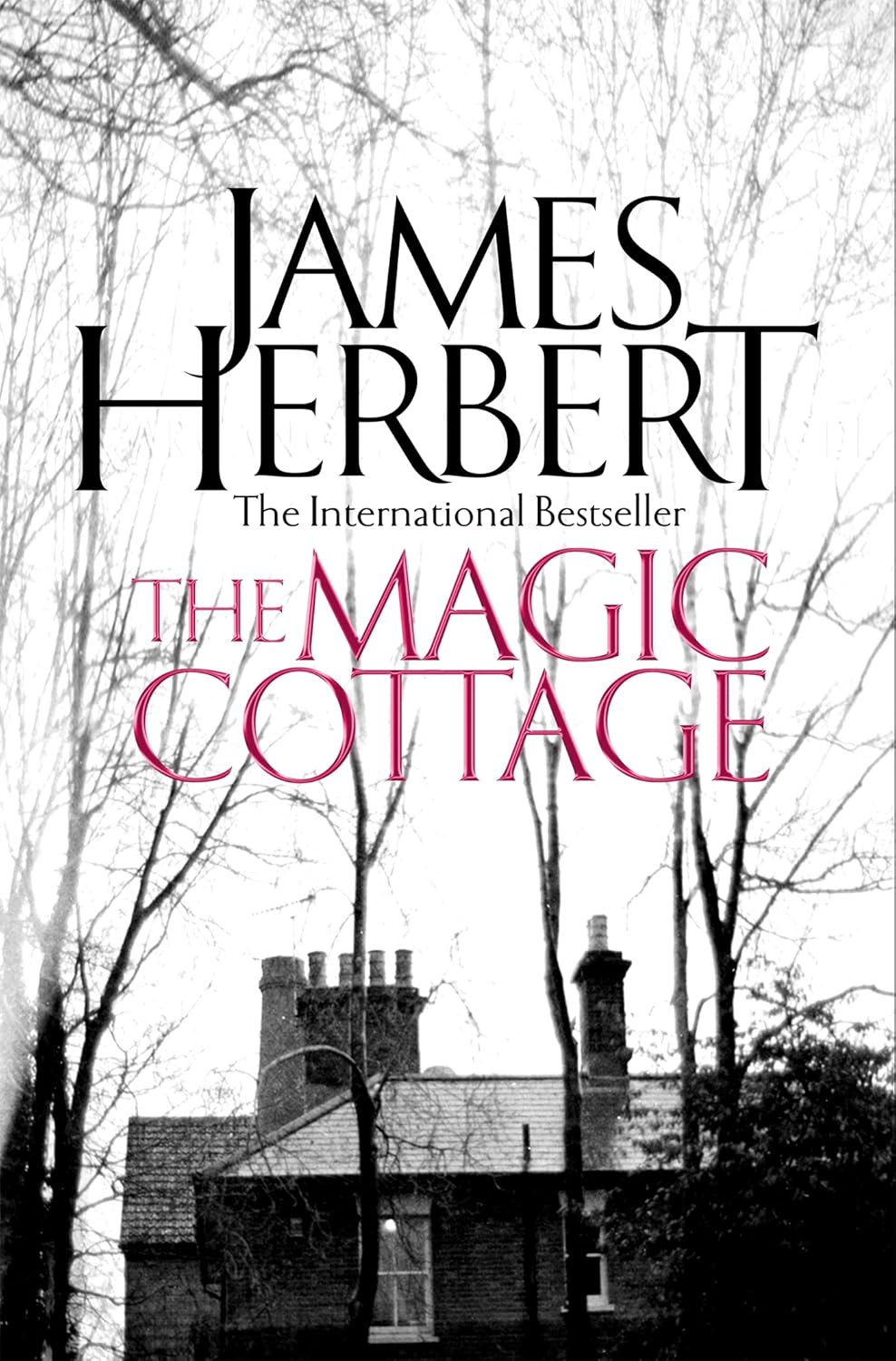
A young couple, a musician and an illustrator, buy a run-down cottage called Gramarye, deep in the woods, for almost nothing, and start renovating it.
Everything improves. His playing gets better. Her drawing gets better. Injured animals come to the door and recover. The house is doing something and it is entirely benign for about a hundred and fifty pages.
Then the group who used to own it want it back.
The first half is the reason it is on this list. Herbert writing happiness is unexpected and he is good at it, and the couple are the warmest characters he created, and the reader spends the whole opening waiting for the turn with increasing dread.
It’s his most controlled novel, and the one his admirers argue is his best.
The Synergists and what they want are the weaker half, and the last act reverts to his usual mode.
Haunted (1988)

David Ash is a parapsychologist who investigates hauntings and debunks them, and he is an alcoholic who lost his sister as a child in circumstances he has never resolved.
He is invited to Edbrook, a country house, by a family who want him to disprove what is happening there.
It’s Herbert’s most restrained book, and the closest he came to a classical ghost story. The house, the family, the nurse, and the deliberate pacing are all in the English tradition, and the violence he was famous for is almost entirely absent.
The twist is genuinely well constructed and Herbert plays fair.
Filmed in 1995 by Lewis Gilbert, with Aidan Quinn and Kate Beckinsale, and the small set of critics who saw it liked it. The Ghosts of Sleath (1994) and Ash (2012) continue the character, and the third is enormous and the weakest, and also his final novel.
This is the entry point for anybody who found The Rats unreadable.
Also on ghost books.
Others (1999)
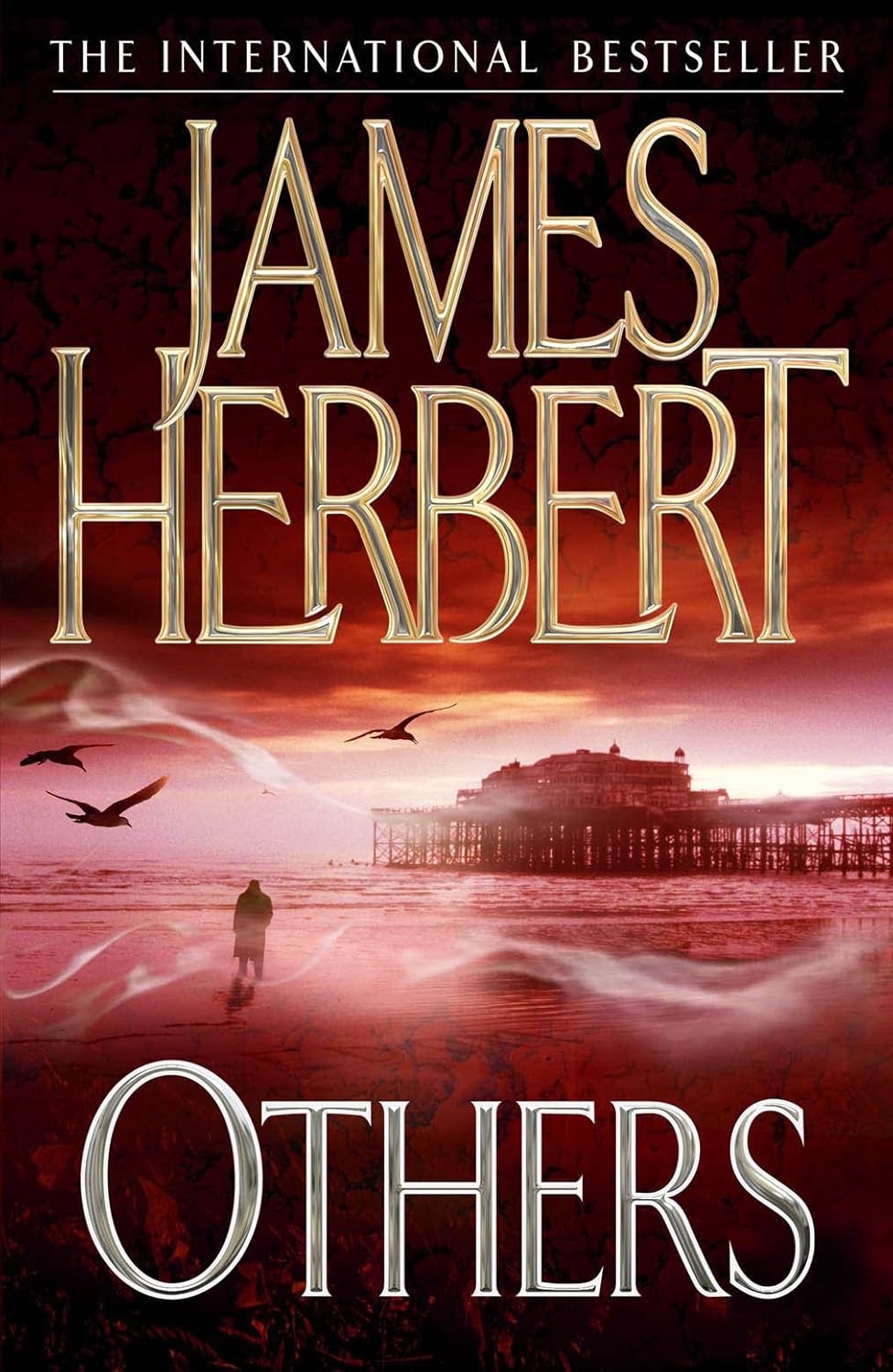
Nicholas Dismas is a private investigator with severe physical deformities, and Herbert narrates the entire novel in his voice.
He is hired to find a son a mother was told died at birth, and the trail leads to a nursing home called Perfect Rest.
What is in that building is the reason the novel is here, and Herbert is doing something considerably more serious with disability than the setup suggests. Dismas is the detective, he is competent, he is bitter, and the novel is about what a society does with people it decides should not have survived.
The theology is explicit. Dismas is named for the penitent thief, there is a reincarnation frame, and the last section is a straightforward moral argument.
It’s his most ambitious late novel, and it’s uneven. Readers either find the Dismas voice sustaining or find the whole thing overwrought.
The Secret of Crickley Hall (2006)

A family move to a house in a Devon valley a year after their small son disappeared, because the father has a work contract there and because the mother cannot stay in the house he vanished from.
Crickley Hall was an orphanage during the war, eleven evacuee children and their guardian died there in 1943, and the man who ran it was a sadist.
It’s his last major novel and his most conventional, and the two timelines and the family in grief are handled with real competence.
What makes it work is the 1943 material. Augustus Cribben’s regime is written without any supernatural element at all for long stretches, and the cruelty is entirely institutional.
The BBC filmed it in 2012 as a three-parter, with Suranne Jones and Tom Ellis as the parents and Douglas Henshall as Cribben, and it is faithful and very good.
Herbert died the following spring, fifty million books sold, an OBE on the shelf, and the reviews as hostile as they had been in 1974.
More like it on my haunted house books list.
James Herbert: Deep Dive and FAQ
What Runs Through the Books
Class, before anything supernatural. The rats come out of docks the city abandoned, the fog out of a government site, the orphanage cruelty out of institutional power, and the victims are always the people nobody was protecting.
The minor-character execution. A name, a page of history, a death: he invented the rhythm that disaster horror still runs on, and everyone from his imitators to The Complex borrowed it.
And the gap between sales and respect. Fifty million copies, decades of hostile reviews, honors arriving three years before his death. No major horror career ran on a wider spread between readers and critics, and the books are angrier and better for it.
On Screen
The screen record is small, strange and mostly unworthy of him, which he said himself, loudly.
Deadly Eyes (1982) adapted The Rats with dachshunds in rat costumes, and Gene Siskel’s “an awful movie” with “goofy fun” remains the complete review. The Survivor (1981) came out of Australia with Robert Powell. Fluke (1995) turned the saddest book into a family film. Haunted (1995) is the respectable one. An American TV movie of The Rats surfaced in 2002, set in New York, and sank. And the BBC’s The Secret of Crickley Hall (2012) is the adaptation that finally matched the material, arriving four months before he died.
Nothing new has been announced since, which for a fifty-million-copy catalog is one of the stranger silences in horror rights.
Questions About the James Herbert Books
Is the Fog Connected to John Carpenter’s Film?
No. The novel is from 1975, the Carpenter film from 1980, and they share nothing but weather.
What Order Should I Read the Rats Trilogy In?
The Rats (1974), Lair (1979), Domain (1984). Many fans rate Domain the strongest, and it stands alone well if post-nuclear London is the draw.
What Happened With the Spear?
Trevor Ravenscroft sued over material taken from his non-fiction The Spear of Destiny, and won in 1980. The first edition was withdrawn and the novel reissued with the borrowings cut.
Which James Herbert Book Is Actually the Best Written?
The Magic Cottage by his admirers’ consensus, Haunted for the classical ghost story, Others for ambition. The early ones are the event, the middle period is the craft.
Did He Ever Win Awards?
Almost none until 2010, when the OBE and the World Horror Grand Master title arrived together, the latter presented by Stephen King. The British press never came around, and he outsold everyone who got better reviews.
Where to Go Next
The older end of the shelf is on my horror classics page. The later ghost novels belong with my ghost books list.