Gothic fiction is the oldest continuously running mode in English popular literature. It started in 1764 with a short novel that its author pretended was a translated medieval manuscript, and it has never once gone out of fashion for long.
What it actually is has changed enormously over that time, which is the thing most reading lists miss. The gothic of the 1790s is about Catholic Europe, ruined abbeys and the terror of being locked in somewhere. The Victorian gothic moved indoors and turned the threat into a person, usually a respectable one. The twentieth century made the house itself the antagonist and put a woman alone inside it. The current revival has largely gone back to that last version and added a colonial hangover.

So this is a chronological list rather than a ranking, because the interesting thing about gothic fiction is the shape of the argument across two and a half centuries, and because ranking The Castle of Otranto against Mexican Gothic would tell you nothing.
What’s not here. Modern paranormal romance marketed as gothic, which is a different genre wearing a manor house. Southern gothic and dark academia both get their own treatment, and they’re linked below rather than repeated here.
Most of these I’ve read about rather than read, so the notes are the critical consensus except where I say otherwise.
Fiction by René Rehn


Gothic Fiction at a Glance
| Year | Title | Author |
| 1764 | The Castle of Otranto | Horace Walpole |
| 1786 | Vathek | William Beckford |
| 1794 | The Mysteries of Udolpho | Ann Radcliffe |
| 1796 | The Monk | Matthew Lewis |
| 1818 | Frankenstein | Mary Shelley |
| 1820 | Melmoth the Wanderer | Charles Maturin |
| — | The Tales of Edgar Allan Poe | Edgar Allan Poe |
| 1847 | Wuthering Heights | Emily Brontë |
| 1847 | Jane Eyre | Charlotte Brontë |
| 1851 | The House of the Seven Gables | Nathaniel Hawthorne |
| 1858 | Rhymes and Legends | Gustavo Adolfo Bécquer |
| 1864 | Uncle Silas | Sheridan Le Fanu |
| 1872 | Carmilla | Sheridan Le Fanu |
| 1886 | Strange Case of Dr Jekyll and Mr Hyde | Robert Louis Stevenson |
| 1890 | The Picture of Dorian Gray | Oscar Wilde |
| 1897 | Dracula | Bram Stoker |
| 1898 | The Turn of the Screw | Henry James |
| 1910 | The Phantom of the Opera | Gaston Leroux |
| 1938 | Rebecca | Daphne du Maurier |
| 1959 | The Haunting of Hill House | Shirley Jackson |
| 1962 | We Have Always Lived in the Castle | Shirley Jackson |
| 1979 | The Bloody Chamber | Angela Carter |
| 1987 | Beloved | Toni Morrison |
| 1999 | Marina | Carlos Ruiz Zafón |
| 2006 | The Thirteenth Tale | Diane Setterfield |
| 2009 | The Little Stranger | Sarah Waters |
| 2015 | Rawblood | Catriona Ward |
| 2020 | Mexican Gothic | Silvia Moreno-Garcia |
| 2021 | The Last House on Needless Street | Catriona Ward |
The Founding Texts, 1764 to 1820
Fifty-six years in which every convention gothic fiction still uses was invented more or less from scratch, mostly by very young men writing quickly.
The Castle of Otranto by Horace Walpole (1764)

The book that invented the genre, and it is worth reading as an origin document rather than as a novel.
Walpole published it anonymously in 1764 as a translation of an Italian manuscript from 1529, discovered in the library of an ancient Catholic family in the north of England. There was no manuscript. When the first edition sold, he admitted the hoax in the second preface and added a subtitle, A Gothic Story, and gave the form its name.
The plot is delirious. Manfred’s son is crushed on his wedding day by an enormous helmet that falls out of the sky. Manfred decides to divorce his wife and marry his dead son’s fiancée. A portrait sighs and walks out of its frame. Pieces of a giant appear around the castle, a leg here, a hand there, growing until the building bursts.
Almost everything the form would use for two hundred years is here first: the usurped inheritance, the tyrant, the persecuted young woman, the underground passage, the prophecy, the ancestral portrait, and the castle as a participant.
It is short and frequently ridiculous, and Walpole knew it. He built Strawberry Hill, his gothic villa at Twickenham, and the novel came out of a dream he had in it.
Vathek by William Beckford (1786)

Written in French by a twenty-one-year-old English aristocrat, reportedly in a single sitting of three days, and nothing in the early gothic is stranger.
Vathek is a caliph who has a tower built so tall he can study the stars, acquires a taste for forbidden knowledge, and makes a bargain with a demonic figure called Giaour that requires him to sacrifice fifty children. He does it. The novel is not troubled by this and neither is he.
What it contributes to the gothic is the oriental strand, which ran alongside the castle-and-abbey tradition for fifty years and is now almost entirely forgotten. Beckford took the vogue for the Arabian Nights and pushed it somewhere considerably nastier, and the result is cruel, funny and completely amoral in a way Walpole and Radcliffe never were.
The ending is what people remember. The Hall of Eblis, where the damned walk with their right hands pressed to their hearts, which are visibly burning inside them, forever. It is the first genuinely bleak conclusion in English gothic and nothing matched it for decades.
Beckford himself was the richest commoner in England, built a real tower at Fonthill that kept collapsing, the last time in 1825, and was driven out of the country by scandal. The novel is short and the notes in many editions are longer than the text.
The Mysteries of Udolpho by Ann Radcliffe (1794)

The book that made the gothic a commercial category, and the one everybody in the period was reacting to.
Emily St. Aubert loses her father, is placed in the care of an aunt who marries a Montoni, and is taken to a remote castle in the Apennines where she is pressured to sign over her inheritance. There are noises, there is a veiled thing in a chamber that she looks at and faints, and there are lights on the ramparts and music in the night.
Radcliffe’s innovation was the explained supernatural, still the most argued-about decision in the genre’s history. Every apparently ghostly event in the novel is given a rational explanation before the end. The music was a person. The thing behind the veil was a waxwork. Some readers find this a betrayal and always have. Radcliffe’s position was that terror expands the soul and horror contracts it, and that suspense is the effect worth producing.
That distinction is still the useful one. The scenery is the other legacy: Radcliffe had never been to Italy and wrote landscape out of paintings, and the picturesque castle on a crag is entirely her invention.
It is very long and the pacing is glacial by modern standards. Read the first Udolpho section and you have the flavour.
The Monk by Matthew Lewis (1796)

Lewis was nineteen when he wrote it, the writing took him ten weeks, and Radcliffe spent her career writing against it.
Ambrosio is the most celebrated preacher in Madrid, admired for a purity he has never been tested on. A novice arrives at the monastery who turns out to be a woman, Matilda, who has come there to seduce him, and she does. What follows across three hundred pages is rape, incest, matricide, the Inquisition, a bleeding nun, a pact with the devil and a mob tearing a prioress apart in the street.
Where Radcliffe explains everything, Lewis explains nothing and means all of it. The supernatural is real, the devil appears in person, and the ending sends Ambrosio somewhere with no ambiguity whatsoever.
It caused a genuine scandal. Coleridge reviewed it and said no parent should let a child read it. Lewis was in Parliament at the time, revised it under pressure for later editions, and the cut version circulated for years.
For the gothic it is the moment the form split in two. Everything since divides into the terror tradition, which withholds, and the horror tradition, which shows you, and almost every argument in the genre reruns this one.
Frankenstein by Mary Shelley (1818)

The gothic acquires a laboratory, and the result is that the genre stops being about the past.
Every gothic novel before this one is haunted by something that already happened: an old crime, a usurped inheritance, a curse laid generations back. Victor Frankenstein’s horror is entirely prospective. He makes a thing that did not exist, and the consequences run forward.
The gothic furniture is all present. The remote chamber, the solitary obsessive, the journey through the Alps and the Arctic, the persecuted family, the trial of an innocent woman. What Shelley does is attach it to a young man with a laboratory and an ambition, and the effect is to move the source of dread from the ancestral to the newly made.
The frame is also gothic and is usually forgotten. The whole novel is a letter from an explorer in the Arctic to his sister in England, containing Victor’s account, containing the creature’s account. Three narrators, each with reasons to shade it.
Read the 1818 text rather than the 1831 revision. Shelley rewrote it after Percy’s death to make Victor a man overtaken by fate, which is a considerably weaker book.
The argument is still running: Frankenstein in Baghdad stitches Shelley’s monster from the dead of 2005.
Melmoth the Wanderer by Charles Maturin (1820)

The last of the great originals and the most structurally deranged.
John Melmoth inherits an estate in Ireland and finds a portrait dated 1646 of a man his uncle knew. Melmoth the Wanderer sold his soul for a hundred and fifty extra years and can only be released if he finds somebody willing to take the bargain from him, so he spends a century and a half seeking out people in the worst possible circumstances, offering escape, and being refused.
The structure is the thing. Maturin nests story inside story inside story, a manuscript containing a tale containing a narrative containing another, and at one point the reader is four levels deep and a character is telling a story about someone reading a story. It is genuinely difficult to track and it was deliberate.
What it does for the gothic is push the form to its limit and hold it there. Every gothic setting appears somewhere in it: the Inquisition, a madhouse, a shipwreck, a starving family, an underground vault, a tropical island. The Spaniard’s account of monastic life is the best sustained horror writing before Poe.
Maturin was a Church of Ireland curate who composed with a wafer pasted to his forehead to warn the household off, and he was Oscar Wilde’s great-uncle. Wilde took the name Sebastian Melmoth after prison.
More on the Melmoth page: the bargain, Balzac, Wilde, and which edition survives the nesting.
The Victorian Turn
Gothic fiction leaves the castle here. It moves into English country houses, then into a London street, and finally inside a single body.
The threat comes indoors and puts on a good coat.
Wuthering Heights by Emily Brontë (1847)

Not usually shelved as gothic and it should be, because almost everything in it is.
Two houses on the Yorkshire moors, one civilised and one not. A foundling brought back from Liverpool by a father who will not explain where he found him. A love that is explicitly not romantic and is described by Catherine as being the same substance as Heathcliff. A ghost at a window who cannot be let in, in the opening chapters, and whose wrist Lockwood saws on broken glass to make her let go.
What it does for the gothic is bring the whole apparatus into a recognisable English county and attach it to property law. Heathcliff’s revenge is conducted through mortgages, marriages, wills and the systematic degradation of two families across two generations. He does not haunt anybody. He acquires their houses.
The narration is the other gothic device. Lockwood hears it from Nelly Dean, who is a servant with her own interests, and everything the reader gets about Heathcliff and Catherine has passed through a woman who disliked both of them.
Charlotte apologised for it in her preface after Emily died. Modern readers should ignore that entirely.
Jane Eyre by Charlotte Brontë (1847)

Filed as a romance, taught as a bildungsroman, and structurally a gothic novel from the moment she arrives at Thornfield.
The red-room at Gateshead, where a child is locked in a chamber where a man died and has hysterics, is the first gothic set piece and it is only chapter two. Then Lowood, then a remote house with a master who has a secret, a laugh in the corridor at night, a fire, a torn veil, and a locked door on the third floor.
What it does for the form is put a governess at the center of it, which is a genuinely radical move. Emily St. Aubert is an heiress and Radcliffe’s heroines faint. Jane is poor, plain, employed, and argues. The gothic machinery is identical and the person walking through it has no protection of birth or money, which changes what every threat means.
Bertha Mason is the other legacy and the argument about her has not stopped. She is a Creole woman from Jamaica, locked in an attic, described as a beast, and the novel needs her removed. Jean Rhys wrote Wide Sargasso Sea to give her a life, and reading them together is the best available demonstration of what a gothic novel leaves out.
Rhymes and Legends by Gustavo Adolfo Bécquer (1858)

Spain’s Romantic Gothic doesn’t come as a novel. It comes as a handful of short legends that Gustavo Adolfo Bécquer wrote for a Madrid newspaper between 1858 and 1864, and that his friends collected after his death in 1870. Spaniards know him first as the poet of the Rimas, some of the most quoted love poems in the language. The Leyendas, published with them, are his gothic fiction, and they’ve been frightening Spanish schoolchildren for a century and a half.
Each one borrows the form of a local legend, a tale heard from a shepherd or a guide, set somewhere a reader could visit: the Templar ruins of Soria, the cathedral and churches of Toledo, a Cistercian abbey under the Moncayo in Aragon.
Inside that frame is the whole Gothic inventory. There are ghostly knights who ride on All Souls’ Night, an empty suit of armor possessed by a demon, a water spirit with green eyes waiting in a forest spring, a choir of dead monks who sing in a ruined abbey on Holy Thursday, a jewel stolen from the Virgin in a cathedral at midnight, and a marble woman kneeling on a tomb, whom a French officer boasts is his lover. The recurring hero is a young man who wants something beyond the world, a perfect woman or a perfect music, and follows it over the edge.
Readers of Hoffmann and the German tale of terror will recognize the family. What’s distinctive is the Spanish setting, the Catholic imagery and the prose, which is lush, musical and very short: most of the legends take ten or fifteen minutes to read. “El monte de las ánimas” (The Mount of Souls) is the most famous, and Amando de Ossorio named it as a source for Tombs of the Blind Dead (1972), the film that put the eyeless Templar dead at the heart of Spanish horror. Start there, then read “Los ojos verdes” (Green Eyes), “El Miserere” and “El beso” (The Kiss).
The poems have their own graveyard moment: Rima LXXIII, with its refrain “¡Dios mío, qué solos se quedan los muertos!” (my God, how alone the dead are left), follows a burial to the moment the mourners go home, and it’s the bridge between Bécquer the love poet and Bécquer the teller of ghost stories.
Two English editions do the work. Stanley Appelbaum’s Dover Rhymes and Legends (2006) is the one to buy first: a cheap dual-language paperback with sixty-six of the Rimas and six legends, “El monte de las ánimas” (as “The Forest of the Souls in Purgatory”) and “El Miserere” among them, with the Spanish on the facing page. Robert M. Fedorchek’s Legends and Letters (Bucknell, 1995) is the fullest selection, with fourteen legends and Bécquer’s Literary Letters to a Woman, but it’s a university-press hardcover and usually found used.
The Rimas, every legend and the Veruela letters are covered on the Gustavo Adolfo Bécquer page.
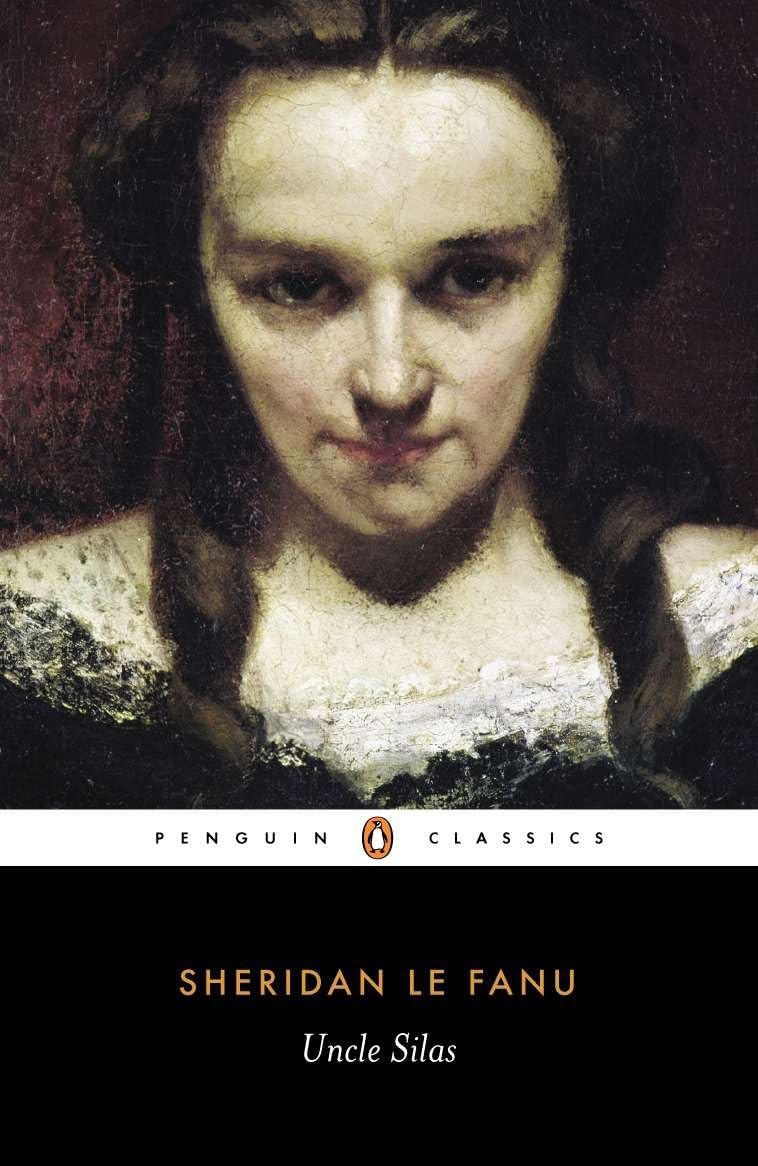
Uncle Silas by Sheridan Le Fanu (1864)
The best Victorian gothic novel almost nobody reads, and the purest example of the locked-house plot.
Maud Ruthyn is seventeen and an heiress. Her father dies and places her, deliberately, under the guardianship of his brother Silas, a man widely believed to have murdered a guest in a locked room years earlier, in order to clear the family name by trusting him. If Maud dies before she comes of age, Silas inherits everything.
Everybody in the book knows this, including Maud, and she is sent anyway.
What makes it gothic rather than a thriller is Bartram-Haugh, the house itself: enormous, decaying, mostly shut up, with a wing nobody enters and a household of two or three people rattling around a building meant for forty. Le Fanu is exceptional on the boredom of it, the long empty days, and the slow narrowing as doors are locked and servants are dismissed.
Madame de la Rougierre, the governess, is one of the great gothic villains, and her introduction is genuinely frightening.
Le Fanu wrote it while a recluse after his wife’s death, working at night in bed and drinking strong tea. It shows.
The rest of Le Fanu, In a Glass Darkly included, is on the Sheridan Le Fanu page.
Carmilla by Sheridan Le Fanu (1872)

The gothic vampire before Stoker fixed the rules, and the setting is doing most of the work.
A schloss in Styria, seven miles from the nearest neighbor, a ruined village with a roofless church, a father and daughter with almost no society, and a young woman deposited on them after a carriage accident that was arranged.
What makes it gothic rather than merely vampiric is the isolation and the portrait. Laura finds a picture in the family collection of an ancestress, Mircalla, Countess Karnstein, dated 1698, and it is Carmilla’s face. That is the moment the novel becomes a gothic one: the past is not being remembered, it is in the room.
Le Fanu is also the best writer of atmosphere in the tradition. The funeral procession Laura and Carmilla watch from the drive, the village that emptied because of something nobody will name, the ruined chapel where the Karnstein tombs are, are all rendered with an economy Radcliffe never managed in three volumes.
The desire between the two women is explicit rather than coded, which is startling for 1872 and the reason it has been continuously in print.
Strange Case of Dr Jekyll and Mr Hyde by Robert Louis Stevenson (1886)

The gothic moves to the city, and the haunted building is a body.
Almost everything the culture believes about this book is wrong. Jekyll is not a good man split from a bad one. He is a respectable man who has spent his whole life suppressing appetites he considers beneath his station, and the potion does not create Hyde, it releases the part of him that was already there and gives it a face he can disown. He enjoys it. And then, he keeps taking it after he knows what it costs.
And the twist is not a twist. Stevenson gives you a lawyer investigating a client’s strange will and an ugly man with a claim on the estate, and the reveal only works if you have somehow avoided a hundred and forty years of culture.
What it contributes to the gothic is the setting. Radcliffe needed the Apennines and Le Fanu needed a country house. Stevenson does it in a respectable London street where the fog comes down and a door round the back of a good building leads somewhere else. The doubling, the divided house and the divided self are the same device.
It runs to about seventy pages, and three days took Stevenson from blank page to first draft.
The Picture of Dorian Gray by Oscar Wilde (1890)
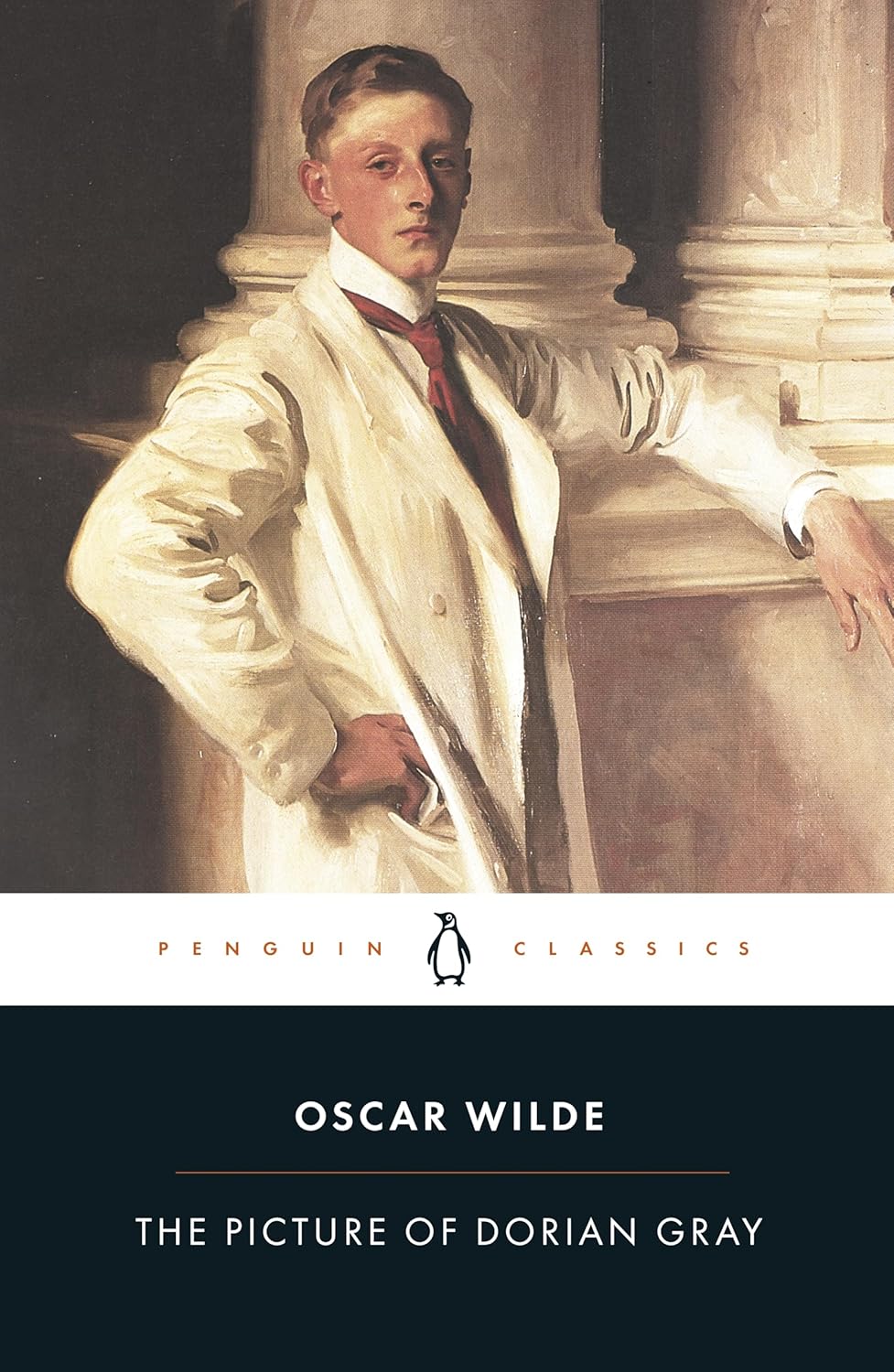
The gothic goes decadent, and the haunted object is a portrait in an attic.
Dorian sits for Basil Hallward, meets Lord Henry Wotton at the sitting, hears a speech about youth and pleasure that reorganises his life, and wishes the painting would age instead of him. It does.
What Wilde adds to the form is aestheticism, which nothing gothic had done before. The horror is not a curse or a demon, it is a man who has decided that beauty and sensation are the only things worth pursuing and who is then granted the physical means to pursue them without consequence. Lord Henry never does anything. He simply talks, brilliantly, and a young man builds a life out of it.
The portrait is the last great gothic object, and it works because Wilde keeps it offstage. You get a few glimpses across two decades, each worse, and the final description is only a few lines.
The 1890 magazine version was censored by the editor and Wilde then revised it further for the 1891 book, adding six chapters and the preface. The uncensored original is now available and is sharper and considerably more explicit about Basil’s feelings.
Dracula by Bram Stoker (1897)

The novel that ends the gothic period and takes almost all of it with it.
The first four chapters are the last great gothic sequence in English. A young solicitor travels east, is warned by peasants who press a crucifix on him, crosses the Borgo Pass by carriage in the dark, and arrives at a ruined castle where the only inhabitant carries his own luggage and casts no reflection. Then doors lock, and Harker works out that he is not a guest.
What Stoker does with the form is drag it into 1897. The moment the action reaches England the castle vanishes and is replaced by a lunatic asylum, a shipping manifest, a blood transfusion, a typewriter, a phonograph and a Kodak camera. The gothic novel is being solved by professionals with equipment.
That is why the middle sags. The dread of the opening depends on Harker being alone and out of communication, and once there are five men with a plan and a train timetable the book becomes a procedural.
The vampire rulebook the culture now runs on, the invitation, the mirror, the native soil, was mostly drafted in this novel rather than in any folklore.
The Turn of the Screw by Henry James (1898)

The gothic house with the machinery intact and the explanation withheld.
Bly has everything the form requires. It is remote, it is large, the employer is absent and has forbidden all contact with him on any subject whatsoever, the servants know something, and there are two children who are too composed. James assembles a Radcliffe setting and then does what neither Radcliffe nor Lewis would do, which is refuse to resolve it in either direction.
The governess is the gothic heroine and the gothic problem at once. She has no money, no standing, and nobody to appeal to, which is exactly the position of every heroine from Emily St. Aubert onward. What is new is that she may be the danger.
The frame is the other gothic device: the story is read aloud at a Christmas house party from a manuscript by a woman now dead, which is Walpole’s found-document trick still working a hundred and thirty years later.
The syntax is the toll. Late James is dense enough that the ambiguity is partly grammatical, and the opening twenty pages shed exactly the readers they seem designed to shed.
The Scandinavian gothic ran parallel: Selma Lagerlöf’s Lord Arne’s Silver and The Phantom Carriage are its darkest.
The American Branch
American gothic fiction had no ruined abbeys to work with, so it built its dread out of property, inheritance and a national past that was still within living memory.
The Tales of Edgar Allan Poe

Poe takes the gothic and removes the architecture, and what is left is a mind in a room.
“The Fall of the House of Usher” is the exception and the most straightforwardly gothic thing he wrote: a decaying mansion with a fissure running down the facade, a tarn, a brother and sister who are the last of their line, and a house written as the family’s own body. It ends the way a gothic novel ends, with the building coming down.
Everything else strips the form back. “The Tell-Tale Heart” and “The Cask of Amontillado” have no ancestral curse, no inheritance plot and no supernatural agency. They have a confined space, a narrator explaining himself, and a body. The gothic interior has moved inside the skull.
“The Masque of the Red Death” keeps the castle and turns it into an allegory. “The Pit and the Pendulum” keeps the Inquisition, which Lewis and Maturin used, and reduces it to a dark room and a descending blade.
He was writing for American magazines at length limits that forced compression, and the compression is what modernised the form.
The House of the Seven Gables by Nathaniel Hawthorne (1851)

The American gothic starts here, and Hawthorne’s contribution is to replace the ancestral castle with a family house and the ancient curse with a property dispute.
Colonel Pyncheon had Matthew Maule hanged as a witch in the 1690s and built his house on Maule’s land. Maule cursed him from the scaffold. A hundred and sixty years later the Pyncheons are still in the house, still poor, still waiting on a land claim that has never been settled, and the current generation consists of an elderly woman running a cent-shop out of the front room and her brother who has just come home from thirty years in prison.
The curse is real and it is also entirely explicable as the effect of a family that has organised itself around an inheritance that never arrives.
That doubling is the American move, and everything from The Shining to Beloved uses it. The house is not haunted by a ghost so much as by a legal document.
Hawthorne’s own great-great-grandfather was a judge at the Salem witch trials, which is why he added the w to his name. He was writing about his own family.
The Twentieth Century
The house becomes the antagonist and a woman is put inside it.
Two detours the canon forgets: Gombrowicz’s The Possessed, a 1939 gothic serial of a haunted castle,
and Isak Dinesen’s Seven Gothic Tales, which took the mode to Denmark and back.
The Phantom of the Opera by Gaston Leroux (1910)

The gothic’s last great building, and it is an opera house with a lake in the basement.
Everyone knows the shape. Erik, the masked composer in the cellars, tutors the soprano Christine Daaé through the walls, keeps Box Five empty on his orders, and brings the chandelier down mid-performance. Leroux was a crime reporter before he was a novelist, and he built that chandelier out of a real event: in 1896, a counterweight fell at the Palais Garnier and killed a spectator. He kept the reporter’s instincts for the whole book, which is told as an investigation, with witnesses, documents and footnotes. Walpole’s found-manuscript trick, a century and a half on, wearing a press badge.
What the adaptations cut is most of the gothic. The novel has a torture chamber, a house on an underground lake, and the Persian, the figure who guides the rescue and whom the musical does not even contain.
The critic Stephen Carver calls it “truly the last gothic novel,” and the dates agree with him. After this, gothic fiction scatters, into Rebecca’s psychology on one side and the horror pulps on the other.
It has never been out of print in French or English. Skip the free hundred-year-old translation, which is abridged, and read Mireille Ribière’s Penguin Classics version or Lowell Bair’s complete one.
Rebecca by Daphne du Maurier (1938)

The gothic novel that removed the ghost and lost nothing.
Manderley has no apparition, no crypt, no curse and no family secret in the usual sense. What it has is a housekeeper who is still running the house to a dead woman’s standards, a west wing kept exactly as it was, a wardrobe nobody has emptied, monogrammed notepaper still in the drawer, and a second wife being systematically taught that she is a replacement.
Mrs. Danvers is the great gothic villain of the twentieth century, and she never threatens anybody. She simply keeps offering the narrator information about how Rebecca did things.
The isolation is doing gothic work too. Manderley is remote, the narrator has no money, no family and no friend in the county, her husband is often absent, and there is nobody she can tell.
And the narrator has no name, which is the boldest thing in the book. Everybody else, including the dead woman, has one.
Du Maurier’s opening line is the most quoted in English gothic. The novel is harder and stranger than its reputation as a romance suggests, and the last third detonates everything before it.
More on the Daphne du Maurier page.
The Haunting of Hill House by Shirley Jackson (1959)

The most influential gothic house in fiction, and Jackson’s contribution is architectural.
Hugh Crain had Hill House built off-true from the foundation up in the 1880s, and the consequences run the whole book: doors that close themselves, rooms reachable only through other rooms, a floor plan that resists memory. Jackson spends one early chapter on the carpentry and then trusts it.
The gothic apparatus is otherwise complete: the isolated pile, the household with a history of deaths, the caretakers who will not stay after dark, the doctor conducting an investigation, and a young woman with no home who arrives desperate to belong.
What she removes is the explanation. There is no revenant, no ancestral crime to uncover, no possession, and no resolution at the end of it. Eleanor is the focus of every event and the only person who cannot be trusted to report on herself.
We Have Always Lived in the Castle by Shirley Jackson (1962)

The gothic pile as a fortress against a village, which is the inversion the tradition needed.
Every earlier house on this page is a trap. The Blackwood house is a refuge, and the horror is outside the walls. It shelters what is left of a family, six years after arsenic at the dinner table took most of it. The acquittal did not help. Constance stays inside the gate, and the village spits at Merricat on her twice-weekly shopping runs.
Jackson keeps every gothic component and reassigns it. The isolated estate. The tainted inheritance. The family reduced to fragments. The cousin who turns up with warm ideas concerning the money, the nearest thing the book has to a Manfred. And a fire, and a mob, and a house reduced to a ruin that the sisters go on living in.
Merricat tells it, sunny and orderly, reporting a household run on buried tokens and forbidden words as if she were reporting the weather, and Jackson never breaks the surface to wink.
It was Jackson’s final novel, and among her readers it has quietly become the favorite.
The Bloody Chamber by Angela Carter (1979)

Carter takes the gothic back to the source material it was built out of and finds it was always there.
The title story is Bluebeard on a tidal Breton island, the sea scheduling the bride’s isolation twice a day: rich older husband, much younger wife, one forbidden key, one locked room. It is a gothic novel compressed into forty pages, with the rescue rewritten, not brothers, but a mother and a revolver.
What she is doing across the collection is arguing that the violence and the sexual transaction were in Perrault and the Grimms all along, and that the nursery versions are the distortion. Her own Perrault translation had appeared two years earlier, so she knew exactly what the nursery versions had cut.
For a horror reader the gothic entry is “The Lady of the House of Love”: a vampire countess, sole occupant of a crumbling chateau in the Carpathians, dealing tarot hands that never vary, while an English cyclist pedals toward her door.
Lushness past all restraint is the deliberate register of the prose. Anyone requiring plain writing should expect to find it unbearable.
Beloved by Toni Morrison (1987)
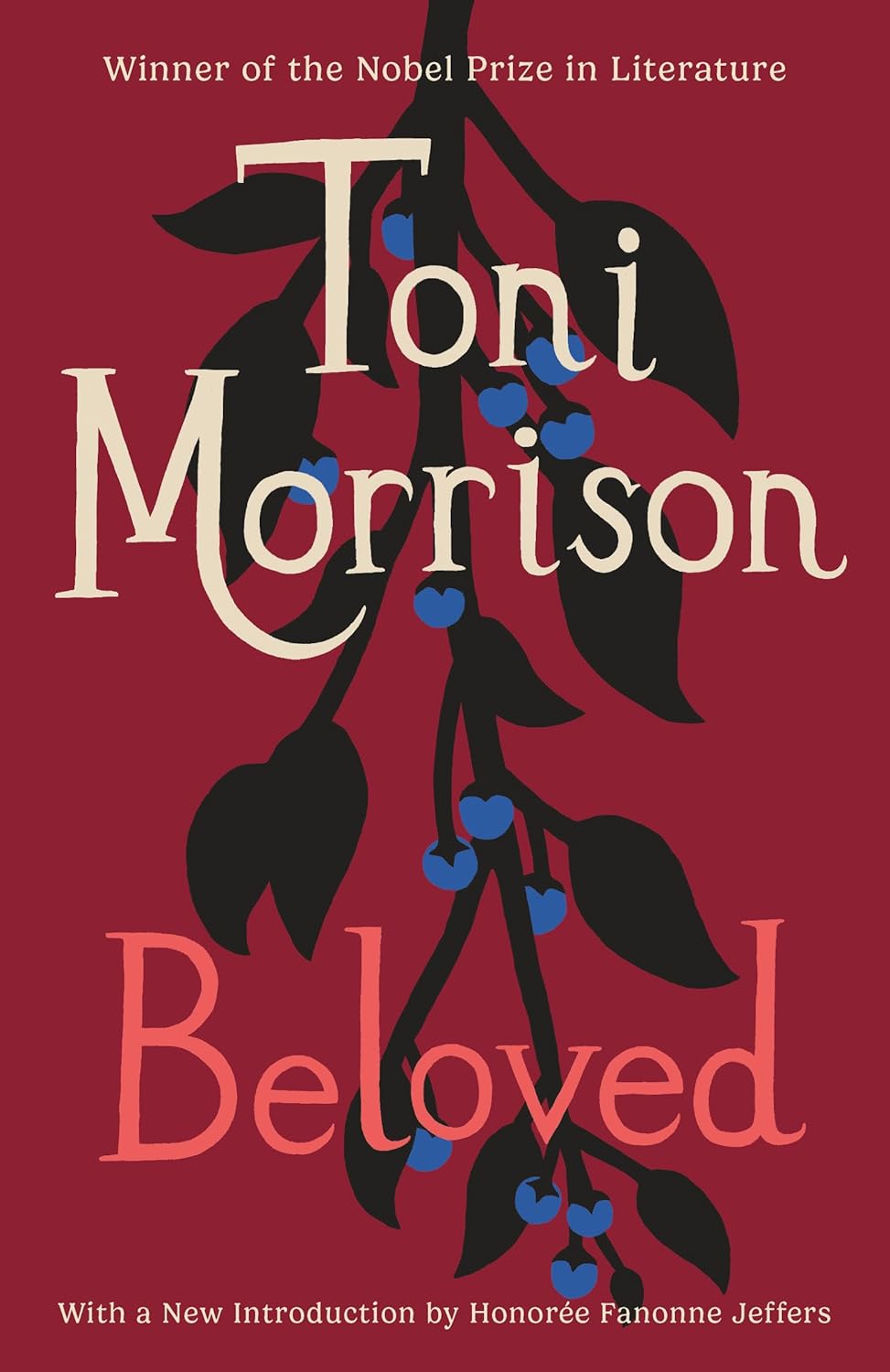
The gothic apparatus pointed at the one subject it was built for and had spent a century avoiding.
124 Bluestone Road has everything the form requires. A haunted house holding something furious, mirror-breaker, cake-marker. A family down to two, the sons having fled. A past under total silence, and at the door a revenant, dripping wet, newborn-skinned, historyless, answering to the name on a dead child’s headstone.
What Morrison does with it is refuse the consolation the gothic usually offers. There is no distant ancestral crime to be uncovered and set right. The thing in the house happened eighteen years ago, the woman who did it is in the kitchen, and slavery is not a metaphor for the haunting because slavery is the haunting.
Sethe’s act follows Margaret Garner’s 1856 escape from Kentucky almost to the letter. Morrison worked from the press account and added nothing to it.
And it disturbs rather than merely saddening because the why arrives in the same breath as the what.
The Modern Revival
The current wave of gothic fiction keeps the machinery intact and changes what it is aimed at, which is usually class, colonialism or a marriage.
Marina by Carlos Ruiz Zafón (1999)

Before The Shadow of the Wind made him famous, Carlos Ruiz Zafón wrote this short gothic novel for teenagers, and it’s the most openly frightening book he wrote. Barcelona, the late 1970s. Óscar Drai is fifteen and boarding at a school in Sarrià, the old hill district of walled gardens and half-empty mansions above the city. He likes to sneak off and explore them. When he lets himself into what looks like a deserted house, pockets a watch, and later goes back to give it up, he finds Marina living there with Germán, her father, whose paintbrushes have gone untouched for years.
Marina takes him to the Sarrià cemetery to watch a woman in black who visits an unmarked grave whose only sign is a carved black butterfly. They follow her, and the trail runs through a greenhouse hung with jointed figures, the records of a company that made artificial limbs, a derelict theater and the tunnels under Barcelona, toward an old tale of someone determined to cheat death, and the things he made while trying.
The debt to Mary Shelley is plain, and Zafón pays it with real set pieces: bodies stitched from parts, a pursuit through the dark, fog on every page. What lifts it above a pastiche is the city. The Barcelona of Marina is already the damp, grand, decaying one of Zafón’s adult novels, and the friendship between Óscar and Marina gives the horror something to threaten. Zafón later called it the hardest of his books to classify. Subterranean Press gave it a limited edition in 2022, which says a good deal about where the horror collectors file it.
Edebé published it in Spain in 1999 as a novel for young readers. Lucia Graves’s English translation followed in 2013 in Britain (Weidenfeld & Nicolson) and in 2014 in the US (Little, Brown), and adults read it as readily as the teenagers it was written for. Readers who finish it and want more of the same should go on to Zafón’s earlier young-adult novels, The Watcher in the Shadows above all, with its toymaker’s mansion and its automata.
Zafón’s other books, from the Mist novels to the Cemetery of Forgotten Books, are on the Carlos Ruiz Zafón page.
The Thirteenth Tale by Diane Setterfield (2006)

The most self-aware gothic novel of the last twenty years and it is entirely open about what it is doing.
Margaret Lea works in her father’s antiquarian bookshop and reads nineteenth-century novels. Vida Winter is England’s most famous living author, has given a different account of her life to every interviewer for sixty years, and is dying. She summons Margaret to take down the true version.
What follows is Angelfield, a decaying house, twins who may be one person, a governess, a fire, a ghost, and a family secret that has been kept for fifty years. Setterfield is deploying the whole tradition deliberately and the novel keeps naming its own sources: Jane Eyre, The Woman in White, The Turn of the Screw.
That could be arch and it isn’t, because she commits to it completely. The Angelfield material is genuinely eerie and the twins are properly unsettling.
The framing is the weaker half and several readers find Margaret’s own backstory a distraction from the story she is transcribing.
If you want a modern novel that reads the way the Victorian gothic felt, this is the one.
The Little Stranger by Sarah Waters (2009)

The last great English country-house gothic, and Waters removes the ghost story’s one reliable comfort.
Hundreds Hall is a Georgian pile in Warwickshire in 1947 with the plaster coming off, the servants down to one girl, the land sold in parcels, and a family of three who cannot afford to heat it. Dr. Faraday, son of a former Hundreds nursemaid, answers a call there and works his way into being needed.
The gothic incidents file in by the classic sequence: wall markings nobody made, the family dog savaging a young guest, fire behind a locked door, a service bell rung from an empty room.
What Waters does is make the haunting and the collapse of the class system the same event and refuse to say which causes which. Death duties, the welfare state and the sold-off land are dismantling the Ayreses precisely on schedule, while inside the walls, something else has begun to move.
Faraday tells it, decent and useful on every page, hiding nothing from us because he has hidden it from himself first. The evidence sits in the open and waits.
Rawblood by Catriona Ward (2015)

Before The Last House on Needless Street, Ward wrote a first novel that is gothic to the bone, and a case can be made that it is still her best.
Iris Villarca grows up at Rawblood, a lonely house on Dartmoor, under one rule her father will not explain: no friends, no love, no marriage. The Villarcas who break it die, because something comes for them, a presence the family only ever calls her. Iris breaks the rule, because gothic fiction is a machine for making people break the rule.
The novel walks the family line from the 1830s to 1919 and passes the telling from hand to hand as it goes, so the reader assembles the curse the way no single Villarca ever could.
It won the August Derleth Award for best horror novel in 2016, years before Needless Street made her famous, and Publishers Weekly said she “perfectly balances sensory richness with the chills of the uncanny.” The US edition was retitled The Girl from Rawblood. Same book. Buy whichever is cheaper.
Mexican Gothic by Silvia Moreno-Garcia (2020)

The gothic house rebuilt on the argument that it was always about extraction.
When her newly married cousin’s letter turns alarming, Noemí Taboada, Mexico City socialite, 1950s, gets dispatched to High Place up in the mountains. The house is English. Every component of it was imported: the furniture, the wallpaper now rotting in the damp, the family cemetery of English dead, the mausoleum, and the Doyles themselves, who came for the silver.
The mine killed local workers by the hundreds and the family’s obsession with bloodline is eugenicist in the plain sense, stated by the patriarch at the dinner table. Moreno-Garcia’s argument is that the gothic pile has always run on colonial money and the form spent a century declining to say so.
Noemí is the other reason it works. She is fashionable, flirtatious, argumentative and not remotely a Radcliffe heroine, and her refusal to be intimidated by the house is what drives the plot.
Nothing in the first two thirds prepares you for how strange the last third goes, and the body horror it brings is where the readership splits.
Won the Locus Award and made the current gothic revival commercially visible.
More on the Mexican Gothic page: High Place, the Doyles, and the gothic it answers.
The Last House on Needless Street by Catriona Ward (2021)

The gothic house reduced to a single boarded-up property at the end of a road, and the family secret reduced to one man.
Beside a wood, behind nailed-over windows, lives Ted: a cat, a Bible, a daughter he describes as visiting. The neighbors keep watch. Years back the police talked to him about a girl lost at a lake, and it went nowhere. Now Dee has taken the house nearby, because that girl was her sister.
Every gothic component is here and compressed to domestic scale. The house holds a secret in its architecture. The family is down to fragments. There is a locked interior and a wood behind it. There is an outsider arriving to investigate. And the narration is unreliable in the way the tradition has always used, except that Ward runs three narrators and one of them is a cat.
Give the opening its fifty confusing pages. The confusion is engineered, and it settles every account it opens.
Walk in blind and skip the reviews. The less you carry in, the harder it lands.
Where the Gothic Goes Next
Two branches of this tradition have grown large enough to need their own treatment.
Southern gothic took the decaying house and the family curse to the American South, and produced O’Connor, Faulkner, McCullers and Michael McDowell’s Blackwater. That’s covered on the southern gothic page.
Dark academia is the newest branch, moving the isolated setting from the manor to the university and the buried crime from the family to a small group of students. Covered here.
Where to Start
If you want the one book, read Rebecca. It’s the most readable thing on this page and it does everything the tradition does.
If you want to understand where it came from, read The Monk and then Melmoth the Wanderer, and skip Otranto unless you’re a completist.
If you want the best-written, read Wuthering Heights or Beloved.
And if you want to know why gothic fiction is having a moment right now, read Mexican Gothic and then The Little Stranger, in that order.
And the Irish gothic, Maturin to Le Fanu to Stoker, sits inside the wider Irish literature guide.
Questions About Gothic Fiction
What Was the First Gothic Novel?
The Castle of Otranto, 1764, which Walpole published as a hoax translation of a medieval manuscript and only owned up to once it sold. The second edition’s subtitle, A Gothic Story, named the genre.
What’s the Difference Between Gothic Fiction and Horror?
Horror is an effect. Gothic fiction is a set of machinery: the burdened house, the buried crime, the persecuted heir, the past refusing to stay past. Sometimes the machinery is aimed at fear and you get Dracula. Sometimes it’s aimed elsewhere and you get Jane Eyre, a romance running on gothic parts. That’s why this page is a chronology and not a ranking.
Is Gothic Fiction Still Being Written?
The revival is real. Mexican Gothic aimed the house at colonialism, The Little Stranger at class collapse, and The Last House on Needless Street compressed the whole apparatus into one boarded-up property. The machinery is intact. What changed is the target.
Why Does Gothic Fiction Love Found Manuscripts?
Because it was born from one. Walpole’s fake translation started the trick, Maturin nested manuscripts four levels deep in Melmoth, the governess of The Turn of the Screw survives as a manuscript read aloud at Christmas, and Leroux dressed the device up as journalism. A document says: this happened, and someone had to live with it.
Where to Go Next
The canon it belongs to is on my horror classics page. What happened when it crossed the Atlantic is on my southern gothic list.