Robert McCammon was one of the biggest horror writers in America, and then he stopped for ten years, and a lot of readers never noticed he came back.
He published his first novel at twenty-six, wrote through the entire paperback boom, sold in enormous numbers, and won the Bram Stoker Award five times. Then in 1992 his publisher refused a historical novel on the grounds that it wasn’t horror, the dispute escalated, and he walked away from publishing entirely. He didn’t release another book until 2002.
That gap is the most important fact about his career. It removed him from the conversation at exactly the moment horror was collapsing anyway, and it means a great many readers know Swan Song and Boy’s Life and have no idea he has written twenty more books since.
The other thing worth knowing is that he got much better. The eighties Robert McCammon books are pulp, sometimes very good pulp. The two that everyone rates are from 1991 and 1992, right at the end, and the historical fiction that got him blacklisted turned out to be the thing he was actually for.
I haven’t read these. What follows is the critical consensus.
Fiction by René Rehn


The Short Version
Read Boy’s Life. It’s the best thing he wrote, it won the Bram Stoker and the World Fantasy Award, and it’s barely a horror novel.
Then Swan Song if you want the epic, or Speaks the Nightbird if you want to see where he went afterwards.
The Essential
The Robert McCammon books that a first-time reader should start with, and they are not the ones that sold best in the eighties.
Boy’s Life (1991)
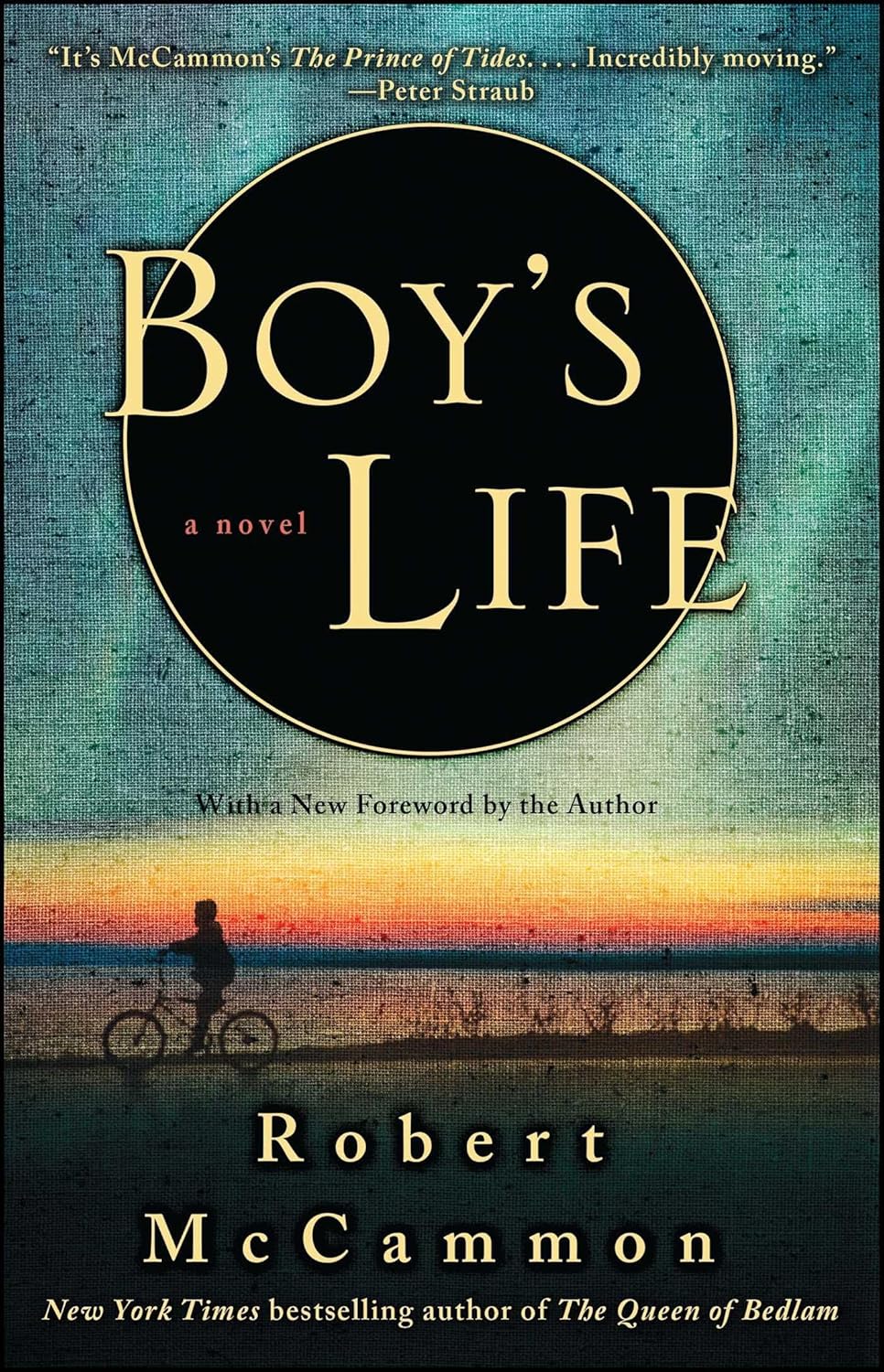
Zephyr, Alabama, 1964. A twelve-year-old boy is helping his father on the milk round before dawn when a car goes off the road into a bottomless lake, and his father dives in and finds a man already dead behind the wheel, handcuffed to the steering wheel and beaten.
The murder is the spine, and the book has other business entirely. What unfolds instead is twelve months in a small Alabama town: bikes, a dog, the friends, the river and the monster living in it, a triceratops, a local boy who can fly, the ferocious matriarch who rules the Black side of town, and the civil rights era arriving by degrees. Some of it is magical and the novel never once tells you which parts.
It took the Bram Stoker and the World Fantasy Award in the same year, and it regularly gets named the most-loved book in the horror field, despite sitting closer to To Kill a Mockingbird with the safety off. The father’s inability to stop thinking about the man in the lake is the emotional engine, and the last twenty pages are the reason people press it on each other.
Also on southern gothic and historical horror.
Swan Song (1987)

His answer to The Stand, published two years after it in 1987, and it won the Bram Stoker Award and outsold most of what surrounded it.
The bombs fall in the first fifty pages and McCammon does not soften any of it. A wrestler in a Kansas cornfield, a homeless woman in New York, a boy in Idaho, and a girl called Swan who can make things grow out of poisoned ground.
The comparison to King is unavoidable and the differences are the interesting part. King’s plague is a disease and his evil is a man with a grin. McCammon’s is a nuclear exchange with radiation sickness described clinically, and his antagonist is a shape-shifter with no name who takes the faces of the people you have lost.
The masks are the best invention. Radiation causes growths that seal over survivors’ faces, and what is underneath when they crack open is determined by what the person has become.
It runs nine hundred pages, and it earns them.
Mine (1990)

Not supernatural, and by some distance the most frightening thing he wrote.
Mary Terrell was in a radical group in 1969 called the Storm Front. She has been living under assumed names for twenty years, she is deeply mentally ill, and she believes her long-dead lover is still leading the movement and still expecting her.
She takes a newborn from a hospital in Atlanta because she has convinced herself it is hers, and the mother goes after her, alone, across the country.
The novel alternates between the two women, and Mary is the one you won’t forget. McCammon writes her from inside without ever making her sympathetic or comic, and her logic holds together perfectly from where she’s standing, which is exactly why she’s terrifying.
Laura is a magazine journalist with a failing marriage who is not equipped for any of this and does it anyway.
It won the Bram Stoker Award. If you only read one non-supernatural horror novel from the boom, this is it.
The Eighties Horror
The Robert McCammon books from the paperback boom, written fast and at enormous length, and he has been openly ambivalent about several of them.
Written fast, sold well, and variable in quality. These are the Robert McCammon books from that decade worth naming.
They Thirst (1981)

The maximalist vampire novel, and there is nothing else quite like it.
Los Angeles falls. Not a neighborhood or a chamber piece, the whole city, block by block across eight hundred pages, with a body count in the millions and a Hungarian castle disassembled, shipped and rebuilt on a hill above the basin.
Prince Vulkan is a king with a plan and a supply chain rather than a seducer, and the novel follows a police detective, a priest, a boy and a survivor of the original Hungarian outbreak as the thing works outward from Hollywood.
The set pieces are enormous. A dust storm that arrives to cover the city. The freeways. And a cemetery sequence that is the best thing McCammon wrote in that decade.
It’s early work, it’s over-long, and the prose isn’t what it would become.
McCammon has been ambivalent about his eighties output and suppressed several early novels entirely, and this one he has allowed to stay in print.
Also on vampire books.
Stinger (1988)

A small dying town on the Texas border, two alien craft, and one of them is hunting the other.
Inferno was a copper mining town and the mine closed, so what is left is a few hundred people, a rivalry between the white and Mexican halves of it, and a decommissioned Air Force base nearby.
Then something crashes, and something else arrives after it, and Stinger encloses the entire town in a sphere it cannot get out of and begins reproducing the residents.
What makes it more than a monster novel is the town. McCammon gives you the gang rivalry, the closed mine, the racism, and the specific hopelessness of a place with no economy, before anything lands, and the crisis forces those people to work together in a way the novel does not treat as easy or redemptive.
Daufin, the fugitive alien in the body of a small girl, is very well done.
It’s his most straightforwardly enjoyable book, and it reads like a very good eighties film.
The Wolf’s Hour (1989)

A werewolf as a British secret agent in occupied Europe, and McCammon plays it entirely straight.
Michael Gallatin is a Russian-born lycanthrope working for British intelligence, parachuted into France in 1944 to find out what the Nazis are planning before the invasion, and the operation is a competent espionage thriller with a man who can change shape.
The structure alternates between the mission and Michael’s origin in Russia, where he was taken as a child by a pack living in the forests after the revolution, and those chapters are the better half. McCammon writes the pack as a society with hierarchy, teaching and grief, and the transformation as something learned rather than suffered.
The war material is well researched and the villain, a Nazi with a specific project, is not a caricature.
It’s a genre mashup that shouldn’t work and does, entirely because he refuses to wink at it.
The Hunter from the Woods collects further Gallatin stories.
Usher’s Passing (1984) and Bethany’s Sin (1980)

The two early novels he has been least happy about, and they are worth knowing about for different reasons.
Usher’s Passing is a sequel of sorts to Poe. The premise is that the Ushers were a real family, that Poe met them and wrote them up, and that the surviving line has spent a century and a half building an arms fortune in the North Carolina mountains. Rix Usher comes home for his father’s death and finds the family estate, the business, and the thing in the mountain.
Bethany’s Sin is a small Pennsylvania town run by women who are Amazons, more or less literally, and the men in it are compliant for reasons that become clear.
McCammon suppressed several of his early books entirely for decades, refusing to allow reprints of Baal, Bethany’s Sin and The Night Boat because he considered them apprentice work, and only relented in the 2010s.
Read them as documents of a writer learning rather than as recommendations.
The Historical Novels
McCammon stopped publishing for ten years after a dispute with his publisher about being marketed as a horror writer, and the Robert McCammon books that came afterwards are a different proposition entirely.
This is what he actually wanted to write, and it is what the ten-year silence was about.
Speaks the Nightbird (2002)

The book his publisher refused in 1992, eventually published a decade later by a small press.
Carolina colony, 1699. A magistrate and his young clerk arrive in a settlement where a woman is accused of witchcraft and is to be burned, and the clerk becomes convinced she is innocent.
It’s a courtroom novel, a historical reconstruction and a horror novel at once, and the period detail is exhaustive. It began the Matthew Corbett series, which now runs to nine or ten volumes and follows the clerk into a career as a problem-solver in colonial New York.
The series is the largest part of his output and almost none of his eighties readers know it exists.
The Five (2011) and Border (2015)

The two late standalones, and The Five is the better and stranger of them.
A failing five-piece rock band is on a last tour across the American Southwest in a van they cannot afford, playing to almost nobody, and about to break up. Then one of them is shot at a gas station, and a Marine sniper with a brain tumor and a grievance about a song lyric starts hunting them across the country.
What lifts it is that the band’s music becomes a genuine force in the novel. They start writing a song, collectively, on the road, while being pursued, and McCammon treats the composition as the actual plot.
Border is his return to full apocalypse: two alien species fighting a war over an occupied earth, and a boy with an ability who walks through it.
The Five won the Bram Stoker Award. It’s about being forty and not having made it, which isn’t a subject horror usually touches.
Where to Start
Read Boy’s Life, and know going in that it isn’t really horror and that this is not a complaint.
If you want the horror properly, read Mine, which is short, nasty and has no supernatural content at all.
If you want the epic, read Swan Song and clear a fortnight.
And if any of that works, read Speaks the Nightbird, because the second half of Robert McCammon’s career is the part nobody tells you about.
My best horror books list ranks the rest of the genre. The regional tradition Boy’s Life grows out of is on my southern gothic list.