Alma Katsu spent thirty-odd years as an intelligence analyst for the CIA and the NSA before she wrote horror novels, and the research discipline is the whole reason the books work.
The method across the Alma Katsu books stays consistent: take a documented historical catastrophe, reconstruct it exhaustively from the record, and then introduce one supernatural element and let it do only what the historical evidence can’t already explain. The Donner Party. The Titanic. The Japanese American internment camps.
The consequence is that the history does most of the frightening. By the time anything supernatural becomes undeniable in The Hunger, the wagon train has already demonstrated it doesn’t need a monster, and the novel knows that and uses it.
And she’s unusually good on what people do to each other under pressure, which is presumably not unrelated to the previous career.
I haven’t read these. What follows is the critical consensus.
Fiction by René Rehn


The Short Version
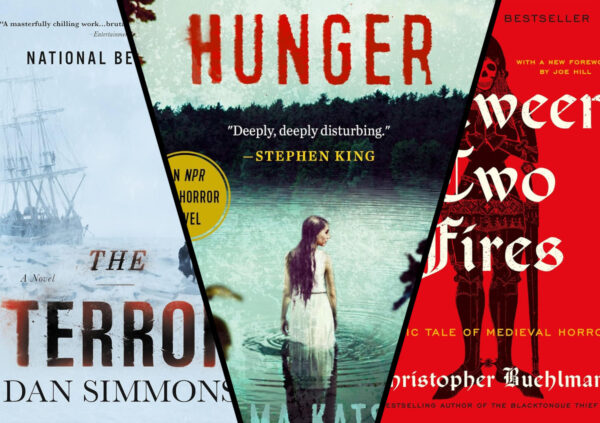
Read The Hunger. It’s the Donner Party novel, it was a Bram Stoker finalist, and Stephen King called it deeply, deeply disturbing.
Then The Fervor if you want the most serious one, or The Deep if the Titanic appeals.
The Alma Katsu Books in Order
| Year | Book | What it is |
| 2011 | The Taker | Immortality trilogy begins |
| 2012 | The Reckoning | Taker trilogy |
| 2014 | The Descent | Taker trilogy ends |
| 2018 | The Hunger | The Donner Party, the one |
| 2020 | The Deep | Titanic and Britannic |
| 2021 | Red Widow | Spy fiction, no ghosts |
| 2022 | The Fervor | The internment camps |
| 2022 | The Wehrwolf | WWII novella |
| 2023 | Red London | Spy fiction |
| 2025 | Fiend | Contemporary, the demon ledger |
Where to Start
Read The Hunger, and read the historical chapters as carefully as the supernatural ones, because that’s where the book lives.
If it works, read The Fervor, which is the better novel and the less famous one.
The Deep if maritime disaster appeals. Red Widow if you’d rather have the spy fiction.
And approach the Alma Katsu books expecting well-researched history with a supernatural element restrained enough that you’ll spend most of each novel unsure whether it’s there at all.
The Life, Briefly
Three decades in American intelligence, at the NSA and the CIA and later as a senior analyst at RAND, mostly on technology and what comes next, which is a background no other horror writer on this site can match.
The fiction began while she was still inside: the Taker trilogy was written around a full-time intelligence job. The historical horror that made her name came after the career wound down, and the spy novels arrived once enough time had passed to write about the trade honestly.
The family history is in the work too. Her mother is Japanese, her husband’s family was held in the camps, and The Fervor is the book where the method and the family history meet.
The Historical Horror
The Alma Katsu books she’s known for, and the method is identical across all three: take a documented American disaster, research it exhaustively, and add one thing.
The Hunger (2018)

The Donner Party, 1846, on the trail west, with something following them.
The research is what you’ll remember. The party’s internal politics, the disastrous decision-making, the specific personalities and their grudges all come from the historical record, with figures like Charles Stanton and the Donner and Reed families walking straight out of the documentation, and the novel is very good on how a group of ordinary people talked themselves into every wrong turn.
The supernatural element stays held back a long time, and it runs deliberately ambiguous for most of the book, so that you spend a couple of hundred pages unable to separate what’s happening from what starvation and exhaustion would produce anyway.
The reception made her a horror writer for good: Publishers Weekly hailing “this brilliant retelling of the ill-fated Donner Party,” Bram Stoker and Locus Award finals, an NPR best-horror listing, the King endorsement. Kirkus filed the one famous dissent, “two-thirds of a terrific book,” arguing the final act underdelivers, and plenty of readers think the two-thirds are worth it alone. It remains the consensus entry point and the book the others get measured against.
Also on historical horror and cannibal books.
The Deep (2020)

Two ships, four years apart. The Titanic in 1912 and the Britannic, her sister, sunk in 1916 while serving as a hospital ship.
Annie Hebbley is a stewardess on the first and a nurse on the second, and something followed her.
The research is the reason to read it. Katsu works from the real passenger list, and Madeleine Astor, Benjamin Guggenheim, W. T. Stead and Dorothy Gibson are all characters doing things they documentably did. The spiritualist material on board comes from Stead’s actual obsession with it, and he really did die on the ship.
The horror stays deliberately ambiguous for most of its length. Annie is an unreliable narrator, she has been in an asylum, and every supernatural event comes with a psychiatric reading available.
The general verdict makes it her most atmospheric novel and her least frightening, and Kirkus said it precisely: “carefully researched and meticulously crafted historical fiction fused with ho-hum horror.” It still made the Stoker finals, the Britannic sections beat the famous ship, and readers who want the disaster more than the ghost love it anyway, because the sinking is rendered minute by minute.
The Fervor (2022)

Idaho, 1944. Meiko Briggs and her daughter Aiko are in the Minidoka internment camp, where over nine thousand Japanese Americans were held, and an illness begins spreading through the barracks that makes people violent.
The history is the substance, and Katsu is unsparing about it. The camps were real, the conditions are documented, and the novel spends as much time on the administration, the loyalty questionnaire and the recruitment of internees into the army as on the outbreak.
The folklore is jorōgumo, the spider yōkai, and Katsu ties it to Japanese American experience rather than importing it decoratively.
There’s also a balloon bomb thread, drawn from the actual Japanese fūsen bakudan campaign, which killed six people in Oregon.
The internment is family history for Katsu, on her husband’s side.
The rough agreement runs that the historical material outweighs the horror and that the ending is rushed, and it’s her angriest book. The reviews split along exactly that line: NPR suggested it might be her best book and Publishers Weekly told horror readers wanting “sharp social commentary” to snap it up, while Kirkus found it “admirable in its aims but needed more finesse.” It made the Stoker finals and took an International Thriller Writers nomination, which is a strange and fitting pair of shelves.
Fiend (2025)

The newest one, published in 2025, and her first fully contemporary horror novel.
The Berishas are an Albanian-American family who built an empire out of nothing, and the patriarch, Zef, demands absolute loyalty from his three grown children as the question of succession opens up. The family story is that the money came from work. The truth is that the family fortune has something underneath it, a bargain that has been collecting interest for generations, and the heirs are about to learn what servicing it costs.
Publishers Weekly made the comparison official, calling it “a supernaturally charged Succession that will have readers hooked,” and Booklist recommended it to the horror-curious. The reader reception has genuinely split anyway: those wanting the horror up front find the first half heavy on family maneuvering, and those who stay report that the back half pays it off.
It’s also the same method as ever, just aimed at the present: take a documented American story, here immigrant money and dynastic rot, and ask what one supernatural fact would explain.
The Wehrwolf (2022)

A novella, published as an Amazon Original, and the leanest thing she has written.
Germany, 1945. The war is lost, the Allies are closing, and in a small village a man named Uwe joins the last-ditch partisan effort the regime named Werwolf. The novella takes the name literally, and what Uwe becomes part of is older than the war.
An hour’s read, built on the real, failed Nazi insurgency program, and it does the whole Katsu method in miniature: documented history, one addition, no mercy. It is also, quietly, the decorated one: it won the Bram Stoker Award for long fiction, her only Stoker win across three novel nominations, and made the Shirley Jackson shortlist besides.
The Rest
The Taker trilogy (2011 to 2014)

Her first books, published from 2011, and they aren’t horror in the way the later novels are.
Lanny gets brought into a hospital in Maine having confessed to a murder, and tells the doctor she’s over two hundred years old, and the novel goes back to Maine in 1817 and to a man called Adair who made her what she is.
It’s a historical romance with immortality in it, running across two centuries and several countries, and the register sits closer to Anne Rice than to anything else Katsu has written.
The Reckoning and The Descent follow, and the third takes Lanny into a version of the underworld.
They sold well, Booklist named the first one of its top ten debuts of 2011, and they’re the books her later readers are most surprised by. Katsu has been open that she wrote them while working full time at the National Security Agency, and that the shift to historical horror came afterwards.
Read them only if the later novels have worked on you, or if two centuries of obsessive, destructive love sounds like a feature rather than a warning.
Red Widow (2021)

The spy novel she was always going to write eventually, and it draws on the career directly.
Two women in the CIA’s Russia division. Lyndsey Duncan gets brought back from suspension to find a mole after an asset is killed in Moscow, and Theresa Warner is a widow whose husband died on an operation that went wrong.
The tradecraft is the appeal, and it’s entirely unglamorous. The novel is about internal politics, career damage, security clearances and the specific way a bureaucracy protects itself, written by somebody who sat in those rooms for decades. The New York Times made it an Editors’ Choice for plotting “sophisticated and laced with surprises,” and the Washington Post reached for The Americans as the comparison. No supernatural content, and the institutional detail beats almost anything in the genre.
Red London (2023)

The sequel, and the bleaker of the two. Lyndsey is sent to London, into the world of exiled Russian money, to cultivate the wife of an oligarch as the sanctions close in.
The marriage-as-asset material is the strongest thing in it, and the ending is pure Katsu: nobody gets out with everything. Kirkus called it “a strong second installment in a series we hope continues,” and Publishers Weekly put it plainly: “Katsu knows her tradecraft.”
Read Red Widow first. The pair work as one story.
Alma Katsu: Deep Dive and FAQ
What Runs Through the Books
The archive is the monster’s accomplice. Every Katsu novel starts from documentation, passenger lists, trail diaries, camp records, and the horror is granted only the space the record leaves blank. It’s the opposite of the usual historical horror move, where the past is a costume. Here the past is the evidence.
Institutions fail the people inside them, on schedule. The wagon company, the shipping line, the War Relocation Authority, the Agency, the family firm: in every book the organizing structure makes the catastrophe worse while insisting it is handling things. Three decades inside the real ones taught her exactly how that sounds.
And the supernatural explains rather than invades. The one added element is always an answer to a documented mystery, why the party fractured, why the ship felt wrong, what the fortune cost, which is why readers come away unsure where the history stopped. That uncertainty is the house specialty.
On Screen
Nothing has reached a screen yet, but The Hunger came close before it was even published: Fox picked it up with Luke Scott attached to direct back in 2016, and the project went quiet the way most of them do. Given that every book since is built like a limited series pitch, the drought probably doesn’t last.
Questions About the Alma Katsu Books
Is the Hunger Based on the Real Donner Party?
Closely. The route, the timeline, the families and most of the named characters come from the historical record, and the liberties are deliberate and disclosed. The horror is an interpretation laid over documented events, which is the whole method.
Do I Need to Read Alma Katsu in Order?
No. The three historical horror novels stand completely alone, and so does Fiend. Only the Taker trilogy and the two spy novels are internally sequential.
Is Fiend Like Her Other Horror Novels?
Same method, different century. It trades the archive for the present day, and the pacing is more family drama than survival story, which is exactly what divides its readers.
Which Alma Katsu Book Is the Scariest?
The Hunger, by consensus, because the history carries half the horror before the monster does anything. The Fervor is the angriest and The Wehrwolf the most compact, and The Deep trades scares for atmosphere.
Are the Spy Novels Worth It for a Horror Reader?
If institutional dread counts, yes. They scratch the same itch as her horror, with the bureaucracy as the monster, but anyone wanting the supernatural should stay with the historical novels.
Where to Start
The whole shelf is ranked on my best horror books list. Her books all sit on my historical horror list, which has the rest of that shelf, and the hungriest of them keeps company on the cannibal books list.