Anne Rice changed what a vampire was allowed to be, and the genre has never entirely recovered.
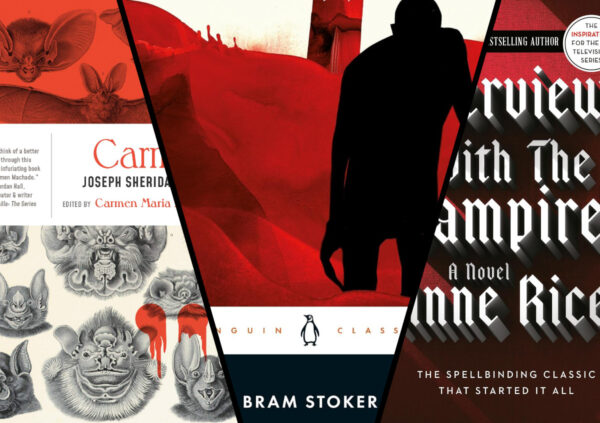
Before Interview with the Vampire in 1976, the vampire was a predator with an aristocratic accent. Stoker’s Dracula barely speaks. Matheson’s are diseased animals. Rice put the narration inside one, gave him two hundred years of regret, made him beautiful and articulate and desperately unhappy about what he was, and sold enormously. Everything sympathetic and erotic in modern vampire fiction, including a great deal that she would have found embarrassing, descends from that decision.
The other thing worth knowing before you start is that she wrote a great deal, in several modes, and the quality varies more than almost any comparable career. There are four or five genuinely excellent Anne Rice books and about twenty-five that are not, and the difference is usually whether she had an editor she’d listen to.
She died in 2021. This is a guide to what’s worth your time.
I haven’t read these. What follows is the critical consensus.
Fiction by René Rehn


The Short Version
Read Interview with the Vampire. It’s the one that mattered and it holds up.
Then The Vampire Lestat, which most long-term readers consider the better book.
Then The Queen of the Damned if you’re committed, and Cry to Heaven if you’d rather see what she could do outside the genre.
The Vampire Chronicles
The Anne Rice books that made her, and the arc runs from a small grief-driven novel to a mythology with a governing council.
Thirteen novels, and the first three are the ones that count.
Interview with the Vampire (1976)

Louis de Pointe du Lac tells his life to a journalist with a tape recorder over the course of one night in San Francisco.
He was made in 1791 in Louisiana by Lestat, who wanted his money and his company. He spends the next two centuries miserable about it, and the novel is largely a record of that misery: the killing he can’t stop doing, the child he and Lestat make into a vampire and who never grows, and the eventual search for others of their kind in Europe.
Rice wrote it the year after her five-year-old daughter died of leukemia, and Claudia, the child who cannot age and is trapped in a body she outgrows mentally, is not a subtle piece of grief. Knowing that changes the book substantially.
It’s slower, sadder and more static than its reputation suggests, and the prose is heavily perfumed. It’s also the single most influential vampire novel since Dracula. More on vampire books.
LINK /books-and-media/horror-literature/interview-with-the-vampire/ Rice’s 1976 novel: Louis, Lestat and Claudia, the film and the AMC series, and the anniversary edition.
The Vampire Lestat (1985)

Nine years after Interview, and it’s the book that turned a novel into a franchise.
Lestat has been asleep under a New Orleans house since 1929. He wakes in 1984, reads Louis’s book, is furious about how he was portrayed, becomes a rock star, and writes his own account to correct the record.
That’s the structure, and it’s a genuinely clever piece of construction. The reader has spent a novel accepting Louis’s version, in which Lestat is shallow, cruel and stupid, and this one demonstrates that Louis was an unreliable narrator with an axe to grind.
It also builds the mythology. Lestat goes back to eighteenth-century France, then to Marius in Venice, then to Those Who Must Be Kept, and Rice supplies a full history running to ancient Egypt.
Readers divide exactly here. Some think this is where the series became interesting, and others think the mythology is what killed it, because a vampire with a documented origin is less frightening than one without.
The Queen of the Damned (1988)

The third book, and the one where the mythology takes over completely.
Akasha, the six-thousand-year-old mother of all vampires, is woken by Lestat’s music and decides to intervene in human affairs. Her plan is to kill almost every man on earth in order to end war, and to be worshipped as a goddess by the women who remain.
That is either the most ambitious thing in the series or the point at which it stops being horror, and both readings are defensible.
The structure is the problem and the appeal. Rice runs a dozen viewpoint characters across several millennia, including the twins Maharet and Mekare, whose story occupies a substantial portion and is the best material in the book, and the vampire plot is repeatedly suspended for it.
Nobody in this novel is frightened of anything, which is the fair criticism.
It sold enormously and completed the arc, and the six books that follow are where the series is generally agreed to decline.
The Witches
The second series, and the one her serious readers argue is better.
The Witching Hour (1990)

The first of the Mayfair Witches, and several readers consider it her best book.
Rowan Mayfair is a neurosurgeon in San Francisco who does not know she was adopted. Michael Curry is a contractor who nearly drowns and comes back able to see a person’s history by touching them. And in New Orleans there is a house on First Street occupied by a family of witches, thirteen generations of them, and by Lasher, who has been attached to the family since the seventeenth century.
The reason it works is the Talamasca file. Roughly a third of the novel is a scholarly history of the Mayfairs, compiled by a secret order of investigators, running from Scotland through Haiti to Louisiana, with sources and hedged conclusions, and it’s the best sustained thing Rice wrote.
Lasher is a genuinely disturbing creation because his relationship with the family is a courtship conducted across centuries.
It runs a thousand pages, and the two sequels are considerably weaker.
Outside the Genre
The Anne Rice books with no supernatural element at all, which is where the research and the prose are at their best and where the sales were worst.
The books that show what she could do when she wasn’t writing vampires, and which almost nobody reads.
Cry to Heaven (1982)

Not horror at all, and the best-written novel she produced.
Venice and Naples in the eighteenth century, and the subject is the castrati: boys castrated before puberty to preserve the voice, trained in conservatories in the south, and turned into the most celebrated performers in Europe.
Tonio Treschi is a Venetian nobleman’s son who is taken, cut and sent to Naples, and the novel follows him through the training and onto the stage while he plans what to do about the family that ordered it.
The research is the reason it lasts. Rice worked the practice out properly, the physiology, the economics, the conservatories, the fact that thousands of boys were cut and only a handful became stars, and the rest simply lived with it.
She wrote it between Interview and Lestat, it sold badly, and she has said it is the book she was proudest of.
If you want to know why she was taken seriously before the franchise, read this.
The Feast of All Saints (1979)

New Orleans before the Civil War, and the subject is the gens de couleur libres, the free people of color who occupied a legal and social position that existed nowhere else in the United States.
They were free, they held property, several were wealthy, many were educated in Paris, and they were not white, and Louisiana law and custom placed them in a category with its own rules about marriage, inheritance and what a person could become.
Marcel Ste. Marie is fourteen at the start, the son of a white planter and a free woman of color, and he wants to be educated and to become something, and the novel is about the ceiling.
Rice researched it thoroughly and the plaçage system, in which white men entered formal arrangements with free women of color, is handled without either romance or condemnation.
It was her second novel, it sold poorly, and it’s the least read thing she wrote. It was adapted for television in 2001.
The Mummy, or Ramses the Damned (1989)

Written as a television serial that was never made, and it reads like one, which is either the appeal or the problem.
Ramses II drank an elixir of immortality three thousand years ago and cannot die. He has slept through the centuries in tombs and been woken repeatedly, and in 1914 an English archaeologist finds him in Egypt and dies, and Ramses wakes in London in the care of the man’s daughter Julie.
He is not a shambling bandaged thing. Instead, he is enormously charming, physically perfect, permanently curious, and delighted by the twentieth century, and much of the novel is him enjoying motor cars and department stores.
Then they go to Egypt and he finds Cleopatra, whom he loved and refused to give the elixir to, and brings her back badly.
It’s fast, pulpy and considerably lighter than her vampire work, and Rice clearly enjoyed writing it.
Ramses the Damned: The Passion of Cleopatra followed in 2017, co-written with her son Christopher.
The Late Work
Two things happened and the second undid the first.
In 1998 Rice returned to the Catholicism she had left at eighteen, and in 2002 she announced she would write only for Christ. The result was Christ the Lord: Out of Egypt (2005) and Christ the Lord: The Road to Cana (2008), narrated by Jesus in the first person, and they are serious novels with real research behind them.
Then in 2010 she announced on Facebook that she was leaving Christianity while remaining committed to Christ, citing the church’s positions on homosexuality, women and birth control. Her son Christopher is gay and she had been a vocal supporter for years.
Afterwards she returned to the vampires. Prince Lestat (2014) and its two sequels reorganize the whole mythology around a governing council, and few readers argue they’re more than minor.
The Wolf Gift (2012) is the werewolf novel and Blood Canticle (2003) is the one where the Mayfairs and the vampires merge, which almost nobody wanted.
She died in 2021.
Where to Start
Read Interview with the Vampire, and go in expecting something slower and sadder than the film.
If it works on you, read The Vampire Lestat immediately, because it’s the better book and it reframes the first one.
If it doesn’t, read Cry to Heaven instead, and find out that she was a considerably better writer than the Anne Rice books she’s remembered for suggest.
And stop after the third Chronicle unless you’ve fallen in love with the world, which plenty of people have.
My best horror books list ranks the rest of the genre. The shelf she rebuilt single-handed is on my vampire books list.