Comedy and horror run on exactly the same machinery, which is why comedic horror works and why it is so easy to get wrong.
Both depend on timing, both depend on the reader not seeing the next beat coming, both build tension and then release it, and the only difference is whether the release is a laugh or a scream. Writers who understand that produce comedic horror that genuinely unsettles. Writers who do not produce a spoof, and a spoof is not horror.
The best comedic horror splits into two kinds and it is worth knowing which you want.

Books that are funny until they aren’t. The comedy is a trap. You settle in, you relax, and somewhere around the midpoint the floor goes. Grady Hendrix has built a career on this and Mona Awad does it with a scalpel.
And books that stay funny throughout. The jokes never stop, the horror is real anyway, and the tension comes from the gap between the tone and the content. Christopher Moore and Jason Pargin work this way.
Neither is better. They are different experiences, and most disappointment with comedic horror comes from expecting one and getting the other.
Some of these I have read. I have said which.
Fiction by René Rehn


The Ancestor
The Canterville Ghost (1887)

The first comic ghost story in English and still one of the best, and Wilde wrote it in 1887 as a joke at the expense of both nationalities.
An American minister buys Canterville Chase, is warned about the ghost, and buys it anyway on the grounds that ghosts do not exist and that if they did somebody would have put one in a museum. Sir Simon de Canterville has been haunting the place successfully since 1584.
The comedy is that the family are unimpressible. The bloodstain on the library floor is removed with Pinkerton’s Champion Stain Remover. The clanking chains are met with a bottle of Tammany Rising Sun Lubricator. The twins set traps for him. Sir Simon, who has frightened people to death for three centuries and is proud of his best work, becomes progressively more distressed and eventually stops trying.
Then the last section turns and Wilde plays it entirely straight, and Virginia’s scene with him about what he actually wants is genuinely moving.
Free everywhere, forty pages, and the model for everything on this page.
Funny Until It Isn’t
Comedic horror that spends its first half making you comfortable, and then stops. These are the ones that catch people out.
My Best Friend’s Exorcism (2016)

The friendship dates to age ten, to the roller-skating birthday party nobody attended except one girl: Gretchen came, and Abby never forgot it.
Charleston, 1988, both of them sixteen. One night at a lake house there’s acid, Gretchen walks into the trees alone, and the girl who walks back out isn’t right.
The comedy runs on period texture that Hendrix observed rather than looked up, and that gap separates affection from pandering. Mixtapes, E.T. bedsheets, a Christian aerobics ministry, the particular cruelty of a girls’ school economy built on reputation, chapters all titled after eighties songs. He grew up in that world, and every page says so.
Then the final third drops the jokes entirely. Whatever occupies Gretchen moves through the friend group with intent, and the eating-disorder thread, and how the school handles it, lands genuinely bleak.
When an exorcist finally shows up, he’s a bodybuilding evangelist running a ministry out of a van, played completely straight, and it’s the smartest call Hendrix makes.
More on the Grady Hendrix page.
The Southern Book Club’s Guide to Slaying Vampires (2020)

Early-nineties Charleston. Patricia Campbell hosts a book club with four other women who read true crime because it is the only thing that holds their attention after a day of managing husbands and children.
Then a man named James Harris takes a house nearby, and over in Six Mile, the Black community the club’s social circle treats as out of view, children begin to die.
The comedy is the social observation and it is very sharp: the casseroles, the garden club, the husbands’ careers at the bank, the specific etiquette of a Charleston street.
The tonal switch is the sharpest on this page. There is an attic, and there are rats, and a stretch of pages many readers need to walk away from, and it arrives without warning.
But the worst scene needs no vampire. Patricia reports what she has seen; her husband convenes the other husbands, seats her in her own living room, and medication is arranged. The model, Hendrix has said, was his own mother’s book club, and her name is on the dedication page.
Bunny (2019)

Samantha Heather Mackey is on a fully funded MFA in fiction at Warren University, and there are five people in her cohort. The other four call each other Bunny, dress alike, hold hands, and finish each other’s sentences.
The first half is workshop satire and it is vicious. The feedback vocabulary, the praise for work nobody has read, the faculty, the terminology, and the specific social violence of a seminar room where everybody is being nice. Awad did an MFA and it is very clear that she is settling something.
Then a Smut Salon invitation arrives, Samantha attends, and what the Bunnies practice there is no figure of speech. The midpoint pulls the floor, satire hands over to body horror for good, and the sentences warp to match.
Underneath sits Awad’s real charge: the program is a machine for manufacturing a person, and the aesthetic is the bait.
Deliberately grotesque, extremely funny, and divisive in a way that seems entirely intentional.
More on dark academia.
Horrorstör (2014)

I’ve read this one, and of everything I’d point anybody at here, it’s the weakest, which is worth saying up front because the concept is superb.
Orsk is a furniture superstore in Cleveland, a fully legally distinct competitor to IKEA, and something is happening overnight: broken furniture, graffiti, a smell. Amy and four colleagues volunteer for an overnight shift to find out.
The comedy is the object rather than the prose. The book is designed as an Orsk catalog, with a floor plan, order forms, and a product illustration opening every chapter, and the products degrade as the night goes on, from a wardrobe to a restraint chair. That gag is genuinely funny, and it’s the reason to own the physical book.
The building was a prison before it was a store, and the warden’s method of correction is what has survived.
The novel underneath the design is conventional and the characters are thin. Buy it for the artifact and do not expect the prose to match it.
Cackle (2021)

When a decade-long relationship collapses, Annie relocates to teach English in a small upstate New York town, where she is adopted almost on arrival by Sophie: beautiful, rich, loved by everyone, mistress of a big house, and a witch.
The joke is how long nothing goes wrong. Sophie’s kindness holds. The town adores her. Every offer is real. By any measure Annie’s life gets better, and all the tension lives in one question: would taking it all really be so terrible?
What Harrison writes is the misery of a thirtysomething whose whole self was built around a man now gone, with humor that works by recognition instead of jokes.
Spiders also feature, in quantity and lovingly described, and they’re the single warning this book requires.
Fable sits closer than horror novel, and the ending divides readers by refusing to punish a single person. Those who love it name that refusal as the reason.
More on the Rachel Harrison page.
Funny the Whole Way Through
John Dies at the End (2007)

It started as a web serial that Pargin posted a chapter at a time on his own site in 2001, then a print-on-demand book, then a proper publication, then a film, and it is still the funniest horror novel of the century.
David Wong and his friend John take a drug called soy sauce that is not a drug, and afterwards they can see things. There is a monster made entirely of frozen meat. There is a door in a Las Vegas shopping mall that opens onto somewhere else. And there is a dog called Molly who may be the most competent character.
The comedy is scatological, relentless and considerably smarter than it looks, and the structure is deliberately shambolic in a way that mirrors what the sauce does to time.
Underneath it is a genuinely bleak book about two young men in a dying Midwestern town with no prospects and nothing to do, and Pargin has been open that the humor is a coping mechanism rather than a style.
Filmed in 2012 with Paul Giamatti. The sequels get progressively more serious.
More on the Jason Pargin page.
A Dirty Job (2006)

Charlie Asher is a second-hand shop owner in San Francisco and a self-described Beta Male, and his wife dies giving birth to their daughter. Then he starts seeing names appear in a ledger, and objects glowing red, and he works out that he has been conscripted as a Death Merchant, whose job is to collect the soul vessels of the dying before something else does.
The comedy is Moore’s usual mode, which is farce built on a foundation of genuine grief, and this is the best example of it. Charlie is a hypochondriac widower raising a baby alone while doing an unpaid supernatural job he never agreed to, and the novel is very funny about all of it.
The supporting cast is where he is strongest: two Emperor characters, a sister, a Goth shop assistant, and hellhounds who are entirely benign and enormous.
The Morrigan in the sewers are the actual horror and Moore does not soften them.
Secondhand Souls continues it. Read this first and read it after a bereavement rather than before.
The Last Werewolf (2011)

Jake Marlowe is two hundred and one years old and the last werewolf alive. WOCOP, the organization that has spent a century hunting his kind, has one left to kill, and Jake has decided not to make it difficult, because he is bored and has been for about eighty years.
The comedy is the voice. Jake is erudite, filthy, exhausted and very funny, and the novel is narrated as a journal by a man who has read everything, slept with everybody, and can no longer taste anything.
Duncan writes the transformation and the eating in enormous sensory detail and does not apologize for either, and the book is explicit about sex to a degree that surprises people who came for the literary reviews.
Then something happens in the second act that gives Jake a reason to live, and the novel becomes a thriller, and readers split on whether that is the payoff or the point where it stops being interesting.
The prose is genuinely good, the best-written thing on this page.
Also on monster books.
Meddling Kids (2017)

In 1977 four teenagers and a dog solved the mystery of the Sleepy Lake monster, unmasked a man in a costume, and got their photograph in the paper.
Thirteen years later one of them has killed himself, one is in a psychiatric institution, one is a wanted criminal, and one is a chemist trying not to think about it, and none of them believe the man in the costume was the whole story.
The comedy is the premise and Cantero commits to it entirely. This is Scooby-Doo with the joke inverted, and the novel then puts them back in the town and produces something Lovecraftian that the mask never explained.
The prose is the divisive part. Cantero writes in a deliberately unstable register that lapses into screenplay format, stage directions, and sentences that break their own grammar, and it is either exhilarating or exhausting. He is Catalan and English is his third language, which he has said is why he treats it as playable.
The dog is the descendant of the original dog and is the best character.
The Atrocity Archives (2004)

The Laundry is Britain’s agency for occult threats, and Bob Howard, freshly bumped up from IT support into active service, now faces field work plus the mandatory training course that comes with it.
Bureaucracy supplies the comedy, rendered with precision: demonology on the expense report, procurement demanding three quotes for any equipment, clearances and annual appraisals, a manager fluent only in acronyms, and no summoning of anything without the correct form.
Underneath sits a genuinely strong premise: magic belongs to applied mathematics, certain calculations draw notice from elsewhere, and computers therefore constituted a national-security emergency the state has been quietly containing since Turing’s day.
Stross is a former programmer and the office material is written by somebody who has sat in those meetings.
When the horror lands it lands for real, and the first book’s Nazi occult material runs nastier than the tone has prepared you to expect.
A dozen volumes deep now, the series darkens and sheds laughs as it advances, a trajectory most readers take as deliberate.
Johannes Cabal the Necromancer (2009)

Years back, Johannes Cabal traded his soul for the science of raising the dead; lately he has decided the missing soul is corrupting his results. Off to Hell he goes to reclaim it, where Satan offers terms: one hundred souls collected inside a year, with a traveling carnival thrown in as the collection apparatus.
Tone does the comic work. Cabal is a monster without repentance, and simultaneously a fastidious professional whom incompetence offends, and the book weighs his moral atrocities and his administrative irritations on precisely the same scale. He is closest to a Wodehouse character who happens to reanimate corpses.
His brother Horst is a vampire, considerably nicer than he is, and the sibling relationship is the warm part.
Howard’s Hell is bureaucratic and the paperwork jokes are excellent, and the carnival gradually becomes genuinely sinister as Cabal works out what the crew are actually for.
The series runs to five novels and the later ones lean harder on the comedy. This is the best one.
The Lesser Dead (2014)
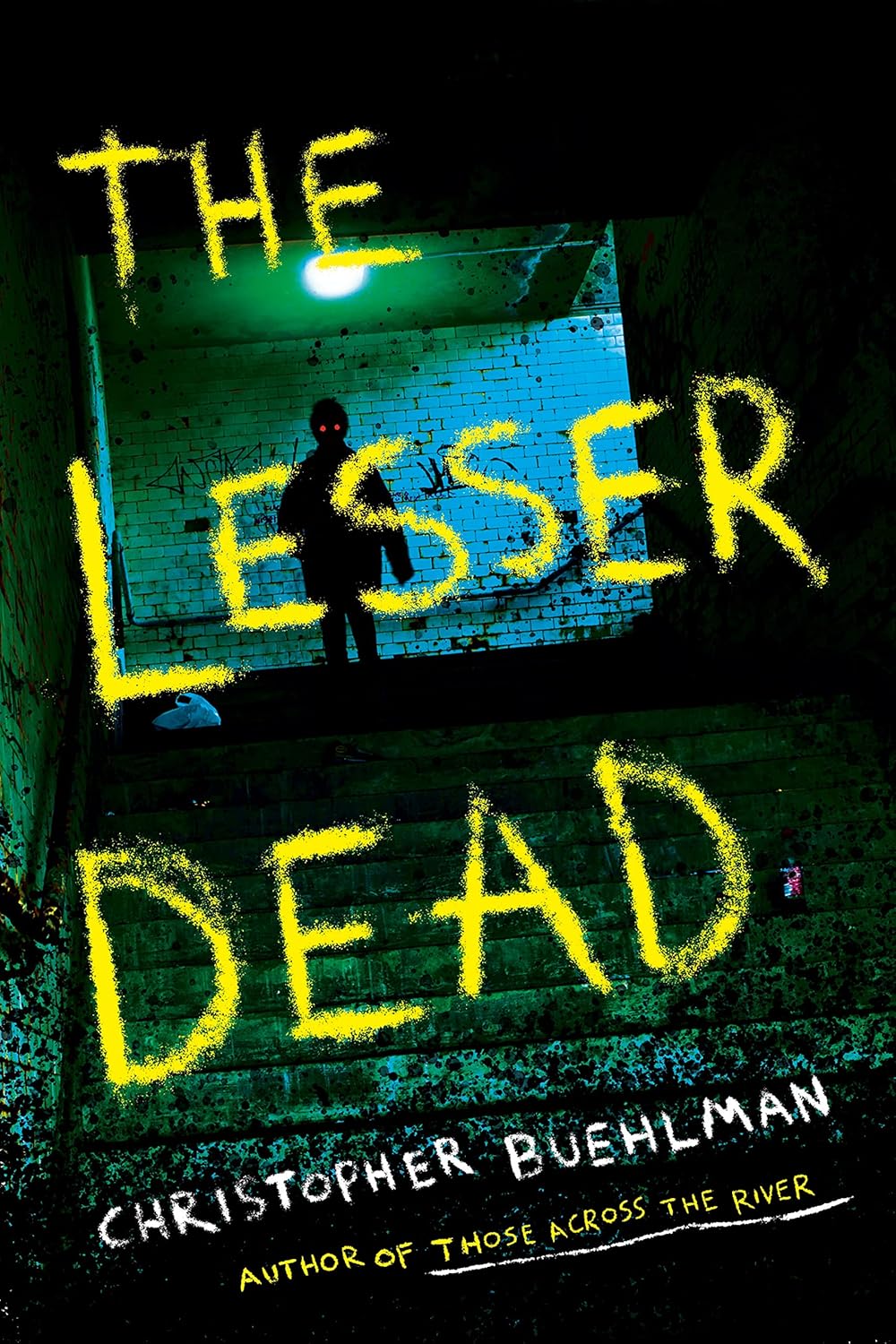
New York, 1978. Joey Peacock has been nineteen since 1933, lives in the abandoned subway tunnels under Manhattan with a small group of vampires, and is having a wonderful time.
The comedy is entirely Joey’s voice. He is charming, vain, a compulsive liar and enormously entertaining, and he narrates directly to the reader, addressing you, flattering you, and telling you what the seventies were like when you could ride the subway all night and feed on people nobody would miss.
Buehlman’s vampires are unglamorous and practical. They have rules about who they can take, they manage the police, they have a hierarchy and a leader who is genuinely frightening, and the tunnel economy is worked out properly.
Then children start appearing in the tunnels, and the tone changes completely, and the last third is the nastiest thing Buehlman has written.
There’s also a fact about Joey’s narration that reframes the entire book, and it’s why people press it on each other. Go in knowing nothing.
More on the Christopher Buehlman page.
Anno Dracula (1992)

Van Helsing failed, the Count wed the Queen, and biting is now a career move for half of London society, with the Prince Consort running the country from the Palace. Meanwhile somebody in Whitechapel is murdering vampire prostitutes, and the government mostly minds the optics.
Population supplies the comedy: Newman casts from Victorian novels, the penny dreadfuls, later horror and history itself, hundreds of unlabeled walk-ons arriving mostly at awkward moments, with the annotated editions’ checklist best saved for a second read.
Beneath the game sits a straight-faced counterfactual about establishments and monsters: accommodation beats losing position, every time.
The Ripper thread runs straight-faced, and the identity Newman selects remains among fiction’s better solutions.
Several sequels follow and the first is by far the best.
The Zombie Comedies

A small corner of comedic horror, and two of them are genuinely good.
Breathers: A Zombie’s Lament (2009) by S. G. Browne is a support group for the recently returned, told from inside, and it is much sadder than the premise promises.
Warm Bodies (2010) by Isaac Marion is the romance one, written better than it had any need to be, on that everyone agrees.
Where to Start
If you want funny-until-it-isn’t, read The Southern Book Club’s Guide to Slaying Vampires, and be ready for the rats.
Read John Dies at the End or A Dirty Job, if you want funny throughout, depending on whether you want cosmic horror or grief.
If you want the best-written, read The Last Werewolf.
And read The Canterville Ghost at some point, because it is free, it takes an hour, and everything on this page is descended from it.
Everything else worth reading is on my best horror books list. Grady Hendrix is the writer doing most of this on purpose right now.