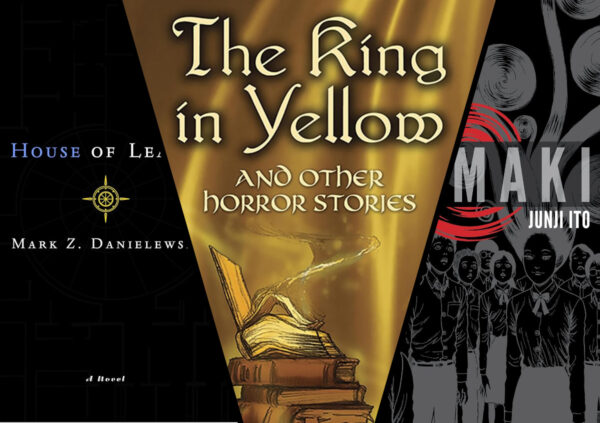
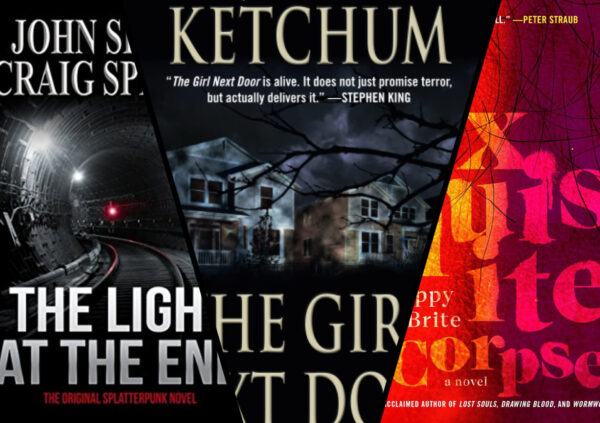
Extreme horror has got popular in the last ten years, and most of what has come with that is not good.
That is the honest starting position for this page. The self-publishing boom made the category enormous, a small press can put out a book in a fortnight, and a great deal of what sells well is a premise, a body count, and nothing underneath. The lists that rank by sales reflect that, and I am not interested in writing one.
So the standard here is the same one I apply everywhere on the site. Is there something under the disgust? Not whether a book is difficult, or whether it goes further than you expected, but whether the difficulty is doing work. Plenty of extreme horror clears that. Plenty does not, and some of the books that do not are the best-selling things in the category.
There is a section near the end called popular books that didn’t work for me, and it names names.
One note on what this page covers. Extreme horror and splatterpunk are not synonyms. Splatterpunk was a movement with a stated position that ran from about 1980 to 1996 and then ended. Extreme horror is what carries the name now, and it is a market category rather than a manifesto. The relationship is ancestry.
More on splatterpunk for the movement itself.
Fiction by René Rehn


A Word About the Content
Everything on this page contains material that a lot of readers will not want. Sexual violence, torture, and in several cases violence against children.
I am not going to put a warning on every entry. The category is the warning. What I will do is tell you when a specific book goes somewhere the rest of the list does not, and I have left several well-known titles off entirely rather than recommend them with a caveat attached.
If you are new to this and want to know where the floor is, start at the bottom of this page rather than the top.
Where the Modern Scene Came From
The movement ended in the mid-nineties and the label went with it. What followed was about twenty years with no name, no awards and no institutional presence of any kind, kept alive commercially by Leisure Books and later by Deadite Press, and by a handful of writers who carried on while nobody was watching.
That period matters because everything below is downstream of it, and because it explains the shape of the modern scene. Extreme horror came back through small presses and self-publishing rather than through mainstream houses, which is why the quality control is so uneven and why the good books and the worst ones sit on the same shelf with the same cover design.
Three Books Cover It.
The Rising (2003)

Brian Keene’s debut, and I should be straight about why it is here.
Zombie novel first: Keene’s dead carry the Siqqusim, demons who waited outside creation for bodies, so these corpses drive, shoot, talk, lie, lay ambushes, and take animals too, leaving no corner of the world neutral. When a phone call from his son in New Jersey reaches Jim Thurmond’s West Virginia bunker, the book becomes one father traversing a lost continent.
It belongs on an extreme horror page for two reasons. The content is genuinely extreme, considerably more so than the premise suggests. And Keene went on to co-found the Splatterpunk Awards with Wrath James White in 2017, which makes him the literal bridge between the wilderness years and the scene that exists now.
It won the Bram Stoker Award for first novel. The prose is rough and the invention is not, and the ending was hated enough that Keene later wrote an alternate one.
Cows (1998)

Matthew Stokoe, and the book proving the standard at the top of this page is achievable.
Steven lives with his enormous, abusive mother in a flat on the edge of an unnamed city, gets a job at a slaughterhouse, and falls in with a foreman who promises to make a man of him. His upstairs neighbor Lucy has an interest in the inside of living bodies. And at the plant, one of the cows starts talking to him.
The content is as bad as anything in this category and I am not going to itemize it.
What separates it is the prose. Stokoe writes genuinely well, in a register closer to Hubert Selby Jr. than to horror publishing, and the filth is rendered with the same care as everything else rather than dumped on the page. That is why it gets taken seriously: it is examined in Xavier Aldana Reyes’s Body Gothic, an academic study from University of Wales Press, which is not a sentence you can write about most of this list.
It is also genuinely divisive, sitting at well under three stars across sixteen thousand ratings, which tells you how many readers bounce.
Creation Books published it in 1998 and it was out of print and going for absurd secondhand prices for years. Akashic reissued it in 2011.
The Bighead (1997) and the Edward Lee Problem

Lee is the most important writer of that period and the one who makes this page hardest to write.
The Bighead is the standard reference point for how far extreme horror goes, and it is a book I have not read and am not going to. Sexual violence sustained novel-long, mutilation, the abuse of children, none of it quarantined into isolated scenes. Difficult passages would be the wrong description; difficulty constitutes the book. Those who have read it, Lee’s admirers among them, generally describe a built endurance test.
What makes him worth a section anyway is the rest of the catalog. Lee wrote a run of Lovecraft tributes in the late 2000s that are genuinely good, The Innswich Horror in particular, and he won the first Splatterpunk Award for Best Novel for White Trash Gothic.
The full case, including which books are which, is on the Edward Lee page.
The Awards, and What They Are Worth
The Splatterpunk Awards were founded by Wrath James White and Brian Keene in 2017 and first presented at KillerCon in 2018, honoring work published the previous year.
The process is worth knowing because it is not a popularity contest. Readers submit nominations, the top seven in each category form the ballot, and a rotating jury of critics and academics reads the shortlist and votes. That is why the winners list is considerably better than the bestseller list.
It is also the only vetting this category has ever had. Periods one and two have no prize record at all, which tells you something about the subgenre’s relationship with institutions, and it is why the older books on this page are here on influence rather than on any award.
The J. F. Gonzalez Lifetime Achievement Award has gone to David J. Schow, Edward Lee, John Skipp, Clive Barker, Joe R. Lansdale and others, several of whom spent their careers refusing the label.
The Ones Worth Reading
The Bug Collector (2011)

I have read this one, and it models exactly what this page is looking for.
Nobody in the field writes fiction more physically extreme than Wrath James White, and this ranks with the most disgusting, over-the-top work he has. That is not the recommendation.
The recommendation is the backstory. Beneath the extremity runs a genuine working-through of trauma, of abuse, of sexuality bent out of shape, engaged properly rather than gestured at, and the two halves are not separable. The horror is not decoration on a serious book and the seriousness is not an excuse for the horror. They are the same material.
That is the distinction the whole category turns on, and White clears it more often than almost anybody at his level of intensity.
It lands in the middle of the scale for me. The prose is not the reason to read it and the argument is.
More on the Wrath James White page.
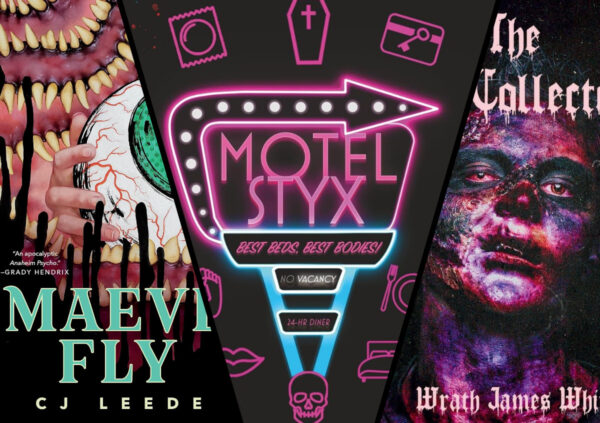
Motel Styx (2023)

I have read this, and of the modern extreme horror novels I’ve picked up, none beats it.
Johnathan Butcher and Michelle von Eschen wrote it together, and the premise is a motel, a mortuary and two people whose relationship to the dead is not professional. The subject matter is heavy in a way the description does not soften, and the book knows exactly what it is doing with it.
What separates it from most of the category is control. The unpleasantness escalates on a structure rather than a curve, the characters are people rather than delivery mechanisms, and Butcher can write.
A notch below perfect, which is the highest I have gone on anything in the modern extreme horror wave.
Rural Decay (2020)

Jason Nickey, and this is one of the most disturbingly messed up books I have read.
That is a genuine statement rather than marketing copy. It goes places the rest of this list does not, it is unrelenting about it, and if you want to know where the ceiling of the category is, this is a fair test.
The honest caveat is that the story is thin. There is not much holding it together beyond the escalation, the characters are functional, and it is a quick read in the way that a book with nothing to slow you down is a quick read.
A low grade from me, and it is on this page because the extremity is real and the page would be dishonest without an example of the category at its most unrestrained.
Go in knowing what it is.
The Black Farm (2016)

Elias Witherow, and this is a NoSleep classic before it is anything else.
The original story is “Feed the Pig,” and the novel expands it with a new protagonist called Nick. The lore is legitimately good, and it’s why you read it. The Black Farm is a place between Heaven and Hell where people who died by suicide go, ruled by the Pig, who has turned it into an afterlife of torture and murder populated by his own spawn. The Keepers are the highlight.
Two problems, and one is bigger than the other.
There is an extended torture sequence early on that runs for twenty to twenty-five pages, which is a long time.
And the book is not what it appears to be. I went in expecting a tight, disturbing, creepy afterlife story and the second half turns into splatterpunk action, with Nick fighting his way through the afterlife. That will be fun for some readers. It was not what I wanted from that premise.
A low grade from me. The world is better than the novel in it.
More on the best NoSleep stories.
Return to the Black Farm (2017)

More of the same, and harder.
The violence escalates considerably, including against child characters, and Witherow does not soften any of it. If the first book’s torture sequence was the limit of what you wanted, this goes past it repeatedly.
The register does not change, which is the actual problem. This is the same action-forward splatterpunk approach as the first book, applied to a world that has already been built, so the thing that made the original worth reading, which is the discovery of what the Black Farm is, is no longer available. What is left is the mode I did not want from the first one, running for the whole length.
The Pig is still a good creation and the afterlife still holds together. There is simply less reason to be in it.
If the first one worked for you, this delivers more. If the second-half turn was your complaint, this is that turn from page one, and it grades the same low mark.
Third Parent (2018)

Named after the NoSleep series and going considerably further than it.
The premise carries over. A mannequin-like man arrives, joins a family, and installs himself as their parent. The early sections are the best material in any of Witherow’s books: close to the original in shape, with different characters, extended, and frequently crueler, and it builds to the nastiest writing he has done, again involving a child.
Then it expands enormously, and Tommy Taffy is given a backstory, and that is where it goes wrong.
This is the general principle rather than a complaint about one book. Horror dies when you account for it, and the more thoroughly a figure like Tommy Taffy is explained the less he is worth. The finale is close to an anime fight.
Another low grade. Read the first half, and understand that the NoSleep original does the same idea in a fraction of the space and does not have to explain itself.
The Award Winners I Have Not Read
Consensus register for these, and they are on the page because the jury process described above makes the winners list worth taking seriously.
Maeve Fly (2023)

C. J. Leede, and it won Best Novel at the 2024 awards.
A young woman works as a princess at a Los Angeles theme park, lives with her dying grandmother, and is a serial killer. It is explicitly built against American Psycho, and the comparison is invited rather than imposed by reviewers.
It matters institutionally because Tor Nightfire published it, which makes it the one modern extreme horror novel to break into mainstream review coverage, and it was nominated for a Bram Stoker Award as well.
Reviewers converge on three points: exceptional Los Angeles material, a protagonist genuinely new to the category in Maeve, and transgressive content doing character work rather than escalation.
If you read one modern extreme horror novel, the record says it should be this.
The Old Lady (2024)

Kristopher Triana, and it won Best Novel at the 2025 awards.
Triana is the most decorated writer in the category, with wins in 2019, 2022 and 2025, and if there is a single modern name to follow it is his.
Full Brutal won his first, follows a teenage girl who decides to become as bad a person as she can and succeeds, and draws more argument from his readers than anything else.
The Night Stockers, written with Ryan Harding, won in 2022 and is a slasher set in a supermarket.
The consensus on all three is that Triana writes better prose than the category expects and that his protagonists are genuinely disturbing rather than simply violent.
I have not read him. He is the largest gap in my coverage of the modern scene.
Things Have Gotten Worse Since We Last Spoke (2021)

Eric LaRocca, and the book that carried extreme horror into general bookshops.
Two women meet in a Usenet-era chatroom in 2000 and the relationship escalates through instant messages and emails, which is the entire text of the novella. There is no narration.
It went viral on TikTok, sold in numbers nothing else in the category has managed, and got LaRocca reviewed in places that do not normally acknowledge this material exists.
Readers land on the same verdicts: the format carries it, the escalation is properly constructed rather than merely shocking, and a substantial share of the TikTok arrivals were not prepared for it.
More on the Eric LaRocca page.
True Crime (2021)

Samantha Kolesnik, and it won Best Novella at the 2021 awards.
A brother and sister leave a home where they have both been abused, and go on a killing spree across the American Midwest, narrated by the sister.
The framing is the idea. She has consumed true crime media her whole life, and she has a vocabulary ready for what she is doing before she does it, so the narration arrives pre-processed in the language of the genre that will eventually cover her. That is a genuinely sharp observation about what true crime does to the people who consume it.
The recurring verdicts: the voice makes it work, Kolesnik stands among the very few in the category doing something formally interesting with a narrator, and the abuse material never becomes decoration.
She also edited Worst Laid Plans, which won Best Anthology the same year, and she runs Grindhouse Press, which is one of the more serious small presses in the field.
Popular Books That Didn’t Work for Me
These are among the best-selling things in the category and I am not recommending any of them.
The verdicts here are mine rather than a general claim. Extreme horror is more subjective than most fiction, because tolerance varies enormously and because a book that does nothing for one reader is the best thing another has read all year. If you loved these, we disagree, and that is all that is happening.
What I am not doing is leaving them off silently. They are the books a reader is most likely to arrive having already been recommended, and saying nothing would be less useful than saying why.
Aron Beauregard
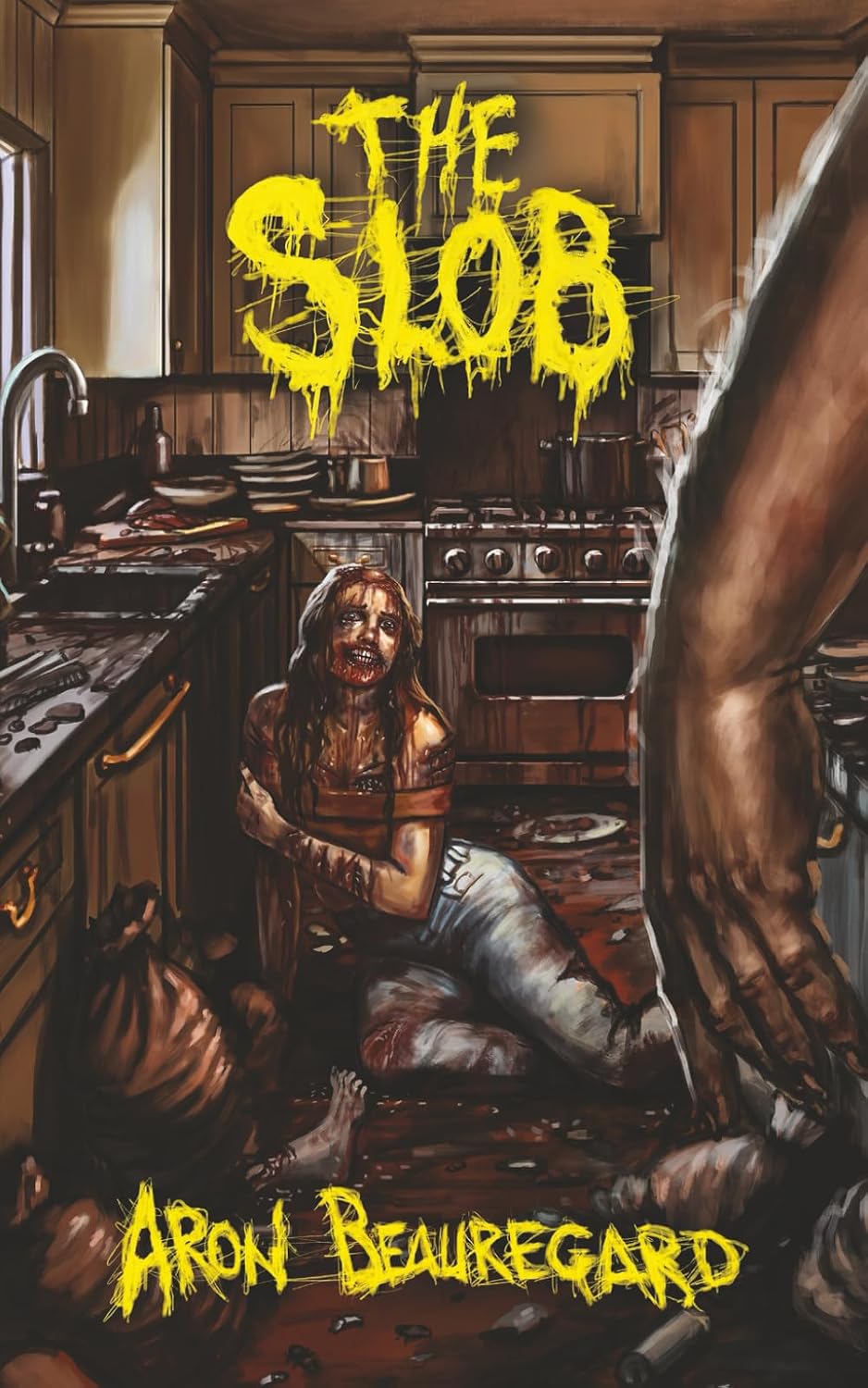
He is possibly the biggest name in modern extreme horror by sales, Playground won Best Novel at the 2023 awards, and I have read two of his and did not get on with either.
The criticism is specific and it is not that they are too extreme.
The trauma writing is genuinely serious. The Slob has real material in it about damage and family, and Son of the Slob has a broken-family dynamic that is well observed. Those parts work.
The horror is the problem. It is comically over the top, it does not connect to the serious material underneath it, and it reads as though it has been added because that is what the category sells. Two books with the same structural issue is a pattern rather than an off day.
It also goes so far past the point of excess that it almost reads as a satire of itself, and the first Slob in particular pushes the extremity to a level where it is difficult to take any of it seriously. That is a problem when the other half of the book is asking you to.
Both land low with me, and the trauma writing is why they are not lower.
Playground has the further problems of thin one-dimensional characters, antagonists who are comically deranged rather than frightening, and disgusting scenes with nothing underneath them. I also found it unengaging, which is the criticism that matters most, because a book like this failing to hold attention is worse than a book like this going too far.
He is not on this list by choice and not by oversight.
100% Match

Patrick C. Harrison III, and I absolutely did not enjoy it.
The frustrating part is that the ingredients are there. The narrative voice is strong, there are funny moments in among the extremity, and for a chapter or two it works.
Then you start waiting for something beyond random edgy gross-out moments and sarcastic incel monologue, and nothing arrives. Harrison does the same thing over and over, throwing another disgusting scene onto the page, and the voice that carried the opening is doing all the work by the halfway mark because there is nothing else to carry.
To be fair to it, it is a fast read, and the voice is strong enough that it will probably work for plenty of people, particularly anybody looking for the kind of book you finish in order to say how gross it was.
It did absolutely not work for me. It is here as an example of the standard I mentioned at the top of this page, and a popular book that did not meet it for me.
The Names You Will Meet Everywhere Else
Two writers appear on almost every competing list and on neither of mine, and leaving them unexplained would be a dodge.
Jon Athan is one of the highest-volume names in the category and The Groomer and Into the Wolves’ Den turn up on list after list. The subject matter across most of his catalog is child abuse, grooming and trafficking, generally framed as a revenge story in which a parent goes after the people responsible.
I have not read him and I am not going to. That is a decision about what I want to spend time on rather than a verdict on the books, and I am telling you it is a decision rather than an oversight. If you go looking, go in knowing what the material is, because several of the lists recommending him are not clear about it.
Duncan Ralston is the most-shelved extreme horror author on Goodreads and Woom is the one people press on each other. It is a man in a motel room telling a stranger stories about the building, and readers keep reporting the same thing: a book genuinely about a broken person rather than its set pieces, which is a better recommendation than most of the category gets. Jack Ketchum blurbed his debut collection.
He is a gap in my reading rather than an exclusion, and he is the most likely addition to this page.
Where to Start
If you have never read anything in this category, start with I Found Puppets Living in My Apartment Walls or Things Have Gotten Worse Since We Last Spoke. Both are short, both are more accessible than anything else here, and neither will ambush you.
Read Motel Styx, if you want the best modern novel
If you want to know whether extreme horror can be about something, read The Bug Collector, and pay attention to the backstory rather than the set pieces.
If you want the mainstream entry point, Maeve Fly.
And if you want to know where the ceiling is, Rural Decay, with the understanding that there is not much holding it together.
The one thing I would say to anybody arriving from a TikTok recommendation is that this category has a floor and a ceiling and the algorithm does not distinguish between them. Several of the best-selling extreme horror books are on this page in the section about the ones I did not like.
Everything else worth reading is on my best horror books list. The movement this grew out of is on my splatterpunk page.