Max Brooks wrote the best zombie novel of the century by refusing to write a zombie novel. zombie books
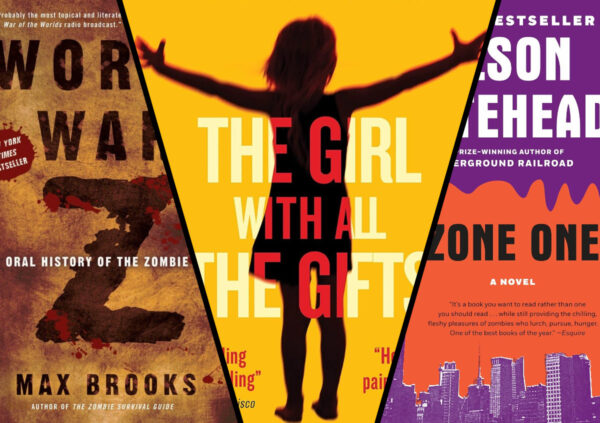
World War Z has no protagonist. It has no plot in the ordinary sense. There is no band of survivors, no farmhouse, no slow attrition of a group you’ve come to like. It’s a book of interviews, conducted a decade after the war ended, by a researcher compiling the human material that the official UN report left out. That’s the whole conceit, and it’s borrowed straight from Studs Terkel’s oral histories of the Depression and the Second World War.
Which means the 2013 film, the one with Brad Pitt running through Jerusalem, kept the title and threw away every single thing that makes the book work. I saw the film first and read the book on a friend’s insistence, and they are not the same story in any sense. They barely share a genre.
He’s also, incidentally, Mel Brooks and Anne Bancroft’s son, which explains nothing about the books and comes up in every profile anyway.
Fiction by René Rehn


The Short Version
The Max Brooks books all use the same device, which is the recovered document, and he uses it better than anybody currently writing.
Read World War Z. If you’ve seen the film, read it anyway, and go in expecting a completely different object.
The Zombie Survival Guide is the deadpan companion piece and the book that set the rules. Devolution is the one to try if you want an actual novel with characters in it.
World War Z (2006)

One of the more interesting books I’ve read, and the structure is why.
Each chapter is a separate interview with someone in a different country, and the accounts are arranged roughly chronologically so that the war assembles itself as you go: the first cases in rural China, the organ trade moving infected tissue across borders, the fake vaccine that made a fortune and did nothing, the refugee waves, the moment the armies discovered that everything they’d trained for was wrong. Then the long grind back.
The global scope is what makes it more than a gimmick. A Japanese hikikomori who has never left his apartment. An Israeli intelligence officer explaining why his country listened when nobody else did. A South African official describing a plan for national survival that involves deliberately abandoning most of the population as bait. A pilot down in the Louisiana swamps. Brooks did a genuinely impressive amount of work on how different governments, militaries and cultures would actually fail or adapt, and the answers are specific rather than generic.
And the zombies are almost background. What the book is really about is the collapse of civilization as an administrative event: post-apocalyptic and dystopian books supply chains, triage, doctrine, the political cost of telling the truth, the profitable business of lying. The set pieces that land hardest are institutional. The Battle of Yonkers is a military disaster written as an after-action interview and it’s one of the best sequences in modern horror, and there isn’t a single scare in it.
The other thing the book does, and this is the part I wasn’t prepared for, is the mental toll. Brooks takes seriously the question of what a decade of this does to people, and he catalogs the answers with the same procedural calm he applies to logistics. There are categories of casualty here that have nothing to do with being bitten, and one of them is described in about half a page, in passing, as a known clinical phenomenon. I stopped reading and put the book down for a while. It’s more frightening than anything the zombies do, precisely because it’s presented as a footnote.
That restraint is the book’s whole method. It never raises its voice. It just tells you, in the flat register of a witness statement, and lets you work out how bad it is.
The Other Max Brooks Books
The range is wider than the zombie material suggests, and one of them is a graphic novel about a real infantry regiment.
I haven’t read these. What follows is the consensus reading.
The Zombie Survival Guide (2003)

A survival manual played perfectly straight, containing not one line of overt fiction, and its enormous sales rested on a single joke held without a wobble for three hundred pages.
Here Brooks lays down the physics his novel later takes for granted: the virus is Solanum; the infected feel no hunger and no fatigue, communicate nothing, keep in cold weather; only brain destruction ends one; and a bite needs twenty-three seconds to hit the bloodstream.
Measured against those rules, the advice holds up surprisingly often. Crowbar over chainsaw. Bicycle over car. Lighthouse over fortress. Fire almost never. And the budget option for a defensible position: a house’s second floor, staircase demolished.
It closes with recorded outbreaks chronicled back to 60,000 BC, straight-faced as any history text, at once the book’s funniest stretch and its most unsettling.
Read it before the novel.
Devolution (2020)

Six hours out of Seattle sits Greenloop, an eco-community at the luxury end, selling wilderness living to the wealthy complete with fiber connections and deliveries by drone. Rainier’s eruption cuts the roads and ends the deliveries, and down from the forest comes something the volcano displaced too.
The entire accomplishment lies in treating Sasquatch zoologically instead of cryptozoologically. Brooks gives his troop social organization, rank order, a range to forage, displays of dominance, and every escalation obeys primatology where a lesser book would obey horror-movie convention.
The apparatus is standard Brooks: an after-the-fact recovered journal, an investigator’s frame around it, a primatologist’s expert commentary threaded between entries.
Satire lives in the residents themselves: moneyed, allergic to conflict, devoted to consensus process, equipped for nothing, and Brooks shows no mercy toward people who outsourced every practical competence they ever had.
A siege occupies the final third, genuinely tense, its fights choreographed with visible care.
Closure, Limited (2012)

A short collection of stories set in the World War Z world, including material that didn’t make the novel. horror short stories Slight, and for completists.
The Zombie Survival Guide: Recorded Attacks (2009)

The historical-attacks section of the Guide adapted into a graphic novel, illustrated by Ibraim Roberson. Handsome, and closer to an art book than an expansion.
The Harlem Hellfighters (2014)

A graphic novel, drawn by Caanan White, about the 369th Infantry Regiment, and nothing Brooks has done is less known.
The 369th were a Black National Guard regiment from New York who were sent to France in 1918. The American army would not fight alongside them, so they were assigned to the French, given French weapons and helmets, and spent a hundred and ninety-one days in the front line, which was longer than any other American unit.
They never lost a foot of ground and never had a man taken prisoner. The French awarded the regiment the Croix de Guerre. The American army sent them home and did not let them march in the New York victory parade until public pressure forced it, and then the country resegregated around them.
Brooks researched it for years and had a screenplay first, which was never made.
The art is unsparing about the trenches, and the book is angry.
The Minecraft Novels
Outside the horror shelf, Max Brooks has also written three official Minecraft novels: The Island (2017), The Mountain (2021) and The Village (2023). They’re survival stories set inside the game’s world, pitched at middle grade readers, and they assume you know what a creeper is. Worth knowing they exist if you have a Minecraft player in the house, and comfortably skippable otherwise.
Where to Start
World War Z, and don’t let the film put you off it, because that’s the single most common reason people never pick it up.
Approach it as oral history, not as a novel. No main character is coming, so stop waiting for one, and the book opens up the moment you do.
If it works, The Zombie Survival Guide next for the rules and the joke, then Devolution if you want Max Brooks doing something with an actual cast.
My best horror books list ranks the rest of the genre. World War Z is the high end of my zombie books list.