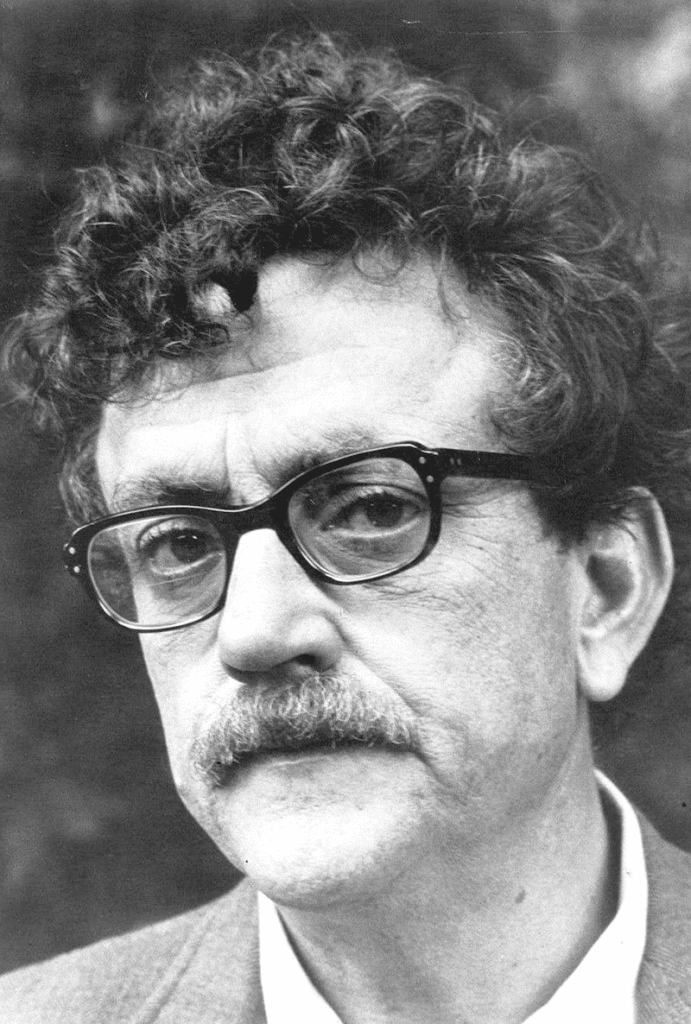
Kurt Vonnegut’s one of the most celebrated American writers of the 20th century. He was an extremely prolific writer with a career spanning over 50 years who’s published 14 novels, countless short stories, essays and a variety of other works.
The best Kurt Vonnegut Books are almost always satirical. They use dark wit and black comedy to shed light on a variety of serious issues such as war, death and environmental destruction. They are, however, always entertaining.
What propelled Kurt Vonnegut to fame was his sixth novel, Slaughterhouse Five.
Nowadays, Kurt Vonnegut is regarded as one of the most influential and popular American writers of all time and a pioneer of postmodern literature.
Best Kurt Vonnegut Books – Discovering Kurt Vonnegut
I first learned of Kurt Vonnegut back in 2010. Back then, I was relatively new, not only to American literature, but serious literature.
I made the plunge and got myself a few select books that were highly regarded. One of those books was Slaughterhouse-Five by Kurt Vonnegut. The novel’s description had caught my eyes, especially since I’m from Dresden in Germany.
Reading it was quite an experience, as those of you who’ve read it can imagine. It’s a non-linear, anti-war novel which jumps from place to place and event to event without rhyme or reason.
The moment I’d finished it, I’d become a full-blooded fan of Kurt Vonnegut.
Over the years, I’ve read almost all of his novels and quite a few of his other works, but my appreciation for him has only grown.
Best Kurt Vonnegut Books – Why You Should Read Kurt Vonnegut
There are a lot of things about the best Kurt Vonnegut books I can’t help but love.
He’s amongst the most profound American writers and he’s shed light on a lot of important issues while always remaining funny and entertaining.
His works are also easily accessible, which I still find interesting, given he’s a pioneer of postmodern literature. Whenever I think about postmodernism, the first names that come to my mind are Thomas Pynchon and David Foster Wallace. Both are writers who are infamous for how inaccessible their works can be to the normal reader.
What makes Kurt Vonnegut so interesting is his special style. He creates a certain closeness between himself and the reader. Reading one of the best Kurt Vonnegut books often feels like listening to a story told to you by an old friend.
This closeness is often supported by his many meta-fictional elements, which he uses to address the reader personally. It’s quite fascinating.
Mostly, however, I think it’s his timeless with and the many words of wisdom he shares with his readers. While his work is satirical and comical, it’s often full of deep and profound insight.
“And I urge you to please notice when you are happy, and exclaim or murmur or think at some point, ‘If this isn’t nice, I don’t know what is.’”
For this article, I want to focus not only on his novels but also include some of his other works I deem important. If you’re looking for more recommendations, check out my list on the best Hemingway books and the best Mark Twain books.
Player Piano is Kurt Vonnegut’s first novel, but also one of the best Kurt Vonnegut books. It depicts a dystopia set in a post-World War Three America.
It’s different from many of Kurt Vonnegut’s other later novels, namely that it follows a straight-forward narrative.
In Player Piano, society has been restructured. All factories, manual labor and other jobs have been replaced by machines. This robotic workforce results in devaluing human participants and human workers have become almost entirely obsolete.
The novel’s plot centers on Dr. Paul Proteus, who manages a factory and a religious leader from a faraway land. After their meeting, Paul realizes that he’s not managing machines, but that he’s just another cog in the machine.
Before long, Paul radicalizes himself and rebels against this purposeless system.
Player Piano, like many other best Kurt Vonnegut books, is still relevant today and feels even more so in our high-tech society. It explores and showcases the dark side of modern technology.
Even though it’s Kurt Vonnegut’s first novel, one can already see his genius. It’s full of societal observations and asks the various questions we know from Kurt Vonnegut.
The only problem I have with Player Piano is that it’s a bit too similar to Aldous Huxley’s Brave new World, which is, in my opinion, the superior of the two books.
Jailbird is Kurt Vonnegut’s novel about Watergate. It’s a departure from Kurt Vonnegut’s usual science-fiction themes in favor of a more realistic story.
This one of the best Kurt Vonnegut books is written as a fictional memoir by Walter F. Starbuck, who was released from a minimum-security prison for his role as Watergates ‘least-known-co-conspirator.’
The novel outlines twenty-four hours of Starbuck’s life. The man’s nothing but a drone, but gets caught up in the scandal. He never quite knows what’s going on and what to make of the nonsensical events taking place around him.
It’s Kurt Vonnegut’s most explicitly political novel and also his most cynical. It explores the incompetence of bumbling government officials in a highly comical way but doesn’t fail to showcase how profoundly dangerous they can be. Yet it also focuses on such topics as economical greed, exploitation of political power, changing cultural values and how easily empathy and compassion can be lost.
While it might sound like Jailbird’s a dense, political thriller, it’s the opposite. It’s an incredibly hilarious and fast-paced satire, one which is perfectly on target and a great addition to this list of the best Kurt Vonnegut books.
This is the most recently published book on the list, but also one of the best Kurt Vonnegut books.
While Kurt Vonnegut’s always put autobiographical elements in his fiction, this is probably the closest we ever come to a true autobiography of the man.
As the name states, this is a collection of letters from throughout Kurt Vonnegut’s life. It contains a multitude of letters from before he was famous.
Some are from when he served in the war, some during his time as a prisoner of war and others are letters to colleagues, friends and family. There are even letters of protest to certain school boards who had his books banned.
The ones I came to enjoy the most, however, were those about his profession, about the craft of writing.
Kurt Vonnegut: Letters is a book for those who are more interested in the man behind the typewriter.
It’s a book full of love, compassion, but also societal comments and, of course, his timeless wisdom. It’s a fantastic, insightful read.
Welcome to the Monkey House is one of the best Kurt Vonnegut books and also his best-known short story collection. It’s a kaleidoscope of wonder and weirdness.
Many of the twenty-five short stories in this collection were published during Kurt Vonnegut’s earlier career. While many of them are science-fiction stories, the collection also contains short stories of other genres, such as comedy.
The themes of the stories differ. They explore topics such as over-population, capitalism and over-consumption, the sexual revolution, technology and, of course, the ever-enlarging role of governments in society.
We encounter dystopian despots, love-poem writing computers, people who’ve reversed aging and even a ‘Handicapper General.’
The last of these is featured in my favorite story of the collection, the fantastic ‘Harrison Bergeron.’ Set in a dystopian future, the government imposes handicaps on all citizens to ensure that no one’s smarter, stronger or better looking than anyone else.
While some stories can be dated and a bit too weird, they are all enjoyable. Those who stand out, however, are amongst the best short fiction I’ve ever read and make this one of the best Kurt Vonnegut books.
Mother Night is one of Kurt Vonnegut’s lesser known novels, but I still regard it as one of the best Kurt Vonnegut books.
It’s written as yet another fictional memoir by one Howard W. Campbell Jr. He’s an American who lives in Germany during the 1930s. While he’s strictly apolitical, he joins the Nazi party and becomes a well-known Nazi propagandist.
Unbeknownst to the Nazis, however, he passes coded messages to the U.S. War Department via his radio program.
The novel offers an interesting glimpse into the propaganda machines so common during World War II. Yet, the central question is a much simpler one: can you do good while you pretend to do evil? It’s a question of moral, one whose answer is neither black nor white, but nothing but shades of grey.
Yet, as always, the novel’s full of Kurt Vonnegut’s dark sense of humor. It’s a thought-provoking examination of the absurdities of war and the lies we tell ourselves to justify them.
Mother night is not a straightforward novel, however. It’s a piece of metafiction in which Kurt Vonnegut himself plays the role of the memoir’s editor.
What makes it even more interesting is that it’s a prime example of the unreliable narrator. You never know if any part of Campbell’s tale is true. The more complex the story becomes, the more difficult it is to even determine if he’s guilty and what he might be guilty of.
Another interesting note about this novel is that both Kurt Vonnegut’s parents spoke German, but chose not to educate their son in the language or any German traditions. The reason was simple: the anti-German sentiment of the interwar years.
One can clearly see the parallels between Campbell and Kurt Vonnegut, namely those of cultural dislocation and restlessness.
Mother night can be seen as a predecessor of Slaughterhouse-Five, which I’ll talk about later on this list of the best Kurt Vonnegut books. It, too, is an examination of the complexities of war, but also gives us insight into the internal struggle of the ‘bad guys.’
This collection of essays is the last thing Kurt Vonnegut published before his death and a worthy addition to this list of the best Kurt Vonnegut books.
It’s another work that comes close to an autobiography, and each essay contains a small memoir from his own life.
As with all his other works, these essays are full of humor and wit. It shares Kurt Vonnegut’s thoughts and comments on his own life, but also other topics such as the country, art and many other topics. It’s a profound read, one full of timeless wisdom and life’s many ironies.
Kurt Vonnegut addresses such topics as war, climate change, and even talks about what he presumes is our impending planetary destruction. He sheds light on the human condition and shares what he presumes are the dangers of political and religious leaders whose teachings and advice often ignore fact and foresight.
Yet, it’s not a work that’s solely apocalyptical. It’s also full of enthusiasm and sums up life in all its horrors and glories. We are messed up species, but for all our foolishness we’re loveable and precious.
God Bless You, Mr. Rosewater, is another one of Kurt Vonnegut’s novels not set in the realm of science-fiction. Instead, it’s a more down to Earth story.
It’s also the first novel that features Kurt Vonnegut’s in-literature alter-ego Kilgore Trout. He should become a regular in his novels and always serves as Kurt Vonnegut’s mouthpiece to share his own thoughts on the issues at play.
The novel tells the story of Eliot Rosewater, a man who’s never sober, but who’s also insanely rich. He’s a trust fund millionaire who develops a conscience, realizes the errors of his ways and leaves New York City for his hometown of Rosewater. There he sets up the Rosewater Foundation to share his unlimited amount of love and money with anyone who comes to his office.
Yet, the people of Rosewater barely deserve it and resent Eliot, who dispenses his money, advice and unwanted help.
The novel doesn’t shine so much for its plot, but for its observation and criticism of capitalism. It’s a highly comical ride through the world of extreme riches, corporate greed and extreme, even comical, family wealth.
Once again, Kurt Vonnegut’s novel proves relevant in today’s day and age given both massive wealth disparity and the idea of universal basic income.
At the end, however, there’s only one simple truth the novel mentions: regardless of who we are, we’re all human.
Breakfast of Champions is one of Kurt Vonnegut’s most iconic and influential novels and, in my opinion, one of the best Kurt Vonnegut books out there. It’s also his darkest and most complex one. It’s a postmodernist satire that feels as relevant today as when it was published.
The novel focuses on a variety of issues, such as suicide, free will, mental illness, racism and economic inequality, amongst other things. It’s a book that showcases just how close one can get to the edge of suicide.
Breakfast of Champions is yet another novel that focuses heavily on Kurt Vonnegut’s alter-ego, Kilgore Trout. He’s an aging science-fiction writer with little recognition and even less appreciation.
Yet there’s also Dwayne Hoover, a wealthy automobile dealer who’s on the verge of going insane. Dwayne becomes enamored with one of Trout’s novels, takes it as gospel and a message from the creator of the universe. This message entails that he’s the only person on Earth with free will. This sends him over the edge and he attacks those around him, for he takes them as nothing but robots.
It’s also an interesting novel to read from a writer’s perspective. Our protagonists, both Dwayne and Trout, might very well be two sides of Kurt Vonnegut himself. One is the writer trying to find appreciation and recognition, the other the part of him that fears going insane.
The focus of Breakfast of Champions is clearly on the question of free will, what it means to be human and our blind fate in fiction rather than fact.
While the plethora of issues tackled in this novel might make it appear dense, one couldn’t be more wrong. It’s a fantastic read, one of the best Kurt Vonnegut books and proofs as insightful as it is amusing.
The Sirens of Titan is by some called Kurt Vonnegut’s most creative and weirdest novel. It’s a postmodern epic, a thrilling space opera.
While it might not be amongst his most famous works, it’s definitely one of the best Kurt Vonnegut books.
The story follows Malachi Constant, the richest man on Earth on a mission to Mars to take part in an interstellar war. On his way, he collides with a ‘chrono-synclastic infundibulum.’ As a result, he’s converted into pure energy, and, amongst other things, gets to know everything that has ever happened and will happen.
The Sires of Titan is an adventurous ride through space and time. Many of the characters introduced here are featured in his later works. The most notable amongst them is the alien race from Tralfamadore, who should also be featured in Slaughterhouse-Five.
The novel’s themes are manifold, but once more they center on Kurt Vonnegut’s major ones: the negative impact of organized religion, the question of free will and the purpose of man.
As it turns out, however, man’s nothing but a giant Rube Goldberg machine created by no other than the Tralfamadorians to get a spare part for a stranded intergalactic messenger.
In The Sirens of Titan, Kurt Vonnegut conjures up a universe that’s deeply meaningless, but one that’s full of compassion and sympathy.
It’s a novel as hilarious as Kurt Vonnegut’s other works, but it proves to be much more bizarre.
It’s a line so simple, yet it completely encompasses the theme of this novel.
Slaughterhouse-Five is Kurt Vonnegut’s most popular novel, the one which caused his breakthrough and led to his commercial success.
It’s hailed as the best Kurt Vonnegut book, and one of the greatest anti-war books ever written. It showcases that not only was World War II not a good war, but that no war can ever be seen as good.
While it’s full of Kurt Vonnegut’s usual slapstick humor and black satire, it also packs a serious emotional punch. It’s an exceptional novel, one that shows optimism and cynicism, as well as compassion and disgust for humanity.
The novel’s protagonist, Billy Pilgrim, an American soldier, becomes ‘unstuck in time’ and moves uncontrollably back and forth through his life. We witness him as a young man, as a prisoner of war, but also in the future when he’s captured by the Tralfamadorians and placed in a zoo on their planet.
What’s most interesting about Slaughterhouse-Five is the non-linear narrative, which unfolds as a consequence of Billy’s condition. While it might sound confusing, it’s fantastically executed and makes the novel a hallmark of postmodernist literature.
Yet, there’s more to this structure than a mere literary gimmick. It’s often discussed as a representation of the thinking patterns of those who have PTSD. Even more so, it might represent Kurt Vonnegut’s own struggles to come to terms with the wartime atrocities he witnessed during the bombing of Dresden.
This focus on Dresden’s bombing gives us a visceral and devastating portrayal of war’s ugly side.
When the novel was first released in 1969, during the height of the Vietnam War, it received much praise, but also much criticism for its anti-war sentiment.
Either way, Slaughterhouse-Five is not only one of the most popular but also the best Kurt Vonnegut books for a reason. It’s a fantastic read and I highly recommend it to anyone.
Cat’s Cradle is in my opinion the best Kurt Vonnegut book, even eclipsing Slaughterhouse-Five.
Even though its prose is simple and easily digestible, it’s a postmodern masterpiece.
It was written during a time of tension between the United States and the Soviet Union when there was an uneasy sense of the world ending.
What’s interesting about Cat’s Cradle is that it’s much more accessible because its structure is straightforward as opposed to the nonlinear narrative of Slaughterhouse-Five.
Our narrator John embarks to write a book he calls ‘The Day the World Ended.’ It’s about the invention of the atomic bomb and aims to capture their lives on the day Hiroshima was obliterated.
He eventually meets the family of one of the inventors, a man named Felix Hoenikker. Central to the plot is a form of water known as ice-nine. It was developed by Hoenikker and freezes solid at much higher temperatures. It also transforms any regular water it comes into contact with into ice-nine. Nothing can go wrong with that, right?
As you can probably tell, it’s a novel about an apocalyptic event, one which unfortunately seems horrifyingly plausible. As funny and hilarious as the book is, there’s a deep sense of dread lingering below it.
Cat’s Cradle has a cast of fantastic characters and an unforgettable location. For most of the book takes place on the Caribbean island of San Lorenzo, which is ruled by a president-dictator.
The most interesting part about the island, however, is the religion of Bokononism, a religion Kurt Vonnegut created specifically for the novel. It even comes with an entire vocabulary of nonsense words. Now, this is, of course, a Kurt Vonnegut novel, so it’s not a serious religion. It’s entirely satirical, full of nonsensical ideas and lies. Yet, it showcases, however, the idea of creating a utopian society based on religion.
It’s through Bokononism that Kurt Vonnegut unmasks the grand scheme of many religions to prod those people to motivation who otherwise have none. Yet, it also shows how fantasy, however odd and unbelievable, can often be preferable to the truth.
Cat’s Cradle is a hilariously comical satire that touches on a variety of serious topics, such as weapons of war, the arms race, religion and many others. As with many other novels, it’s also full of Kurt Vonnegut’s typical dark humor and societal commentary.
Cat’s Cradle is a short book, but an outstanding one. It’s not only the best Kurt Vonnegut book out there but also one of the best books ever written.
Long manga can be some of the most compelling reads, not because they’re better or bigger, but because they have time to change. Over hundreds of chapters, a series can build multiple arcs, deepen relationships, pay off long-running rivalries, and let a world evolve in ways shorter stories can’t. And sometimes long doesn’t mean a single continuous plot. It can also mean a saga that reinvents itself across parts and casts, like JoJo’s Bizarre Adventure, where the connection is style, rules, and legacy, rather than a single protagonist.
This list focuses on long manga with a serious page count: generally 200+ chapters, sprawling subplots, and dozens of volumes. Some series earn their length through steady escalation, others through slow-burn character growth, and the best ones use their page count to make choices matter. You get a story that can afford to show consequences, detours, and reversals, then still land payoffs that feel earned.
Not all long manga hit the same register, and this list reflects that range. You’ll find classic shonen battle manga that run on momentum and iconic matchups, alongside heavier seinen series built around politics, trauma, or moral compromise. You’ll also see outliers that are here because they’re singular experiences, like the weird delirium of Fourteen. Some series are long because they keep expanding, others because they keep reinventing themselves.
A few standouts define the list. Usogui represents the mind-game peak, a strategy manga that only gets sharper as it goes. Vinland Saga and Kingdom deliver sprawling historical epics, one more intimate and reflective, the other built around campaigns and statecraft. And modern shonen like Sakamoto Days and Blue Lock show shonen can still be fresh and unique, whether through clean, effortless choreography or through blending sports with survival psychology.
What all these series have in common is the long-form commitment. They build identity over time. They let relationships grow, rot, or snap under pressure. Whether the story is quiet or chaotic, romantic or cruel, each one takes consequences seriously, and that’s what makes the length feel worthwhile. If you’re looking for more deep-dive recommendations, check out my lists of the best psychological manga, historical manga, and thriller manga.
Mild spoiler warning: I avoid major plot reveals, but I do reference themes and key moments to explain why each series belongs here.
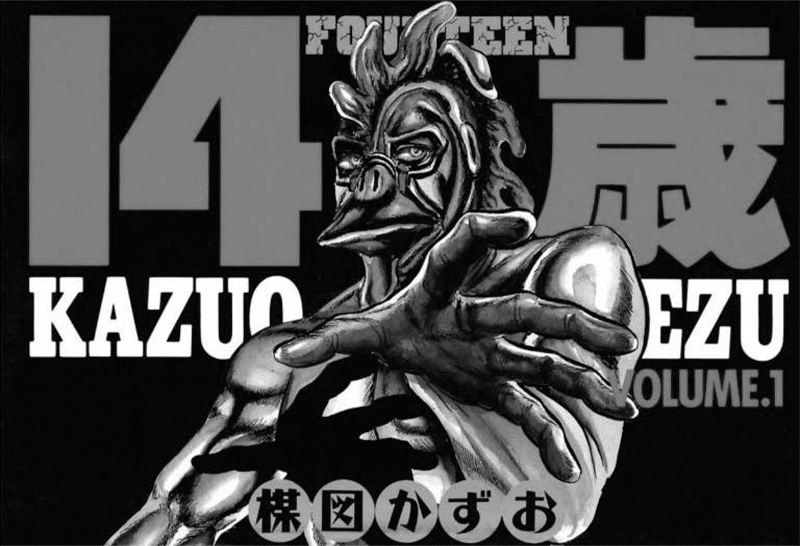
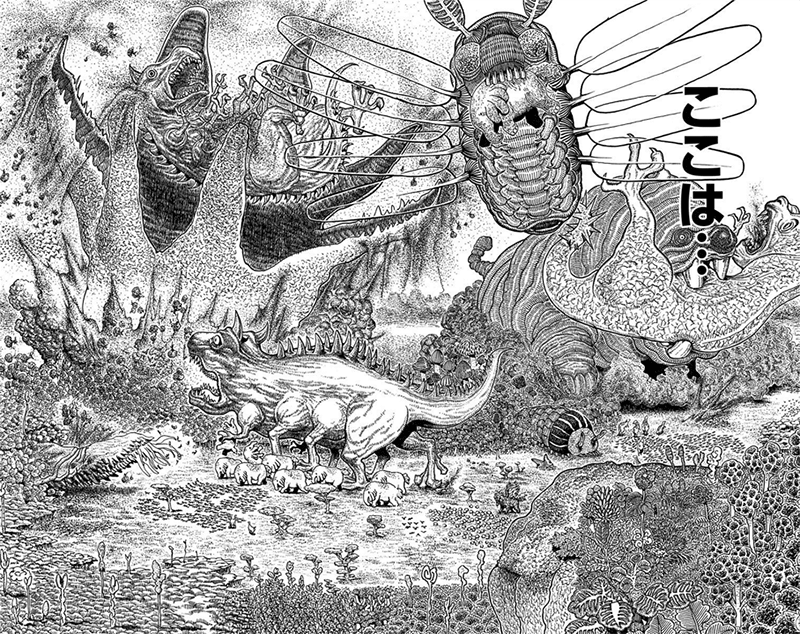
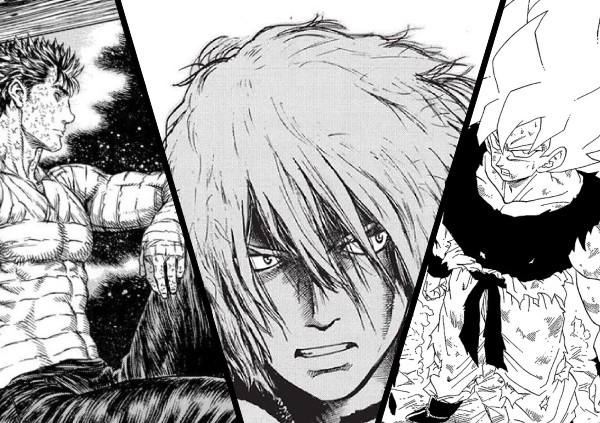
Fourteen is what happens when Kazuo Umezu leans into pure madness. As a long manga, it has the page count to turn a doomsday premise into delirium, and it never backs down. It’s unique even among weird manga, not because it’s incoherent, but because it commits so hard to its own warped logic that it becomes unforgettable.
The key is the seriousness. Umezu treats every escalation as if it matters, even as coherence slips, so the absurdity lands like a straight-faced end-of-the-world nightmare. You’ll pause mid-chapter to process what you’re seeing, then keep going anyway, partly out of fascination and because you can’t believe it. It’s the kind of series you hesitate to recommend, then recommend anyway. It’s an ugly, loud, and uneven fever dream that some people might discard instantly, but others will devour it for the sheer insanity alone.
The setup is already strange. In the 22nd century, a chicken production factory creates something that’s not chicken: a hyper-intelligent mutant calling himself Chicken George. He looks at humanity’s treatment of nature, declares war, and aims to remake the planet. The premise could’ve been played for satire, but Fourteen refuses that and keeps escalating into a surreal spectacle with total conviction.
The vintage art style amplifies everything. Umezu’s dramatic expressions, heavy contrasts, and stiff staging make it feel like a campy science-fiction melodrama spinning out of control. Compared to more grounded apocalypse stories, it’s a fever dream, and that’s either the selling point or the warning label.
As a long manga, Fourteen is an absurd doomsday story played completely straight. That commitment is the appeal.
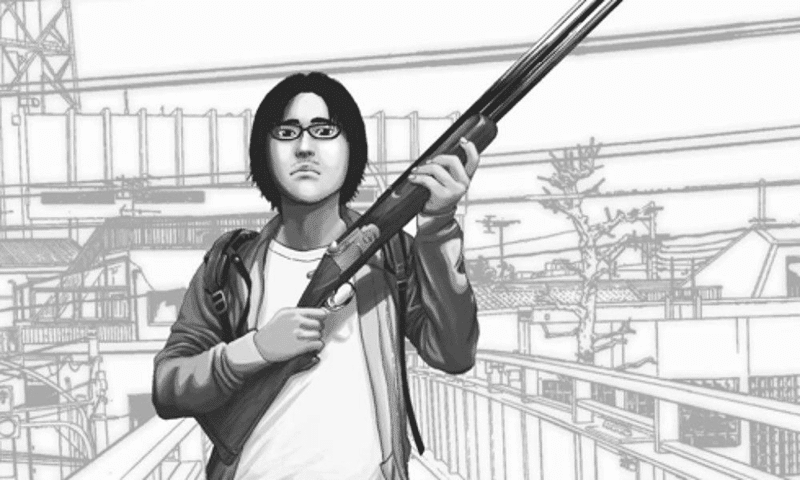
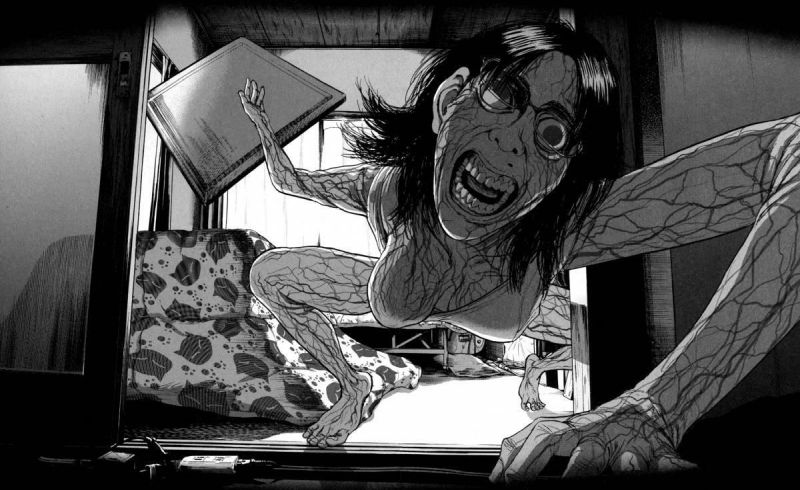
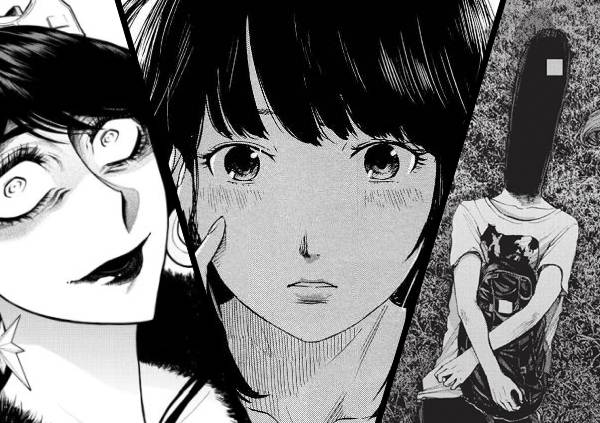
I Am a Hero is a zombie manga that feels less like a typical survival story and more like a slow psychological collapse. It’s not about action, but about a harsh kind of realism: dread that builds slowly, bodies that warp into new forms, and a world that falls apart in ways that feel disturbingly plausible.
The series works because it filters the apocalypse through Hideo Suzuki, a 35-year-old manga assistant who already has enough problems of his own. He’s isolated, paranoid, and prone to hallucinations, so once a mysterious infection spreads through Tokyo, you’re never fully sure what’s seen, what’s imagined, and what’s simply too terrible to process. That unreliable viewpoint makes even small moments tense, and it gives the story an intimate, unsettling vibe across its long run.
The infected are a big reason it stands out. Early on, they resemble eerily lifelike corpses, muttering fragments of their last thoughts, and then the infection keeps evolving, producing distorted, sometimes fused abominations. The body horror escalates in scale and imagination, turning survival scenes into something grotesque that lingers.
Hanazawa’s artwork grounds the disaster with realistic and detailed environments, while close-ups of faces and anatomy make the violence hit with a visceral punch. The pacing is deliberately slow-burn, packed with quiet dread, which is why it earns its place as a long manga: it has the space to make panic feel earned.
It’s not flawless. Mid-story detours into other perspectives can be uneven, and the ending is divisive enough to split readers. Still, I Am a Hero is a grounded, skin-crawling version of an apocalypse with sharp themes of alienation and mental illness.
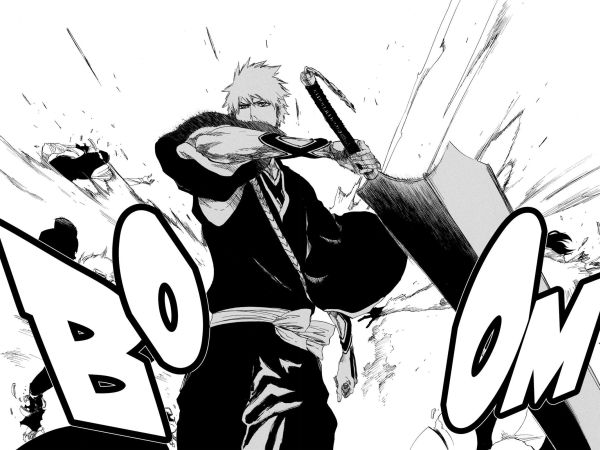
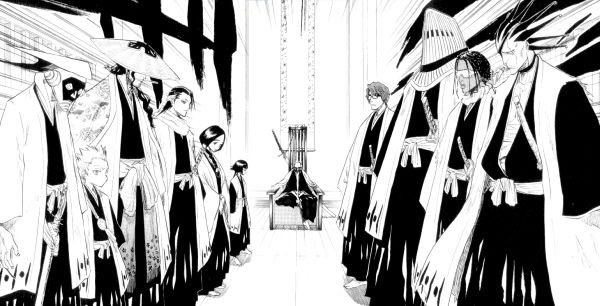
Bleach is the kind of long manga that wins through pure style. Tite Kubo draws with razor-clean silhouettes and expressive panel flow, turning entrances, poses, and stare-downs into hype on their own. That visual confidence is a big reason it became a cornerstone of modern shonen. The series thrives on memorable designs, dramatic reveals, ability names that land like punchlines, keeping the coolness factor running for an impressively long stretch.
Ichigo Kurosaki’s life flips when he gets pulled into the Soul Reaper world, and from there, the plot becomes a chain of supernatural threats and rival factions. Bleach isn’t trying to be grounded. It goes for power escalation and mythic stakes, using arc-to-arc showdowns as the core of the experience. The signature thrill is transformation reveals, and the series milks them better than most, right down to the word Bankai. Power gaps force characters to evolve or get crushed, and Kubo ends many fights with brutal finishing moves.
That’s also why it lands lower on this list. The core cast is extremely likable, but many characters are more iconic than fully realized, and the structure can slide into repetition: a new danger, an invasion, fights, power-ups, and bigger enemies waiting down the line. Soul Society still feels like the high point, and later stretches can drag if you want a tight structure over pure hype. Aizen remains one of shonen’s best antagonists, and clashes involving Ulquiorra and Grimmjow are among the series’ clearest peaks.
Compared with more straightforward shonen momentum, Bleach is more theatrical and style-first, with its best moments centering on reveals and personality-driven clashes. As a long manga, it’s best for readers who want style, transformation reveals, and over-the-top fights.
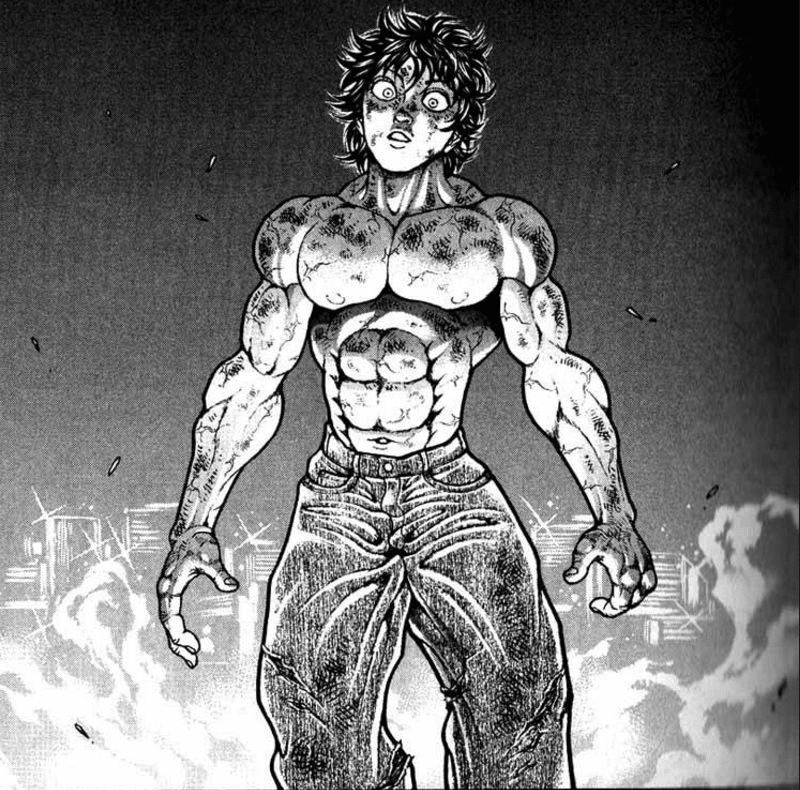
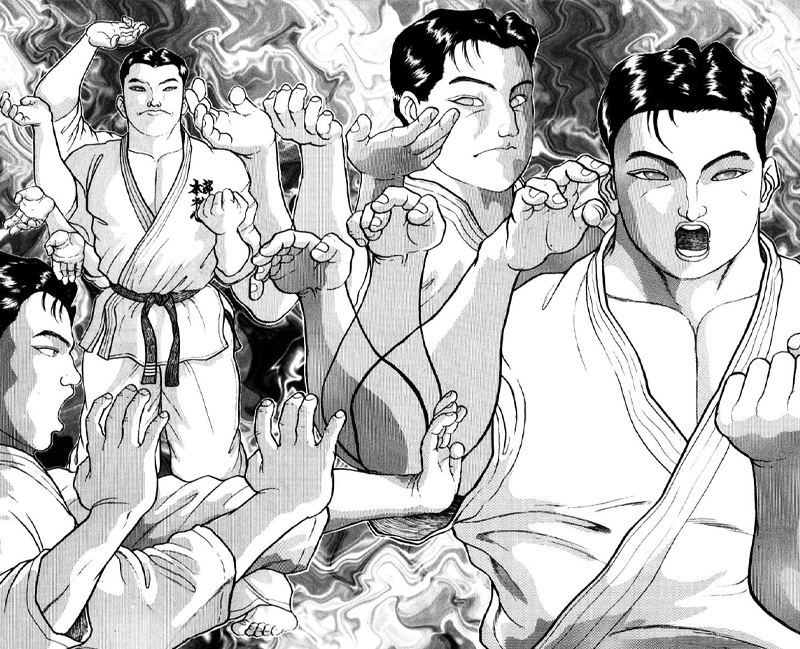
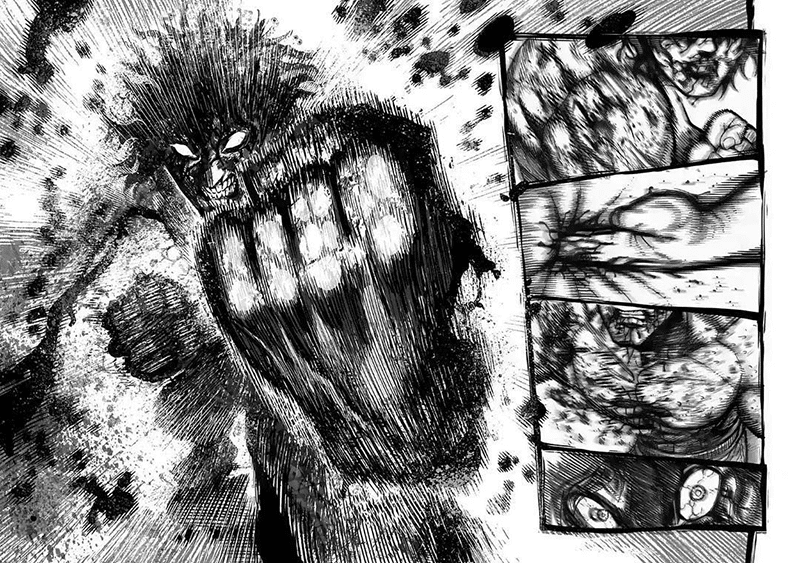
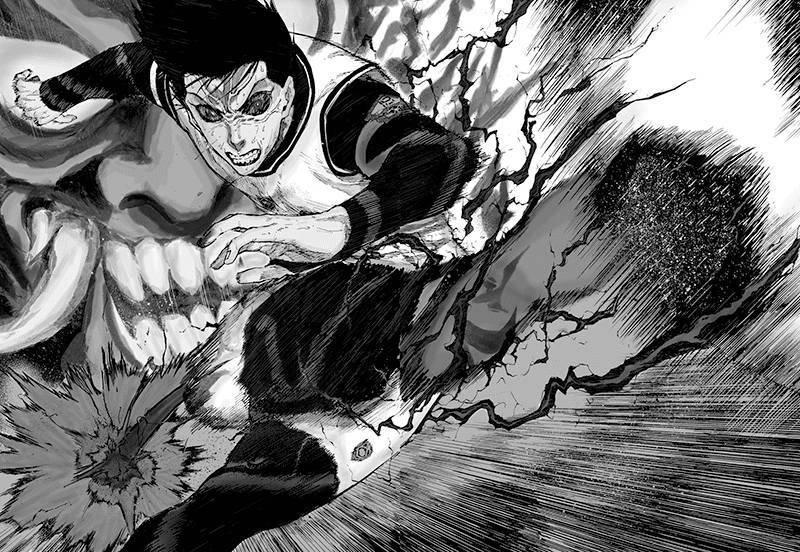
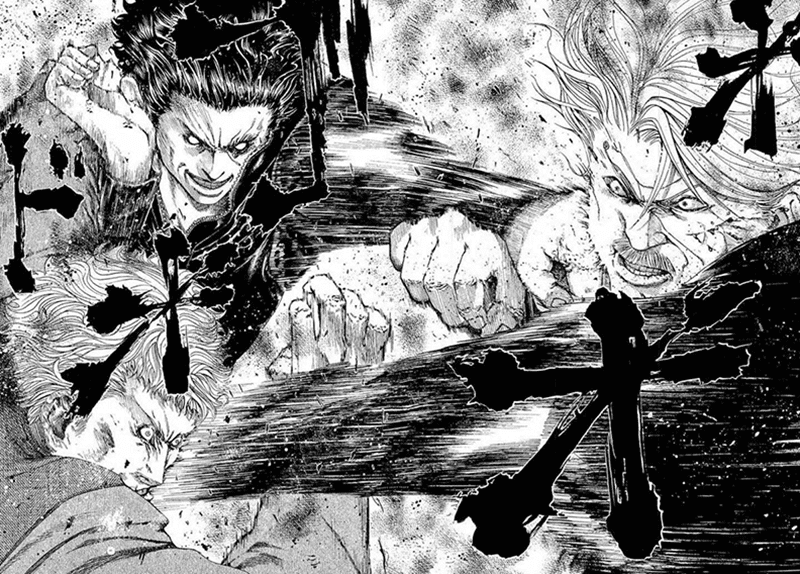
Baki is a martial arts manga turned into a fever dream science lecture. It starts as a series about training arcs and underground arena brawls, then keeps escalating until everything becomes exaggerated and impossible, yet still framed as technique and physiology. As a long manga, it has enough room to build and then circle back to familiar character beats. The highs are genuinely unforgettable, and the indulgence is part of the appeal.
Baki Hanma has one single goal: surpass his father, Yujiro Hanma, a man treated less like a rival and more like an apex predator. That dynamic gives the whole series a backbone. Every match feels like another rung on the ladder toward something monstrous, and the tension comes from knowing the summit may be unreachable.
What separates Baki from a lot of long action manga is the lack of conventional superpowers. No Ki, no energy attacks, just hand-to-hand combat: pain tolerance, striking, grappling, and psychological warfare. The irony is that it’s never realistic, yet the narration delivers it like a clinical breakdown. Fights may stop so that the story can explain techniques, stances, or anatomical details. Some fighters win through bizarre visualizations. Others win through technical knowledge so extreme it becomes superhuman.
The fights in Baki also stand out for their brutality. Matches rarely end with clean wins, but are decided through dominance and damage. Fighters get bloodied, bones break, muscles tear, and joints snap. It’s intense, over-the-top, but still gripping. Even side characters stick because each one represents a distinct combat philosophy, from disciplined mastery to pragmatism or something downright strange.
The main limitations are pacing and presentation. The series loves narrative detours and repeated escalation, and if you want tight plotting, it can sometimes feel like being trapped in an enthusiastic lecture. The early art is also rough and so aggressively stylized that it’s a commitment. Even as it grows better, it remains warped and unmistakably Baki.
Compared with more grounded fighting manga, Baki is wilder, messier, and more hypnotic. If you’re looking for a long manga that treats impossible hand-to-hand combat like hard science, Baki delivers.
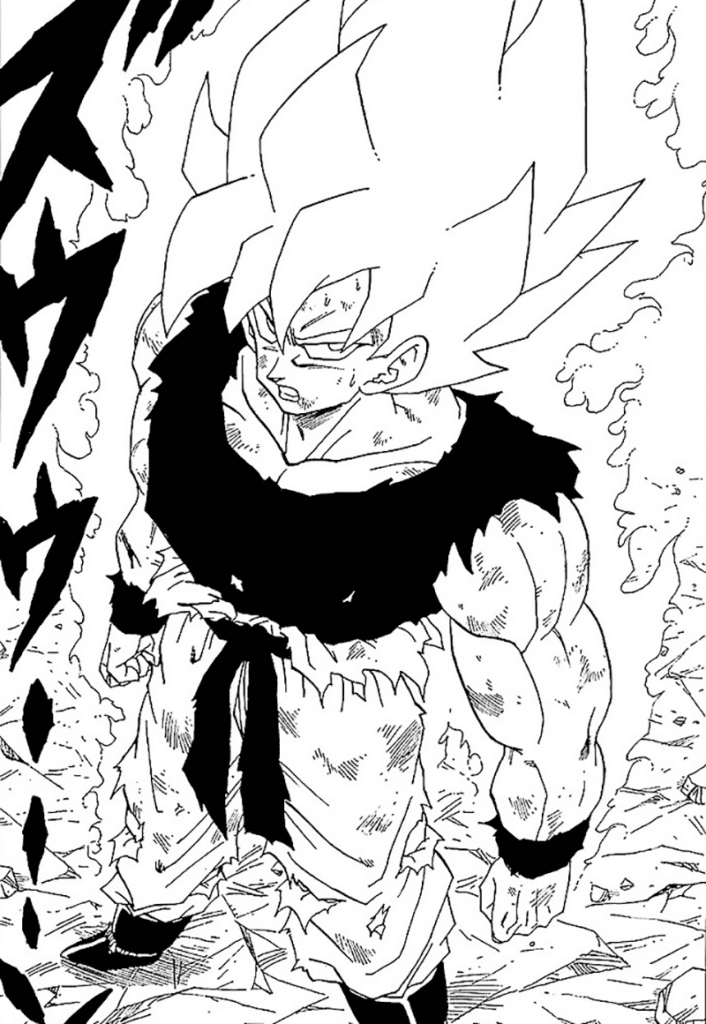
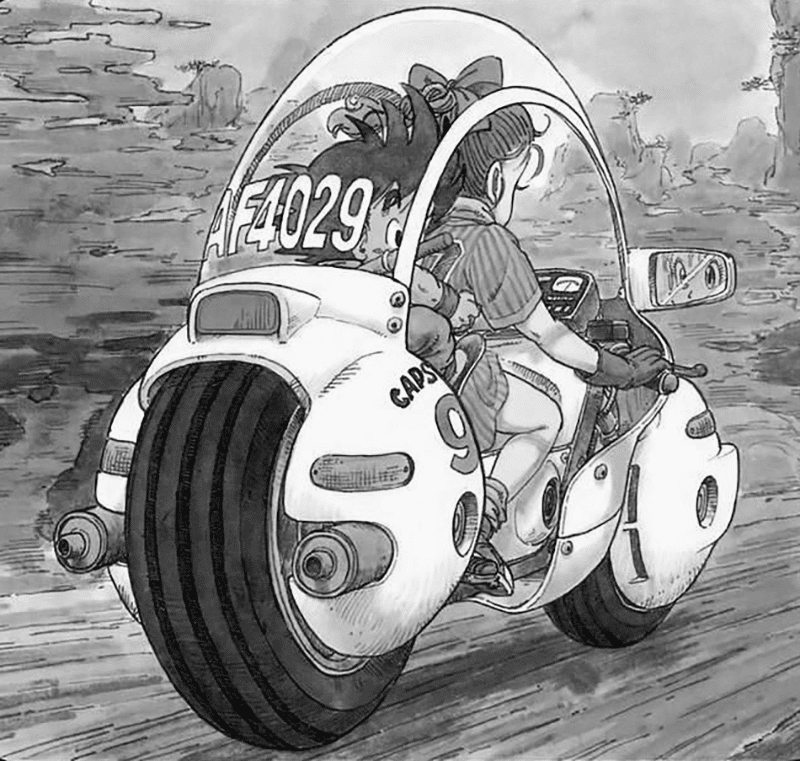
Dragon Ball is the blueprint most long battle shonen are built on. The manga still shows why it set the standard: crisp pacing, readable choreography, and a sense that each new power-up feels earned. Its influence is so widespread that later successors can make it feel strangely familiar. As a long manga, it evolved from Son Goku’s playful childhood adventures to universe-scale conflicts in his adult years without ever losing Toriyama’s clarity.
The early run is surprisingly lighthearted for what the series later becomes. It starts as a gag-leaning road adventure built on oddball characters, slapstick timing, and a world that blends science-fiction, fantasy, and martial arts into something uniquely its own. Once the series reaches the World Martial Arts Tournament, it really finds its footing. Battle-forward storytelling becomes the norm. From here on out, the series features training arcs, rivals turning into allies, and escalating showdowns in a way many later hits would treat as the default.
Toriyama’s art is one of the reasons the series works so well. Dragon Ball features lively, detailed environments and memorable character designs. Clean lines and cinematic paneling keep fights legible and let key moments land with the right gravitas. The cast also gives the journey warmth: allies arrive early, friendships form, and the series knows how to make each new opponent feel like an event.
The honest limitation is that the later scale changes the flavor. Hand-to-hand combat gradually yields to spectacle and massive energy attacks. The wish-granting Dragon Balls make death reversible and soften the tension. And as the story narrows around the Saiyans, many memorable characters get pushed aside. The Buu Saga is also notoriously divisive, swinging between high-concept weirdness and absurd comedy.
Dragon Ball is a long manga that made battle shonen what it is today, but still holds up for its cast, worldbuilding, and choreography, even if it shows its age.
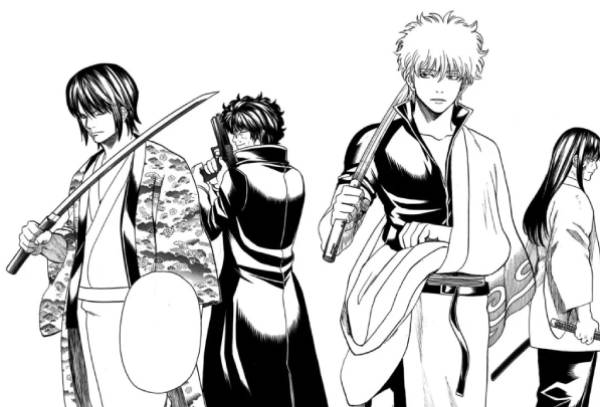
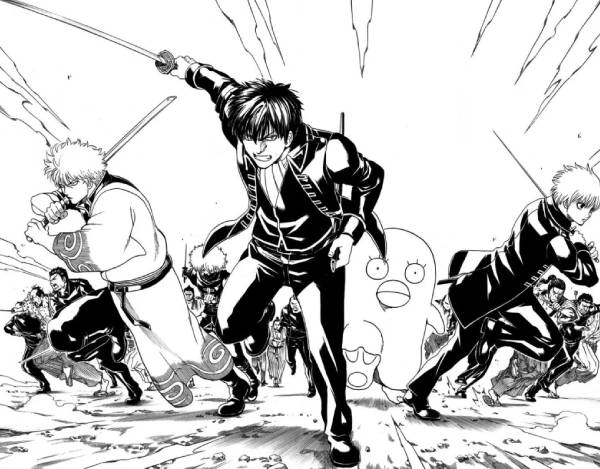
Gintama is a long manga that makes you laugh one page, then care about the next. It runs for over 700 chapters, shifting from slapstick parody, meta jokes, science-fiction samurai action, and surprisingly heavy drama. That range is exactly why it earns its place here, and also why it can be a tough sell: the tonal whiplash is real, and some readers might bounce off before the more serious payoffs arrive.
The setting is an alternate Edo occupied by aliens, where swords have been banned. In this absurd world, Gintoki Sakata survives on odd jobs with his apprentice Shinpachi, the alien Kagura, and their oversized pet dog, Sadaharu. Early on, Gintama reads like a parody, mocking everything from shonen staples to Japanese pop culture. Running jokes, fourth-wall breaks, and even shots at its own plot dominate the page.
The surprise is how much substance accumulates under that nonsense. The core cast slowly shows real vulnerabilities, and the supporting cast gets arcs strong enough to rival the protagonist. When the story leans into gut-punch flashbacks, it feels seamless, not like a different series stapled on. The action also sharpens over time, and the bigger, more serious arcs, including the Shogun Assassination and Benizakura ones, which prove it can deliver brutally intense samurai showdowns when it wants to.
The downsides come with the territory. It’s a ridiculously long manga. Pop culture references will not always land, the rhythm can feel episodic, and the final arc’s ending is divisive.
Gintama is chaotic by design, ridiculous one chapter and devastating the next. You’ll either love it or you bounce off instantly.
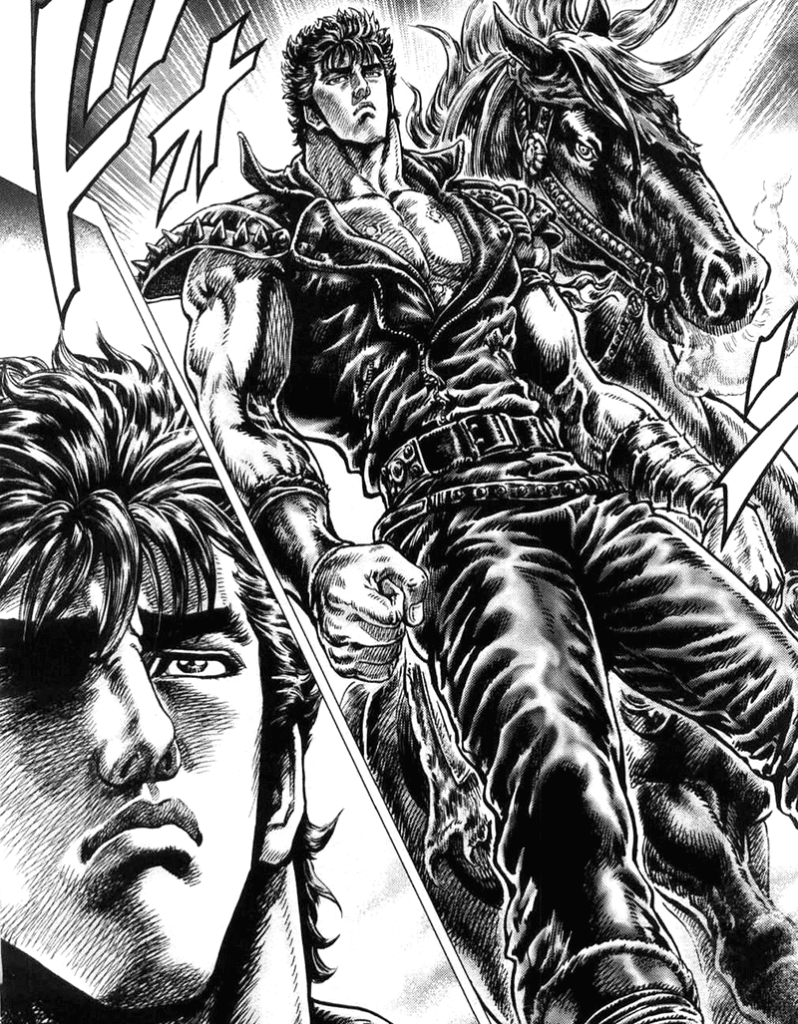
Fist of the North Star is battle shonen in its rawest and most operatic form, the kind of long manga that feels like it helped define the genre’s later developments. It’s pure wasteland mythmaking: gore, grit, and big emotions delivered with total conviction. It’s the gold standard for stories about lone survivors walking through ruined worlds and eradicating evil wherever they find it.
The world turns brutally simple after nuclear war reduced civilization to rubble. Now warlords rule over a land in which the weak are prey, and food and water are the most precious goods. Then Kenshiro appears, less a traditional protagonist, and more a wandering force of nature. He’s stoic, near-invincible, and more presence than character. As heir to Hokuto Shinken, he uses pressure-point strikes that destroy bodies from the inside out, obliterating enemies in an instant. Even as the series grows, the premise stays the same. Kenshiro is here to protect the weak and to bring justice to the wasteland.
Fist of the North Star is one of the few titles that revolutionized what action shonen could be like, and you can see it in later stylized brawlers, including JoJo’s Bizarre Adventure. What separates it from many contemporaries is how hard it leans into darkness and intensity. It’s bloodier, grimmer, and more melodramatic, with mythic stakes layered over pulp brutality.
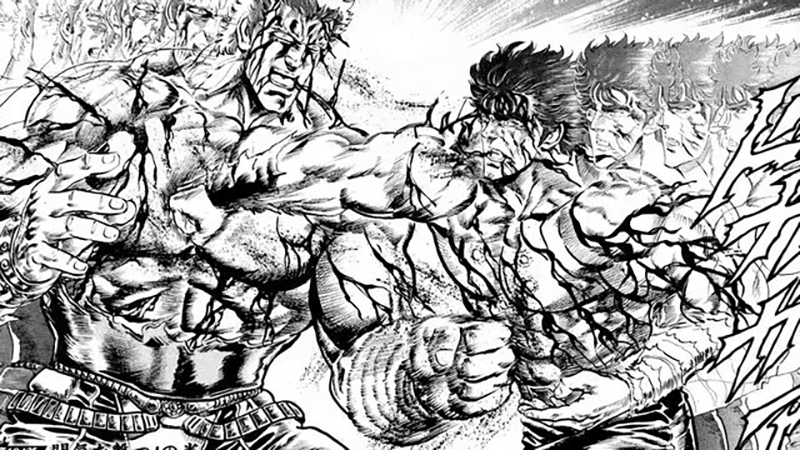
Over the course of the story, Kenshiro crosses paths with plenty of memorable characters. Allies like Rei and Mamiya add emotional texture, while Raoh stands out as one of shonen’s most brutal and popular antagonists. Hara’s art evolves, too: early volumes are blocky and ink-heavy, then sharpen into striking images of deserts, ruined cities, and hand-to-hand violence, complete with erupting bodies and the iconic “You’re already dead.”
The biggest limitation is structure. Fist of the North Star can feel uneven and episodic. Many supporting characters are one-dimensional, and the stakes are pushed to operatic extremes.
Still, if you’re looking for a long manga that delivers classic shonen brutality and mythic pulp, Fist of the North Star is an easy recommendation.
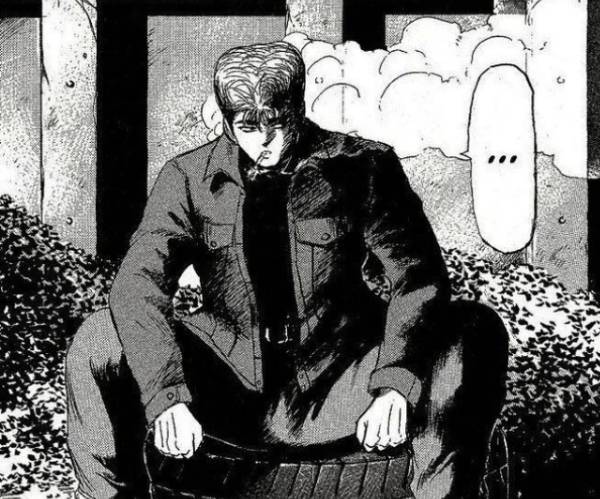
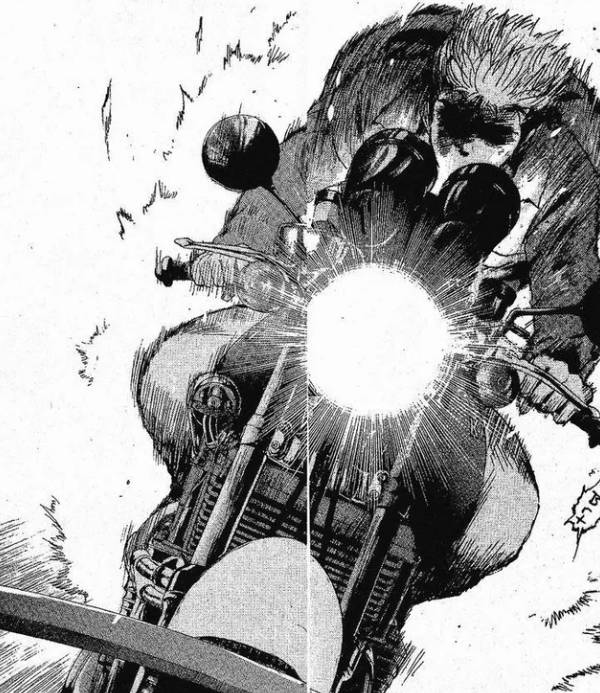
If there’s one long manga that embodies pure 1990s energy, it’s Great Teacher Onizuka. Iconic and notorious for multiple reasons, it’s a gag manga that blends chaotic classroom shenanigans with a surprising amount of heartfelt sincerity.
Eikichi Onizuka has one dream: he wants to be a teacher. The problem is, he’s an ex-biker who’s openly crude and perverted. Even to his own surprise, he lands a job, but is assigned to the school’s most notorious class. This group is so hostile that they’ve driven out every adult who’s tried to handle them. From here, the story centers on how he manages to win them over. His methods range from brute force and ridiculous stunts to occasional flashes of wisdom that catch both the students and the readers off guard.
That contrast is the real hook. The series is often absurd, but the best arcs land as genuine life lessons. Onizuka may act like a walking disaster, but he genuinely wants to help these kids. When he drops his clown persona to protect someone or give hard advice, he becomes something closer to a mythic mentor figure. The longer it runs, the more you see how much the supporting cast matters, because the emotional payoff comes from watching stubborn students slowly crack and reveal what they’re actually dealing with.
The downside is that it’s absolutely a product of its era. A lot of its perverted jokes haven’t aged well. Voyeuristic gags and fan service show up repeatedly. If that’s a dealbreaker, the series might be a tough read no matter how strong the heartfelt moments are.
The art matches the vibe and is full of gritty details, baggy clothes, and hard-edged faces. Even with the rough edges, GTO is a classic for its mix of outrageous school comedy and sincere teacher-student payoffs.
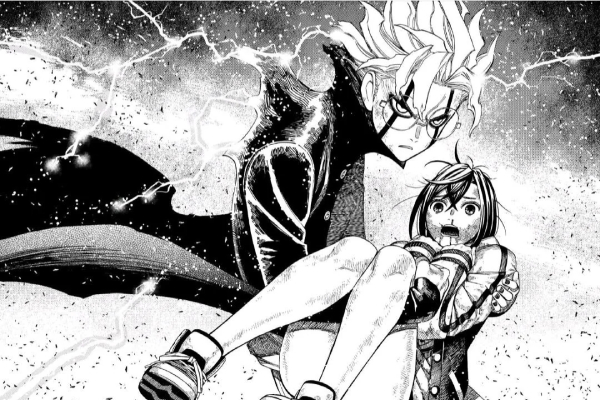
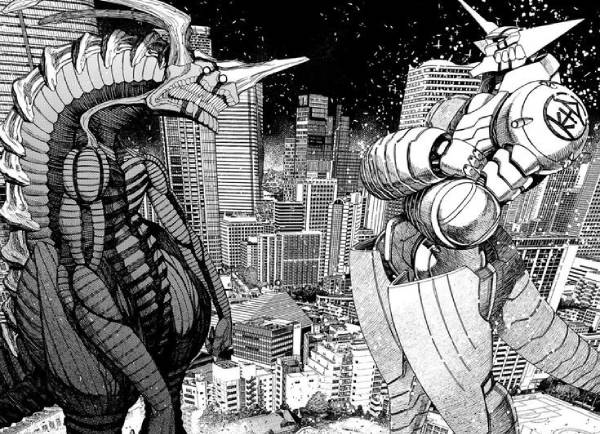
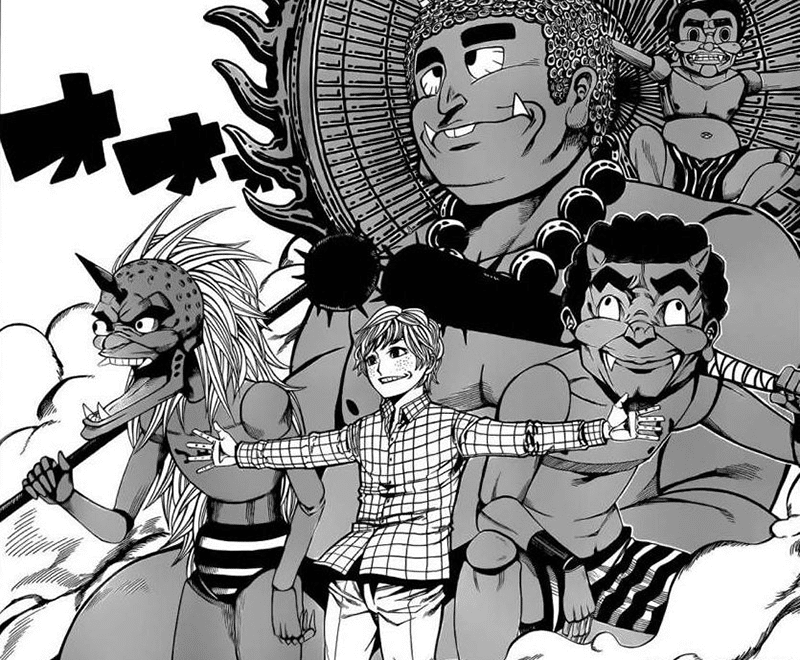
Dandadan is an ongoing long manga built on speed, whiplash, and escalation, a series that obliterates any notion of genre boundaries. Horror, science-fiction, folklore, romantic comedy, and battle shonen intensity all crash together into one of the most outrageous blends ever put to paper. It earns its spot through sheer momentum and imagination.
The hook is how confidently it swings between extremes. One chapter leans into grotesque supernatural horror, the next plays into romantic teenage awkwardness, then another throws you straight into kaiju-scale chaos. It might move from slapstick comedy to nightmare fuel without warning, yet it keeps a thread of emotional sincerity running underneath. The story repeatedly drops backstories shaped by trauma, perseverance, and loss, giving the spectacle a surprising human core.
The setup starts with a silly dare between students: Momo Ayase and Ken Takakura, nicknamed Okarun. One believes in ghosts, the other believes in aliens. They set out to investigate different paranormal sites and quickly learn that both sides of the argument are real. From there, the duo gets pulled into escalating supernatural chaos, and the cast grows into a large ensemble of equally quirky but memorable characters.
Yukinobu Tatsu’s visuals are the main draw. He’s great at exaggerated faces and unsettling details, while his sharp and hyperkinetic linework sells the escalating action. His creature designs are both unique and fresh. Yokai are rooted in folklore, but warped into modern grotesquery, while his alien technology has an otherworldly edge to it. Even when the action hits a massive scale, the choreography stays readable, and his big spreads are among the best in modern shonen.
The only real downside is the intensity. Tatsu’s constant attempts to top previous chapters and arcs can feel relentless, and the tonal swings might frustrate readers who are looking for a more steady lane.
Dandadan is a loud, erratic long manga that hops genres at full speed, but it still lands kinetic action and genuinely emotional moments.
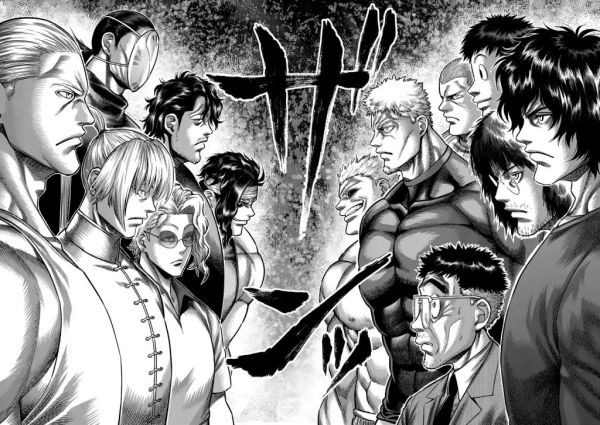
Kengan Ashura and Kengan Omega are long manga that focus first and foremost on pure hand-to-hand combat. Every chapter is built for impact: distinct silhouettes, individual styles, and matchups that never feel like filler. That focus is the point. You’re getting some of the cleanest, most satisfying fight storytelling in modern action manga, with just enough character and intrigue to keep the story from feeling mechanical.
The world’s hook is bluntly pragmatic. Disputes between major corporations aren’t settled in court but through brutal fights overseen by the Kengan Association. Companies hire fighters to represent them. One of them is Tokita Ohma, who’s soon thrown into the Kengan Annihilation Tournament, a violent power struggle that decides who leads the association. The stakes are money, reputation, and ruthless incentives, which keep the conflicts sharp and easy to follow.
What makes Kengan Ashura work is clarity. The fights can be exaggerated, but the escalation doesn’t rely on generic power levels. Techniques are pushed to extremes, bodies are treated like weapons, and the narrative frames it all as martial arts concepts. The art matches the intent: aggressive, readable exchanges and finishing sequences that land hard.
Kengan Omega keeps the same combat-first approach while changing the rhythm. Instead of one single event, it shifts toward a longer, more complex narrative and new leads like Narushima Koga and Gaoh Ryuki. The introduction of rival organizations and underground factions gives the series a much bigger scope, even as it veers into larger conspiracies and high-concept ideas such as cloning.
The biggest downside is that some of the new plot developments can feel outrageous compared with the earlier, more grounded tournament approach. The ever-growing cast of fighters can also dilute the focus.
Still, Kengan is a clean and well-structured series built around brutal, high-level fights that are both gripping and readable.
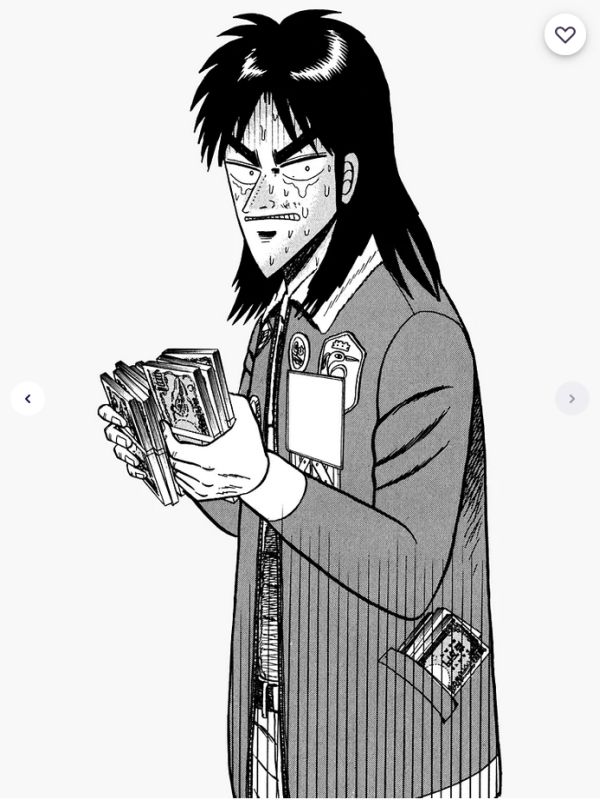
Kaiji turns ordinary debt into a horror story. It doesn’t need monsters or gore to feel brutal. It just needs interest rates, pressure, and a room full of people waiting for you to crack. That idea fuels a long manga saga that stays tense by keeping the danger familiar: bills, shame, and systems designed to profit from panic.
Itou Kaiji isn’t a prodigy. He’s broke, undisciplined, and has a bad habit of repeating the same mistakes. That is, until the real consequences arrive. A debt collector tells him he’s got to pay back a massive loan he co-signed. He’s offered an escape route, not realizing it’s just another trap. Before long, he finds himself taking part in predatory gambles, and his second chance is really a test of how far desperation can push him.
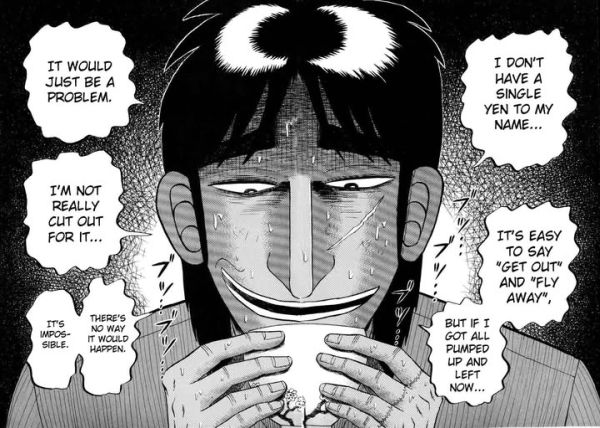
The games work because they make stress visible. Players assess risks, backstab each other, and are pushed into choices they’ll regret the moment a trap snaps shut. Winning means clawing your way back to a normal life. Losing means an even higher debt. Fukumoto’s big strength is readability. The rules are clear, the logic is trackable, and the tension comes from watching Kaiji fight his own impulses mid-gamble, while his fears scream at him. The story lingers on thought spirals and split-second decisions until every exchange feels like psychological warfare.
Underneath the gambles is a surprisingly moral core. Kaiji often gets punished for his kindness and trustworthiness, but he still believes people can be decent even in a system that rewards betrayal. It shows what poverty and corruption can do to people, and how those systems turn people into predators and prey.
The biggest downside is the pacing and presentation. Kaiji is famous for its extensive inner monologues, but they slow the story down, especially if you’re hoping for brisk twists. Another problem is the art, which can look odd, especially when compared to more polished mind-game manga.
Kaiji is messy and personal, but that’s exactly why it hits. It also doesn’t stop at one story, with follow-ups that keep escalating high-stakes scenarios, including later arcs built around pachinko and mahjong. It’s perfect for readers who want a long manga about gambling, where desperation feels real and stress dominates the page.
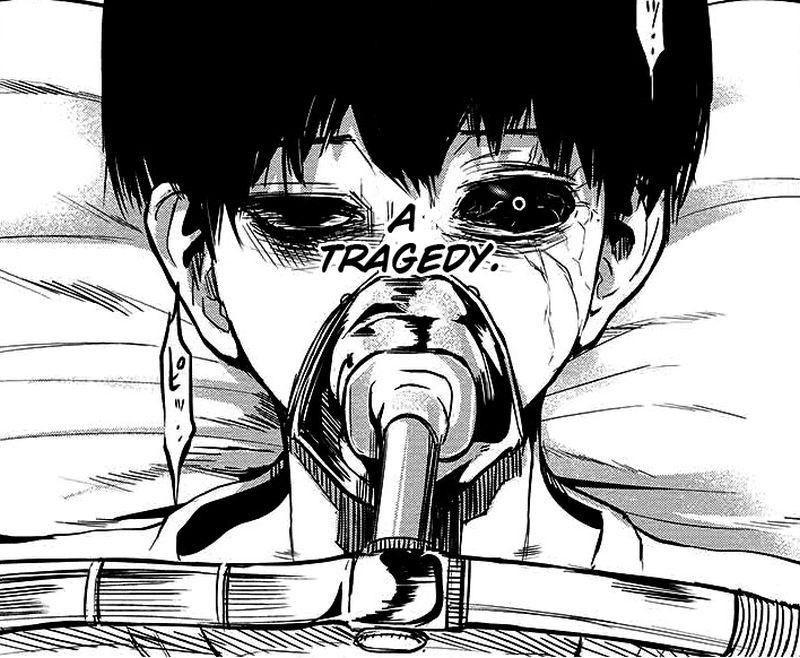
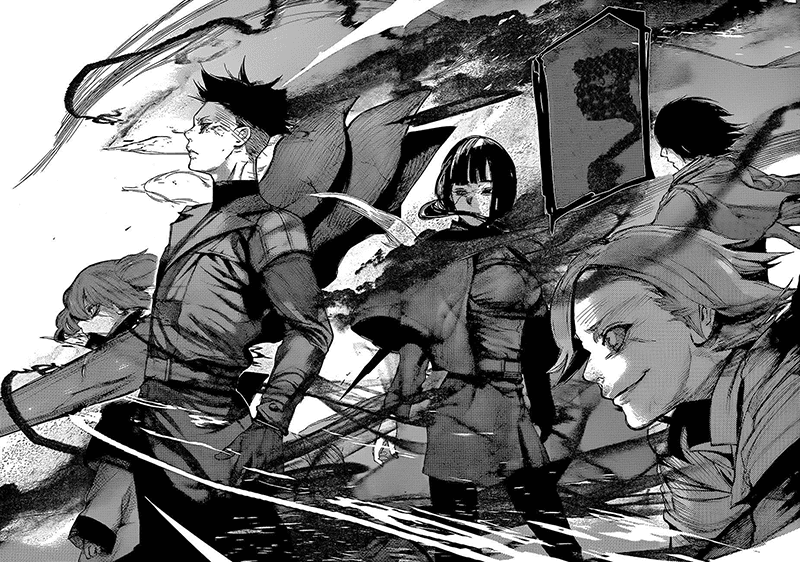
Tokyo Ghoul is one of the rare long manga that can deliver high-octane battles while keeping the atmosphere suffocating, pushing forward spectacle and misery in equal measure. That blend made it internationally popular and hugely influential, even when the later stretches get messy.
The world looks like modern Tokyo, except ghouls live among people, surviving by eating human flesh. Ken Kaneki starts as a naive college student, but his life changes forever when a date with the enigmatic Rize ends in catastrophe. An organ transplant leaves him half-ghoul, trapping him between human and monster. The tension is immediate: Kaneki is forced to survive in the hidden world of ghouls while CCG investigators hunt them with absolute conviction. The story’s early stretch leans into disorientation and identity, and that internal shock becomes as important as any external fight.
Eventually, Kaneki finds his way to Anteiku Café. It functions as a refuge and introduces a cast of complex characters that form the series’ core. From there, the long-form escalation kicks in. Rival factions enter the picture, and conflicts turn from personal grudges into large-scale battles. Thematically, the series thrives on duality, with the roles of predator and victim constantly flipping, as survival demands ever uglier choices.
Ishida’s art stands out for its fluid lines and heavy inks, which give the manga a suffocating personality. The Kagune weapon designs are the clear highlight, turning violence into something personal and grotesque. Ishida’s cityscapes are stunningly detailed and serve as the perfect backdrop for his intricate and dynamic fight choreography. Tokyo Ghoul:re raises the visual ceiling even higher, but it also makes the main drawback more visible: the larger cast and the bigger clashes become hard to follow, and repeated tragic backstories lessen the impact over time. Kaneki’s shift into a tragic antihero is also divisive, even if it’s central to the series’ identity.
If you want a long manga that pairs inventive fights with moral corrosion, Tokyo Ghoul is hard to shake.
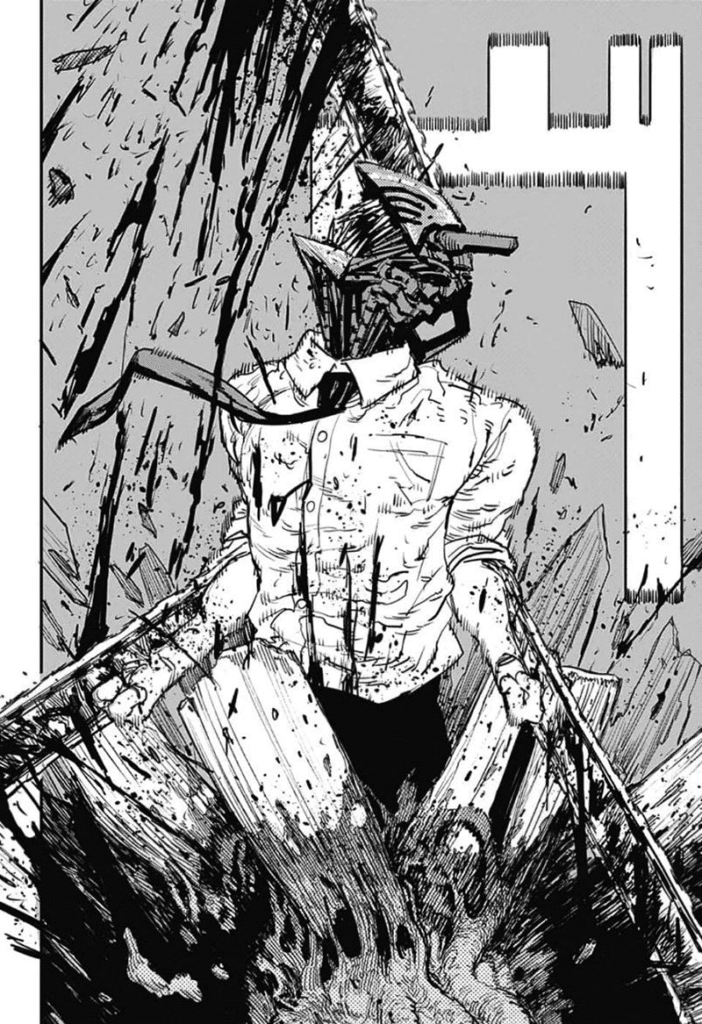
Chainsaw Man is a shonen manga that’s loud, funny, and weirdly sincere about how miserable people can be. As a long manga, it never settles into a comfortable formula, almost as if Tatsuki Fujimoto sees genre rules not as a guideline, but as something to ignore. It’s a series that keeps flipping the board, sometimes mid-chapter, and that instability is exactly the point.
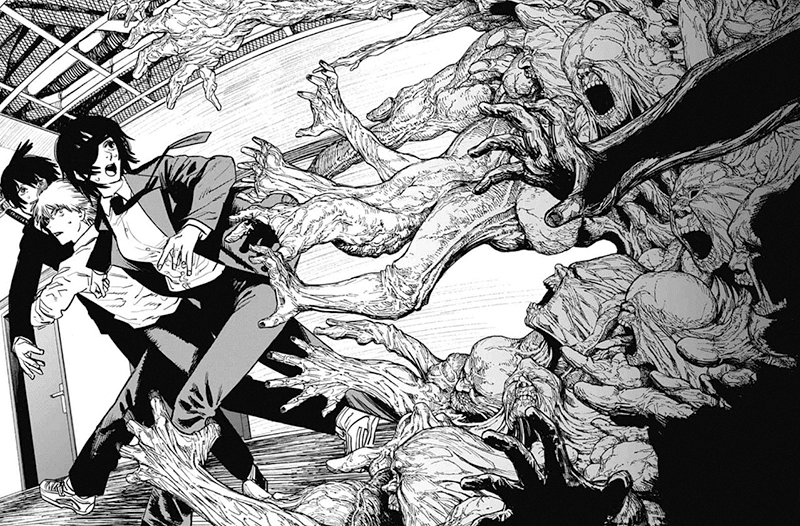
The premise is deliberately ridiculous. Denji is a broke, desperate kid crushed by debt. He’s forced to work for the yakuza, but when they betray him, he fuses with his pet devil Pochita. This transformation turns him into a chainsaw-headed monstrosity. With his newfound abilities, he’s recruited into Public Safety, a government bureau tasked with eradicating devils. Instead of leaning into parody, Fujimoto plays it straight. The devils are the obvious hook: grotesque, inventive nightmare designs, fights drenched in blood and viscera, and powers that feel like fever dreams made real. Under the madness is an emotionally devastating core. Chainsaw Man is a series about exploitation, loneliness, trauma, and the desperate wish for connection. Denji’s dreams may be embarrassingly small, but the manga turns them into something genuinely compelling.
The cast is another major reason it sticks. Power’s feral energy brings chaotic comedy, Aki gives the story tragic gravity, and Makima is mysterious in a way only a truly dangerous leader can be. Fujimoto’s raw, sketchy art style can appear crude at first, but it fits the grime and speed, and it keeps the violence feeling immediate instead of polished.
Part 2 grows more surreal, more grotesquely funny, and more unpredictable, expanding the scope while keeping the emotional weight high. It’s not the longest manga here, but that’s because it’s built in parts rather than one continuous run.
The main drawback is the same reason fans love it: tonal whiplash and sudden brutality. Some readers will find the pacing abrupt, and the constant rule-breaking can make the experience intentionally unstable.
As a long manga, it’s faster and stranger than almost any other shonen. It blends brutal violence, surreal humor, and emotional damage into a wild ride.
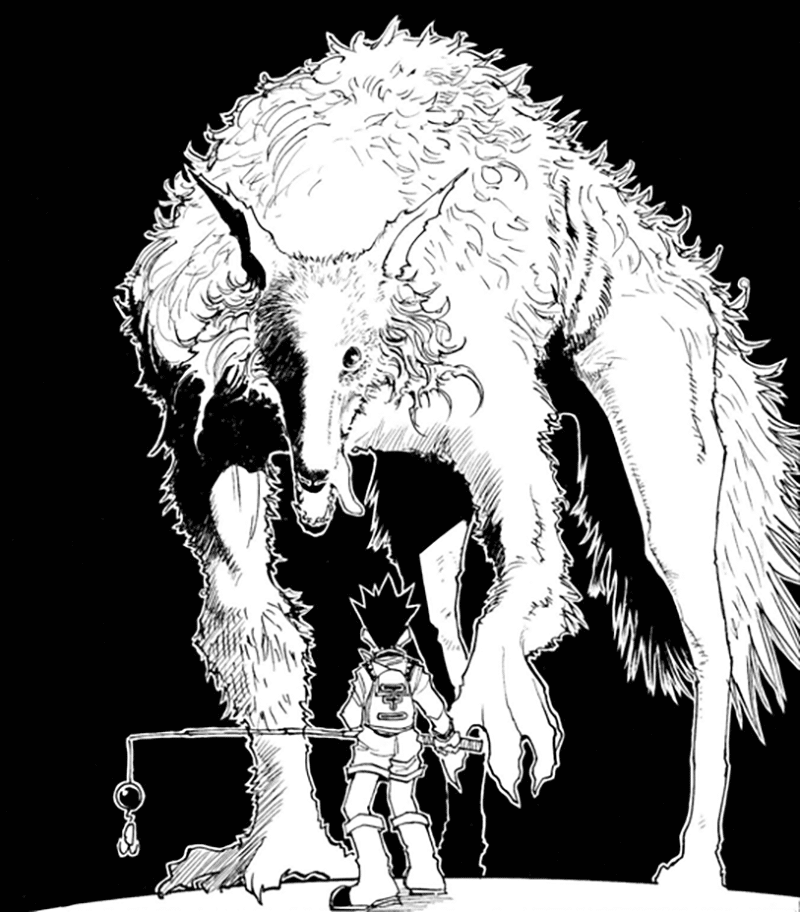
Hunter x Hunter is a long manga that keeps getting smarter instead of just bigger. Yoshihiro Togashi starts with an adventure premise, then steadily reshapes the series into something more ambitious and genre-breaking by deepening mechanics, characters, and stakes. That evolution makes it one of the sharpest shonen ever made, even if the experience is not always smooth.
Gon Freecss starts with a classic motivation: becoming a Hunter to find his father. To do this, he has to pass the Hunter Exam, a series of deadly trials. The early arcs lean heavily into traditional shonen territory: rivals, allies, training, and the promise of a far larger world beyond it. Then the series reveals its true identity.
Nen changes everything. It’s one of manga’s most intricate power systems, with abilities defined by personality and individuality. Conflicts are built on rules, conditions, and clever trade-offs, while tactics are directly tied to character.
The cast carries the long run. Gon’s bond with Killua gives the story its emotional core. Allies like Kurapika and Leorio add their own philosophies to the mix, and the antagonists add constant tension. Hisoka and the Phantom Troupe stand out as some of shonen’s most memorable villains. Later arcs raise the ceiling again, with the Chimera Ant arc delivering a legendary antagonist and some of Togashi’s most ambitious storytelling beats.
If there’s one drawback, it’s consistency and accessibility. The art quality can swing wildly from breathtaking spreads to rough sketches, and arcs vary in pacing and tone. The worldbuilding can also turn into dense exposition, where dialogue and rules pile up. And, of course, the ongoing hiatus status means readers have to accept long delays and uncertainty.
Hunter x Hunter is a long manga that asks you to think, track rules, and follow long strategic setups, but rewards you with complex, tactical battles and deep character psychology.
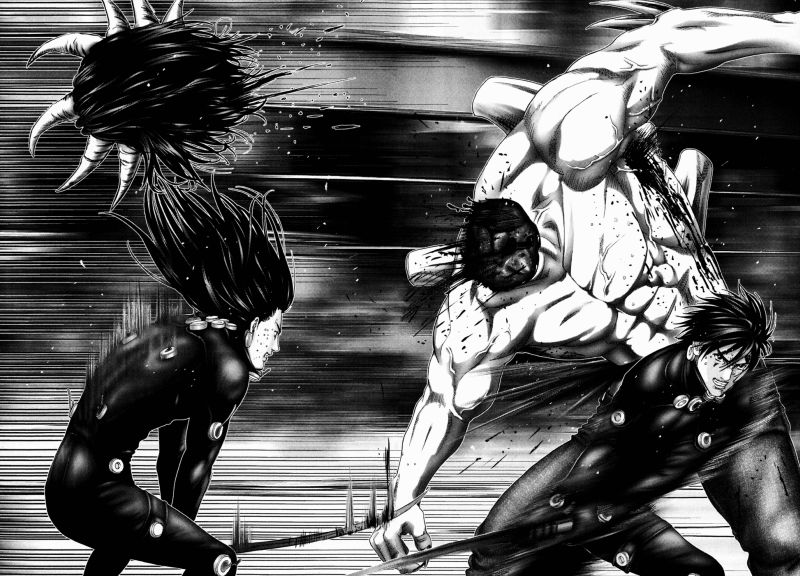
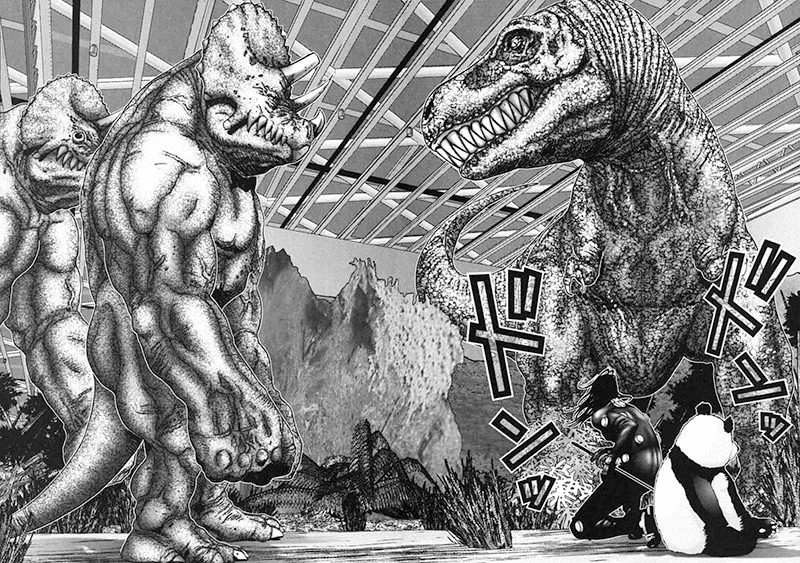
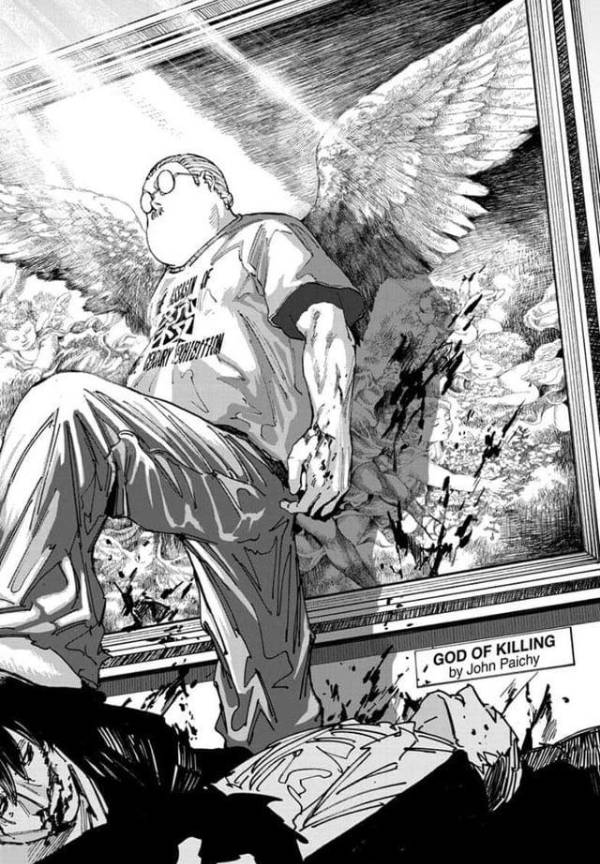
Gantz is pure excess. Hiroya Oku turns a long manga into a spectacle, blending science-fiction, horror, and action until each arc feels bigger, uglier, and stranger than the last. Even when its rougher edges become impossible to ignore, the highs are unforgettable.
Kei Kurono and Masaru Kato die while saving a stranger, then wake up in a Tokyo apartment with other confused people. There, a black sphere, Gantz, drafts them into lethal missions to hunt aliens, and survival borders on a miracle. The baseline stays brutally consistent: death is normal, and anyone can be erased in seconds. This keeps the tension high across roughly 400 chapters because the story treats its cast as disposable pieces in a deadly game.
The action is the main appeal. Dialogue is often secondary, battles are chaotic, and the violence is fluid, graphic, and constantly escalating. The alien designs make it even better: surreal, inventive, and frequently terrifying, with fights that can pivot from grotesque horror to full-scale war. Just as important is how grim the real world feels. Oku’s Japan is bleak, with sexual violence, exploitation, and bullying everywhere.
Kurono’s evolution is the real surprise. At the start of the story, he’s an arrogant and selfish teenager, but survival forces him to grow, and he gradually becomes a leader with genuine courage and empathy. The supporting cast stays distinct enough that every mission feels high-stakes.
The downsides come from length and Oku’s ambition. Subplots get introduced but never truly resolved, with the vampire storyline being the most notorious example. The final stretch escalates into invasion-scale chaos, but ends with a rushed climax.
Still, Gantz is a long manga that stands out for unmatched alien designs and brutal, unpredictable missions. It’s pure adrenaline: messy, loud, and thrilling.
One Punch Man is the rare kind of long manga where the biggest and loudest fights are often treated as punchlines, but somehow both parts still work. Based on the webcomic by ONE and illustrated by Yusuke Murata, it builds an action-comedy series around a single absurd idea, and still delivers genuine spectacle.
Saitama is an ordinary man who became impossibly strong. Now able to defeat every enemy with a single punch, he realizes that being unbeatable is its own kind of misery. Even after joining the Hero Association, he wanders through disasters bored out of his mind, hoping for an opponent who can actually make him feel something. The series keeps that joke sharp by refusing to focus on it. Instead, it hands the dramatic weight to a huge supporting cast and lets them carry entire stretches where Saitama barely appears until the last possible moment.
That structural choice is the secret. You get desperate battles that feel unwinnable. Heroes push themselves past their limits against threats that feel world-ending, only to get crushed. When Saitama finally shows up and ends the crisis in an instant, the punchline lands on top of a genuinely gripping fight, which makes the comedy feel satisfying instead of lazy. The side cast is also more than just window dressing. Garou’s arc in particular stands out for its darker, more character-driven spine, and major figures like King steal every scene they’re in.
Murata’s art is another major reason the series stands out. Monster designs are inventive, the action choreography remains readable at high speeds, and big spreads hit like major events. Large arcs, especially the Monster Association conflict, become a sprawling showcase of cinematic motion, and allow almost every side character to shine.
The only limitation is the same perfectionism that makes it gorgeous. Chapters and even entire arcs can get redrawn, sometimes multiple times, which slows releases down and can make the story confusing. Some extended fights can also stretch the reader’s patience, especially when Saitama doesn’t show up for long stretches.
One Punch Man delivers pure hype, then undercuts it with constant, deadpan satire. If you’re looking for a long manga that can make you laugh, then land blockbuster-style battles, it’s an easy recommendation.
Liar Game is a long manga that weaponizes rules. It’s strategy-first storytelling where the real villain is game design, and the tension comes from watching people reveal who they really are when money is on the line. Shinobu Kaitani builds psychological warfare through increasingly elaborate games. This keeps the pace tight, lets the reveals land, and always makes you want to read just another chapter.
We’re introduced to Kanzaki Nao. She’s an absurdly honest young woman who suddenly finds herself pulled into a competition called the Liar Game. The stakes climb into the millions of yen, and the rules are built around manipulation and deception. When she loses her money, she enlists the help of legendary swindler Shinichi Akiyama. He resists at first, then joins her, and the series becomes a two-person campaign to dismantle the organization behind the games.
The rounds are the heart of it. They start out deceptively simple but evolve into complex, multi-layered scenarios where thinking ahead is the only way to win. The suspense doesn’t just come from smarts, but from reading the room. Akiyama is great at reading incentives and exploiting human weaknesses the rules bring out. He sets traps, gets counter-traps thrown back at him, and still stays ahead.
Rivals keep the long run from stagnating and raise the stakes. Players like Yokoya and Harimoto are more than a match for Akiyama, pushing him to his limits and turning rounds into sustained one-upmanship. Not every character has that depth, and some function as archetypes, but when the manga introduces a strong opponent or a particularly intricate set of rules, tension spikes. The Contraband Game still stands out as an example of the series operating at its best.
Kaitani’s art prioritizes readability, with clean environments and distinct character designs, though facial expressions can veer into the theatrical. The biggest downside is the exposition. Rule explanations can run too long, especially during more complex games. The ending also feels rushed and anticlimactic.
Liar Game is a long manga built on mind games, shifting alliances, and incentive-driven twists. It’s perfect for readers who love thinking ahead and tracking mechanics.
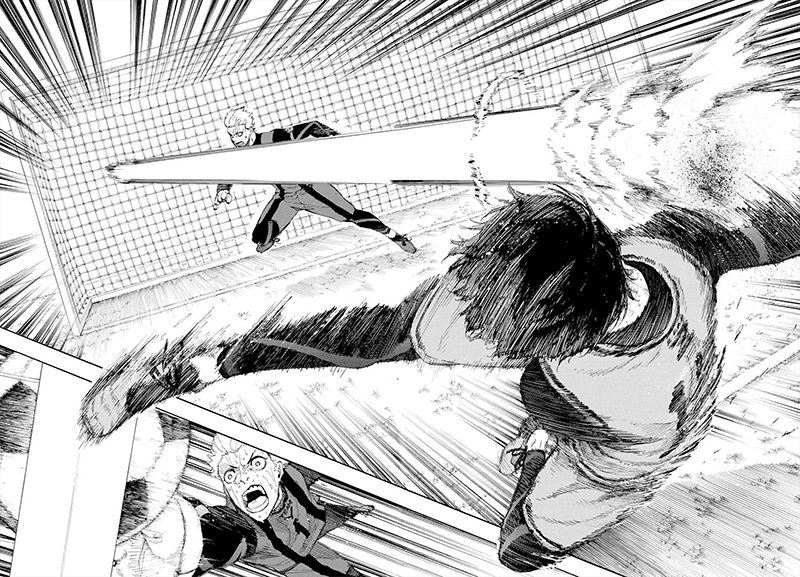
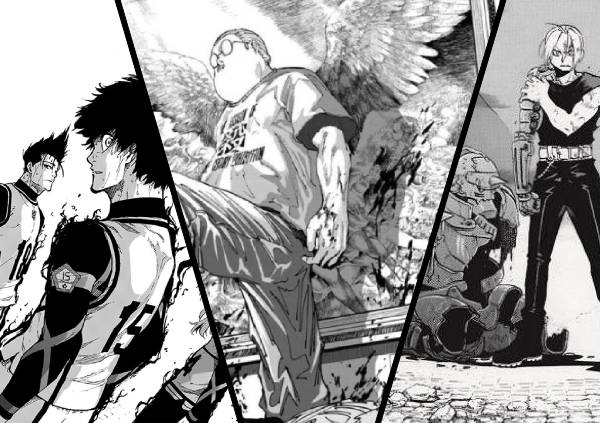
Blue Lock is a long manga built around soccer, but not in the traditional way. Muneyuki Kaneshiro and Yusuke Nomura take a familiar training camp setup and turn it into battle shonen escalation: high-stakes, psychological pressure, and art so hyped it can make you hold your breath during a single pass. It’s relentlessly addictive, even if you don’t care about soccer, because it constantly raises the stakes without ever losing its core rush.
Japanese soccer has a major problem: it’s missing a world-class striker. Jinpachi Ego proposes Blue Lock, a special facility to create one ultimate striker. Three hundred young strikers enter, but only one of them earns the right to play on the national team. That single twist becomes the series’ core dynamic. Teamwork becomes conditional, alliances become temporary, and every decision is judged by whether it produces a goal.
Yoichi Isagi enters this system as a relatively unremarkable player. While he struggles at first, his near-limitless adaptability and spatial awareness soon give him an edge and allow him to evolve every time the environment changes. Blue Lock’s matches are less typical soccer and more psychological warfare, and the art makes that literal. Nomura visualizes tactics as weapons, clashes as chemical reactions, and ego spikes as monstrous auras. The field becomes a mindscape where even a single pass can be match-defining.
The cast is among the best in modern shonen, populated by personalities as memorable as they are quirky. Characters like Bachira, Nagi, Chigiri, and Barou all throw their own egos and philosophies into the mix. Later foils like Kaiser keep raising the bar by embodying a colder, sharper version of the same ego philosophy.
Structurally, the series keeps escalating, moving from brutal eliminations to an all-or-nothing U-20 clash, and eventually reaching the global stage.
If there’s one downside, it’s subtlety. It’s intentionally ridiculous, and the ego focus can become repetitive if you want more grounded sports realism. Compared with other team-first soccer manga, Blue Lock can feel unapologetically individualistic.
Still, if you’re looking for a long manga that’s pure hype and turns a traditional sport premise into something akin to a shonen battle manga, Blue Lock is a knockout.
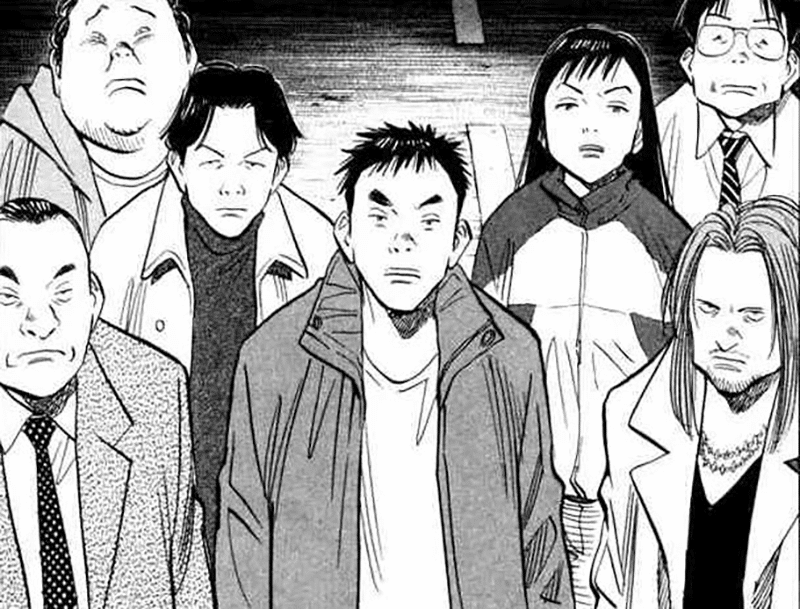
20th Century Boys is a long manga that makes nostalgia feel dangerous. Naoki Urasawa takes the warm glow of childhood memories and slowly poisons it with paranoia. It’s among the most gripping conspiracy thrillers in manga, built not just on twists, but on the feeling that real people are being dragged through something they helped create without meaning to.
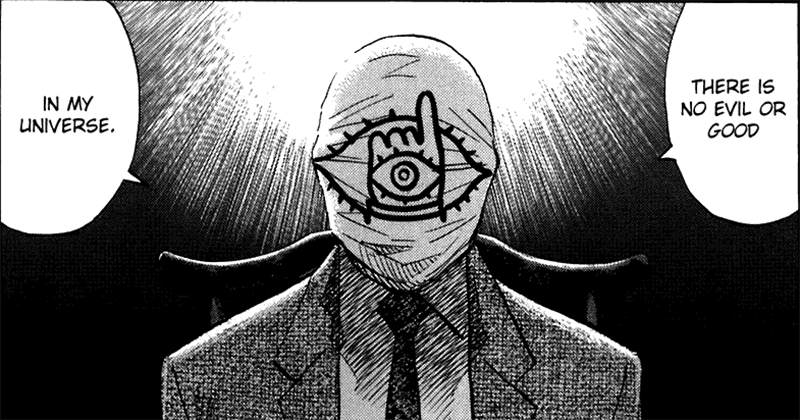
Kenji Endo is the perfect anchor for this kind of story. He’s a former musician who now runs a convenience store, living an ordinary adult life. Then it collapses overnight. A childhood friend kills himself, and a mysterious cult rises in influence. Even stranger, the cult’s leader, a masked man only known as Friend, uses rhetoric that’s eerily familiar. Soon Kenji realizes it echoes something he and his friends created as kids: the Book of Prophecy, a collection of imaginary disasters. That recognition forces a reunion. Together with his old friends, Kenji sets out to uncover how his childhood games spawned a real-world movement that threatens humanity.
Urasawa’s biggest achievement is the manga’s structure. The series spans multiple eras, moving through the late 1990s, 2014, and a future where Friend rules Japan, all while weaving in childhood flashbacks. It might sound confusing, but it’s handled with meticulous care, so the mystery always stays coherent. This is exactly why it works as a long manga: you feel the past contaminating the present. It creates a specific kind of atmosphere, one that’s part nostalgia, part dread.
The art supports that approach. It’s grounded and functional, but shines in the character work. No matter the timeline, every character is instantly recognizable. Backgrounds make the setting feel alive, and the cinematic paneling avoids turning time jumps into a cluttered gimmick, letting tension come from faces and quiet reactions as much as from big reveals.
The main limitation is the late-series scale. The first two arcs are a near-perfect mystery, but the Friend Era stretch can feel shakier. The stakes expand to near-global limits, making the conspiracy feel overwhelming rather than grounded.
As a long manga, 20th Century Boys is perfect for readers who want a sprawling mystery that turns childhood imagination into a terrifying adult conspiracy.
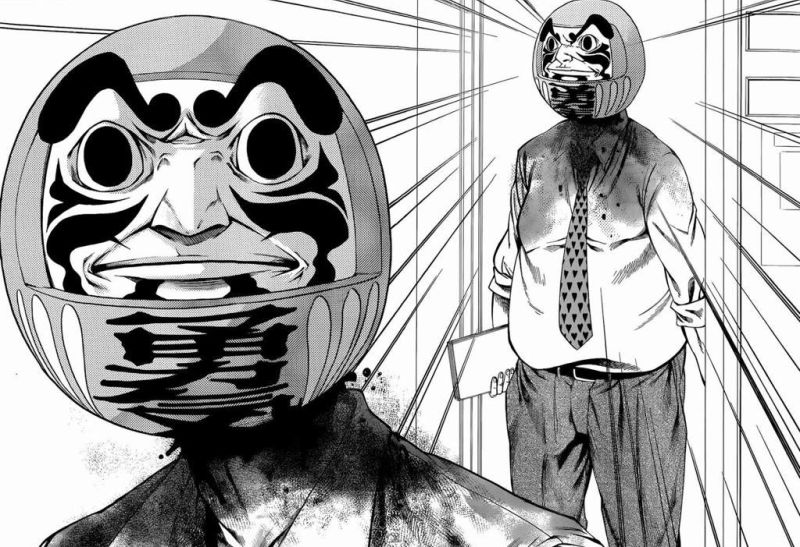
Kamisama no Iutoori and Kamisama no Iutoori Ni are long manga that take a familiar survival game template but keep it new through sheer unpredictability: brutal challenges, surreal logic, and a cast volatile enough to turn every round into a personality collision. Their creativity stays ferocious across two parts, even when the series makes choices that might split readers.
The series announces its premise with pure shock. A teacher’s head explodes, a strange doll appears, and the students are forced to take part in a deadly children’s game. Shun Takahata is trapped in this hell, and quickly realizes that normal rules don’t matter anymore. The story turns into a tour de force of challenges built around twisted versions of childhood activities and folk traditions, each one a puzzle box with simple surface mechanics and hidden rules underneath. The suspense comes from what you missed. Every game rewards cleverness, punishes hesitation, and corners characters into desperate decisions.
What separates it from other series isn’t just the games, but the people dropped into them. Many death game manga use familiar archetypes, but not Kamisama no Iutoori. Its cast stands out for its unhinged personalities. Amaya steals the show during the series’ first part, because of his combination of charisma and sociopathy. Kamisama no Iutoori Ni introduces the equally dangerous Ushimitsu, but the longer run gives him room to develop real depth, making him the series’ most fascinating character. The one weak link is Akashi. He’s good-hearted, almost to a clichéd degree, and is more reminiscent of traditional shonen leads. While it can throw off some readers, it only serves to highlight how strange the rest of the roster truly is. The long-form appeal is to see alliances form, fracture, and explode under pressure, often because characters can’t help revealing who they really are.
The sequel structure is another reason it feels so big. The first part is relatively short, and you can read it in a single sitting, while the second part expands the world with a new group of players, challenges, and lore before tying back into the original storyline. Visually, the jump is dramatic. While Kamisama no Iutoori is solid, the second part is much more refined, featuring better action, more style, and spreads that are simply stunning. Late-game chapters stand out for pushing the suspense through the ceiling with cinematic paneling and dramatic character moments.
The only downside is the pacing and the payoff. While the sequel introduces many new and complex games, some of them overstay their welcome. The ending remains divisive, with some readers loving it and others hating it.
Kamisama no Iutoori is a long manga that turns children’s games into surreal, character-driven slaughter. It uses absurdity like a weapon and features a cast of genuinely fascinating characters.
Sakamoto Days is a long manga powered by velocity. It starts with a simple gag, then turns into one of the most consistent and stylish action series running right now. Yuto Suzuki’s real trick is momentum: the story constantly moves forward, the fights escalate, and the pages always feel alive with motion.
The name Taro Sakamoto once spread fear through the underworld. He was known as the ultimate assassin with unmatched skill and with a brutal reputation. Then he vanished. He didn’t die. He got married and now runs a convenience store with his wife. Now retired, he still has to live with the fallout of his past. When a bounty is placed on his head, bounty hunters, rival killers, and old associates swarm in, either to claim it or to settle unfinished business. What makes the situation even more complicated is Sakamoto’s vow to never take a life again. This turns every encounter into a challenge: how does a man built to kill end fights without crossing the line?
Early arcs play the concept for laughs. Sakamoto has to somehow juggle family life with sudden ambushes. Fights are constant, turning aisles into battlegrounds and household items into improvised weapons. It’s funny and gives off a similar vibe to One Punch Man, but then the scope widens. Sakamoto learns that the bounty on his head was placed by X, the leader of a shadowy organization. From there, the series changes from a light comedy into an escalating battle manga with some of the most dynamic and fluid action in modern shonen.
The key is the choreography. Suzuki’s art is reminiscent of the sketchy and loose style of Hiroaki Samura, but it’s equally readable. Wide shots, close-ups, and tracking panels make every motion legible, no matter the weapons used. The supporting cast is a colorful ensemble that keeps the friction constant. There’s Shin, a telepathic ex-hitman, Heisuke, a fledgling but talented sniper, and Nagumo, Sakamoto’s ex-partner. They all have their own fighting styles and personalities, making matchups feel varied even when the premise stays simple.
The downside is the substance. The plot is thin, the emotional stakes are lighter, major deaths are rare, and moral consequences are almost nonexistent. It’s style over substance, but that’s exactly what makes it work so well.
Sakamoto Days is a long manga that lands because of its choreography-focused action, nonstop momentum, and deadpan banter.
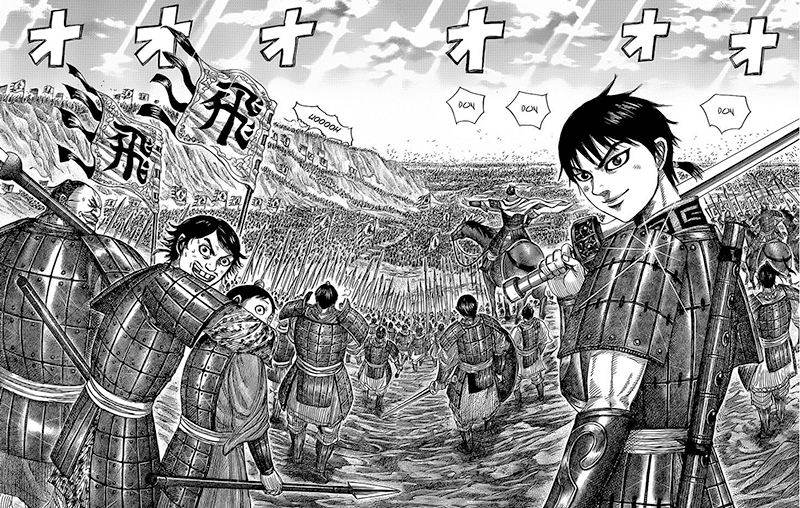
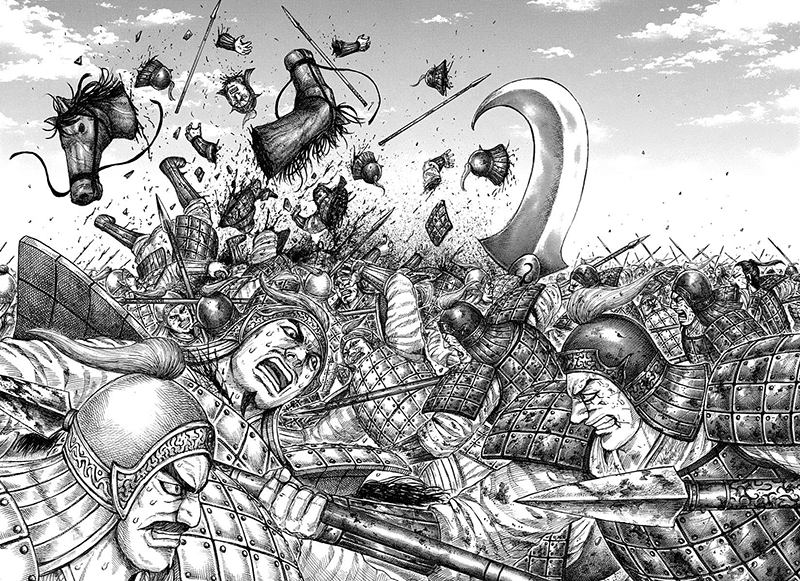
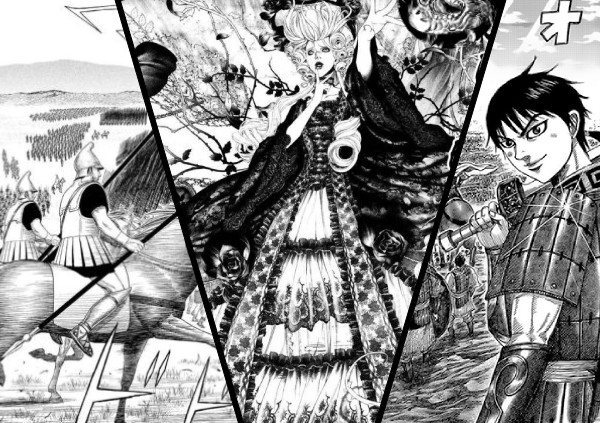
Kingdom is the kind of long manga that makes scale feel like a choice. Yasuhisa Hara doesn’t just stage battles. He builds enormous campaigns and sprawling court politics into one of the most popular historical series running today. All the while, he keeps widening the scope without stalling, and it stays rewarding deep into its run.
The core dynamic comes from double ambition. Shin begins as a servant boy who becomes entangled in political chaos. From there, he sets out to become a Great General Under the Heavens. In parallel, Ei Sei, the young king of Qin, sets out to unify China. Their partnership forms early, and the tension comes from watching both sides, one centered on personal glory, the other on nation-building.
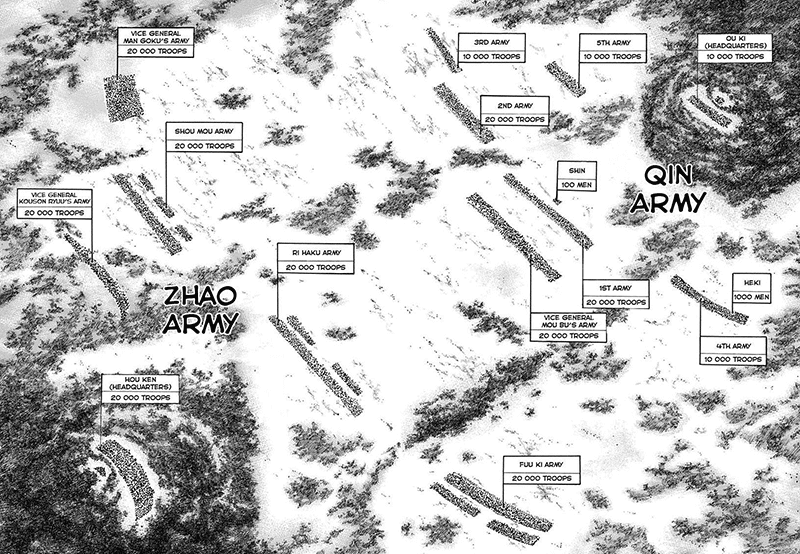
Kingdom’s signature strength is tactics you can actually follow. Huge armies in the tens of thousands collide, but the real hook is the strategies underneath: formations, feints, counters, supply pressure, and psychological traps can take whole chapters to set up before a single breakthrough lands. Because this is an ongoing manga with 800+ chapters, that campaign structure makes it so gripping. Each major conflict reads like its own epic, then funnels directly into the next political shift or military crisis.
The political layer carries equal weight. Ei Sei’s position is shaky at best, and Chancellor Ryo Fui provides a foil that turns court politics into a power game that offsets the battlefield carnage. Before long, the narrative opens up further, including rival states where alliances and threats are constantly shifting. The cast is enormous, but the standouts stick: the legendary General Ou Ki, the calculating brilliance of Riboku, the brutal strategies of Kanki, and a roster of commanders who bring distinct styles of warfare to each arc.
Visually, the series starts out unevenly, then improves dramatically once the first large-scale battles arrive. Hara’s art grows into sweeping spreads of ancient cities, massive fortresses, and combat that makes the geography of war feel real, not abstract.
Kingdom’s biggest downside is its earlier stretches and protagonist. Shin can lean hard into hot-blooded shonen energy, and his rapid rise can stretch believability. Kingdom also takes liberties with history, condensing or dramatizing events for the sake of pacing and impact.
If you’re looking for a long manga that delivers giant campaigns with clear tactics and relentless momentum, read Kingdom.
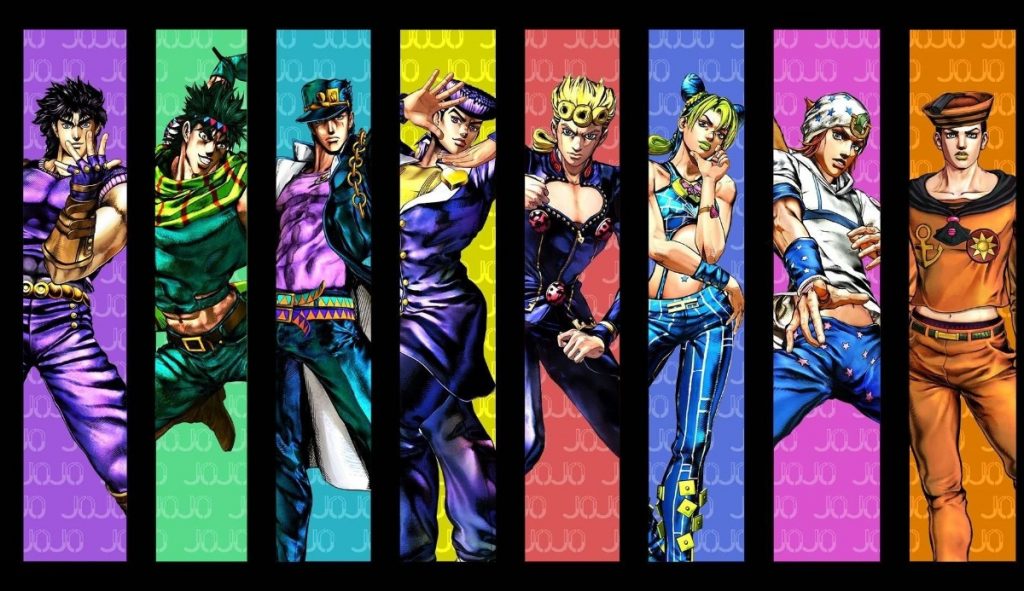
JoJo’s Bizarre Adventure is a rare long manga that refuses to stay in one lane. Hirohiko Araki’s saga has run for over three decades, and its cultural footprint is huge, especially with its anime adaptations helping newer readers discover it. What makes it so special is how it keeps moving and evolving. It survives by reinventing its rules, its aesthetics, and even what a fight is allowed to be.
The series begins in the late 1980s as a pulpy gothic shonen rooted in vampires and larger-than-life melodrama. The early foundation has its own charm, but JoJo really finds its footing in Part 3 – Stardust Crusaders, with the arrival of Stands, the series’ real creative hook. Once they enter the picture, the series becomes a fever dream of strange abilities, situational tactics, and battles that feel like puzzle-solving with style.
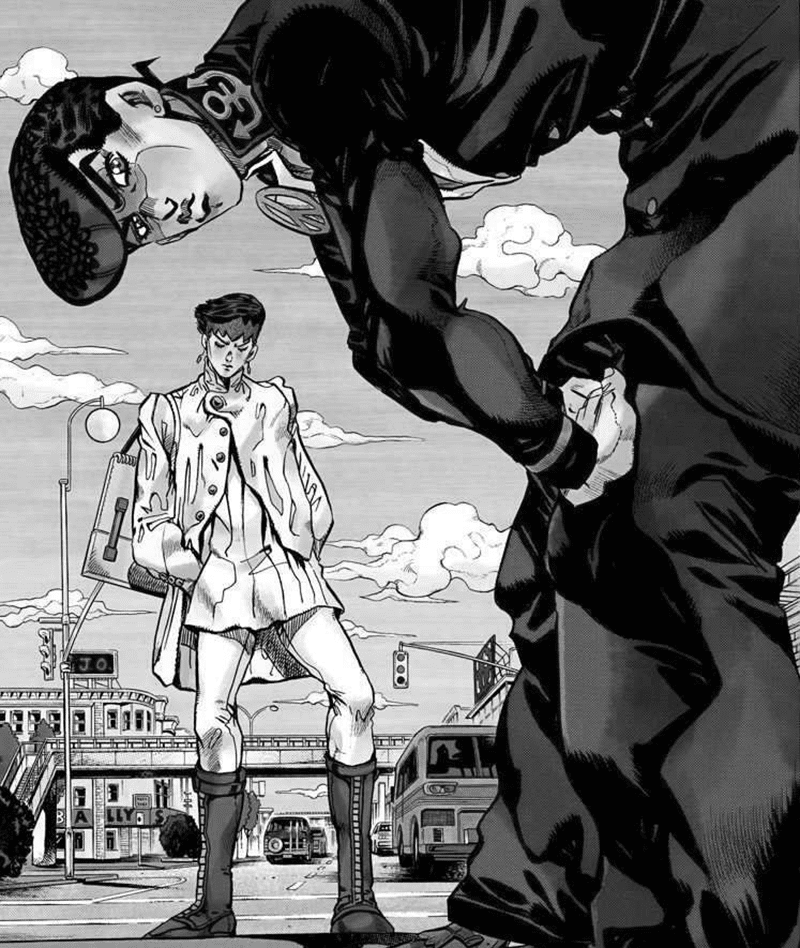
Each part functions as a soft reboot, changing the setting, tone, and the shape of the conflict while still feeling unmistakably JoJo. Part 3 is globe-spanning, built on escalating Stand encounters and a confrontation with the series’ prime antagonist, Dio Brando. Part 4 – Diamond is Unbreakable puts us in Morioh, a small Japanese town. Support and situational abilities replace pure battle Stands, and the art shifts from exaggerated muscularity to a more fashion-forward stylization.
Part 5 – Golden Wind is set in Italy and leans into fast, team-driven momentum, while Part 6 – Stone Ocean takes a more surreal approach inside an American prison. Part 8 returns to Morioh again, but with an amnesia mystery framework and the bizarre presence of rock humans. Even now, the series continues with Part 9 in Hawaii, following characters willing to use illegal means to get ahead, which proves that Araki can still make it work with new angles.
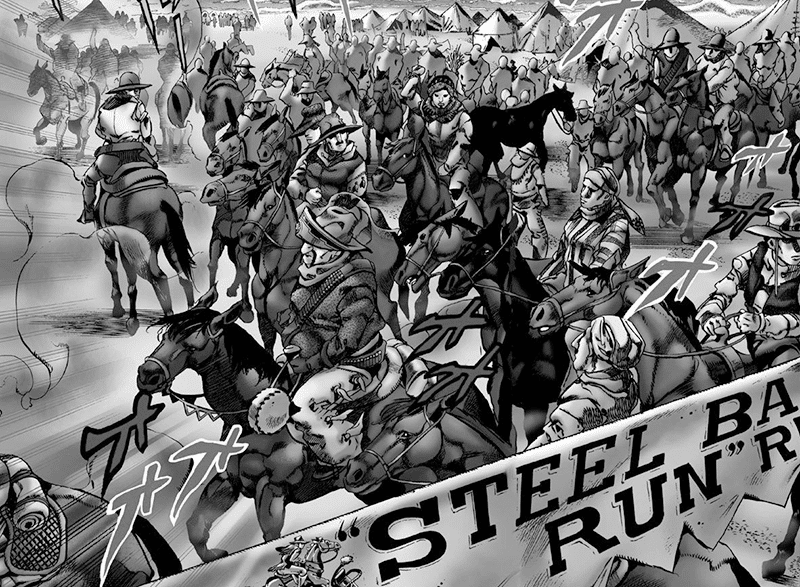
With that constant reinvention, many readers single out Part 7 – Steel Ball Run as the pinnacle. The alternate-universe cross-country horse race from San Diego to New York, led by Johnny Joestar and Gyro Zeppeli’s Steel Balls and Spin technique, delivers conspiracies, Stand battles, and constant forward momentum with some of Araki’s most expressive art and cinematic spreads.
If there’s one downside, it’s that the reinvention can be uneven. Some parts lean into episodic encounters, and the earlier volumes can feel dated if you want modern pacing and art.
JoJo stands apart as a bizarre anthology series that constantly reinvents itself, featuring some of manga’s most surreal battles and most memorable characters.
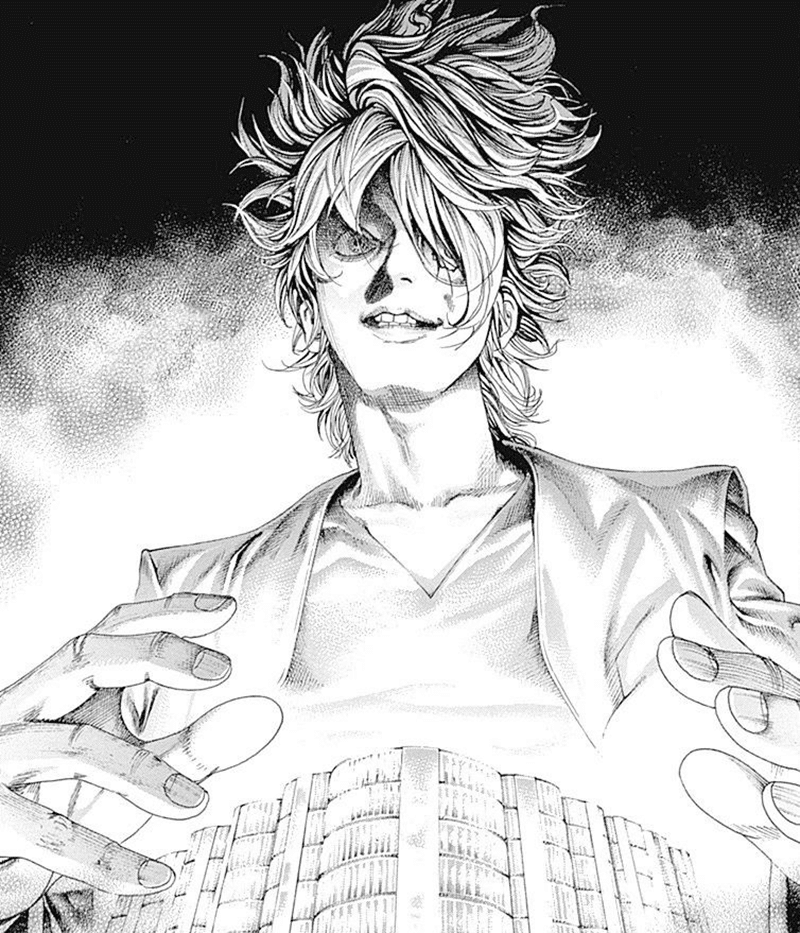
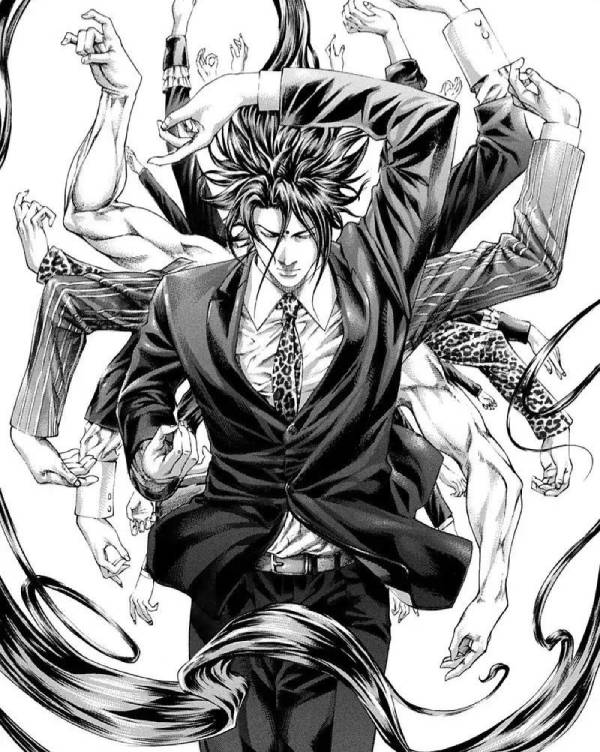
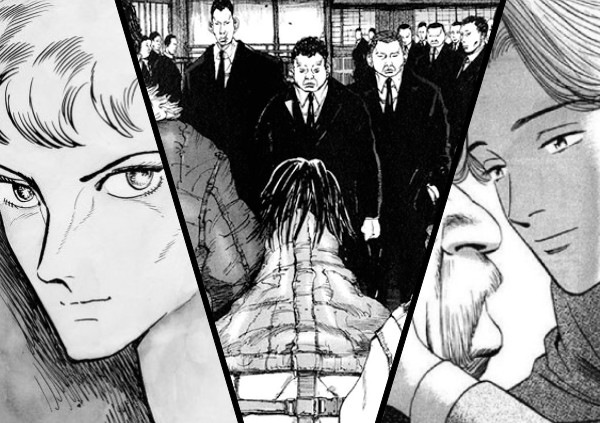
Usogui is a long manga that demands patience, then rewards it with some of the greatest arcs in manga history. It’s a high-stakes gambling series that starts out decent, then keeps upgrading its tension, game design, and presentation until it becomes the peak of the genre.
Baku Madarame, known as the Lie Eater, is a thrill seeker who throws himself into deadly gambles overseen by Kakerou, an underground organization of referees built around enforcement. Every bet is honored. Every game is completed. The stakes are life and death, and the psychological pressure would break normal people before the rules even matter. Baku’s calm confidence feels almost inhuman, which makes you wonder not just how he’ll win, but what he can see that nobody else does.
The biggest limitation is that the early stretches can be rough. The first arc leans more into survival horror and is a far cry from later, layered gambles. While the art reaches cinematic levels later on, it starts out weaker. The action is stiff. The characters are less detailed, and you can tell it’s Toshio Sako’s debut series. The first great battle of wits comes during the Labyrinth arc, and it features many of Usogui’s signature strengths: psychological tension, double and triple bluffs, intricate cheating, and complexity that makes you constantly second-guess what you think you understand.
From there, Usogui only keeps getting better. The Tower of Karma is one of the series’ first peaks. It features a complex game, full of intricate moves, twists, and reversals, and it’s also the point when the art finds its true footing. By this point, it’s stunning, with kinetic panels, masterful pacing, and characters that are not just sharp but hyper-stylish. The following Protopos arc escalates things even further, featuring a Three Kingdom-style battle for domination, and ends with one of manga’s most brilliant showdowns: Air Poker. To me, it’s the absolute peak of gambling manga. It’s defined by constant reversals, hidden strategies, and tension so high it never lets you catch your breath. The manga then comes to a close with Surpassing the Leader, which is equally brilliant and cements its legacy as one of the greatest manga ever written.
What makes it so exceptional is that psychology always matters more than mechanics. Baku is constantly pushed to his limits by monstrously smart opponents like Vincent Lalo and Soichi Kimura. Then there’s Kakerou’s referees, who add a rule-of-cool energy to the mix and give the manga a violent, high-octane edge.
As a seinen mind game manga, Usogui is harsher and more physical than other titles, with games that almost always end in death. If you’re looking for a long manga built on escalating strategy battles and unbearable tension, Usogui is the gold standard.
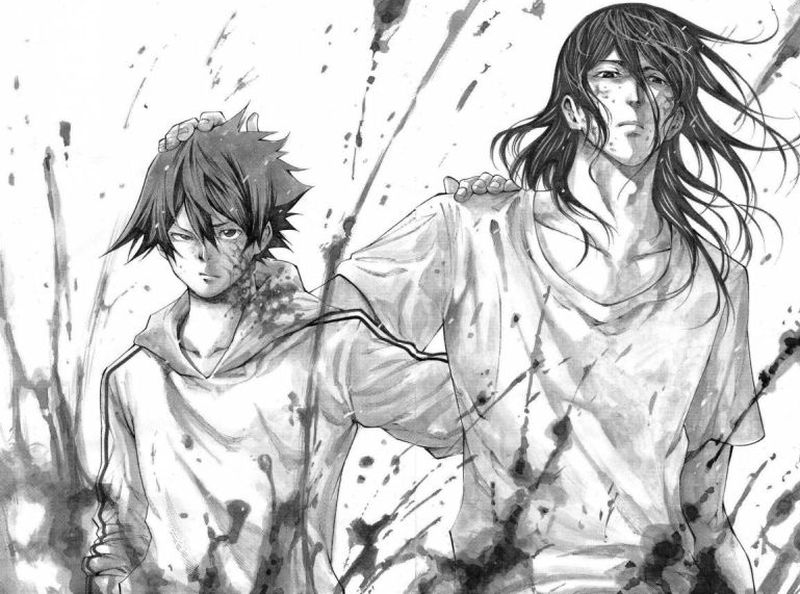
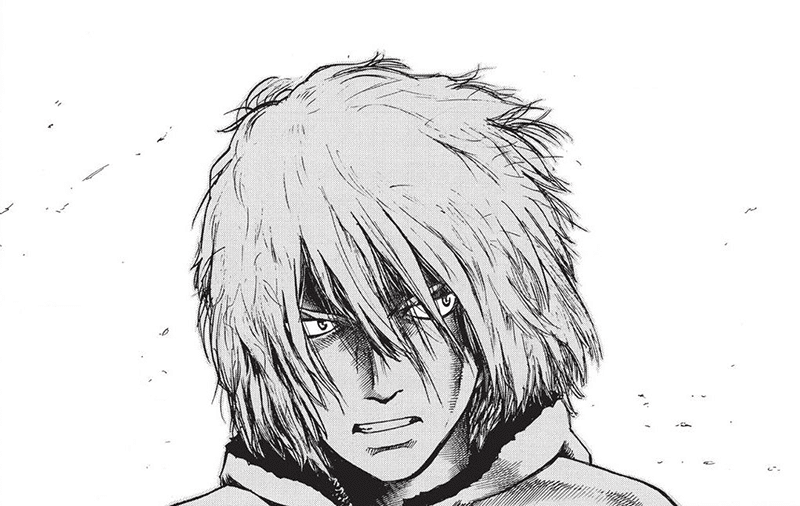
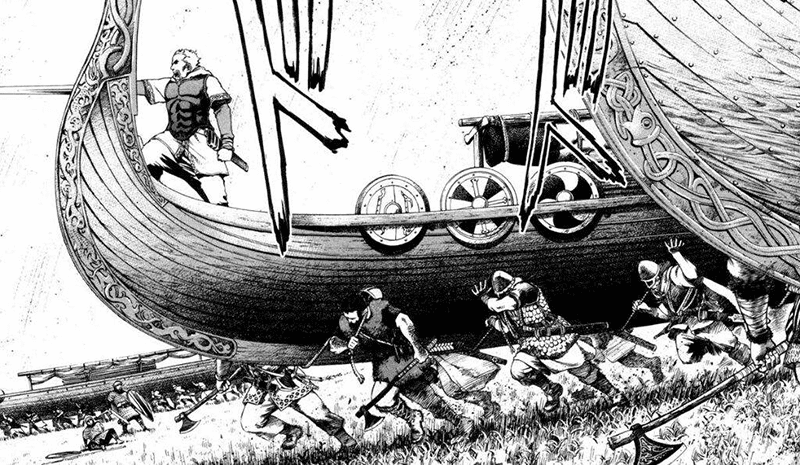
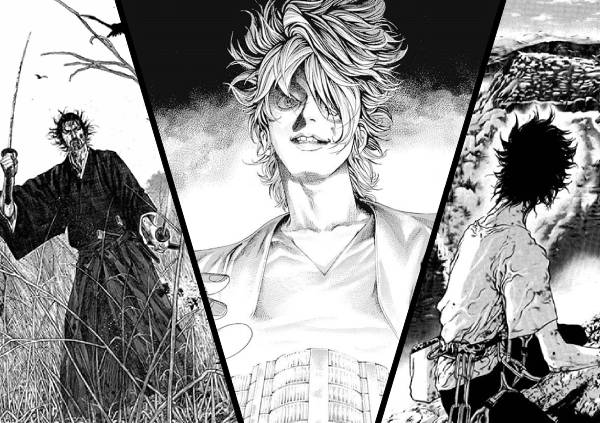
Vinland Saga is a long manga that stands out for its willingness to change. Makoto Yukimura begins with Viking violence and revenge, then keeps pushing the story toward harder questions about trauma, guilt, and whether peace is even possible for people forged by war. It’s not just a historical epic with great battles. It’s a character-driven search for redemption that evolves as relentlessly as its conflicts.
Thorfinn Karlsefni starts as a child soldier, defined by one goal: revenge. He travels with the mercenary group led by Askeladd, the man who killed his father, not out of loyalty, but because he wants to kill him in a duel. Violence is formative here. It shapes how Thorfinn thinks, what he believes he’s worth, and what meaning looks like.
When the Danish Prince Canute is kidnapped, it throws the political balance of Europe into chaos. Askeladd immediately sees a chance to further his influence and hatches an intricate plan, pushing the narrative from revenge into statecraft. It becomes a saga about power, survival, and the stories people tell to justify what they do, with Canute’s transformation from timid hostage into a conflicted and stoic ruler standing as one of the major long-form evolutions.
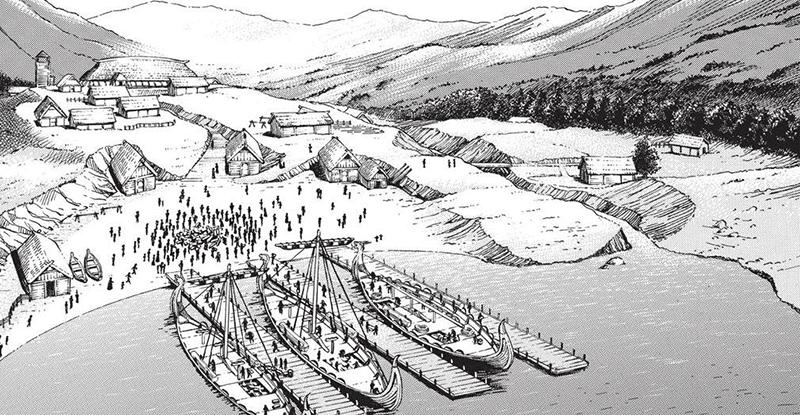
Yukimura’s worldbuilding is grounded and tactile. He draws deeply from Viking culture, depicting raids, killings, and slavery as a brutal reality rather than sensational set pieces. The 11th-century environments feel tangible, and the art is a major reason. Early on, the series shines, but the art keeps evolving, rendering ships, towns, villages, and landscapes in such meticulous detail that the manga feels like a window into the past. The Farmland arc is the clearest proof of that confidence. It shows Yukimura can make stillness carry as much weight as war, turning a snowy farmstead into an atmosphere-heavy stage for moral and emotional transformation.
That pivot is also the series’ main drawback. Some readers will miss the constant momentum of the earlier battles, and the reflective stretches can feel slow, like stumbling into a different manga. But this intimate and inward focus makes the series special, because it pauses and asks what victories cost and whether violence can ever build anything worth keeping.
Supporting characters deepen the emotional core. Characters like Sigurd, Einar, and Hild all bring new angles, philosophies, and consequences. The one character who stands above all others is Askeladd. While he appears one-dimensional at first, he becomes a layered tactician, father figure, and a man driven by his own secret ambitions.
Vinland Saga is a long manga that starts as revenge and ends up asking whether peace is possible.
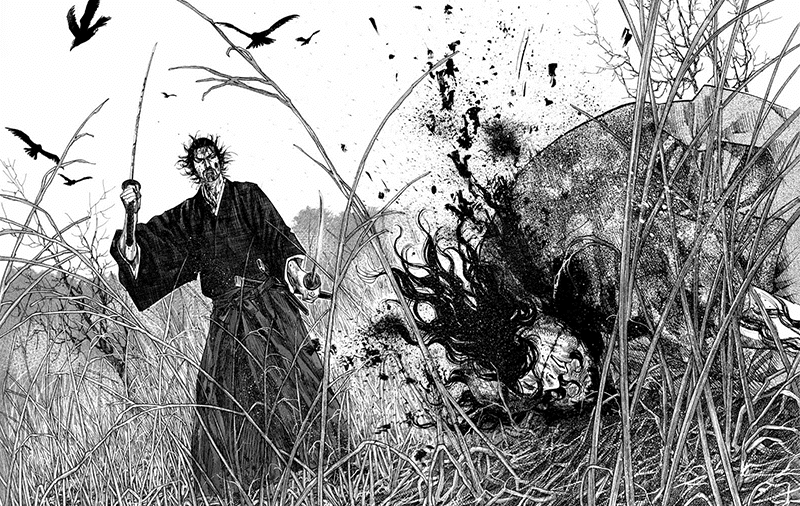
Vagabond isn’t a series you simply read, but experience. It adapts Eiji Yoshikawa’s novel Musashi into a samurai epic that’s ambitious in the quietest way possible: it watches a violent young man grow, stumble, soften, and slowly learn what mastery actually costs. It stands out because few long manga make a transformation this earned while making stillness feel this alive.
The story centers on Shinmen Takezo. He’s brash, feral, and obsessed with strength. When war breaks out, he and his childhood friend Matahachi Honiden fight at Sekigahara. Upon returning home, Takezo is branded a criminal. After a long hunt, he’s caught and strung up to a tree, but survives through an unlikely mercy: the monk Takuan Sōhō frees him and gives him the name Musashi Miyamoto. From there, Musashi travels the land, seeking redemption and the idea of being “invincible under Heaven.” Yet the manga goes deeper, questioning what that phrase even means when it’s tied to brutal violence and dead bodies.
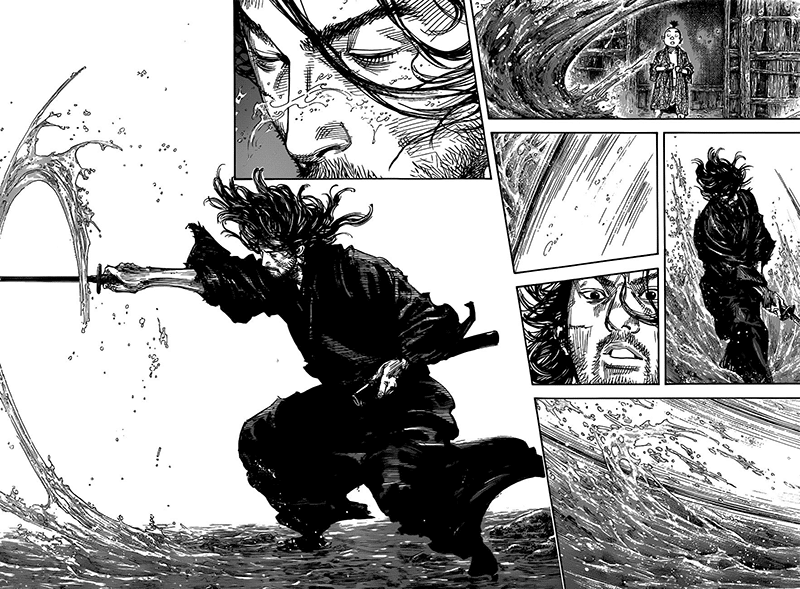
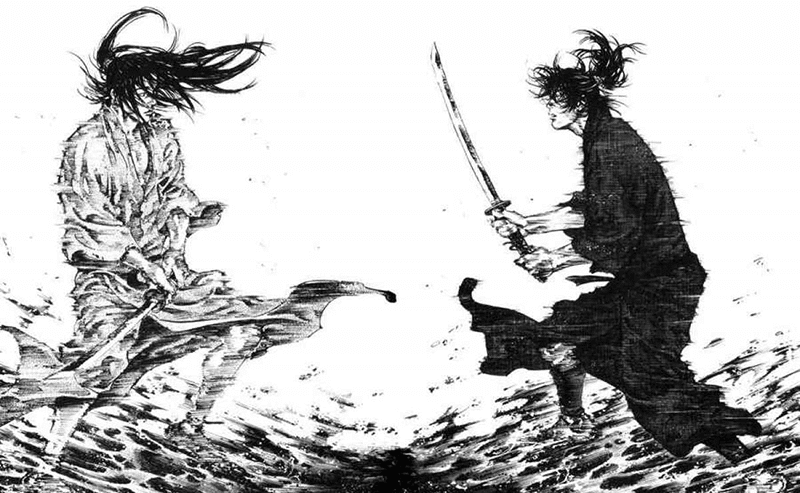
What elevates it is Inoue’s breathtaking art. His brushwork is intricate, full of painterly textures and obsessive detail that make landscapes and faces feel tactile. Battlefields look chaotic and muddy. Close-ups carry exhaustion, fear, and calloused hands. Environments look stunningly realistic and alive. The sword fights match that realism. They’re tense and visceral, full of severed limbs and heads, but the gore is never glamorized. They’re never just spectacle. Instead, they focus on stance, timing, and psychological pressure.
Vagabond is not only about Musashi’s journey. It devotes as much time to other lives, especially Sasaki Kojirō, but also Matahachi, whose path matters in a different, more tragic register. The supporting cast is treated as human, each with their own personalities and hidden wounds left by the era’s everyday brutality.
The emotional core is Musashi’s transformation. When he first sets out on his travels, he’s a glory-driven fighter who swings his sword like a demon, then gradually becomes reflective, questioning the meaning of strength and what it means to take a life. That shift also shows in how he fights, moving from a reckless force of nature toward a restrained and precise style. Some of the most memorable chapters are quiet sequences: training at dawn, climbing a hill, sitting in silence, letting the meditative rhythm do the work.
The series’ biggest drawback is the fact that it remains on hiatus and unfinished to this day, with no guarantee it will ever be completed. Later arcs are also slower, intentionally so, and the philosophy can sometimes drift toward pretension.
Still, Vagabond is a long manga that remains unmatched visually, and it pairs that with a slow, painful meditation on mastery and violence.
Berserk feels like the grim fantasy template that changed an entire genre. Kentaro Miura built a dark medieval world with obsessive detail, then filled it with characters so psychologically dense that violence turns spectacle into consequence. That blend of brutality, intimacy, and pure craft makes it one of manga’s foundational works.
Guts is known as the Black Swordsman. He’s a lone wanderer carrying a giant sword, clearing his way through any opposition on his way to revenge. His target is Griffith, the former leader of the Band of the Hawk, who not only betrayed Guts but also took from him everything he ever cared about.
The early stretches feature a Guts who feels almost as villainous as the sadistic apostles he battles. Then one panel cuts through the persona, and the following Golden Age arc reframes everything. Berserk turns from grindhouse horror into a complex epic centered on ambition, friendship, and betrayal. It also humanizes Guts in a way that feels earned, showcasing that his early harshness is a byproduct of the damage and trauma born from Griffith’s eventual betrayal.
Much of Berserk’s tension comes from its signature duality. Guts is rage and survival, a man in black who refuses to die. Griffith is transcendent, a figure in all white willing to burn the world to reach his goals. Around them, Miura creates a world full of war, political schemes, foreign invasions, and religious fanaticism, all haunted by eldritch forces that push the story into cosmic horror territory. The manga is also unflinching about the everyday brutality of war. Crime, human depravity, and sexual violence aren’t the exception. They’re the worldview.
What keeps it from collapsing into pure bleakness is the tenderness threaded through the suffering. Guts’ love for Casca gives the story an emotional core, and the side cast repeatedly reminds you what survival is supposed to protect. These deeper, more intimate moments are the reason it succeeds as a long manga.
Miura’s art deserves special mention. His cityscapes, armor, and baroque apostle designs are among the most beautiful pages in manga, and battles carry weight because every monster looks like a distinctly grotesque nightmare. You can feel his influence across modern dark fantasy, from games to other manga.
If there’s a drawback, it’s friction. The early chapters are rough and almost singularly bleak, while later arcs often slow down to expand the world, and that level of detail contributed to a release schedule that tested even the most patient readers. Miura’s death in 2021 adds another complication: the ending may be shaped by how Kouji Mori and Miura’s assistants interpret his plans.
As a long manga, Berserk is a mythic work of genre-defining dark fantasy. The character trauma is written with care, and its monsters are among the most creative and nightmarish in all of manga.
Genres: Horror, Dark Fantasy, Action, Tragedy, Psychological
Status: Ongoing (Seinen, continued by Kouji Mori after Kentaro Miura’s death)
Blade of the Immortal is a revenge story that refuses simplicity. Created by Hiroaki Samura, it’s a samurai epic that rarely cares about honor or clean moral lessons. Instead, it’s raw, gritty, and deeply human, a long manga that keeps forcing consequences to land and refusing to sort its cast into simple heroes and villains.
Manji is known as the notorious Hundred Men Killer, and his punishment is a curse disguised as immortality. After the 800-year-old nun Yaobikuni implants sacred bloodworms in his body, the only escape is violence: Manji vows to slay 1000 evil men. That mission collides with Rin Asano, a teenage girl whose family was slaughtered by the Itto-ryu sword school under the leadership of the charismatic Kagehisa Anotsu. Rin wants revenge. Manji wants freedom. He agrees to become her bodyguard, and from here on out a story of revenge mutates into something far messier than either of them expects.
What cements the series as a masterpiece is the cast and the moral grayness surrounding it. Samura’s real genius is making Anotsu much more than a mere target. He’s a man with strong morals and a deep personal philosophy, which makes him so compelling that he refuses simple labels. The ensemble is stacked with figures who feel unforgettable because they all carry their own trauma and motives, not just cool designs: Taito Magatsu, Makie Otono-Tachibana, Hyakurin, and the morally corrupted Shira. Only a few characters read as unambiguous monsters, and Shira’s cruelty is exactly why his scenes are so suffocating.
Samura’s portrayal of women deserves special notice. Female characters are not treated as damsels in distress or accessories to male arcs. Hyakurin and Makie in particular turn genre conventions upside down by having agency and trajectory, plus the skill to match the series’ monsters, which keeps encounters unpredictable.
Stylistically, the series lives on the punk energy that separates it from romanticized period dramas. Even in historical Japan, characters curse, snarl, and sometimes feel like thugs or gangsters, which keeps the world sharp. The art matches that edge. Samura’s linework is sketchy but dynamic, shifting from delicate to overwhelmingly detailed depending on the moment. Environments feel lush and gritty, and the sword fights are savage, messy, and among the best ever drawn. The brutality is front and center. People get dismembered, blood gushes, and limbs fly, yet the violence always feels purposeful rather than gratuitous. The stakes are consistently high, and Manji’s immortality merely levels the playing field. It mainly lets him survive encounters he has no business surviving, making every fight feel like a brutal scramble rather than a power fantasy.
The main downside is the early stretch. The opening chapters can be weaker and slower than what’s coming. Other problems include the prison arc, which feels detached and can drag, and some of Shira’s sadistic acts against women feel uncomfortably close to glorified.
Blade of the Immortal is a masterpiece, and my personal favorite manga of all time. It’s a long manga that features some of the most savage sword fights ever drawn, an unforgettable ensemble, and a revenge premise that turns into a brutal character study of consequences.
Kill Six Billion Demons created by Tom Parkinson-Morgan a.k.a. Abbadon is probably the best web comic I’ve ever read.
I want to be honest, I rarely read web comics and I’ve only read about a handful over the last couple of years. The reason I checked out Kill Six Billion Demons was only because a friend recommended it to me.
The moment I started reading it, however, I was absolutely fell in love with it. It’s one of the best works published on the internet I’ve come upon.
In this article, I want to discuss Six Billion Demons and why I think it’s amongst the best the web comic medium offers.
To rescue their kidnapped lover, our protagonist has to travel to a different world and defeat a group of powerful beings.
At first glance, this summary might appear generic, basic even. Kill Six Billion Demons, however, is anything but generic.
It takes these generic elements and mixes them up. One could say it turns things up not just a notch, but as high as possible to create one of the most original and unique works out there.
Instead of a typical male hero who’s out to save the girl, the roles are switched.
Our main character is Allison Ruth. She’s a sorority sister and barista. She’s about to have sex with her boyfriend Zaid when a mysterious figure appears in the bedroom. The figures appearance is followed by that of a group of thorned riders. They promptly behead the mysterious figure and kidnap Zaid. Unbeknownst to them, however, the figure’s still alive and bestows Allison with the Key of Kings, a magical artifact of divine power.
Because of this, Allison’s transferred to Throne, the Red City, a metropolis at the center of the multiverse.
At first she struggles to survive and get around in this unfamiliar world, which is as alien to her as it is to the reader.
Soon enough, however, Allison learns that whoever owns the Key of Kings is destined to defeat The Seven, the last of the demiurges who rule over the multiverse.
Many people want to take the key from her, but before long, Allison takes her destiny into her own hands.
Even this description, however, doesn’t do Kill Six Billion Demons justice. If you’ve not read it, I urge you to do it now. It’s an incredible experience, one that’s best by going in blind.
The setting is probably the most interesting part of Kill Six Billion Demons. The scope and vision of this work is nothing short of insane. Frankly said, the world-building in Kill Six Billion Demons is amongst the best I’ve ever seen. It’s absolutely stunning.
Kill Six Billion demon’s is a mixture of a variety of genres. It includes elements from science-fiction, fantasy, and horror, and mixes them with religion, mythology and philosophy.
The first thing one might notice are the Judeo Christian elements and imagery. What Kill Six Billion Demons centers on much more, however, is the concept of dharmic religion, such as Hinduism and Buddhism. Yet, a variety of other influences come to play as well, up to an all-out martial-arts tournament akin to that often featured in manga.
Kill Six Billion Demons is set in a multiverse comprising 777.777 worlds or universes.
This multiverse is a dark place, one ripe for the taking and in which the strong prey on the weak. It’s a place that’s ruled by violence and those who rule it do so because of their talent for violence. Conquest, slavery and many other atrocities run rampant while criminals and callous kings called demiurges rule the multiverse.
After the Universal War, only seven of the demiurges are left who divided up all of its worlds and rule over them indiscriminately. The peace between them, however, is a fragile thing.
Located in the center of the multiverse is Throne, the Red City and the final resting place of the gods. It’s a gigantic metropolis with a population of roughly eight-hundred million souls, but is also home to an unknown number of dead, making its total population much, much higher.
Everything in Kill Six Billion Demons feels huge, even gigantic. This is an obvious consequence of the stories setting, the multiverse.
What truly shows us this impressive scope, however, is the art and the many page spreads showcasing its world. We often get insanely detailed eagle-eye views of the web comic’s various locations. They give the web comic a scale that’s nothing short of cosmic and extremely fitting for the story it’s trying to tell.
One of the greatest examples of this is Throne, the Red City itself. It’s a place full of gigantic towering structures and alien architecture. Its population is as weird and alien as it’s huge.
Later on, we get to see various other parts of the multiverse and each one of them is as breathtakingly large. It’s nothing short of fantastic.
If Kill Six Billion Demon’s setting is its most interesting part, the art has to be its greatest.
Some might say the art starts out rough, but I think that’s debatable. The web comic always looks gorgeous. Over time, however, the already great art improved even more and became one of the most stunning works out there.
While many other web comics opt for a simpler style, Kill Six Billion Demons does the polar opposite. It comes in stunning full color and contains some of the most detailed art I’ve ever seen.
This is especially prevalent in the many page spreads I’ve mentioned before. In them, you can often find more details than in entire, other web comics.
While Kill Six Billion Demons has its fair share of smaller panels and dialogue, it often relies on bigger, cinematic scenes that showcases its locations in all their glory.
We get pages of massive alien landscapes or bustling alien cities. Each and everyone one of these pages is populated by crowds of strange creatures.
I always stop and exploring these pages, marveling at all the details, the scope and the sheer creativity that went into creating them.
They are an amalgamation of insane beauty, originality, and uniqueness.
All of this is presented to us in stunning full-color. What’s interesting is that color isn’t merely a means to illustrate scenes. Sometimes it’s used as direction and to highlight Allison in one of the huge page spreads. Color also serves as an identification for devils. The color of their skin determines how powerful they are. Even the Seven demiurges are all defined by a specific color.
From my list of the best Lovecraft stories and the most terrifying tales by Edgar Allan Poe, you can see that I’m a big horror fan. That’s why I also want to touch on that topic. Now, Kill Six Billion Demons isn’t a horror web comic, but it’s still full of disturbing imagery.
I guess it’s a given in a world ruled by violence and which is populated by megalomaniacal sociopaths. Sometimes, however, things can get truly dark.
Body horror is a common theme. The first instance is, of course, Allison’s first arrival in Throne. Other instances appear when Motton is introduced. We witness her using her magic to transform people into trees or nothing but flower petals.
Another example of horror is the descent to the Heretic’s Court. We can see gigantic devils consuming humans and what appear to be various sorts of torture. It’s nothing short of twisted and disturbing.
And yet, the Heretics Court is far from the only place showcasing disturbing imagery. We can often see hints of how dark a world the story’s set in. This is most prevalent in the streets of the Red City or in its outer districts.
The first thing to be said about the character design in Kill Six Billion Demons is that it’s amazing. If you read this web comic, you soon notice that there are no generic characters.
It’s not only our main cast who’ve got their unique design, however. Even side characters have complex, unique and outrageously creative designs.
Many of the creatures we see in this web comic are inspired by existing mythology or religion. We see angel, devils, goblins, dragons and many others. Yet, they are far from the typical cookie-cutter fantasy monsters we’re used to. No, their design often feels bastardized, changed and warped by the author’s creativity. The greatest examples of this are devils and angels.
Devils come in all forms, colors, and sizes. They can be as small as imps or they can be towering monstrosities. Some might remind us of other creatures or animals, while others are reminiscent of eldritch abominations.
Angels are another fantastic example. In Kill Six Billion Demons, they aren’t the beautiful white-winged creatures we’re used to. Instead, they are more akin to biblically correct angels. They are depicted as creatures comprising holy fire, too many wings and eyes were no eyes should be.
The sheer creativity of the character and creature design in Kill Six Billion Demons is most noticeable during the bigger page spreads. Whenever we get views of cities, plazas or even streets, they are populated with the strangest and most outrageous creatures imaginable. It’s a kaleidoscopic bestiary of brilliant uniqueness.
I now want to talk about a few different groups of characters specifically.
What makes Allison such an interesting protagonist is how normal she appears, in contrast to almost everyone else in Throne. This normalcy, however, makes her the alien one in this world.
She looks always stunning, however, and as the story continues she turns from a confused and lost girl to a true warrior. It’s great to watch her development, see her accepting this new world and take things into her own hands.
The supporting cast is great as well. Especially White Chain and Cio both turned out to be fantastically complex characters.
I especially came to like Cio, however. I really enjoyed her characterization, her relationship with Allison, her design, and her twisted backstory. She is the most complex character in Kill Six Billion Demons.
Yet, there are other characters I truly came to like.
There’s first Maya, a Mendicant Knight and an absolute badass swords woman. Her entire design makes her seem a benevolent and friendly older lady. That’s until we see her take action. There’s a reason her surname means Murder the Gods and Topple Their Thrones.
Another absolute favorite of mine is 6 Juggernaut Star Scours the Universe, the leader of the Holy Thorn Knights. This character has probably the most badass design in the entire web comic. 6 Juggernaut is a thorned, fallen angel who rides a motorcycle made of skeletons and who fights using a burning breaking-wheel.
The strangest and most outlandish of all characters, however, has to be Gog-Agog, the Queen of Worms and one of the seven demiurges. There’s just something about her entire design and demeanor that makers her not only interesting but also utterly weird. I can’t help but love it.
The Thieves of Yre are a rag-tag group of devils Allison and Cio recruit in book three to break into the Fortress of Yre.
They are devils of course and live by the ‘do what thou willt shall be the whole of the Law’ mantra. From this, we already know that things are about to get interesting. And they surely do.
What’s even more interesting about them is that Abbadon, the web comic’s author, announced a contest for fans to design the various members of the heist team.
The ones whose design I came to like the most were Cat Master, Charon, and Lucky Felicia. Yet, every member of the group has their very own unique design. You can’t help but love them.
The Priests of the Count or the Priest-Clerks of the Holy Count are the defenders of Yre. The Count refers to the act of counting the vast fortune that Mammon, one of the demiurges, had amassed.
One might think they’d be weak, but they are formidable adversaries. Their design is reminiscent of that of deranged warrior priests, but it’s as over the top as one can expect from this web comic.
When they fight, their weapon of choice is a spear tipped by a chainsaw.
Leading the Priests of the Count is Mammon’s emissary. At first, her depiction’s that of a Madonna-like figure. In battle, however, it’s revealed that her armor comprises bondage and self-castigation gear and that she’s wielding two gigantic, flaming weapons.
While the design of the Priests of the Count is already fantastic, the design of Mammon’s emissary is nothing short of outrageously great.
The Pursuers are a group of exactly one-hundred-and-eight mercenaries, bounty hunters and elite warriors who are chasing after Allison. Their motivation is simple: Pramand Nand, a slave merchant, has written out a bounty for Allison’s Key of Kings.
The most notable amongst them have to be Ingsvld, a Gease Knight who’s head is a floating book. Others include Etlin Da, a woman with a harp-shaped head, Hrotomos, a giant golden baby and Lady Brimstone, a gun witch.
They are less menace to our main characters, but more a band of comic relief who often appear when things are at their most chaotic. It’s, however, always a delight to see them appear and especially Hrotomos always serves to make a great entrance.
While quite a few of them have a name and unique design, many others get killed.
Kill Six Billion Demons is a web comic full of violence, action and fights.
Each fight in this web comic is full of details, stunning action and beautifully rendered.
We witness as Allison escapes from bounty hunters, battles a magic wielding demiurge, going on a heist to kill a dragon and even partaking in a multiversial martial arts tournament.
Things are insane and the scales are high, but battles are always dynamic, fluid and you always know what’s going on.
It doesn’t matter if Allison’s beating up a group of thugs or if she’s battling a towering God, you can always follow the action.
What I came to enjoy the most, however, were the battles, which were on a massive scale. There’s, of course, Solomon’s martial arts tournament, but the greatest so far was the Siege of Yre. It was a battle on a scale different from any other, showcasing entire armies fighting each other.
Kill Six Billion Demons is nothing short of beautiful, even when depicting brutal action and violent fights.
I only want to talk about this point briefly, but I found it necessary to share my perspective on it.
In today’s day and age, queer representation can often feel ingenuous. This is especially the case when queer characters are shoehorned into stories or movies for no other reason but to fit current social trends. It’s something that happens a lot and something I find, frankly said, annoying.
In Kill Six Billion Demons, however, it felt genuine. Allison and Cio’s relationship was well-developed, and I never felt it was forced onto the reader.
The same was true for White Chain’s character arc. She was an angel, and angels are genderless or at best ambiguous. So her arc of self-discover and her changes over time made sense and felt justified.
At no point in the web comic did I have the feeling things were forced or just there to be there. No, it felt almost entirely natural. At least, as real as a web comic populated by angels and devils and set in a twisted multiverse can be.
I’m a huge manga fan. Over the years, I’ve read countless manga, as you can see on my list of the best manga of all time, the best horror manga or the most disturbing manga. In this article, however, I want to talk specifically about The Horizon manga.
The Horizon is a short manga I discovered about a year ago, but it has become one of my absolute favorites.
It’s a sad, depressing, sometimes utterly heartbreaking manga. Yet, it’s not a horror manga. No, it’s one of the most emotional and deep works I’ve ever read.
In this article, I want to discuss the various elements of this manga and shed light on why I think it’s such a great work.
The Horizon starts with a little boy and his mother. There’s chaos, panic and war, as we soon learn. Within moments, the fleeing people we see in the first panels are reduced to nothing but lifeless bodies.
Before long, the boy stumbles upon his mother’s body. Shell-shocked and stunted, he begins to walk. First through the ruined, derelict remains of the city and then down the road, simply walking.
After he spends the night on a school bus at the side of the road, he meets a little girl. From then on, the two of them travel together, always onwards towards the horizon. Over the course of the manga, they encounter various other people.
The Horizon manga is set in a torn, derelict world. We don’t know what exactly happened, but it’s clear that it’s war, a war that still seems to go on.
It’s a dark and unforgiving world that showcases war and its aftermath. We see empty roads, ruined cities and encounter traumatized people, people who are lost and broken because of what they saw.
The world’s a brutal place and we learn that right from the start, but also during our characters’ many encounters with other people.
Over the course of the manga, we witness the brutality of the world in a multitude of ways. We witness explosions, fighting, dead bodies and even infectious diseases.
And yet, the death and gore are never glamorized. It’s always shocking, always there to make us feel and to showcase in how terrible a state the world is in.
Even until the end, we never learn how the world became this way, but we don’t need to. This story is about a boy and a girl who are trying to survive. All we need to know is that the world’s ended to understand their suffering.
The Horizon manga tells the story of two characters, a little boy and a little girl.
As they continue on their way, they meet multiple characters. Some are traumatized victims of war, others are soldiers or people who’ve found their own meaning in this terrible world, like the man in the suit.
Many other manga feature young characters or children to get an emotional reaction from their readers, even though the story could very well be about adults.
The Horizon manga, however, feels genuine in what it does. It’s a story specifically about children and about how they experience the horrors of war. It tells the story from their perspective, shows us their understanding of it and what their thoughts are. The Horizon manga never feels cheap or like cheating because we all know that scenarios like that are a sad reality in our world. It showcases how terrible things such as war can affect those who are most vulnerable.
The art in The Horizon manga fits the story extremely well. It’s dark and gritty, at times sketchy and simplistic, at others detailed.
What’s interesting is the omission of dialogues in earlier parts. In the first chapters, the manga relies almost entirely on narration, exposition and the art to tell its story. It succeeds fantastically even without the use of words.
The manga’s atmosphere is extremely strong, and it’s in huge parts because of the art. There are many panels that show nothing but our two characters on long empty roads or in giant empty meadows. This reliance on empty spaces, on scarce colors, and our characters only appearing as tiny dots in a corner really helps to showcase how lost and alone they are.
There’s an underlying feeling of sadness to this manga, to the world it’s set in, one that’s almost nihilistic. This is especially noticeable in the other people our characters encounter and their design. Many of them are traumatized and truly look like it. They have wild eyes, empty faces or appear endlessly tired.
Another interesting aspect is that The Horizon manga is almost entirely held in black-and-white. Yet, there are a select few pages that are in full color. This element is only used when our characters are happy, when the world seems nice for just a moment. It’s nothing short of beautiful.
While The Horizon manga is a work about traumatized, shell-shocked and broken people, it’s still full of heavy emotions.
Many times, these emotions are showcased by the art alone. This is most prevalent when a character spirals out of control. We see their eyes growing wide and see them scream in terror. As they do, the art becomes sketchier, simpler, but also more jagged and wild. The more a character’s mental state deteriorates, the more the art does. It fully serves to show the emotions characters feel. This combination of emotions and art makes The Horizon such a fantastic work.
It’s not merely that, however, as with a story such as this, there’s bound to be powerful emotions. It’s not just bystanders, but also our main characters who often show powerful emotions, especially when they are trying to understand war and the state the world is in.
The most emotionally heave segment apart from the ending, however, has to be the backstory of the little girl. It’s as sad as it is fantastic.
The Horizon manga is a tragedy. It’s a depressing, almost bleak work full of sadness. Still, it also showcases some deeper themes. It’s heavy with topics such as fear, being lost, hopelessness and futility. It shows the darkest of human existence. And yet, there are a few select moments that also show happiness and hope.
When we encounter the man in the suit, we wonder what it means to be good and what it means to be bad. Who even is good and who’s bad in a world such as this? Can a distinction such as this even be made?
The man in the suit talks about killing all the men with guns to make the world a better place. Similarly to the little girl, we too, beg the question if can ever make the world a better place by killing. It’s a moral dilemma.
The chapters with the man in the suit are a discussion of the human condition. We always believe to be in the right, we rationalize our deeds, especially in times of war or those that follow it.
The backstory of the little girl we witness in the second half of The Horizon manga is another sad and depressing part. Here, too, we witness how people handle the situation they are in.
The world’s ended and has become a hopeless place. Is it futile to even try to go on? Does it matter at all if you survive if there’s nothing out there? It shows in perfect detail how different people handle this knowledge and what they’ll do.
Many sad and depressing manga fail for a one simple reason. They descend into misery porn, throwing their characters into a worse and worse events. The Horizon manga is sad and depressing, but it never fully descends into misery porn territory. The sadness, the emotions and the events depicted never feel gratuitous, glamorized or exploitive. No, they simply showcase what’s happening.
One reason The Horizon manga succeeds so well at what it does is because of its length. At only twenty-one chapters, it’s a rather short work, but I feel it’s the perfect length. If it would’ve been any longer, the gloomy atmosphere would’ve been dragged out. We would’ve gotten used to it. And thus, the emotional impact of the story would’ve been weakened.
What I came to like truly about The Horizon manga was the ending. As sad and depressing a work as it is, it ends on a positive note. It shows that as long as there’s love, there’s always hope, even in a world such as this.
Overall, The Horizon manga is a hidden little gem. It’s a fantastically dark, depressing and sad tale, but one that’s truly beautiful.
Read it, it’s a masterpiece.
You can now also by the print-version on Amazon. You can find it right here:
Thaumiel SCPs are among the rarest and most interesting object classes on the wiki. They’re anomalies the Foundation actively uses to contain or suppress other anomalies and entities.
When I put together my list of the best SCPs of all time, I read a good number of them and often enjoyed them.
A lot of Thaumiel articles rank among the most complex and interesting on the entire wiki, and I suspect that’s down to their nature. These aren’t simply objects or entities sitting in containment. They’re deployed and turned against other, often far more dangerous things.
As rare as Thaumiel SCPs are, some are considerably better than others. Here are my ten favorites.
One of the most interesting entries here, largely because it doubles as an Apollyon SCP. If you read the article, you’ll soon understand why it’s that special. The Solution is probably the most complex and ambitious Thaumiel SCP on this list. It’s superbly written, but you’ll most likely need multiple readings, or have a look at the declassified thread on Reddit to fully understand it. Once it clicks, though, you’ll see what a fantastic piece of work it is.
One of the first Thaumiel SCPs I ever read. I wasn’t sure what to make of it at first, but truly came to enjoy it by the end. It centers on an entity out in space that protects not just humanity but the planet itself. The intriguing ending and its many implications are what I enjoyed the most.
One of the most popular Thaumiel SCPs. It’s not only heavy on scientific detail but also changed the SCP universe forever. Before that, the Foundation was a secret organization containing dangerous objects. After it, the organization was revealed to be far more powerful, because the machine beneath Yellowstone is exactly that: a Deus ex machina. An outstanding article that became a cornerstone of Foundation lore.
Preferred Option was one of the first Thaumiel SCPs that dealt with different dimensions and realities, though it isn’t really about those. It’s about using them to predict and reshape the future, which makes it one of the most interesting on the wiki. What truly elevated it, though, was the final addendum.
Titania’s Prison is a Thaumiel SCP that’s part of djkaktus’ universe. I’m not the biggest fan of Project Paragon, and I enjoyed this one, regardless. Like most of his work, it’s extremely well written. The titular prison is a place similar to the Foundation itself, built to hold powerful beings, and it works well even outside the Kaktusverse. The highlights were the descriptions of the many prisoners.
Anantashesha is one of the best Thaumiel SCPs, and one of the best articles on the entire wiki. It starts slowly but builds into something remarkably complex and engaging. It’s not merely about an anomalous entity, but about personal journeys, religious belief, the deterioration of memory, and much more.
Probably the weirdest Thaumiel SCPs on this list: a silly, ridiculous comedy piece in the lolFoundation style, full of South Park-flavored humor. Megalomania is almost impossible to summarize it. It features a demon summoned in the early 20th century, the 2016 election and the Foundation’s plan to manipulate it, Donald Trump, and Ruth Bader Ginsburg as a witch. It’s certainly something, and it won’t be for everyone, but I had a great time reading it.
Another Thaumiel SCP from djkaktus, and possibly my favorite of his. It can get confusing, and you’ll likely finish it with quite a few questions, but it’s still a fantastic read. What I love is the writing, the way the story unfolds, and its emotional weight. An atmosphere of sadness and desperation hangs over the whole thing, culminating in a tale of how far a father will go to save his son. It’s a genuinely powerful piece, and one of the best on the wiki.
One of the most complex and ambitious Thaumiel SCPs on this list, and with djkaktus writing it, the prose is outstanding. It’s packed with world-building and references a range of other SCPs, some from his universe and some not. The revelation about SCP-343 was fantastically done and very satisfying. I had mixed feelings about the changes to SCP-1000, and the new depiction felt a bit too different from the original. That didn’t dent my enjoyment much, though, and I still think it’s among the best Thaumiel SCPs on the wiki. It’s essentially reading for any fan of djkaktus out there.
Another article that doubles as Apollyon and Thaumiel. It was created to solve one very specific problem, then spins out of control and causes plenty more. Anyone familiar with the wiki will notice something about its number: it’s a love letter to the old days, the era of termination logs, and a time when indestructible reptiles reigned supreme. It’s also one of the most complex and in-depth articles on the wiki. The writing, the details, the descriptions, all of it’s all outstanding. Any fan of the wiki and its lore should read it.
What are Apollyon SCPs? Apollyon is a containment class for a specific subset of anomalies: those that are impossible to contain and that will inevitably break containment.
During my time on the wiki, and while I put together my list of the best SCPs of all time, I read a fair number of them.
I came to enjoy many, because they always operate on an entirely different scale from everything else. What began as a designation for an especially dangerous Keter SCP soon became the de facto class for anomalies that would eventually bring about the apocalypse and end the world.
As always, I enjoyed some of them more than others. Here are my eight favorite Apollyon SCPs.
This is a different sort of Apollyon SCP, since it doubles as a Thaumiel one. Once you read it, it becomes clear why it carries both classes. It’s also the most complex, complicated, and confusing entry on this list, and for a good reason. The writing is fantastic, and it’s well put together, though you’ll likely need multiple read-throughs, or the declassified thread on Reddit, to make sense of it. Once you do, you’ll see just how genius it is.
A 001-proposal and probably the most popular Apollyon article on the entire wiki. Where most Apollyon SCPs detail a dangerous entity, this describes the apocalypse itself, a horrible, Lovecraftian one. It’s one of the few genuine horror proposals, and far more character-driven than you’d expect, concerned above all else with how a person comes to terms with the end of the world.
SCP-4005 – The Holy and Heavenly City of Fabled China by Tufto
The Holy and Heavenly City of Fabled China stands apart from other Apollyon SCPs. It describes the end of the world, but not in a horrible fashion. It’s positive, even wholesome. Written by Tufto, one of my favorite writers on the wiki, it blew me away. The anomaly is an old glass lamp, and anyone who stares into it sees a strange, mysterious dream city, then grows obsessed and sets out to find it. The diaries of Omar Ibn Rashid, an Egyptian novelist who went looking for inspiration and found the lamp instead, are among the best parts. One of the best Apollyon SCPs, albeit an unusual one.
One of the longest and most ambitious Apollyon SCPs. I love the idea and appreciate the many pieces of art accompanying it. It revolves around a small, leather-bound book written by one Jean Arp (Hans Arp), which seems harmless at first and turns out to be far more dangerous, capable of ending the world. Some sections feel overblown, but I loved it anyway.
Meta-SCPs and pataphysics are always a tough sell, which makes this one of the weirder entries here. It builds on Swann’s 001-proposal, the one arguing that the writers of the wiki are the true SCP-001, and pushes it further: not just the interaction between Foundation and writers, but what happens should those writers die, and the horrible consequences for the world they created. One of the most interesting Apollyon SCPs, though it won’t be for everyone.
HarryBlank is easily one of the best writers on the wiki. This one centers on a time paradox with potentially apocalyptic consequences, and it’s among the most complex and well-assembled Apollyon SCPs out there. To fully appreciate it, you’ll want familiarity with his other works and the characters populating them. His writing is always worth reading, and this is no exception. Easily one of the best articles on the entire wiki.
Apollyon articles are usually dangerous, world-ending affairs, so how does the Wanderer’s Library fit in? Read it and you’ll find it fits perfectly. This is one of the greatest SCPs on the wiki, worth reading for Rounderhouse’s prose alone. It’s also one of the more wholesome, less grimdark Apollyon SCPs, which is exactly what makes it so satisfying. The tale of Tilda Moose and her character is what I loved the most.
Anyone who’s looked into the wiki knows SCP-682, the Hard-to-Destroy-Reptile. I was never a fan of the original, though it’s a classic and earns its place. This is a love letter to the old reptile and its experimentation log, but brings far more to it. One of the most complex and in-depth articles on the entire wiki, and an outstanding piece of writing, and one of the greatest Apollyon SCPs of all time.
If you’ve spent any time on the SCP-Wiki you’ve heard about SCP-001 and the many 001-proposals.
When I put together my list of the best SCPs of all time, I didn’t ignore the 001-proposals of course. No, I read all of them.
Over the years, many people had ideas about what SCP-001 might or should be. Some thought it should be the first SCP ever discovered, others reasoned it had to be the most dangerous or important one.
Before long, however, it was decided to keep the slot open and instead fill it with various proposals of what SCP-001 could be.
In the universe, this was explained by SCP-001 being so dangerous, it had to be kept a secret. For this reason, a variety of false entries were created. What this means is quite simple: you’ll never know which the true SCP-001 is. It could be any of them, it could be all of them, or it could be none of them.
The 001-proposals are often a writer’s most ambitious and grandest articles. Because of this, they are the cream-de-la-crop. The best SCPs on the entire SCP-Wiki. After I was done reading all of them, I had to agree wholeheartedly. Many of them are absolutely outstanding.
So for this article, I put together a list of my twelve favorite 001-proposals.
The Children is the very first of djkaktus 001-proposals and the first part of the Ouroboros cycle. It’s yet another SCP that paints the Foundation as a place that does questionable things for the greater good. I loved the overall story that was told; the deeds done to the children and, of course, the Kingdom of Abaddon. Yet, there are many other things going on here, things that are more interesting and tie in well with the rest of the Ouroboros cycle.
The Broken God is the third part of the Ouroboros cycle. It’s another 001 proposal I consider a favorite of mine. As a fan of the Broken God, I really loved this SCP, the descriptions and, of course, the writing. The actual entity was terrifying, of course, but what I loved even more was where it came from, which was quite the surprise. I also enjoyed the inclusion of SCP-2399, which is another one of my favorite SCPs. Overall, this is a truly great 001-proposal.
And here we have it, the last part of the Ouroboros cycle, The Way it Ends. This is by far the longest 001 proposals and one of the most ambitious SCPs on the entire SCP-Wiki. It includes a multitude of tie-ins to other SCPs, tales and general SCP-lore. This 001-proposal centers around a man named Calvin who sets out with a group of trusty allies to end the SCP Foundation and its various overseers. It’s a fantastic story, one that’s more a pulpy action-novel than an SCP. And yet, I had an absolute blast reading it and I’m sure any fan of the SCP Foundation will love it.
The Solution is one of the most complex 001-proposals on the entire SCP-Wiki. It’s an incredibly complex, well put together SCP, but also one that’s extremely complicated and confusing. It’s a well-written and well-done piece, but one you’ll have to read multiple times or consult the related declassified thread on Reddit. The moment you understand this 001-proposal, however, you’ll realize just how good it is. It’s a truly fantastic piece of work.
05-13 was a 001-proposal I truly and wholeheartedly enjoyed. While many other 001-proposals are grand, high concept SCPs, this one’s more humorous. I loved everything about this SCP and I had an absolute blast reading it.
Meta-SCPs can be hit or miss. This one, however, works very well. It’s an addition, or at least related to Swann’s 001-Proposal, which states that SCP-001 are the horror writers of the SCP-Wiki themselves. This is where some of the deeper meta-stuff, the author-inclusions and patapsychology, come from. Story of Your Life, however, goes deeper and adds another layer to it. What I enjoyed the most, though, were the characters and their dialogues. It was outstandingly well written.
Fishhook is one of the weirder 001-proposals on the SCP-Wiki. It’s different from all others for a very specific reason. Fishhook is an extremely creative and incredibly well done 001-proposal. While you might be unsure what exactly is going on, it will all be cleared up near the end and you will truly understand how great this 001-proposal is.
The Frontispiece might be my favorite 001-proposal out of all of them. At first I wasn’t sure where things were going and I thought the earlier parts dragged on a little. When things got going, however, characters and plans were introduced, everything fell into place. I really enjoyed all the characters in this one, be it the Foundation members, Elizabeth Crocker or even Thilo Zwist. They were all well developed and their dialogues were extremely enjoyable. The greatest thing about, however, was the story, and its many turns and twists. The Frontispiece is a long 001-proposal, one of the longest ones out there, but it’s an absolutely fantastic work.
MEMENTO MORI is the first of Rounderhouse’s 001-proposals. While his other 001-proposal AMONI-RAM is an origin story, this one is a story about things ending. It’s a sad and melancholic piece, yet it’s also strangely beautiful. We’re led from room to room and learn more about the people who made up the overseer council and how the Foundation ended up breaking all of them. It’s yet another fantastic 001-proposal.
AMONI-RAM is an absolutely amazing proposal, one that details the origins of the Church of the Broken God. I loved the world-building and the description of the old city of Amoni-Ram. It’s seldom that I found myself so involved in pseudo-history. The slow development of the story and of Robert Aram was well done, and he soon became one of my favorite characters on the entire SCP-Wiki. What made this 001-proposal so great was the writing. Despite its length, the story felt natural, and the pacing was well done. It’s without a doubt one of the best 001-proposals on the entire SCP-Wiki.
When Day Breaks is one of the most popular 001-proposals out there and for a good reason. It’s one of the few genuine horror proposals, Lovecraftian horror even. A sudden change to the sun brings forth an apocalypse like no other. While When Day Breaks is a horror SCP, it’s much more character-driven than one might expect and details how someone handles and comes to terms with the end of the world. It’s a truly fantastic work.
There’s a reason I’m such a big fan of Tufto’s work. His writing’s just absolutely fantastic. The Scarlet King is a grand, artistic article, one that’s more concerned with philosophical discussion than anything else. It’s a well-written article that develops slowly and brings forth one of the more interesting interpretations of the Scarlet King. It’s without a doubt one of my absolute favorite 001-proposals.
To put together my list of the best SCPs of all time, I also had a look at many of the Series VII SCPs.
Series VII might be the newest series on the site and not complete yet, but it already features some absolutely fantastic SCPs.
While I love many of the SCP-contests on the SCP-Wiki, the SCP-6000 contest might be my all-time favorite contest. It features several outstanding and well-written articles.
The quality I’ve seen in Series VII so far might be the best I’ve seen on the SCP-Wiki. Many of the articles I read were amongst the best SCPs of all time.
For this article, I put together a list of my favorite twelve Series VII SCPs of all time.
How would the Wanderer’s Library work as an SCP? If you read this fantastic Series VII SCP by Rounderhouse, you’ll learn that it works extremely well. This is an absolutely fantastic article, one of the absolute best on the entire SCP-Wiki. It’s extremely well-written. It’s overall, less grimdark than many other articles, but it’s also an immensely satisfying one. The tale of Tilda Moose and her characterization are incredibly well done. It’s truly one of the best articles on the entire SCP-Wiki and very well worth reading.
I absolutely loved this Series VII SCP and I think it’s one of the most beautiful on the entire SCP-Wiki. The world depicted here is beautiful, full of life and extremely interesting. The dialogue is not only well-written, but also flows extremely well. It’s full of life and fantastically well done. The ending is also great, beautiful even. This is one of the Series VII SCPs I can’t help but love.
All Creatures Great and Small is one of the greatest Series VII SCPs. This Series VII SCP is about man going haywire and the damage we do to the nature. It’s a fantastic, sad and almost melancholic SCP. It’s a tale of a tree, a tree that contains the genetic information of any living being in the entire world. We also learn, however, what man would do with an entity such as this. The greatest thing, however, is the story of Dr. Wildcard, which is one of the deepest and saddest on the entire SCP-Wiki, a true gut punch. It’s another truly fantastic SCP.
Tufto’s done it again and proved once more that he’s one of the most popular writers on the SCP-Wiki. He always puts out extremely well-written articles and this one’s no different. It’s a beautiful SCP, but a long one. It shows the evil parts of the SCP Foundation and how far certain members will go to contain anomalies, even if it causes terrible things to happen. What made this Series VII SCP so great is the slowly developing story. The greatest part, however, is the ending, which is one of the strongest, most satisfying on the entire SCP-Wiki.
The True Empire is a Series VII SCP that follows the idea of SCP-140 – An Incomplete Chronicle. The Daevite Empire is described as one of the worst, most dangerous civilizations in the history of our planet if one believes the chronicle. This SCP describes what happens when the book’s finally completed and the Foundation has to prepare for the emergence of the Daevite Empire in our day and age. It’s without a doubt one of the best Series VII SCPs and worth reading for anyone interested in the Daevite Empire.
This might be one of the most complex, well put-together SCPs on the entire wiki. It’s probably the longest of all Series VII SCPs on this list, but also one of the most enjoyable and complex. It feels more like reading a novel, or a series of novellas than an SCP, but it didn’t deter my enjoyment. The writing’s fantastic and the individual tales are extremely well done. The only problem might be that it’s a bit too complex and related to too many other SCPs and characters on the SCP-Wiki. And yet, it’s one of the grandest and best pieces of writing on the entire SCP-Wiki.
DINOVLOGS! is a comedy SCP, and it’s absolutely ridiculous. It’s about a YouTube channel titled “TheLifeOfRex” which details the daily life of a juvenile tyrannosaurus rex as video blogs. The silliness, however, doesn’t end here. This entire Series VII SCP centers on a Zoom conference of a group of academics who discussed the YouTube channel. It’s even more ridiculous as it sounds, but without a doubt one of the funniest of all Series VII SCPs.
This Series VII SCP might be the grandest in the entire djkaktus universe yet. Once more, there’s a lot of world-building here. What I loved the most about it was the inclusion of many other SCPs. I especially enjoyed the retconning of SCP-343, which was very satisfying to see. What I had mixed feelings about were the changes to SCP-1000. While I thought it was an interesting depiction of the Children of the Night, it also felt a bit too different. It’s a fantastic article, one full of world building and grand events. Even though I’m not too big a fan of djkaktus’ universe and Project Paragon, I have to admit how well each article is done. This one’s no different and I recommend anyone to read and especially to check out djkaktus’ universe.
Genuine horror has become less common in the modern days of the SCP-Wiki. And yet, “Mama?” is one of the most disturbing, bizarre and sad Series VII SCPs. This Series VII SCP is full of body horror, of sad events and horrible implications. It’s well-written, the emotions are strong, and the horror, especially the ending, will make you cringe. It’s a fantastic horror SCP, but one of the most fucked up and disturbing on the entire SCP-Wiki.
Return. Return. Return is another great Series VII SCP. It details a strange document that was found on the Foundation servers. It details a room in the basement of a steel factory in which a microcosm of floral and faunal life exists. To get rid of it, the higher-ups forced a worker to torch the entire room. Unbeknownst to him, however, other rooms within the factory soon showed similar properties. From here on out, this Series VII SCP goes through multiple iterations, detailing how things continue to escalate. It’s a long but well put-together read, one I truly enjoyed.
Anyone who’s familiar with the SCP-Wiki knows about SCP-682, the infamous Indestructible Reptile. To be honest, I was never really a fan, and I honestly consider it one of the weaker classics. And yet, it’s still there for a reason, to show just how powerful a monster can be. This Series VII SCP, however, is an homage, a love letter to the good old reptile. It goes even so far as to include other classic SCPs, such as SCP-005 and even several extermination logs. Yet, it’s so much more than that. It’s one of the craziest, in-depth and complex articles on the entire SCP-Wiki. It’s an absolutely outstanding SCP and without a doubt amongst the best Series VII SCPs out there.
Does the Red Moon Howl, is a weird Series VII SCP, but I can’t help to love it. At first, I thought it would be one of the weaker articles on the SCP-Wiki. When I started reading it, I couldn’t help but think of it as ridiculous and yet, all that changed when I got to the exploration logs. They were absolutely brilliant and amongst the best on the entire SCP-Wiki. Even more so was the ending, which I thought was incredibly well done. What I enjoyed even more was how it agreed very much with my philosophy about life. While parts of this Series VII SCP might be weaker, the fantastic ending more than makes up for it.
While putting together my list of the best SCPs of all time, I read a good number of Series VI SCPs.
Series VI brought a fresh wind and a wave of new writers to the SCP-Wiki. Once again, people tried new things and pushed the boundaries of what an article could be.
Format screws, multi-page articles, and entirely new forms became the norm during this era.
Where Series V leaned hard into horror. Series VI stepped away from it. In its place came a run of silly and humorous SCPs, many of which I enjoyed enormously.
The writing is on the same high level as Series V, and I found plenty of outstanding Series VI SCPs, several of which I’d count among the best SCPs ever written.
This was the first Series VI article I read, and I missed a great deal of it until I reread it. The world-building is fantastic, and the sequence of events is excellent. It seems simple and straightforward at first, then turns out to be genuinely confusing: you get the events, but never any concrete answers. That doesn’t matter much, though. The writing is great, the escalation is gripping, and the many SCPs offered throughout make it a delight.
Megalomania is a comedy SCP by djkaktus that’s reminiscent of the lolFoundation style popular back in Series I. There’s a lot to unpack here: magicians and witches, demons, the 2016 election, and the Foundation’s grand plan to manipulate it. It’s magnificently mad, and one of the most ridiculous things I’ve read on the wiki. It’s not for everyone, but if you enjoy South Park-style humor, you’ll have a great time.
Lamplight is another SCP by Tufto, and as always, it’s superbly done. Lamplight is a place at the end of the multiverse, the most remote settlement ever built by any sentient creature, and it became an enclave for writers and artists of every kind.
I loved the world-building and the descriptions of the place itself, but even more so the atmosphere hanging over it, delivered through general descriptions and through the research of Junior Researcher Sofia Ramirez. The best part is her interview with poet Juan Lumiere. There’s a nihilism running underneath all of it, a sense of artists and writers drawn irresistibly toward death and the unknown. It’s probably my favourite among all Series VI SCPs on this list, for its outstanding descriptions, great dialogue, and some of the strongest atmosphere on the wiki.
I’m usually wary of comedy SCPs, since most of them don’t click with me. Goosed is one of the funniest and most ridiculous things in Series VI, and on the wiki in general. I laughed out loud several times over this very short article, purely because of how silly it is. It’s a fantastic, unique Series VI SCP, and absolutely worth your time.
Meta-SCPs and pataphysics are hit or miss for me, and this is one of the weirdest. It continues from Swann’s proposal, which stated that the authors of the SCP-Wiki are the true SCP-001, and pushes the idea even further. What would the interaction between the Foundation and its writers actually look like, and what would happen when those writers die? It’s one of the most interesting pataphysical articles, and one can tell how much effort went into it.
Time travel is one of the hardest things to do well in fiction, and harder still to make it interesting. Our Stolen Theory does both, and it’s without a doubt one of the greatest Series VI SCPs out there. The characters, the science, the ending, and above all, the emotions make it exceptional. Any fan of the wiki should read it.
Another one of the more humorous Series VI SCPs, but it’s more than a comedy piece. It starts normally and turns into a crime-noir action, centered on Everett Mann seeking revenge on the Administrator of the Foundation, Francis Fritzwilliams. I had an absolute blast reading it, especially with how ridiculous every character was. One of the most enjoyable rides on the wiki, and the ending is fantastic. Just don’t take it too seriously.
Nicki Knows is one of the best Series VI SCPs and a horror article. I loved the atmosphere and the way it’s told. Nicky Ludo’s early life and her rise to talk-show host is interesting enough on its own, but when we get to know the entities and what’s really going on, things get considerably better. The ending is what I loved the most. Overall, this article just flows incredibly well and is a delight to read.
Probably my favorite djkaktus article, and one of the best Series VI SCPs. There’s a lot to unpack, and it can get confusing, but even with some questions left open, it’s a fantastic read. The writing is excellent, but it’s the way the story is told and the way it ends that stays with you. An atmosphere of sadness hangs over the whole thing, and it shows exactly how far a father will go for his son.
HarryBlank is one of the wiki’s finest writers, and this one centers on a time paradox of real complexity, possibly too much complexity for some readers. It leans heavily on other articles and on familiarity with their characters to land its emotional impact. His work is always worth reading, and this is among the best and most complex Series VI SCPs.
This is Where I Died is another meta-SCP, and one of the most popular on the entire wiki. You can see immediately how much work went into it. I loved the overall idea and thoroughly enjoyed the individual stories, though I found the ending a bit weak. Even though it’s one of the most creative articles in the series.
Series V is one I haven’t explored as deeply as the earlier series when I put together my list of the best SCPs of all time.
What I found was a return to the wiki’s horror roots. Many Series V articles center once again on horrible, ghastly creatures, and this is where you’ll find one of the most popular and best horror SCPs on the entire wiki.
Photo by Mike Prince / CC BY 2.0
What struck me the most, though, was the writing. The prose here is outstanding, and several of my favorite writers produced some of the most well-written SCPs of all time during this era.
For this article, I want to present you with my eleven favorite Series IV SCPs.
Another library SCP, and not just any library: this one holds a book about the life of every human being who has ever existed. The prose is one of the most enjoyable parts of this SCP. What makes it interesting is that there are no monsters and no dangerous entities, only a mysterious place, though the experimentation logs show how much trouble one can cause. Better still, the library appears to be alive, and it judges people for what they’ve done.
SCP-4005 – The Holy and Heavenly City of Fabled China by Tufto
This is the first article by Tufto I ever read, and it blew me away. It might be one of the best-written SCPs on the entire wiki. It concerns a dream city glimpsed by people who stare into an old glass lamp, and everyone who sees it becomes obsessed and eventually sets out to find it.
What I loved most were the diary entries by Omar ibn Rashid, an Egyptian novelist who went looking for inspiration and found the lamp instead. Being a writer myself, that story resonated with me in ways I didn’t expect. It’s not only one of the best Series V SCPs but also, in a way, a description of a very particular kind of apocalypse.
In the Eyes of the Beholder is one of the most popular Series V SCPs and one of the best format screws I’ve come upon. It’s long and strange, and you’ll wonder more than once what exactly is happening. By the end, though, everything clicks. The presentation sets it apart, but it’s a fantastic read, regardless.
The Montauk House is another format screw, and more a tale than an SCP. Anyone familiar with Procedure 110-Montauk will know what they’re in for immediately. Without saying too much, it’s an origin story, and one of the most complex on the wiki. It’s one of the most beautifully written Series V SCPs, but its length means it drags in places. Still, it’s very much worth reading.
Another extremely long and ambitious Series V SCP. I liked the idea behind it, and the many pieces of art woven into it are excellent. The ending was what I loved the most, even if the whole thing felt a little overblown when compared to other Series V SCPs. A fantastic article all the same.
This is a comedy SCP reminiscent of the lolFoundation articles popular in the wiki’s earlier days. Anyone who knows the Foundation’s more prominent characters knows Lachlan Cairns is a complicated figure. Now imagine several of him at once, and the chaos that follows. That’s exactly what this Series V SCP is about, and it’s absolutely hilarious.
One of the weirder entries in the series, and one that recalls the wiki’s old-school horror. It concerns a large mechanical construct resembling a pig, sitting in the basement of a disused meatpacking plant, and it comes with a lot of fucked-up details and imagery, particularly in the experiments and test logs. There’s something more to the object, too, which is revealed near the end. SWINE GOD is one of the best Series V SCPs and a fantastic piece of horror.
The Yule Man might be the best and most twisted of the many Series V SCPs, and it’s pure nightmare fuel. It centers on an entity that appears around Christmas and targets families, either abducting one of the children and murdering everyone else, or leaving behind strange and disgusting toys.
As horrible as these visitations are, the article goes even further. The ending, and the final interview, is where the true horror lands. The most thoroughly messed-up article in the entire series.
This is one of the cleverest articles in the series. It concerns a planet that may or may not exist, and more precisely the act of observing it and what that observation might mean. It’s a genuinely interesting concept, and the last line truly makes it one of the best Series V SCPs.
This is another of Tufto’s Series V SCPs. It’s a long read, and connects to the Class of ‘76, which I’m admittedly not well-versed in, but it works perfectly well on its own, regardless. The prose is top-notch, among the best on the wiki, and it’s well worth reading even without knowing the wider context.
SCP-4840 – The Demon Lancelot and the Flying City of Audapaupadopolis by djkaktus
Another part of djkaktus’ larger universe and Project Paragon. I’m not the biggest fan of Project Paragon, but there’s no denying this is a magnificent piece of world-building. One problem is that it’s dense, and it asks you to know a fair amount about his universe.
My biggest problem is thematic. I see the SCP universe as fundamentally Lovecraftian, one where humanity is essentially meaningless and preyed upon by the anomalous. In djkaktus’ version, we learn that the very first human was the most powerful being of all time. I have mixed feelings about this. That said, it’s a superbly written Series V SCP, and plenty of readers will love it.