T. Kingfisher is Ursula Vernon writing for adults, and the horror novels are the best thing either name has produced.
Vernon is a children’s author and illustrator who won a Hugo for a graphic novel and writes the Hamster Princess and Dragonbreath books. Kingfisher is the pseudonym she adopted so that parents buying Digger for a nine-year-old wouldn’t accidentally hand them something about a haunted taxidermy museum. She has since won Hugos, Nebulas and Locus Awards under the second name.
What the T. Kingfisher books do that nobody else in horror manages is put a functional adult in the middle of it all. Her protagonists are usually women in their thirties or forties with a job, a divorce, a chronic illness or a difficult mother, and they respond to supernatural events the way a competent tired person actually would: with irritation, practical questions and a great deal of swearing.
She’s also very funny, and the comedy is no dilution. It makes the horror land harder, because the narrator’s flippancy is visibly a coping mechanism, and you can hear it failing.
Fair warning about the animals. There’s almost always a dog, a hen or a cat, they’re always well drawn, and she does not kill them. That’s a genuine consideration for some readers, and it’s worth knowing going in.
I haven’t read these. What follows is the critical consensus.
Fiction by René Rehn


The Short Version
Read The Twisted Ones. It’s her first proper horror novel, it’s the one that built the readership, and the hidden-manuscript device is excellent.
Then What Moves the Dead, which is short and won the Locus, or The Hollow Places if you want the strangest one.
The Horror Novels
The T. Kingfisher books that belong on this site number four, and the pattern stays consistent: a competent practical narrator with a specialist profession, a great deal of comic dialogue, and something genuinely wrong underneath it all.
The Twisted Ones (2019)

Mouse goes down to North Carolina to clear out her dead grandmother’s house, which is packed to the ceiling because the woman was a hoarder, and she brings her dog.
In among the rubbish, she finds her step-grandfather’s journal, and it repeats one line over and over: I made faces like the faces on the rocks.
The book is an explicit sequel to Arthur Machen’s “The White People,” and Kingfisher says so herself in an afterword. The green book, the Aklo letters, the standing stones and the hills that are not the hills are all Machen’s, and she’s doing at novel length what he did in fragments.
What she adds is Mouse. She’s practical, funny, in her thirties, has money problems, and narrates in a completely modern register, and the comedy is what makes the horror land when it finally arrives.
The effigies in the woods are the image people carry away.
Also on folk horror. More on the Arthur Machen page.
The Hollow Places (2020)
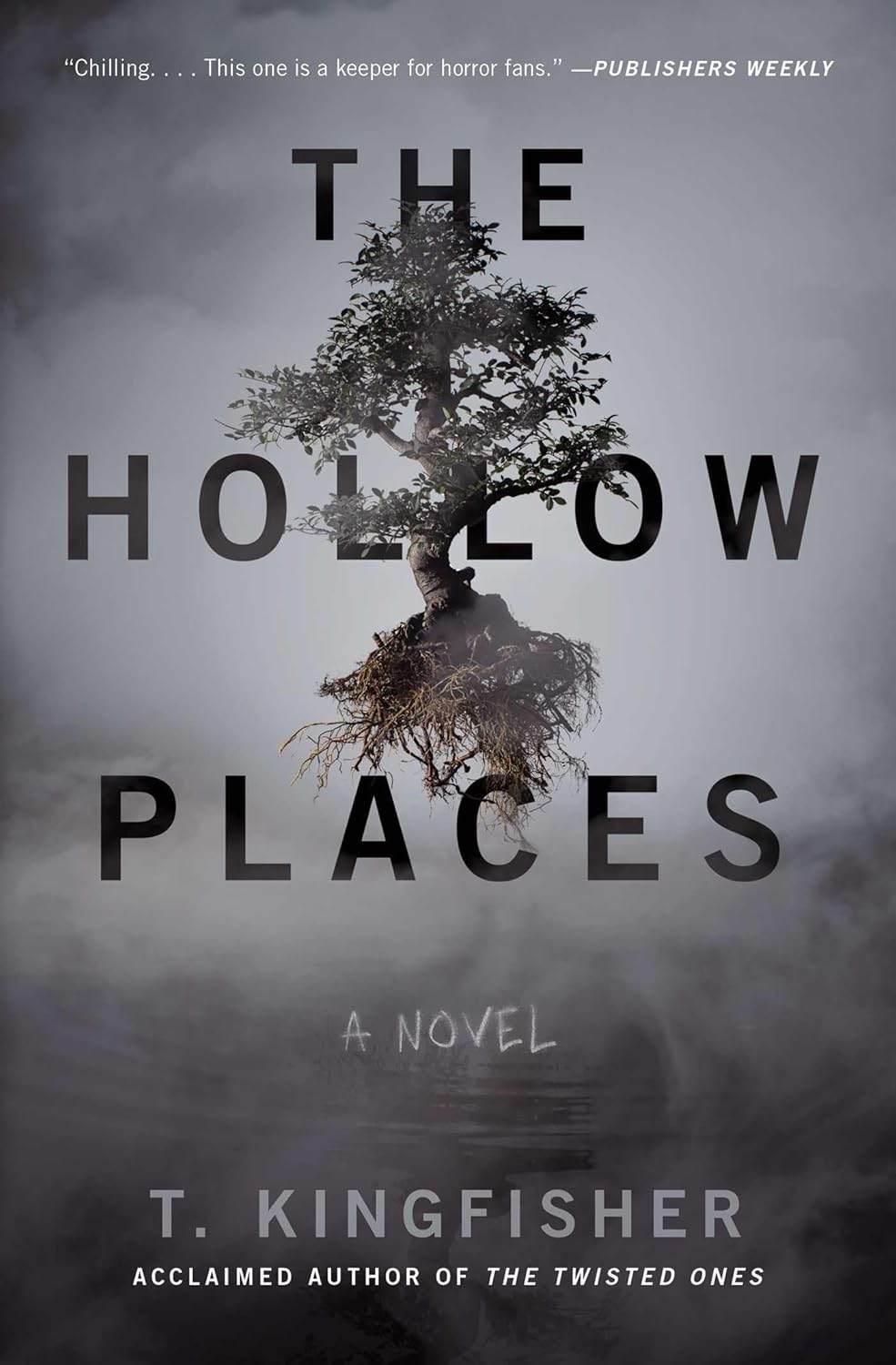
Kara moves into her uncle’s roadside museum of oddities in North Carolina after her divorce, to help him run the place, and finds a hole in the wall behind a taxidermied deer.
Through the hole is a corridor. Through the corridor is a landscape of willow islands in a still river, with a concrete bunker on one of them, and words scratched into the bunker wall by somebody who came through before.
She’s rewriting Blackwood’s “The Willows” and is completely open about it. The willows move. The danger is being noticed. And her addition is that some of the islands hold things that were people once and have been altered.
Simon, the coffee shop owner next door who comes along, is very funny, which is Kingfisher’s method everywhere: comic dialogue holding the frame while the situation deteriorates around it.
The bunker sequence and the rule about not moving are the best writing she has done.
Read Blackwood first if you can.
Also on ghost books.
What Moves the Dead (2022)

A retelling of “The Fall of the House of Usher,” and it’s the best thing she has written.
Alex Easton, a retired soldier from the invented country of Gallacia, travels to the Usher house to see Madeline, who is dying. The tarn outside is doing something to the light. The hares in the grounds move wrongly and don’t run when approached. There’s a mycologist camped nearby, taking samples.
The mycology is the invention, and it’s properly worked out. Kingfisher has a genuine interest in fungi, the mechanism she supplies for what’s happening to the Ushers is drawn from real cordyceps behavior, and the hare sequence is one of the most unsettling things in recent horror.
Alex uses Gallacian sworn-soldier pronouns, which the novella explains once and then simply uses, and it’s the most elegant handling of that in fiction.
Won the Locus Award for best horror novel. What Feasts at Night continues it.
Also on body horror.
A House with Good Bones (2023)
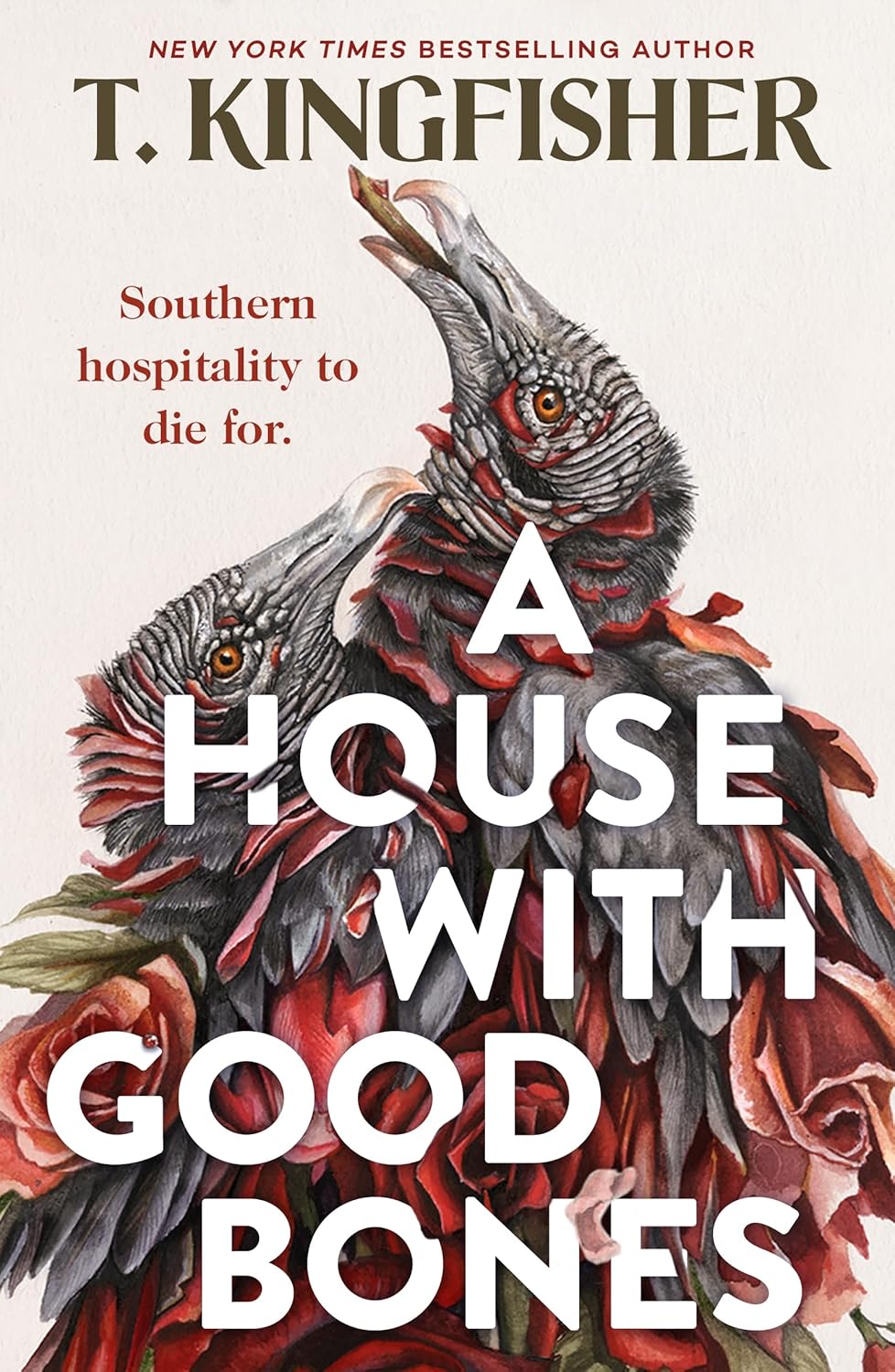
Sam Montgomery is an archaeoentomologist, meaning she digs up ancient insects, and she moves back into her mother’s house in North Carolina between contracts.
Her mother is behaving oddly. The house has been repainted in the beige her dead grandmother preferred, the ladybugs are gathering in numbers that aren’t normal, and there’s a vulture on the mailbox that watches her.
The grandmother is the horror. Sam’s memories of her are of a woman everybody was frightened of, and the novel is about what she did, and about a family that agreed not to discuss it.
The insect material is the pleasure of the book, and Kingfisher writes Sam’s professional enthusiasm properly.
It’s her warmest horror novel and the one with the most comedy in it, and the consensus puts it as the least frightening of the four.
The vulture is a good character.
The Fantasy, Which Is Not Horror

She publishes under two names, and the split is deliberate. Ursula Vernon writes for children. T. Kingfisher writes for adults, and about half of that output is fantasy rather than horror.
Nettle and Bone is the best of it. A princess’s youngest sister sets out to kill her brother-in-law, who is abusing the surviving sister, and the quest requires her to build a dog out of bones and weave a cloak of nettles, and she travels with a dust-wife, a demon-possessed hen and a disgraced knight. It won the Hugo for best novel.
The Saint of Steel series is romantic fantasy about paladins whose god has died.
Digger is the graphic novel, which ran for six years and won the Hugo, about a wombat who tunnels into the wrong place.
None of it is horror, and a substantial share of her readers arrived through it.
Where to Start
Read The Twisted Ones, and read Machen’s “The White People” either before or immediately after, because the two together are better than either alone.
If you want something short, read What Moves the Dead, which takes an evening and won the Locus.
If you want the strangest, read The Hollow Places.
And know that the T. Kingfisher books are consistently funny, consistently kind to their animals, and considerably more frightening than either of those facts suggests.
The older end of the shelf is on my horror classics page. What Moves the Dead is a direct answer to Poe, which has a page of its own here.