The 20 Most Terrifying Tales by Edgar Allan Poe

As a horror writer, I’ve always been reading, yet most of what I read were works of classical literature. Recently I started to read the works of Edgar Allan Poe.
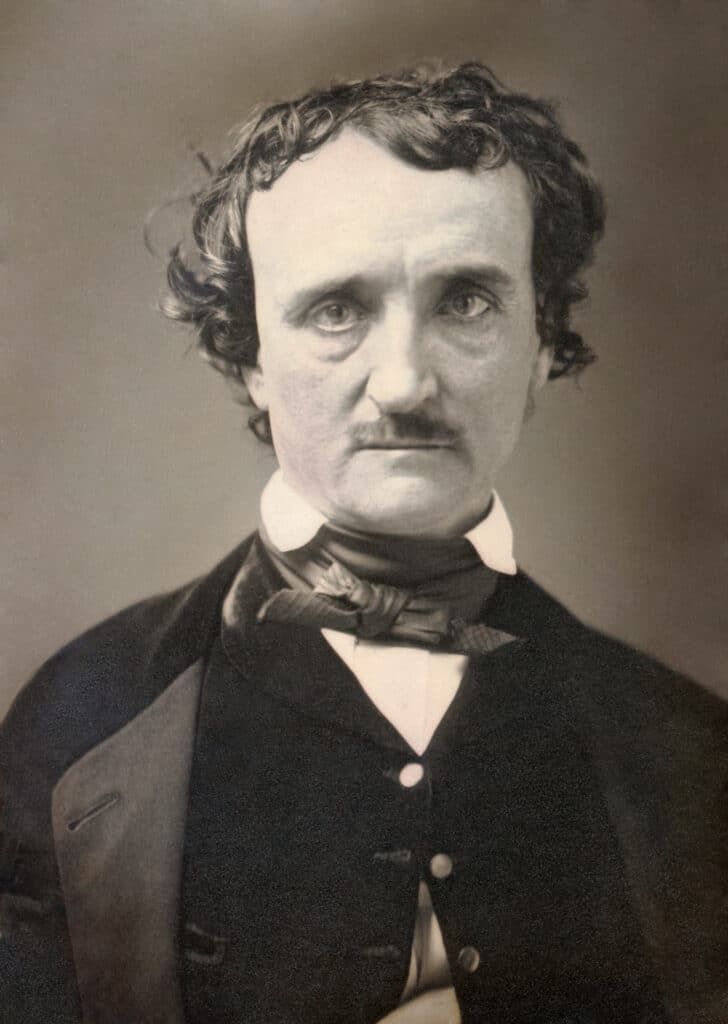
Photograph of Edgar Allan Poe
Edgar Allan Poe

Edgar Allan Poe was a writer whose stories I was well familiar with. Yet, it was mostly because of pop-culture references and from the influence he had on other writers and horror literature in general.

That’s why I spent the last months reading almost all of his works.

There are few writers as influential as Edgar Allan Poe on the horror genre and the American literary tradition in general. It’s not wrong to say he was a pioneer in many ways. He didn’t just set new standards; he changed the entire course of literature.

Edgar Allan Poe is hailed as the father of the modern detective story, the psychological horror genre, but he was also highly influential in such genres as science-fiction and adventure.

The list of writers Edgar Allan Poe influenced is long and extensive, including Charles Baudelaire, H. G. Wells, Jules Verne, Robert Louis Stevenson, Herman Melville, Arthur Conan Doyle, H. P. Lovecraft, and even Sigmund Freud.

It’s no understatement to say that the literary world we know today might be very different without him.

I write horror fiction rooted in the same tradition as the authors on this page. If you love classic horror and weird tales, you might enjoy my work, too. Sign up, and I’ll send you one of my best stories for free.
* indicates required

On Reading Edgar Allan Poe’s Work

Reading the works of Edgar Allan Poe differed from what I expected. I’d imagined him to be a writer of ghost stories and of creepy tales in which people are stalked by dark things and terrible creatures.

Instead, I was treated to tales of unreliable narrators, characters who are mentally ill and suffer from various ailments, fears, and addictions.

There were seldom any ghastly creatures. Instead, I was treated to tales of gripping psychological horror, of sick minds, and the terrible deeds they committed.

If you’re interested in a more contemporary look on Poe’s major themes of psychological horror, and want to explore a different medium, I urge you to check out my list of the best horror manga, where you’ll find many works with ties to Poe.

When I first started to read Edgar Allan Poe’s works, I needed some time to get used to them. As a non-native speaker, his often verbose and poetic style was tough to get into. His writing is often very imaginative, relying more on mood and atmosphere. He’s painting detailed pictures, not only of what his characters see, but what they feel and experience.

Once I got used to it though, there was something special about Edgar Allan Poe’s style. Reading his stories out loud made me recognize the mastery he held over the craft. There’s rhythm to his work, there’s power, suspense, and emotion, something you can truly feel and hear when you read his works out loud or listen to them.

While I mostly enjoyed Edgar Allan Poe’s short stories, I couldn’t help but feel that I was reading poetry at times. It proves, at least to me, that Poe was first and foremost a poet, even in prose.

This also relates to his general style. Edgar Allan Poe’s writings aren’t so much vessels for storytelling or plot, they are all about atmosphere, about apprehension turning to terror, and doing so in as few words as possible.

This shows in one of his most fundamental rules of writing, his theory of ‘totality.’ Every element and every word in a short story must contribute to the feeling you want to instill in your readers. It’s an idea that you can see brought to life when reading his stories, and it’s one that I might do well to keep in mind regarding my writing.

While Edgar Allan Poe wrote many different stories, experimented with various different genres, for this list I wanted to focus mostly on his horror stories.

I’m going to discuss why I enjoyed these stories, their plots, their elements, and Edgar Allan Poe’s style. While I’d like not to give away too much about each story, it’s almost impossible. So, if you don’t want to be spoiled, I suggest reading each story before you venture into my discussion. For that, I’ve included a link to the electronic text at the start of each discussion.

So here are my favorite twenty short stories by Edgar Allan Poe:

20. King Pest
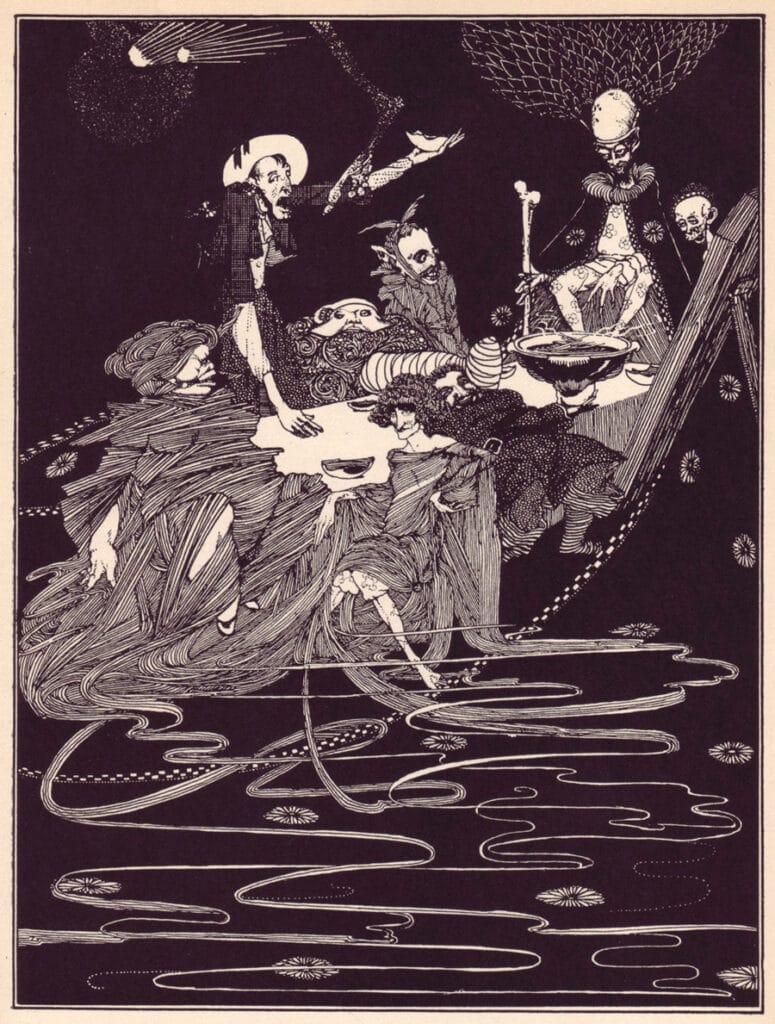
Edgar Allen Poe - King Pest - Illustration by Harry Clarke
Edgar Allan Poe – King Pest – Illustrated by Harry Clarke

I’m starting this list with one of Edgar Allan Poe’s comedies, albeit a dark one. I wasn’t too fond of Poe’s comedic writing and his satires, but King Pest stood out for various reasons.

It’s a story set in plague-ridden London, featuring a plethora of extraordinary characters. The first are two seamen. One is a giant, gangly, and almost emaciated man called Legs, the other a short, sturdy man named Hugh Tarpaulin.

At the outset of the story, our two heroes are getting drunk at a tavern and flee without paying.

As they are running from the tavern’s owner, they make their way to the plague quarters. Those are shut off and entry is punishable by death. The two of them, in their desperation and drunk stupor, disregard the rule and make their way to the home of a mortician.

Inside, a strange crowd has gathered. Every one of these characters is disturbingly unique, almost comically weird, and disgusting. It’s at this point, with the entrance into the plague quarters and the introduction of this group, that an eerie atmosphere settles upon the story.

The group is sitting together below a skeleton hanging from the ceiling and tasting the mortician’s wine from skulls.

Legs and Hugh Tarpaulin, however, aren’t afraid and join the group who promptly introduce themselves as the King Pest and his court.

One might think our main characters are too drunk or dumb to realize what’s going on around them. The story toys with this idea, almost making us believe that something terrible is going to happen as the circumstances grow stranger and stranger.

But then Edgar Allan Poe changes the rules, reverses the build-up. He changes the terror-stricken atmosphere to one of humor, as our two extraordinary protagonists thwart the court without a problem and get away.

What makes this story so great is not only this reversal but also the vivid descriptions. None of the characters in this tale are normal. The King Pest and his court are a collection of comically overdrawn freaks, twisted beings, and figures in shrouds. Even our protagonists are far from normal. They, too, are of a strange nature.

While I enjoyed the reversal of the build-up, I still didn’t enjoy the humor employed in this tale all too much. I’d have preferred it if Edgar Allan Poe would have gone the normal route and made this one a true horror tale.

Still, it’s worth the read for the descriptions and the imagery alone.

19. Ligeia
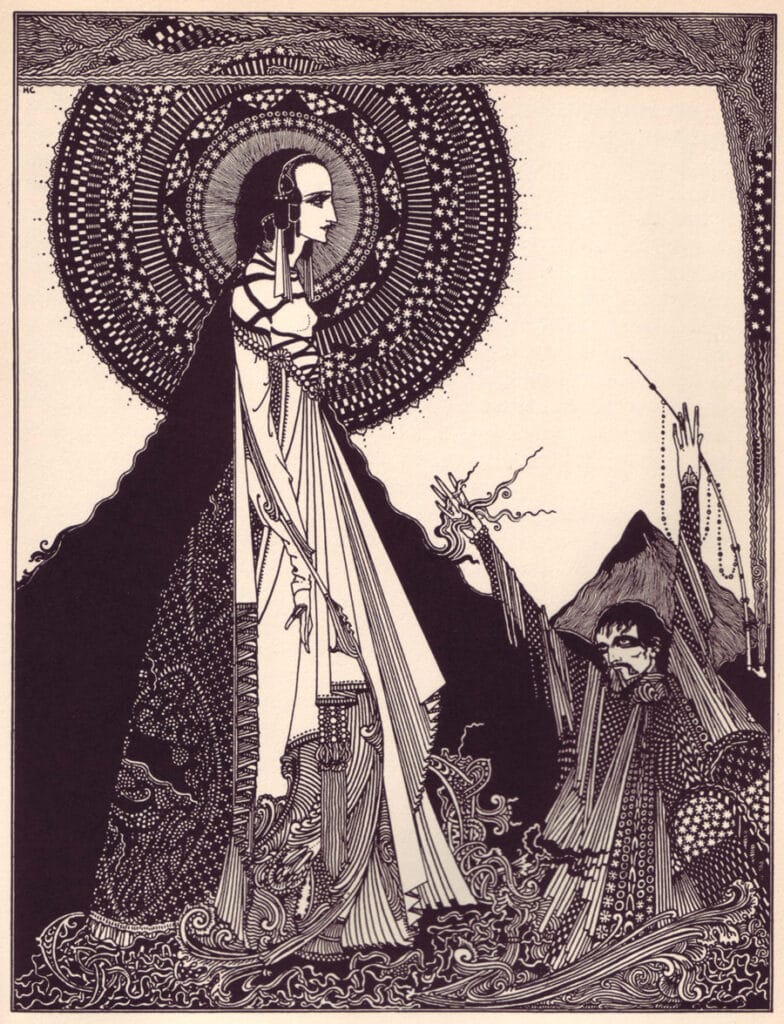
Edgar Allan Poe - Ligeia - Illustration by Harry Clarke
Edgar Allan Poe – Ligeia – Illustrated by Harry Clarke

Here we have the first of many of Edgar Allan Poe’s stories featuring the death of a beautiful woman, one of his prime themes. It’s what he described as the most poetic theme in the world.

The story starts with our narrator describing his lover Ligeia. She’s a passionate and intellectual woman, one of uncanny beauty. Yet, there’s a certain strangeness to her. Even more interesting though, the narrator can’t seem to recall anything else about her, neither her past nor even her family name.

The two of them get married and Ligeia impresses the narrator with her knowledge of various topics. From the sciences, over classical languages to metaphysics, she even teaches him about certain forbidden types of knowledge.

Eventually, Ligeia grows ill and dies. Our grief-stricken narrator retreats to an old abbey in England, becomes addicted to opium, and eventually remarries Lady Rowena.

Before long, however, she too grows ill, suffering from anxiety and fevers before she dies.

Grief-stricken, the narrator sits vigil at her bedside. It is then that Lady Rowena’s body shows signs of reawakening. At first, the narrator doesn’t believe it, but when he awakes in the morning a shrouded figure stands up from the bed, walks to the center of the room, and reveals herself not the Lady Rowena, but Ligeia.

Yet, all might not be as it seems in this tale. Our narrator is an opium addict and unreliable. It makes us wonder if what happens is true or, by chance, nothing but his opium- and grief-filled hallucinations.

Even more interesting is Ligeia’s introduction. Her talk about the soul moving from one body to the next, existing without it and her obscure background, makes us wonder who she truly is.

As so often, Edgar Allan Poe’s writing is ambiguous, making us guess and wonder, but not revealing the mystery.

All of this is supported by his style. Ligeia is one of Edgar Allan Poe’s more poetic and obscure stories, filled with countless references to obscure and strange works of literature. At times, the writing is getting verbose, even pompous.

Yet, Ligeia is an interesting story, one that makes us guess and wonder, not just about the story but also Edgar Allan Poe’s style.

18. MS. Found in a Bottle
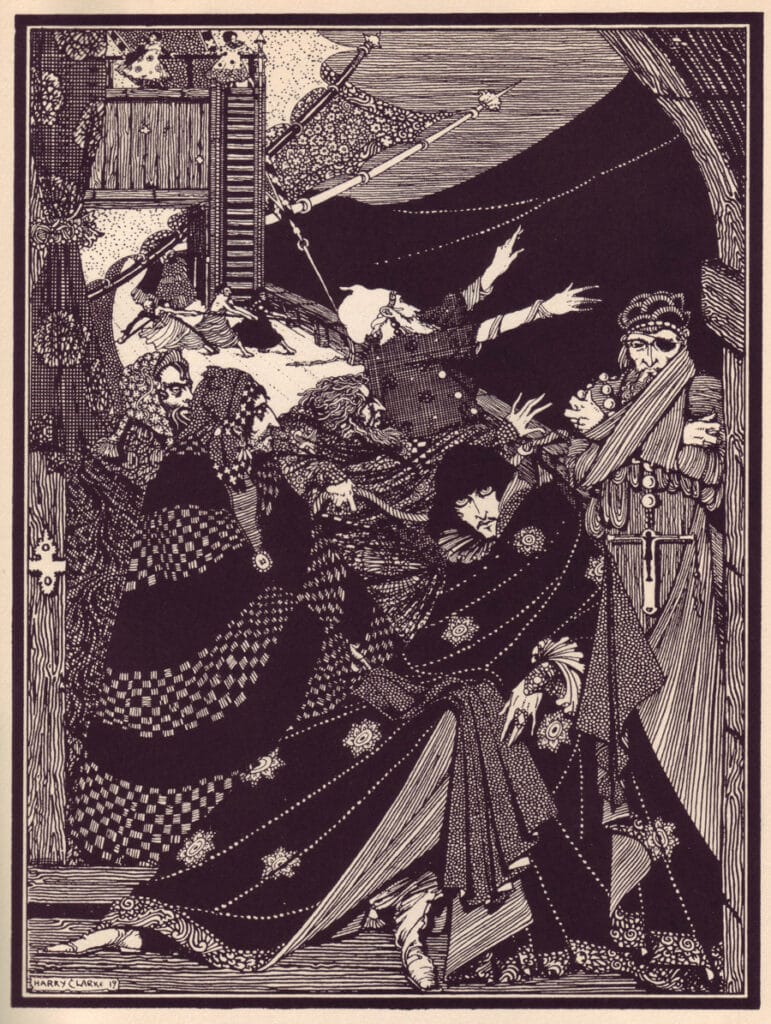
Edgar Allen Poe - MS. Found in a Bottle - Illustration by Harry Clarke
Edgar Allan Poe – MS. Found in a Bottle – Illustrated by Harry Clarke

MS. Found in a Bottle is more a maritime adventure tale than a true horror story. Yet, there’s enough weirdness here to showcase Edgar Allan Poe’s grim and ghastly style and his imagination.

Our narrator’s a passenger in a cargo ship which capsizes. Only he and an old Swede survive and have to endure in the bitter cold of the sea. Eventually, a gigantic black galleon collides with the wreck and only the narrator manages to get on board.

This ship, however, is much stranger than at first thought. The maps he finds are outdated, the timber the ship is made of seems to have grown or expanded over time, and the elderly crew of the ship doesn’t seem to be able to see him.

The narrator procures writing materials from the captain’s cabin to detail his experiences. He eventually casts those overboard in a bottle just before the ship reaches Antarctica, gets caught in a giant whirlpool, and sinks into the sea.

It’s an interesting tale, clearly a predecessor of those of H. P. Lovecraft.

What made this tale work so well was first the emotions conveyed by the narrator. One can almost feel the desperation, his urge to just give up, and his astonishment upon seeing the gigantic black vessel approach.

The tale also features some amazing visuals and a great atmosphere. The strange black ship and his ancient crew are described in intricate detail, yet we never learn who they are or how they’ve been sailing for so long. One could even think of it as a ghost ship or one frozen in time.

The ending of the tale is the one thing I didn’t enjoy. As it’s related to an idea that was thought scientifically plausible during Edgar Allan Poe’s time, yet I can’t help but find ridiculous. Namely, the theory of the Hollow Earth and that the whirlpool, in the end, leads to it.

Some scholars believe the tale to be a satire of the typical sea tales so popular during Edgar Allan Poe’s times.

Still, it’s an enjoyable tale and even if it’s not one of Edgar Allan Poe’s horror tales, one would be hard-pressed to call it anything else than weird fiction.

17. Hop-Frog
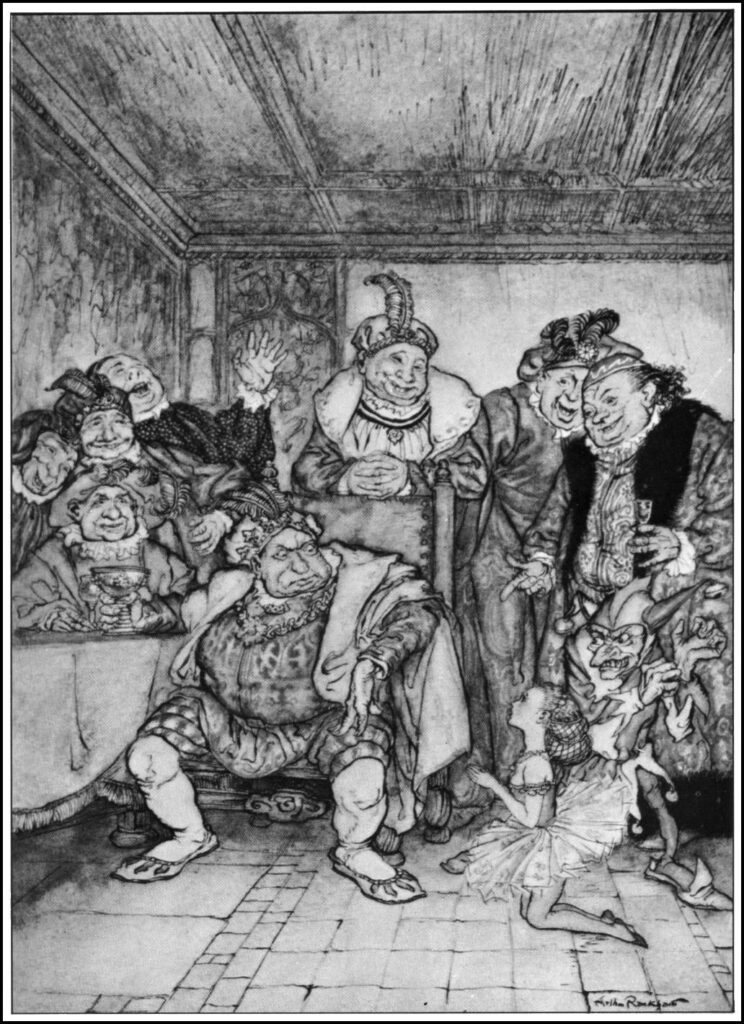
Edgar Allen Poe - Hop-Frog - Illustration by Arthur Rackham
Edgar Allan Poe – Hop-Frog – Illustrated by Arthur Rackham

Hop-Frog is the story of an outcast, the titular character of Hop-Frog. He’s a dwarf and the jester at the court of a king, a king who’s fond of practical jokes. That’s also where Hop-Frog got his name from. He’s crippled and because of his deformities, he can’t walk normally.

One day, the king forces Hop-Frog, who can’t stand alcohol, to down multiple goblets. When Hop Frog’s friend and fellow dwarf Trippetta tries to intervene the king pushes her to the ground and throws his goblet of wine in her face.

It’s at this moment that a ghastly sound is heard, a strange grinding which is thought to come from outside yet has a different source.

The story continues when the king asks Hop-Frog for advice about an upcoming masquerade. The king and his ministers plan on scaring the guests and Hop-Frog comes up with an idea. He suggests they all dress up as orangutans, chained together, pretending to be wild beasts.

Unbeknownst to the king, this idea is part of his and Trippetta’s plan to finally get revenge and get rid of their abusers. On the night of the masquerade, their plan’s set into motion. It’s there that we’re also revealed to the source of the strange grinding sounds.

The act of revenge is one of Edgar Allan Poe’s more gruesome murders.

Hope Frog is not Edgar Allan Poe’s only story that features revenge. It’s a motif that also comes up in The Cask of Amontillado, but Hop-Frog is different in many ways. The murderer, Hop-Frog, is sympathetic and the tale even ends with him getting away. Something unique in Edgar Allan Poe’s works.

The telling of the story is also different. While most of Edgar Allan Poe’s stories related to murder or other ghastly incidents are told in first person, Hope Frog is narrated by a third-person narrator, one who seems to have got no relation to the incidents taking place in the tale.

Yet, not all is well in Hop-Frog. One might wonder how the king and his ministers are so easily tricked and follow along with Hop-Frogs’ plan without the sliver of a doubt.

There are even some more interesting facts about Hop-Frog. Some suggest that the story is one of Edgar Allan Poe’s more personal ones. The relationship between Hop-Frog and the king might be a mirror to that of Edgar Allan Poe and his foster father. It makes even more sense when one hears that Edgar Allan Poe, similar to Hop-Frog, couldn’t handle alcohol well. Another idea suggests that Hop-Frog is a tale of literary revenge in which Edgar Allan Poe tricks and murders the eight members of a particular literary circle.

Overall, Hop-Frog is an enjoyable little horror tale, and one of his most conventional. Yet, at least in my opinion, it pales compared to some of his other works.

16. Shadow – A Parable

One of Edgar Allan Poe’s shortest pieces and also a strange one.

It’s not so much a story as a brief glimpse of an incident happening.

It’s set in ancient Greece at a time that a plague’s at large. A group of men have gathered to hold a feast at the deathbed of a friend who succumbed to the plague.

Soon enough, the narrator and his friends notice a shadow resting upon the doorway. The narrator then demands, with downcast eyes, what brings it there.

It then answers, speaking to them in the voices of their departed friends.

Shadow – A Parable is one of Edgar Allan Poe’s more open stories. We might wonder who or what that shadow exactly is, or what brings it there.

One suggestion, a grim one, is that it’s the shadow of death, hanging and looming above those present, talking to them about their demise. It fits in well with the setting of the plague.

Shadow – A Parable is an interesting and short little tale, yet it’s one that I enjoyed a lot.

15. Morella
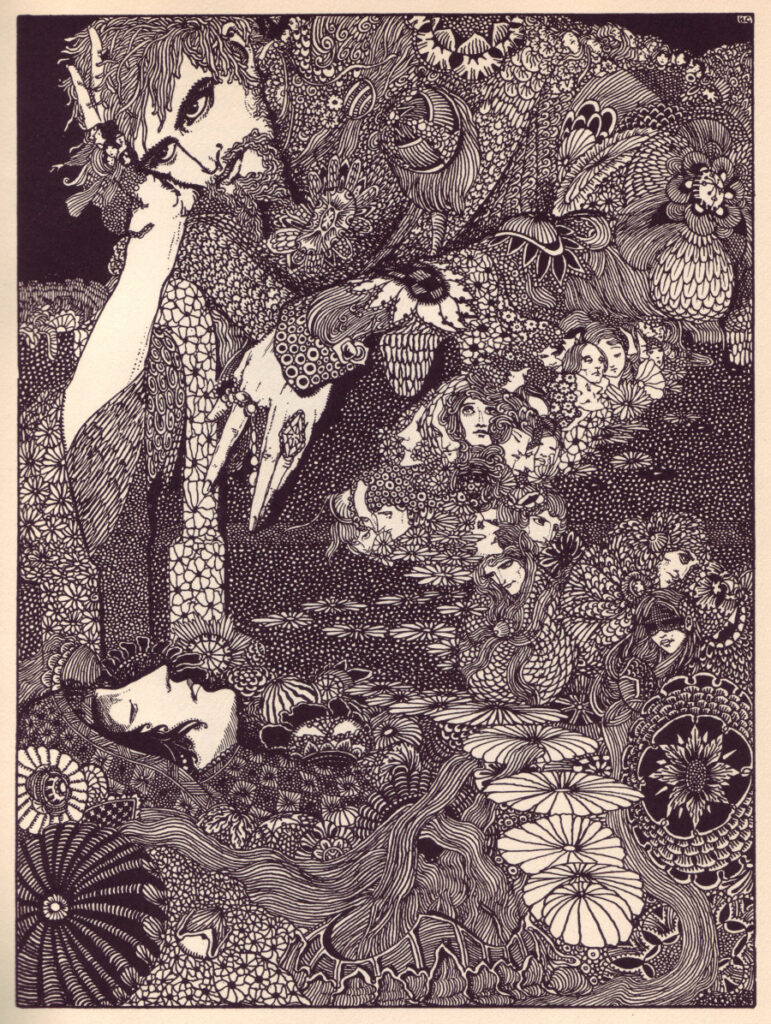
Edgar Allen Poe - Morella - Illustration by Harry Clarke
Edgar Allan Poe – Morella- Illustrated by Harry Clarke

Here we have another one of Edgar Allan Poe’s true horror stories and another one that features the death of a beautiful woman.

It’s another weird story, one that feels more like a fever dream than a story. The beginning talks about the theory of identity by German philosophers Fichte and Schelling.

The narrator marries a woman named Morella. She’s a very intelligent and very intellectual woman and spends a lot of time focusing on the theories outlined at the beginning of the tale.

While studying, Morella’s health eventually deteriorates. She dies in childbirth, leaving, as she called it, the narrator with a pledge of her affection, a daughter.

The child grows up and resembles her mother closely, and before long the narrator fears this uncanny resemblance.

Eventually, the narrator takes her to be baptized to release the evil he thinks took hold of his daughter. It’s there that the narrator’s overtaken by the strangest of feelings and when asked the name of his daughter he names her Morella. At this the daughter calls out ‘I am here’ before she dies.

Yet things aren’t over. The tale continues with the narrator bringing his daughter’s body to the tomb where he buried Morella. Yet as he opens the tomb, he finds no hint of his late wife.

I absolutely loved this tale, and it was one of the earlier stories by Edgar Allan Poe that actually unsettled me, namely by its ending.

What makes it work so well is the introduction and the weird concepts Morella obsesses over. It’s another tale, akin to Metzengerstein, Ligeia, and The Murders in the Rue Morgue, which Edgar Allan Poe starts by explaining and outlining theories, hinting at what’s to come. In Morella, it’s the topic of identity and if it can exist outside the human body.

The genuine horror and the true weirdness of the tale come with the fantastic revelation at the end. Yet, typically for Edgar Allan Poe, we don’t get an explanation. The mood is driven to the top, pushed to a ghastly climax, and we’re left with only the ominous feeling that something’s very wrong.

Truly, a great story.

14. Metzengerstein
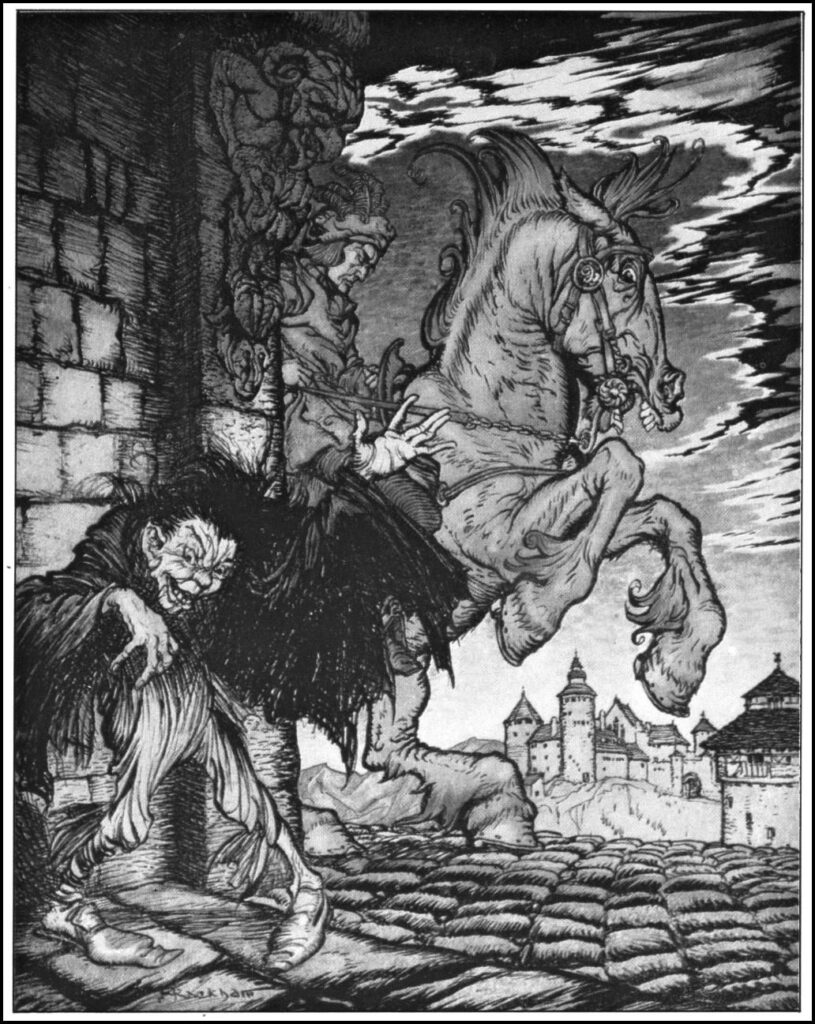
Edgar Allen Poe - Metzengerstein - Illustration by Arthur Rackham
Edgar Allan Poe – Metzengerstein – Illustrated by Arthur Rackham

Metzengerstein was the very first of Edgar Allan Poe’s stories that ever got published. Incidentally, it was also his very first tale I ever read.

It uses many of the gothic tropes famous at the time, even exaggerates them. We’ve got feuding noble houses, old, decrepit castles, and a setting, isolated from the rest of the world.

Because of this, it’s still debated if Metzengerstein was Edgar Allan Poe’s honest attempt at writing gothic fiction or if it’s a satire of an all too common trend in fiction at the time.

Metzengerstein tells the story of the noble families Metzengerstein and Berlifitzing who’ve been rivals for so long, no one knows how far it dates back.

Before we get into the story, however, Edgar Allan Poe explains a concept central to the events in this tale. It’s the idea that the soul of man can move on to different living things at the moment of their death.

After his parent’s untimely death, young Frederick becomes head of the family and inherits their vast fortune.

The young Frederick is a cruel and sadistic man, committing various atrocities. One day, while he’s meditating in his chambers, his eyes wander to a specific tapestry. It depicts an unnatural colored horse, belonging to a man from Berlifitzing who’s seen being murdered by a man from Metzengerstein in the background. The young Frederick is unnerved by this and eventually leaves the room, only for a strange sight to occur. As he steps outside, his shadow falls exactly on the spot of the murder depicted in the tapestry.

It’s at this time that he learns of the demise of William Von Berlifitzing. His stables were set on fire and the old man tried rescuing his priced horses. It’s of course implied that Frederick was behind it.

It’s soon after that a particular horse appears at the castle, one caught by Frederick’s servants. The horse wears the initials of Berlifitzing, yet no one, not even the man’s servants, can recall a thing about the animal. Frederick, however, takes possession of the horse.

It’s this horse that changes the young baron, making him retreat from society at large, and eventually brings his demise.

I enjoyed this tale, and it was a fine introduction to Edgar Allan Poe’s writing style. It introduces us to a lot of themes important in many of Edgar Allan Poe’s works. People of extreme wealth, gloomy, decrepit buildings, seclusion and teeth. It also showcases that Poe’s tales often include instances of symbolism, here especially in the tapestry scene. A scene which was fantastically done and made implications about what was to come in the tale.

It’s an interesting and short tale, one that already shows us Edgar Allen Poe’s mastery of his craft. One could do much worse as an introduction to Edgar Allen Poe’s short stories.

13. The Oval Portrait
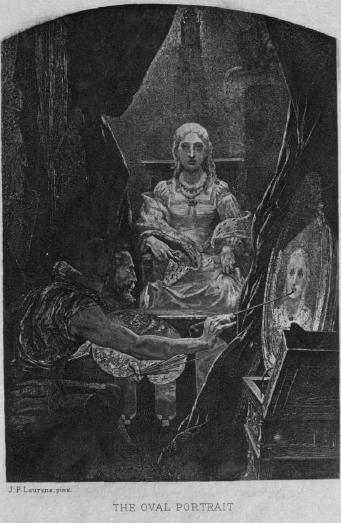
Edgar Allan Poe - The Oval Portrait - Illustration by Wongle
Edgar Allan Poe – The Oval Portrait- Illustration

One of Edgar Allan Poe’s shortest horror stories, yet a good one. It’s yet another tale that features the death of a beautiful woman. As so often, though, Edgar Allan Poe’s able to fit much more in so short a tale.

The Oval Portrait is a story within a story. The narrator of the tale spends the night at an abandoned mansion and comes upon the beautiful portrait of a young woman. In a book he found, he reads up on the history of the portrait.

The book describes the tragic story of a young woman who married an eccentric painter, a man who cared more for his art than anything else. Eventually, he asks his wife to sit for him. Being an obedient wife, she does as he says and never complains, even when her health fades.

Even from this brief description, one can see the end of the tale coming. Yet, back in Edgar Allan Poe’s day and age, stories and twists like this weren’t common, and the tale proved to shock and horrify audiences.

The Oval Portrait doesn’t waste any words before it comes to its shocking conclusion. It’s one that explores the relationship between art and life and which was eventually fully explored by Oscar Wilde in its novel The Picture of Dorian Gray.

The story, like many others written by Edgar Allan Poe, explores the consequences of addiction and obsession. With the Oval Portrait, it’s an obsession with perfection and creating perfect art.

It’s a theme that I also featured in my story True Art Always Has a Price.

12. Silence – A Fable
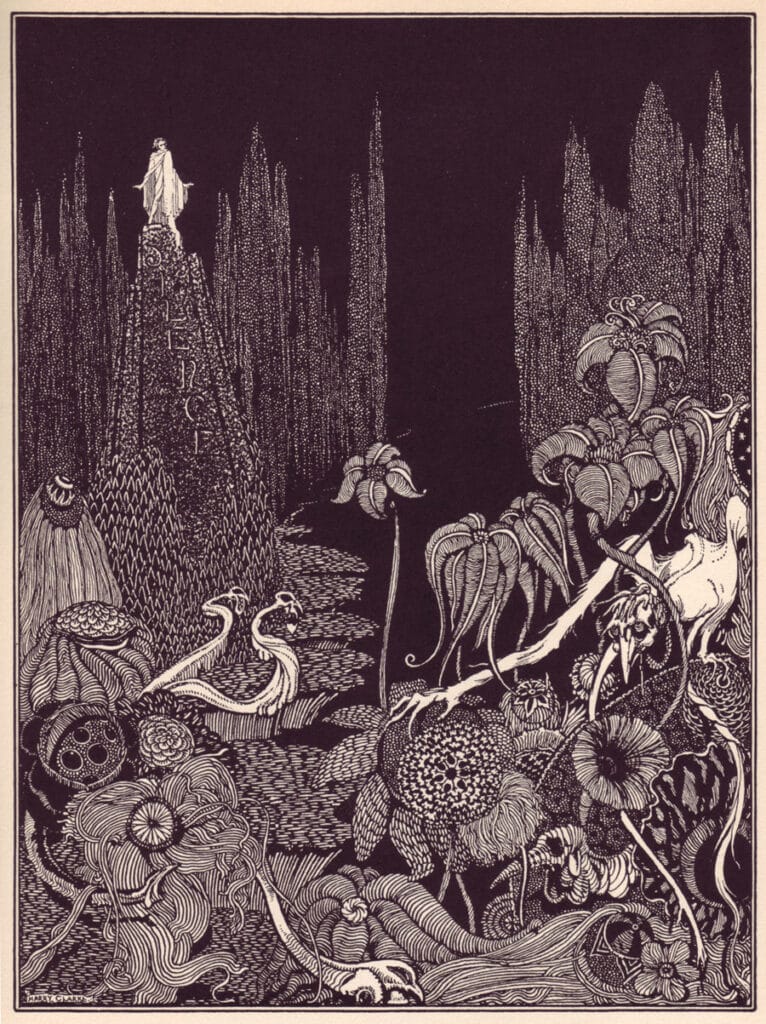
Edgar Allen Poe - Silence - A Parable - Illustration by Harry Clarke
Edgar Allan Poe – Silence – A Parable – Illustrated by Harry Clarke

Another brief work by Edgar Allan Poe, one that almost seems more like a poem than a story.

The strongest point in this brief little tale is without a doubt the atmosphere. Yet, there’s more hidden between enchanted landscapes, apparitions, and demons.

Silence – A Parable is very open to interpretation.

Is it an allegory for man’s destructive nature? Is it talking about how solitude, being left alone with our thoughts, can drive us into a state of confusion or even insanity? Or is it Edgar Allan Poe himself who talks to his demonic muses?

It’s these various interpretations one can find for this brief work that makes it so interesting to me. However, Edgar Allan Poe’s true intentions with this tale might never be known.

11. The Premature Burial
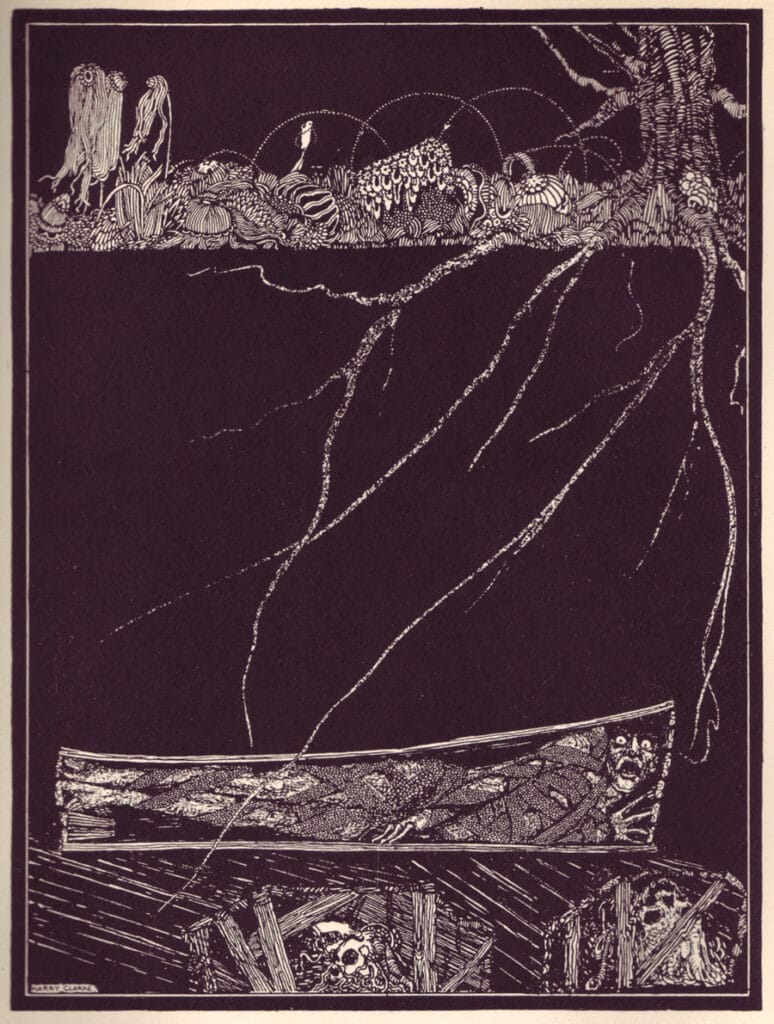
Edgar Allan Poe - The Premature Burial - Illustration by Harry Clarke
Edgar Allan Poe – The Premature Burial- Illustrated by Harry Clarke

The Premature Burial is a tale that discusses one of Edgar Allan Poe’s favorite themes, that of being buried alive.

The narrator of this tale suffers from catalepsy, a condition that renders him into a death-like trance. It’s this condition that leads to his fear of being buried alive and his obsession with similar cases.

The story beings more like an essay, in which the narrator recounts various cases of people being buried alive. Some escaped their fate, others didn’t.

Only after this does the narrator recount his own experiences. Over time, his condition worsens as his fear becomes a crippling phobia. He does everything he can to escape his fate. He makes his friends promise him they won’t bury him prematurely, refusing to leave his home and even building a tomb with all sorts of precautions.

However, things take a turn for the worst and our narrator awakens in a confined, dark space with wood surrounding him and the knowledge that his worst fear has become reality.

There’s a deep routed, suffocating anxiety at the heart of this tale. Edgar Allan Poe plays this out in glorious detail in the second half of the story before it comes to a rather unexpected conclusion.

The Premature Burial is an examination of neurosis brought forth by obsessing over an irrational fear. This again shows that Edgar Allan Poe often focuses on narrators that are mentally unsound, in this case, a man suffering from crippling anxiety.

I really enjoyed this little tale and the various incidents discussed in the beginning. The fear of premature burials, while ridiculous to most of us now, was common in Edgar Allan Poe’s time.

Another great little tale by Edgar Allan Poe.

10. The Murders in the Rue Morgue
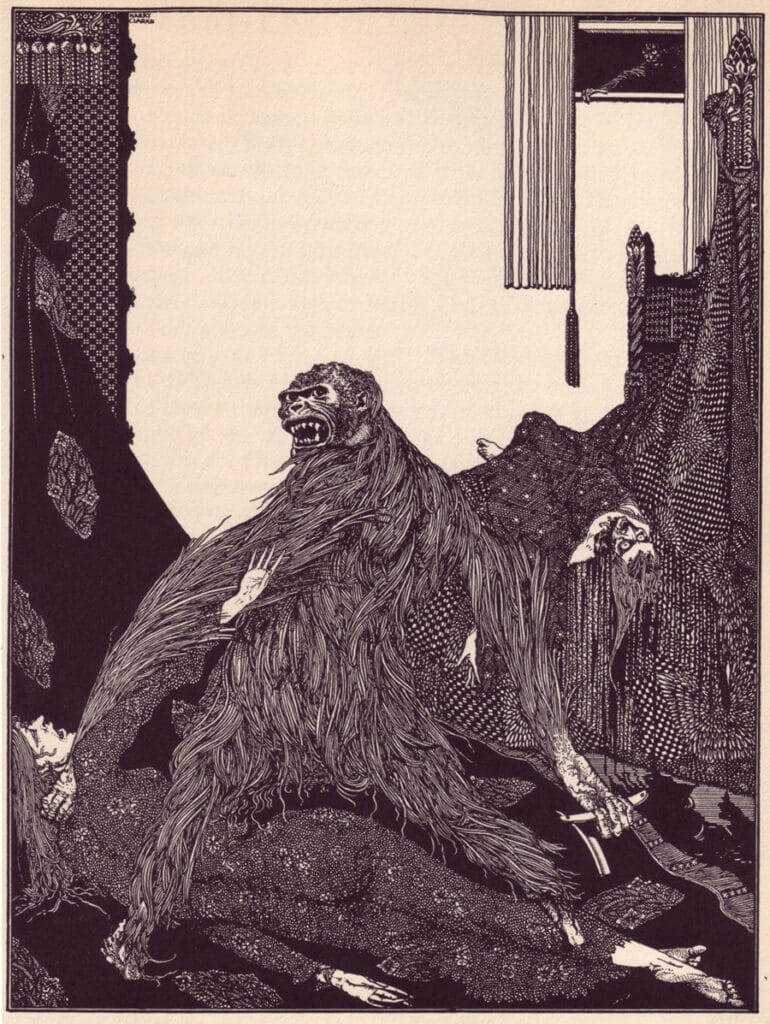
Edgar Allan Poe - The Murders in the Rue Morgue - Illustration by Harry Clarke
Edgar Allan Poe – The Murders in the Rue Morgue – Illustrated by Harry Clarke

The Murders in the Rue Morgue is often celebrated as the first modern detective story, introducing us to C. Auguste Dupin, the first modern detective. It’s undeniable that Dupin and the stories he’s featured inspired Arthur Conan Doyle’s Sherlock Holmes.

While it’s not a horror story, I still included The Murders in the Rue Morgue in this list. It not only features a gruesome and brutal murder, but it’s also a masterfully crafted tale.

The story begins not with the plot directly. As in other tales, Edgar Allan Poe starts by discussing the nature and practice of analytical reasoning. He does this by giving us various examples, including games such as chess and cards.

After this, he describes how our nameless narrator first met Dupin.

We get to know Dupin’s reasoning skills when he deduces the narrator’s thoughts simply from his interaction with the environment, his behavior, and his facial expressions.

It’s only then that the two of them stumble upon a grisly murder case that happened in an apartment in the Rue Morgue. A mother and daughter were brutally murdered in their home.

The murder represents a perfect puzzle, one that shocks and perplexes the investigators trying to solve it.

It’s then up to Dupin and his reasoning skills to solve the case. He explains what he learned from the scene of the murder and outlines its bizarre and surprising nature and brings the story to an almost comical conclusion.

What I enjoyed most was the deliberate construction of the narrative. In this story Edgar Allan Poe takes time, exploring first the theme of analytical reasoning, then introducing Dupin, showcasing his abilities before we’re introduced to the murder and its eventual unraveling.

I loved how Edgar Allan Poe slowly, but steadily walked us through the details of the crime scene. He even hints at things we don’t understand yet, until, at one specific point, it dawns on the narrator and us readers that there’s something very extraordinary about the case.

The story is also written differently from some of Edgar Allan Poe’s other stories. The Murders in the Rue Morgue is written in a non-verbose, and non-poetic style that lends itself to easier reading and focuses more on rational analytics than atmosphere and imagination.

While there are earlier stories that featured similar concepts or mysteries, The Murders in the Rue Morgue was the first one that focused on analysis and logical reasoning. It also established many tropes other writers later employed, such as Arthur Conan Doyle. One example is the narrator not being the detective, but his close friend, the other being the bumbling idiocy of the police who need the detective to help them out.

A splendid story, one that I’d recommend to not only fans of Edgar Allan Poe, but anyone interesting in early detective fiction.

9. The Black Cat
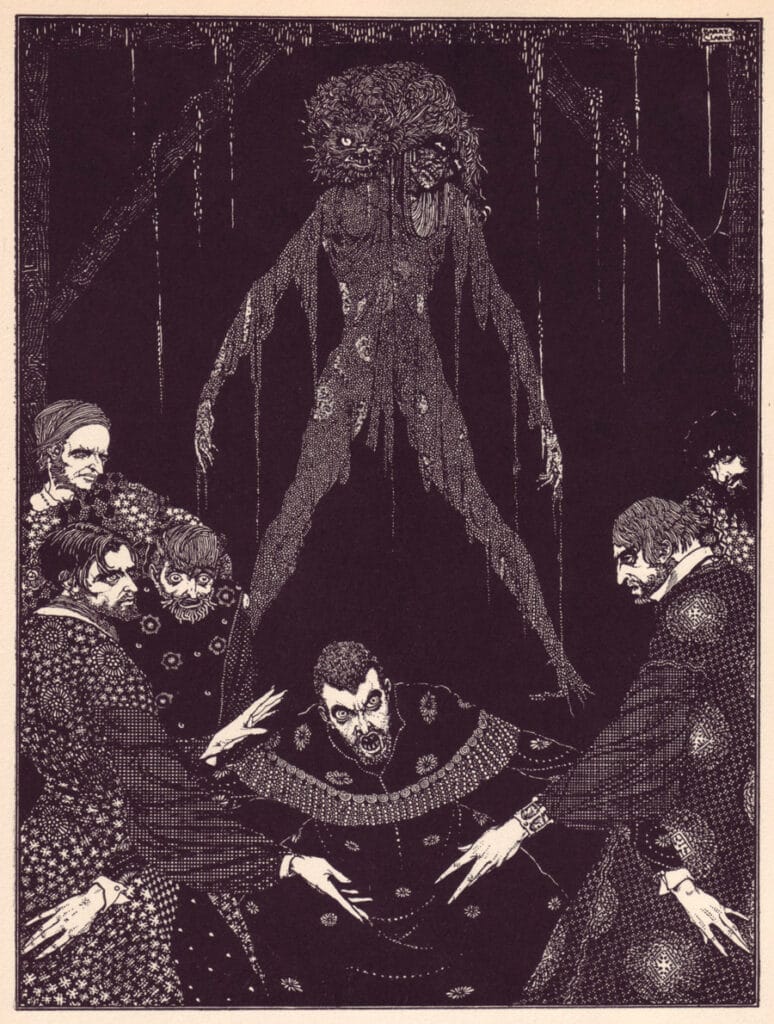
Edgar Allen Poe - The Black Cat - Illustration by Harry Clarke
Edgar Allan Poe – The Black Cat – Illustrated by Harry Clarke

The Black Cat presents us with Edgar Allan Poe’s most self-loathing narrator. He’s a violent drunk who commits acts of senseless and abhorrent violence when drunk. One might wonder if this is a projection of Edgar Allan Poe himself and his view of the abhorrent addiction he suffered from.

Yet, it doesn’t seem to be so much autobiographic, but a projection of Edgar Allan Poe’s worst fears. Namely losing himself to the bottle, just like the narrator in The Black Cat did.

The Black Cat is in essence a tale of a murderer who carefully concealed his crimes only to reveal them by his feelings of guilt. Once more, the narrator is unreliable, suffering from alcoholism.

From an early age, our narrator loved animals and owned many pets. He was especially fond of a cat named Pluto. For years his friendship with the cat lasted until the narrator succumbed to the bottle. In a violent stupor, he one night gored out one of the cat’s eyes.

At first, the narrator regrets his cruelty but is soon overtaken by his violent urges, and in another drunk fury, he ties a noose around the cat’s neck and hangs it. What’s interesting is the image Edgar Allan Poe here employs. The narrator has tears streaming down his face as he commits the deed, knowing how wrong it is, yet can’t seem to refrain from it.

At the same time, the narrator’s home catches fire and burns to the ground. In the ruins, the narrator finds a single wall still intact, the image of a giant cat with a rope around its neck imprinted on it.

The image disturbs him, but he eventually finds an explanation for it.

Before long the narrator finds another cat, almost identical to Pluto, and takes it home with himself. The only difference being a white spot on the cat’s chest. Soon he begins to fear and loath the animal because it reminds him of his guilt.

When the cat’s white spot resembles that of a gallows he grows more terrified of it. One day the narrator and his wife make their way into the cellar of their home. The cat trips him and he topples down the stairs.

In another drunk rage, he grabs the cat and tries to kill it, but is stopped by his wife. Driven mad by this, he kills her on the spot.

He decides to conceal the body within a protrusion in the wall and walls up the body. When the police show up, they find nothing and the narrator goes free. At the same time, however, he notices that the cat has vanished.

Before long the police check on him again, yet they once more find nothing. The narrator, in a state of confidence, proclaims of the sturdiness of the building and even taps against the wall behind which his wife’s body is hidden.

It is then that an inhuman shriek fills the room and when the police tear down the wall, they find not only his wife’s rotting body but also, to the utter horror of the narrator, the cat sitting on top of it.

As so often in Edgar Allan Poe’s tales, one might be inclined to think of certain things happening due to supernatural influences. Yet Edgar Allan Poe’s narrator is an alcoholic of questionable sanity. The image of the cat on the wall, the cat’s white spot changing, and many other things can all be explained by the narrator’s state of mind and his guilt. Instead of any supernatural influences, the prime devil in this tale is alcohol, which Poe described as a disease and a fiend that destroys one’s personality.

This is also the first of Edgar Allan Poe’s tales discussing his idea of the perverse, where he writes that it’s an ‘unfathomable longing of the soul to vex itself — to offer violence to its own nature.’ Namely, our self-destructive urges, our inclination to do what will ultimately bring us harm. Here, the narrator’s beating against the wall behind which the body of his wife was hidden.

I enjoyed The Black Cat a lot. The mental descent of the narrator and its disturbing, catastrophic climax especially fascinated me.

The writing in this tale and the images employed are fantastic, and once more Edgar Allan Poe shows his mastery over the English language.

8. The Pit and the Pendulum
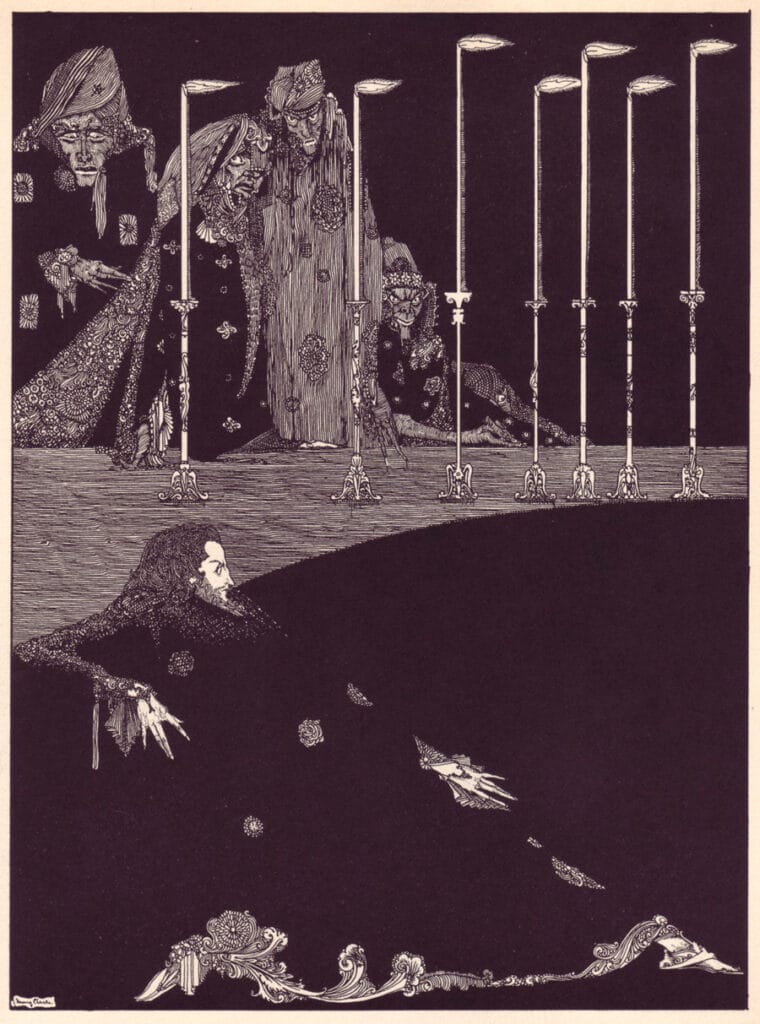
Edgar Allan Poe - The Pit and the Pendulum - Illustration by Harry Clarke 1
Edgar Allan Poe – The Pit and the Pendulum- Illustrated by Harry Clarke

The Pit and the Pendulum is one of Edgar Allan Poe’s most popular stories. It details the tortures endured by a prisoner of the Spanish Inquisition.

Even someone who’s never read Edgar Allan Poe, and even those who barely know his name, will know of this tale, or at least of the titular Pendulum and the torture method related to it.

The narrator of this tale was brought before the Spanish Inquisition and condemned to death. Why is never known and I might argue, is not important at all.

At first, the narrator finds himself in a dark room. In its center looms a pit that the narrator only avoids when he trips and falls on its edge. Surviving the pit, he soon finds himself in a different state.

He’s bound to a wooden frame with a razor-sharp pendulum slowly descending upon him. Once more he’s barely able to escape, by smearing his bindings with the remains of his food and attracting the rats in the room.

At this point the walls are heated and slowly moved inward, to eventually drive him into the pit in the room’s center. Once more he barely avoids death when he’s rescued from the room as the French Army captures the city.
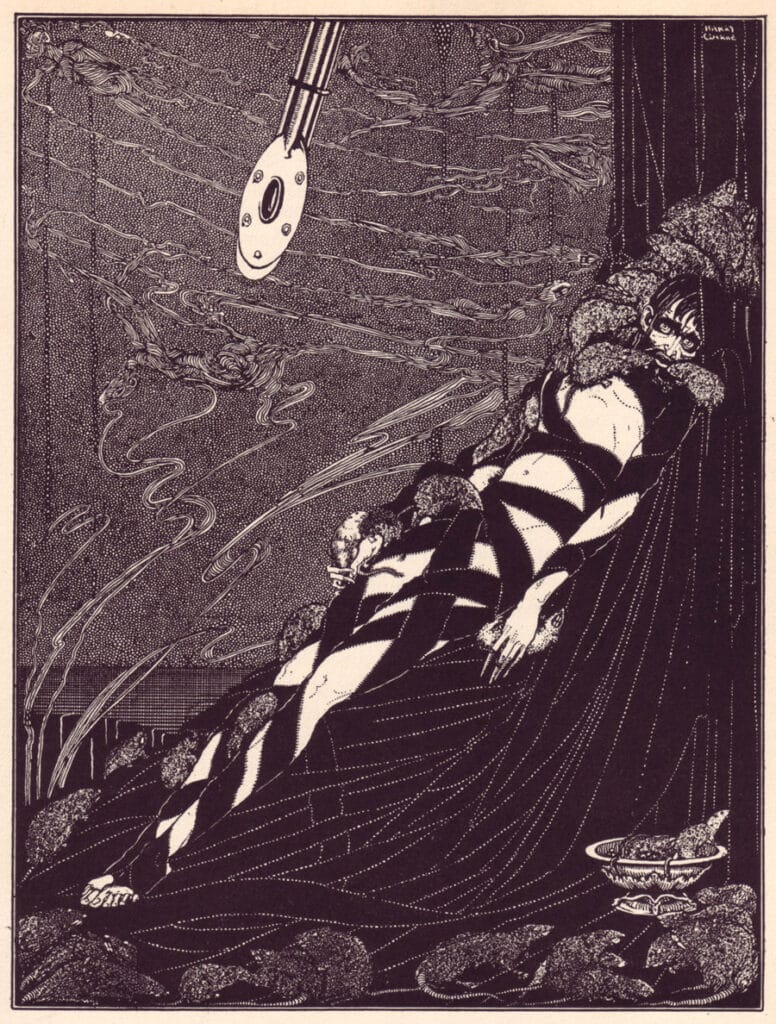
Edgar Allan Poe - The Pit and the Pendulum - Illustration by Harry Clarke 2
Edgar Allan Poe – The Pit and the Pendulum – Illustrated by Harry Clarke

The Pit and the Pendulum is a fantastic study of the effects of terror on the narrator. What makes this work so much is the realism of the story and Edgar Allan Poe’s focus on sensual inputs, or, in some cases, their absence. The narrator stumbles blindly through darkness, he smells the rats, he feels the heat of the walls and he hears the hiss of the pendulum above him.

The story is a prime example of Edgar Allan Poe’s ‘totality’ theory. In this story’s case, every word is used for one purpose alone, to convey terror. Edgar Allan Poe doesn’t focus so much on what’s happening, but what the narrator experiences and his sensations. This adds much more terror to the tale and makes it much more unsettling.

It’s a well-executed and beautifully crafted tale, one that’s deservedly regarded as one of Edgar Allan Poe’s best.

The only problem I have is the tale’s ending in which the narrator is rescued at the last second by an almost random event. Yet, one can’t argue that if the narrator would’ve died, he couldn’t have written the story.

7. William Wilson
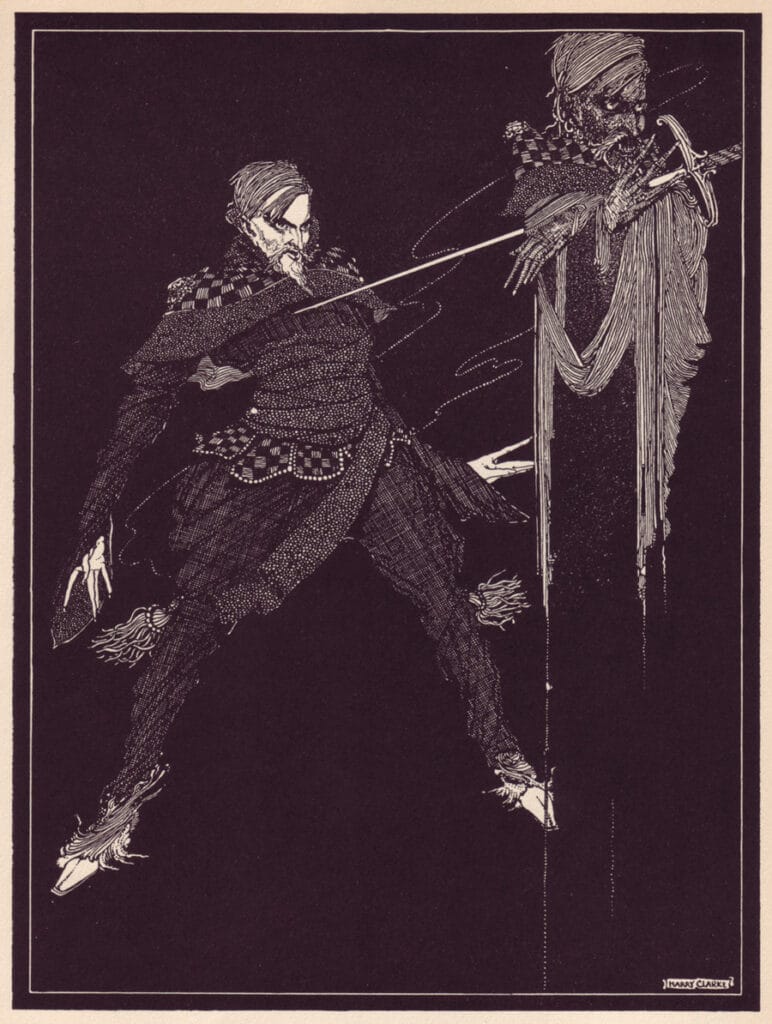
Edgar Allan Poe - William Wilson - Illustration by Harry Clarke
Edgar Allan Poe – William Wilson – Illustrated by Harry Clarke

This horror tale by Edgar Allan Poe focuses on the idea of doppelgangers.

The narrative beings by outlining a young boy’s days at a school in England. He’s known as William Wilson and details that there’s another boy by the same name at the school, one who resembles him closely and even shares his birth date.

One night, the narrator wanting to play a trick on his namesake sneaks upon his quarters but discovers in shock that his namesake’s face exactly resembles his own. The narrator flees the school in terror and later learns that the other William Wilson left the school the same day.

The narrator then talks about how his character grew worse during his days at Eton and Oxford and how he became, as he calls it, a scoundrel.

At the latter he tries to cheat another student out of his money during a game of cards. His plan is thwarted, however, by the appearance of his double.

From then on, many of his ploys are thwarted similarly by his haunting doppelganger.

The story eventually culminates with the narrator confronting his doppelganger during a Carnival in Rome. He duels his double and eventually stabs him multiple times.

It’s then that he perceives that at the spot where his double stood is only a mirror in which he sees his own image, pale and covered in blood.

His double then whispers one last line: ‘In me didst though exist – and in my death, see… how utterly thou hast murdered thyself.’

As so often Edgar Allan Poe leaves us with an ambiguous ending. What does the doppelganger mean when he’s proclaiming the narrator has killed himself? The most plausible explanation is that the doppelganger represented the narrator’s conscience, who kept him from committing his evil deeds. Now that he’s murdered it, he’s doomed himself. He’s killed his better half.

What’s interesting about William Wilson is that Edgar Allan Poe twists the idea of the doppelganger. Normally, they are dark twins, representing death and bringing evil. In William Wilson, however, it’s the narrator who’s evil and his doppelganger’s only there to stop his evil deeds.

While the ending might seem clichéd to us now, one has to remember that it was one of the first stories of its kind. People back in the day found the revelation shocking because it hadn’t been seen before.

It’s a great and fantastic tale, a slow-moving one, that’s more rational than supernatural, less verbose and poetic, following logic as the narrator tries to unravel the mystery behind his doppelganger.

William Wilson is one of Edgar Allan Poe’s best tales and one that I enjoyed immensely.

6. Berenice
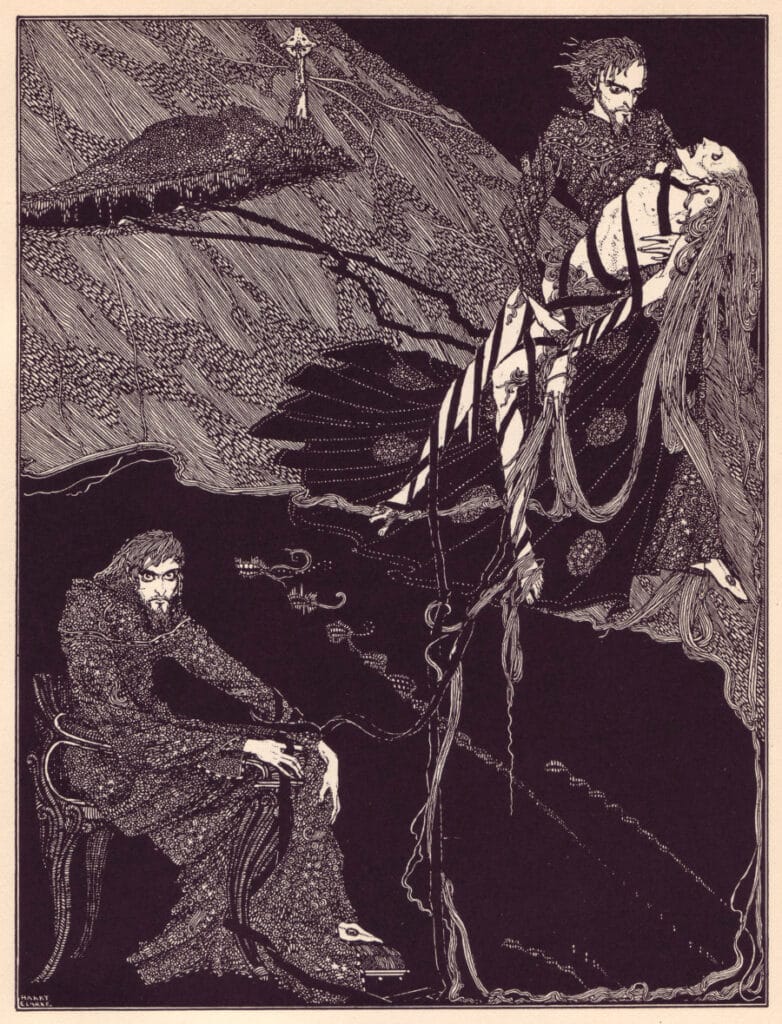
Edgar Allen Poe - Berenice - Illustration by Harry Clarke
Edgar Allan Poe – Berenice – Illustrated by Harry Clarke

One of the first tales by Edgar Allan Poe I read, and also the first one I was truly impressed with. It was also the first of his tales that showed me how horrific his stories can be.

Berenice is another story that features the demise of a beautiful woman but includes others of Edgar Allan Poe’s most common themes, for example, that of premature burial.

The narrator is an ill young man who suffers from many maladies, but his most serious one is a form of mental excitement. During these times his attention will focus intently on a certain object before he entire loses himself in his imagination and daydreams.

The narrator marries a beautiful young woman named Berenice.

One day, during one of his bouts of excitement, he focuses on Berenice’s teeth, can’t seem to forget about them, and becomes obsessed with them.

It’s soon after that Berenice dies and is buried.

The narrator remembers nothing after the time of the burial and only comes to himself at midnight, wondering what happened. Right away he notices a small wooden box he’s never seen before and which unsettles him greatly.

It is then that a servant enters the room and tells him that Berenice’s grave has been desecrated and a shrouded figure has been found, one that’s still alive.

At this moment the narrator notices that his clothes are covered in mud and a spade is standing in his room.

Yet, that’s not the true horror of the tale. When the narrator accidentally drops the little box, thirty-two pearly white things are revealed, Berenice’s teeth.

It’s a fantastic and utterly disturbing tale. At the time of its writing, Berenice was considered horrifying because of its excessive violence.

What makes the entire story even worse, it’s revealed that Berenice was buried alive and might very well have been conscious while the narrator removed her teeth.

Berenice is a tale that’s part fascinating for its imagery and the revelation and part repulsive for its obsession and the ghastly deed the narrator committed.

Yet, it is a fantastic, well-told tale that leaves us with nothing short of terror. Terror for what happened to Berenice and terror for the narrator who learned what he’d done because of his condition.

5. The Facts in the Case of M. Valdemar
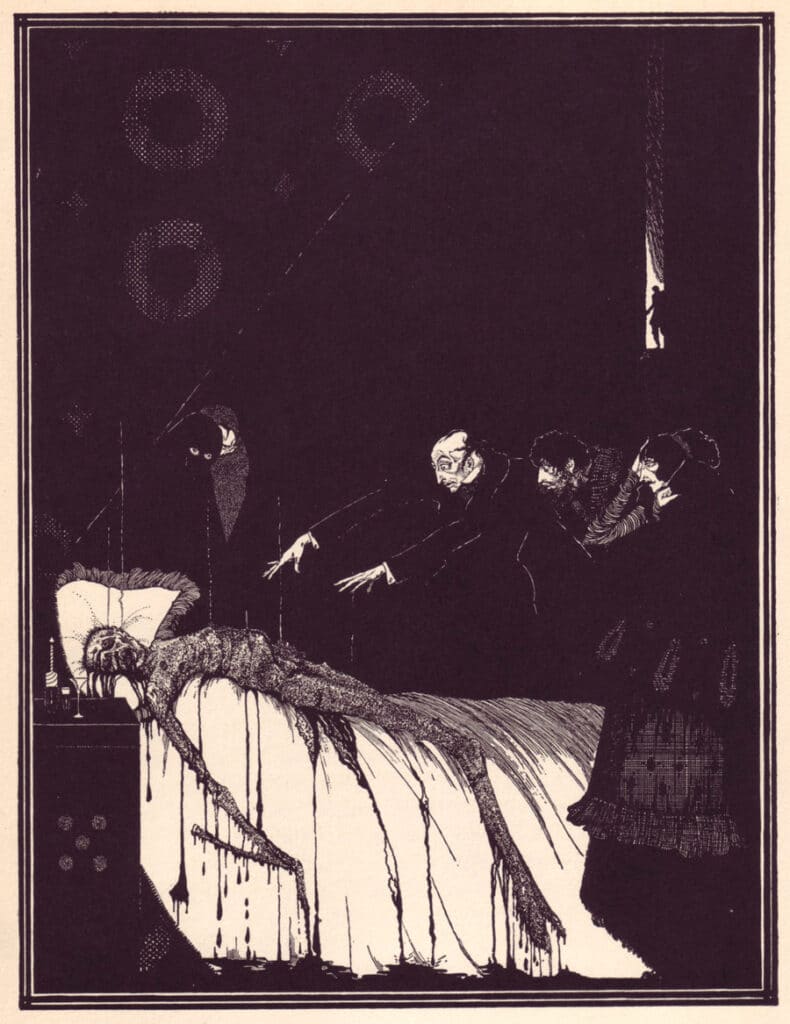
Edgar Allan Poe - The Facts in the Case of M. Valdemar - Illustration by Harry Clarke
Edgar Allan Poe – The Facts in the Case of M. Valdemar – Illustrated by Harry Clarke

Here we have another interesting story by Edgar Allan Poe.

Once again, Edgar Allan Poe tried to trick his audience. He’d done so before with other tales, namely with his Balloon-Hoax and with The Unparalleled Adventures of One Hans Pfall.

Yet, this tale doesn’t feature any spectacular expeditions or travels. No, this one is about the examination of death.

The story recounts what happens when a hypnotist puts a man in a suspended hypnotic state at the moment of his death. While we might laugh at such an outlandish idea today, calling it absurd or surreal, during its time people believed it was real. The hoax was only discovered when Edgar Allan Poe himself was forced to admit that the story was nothing but a fabrication.

The story is written as a doctor’s report and walks the fine line between science-fiction and sensational horror.

The story presents the case of a man named Ernest Valdemar. Our nameless narrator is interested in hypnotism and states that no one ever attempted to hypnotize a person at the point of death. He wants to attempt such an experiment to report the effect it will have.

Valdemar, who’s suffering from tuberculosis and knows he’s dying soon, agrees.

On the evening of his supposed death, the narrator visits Valdemar and hypnotizes him. This is where the story gets strange, as Valdemar first reports that he’s dying and later that he’s now dead.

The narrator leaves Valdemar in his hypnotized state for months, checking on him daily. During this time Valdemar is without pulse, heartbeat, or breathing and his skin is cold and pale.

We’re here treated to one of Edgar Allan Poe’s most detailed descriptions as he describes the countenance of the dead body in minute detail.

The narrator once more asks Valdemar questions, whose voice seems to reach him reluctantly and from far away.

Eventually, Valdemar demands to be woken up and when the narrator does so, the body decays instantly, almost evaporates into a ‘nearly liquid mass of loathsome – of detestable putrescence.’

This story might be one of Edgar Allan Poe’s most vivid and gory. He’s describing the various details of the dead boy, even adding yellowish ichor leaking from the eyes. The worst, however, is the last line, when the body decays instantly.

There’s of course more to this tale. Namely, that messing with death, even for the sake of science, will have dire results. First for Valdemar, who wants to be awoken, or put to rest, and second for all those present to witness the effect the experiment has on his body.

What’s interesting here is to see that while Edgar Allan Poe describes the death of a woman as almost romantic, the death of a man is brutal, sensational, and disturbing.

I really enjoyed the pseudo-scientific outset, the medical background and the idea behind the experiment. It makes it without a doubt one of the earlier examples of science-fiction.

Another little tidbit I found interesting is that it was also one of Lovecraft’s favorite, who even used a similar theme in his tale Cool Air in which a man tries to cheat death as well and which ends similarly.

Truly one of Edgar Allan Poe’s most outlandish and most interesting tales, one that I enjoyed immensely.

4. The Fall of the House of Usher
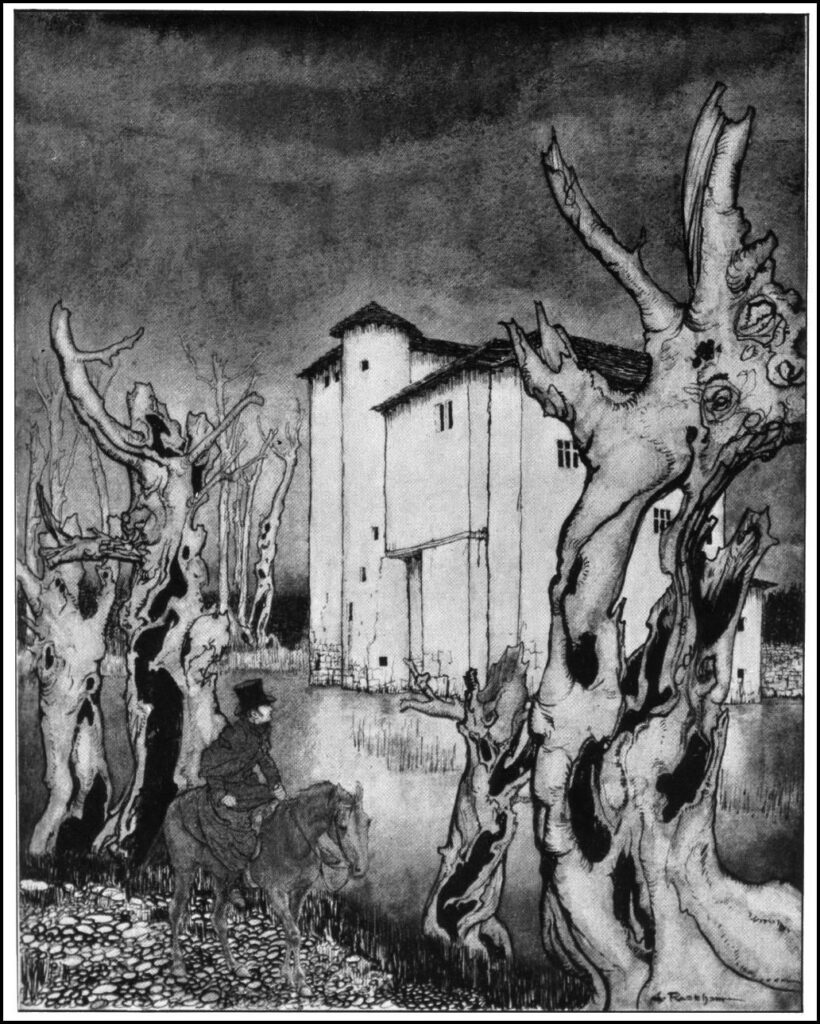
Edgar Allan Poe - The Fall of the House of Usher - Illustration by Arthur Rackham
Edgar Allan Poe – The Fall of the House of Usher – Illustrated by Arthur Rackham

The Fall of the House of Usher is another of Edgar Allan Poe’s most famous tales, and it supposedly was Lovecraft’s favorite.

The narrator is called to visit his old childhood friend Roderick Usher at his home. When the narrator arrives, he already feels apprehensive and notices a thin crack extending from the roof of the mansion down to its front.

Roderick is sick and asks his friend for help. His only living relative is his twin sister Madeline, who suffers from catalepsy.

Eventually, Madeline dies and Roderick has her entombed in the family tomb, where she’s supposed to rest for two weeks before she’s supposedly buried.

Over the course of the next week, Roderick as well as the narrator grows increasingly agitated for no apparent reason. It’s during this time that Roderick shares with the narrator certain theories about the sentience of inanimate objects and his idea that the house itself might be alive.

Then, one night, during a storm, Roderick, in a state of terror, visits the narrator’s bedroom, which is situated above the family tomb.

Strange things appear to happen outside, and the narrator tries to calm his friend by reading to him from a comical novel.

As he reads the tale, they can hear strange noises and sounds in the mansion which mirrors those detailed in the tale.

It all culminates when a loud shriek is heard and Roderick goes into a state of hysterics believing it’s his sister, still alive. Eventually, the door to the room is blown open and Madeline enters. She crashes onto her terrified brother and both hit the floor as corpses, Roderick having died from his terror.

The narrator flees the home in a state of terror and when he looks back, he watches as the House of Usher splits apart at the same crack he noticed during his arrival and the fragments sink into the lake surrounding it.
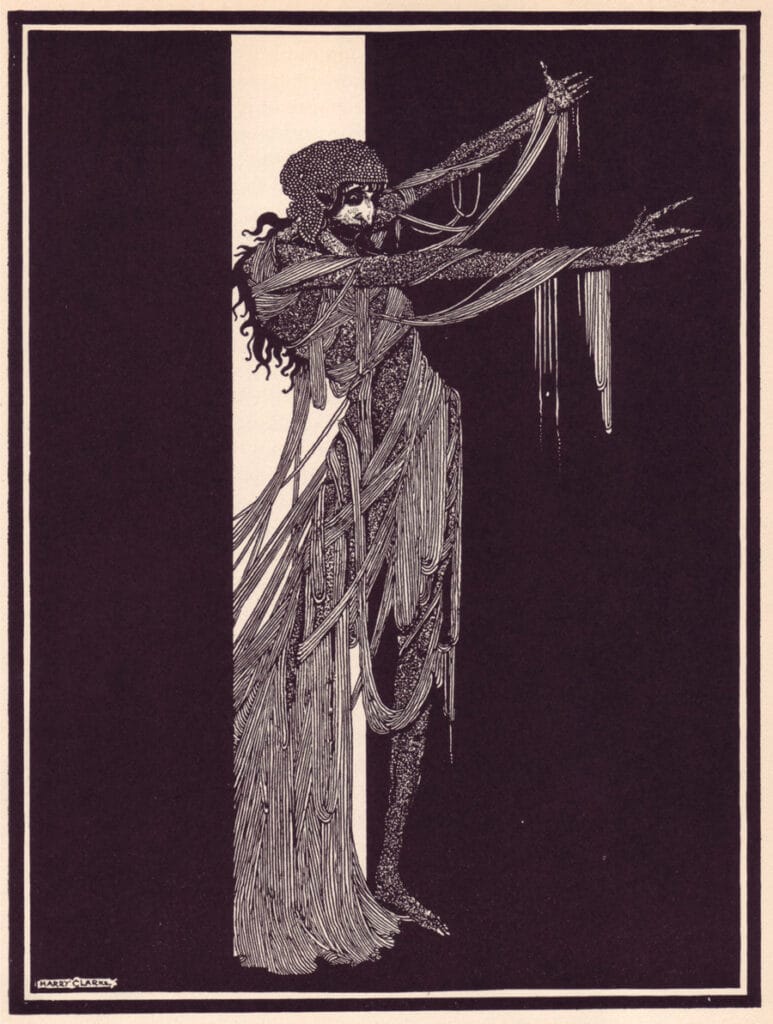
Edgar Allan Poe - The Fall of the House of Usher - Illustration by Harry Clarke
Edgar Allan Poe – The Fall of the House of Usher – Illustrated by Harry Clarke

The Fall of the House of Usher combines supernatural suspense with the frailty of the human mind. There are, however, more themes at work here, so many symbols and allegories, it’s hard to believe that Edgar Allan Poe could convey it all in a single story. That’s the reason The Fall of the House of Usher is often called a gothic novel in miniature.

There’s of course the theme of premature burial. Yet there are other themes to this highly symbolic tale.

The two twins Madeline and Roderick might describe a split personality, two sides of the same person. The House might not be a house, but might be an allegory of a declining family that’s about to end with its last two members. It might also represent the unconscious mind of Roderick’s or the family’s mental state that’s already declining as the narrator arrives, eventually splits apart before it’s utterly destroyed.

All those ideas come to the forefront and can be equally attributed to the story. It’s these many different ways to see the story that makes it so fascinating.

However, it’s not only the symbolism in the tale that makes it so great. There’s Edgar Allan Poe’s fabulous and imaginative prose, the atmosphere he conveys as well as the different styles he employs.

There’s a poetic interlude in which Roderick Usher sings ‘The Haunted Palace’, a poem written by Edgar Allan Poe, and there’s of course the fantastic story which the narrator reads to his friend. All of those elements help to set the obscure and ominous atmosphere the tale carries until its end.

The Fall of the House of Usher is one of Edgar Allan Poe’s greatest stories, masterfully written and one in which he again employs his ‘totality’ rule. Every detail and every scene in this story is relevant to the horror it conveys. One can especially see it in the opening passage of the story.

The beginning of The Fall of the House of Usher is one of the greatest openings in literature. Every image conveyed, every word used, is dedicated to invoking dread and suspense and to show us the ghastly, decrepit building that is the House of Usher.

There’s a sense of dreariness as the narrator approaches the family mansion, one that we as the reader can feel as well. It all sets the stage for what’s to come.

The Fall of the House of Usher is an amazing tale and a fabulous example of gothic literature as well as literary symbolism. Truly a great tale and deservedly one of Edgar Allan Poe’s most popular stories of all time.

3. The Cask of Amontillado
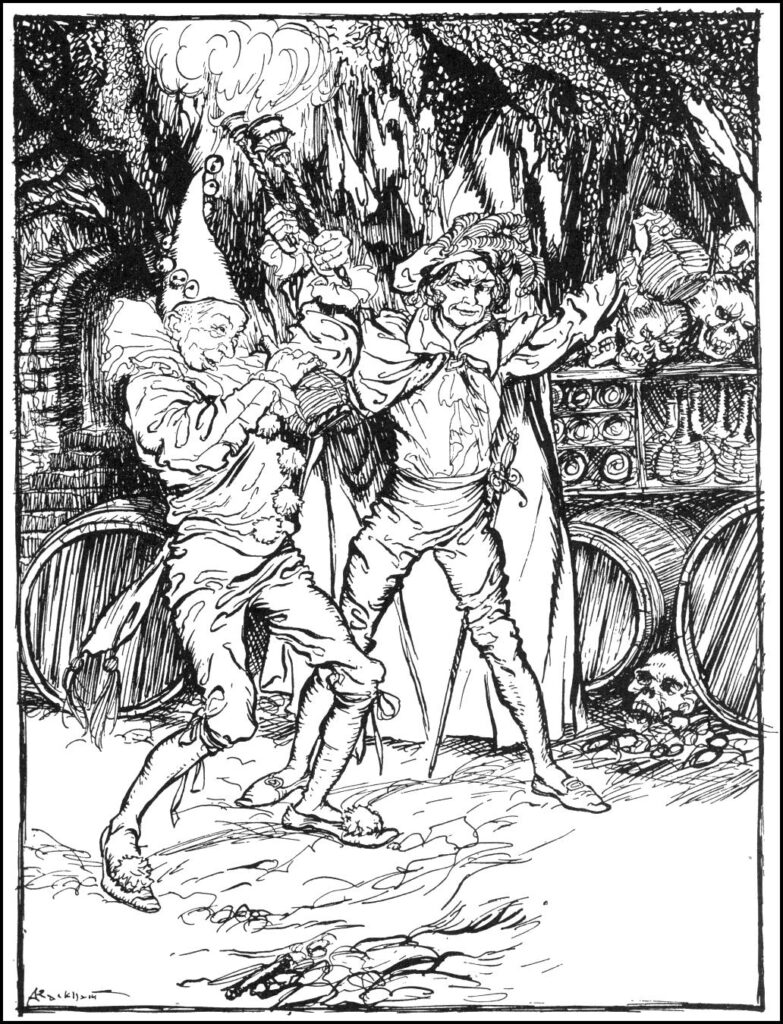
Edgar Allen Poe - The Cask of Amontillado - Illustration by Arthur Rackham
Edgar Allan Poe – The Cask of Amontillado – Illustrated by Arthur Rackham

The Cask of Amontillado is generally regarded as Edgar Allan Poe’s greatest story and one of the greatest pieces of short fiction of all time.

There’s no other story by Edgar Allan Poe that combines so many of his themes in so little space. We’ve got humor, irony, horror, and one of his most common themes, that of live burial. Yet, the story doesn’t waste a single word. There’s no trailing on, no unnecessary lines. It’s a tale that’s concisely crafted.

The Cask of Amontillado is set in an unnamed Italian city during a carnival in which a man takes revenge on a friend who wronged him. Similar to his story, the Tell-Tale Heart and The Black Cat, the story is told from the perspective of the murderer.

The story starts with Montresor, who tells an unspecified person about the revenge he took on his fellow nobleman, Fortunado.

Montresor lures him to his home by telling him he obtained some rare, vintage Amontillado. He proposes to get confirmation about the wine’s quality, by consulting a fellow friend, Luchesi. It’s a ploy since he knows that Fortunado won’t be able to resist demonstrating his knowledge of wine.

And so the two of them make their way to Montresor’s home and descend into the wine cellar in the palazzo’s catacombs.

On their way he keeps offering wine to an already drunk Fortunado, to keep him intoxicated. Montresor suggests multiple times that Fortunado should go back because he’s suffering from a bad cough. Fortunado, of course, states that a little cough won’t kill him.

During their trip through the catacombs, Edgar Allan Poe uses various instances of symbolism to outline the relationship between Montresor and Fortunado. The insistence of Fortunado that Montresor can’t be of the masons hints at their difference in standing. The family crest is another symbol, ripe with interpretations regarding the murder to be committed and its reason and meaning.

Eventually, the two make it to a niche in the wall in which Montresor says the Amontillado is kept. The moment Fortunado steps inside, Montresor chains him to the wall. Fortunado is still very much too drunk to realize what’s going on and offers no resistance.

Only when Montresor begins walling him off does the man sober up and understand what’s going on. He starts screaming for help, but his cries are mocked by those of Montresor, knowing fair well, no one will hear them. Then Fortunado laughs, pretending, or hoping, it’s all a joke. Once Montresor finishes up the last row of bricks, however, he realizes it’s all over.

“For the love of God, Montresor.”

And Montresor replies: “Yes, for the love of God.”

Then, before he sets the last brick, he throws Fortunado a torch, waits for an answer, but only gets to hear the bells of Fortunado’s costume.

In the last line of the tale, Montresor reveals that Fortunado’s body is still there, even fifty years later, and ends the story with the line ‘In pace requiescat!’, meaning ‘May he rest in peace.’
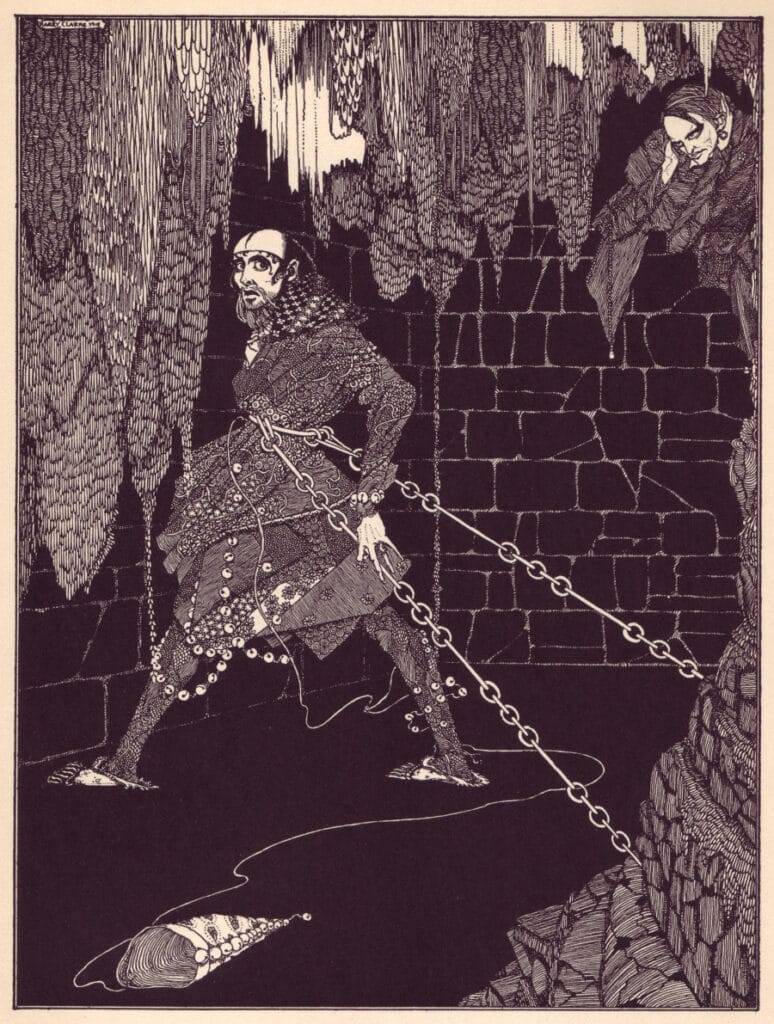
Edgar Allen Poe - The Cask of Amontillado - Illustration by Harry Clarke
Edgar Allan Poe – The Cask of Amontillado – Illustrated by Harry Clarke

The Cask of Amontillado is yet another example of Edgar Allan Poe’s totality rule. Everything in this tale is of importance, everything reveals something. The setting, the names, the inclusion of costly wine, all make the story not only more exotic but also add to its atmosphere.

What I find most interesting about The Cask of Amontillado is that the motif of the murder isn’t known and is never brought up. Montresor only mentions that Fortunado committed a ‘thousand injuries’ and apparently insulted the man. There are hints in the story, but none suffice to give us a clear picture. Even when Montresor walls him off, he never discloses his reason. It might indicate that Montresor himself is unsure about the reason or only vaguely has one.

Yet, this is typical for Edgar Allan Poe. He isn’t interested in a plot, he’s interested in a situation, an incident, and atmosphere. Similar to the Pit and Pendulum, we don’t need to know why something is happening to see it happening.

As mentioned before the story’s ripe in symbolism.

The fact that Montresor walls Fortunado of within his family tomb might be worth mentioning. Is it just the best place for the murder or is there a more personal motif?

Montresor’s family crest also gives wide room for interpretation. It’s a family crest, showing a golden foot stumping on a snake, biting the heel.

At first glance, it might suggest that Montresor’s stomping down on the snake who wronged him, Fortunado. Yet, while the snake is being stomped on, it still brings harm to the foot, perhaps suggesting that Fortunado’s destruction will bring harm to Montresor. Namely the guilt of a murder that Montresor can’t forget even fifty years later and even shares with someone.

One might go even further and interpreting it entirely differently. The snake might be Montresor, who’s crushed by Fortunado’s higher standing or crushed by the guilt of murder. As one can see, there are multiple ways of interpreting, showing the importance of even this minor detail.

The Cask of Amontillado is also a story that’s often discussed for its composition. It defies general story construction. Most stories comprise a beginning a middle and an end. Yet in the Cask of Amontillado everything that leads to the ending, the murder, is entirely missing. Almost as if Edgar Allan Poe’s saying that nothing but the murder matters.

It’s a powerful story, without a doubt another one of Edgar Allan Poe’s greatest tales, maybe even his greatest. It stands out for its imagery, its vocabulary, and its many instances of symbolism.

The Cask of Amontillado is a masterpiece, one I’d recommend to anyone. It’s a short, but very worthy read, not only for fans of Edgar Allan Poe.

2. The Masque of Red Death
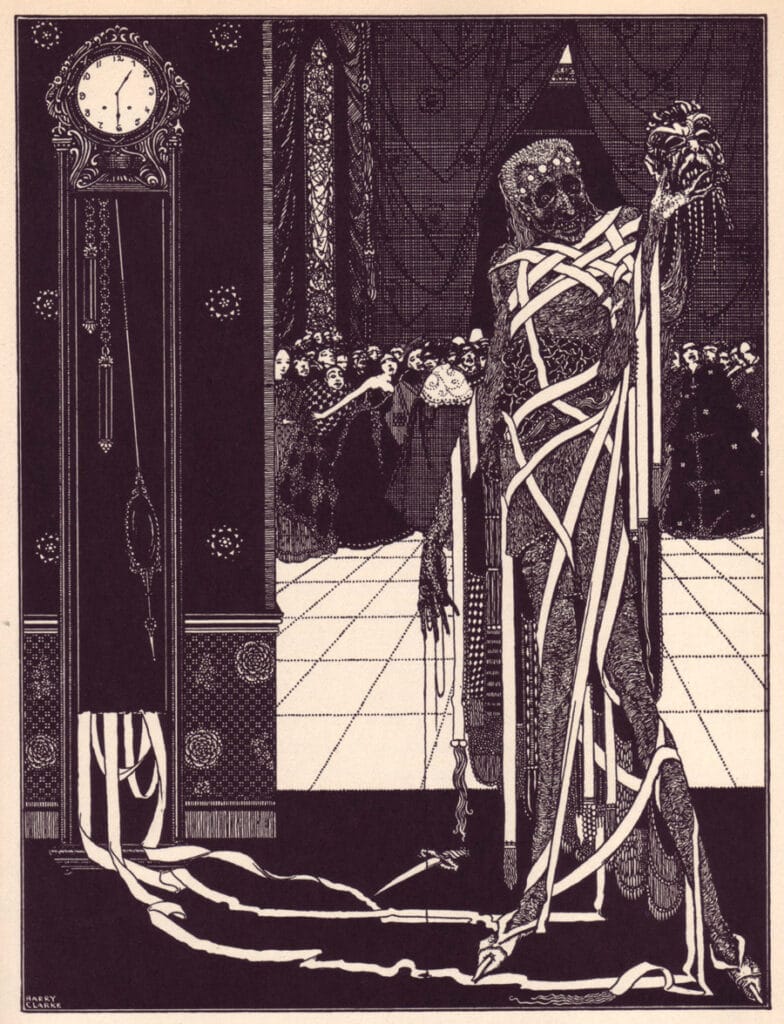
Edgar Allan Poe - The Masque of Red Death - Illustration by Harry Clarke
Edgar Allan Poe – The Masque of the Red Death – Illustrated by Harry Clarke

I absolutely loved this tale and was surprised by how good it was.

At its heart The Masque of the Red Death might be an allegory about death, standing up against it, and the inevitability of such a deed. Yet, there’s more to this tale, for example, the social criticism.

While the titular illness, the Red Death, spreads in the country, Prince Prospero and his court hide behind the walls of an old castle. There they give into their lavish lifestyle, disregarding the suffering of the common folk.

Prospero holds a masquerade ball one night to entertain his guest in seven colored rooms. Each of the rooms is decorated in a specific color. The last room is decorated in black and illuminated by a scarlet light, filling the room with ‘a deep blood color’.

At midnight the guests and Prospero notice a figure in a dark, blood-splattered robe. The figure resembles the corpse of a person who died because of the Red Death. Prospero demands to know the identity of the guest. When he calls out for his court to seize the guest, everyone’s afraid to approach the figure and the guest passes through all six chambers. It’s in the last chamber where the prince confronts him with a drawn dagger. When the figure turns to face him, the prince dies almost instantly. The enraged court rushes in the last room and removes the mask of the figure, but find, to their horror, that no one’s beneath. The costume was empty and all the guests contract and die to the Red Death.

The Mask of the Red Death features fantastic gothic imagery. There’s the old castle with its high impenetrable walls, its weird constricting hallways, the different colored rooms, the masque ball and at last, the stranger dressed up as the Red Death itself. Especially the description of the last, dark, and the red room is fantastic.

The reason I enjoyed this tale so much tough, was not only the setting but Edgar Allan Poe’s writing. He’s clearly at his best here.

The Masque of the Red Death almost lends itself to the poetic, reminding you more of a play than a story. It’s this fantastic, poetic writing that brings forth the stunning imagery of the chambers and the symbolism hidden behind them.

And here we’re at the core of the tale, the symbolism. There are many interpretations of the different colored rooms. Some suggest they represent different personality types, yet others suggest they represent the different stages of life as defined by Shakespeare in his Seven Ages of Man.

It might, however, also be an allegory of life itself, naturally ending with death and man’s futile attempt to escape from it and even standing up to it.

Yet, blood, which is emphasized in the tale, especially with the Red Death and the last room, also represents life.

It’s this general room for interpretation that makes this tale so interesting and a topic of vast discussion among scholars.

The Masque of the Red Death is an absolutely fantastic tale, both for its writing and its content. It also features one of the most stunning closing lines in literature:

“And Darkness and Decay and the Red Death held illimitable dominion over all.”

What a fantastic tale. If you want to read Edgar Allan Poe at his absolute best and most poetic, read The Mask of the Red Death.

1. The Tell-Tale Heart
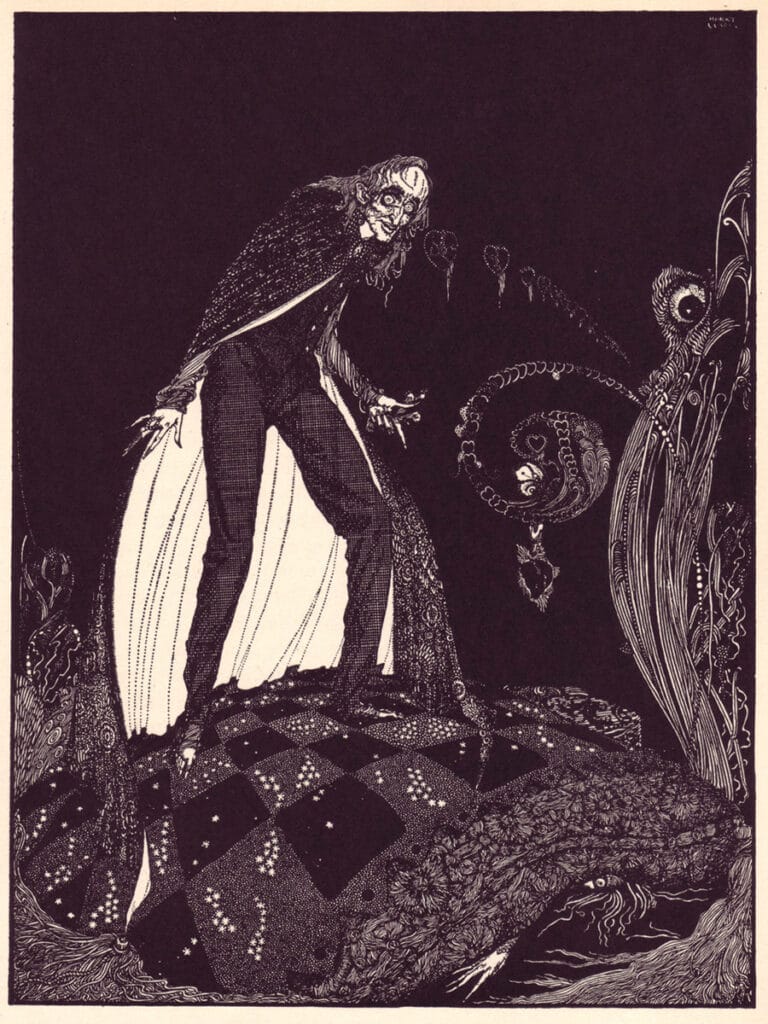
Edgar Allan Poe - The Tell-Tale Heart - Illustration by Harry Clarke
Edgar Allan Poe – The Tell-Tale Heart – Illustrated by Harry Clarke

The Tell-Tale Heart is my personal favorite story by Edgar Allan Poe and another one of his most famous tales.

It’s much shorter than Edgar Allan Poe’s other tales, but there’s no need for it to be any longer.

The story’s told as so often, by an unreliable narrator, recounting a murder he committed. Who that person is, we never learn. The narrator’s goal in telling his tale is to prove that he’s not insane.

What’s interesting is that we learn little about the characters. Neither about the narrator nor the old man. We don’t even get to know their names, which is typical for Edgar Allan Poe. Similar to some of his other tales we need not know anymore to see the murder that’s taking place.

It’s apparent right from the get-go that the narrator suffers from a mental illness and an over-acuteness of the senses. He’s haunted by the old man’s pale, blue, vulture-like eye and distresses over it so much that he plans to murder the old man. Even worse, he mentions that the old man never did him any wrong, more so, he even liked the old man.

The narrator then describes in the smallest details how he went about committing the murder and explains that his minute attention to detail is the reason that he’s without a doubt sane.

He watches the old man for seven days before one night, he makes a sound and his lantern shines directly on the now open, evil eye of the old man.

Hearing the old man’s heartbeat loud from terror the narrator decides to strike and kills the old man. He then dismembers the body and conceals it below the floorboards.

A neighbor who heard the old man’s singular scream alerts the police. When they arrive, the narrator claims the scream was his own, caused by a nightmare and that the old man’s away in the country.

Confident he won’t be found out, he urges the police to take some rest. His pleasant and easy-going demeanor gives them no reason to suspect him, but soon enough the narrator hears a strange sound that grows progressively louder.

Eventually, he concludes that it’s the old man’s heart still beating from below the floorboard. The sound increases, but the police don’t seem to notice. Terrified of the violent heart and thinking the police have to hear it too, he eventually confesses the murder.

The Tell-Tale Heart is a story that pushes a character’s obsession over the top, driving the irrational obsession with the old man’s eye and later heartbeat to the extreme.

It’s clear that the narrator’s guilt is catching up to him at the end of the story, but one might still wonder what causes the sound. The easiest explanation is that it’s his imagination or even his own heart he hears in his chest. It might, however, also be the deathwatch beetles in the walls that are mentioned earlier in the tale.

While The Tell-Tale Heart is a tale of a macabre and gruesome murder, one could say that the true horror is the insistence of the narrator that he’s sane. It’s interesting how his exactness, his attention to detail, prove his paranoia, and his monomania with committing the perfect crime. It’s enough to show that the man’s indeed insane.

If one looks at The Tell-Tale Heart from a different perspective one might even say it’s a take on a ghost story, without employing a ghost. It’s not supernatural influences, but the narrator’s guilt, his psychological state that haunts him, and eventually drives him to confess the deed he committed.

What made this story so fantastic to me, was the eccentricity of the narrator, the suspense with which he tells the tale. I actually sat down and read the tale out loud, which made it so much better than just reading it. The Tell-Tale Heart is a dramatic tale, one filled with suspense, full of minute details, of slow deliberation and a sick mind.

The Tell-Tale Heart is in my opinion one of Edgar Allan Poe’s most perfect stories.

While his other stories like The Cask of Amontillado or The Fall of the House Usher bring more to the table, and might at times be better crafted, I still prefer The Tell-Tale Heart. It’s the suspenseful way it’s written and the sheer insanity of the narrator that makes it so good.

Truly a fantastic tale and one of the greatest studies of a sick mind in literature. Read it!
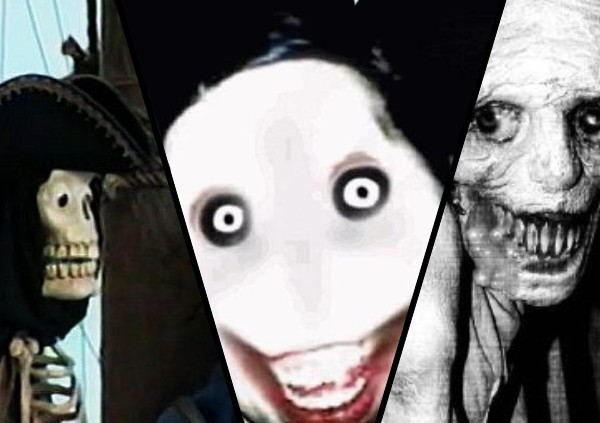
85 Best Creepypasta Stories Every Horror Fan Should Read

Creepypasta began as copy-pasted internet horror, then grew into one of the defining pieces of early web culture. I first discovered it through 4chan’s /x/ board and ended up spending entire days reading story after story. Some were terrible, some were decent, and a few were so strange, creepy, or original that they left a mark.

Creepypasta is often written to feel like urban legends, confessions, or true accounts. At their best, these stories work like modern campfire tales: stories passed around the internet that blur the line between myth, fiction, and rumor.

Best Creepypasta Intro Picture
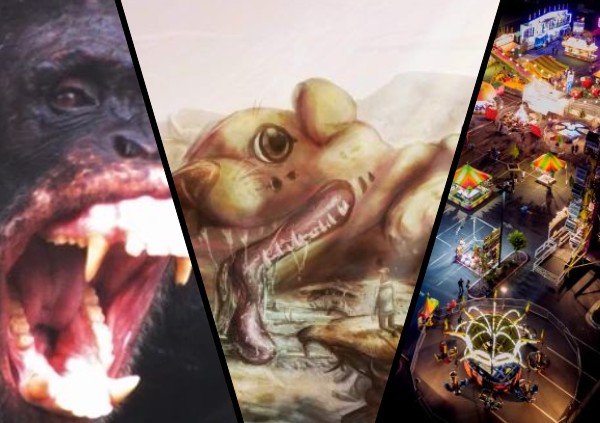
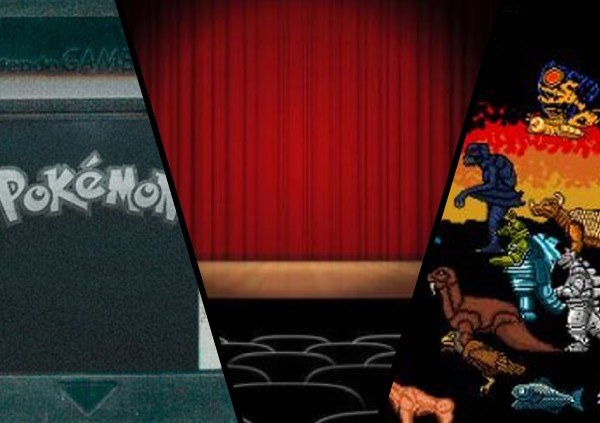
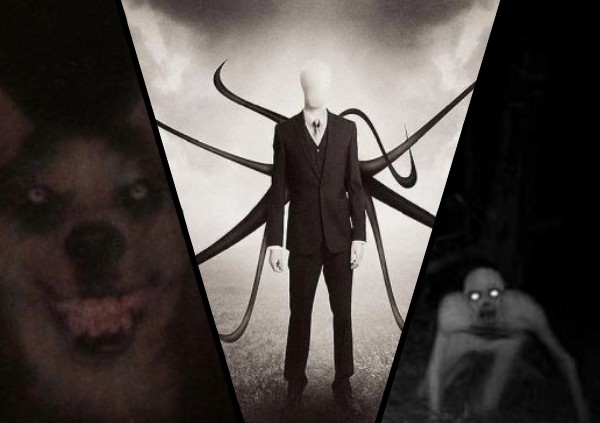
Best Creepypasta Stories: Candle Cove, Jeff the Killer, The Russian Sleep Experiment

This list collects the best creepypasta I’ve read over the years, from famous classics to lesser-known hidden gems that still hold up. It doesn’t include stories from NoSleep, since I’ve already made separate lists dedicated entirely to the best NoSleep stories and NoSleep series.

Before the full ranking, here are five creepypasta stories I’d start with:

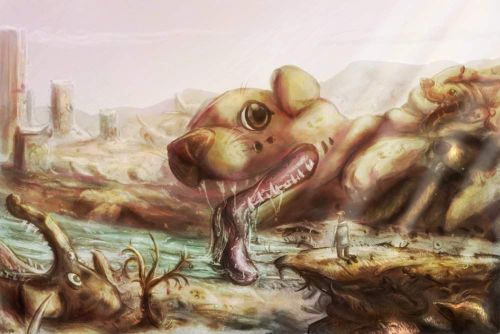
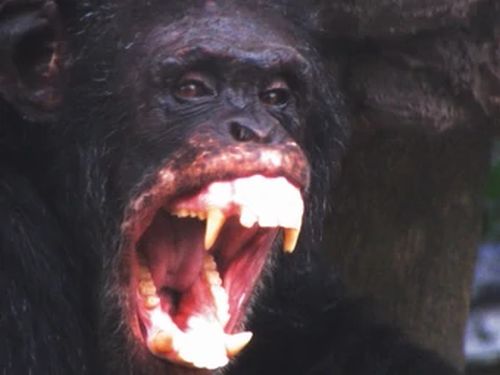
Dogscape: A surreal horror classic in which the entire world has somehow become dog. Absurd, disgusting, and genuinely unforgettable.

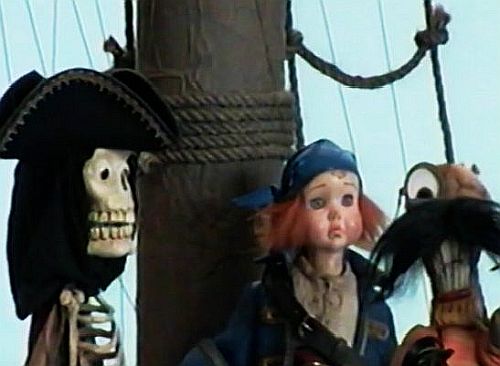
Candle Cove: One of the defining internet horror stories, built around adults on a nostalgia forum remembering a children’s TV show that may never have existed.

Normal Porn for Normal People: A descent into one of creepypasta’s most disturbing internet rabbit holes.

Psychosis: A paranoia-driven psychological horror story about isolation and the terrifying possibility that madness might be rational.

The Strangers: A long-form creepypasta that shows how obsession can turn an ordinary commute into a never-ending odyssey.

I write horror fiction, and my stories have been read, shared, and narrated all over the internet. If you love creepypasta, you’ll probably feel right at home. Sign up, and I’ll send you one of my best stories for free.
* indicates required

With that said, here’s my updated and carefully curated list of the 85 best creepypasta of all time.

Looking for Something Specific?

If you already know what you’re looking for, try one of my focused lists:

Well-Written Stories – polished creepypasta that still hold up.

Long Stories – long-form narratives that are worth your time.

Disturbing Stories – stories that cross the line and are genuinely unhinged.

Weird Stories – a collection of surreal internet nightmares.

Video Game Stories – creepypasta focused on lost or haunted games.

Short Reads – quick stories with fast impact.

Monsters & Entities – iconic creepypasta creatures and cursed figures.

Obscure Stories – hidden gems that not many people have read.

Full Ranking

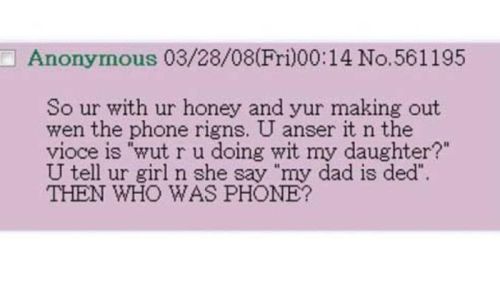
85. Who Was Phone?

A picture of the best creepypasta WHO WAS PHONE?
Best Creepypasta – WHO WAS PHONE?

What better way to open this list than with one of the most infamous creepypasta stories ever written. Who Was Phone? became legendary not because it was scary, but because it was hilariously bad. Its broken grammar and nonsensical plot turned it into an internet meme that horror fans still reference today. More than anything, it captures the wild era of creepypasta, when anyone, regardless of age, could post a story and accidentally create internet history.


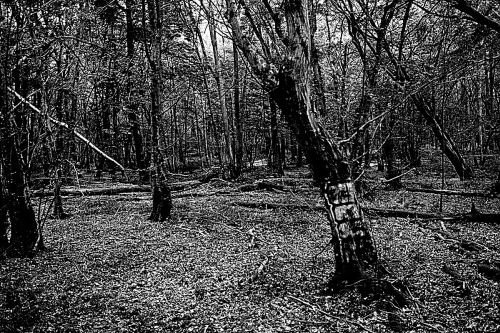
84. The Dering Woods

A picture of the best creepypasta The Dering Woods.
Best Creepypasta – The Dering Woods

The Deringer Woods stands out for taking a different approach from most creepypasta. Rather than telling a traditional horror story, it’s framed like a Wikipedia article about what is supposedly the most haunted woods in Britain.

That format makes it memorable. Instead of building fear through a narrator or a single event, it piles up eerie details, local legends, and strange incidents to create a myth about a place that feels genuinely cursed. It’s a simple idea, but the mock-documentary style gives it a unique charm.


83. Whispers

A picture of the best creepypasta Whispers.
Best Creepypasta – Whispers

Whispers stands out for its framing as much as its horror. The story centers on the disappearance of Debra Lindsay Caine, an early internet personality who went by Sugercaine and vanished shortly after visiting a locally notorious haunted house for a Halloween blog challenge.

What makes it memorable is how strongly it captures the mid-2000s internet. The Myspace-era blogging angle, the local urban legend setup, and the transcript format all give it a distinctive feeling. As the tape recordings unfold and more people connected to the case start disappearing, the story grows genuinely unsettling.


82. The Message

A picture of the best creepypasta The Message.
Best Creepypasta – The Message

The Message is one of those old internet horror pieces that stays memorable because of its hidden second layer. On the surface, it reads like a fairly standard warning from a future self to prevent some terrible fate.

What made it spread so wildly, especially on older image boards and forums, was the reveal hidden in the structure itself. That extra meta-twist helped the story stand out at a time when internet horror was still fresh and experimenting with format. It may not be one of the most frightening creepypasta stories ever written, but it remains an interesting early example of simple, effective online meta-fiction.


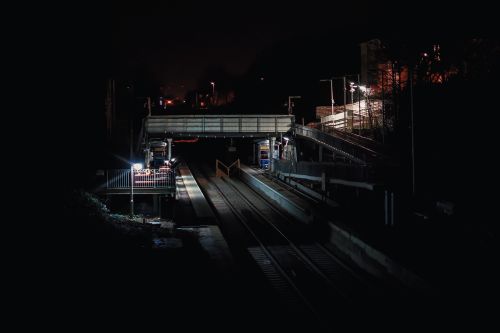
81. Kisaragi Station

A picture of the best creepypasta Kisaragi Station.
Best Creepypasta – Kisaragi Station

Kisaragi Station is one of Japan’s most famous creepypastas, and for good reason. The story follows a 2chan user whose train suddenly stops following its normal route and eventually arrives at a station that shouldn’t exist.

What makes it stand out is the format. Rather than a normal horror story, it unfolds as a real-time image board thread, with other users reacting, joking, and trying to help as things become stranger. It uses familiar horror tropes, but the Japanese setting, thread format, and eerie sense of unreality helped give it lasting cult status.


80. Just Be Careful Out There

A picture of the best creepypasta Just Be Careful Out There.
Best Creepypasta – Just Be Careful Out There

Just Be Careful Out There is one of those early creepypasta staples that spread everywhere on early image boards and forums. It’s barely even a story. Instead, it works as a thought experiment about why certain monstrous features seem to trigger such deep, instinctive fear in humans.

That simple question gives it staying power. It’s easy to explain away logically, but the finale still lands enough to make you pause for a moment. More than anything, it’s a good reminder that early creepypastas weren’t always full narratives. Sometimes a strange idea and a creepy implication were enough.


79. Always With You

A picture of the best creepypasta Always With You.
Best Creepypasta – Always With You

Always With You is remembered for flipping the usual horror perspective. Rather than following a narrator who experiences something terrifying, the story is told from the perspective of the entity stalking them.

That alone helps it stand out from countless more conventional creepypasta. The short format keeps it moving, and the ending adds an extra layer that strengthens the payoff. It’s a brief and somewhat uneven piece, but its unusual perspective makes it memorable.


78. The Statue

A picture of the best creepypasta The Statue.
Best Creepypasta – The Statue

The Statue is probably one of the most famous short creepypasta stories ever written. The premise is simple: a babysitter calls the parents about a creepy statue in the house, only to learn that no such statue should be there at all.

It endures because of its efficiency. It delivers the setup, twist, and final shock in just a few lines, making it the kind of story people could quickly share on forums, image boards, and chain emails. It’s more important for its legacy than its originality, but as a piece of ultra-short internet horror, it clearly worked.


77. Our Little Roanoke

A picture of the best creepypasta Our Little Roanoke.
Best Creepypasta – Our Little Roanoke

Our Little Roanoke is a solid small-town horror story that mixes coming-of-age nostalgia with local legend material. A group of kids, on the verge of drifting apart, decides to head into the supposedly haunted woods near an abandoned mill for one last adventure.

That setup gives the story a nice emotional base before the horror starts creeping in. The setting feels tangible, the local folklore adds weight, and the character writing helps sell the group dynamic. Once one of them begins acting strangely, the story pushes toward a satisfying payoff. It may not be one of the most famous creepypasta stories out there, but it stands out as an effective little horror piece.


76. It Has No Face

A picture of the best creepypasta It Has No Face.
Best Creepypasta – It Has No Face

It Has No Face takes a familiar setup and gives it one genuinely clever twist. A man gets caught in a snowstorm, takes shelter in an empty cabin, and notices unsettling paintings of people with no facial features. On paper, that sounds like a standard creepypasta.

What makes it stand out is the way the story uses that idea later on. The faceless imagery is not just there for atmosphere, but becomes part of the payoff in a way you don’t often see. The story definitely overstays its welcome, and the writing can feel uneven and bloated in places, but the central concept is strong enough to make it worth reading.


75. On the Bus

A picture of the best creepypasta On the Bus.
Best Creepypasta – On the Bus

On the Bus stands out immediately because of its setting. Instead of another familiar small-town American horror setup, the story drops you into Colombia, weaving local folklore and urban legend into the opening before shifting into something far stranger.

The premise is simple and effective. A young woman boards a bus, notices that all the passengers seem unusually old, and slowly realizes that something is deeply wrong. What makes the story memorable is not just the concept, but the voice. The narration feels vivid and in character, giving the whole thing a strong sense of place that helps it rise above a standard cursed journey story.


74. The Algorithm

A picture of the best creepypasta The Algorithm.
Best Creepypasta – The Algorithm

The Algorithm is one of the better creepypasta stories built around paranoia and mental collapse. It follows a man who becomes convinced an unseen force is poisoning everything he eats and using the patterns of his life against him.

What makes it work is how completely it commits to that perspective. There’s no outside explanation, no reassuring distance, and no moment where the story breaks character to spell things out. You’re trapped inside the narrator’s escalating logic as his fear turns into something monstrous. That tight, in-character voice gives the story its punch. It handles madness in a way that feels unnervingly coherent, and its final turn makes everything even darker.


73. The House That Death Forgot

A picture of the best creepypasta The House That Death Forgot.
Best Creepypasta – The House That Death Forgot

The House That Death Forgot is one of the longer entries on this list, but it earns that extra time. The setup feels familiar at first: a woman stranded on the road has no choice but to spend the night at a roadhouse in the middle of nowhere.

From there, the story steadily twists into something far stranger. Granny Royce’s Road House is clearly not right. The other guests feel off, and the unsettling details keep piling up as the night goes on. It’s a well-written piece that balances atmosphere, creepiness, and a strong streak of disturbing horror. If you enjoy slow-burn stories that keep getting worse in the right ways, this one’s worth checking out.


72. Four Hours it Started

A picture of the best creepypasta Four Hours it Started.
Best Creepypasta – Four Hours it Started

Four Hours It Started is a strong suspense-driven creepypasta set in Manila, and it stands out immediately because of its perspective. The narrator is a desperate woman working as a prostitute who finds a note hidden inside a second-hand sweater. It contains an address, a set of strange instructions, and the promise of money if she follows them.

That setup is already creepy, but the story really works because of how long it sustains the tension. Once she arrives at the house and lies down in bed with her eyes closed, every small sound and movement starts to matter. The whole thing becomes an exercise in dread, and the payoff is strong enough to make the slow build worth it.


71. The Kaleidoscope

A picture of the best creepypasta The Kaleidoscope.
Best Creepypasta – The Kaleidoscope

The Kaleidoscope is a short, effective horror story built around a simple antique-shop premise. A man on his honeymoon wanders into a store, finds an unusual old device, and looks through it expecting nothing more than a curious collector’s item.

What makes the story effective is the way it handles that setup. The writing is strong, the object itself is intriguing, and the final implications land strong enough to make the whole thing stick. It’s not the biggest or most elaborate creepypasta out there, but as a quick supernatural horror piece, it absolutely does the job.


70. Fog

A picture of the best creepypasta Fog
Best Creepypasta – Fog

Fog is one of the stronger nautical creepypasta stories, and the sea setting alone helps it stand apart. A patrol ship responds to a distress call from an Icelandic vessel, only to find wreckage, missing crew members, and something deeply wrong lingering in the surrounding waters.

Once strange lights begin moving beneath the sea and the ship becomes stranded, the story spirals into panic and violence. It captures the helpless dread of being trapped on open water with nowhere to run, while the prose is far stronger than the average creepypasta story. The whole piece feels like effective cosmic horror, even if the escalation comes a little too quickly.

An updated version of the story is also available in Cruentus Libri’s anthology The Dead Sea.


69. Who’s in my Bed

A picture of the best creepypasta Who's in my Bed.
Best Creepypasta – Who’s in my Bed

Micro-fiction is hard, and micro-horror is even harder, but Who’s in My Bed shows how effective it can be when done right. In just a few lines, it creates a warm, familiar parental moment and then tears it apart with one perfect final image.

That contrast makes it work so well. The setup feels safe and almost cozy, which gives the payoff far more impact. It’s tiny, but it uses every line well, making it one of the better examples of ultra-short internet horror.


68. Anomaly

A picture of the best creepypasta Anomaly.
Best Creepypasta – Anomaly

Anomaly is framed as a post on 4chan’s /x/, which immediately gives it an old-school creepypasta feel. The narrator, an editor at a small publisher, explains how he receives a strange collection of photographs from an old man, all supposedly showing different anomalies captured in real life.

While the opening can drag a little, the real appeal is the material itself. The story presents a series of old photographs that document unsettling, unexplained events, and those images make it memorable. Even if the writing and framing are a bit uneven, the concept and accompanying visuals are creepy enough to make it worth reading.


67. The Devil’s Cosmonaut

A picture of the best creepypasta The Devil's Cosmonaut.
Best Creepypasta – The Devil’s Cosmonaut

The Devil’s Cosmonaut stands out immediately because of its setting. Instead of another haunted house or cursed road, this story traps its narrator alone aboard a space station, cut off from the world as strange things begin to happen around him.

That setup is already strong. Isolation in space is already terrifying, but the story makes it worse by slowly blurring the line between mechanical failure, paranoia, and something genuinely unnatural. Boris’ mental decline is handled especially well, which keeps you questioning what’s real all the way to the ending. It’s definitely one of the longer entries on this list, and the pacing is deliberately slow, but if you want a creepypasta with atmosphere, dread, and a strong payoff, this one’s worth the time.


66. The Blue Man

A picture of the best creepypasta The Blue Man.
Best Creepypasta – The Blue Man

The Blue Man feels less like a normal creepypasta and more like a piece of American folk horror. Rather than telling one continuous story, it presents a series of rural anecdotes about a mysterious figure whose appearance leaves people changed in terrible ways.

That structure makes it memorable. The old ballad fragments, the small-town atmosphere, and the matter-of-fact storytelling make the legend feel strangely real, as if it really belongs to some forgotten part of roadside America. The violence can seem abrupt, and some sections run a little long, but the period-piece tone and unexplained nature of the Blue Man give the story a distinct identity.


65. The Bad Dream

A picture of the best creepypasta The Bad Dream.
Best Creepypasta – The Bad Dream

The Bad Dream is one of those classic ultra-short creepypasta stories that works because it twists a familiar domestic moment into something instantly wrong. A child waking up from a nightmare and going to a parent’s room is such a normal setup that the reveal hits harder because of it.

There isn’t much to analyze here beyond the central image and payoff. Still, it uses its tiny word count well and delivers a memorable final turn. It may not be one of the deepest or most elaborate entries on this list, but as a compact piece of internet horror, it works exactly as intended.


64. Midnight Train

A picture of the best creepypasta Midnight Train
Best Creepypasta – Midnight Train

Midnight Train is one of the most literary stories on this list. More than a straightforward creepypasta, it reads like a sad, atmospheric life story haunted by something supernatural.

The story follows Daniel from childhood onward, beginning with an act of abuse that marks him for life and the first time he hears the Midnight Train. From there, the train reappears at key moments of trauma, grief, and loss, turning the story into something much larger than a simple horror premise. What makes it stand out is the writing itself. The prose is vivid, melancholic, and full of atmosphere, giving the whole piece a weight that lingers.


63. Mr. Widemouth

A picture of the best creepypasta Mr. Widemouth.
Best Creepypasta – Mr. Widemouth

Mr. Widemouth is another well-known early creepypasta. It follows a young boy who encounters a strange little creature that looks almost toy-like, something between an imaginary friend and a grotesque Furby.

What makes the story work is the unease surrounding that friendship. The creature is playful and familiar on the surface, but there is always something off about the way it behaves and the things it encourages. It’s more important as a memorable creature creepypasta than a brilliantly written one, but its premise and legacy have kept it relevant for a reason.


62. The Rake

A picture of the best creepypasta The Rake.
Best Creepypasta – The Rake

The Rake is one of the internet’s most famous homemade monsters. It began on 4chan as little more than an image and a description: a pale, hairless humanoid creature moving on all fours. That was enough to make it spread.

Once the idea went viral, people started creating stories, sightings, photos, and videos around it, turning The Rake into something much bigger than the original post. That’s what makes it important. This entry is less about one definitive story and more about the creature itself, and how the internet can sometimes create its own modern monsters.


61. The Magician’s Game

A picture of the best creepypasta The Magician's Game.
Best Creepypasta – The Magician’s Game

The Magician’s Game is a strange, dialogue-heavy creepypasta about ego, failure, and psychological collapse. After a disappointing performance, a magician named Tom receives a mysterious letter inviting him to a game. What follows is a surreal chess match against a man named Daburu, who appears to know him better than he knows himself.

What makes the story stand out is how theatrical it feels. Much of it unfolds through conversations, taunts, and shifting settings rather than straightforward horror scenes. The chess motif is familiar, but the writer gives it enough personality to feel fresh. It’s an unusual read, and while not every idea lands, it offers a memorable look at a mind slowly coming apart.


60. My Older Sister

A picture of the best creepypasta My Older Sister.
Best Creepypasta – My Older Sister

My Older Sister begins with a familiar kind of tension: childhood jealousy, sibling comparison, and the feeling of growing up in someone else’s shadow. The narrator’s older sister, Jenny, seems to be everything she’s not, which gives the story an emotional base.

After Jenny dies, the story shifts into something darker and more unsettling. What follows is less about horror and more about grief. The writing is solid throughout, but what really makes this one memorable is the ending. It lands hard enough to elevate the whole story and turn it into something that sticks with you.


59. The Photographs

A picture of the best creepypasta The Photographs.
Best Creepypasta – The Photographs

The Photographs is another micro-pasta that proves you don’t need much length to leave an impression. A photographer spends the night alone in the woods for her portfolio, but once she develops the film, she discovers something terrifying.

That’s really all the story is about. It delivers the premise cleanly, trusts the central idea to do the work, and ends before the idea wears thin. It’s short, direct, and effective, which is exactly why it has stuck around.


58. Polybius

A picture of the best creepypasta Polybius.
Best Creepypasta – Polybius

Polybius is not technically a creepypasta as much as a digital urban legend, but leaving it off a list like this would feel wrong. It’s easily one of the most famous internet horror-adjacent stories ever, centered on mysterious arcade machines that supposedly appeared in Portland, Oregon, and caused everything from addiction and nightmares to memory loss and suicide.

What makes Polybius so fascinating is not the story alone, but how it spread. The legend circulated online for years, picked up layers of conspiracy and government-experiment lore, and eventually became a permanent part of internet culture. It has been referenced in videos, articles, games, and pop culture ever since, which says a lot about just how powerful the myth became.


57. The House by the Tracks

A picture of the best creepypasta The House by the Tracks.
Best Creepypasta – The House by the Tracks

The House by the Tracks is a short, effective creepypasta that gets the basics right. A group of boys exploring near the train tracks stumble across an old house, and when the others vandalize it, the narrator runs home, only to return later out of guilt to apologize to the woman living there.

That setup gives the story a strong campfire vibe, and the childhood perspective helps a lot. The writing is solid, and the ending lands exactly the way it should. It may not be the flashiest or most original entry on this list, but it’s a very good example of a straightforward creepypasta done right.


56. Knocking

A picture of the best creepypasta Knocking.
Best Creepypasta – Knocking

Knocking begins with a simple childhood fear: strange voices behind closed doors asking to be let in. What makes the story work is how long it sustains that idea, carrying it from childhood into adulthood and turning it into something increasingly uncanny.

For most of its length, the horror comes from uncertainty. The things behind the door are unsettling, but not fully understood, and that ambiguity gives the story a strong sense of dread. Once the situation escalates, the ending delivers a payoff that’s both surprising and satisfying. It’s a clever creepypasta built around a simple premise.


55. Barricade

A picture of the best creepypasta Barricade.
Best Creepypasta – Barricade

Barricade is a short but very effective psychological horror story built around uncertainty. The narrator suffers from severe hallucinations that he’s kept under control for years, until one terrible day forces him to question whether he’s relapsing or whether something genuinely awful is happening outside.

That tension makes the story work so well. Smoke, screams, pounding at the door, and the eerie emptiness of the outside world all suggest that the threat might be real, but the narrator can never be certain, and neither can the reader. It’s a simple setup, but the story handles it well, turning that ambiguity into its strongest element.


54. The Memetic Symbol

A picture of the best creepypasta The Memetic Symbol.
Best Creepypasta – The Memetic Symbol

The Memetic Symbol is one of the strangest creepypasta stories out there, built around a deeply unsettling idea. A researcher studying obscure internet phenomena discovers a symbol that should not exist, only for it to spread beyond the screen and into the real world.

What makes the story memorable is the scale of the concept. It starts small and confusing, then gradually turns into full existential horror as more and more of reality is overwritten. It’s not especially subtle, and a slower escalation might have made it even stronger, but in terms of raw ideas, this is one of the most bizarre and original creepypasta stories out there.


53. Lavender Town Syndrome

A picture of the best creepypasta Lavender Town Syndrome.
Best Creepypasta – Lavender Town Syndrome

Lavender Town Syndrome is probably the most famous Pokémon-related creepypasta ever made, and one of the best examples of how the internet can turn a simple idea into a full-blown urban legend. The story claims that the original Lavender Town theme in the franchise’s first generation of games caused severe reactions in children, ranging from headaches and irrational behavior to suicide.

The premise is simple, but that’s part of why it works so well. Tying this type of legend to a children’s game gave it an extra layer of unease, especially for people who actually played Pokémon growing up. Later additions to the myth get more outlandish, but the core idea remains one of the most memorable pieces of video game horror folklore on the internet.


52. Mice

A picture of the best creepypasta Mice.
Best Creepypasta – Mice

Mice is a short, effective creepypasta that works almost entirely because of its twist. At first, it reads like the account of a scientist obsessively breeding, training, and punishing a colony of mice.

What makes it memorable is the way the premise shifts into something else. The story is not especially long, and some of the writing feels stiff, but the central idea is clever enough to carry it. It’s one of those stories that lingers less because of its atmosphere and more because of the way it reframes everything you just read.


51. Doppelganger

A picture of the best creepypasta Doppelganger.
Best Creepypasta – Doppelganger

Doppelganger is one of those early creepypasta stories that leans hard into domestic paranoia. A man becomes convinced his wife is not really his wife anymore, but some unnatural replacement that came back with him from the woods.

What the story does best is sustain that suspicion. The narrator’s growing unease, the tiny behavioral details, and the increasingly hostile atmosphere in the house all work well enough to keep you locked in his perspective. The prose is uneven in places, but the ending is strong. It’s not one of the absolute best creepypasta ever written, but it remains a memorable example of identity horror handled well.


50. White with Red

A picture of the best creepypasta White with Red.
Best Creepypasta – White with Red

White with Red is one of those classic stories built around pure curiosity. A guest is warned to stay away from a locked room, looks through the keyhole anyway, and sees something he should’ve left alone.

The setup is simple and probably draws from an older urban legend, but it still works because of how efficiently it’s told. The imagery is memorable enough to carry the piece, and its short length helps it land.


49. A Painter From Queens

A picture of the best creepypasta A Painter From Queens.
Best Creepypasta – A Painter From Queens

A Painter From Queens is one of those short creepypasta stories that sticks because the idea is so unusual. A homeless man in Queens starts selling shockingly good paintings, then moves on to portraits that somehow leave their subjects utterly disturbed.

What makes the story work is its voice and concept. The narrator’s casual, almost amused tone helps sell the increasingly wrong atmosphere, and the final reveal turns the whole thing into something genuinely unsettling. It’s not a huge or elaborate story, but it has a memorable premise and strong payoff to stick with you.


48. House of Rules

A picture of the best creepypasta House of Rules.
Best Creepypasta – House of Rules

House of Rules is one of the stranger, more memorable creepypasta stories, built around a premise that immediately stands out. The narrator lives in a house governed by a strict set of rules, yet those rules aren’t enforced by a landlord or neighbors, but by the house itself.

That concept gives the story its power. Home is supposed to be a place of comfort and safety, so turning it into the source of fear creates a strong sense of helplessness. If the walls, rooms, and structure around you are a threat, there’s nowhere to run and no clear way to resist. The story captures that isolation well, along with the dread of living under constant, arbitrary control.

It also deserves credit as an early example of rule-based horror before the style became hugely popular online years later. While many later rule stories felt gimmicky and overdrawn, House of Rules uses the format to build genuine atmosphere and hopeless tension.


47. Suicidemouse.avi

A picture of the best creepypasta Suicidemouse.avi.
Best Creepypasta – Suicidemouse.avi

Lost episode creepypasta became hugely popular online, but many of them relied on cheap shock value. Suicidemouse.avi is one of the better examples, and one of the most famous for a reason.

The story centers on a strange Mickey Mouse cartoon in which Mickey wanders through a bleak landscape while unsettling music plays in the background. What starts off merely odd grows increasingly disturbing as the footage continues far longer than it should.

What makes it work is the presentation. The framework feels just plausible enough to sell the idea of a corrupted piece of lost animation history. As far as lost episode creepypasta stories go, this one remains a classic.


46. Wake Up

A picture of the best creepypasta Wake Up.
Best Creepypasta – Wake Up

Wake Up is another old /x/ classic that works with very little. The premise is simple but deeply unsettling: victims of torture often escape into a fantasy version of reality, and the only clue that something is wrong is a note begging them to wake up.

That idea alone does most of the work. It’s short, memorable, and usually comes in the form of an image that helped it spread even further online. More than anything, it sticks because it leaves you with one uncomfortable question: what if this is the note?


45. The Expressionless

A picture of the creepypasta monster The Expressionless
Creepypasta Monster – The Expressionless

The Expressionless is another early creepypasta classic by T. J. Lea, a good friend of mine. It remains one of the more memorable entity stories from that era.

The tale follows a strange woman who appeared at a California hospital in 1972, covered in blood but behaving eerily calm. What makes her so unnerving is her appearance. She seems almost human, yet not quite, more like a mannequin given life than a real person.

Once doctors attempt to restrain and sedate her, the story turns violent.

Some of the writing now feels dated, and the ending leans into familiar tropes, but The Expressionless still earns its place as an influential early creepypasta story and a memorable monster of internet horror.


44. Stevie

A picture of the best creepypasta Stevie.
Best Creepypasta – Stevie

Stevie is one of the longest creepypasta stories on this list, but the length is a strength rather than a weakness. Framed as an interview between a psychotherapist and a young asylum patient named Michael, the story slowly unpacks a childhood shaped by guilt, bullying, and something far stranger lurking beneath ordinary suburbia.

What makes it so effective is the buildup. You settle into memories of neighborhood friendships, awkward school dynamics, and the uneasy bond between Michael, Andrew, and the strange taxidermy-obsessed Stevie, only for the story to grow darker and more uncanny with each turn. The childhood nostalgia is strong, which makes the corruption hit even harder. It’s a slow-burn story, but a fantastic one, and the writing is well above the usual creepypasta standard.


43. Humper-Monkey’s Ghost Story

A picture of the best creepypasta Humper-Monkey’s Ghost Story.
Best Creepypasta – Humper-Monkey’s Ghost Story

Humper-Monkey’s Ghost Story is the single longest entry on this list, originally around 30,000 words long before later follow-ups pushed it well into novel territory. It first appeared on the Something Awful forums, where it quickly built a reputation.

The setup introduces us to Monkey, who joins the U.S. Army in the late 1980s and ends up stationed in an isolated three-story building in the German mountains. The weather is miserable, the setting is cut off and claustrophobic, and from the start there’s that unmistakable feeling that something is wrong.

What makes it work so well is the voice. It feels conversational and believable, which gives the haunting much more weight. Add in the snow, the storms, and the mountain isolation, and it becomes one of the better long-form ghost stories the internet has produced. It’s a commitment, but a rewarding one.


42. Rabbits in the Creek

A picture of the best creepypasta Rabbits in the Creek
Best Creepypasta – Rabbits in the Creek

Rabbits in the Creek is one of those creepypasta stories that feels stronger than its premise should suggest because the writing and setting do so much of the work. It begins in a quiet rural community, where a boy obsessed with animals sets up a camera and a recording of a dying rabbit to lure a young mountain lion into view.

From there, the story slowly turns sinister. The recording starts being heard at night from much farther away than it should be, and the familiar little project feels like it has attracted something different. What makes the story stand out is the childhood framing, the believable small-town atmosphere, and the sense of an unexplained event introduced into ordinary life. It’s a very well-written little horror story.


41. Dead Bart

A picture of the best creepypasta Dead Bart.
Best Creepypasta – Dead Bart

Dead Bart is probably the most famous lost episode creepypasta ever written, and also one of the most divisive. It uses nearly every trope the subgenre became infamous for: a forbidden episode, disturbed creators, grotesque imagery, and increasingly exaggerated details.

A lot of that has not aged well, and the writing is rougher than its reputation suggests. What still gives it some value is the ending, which is much stronger than the rest and leaves behind a genuine sense of mystery. Everything before that is mostly here for legacy and genre history.


40. The Art of Jacob Emory

A picture of the best creepypasta The Art of Jacob Emory.
Best Creepypasta – The Art of Jacob Emory

The Art of Jacob Emory is a popular creepypasta that feels closer to a true short story than a typical internet campfire tale. Jacob Emory is introduced as an ambitious jack-of-all-trades who outgrew his small hometown, vanished for years, and eventually returned with something extraordinary: a piece of chalk that could bring his drawings to life.

He quickly becomes a local sensation, staging public exhibits where impossible sketches move and transform before a stunned audience. Naturally, that success doesn’t last long. What begins as wonder quickly turns much, much darker.

The premise is what gives it staying power. It’s imaginative, memorable, and different from the usual creepypasta formulas. The writing is also far stronger than average, which helps sell both the small-town atmosphere and the dread. Even if it’s less typical of the genre, it remains one of the better internet horror stories to come from that era.


39. Wristbands

A picture of the short creepypasta Wristbands
Short Creepypasta – Wristbands

Wristbands is a tiny hospital horror story that works because it feels like something passed around as a whispered urban legend. The story states that hospital wristbands mark different conditions, and in this story, red ones are used for the dead.

From there, it recounts an event that happened to one of the hospital’s surgeons and delivers an effective scare. It’s only a micro-pasta, but it uses its short length well and leaves behind a strong final image.


38. The Woman in the Oven

A picture of the best creepypasta The Woman in the Oven.
Best Creepypasta – The Woman in the Oven

The Woman in the Oven is a short, eerie creepypasta built around one deeply strange case. A woman’s charred body is found inside a farmhouse oven, and a later discovery of a VHS tape seems to explain what happened.

Except it does not. The tape only makes the case stranger, adding details that raise more questions than they answer. That’s what makes the story work. It wastes no time, gives you just enough information to make it feel real, and leaves behind an unsettling mystery that never gets explained.


37. Cervin Birth

A picture of the best creepypasta Cervin Birth.
Best Creepypasta – Cervin Birth

Cervin Birth is a classic creepypasta centered on a strange video, and that simplicity is exactly why it works. The story describes a disturbing piece of video art involving an albino deer and a grotesque birth viewers claim has mostly vanished from the internet.

It then expands into the creator’s other works, which are just as bizarre and unsettling. There’s no monster, no explanation, and no narrative comfort. It feels more like an urban legend about cursed underground media than a normal horror story, which gives it a distinct appeal.


36. Ben Drowned

A picture of the best creepypasta Ben Drowned.
Best Creepypasta – Ben Drowned

Ben Drowned is probably the most famous haunted video game creepypasta ever written. It follows a narrator who buys a used copy of Majora’s Mask, only to find a save file named Ben. Once he starts playing, the game grows increasingly strange, glitchy, and hostile.

What made Ben Drowned stand out was the presentation. It was not just a written story. It included images, video footage, and eventually expanded into a full ARG, giving the whole thing a level of immersion most video game creepypasta never reached.

Many of its ideas now feel familiar: the haunted cartridge, the strange save file, the game itself changing, the entity behind the screen, and the player slowly being drawn in. Yet that familiarity mostly exists because Ben Drowned helped popularize those tropes in the first place.

The later ARG became larger, more complicated, and ended divisively, but the original creepypasta still holds up as an ambitious piece of internet horror. Even though haunted game creepypastas are often terrible, this remains one of the few that’s actually worth reading.


35. Pale Luna

A picture of the best creepypasta Pale Luna.
Best Creepypasta – Pale Luna

Pale Luna is one of those rare video game creepypasta stories that actually works. Instead of a haunted cartridge or screaming mascot, it centers on an obscure text adventure from the old floppy disk trading era.

The game itself is cryptic, frustrating, and barely functional, but one player decides to push through its strange commands and repeated crashes to see if there’s anything at the end. What he finds turns the entire thing into something far more unsettling.

What makes Pale Luna effective is the atmosphere surrounding it. The old software-swapping culture, the in-game text, and the final discovery all make it feel like a genuine digital urban legend. It’s short, but it captures the mystery of forgotten games better than most stories in the subgenre.


34. The Thing That Stalks the Fields

A picture of the best creepypasta The Thing That Stalks the Fields.
Best Creepypasta – The Thing That Stalks the Fields

The Thing That Stalks the Fields is a straightforward creature-feature creepypasta, but a very effective one. It centers on a farmer who notices that the hay bales in his field are slowly being moved, first assuming it’s some stupid prank.

Of course, the truth is much worse. The image of a tall, unnatural thing silently arranging hay bales in the dark is simple, but genuinely eerie. Once the farmer realizes the bales are a boundary, the story becomes even better.

This was one of the first creepypasta stories I read, so nostalgia definitely plays a part, but I still think it holds up as one of the stronger monster stories from the genre.


33. 12 Minutes

A picture of the best creepypasta 12 Minutes.
Best Creepypasta – 12 Minutes

12 Minutes has everything a strong creepypasta needs: a strange broadcast, unexplained viewer reactions, a sinister religious figure, and a mystery that only gets worse once someone looks closer.

The story centers on Words of Light with Rev. Marly Sachs, a small religious TV program that begins causing strange symptoms in women at precisely twelve-minute intervals. When a miscarriage epidemic hits Atlanta and the show is canceled, the connection remains unclear until an intern later reviews the tapes and discovers something deeply disturbing hidden in the footage.

The premise uses familiar cursed-media tropes, but the execution gives it real force. It’s eerie, mysterious, and genuinely disturbing in places. A fantastic broadcast-horror creepypasta.


32. Pokémon Black

A picture of the best creepypasta Pokémon Black.
Best Creepypasta – Pokémon Black

Pokémon Black is one of the better Pokémon creepypasta stories because it avoids the usual haunted-game clichés. There’s no screaming entity, no cursed cartridge trying to kill the player, and no over-the-top twist. Instead, it’s framed as a strange ROM hack of Pokémon Red.

That restraint makes it work. The added Ghost Pokémon and what it allows you to do twists the familiar Pokémon formula into something bleak and reflective. It turns a children’s monster-collection game into a quiet meditation on death and consequences.

Among video game creepypastas, this one still holds up surprisingly well.


31. The Portraits

A picture of the best creepypasta The Portraits.
Best Creepypasta – The Portraits

The Portraits is one of the classic short creepypasta stories that almost everyone who reads the genre remembers. A hunter gets lost in the woods, finds an empty cabin, and spends the night inside, unnerved by the hostile portraits staring down at him from the walls.

The setup is as simple as it gets, but the final reveal still works. It’s brief, direct, and built entirely around one strong image. Even today, the ending holds up surprisingly well.


A picture of the best creepypasta The Gallery of Henri Beauchamp.
Best Creepypasta – The Gallery of Henri Beauchamp

The Gallery of Henri Beauchamp is one of the more distinctive ritual-style creepypasta stories. Rather than focusing on a monster or direct threat, it details the bizarre steps required to gain entry to a hidden Parisian gallery displaying the lost works of a mysterious painter.

What makes the story memorable is its sheer commitment to detail. The bartender’s rules, the absinthe ritual, the Green Fairy, and the elevator ascent all give it the feeling of an occult initiation. It’s written with confidence and atmosphere, making each strange instruction feel oddly convincing.

Once the gallery is reached, the story expands into grander supernatural and religious imagery. That escalation gives the piece real weight and a sense of forbidden wonder.

At times, the prose can feel excessive, but the ambition carries it. Few creepypasta stories build such a complete world of decadent mystery, art horror, and ritualized dread.


29. Mother’s Call

A picture of the best creepypasta Mother's Call.
Best Creepypasta – Mother’s Call

Mother’s Call is one of the best micro-pastas ever written. It uses a familiar childhood moment, hearing your mother call from another room, and turns it into something terrifying with only a few lines.

That is the entire strength of the piece. No explanation, no lore, no monster descriptions. Just a normal home, a child responding to a parent’s voice, and one perfect reveal. It’s proof that good horror doesn’t need many words. It only needs the right idea, delivered cleanly.


28. The Hidden Things

A picture of the best creepypasta The Hidden Things.
Best Creepypasta – The Hidden Things

The Hidden Things is a fairly obscure creepypasta I discovered almost by accident, but it’s easily one of the best-written stories on this list. It begins with a hotel worker checking on a guest in Room 304, only to find the man dead and the walls covered in strange writing.

From there, the story becomes an investigation into what happened to the dead man. The narrator returns with a black light, uncovers hidden text, and pieces together an account of the things lurking in the dark corners of the room.

What makes it stand out is the prose. The imagery is vivid, the voices of the hidden things are genuinely unsettling, and the story has a grim, claustrophobic atmosphere that feels far above standard creepypasta writing. It’s weird, frightening, and much stronger than its relative obscurity suggests.


27. Doors

A picture of the best creepypasta Doors.
Best Creepypasta – Doors

Doors is an old-school creepypasta I still have a soft spot for. It starts like a familiar first-person story about an adopted boy describing his family, his home, and especially the sister he loves and wants to protect.

The horror itself is brutal and direct, and the writing is solid, if not exceptional. What makes Doors memorable is the final line.

That ending is the reason the story works. It reframes everything before and gives the whole piece a tragic, helpless quality. As a twist-based creepypasta, it still lands.


26. Anansi’s Goatman Story

A picture of the best creepypasta Anansi’s Goatman Story.
Best Creepypasta – Anansi’s Goatman Story

Anansi’s Goatman Story is one of the defining /x/ creepypasta stories, and its influence is hard to overstate. It was originally posted on 4chan, later became widely shared, and even has the distinction of being the first story ever posted to Reddit’s NoSleep.

The story follows a teenager and his friends camping in the woods, where they notice something strange moving around them. What starts as a weird encounter slowly turns into paranoia as the group realizes someone, or something, may be slipping in among them unnoticed.

What makes it work is the voice. It feels like a real story being told casually online, full of fear, profanity, confusion, and teenage panic. The Goatman legend adds an extra layer, but the real horror is the uncertainty: not knowing who belongs in the group anymore.


Essential Reads

25. The Slender Man

A picture of the best creepypasta Slender Man.
Best Creepypasta – Slender Man

The Slender Man is not just another creepypasta. He’s arguably the creepypasta, and easily the most famous monster the genre ever produced. Even people who’ve never read internet horror often recognize the tall, faceless figure in the suit.

What makes Slender Man so fascinating is that he didn’t begin as a conventional story. He started as a pair of pseudo-historical images created for a Something Awful contest, showing children with a tall, unnatural figure lurking in the background. That was enough to spawn an entire mythology.

From there came stories, games, ARGs, Marble Hornets, and even a feature film. The individual stories vary in quality, but the core idea remains powerful.


24. String Theory

A picture of the best creepypasta String Theory.
Best Creepypasta – String Theory

String Theory is one of the best examples of creepypasta moving beyond monsters, murderers, or cursed media. One morning, a boy wakes up and finds a set of strange strings running through his room. When he goes outside, he realizes they’re everywhere, connecting houses, cars, objects, and even people.

That final reveal is what makes the story deeply unsettling. It’s not frightening in the usual way, but it gets under your skin because it hints at a hidden system behind everyday reality. In that sense, String Theory feels almost like philosophical horror: a story about glimpsing a structure you were never meant to see.


23. Smile Dog

A picture of the creepypasta monster Smile Dog
Creepypasta Monster – Smile Dog

Smile Dog is one of the best cursed image creepypasta stories because it combines several strong ideas at once. The story centers on an unsettling image of a smiling dog with human teeth, supposedly spread online and capable of causing nightmares, fear, and obsession in those who see it.

What makes it work is the framing. The narrator investigates the image through a woman traumatized by it, then slowly uncovers more of the urban legend surrounding Smile Dog and its history online. It’s part cursed image story, part internet mystery, and part self-aware creepypasta.

The final touch is that the reader becomes part of the premise.


22. SCP-173

A picture of the best creepypasta SCP-173.
Best Creepypasta – SCP-173

SCP-173 is not just a creepypasta. It’s the foundation stone for the entire SCP Foundation, one of the largest collaborative fiction projects on the internet.

What makes the original so fascinating is how small it was. SCP-173 began as a short post on 4chan’s /x/ board, written less like a traditional story and more like a clinical containment document of a hostile, animated statue. It explained the entity, its danger, and the rules for keeping it contained.

From that single post came thousands of articles, stories, games, short films, and an entire shared universe. As a story, SCP-173 is brief and simple. As internet horror history, it’s monumental.

If you want to learn more about the SCP Foundation, check out my list of the best SCPs.


21. Ability

A picture of the best creepypasta Ability.
Best Creepypasta – Ability

Ability is a short, clever creepypasta that hides its horror in plain sight. The narrator notices a homeless man in an Osaka subway station muttering strange words at people as they pass by: pig, cow, potato, and so on.

Eventually, he learns that the man has a psychic ability, but not the kind he expected. The man can identify the last thing someone ate. At first, it sounds absurdly useless, almost like a joke.

Then the earlier details click into place.

That delayed realization makes Ability so effective. The horror is easy to miss if you read too quickly, but once you understand what one of those words implies, the whole story becomes much darker.


20. The Backrooms

A picture of the best creepypasta The Backrooms.
Best Creepypasta – The Backrooms

The Backrooms is one of the few creepypasta stories that can rival Slender Man in sheer popularity. Like many internet horror legends, it began with almost nothing: a short post, an unsettling image, and the idea that you might ‘noclip’ out of reality and end up in an endless maze of empty yellow rooms.

That simplicity made it so powerful. The Backrooms are frightening because there’s no ritual, no warning, and no special victim. It can just happen.

Since then, the concept has exploded into a massive collaborative universe with levels, creatures, videos, stories, games, and even film interest. Yet the original post remains the strongest version: brief, eerie, and instantly understandable.


19. 1999

A picture of the long creepypasta 1999
Long Creepypasta – 1999

1999 is one of the longest creepypasta stories on this list, built around a boy’s childhood memory of a strange hidden TV channel. After getting his own television, he discovers Channel 21, where bizarre low-budget shows air, including the increasingly disturbing Mr. Bear’s Cellar.

What starts as childhood curiosity later becomes an investigation. Years afterward, the narrator begins digging into the channel, the tapes, and the man behind the bear costume, presenting everything through blog-style updates rather than a traditional narrative.

That format gives 1999 much of its appeal. It feels like someone is slowly reconstructing a forgotten childhood horror. At the same time, it’s very much a slow-burn narrative, and the lost, creepy TV show formula has become familiar. The story can drag, and the ending is more suggestive than satisfying.

Still, its atmosphere, length, and internet-investigation structure helped make it one of the genre’s major classics.


18. Case Report 7591

A picture of the well-written creepypasta Case Report 7591
Well-Written Creepypasta Case Report 7591

Case Report 7591 is one of the most well-constructed creepypasta stories on this list. It centers on an amusement park built by Travis Leroy, and one specific attraction: an indoor ride through a fake enchanted forest full of woodland figures and fairies.

The story builds slowly. At first, the park is a local success, but then children begin disappearing from nearby areas. When investigators finally turn their attention to the park, the enchanted forest ride becomes the focus, and what they discover inside is horrific.

What makes Case Report 7591 work so well is the pacing. The premise is simple, but the story reveals its details with patience and control. It feels less like a quick scare and more like a proper case file slowly turning into a nightmare.


17. NoEnd House

A picture of the best creepypasta NoEnd House.
Best Creepypasta – NoEnd House

NoEnd House is one of the most famous creepypasta stories, and for good reason. It’s essentially a haunted house attraction with a simple promise: make it through nine rooms and win $500.

What makes it work is escalation. The first rooms are almost childish, but the following ones become stranger, more personal, and more nightmarish. The house keeps changing the rules, pushing the narrator from cheap scares into surreal psychological horror.

That also makes the story a little uneven. The later rooms pile on increasingly bizarre imagery, and not every idea lands equally well. Still, the structure is excellent. The room-by-room progression keeps you reading, the dread keeps rising, and the ending is strong enough to justify its reputation.


16. The Gift of Mercy

A picture of the best creepypasta The Gift of Mercy.
Best Creepypasta – The Gift of Mercy

The Gift of Mercy is one of the rare science-fiction creepypasta, and it’s easily one of the strongest. Instead of focusing on a doomed astronaut, a haunted space station, or an alien invasion, it’s told from the perspective of an alien species reflecting on a catastrophic mistake.

That alone makes it stand out. The narrator’s civilization observes humanity, fears what it might become, and launches a weapon meant to destroy it before it can spread. By the time they realize their mistake, the weapon can no longer be stopped.

What makes the story work is its scale and voice. It feels tragic, alien, and strangely mournful, turning cosmic horror into a story of guilt, fear, and consequences. It’s also far better written than most creepypasta, with a final line that lands perfectly.


15. The Russian Sleep Experiment

A picture of the best creepypasta The Russian Sleep Experiment.
Best Creepypasta – The Russian Sleep Experiment

The Russian Sleep Experiment is one of the most famous creepypasta stories ever written. Even people who’ve never read it often know the title, the premise, or the unsettling image commonly associated with it.

The hook is excellent: Soviet researchers force political prisoners to stay awake for thirty days using an experimental gas. From there, paranoia, madness, and body horror escalate into a total nightmare.

Its reputation is easy to understand. The concept feels like forbidden Cold War folklore, and the early stages build tension well. The slow deterioration of the subjects is far more effective than the later chaos.

At the same time, the story is messy. It leans too hard into gore, stretches plausibility beyond the breaking point, and ends with a speech that feels more theatrical than frightening. Still, as internet horror history, it’s worth reading. Few creepypasta became this iconic, and fewer still left such a lasting mark.


14. The Dionaea House

A picture of the best creepypasta The Dionaea House.
Best Creepypasta – The Dionaea House

The Dionaea House is a very different kind of creepypasta, and one of the smartest entries on this list. Rather than being told as a standard short story, it unfolds through emails, blog posts, and fragmented correspondences.

That format gives it a strong sense of realism. More importantly, the writing actually fits the structure. The messages feel like real conversations rather than forced exposition, which helps sell the illusion that you’re uncovering something genuine.

The story begins when Mark contacts his friend Eric after discovering that their old friend Andrew murdered two people before killing himself. Trying to understand what happened, Mark starts digging into Andrew’s final days, eventually uncovering connections to a strange building known as the Dionaea House.

It’s a long and deliberately slow-burn read, but one that rewards patience. The investigation is compelling, the mystery keeps widening, and the central idea remains genuinely eerie and original. Few stories in the genre use their format this well.


13. The Egg

A picture of the best creepypasta An Egg.
Best Creepypasta – An Egg

The Egg is one of the strangest and most memorable stories on this list because it’s not really trying to scare you in the usual way. There are no monsters, no cursed images, and no violence. Instead, it presents a conversation after death and uses that simple setup to explore identity, morality, and the meaning of existence.

What makes it work so well is the central idea. It may be short, but the concept is enormous. Few stories manage to feel this simple, readable, and genuinely profound at the same time. An Egg is less frightening than humbling, but that’s exactly why it deserves such a high place.


12. The Theater

A picture of the best creepypasta The Theater.
Best Creepypasta – The Theater

The Theater is another video game creepypasta, but it stands out because it avoids the usual haunted-game formula. There’s no evil entity, no cursed cartridge, and no player being stalked through the screen. Instead, it’s about a strange, glitchy, obscure game with no clear purpose.

That’s what makes it so interesting. The small details, repeated actions, odd visuals, and unexplained glitches feel like the sort of thing you might really find in some forgotten experimental game. It’s not especially scary, but it has a strong sense of mystery.

The Theater works because it understands that weird games do not always need elaborate lore. Sometimes, the unsettling part is simply not knowing what you are playing, who made it, or why it exists.


11. Gateway of the Mind

A picture of the best creepypasta Gateway of the Mind.
Best Creepypasta – Gateway of the Mind

Gateway of the Mind is one of the better experiment-style creepypasta stories, often mentioned alongside The Russian Sleep Experiment. Instead of sleep deprivation, the premise here is sensory deprivation taken to an impossible extreme: a man is stripped of every sense so that the scientists can determine whether, freed from all worldly distractions, he can perceive God.

The setup alone is deeply unsettling. The real horror isn’t gore or monsters, but the idea of being trapped inside your own consciousness with no sight, sound, touch, taste, or escape.

As the subject begins hearing voices and speaking with the dead, the story shifts into existential horror. It’s brief and built on a familiar forbidden experiment formula, but the concept is strong enough to make it memorable. Sometimes one terrifying idea is enough.


Top 10 Best Creepypasta Stories

10. NES Godzilla Creepypasta

A picture of the best creepypasta NES Godzilla Creepypasta.
Best Creepypasta – NES Godzilla Creepypasta

The NES Godzilla Creepypasta is my personal favorite video game creepypasta, though not for the reasons people expect. On paper, the premise is familiar: a young man revisits the old NES game Godzilla: Monster of Monsters to relive childhood nostalgia, only for the cartridge to begin changing in bizarre and increasingly hostile ways.

What elevates it is the execution. The author did far more than just write about a haunted game. He created custom pixel art, original monsters, new stages, boss encounters, maps, and mechanics that make the reader feel as if they’re watching an impossible lost game unfold in real time. It becomes less a simple horror story and more a strange playthrough of a corrupted alternate version of an actual retro title.

That creative effort makes it stand out. Many haunted game stories rely entirely on text and clichés. NES Godzilla gives you visuals, progression, and atmosphere. Some of the creature designs and fake screenshots are genuinely inspired.

The weakness is the narration itself, especially later on. It eventually slips into the familiar formula of an evil entity trapped inside the game that must be defeated, with the protagonist’s life somehow on the line. That side of the story is much less interesting than the game world it builds.

Still, when judged as an experience rather than strict literature, it’s genuinely great. If you love obscure retro games, weird glitches, or the feeling of discovering something hidden and wrong inside familiar code, this is one of the genre’s best.


9. The Song and Dance Man

A picture of the best creepypasta The Song and Dance Man.
Best Creepypasta – The Song and Dance Man

The Song and Dance Man is one of the more literary creepypasta stories on this list, and it earns its place almost entirely through writing, voice, and atmosphere.

The story is framed as a man recounting an event that happened in his town. One day, the Song and Dance Man arrives, sets up a tent, and invites people inside for free music, dancing, and entertainment. Naturally, the offer is not as harmless as it sounds.

What makes the story stand out is not just the premise, but the way it’s told. There’s a strong rural realism to it, as if you’re hearing about some half-forgotten local tragedy passed down by someone who still remembers it too clearly. The narration feels grounded, textured, and strangely believable, which gives the supernatural elements more weight.

It’s less of a quick internet scare and more a proper short story. The prose, the rhythm, and the storytelling are far above standard creepypasta fare, making The Song and Dance Man one of the genre’s strongest literary entries.


8. Abandoned by Disney

A picture of the best creepypasta Abandoned by Disney.
Best Creepypasta – Abandoned by Disney

Abandoned by Disney is probably the defining Disney creepypasta. It helped popularize a whole subgenre of stories about abandoned parks, forgotten resorts, disturbing mascots, and the rotten underside of corporate childhood nostalgia.

The narrator sets out to explore Mowgli’s Palace, a supposedly abandoned Disney resort with little information available online. Before he reaches the horror, the story builds itself on details: the resort’s history, its sudden abandonment, the urban exploration angle, and the eerie plausibility of a Disney property being quietly erased.

That groundwork makes the story work. The abandoned theme park atmosphere is strong, and the exploration scenes capture the strange pull of places that were built for happiness but left to rot. It taps into the same fascination as real abandoned attractions, only pushed into creepypasta territory.

The final act is more divisive. Once the mascot costumes and basement come into view, the story becomes much more overt and loses some of the subtler unease built earlier. Still, Abandoned by Disney remains famous for a reason. It understands the uncanny horror of abandoned family entertainment better than most stories that followed it.


7. The Dream of Every Dentist

A picture of the weird creepypasta The Dream of Every Dentist.
Weird Creepypasta – The Dream of Every Dentist

The Dream of Every Dentist is one of the weirdest and most original creepypasta stories ever written, a story that drops you into full bizarro world and never once explains itself. It begins with a man in a black suit gathering ten dentists in a bright room, offering them a large sum of money if they will describe the recurring dream that haunts their profession.

What follows is absurd, grotesque, and strangely convincing. The dentists explain a nightmare built around the seven holes of the human head, an impossible act of threading a needle and string through them in a pattern that can never be completed. It sounds ridiculous on paper, yet the story tells it with such dead seriousness that it becomes deeply unsettling. The logic is dream logic: irrational, repetitive, and somehow emotionally true.

That’s what makes the piece so effective. It doesn’t rely on monsters, gore, or jump scares. Instead, it creates discomfort through compulsion, ritual, and the creeping sensation that everyone in the room accepts madness as normal. The final reveal pushes things even further into nightmare territory.

This is not horror in the traditional sense. It’s the kind of story that leaves you staring at the screen wondering what the hell you just read, while also feeling oddly disturbed by it. A personal favorite of mine, and one of the most unique tales internet horror ever produced.


6. Ted the Caver

A picture of the best creepypasta Ted the Caver.
Best Creepypasta – Ted the Caver

Ted the Caver is often considered one of the earliest creepypasta stories, and possibly the first major example of the form. It predates much of what people now associate with internet horror, and its blog-like presentation helped define what the genre could become.

The premise centers on a caving enthusiast documenting his attempt to open a narrow passage to an unknown section of the cave. That alone is terrifying. The descriptions of squeezing through tight spaces, working in darkness, and navigating places where the human body barely fits are deeply claustrophobic.

What makes the story convincing is the detail. The early sections read less like fiction and more like a real caving blog, complete with photographs, technical explanations, and careful documentation of work. That realism makes the later supernatural elements feel much stronger when they finally arrive.

It’s long, slow, and patient, and some readers may struggle with the detailed caving setup. But that setup is exactly why Ted the Caver works. It earns its dread gradually, and its legacy is enormous. As both an internet horror landmark and a slow-burn descent into fear, it remains essential.


5. Dogscape

A picture of the best creepypasta Dogscape.
Best Creepypasta – Dogscape

Dogscape is probably the strangest and most surreal entry on this list, and easily one of my personal favorites. Rather than a single story, it’s a shared collection of short tales and anecdotes, many of them originally written on 4chan’s /x/ board after the concept first appeared and caught people’s imagination.

The premise is as weird as it is unforgettable: the Earth has become an endless landscape made entirely of dogs. The ground is fur and flesh, dog heads sprout from the terrain, trees grow into canine shapes, and the world itself feels alive in some impossible, biological way. It’s absurd, grotesque, and weirdly compelling.

The story focuses on survival within this nightmare setting. People form tribes, prey on each other, are devoured by the landscape, commit atrocities, or slowly become part of the Dogscape itself. Some entries are disturbing, some darkly funny, and others feel like fragments from a collective fever dream.

What makes Dogscape so memorable is not polished writing or tight plotting, but raw imagination. Few creepypasta settings are as instantly vivid or bizarre. The downside is that quality varies widely because many writers contributed to it, and some stories lean heavily into gore or sexual violence.

Still, for sheer originality and nightmare imagery, Dogscape remains one of the most unique things internet horror ever produced.


4. Candle Cove

A picture of the best creepypasta Candle Cove.
Best Creepypasta – Candle Cove

Candle Cove is one of the most famous creepypasta stories ever written, and one of the best examples of format making the horror stronger. Written by Kris Straub, it was popular enough to inspire the first season of Channel Zero, but the original story remains powerful because of how simple it is.

Rather than telling a conventional narrative, Candle Cove unfolds as a message board thread. A group of users reminisce about a strange local children’s show they remember from childhood.

At first, it feels like normal nostalgia: old puppets, cheap production, half-remembered characters, and fuzzy memories from the early 1970s.

Then the details get worse: the pirates become uncanny, the Skin-Taker gets mentioned, and the memories shift from odd to deeply wrong. The thread format makes the progression feel natural, as if several real people are accidentally reconstructing a shared childhood trauma.

The final reveal is famous for a reason. It reframes everything without over-explaining the mystery, leaving more questions than answers. The story gives you just enough to be disturbed, then leaves the rest alone. A true classic.


3. Normal Porn for Normal People

A picture of the best creepypasta Normal Porn for Normal People.
Best Creepypasta – Normal Porn for Normal People

Normal Porn for Normal People is one of the most memorable internet-mystery creepypasta stories ever written, and one that still feels ahead of its time. Rather than relying on monsters or jump scares, it taps into something more believable: the fear of stumbling across a hidden corner of the internet that shouldn’t exist.

The story begins with the narrator receiving a strange chain email linking to a website called normalpornfornormalpeople.com. The page is bare-bones, poorly made, and filled with hidden links leading to increasingly bizarre videos. At first, the clips are merely strange and uncomfortable: mundane scenes with odd behavior, empty rooms, masked figures, and people acting in ways that feel wrong without being immediately explainable.

When the narrator shares his discovery on an image board, other users begin digging through the site with him. That collaborative investigation makes the story work so well. It feels exactly how real internet users would react.

The deeper they go, the more sinister the material becomes, shifting from weirdness into genuine horror. The casual narrative voice sells everything, making it more like a real thread someone copied from a forgotten forum.

In many ways, it predated the later fascination with deep web horror: hidden pages, disturbing media, anonymous creators, and the sense that the internet contains places no one should visit.


2. Psychosis

A picture of the best creepypasta Psychosis.
Best Creepypasta – Psychosis

Psychosis is one of the finest long-form creepypastas ever written, and one that stayed with me long after I first read it on 4chan’s /x/ board. Written by Matt Dymerski, it stands as one of the clearest examples of psychological internet horror, relying less on gore or monsters and more on paranoia, dread, and the fear that reality itself may be wrong.

The story follows John, a man who becomes convinced that something about the world around him doesn’t add up. Everyday life feels subtly wrong. People seem off, and patterns emerge where they shouldn’t. What begins as suspicion gradually becomes full isolation as John retreats from society, believing that something dangerous is hiding behind the surface of normal life.

That slow descent makes Psychosis so effective. The story constantly forces you to question whether John is uncovering a terrifying truth or simply losing his mind. It captures the sensation of spiraling thoughts better than almost any creepypasta I’ve read, and its first-person voice pulls you directly into the uncertainty.

Matt Dymerski’s writing is sharp, immersive, and far above the average standard of the genre. He understands that the strongest horror often comes from doubt rather than explanation.

My only real criticism is the ending, which I’ve always felt reveals too much and weakens the earlier tension. Even so, what comes before is exceptional. Psychosis is a modern classic, and one of the best paranoia stories internet horror has ever produced.

Psychosis was also a huge inspiration to my story The Watchers.


My Personal Favorite Creepypasta

1. The Strangers

A picture of the best creepypasta The Strangers
Best Creepypasta – The Strangers

The Strangers is my favorite creepypasta of all time. The writing is excellent, the premise is original, and the imagery has stayed with me for years. Even after reading countless internet horror stories, this one still feels special.

The story is framed as a message left behind by Andrew Erics, a man from New York who developed a habit of watching commuters on the subway. During his long rides, he begins noticing certain people who feel deeply wrong. They are plain, expressionless, and almost too normal. They never fidget, never react, never seem fully present. Andrew becomes obsessed with these figures, whom he names the Strangers.

What follows is a slow-burn descent into paranoia and discovery. Andrew starts following one of them through the subway system, riding longer and longer, trying to uncover what these people are and why they endlessly travel back and forth. From there, the story opens into something far stranger and more ambitious than its setup first suggests.

What makes The Strangers so effective is the realism of its opening. The detailed observations of public transport feel authentic, which grounds everything before the horror escalates. Once it does, the story delivers some unforgettable imagery and one of the most unique concepts in creepypasta.

It’s slower than some entries on this list, especially in the beginning, but that patience is part of why it works. The ending is excellent, the atmosphere is superb, and the central idea remains one of the most memorable in the genre. If I had to recommend only one classic creepypasta to read, it would be this one.


More in Creepypasta

The 16 Best Writing Books Anyone Should Read

In my years of writing, I’ve picked up various books on creative writing. In this list I want to present those books I regard as the best writing books out there.

Many of the writing books on this list helped me to understand the writing process better in various ways. There are many books on this list that focus more on the technical aspects of writing. Yet, there are other books I think an aspiring writer should check out. There are books that focus more on the writer’s life, the right mindset or muse on about the nature of writing and creativity.

This list comprises the best writing books I’ve read over the years and which I’d recommend to aspiring writers.

A word of warning, though: The most important thing an aspiring writer can do is to sit down and write. While reading books on the craft can help you speed up the learning process, you won’t improve unless you write. Should you be looking for other advice, you might want to check out my articles on writing.


Best Writing Books on the Writing Life

The books in this section focus less on practical advice, but on a topic I think is equally important, the writing life. Many of the books mentioned here talk about such topics as mindset, the nature of writing, a writer’s mentality and what it means to live by the pen.

Bird by Bird

Anne Lamott – Bird by Bird

Anne Lamott’s book Bird by Bird is all-around great and one of the best writing books out there. The book focuses less on the practical aspects of the craft, but aims to give light to such topics as the writer’s life, the mentality and first drafts. It also talks at length about many of the problems a writer can encounter.

Many of the practical advice in this book won’t be anything new to more seasoned writers and those who’ve already read other books on the craft. The reason I wholeheartedly recommend this book is because of the chapters that focus on mentality and the writer’s life. It’s those chapters that resonated with me the most and that showed me that writing is not only a creative art but also a hard one.


Zen in the Art of Writing

Ray Bradbury – Zen in the Art of Writing

Ray Bradbury is a writer most famous for his novel Fahrenheit 451. However, he’s written over 20 novels and over 600 short stories in various genres, making him one of the most prolific writers of all time. Zen in the Art of Writing can be best described as Bradbury’s manual on writing fiction and the writer’s life. It’s because of his ideas on the latter topic that I regard this as one of the best writing books I ever read.

While the book gives some practical advice, focusing on how to come up with story ideas, the majority is spent on discussing mindset and the qualities a writer needs. There are also chapters that give more insight into the writer’s life.

Zen in the Art of Writing is a quick read, but one that provides any aspiring writer with a lot of valuable advice.


Becoming a Writer

Dorothea Brande – Becoming a Writer

Dorothea Brande’s book Becoming a Writer shines most because it focuses on a topic rarely discussed in other books on writing, self-discipline. It outlines topics such as building a writing routine, sticking to it and how to unlock one’s creativity.

What elevated this to one of the best writing books out there were the many exercises that accompanied the book.

Since I believe self-discipline and sticking to writing every day is one of the hardest, if not the hardest thing for aspiring writers, I can’t recommend this book enough.


The Faith of a Writer

Joyce Carol Oates – The Faith of a Writer

The Faith of a Writer is written by Joyce Carol Oates, another famous and popular American writer.

While Oates provides the reader with some practical advice, what made this one of the best writing books were the other topics she discussed. The book focuses on being a writer, a writer’s mentality, and other topics related to the writer’s life.

I think it’s interesting to read about those topics and the different perspectives different writers have and Oates can provide her readers with some great insight.


The Writing Life

Annie Dillard – The Writing Life

Annie Dillard’s The Writing Life is a short little book on writing that might also be the most heartfelt read on the craft I ever experienced. Dillard talks about the beauty of the craft, the writer’s life, and what it means to be an artist.

The most important insight I took from this book was Dillard’s opinion that a writer has to look at the world with the same wonder as a child. This, however, is not the only brilliant piece of advice in this book.

The Writing Life is a short, yet beautiful little book, one that resonated with me and that I consider one of the best writing books ever written.


Best Writing Books on the Technical Aspects of Writing

Now I want to come to the best writing books that focus on the practical aspects of writing. These books give detailed advice on most technical aspects of the craft. Many of these books here are handbooks and differ from the ones mentioned above. They are not designed as simple reading, but to look up certain aspects of the craft. Still, all the books here are amongst the best writing books I’ve read.

On Writing

Stephen King – On Writing

On Writing by Stephen King is one of the most popular books on writing out there. The first part of the book is more a memoir, focusing on King’s early life and career. It’s the second part of the book, however, that’s filled with advice on the practical aspects of the craft.

Most of the advice in On Writing isn’t as in depth as that in the other books presented in this section. I still consider it invaluable, especially for aspiring writers new to the craft.


The Elements of Style

William Strunk Jr. – The Elements of Style

The Elements of Style is a must read for anyone who wants to write fiction in English. It’s not only one of the best writing books, but also one of the most important ones.

The book will teach you anything there is to know about English Grammar and style. It’s not farfetched to say that this book is essential reading for any aspiring writer. The reason this book is so important is because of a simple rule: To break the rules, you first need to know them.

In the newest edition of this little book, it also includes more contemporary topics, such as word processing software and writing in the digital age.


The Art of Fiction

John Gardner – The Art of Fiction

The Art of Fiction by John Gardner is probably one of the most detailed and best writing books I ever read, if not the best. Gardner gives amazing, in-depth advice on every aspect of the craft, including advanced topics such as rhythm or theme, which are rarely discussed in other books.

However, Gardner’s writing can seem somewhat overblown or even pretentious. Yet, don’t make the mistake to disregard the book for that reason. The Art of Fiction is a fantastic book and more in-depth than any other I read on the craft.

I’d also like to recommend his book ‘On Becoming a Novelist’ which focuses more on the nature of writing and the qualities a writer needs.


Stein on Writing

Sol Stein – Stein on Writing

Stein on Writing by Sol Stein is yet another fantastic book on writing featuring vast amounts of helpful advice. He provides insights from a lifelong career in writing and publishing.

The advice in this book is not only detailed, but often accompanied by examples from popular fiction.

Some parts of the book, however, focus on non-fiction, so those might not be of too much interest for aspiring fiction writers. Still, the chapters dedicated to fiction are fantastic and make this one of the best writing books out there.


Writing Fiction

Gotham Writers’ Workshop – Writing Fiction

Writing Fiction is not a normal book on writing, but a writing course in book form. The book starts out by giving advice on finding inspiration before it focuses on each element of fiction per chapter. Each chapter offers an in-depth discussion of its respective topic, such as characters and dialogue. Each chapter is also accompanied by many useful exercises.

Writing Fiction is one of the most practical books on this list, because of the exercises it features. If one’s looking for a book that helps take action, Writing Fiction is probably the best choice out there. It’s a great book, and because of its practical orientation, I consider it amongst the best writing books.


How to Write a Damn Good Novel

James N. Frey – How to Write a Damn Good Novel

Here we have another book that gives not only advice, but guides the reader through writing a novel. James N. Frey discusses every aspect of the dramatic novel and gives fantastic advice about each one of them.

The book, however, focuses more on commercial fiction, meaning fiction that sells and doesn’t talk about more advanced topics. Nonetheless, it’s one of the best writing books out there, not only because of the examples it features. What makes this book so good, is the discussion of more fundamental topics such as outlining and planning a novel, something that’s invaluable for aspiring writers.


How Not to Write a Novel

Howard Mittelmark and Sandra Newman – How Not to Write a Novel

This book is the odd one out on this list, but it doesn’t mean it’s not a great one.

The book takes an entirely unique approach. It doesn’t talk about what to do, but what not to do. The bad examples and the overall style of the book are hilarious. But don’t be mistaken, the advice is still invaluable.

I learned a lot from this book. It’s often the case that one can learn more from bad fiction and this book is no difference. The book is also useful for advanced writers who struggle with certain aspects of the craft.


Best Writing Books on Creativity

Creativity is a topic that’s not only important for writers but for all artists out there. I recommend giving the two books mentioned here a try. They will give you great insight into not only the creative process but also on creativity.

Art & Fear

David Bayles and Ted Orland – Art & Fear

Art & Fear is a book that I’d recommend to anyone out there who wants to become an artist. The book doesn’t focus so much on writing or creating art. Instead, it focuses on many of the mental barriers we encounter as artists and creatives.

The book also focuses on creativity itself, how to get more creative and what it means to be an artist. It provides the reader with many examples from famous artist and outlines many common misconceptions about art.

It’s a book that’s written by artists for artists. While it doesn’t focus on writing alone, I still consider it one of the best writing books or one of the best books on the creative process.


Steal Like an Artist

Austin Kleon – Steal Like an Artist

This handy little book provides you with anything you need to be creative. The book comprises many examples, tips, hits and charts on how to reach out to your creative side.

While the title might seem odd, it presents one of the core ideas of the book, nothing we create is truly original.

When I read this book, I considered many of the advice simple and almost self-explanatory, until I thought about it. It’s often the case that we as creatives, or humans often disregard the simplest and most fundamental things.

Steal Like an Artist by Austin Kleon is a short, but interesting read that gives you a lot to think about. While it’s, yet again, not a book solely on writing, I highly recommend it to any aspiring writer and creative out there.


Best Writing Books – Biographies and Memoirs

Biographies and memoirs rarely provide practical tips on writing or other aspects of the craft. Yet, it can be very interesting, insightful and even inspiring to read about the lives of other writers.

A Moveable Feast

Ernest Hemingway – A Moveable Feast

This little gem by Hemingway is a fantastic read. In it he reminisces about his life in Paris as a young man. He recalls the time he spent with Gertrude Stein and Scott Fitzgerald. It’s the type of book that gives you a feeling for the writer’s life.

The book made me happy, and it made me want to pack my bags, move to a different city and live by the pen, just as Hemingway did.

The book also paints a very private picture of young Hemingway, but also shows us what an interesting, yet strange man Scott Fitzgerald was. I can’t recommend this book enough to both fans of Hemingway and to anyone who considers a career in the arts.

While not a book on writing per se, I still consider it one of the best writing books out there.


A Writer’s Diary

Virginia Woolf – A Writer’s Diary

The collected diaries of Virginia Woolf paints a very private and at times troubled picture. The book shows us how hard it can be to write novels and finishing them.

While you can find some brilliant advice on writing and what it means to be a writer between the many pages of this book, it’s foremost a biography of Virginia Woolf.

I enjoyed this book a lot, but it can get depressing, which might be nothing new to those who know a bit about Virginia Woolf’s character.

While the book doesn’t teach you about the craft per se, it presents you with the inner workings of a writer, a troubled person, and the toll a life by the pen took on her.

The Best NoSleep Stories Anyone Should Read

I first discovered the NoSleep subreddit more than a decade and a half ago. Back in the early 2010s, I was deep into creepypasta and whatever other horror the internet had to offer, and eventually I found my way to NoSleep. I became a regular reader almost instantly, and it was during those years that I discovered many of the classics you’ll find on this list of the best NoSleep stories.

Back then, NoSleep was still a niche subreddit, a place for people to share personal horror stories told as if they really happened. The premise, everything’s true here, even if it’s not, made the sub special. Over time, it grew from that little corner into the definitive home for amateur horror fiction on the internet, a place that launched careers, spawned podcasts and adaptations, and produced fantastic horror along the way.

I didn’t just stay a reader either. In 2016, I started writing on NoSleep myself, and I’ve since published over 100 stories on the sub. This means I’ve spent a lot of time there and read countless stories. Some were good, some were bad, and some stood out so much they’ve stayed with me for years. Those are the ones this list is about.

If you’ve been a regular on the sub, you’ll probably know quite a few of these. But I’ve also included hidden gems and lesser-known stories that deserve a shout-out, regardless of their upvote count. And while this is a long list, it’s far from complete. There are stories I’ve missed or haven’t gotten to yet, but I believe it is a great starting point, and more than enough to keep you reading for a long time.

A quick word on how this list is structured. It opens with a mix of well-known classics and personal favorites, moves onto a section dedicated to some of the sub’s finest writers and their best stories, then closes with even more stories I’ve enjoyed over the years. This is not a ranking, mind you. It’s merely a way to give a list of this size some semblance of shape, and many of the stories deeper in the list hold up as much as the classics up front.

This is also a list of standalone stories. If you’re missing some of your favorite series, anthologies, or other multi-part stories, you’ll find those on my list of the best NoSleep series. And if you want more internet horror fiction beyond NoSleep, check out my list of the best creepypasta and the best SCPs.

A quick spoiler warning: I’ll try to avoid major spoilers, but a story’s premise and setup may be necessary to explain its inclusion.

I’m a NoSleep author myself. Around a dozen of my stories have been featured on the NoSleep Podcast, and I’ve been writing horror for over a decade. Sign up, and I’ll send you one of my best stories for free.
* indicates required

With that said, here’s my curated list of the best NoSleep stories of all time (last updated: September 2026).

Personal Favorites and Essential Classics

To start this list, I want to share a mixture of personal favorites and longstanding classics that shaped the sub or became its cornerstones. If you’re new to NoSleep, this is where I’d start.

Her Name was Emma

Her Name was Emma was an early favorite of mine, and a story I’ll always count among my favorites. It’s also the one that showed me the sub was more than just a place for creepypasta rehashes.

It details a group of girls who seemingly introduce an imaginary friend into their circle, most likely to annoy the narrator. But on NoSleep, things are rarely what they seem, and what starts as playground pettiness soon grows stranger when the friends refuse to let it die.

It’s one of those true classics, and if you read only a handful of NoSleep stories from this list, make this one of them.


The Forest of a Thousand Legs

An absolute favorite of mine, and probably one of the best NoSleep stories ever written. It’s a sprawling tale centering on a unique forest that’s home to every spider on Earth.

The story deals with childhood, details the narrator’s relationship with his friend Lucy, and how she eventually goes missing. Years later, he visits her father, and soon the two decide to head deep into the depths of Lockhart Wood. What makes it stand out are the details. The forest has rules, a history, restricted access, and even anti-venom logistics, which make it feel like a real place that could actually exist. And then there are the spiders. At first, they’re normal and tiny, but the deeper the two venture, the bigger and more dangerous they become.

In terms of writing, concept, imagery, and sheer depth, it’s one of the best things I’ve ever read on the sub.


The 64 Wives of The Prophet of God

In my eyes, this is one of the most well-written NoSleep stories of all time.

Most tales posted on the sub use everyday vocabulary to make their scares feel recognizable and immediate. This story does the opposite. The writing carries a feeling of grandeur and importance, reminiscent of biblical texts, without ever bordering on the pretentious. And it fits because the story centers on a Mormon community and a young girl destined to become the next wife of the community’s prophet.


The Artist

The Artist earns its spot through fantastic writing alone. It’s told from the perspective of a man married to a beautiful artist, a woman whose works are magnificent but morbid, often depicting death and decay as beauty.

Things eventually take a turn for the worse, and as they do, the story builds to a final line I still remember to this day. Few NoSleep stories have endings that stick like this one.


The New Fish

I first discovered this story via the NoSleep Podcast, where it was featured in the finale of season four.

It’s told in retrospect by a man remembering his time in prison, and the prison setting is done incredibly well: corrupted guards, old cons, rumors, and finally an impossible massacre no one ever learned the truth about. The narrative voice is what makes it great. It’s vulgar, grimy, and funny in a way few other NoSleep stories are, and none of the prison culture or characters feel like filler.

So when the New Fish, the kid, finally enters, the prison already feels real, and that’s exactly why everything that follows lands as hard as it does.


Box Fort

One of the first true liminal stories on NoSleep, long before that specific blend of horror became a genre of its own.

It starts with pure childhood nostalgia and centers on a group of friends who decide to build a box fort in their home. Soon things get strange. Shuffling sounds and odd voices can be heard, and before long, the tunnels keep going for far longer than they should.

Written by u/southpacificmuse, this is another classic, a personal favorite of mine, and it served as the inspiration for one of my stories, Suitcase Land.


Plot Holes

Plot Holes is a story that stands out for its concept. It details that reality has glitches and continuity errors, and that there are entities whose job it is to fix them.

The story begins with the narrator’s friend Jack coming back from the dead. The narrator explains how he died, and how he simply appeared at school the next day, as if nothing bad had ever happened. From there, things only get stranger. The reason Plot Holes became a hit, though, is the ending. It’s one of the earliest and most interesting meta-twists among early NoSleep stories.


Autopilot

Autopilot is an absolute classic, and one of the most grounded, real-life horror scenarios NoSleep ever produced. It was once the most popular story on NoSleep, and for a good reason.

It centers on mundanity and details how we often move through the routine parts of our day on autopilot, and how a single piece of that routine going wrong can throw everything else into chaos. But the story takes that idea much further, turning it into one of the most tragically horrible tales the sub has to offer. If you’ve somehow never read it, better be ready. This one’s dark.


Pro-Life

Pro-Life is another certified classic and probably one of the most unsettling and disturbing NoSleep stories of all time.

It starts by explaining the miracle of birth and how often things can go wrong. The narrator, a woman recently married to a Catholic man and hoping for a good life, talks about her pregnancy. And of course, something’s terribly wrong with the baby.

That’s where the story’s real horror comes in. This is a tale about steadfast belief, and about faith so strong it shatters any thought of terminating the pregnancy. From there, everything turns into domestic horror. Baby showers, the nursery, it all becomes part of ritualized violence against the narrator. And then comes the ending, which is one of the hardest gut punches I’ve read on NoSleep.


The Pancake Family

Probably the most grotesquely disturbing ‘What the fuck did I just read?’ NoSleep story of all time. Yet the writing is strong enough to make it more than shock value. The concept, the structure, the pacing, and the final reveal all work fantastically.

It starts with an interview in which a retired detective is questioned about a case surrounding a family that went missing twenty years ago. One day, he received a letter from a journalist who’d been looking into it, claiming she’d found the location where the family was being held.

What they find is nothing short of NoSleep history.


Feed the Pig

A stone-cold classic, and probably one of the most famous NoSleep stories, with a book adaptation that became one of the most successful ever originating from NoSleep.

The setup is as simple as it is heavy. People who commit suicide go neither to Heaven nor Hell, but to the Black Farm, a corrupted afterlife ruled by the Pig, where people are tortured without end. The narrator now has one choice. Stay and suffer for all eternity, or earn a chance at resurrection by feeding the Pig: crawling into the mouth of the Farm’s monstrous ruler and being chewed apart.

It’s grotesque, disturbing, and pulpy, but that’s exactly why it works. The afterlife imagery is genuinely strong, and the story’s later details make it instantly memorable. Elias Witherow fans will also find his series The Third Parent on my list of the best NoSleep series.


The Orangutans Are Skeptical of Changes in Their Cages

This is one of the strangest, most conceptually interesting NoSleep stories I’ve ever read.

The narrator is a man with a peculiar condition: he can’t recognize change. The story doesn’t use it as a cheap gimmick, but as its thematic anchor. It shapes everything: the voice, the dialogue, the repetition of the title, and the narrator’s failure to notice the obvious. What really makes it stand out, though, is the writing, which is absolutely phenomenal for NoSleep.

And then you reach the ending, and everything clicks into place at once.


If you’re armed and at the Glenmont metro, please shoot me

One of the most creative and original tales on NoSleep, written by Peter Frost David, aka u/sarcasonomicon.

The narrator takes part in a drug trial to earn some extra money. Of course, on NoSleep, that’s always a disaster in the making, but this story takes it to an entirely different level. What happens here is a scenario so wildly unusual and horrific, I couldn’t help but shudder. Few NoSleep stories have ever managed to be this unique and terrifying at the same time. The less you know going in, the better.


My Brother died when I was a child. He kept talking. I think people should know what he said

Cosmic horror and existential horror are frequent on NoSleep, but they’re rarely done right. This is one of my favorite exceptions.

The narrator’s brother, Dennie, dies and then keeps talking. We soon learn he’s broadcasting from the afterlife. What makes the story stand out is the cosmology, the description of what lies beyond, the horror of it, the pure existential dread, and the narrator’s final, terrible realization.

It’s easily one of the greatest cosmic horror NoSleep stories ever.


My sister discovered a universal language

Yet another rare NoSleep story that attempts cosmic horror and actually succeeds.

It starts playfully. The narrator’s genius sister is into physics and starts doing impossible things. She walks through walls and starts talking in a language everyone understands, regardless of what’s being said, whether it’s a foreign language or pure nonsense. It’s a universal language. Then things get darker, because there might be other things listening as well.

What elevates it is the imagery, which is proper cosmic horror, and far beyond the ordinary fare the sub usually settles for.


Among the Court of the Stag-King

u/J_M_Novels is one of my favorite NoSleep writers. Unfortunately, most of his works have been deleted by now, since he chose to publish them. What remains is Among the Court of the Stag-King, which is one of his standout works.

Good Lovecraftian horror is rare on NoSleep, and this is one of the rare exceptions. A young boy ventures into the forest and has the misfortune of meeting the Stag-King, a seemingly godlike being ruling over the forest. The imagery is fantastic, giving the story the feeling of a dark fairy tale mixed with weird fiction. Even better is the cosmology, and what’s supposedly hidden on the other side of the forest.

Sure, the story focuses more on lore and imagery than an actual plot, but if you’re a fan of Lovecraftian fiction, this is one of the best NoSleep stories in that register.


Charles Bonnet Syndrome

Yet another personal favorite of mine. It’s a slow-burn story that requires patience, but that’s exactly why it works.

The story takes its time describing the narrator’s condition, the titular Charles Bonnet Syndrome. It causes reduced sight that comes with perception errors, meaning that when the narrator can’t see something clearly, his brain fills the gap with vivid images. The story handles it fantastically, moving from the narrator’s initial horror and panic at seeing figures who aren’t there, to something like wonder. Then it finally pushes into clear horror territory at the end.


Don’t let them in

Don’t let them in is essentially domestic horror, but the writing and narrative voice put it far above most NoSleep stories that carry that label.

The two sisters and their relationship give the story emotional grounding. Meanwhile, the mother’s addiction, her drinking, and disappearing for weeks at a time paint a terrifying picture of neglect. When the narrator’s sister starts drinking as well, her fear that she’d become just like her mother gives it an even bigger thematic core. And then, one day, the horror hits when something enters their home.

The story might sound like a simple rehash of old abstinence commercials, but u/Coney-IslandQueen handles the subject matter with enough nuance to paint a terrifyingly real portrayal of addiction and what it can lead to.


Real hunger can’t be fed. I know that now.

This is a story that completely flew under the sub’s radar, but it stands out as one of the most well-written pieces on all of NoSleep.

It tells the story of a girl abused by her father, who eventually encounters a cowboy that leads her on a different path. Vampire horror is rare on NoSleep, and well-done vampire horror is rarer still. Yet this story isn’t merely one about predator and prey, it’s more tragic and more mythical, a story of two broken people who became monsters for their own reasons.

The prose feels grand and mournful at once, giving the story its mythic quality. Easily one of the most beautiful NoSleep stories that very few people have read.


Whatever washed up on the beach, it wasn’t a starfish – but by the time I realised this, the stars had already gone out.

Doing existential horror right is hard, and few NoSleep stories nail it as well as this one.

The narrator recounts how, one day, a strange starfish-like figure washed up on their shore. It quickly becomes a local curiosity, something to stare at and speculate about. But as the narrator soon learns from the way his friend Clara reacts to it, this is much more than just some random sea creature.

The story stands out for its central idea and the way that idea is slowly revealed. Where most NoSleep stories reach for immediate scares, this one reaches for something bigger, and it’s one of the few that genuinely leave you with a sense of existential dread.

Mr. Banana

There are weird NoSleep stories, and then there’s Mr. Banana, probably the most absurd ‘What the hell did I just read?’ story I’ve ever come upon on the sub.

It centers on an elementary school teacher. One day, when he enters class wearing a yellow button-down and mustard khakis, the kids start calling him Mr. Banana. Instead of getting angry, he runs with it. He wears more yellow clothes, shares banana bread with the kids, and even incorporates bananas into his lessons. And then things get weirder, and the story takes a turn that can only be described as pure absurdism.

It’s proof of just how creative and strange some NoSleep writers were willing to get.


Black, Black Meat

Easily one of the weirdest and most interesting NoSleep stories I’ve found. It’s an absurdist satire of hipster culture, rich suburbs, and authoritarian ideology, mixed with psychedelic corruption and creature-feature body horror.

A new restaurant opened in town, and it’s one of those fancy places only for the rich, selling something simply called black meat. When the narrator gets invited along by a wealthy friend, he takes the chance to see what it’s all about. The food turns out to be strange, euphoric even, giving him visions and slowly corrupting him. Then he learns what the meat really is, and the story descends into utter absurdity.

The narrator’s typical white-guy voice also adds a surprising amount of humor. Sure, it’s among the weirdest NoSleep stories I’ve read, but the voice, the prose, and the imagery make it a standout.


Soybeans

Every so often, you stumble upon a lesser-known NoSleep story that deserves far more attention. Soybeans is one of them.

It’s essentially a gothic horror tale set in the deep rural South, carried by the narrator’s voice and the setting. When a new neighbor moves in, he’s helpful and friendly, but you can already tell he’s not fond of strangers, and quietly prejudiced against anyone intruding on his land. The imagery is fantastic, and when the story turns into folkloric weirdness later, it works exceedingly well.

One of the most well-written hidden gems on the sub.


We weren’t allowed to talk to women.

One of the standout NoSleep stories I only discovered recently, but it blew me away. It’s a weird tale that mixes old folklore, body horror, and tainted heritage, but does so exceptionally well.

It centers on an all-male family living in the South, a father and his sons, bound by a single rule: they’re not allowed to talk to women. The reason is eventually revealed when the narrator comes of age and is led to a decaying chapel on his family’s land, where he learns of their tainted ancestry.

The voice is strong, the setting is well done, and the imagery is fantastic.


I met someone who claimed to be the devil… and I think I believe them

This one’s harder to place because it’s less a typical horror story and more of a pub monologue turned into a philosophical parable.

On a night out, the narrator meets a girl named Lucy, whose voice carries the entire piece. She’s sardonic, wounded, funny, bitter, disappointed, yet oddly compassionate. There’s a lot of lore and world-building here, and while the narrator stays mostly passive throughout, the story’s strong enough to stand on its own.

What makes it especially interesting is how big a hit it was, given its length. NoSleep is usually a sub for short, snappy stories, but every so often an exception comes along that’s well-written enough to earn its success. This is one of them.


Fantastic Stories by Major NoSleep Writers

Over the years, hundreds, if not thousands, of authors have shared their works on NoSleep, but there are some names who’ve always stayed on my mind. These are writers whose works are among the best NoSleep stories of all time, and who have either impressed or influenced me in one way or another.

u/ChristianWallis aka Christian Wallis

I only recently dove deep into the works of Christian Wallis, and he’s quickly become one of my favorites, if not my favorite writer on the sub overall. I’m a big fan of weird fiction, cosmic horror, and simply fantastic writing, and he ticks all three boxes. His work is ambiguous, his imagery superb, and his vision is as interesting as it is disturbing. His unfinished series about a drug dealer and a very wrong brick of heroin also made it onto my list of the best NoSleep series.

I’ve been squatting in a condemned high rise. These are the rules I follow to stay safe

The first Wallis story I ever read, years ago, and the one that hooked me.

The premise is simple. It’s essentially a haunted-location story with rules to follow, a format that once dominated the sub but has now been run into the ground. But this one stands out from the pack for both its voice and its imagery. The story combines misery, ritual, local myth, occult contamination, and mutation, mixing it all into its own isolated world populated by a cast of characters that fits right in. The narrator is the standout, though. He’s practical and unsentimental, but smart enough to adapt what should be unadaptable.


I was hired to be a living exhibit in a billionaire’s private collection

In this story Wallis mixes art horror with weird fiction and body horror, and the result is easily one of the best NoSleep stories of all time.

Once again, the story is set in an entirely secluded ecosystem. It details how one of the ultra-rich hires beautiful models to serve as living pieces of art at private gatherings and galas. Then the weirdness starts creeping in, but not as a creature or a monster, as a mere presence, and from here on out the story gets much, much stranger. Paintings become reality, bodies are corrupted and turned into art, and rooms fold into themselves. What elevates it further is the narrator’s arc. At first, she’s one of the more overlooked models, before she realizes that something different might have taken an interest in her.


I work for the government rehabilitating ancient gods

I’m usually careful when it comes to comedy horror, since it’s more often a miss than a hit for me, but this one absolutely made the cut.

Our narrator works for an organization that might remind you of a certain well-known fictional three-letter one, tasked with catching and locking up eldritch gods. The opening is fantastically funny, reducing Lovecraftian horrors to simple prisoners with names like Bob, dismantling everything they should be. What carries the story most, though, is the narrator’s voice. He’s a narcissistic, cruel, sociopathic asshole who doesn’t give a shit about the people working under him. The tone inches close to parody, but never truly tips over, because many of the events on display are genuinely horrible. And then the final stretch arrives, with enough graphic imagery and selective lore that push the whole thing into full-on cosmic horror territory.

I really enjoyed this one, and I wish there was a continuation.


u/nazisharks aka Jared Roberts

Jared Roberts is another one of the sub’s most popular and talented writers and one of my personal favorites. He’s known for his weird and enigmatic NoSleep stories. Two of his series have not only made it onto my list of the best NoSleep series, but have also been adapted as NoSleep Podcast season finales. Nobody on the sub does weird quite like him.

Three Visits to a Hidden Tribe

Probably my personal favorite of all the NoSleep stories I’ve read, and probably the most literary weird fiction ever posted there.

The core idea centers on a tribe whose entire history changes depending on what happens in the present. Wrapped in anthropological framing and told in three acts, it follows a researcher named Esther as she travels there, and that’s when things get progressively stranger.

What makes it so strong isn’t just the framing or the event itself. It’s that in this story something happening at all carries fundamental weight. I frequently come back to it and re-read it, and sometimes it unsettles me more deeply than any conventional horror story on the sub ever has.


inˌvestəˈɡāSHən. There is an investigation. The investigation may go anywhere.

While Three Visits to a Hidden Tribe is weird existential horror, this one’s pure absurdity. It can best be described as bureaucratic, government conspiracy-adjacent horror.

The narrator is simply taken by some men, told he’s under investigation, and led to a room where strange people ask him even stranger questions. The entire thing is surreal and makes no sense, deliberately so. Items appear and disappear, and weird linguistic tics push it almost into satirical territory, yet everything is so fundamentally wrong that you can’t help but be unsettled. It’s a story that has you staring at the screen one moment and laughing out loud the next, and yet leaves you with a lingering, uncanny feeling.


Creepy unsolved case, three girls disappeared from my home town years ago

This story starts with a more straightforward premise, but then dives into the same weirdness as his other works. It’s about an unresolved case centering on three girls who vanished from the narrator’s hometown.

The problem is that once the narrator lays out the details, it gets much stranger, because none of them line up, and more keep coming to light. The story ends not by revealing some hidden truth, but by adding yet more mystery, leaving plenty open to interpretation. It works so well not just because of the weird elements, but because of how close it comes to an answer several times, only to leave you knowing nothing in the end.


The Arkansas Sleep Experiments

Probably his most straightforward and traditional horror story.

The narrator and his fellow students are invited by their professor to an experiment that will supposedly free them from the need to sleep. The location alone, an old abandoned complex in the middle of nowhere, where certain angles seem slightly wrong, should’ve been a warning. At first, they’re delighted with the results, functioning on just a few hours of sleep a night. Then, of course, things take a turn for the worse.

While the imagery and later events are as strange as anything else he’s written, the plot is easier to follow, which makes it a good entry point into his NoSleep stories.


u/Dopabeane aka R. C. Bowman

Easily one of the most talented writers on the entire sub, and another of my personal favorites. Her NoSleep stories are among the most well-written on the sub, standing out for her fine prose, extensive vocabulary, and her dark fairy tale leanings. Her series about a crime scene cleaner and a strange painting also made it onto my list of the best NoSleep series.

They told me I was nothing but a dog

There’s a lot going on here. The narrator’s a young girl who’s part of a monstrous family, yet treated as nothing but a dog. In her mind, she keeps returning to Laika, the Soviet dog shot into space. What really makes the story, though, is the dark mythological framing. This isn’t a standard horror story but a gothic fairy tale full of dark magic, necromancy, and a grotesque, twisted old grandfather at the center of it.

It’s absolutely outstanding, and if you want to read only one of her stories, this should be it.


Because You Are My Baby

Few NoSleep stories are as emotional and weird as this one. It details a young girl who’s living in the forest with her mother. Yet her mother is far from normal. Instead of a woman, she’s a twisted creature and the embodiment of the forest itself. And of course, things don’t stay well for long.

The voice is mythical, the imagery grotesque yet beautiful, and the recurring words of the mother add a strange reverence to the narrative. The most important part, however, is the emotional core, the love this creature feels for her daughter, which resonates all the way through to the ending.


I Want My MTV

The setup alone already makes this story great. It throws us right back into the golden age of MTV, and all that came with it: doomed rock bands, failed dreams, an obsession with making it, and finally, a frontman who disappears for years to find his voice.

When he returns, claiming he got it, he invites, or rather forces, his old bandmates to a get-together at his brother’s chateau. That’s where things get interesting, and when the story’s weird and grotesque imagery takes over. It’s a classic Dopabeane story that starts with a grounded, deeply human setup and turns into something far stranger.


My Best Friend Was a Mermaid

While Dopabeane’s stories are always emotional, this one’s a pure tearjerker.

It starts with a young girl who stays over at her relatives’. Not fitting in, she takes to long walks in the woods, where she meets a young girl who claims to be a mermaid. The two become fast friends. But of course, things aren’t what they seem.


u/TheJesseClark aka Jesse Clark

One of the most talented writers the sub has ever produced. His prose is fantastic, his NoSleep stories are often deeply emotional, and several of them are genuine contenders for NoSleep’s all-time best. His two-part deep-sea creature feature The Deepest Part of the Ocean is Not Empty is featured on my list of the best NoSleep series.

What Happens When the Stars Go Out

One of my favorite NoSleep stories, not for scares, but for its emotion.

What sets it apart is how it’s told, switching between present and past in a genuinely creative way that gives it an almost cinematic feeling. In the present, EMTs work to save the narrator’s life, but between those scenes, we learn of his relationship with a woman named Robin. Then comes the final part, which elevates it into one of the sub’s absolute best stories and its greatest tearjerkers.


Though I Walk Through the Valley of the Shadow of Death

Jesse Clark has a talent for grand, emotional stories, and this might be his most ambitious.

Set near the end of the Second World War, it’s a story about the horrors of war, but in a different, grander way. It doesn’t center on Nazis, the camps, or forbidden experiments. Instead, it gives us a bleak picture of the war’s ending and everything it cost, but also humanity, hope, and forgiveness. It’s probably his deepest story, and a close second among my favorites of his.


So, Yeah… I Don’t Do Drugs Anymore

NoSleep is no stranger to weird stories, but this one has always stood out to me because the horror isn’t just a trip gone wrong. It’s how the trip breaks the story itself.

The format itself comes apart, the text becomes distorted, and lines of dialogue are repeated ad absurdum, making you share the narrator’s confusion of being trapped in a terrible trip. There’s almost nothing else like it on the sub.


There’s a Gravitational Anomaly out past the orbit of Jupiter

Sci-fi horror is rare among NoSleep stories, especially nowadays with the sub’s many restrictions, but back in the day, you’d find the occasional exception, and this one always stood out to me.

A spaceship crew is sent to investigate an anomaly in the outer solar system. That’s all you need going in. It’s proof that there was once a home for science-fiction on NoSleep, and just how far the first-person format and the sub’s rules could be bent.


Magnum Opus, and How I got back my Jessie

The second of Jesse Clark’s major tearjerkers, but this one’s got a different focus.

The narrator, Mark, recounts what happened after the death of his girlfriend, Jessie. He got lost, fell into substance abuse, and discovered Opus, a drug that lets him do more than just reminisce. It lets him relive moments of their past relationship as if they were real. It doesn’t take long for him to get addicted, and from there the story reaches its emotional core. As usual with Jesse Clark, he goes hard, and he makes you cry.


u/cymoril_melnibone aka C. M. Scandreth aka Caitlin Spice

Another writer whose works I’ve always adored. She stands out for her style and prose, which is some of the finest the sub has ever seen, but also for the sheer range of her NoSleep stories. Sometimes they are weird, sometimes they are grand, and sometimes they’re unsettlingly dark and go far beyond simple scares. She’s also written A Seaside British Pub, which is featured on my list of the best NoSleep series.

All of her stories are worth reading, and while they’ve been deleted on NoSleep, they can be found on her personal subreddit, The Hallowdine Library.

What Remains of Jesus

This is probably my favorite story of hers, and probably her most well-written in terms of pure prose.

It’s also one of her more complex and ambitious pieces, centering on religion, secrets hidden in the Vatican libraries, and the one question that dominates the story: what happened to Mary’s placenta after Jesus was born. There’s a grand sense of mystery here, a feeling of grandeur that’s rare on NoSleep, and when we finally meet ‘what remains,’ the story goes into full theological body horror.

Yet the best part is the thematic core. This isn’t a generic story about angels or demons, God or Satan, but about something different, ripped from what it belongs to, and now out for revenge.


It Was a Different Time

Probably the most popular of all her stories, in part thanks to the fantastic NoSleep Podcast adaptation.

It centers on a supposedly haunted mall that once stood in town, closed after a kid’s body was found there and ghosts started to roam. But then the narrator’s friend Johnny discovers something special: at 11:11pm, the mall suddenly looks exactly like it did in the past, and its goods are ready for the taking. Then they see ghostly figures, and from there, the story goes into overdrive.

The concept might not be the freshest, but it’s handled incredibly well, and the payoff is exactly what you’re hoping for.


Carnival Cove

Easily one of the best and weirdest NoSleep stories in her library.

The buildup is great. The narrator doesn’t really remember her childhood in New Zealand, and her parents insist that moving to the UK was the best thing they ever did. Yet, she always felt there was something she was missing. After her father’s death and her mother’s move into psychiatric care, she goes through the house, checking photo albums, and eventually discovers one that’s different. It opens with an image of Carnival Cove, a beachside fair.

From there, the narrator sets out to visit the place, and the story eventually tells us what happened at Carnival Cove. The story’s central idea is one of the best on NoSleep and comes with some genuinely terrifying imagery.


The Escher Room

While this story’s Escher inspiration is undeniable, it heads in an entirely different direction from what you’d expect.

The narrator’s father was a physicist and obsessed with Escher. After his death, she discovers a photograph of an irregular sphere, labeled The Escher Room. She digs deeper, and what she eventually uncovers about the room and how dangerous it truly is makes for one of Spice’s most fascinating concepts. The writing is fantastic as always, but its concept and tie-ins with Escher’s work make this one another standout.


The Suicide Engine

This might be her darkest NoSleep story, built on a single idea. During her childhood, there was a single moment the narrator remembers down to the minutest detail: being in a car, sitting in her seat, the window, the pinch of the seatbelt. It becomes a fixed point in time for her.

Her life goes on, but it turns dark and ends badly. Then, after her death, she wakes up at the same moment. From there she tries for a better life.

What makes this a standout isn’t merely the concept, but also the moral decay and the choices it leads to.


An Open Letter to Reality Number Three

Probably her strongest high-concept and reality-horror piece.

It starts normally. The narrator is a gifted child with a perfect family. Then, one day, she returns home from school and her dog is gone, as if it had never existed. When the dog returns, she realizes something is wrong, and from there the story gets much, much weirder, as reality begins to fluctuate further.


u/Red_Grin aka Jimmy Juliano

u/Red_Grin is a writer I’ve always liked, and for a specific reason. His NoSleep stories are weird and cryptic, but that alone wouldn’t make them stand out. It’s their commitment to the idea that nothing is scarier. It means that the true horror of a story is never shown, and the reader is left to fill in the gaps and draw their own conclusions.

Uncle Gerry’s Family Fun Zone

Red_Grin’s most famous story, and what a weird one it is.

It centers on a supposed haunted location, the Fun Zone, where strange things used to happen. The narrator learns of it from his friend Will and Will’s wife, Caroline. Large parts of the story comprise interviews with the two of them. The strange part is that they don’t add up. It’s not just that something is missing, but that their accounts are almost entirely different. Yet, both of them share the same uneasy undertone, leaving you wondering whether one of them is lying, or both are, and what neither is saying.

When the story ends, you’re left unsettled, and not because of the horror you witnessed, but because the horror itself is left out. Something crucial and terrible is missing, and that absence makes the story so good.


Ten years ago, I taught sophomore creative writing. Two student stories still haunt me to this day.

A story that functions similarly to Uncle Gerry’s Family Fun Zone.

During class, two kids share a story with their teacher, the narrator. Both are weird, but both are related, and both are missing a crucial piece. You know something terrible happened, but you never learn what or how, and that’s precisely the point.


When I was 10, my granddad tossed me a shovel and took me to dig up my grandmother’s corpse

This story’s still weird, but possibly his most understandable one, which isn’t saying much, given it’s still Red_Grin.

The narrator’s grandfather often suffered from recurring nightmares of his wife being buried alive. Years later, long after her death, he finds an old photo album and sets out, the narrator in tow, to exhume her. This time the story reveals a few more crucial details, but we’re still left completely unsure why certain events happened and who was involved. Another intriguing read from a writer who’s made confusion an art form.


u/Grand_Theft_Motto aka Travis Brown

He’s another favorite of mine, and among the most talented writers on the sub. His prose is fantastic, and his NoSleep stories always carry a deeper layer beneath the horror.

Maria on the Moon

This is my favorite story of his, and easily one of the sub’s greatest tearjerkers.

The story centers on grief, on holding on, and how holding on can cause more harm than good. What makes it stand out is the framing. The narrator’s mother is terminally ill, dying of cancer, and the narrator tries his hardest to keep death at bay. Following the instructions in his grandma’s little red book, he turns the house into a maze death could never solve. But of course, a maze built to keep death out invites other things. Older things.

And when death finally arrives, the story reaches its emotional core, one that’s sure to make you cry.


Something walks whistling past my house every night at 3:03.

NoSleep stories love their rules and folk horror, and most of it is cut from the same cloth. This is one of the rare exceptions, and it goes far deeper than having to simply follow the rules.

The most interesting part is the story’s larger ecosystem. This isn’t about a cursed location, but about an entire neighborhood where life is good, and all people have to do is avoid looking at the thing that walks past whistling at night. But kids are kids, and the narrator’s friend, a boy from a family that recently moved in, wants to see what’s really going on.

The voice, the prose, and the grander myth surrounding the neighborhood make this one special.


u/Max-Voynich aka Max Voynich

Max Voynich might be the best experimental horror writer the sub has ever produced. His NoSleep stories often seem strange at first glance, cryptic, and seemingly nonsensical. But behind that randomness always hides meaning. His outstanding series about a grandfather’s final words in an impossible language also made it on my list of the best NoSleep series.

RATKING

This is probably his most traditional horror story, but it still leaves plenty of room for the strange.

The narrator’s younger brother is sick, and we soon learn it’s more than a normal illness. With no hope left, their father decides to take matters into his own hands. One night, he takes the sick little boy and descends into the tunnels below town, tunnels that are rumored to harbor… something. The narrator sets out after him and finally learns what’s truly down there.

RATKING stands out for its controlled voice, its emotional core, and for a central idea that’s quite different from what you expect going in.


yourfaceyourporn.mov

By far one of the weirdest NoSleep stories ever posted, and I mean that as a compliment.

It starts with a common enough scenario: the narrator learns his wife is cheating on him and plans to leave. That night, drunk, he stumbles upon an ad for a page called YOURFACEYOURPORN, which supposedly sends you videos of your wildest desires with your face superimposed on them. What he receives isn’t porn, however. It’s something else entirely, and from there, things only get stranger.

What makes it so good is precisely that you don’t understand it at all until you slowly realize what it all means. It’s pretty much the definitive Max Voynich story.


u/The_Dalek_Emperor aka C. K. Walker aka Rebecca Klingel

Probably the most popular and famous NoSleep writer of all time, called the Queen of NoSleep by many, and for a good reason. Her series Borrasca regularly tops lists of the best NoSleep series, and her career is the ultimate proof of how far the sub can take a writer. Under her real name, she’s since been hired by Mike Flanagan and has been a writer on his series ever since The Haunting of Hill House.

Room 733

While she’s mostly known for Borrasca, Room 733 is probably her single best story.

It starts with two young women who go off to college and move into room 734, right next door to what’s commonly known as the Suicide Room. What makes it stand out is the narrative voice, the momentum, and the sheer escalation. Her prose might not be as polished as that of some other writers on this list, but everything else is top-notch, making this one of the best haunted-room NoSleep stories ever posted.


Betsy the Doll

The first story she ever posted to NoSleep, and the first of hers I read. It’s still one of her best.

It centers on a young girl retelling her early years at her mother’s home. The mother was a drug addict who frequently had bad men over, and the girl’s only comfort during those times was her doll, Betsy. It’s a great story, but also one of the most heart-wrenching. If you read it, you understand immediately why she’d go on to become NoSleep’s arguably most famous writer.


The Chandelier

C. K. Walker is usually known for her ambitious and complex narratives. The Chandelier is the opposite. It’s more a vignette outlining the short, tragic story of a family.

The reason it stands out to me is the vivid prose, which is probably the best she’s ever posted on the sub. It’s proof that NoSleep stories don’t need a sprawling mystery to leave a mark.


The Tall Man of Briarbell, Missouri

This story starts in typical NoSleep fashion and introduces us to a local legend. The Tall Man is a nine-foot-tall, pale figure who supposedly likes to take sad people, empty buildings, and dreams. When a man in the neighborhood didn’t show up to church, and then not to work the following week, rumors spread that the Tall Man took him. Eventually, the narrator and his friends investigate, but what they find is more tragic.

What makes it work is that it isn’t merely a creepy story. There’s a hidden metaphor here, and while it might pale in complexity next to her other works, it’s also a tad deeper.


The Pocket Watch

Another short work by C. K. Walker, but a memorable one. It’s the tale of a family starving in times of war, and a family heirloom in the form of a pocket watch. When the father intends to sell it, the narrator smashes it, afraid he’s too weak to protect his siblings on his own. This, of course, makes everything far worse.

What stands out to me is how vivid the imagery is, and how the writing never needs to spell out the obvious. You know exactly what’s happening, even when the narrator doesn’t.


Repressed Memories are Meant to Stay Dead

This story stands out for how cryptic it is.

It starts out with the narrator describing life with his family. They lived in a beautiful house, which was painted and decorated by his mother and sister, both artists. Then, one night, it all comes to an end when the narrator’s sister is murdered. He saw the perpetrator, but the shock erased his memory, causing endless pain for the family. Near the end, he finally remembers, but what surfaces makes the story even stranger.

The rich family backdrop, the narrator’s pain at trying and being unable to remember, and most of all, the ending, make this one of her most fascinating NoSleep stories.


u/sleepyhollow_101 aka Rona Vaselaar

Another popular NoSleep writer, frequently featured on the NoSleep Podcast, and another favorite of mine. Her range is remarkably wide, but I always enjoyed her stories the most when they centered on witchcraft or the occult.

Here comes the Child Bride

The story centers on a young girl growing up in an isolated religious community. As the title implies, following the community’s traditions, she’s forced into a deeply abusive marriage with a much older man. Yet there’s hope for her when she gets to know the strangest of visitors.

What makes it stand out is, first, the subject matter. This isn’t your standard horror story, but an entirely different, realistic kind of horror. Then there’s how it uses its supernatural elements, which is different from what you might expect. And then there’s the writing, which is among her best and most vivid, and comes with some truly disturbing imagery.


Miss Marni’s Teahouse

Probably my favorite story of hers, and probably one of the best examples of her fascination with witchcraft and the occult.

Marni is a woman who owns a teahouse. Her elderly neighbor, Mrs. Thompson, hates her, throwing constant insults and arguments her way. Even worse, however, is the old woman’s caretaker and grandson, Jamie, who constantly hits on her. Eventually, Marni makes him a deal: if he brings her a specific kind of Chinese tea, she promises to go out with him. There’s more to it, of course.

The narrative voice is strong and confident, and the story’s final line always struck a chord with me.


Our House on Coffey Hill

This is her most ambitious story, centering on family history and hidden secrets.

The titular house might be in the narrator’s family’s possession, but no one wants to live there except her great-aunt Gladys. When Gladys has an accident, the narrator agrees to move in and help out, though she has another motive. Through her mother, she’d learned of certain family members mysteriously disappearing over the years, among them Gladys’ younger sister Ethel. Curious, she begins to investigate.

This is a longer, more complex story about family ties and the nature of emotions, hate above all else. It’s carefully constructed, tying every piece of information together, and comes with some truly fantastic writing.


Some traditions are meant to die. The Wayne family tradition lived too long

This is a simpler and shorter story, but also a much nastier one.

Every woman in the narrator’s family has to learn the skill of embroidering. The narrator was never one for crafts, always disappointing her mother. Meanwhile, her sister was the poster child, ladylike and essentially the perfect daughter. Then her mother gets pregnant again, and a new child enters the family.

The premise is simple, but the traditional angle, the voice work, the slow buildup, and the horrible thing that eventually happens make it land hard.


The Zoo for Bad People

The narrator tells us about Mrs. Baker, an older woman who’s lived in the neighborhood for as long as anyone can remember. She’s polite and friendly but reclusive and with no family. When the narrator was a boy, she asks him if he wants to see a secret, invites him to her home, and shows him her personal zoo down in her basement.

The story is dark, but not in the usual way. It’s more an anecdote, an event the narrator witnesses but can tell no one. And that’s exactly why it works so well. Horror doesn’t always need action or complex narratives. Sometimes, nothing more than a glimpse is needed.


u/straydog1980 aka L. Chan

u/straydog1980 was popular during the early days of NoSleep, and he was also the first writer who stood out to me. His range is wide, but many of his tales lean emotional or ambiguous, with one standout above all.

Milk and Cookies

The first NoSleep story that truly made me cry, and one I still remember almost a decade and a half after first reading it.

The narrator, a gas station clerk, tells us about an odd customer. Every Friday evening, an old man shows up and buys milk and cookies. His curiosity piqued, the narrator eventually follows him and learns his story.

That’s all I give you. Read it.


I found a dead girl’s diary

This might be the best and most ambitious of his NoSleep stories.

It centers on Malinda Paige, a girl who went missing after summer break. Malinda wasn’t pretty, but she got the boys staring anyway, and this attention soon got rumors started. When the narrator finds Malinda’s diary in her locker and finally looks inside, she discovers how strange Malinda truly was, and what might have actually happened to her.

The diary entries, the buildup, the slow reveal, the many weird and surreal elements, and the final revelation make this an absolute standout.


Perfect Mother

This might be his weirdest story.

The narrator, a woman in what we can assume is a mental ward, reminisces about her son, Toby. She talks about Facebook, about other young mothers obsessed with suffering for their children, and if you don’t suffer like them, you’re a bad mother. Working from home, constantly disrupted, she and her husband got the boy an iPad with some educational apps to keep him occupied. Then she notices something is wrong, not only with the app but also with the child.

The vocabulary and imagery are great, but it’s the focus on motherhood and stress, and the lingering question whether any of it actually happened that make it work.


Red Strings

What makes this one stand out immediately is the setting. We’re transported from the typical American suburbia to China, and the story opens with an intricate description of Chinese burial procedures when one of the narrator’s classmates dies. From there, it unfolds into a sprawling narrative about one of his friends, more mysterious deaths, and the supernatural influences behind them.

Once again, the writing is great, the childhood framing is fantastic, and the story’s emotional core makes the ending shine.


u/M59Gar aka Matt Dymerski

One of the most popular internet horror fiction writers of all time, with some of the sub’s biggest NoSleep stories to his name. If you’ve spent any time on the sub, or were interested in creepypasta, there’s a good chance you read some of his work, whether you know it or not.

A Shattered Life

One of the most popular NoSleep stories of all time, and one that dominated the sub for years, not just for its content and themes, but also for its fantastic writing.

It does exactly what the title says, showcasing a life that’s been shattered and is experienced in bits and pieces. But this is Matt Dymerski after all, who turns what could’ve been a simple weird story into an emotional, life-out-of-order tragedy.


Stuck

Ask people what the weirdest story on NoSleep is, and Stuck will eventually come up, and that’s for a good reason. It might be one of the greatest weird NoSleep stories of all time.

One day, in the suburbs, one of the narrator’s neighbors stands outside, seemingly stuck on the sidewalk. At first, people worry about what’s wrong with him, but the moment they get close enough to intervene, they somehow realize they don’t actually want to help him. Then they try to help in ways that grow increasingly complicated. But that’s not where the story ends.

The best part is that it never explains what’s going on with Russ, and it never offers an easy solution. It doesn’t need to.


The Black Square

A story I’ve always considered a strange sibling to Stuck. Both of them happen in a small neighborhood, both are unexplained, and both change how people live.

One day, a black square appears in the middle of the street outside the narrator’s home. The square itself stays passive for almost the entire story. It’s just there. It just exists. And yet, it poisons the neighborhood. At first, people are uneasy, then avoid it, then deny it exists, and eventually, things get uglier. The Black Square leans more overtly into social horror, and that’s what makes it work so well. The escalation is realistic, mirroring exactly how actual communities behave when something abnormal appears in their midst, and how it tears them apart.


Method Acting

This is a story that starts weird and only gets weirder.

The narrator hangs out with his girlfriend, but then she suddenly vanishes and can’t be found. Suddenly, the entire world starts unraveling: people, buildings, workplaces, even the sky and the stars themselves. From there, the story goes high-concept and reveals itself as something entirely different, something almost tragic. And given that it’s a Matt Dymerski story, things are far from over even then.


As a student studying abroad in Prague, I stayed at a house that held a terrible secret

Another weird one, but this one works with more restraint.

This time the narrator is an exchange student staying in Prague, and this setting is doing half the work already. He stays over in an old building used as a student dormitory, giving the story an almost gothic atmosphere. The details are fantastic. Cold white hallways, sealed windows, vents, hidden panels, medical books, it all gives the place a life of its own. Something about the building and the behavior of Aneta, its owner, strikes the narrator as odd, and knowing her husband vanished years ago, he begins to investigate. What he finds is far different, and far more horrible than he could ever have imagined.


If you ever find yourself handling blue dollars, it may already be too late

Gambling addiction is horrible, but it’s rarely used in NoSleep stories. This is one of the rare exceptions, and it works exceedingly well.

The narrator’s friend Ted has a gambling problem. During a trip to a friend’s wedding, the two venture out for some fun, and at the third bar of the night, they learn of a nearby casino. They enter, and that’s where they’re handed the blue dollars. Ted starts playing, first winning, then losing, while the narrator notices there’s something strange about the money and the casino.


u/Saturdead aka D. D. Wikman

One of the newer generation of NoSleep writers, but one of the most talented among them.

She simply could not tell a lie

One of the most interesting and unique NoSleep stories I’ve read on the sub.

The narrator is a therapist who encounters a very peculiar patient. Her name is Dawn Andrews, and she’s terribly afraid of lying. What seems like a neurotic tic at first is soon revealed to be something else entirely.

What makes it stand out is the presentation. Through the narrator’s eyes, we witness what’s wrong with her, his thought processes, how they change, and how everything changes with them. The writing is good, as is typical for Saturdead, but it almost doesn’t matter next to how clever the concept is. It’s not just what the story is about, but how it’s shown to us. Easily one of the smartest NoSleep stories in years.


How I met Milou

A much longer, more ambitious Saturdead story, and one I enjoyed immensely all the way through.

As so often, the setting and the framing do half the work. The narrator is part of a family that owns a vineyard, but while his siblings help with the family business, he’s much too sick to do so. Asthma, allergies, poor eyesight and more have made him, in the family’s eyes, nothing but a burden. After an argument, he sets out to find his brother a pet and stumbles upon a strange amphibious creature. He decides to keep it in a jar filled with water and names it Milou.

One day, he discovers that the creature’s stale water tastes incredible to everyone but him. Praised once, he’s more than happy to share it with his family, and it soon becomes an ingredient in their wine. But of course, Milou is more than just a simple pet.


u/Pippinacious aka S. H. Cooper

She’s another popular NoSleep writer, and also frequently featured on the NoSleep Podcast. She has a wide range and has written many standout horror pieces, but I always found myself more drawn to her more wholesome NoSleep stories.

Mimicry

The narrator inherits a parrot, and after a rocky start, the two of them get along just fine, especially once she moves his cage out to her screened-in porch. Then she hears strange noises outside, eventually even words, and realizes the parrot has somehow taught the wild mockingbirds to swear.

Then she learns what’s really going on, and what’s really being repeated.


Auntie Bells

One of the best emotional NoSleep stories out there, and one that made me cry my eyes out.

It starts normally enough, with a figure that can best be described as the neighborhood oddball. Auntie Bells is an old lady who walks around with countless bells hanging from her wrists and hair. The narrator, however, warms up to her and starts joining her on her walks. When the old lady dies years later, the narrator, now an adult, realizes she has no next of kin and takes it upon herself to make sure her personal possessions don’t fall into just anyone’s hands.

Inside the house, she finds out the truth about the bells.


The Brickwell Family Zoo

This is one of the more interesting stories in her catalog of work, mostly because it’s less a horror story and more a history piece.

The narrator’s family works in estate sales. While handling an especially large one, that of the Brickwell family, he’s tasked with sorting through their belongings and comes upon a trunk containing a stack of photographs and papers, all of them pieces of the Brickwell Family Zoo.

The horror here isn’t supernatural, but it’s horrific nonetheless, centering on a time when so-called exotic people weren’t treated as human beings but as possessions and curiosities. The story stands out for its realistic depiction of that era, handling the subject with enough decency and tact to avoid exploitation while preserving every bit of its horror.


The Rosie Hour

One of the first NoSleep stories of hers I came across via the NoSleep Podcast.

Our narrator is a man working at a call center, where it’s his job to keep people on the line until they buy something. Then he receives a call from a woman named Rosie, who talks as if she knows him. Taking her for a dementia patient, and bound by protocol against hanging up on customers, he keeps talking to her. From then on, Rosie calls every night, and always talks to him for exactly an hour.

What starts as mindless distraction soon turns sinister, and the escalation is handled flawlessly. Better still, we never learn much about Rosie herself. She remains, almost entirely, nothing but a voice on the phone.


u/OvenFriend aka R. D. Ovenfriend

A writer few readers might remember by name, but some of his NoSleep stories left a mark on the sub. I’ve always enjoyed them because while they might be simple, they often come with a hard twist or an implication that reframes everything.

Pete the Moonshiner

A NoSleep classic, and another story I first discovered via the NoSleep Podcast.

The narrator spent his weekends with his friends, who loved telling him the story of Pete the Moonshiner, a notorious serial killer who murdered an entire family by cutting a small hole into each of their abdomens and pulling their entrails out through it. The story always terrified the narrator, giving him nightmares, making him imagine the smell of moonshine, and even causing pain in his abdomen.

Then comes the ending, and you realize not only the narrator, but you too, have been had right from the start. It’s a short, simple tale, and the writing isn’t outstanding, but among early NoSleep stories, it’s the single-twist formula done exactly right.


A Story to Scare My Son

This is yet another classic in exactly the same vein.

The narrator, a father, wants to tell his son a story about how dangerous the internet can be. The boy doesn’t want another boring educational tale, so he asks his dad to make it scary. And of course, he does.

It’s almost too straightforward until you reach the ending. There’s a bit of ambiguity here, but given it’s NoSleep, I’m sure the story is to be read exactly as intended.


u/manen_lyset aka Manen Lyset

Another of the sub’s most popular writers, with a range covering everything from small settlements to internet-adjacent horror.

A Package Marked “Return to sender”

One of the most well-known NoSleep classics, one that regularly comes up when people discuss the sub’s best and most popular stories.

The narrator lives next to one of those typical YouTubers, enduring the constant barrage of shenanigans and screams of epic win and epic fail. One day, the guy asks the narrator to handle his mail while he’s away for a few weeks. More than relieved at the prospect of some quiet, the narrator agrees. Then a strange package arrives, marked with ‘return to sender.’ And that’s when the real story starts.

It’s relatively short, but it lands incredibly well, and the ending delivers one final, horrible gut punch.


Aren’t you a sweetheart?

This is one of his longer works, but that length is exactly what makes it work.

While the narrator’s father was in prison, he had a friend named Trevor Walker. After her dad was murdered, and in desperate need of a friend, she writes to Trevor. From here, the story unfolds in an extended letter exchange. The narrator, who has a terrible relationship with her mother, wants nothing more than someone to listen to her. Yet over time, Trevor’s letters get stranger. He starts calling her sweetheart and mentioning fate. She knows she should stop writing to him, but she can’t. And then things get much, much worse.


How a single little flathead screw destroyed a research lab

Creature features are nothing new on NoSleep, but this one works for an entire list of reasons.

First, the structure. The story is divided into phases, each giving Skinny Rouge, the creature in question, a new trait. It starts as a snake, then it grows legs, and so on. Second, the point of view. The narrator is a custodial worker, which is perfect because most of the researchers don’t consider him important enough to be on their guard around him, allowing him to see and hear everything. We know from the start that something has to go wrong, and it obviously does.

In the end, it’s more pulpy fun than pure horror, but it works incredibly well at what it does, making it one of the better creature features on the sub.


The Saskatoon Freezing Deaths

This is among the darker and nastier NoSleep stories.

It centers on the Midnight Blue Tour, a horrible practice in the narrator’s home area. When police officers come upon a drunk Native American, they arrest him, drive him out of town, strip him, and tell him to walk it off. Before the story even starts, the narrator explains what minus forty degrees does to a human body, and just how monstrous it is to abandon someone in that weather. Then his friend calls him one morning about his missing uncle, who he assumes became the tour’s latest victim, and the two set out.

At its core, it’s a supernatural revenge story, but it comes with a setting that feels alive and has enough detail to make it feel truly horrible. Yet what makes it even worse is that the premise isn’t invented. The title references real, documented deaths, which makes the story’s realistic backdrop land even harder.


u/MarcusDamanda aka Marcus Damanda

Marcus Damanda is quite an interesting writer. His NoSleep stories never got much attention on the subreddit itself, but were frequently featured on the NoSleep Podcast, which is how I discovered him. His works are unique for the sub. They are slow-burn, long, more literary, and often period pieces.

As Helen Remembered It

Written as Helen’s diary, this is a literary gothic tragedy set in the early twentieth century. It’s a tale of forbidden love, a stern family, and dark forces. The prose and vocabulary give it the feeling of authentic older literature, rather than something posted on Reddit.


The Paris Green Solution

This is another strong one, telling the story of Mary Beth, a girl struck with polio who’s given hope by a local doctor promising to save her via what he calls the Paris Green Solution. Things, of course, aren’t what they seem.

It’s another period piece with a tremendous atmosphere: Mary Beth’s sickroom, the moral horror, the slow escalation, all of it works exceptionally well.


Super Max Dreams

Essentially a nasty prison revenge story, but it’s elevated by its slow, controlled development and narrative voice. The man telling it is articulate, self-aware, and completely unrepentant. What makes it stand out, however, is the structure and the way the story unfolds piece by piece until it comes to its more than satisfying conclusion.


u/lifeisstrangemetoo aka David Maloney

Another popular NoSleep writer with quite a few hits to his name. What always stood out to me was that his NoSleep stories run on a remarkably low word count, yet still manage to deeply unsettle you or hit you with strong emotions.

A Talking Crow Taught Me to Fly

NoSleep might be a horror sub, but that never meant every story had to be horrible, and NoSleep stories with wholesome endings quickly became fan favorites. This is one of my favorites among them.

It reads more like a dark fairy tale, centering on a girl trapped in a cage by her father, never allowed to leave. Then, one day, she’s visited by a talking crow. It’s a simple story, but it works beautifully as a darker version of the fairy tales we all grew up with.


My Husband Brought Home a Fake Daughter

This is a much darker and much more unsettling one, and once again proof that u/lifeisstrangemetoo doesn’t need a lot of words to tell a full story.

A woman confronts her husband about the little girl he brought home, a girl she’s certain is not their daughter. It’s a setup that instantly makes you wonder what’s going on, but the story takes a far different route than what you’d expect.


u/TobiasWade aka Tobias Wade

One of the most popular and well-known classic NoSleep writers. His NoSleep stories left a mark on the sub, but he was also the first to publish anthologies, not just of his own stories but together with an assortment of other NoSleep writers of his time. It’s a lasting legacy in more than just one way.

The Grim Reaper’s scythe isn’t to harvest you. It’s to protect you from something on your journey.

This is by far his most popular story in terms of sheer upvotes.

It’s a tale that starts simple. The concept of the afterlife is nothing new on NoSleep, but Tobias Wade does something different with it. He changes something fundamental about the Grim Reaper and the nature of death itself. A surprisingly deep story for NoSleep, and one that might leave you pondering for a little while.


Heaven keeps a prisoner

Tobias Wade’s NoSleep stories are always ambitious, but this might be his strangest.

It presents Heaven not as a simple afterlife, but as a place run on karma. When you die and arrive here, your life’s deeds are weighed, and depending on how well you did, you can choose what to reincarnate as next. Not yet ready to choose, the narrator wanders the halls, climbing up toward the higher tiers, until he reaches a balcony at the top and meets what the title calls a prisoner.

That’s where it turns into mythology, heading toward an ending you won’t see coming. The story itself is a mixture of absurdist comedy and cosmic mythology, yet it somehow works. One of the more interesting reads on this list.


The Taking Tree

The narrator learns that a tree in his grandma’s backyard supposedly harbors God. Even stranger, he notices his grandma burying leftovers around it. Soon after, things get much, much stranger.

What makes it great is the mystery, how it progresses, and how the story, especially the ending, turns out to be much deeper than it first appears. Similar to his Grim Reaper story, it’s proof that Wade has a knack for taking a simple supernatural premise and turning it into something quietly profound.


u/decorativegentleman aka Deco

Easily one of the most talented NoSleep writers in terms of pure prose. His NoSleep stories are often strange, humorous, absurdist, or just plain odd.

There’s a dodgy fucking antelope that shops at my local greengrocer

Probably one of the most ridiculous NoSleep stories I’ve ever read.

It’s essentially an absurdist comedy, but with enough voice, imagery, and deranged escalation to more than earn its place. The narrative voice is one of the strongest I’ve come across. It’s full of British profanities, petty grievances, and people arguing about beer while a demonic antelope takes over the town’s Tesco. From there it only escalates, growing weirder and more ridiculous in equal measure.

This is the kind of story where you keep wondering what the hell you’re reading and how the hell it’s all working so well.


There are monsters in my town that do not flay or maim.

The story’s setup is already weird, but what makes it interesting is how normalized it all is.

Monsters exist, they roam the town, and people have to follow rules to avoid death. The story just throws them at you. Silent Slingers, Patchwork Men, Harvesters, and god knows what else is out there, but it’s just part of normal life. Follow the rules, and you’re safe. But then a new monster appears in town that takes Uncle Wallace. And this is a different kind of monster.


u/StealMyPants aka Sarah Piper

Yet another writer people might not remember by name, but whose NoSleep stories are exceptional all the same. What stood out for me the most was how seamlessly she wove folkloric elements into otherwise straightforward narratives.

The Oddkids

An all-time favorite of mine, and one of those NoSleep stories that mixes childhood adventure with folkloric urban legends and lots of creepy imagery.

The framing is fantastic and does much of the heavy lifting: childhood, humid eastern Mississippi, and the narrator’s first love, a girl named Jessie. One day, playing in the woods, they come upon a creek. Jessie freaks out, insisting they leave, and tells the narrator the story of the Oddkids and how her friend Emma was taken by them. But the narrator is a child, so, of course, he wants to find out if the story is true, and eventually he does.

The buildup may be familiar, but the childhood-adventure feeling is strong, the escalation is handled perfectly, and the Oddkids themselves are the standout. They are described in just enough detail to be truly creepy and deeply wrong.


The Dry Man

One of the NoSleep stories I only discovered recently, but I thought it was fantastic.

The narrator keeps noticing a certain man down by the lake near his apartment building. Then the police arrive, asking about a woman who died, and in the photograph they show him, the same man is sitting next to her. That night, the same man comes to the narrator’s apartment, then moves on to a neighbor, and tells her the tale of the Dry Man. Because of the building’s thin walls, the narrator hears everything.

From there, the story goes much further than a mere retelling of an old legend. The structure makes it stand out. It uses the folkloric story-within-a-story not as the climax, but as something that pushes the later events into motion. And the ending succeeds in a very specific way that I won’t spoil here.


More NoSleep Standouts

As we all know, NoSleep runs far deeper than just the classics and its outstanding writers. What follows are more standout stories I’ve collected over the years. Some might be well known, but there are a lot of hidden gems and one-hit wonders here that I think deserve more attention.

My mother has a special weekly routine but lately, she’s been a little bit off

u/likeeyedid is most famous for her Tattletoe series, which is featured on my list of the best NoSleep series, but this story stood out to me as well.

The narrator’s mother is rather peculiar, following a strict weekly routine and doing the same things on the same day of the week at the same time. Then she diverts from it, behaving strangely, and the narrator wonders what’s wrong with her. That’s when the story turns weirder and weirder.

What makes it work so well is the setup. The details of the routine feel so real that when they finally change, you instantly know something is wrong. From there, the story moves through the week, day by day, as the mother’s behavior grows stranger, until the week finally ends and we learn what’s really going on.


Remembering how to whistle

Horror on NoSleep comes in many forms, but this story has always been special to me.

It centers on an old man who recounts how one day at their local Target, he forgot how to whistle. What starts almost funny soon turns darker when he realizes there are other things he can’t seem to remember. And slowly, you understand what the story is really about.

This is without a doubt one of the most heartbreaking NoSleep stories I’ve ever read.


The Perfect Family

This is a rather simple story, but one that’s almost peak weird.

The narrator recalls how she and her brother, as children, went out into the woods to play and came upon something extraordinary. A tiny house, neatly kept and made of brick, stood right there in the middle of the woods. Soon after, they meet the family living there. The image alone is already strange, but things only get stranger.

There’s nothing overtly horrible or disturbing here. Instead, everything is just plain weird, and so uncanny that it unsettles you all the same.


How I became a god

Many NoSleep stories center on small, mundane settings where the horror slowly creeps in. This story is entirely different.

What we get here is scale, at a level the sub rarely sees. We start with a tiny creature crawling through the mud, and from there it turns into a sprawling narrative. What makes it work is the narrative voice, the emotional through-line, and the ending, especially the final line.


Beacon House

A standout I first heard on the NoSleep Podcast and only recently reread.

It’s one of those NoSleep stories that starts with a mysterious mass murder, and the autopsies only add to the mystery. The victims’ injuries are too bizarre and too precise for a single man, regardless of whether he was frenzied or not. When the narrator interviews the perpetrator, a man named Malachi Durant, the story turns into something else entirely.

At its core, it’s a story about artistic inspiration meeting something other, but also about architecture and the occult. Durant isn’t just a normal architect. Instead, he creates spaces that influence people emotionally and psychologically. But Beacon House, his masterpiece, was different.


The Kids in Cold Creek

Realistic horror has a long tradition on NoSleep, and this is one of its finest examples.

It centers on a tightly knit family living in Cold Creek, and that setup matters. One day, after dinner, the kids go out to play. At first, they play ghosts in a graveyard, then they set out to Country Road H for a round of Escaping Berlin. It’s essentially a version of red light, green light, where you run towards the headlights of oncoming cars and dash aside at the last moment. Not everyone is fond of their games, and a pair of drivers takes offense.

What makes the story work is the setting, the voice, and the escalation. But it’s the setup, the family itself, that plays right into the story’s ending and its implications.


We Went to Look for God in the Swamp

One of the most well-written and beautiful NoSleep stories I’ve ever read.

The story wastes no time getting going. The narrator gets a call from his ex after a long period of silence, telling him she needs help with something. She picks him up and drives to her family’s cabin, which is unrecognizable. The floors are covered in carvings, occult paraphernalia and medical equipment are everywhere, and she’s even installed cameras. She’s done it because she wants to know if there’s something else.

The story moves slowly, but soon odd things keep stacking: sounds vanish, faces appear in trees, shadows where there shouldn’t be any, even time eventually becomes meaningless.

At its core, it’s a story about grief, identity, and a search for meaning, but what makes it a standout is the prose, which is some of the most vivid and polished I’ve seen on NoSleep.


Sisters in the snow (my grandmother’s tale)

Tearjerkers have always been popular on NoSleep, but to me this one stands apart from the rest.

It starts with a simple framing device: an old lady’s peculiar behavior. Whenever the narrator’s grandmother makes herself tea, she always prepares four cups and sets them all on the table. Eventually, the narrator asks why, and so we learn what happened to the grandmother and her sisters.


A Scarecrow For God

Many NoSleep writers try their hand at existential horror, but few get it right. This is one tale that succeeds.

It opens with the narrator and his girlfriend Larissa in a hopeless state because of the eye in the sky. The story then loops back, recounting how the narrator ended up working in astronomy, how he met Larissa, and how he came to work at the Keck Observatory in Hawaii. It’s there that they make a terrifying discovery.


From hell, you must entertain heaven

Yet another story that earns its place through the sheer quality of its prose. It’s a hidden gem that’s far too underrated, probably because it’s not a traditional horror story.

It centers on a pianist who’s given up on music and is drowning himself in alcohol. Then, one night, he hears music and finds a ghostly figure bent over his old piano, playing something utterly beautiful. After a brief exchange, the figure vanishes, only to return the next night. From there, their exchanges deepen, and the story becomes an experience in bonding and relearning the love of music, before it turns dark, though it never fully pushes into outright horror.

The writing is methodical, with bits of humor here and there, but it’s all overshadowed by the beauty of the prose and how delicately the music and the act of making it are described.


The Glaring Man

Yet another more literary NoSleep story, but one that starts almost too straightforwardly.

The premise of a therapist talking about former patients feels standard, but then we get to know Charles, an artist. From there, the story transforms into one of the more interesting depictions of art as horror I’ve come upon. But it’s less the story’s plot and more the details that make it so good. Charles’ paintings are described in enough depth that you can’t help but imagine them, and the horror they contain. Then there’s the relationship between the narrator and Charles, which gives the whole thing an emotional center.

Eventually, the story draws to a close, and it ends better than most other artist NoSleep stories, elevating it far beyond just another cursed-painting tale.


Glass in the Glory of Our LORD God

I only discovered this story recently, but it impressed me deeply.

It centers on a man hired to replace the windows of a church in the middle of nowhere. But the man is far from normal, and is obsessed with his craft to the point of mania. His voice is distinct, aesthetics are at the center of his craft, and when things get darker, you can clearly see his madness. Yet there’s beauty to it all. The way he describes color, how he creates it, how he works the glass, and even the terrible deeds he commits.

And once the story reveals the finished windows, it pushes into proper weird fiction territory.


She was such a sweetie pie

Once again, a story I only discovered via the NoSleep Podcast, but boy is it a great one.

The framing works beautifully. The narrator used to be part of an adventure cooking show until one day a bear attacked and mauled the team, and survival required him to feed on human meat. Fast-forward years later, and he’s now a judge on another cooking show, where one contestant stands out. She’s a small, wheelchair-bound girl caring for her sick mother, hoping the prize money might make their lives a little easier.

From there, the story takes a much darker and more tragic turn.


The Sisters of House Omega

A story I’ve always held dear, for its subject matter but also for its writing and atmosphere.

The narrator’s sister, Chel, committed suicide. While the narrator is depressed and suffering, her best friend Alex eventually invites her out to a party, worried that solitude is doing her no good. The party is at a remote location, held by the Sisters of House Omega, and named their Fall Semester Culling. The strange part is that no one’s ever heard of such a sorority. When they arrive, the sisters turn out to be beautiful to the point of being uncanny, and the narrator quickly senses something is off.

Then the story turns darker, revealing what really happened to Chel and what the party is truly about. It’s a great NoSleep story with a fantastic finale and a genuinely satisfying ending.


The Scent of Death

There are plenty of emotional NoSleep stories, but few that really make you cry. The Scent of Death is one of them.

The narrator tells us about his grandpa and a story he’s frequently shared with him: that of how he cheated Death during World War II. Then he always ends the story by describing the scent of death, which is always different and a mixture of something pleasant and something horrible. Time passes, bad things happen, but miraculously, his grandpa survives all of them. Slowly, you wonder if death will ever come for him. And beneath it all sits the story’s real core: an old man, wondering if cheating death has doomed him.

The concept isn’t new, but something about this story just works, especially the ending and the final line.


Don’t Buy Anything From Lucille’s Late Night Snack Bar

This story starts with a compulsion, a strange one. The narrator gets her hands on an old lava lamp and catches herself wondering what it would be like to drink the liquid inside.

Then, one night, after a thirteen-hour shift, she comes upon a strange late-night snack bar. The front seems normal, but in the back she finds an assortment of impossible items: candy teeth, things that look like cut-off fingers and limbs, jars of mud and dirt, edible rocks, and much more. Then she notices a replica of a lava lamp, warm to the touch and filled with strange liquids. She buys it, drinks its contents, and soon develops a taste for it.

What makes the story so great is the vivid imagery, the snack bar, its disgusting candies, and even the disinterested owner. Its biggest strength, however, is the narrative voice: full of excuses, downplaying her addiction, even when things escalate further and further.


The Devil’s Toy Box

Another fantastic, weird story, centering on a strange attraction, a room in which the floor, ceiling, and every wall are all one giant mirror.

Apparently, nobody who entered it could last longer than five minutes. The man who established the record was reduced to a wide-eyed mute. Even worse, a woman suffered a heart attack, and a seventeen-year-old who had to be dragged out kicking and screaming later killed himself. The attraction was shut down, though occasionally the owner still grants entry. When an acquaintance’s boyfriend goes missing after one of these so-called midnight screenings, the narrator sets out to the small town to help. And of course, eventually, the narrator enters the box.

The imagery stands out, but so does the setup: the local mythology of the haunted attraction, the box, the midnight screenings, all give you the feeling that the box actually exists somewhere out there. Great writing all around.


Mr. Pershing

Mr. Pershing is a different kind of NoSleep story, and that’s exactly why it works.

It’s written largely as a set of therapy sessions and interviews, and it takes its time to outline the events that happened, how Mr. Pershing fits into them, and eventually reveals the horror. There’s a lot of misdirection here, and the best part is that almost all of it seems plausible, right until the story’s end.


I saved a white snake

u/fainting–goat is most famous for How to Survive Camping, which is featured on my list of the best NoSleep series, but even her standalone NoSleep stories prove that there’s a reason the series became what it is.

It starts with a grief-stricken woman trying to move on from her husband’s death. Then she notices a little white snake in her garden, one that can talk, and decides to take care of it. She builds it a little home and slowly befriends it. But the snake keeps growing, and the narrator slowly realizes she’s more than just a normal animal.

The voice is fantastic, and the many details hinting at a grander metaphor truly make it worth reading.


The Melancholy of Herbert Solomon

Another NoSleep classic I first heard on the NoSleep Podcast and only recently rediscovered.

It’s the retelling of a story the narrator found in an old tome, alongside a drawing of a tall, gaunt figure named Herbert Solomon. Further research turns up more mentions of the man, and slowly a story emerges, one that took place in the sixteenth century.

The premise and the theme are nothing new, but the writing, the framing, and how it ties into the ending all make it work. Perhaps it’s a bit too wholesome, but as an early NoSleep classic, it earns its place.


We found my missing little sister. One of them.

The story starts with the narrator outlining his family life and his two sisters. Then, one day, both of them are gone, taken from their room in the middle of the night. Years pass, and the family breaks apart under the trauma. Then one sister is found.

The girl looks gnarly, pale, and refuses to say a single word. After a long stay at the hospital, she’s taken home, where her appearance causes strange things to happen. Eventually, we learn what really happened to the sisters, but in a way that makes the story far more interesting. It reinforces the supernatural elements while leaving enough mystery to keep you wondering.

It’s not the most complex tale, but the structure, the emotional core, and the way the supernatural is handled all elevate it far above other standard NoSleep stories.


Be careful whose messes you clean up

Another great piece of realistic horror, and one that takes its time.

The story starts off almost like a memoir, with the narrator talking about his job. Except it isn’t a normal job. He’s part of a clean-up crew called CleanBro, handling anything from the aftermath of fires to suicides and murder houses. Then the story narrows in on one specific case the narrator remembers, and things get much darker.

The details, the voice, and the final reveal are what make it stand out.


Something…wrong is happening in Las Vegas.

This is a much nastier story, but one I enjoyed a lot.

Our narrator is in a rough spot. After his younger sister’s death because of a drug overdose, he’s fallen into depression and heavy drinking. Then his friends show up and drag him to Las Vegas. They drink, gamble, and eventually enter a brothel, but the establishment is of a very different kind.

What makes it stand out is foremost the voice, rough and sick-of-it-all with enough cynical humor to spice things up. Then there’s the structure, and the body horror, which shines in the worst way possible. The ending and its reveal work too, but they stretch plausibility a bit.


I Was Born an Ill Omen.

I first came across this story via the NoSleep Podcast.

It opens with a piece of Romanian folklore, stating that the seventh child of the same gender born to a family becomes what’s called a strigoi mort, one who, upon dying, will rise from the grave and bring misfortune down on their family. The narrator is the seventh son. His family doesn’t mistreat him, but they watch him with a lifelong suspicion, even when he proves gifted and sets his sights on medicine. Then tragedy strikes again and again: his brothers die one by one, and eventually even his parents.

It’s a tragic family tale first and a horror story second, and that makes it much stronger. But it’s the final reveal that reframes everything that came before, quietly and completely. It’s one of the NoSleep Podcast stories that stuck with me the longest.


Hunger

One of the shorter NoSleep stories on this list, and one that works almost entirely because of its ending.

The narrator, a psychiatrist, takes over a colleague’s patient. It’s a woman called Amanda, a binge eater of giant proportions, who’s completely out of it after being stuck in an elevator for an hour. All she says is that she was terribly hungry. She sits there, hugging a trash bag to her body, and is eventually sent home.

Then comes the ending, and it hits like a truck. The story is almost too simple, but that simplicity is exactly why it works, and why the final reveal lands as nastily as it does.


The Pit

Another utterly surreal NoSleep story.

The narrator is trapped in a pit, a pit made of flesh. While playing hide-and-seek, he essentially fell through reality and ended up there. He describes his time in the pit and how horrible a place it is. Those trapped there cannot speak, will rot without aging or dying, and should they fall asleep, they’re absorbed by the pit itself.

That alone is imagery that could come straight out of a Junji Ito story. But what sets it apart is the final reveal, which connects the pit to a well-known piece of horror imagery, but in an almost heartbreaking way.


Home in Despair

This isn’t your typical NoSleep story and instead reads like a proper gothic horror story.

It centers on a family home controlled by the family’s patriarch. The narrative proper starts with the death of the narrator’s younger brother, and from there the narrator tells us what happened. He reveals how his brother was constantly mistreated, the family’s cruelty and indifference, his own love for his brother, and what eventually led to his death.

When the story reaches its final act, it feels both triumphant and satisfying.


Buying a weighted blanket from Amazon was the worst decision I’ve ever made.

The narrator suffers from sleep problems. After his wife and child vanished, he slowly got his life back on track: therapy, casework, a new job. Yet the shock and grief are still there, and sleep never returns. So he orders a weighted blanket on Amazon. It arrives in a weird package, but it works remarkably well. Except there’s a strange smell he can’t seem to get rid of, and when he tries to clean it, he learns something that changes the entire story.

There are some weirdly absurd details here that give it an almost satirical edge, but the core concept is strong enough to carry it.


A Game of Flashlight Tag

An earlier NoSleep story, but one that’s leagues apart from the short, creepypasta-adjacent pieces that dominated the sub at the time.

It details a late-night game of flashlight tag between the kids of a neighborhood on a night when things go horribly wrong. It’s not a complex story, but the childhood framing, what the narrator witnesses, and what he realizes near the end make it linger far longer than its length suggests.


The Scarecrow Game

Another early NoSleep story, and one that’s truly fantastic.

It’s written by a woman looking back on her childhood when she had imaginary friends. Lots of them: a little boy who played with her in her room, Michael, a young man in old-fashioned clothes, the girl in the wall, and many more. She assumes, obviously, that it was just her imagination. Then the story introduces her friendship with Marcus, a boy she knew when she was six. The two of them loved to play what they called the Scarecrow Game. One person stands still, arms outstretched, while the other tries to make them move, laugh, or speak.

Then, one day in kindergarten, Marcus was just standing there, playing the Scarecrow Game by himself, and no matter what the narrator did, he wouldn’t move.

That’s where the horror creeps in. The story works on every level: the childhood framing, the narrative voice, the horror of what actually happened, and the final implications, which give the story unexpected depth.


most amazing weight loss treatment EVER!!!
This is one of the nastier shock pieces on NoSleep, and one that always stood out to me.

It’s a relatively simple story. A woman explains that she’s been thinking about losing weight. Instead of following a normal diet, however, she opts for something more extreme: parasites, specifically tapeworms. Then she meticulously walks us through the process, outlining her vitamin regimen and how to cut calories, all step by step. And then we reach the ending, and the final line reframes everything.

The setup is already nasty, but it’s the meticulous, almost cyclical way the process is laid out, and the reframing that does the trick.


A Tiller of the Ground

William Dalphin is one of the more popular NoSleep writers, frequently featured on the NoSleep Podcast, and the man behind the Lily Madwhip series, posted under a different account. This is one of his lesser-known NoSleep stories, but it left an impression on me.

It details the life of a rural, religious family, with the narrator being the younger of two sons. The story opens with him saying that Satan came to destroy his family. The father is a stern man, and whenever the older brother misbehaves, he’s sent out into the night to work the fields alone. Then, one day, the narrator notices a strange figure stalking the farm at night, their scarecrow, and comes to believe it’s Satan himself.

From there, the story only gets stranger before moving into genuinely controversial territory. But the setting sets it apart. The lonely farm, the fieldwork, the family’s religious beliefs, and how completely it shapes the narrator’s perception all work incredibly well. It’s a story that shouldn’t work as well as it does, especially given some of the topic matter, but it does, and the final reveal is fantastic.


The Good Thomas Shea

One of NoSleep’s most famous tearjerkers, and one I first discovered through the NoSleep Podcast.

The narrator is a young girl with two siblings: an older brother named Kevin and a sister named Sarah. Thomas Shea, she tells us, was a psychopath. Then she goes back to explain how Sarah got to know him. Thomas was an outcast, while Sarah was the kind of girl who tried to make everyone’s day better. She sat down with him at lunch, they bonded, and he started coming over. That is until Kevin convinced the parents to turn him away over his more than questionable reputation. Then, on Christmas, Thomas showed up, told the narrator to sing a song, sneaked upstairs, and attacked Kevin, nearly killing him.

And all that’s merely the story’s setup. It’s a great example of emotional trauma and abuse handled right, even if the ending can feel a bit too melodramatic. Still, it’s one of the better examples of the genre, and it earns its reputation.


Bounce

Yet another story I only discovered via the NoSleep Podcast, but one that stands out more for its concept.

The narrator opens by describing lost time, a phenomenon where people find themselves somewhere else with no memory of how they got there. Then he reveals that he himself causes it, at least in some people. He’s an incorporeal entity who takes over people’s lives for a few days at a time before bouncing to the next person. The story builds to a long conversation with a minister, whom the narrator convinces of the truth of his existence. The man tells him that God must’ve created him for a reason. Then we pivot into the story’s third and final act.

The finale can feel rather typical, but the story makes up for it by how we get there. The narrator’s condition, the voice, the character work, and the imagery are all fantastic. Above everything, though, it’s the concept behind the story, which is one of the most unique the sub has ever produced.


MILK

The story is proof that a simple setup can be turned into a standout story.

Between the ages of seven and fourteen, the narrator’s family were farmers in British Columbia, far from everyone, with the closest neighbor three-quarters of a mile away. The worst part, he explains, was the walk to the bus stop. Every morning, in the dark, he had to make his way there to catch the earliest bus, and come winter, it was dark on the way home too. One day, tasked with buying milk after school, he misses his usual bus and has to take the late one home. Walking down the road, he hears strange noises. At first, he isn’t worried, since there are usually no dangerous animals around. Soon enough, he realizes, though, that something is actually out there.

Once again, the story’s setting does the heavy lifting. What makes it really work, though, is the ending. We get a small glimpse of the true horror, but with enough left to the imagination to make it much, much worse.


Bianca, the girl from Tinder.

This is one of the more structurally interesting NoSleep stories, mostly for the way it plays with your expectations.

The story is written almost entirely as dialogue exchanges describing the progression of a relationship between the narrator and Bianca, a girl he met on Tinder. She tells him plenty about herself, but he’s reluctant to share his past. Then he finally does, and it brings the story to a horrible, properly twisted close.

The format, the structure, and the voice make this one work, and the escalation from reluctant reveal to horrifying finale is handled very well.


The Scarecrow Corpse

Probably one of the weirdest NoSleep stories I’ve ever come across.

It details what a coroner experiences when a peculiar corpse is discovered. The body’s approximate time of death was six to eight hours ago, yet, strangely, the man’s eyes are open, staring at him. A second later, the corpse blinks. From there, the story follows the medical examination, and that’s where things turn truly bizarre.

It’s mostly an exercise in surreal, absurd imagery, but that’s precisely why it works so well: unsettling throughout, at times so absurd it veers into comical, but never losing its uncanny edge. The ending drifts into conspiracy horror, which makes sense, but was the story’s weakest part. Everything before that, though, was excellent.


Honey in Your Tea

One of the nastier entries on this list of NoSleep stories.

The framing tells of a woman discovering her recently deceased mother’s diary before she shares its disturbing contents. The entries start when the mother is eight years old. She states that the house is haunted, for she’s seen the ghost of a little girl and heard wailing and screaming at night. Her aunt tells her it’s the Cold Man, a figure that stalks little girls, which is why her door is locked at night and he can’t get to her. Soon enough, she even begins dreaming of the figure standing in her bedroom.

From there, the story only gets darker, and much, much nastier.


The Mailbox in the Woods

NoSleep is no stranger to weird concepts, but this one still stands out to me.

A group of hikers stumbles upon an old mailbox in the woods. It’s rusty, and set in a small circle of cement, the kind of thing you usually find at the end of a driveway. The narrator and his friends open it and find a bunch of letters, and the rest of the story unfolds through their contents, along with the answer to how the mailbox ended up there.

The letters are mostly mundane and tell of an old man irritated about the weeds and the state of the road, but slowly, entry by entry, the world around him transforms. What makes it stand out are the voice and the slow escalation of the supernatural. One of the stranger NoSleep stories, and the concept alone earns it its place here.


We Were Soap

Back in the day, NoSleep had its fair share of stories written from a killer’s perspective. Many were little more than nasty power fantasies, but some were something else entirely. This is one of the latter.

The narrator’s a killer, but he describes what he does as family tradition and work ethics. What makes it truly monstrous, though, is how mundane and business-like it all feels. Then we learn more details about his family and what they do, which makes everything even worse.

The standout, though, is the voice. This is easily one of the most well-written NoSleep stories I’ve come upon, and the ending is fantastic. It’s ugly, guilty, addictive, even erotic in some twisted way. A nasty, disgusting piece, but one far more ambitious than nearly every other serial killer story the sub produced.


There was nobody quite like my Uncle Ford. Hopefully there never will be.

Yet another story I first discovered via the NoSleep Podcast, but which became one of my favorite horror tragedies on the sub.

The narrator was no older than ten when his father’s half-brother Ford appeared at their home. Ford is far from a normal man, having been born with four arms, but he’s friendly, warm, and a hard worker. When he tells his story, it’s genuinely tragic, having been sold by his father, a surgeon, to a traveling freak show and living there for years. Eventually, he follows in his father’s footsteps and begins performing surgeries on animals, helping them. That, of course, is only the beginning.

What makes the story great is that it isn’t merely horror. Ford is the central character, and one can understand his pain, which turns what would otherwise be standard body horror into a horrifying tragedy.


I found this transcription of an ill-fated podcast on the deep web. Anyone heard anything about the Black Pilgrimage?

Internet mysteries and rabbit holes are common on NoSleep, but the Black Pilgrimage felt different, simply by how far it goes.

It’s written as an article about a lost podcast, interweaving transcript excerpts with supposed real-world material: missing-person maps, old image boards, metadata, deep-web forums, and more. The further we follow the podcast, the more about the ecosystem and the mystery is revealed, until the whole thing takes on the texture of something closer to an ARG than a story.


My name is Jennifer and I live alone

A NoSleep story that stays with you because of its structure.

It’s written in diary format by a young woman who tells us she lives alone and that she’s okay with it. From there, the story moves backward in time. And that’s where it becomes much more interesting, with the last entry, the earliest one, revealing what’s really going on.


I don’t know if it’s quite /r/nosleep material

Another early NoSleep story, but one much stronger than its contemporaries.

Next to the narrator’s workplace used to be a bar named Georgie’s. He works late hours and gets to know a custodian who comes in every night. One day, the man tells him he should stop by the bar, which is owned by a friend of his who often invites people over to drink the leftover booze together. The narrator declines, not wanting to share booze with a couple of strangers. Then the coincidences start. He notices the custodian boards the same bus as him in the morning and evening. Even worse, the man seems to be watching him.

The slow escalation and the narrator’s creeping realization that the man might genuinely be dangerous are what make it work. And once we really know what’s going on at Georgie’s, the story ends in a twisted and macabre way.


The Ice Cream Man

Yet another early story, but one that stands well above most others of its era.

It starts with pure childhood nostalgia: LA heat, baseball, dodgeball, and the ice cream truck bringing in much-needed refreshments. Then, one day, while out playing, the kids spot an ice cream truck parked at the side of the road, but the narrator quickly notices it’s not the usual truck. It’s a different one, with an eye carved into it, and when he tries to see who’s driving it, it speeds away. The kids soon forget about it and play until evening, but when the ice cream truck arrives, only the narrator realizes it’s the same one from before.


The M Show Fan Club

A great example of mundane, everyday horror done right.

The narrator and her two best friends love a kids’ show called the M Show. One day, one of them finds a magazine competition asking questions about the show, with the grand prize being a trip to Disney World. What’s even better is that everyone who sends in the correct answers becomes a member of the show’s official fan club. The girls send in their answers, and soon receive not only leaflets and photos of the characters but also their badges, naming them official members. Then, in mid-June, a leaflet arrives announcing the show’s tour bus is coming to town.

That’s when the story turns darker.


“How Much?”

NoSleep is no stranger to retail horror, but this piece stands out to me.

After a brief introduction, the story gets right into it when a hunched, pallid figure enters the store, acting more than a little strange, repeating a single question: How much? Unnerved, the narrator calls his manager, asking whether the customer should be removed. The manager declines. It is store policy that unless he breaks something, he stays. From there, the story becomes an extended exercise in tension.

What makes it stand out is how simple it is, and how detailed it gets in describing the customer and his behavior. When the horror finally hits, it’s fantastic and utterly surreal. At heart, it’s nothing more than an extended creature feature, but the details make it work brilliantly, with an ending that’s almost comically absurd, in the best way possible.


The Piridian Massacre

Another nasty one, and probably one of the goriest entries on this list, detailing a massacre that took place in an apartment building.

The narrative switches between an ongoing interview and the narrator laying out what happened. One December morning, one of the building’s tenants, Arthur Piridian, went on a killing spree, walking through the building and murdering seventeen people. The story then methodically walks you through the massacre, tenant by tenant, alongside the interviewee’s account.

What makes it interesting is how many strange details stack. None of it adds up: the brutality, the physical feats, and above all, Arthur himself. A word of warning, though: the story gets into heavy, gory detail, which might be a deal-breaker for some readers.


The Face in the Clouds

I’ll be honest, u/iia was never really among my favorite writers. His works were hugely popular, and I occasionally read them, but they always leaned a bit too hard on grotesque imagery and shock value. The Face in the Clouds is no different, and yet, I find it far more interesting than his other stories.

It’s a short piece, best described as cosmic horror, with some genuinely nasty, incredibly creative imagery and wording. The final line might be a typical NoSleep ending, but here, it works incredibly well.


We Don’t Talk About Sarah

Early NoSleep could be hit or miss. It started as just another creepypasta subreddit after all, and many early NoSleep stories were short and snappy, barely longer than a few hundred words. Even then, some stood out. This is one of them.

The narrative voice, written from a child’s perspective, is the story’s biggest strength. It gives you enough detail to know exactly what’s going on without ever spelling it out. And the ending is short, grounded, and doesn’t overstay its welcome.

It’s not as ambitious or polished as many other NoSleep stories on this list, but it doesn’t need to be.


They Were Looking Back At Me

Early NoSleep again, but once again far more interesting than its contemporary stories.

The narrator recounts his teenage years and hanging out with his friends, skipping school, secretly drinking and smoking in the woods. One day, they stumbled upon a shack out there, and when they noticed something that might be blood on the porch, the narrator and two others wanted to book it. Only Chris, the worst of them, wanted to check it out. Days later, they learned Chris not only went back but took something from the house.

From there, the story slowly turns more surreal.


Have You Seen This Child?

Probably one of the first truly weird NoSleep stories I read.

The narrator, a woman on the way to pick up her son, gets a flat tire and pulls into some yard, calling her husband to come get her. She’s noticed almost instantly by two men parked there with a van, who tell her it’s private property and she needs to leave. Then they open the van and lead a group of children into a nearby warehouse. She’s sure something strange is going on until a woman arrives who explains that the place is actually a nursing home and the kids are on a tour to visit their grandparents. The narrator’s relieved at first, but then she notices something utterly impossible.

The concept and the ending carry this one, and I think it’s quite unique. You get enough to understand what’s going on, but never how any of it is possible.


2,300 a Day

Even during NoSleep’s early days, concept-driven horror was a thing, and this one’s an easy recommendation.

The narrator’s friend discovers strange numbers stations, broadcasting seemingly random numbers, and becomes obsessed with them. Eventually, the narrator visits, and his friend explains what he thinks he’s discovered.

It’s a great piece of early conspiracy horror, and its best moment is the ending, which turns a wider-scale conspiracy into immediate, personal danger.


Stairs of Dark Oak

On their way to dinner, the narrator and his wife spot a for-sale sign in front of a beautiful house and impulsively decide to buy it. They love everything about it. Except the stairs.

They are made of dark oak, creaking and bending slightly underfoot, and there’s clearly something wrong with them. Before long, the narrator and his wife, and even their guests, take to running up and down the stairs, driven by a feeling nobody can quite name. Then, one day, the narrator discovers what’s actually wrong with them.

The buildup is what makes the story work so well. It’s not merely shown via strange details, but by the behavior of everyone who comes into contact with the stairs. And then comes the ending, and the horrible discovery. And the best part: the story might show you what’s hidden beneath the stairs, but not how it got there. That gap is worse than any answer could be.


More in NoSleep

The Best Horror Writers on Nosleep

NoSleep is home to thousands, if not tens of thousands, of stories, written by hundreds of writers, some better and more prolific than others. That’s why I decided to put together a personal list of my favorite NoSleep writers of all time.

Best Nosleep Writers - Header Image

Many of the names here will be familiar if you’ve spent some time on the sub, but I’m sure there are a few you haven’t come across yet. For each writer, I’ll tell you why they stand out and give you a link to their Reddit profile where you can find their stories, along with a personal website or social media if you want to find out more about them.

Many of their best works are also featured on my long list of the best NoSleep stories, if you’d rather dive right into reading.

I’m a NoSleep author myself. Around a dozen of my stories have been featured on the NoSleep Podcast, and I’ve been writing horror for over a decade. Sign up, and I’ll send you one of my best stories for free.
* indicates required

Now, here’s my list of the best NoSleep writers (last updated: July 2026).

C. K. Walker alias u/The_Dalek_Emperor

If NoSleep has a queen, it’s C. K. Walker, the most famous writer the sub has ever produced. She’s known most for Borrasca, probably the most famous NoSleep series of all time, which you can find on my list of the best NoSleep series. Her standalone stories are just as beloved, the most famous among them being Room 733.

Her success didn’t stop at the sub either. Under her real name, Rebecca Klingel, she was hired by Mike Flanagan and has since written on The Haunting of Hill House, The Haunting of Bly Manor, and The Fall of the House of Usher. If you ever need proof of how far a NoSleep writer can make it, she’s it.


Dathan Auerbach alias u/1000Vultures

Dathan Auerbach is the author of Penpal, the first NoSleep series to achieve massive popularity. It centers on a string of unsettling childhood incidents that slowly tie together into a terrifying stalker narrative.

Penpal was eventually novelized and became one of the sub’s earliest success stories. Auerbach has since released a second novel, Bad Man. Among NoSleep writers, he’s the one who first proved the sub could launch careers.


Tony Lunedi alias u/TheBoyInTheClock

Tony Lunedi wrote The Spire in the Woods, my favorite NoSleep series of all time, and one of the greatest stories ever posted to the sub.

The series has unfortunately been deleted, and the book is currently out of print. While there was talk about a movie adaptation produced by Steven Spielberg, the project has since been abandoned. I still hope the story becomes available again one day.


Kerry Hammond alias u/searchandrescuewoods

Kerry Hammond is the author of the Search and Rescue series, which dominated the sub for a good while after it was posted, and gave internet horror one of its most enduring images: the stairs in the woods, which have long since outgrown its NoSleep origin.

The series was featured on the NoSleep Podcast and later served as the loose basis for Butcher’s Block, the third season of Channel Zero.


Jack Townsend alias u/GasStationJack

Jack Townsend wrote Tales From the Gas Station, the sub’s finest piece of deadpan comedy horror, narrated by a gas station attendant who’s a bit too slow to ever realize he’s in actual danger.

The stories are no longer available on Reddit, but have become a multi-book series, which continues Jack’s tales in the same hilarious manner.


Jack Anderson alias u/NeonTempo

Jack Anderson is the author of The Left/Right Game, one of the biggest phenomena in NoSleep history. It’s a reality-bending, sprawling horror adventure about a very simple driving game that takes its players somewhere very different. Few NoSleep series have garnered such widespread attention, with the QCode adaptation spreading far beyond Reddit.


Bonnie Quinn alias u/fainting–goat

Bonnie Quinn is the author of How to Survive Camping, the most ambitious long-form project in the sub’s history at well over 100 parts, and one of the best NoSleep series of all time. It’s since been removed from Reddit, but is available in book format.

Her standalone work should also be mentioned, with I saved a white snake being a personal favorite of mine.


Christopher Bloodworth alias u/BLOODWORTH

Christopher Bloodworth wrote the Bloodworth Saga, an early NoSleep epic. It’s a six-part series and it also references and includes bits and pieces from many of his other standalone works. It remains one of the most twisted classics the sub has ever produced.


Jared Roberts alias u/nazisharks

Jared Roberts writes what he himself described as Reddit’s most enigmatic stories, and I can’t put it any better. They’re pure weird fiction where nothing is explained, and the strangeness often runs existential rather than surreal. Several of his works are featured on my list of the weirdest NoSleep stories.

The standout is his story Three Visits to a Hidden Tribe, which is my favorite story ever posted to the sub. He’s also a frequent NoSleep Podcast contributor, with three season finales under his belt.


Christian Wallis alias u/ChristianWallis

Christian Wallis is my favorite writer on the sub right now. He writes cosmic horror and weird fiction, and his imagery is among the best NoSleep has to offer. It’s dense, exact, and disturbing in ways that stay with you.

The best place to start is his condemned high-rise story or the one about a woman hired to be a living exhibit in a billionaire’s private collection. They’re also featured on my list of the best NoSleep stories.


Jimmy Juliano alias u/Red_Grin

Jimmy Juliano built his reputation on one trope alone: nothing is scarier. His stories always withhold crucial pieces, and that absence is the true horror. Uncle Gerry’s Family Fun Zone is the most famous example, and he sits comfortably next to Jared Roberts as another of the sub’s weirdest writers.


Jesse Clark alias u/TheJesseClark

Jesse Clark is one of the sub’s greatest emotional writers. His prose is fantastic, but what he stands out for most is how well constructed his stories are, with his best seamlessly interlocking present and past. His definitive work is What Happens When the Stars Go Out, a story that no one should skip, and that’s sure to make you cry.


R. C. Bowman alias u/Dopabeane

R. C. Bowman writes dark fairy tales and features some of the richest vocabulary on the sub. Her story They told me I was nothing but a dog is one of the greatest things ever posted on NoSleep. Her amazing prose also earns her a heavy presence on my list of the most well-written NoSleep stories.

Unfortunately, her Reddit account has been banned, but she’s active and posting a new series on her Substack.


Caitlin Spice alias u/cymoril_melnibone

One of the sub’s finest prose stylists, Caitlin Spice, who also wrote under C. M. Scandreth, is the writer behind the A British Seaside Pub series. Her range runs from reality-bending concepts to theological body horror, all carried by some of the most polished writing you’ll find among NoSleep writers.

Her old account is gone, but you can find her stories on her personal subreddit, The Hallowdine Library.


Travis Brown alias u/Grand_Theft_Motto

Travis Brown writes fantastic prose with a deep emotional layer beneath the horror. Maria on the Moon is his masterpiece, a story about grief and holding on too long. He’s also written many other outstanding stories which I’ve featured on my list of the best NoSleep stories.


Matt Dymerski alias u/M59Gar

Matt Dymerski is one of NoSleep’s most prolific and popular writers, who’s most famous for his weird and concept-first stories. While his most famous work is A Shattered Life, my personal favorite is Stuck, a truly weird tale about a man stuck on the sidewalk of a quiet neighborhood.

He’s also written a sprawling multiverse series, and his early story Psychosis became a classic beyond the sub, which you can find out more about on my list of the best creepypasta.


Max Voynich alias u/Max-Voynich

Max Voynich is probably the sub’s best experimental horror writer. His stories might appear cryptic and confusing at first glance, but there’s always a hidden meaning underneath. His most famous works are yourfaceyourporn.mov and RATKING.


Hugh Lu alias u/Mr_Outlaw_

Hugh Lu writes long, sprawling, interconnected series, packed with weird imagery, wild creatures, and relentless action. His alternate-reality epic, which you can also find on my list of the best NoSleep series, is the perfect entry point. His work is often high-concept, but most of all, it’s a lot of fun. It’s damned good pulp rather than pure scares, but that’s meant as a compliment.


Pat Francis McGrail alias u/ByfelsDisciple

Pat Francis McGrail is one of the most popular NoSleep writers of all time, known for his disturbing, boundary-pushing entries like I Was Fucking Fat, but also for his strong narrative voice, most famously that of Patricia Barnes from his unusual job series. What sets him apart is his ability to hide genuine, deep themes under all the gore.


u/hercreation

u/hercreation is probably the sub’s most famous anthology writer. She’s written the suicide helper series, which took the sub by storm, but also one about a phobia support group, in which each member shares their own twisted tale, all held together by a genuine emotional framing narrative. Her biggest strengths are characters, dialogue, and disturbing scenarios, but also the raw human emotion underneath the surface.


Manen Lyset alias u/manen_lyset

Manen Lyset is another NoSleep legend, whose stories range from rural settlements to internet-adjacent horror. A Package Marked “Return to Sender” is a classic of the sub, while The Saskatoon Freezing Deaths shows just how dark his register can go.


S. H. Cooper alias u/Pippinacious

S. H. Cooper has real range, but for me her wholesome and deeply emotional stories always stood out, especially Auntie Bells, which you can find on my list of the best NoSleep tearjerkers. She’s also been a frequent contributor to the NoSleep Podcast, and for a good reason.


Rona Vaselaar alias u/sleepyhollow_101

Rona Vaselaar is a writer I often associate with the occult. Her works center on witches, witchcraft, and strange family lore. My personal favorites of hers are Here Comes the Child Bride and Miss Marni’s Teahouse. She’s also another frequent NoSleep Podcast contributor with 40 stories under her belt.


u/Coney-IslandQueen

u/Coney-IslandQueen has written some of the most beautiful sentences on the sub. The dogman is pure Southern Gothic, with some of the finest prose on NoSleep, and Don’t let them in handles domestic horror with a subtlety the subject rarely gets.


Elias Witherow alias u/Elias_Witherow

Elias Witherow might be one of the sub’s most transgressive writers, but also one of the most popular. His most famous story is Feed the Pig, and its novelization, The Black Farm, has become a mainstream success. His works are often grotesque and pulpy, but also unforgettable.


u/decorativegentleman

u/decorativegentleman writes some of the most refined prose on the sub, and spends it on stories that are often deliberately absurd, even when they’re horrible. His demonic antelope story is probably the finest example. It’s beautifully written, the character voices are distinct, and at the same time, it’s one of the most ridiculous things ever posted to the sub.


L. Chan alias u/straydog1980

L. Chan was one of the early writers on the sub, posting his stories more than a decade ago, but he was among the first to produce exceptional prose there. Milk and Cookies was the first NoSleep story that ever made me cry, and I found a dead girl’s diary remains one of the most ambitious and best early stories on the sub.


Tobias Wade alias u/TobiasWade

Tobias Wade is a writer who stands out for taking simple supernatural premises and turning them into something profound. His Grim Reaper story and The Taking Tree are some of the best examples of that, and turn out to be much deeper than their setup suggests.

He was also an anthology pioneer, publishing collections that featured many of the sub’s early greats, which gives him a legacy no single story can reach. You can find some of them on my list of the best NoSleep books.


William Dalphin alias u/wdalphin

William Dalphin posted his early works under u/wdalphin, and they stood out for their slower, more literary style. Then he created the Lily Madwhip account to share his tale about a girl who can see the future, which instantly became one of the sub’s most beloved series because of its fantastic narrative voice.


Chris Hicks alias u/writechriswrite

Chris Hicks wrote Remembering how to whistle, one of the bleakest tearjerkers on the sub, and his works are often much deeper and more emotional than most, even when their titles are playful, like his sleep paralysis demon story.


D. D. Wikman alias u/Saturdead

D. D. Wikman is among the most popular of the newer generation of NoSleep writers. He stands out for building a connected universe revolving around blue sunflowers and his concept-first stories. She simply couldn’t tell a lie and his dead language story are two of the cleverest things posted to the sub in years.


Hannah Costin alias u/newtotownJAM

Hannah Costin’s New Tenant series kicked off the entire rule-story trend on NoSleep, while her monster dentist series showed a much warmer register. Few NoSleep writers can claim they inspired an entire subgenre.


Richard Saxon alias u/RichardSaxon

Richard Saxon is popular and prolific, with a clear love for sci-fi-leaning horror that goes well beyond his deep-sea station series, which remains a favorite of mine for his creature design alone.


u/Darkly_Gathers

u/Darkly_Gathers writes long, atmospheric series that read more like novellas than typical NoSleep fare. While my personal favorite is his North Sea oil rig series, the community also holds his Drowned Man Games in high regard.


Calvin Ness alias u/cal_ness

Calvin Ness wrote the Dark Convoy, another of my favorite NoSleep series that has since been deleted and novelized. His other standout is the petrichor series, a small-town horror tale thick with body horror that turns nostalgia into high-concept dread. His signature is his range, easily switching from hard-ass weird fiction pulp to emotionally raw tragedy.


T. J. Lea alias u/tjaylea

T. J. Lea wrote the Spaces in Between bar series, which stands out for its atmosphere and vocabulary. He’s since written multiple books and started a YouTube channel, among other projects. He’s also the writer behind the Expressionless, one of the defining creepypasta of the early 2010s.


Bikram Mann alias u/Mandahrk

Bikram Mann is a prolific and versatile writer, known for stories rooted in Indian folklore on one hand and twisted sexual horror on the other, with the sex worker series being the most infamous example. Few writers cover that much ground and stay that consistent.


Ryan Major alias u/GTripp14

Ryan Major might be one of the most literary-leaning writers on NoSleep, using poetic and immersive prose for horror that asks deeper questions. He’s not a name a lot of people remember, which is a shame, because his work is more than worth reading, his best story being She will come to me, blanketed in the stars.


Brandon Faircloth alias u/Verastahl

Brandon Faircloth is extremely popular and talented, and his series about a man paid to watch a woman trapped in a room is a masterpiece of construction. While it runs for only four parts, the story features enough twists and turns to constantly throw you off just when you think you understand what’s going on.


Nick Botic alias u/Nickbotic

Nick Botic is an award-winning writer from Milwaukee who’s incredibly prolific, and one of the sub’s early standouts. While his works often center on real-life horror, he can also dip deeply into the paranormal, like in his Impossible Ones series, about a retired detective’s many unsolvable cases.


Blair Daniels alias u/BlairDaniels

Blair Daniels is a master of the short form. Her stories stand out for their low word count, while still ending on great twists and scares. She’s published multiple anthologies and now runs her own publishing house, Banshee Books.


Kyle Harrison alias u/Colourblindness

Kyle Harrison is one of the most popular and consistent writers on the sub, active for nearly a decade with hundreds of stories to his name. His most famous series is the 24-hour game, posted live during a 24-hour NoSleep event, with one part posted every hour. He’s a true veteran, and one of the few NoSleep writers whose output has stayed consistent in both frequency and quality.


Mr. Michael Squid alias u/mrmichaelsquid

Mr. Michael Squid is a highly prolific veteran and an early NoSleep legend. His stories were often boundary-pushing, and as visceral as they were fantastic. He’s since published a collection titled Darkest Dimension with Velox, which features fifty-two of his most popular tales.


Dylan Sindelar alias u/clover10176

Dylan Sindelar is the writer behind The Showers, an early NoSleep classic turned novel. While many writers earn their place on this list because of an entire catalog of outstanding works, he earned his with one perfect campfire story.


Christopher Maxim alias u/Christopher_Maxim

Christopher Maxim has been posting for over a decade, and his works stand out for how surreal and high-concept they are, closer to weird fiction than standard creepypasta tropes, often reminiscent of the Twilight Zone.


Tor-Anders Ulven alias u/hyperobscura

Tor-Anders Ulven first gained popularity on NoSleep for his multiple big series. What he stands out most for is becoming the undisputed king of Short Scary Stories, where he excelled at the flash fiction format.


T. C. Luppi alias u/poloniumpoisoning

T. C. Luppi is a Brazilian writer who made it big writing in a second language. Her posts can range from emotionally charged, like her story about a woman who never took off her wedding dress, to literal ghost pornography. And yet, both registers work flawlessly.


J. M. Nelson alias u/J_M_Novels

J. M. Nelson is one of the sub’s best Lovecraftian writers. While most of his work has since been deleted, Among the Court of the Stag-King survives as his standout, one of the best Lovecraftian stories on the sub, which you’ll also find on my list of the best NoSleep stories.


David Maloney alias u/lifeisstrangemetoo

David Maloney is one of the rare writers who stands out for using a minimal word count for maximum efficiency. His stories about a talking crow and My Husband Brought Home a Fake Daughter are both fantastic and run less than a thousand words.


Marcus Damanda alias u/MarcusDamanda

Marcus Damanda stands out for his slow-burn, literary period pieces. While the sub itself barely noticed him, his works have frequently been featured on the NoSleep Podcast. As Helen Remembered It is the standout, which reads more like an early twentieth-century piece than a story posted to Reddit.


u/likeeyedid

u/likeeyedid is another prolific writer who sits on the stranger side of NoSleep. Her story about a mother’s routine gone wrong is fantastic, but her real standout is the Tattletoe series about a picturesque little town where many things are a tad bit different. She’s also one of the sub’s few fellow German writers, like me.


More in NoSleep

The 12 Best Science Fiction Books Anyone Should Read

While I’m predominantly a horror writer, science fiction is a genre that has always been close to my heart. I’m especially fond of cyberpunk and space operas. Over the course of the years, I’ve read countless science fiction novels. That’s why I put together a list of the, in my opinion, best science fiction books of all time.

I wholeheartedly recommend any of the books on this list, and any science fiction fan should check them out. If you’re looking for more science-fiction recommendations, make sure to check out my list of books like Dune and my list of Dystopian books.

I write horror and weird fiction! If you lean toward the darker and stranger side of the bookshelf, my stories might be for you. Sign up, and I’ll send you one of my best ones for free.
* indicates required

The Foundation Trilogy

Cover of The Foundation Trilogy by Isaac Asimov
Isaac Asimov – The Foundation Trilogy

As I mentioned before, I’m a huge fan of space operas. The Foundation Trilogy by Isaac Asimov is as good as it gets. It’s one of the most popular and one of the best science fiction books of all time.

However, the books aren’t so much novels, but collections of short stories. These short stories detail the fall of the Galactic Empire and chronicle the rise of the Foundation by the help of the so-called Seldon Plan.

What I found most interesting was that the stories in the Foundation Trilogy focused more on clover plots by characters and the aftermath of space battles than actual action.

While some of the stories can be a bit on the weaker side, the longer stories in book two and three more than make up for it. The Mule might be my favorite science fiction story of all time.

If you enjoy science fiction, I highly recommend you check out the Foundation Trilogy. These books are without science fiction classics and amongst the best science fiction books out there.


Do Androids Dream of Electric Sheep

Cover of Do Androids Dream of Electric Sheep by Philip K. Dick
Philip K. Dick – Do Androids Dream of Electric Sheep

As I mentioned, cyberpunk is another sub-genre of science fiction I enjoy immensely. Do Androids Dream of Electric Sheep by Philip K. Dick is regarded as one of the first cyberpunk novels ever written.

The novel is set in a dark, post-apocalyptic future. In the novel, the titular androids, called replicants, are banned on Earth and used as cheap labor on Mars. The story focuses on a man named Rick Deckard, a bounty-hunter tasked with finding and killing six replicants who fled Mars.

The novel discusses several philosophical topics, such as what it means to be human. It also paints a very grim picture of our future.

It’s a fantastic read, and in my opinion not only Philip K. Dick best work but also one of the best science fiction books of all time.


Frankenstein

Cover of Frankenstein by Mary Shelley
Mary Shelley – Frankenstein

Mary Shelley’s Frankenstein is the proto science fiction novel. The book differs from its depiction in popular media. It focuses in huge parts on the story of Victor Frankenstein. It’s interesting to learn more about the character, and the novel paints him in a much more sympathetic light and doesn’t depict him as a mad scientist. I also came to enjoy many of the pseudo-scientific talk during the early parts of the novel and found them quite intriguing.

The weaker parts of the book are the ones which focus on the creature, its reasoning, and how it learns more about our world and the people inhabiting it. While those parts were interesting, they dragged on a bit too much for my liking. This, however, is the only criticism I have of Frankenstein.

Overall, Frankenstein is a fantastic read and considered a classic for a reason. I’d recommend this book to anyone interested in the true story of Frankenstein, and people who are interested in the earlier days of science fiction.


Dune

Cover of Dune by Frank Herbert
Frank Herbert – Dune

Frank Miller’s Dune is not only one of the best science fiction books of all time but also one of the most popular. I first got interested in the world of Dune and science fiction when I watched David Lynch’s adaption of the novel.

Years later, I read Frank Herbert’s novel, and I thought it was fantastic. The greatest part about a novel is without a doubt the world building. I was drawn in by the galactic power structures, the different houses and the religious background so prevalent in the novel.

There were also some interesting ideas discussed in the book, especially considering ecological topics.

Dune tells the story of Paul Atreides, whose family accepts stewardship of the planet Arrakis, the only source of spice in the entire universe. The plot of the novel explores various topics, but focuses on a power struggle between different factions over control of Arrakis and its spice.

While I enjoyed the novel’s plot, it wasn’t extraordinary. What stuck out to me though was the fantastic world building.

Overall, Dune is a book that’s popular for a reason and while I found the plot somewhat lacking, it’s still amongst the best science fiction books I read.


Rendezvous with Rama

Cover of Rendezvous with Rama by Arthur C. Clarke
Arthur C. Clarke – Rendezvous with Rama

Rendezvous with Rama was the first novel by Arthur C. Clarke, I read. The book differed completely from what I’d expected and was strange, but in a good way. There’s not a lot of action, and it’s not your typical space novel.

The story begins when a cylindrical alien starship enters the Solar System. The story is then told from the point of view of a group of human explorers who enter the ship to uncover its mysteries.

Rendezvous with Rama is a book that mostly focuses on conveying interesting ideas and deeper themes. While it’s a quick read, it’s also a very interesting read.

While this book might not be for everyone, I still recommend it to those who are looking for a different science fiction book, not focused on action.


A Scanner Darkly

Cover of A Scanner Darkly by Philip K. Dick
Philip K. Dick – A Scanner Darkly

A Scanner Darkly is another novel written by Philip K. Dick. It’s a book I like to describe as a light science fiction novel focusing heavily on drug usage and drug culture.

The story itself deals with two characters. One is Bob Actor, a junky and drug dealer who’s using and selling the mind altering substance D. Fred, on the other hand, is a law enforcement agent, working undercover and tasked with bringing down Bob. What appears to be a simple case becomes rather complicated since Bob Actor and Fred are the same person.

A Scanner Darkly explores and focuses heavily on drug culture, drug usage, and the resulting problems such as paranoia and the alteration of the human mind.

I absolutely loved this book. It’s dark, grim and depressing, but explores a lot of interesting topics. While it’s not as heavy on science fiction as the other novels on this list, I still consider it one of the best science fiction books out there.


Neuromancer

Cover of Neuromancer by William Gibson
William Gibson – Neuromancer

William Gibson’s Neuromancer is one of the most popular, if not the most popular cyberpunk novel of all time. It tells the story of Case, a washed-up computer hacker hired by a mysterious employer for one last job.

Neuromancer is fantastic. It has everything you’d want from a cyberpunk novel. There are weird characters, sprawling cities, cyberspace, virtual reality and much, much more. Gibson’s world building and the entire atmosphere of the book are both great. It’s a dark, gritty and rather dystopian world, but one that feels entirely unique.

The same is true for many of the characters populating the world. They are all interesting in their own way, but also very weird.

I think Neuromancer is a book that anyone one interested in science fiction and cyberpunk should read. Especially nowadays, when many of the themes discussed in the book such as artificial intelligence and virtual reality aren’t as futuristic anymore.

Overall Neuromancer is the cyberpunk book. It presents a dark, yet interesting outlook into our future. It’s without a doubt one of the best science fiction books ever written.


The Forever War

Cover of The Forever War by Joe Haldeman
Joe Haldeman – The Forever War

The Forever War by Joe Haldeman was an extremely interesting book. It started out as your typical, run-of-the-mill science fiction book. Humans met aliens, conflict emerged, and war started.

The beginning of the book was, at least to me, its weakest part. Many of the earlier chapters were spent on military training and featured the first battle against the alien antagonist.

After this relatively weak beginning, the book became far better and explored a variety of complex themes. I will spoil nothing, but I’m going to say that getting through the first part of the book was more than worth it. So much so, that rest made it one of the best science fiction books of all time. I was honestly floored by how good a book it was.

While the Forever War is a space opera, I considered the battles one of its weaker elements. While they were much more realistic than those depicted in other novels, they were also not as exciting as I’d wished.

Overall, I highly recommend this book to people who are interested in space operas and those interested in military fiction.


Starship Troopers

Cover of Starship Troopers by Robert A. Heinlein
Robert A. Heinlein – Starship Troopers

I was a big fan of the movie Starship Troopers ever since I was a teenager. When I finally got around to read Robert A. Heinlein’s novel, it turned out vastly different from what I’d expected.

I’d thought it would be an action-packed science fiction novel, but it was a much deeper and more complex book. Many parts in the book were devoted to discuss Heinlein’s future society, military doctrine and training. While the book had its scenes of brutal action, they weren’t the focus.

Still, I believe Starship Troopers is one of the best science fiction books out there, even if some of Heinlein’s ideas can be questionable. I’d recommend this book to anyone who likes science fiction, military fiction, and fans of the movie.


Hardboiled-Wonderland and the End of the World

Cover of Hardboiled-Wonderland and the End of the World by Haruki Murakami
Haruki Murakami – Hardboiled-Wonderland and the End of the World

Haruki Murakami’s novels are a mixed bag to me. While I enjoyed some of them, I came to dislike others. Hardboiled-Wonderland and the End of the World, however, is fantastic.

The book’s split between two narratives, both weird and bizarre in their own right.

One of them is set in the future. Our protagonist is a ‘Calcutec,’ a human who can encrypt data without a computer, by using his brain. The story starts out with him being sent down into the Tokyo sewers. The second narrative is more bizarre and set in a strange, isolated town in a fantastical world.

There’s not much more I can say about this book without giving too much away. Hardboiled-Wonderland and the End of the World is as weird as you’d expect it to be, but it’s also one of the best science fiction books I’ve ever read.

If you’re a fan of science fiction and weird literature, I highly recommend giving this book a try.


Otherland

Cover of Otherland by Tad Williams
Tad Williams – Otherland

I read the Otherland series by Tad Williams as a teenager, and I absolutely loved it. It’s a series that got me interested in virtual reality, virtual worlds, and anything related to it.

The series is set in the future at the end of the twenty-first century. Large chunks of the novel are set in virtual reality.

The story’s protagonist is a young woman named Irene Sulaweyo who’s working as a VR programming instructor. When her brother Stephen falls into a coma after visiting a forbidden club in the Net, she and her friend !Xabbu decide to investigate.

During her investigations she discovers strange goings-on in the Net, including an evil hypnotic entity and the constant reappearance of a mysterious golden city.

This sets in motion events spanning four books, including countless characters and various narratives. Because of the virtual reality nature of the book, our characters visit a vast array of settings, all equally interesting.

I absolutely loved the virtual worlds depicted in the series and the sprawling, complex plot. It’s one of my favorite book series of all time, and the books are definitely amongst the best science fiction books of all time.

I highly recommend this series to anyone who’s looking for a long, complex science fiction series and those who are interested in virtual reality and virtual worlds.


Brave New World

Cover of Brave New World by Aldous Huxley
Aldous Huxley – Brave New World

Brave New World by Aldous Huxley is one of the most popular dystopian novels and always compared to George Orwell’s Nineteen Eight-Four. In my opinion, however, Brave New world is the superior of the two.

The novel details a society in which people are not born, but engineered through artificial wombs. Each person goes through childhood indoctrination before they are put into predetermined casts based on intelligence and labor.

Our protagonist, Bernard Marx, is a member of the higher caste who disapproves of society and its methods. The plot, however, only truly starts when Bernard and a woman named Lenina Crowne visit a Savage Reservation. It’s there that they meet John, a young man who born naturally and who grew up at the reservation.

What makes Brave New World so interesting is that the depicted society might be called a Utopia. People are happy, live peacefully, and there’s no war. However, it all comes at a cost.

While Nineteen Eighty-Four depicts an omnipresent police state that keeps its citizens in check via mass surveillance, Brave New World outlines an entirely different scenario. It is one I personally find much more realistic and thus more terrifying.

The novel itself is fantastically written, ripe with scientific background and populated by interesting characters. It’s without a doubt one of the greatest dystopian novels and one of the best science fiction books of all time.

The 8 Best Horror Books Anyone Should Check Out

As a horror writer, it’s only natural for me to read the works of other horror writers. It’s not only that though, I’m also a huge fan of anything that’s disturbing, scary or downright weird. That’s why I put together a list of the best horror books I’ve read.

Over the years, I came to enjoy the works of many horror writers. I’m especially fond of the weird fiction of such writers as H. P. Lovecraft and Thomas Ligotti, the convention breaking works of Mark. Z. Danielewski or the graphical horrors conjured by Japanese mangaka Junji Ito.

This list, however, doesn’t just focus on their works. Horror is a vast genre, and there are many books out there.

I consider all the books on this list amongst the best horror books ever written and recommend them to any fan of horror literature.

I write horror fiction rooted in the same tradition as the authors on this page. If you love classic horror and weird tales, you might enjoy my work, too. Sign up, and I’ll send you one of my best stories for free.
* indicates required

The Complete Fiction of H. P. Lovecraft

Cover of The Complete Fiction of H. P. Lovecraft by H. P. Lovecraft
H.P. Lovecraft – The Complete Fiction of H. P. Lovecraft

Let’s start this list with my favorite horror writers of all time, H. P. Lovecraft. This collection includes every single story Lovecraft has written in his life, and this alone makes it one of the best horror books of all time.

Lovecraft is one of the most influential horror writers of all time and the father of cosmic horror.

Ever since I first discovered Lovecraft, I’ve been a huge fan of his body of work and the genre of cosmic horror.

Lovecraft’s body of work consists of three major phases. The first are stories akin to his literary predecessors and major influences such as Lord Dunsany and Edgar Allan Poe. These stories can be best described as short scares or twisted tales and are all around enjoyable.

The second phase comprises his Dream Cycle writings. Most of them are merely brief glimpses into a dream world instead of fleshed out stories. The longest of these works ‘The Dream-Quest of Unknown Kadath’ is one of Lovecraft’s most colorful and creative works, but also one of his most confusing and ultimately his blandest.

My favorites amongst Lovecraft’s works are his latest tales, his cosmic horror works related to the Cthulhu Mythos. These stories aren’t merely about creatures stalking mankind or revengeful ghosts. No, they featured a sort of terror and fear that was entirely new at the time.

It’s here that Lovecraft’s mastery of the horror shines as he presents us with all-powerful cosmic entities, alien races and Earth’s disturbing prehuman history.

If you want to learn more about Lovecraft’s stories in detail, I urge you to check out my article about the best Lovecraft stories.

One thing that has to be said about Lovecraft is that his writing style is not for everyone. His prose is flowery, at times pretentious and old-fashioned. It takes some time to get used to, but it’s worthwhile.

Lovecraft, like almost no other writer, has influenced and changed the horror genre. That’s the reason I consider The Complete Fiction of H. P. Lovecraft essential reading for any horror fan and one of the best horror books of all time.


House of Leaves

Cover of House of Leaves by Mark Z. Danielewski
Mark Z. Danielewski – House of Leaves

House of Leaves by Mark Z. Danielewski is a horror book that almost everyone talked about when it was first released. It’s by many considered one of the best horror books of the early 21th century and I can’t help but agree.

The book is so popular because of how weird it is. It’s not only the plot or the idea behind it, but the entire structure and even the unconventional formatting of the book.

House of Leaves is set up as a non-fiction book written by an old man named Zampanó. The topic of this non-fiction narrative is the so-called Navidson Record, a fake documentary.

The Navidson Record details the events that took place in a house that was bigger on the inside than the outside.

Accompanying this already weird narrative are the notes of a man named Johnny Truant who found Zampanó’s manuscript. Over the course of the book, Johnny’s notes become more and more confusing.

I think it’s this structure that sets House of Leaves apart, and it would already be enough to make it one of the best horror books of all time.

Yet, what makes this book even more interesting is the unconventional formatting. The longer the book goes on and the weirder things get the stranger the formatting becomes. At times you’ll find only a few words on a page, on other occasions, the text can be upside down or mirrored. It’s an incredible experience and one that adds so much to the already uncanny effect of the book.

I loved House of Leaves. Reading this book was an experience like no other. It’s a book I can’t recommend enough to anyone interested in horror. It’s a hallmark of modern, unconventional horror and clearly one of the best horror books out there.


The Essential Tales and Poems of Edgar Allan Poe

Cover of The Essential Tales and Poems of Edgar Allan Poe by Edgar Allan Poe
Edgar Allan Poe – The Essential Tales and Poems of Edgar Allan Poe

If there’s one writer more influential on the horror genre than H. P. Lovecraft and more influential on literature in general, it’s Edgar Allan Poe. He’s hailed as the father of the modern detective story, the psychological horror, but was also highly influential on such genres as science-fiction and adventure.

It’s no understatement to say that horror literature wouldn’t be the same without Edgar Allan Poe.

When I first read Poe, I thought he’d be a writer of ghost stories and gothic horrors. Instead, his tales were of unreliable narrators and mentally ill characters suffering from fears, phobias and addictions.

Poe seldom features ghastly creatures. Instead, he gives us tales of gripping psychological horror, of sick minds and the terrible deeds they commit.

Edgar Allan Poe is an amazing writer. The Tell Tale Heart and the Masque of Red Death are amongst my all-time favorite horror stories and would make an excellent addition to this list of the best horror books all on their own. It’s not simply the plot though, it’s Poe’s writing, his style. Poe is a master of the craft and his works are filled with rhythm, power, suspense and emotions.

The Essential Tales and Poems of Edgar Allan Poe edited by Benjamin F. Fisher is one of the best, most complete collections of his work out there. It contains Poe’s most famous poems, but also a wide variety of his stories. There’s horror classics such as The Fall of House Usher and The Pit and the Pendulum, but it also includes his tales of early science-fiction, adventure and his detective fiction. Even more, it also includes Poe’s novel The Narrative of Arthur Gordon Pym of Nantucket.

Even today, many of Poe’s psychological stories still hold up and I wholeheartedly recommend his works to any horror fans. If you’re interested to learn more about Poe’s stories, I urge you to check out my article on the most terrifying tales by Edgar Allan Poe.

I urge you to read the works of Edgar Allan Poe, and I consider this collection one of the best horror books of all time.


The King in Yellow and Other Horror Stories

Cover of The King in Yellow and Other Horror Stories by Robert W. Chambers.
Robert W. Chambers – The King in Yellow and Other Horror Stories

The King in Yellow and Other Horror Stories by Robert W. Chambers was one of the first attempts to write stories about a nameless, unimaginable horror.

It’s one of the first books of its kind and should inspire other writers such as H. P. Lovecraft.

The book is a short story collection featuring the titular, ominous entity, the so-called King in Yellow. While the later stories in this collection aren’t horror stories, I still recommend it to anyone interested in weird fiction and the works of H. P. Lovecraft.

While the book is short, it’s an interesting and enjoyable read. The stories featuring or related to the King in Yellow were fantastic. I wholeheartedly recommend this books to fans of early weird fiction and think it’s amongst the best horror books of all times.


The Three Imposters

Cover of The Three Imposters by Arthur Machen
Arthur Machen – The Three Imposters

The Three Imposters by Arthur Machen is another example of early horror, similar to that of H. P. Lovecraft. It’s no coincidence that writer’s such as H. P. Lovecraft and Stephen King consider Machen one of their prime inspiration. He’s a master of the early weird tale and has written some of the best horror books out there.

Many of the tales in this collection can be considered early examples of weird fiction and cosmic horror. While they aren’t as pompous as the works of H. P. Lovecraft, for example, they still hold up extremely well on their own.

The Three Imposters is a fantastic little collection of weird tales and in my opinion well worth reading for any fan of horror and weird fiction.

While the book might be a quick read, I still consider it one of Machen’s best books and one of the best horror books of all time.


God’s Demon

Cover of God's Demon by Wayne Barlowe
Wayne Barlowe – God’s Demon

Wayne Barlowe is a name I will always remember. I first got to know him because of his stunning and beautiful depictions of hell. You can find most of his art on his personal website. To say they are amazing would be an understatement.

It was years later that I learned that Wayne Barlowe had written a novel set in this vision of hell.

The book stood out to me because of the astounding world building and the sheer creativity that went into it. The depiction of the demons, their appearance, their conduct and how they wage war is fantastically done.

What I also love was Barlowe’s depiction of hell as a pseudo-organic, volcanic wasteland and its various natural inhabitants.

The story of the book revolves around Sargatanas, one of the major demons of hell. He comes to despise his current existence in hell and rebels against Hell’s ruler, Beelzebub, to that he’s worthy of going back to Heaven.

The book kept me engaged till the end, and I think it stands up as one of the best horror books I read in recent years. This, however, isn’t so much because of the characters or the story, but because of the phenomenal world building.

If you’re a fan of such works as Milton’s Paradise Lost or Dante’s Divine Comedy, I urge you to give the works of Wayne Barlow a try.


Uzumaki

Cover of Uzumaki by Junji Ito
Junji Ito – Uzumaki

Japanese mangaka Junji Ito is one of my favorite horror artists and writers of all time. The first of his works I read was Tomie, more than a decade ago. This, however, was enough to make me fall in love with his gruesome and weird blend of horror.

If you want to learn more about Junji Ito and his work, I urge you to check out my list of the best Junji Ito stories.

Uzumaki is the most popular of his many works and also one of his best.

It centers on the small, coastal town of Kurouzo-Cho, which is infested by spirals. Spiral shapes appear all over town, things take on the form of spirals, and soon enough the townsfolk grow obsessed with them. This obsession has always dire results as people are distorted, warped and changed into grotesque spiral-like shapes.

What makes Uzumaki stand out amongst a plethora of other horror works is the lack of any feasible antagonist. There’s no monster to fight, no killer to run from. No, there’s only the spiral, a concept that lingers of the town of Kurouzo-Cho as an omnipresent curse.

Junji Ito brings all this forth with his horrifying art, and in Uzumaki he’s at his absolute best. His simple black-and-white style and his precise craftsmanship bring forth the twisted cosmic horror of Uzumaki in all of its glorious detail.

Uzumaki is at the pinnacle of Japanese horror manga and Japanese horror. It’s without a doubt a hallmark in horror and one of the best horror books out there. If you’re a fan of gruesome, twisted and weird horror, I urge you to read Uzumaki.


Skeleton Crew

Cover of Skeleton Crew by Stephen King
Stephen King – Skeleton Crew

I recently read all of Stephen King’s short story collections. While enjoyed all of them, I think Skeleton Crew is by far the best out of his six collections.

If you’re interested in learning more about King’s short story collections, you can check out my ranking of them here. Should you be interested in learning more about my thoughts on individual stories, you can check out my list of the best Stephen King short stories.

Skeleton Crew is a short story collection that has it all. It includes a fantastic array of horror stories, but also several more fantastic entries of King’s vast body of work.

The collection starts off with one of King’s most popular novellas, The Mist. However, the stories that follow are all great in their own right. The Monkey, The Raft and especially the suspenseful Gramma are all fantastic horror stories.

There’s however more to this collection. With Mrs. Todd’s Shortcut and The Jaunt, it features two of King’s more fantastical stories, but both are amongst his best work.

While there are some stories in this collection I didn’t care too much about, they were easily brushed aside by the many great entries.

Skeleton Crew is full of horror, but it’s never too broad like some of King’s other collections. It’s the best of King’s short story collections, a great entry point to King’s work and one of the best horror books of all time.

READ MY BOOKS


Cover of New Haven


Cover of Fuck Monsters


Cover of Miller's Academy


Cover of The Jenson Boardinghouse


Cover of The First Few Times Always Hurt


Cover of Irradiant Tears


Cover of Unsettling Truth